Recently, I had the opportunity to visit the Triton Museum of Art, a cultural gem nestled in the heart of Santa Clara, California. Surrounded by a peaceful park, the museum offers a quiet and welcoming space where visitors can slow down, reflect, and experience the beauty and creativity of contemporary art.
Founded in 1965, the Triton Museum has long been dedicated to showcasing artists connected to California and beyond. What I appreciate most about this museum is its openness—it is free to the public, making art accessible to everyone in the community. Walking through the galleries, one can feel how art becomes a bridge connecting cultures, ideas, and human experiences.
Encountering the Art of Emanuel Harris‑Sintamarian
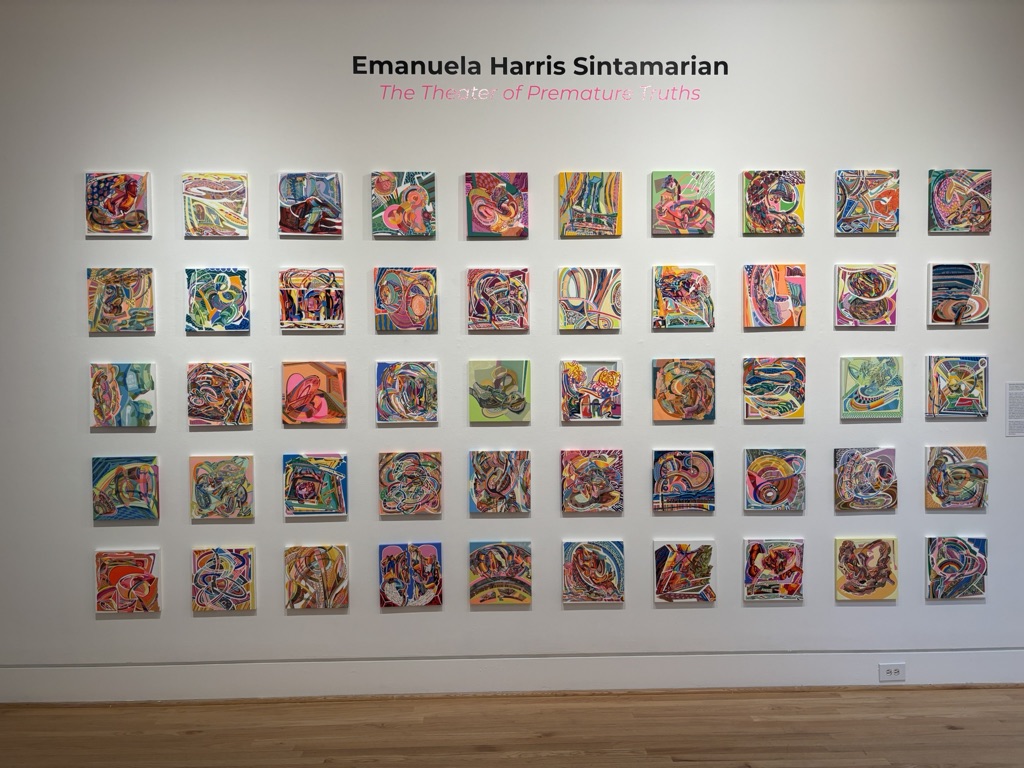
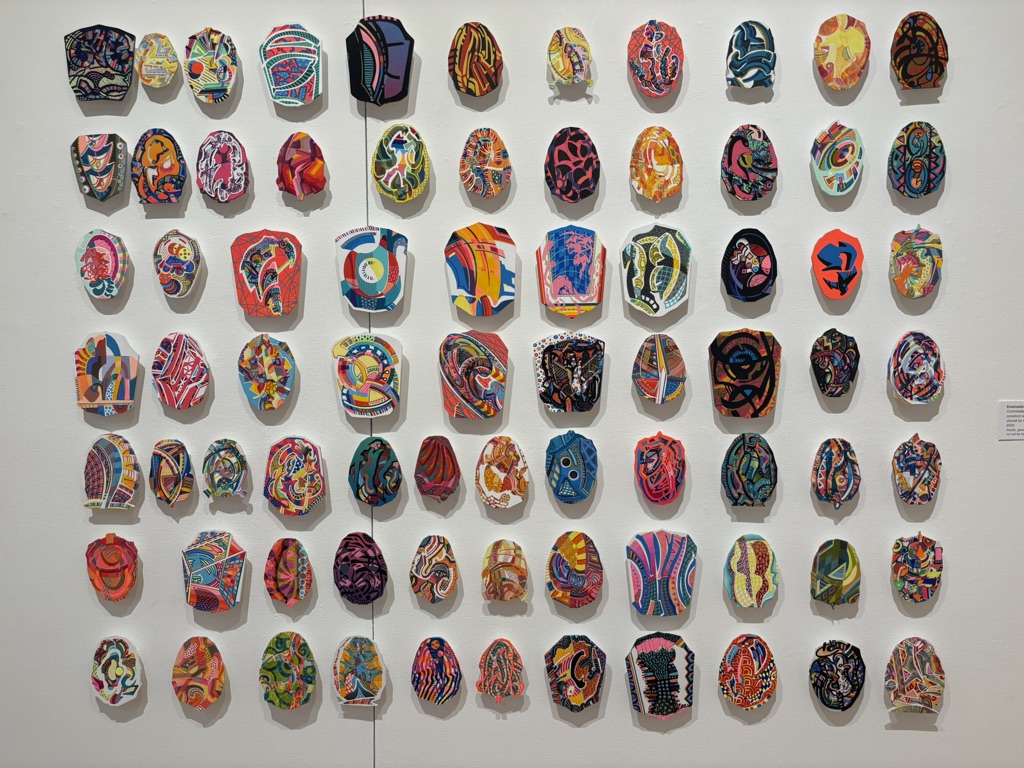
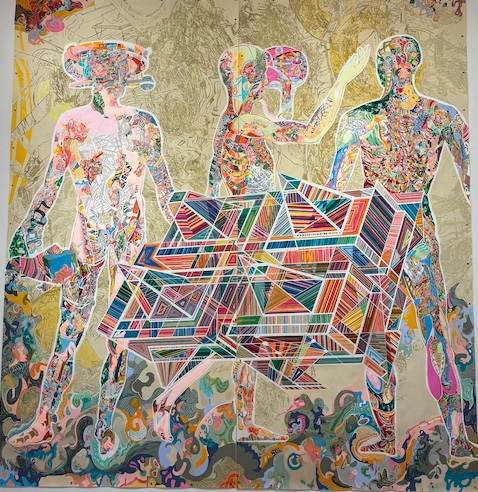
During my visit, one exhibition that particularly captured my attention featured the work of Romanian artist Emanuel Harris‑Sintamarian. His paintings immediately drew me in with their unique textures, layered compositions, and deeply expressive forms.
There is something both mysterious and meditative about his work. The colors and shapes seem to flow organically across the canvas, inviting viewers to pause and explore their own interpretations. Rather than presenting a straightforward image, his art feels like a visual journey—one that encourages contemplation and emotional reflection.
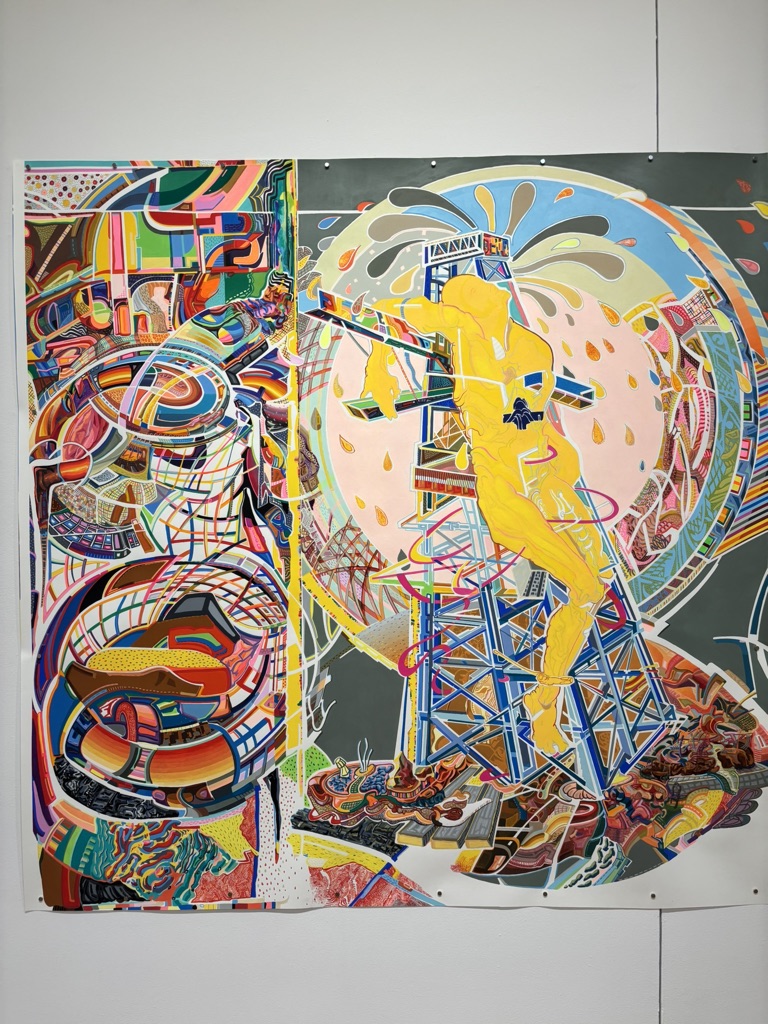
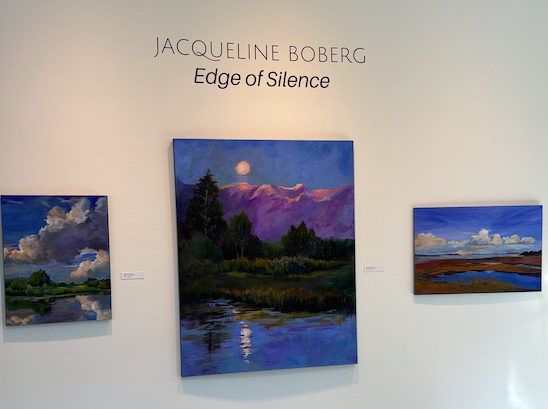
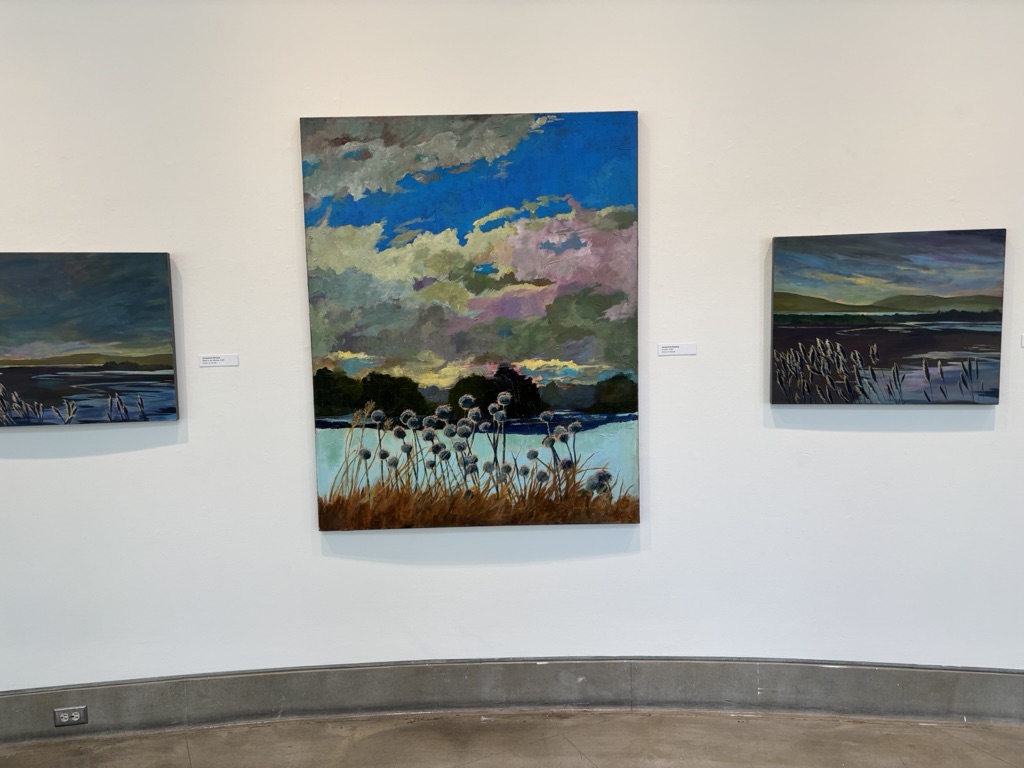
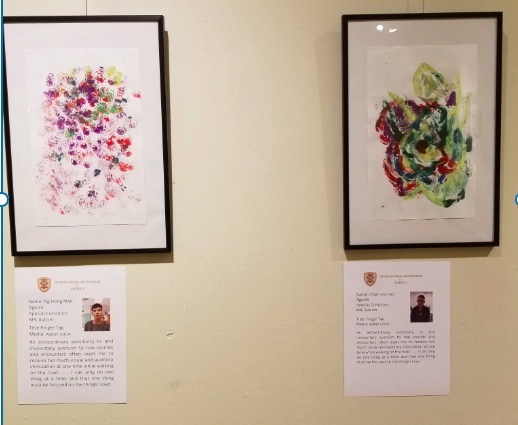
During my visit, I took several photos of the exhibition that I would like to share here. These images capture only a small glimpse of the atmosphere inside the gallery, but they reflect the creativity and thoughtful spirit of the artists on display.
Jesus, Popcorn and other details 2024 Acrylic, gouache on paper In Jesus, Popcorn and Other Details, I bring the sacred into direct contact with systems of spectacle, labor, and consumption. Jesus is not placed above the world, but embedded within it – caught in scaffolding, color, and movement – where belief collides with industry and visual excess. Popcorn becomes both image and metaphor, standing in for abundance, distraction, and the way meaning is consumed, repeated, and ritualized I intentionally built a dense, restless composition that resists hierarchy or stillness, reflecting how faith, entertainment, and production compete for attention in contemporary life. Rather than offering reverence or critique alone, the painting holds these tensions in place, asking the viewer to sit inside the noise and consider where meaning survives.
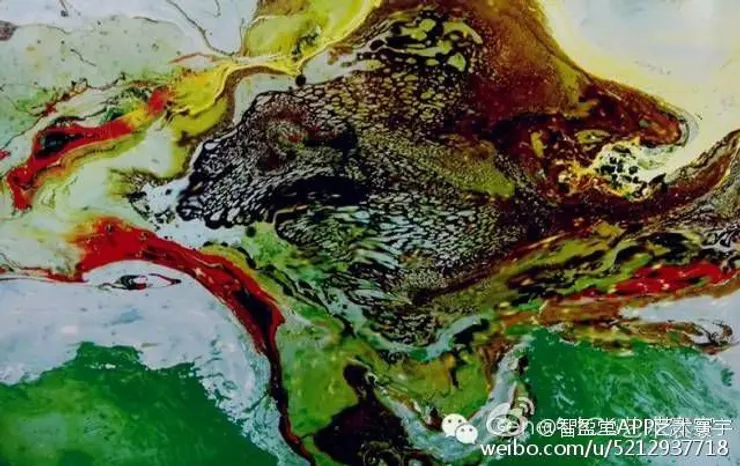
H.H. Dorje Chang Buddha III‘s Abstract Color Paintings create a perfect world shaped entirely by color. Free from concrete worldly forms, this realm exists purely through the interplay of hues—defining, expressing, and embodying itself in vibrant harmony. Here, color is both form and essence, radiating a mesmerizing aura.
Under the masterful hand of H.H. Dorje Chang Buddha III, these colors seamlessly merge into a breathtakingly enchanting spectrum. The atmosphere is dynamic, with scenes that bloom like flowers and surge with the power of the roaring sea. Yet, upon closer reflection, they reveal delicate nuances, refined in their intricate details.
Flower of Life
This painting depicts a unique flower, with delicate white petals gently unfolding and a striking red pistil at its center. Growing irregularly against a dark background, it seems to challenge its surroundings. Though unusual in appearance, this flower carries a profound meaning of life, symbolizing resilience and beauty in adversity. It is not only a miracle of nature but also a representation of vitality, showcasing the brilliance and diversity of life. Each petal tells a story, drawing the viewer into the emotions and strength conveyed by the artwork.
Flower of Life (2)
In this painting, intricate patterns and clear details intertwine, portraying the harmonious growth of various living beings. Each element seems to narrate the origins of life, allowing viewers to deeply sense the evolutionary process of all things.
This artwork is not merely a depiction of nature but also a contemplation of the essence of life. It serves as a reminder that life is in a constant state of growth and transformation, just like our own journeys. Every challenge and breakthrough we experience is an essential part of our personal development.
Through this piece, we are invited to reflect on our own lives and feel a profound connection with nature.
You can discover a selection of the exceptionally charming paintings in the permanent exhibition at The International Art Museum of America, situated in downtown San Francisco.
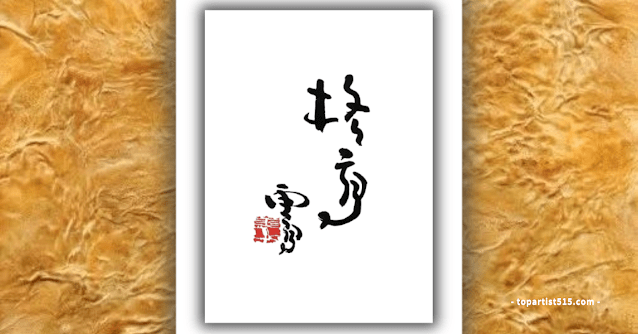
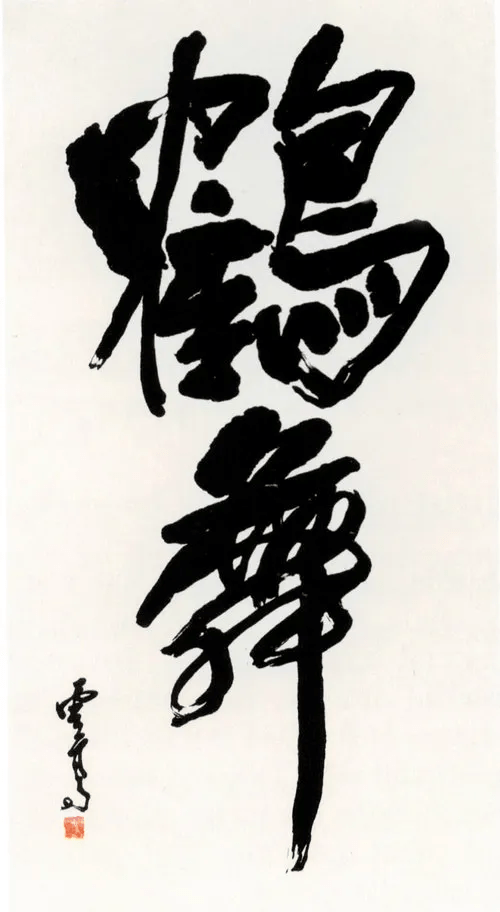
In the art of calligraphy, elegance and style are the two pillars that define a work’s greatness. Elegance (格) refers to the depth and quality of a piece, embodying its refinement and profoundness. Style (調), on the other hand, captures its unique rhythm, flavor, and aesthetic character. These two elements are inseparable, for elegance without style lacks charm, while style without elegance lacks depth and significance. Together, they form the soul of a calligraphic masterpiece.
Every artistic creation—whether it leans toward the refined or the mundane—reflects the inner cultivation and moral integrity of its creator. Particularly in calligraphy, the harmonious blend of elegance and style is a mirror of the artist’s breadth of knowledge and depth of character. A calligrapher’s scholarly cultivation and virtuous practice are indispensable, as they directly influence the work’s final presentation and enduring value.
The piece Lofty Virtue (格高) exemplifies this union of strength and grace. Its bold and vigorous brushstrokes radiate immense inner power while maintaining an outward lightness and agility. The work captures the grandeur of commanding mountains and rivers, coupled with the serene qualities of introspection and tranquility. Strength and flexibility coexist harmoniously, creating a presence that is both majestic and gracefully refined. Floating clouds seem to glide effortlessly, and cranes soar gracefully between pines. This is artistry at its zenith—a realm of understated brilliance, silent dignity, and profound essence.
The calligraphy of H.H. Dorje Chang Buddha III transcends the boundaries of traditional artistry. Each work embodies the pinnacle of calligraphic achievement, uniting profound thought with unparalleled elegance. The pieces flow naturally, free of constraint, exuding majestic momentum and subtle charm. Their beauty is unadorned yet extraordinary, merging the strengths of various schools into a singular, masterful expression.
If one seeks the soaring of dragons and the dancing of phoenixes, it is present.
If one desires the piercing power to shatter gold and stone, it is evident.
If one yearns for the interplay of gentleness and strength, it is there.
If one wishes for the innocent spirit of a child within the heart of an elder, it is expressed.
If one demands a unique elegance and distinct charm, it is inherent.
Crane Dance
Tiny (Xiao bu dian)
Holy (Sheng)
In summary, these works epitomize perfection, returning to simplicity and authenticity—the calligraphy of the Buddha!
A distinguishing feature of H.H. Dorje Chang Buddha III’s calligraphy is the extraordinary frame that accompanies the work Lofty Virtue. The frame is crafted from the artist’s “White Jade Ginkgo Root” sculptures. Beyond showcasing the natural patterns, colors, and textures of ginkgo roots, the frame possess the pure and crystalline qualities of genuine white jade. The harmonious union of art and sculpture elevates the calligraphy to an unparalleled realm of aesthetic and spiritual resonance.
The calligraphy of H.H. Dorje Chang Buddha III is more than art; it is a testament to the unity of profound thought, moral integrity, and artistic mastery. It invites us to experience the boundless elegance and style that can only emerge from a heart imbued with wisdom and compassion—a true reflection of the Buddha’s teachings. Visit the International Art Museum of America to immerse yourself in the extraordinary artworks of H.H. Dorje Chang Buddha III.
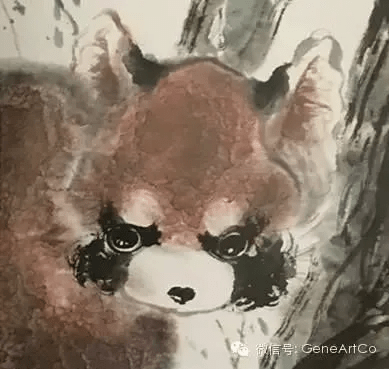
In this exquisite artwork, the slightly reddish small animal depicted is an extraordinarily rare and precious creature known as the red panda, also referred to as the small panda. H.H. Dorje Chang Buddha III, with His masterful artistic techniques, brings this delicate creature to life in a way that captivates the viewer’s heart.
The red panda, native to the eastern Himalayas and southwestern China, is known for its striking reddish-brown fur, bushy ringed tail, and expressive face. H.H. Dorje Chang Buddha III skillfully captures these natural features, emphasizing the panda’s endearing innocence and elegance. The slightly upturned tail, adorned with subtle yet distinct spots, adds a dynamic sense of movement and charm. This tail gracefully echoes the surrounding elements of nature, blending harmoniously with the drooping round leaves of the willow branches. The careful balance between the animal and its environment enhances the visual poetry of the piece.
A particularly remarkable aspect of this painting is the technique used to depict the panda’s face. H.H. Dorje Chang Buddha III employs a calligraphic brushstroke style, reminiscent of traditional Chinese ink painting, to portray the panda’s features with simplicity yet profound expressiveness. The crystal-clear, soulful eyes seem to glisten with life, while the velvety black fur is rendered with such fluidity and precision that it conveys both softness and texture.
Through masterful control of brush pressure, ink flow, and color layering, H.H. Dorje Chang Buddha III achieves a perfect balance of realism and artistic interpretation. Each stroke reveals deep insight into both the subject’s physical form and its spiritual essence, a hallmark of true artistic mastery.
The meticulous attention to detail and the profound artistic wisdom evident in this painting reflect H.H. Dorje Chang Buddha III’s extensive experience and unparalleled skill. This artwork is not merely a visual delight but a spiritual expression, reminding viewers of the beauty and fragility of life and the interconnectedness between all living beings and nature. It stands as a testament to the profound depth of both artistic technique and compassionate vision embodied in the works of H.H. Dorje Chang Buddha III.
The winners and finalists of the 2024 IAMA International Youth Art Contest with the President of IAMA / Photo courtesy: John TrieuMore than 400 amazing artworks by young artists from 9 countries on exhibit at IAMA Grand Exhibition Hall / Photo Courtesy: John Trieu “
The International Art Museum of America (IAMA) hosted the 2024 Youth Painting Competition and Award Ceremony on Sunday, July 14th, at its Market Street location. The event celebrated the artistic achievements of young artists, awarding certificates and cash prizes. Over 400 second-round entries are exhibited from July 13th to 21st.
IAMA’s commitment to promoting youth art development was evident throughout the competition, which included submissions from over 300 youths across nine countries. Divided into three age groups (7-10, 11-14, and 15-18), the competition awarded certificates and cash prizes to the top three winners in each group, along with ten “Young Artist Awards” per group.
The competition, with its theme of “free creation,” encouraged children to express their imagination and creativity. Judges Dr. Amy Hughes, Dr. Gabriela Sotomayor, and Prof. Adam Caldwell praised the participants’ diverse techniques and styles. Dr. Hughes noted the high quality of work, akin to graduate-level creations, while Prof. Caldwell celebrated the impressive achievements of all contestants.
The award ceremony, held on July 14th at IAMA’s Garden Hall, attracted nearly 300 attendees, who were moved by the young artists’ talent and passion. The museum’s president, Mr. KC Hsieh, and other distinguished guests, including Professor Caldwell, participated in the ceremony. The day also featured a Master Class on painting by Professor Caldwell, inspiring young artists to further explore their creativity.
Chairman of Jury Committee Professor Caldwell congratulating all at the award ceremony while 300 people attended / Photo courtesy: John Trieu
IAMA Director Mr. KC Hsieh reiterated the museum’s dedication to fostering youth art development. Emily Su, third-place winner in the 15-18 age group, expressed that the award motivates her to continue pushing the boundaries of her artistic vision.
IAMA’s mission is to make art appreciation and education accessible to all, believing that “Art is for everyone.” The International Youth Art Contest exemplifies this mission, providing a platform for young artists to pursue their passion and leadership in the art world.
Located at the heart of downtown San Francisco, on 1025 Market Street near Sixth Street, the International Art Museum of America is a permanent , non-profit museum open to the public. The museum’s goal is to utilize the exhibition forum to pass on works of art that have achieved the most exquisite beauty and preciousness in the history of civilization, in order to further humanity’s moral progress, spiritual wellbeing, cultural development and world peace. It takes as its mission bringing humanity happiness and uplifting aesthetic enjoyment.
Currently, until July 21st, the museum is hosting “Art Without Boundaries,” an inspiring exhibition showcasing paintings by artists with disabilities. This event, presented by the Arts with the Disabled Association Hong Kong in partnership with The Neighborhood Advice-Action Council, provides a platform for these talented artists to exhibit their work in an international museum. This charitable initiative aims to support artists with disabilities, aligning with IAMA’s mission to actively promote public charitable art activities.
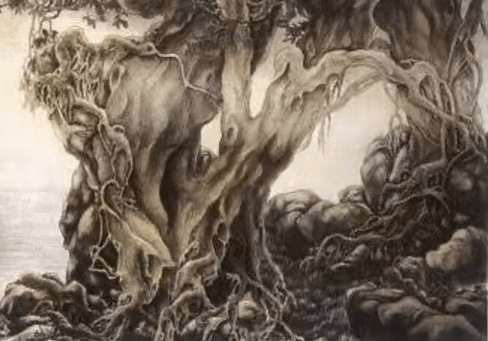
“Scene of Xishuang Banna Life” is a Chinese ink-and-wash painting with a three-dimensional quality reminiscent of oil paintings, created by the renowned artist H.H. Dorje Chang Buddha III. The moment I laid eyes on it, I felt a profound sense of comfort and tranquility. The painting’s primary hue is light brown, and the varying depths of this color vividly depict the fresh, clear water and misty air weaving between the trees. A few girls are making waves, chatting, and enjoying themselves as they wash clothes by the riverside. The elegant and beautiful banyan trees stand majestically, with cobblestones naturally scattered around them.
The old banyan tree, with its peeling bark and exposed roots, stands as a silent testament to the passage of time. The raised roots extend in all directions, seemingly spreading the pulse of life to distant places, using their vitality to nurture the earth and rivers. The roots nestle against the smooth, round pebbles like inseparable companions. Over time, they have become so intertwined that no one notices whether they are roots or stones, much like an elderly couple who depend on each other and cannot be separated.
Around the tree roots, a misty white space, activated by detailed depictions, brings boundless imagination to people. In the white mist, there is a vast expanse of water, with soft sunlight illuminating the surrounding forest. The endless lakes and rivers nourish the sturdy old roots, supporting them through countless hardships and weathering the elements, ultimately creating a world of their own. The intertwined and winding roots, twisting and coiling across the scene, form the main structure of the composition along with the variously shaped stones, the sculptural massive trunk, and the other responding trees. The sparse leaves hanging from the old tree are adorned in light green, contrasting with the large brown trunk, evoking the philosophical sentiment of “the true essence remains after all embellishments fade, gold emerges after being sifted by great waves.”
Beneath the tree are three graceful women in different postures, enjoying the flowing stream under the water-colored sky. Some are combing their freshly washed hair, some are holding a delicate veil, and some are drawing clear water from the stream.
The banyan tree, the stream, and the sunlight, along with the beautiful women in traditional attire, compose a symphony of southern charm, making one feel as if they can hear the whispers of the gentle breeze: “My enchanting homeland is where my heart belongs…” The setting resembles the sweet childhood memories buried in my heart.
About fifty years ago, my family lived in a small village in the mountains. There were no cars, TVs, toys, phones, or any other modern luxuries. We lived a very simple and modest life. All the mothers washed vegetables and rice in the clean creek and cooked meals. Very often, they washed clothes in the river for the whole family while the kids played in the water, on the trees, or along the riverbanks. School was far away, and we could only go there when we were old enough. But we had the biggest classroom—nature itself. We studied everything we could find: trees, flowers, insects, stones, etc. Twigs were our pens, and tree trunks were our tables. The chirping of the birds and the rushing of the stream were our music. We had physical education class all day long. We went to bed when the sun set. What a simple, happy life!
This is the beautiful and pure spiritual space created by the great artist, H.H. Dorje Chang Buddha III. This painting, “Scene of Xishuang Banna Life,” opens a window to another dimension, allowing people to experience the joy of living in a paradise. People in cities increasingly yearn for natural landscapes akin to an earthly utopia. Fortunately, noble artists create pure lands for people’s hearts, showing us wonderful scenery, evoking warm emotions, and deeply touching us.
The pure land in our hearts is like a secluded utopia, free from the noise and disturbances of the mundane world. It carries the dreams of people. When darkness descends, the pure land within can emit a serene fragrance, helping people discard the suffering brought by worries, gently wipe away the dust, and infuse a bit of brightness.
The paintings of H.H. Dorje Chang Buddha III are like wordless songs, containing endless stories, ancient calls, and boundless compassion for all sentient beings.
The Title “A Lotus Pond Has Carp” suggests profound Philosophical implications that transcend everyday life. In addition to its masterful artistry, the painting contains subtle messages of the Dao and its fruits. The lyrics on the left and right sides of this work correspond perfectly with the image of the fish, forming a whole that awakens and enlightens, richly rewarding its viewers.
Why is this painting so artistically enchanting that it stirs the hearts of those who see it? One reason is that the fish are depicted with uncanny realism. The swimming carp are infused with vitality. The painting’s details clearly reveal the damage done to the carp’s skin, accumulated over a lifetime in the water, through lines that fade in and out. Appearing as delicate as a fine gauze, the translucent fins, for example, possess a natural realism. Texture and spirit are captured with utter precision, providing the viewer with stirring aesthetic pleasure. The surface and bottom of the pond are depicted with a wonderfully hazy charm, while the lotus flowers, leaves, and pods are portrayed in bold freehand brushwork with distinct and unusual brushstrokes rapidly applied.
The painting is mainly composed of back ink and rich colors. Only a few brushstrokes were used to create each vibrantly red flower, which seem to emit a pure fragrance. The hanging lotus pods embellish the painting, conveying an elegant contrast of hues and instilling a sense of vitality. As the fish swim about, free of any inhibition, the sunlight faintly reflecting off the water ripples provides the illusion of movement that occurs in the natural world.
When examined more closely, the painting has an intricate style to ascertain, for it seems to transcend realistic fine brushwork and convey the feeling of freehand brushwork. It is not in the style of conventional paintings. Instead, freehand brushwork was applied to produce the effect of fine brushwork with close attention to detail.
Fine brushwork was applied that transcends realism. The real and the surreal blend, resulting in a work that excels the beauty of a natural lotus pond. It represents a combination of techniques from the “Menglong” style of painting and bold, large-scale freehand brushwork.
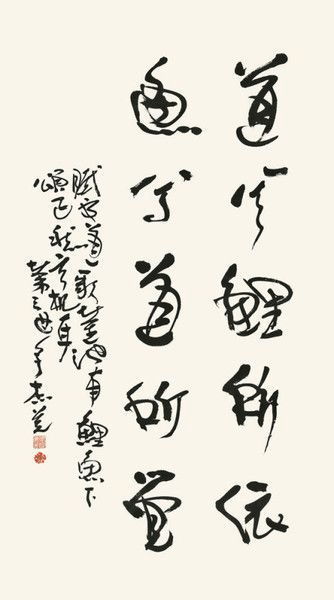
For the painting, H.H. Dorje Chang Buddha III composed these lyrics of a Dao song: “No Dao exists on the high mountain, yet hearts yearn to go there. A lotus pond has carp; men have inquired about them. Which path leads to the truth is worth pondering. It would be better to look tranquil to our original nature, like a lotus flower sitting over its leaves in tranquility.” These lyrics speak of mysteries unknown to the ordinary person – seeing fish, not as fish; seeing water, not as water; no Dao exists on the high mountain, so no value exists in searching for it; and the fish have neither life nor death.
To understand the origin of the painting, we must ask: where did the fish come from? What state of realization was relied upon and gave birth to this exquisite painting? What form of realization manifested this mysterious, hazy, and illusory painting? The magical illusion of the fish and water is nothing more than a superficial image. Spirit is within; A life force underlies spirit. Spirit is empty or nothingness. The original essence of all things is neither empty nor substantive. Everything illusory and impermanent quickly changes in time and space, but their original nature remains constant. Thus, the lyrics of the Dao song continue: “To find our original nature, do not seek the source, as the source is our original nature, tranquil and unmoving, like a lotus flower sitting over its leaves in tranquility. There is no such thing as arising, passing away, and change. From this surpassing wisdom, usages that arise from Buddha-nature will naturally manifest. These usages include calligraphy and painting. Only in such a way is a consummate work created.” Thus, one should understand the tremendous meaning of this song of Dao written in this painting. Profound mysteries are deeply hidden within it.
In case the viewer remains oblivious to right stanza, on the left side of the painting, the second stanza of the song continues with: “The carp rely on the Dao, and the Dao awakens the fish.” The Dao refers to the state of holy ones, a realm that transcends the realm of ordinary people. It does not refer to regular abilities. The artist created this carp painting based on such a holy state. “The Dao awakens the fish” means that this painting of carp in a lotus pond was accomplished based on the wisdom of the transcendent Dao. Only with such wisdom could this lifelike, graceful scene of carp swimming in water be painted, a setting that combines the real and the surreal, emptiness and substance in such a wondrously appealing way. This scene of carp complimented by the boldly and powerfully depicted lotus leaves results from the artist’s awakening to the holy Dao.
This painting of carp, then, is merely an expression of one who has attained the Dao and reached enlightenment. Thus, this work is not just an ordinary combination of brush strokes, color, ink, and water. Instead, it results from techniques derived from the beautiful application of holy wisdom. The profound mysteries contained in “A Lotus Pond Has Carp” cannot possibly be conveyed by the superficial meaning of the words in its title! Actually, this explanation is entirely unnecessary. All those with discerning eyes will understand once they see the lyrics of the Dao song and the calligraphic skills with which they were written on the painting.
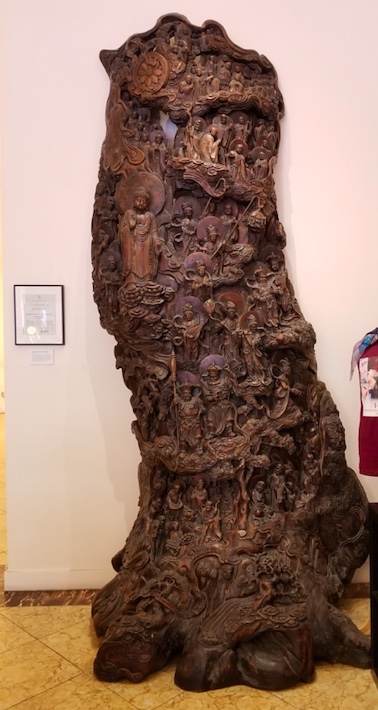
In a world where art manifests itself in countless forms, there are rare instances when we stumble upon something truly extraordinary—a concealed treasure that enthralls our senses and moves us on a deep level. Such a remarkable encounter occurred one fateful day as I explored the gift shop at The International Art Museum of America (IAMA), nestled in the heart of downtown San Francisco. Amidst the vast array of artistic wonders, my gaze became fixated on an exquisitely crafted wood carving—a masterpiece that exuded an ethereal essence of spirituality and profound significance.
This awe-inspiring sculpture, meticulously chiseled from a single tree, originated from China and was skillfully brought to life by gifted folk artists. It portrayed an enchanting realm of spiritual growth and profound accomplishments in Buddhism. Towering at an impressive height of approximately three and a half meters and spanning one meter in width, this artwork was a testament to the dedication and artistry of its creators. Every intricate detail, meticulously carved figures, and delicate embellishments, painted a vivid tableau illustrating the virtues of compassion, enlightenment, and the transformative journey towards Nirvana.
The intricately carved sculpture was a masterpiece that depicted the journey of practitioners from being ordinary to mastering the higher levels of Buddhahood. The figures in the relief were so vividly carved that it was easy to see their progression towards enlightenment and Nirvana. Every detail, from the facial expressions to the flowing cloth, the delicate flowers, and the instruments, was so meticulously presented that it was impossible not to be impressed.
The beauty of this piece lay not just in its stunning visual presentation but also in the message it conveyed. It illustrated the importance of practicing compassion in thoughts, words, and deeds to achieve spiritual growth. It reminded us that every act of kindness, every gesture of love, and every moment of selflessness is a step towards enlightenment and Nirvana.
The sculpture had a calming effect on me. It was a tangible reminder of the power of art to transcend language, culture, and time. It spoke to me in a language that was universal, one that transcended borders and connected people across the world.
As an art lover, I have seen many beautiful pieces over the years, but this wood carving sculpture stood out as a true masterpiece. It was a testament to the skill and craftsmanship of the folk artists who created it, and it served as a reminder of the timeless beauty of art.
The High-Leg Treasure Horse is a thoroughbred horse with great stamina. When this treasure horse perspires, it appears to be bleeding due to the color of its perspiration. According to ancient legend, it is the most precious among all species of horses. It has the reputation of being able to travel over three hundred miles a day. Long mane hairs and a mighty, strong-willed, handsome appearance are its prominent characteristics. The High-Leg Treasure Horses in this painting have longer legs than horses commonly seen in paintings. The hairs of their manes are also long and strong. An extremely rare brushwork technique that combines haziness with clarity was applied to paint the hairs of the horses. The gossamer-thin hairs are strong but pliable. One can clearly see the natural effect of sunlight on the horses’ manes. Moreover, contrasting variations of dark and light are seen in every hair. The hairs of the horses are depicted with a realistic effect that nonetheless transcend their natural look.
An artistic technique was used to thoroughly capture on paper the charm and atmosphere of the grassland, lake, sky, and land. The “haziness technique” was applied to express a state of realization in which there is no distinction between emptiness and form. The ancient cypress tree was drawn in one shade of green without the need to add decorative touches in several different shades of green. Both the spirit and form of the tree were captured through the artist’s brush. In addition, elegant charm is revealed by a small number dots of red leaves in the background that compliment the scene. The most difficult part of this work of art was painting the roots, trunk, and leaves in a spontaneous, casual manner using the center brush-up technique yet maintaining a scholarly tone. Such mastery of painting cannot be easily attained and requires solid skills in calligraphy, literature, and painting as well as a noble moral character. From the brushwork style and details of this painting, we can sense the profound inner-cultivation of a renowned scholar. The abilities of a literary giant with abundant talent are visible everywhere. The scholarly tone and brushwork style are skinful and vigorous, totally free of any trace of the mundane, and reflect the highest level of painting and calligraphy. Anyone who lifts a brush in an attempt to paint such painting will appreciate the fact that this scholarly style cannot be accomplished by anyone other than a literary giant who is a great master of art. This painting coherently unites realism and small-scale freehand brushwork as well as the use of haze and clarity.
This painting is in the permanent exhibition of The International Art Museum of America. H.H. Dore Chang Buddha III, an artist of great talent, has created sixteen distinctive painting styles. The composition we are discussing here belongs to the “Menglong” style. This style combines realism and non-realism to capture the essence of the portrayed subject, resulting in a seemingly realistic but actually non-representational depiction. The brush strokes and color application in these paintings create a whimsical and dreamlike appearance, where the real and surreal merge into a lovely and hazy composition.
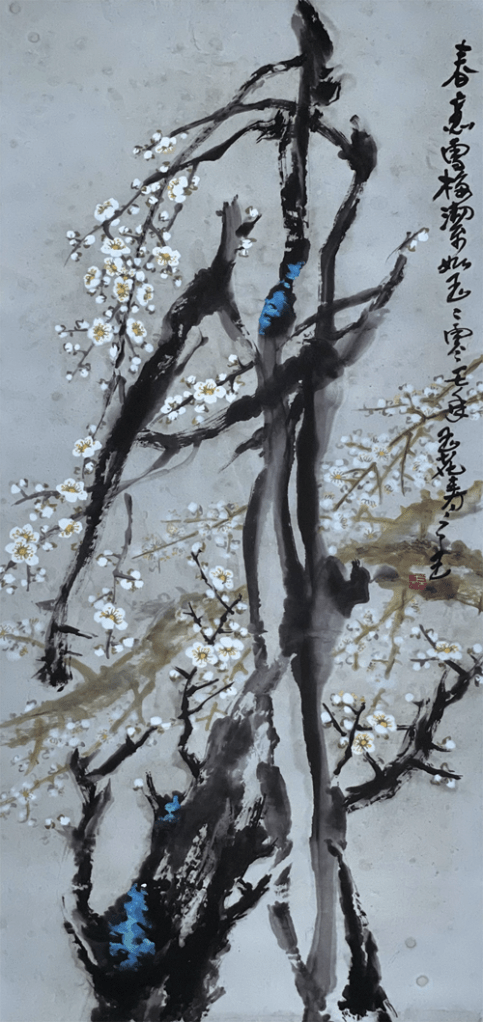
Springtime Snow-White Plum Blossoms as Pure as Jade
At the International Art Museum of America in downtown San Francisco, there is a special exhibition room, dedicated to Professor Yuhua Shouzhi Wang. This installation was established in 2018, containing a variety of water and ink paintings as wells as sketches. Professor Wang’s acclaimed works have been displayed all over the world, including an exhibition at Congress in 2008, where they called her work a ‘treasure of the world’. In 2019, Professor Wang’s art was exhibited at Shanghai Exhibition Center in China and the Louvre Museum in Paris. An art critic Aude de Kerros praised this event in Paris, saying ‘I have curated and critiqued so many art exhibitions, yet I have never seen an exhibition like this where all the guests are so touched and amazed by the art.’ Following the Paris exhibition, Professor Peter Drake, the Provost of the New York Academy of Art, presented a certificate to Professor Wang, recognizing her extraordinary contributions to representational and abstract art. In December 2020, the Chairman of Centre for Peace in United Nations Educational, Scientific and Cultural Organization (UNESCO), Guy Djoken awarded an “International First-Class Artist” title to Professor Wang for her accomplishment. Professor Wang is the only Asian artist who has ever received such a title. On December 29th 2020, Chairman Guy Djoken came to the museum to personally present the title certificate to Professor Wang.
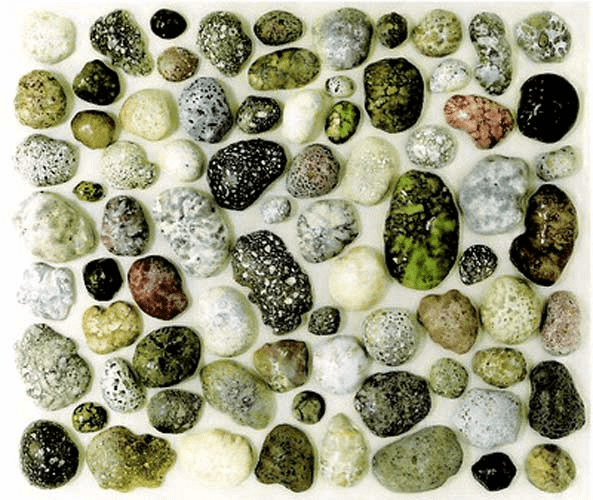
Hand crafted cobblestone
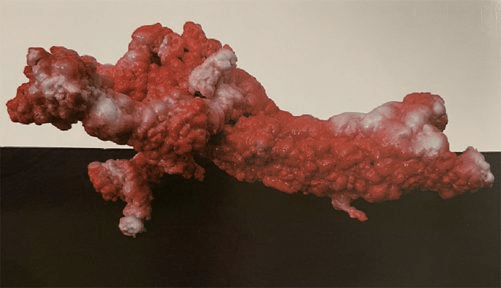
Hand Crafted Coral Sea Palace Monarch
Many people are aware that Professor Yuhua Shouzhi Wang is a world-renowned artist. However, the true identity of Professor Yuhua Shouzhi Wang is revealed as Fomu, Holy Mother the Great Mahasattva. She embodies great wisdom and compassion, noble morality, kindness, altruism, and selflessness in a perfect manner. She always considers other people’s well-being and is humble and very approachable. The compassion and kindness of Fomu, Holy Mother the Great Mahasattva, are pure and flawless. For example, in 2015, someone sneaked into the International Art Museum of America in San Francisco and tried to steal an artwork that had been acclaimed by the World Federation of UNESCO (WFUCA). This person was arrested by the police on site and subsequently detained. Since the artwork that he tried to steal was one of Fomu’s masterpieces, the court repeatedly requested Fomu to provide a valuation of the artwork, so that they could use her valuation to determinethe term for sentencing. When Fomu, Holy Mother the Great Mahasattva, knew about this person’s distress, She provided a statement saying that the artwork was rather ordinary and had no value. The court had no way of sentencing the person to any term and had to release him.
Another time, Fomu, Holy Mother the Great Mahasattva, saved a butterfly that had fallen into the water. Worried about the butterfly’s safety, Fomu brought it home and kept it for a few days to make sure the butterfly is well-recovered before letting it fly away. Fomu relentlessly led disciples to conduct life-releases. She went every week to woodlands to feed ducks and birds and never missed a week. She paid for it with Her own money and never accepted offerings from Buddhist disciples. Fomu, Holy Mother the Great Mahasattva, is well known for Her diligence and thriftiness. For many decades, the noble Fomu, Holy Mother the Great Mahasattva, always cooked Her own meals and washed Her own clothes. She never entrusted others to do Her chores. She would save the food that She could not finish eating and finish it the next day or two. She was never wasteful. Usually, Fomu, Holy Mother the Great Mahasattva, would even save the water that She did not finish drinking, the water used for washing vegetables or hands, or wastewater from the filter and use it for irrigating flowers or flushing toilet. Through Her deeds, the Great Fomu, Holy Mother the Great Mahasattva, was teaching us how to start with the small things, cherish our good fortune, and actualize our cultivation practices.It is impossible to recount all the numerous exemplary deeds of Fomu.
Photo from internet weixin.com
Wherever Fomu, Holy Mother the Great Mahasattva, went, dragon Dharma protectors were present, and holy miracles manifested. When Fomu performed initiation and transmitted Dharma, holy states were manifested. For example, at the Antelope Valley, Fomu’s hat turned into a black garuda. In New Jersey, the hair of Fomu, Holy Mother the Great Mahasattva, suddenly went up and wrapped around a tall building in Manhattan on the opposite shore. In San Francisco, a twin Buddha light suddenly appeared, centered around where Fomu stood. All cultivators are touched by the compassion and morality of Fomu, Holy Mother the Great Mahasattva.
















 Peace LiLy