Maijishan Grottoes, also known as Maiji Mountain Grottoes or Maijishan Caves, is situated in Maiji District, Tianshui City, Gansu Province, in northwest China. Alongside the Longmen Grottoes, Yungang Grottoes, and Dunhuang Grottoes, it holds the esteemed title of being one of the “Four Greatest Grottoes in China.”
If the Mogao Caves are likened to a vast mural museum, the Maijishan Caves undoubtedly resemble an expansive sculpture museum. Boasting 10,632 clay sculptures, Maijishan is hailed as “the Oriental Sculpture Art Exhibition Hall.”
Much like the Parthenon temple in ancient Greece, the stone and clay carvings at Maijishan have been remarkably preserved since ancient times, earning it the moniker of “China’s Parthenon Temple.”
In contrast to the exotic sculptures found in the Mogao Caves, the sculptures in Maijishan are characterized by a more secular, human, and distinctly Chinese quality.
Unlike the exotic sculptures in Mogao Caves, the sculptures in Maijishan Caves are more secularized, human, and more Chinese
The name Maiji in Chinese translates to “piled sheaves of wheat,” reflecting the mountain’s appearance and the origin of its name. The Maijishan Grottoes were initially constructed in A.D. 384-417 and underwent subsequent expansions in dynasties such as Northern Zhou (A.D. 557-581) and Tang (A.D. 618-907). The site currently comprises 221 caves, 10,632 clay sculptures, and over 1300 square meters of murals, earning global acclaim for its exquisite clay sculpture art and recognition as the “Oriental Sculpture Art Exhibition Hall.”
While Maijishan Grottoes may not be as renowned as the other three great grottoes, it stands out as the best-preserved among them. Carved into the steep cliff of the mountain, the caves were not easily accessible, thus escaping much of the destruction that plagued other sites throughout tumultuous periods in history. Today, visitors can marvel at Buddha sculptures and murals along a narrow path clinging to the cliff’s edge.
Located just a few miles south of the main road connecting China and Central Asia, Maijishan emerged as a hub of cross-cultural exchange, drawing hundreds of thousands of itinerants and serving as a historical canvas reflecting the art of 12 distinct dynasties. Indians, Mongols, Huns, Sogdians, Tibetans, Chinese, and others traversed its halls, leaving enduring imprints of their cultures in the form of art.
The mountain’s 194 grottoes stand as tangible evidence of this diverse influence, showcasing seven architectural variations, housing over 7,000 statues, and adorned with more than 100 square meters of murals. Everything within reflects a dedication to Buddhism, from depictions of Siddhartha’s birth to bodhisattvas engaged in meditation and scenes of new devotees arriving. While Maijishan’s physical features initially garnered attention, it is the heritage inscribed, painted, and sculpted onto the soft golden stone that solidified its place in the globalized consciousness of Buddhism, akin to Mount Sumeru, the sacred Buddhist mountain often considered the “mythical axis of the universe.”
The history of Maijishan, like the tales along ancient trade routes, commences with a journey. One account tells of the priest Hsüan-kao meditating at Maijishan, later joined by the shaman T’an-Hung. Together, they founded the mountain’s first monastic community, growing to nearly 300 people before their departure, marking a departure filled with religious fervor, and in T’an-Hung’s case, a morbidly poetic self-immolation in Cochin.
This semi-mythical origin, whether entirely factual or not, undeniably solidified Maijishan as a significant religious site for Chinese rulers. In the Fang-yü sheng-lan, a Sung Dynasty-era book, it is noted that Yao Hsing transformed the mountains, carving 1,000 cliffs and 10,000 images, transforming the cliffs into halls. A stele from 1222 attests to the site’s prominence, with 10,000 people praying there, empires granting land for farming, and seven kingdoms continuously contributing to its maintenance. Subsequent imperial decrees bestowed various names, including “Ching-nien ssu,” “Ying-chien kan ssu,” and “Jui-ying ssu,” before settling on the name Maijishan.
Examples of how brilliantly these works of art were once colored. Shizao, Wikimedia Commons
Differences between Maijishan’s Grottoes and Mogao’s
The Maijishan Grottoes and the Mogao Grottoes, both situated in Gansu Province along the Silk Road, offer distinct experiences, prompting consideration for visitors on a Silk Road journey. Despite being grottoes, they differ significantly, making a visit to both a worthwhile endeavor.
The Maijishan Grottoes are renowned for their clay sculptures, whereas the Mogao Grottoes impress with expansive and beautiful murals. The arid climate in Dunhuang aids mural preservation, while the Maiji Mountain area, with more rainfall and looser mountain rock (clay), is conducive to sculpture carving.
Sculptures in the Maijishan Caves are primarily plain clay pieces, while in the Mogao Caves, they are predominantly painted sculptures integrated with murals. Buddha statues in Maijishan exhibit a more secularized and daily-life-oriented character.
The surrounding natural landscapes vary. Maijishan Caves, located in the Maiji Mountain Reserve area, offer a summer retreat with lush trees and springs, providing opportunities to explore diverse wildlife. In contrast, the Mogao Grottoes are situated in the Gobi Desert, surrounded by wild desert scenery.
The Maiji Grottoes were carved into a steep 100-meter-high cliff face, requiring travelers to ascend the “floating plank road” for a more adventurous experience. In comparison, the Mogao Grottoes were carved into a 30-meter-high sandstone outcrop distributed over four floors.
The breathtaking Maiji Caves, carved into the steep cliffs of Maiji Mountain, stand about 100 meters (330 feet) above the ground, divided into East and West Cliffs. These caves, resembling honeycombs in hives, are interconnected by plank walkways suspended in the air from the cliff face.
Have you ever pondered how this feat was accomplished over a thousand years ago without modern machinery?
Legend has it that the Maijishan Grottoes were excavated at the expense of clearing all the woods near Maiji Mountain. Ancient people built wooden scaffolds from the mountain’s foot to the top, serving as precursors to the later generations’ “plank roads.”
During the Tang Dynasty (618–907), an earthquake divided Maiji Mountain into two cliffs, east and west. Over subsequent dynasties — Song, Yuan, Ming, and Qing — the Maijishan Grottoes underwent development, evolving into the cohesive complex seen today.
The Maijishan Caves stand as a testament to human wisdom and art along the Silk Road, embodying profound respect for Buddhism and an unending yearning for a better life.
Part of the Maiji Mountain Scenic Reserve area (including Xianren (‘Fairy’) Cliff, Shimen, Quxi, and Jieting Hot Spring), the Maijishan Grottoes boast diverse forests and a rich array of plants and animals.
While the Maijishan Grottoes can be visited year-round, the best time to explore the Maiji Mountain Scenic Reserve area is from July to October when the mountain, adorned with dense foliage, provides an ideal summer getaway.
In the annals of Chinese Buddhist teachings, a narrative known as the “Wild Fox Koan” imparts profound insights into the principles of karma and its undeniable consequences.
According to legend, during the Tang Dynasty in China, Master Bai Zhang Huai Hai, a venerable monk and the third-generation disciple of the Sixth Patriarch Master Huineng, played a pivotal role in this story. During his sermons, he consistently noticed an unfamiliar old man attentively listening to his teachings on Buddhism. The mysterious visitor would only depart after the session concluded. One day, after another sermon, the old man lingered, prompting the puzzled monk to inquire, “Who is standing there without leaving? Who are you?”
Huaihai, curious, asked, “Do you have something on your mind?” The old man got straight to the point, confessing, “I am not a human; I am a wild fox on this mountain. Five hundred years ago, I was a monk and once gave a Dharma talk here. One day, a junior monk asked me if enlightened beings fall under the law of cause and effect. I replied, ‘They do not fall under cause and effect.’ Unfortunately, I gave the wrong answer and fell into the realm of a fox. Today, I want to ask a question in front of you, venerable teacher. Would you be willing to enlighten me?” Huaihai replied, “Please go ahead.” The old man asked, “Do enlightened beings fall under the law of cause and effect?” Huaihai responded, “They do not ignore cause and effect.” The old man paused for a moment, then prostrated himself, saying, “Teacher, I have attained enlightenment. I have now transcended the realm of the fox. I am beneath the big stone on the back mountain. I hope that you, as a monk, will bury me according to the proper rites.” After saying this, he disappeared without a trace.
Accompanied by monks, Master Huaihai went to the back mountain and found, under a large stone, a dead black fox. Master Huaihai instructed them to light torches and cremate the fox. They then chanted sutras together, performing rites to help the fox monk attain liberation.
The Fox Zen Master, due to a single mispronounced word, uttered a great falsehood, resulting in five hundred lifetimes as a wild fox. The principle of cause and effect is unfailing, as it does not discriminate between the ordinary and the saintly. Advanced practitioners maintain a profound reverence for the law of karma. Hence, there is the notion that bodhisattvas fear the cause, while ordinary beings fear the effect. A bodhisattva contemplates the emptiness and tranquility of all phenomena, harboring no attachment or grasping. Due to their wisdom, they do not give rise to undesirable consequences such as ignorance or darkness.
If one were to claim that a bodhisattva “transcends cause and effect,” it would imply an annihilationist view. It is only by “not obscuring cause and effect” that a bodhisattva, within the profound samadhi of deep prajna paramita, can attain the ultimate wisdom.
“To keep things secret, refrain from doing them unless by oneself.” This is a commonly heard phrase advising people to do good, implying that whatever one does, there will always be someone who knows. Moreover, secrets are bound to be exposed sooner or later. Therefore, it is essential to reflect on one’s actions regularly, ensuring they align with goodness. Never assume that no one is watching, as actions that go against the laws of cause and effect will eventually come to light.
Two other frequently heard sayings are: “Within three feet, there are gods” and “Every step leaves a mark.” These cautionary words remind individuals that every action leaves an imprint, and nothing done will vanish into oblivion over time. In the realm of cause and effect, if one sows seeds of negativity, they must ultimately bear the consequences, adhering to the principle of “unobscured cause and effect.”
During the Three Kingdoms period, the king of Su, Liu Bei, offered sagacious advice to his son, Liu Shan, before his passing, saying, “Do not commit small evils, and do not refrain from doing small acts of goodness.” This counsel underscores the importance of consistently engaging in virtuous deeds, regardless of their scale, while avoiding any participation in wrongdoing. The admonition implies that accumulating small wrongs over time can lead to significant consequences.
Conversely, it’s not uncommon to encounter individuals who, despite their kindness and numerous good deeds, face repeated disasters and misfortunes. Understanding why such outcomes occur can be challenging, leading to a lack of comprehension about the concept of doing good. Some may even develop biases, assuming that avoiding wrongdoing in this life is sufficient and that there’s no need to help others since there’s no apparent reward for good deeds. This perspective represents a clear form of biased and distorted understanding, lacking insight into the law of cause and effect and focusing on one aspect without considering the other.
Applying the concept of the threefold law of cause and effect, we realize that positive causes we sow may not yield immediate results. Karmic consequences from past lives need to be accounted for and repaid. We cannot solely judge our current situation based on what we see in this lifetime. Holding the belief that “I haven’t done anything wrong, so why is life more difficult for me than for others?” is a narrow perspective. Observing others who seemingly haven’t done much good yet are living well, we might not realize that they sowed positive causes in past lives—an aspect our ordinary eyes cannot perceive, akin to the monk descending to a fox in many lifetimes.
If the notion of avoiding wrongdoing but not engaging in virtuous deeds takes root, the future may only bring unbearable misery. Reflect on whether we’ve never taken a life. Insects, ants, cockroaches, spiders—all are living beings, and consciously or unconsciously, we’ve all caused harm to one at some point. Furthermore, injuring a life means we will have to repay in kind in future lives. Without cultivating positive causes in this life, how can we expect to have a good future?
Therefore, it is crucial to firmly believe in the universal truth of “cause and effect.” You reap what you sow—good actions bring good results, and harmful actions bring harm. It’s not a matter of if, but when the time comes!
The teachings transmitted by Lord Kashyapa Buddha or possibly even more ancient Buddhas are beyond our reach today. Although the discourses of Shakyamuni Buddha are considered supremely perfect, the Tripitaka that we study now can be said to not entirely capture the original intent of the Buddha’s words. This is because during the Buddha’s lifetime, his teachings were not promptly recorded. All the scriptures were compiled after the Buddha’s parinirvana by a gathering of five hundred arhats. Despite the arhats having transcended the cycle of birth and death and possessing vast supernatural abilities, their own levels of spiritual realization were limited, and there existed a significant gap between their understanding and the Buddha’s complete enlightenment. As a result, there were certain aspects of the Buddha’s teachings that they might not have fully comprehended, leading to misunderstandings or omissions in the interpretation of certain doctrines during the compilation process.
Over the past 2,000 years, Buddhist teachings have encountered distortions and alterations due to mistranslation and misinterpretation of Buddha-dharma by Buddhist patriarchs, eminent monastics, and Buddhist scholars.
During this Age of Dharma Degeneration, H.H. Dorje Chang Buddha III descended to the earthly realm, exhibiting perfect mastery of Exoteric and Esoteric Buddhism, along with unparalleled expertise in the Five Vidyas. The Five Vidyas are what Buddhas and Bodhisattvas do to help living beings. Recognizing the distortions and errors that had infiltrated Buddhist teachings, H.H. Dorje Chang Buddha III corrected the mistakes present in the Buddhist teachings, restoring the authenticity, power, and purity of Buddha’s wisdom and views.
H.H. Dorje Chang Buddha III has bequeathed over two thousand audio recordings of imparted Dharmas and published invaluable Buddhist books, including “A Monk Expounds the Absolute Truth to a Layperson,” “Commentary on the Prajnaparamita Heart Sutra,” “The Essence of Buddha Dharma,” “Correcting the Treatises of Patriarch Bodhidharma,” “What Is Cultivation?,” “The Supreme and Unsurpassable Mahamudra of Liberation,” and “Learning From Buddha.” H.H. Dorje Chang Buddha III imparted the subtleties of Dharmas in colloquial language so that people living in the 21st century could easily comprehend. They serve as supreme treasures and indispensable resources for Buddhist disciples seeking to escape the sufferings of this world and attain enlightenment.
The dharma discourses encompasses the essence of the Tripitaka and the esoteric Buddhist scriptures. It covers Buddhist precepts, views, cultivation, and Dharma practices. It covers the whole spectrum of Buddhism regardless of whether it is Hinayana, Mahayana, or Vajrayana.
The audio recordings of dharma discourses given by H.H. Dorje Chang Buddha III begin with the strict progressive levels of cultivation. These discourses contain extremely incisive teachings that concisely incorporate the twelve divisions of the Tripitaka and the ten divisions of the esoteric scriptures without losing the true meaning of the Tripitaka and esoteric scriptures. The topics covered are extremely broad. They vary from analyses of the dharma regarding the Trikaya (Three Bodies) and the Four Wisdoms of a Buddha to teachings on the vajra dharma of the Supreme Division. There are explanations of the true realization and manifestation of the Great Perfection of Ultimate Wisdom. H.H. Dorje Chang Buddha III also possesses the Xian Liang Buddha Wisdom Great Perfection Dharma whereby the disciple experiences and sees the rainbow-body dharma realm state the very day that dharma is transmitted. Nothing is lacking either in theory or practice. Those recordings truly show that H.H. Dorje Chang Buddha III has complete proficiency in exoteric and esoteric Buddhism and perfect mastery of the Five Vidyas. They also manifest His Holiness’s supreme enlightenment, wonderful prajna wisdom, and holy state of the Buddhas and Bodhisattvas, all which are part of the inner realization vidya. All of the recorded discourses are directed at Buddhas, Bodhisattvas, Arhats, and all practitioners.
The H.H. Dorje Chang Buddha III’s teachings were directly spoken and recorded without any external contamination. Moreover, with the superiority of modern technology, the Buddha’s complete teachings can resound globally in real-time, a phenomenon that was not possible during the Shakyamuni Buddha’s time. This is not a blessing originally destined for beings in the degenerate age, but rather, it is an augmentation of the merit and resources of sentient beings through the immeasurable merit of the original primordial Buddha and the compassionate power of Bodhi. It allows the Buddha’s teachings to echo in this dark and heavily burdened era. How rare and precious it is!
Once upon a time, it is said that the Buddha resided in Shravasti, within the Jeta Grove, situated in the garden of the Benefactor of Orphans and the Solitary. Accompanying him were a congregation of twelve hundred fifty great Bhiksus, all esteemed arhats whom the assembly recognized, including Elders Sariputra, Mahamaudgalyayana, Mahakasyapa, Hahakatyayana, Mahakaushtila, Revata, Suddhipanthaka, Nanda, Ananda, Rahula, Gavampati, Pindolabharadvaja, Kalodayin, Mahakaphina, Vaddujla, Aniruddha, and others. Additionally, numerous Bodhisattvas and celestial beings, including Ajita Bodhisattva, Gandhastin Bodhisattva, Nityodyukta Bodhisattva, and the chief of gods, Shakra, were present, along with countless beings from various heavens.
During that time, the Buddha addressed Elder Sariputra, saying, “Travel westward across hundreds of thousands of millions of Buddhalands, and you will reach a realm known as Ultimate Bliss. In this land, a Buddha named Amitabha currently imparts the teachings.”
“Sariputra, why is it called Ultimate Bliss? Because every being in this country is free from suffering and enjoys unbounded bliss, hence the name Ultimate Bliss.”
Furthermore, Sariputra, the land of Ultimate Bliss is enclosed by seven tiers of railing, crafted from the four treasures, thus earning its name. Pools of the seven jewels, filled with the eight waters of merit and virtue, grace this land. The pools boast pure bottoms covered in golden sand, with stairs of gold, silver, lapis lazuli, and crystal on each side. Raised pavilions, adorned with precious materials like gold, silver, lapis lazuli, crystal, mother-of-pearl, red pearls, and carnelian, grace the surroundings. Within these pools, lotuses with hues resembling carriage wheels bloom, emitting subtle, wonderfully fragrant, and pure scents.
“The realization of the land of Ultimate Bliss is thus adorned with merit,” Sariputra, the Buddha continued.
Moreover, in this Buddhaland, harmonious heavenly music perpetually resonates, and the ground is composed of yellow gold. During the six periods of day and night, a rain of mandarava flowers descends, and each morning, the inhabitants of this land offer myriad wonderful flowers to countless Buddhas in all directions. After their meals, they leisurely stroll through their homeland.
Sariputra, the land of Ultimate Bliss is abundantly adorned in this way.
Furthermore, rare and exquisite varicolored birds, including white cranes, peacocks, parrots, egrets, kalavinkas, and two-headed birds, inhabit this land. In the six periods of the day and night, these flocks produce melodious and elegant sounds, proclaiming profound teachings such as the five roots, the five powers, the seven Bodhi shares, and the eight sagely way shares. When the inhabitants hear these sounds, they become mindful of the Buddha, the Dharma, and the Sangha.“Sariputra, do not assume these birds are karmic retribution. In this Buddhaland, there are no three evil ways of rebirth; in fact, not even the names of these ways exist. Amitabha Buddha, desiring to widely spread the Dharma sound, created this multitude of birds through transformation.”
The Buddha continued to describe the enchanting features of the land of Ultimate Bliss, its jeweled trees producing subtle and wonderful sounds when the soft wind blows. As these descriptions unfolded, Sariputra listened attentively, absorbing the profound beauty of this Buddhaland.
After detailing the splendors of the land, the Buddha turned to Sariputra and asked, “Why do you think this Buddha is called Amitabha?”
“The brilliance of Amitabha Buddha’s light is immeasurable, illuminating the lands of the ten directions without hindrance. He is called Amitabha for this reason. Furthermore, the lifespan of Amitabha Buddha and his people extends for countless kalpas, making him worthy of the name ‘Amitabha.’ Ten kalpas have passed since Amitabha attained Buddhahood.”
As the Buddha spoke, Sariputra gained deeper insights into the infinite virtues of Amitabha Buddha and the extraordinary qualities of the land of Ultimate Bliss.
The text continues to explore the presence and teachings of other Buddhas in different directions, emphasizing their encouragement for all living beings to believe, praise, and hold in reverence the inconceivable merit and virtue of the sutra.
Finally, the Buddha urged Sariputra and all present to have faith and make the vow to be born in Amitabha’s country, emphasizing the profound benefits and the irreversible attainment of anuttara-samyak-sambodhi for those who make this vow.
Upon concluding his teachings, the Buddha witnessed Sariputra, the bhiksus, gods, humans, and other celestial beings joyously receiving his words. The assembly, filled with reverence, bowed and withdrew, having absorbed the wisdom imparted by the Buddha.
In 64 AD, Emperor Ming of the Eastern Han Dynasty sent Cai Yin and others on a mission to the Western Regions to retrieve Buddhist scriptures. The following year, in 65 AD, Cai Yin, Qin Jing, and others met the esteemed Indian monks She Moteng and Zhu Falan in Greater Yuezhi (present-day Afghanistan), where they were introduced to Buddhist scriptures and statues for the first time. In 67 AD, the Han envoy team returned to Luoyang with the high monks She Moteng, Zhu Falan, and the Buddhist scriptures and statues carried by a white horse. The two high monks were welcomed with a grand reception by Emperor Ming, who also commissioned the construction of China’s first temple, the White Horse Temple in Luoyang, especially for them.
White Horse Temple
On the first day of the first month in the fourteenth year of Yongping, Taoists from the Five Sacred Mountains submitted a petition requesting a competition with the Brahmin monks to determine the superiority of China’s native Taoism versus the foreign Buddhism. Emperor Ming granted the Taoists’ request. In 71 AD, a historic Buddhist-Taoist debate and contest unfolded in Chinese Buddhist history.
As the competition began, the Taoists said, “Let’s start with debating. You monks pride yourselves on eloquently explaining the Dharma, don’t you? So, let’s have a debate! If you can make one point, we will make two; if you raise one, we will counter with three. Go ahead and present your profound arguments!”
She Moteng slowly lifted one foot and raised it towards the sky, smiling, and said, “Amitabha, I have raised one, now it’s your turn to raise three!”
The Taoists looked at each other, stumped, and couldn’t think of a way to counter for a long time. They then changed the subject: “Let’s compare theories. You Buddhists call yourselves ‘Inner Learning,’ while you call us ‘Heterodox.’ But throughout history, when discussing inner and outer, inner has always been smaller than outer. So, your Inner Learning is small, and cannot compare to our great Heterodox!”
She Moteng brought his palms together in a gesture of respect and slowly explained: “The emperor resides in the inner palace, while the common people live in the outer city; although the inner palace is small, the emperor is great. The heart is inside the body, while the hands and feet are outside, the activity of the heart is boundless, while the movements of the hands and feet are limited. This is another example of how the inner is superior to the outer. Think carefully, the Inner Learning of Buddhism is much greater than the Heterodox!”
The Taoists, unable to win the debate, finally said, “Let’s compare magical powers!” How to compare? By placing the scriptures spoken by the Buddha and the scriptures spoken by the Taoist tradition together and burning them with fire. If one’s scriptures burn, then they are false; if one’s scriptures don’t burn, then they are true.
So, in the south of White Horse Temple, two high platforms were set up, one in the east and one in the west. The east platform held the Buddhist scriptures, images, and relics, while the west platform held the Taoist scriptures.
At that time, five hundred Taoist priests gathered the Taoist scriptures and magical texts together and prayed to the Supreme Lord Laozi, saying: “Oh, Taoist Virtuous Sage! Please show great divine power, and make our Taoist scriptures not burn, and let the Buddhist scriptures burn.”
Many of the Taoist priests at that time had supernatural powers – some could ride clouds and fog, some could fly in the sky and hide underground, and some could become invisible. Invisible means that you could see him right in front of you, and then suddenly he’s gone! There were Taoist priests with such abilities. They could use evasion techniques – Qimen Dunjia, to escape, and with Taoist spells and incantations, they had great supernatural powers.
But what happened when the fire was lit? The Buddhist scriptures did not burn; they emitted light! The Buddha’s relics also emitted a five-colored light, and the scriptures emitted light up into the sky, as if the sun was shining upon the world.
What about the Taoist scriptures? They caught fire as soon as they were burned and were completely destroyed by the fire. Those who could ride clouds and fog could no longer ride clouds or exhibit supernatural powers; those who could fly in the sky could no longer fly; those who could hide underground could no longer hide; those who could become invisible could no longer become invisible. Their spells and incantations also lost their effectiveness and had no power.
She Moteng and Zhu Falan, the two venerable monks, were responsible for overseeing this scripture contest, which was of great significance for the rise or fall of Buddhism. To strengthen the faith of the masses, She Moteng and Zhu Falan displayed eighteen divine transformations, levitating in the sky and reciting the following verses:
“The fox is not of the lion’s kind, a lamp is not as bright as the sun and moon; a pond cannot hold the vast sea, a hill cannot match the towering mountain. The Dharma cloud descends upon the world, the Dharma rain nourishes all beings. Supernatural powers are rare, manifesting everywhere to transform sentient beings.”
“The fox is not of the lion’s kind” means that, although the fox spirit is cunning and can change shape, it is far inferior to the lion. The fox and the lion cannot be compared; they are not of the same kind. This is saying that the breadth of Taoism is like the smallness of the fox, different from Buddhism, which has the grandeur of a lion.
“The lamp is not as bright as the sun and moon” refers to how the light of a lamp or a candle, which were small in the past, is far less bright than the light of the sun and moon. This means that the scriptures and teachings of Taoism are like the light of a lamp, while the Buddhist scriptures and teachings are like the light of the sun and moon, incomparable.
“A pond cannot hold the vast sea” means that a small pond has a limited capacity and can only hold a small amount of water, while the vast sea can accommodate many rivers. The pond and the sea cannot be spoken of in the same breath. This is a metaphor comparing the theories of Taoism to a small pond, while the teachings of Buddhism are like the vast and boundless sea.
“A hill cannot match the towering mountain” means that a small hill cannot compare to the grand and towering Mount Song, one of the Five Sacred Mountains of China. If the practice of Taoism is like a small hill, then the profound teachings of Buddhism are like the towering cliffs and deep ravines of ancient trees.
“The Dharma cloud descends upon the world, the Dharma rain nourishes all beings” means that when Buddhism spread to China, it was like a cloud of Dharma, like sweet dew, pervading the world and nourishing all beings.
“Supernatural powers are a rare thing” means that I have now shown supernatural powers, which is a rare and precious thing in the world.
“Everywhere transforming sentient beings” means that in reality, I did not want to show supernatural powers, and I did not want to compete with you. This is a last resort, for the purpose of guiding you and leading you to a brighter path, I am doing this as a convenient means.
After this contest, Buddhism took deep roots in China, not only producing a succession of talented individuals but also establishing a glorious foundation. White Horse Temple became the first and foremost temple in Chinese Buddhist history, and temples began to be built one after another. Ever since then the marvelous fruits and wondrous flowers of Chinese Buddhism have continued to flourish from generation to generation.
Back in May 1995, a remarkable event unfolded that showcased the extraordinary acupuncture technique of our era, the Galloping Horse Wonderful Needle. This revelation occurred through an exclusive interview that shed light on this unparalleled medical practice.
The context of this revelation traces back to a significant cultural and artistic exchange initiative between mainland China and Taiwan. Master Yi Yungao(H.H. Dorje Chang Buddha III), a distinguished figure, received an invitation from the Olympia Sports and Cultural Foundation and the Yun Chi Zenjue Society to lead a delegation of eight individuals on a journey to Taiwan. The initial intention was to maintain a low profile upon their arrival, yet fate had different plans. The Taiwanese public welcomed them with an unprecedented fervor at Chiang Kai-shek International Airport, creating a sight that defied expectations.
Wu Jingguo, the Chairman of the Olympia Foundation, recounted the astonishing scenes that unfolded. More than 4,000 people gathered at the airport to extend their warm welcome, and an escort of over 1,300 vehicles accompanied them as they departed from the airport. This culminated in an astonishing journey of approximately 3.5 hours from the airport to the Grand Hyatt Hotel, where Master Yi Yungao was lodged. The hotel’s premises were adorned with a vibrant assembly of well-wishers, offering flowers and orchestrating musical performances in a grand welcoming procession. This spectacle vividly captured the deep respect and reverence that the people of Taiwan held for Master Yi Yungao, underscoring the profound impact he had on their hearts and minds.
The question arises: what attributes define Master Yi Yungao and evoke such genuine admiration from the public? The answer lies in his multifaceted accomplishments that span diverse domains, including art, philosophy, Buddhism, ethics, morality, and literature. It’s these exceptional contributions that have led to his esteemed recognition as a “master.” His acclaim is far-reaching, and a testament to this is his official designation as a “Special International Grand Master” in 1994. This recognition was conferred by a consortium of 5,612 experts and scholars representing 48 countries and regions, each hailing from diverse academic backgrounds and institutions.
In essence, the unparalleled Galloping Horse Wonderful Needle technique and the reverence for Master Yi Yungao are emblematic of his profound impact on both medical science and human hearts, resonating through time.
During his participation in the art exhibition as part of the Taiwan delegation, Master Yi Yungao’s mastery of the painting realm spans a broad spectrum of subjects. He showcases remarkable expertise in landscapes, figures, flowers, animals, and beyond. His artistic styles encompass meticulous detailing, freehand expression, and daring color palettes. His ink strokes flow seamlessly, and his depictions emanate from the essence of their forms, exuding an inherent elegance and vibrant spirituality. For instance, a showcased artwork titled “Tiger” presents a dynamic portrayal of a tiger seemingly in motion from any angle, aptly named “Versatile in All Directions.” Another piece, “Homage to Guanyin Bodhisattva,” exudes an extraordinary beauty. Upon inquiry, he modestly likened it to Dunhuang paintings, acknowledging certain resemblances while highlighting the distinctive cloud composition in the attire, drawn with a single, uninterrupted stroke. The divergence extends to the treatment of color ribbons. Moreover, his splashed-ink paintings, acclaimed by some connoisseurs as akin to Zhang Daqian’s works, radiate an authenticity that resonates harmoniously.
Although Master Yi Yungao and Zhang Daqian have never crossed paths, he attested to observing Zhang Daqian’s splashed-ink paintings and learning from them. He expressed his intent to emulate and glean insights from Zhang Daqian’s works.
Venerable Master Yi Yun granted our publication an exclusive interview at the Grand Hyatt Hotel, where he shared the following insights:
Question: What is the primary purpose of your visit to Taiwan this time?
Answer: My main reason for visiting Taiwan this time was in response to an invitation from the Olympia Foundation to participate in an art exhibition and engage in cross-strait cultural exchanges.
Question: What are your impressions after experiencing Taiwan?
Answer: The warm reception I’ve received from the Taiwanese people during this visit has deeply moved me. Whether it was at the airport or the hotel, the reception was overwhelming, resembling a sea of people. Even as I ventured outside the city, to places like Xizhi and Nankan in Taipei County, the warm welcome persisted. They celebrated with firecrackers, fireworks, and tremendous enthusiasm. Some individuals even crafted flags bearing my likeness to welcome me. I’m genuinely touched by this reception, which vividly demonstrates the growing harmony in cross-strait cultural exchanges. This harmony is pivotal for the cause of Chinese reunification and significantly fosters the profound emotional connections between people on both sides of the strait, connections that cannot be severed.
Question: How did the art exhibition fare this time?
Answer: Our visit to Taiwan this time was prompted by an invitation from the Olympia Foundation to organize an art exhibition. The primary objective was to enhance cultural and artistic exchanges between the two sides. The exhibition turned out to be a resounding success. During the opening ceremony on May 12th, we were honored by the presence of notable individuals, including Mr. Chiang Yen-shih, a member of the Presidential Office’s Advisory Council, and General Song Changzhi, a strategic advisor to the Presidential Office. We deeply appreciate this reception and believe that this exchange in the realm of painting will yield fruitful outcomes for both sides.
Question: What is your perspective on art?
Answer: Discussing art is a profound endeavor that cannot be encapsulated within a mere hour or two. In fact, I’ve delved into this subject in my previous writings. (Quoting from the master’s work, “I’ve previously mentioned that I don’t consider myself an artist. This assertion is in response to the prevailing perception of artists today. My journey began under the tutelage of a master in my childhood, driven not solely by artistic interest. Through exploring the universe, life, and society, I ventured into the realm of wisdom development and gained insights. Naturally, artistic skills and perspectives emerged. Art contributes to the diverse world, adorning the multifaceted fabric of human existence with vibrant hues. Its function shouldn’t be overly exaggerated.”)
Entrance to the Master Wan Ko Yee Museum-China
Question: A “Master Yi Yun Gao Museum” has been established in Dayi County, Sichuan Province. Building a memorial hall for someone who is alive is quite rare. Could you elaborate on the process and motives behind establishing this hall?
Answer: After being bestowed with the title of “Special International Master” by 5,612 experts and scholars from 48 countries and regions at the 4th World Poets Culture Conference, and receiving the affection of individuals from my hometown, suggestions emerged to create a memorial hall. The completion of this hall has genuinely humbled me, and I’m profoundly aware of the goodwill and kindness of the people. It amplifies my sense of responsibility. To further the common good, I’m motivated to invest more effort. While I can be perceived as a “caretaker” of this hall, it truly belongs to the public, serving the greater societal welfare. Displaying artworks and cultural exhibits in this venue primarily aims to promote ethics, morality, and art. It seeks to inspire young students to delve into cultural arts, thereby nurturing Eastern philosophy, propagating Chinese culture, and enhancing the well-being of the populace. Visitor numbers to the hall continue to rise steadily.
Question: Your prowess in acupuncture, particularly the “Galloping Horse Wonderful Needle” technique, is widely recognized. Could you elucidate this technique?
Answer: The “Galloping Horse Wonderful Needle” technique in acupuncture is genuinely a “seeing is believing” situation. Its effects can be witnessed firsthand by those with physical ailments. (At that moment, Ms. Jiang Chengling Hui, the publisher of this magazine, expressed her willingness to experience it. Venerable Master Yi Yun inserted an acupuncture needle between the thumb and index finger of her right hand. As he exclaimed “swell,” Ms. Jiang echoed “swell.” Then, with a “go” from him, she exclaimed “it’s gone.” The needle had moved up her arm. Those present, including our magazine colleagues and others, were astonished.) This “Galloping Horse Wonderful Needle” technique is truly unparalleled globally.
Due to the late hour, as a substantial audience awaited Venerable Master Yi Yun and the clock struck midnight, our group of interviewers, filled with awe about the “Galloping Horse Wonderful Needle” acupuncture technique, concluded the visit.
(Note: Galloping Horse Wonderful Needle is a unique healing technique of Buddhism requiring special powers, and it is used to cure people of their illnesses. It is said that common people cannot master this technique. In order to apply this technique, one must have reached a very high state of training in the Vajra Fist Dharma of esoteric Buddhism. One must also have entered the phase that transcends the generation and completion phases. Through special skills, one produces a power that adjusts the “external four great elements.” (earth, water, fire, and wind) One then uses one’s concentration powers to bring about needle treatment reactions that course through the body like a galloping horse. Additionally, one must use thought to guide the “internal four great elements” of the patient’s body so that his body undergoes acute changes in an instant. Using the energy channels and acupuncture points, the obstructions of illness are expelled one after another. Why does that treatment produce such amazing effects? It has to do with the ultimate truths of the universe.)
When Sakyamuni Buddha first established Buddhist theories, there was no dual character of Buddhist theories. There was only the sameness of theories and nature (the essence of everything). The theories in the Tripitaka expounded by the world-honored Sakyamuni Buddha came from the Buddha’s state of realization. They are a kind of explanation of the ways to realize the holy state and attain liberation and nirvana. They can be called objective writings. Such Buddhist theories were born from true holy realization. They are not groundless writings based on assumptions that arose from the level of consciousness. This is recorded in the Buddhist scriptures.
In the beginning, Buddhist theory and Buddha-dharma realization were one integral body. At first, a complete body of dharma theories and rituals were born from true realization of the Buddha-dharma holy state. Later, people attained the holy state of true realization from this complete body of dharma theories and rituals. Theory and dharma were in harmony. Theory was used to further the dharma. The dharma was manifested to further theory.
“The sect of theories and true holy realization” is in accord with the sutras and abhidharma. Those of this sect apply cognition based on correct views to directly understand cultivation, the nature of the mind, and ultimate reality. They truly realize holiness that transcends intelligence and theories. Moreover, they manifest their actual realization and thereby prove that they have attained the ultimate nirvana.
This sect uses the orthodox theories contained in the Tripitaka and esoteric scriptures as its foundation. However, its goal is not the useless speaking of theories. Those in this sect must manifest their holy state of realization.
However, as the karmic connection living beings had with the dharma changed and as a large amount of dharma and rituals were lost, Buddhism’s sameness of theories and nature (essence) imperceptibly and gradually generated a dual character. One aspect was the complete retention of theory and holy realization where each brought out the best in the other. The other aspect was pure theory that arose out of a fundamental separation from the holy state of realization. The advent of this dual character of Buddhist theories objectively caused Buddhism to form two main sects. No matter what the sect or school may be within Buddhism—whether it be Mahayana, Hinayana, exoteric or esoteric Buddhism—all sects or schools ultimately belong to one of these two main sects. The first is “the sect of theories and true holy realization.” The second is “the sect of theories, views, and understanding.” Of course, the theories I am referring to here are Buddhist theories based upon correct understanding and correct view. I am not bringing up a third category of misunderstandings and heretical views that go against the sutra teachings.
The purpose of cultivation and practice for this sect is to actually transcend, in both body and mind, the fetters of samsara. This sect has an integral lineage, integral teachings, and integral rituals. Those of this sect are able to manifest supernatural wisdom powers that transcend both the material and mental spheres. It is a sect that truly accords with the essence of the Tipitaka, the esoteric scriptures, and the various commentaries and treatises. This is the sect of perfect Buddha-dharma where theory and nature (essence) are in accord. This was the original characteristic of Buddhist theory. Such Buddha-dharma played a decisive role in the liberation and accomplishment of living beings. Included in this Buddha-dharma is the Buddha-dharma of Sakyamuni Buddha during the True Dharma Age, the Buddha-dharma transmitted by Guru Padmasambhava, the Buddha-dharma transmitted by Venerable Atisha, Master Marpa, Master Milarepa, Master Tsongkhapa, Master Nairatmya, Master Rigdzin Jigme Lingpa, Bodhidharma, Xuan-zang, Hui-neng, Master Xu-yun, and the Buddha-dharma transmitted by other truly holy beings and patriarchs throughout history. All such Buddha-dharma is the Buddha-dharma of “the sect of theories and true holy realization.” Unfortunately, at this present time on earth, this sect is very rare and very seldom seen. “The sect of theories, views, and understanding” has taken its place and become the mainstream.
“The sect of theories, views, and understanding” also uses the orthodox theories contained in the Tripitaka and esoteric scriptures as its foundation. Those of this sect apply cognition based on correct views to approach and directly understand the nature of the mind in the hope that in the end they will realize nirvana. The Buddha-dharma of this sect is only able to express theories and that which arises out of mental processes. Those in this sect do not have actual holy realization that they can display. Consequently, all they can do is use the realization states and achievements of patriarchs in earlier generations as cases in point. Most present-day Buddha-dharma belongs to this sect. This is a prevalent phenomenon in current Buddhism.
However, we must see that although the theories of this sect are also based on correct understanding and correct view, it is very difficult for this sect to produce complete liberation. It is easy for this sect to fall into meaningless intellectual frivolity. It is still a question as whether those of this sect can truly attain the liberation of ultimate nirvana. That is because it is extremely difficult to lead people into the state of holy beings by relying solely upon theories. Moreover, these theories were expressed by different people and therefore vary. For example, the views expressed in the prajna writings and Middle School (Madhyamaka) writings are not the same. The “other emptiness view” also has its own way of explaining things.
I will use the modern terms of “software” and “hardware” to give an analogy. Which one of these schools of theories is practical software that can attain the positive results that hardware can attain? It is very difficult to determine this by relying only on software itself. Only when the positive results of hardware are actually produced can it be shown whether a certain theory (software) is right or wrong. Furthermore, that which is called the dharma of Buddha-dharma should be dharma that transcends the ordinary and leads to liberation. Theories alone cannot express this extraordinariness.
This phenomenon of seeking liberation from theories and views alone is mainly the result of the loss of many dharma teachings and rituals in the course of passing down the Buddha-dharma. In the case of Tibetan esoteric dharma, there has not been much change in the theoretical part since the initial stage of esoteric dharma until now. The greatest change has been in the true realization part. When the patriarchs of Tibetan esoteric Buddhism transmitted dharma in the past, there were countless manifestations of supernatural realization powers. These astounding supernatural realization powers caused people of the world to regard Tibetan esoteric dharma as holy and special. Guru Padmasambhava and Venerable Atisha displayed a great many supernatural powers. Master Marpa practiced a dharma whereby he brought back to life animals that had already died. Patriarch Milarepa flew in the air and entered the horn of a bull to avoid hail. Guwen Rinpoche flew into the air and took with him his entire family, including the tent and domestic animals. Both of the 4th Dodrupchen Dharma Kings displayed wondrous realization powers, and so on and so forth. One can give endless examples of such holy realization powers.
The original special quality of the Buddha-dharma was that it was of “the sect of theories and true holy realization,” which manifests actual realization powers. However, with the arrival of the Dharma Ending Age, many dharmas are no longer whole. The practice of them will not produce realization powers. Much Buddha-dharma, especially the esoteric dharma, has begun to devolve toward “the sect of theories, views, and understanding.”
Take, for example, the colored sand used to form a mandala during an inner-tantric initiation in the holy form. During the time of Guru Padmasambhava, this inner-tantric initiation dharma required that certain things be done. On the surface of a large flat stone, colored sand would be used to form the shape of a mandala or a vajra seed character. A person would then apply holy realization powers, causing that design on the surface of the stone to penetrate the stone and form the same design on the sand in the mandala plate underneath that large flat stone. Such sand design in the mandala plate thereby became vajra sand that went through a stone.
However, at this present time, there is no integral dharma. People cannot produce holy realization powers through dharma practice. Thus, inner-tantric initiations in the holy form cannot be performed. The above-described process of using colored sand to form a mandala has already devolved into sprinkling colored sand directly into the mandala plate to form a mandala design. As such, there is not the slightest manifestation of holy power.
Another example is vajra pills used in inner-tantric initiations. Sixty or seventy years ago, most of the people of true and holy virtue within Tibetan esoteric Buddhism were able to make a vajra pill come to life by telekinetically making it shake or even move around. However, in present-day Tibetan esoteric dharma, a vajra pill is nothing more than a medicinal pill that is a symbolic expression of dharma.
Another example is secret-division initiations relating to gods of wealth. This is a dharma source of inner-tantric dharma in the holy sense. The practitioner receiving such an initiation will generate a holy stage right then and there in the mandala. Moreover, gold dollar treasures or a treasure-spitting mongoose made of three white things and roasted barley flour will turn over and jump into the air before the practitioner, demonstrating a holy state of physics not produced by humans. The practitioner receiving the initiation will right then and there ingest a “dharma mother seed.” Out of this practice of dharma, the god of wealth will naturally descend, thereby accomplishing the completion stage. However, this type of dharma has also been lost.
It is not just these few dharmas. Most inner-tantric initiation dharmas have already deteriorated. Accomplished ones who attained the rainbow body basically cannot be found, even in the Kathok Monastery, which was the monastery of Padmasambhava and the place where more people attained the rainbow body than anywhere else. In modern times, many dharma kings did not transform into the rainbow body and fly away at death. There are many people now who at every opportunity leave their handprints or footprints on stones to show their realization powers. However, such realization powers were not manifested under the observation of masters and witnesses there at the time. What credibility do they have?
In an interview, the famous Kasuo Rinpoche of the Longwu Monastery of the Geluk sect talked about the special societal circumstances that existed in Tibet during the fifties and sixties. As a result of those circumstances, a large number of sutras, treatises, and dharma manuals were burned. Many people of great virtue were unable to pass down integral dharma before they were forced to die. Those people of great virtue who fled to India did not take with them many dharma manuals. After that, at most only twenty or thirty percent of Tibetan esoteric dharma still remained in the world. Most such dharma has been lost forever.
It is because of this type of loss of dharma that most present-day Buddha-dharma does not produce people who can show actual realization powers. Candidly speaking, people do not understand dharma and get bogged down in hollow theories over a long period of time. Many people even misunderstand the Buddha-dharma as simply something to comprehend that is theoretical or mental in nature. Of course, they are apathetic to the matter of realization powers or even feel that it is very normal not to have realization powers. This way of thinking is actually very wrong. Theories can be used to distinguish the holy ones from the ordinary ones. However, the most important way to distinguish the genuine ones from the false ones is seeing who actually manifests holy realization powers.
Take, for example, emptiness. Even practitioners with a little knowledge are able to speak copiously about theories related to emptiness. However, are those well-organized and impressive theories, understandings, and views right or wrong in the end? This is something that understandings and views alone cannot determine. It is also something that no conscious experience born of causes and conditions can determine. Only when one abides in emptiness and true such-ness and generates supernatural wisdom powers can one truly know whether an understanding or view is right or wrong.
There was a time when Ananda had not yet realized holiness. The Arhats excluded him from the hall where they were assembling the sutras. After he realized true such-ness, returned to that hall, and stood outside its door, Venerable Mahakasyapa asked him to enter the door through the keyhole to prove that he had become enlightened. Ananda then entered the hall through the keyhole. Those who have realized emptiness and untied the knot must have supernatural holy powers enabling them to enter another dimension that ordinary human ability cannot reach. Additionally, they must have this “software accomplishment” in the form of actual and extraordinary holy powers. Only then can they prove whether a given “theory software” is correct and practical.
Thus, as for this issue, the difference between “the sect of theories, views, and understanding” and “the sect of theories and true holy realization” is that the former stops at theoretical understanding. Whether people of “the sect of theories, views, and understanding” actually realize and enter the holy state that is beyond consciousness and thereby attain liberation is something unknown. It is not that people of such sect feel secure and therefore do not manifest holy powers. Rather, they do not manifest holy powers born of enlightenment because the incomplete dharma of that sect has resulted in its followers being unable to realize such powers from their practice. “The sect of theories and true holy realization” also propagates correct dharma theories. However, it definitely does not stop at purely theoretical, quick, sharp, and incisive repartee on the dharma, nor does it get entangled with theories on understanding emptiness. Rather, by following integral dharma and rituals, the people of this sect truly realize the essence or nature of true such-ness, transcend the level of consciousness, untie the knot of suffering, attain holiness and the resulting structural transformation of body and mind, and actually reach the dimension of holiness that is beyond the cycle of reincarnation.
Although both “the sect of theories, views, and understanding” and “the sect of theories and true holy realization” strive for nirvana based upon orthodox Buddhist theories, nonetheless, due to the Buddha-dharma of each of these two sects, there are great differences in the time it takes to become accomplished and the level of accomplishment. Furthermore, because “the sect of theories, views, and understanding” is limited to purely theoretical understanding and inquiry, it is often very difficult for its followers to see things from the standpoint of the pure, liberated state of holiness in order to understand the original meaning of some super-mundane (other-worldly) dharmas. This leads them to easily adopt mistaken views and understandings. If they are slightly careless, they can even slide toward heretical views.
In this Dharma Ending Age, it is very rare to be able to learn the integral dharma of “the sect of theories and true holy realization.” Moreover, this sect is not something that is fixed. Rather, it is something that evolves. It is like those Buddha-dharmas I mentioned above. When the patriarchs transmitted Buddha-dharma, they were still part of “the sect of theories and true holy realization” in which theory and nature (essence) were one. At that time, there were numerous manifestations of true realization states. The mandala dharma rules were strict. There was an orderly distinction between what was inner-tantric, outer-tantric, and inner-tantric in the holy form. However, dharmas gradually became lost. Dharmas passed down to later generations devolved into the hollow theories of “the sect of theories, views, and understanding.”
Many people of great holiness and virtue think that because of the loss of Buddha-dharma “the sect of theories and true holy realization” composes only about one or two percent of Buddhism in the world today as compared with “the sect of theories, views, and understanding.” So-called “greatly virtuous ones” within Buddhism who have heretical understanding and views are cropping up everywhere. It is distressing to see this trend in present-day Buddhism.
From Kindness A Treasury of Buddhist wisdom for Children and Parents By Sarah Conover
Long ago, during the time of the Buddha, lived a boy named Chundaka. Chunda-as he was fondly called–was a happy and good youngster, but unable to learn to read or write. In comparison, Chunda’s older brother became quite knowledgeable, with a keen interest in Buddhism. When the older brother decided to lead a monk’s life, Chunda followed along. He sought to live near his brother; but secretly, he also hoped to work alongside the monks and learn about Buddhism.
“Why don’t you ask the Buddha if you can become a monk, too?” his brother encouraged. But Chunda had no confidence. “Brother, how can I?” Chunda sadly replied. “I can’t memorize, and I can’t read or write. I have no knowledge of scriptures, and I won’t be able to learn them. A monk must be able to teach others many things.” But his brother assured him that both riches and knowledge were meaningless to the Buddha.” He values only the compassion we have for one another and the ways to help all creatures suffer less. No one is as gentle and kind as he is. I know he will not disappoint you, Chunda. Go and hear for yourself,” prodded his brother hopefully.
So Chunda mustered all his courage. He bathed and purified himself. When he was certain he was quite ready, he approached the Buddha. The Buddha observed that this humble young man had an earnest and pure heart. He could see that Chunda would try his very best. The Buddha welcomed him as the newest monk in the community. The next morning, Ananda, head of all the monks, gave Chunda a small scripture to memorize, just 6 lines long. It was the first of hundreds that each monk was expected to learn by heart. But a week later, having tried his hardest, poor Chunda could still not recite it from beginning to end. Completely disheartened, he went back to the Buddha and admitted his failure.
But the Buddha was not greatly disappointed; he had total faith in Chunda’s good intentions. The Buddha and Chunda sat thoughtfully together in silence. An idea suddenly occurred to the Buddha. “Chunda, are you a hard worker?” asked the Buddha.”Do you think you can sweep the temple and keep it spotlessly clean?” “Oh yes, Buddha I’m a good worker, and I’m very good at sweeping. I just cannot seem to learn scripture.”
So the Buddha gave Chunda the task of keeping the temple perfectly clean. He was to hold no other job but temple sweeper. The Buddha then requested that Chunda speak two lines while sweeping: remove all dust, remove all dirt. But as soon as poor Chunda attempted his task, the words completely vanished from his mind. Luckily, Ananda overheard the Buddha’s instructions and could help Chunda remember them over and over again.
At last, a month later, Chunda had it learned by heart.”Remove all dust,” the monks heard Chunda whisper with the sweep of the broom. “Remove all dirt, he murmured with the return sweep. Behind Chunda’s back, the other monks snickered at his memory problem. More than a few took some pride in the extent of their learning. Day and night Chunda poured his heart into his work, repeating those six words again and again. Eventually, however, over time every monk couldn’t help but admire Chunda’s perseverance. They had never witnessed such single-minded determination. In time, the few words that the Buddha had given him to memorize became more and more meaningful to Chunda. His chores became a meditation upon the words.
Chunda’s curiosity deepened, and he suspected that the Buddha knew all along that these words were not as simple as they first appeared. “Did my teacher want me to sweep outer dust and dirt or inner dust and dirt?” he wondered. “What is inner dirt? How would one go about cleaning inner dirt?” he asked himself many times. Some months later, Chunda found the answers to these questions himself. While he worked, insight nudged its way into his heart. Once in awhile now, the monks saw Chunda thoughtfully pausing from his endless task, leaning against his broom and looking at the far off horizon. At last a day came when Chunda felt ready to discuss his thoughts with the Buddha. “Venerable sir” said Chundaka enthusiastically, “I think I finally understand the real meaning of the words you gave me.” “Please tell me what you understand,” encouraged the Buddha. “I believe that inner dust and dirt is a grasping, said Chunda. “If we don’t like something in our lives, we grasp for a different situation. But if we really like something that we have, then we also grasp because we don’t want it to change.” Chunda continued, “To look at life clearly, we must always see through this. We must sweep the dust and dirt away and keep our inner temple clean.” The Buddha smiled warmly at Chunda’s thoughtful words.
And so, as the years passed, Chunda swept and meditated and thought deeply. He found he did not have to memorize scriptures as the other monks did, for teachings seemed to arise from within. After a time, he became known as one of the wise and gentle teachers of Buddhism, affectionately called “Chundaka, the Broom Master.” He lived a long and happy life. And for many years people journeyed to the monastery from distant places, not just to hear from the learned monks, but to listen especially to Chundaka, the Broom Master. He was their favorite, loved for his very simple, yet very wise sayings.
Emperor Fu-Chien (337-385), also known as Fu-Jian, became increasingly interested in Buddhism. In 379, he conquered the city of Hsiang-yang and invited Tao-an to establish his renowned center for the translation of Buddhist scriptures and texts in the capital of Ch’ang-an, which Fu Chien fully supported. Tao-an, impressed by Kumarajiva’s spiritual, philosophical, and linguistic abilities, urged Fu Chien to invite him to Ch’ang-an. However, the warlord-emperor, in his aggressive manner, dispatched Lu Kuang with an army to conquer Kucha and capture Kumarajiva. Kucha fell to Lu Kuang, and Kumarajiva willingly accompanied the conquering general to Ch’ang-an in 383.
Then, a series of unexpected events occurred. Tao-an died in 385, and six months later, the Yao family attacked and conquered Ch’ang-an, killing Fu Chien. The new dynasty continued the policies of the previous rulers, such as preserving Tao-an’s translation center and promoting Buddhist studies, eagerly anticipating the arrival of Kumarajiva in the capital. Lu Kuang, upon hearing of the conquest of Ch’ang-an, halted his return and declared himself independent, establishing a state known as Later Liang with its center at Ku-tsang. Although Lu Kuang was not a Buddhist and did not care for spiritual matters, he recognized the political value of Kumarajiva.
Lu Kuang held Kumarajiva captive for sixteen years, subjecting him to numerous indignities while also using him as a military adviser. During this time, the rulers of Ch’ang-an pleaded for his release, but to no avail. Kumarajiva found this period of his life difficult and frustrating, as he was mocked for his beliefs and practices and could not pursue the work he felt destined to do. Despite this, he did not become passive or disheartened. Instead, he used this time to learn about China from the rugged soldiers who had traversed much of the country. He also quietly gathered texts to take with him to Ch’ang-an and thoroughly mastered the Chinese language.
Eventually, Yao Hsing, the second ruler of the new dynasty at Ch’ang-an, grew tired of fruitless negotiations with Lu Kuang and took a daring risk. In 401, his armies attacked and conquered Ku-tsang (in present-day Afghanistan). Kumarajiva was rescued unharmed, and in 402, he was welcomed into Ch’ang-an. He finally realized a dream he had conceived in his twenties, but it took until his fifties to come to fruition.
An artist’s impression of a translation session
Kumarajiva was warmly received by Yao Hsing, who bestowed upon him the title Teacher of the Nation. The fruitful phase of his life, which has profoundly influenced Chinese Buddhist tradition from the moment he entered Ch’ang-an to the present day, began with his arrival and lasted barely a decade. Within six days of taking up residence in his new home, he accepted the suggestion of a monk named Seng-jui, later one of his chief disciples, and began to translate a text on meditation, the Tso-ch’an san-mei ching. He found that the translation centre founded by Tao-an had been preserved and supported by Yao Hsing, and he marvelled at the quality of the work his predecessor had undertaken. He found himself surrounded by an enormous group of knowledgeable monks who were ready to continue the work of translation under his guidance. He rapidly reorganized the centre so that new translations could be made even while the accomplishments of the previous generation could be reviewed and revised. Within the next few years he translated almost fifty works in about three hundred volumes.
Like Tao-an, Kumarajiva thought that the ko-i or ‘matching the meaning’ method of translation, in which unfamiliar Sanskrit Buddhist concepts were replaced by well-known Chinese Taoist words, compromised Buddha’s teachings. A review of Tao-an’s work convinced him, however, that too strict an insistence on literal translation, sometimes requiring the creation of awkward neologisms, rendered beautiful texts obscure. His belief that a translation should accurately convey the tone and texture of a teaching inseparably from its content compelled him to adopt a new methodology for translation. He chose to emphasize the central theme of a text or treatise and to edit passages which would seem unnecessarily repetitive to Chinese readers. Once he had arranged the working force at his disposal to his satisfaction, he would read a text aloud, sentence by sentence, before a large congregation. Yao Hsing would often attend these sessions, and sometimes he held the original palm-leaf manuscript in his own hands while Kumarajiva explained it. After each sentence, Kumarajiva explained its meaning and offered an oral translation in Chinese. The congregation would comment on the results and suggest improvements. Meanwhile, a recorder would write down the approved translation, and later an editor would review the whole text for style and internal consistency. Finally, a calligrapher would correct the Chinese ideographs to be sure there were no ambiguities in transmission of the texts.
Kumarajiva’s influence was not limited to the so-called barbarous kingdoms of northern China. In 378 Hui-yuan, one of Tao-an’s chief disciples, had gone south and made his abode in a monastic community at Lu-shan, a mountain famous amongst Taoists, Confucians and Buddhists for its majesty and mystery. Within a few years, he became the informal leader of the Southern Chinese Buddhist community. Shortly after Kumarajiva’s arrival in Ch’ang-an in 402, Hui-yuan wrote to him and encouraged him to continue the work of Tao-an. A year later, hearing that Kumarajiva might return to Kucha, he wrote again, strongly urging him to remain in China. During the next few years the two monks exchanged letters on philosophical and monastic subjects, and eighteen of these exchanges survive. Hui-yuan enquired about many issues, but he was most interested in gaining a clear understanding of the dharmakaya, the highest vehicle of a Buddha. Kumarajiva distinguished between dharmakaya, the ultimate body of Buddha, and dharmadhatujakaya, the invisible body consciously evolved by a Bodhisattva to serve humanity in the world even after physical death. Thereby he showed how that which is ultimately real is reflected in subtle material form through one-pointed and universal consciousness. In these letters answering questions posed by a serious disciple of buddhadharma, one can glimpse something of Kumarajiva’s own profound insight and understanding. In general, he preferred to remain hidden behind the lustre of his translations and refrained from writing treatises setting out his own views.
Seng-jui is said to have rejoiced after attending a translation session with Kumarajiva, because for the first time he caught a glimmer of understanding of the enigmatic concept of shunyata. The collective work of Kumarajiva and his colleagues produced texts which were readable, comprehensible and inspiring. After a millennium and a half his translations are still read and studied, and they are often used as the basis for new translations into other languages, including English. Even though he translated a range of sutras and commentaries from a variety of Buddhist teachings, such as the Prajnaparamita literature, the Vimalakirti Sutra and the Surangama Sutra, his most famous and influential work was his powerful rendition of the Lotus Sutra, known in Sanskrit as the Saddharma Pundarika Sutra and in Chinese as Miao-fu lien-hua. In it one finds harmoniously combined Kumarajiva’s astounding linguistic facility and his profound grasp of the scope and depth of buddhadharma. Perhaps less obvious to the modern reader is the remarkable support Yao Hsing gave to this sort of project. Also, Kumarajiva never hesitated to point out the enormous support he received from knowledgeable and enthusiastic monks who worked together with an exemplary spirit of harmony and cooperation.
Golden copy of the “Universal Gateway”, Chapter 25 of the Lotus Sutra kept in Taiwan National Palace Museum. One of the many excellent works of Kumarajiva
Within just 11 years, Kumarajiva and his team translated 384 volumes, including sutras, commentaries, and other Buddhist texts. Since that time, his translations have been held in high regard by modern scholars due to the smooth flow of the work which conveys deeper meaning than just literal rendering. If it wasn’t for Kumarajiva, many of the great Mahayana texts may not have been preserved until today.
The major scriptures translated by Kumarajiva between 401-413 CE include:
Smaller Sukhavati-vguha (Amitabha Sutra) in 1 volume, 402 CE
Vajracchedika Prajnaparamita Sutra (Diamond Sutra) in 1 volume, 402-412 CE
Satyasiddhi Shastra, (Treatise on the Completion of Truth) in 20 volumes, 402-412 CE
Mahaprajnaparamita Upadesha (Treatise on the Great Perfection of Wisdom Sutra) in 100 volumes, 402-405 CE
Shatika-shastra (Treatise in One Hundred Verses) in 2 volumes, 404 CE
Sarvastivadin Vinaya (Ten-Category Vinaya) in 61 volumes, 404-409 CE
Panchavimshati Sahasrika Prajnaparamita Sutra (Perfection of Wisdom Sutra in Twenty-five Thousand Lines) in 27 volumes, 404 CE
Vimalakirti Nirdesha Sutra (Vimalakirti Sutra) in 3 volumes, 406 CE
Astasahasrika Prajnaparamita Sutra (Perfection of Wisdom Sutra) in 10 volumes, 408 CE
Madhyamaka-shastra (Treatise on the Middle Way) in 4 volumes, 409 CE
Dvadashamukha Shastra (Treatise on the Twelve Gates) in 1 volume, 409 CE
Maitreyavyakarana Sutra in 1 volume
Shurangama-samadhi Sutra in 2 volumes
Karunikaraja Prajnaparamita Sutra in 2 volumes
Brahmajala Sutra (Brahma Net Sutra) in 2 volumes
Saddharmapundarika Sutra (Lotus Sutra) in 8 volumes
Dasabhumikavibhasa in 17 volumes
Temple Dedicated for Kumarajiva in WuWei, China
Pagoda enshrining Kumarajiva‘s Tongue Relics
On his deathbed, Kumarajiva prophesied to his closest disciples that his cremation would serve as a criterion of his success as a translator. If he had made errors – a possibility he was always willing to acknowledge – his entire body would be consumed by the funeral flames. However, if he had not erred, then his tongue would remain untouched by the fire. His disciples testified that his tongue survived the cremation of his body unharmed. This precious tongue relic is now preserved at the Kumarajiva Temple, located in Wuwei, in northwest China’s Gansu Province. It is the only temple in the world named after Kumarajiva. Additionally, the Kumarajiva Pagoda, built in the 4th century, was an important structure on the Silk Road. The elegant 12-storey brick pagoda was destroyed during a great earthquake in 1927, but was later rebuilt.
The judgement of history concurs with Kumarajiva’s disciples: his work became the backbone of the grand organic edifice of Buddhist thought and teaching that arose in China, even as the buddhavachana began to wane in India. Kumarajiva gave his life to a sacred mission, the full significance of which his contemporaries could not fathom. However, they correctly sensed from the magnetic force of his presence that subsequent generations would benefit immensely from his selfless service.
Kumarajiva’s translations were instrumental in the development of Buddhism in China, as he was able to transmit the true meaning of Buddhism through his works, which contributed to the development of schools such as the Pure Land, Tian Tai, San Lun, and many others. His translated sutras were always considered central to their principal readings.
Here is one thing author Robert Wright and I agree on when it comes to Buddhist meditation: It’s really, really boring. At least, it’s boring in the beginning. But there is another thing we agree on, too. That initial meditative boredom is actually a door. It’s an opening that can lead us to something essential, and essentially true, that Buddhism has to teach us about being human.
Wright’s insight on this point is just one of the many truths in his delightfully personal, yet broadly important, new book Why Buddhism Is True.
The “true” in Wright’s title doesn’t refer to the traditional kinds of scriptural truths we think of when we think of religions and truth. Wright is explicitly not interested in the traditional aspects of Buddhism as a religion. The book, for example, makes no claims about reincarnation or Tibetan rainbow bodies or the like. Instead, Wright wants to focus on Buddhism’s diagnosis of the human condition. The part that is relevant to the here and now. It’s Buddhism’s take on our suffering, our anxiety and our general dis-ease that Wright wants to explore because that is where he sees its perspective lining up with scientific fields like evolutionary psychology and neurobiology.
To his credit, Wright is more than cognizant that exploring just these aspects of Buddhism means he is filtering out quite a bit of its history. As he reminds his readers:
“Two of the most common Western conceptions of Buddhism — that it’s atheistic and that it revolves around meditation — are wrong; most Asian Buddhists do believe in gods, though not an omnipotent creator God, and don’t meditate.”
Wright also acknowledges that even within this “scientific” Buddhism he is interested in, there are also enormous differences between various philosophical schools of thought, many with 1,000-year histories.
“I’m not getting into super-fine-grained parts of Buddhist psychology and philosophy,” he tells us.
“For example, the Abhidhamma Pitaka, a collection of early Buddhist texts, asserts that there are eighty-nine kinds of consciousness, twelve of which are unwholesome. You may be relieved to hear that this book will spend no time trying to evaluate that claim.”
I was happy to see Wright address these issues of history and interpretation head-on. No matter where Buddhism’s encounter with the West takes it, ignoring history doesn’t do anyone any good (I’ve tried to explore these issues myself here at 13.7 and elsewhere, including here and here).
But with those important caveats, Wright is then forceful in his main argument that “Buddhism’s diagnosis of the human predicament is fundamentally correct, and that its prescription is deeply valid and urgently important.”
To back up this claim, Wright leans heavily on evolutionary psychology, which he says, somewhat tongue-in-cheek, “is the study of how the human brain was designed — by natural selection — to mislead us, even enslave us.” That misleading and enslaving, however, is all in the service of getting our genes into the next generation. As he writes:
“Don’t get me wrong: natural selection has its virtues, and I’d rather be created by it than not be created at all — which, so far as I can tell, are the two options this universe offers.”
These lines give you hint of Wright’s tone throughout the book. He is very funny and uses his own experiences to drive to the book’s questions. In particular, it was his first experience at a week-long meditation intensive two decades ago that launched his journey into Buddhism and “contemplative practice” (i.e. meditation). His accounts of time spent on “the cushion” are full of self-effacing humor and real insights.
Wright’s main point is that evolution hardwires us with intense emotions that are in fact delusions. (He has discussed this in an interview with Fresh Air’s Terry Gross.) They developed as survival responses to the environments we evolved in and they were tuned to those environments. Now they just don’t make sense and need to be seen for what they are. As he puts it:
“These feelings — anxiety, despair, hatred, greed — … have elements of delusion, elements you’d be better off without. And if you think you would be better off, imagine how the whole world would be. After all, feelings like despair and hatred and greed can foster wars and atrocities. So if what I’m saying is true — if the basic sources of human suffering and human cruelty are indeed in large part the product of delusion — there is value in exposing this delusion to the light.”
According to Wright, Buddhism, at least its more contemplative side, offers specific insights into, and a path out of, these delusions. In particular, the direct experiences gained via contemplative practice can, he says, weaken the hold of these evolutionary once-needed delusions. In the process, Wright argues, we can all learn to wreak a little less havoc on ourselves and the rest of the world. As he puts it:
“There are other spiritual traditions that address the human predicament with insight and wisdom. But Buddhist meditation, along with its underlying philosophy, addresses that predicament in a strikingly direct and comprehensive way.”
That broad nonsectarian approach is an important part of Wright’s approach. Raised as a Southern Baptist, he left the church in his teens. But he doesn’t look back in anger. Perhaps that is why he isn’t arguing that people need to become a Buddhist to practice its truths. As he writes: “Asserting the validity of core Buddhist ideas doesn’t necessarily say anything, one way or the other, about other spiritual or philosophical traditions.” Later, he reminds us of the Dalai Lama’s admonition: “Don’t try to use what you learn from Buddhism to be a better Buddhist; use it to be a better whatever-you-already-are.”
Which takes me back to that whole meditation is boring (at least in the beginning) thing. One of the best parts of Wright’s book is its realism. No matter how many books you read on Buddhist insights into human beings, they won’t mean much unless you find yourself a regular practice. It’s the practice that counts. It’s the practice that slowly lets you see the delusion in our constant stream of desires and aversions. That is, after all, why they call it practice. Wright does an excellent job of unpacking this reality for his readers, demonstrating again and again how contemplative practice can lead to understanding and how understanding can lead to an important kind of freedom.
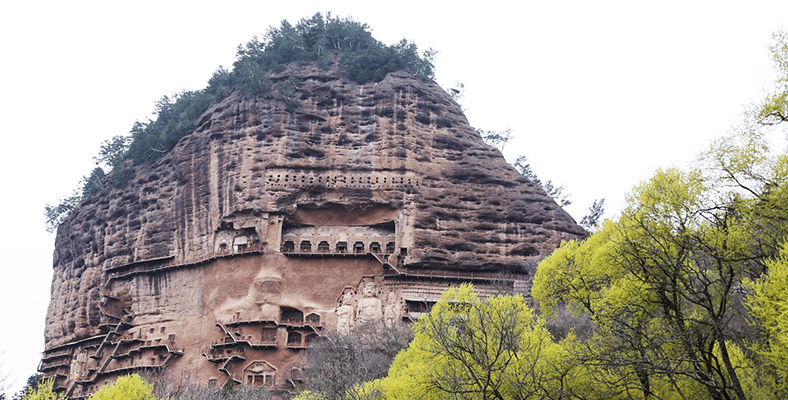


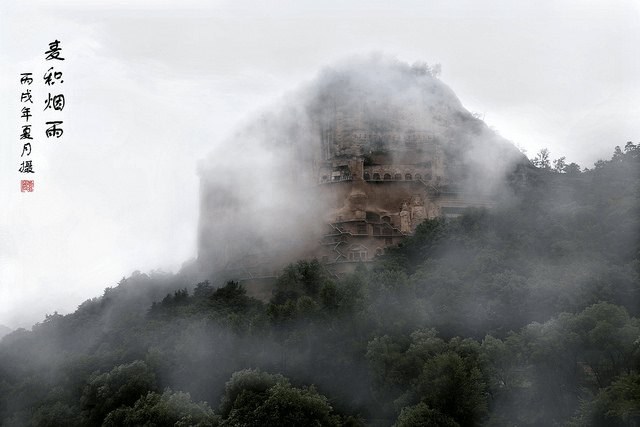


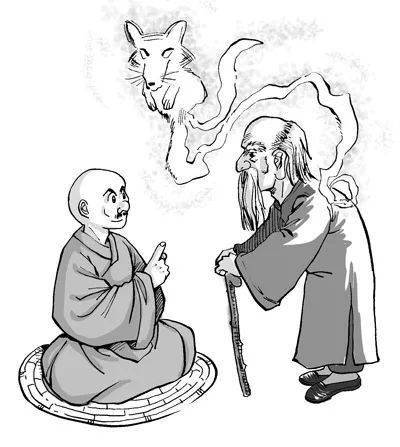



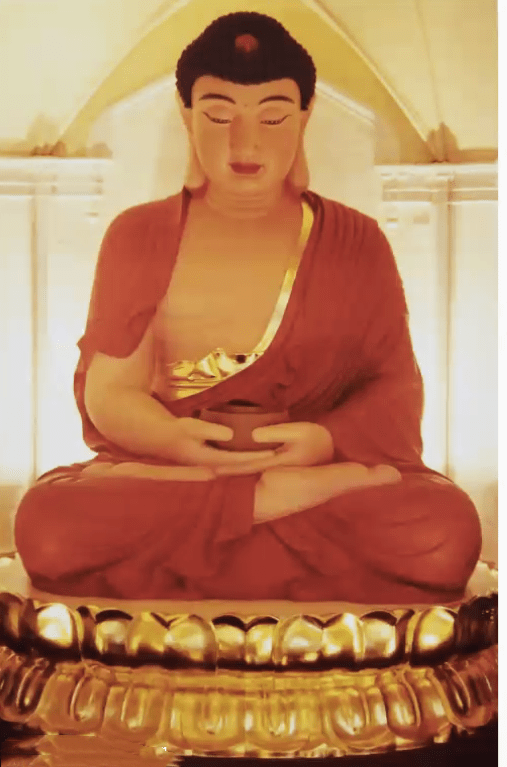


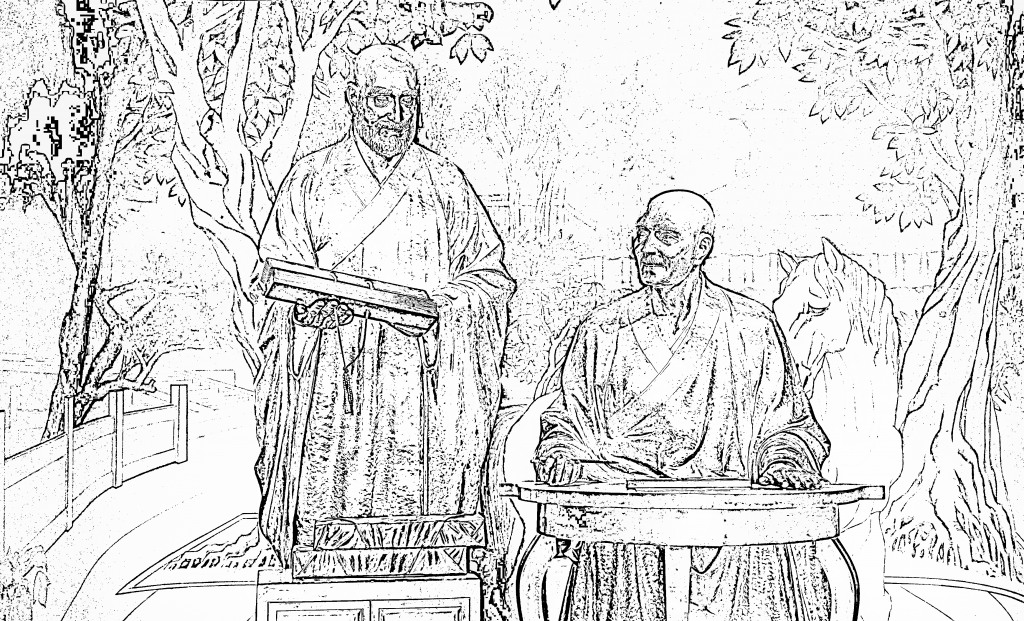


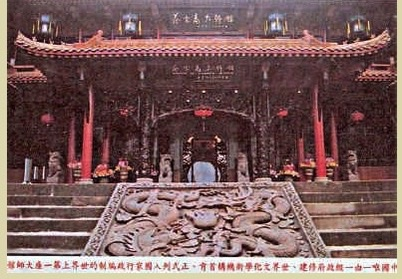










 Peace LiLy