Lingyan Temple: A Millennium of Buddhist Grace and Sculptural Treasures in the Heart of Mount Tai

Photo from Wikipedia

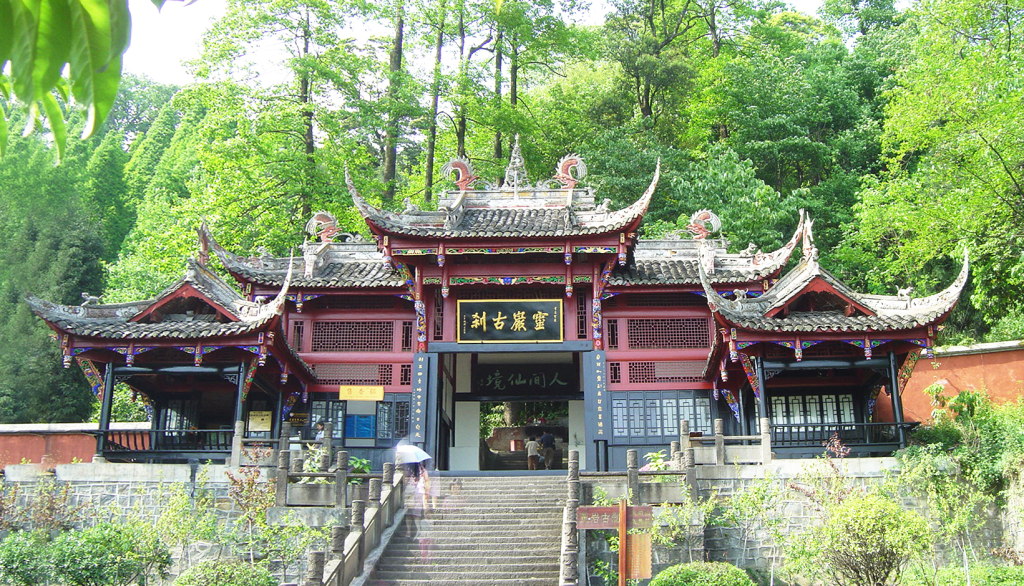
Located in the northwest of Mount Tai, Lingyan Temple was founded during the Eastern Jin Dynasty and boasts a history of over 1,600 years. It is regarded as one of the most important sacred sites of Chinese Buddhist culture. Since the Tang Dynasty, Lingyan Temple has enjoyed great renown, and together with Qixia Temple in Nanjing, Guoqing Temple on Mount Tiantai in Zhejiang, and Yuquan Temple in Dangyang, Hubei, it has been hailed as one of the “Four Great Temples of China.” The eminent monk Tang Xuanzang once resided here to translate Buddhist scriptures. From Emperor Gaozong of Tang onward, many emperors stopped to worship at this temple on their way to perform imperial rites at Mount Tai, a testament to its revered historical status.

Although I personally prefer the majestic beauty of untouched natural landscapes, I was deeply moved by the profound cultural and religious artistry of Lingyan Temple. Within the temple grounds, ancient trees such as Chinese wingnut, cypress, and banyan rise skyward, creating a tranquil and sacred atmosphere. As an integral part of the World Natural and Cultural Heritage site of Mount Tai, Lingyan Temple is especially renowned for its colored clay sculptures of Arhats, which hold a prominent place in the history of Chinese sculpture.

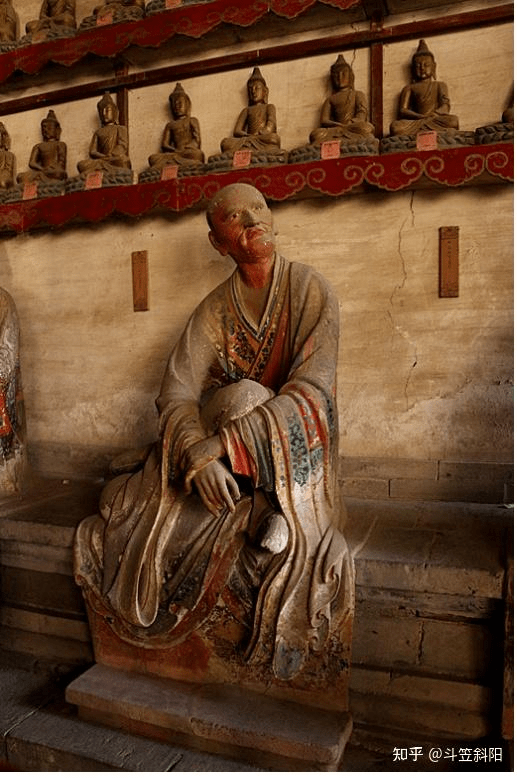
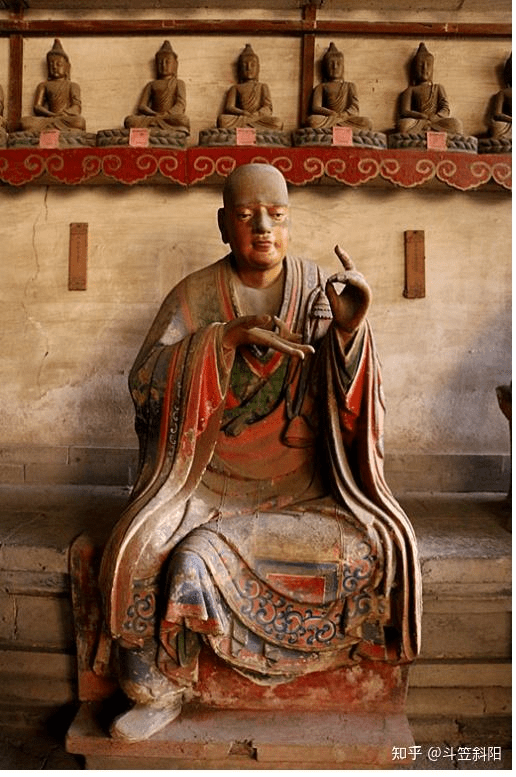
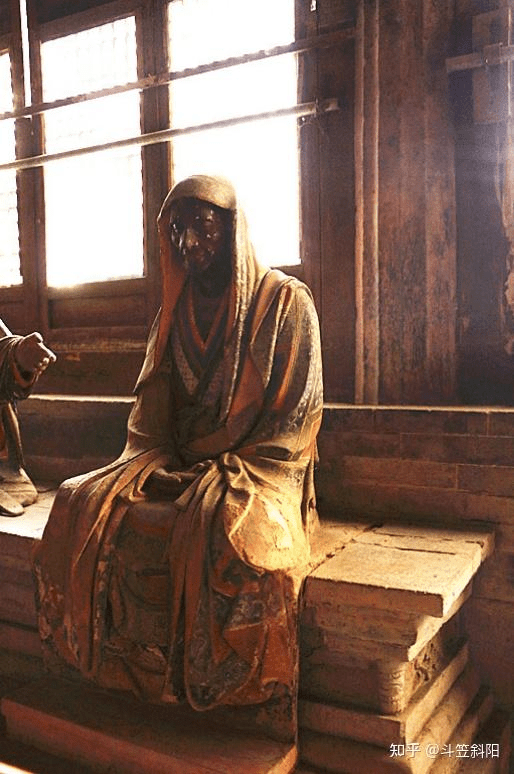
Stepping into the solemn Thousand Buddha Hall, one is struck by the breathtaking sight of the Arhat statues—40 lifelike clay figures arranged in a semicircle along the inner walls. Among them, 29 represent disciples of Shakyamuni and Indian masters such as Bodhidharma and Kumarajiva. The remaining 11 depict eminent Chinese monks, including Huiyuan, Huike, Huichong, and various abbots of Lingyan Temple. According to inscriptions and scholarly research, the original set consisted of 32 statues, first created in the third year of the Zhiping reign of Emperor Yingzong of the Song Dynasty (1066). Additional painting and sculpting were done in the first year of the Zhiyuan reign (1328) during the Yuan Dynasty. The Thousand Buddha Hall was renovated in the 15th year of the Wanli reign (1587) in the Ming Dynasty, at which time the number of Arhats was increased to 40. The final touch-up was completed in the 13th year of the Tongzhi reign (1874) of the Qing Dynasty.

Each statue stands about 1.6 meters tall and is seated on a waist-high brick pedestal roughly 80 centimeters in height, with the top of each statue rising 105 to 110 centimeters above the seat. The overall sculptural style is remarkably realistic, emphasizing the individuality and inner spirit of each figure: square faces, prominent noses, distinct facial features, and dynamic, textured robe patterns. The ancient artisans broke away from conventional, stylized Buddhist iconography and instead grounded their work in real life, endowing each Arhat with unique expressions and postures—some sit in meditation, others clasp their hands or hold staffs; some appear ragged and emaciated, while others exude noble dignity and elegance. Each figure is infused with spirit and personality, appearing almost alive, as if they might speak or move at any moment.

What’s even more astonishing is the meticulous attention to detail in both facial expressions and bodily movement, as well as the relationship between the robes and the human form. The flowing lines of the garments, the way the folds respond to motion, and the tactile quality of the fabric all reflect a masterful understanding of form and rhythm. One medical expert even remarked that, “Through the Arhats’ robes, one can perceive the ancients’ precise grasp of human anatomy.”

The Arhat sculptures at Lingyan Temple are not only masterpieces of religious art but also represent the pinnacle of ancient Chinese realistic sculpture. The renowned scholar Liang Qichao once visited the site and inscribed a stone tablet calling them “The finest sculptures in the land.” Famed art master Liu Haisu also praised them, writing: “The Arhats of Lingyan—first under heaven—vivid and lifelike, with flesh and spirit.”

Lingyan Temple is more than a place of worship—it is a living chronicle of Buddhist heritage carved from clay and shaped by the hands of genius. Whether you are a devout practitioner, a history enthusiast, or an art lover, a visit to Lingyan Temple will surely leave you moved by its rich cultural legacy and breathtaking artistic beauty.

Link:https://peacelilysite.com/2025/07/31/lingyan-temple-a-millennium-of-buddhist-grace-and-sculptural-treasures-in-the-heart-of-mount-tai/

Nezha: From Buddhist Origins to a Chinese Cultural Icon

Recently, the animated film Nezha 2 has become incredibly popular, reaching the top spot in global box office earnings for animated movies. While many believe Nezha is a character from Chinese mythology, his origins can actually be traced back to Buddhist scriptures.

Vaisravana

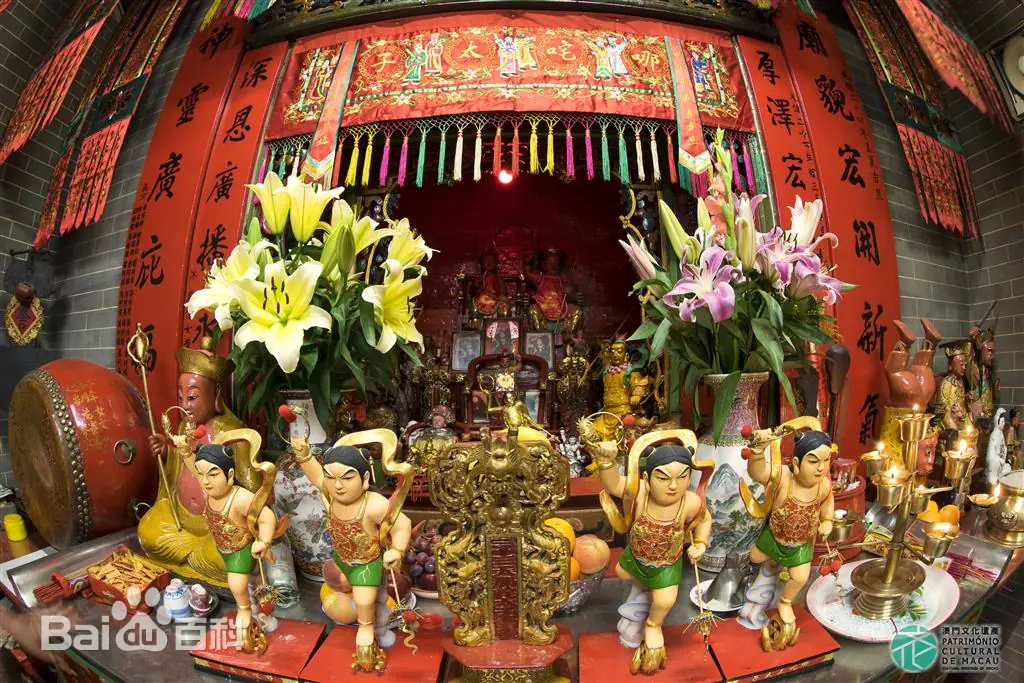
Nezha’s name first appeared in Vajrayana Buddhist texts, where he is associated with the role of a Dharma protector. He is described as the third son of Vaisravana, one of the Four Heavenly Kings. According to The Ritual of Vaisravana, “The Heavenly King’s third son, Prince Nezha, holds a pagoda and always follows the King.” His duty is to assist his father in safeguarding the Dharma, driving away evil forces, and protecting humanity. In The Mantra of the Dharma Protector Following the Northern Vaisravana Heavenly King, translated by the eminent Tang Dynasty monk Amoghavajra, Nezha is again referred to as Vaisravana’s third son. Other Buddhist texts from the Tang Dynasty, such as The Awakening of Faith in the Mahayana and The Lotus Sutra, also mention Nezha.

In Buddhism, Dharma protectors and yaksha deities often have fierce appearances, symbolizing their hatred of evil and fearless bravery. As a result, Nezha is typically depicted with a wrathful and intimidating image. As Buddhism spread to China, many Buddhist stories and figures gradually merged with local Chinese culture, giving rise to new belief systems. Over time, Nezha became integrated into Taoism and Chinese folk beliefs, forming a unique cultural phenomenon.

The story of Nezha is filled with many well-known and beloved episodes, such as his birth from a ball of flesh, cutting his flesh and bones to repay his parents, and being reborn from a lotus flower. Although this scene cannot be found in modern Buddhist scriptures, it became a popular topic among monks after the Song Dynasty. For example, Volume 1 of The Comprehensive Collection of Zen Verses on Ancient Cases mentions: “Prince Nezha offered his flesh to his mother and his bones to his father, then manifested his true form and used his divine power to preach to his parents.” This suggests that the story of Nezha sacrificing his flesh and bones likely originated from Buddhist texts. Although the exact cause and details are unclear, this story undoubtedly provided a prototype for later adaptations in folk literature.

As Buddhism spread throughout China, the assimilation of foreign religions by local culture and the evolution of folk beliefs gradually transformed Nezha’s image, steering it away from its original Buddhist context and toward a more Chinese identity. After the Tang Dynasty, the worship of Vaisravana (known as Bishamonten in Japan) reached its peak in China, gaining widespread recognition from both the imperial court and the common people. He was honored in official rituals and revered by many folk believers. Simultaneously, Li Jing, a prominent Tang Dynasty military general, became a popular figure of worship as a god of war. Renowned for his military campaigns against the Turks and Tuyuhun in the northwest, Li Jing was deified as early as the Tang Dynasty, with dedicated temples built in his honor during the Song Dynasty.

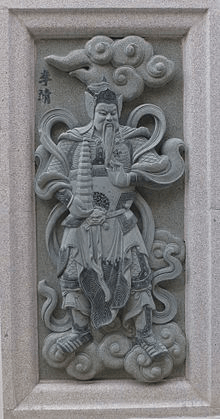
Li Jing’s temple wall statue

The broader and deeper the spread of a belief, the greater the possibility of its transformation and integration with other cultural elements. Over time, through public imagination and interpretation, the belief in Vaisravana merged with the worship of Li Jing, forming a new deity known as “Pagoda-Wielding Heavenly King Li” (Tuota Li Tianwang) by the Song Dynasty at the latest. From then on, Vaisravana took on the surname Li and became more secularized and localized within Chinese culture. Since Li Jing became identified with Vaisravana, it was only natural within folk beliefs to regard Nezha as Li Jing’s son. This marked Nezha’s departure from the cultural context of foreign religions and his integration into the Chinese pantheon.

This transformation made Nezha a more relatable and accessible figure, understood through the lens of native cultural concepts. As a result, Nezha’s story gained broader appeal, providing ample room for reinterpretation and adaptation in later generations.

Nezha holds an important place in ancient Chinese mythology. Under the influence of Taoism, he was endowed with more mythological attributes, portrayed as a young hero with powerful magical abilities who frequently battles demons and protects the people. His story further developed in classic literary works such as Journey to the West and Investiture of the Gods, where Nezha became a symbol of justice and courage.

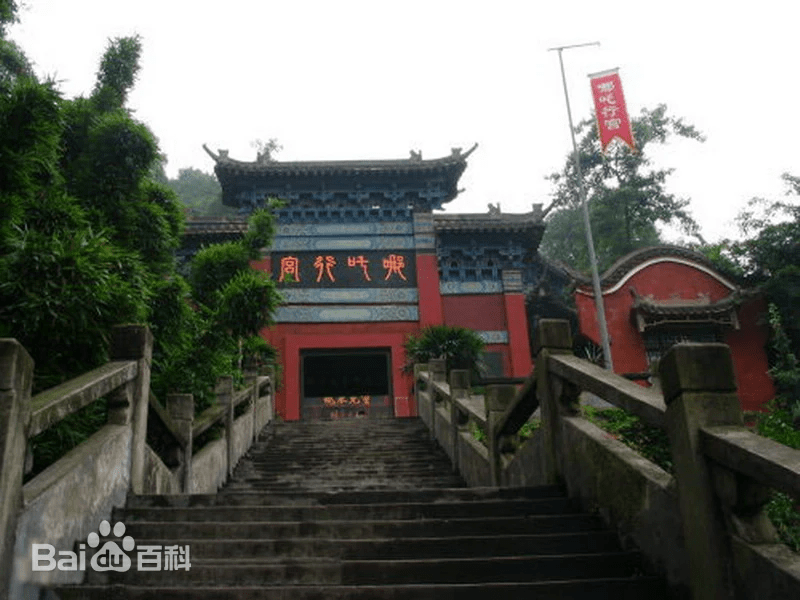
Nezha Temple in HeNan China

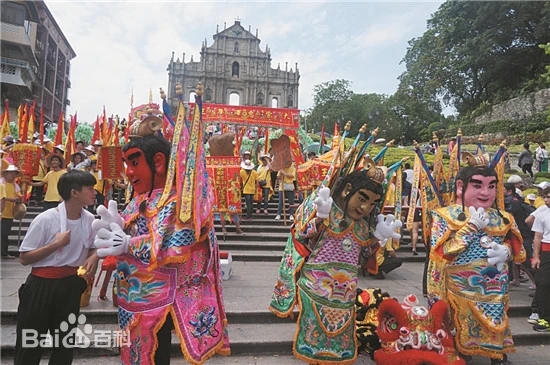
Folk worship activities for Nezha

Link:https://peacelilysite.com/2025/02/21/nezha-from-buddhist-origins-to-a-chinese-cultural-icon/

Ananda and the Untouchable

A Buddhist Story of Loving Kindness

By Martin Goodson

One day Ananda, the Buddha’s assistant, approached a well to have a drink.  A woman, a member of the untouchable caste, was drawing water and Ananda asked her for some.  The woman was surprised that she had been asked to give anything to a monk as the caste laws stated that anything given by one who is considered unclean would also be unclean.  However, Ananda persisted and eventually she gave in and gave him a drink.

The woman was so moved by this experience which had never happened before that she felt a strong affection for Ananda and made up her mind to serve him.  Thus, she went to the Buddha and asked if she might be Ananda’s assistant. 

  The Buddha asked her why she wanted to do this.  She told him.  The Buddha replied that what she had fallen in love with was not Ananda but his kindness.  Also, that this kindness was present in her own heart and that if she were to cultivate it within  she would be able to serve both kings and queens.

This is a lovely story about the power of goodwill or ‘metta’ to affect the heart. The Buddha taught that the most important element of any act is the motivation behind it.  All of us are capable of ‘doing the right thing’ but this is not really enough; the motivation behind the action determines the outcome.  A common Buddhist practice is the practice of acquiring merit in order to ensure a good future re-birth.  This is akin to the old Christian view of doing good so as to go to heaven after death.  However, if I am doing good solely for the outcome to myself then the act is already flawed.  What is more it shows itself to others in time.  We all know the stereotype of the do-gooder who is so caught up in bringing about some future good that he ignores whether or not the other person requires help in this way.  The problem with trying to do good for others when in fact I am looking for something for myself is that I fail to see what it is that others really do need right now. Both self-concern and regard for others are two very different way of seeing the same situation.  

When the heart has for a moment forgotten ‘I’ and ‘my concerns’, and this does happen more often than realised, then it opens up and reflects the situation.  What is more, not only does it see clearly,  but, because it is a human heart, it responds with the warmth of humanity.  This happens, not because it wants anything, but because it is its nature to do so.  Humans have the capacity to put themselves in the other’s shoes and thus respond without intending something just for myself.  This is also reflected in Jesus Christ’s admonition to ‘Love thy neighbour as thyself’.  In other words, by forgetting myself I forget the separation from others too.  Thus, a true ‘fellow feeling’ is born and this is the root of metta and of compassion .

Link:https://peacelilysite.com/2024/04/26/ananda-and-the-untouchable/

Source: https://www.thezengateway.com/practice/ananda-and-the-untouchable