The lucky door in life is always inadvertently opened. Maybe it’s the blessings from the Buddha and Boddhisatva.
I remember that day, a critical turning pointin my life.I was exercising in the community that day, a surnamed Meng dharma sister asked me to worship the Buddha in the Buddhist Hall nearby. I agreed with her as soon as I heard the invitation. The dharma brothers and sisters made me feel at home. It’s totally different from the people I met in my life, most of whom treated me courteously but without sincerity. So I decided to chant sutras and listen to the recorded discourses expounded by H.H. Dorje Chang Buddha III with dharma brothers and sisters. I felt like it’s the place that I should come. Then I couldn’t help crying when chanting sutras, and I would repent. Every time after listening the recorded Buddha dharma discourses, I was filled with endless power.
To my shame, I never settle down to study, but hurry to come and leave the Buddhist Hall owing to busy work. With my diligence for listening the dharma discourses, I make progress and schedule time for study in the Buddhist Hall. Undoubtedly, we want to lead a good life, but learning Buddhism is more important, we can and we have to plan enough time for study.
On the National Day in 2016, I gave up travelling with my family but took part in the Avalokiteshvara Bodhisattva Great Compassion Empowerment Dharma Assembly, from which, I truly knew the great Buddha Dharma is true and real. The next day I converted to Buddhism. I was earnest and pious in studying Buddhism after conversion.
The Buddha taught us to conduct cultivation and introspection, to conduct three introspections in the course of a day. I found myself did many things that I should not do in the past, including killing other living beings. When I realized the retribution of killing, I decided not to kill, while turned to vegan at dinner, and on the first day and the fifteenth day of the lunar calendar.
I’ve been doing prostrations since the dharma assembly. Now I have a fit body and my wine tummy is gone. My blood pressure used to be a little bit high, but now it’s stable. I don’t feel panic or worried if travelling by plane or driving. I sleep well all night after chanting H.H. Dorje Chang Buddha III.
Some people think that it takes time to learn Buddhism and it will affect the business and work. However, my business is more prosperous since I’ve taken Buddhism. Numerous long-term orders come for me. Several days ago, the municipal government called me for delivery. I was surprised, because I didn’t have the resource superiority. I focused on social engagement and seldom stayed at home in the past. Now I cherish and care about my family. My son usually asks me to spend time with him. Taking Buddhism makes me healthier and my family relationships more harmonious.
I truly know that Buddhism brings me happiness, so I am determined to do my best to make offerings to Buddha Halls. With the help from dharma brothers and sisters, I set up a Buddha Hall at home. My family also join me to study Buddhism.
All above is my own experience. I hope everyone has the karmic affinity to study the true Dharma of Tathagata. We all eager for a happy life, but making money is only a part of it. The health and happiness we have on this side is temporary, while attaining the accomplishment and liberation on the other side is the truth.
My husband and I have a son and a daughter. My daughter was employed in a bank and my son ran a chemical business in the bonded area. Although the competition was fierce, my son was smart and flexible, he made his career. Soon the children grew to the age for marriage, we bought a car and a big suite at the lake scenic area. Then we had a daughter-in-law, married our daughter. We became grandparents the second year. My husband and I learned Buddhism and cultivation while taking care of our grandchildren. We lived a full life and enjoyed the happiness of our family. After two years’happy life, my son wanted to switch to project contraction because of the hard competition and low profit in the chemistry business. No matter how we discouraged him, he didn’t change his mind. Finally, we urged him not to gamble or turn to high-risk lenders, he should think twice and keep wits on dealing matters. My son flew to different cities to struggle for business. The assets could reach to ten million at most. At the peak of his career, he undertook hundreds of millions of decoration projects and led hundreds of workers. We often asked him about the business, he always understated the situation and told us not to worry, he said what we need to do was learning Buddhism and taking good care of the grandchild. Later, my son came back home more and more frequently, and he avoided answering phones in front of us. We became nervous. It was after different people came for millions of debts that we knew what was a bolt from the blue. I used to hear that Jack was bankrupt, Tom was cheated and John had an accident, but I didn’t expect that it was our turn. It turned out that my son put a lot of money into the project, and he also borrowed millions of money for emergency. The first party has to pay some money after the project passed the acceptance checks, but it withheld the money and didn’t fulfill the contract. My son sued the first party after he failed to get the money back in several months. However, the creditors were demanding to be paid every day. It is compulsory to pay what you owe. We deeply knew that we couldn’t err on the causality, so we tried our best to help our son to settle debts, but the money we had was still far from enough. We borrowed money from all people we knew without caring about losing faces. However, people usually busily embroidering more flowers on the brocade rather than sending charcoal to the needy on a snowy winter day. In this situation, we sold the house and car to repay most of the debts.
During the process, I remembered what H.H Dorje Chang Buddha III taught us: everyone knows to cultivate themselves in prosperity, the problem is how to deal with it in adversity? When you rise with money and power, or when you’re down and out with pain, can you remain the inner peace no matter how the circumstances change? This is a litmus test for me and my family. Taking Buddhism makes me realize that the process of impermanence is the truth. Our body will go bad, the wealth we have will dwindle, so are the house and car, now they’re just gone in advance. It’s all about causality. As long as we can make ends meet, nothing weighs more than life and death. No matter how rough life is, you must move forward, to make choices between the gain and loss and be strong in the experience. We will experience all kinds of hardships in the way of practice. Only if you want to extricate yourself from suffering do you truly cultivate yourself. To establish a mind determined to leave the cycle of reincarnation helps us leave suffering and obtain happiness in the end.
Though we are difficult in material condition, we have a rich spiritual life. We are lucky to have H.H Dorje Chang Buddha III imparting Buddha dharma in this world, we happily took refuge to the Buddha, Dharma and Sangha, and we listen and learn from the recorded Buddha dharma discourses with great joy. These can’t be bought with gold and silver. Anyway the wind blows, doesn’t really matter to me. With the light of Buddhism, my family and I will walk down the path firmly. My son becomes mature after this setback. I believe the lesson is a supporting condition for his life. If we don’t study Buddhism and believe in causality, this disaster may push my family into a doomed vortex. Crying our eyes out, holding grudges, be in a violent rage, collapsed after the straits and trying to commit suicide? No, we don’t behave like that. We settle our debts in causality, and demand unpaid money from the first party through legal methods. Buddhism gives us wisdom and power to deal with everything reasonably and calmly. All negative karmic conditions and sufferings make me and my family to cherish Buddhism and the chance for incarnating as a human being, guiding us to the path of bodhi. I believe every struggle after the hardship is the chance to change fate.
In the famous words of Ferris Bueller, “Life moves pretty fast. If you don’t stop and look around once in a while, you could miss it.” Put simply, gratitude is the intentional practice of noticing the good in your life. It relates to anything that makes you feel grateful, fortunate, or blessed.
It can be easy to get swept away in the fast lane and forget to stop and show your appreciation for what you do have. A life well lived is one of gratitude and thankfulness. Gratitude is the intentional practice of noticing the good in your life. It relates to anything that makes you feel grateful, fortunate, blessed. At this Thanksgiving holidays, we should think more and more about the things we are most grateful for in life.
To help you on your gratitude journey, here are 8 ways to have more gratitude in your daily life not just on Thanksgiving.
1. Don’t be picky: appreciate everything
Gratitude doesn’t have to be saved for the “big” things in life. The habit of being grateful starts with appreciating every good thing in life and recognizing that there is nothing too small for you to be thankful for.
Even if it is as simple as appreciating the clear weather or how quickly your mailman delivered your mail last Friday, don’t leave anything out when practicing your gratitude.
2. Find gratitude in your challenges
Gratitude is not only about being thankful for positive experiences. In fact, sometimes thinking about negative or difficult situations can help to really nail down what you have to be thankful for.
Western Buddhist master Jack Kornfield remembers an exercise he did with a man who was caring for his grandson while his son and daughter-in-law battled a drug addiction. Despite all that he had been through, the man was still able to find gratitude for the amount of compassion he had learned to show and the impact he was able to have on other people.
Dig a little deeper into some of your own past experiences and try to figure out how they have helped shape you into the person you are today.
3. Practice mindfulness
Sit down daily and think through five to ten things you are grateful for. The trick is that you need to picture it in your mind and sit with that feeling of gratitude in your body. Doing this every day will rewire your brain to be naturally more grateful, and you’ll start feeling happier after every session.
It only takes eight weeks of gratitude practice for people to start showing changed brain patterns that lead to greater empathy and happiness.
Your brain is a powerful tool, and training it towards gratitude is all part of ensuring that the gratitude comes more easily as you practice, so what are you waiting for?
4. Keep a gratitude journal
After your mindfulness session, write down your positive thoughts! Keeping a journal of all of the things you are thankful for can help you keep track of and refer back to the positives in your life.
Write down your positive thoughts to further focus your attention on the subject. While you are putting the pen to paper, you have no choice but to consciously think about the words you are writing without other distracting, ungrateful thoughts.
You can journal every day after your gratitude practice, or you can come back to the journal on a regular schedule weekly or monthly.
5. Volunteer
For many people, the key to having more gratitude is to give back to others in their local community. Not only will it make you more grateful for the things that you may take for granted, but studies have shown that volunteering for the purpose of helping others increases our own well-being, and thus our ability to have more gratitude.
University of Pennsylvania professor, Martin Seligman, supports this theory with his research in Flourish: A Visionary New Understanding of Happiness and Well-Being. After testing all kinds of variables that help improve our well-being, he found that volunteering is the single most reliable way to momentarily increase your well-being.
In other words: helping others helps you!
6. Express yourself
Sometimes it’s not enough to simply keep your gratitude to yourself. You can increase your feelings of gratitude by expressing that same gratitude to the people you care about.
Soul Pancake, a group that works to discover the “science of happiness,” ran an experiment where they encouraged people to write a letter to a person they were grateful for. By itself, this exercise increased their levels of happiness from 2 to 4%. However, when the same people made a phone call to the person they were thankful for to express their gratitude directly, happiness levels jumped from 4% to 19%.
Not only does expressing your gratitude for someone make their day a little brighter, but it can do wonders for increasing your own levels of gratitude and happiness in the long run
7. Spend time with loved ones
If you’re struggling with feeling the gratitude in the moment, go spend time with your friends and family. Of course it will help you grow closer to them and strengthen your relationship, but it will also give you a chance to practice your acts of gratitude on people that you care about.
Start small if they’re having trouble finding ways to support your friends and family. For instance, why don’t you make sure you’re listening intently the next time someone shares a story with you instead of waiting for your own chance to speak? Or start a conversation with a difficult member of the family by complimenting their new shoes or hair-cut.
8. Improve your happiness in other areas of your life
Being grateful can make you happy, but being happy can also make you grateful. There are plenty of other ways to get your mood up, including exercising or participating in a hobby you enjoy.
Once you are feeling the endorphins flow, showing gratitude will become even easier and you’ll start to be able to make list after list of all of the things in your life you’re thankful for.
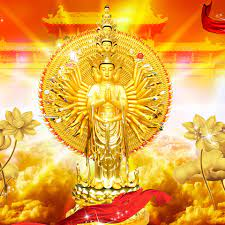
GuanShiYin (Avalokiteshvara) Bodhisattva is a well-known Buddhism figure in China and southeastern Asian. There are many different kinds of status and portraits of Guan Shi Yin Bodhisattva in the world. The most legendary one is one thousand-armed and one thousand-eyed form.
The Bodhisattva is personified as the symbol of compassion, and is frequently mentioned as the god of mercy who will help anybody who finds himself in trouble mentally or physically. He can infallibly eradicate all mundale sufferings. In order to achieve his ends, he can assume various forms, According to the text Karandavyuha Sutra he manifests all possible forms of life for the sake of ignorant and to bring liberation to living. It says: “As different people belonged to different faiths, this compassionate Bodhisattva was obliged to assume the shape of all gods of all faiths.”
Avalokiteshvara, the Bodhisattva of compassion, in front of Buddha Amitabha made to commitment to intentionally manifest into the three realms of Samsara in order to harrow the depths; that is to say, in order to stir from depths and completely liberate all sentient beings from samsara, and to be their supreme guide. Thus in the presence of Buddha Amitabha, Avalokiteshvara made this promise. Also he vowed that if by chance his compassion and his courageous mind of mercy for sentient beings were to decrease, then may his head and his body just completely crack and fall into one thousand pieces.
When Buddha was residing at the Veluvana garden he was surrounded by Arahats. There were five different divine rays coming out of his circle of hair between the eyebrows in the middle of the forehead and gradually it formed itself into a rainbow. Thereafter it went to the north in the direction of the Himalaya country of Tibet. At that time Buddha looked and smiled, then immediately Bodhisattva Sarvanivarana Viskambhi asked Buddha, What is the reason of your smiling, Lord? Buddha answered, “Noble boy! In the future there will be a pure Dharma through which one can be delivered to the path of liberation in the barbarian country of Tibet where there has never been a single Buddha for three junctions of time and there are uncountable demons and ghosts yet to time. “Therefore, Avalokiteshvara will tame those wild men, because once upon a time when he was a Bodhisattva he prayed to One thousand Buddhas Saying,” May all the transcendent bless me to be able to time those beings who are into barbarian country. May you bless that barbarian country through my taming, May you bless me to become the parent of those ghosts and demons;. May you bless me to free all those beings.
Once Amitabha Buddha placed his hand on the head of Avalokiteshvara and commanded that noble son, “Now you be the one who can tame the animated beings of the barbarian snow land whereas not a singly Buddha of the Three times has been there. This is the fruit of your sincere prayer for the purpose you have wished. Those suffering beings will be emancipated from the three lower realms as soon as they see your young holy body and hear the sound of the six mystic syllables, Om mani padme Hum. May your Bodhimind be manifested to the minds of ghosts, demons, evil spirits and hobgoblins and may they be striving with their minds for the benefit of others like Bodhisattvas, instead, of harming others. May all carnivorous animals-such as tigers, leopards, bears and snow bears abandon the mind of eating others and turn into the love of parents for each other, seeing your holy body and hearing the sound of the six syllables.
After making such commitments and blessings from Buddha Amitabha, Avalokiteshvara went by way of international manifestations into the three realms of samsara to be the supreme guide for all sentient beings.
Thereby he went to Hell and emancipated them from both the hot and cold hells by teaching the On mani padme hum. Then he went to ghost realms and emancipated from hunger and thirst after giving a discourse on the same. After that he went to the animal realms and emancipated them from hardship in labour. Then he came to the human realms and emancipated them from the intense suffering of birth, old age, sickness and death by a discourse on the same, Thus he also went to Asura realm and Deva realm to free them from their respective sufferings.
So Avalokiteshvara went into of these realms of Samsara, and he absolutely emptied the ocean of sufferings. Following which he went back to Buddha Amitabha and he declared that the liberation had been affected.
Buddha Amitabha said to him,” You should look back again into world!” And as he did, there he saw that once again sentient beings were in samsara and in sorrow, he became so discouraged as he saw that his “awakening mind (Bodhicitta) decreased in the moment he lost his courage. When he became discouraged, in that moment, the promise that he had made earlier declined.
The three realms of Samsara are Kamadhatu, the desire realm, the Rupa dhatu, the Form realm and the Arupya dhaty, the formless realm,. These three reams are so vast and so are the different types of suffering that sentient beings must experience in these realms. When Avalokiteshvara beheld that still sentient beings were in this type of suffering condition in these three realms respectively, he become overcome with sorrow, he become discouraged in the very presence of Buddha Amitabha. He felt how could the time come to ever liberate all sentient beings from this type of promise that he had made before, his head and body just cracked and fell apart into one thousand prices, and he fainted.
Avalokiteshvara, thus fainted, and Buddha Amitabha said to his “My son, where has your courage, your mental strength gone? He picked up all the pieces of his head and the body. At the same time he said,” this happened because of your prayer. You deserve the praise of all Buddhas since your prayer was efficacious. However, Noble son Don’t worry! Thereby he blessed his broken head into eleven faces and he sat upon those heads, and his broken body into one thousand hands like one thousand petals. Thereafter he said,” I bow to you because your one thousand hands are the hands of the thousand universal emperors and those eyes in each of the hand palms are eyes of one thousand Buddhas who will appear in this fortunate aeon.
There are so many beautiful, powerful and life changing lessons you can learn from studying Buddhism and from reading many of Buddha’s quotes.
Here are 20 Life Changing Lessons from Buddha:
1. Love heals all things. “Hatred does not cease by hatred, but only by love; this is the eternal rule.”
2. It’s not what you say but what you do that defines you. “A man is not called wise because he talks and talks again; but if he is peaceful, loving and fearless then he is in truth called wise.”
“A dog is not considered a good dog because he is a good barker. A man is not considered a good man because he is a good talker.”
3. The secret of good health is to live fully in the NOW. “Do not dwell in the past, do not dream of the future, concentrate the mind on the present moment.”
“The secret of health for both mind and body is not to mourn for the past, nor to worry about the future, but to live the present moment wisely and earnestly.”
4. Words have the power to both hurt and heal. “Words have the power to both destroy and heal. When words are both true and kind, they can change our world.”
5. Let it go and it will be yours forever. “You only lose what you cling to.”
6. No one can walk your path for you. “No one saves us but ourselves. No one can and no one may. We ourselves must walk the path.”
7. Happiness never decreases by being shared. “Thousands of candles can be lit from a single candle, and the life of the candle will not be shortened. Happiness never decreases by being shared.”
8. Be kind to all. “Resolve to be tender with the young, compassionate with the aged, sympathetic with the striving and tolerant with the weak and wrong. Sometime in your life, you will have been all of these.”
“Have compassion for all beings, rich and poor alike; each has their suffering. Some suffer too much, others too little.”
“Teach this triple truth to all: A generous heart, kind speech, and a life of service and compassion are the things which renew humanity.”
9. Don’t believe everything you are told to believe. “Do not believe in anything simply because you have heard it. Do not believe in anything simply because it is spoken and rumored by many. Do not believe in anything simply because it is found written in your religious books. Do not believe in anything merely on the authority of your teachers and elders. Do not believe in traditions because they have been handed down for many generations. But after observation and analysis, when you find that anything agrees with reason and is conducive to the good and benefit of one and all, then accept it and live up to it.”
10. As you THINK so shall you be “All that we are is the result of what we have thought: it is founded on our thoughts and made up of our thoughts. If a man speak or act with an evil thought, suffering follows him as the wheel follows the hoof of the beast that draws the wagon…. If a man speak or act with a good thought, happiness follows him like a shadow that never leaves him.”
11. Let go of fear. “The whole secret of existence is to have no fear. Never fear what will become of you, depend on no one. Only the moment you reject all help are you freed.”
12. The truth has a way of always leaking out. “Three things cannot be long hidden: the sun, the moon, and the truth.”
13. Control your mind or it will control you. “To enjoy good health, to bring true happiness to one’s family, to bring peace to all, one must first discipline and control one’s own mind. If a man can control his mind he can find the way to Enlightenment, and all wisdom and virtue will naturally come to him.”
“It is a man’s own mind, not his enemy or foe, that lures him to evil ways.”
14. Doubt separates. Trust unites. “There is nothing more dreadful than the habit of doubt. Doubt separates people. It is a poison that disintegrates friendships and breaks up pleasant relations. It is a thorn that irritates and hurts; it is a sword that kills.”
15. Nobody is more deserving of your love than you yourself are. “You can search throughout the entire universe for someone who is more deserving of your love and affection than you are yourself, and that person is not to be found anywhere. You, yourself, as much as anybody in the entire universe, deserve your love and affection.”
16. Knowing others is wisdom, knowing yourself is enlightenment. “It is better to conquer yourself than to win a thousand battles. Then the victory is yours. It cannot be taken from you, not by angels or by demons, heaven or hell.”
17. Let go of attachment. “To live a pure unselfish life, one must count nothing as one’s own in the midst of abundance.”
18. Choose your friends wisely. “An insincere and evil friend is more to be feared than a wild beast; a wild beast may wound your body, but an evil friend will wound your mind.”
19. There is no way to happiness. Happiness is the way. “There is no path to happiness: happiness is the path.”
20. Love. Live. Let go. “In the end these things matter most: How well did you love? How fully did you live? How deeply did you let go?”
The monkey king in Journey to the West was such a thrilling, fascinating, and happy memory in my childhood. I have read the books, comic booklets, and watched the cartoon movies about it many times. The one I liked the most is “The Monkey King makes an Uproar in Heaven”. It ignited my imagination. I wished I could fly on the clouds just like the Monkey King.
The Monkey King is born on Flower Fruit Mountain from a stone egg that forms from an ancient rock created by the coupling of Heaven and Earth. He first distinguishes himself by bravely entering the Water Curtain Cave on the mountain; for this feat, his monkey tribe gives him the title of “Handsome Monkey King (美猴王).” After seeing a fellow monkey die because of old age, he decides to travel around the world to seek the Tao, and find a way to be able to live forever. He eventually found the “Grand Master of Bodhi (菩提祖師),” who taught him the 72 heavenly methods of transformation and a “sumersault cloud” which allows him to travel 108,000 chinese kilometer, almost instantaneously. The Grand Master also give him a name Sun Wukong. Sun is the Sir name, Wukong means “Awakened to Emptiness”.
After angering several gods and coming to the attention of the Jade Emperor, he is given a minor position in heaven as the Keeper of Horses (弼馬溫) so they can keep an eye on him. When Sun realizes that he was given the lowest position in heaven and is not considered a full-fledged god, he becomes very angry. Upon returning to his mountain, he puts up a flag and declares himself the “Great Sage Equal to Heaven (齊天大聖).” The Jade Emperor dispatches celestial soldiers to arrest Sun Wukong, but none succeed.
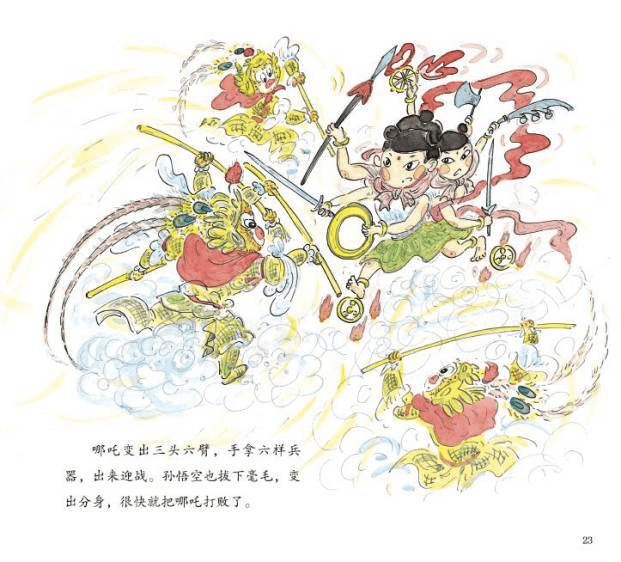
The Jade Emperor has no choice but to appoint him to be the guardian of the heavenly peach garden. The different varieties of peach trees in the garden bear fruit every 3,000, 6,000, and 9,000 years, and eating their flesh will bestow immortality and other gifts, so Sun Wukong eats nearly all of the ripe peaches. Later, after fairies who come to collect peaches for Xi Wangmu‘s heavenly peach banquet inform Sun Wukong he is not invited and make fun of him, he once again begins to cause trouble in Heaven, stealing heavenly wine from the peach banquet and eating Laozi‘s pills of immortality. He defeats an army of 100,000 celestial troops, led by the Four Heavenly Kings, Erlang Shen, and Nezha.
Eventually, the Jade Emperor appeals to the Buddha, who seals Wukong under a mountain called Five Elements Mountain after the latter loses a bet regarding whether he can leap out of the Buddha’s hand in a single somersault. Sun Wukong is kept under the mountain for 500 years and cannot escape because of a seal that was placed on the mountain. He is later set free when Tang Sanzang comes upon him during his pilgrimage and accepts him as a disciple.
When I grew up, I started my own journey in searching the truth and meaning of life and universe. I dabbled in different religions. Finally I became a buddhist. There were many supernormal manifestations in buddhist Sutras. Buddhas, Bodhisattvas and holy venerable ones, demonstrated much much more powers than the monkey king. Such as stories of Shariputra’s action power by wisdom, Mahamaudgalyayana’s supernatural power of going a long distance in a shot time, Master Mi Hong’s trip from Shigatse to ChengDu, etc…. In Buddhism teaching, every disciple who has received initiation has the potential to quickly obtain supernormal dharma powers through practice. One has the potential to easily assume an infinite variety of forms and obtain good worldly fortune.
In the dharma discourse Learning from Buddha, imparted by H.H.Dorje Chang Buddha III. I learned there is a Buddha Dharma called “Fine Horse Traversing the Sky Stepping on Clouds”. When a qualified disciple practice this Dharma, he can fly in the sky. Here is the true account of a fast-flying buddhist nun.
(Reported from Los Angeles) In September 2013, an event of supernatural phenomenon occurred in Los Angeles. Scientists have not been able to explain it. This was about a 49-year old Buddhist nun named Jian Hui, a disciple of H.H.Dorje Chang Buddha III, flying at a speed of 700 km per hour.
This event happened at a Buddhist assembly for beseeching auspiciousness, favorable weather, eliminating disasters, and increasing good fortune. The more than 50 attendees are all famous Buddhist figures. At the time, the ceremonial process required chanting a sutra and burning a letter of petition every 10 minutes. When the fifth letter of petition was to be burned, it was discovered that this letter of petition had been lost by this nun named Jian Hui. She was very sad and could not keep her from crying. Because the assembly could not be stopped and the steps of chanting sutras and burning letters of petition must be followed in the predefined order, it was decided that Jian Hui was to go to Hua Zang Si’s Southern-California satellite monastery located in Monterey Park to get this letter of petition. Some time had passed since Jian Hui left. People became very anxious and they called the satellite monastery to ask when the letter of petition can be brought back. The nuns at that monastery passed the phone to Jian Hui. Jian Hui was quite angry on the phone and said, “Don’t make a fuss! I will be back as soon as possible!” Sure enough, within three minutes after putting down the phone, Jian Hui returned to the site of the ceremony from the monastery that is 12 kilometers away. People at the site were all stunned. A nun at the site named Zheng Hui was very surprised and called the monastery to inquire the whereabouts of Jian Hui. The reply from the monastery was that Jian Hui left just three minutes ago. Further verification later also revealed that, after the phone conversation, Jian Hui also spent time to teach people chanting mantras before leaving for the site of the assembly. Based on the calculation that subtracted the time of delay, Jian Hui traveled this distance of 12 kilometers within at most one minute.
Zheng Hui planned to write this event in a book. To verify the facts, she went to the monastery to talk to the nuns there. They all confirmed, “When you called and said that she had returned to your place, it was just a very short while after she had left.” Zheng Hui then asked Zheng Xue, the nun who handed the phone to Jian Hui, where she was at the time. Zheng Xue took this question as distrusting her and was very upset. She kneeled down in front of the statue of Amitabha Buddha and took an oath against heavy consequences to swear that she received the phone call at the monastery and handed the phone to Jian Hui in person inside the Buddha hall of the monastery. If she told a lie, she is willing to descend into the hell realm. Zheng Hui also took an oath against heavy consequences to swear that, within three minutes after her phone conversation with Jian Hui, Jian Hui returned to the site of the assembly. She is also willing to descend into the hell realm if what she said is untrue. Moreover, eminent Buddhist monks including Gar Tongstan IV Ciren Gyatso, Kaichu, Akou Lamo, Shi Miao Kong, Shi Long Hui, Shi Jue Hui, Shi Kui Zhi and others also completely confirmed from their respective personal presences and witnesses at the two locations that the above event was completely true.
Buddhism from Sakyamuni Buddha has been propagating in the world for more than 2,000 years and has evolved into various sects and schools that emphasize different principles and customs. Patriarchs, eminent monastics, and great virtuous ones all state that they themselves possess the best teachings and dharmas. Each flaunts the ability to teach people to eventually attain accomplishment and liberation. The freedom from birth and death in Buddhism that entails one’s ability to control one’s birth and death freely has always been a legend.
Then, what are the results? Facts showed that, in the process of seeking liberation, very few people actually become accomplished in history. On the contrary, very many people did not attain accomplishment through practicing their dharmas. Examples of those who attained prominently well-known accomplishments include Bodhidharma, Hui Neng, Hanshan, and others. In more recent times, there were Xu Yun, Hui Ming, Sheng Qing, and other elderly dharma masters. Of course, there were also Guru Padmasambhava, Master Tsongkhapa, Master Karmapa, Venerable Atisa, Venerable Suchandra, and others. However, the fact is that such accomplished holy virtuous ones are so rare. Especially during the last 100 years or so, the curernt dharma-ending era becomes more penetrating and more deeply rooted. Ture dharma of the Tathagata has almost become lost from the lineages. Even leading figures of eminent monastics and great virtuous ones of the modern time with worldwide reputations had to pass away amid sufferings at the end of one’s life, unable to end the cycle of birth and death and with no accomplishment to speak of.
H.H. Dorje Chang Buddha III brought the great dharmas of Tathagatas to the human world and has restored the original teachings and dharmas of SaKyamuni Buddha. His Holiness the Buddha continues the lifeline of the wisdom of Buddhas and also leads people to the Buddhist principles and ways that deepen and facilitate cultivators’ accomplishment. Examples are The Supreme and Unsurpassable Mahamudra of Liberation, holy inner-tantric initiations of dharmas of state practice, incomparable rules and systematic ways of cultivation, and supreme and expedient dharmas leading to accomplishment. Such teachings and dharmas are unprecedented by any holy ones in history and cannot be exhaustively mentioned or described.
The accomplishments of H.H. Dorje Chang Buddha III at the pinnacles of the five vidyas and the holy realization of His Holiness the Buddha have all been widely known as real facts in the world. However, what is intimately relevant to us is the abilities of the Buddha in teaching people to become accomplished. Only this is the utmost important matter! Facts from actual practices show that people taught by H.H. Dorje Chang Buddha III attained prominent accomplishments.
At year 2018, a disciple of H.H. Dorje Chang Buddha III, Dharma King Gar Tongstan Ciren Gyatso who was the chairman of the World Buddhism Association Headquarters, demonstrated the world-astounding record of becoming free from birth and death!
Dharma King Gar Tongstan paid respect to and learned from many famous figures of Buddhism. Since he paid homage to and became a disciple of H.H. Dorje Chang Buddha III in 1995, his experience was like having found the most precious and rarest treasure. It was exactly like what Geshe Luosang Zhenzhou, who was the sole Larampa Geshe among the Han Chinese people, said in an interview with news media that his earlier experience of learning Buddhism for sixty years could not compare to what he learned from H.H. Dorje Chang Buddha III in one day. Can you imagine what these words entail!
After having learned the cultivation and dharmas transmitted by H.H. Dorje Chang Buddha III, Dharma King Gar Tongstan gave up all the dharmas that he had learned before and did not get effects from and dedicated himself to practicing the profound Buddha-dharma transmitted by H.H. Dorje Chang Buddha III. His realization advanced by leaps and bounds and he attained perfect good fortune and wisdom. In 2004, he demonstrated the Vajra power of a champion of majestic strength and lifted before a crowd of people the Buddha-bathing lotus tub weighing more than 4,000 pounds to fetch water at a holy Buddha-bathing dharma assembly (CLICK for article. The Dharma King was known as layman Ciren Jiacuo Gyatso then) for article. In 2009, he performed a dharma publicly to cause his spiritual consciousness to exit his body to take a Vajra pill placed at a distance away into his hand. Eventually he enlightened his mind and saw his original nature to realize his dharma body. His undertaking was recorded into the Dharma Discourses in Silver Box that have been widely distributed in the world.
In September 2018, Dharma King Gar Tongstan beseeched His beneficent Buddha Master, H.H. Dorje Chang Buddha III, to perform a session of grand offering of holy fire mandala. He said, “This highest and greatest dharma will prove whether those figures who put up the signs of lineages of schools and sects in society are mundane or holy and whether they are novices of Buddhism who have lost the lineages of true Buddha-dharma or not. Those who carry evil views are making big efforts on the internet and in social-media communities to undermine and slander the cultivation and Buddha-dharma from my beneficent Master H.H. Dorje Chang Buddha III. Only by doing this, can we remove the evils and manifest true Buddha-dharma!”
H.H. Dorje Chang Buddha III said, “You are wrong. One should not cause others to feel bad for one’s own sake. I am not able to perform this dharma. Even if I am to perform it, I can only chant according to the ritual.”
Dharma King Gar Tongstan beseeched again, “Even if the dharma is not to be performed for proving my beneficent Buddha Master, the dharma still needs to be performed for stopping disasters and praying for good fortune for living beings in the entire western world and also for me, Disciple Gar Tongstan Ciren Gyatso, to beseech true Buddha-dharma and perfect resources of cultivation!”
H.H. Dorje Chang Buddha III then said, “Since this is for the karmic conditions about the great event of true Buddha-dharma in the entire Western world to pray for good fortune to benefit sentient beings, you can take it easy. This dharma assembly has to be performed. Even if I do not do that, there will be a tremendously great holy virtuous one to perform the dharma.”
On September 17, a specialist of metallic manufacturing led a team of people to have a brass mandala stove made in time. On September 18, Sister Xuan Hui was brought the sandalwood pieces and charcoals to be used for burning homas during the fire offering. On September 19, the “Grand Dharma Assembly of Holy Fire Offering” was formally held with the grand opening of the mandala at the Holy Miracles Temple in the United States of America.
Grand Hall in Holy Miracles Temple
The “Dharma of Holy Fire Offering” is regarded as the king of dharmas for halting disasters and increasing good fortune. Such dharma was performed successfully only by Master Phapongka and Kangsa Rinpoche in Tibet about 80 years ago. Since then, the so-called fire-offering dharmas in both Tibet and regions of Han Chinese are only described as holy dharma practices in books and verbal words without the actual manifestation of any holy state. All is based on chanting the ritual and explicit practices of worldly ways.
On the contrary, during the Grand Dharma Assembly of Holy Fire Offering presided by a tremendously great holy virtuous one at the Holy Miracles Temple in America, Vajra Female Mahasattva arrived in person in the empty sky, emitting light throughout Her tall and huge blue-colored body. In an article published on the internet, someone said that with the pointing of a finger, Vajra Female Mahasattva ejected a ray of flashing light and flame began to burn inside the mandala stove.
They saw that Vajra Female Mahasattva manifested in the empty sky and She was very tall and extremely solemn and majestic. She acted with changing bodily movements and postures. There was a net of electric fire circling around Her body. As soon as the fire-igniting guard of the dharma assembly finished the beseeching prayer, a flash was emitted from between the eyebrows of Vajra Female Mahasattva into the mandala stove. A big blazing fire started to burn instantly! At that time, there were only five pieces of sandalwood chips inside the mandala stove. What caused such a big blazing fire immediately?
Next, the demons captured inside the Vajra demon-subduing bowl tried as much as they could to push up the bowl to escape. At the moment when the bowl was shaken, a light of fire was again emitted from between the eyebrows of Vajra Female Mahasattva toward the demon-subduing bowl. With a sound of “hong,” golden flame came from the demon-subduing bowl, turning the demons and the dark karmas of cultivators into crushed powders. Vajra Female Mahasattva then brought the souls of the demons to the Buddha-land to teach and transform them! The nearly 100 cultivators attending the dharma assembly were greatly astonished and all bowed continuously on their kneels to pay respect!
At the dharma assembly, the tremendously great holy virtuous one announced to cultivators that since this dharma assembly had been performed, Dharma King Gar Tongstan would very soon pass away in a perfectly liberated state.
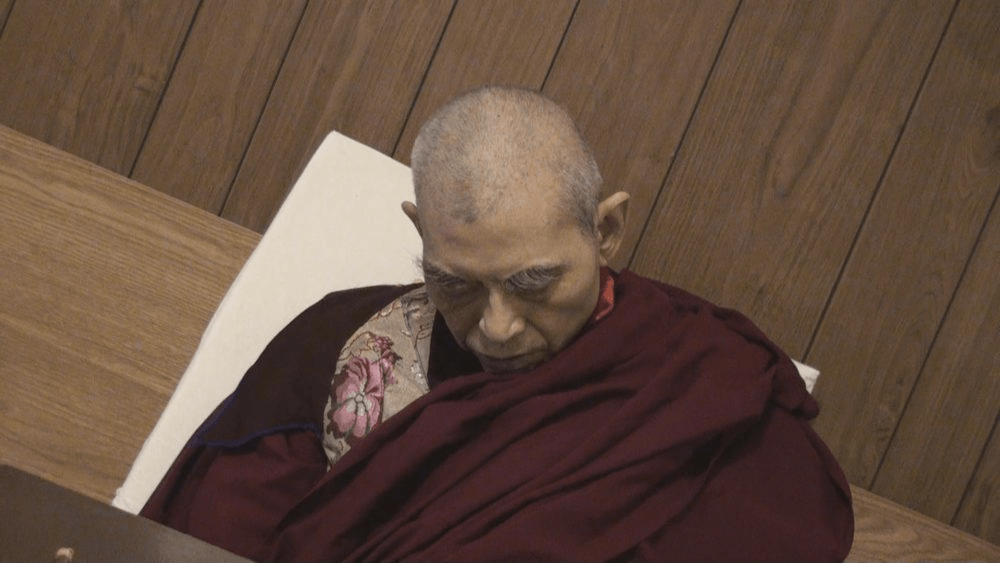
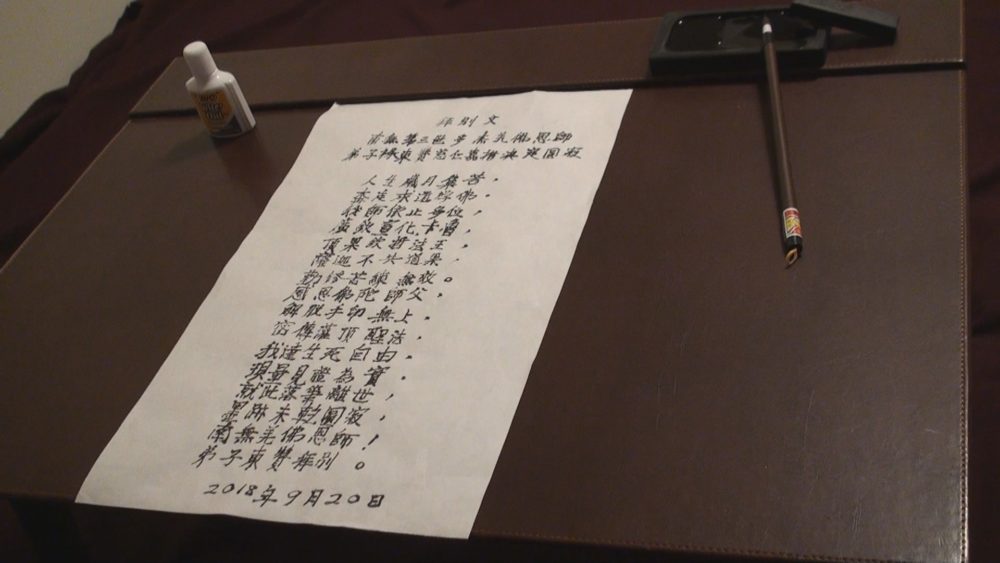
This dharma assembly was exactly the last dharma assembly that Dharma King Gar Tongstan was waiting for. Next day, after taking a bath and changing His garment, He entered His dharma practice. Then, a writing desk with pen, ink, paper, and white-out fluid placed on it was put in front of His dharma seat. He wrote a letter of respectful farewell to H.H. Dorje Chang Buddha III and then immediately sat down to pass away in a perfectly liberated state. When monastics from different temples arrived, they found that right after putting down the pen, the dharma king passed away in a perfectly liberated state with complete ease and without any hesitation. At that time, it suddenly dawned on everyone that the verse of respectful farewell that Dharma King Gar Tongstan wrote was to point out where the true dharma of the Tathagata is for living beings, which is upheld and controlled by H.H. Dorje Chang Buddha III and is the same as the Buddha-dharma of Sakyamuni Buddha that only belongs to Buddhism without any sectarian affiliation!
Dharma King Gar Tongstan passed away in a perfectly liberated state
Verses of Respectful Farewell
The following is the verse of respectful farewell written by Dharma King Gar Tongstan.
Dharma King Gar Tongstan’s Last Letter to Dorje Chang Buddha III
” Verse of Respectful Farewell“
”To my beneficent Master Namo Dorje Chang Buddha III,“
“I, Disciple Gar Tongstan Ciren Gyatso, decided to pass away in a perfectly liberated state.”
“Human life accumulates sufferings through the years and months. I went to various places to seek enlightenment through learning from Buddha. I followed and stayed with many masters to learn from them, including Guang Qin, Xuan Hua, Ka Lu, and Dharma King Dilgo Khyentse. I practiced diligently and worked hard on the unshared dharma of Path-Fruit of the Sakya Sect without effect. I gratefully thank my Buddha Master for the Mahamudra of Liberation that is supreme and unsurpassed. The holy dharma that I received from secretly transmitted initiation enabled me to achieve freedom from birth and death, with true realization attained on the spot. I now pen down my words and will then leave the world, passing away in a state of perfect accomplishment before the ink dries.”
Verses of Respectful Farewell
Namo beneficent Master, H.H. Dorje Chang Buddha III
Disciple Gar Tongstan Ciren Gyatso has decided to leave this world.
As life is filled with suffering,
I rushed about learning Buddhism and seeking enlightenment.
I have followed many masters:
Guang Qin, Xuan Hua, Kalu,
And Dharma King Dilgo Khyentse,
Diligently practicing their dharmas and the Sakya unshared LamDre Dharma,
All to no avail.
Thankfully, I met my Buddha Master.
Through the Mahamudra of Liberation that is supreme and unsurpassed,
And the secret initiations and transmissions of holy dharma from my Buddha Master,
I achieved control over my own birth and death.
My direct realization is reality.
I now put down my brush and leave this world,
Entering into the state of liberation before the ink dries.
Namo my beneficent Master, H.H. Dorje Chang Buddha III!
Disciple Tongstan respectfully bids farewell.
September 20, 2018
“Namo my beneficent Master Dorje Chang Buddha III!”*
There is a rather famous tombstone in Westminster Abbey. There’s nothing so special about it, except for its inscription. I believe that many people have heard of it.
“When I was young and free and my imagination had no limits, I dreamed of changing the world. As I grew older and wiser, I discovered the world would not change, so I shortened my sights somewhat and decided to change only my country. But it, too, seemed immovable. As I grew into my twilight years, in one last desperate attempt, I settled for changing only my family, those closest to me, but alas, they would have none of it. And now, as I lie on my deathbed, I suddenly realize: If I had only changed myself first, then by example I would have changed my family. From their inspiration and encouragement, I would then have been able to better my country, and who knows, I may have even changed the world.”
It is said that many world dignitaries and celebrities were deeply moved when they saw these words Some people say that this is a teaching of life, some people say that it is a kind of introspection of the soul.
There are similar teachings and philosophies in Chinese traditional culture. The Great Learning is a compilation of Confucian teachings used to address deeply important social behavior. In The Great Learning says: “The ancients who wished to illustrate illustrious virtue throughout the kingdom, first ordered well their own States. Wishing to order well their States, they first regulated their families. Wishing to regulate their families, they first cultivated their persons.”
“From the Kings down to the mass of ordinary people, all must consider the cultivation of the person the root of everything besides. It cannot be, when the root is neglected, that what should spring from it will be well ordered.”
In Buddhism, self cultivation is heavily emphasized as well. The first thing for all buddhist disciples is constantly cultivating themselves. In What is Cultivation, His HolinessDorje Chang Buddha III provides detailed guidance on self-cultivation. Self-cultivation is the fundamental and essential in the learning of Buddhism. Through self-cultivation, one will not only live a happy life and contribute the best of oneself to the society, but also can reach enlightenment and liberation.
A young monk asked the master for advice: “What are human desires?” The old monk told the young monk to come back tomorrow, but do not eat or drink until then. When the little monk came back the next day, he was very hungry and thirsty, and felt that he could eat a whole loaf of bread.
The old master monk asked him to go to the orchard to pick some fruits, but asked him to bring them back to the temple to eat.
After a while, the young monk returned to the temple with a basket full of fruits. The old monk told him to eat as much as he could. The young monk felt full after just eating two and could not eat any more.
The master asked him, “What’s the use of these fruits that you brought back after all your hard work, but you didn’t eat them? They’re just useless burdens.”
“Now you may understand, for each of us, what we really need is only two fruits that are enough to satisfy our hunger, and the rest is our desire.”
Every day we are driven by our own desires to keep running and toiling. We believe that if our desires are satisfied, we will be happy. But that happiness is very short-lived. Think about when you got new beautiful clothes, a pair of fancy shoes, luxury jewelries, or an expensive car — how long does that pleasure last? It may be a year, a month, or just several days, and then we want more to replace these fleeting pleasures. Our desires are endless, they keep on growing until they wrap us completely like a cocoon. Our desires lead us to focus on the various commodities of the outside world, and squeeze out all of our time and energy. Thus, our desires can actually make us feel enslaved and unhappy, and cause suffering.
In Buddhism teachings, the origins of suffering and unhappiness come from craving, desire and attachment. The way to end suffering is letting go of these cravings, and finding your true self. Of course Shakyamuni Buddha had taught many ways in the Buddhist Sutra to reach the eternal happiness and find our true selves. The contemporary Buddha H.H. Dorje Chang Buddha III has expounded many Buddha Dharmas to help us as well, such as What is cultivation? , Learning from Buddha, and several thousand audio-recorded Dharma discourses. By practicing the Buddha Dharma, one can break through the cocoon of life and death, and reach libration.
Hope you can find your own way to be free, happy and healthy.
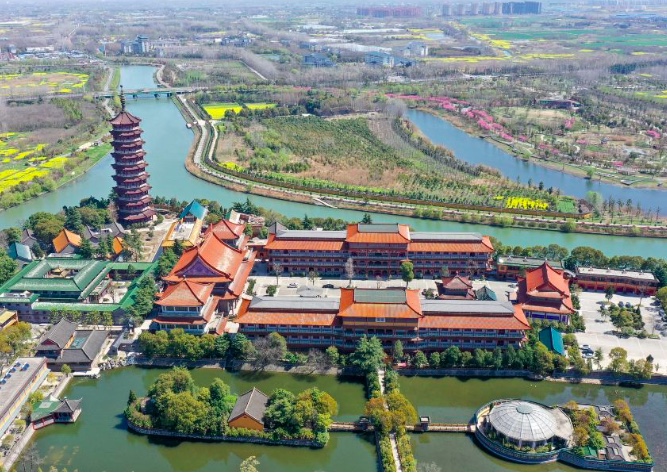
Gaomin Temple (Chinese: 高旻寺; pinyin: Gāomín Sì) is a Buddhist Temple in Yangzhou, Jiangsu Province of China. The temple is situated in a semi-rural setting about 7 km south of downtown Yangzhou, on the western shore of the Old Channel of the Grand Canal of China, just south of its junction with the Yizheng-Yangzhou Canal.
Gaomin temple was first built in the Sui dynasty, and achieved its largest area in the Qing dynasty, when it was expanded twice. In 1651, Tianzhong Tower was built, as well as a temple next to it called the Tower Temple. During the Kangxi Emperor‘s (r. 1661–1722) stay in the temple in his fourth southern tour, he climbed on TianZhong Tower, overlooking the scenery, which was very beautiful and vast. Then named the temple for Gaomin Temple. At that time, Gaomin Temple, Zhenjiang’s Jinshan Temple, Chengdu’s Geyuan Temple and Xindu’s Baoguang Temple were known as the greatest four Zen temples.
Buddha Tower and TianZhong Tower By Jimmy Nov 2019
Water Pavilion and Zen Meditation Hall By Lisa Su Feb 2016
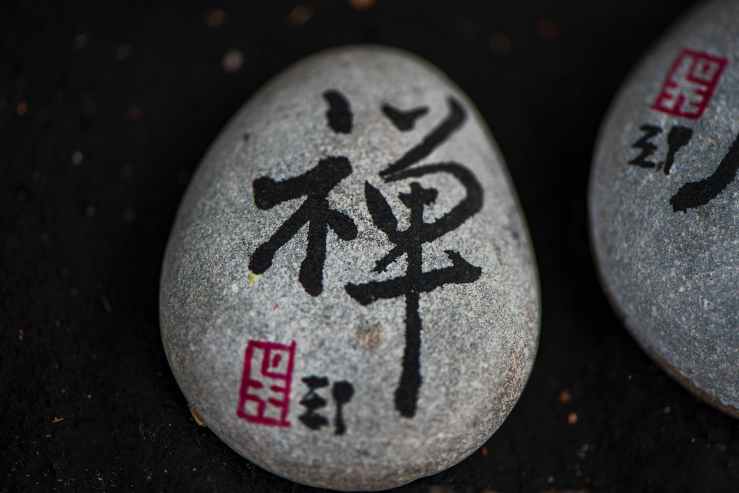
In ancient times, a great number of people in the temple became accomplished through the practice of zen. At the Gaomin Monastery in Yangzhou, basically every seven days one person would awaken to zen, becoming enlightened and accomplished. Last century, there were several Holy monks reached enlightenment from Gaomin Temple Zen seven-day retreat, such as XuYun ( 虚云), YiZhao( 意昭) and BenHuan (本焕).
Gaomin Temple’s zen practice was truly inexplicable but unfathomably profound. Gaomin Temple was famous for its strict precepts and Zen style. There were very strict and even cruel rules for monks participating in Zen seven-day retreat.
First of all, in ancient times when someone entered the Gaomin Monastery to practice zen, that person would first have to sign an agreement. That agreement was very simple. To put it bluntly, they agreed that they could be beaten to death with impunity. The one who beat them to death would not have to lose his own life. Additionally, they agreed to voluntarily carry out the dharma rules of the monastery. After they entered the monastery, they had to give up all of the dharmas that they previously learned. As soon as one arrived at Gaomin Monastery and entered the zen hall, one could not apply any previously learned dharmas.
Five people carried cudgels. Those five were called “the five great cudgel carriers.” Their specific task was to beat people. The practitioners had periods of running zen, each of which lasted the time it took for a stick of incense to burn from top to bottom. The stick of incense was not long. The practitioners had to jog. In the zen hall, many practitioners formed a circle and jogged. As they jogged, one of the cudgel carriers would strike his cudgel against something, which made a loud noise. As soon as he struck his cudgel against something, that loud noise sounded. When the jogging practitioners heard the striking sound from the cudgel, they had to immediately stop jogging. They were not allowed to jog even one more step. When the striking sound of the cudgel sounded again, they had to immediately resume their jogging.
As soon as the striking sound from his cudgel sounded, if you were still jogging, you would be taken aside and beaten to death. If you were not beaten to death, you were at the very least maimed. Thus, the minds of those practitioners were of course extremely focused. They were always focused on the sound of the cudgel. They were always fearful that they would be taken aside and severely beaten for continuing to jog after the striking of the cudgel sounded, or, if they had stopped jogging, for not immediately resuming their jogging after the striking of the cudgel sounded.
There were sitting periods as well, which lasted as long as it took for a stick of incense to burn from top to bottom. As soon as they sat down, the cudgel carriers in back of them would keep an eye on them. While sitting, the practitioners were not allowed to move in any way. The practitioners were absolutely forbidden to move. They were not permitted to recite the name of any Buddha or chant any mantra. If one was seen moving a bit, he was taken aside and severely beaten, to the extent of possible death. Therefore, after they sat down in a settled posture, as soon as the striking sound of the cudgel carrier’s cudgel could be heard, they did not dare move. They had to remain stiff for as long as the incense stick burned. They did not dare move in the slightest. The focus of their minds increased a hundredfold because they feared that they would inadvertently move, be taken aside, and be beaten, resulting in injury, deformity, or death.
There was also a rule of drinking water. The practitioners had to go to the east side to draw water and then carry the water with both hands to the west side. Only then could they drink the water. Additionally, the cup of water had to be completely filled. If a drop of water spilled to the ground as they were carrying the cup with both hands, they were taken aside and severely beaten.
Thus, the consciousness of those who practiced zen there did not wander. They did not think of other things. They did not rest. When they ate, they were not even allowed to make the sound of chopsticks hitting the bowl. As a result, their consciousness was forced to naturally not dare think of other things. Therefore, it is only natural that after our consciousness is united, we will not think things over and will not be distracted. Everyone fears being beaten to death. When you fear being beaten to death and death is used to force you, then you have no other choice. You must seriously deal with the matter. That is why in such circumstances it is very easy to cut off mistaken thinking. Through force, your thoughts are cut off. When your thoughts are cut off through force, you original nature emerges. As soon as your original nature emerges, you have broken through in your zen practice.
Therefore, by and large, at each seven-day retreat someone broke through in his zen practice at that monastery. Basically, there would be one breakthrough every seven days. How did they know someone broke through? The day someone broke through, he was ordered to write a verse for others to hear, enabling the abbot of the zen hall and the zen master to recognize him. That practitioner was later tested again to see whether he truly awakened to the truth through the practice of zen, whether he understood his mind and saw his nature.
I have great admiration for those monks who were willing to give up their lives in pursuit of the true Buddha Dharma.