The Thousand-Year Wonder: Fengguo Temple and Its Eternal Great Hall

Hidden in the quiet county of Yixian in northern China, Fengguo Temple has stood for over a thousand years as a living testament to ancient Chinese wisdom and spiritual devotion. Its magnificent Mahavira Hall, the largest single-story wooden structure of its time, houses seven colossal clay Buddhas that have miraculously survived the centuries. This temple is not only an architectural marvel but also a sacred symbol of harmony, resilience, and faith that continues to inspire all who visit.

A Thousand Years of Faith and Architecture

Beyond the Shanhai Pass, in the northern part of Jinzhou City, Liaoning Province, stands the quiet county of Yixian, home to one of China’s most magnificent ancient temples — Fengguo Temple. This remarkable site, founded over a millennium ago, is not only a masterpiece of Liao Dynasty Buddhist architecture but also a living testament to the extraordinary ingenuity of ancient Chinese builders and the enduring power of faith.

In 2020, Fengguo Temple celebrated its thousandth anniversary. Through a thousand years of wind, snow, wars, and earthquakes, its grand Mahavira Hall still stands tall — a miracle in both architecture and spirituality.


The Majestic Great Hall

The heart of Fengguo Temple is its Mahavira Hall (Great Buddha Hall), one of the Eight Great Structures of the Liao Dynasty. Built in 1020 CE, it measures 49.5 meters wide, 26.6 meters deep, and 19.9 meters high, covering an area of 1,317 square meters. Standing on a 3.2-meter-high platform, the hall is the largest single-story wooden structure of ancient China — magnificent, solemn, and breathtaking.

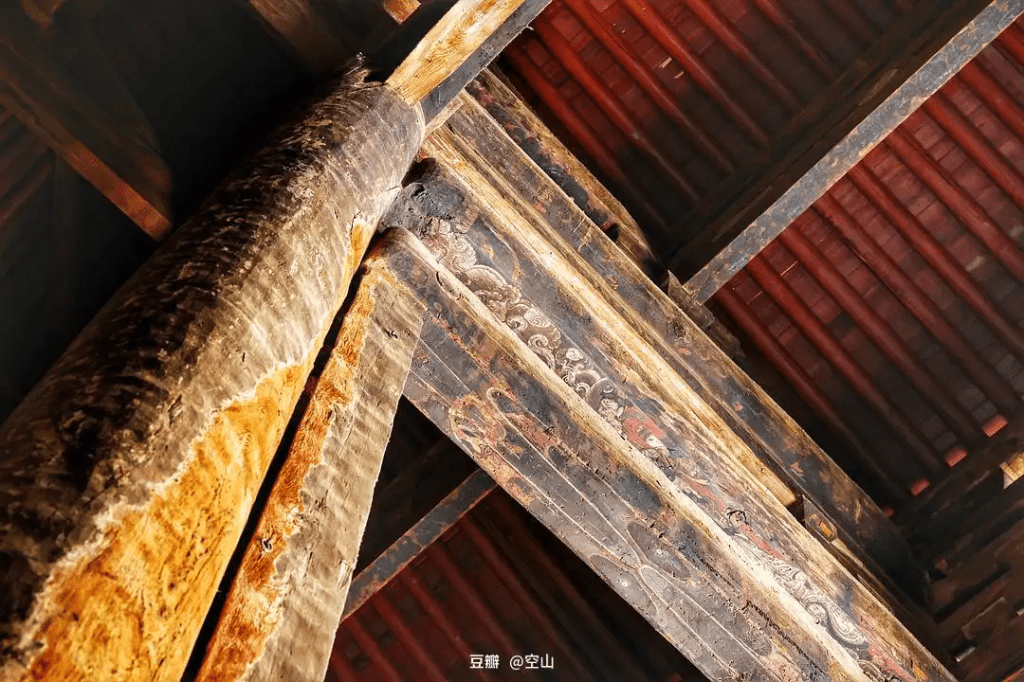
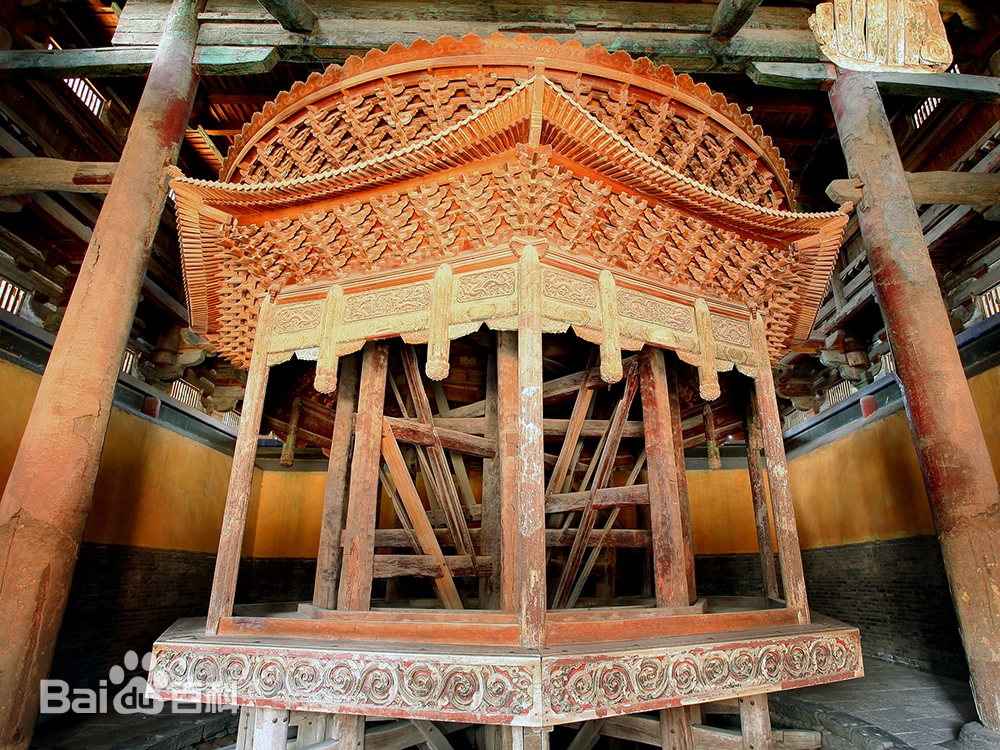
Ingeniously designed, the hall uses a “reduced-column” method to maximize interior space while maintaining perfect stability. Ancient builders applied advanced techniques known as “side-foot” and “rising beam”, ensuring the building’s balance and graceful proportions. The massive bracket sets under the eaves are bold yet refined, exuding strength and elegance.

Thanks to its precise structural mechanics, the Great Hall has remained perfectly upright for a thousand years, without any sign of warping or tilting — an unparalleled achievement in the history of wooden architecture.


The Seven Buddhas: Eternal Clay Sculptures

Inside the Great Hall, seven colossal clay Buddha statues, each about nine meters tall, sit side by side upon a brick platform. From east to west, they are:
Kashyapa Buddha, Krakucchanda Buddha, Sikhin Buddha, Vipashyin Buddha, Visvabhu Buddha, Kanakamuni Buddha, and Shakyamuni Buddha.

These are the “Seven Buddhas of the Past” mentioned in Buddhist scriptures, symbolizing the eternal cycle of enlightenment in our world. Each Buddha exudes solemn dignity, with serene expressions and graceful postures, reflecting the Liao Dynasty’s continuation of Tang-style Buddhist artistry. Two bodhisattvas stand beside each Buddha, adding vitality and compassion to this sacred tableau.

This magnificent ensemble is the oldest and largest group of colored clay Buddha statues in the world. Despite being made of fragile clay, they have miraculously survived for over a thousand years, their colors still soft and luminous. This endurance is nothing short of a miracle — a union of artistic mastery and the blessings of faith.

The Legend of the Buddha Catching a Shell

During the Liaoshen Campaign in the late 1940s, Yixian became a battlefield. Amid the chaos, a shell pierced through the roof of the Great Hall and fell directly into the right hand of the Shakyamuni Buddha statue. Miraculously, the shell did not explode.

Locals still tell this story as “The Buddha Caught the Shell with His Hand.” Whether fact or legend, it adds an aura of mystery and divine protection to the temple’s long history — as if the Buddhas themselves were silently safeguarding their sacred home.

The Flying Devas of Liao

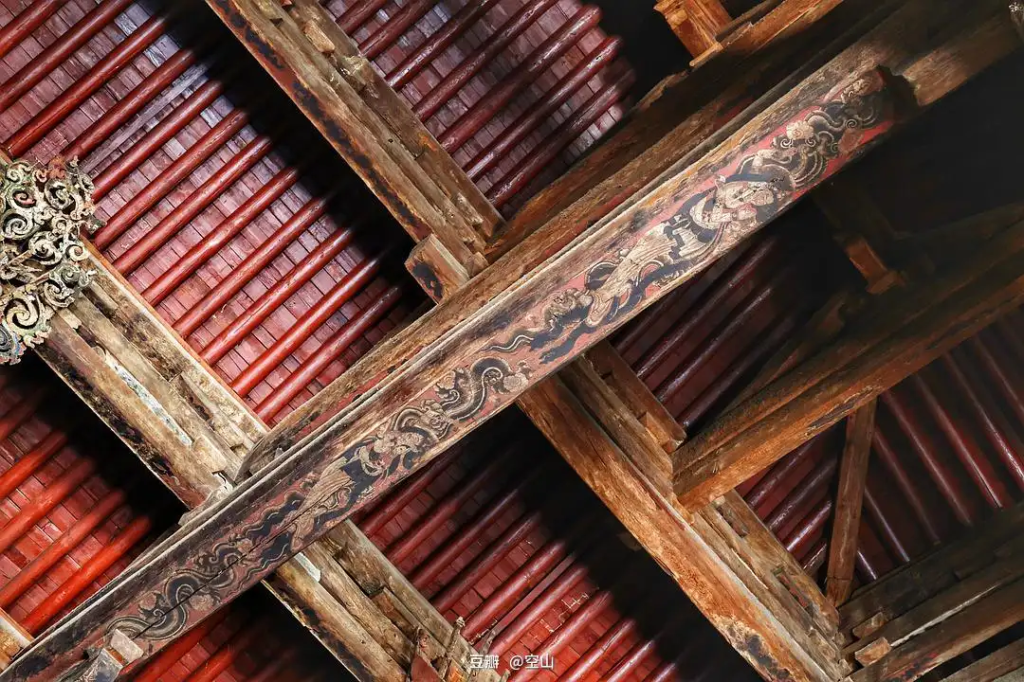
The beams and rafters inside the Great Hall are adorned with over 4,000 square meters of original Liao Dynasty murals. Among them, the heavenly maidens — the Flying Devas — are the most enchanting. With radiant faces and flowing ribbons, they drift gracefully through clouds, offering flowers and fruits to the Seven Buddhas below.

Their movement contrasts beautifully with the Buddhas’ stillness, creating a breathtaking scene of divine harmony and devotion. The surrounding walls also preserve Yuan and Ming dynasty murals depicting ten Buddhas, eight Bodhisattvas, and the Eleven-Faced Avalokiteshvara, adding even more layers of spiritual and artistic richness to this timeless sanctuary.


A Thousand Years of Wonder

Standing before this majestic hall — a wooden structure that has endured a millennium — and gazing upon the clay Buddhas whose serene faces have survived a thousand winters, one cannot help but wonder:

How can a wooden palace withstand ten centuries of storms and wars? How can clay sculptures remain whole and radiant after a thousand years?

Is it the wisdom of the ancients? The strength of art? Or the blessing of the Dharma itself?

Perhaps the answer lies within every beam, every brushstroke, and every tranquil smile of the Buddhas.

May the Buddhas and Bodhisattvas bless all beings with peace, compassion, and happiness.
Namo Amitabha.

Link:https://peacelilysite.com/2025/10/23/the-thousand-year-wonder-fengguo-temple-and-its-eternal-great-hall/

Source: https://www.hzfxy.net/detail_1020_10154.html, https://zhuanlan.zhihu.com/p/721178084

Guangsheng Temple — The Hidden Gem of Shanxi’s Ancient Treasures

Shanxi is often called the cradle of Chinese civilization, a province with one of the richest collections of cultural and historical relics. Guangsheng Temple is part of that story. First built during the Eastern Han Dynasty (25–220 CE), it is one of the earliest Buddhist temples in China. Over the centuries, it has endured wars, fires, and devastating earthquakes, yet it still stands, its beauty renewed through reconstructions in the Yuan (1271–1368) and Ming (1368–1644) dynasties.

The temple complex is composed of three main parts:

  • The Upper Monastery — home to its most famous landmark, the glazed pagoda.
  • The Lower Monastery — housing grand halls and statues.
  • The Water God Temple — known for its remarkable Yuan Dynasty murals.

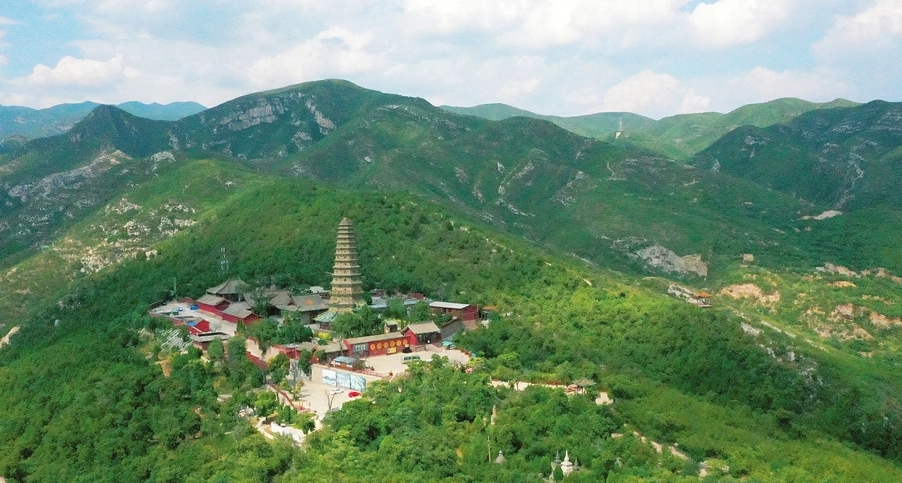
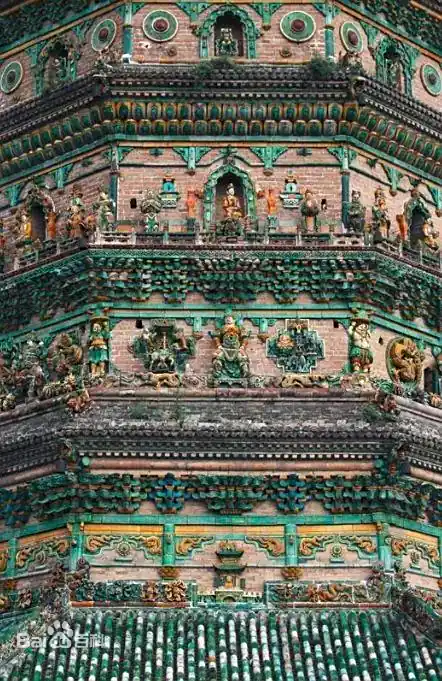
Rising in the upper monastery is the Flying Rainbow Pagoda (Feihongta), an octagonal, 13-story glazed brick tower reaching 47.31 meters high. Built in 1527 during the Ming Dynasty, it’s an explosion of color in the sunlight. The walls and roofs are covered in multi-colored glazed tiles — deep emerald, golden yellow, sapphire blue, and rich purples — that glisten like jewels, casting rainbow-like reflections on sunny days.

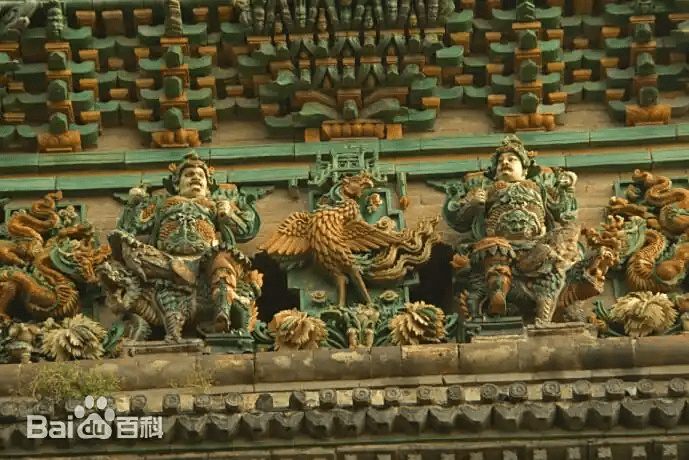
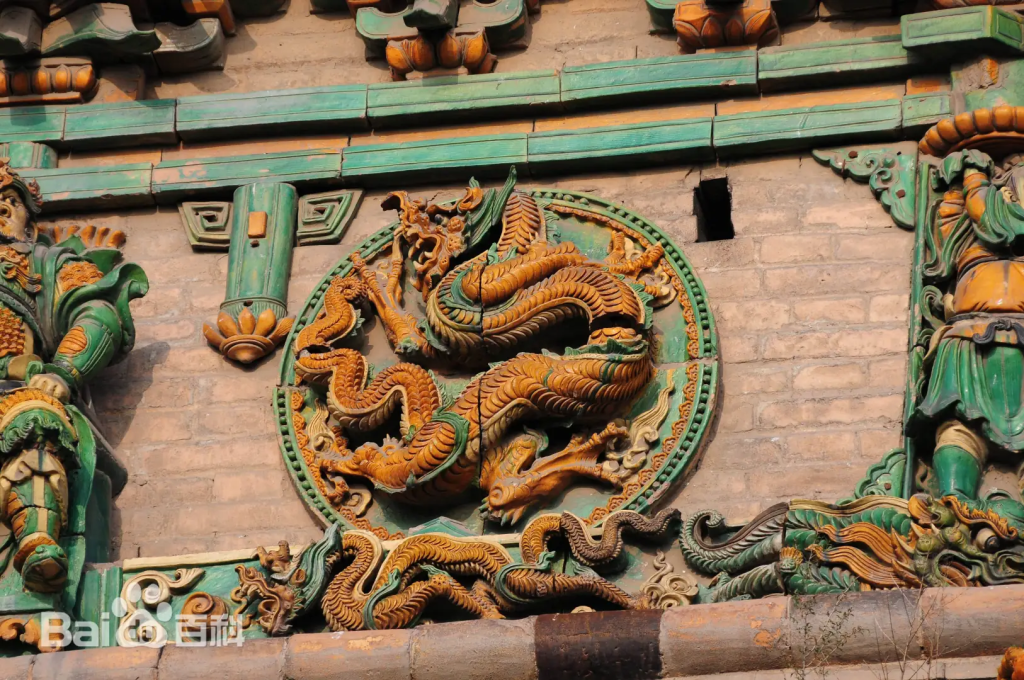
Every tier of the pagoda is adorned with intricate glazed reliefs — Buddhas in serene meditation, fierce guardian kings, bodhisattvas in flowing robes, mythical beasts, and dragons coiled in eternal motion. Inside, the foundation hall houses a five-meter-tall bronze statue of Sakyamuni Buddha, radiating quiet majesty.

This pagoda is not only beautiful — it’s a survivor. It withstood the catastrophic 1556 Shaanxi earthquake and the 1695 Pingyang earthquake, both exceeding magnitude 8.0. Its resilience is as awe-inspiring as its artistry. In 2018, it was recognized by the London-based World Record Certification as the tallest multicolored glazed pagoda in the world.

Murals of the Yuan Dynasty — Life Painted in Color

The temple’s murals are a vivid window into the Yuan Dynasty. In the Water God Temple, nearly 200 square meters of wall space is alive with color: scenes of divine processions, farmers at work, musicians playing, and children at play. One remarkable panel shows “Cuíwán” (捶丸) — a sport similar to golf — offering a glimpse into pastimes of the Yuan era.

The mural on the gable wall of the Great Hall of Sakyamuni Buddha in the lower monastery is equally stunning, painted with an expressive style that blends religious devotion with snapshots of daily life. Researchers prize these works for their artistry and for the wealth of cultural detail they reveal — clothing, architecture, social customs — all preserved in pigment for more than 700 years.

The Zhaocheng Buddhist Canon — A Literary Treasure

In 1930, during restoration work, the temple revealed another extraordinary surprise—a cache of ancient relics now preserved in the Shanxi Museum. These included Buddhist scriptures, statues, and ritual objects, some dating back hundreds of years earlier. Printed during the Yuan Dynasty, this monumental project took 24 years and the collaboration of countless monks and artisans to engrave the wooden printing blocks. The texts preserve Buddhist thought, philosophy, and art from centuries ago, making them one of China’s most precious Buddhist literary relics.

The discovery deepened Guangsheng Temple’s reputation as one of the great guardians of China’s Buddhist heritage.

Today, whether you approach as a pilgrim, an art lover, or simply a traveler drawn by curiosity, the moment you first see the rainbow-like shimmer of the Glazed Pagoda through the mountain mist is unforgettable. It is not merely a structure—it is a bridge between centuries, a beacon of faith, and a reminder that beauty, once created with devotion, can endure against time itself.

Link: https://peacelilysite.com/2025/08/15/guangsheng-temple-the-hidden-gem-of-shanxis-ancient-treasures/

Source: http://shanxi.chinadaily.com.cn/2022-05/06/c_748899.htm?utm_source=chatgpt.com

Discover Longxing Temple: A Timeless Treasure of Chinese Buddhism

Longxing Temple, also known as the Great Buddha Temple, is one of China’s oldest, largest, and best-preserved Buddhist temples. This extraordinary complex is not only a sacred site but also a magnificent testament to the architectural genius and spiritual devotion of ancient China.

Located at No. 109 Zhongshan East Road in Zhengding County, Shijiazhuang, Hebei Province, Longxing Temple sprawls across an impressive 82,500 square meters.

Originally established in 586 CE during the Sui Dynasty under the name Longcang Temple, it was later renamed Longxing Temple during the Tang Dynasty. In 971 CE, Emperor Taizu of the Northern Song Dynasty issued an edict to cast an enormous bronze Thousand-Armed Avalokiteshvara Bodhisattva and build the splendid Hall of Great Compassion to house it.

This marked the beginning of large-scale expansion, culminating in a grand Song Dynasty architectural complex centered on the hall. Through the Jin, Yuan, and Ming Dynasties, the temple saw continued renovation and growth. In the Qing Dynasty, both Kangxi and Qianlong Emperors decreed extensive rebuilding, shaping the temple’s current layout:

  • The eastern section served as monks’ quarters
  • The central axis hosted Buddhist ceremonies
  • The western area functioned as the imperial palace quarters

In 1710, Emperor Kangxi personally inscribed the name “Longxing Temple,” an honor that reflects its enduring importance.

Today, visitors can trace a north–south axis that passes through a series of majestic structures: the Hall of Heavenly Kings, Mani Hall, the Ordination Altar, the Revolving Sutra Library, and more than a dozen other halls and pavilions. The complex is celebrated as a textbook example of ancient Chinese Buddhist temple design.

Recognized among China’s ten most famous temples, Longxing Temple was declared a Major National Historical and Cultural Site in 1961 and later designated a National AAAA Tourist Attraction.


Highlights Not to Miss

Hall of Heavenly Kings

First built in the Northern Song Dynasty, this is the oldest surviving structure of its kind within the temple. Even after a major renovation in 1780, its main timber frame remains original.

Above the entrance, plaques bearing the calligraphy of the Kangxi Emperor read:

“Imperially Established Longxing Temple”
“Hall of Heavenly Kings”

Inside stands the famous Big-Bellied Maitreya Buddha, a Jin Dynasty wood carving over 800 years old. Thoroughly localized in Chinese style, this smiling figure derives from the legendary monk Qici, known for his benevolence and laughter.

On either side stand the Four Great Heavenly Kings, each symbolizing auspicious natural forces:

  • Wind (Southern King, with a sword)
  • Harmony (Eastern King, with a lute)
  • Rain (Northern King, with a precious umbrella)
  • Compliance (Western King, with a coiled snake)

Together, they express the blessing of abundant harvests and national peace.


Mani Hall

Built in 1052, Mani Hall has an unusual cross-shaped floor plan created by four gabled annexes extending from its square central chamber.

Inside, five golden clay Buddha statues preside over the altar, with Shakyamuni Buddha at the center.

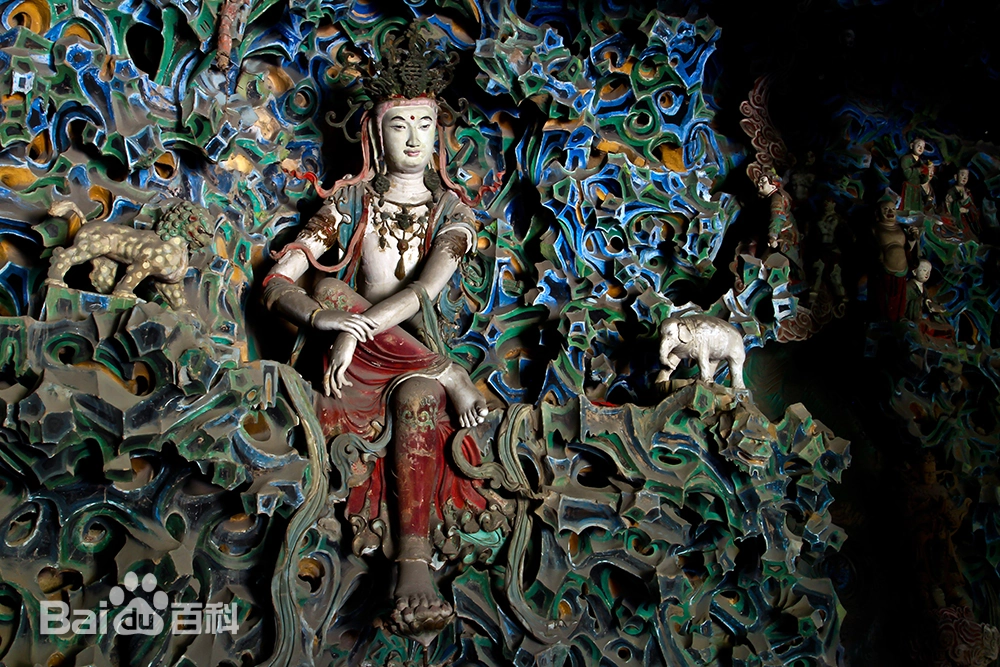
The hall’s north wall showcases a breathtaking polychrome relief nearly 16 meters long, depicting swirling clouds, celestial beings, and Avalokiteshvara stepping onto a lotus—symbolizing the entrance to the Western Pure Land.

At the heart of this scene sits the Backward-Facing Avalokiteshvara, so named because she faces north instead of south. Far from a supernatural image, this Avalokiteshvara appears as a serene, youthful woman with an expression so vivid and gentle it moves all who gaze upon her.

Visitors often remark:

“How beautiful—how extraordinary! She sits so naturally, one leg casually crossed, her eyes meeting yours wherever you stand. Her smile is as enigmatic as the Mona Lisa—truly ‘The Most Beautiful Avalokiteshvara.’”


Ordination Altar

Reserved for the most important temples, the Ordination Altar was where monks received their vows.

Inside the altar stands a unique double-sided bronze Buddha statue. Facing south is Amitabha Buddha, and facing north is Medicine Buddha. The two figures share a single body, seated back to back in lotus posture.

The statues are depicted in full lotus position, wearing five-leaf crowns, with round, gentle faces. Their necks are adorned with necklaces and their arms with bangles, while flowing sashes drape gracefully from their shoulders. Amitabha’s hands form the meditation mudra, while Medicine Buddha’s hands display the gesture of compassion.

Their expressions are serene and tranquil, exuding a quiet dignity and solemn beauty in their elegant simplicity.

Longteng Garden

To the northeast lies Longteng Garden, a Ming and Qing–style garden combining cultural heritage and tranquil scenery.

Here you’ll find:

  • Northern Dynasties stone statues
  • A Jin Dynasty scripture pillar
  • A Yuan Dynasty mural tomb
  • The Ming Dynasty Longquan Well Pavilion
  • The “Three Generations of Vice Ministers” stone archway

Meandering through its pavilions, terraces, and lush paths feels like stepping into a living scroll of history.


Cultural Traditions

Imperial Buddhist Ceremony Performance

Zhengding’s Longxing Temple is an imperial temple that was visited and funded for repairs by emperors over many dynasties. According to The Chronicles of Longxing Temple, in the 49th year of Emperor Kangxi’s reign (1710 CE), the emperor ordered funds to be allocated from the national treasury to restore Longxing Temple. After the renovations were completed, Emperor Kangxi personally came to pay homage and bestowed 19 inscribed plaques, including one reading “Longxing Temple Constructed by Imperial Decree,” all handwritten by himself.

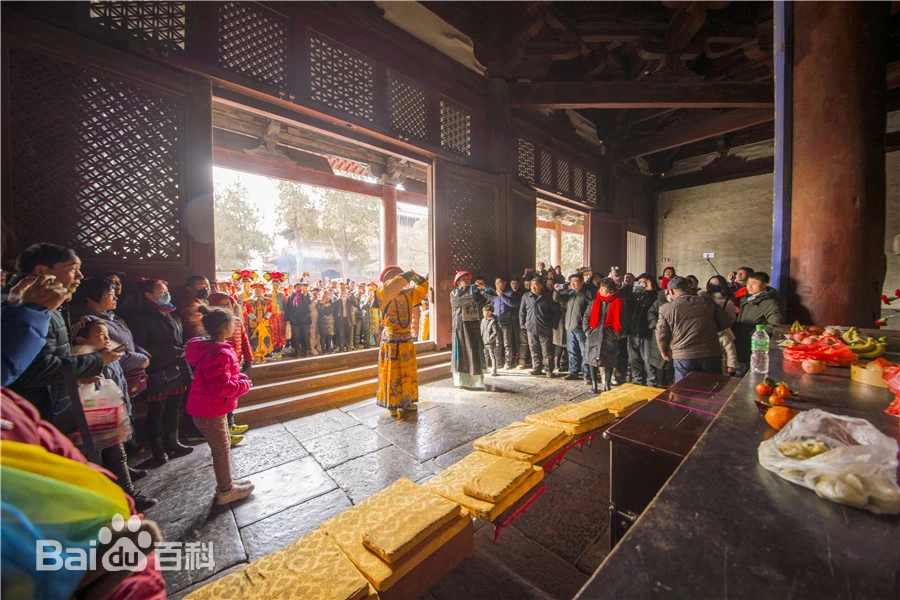
At the end of 2011, drawing on historical records, the Cultural Heritage Office re-created the Grand Imperial Buddhist Ceremony, reenacting the scene of Emperor Kangxi’s arrival at Longxing Temple, the local officials welcoming the imperial entourage, and the emperor bestowing plaques, offering incense, and performing rituals to honor the Buddha.

Thousand-Armed Avalokiteshvara Performance

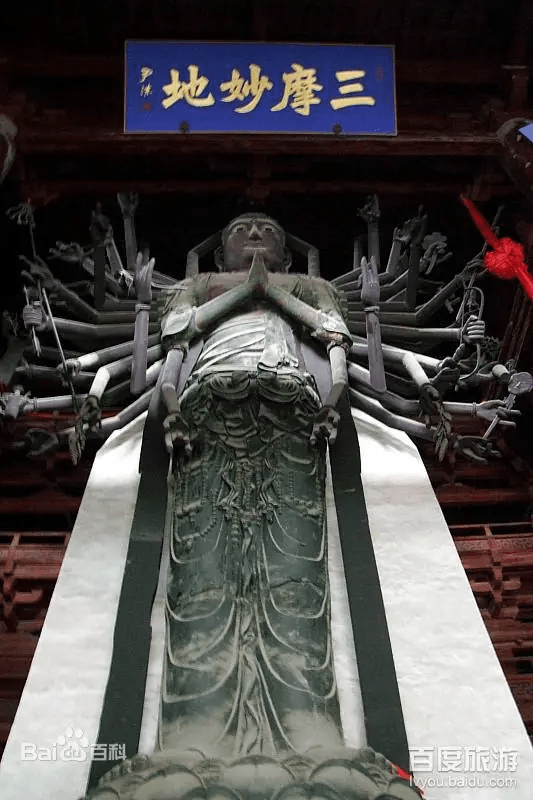
Inside the Great Compassion Pavilion of Zhengding’s Longxing Temple stands a bronze statue of the Thousand-Armed, Thousand-Eyed Avalokiteshvara, measuring 21.3 meters in height. Cast in the 4th year of the Kaibao era of the Northern Song Dynasty (971 CE), this towering bronze figure is remarkable both for its immense size and its exquisite craftsmanship.

It is the tallest and oldest ancient bronze Buddha statue of its kind in the world. It is not only a symbol of Longxing Temple but also an emblem of the ancient city of Zhengding.

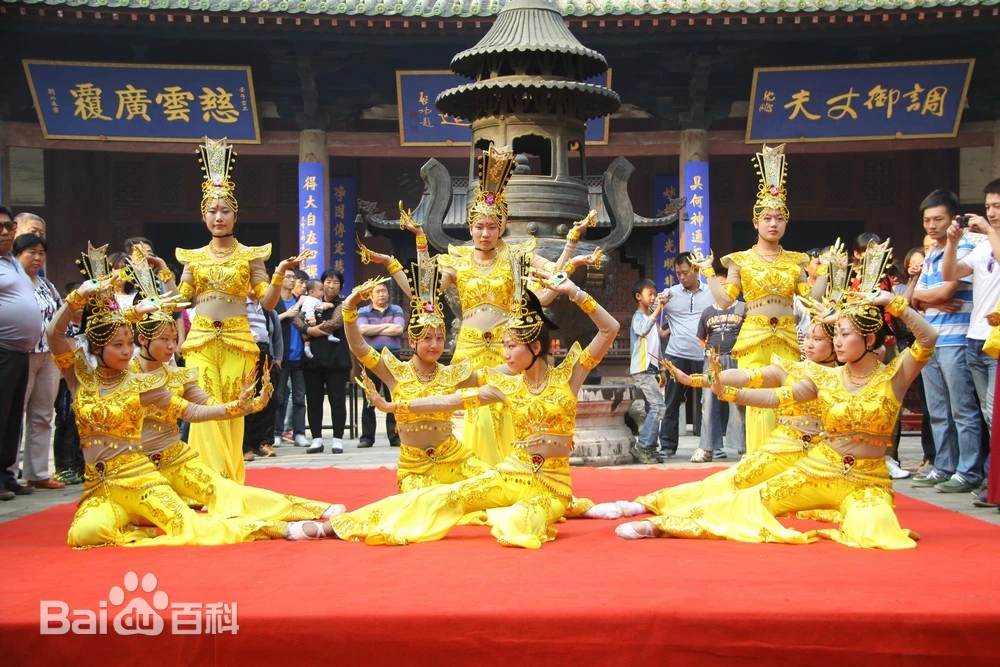
The Thousand-Armed Avalokiteshvara Performance features graceful melodies and captivating dance that vividly convey the divine presence and compassion of the bodhisattva.


Longxing Temple is more than a historical monument—it is a living symbol of Chinese Buddhist art, architecture, and spirituality. Whether you come for quiet reflection, cultural discovery, or simply to stand before centuries of devotion, this magnificent temple will leave a lasting impression on your heart.

Link:https://peacelilysite.com/2025/07/04/discover-longxing-temple-a-timeless-treasure-of-chinese-buddhism/
Dragon Boat Festival and Duanwu Jie

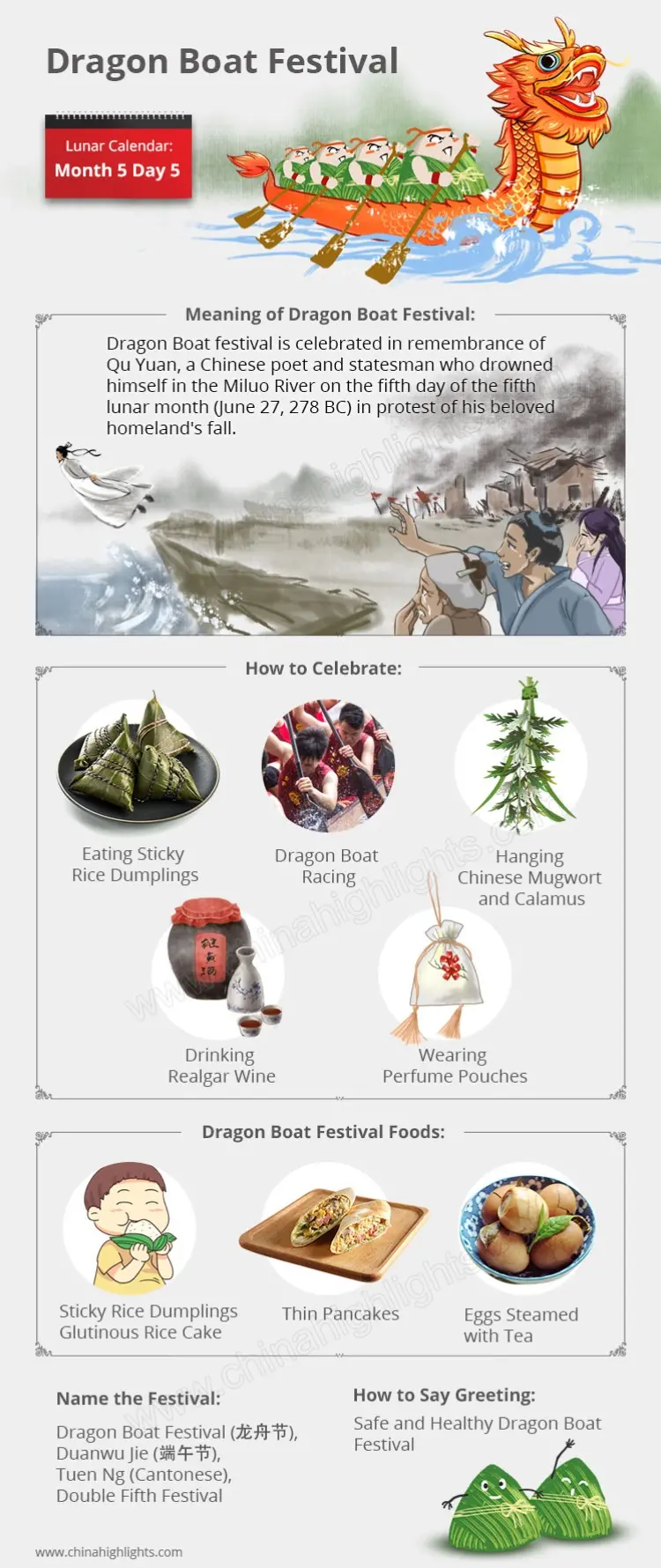
The Dragon Boat Festival, also known as Duanwu Jie, is one of the four major traditional Chinese festivals, alongside the Spring Festival, Tomb-Sweeping Day, and Mid-Autumn Festival. It is celebrated on the fifth day of the fifth month of the Chinese lunar calendar, which is why it is also called the “Double Fifth Festival” (Chongwu Jie, 重五节). On the Gregorian calendar, it usually falls in late May or early June.

In addition to Chinese mainland, many other Asian countries and regions also celebrate this festival. In Malaysia, Indonesia, Singapore, and Taiwan, China, it is known as Bak Chang Festival (‘Dumpling Festival’). Learn more facts about the Dragon Boat Festival

Why Is Dragon Boat Festival So Important?

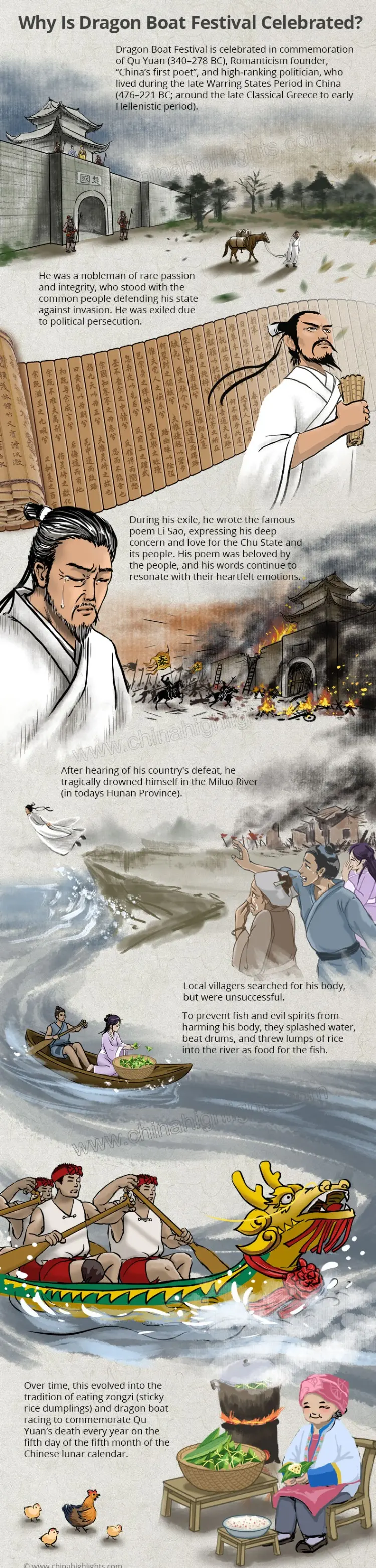
Many believe that the Dragon Boat Festival is celebrated to commemorate the death of Qu Yuan, a renowned Chinese poet and minister known for his patriotism and profound contributions to classical poetry. He ultimately became a national hero.

However, historical evidence shows that the origins of the Dragon Boat Festival actually predate Qu Yuan’s death. The festival’s earliest roots are tied to the fifth lunar month, which the ancients considered the “month of poison.” As summer began, people were more prone to illness, and epidemics often spread. This made the month seem ominous, prompting ancient communities to adopt various practices to ward off disease and evil spirits.

Thus, the Dragon Boat Festival was originally observed as a traditional health and wellness festival. It was a time for people to carry out rituals and customs aimed at protecting themselves from illness and repelling harmful forces.

Dragon Boat Festival

Dragon Boat Festival Customs

The customs of the Dragon Boat Festival can generally be divided into two main categories. One centers on honoring dragons and historical heroes—most notably Qu Yuan—while the other focuses on warding off evil spirits and promoting health and well-being.

1. Honoring Heroes and Dragons

a. Eating Sticky Rice Dumplings

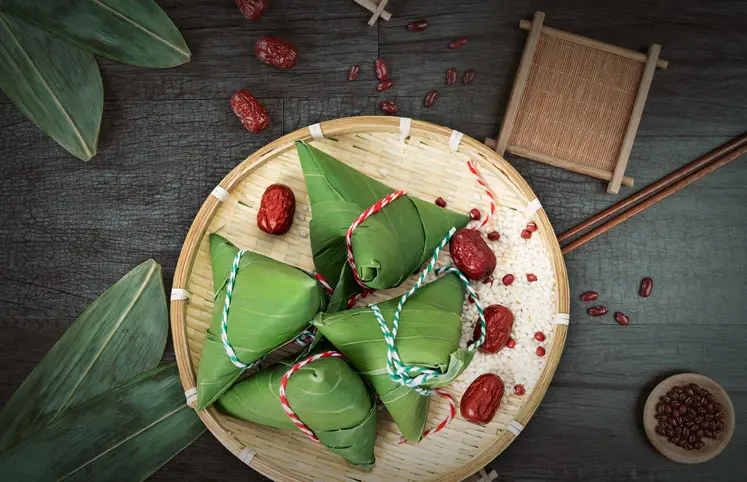
dragon boat festival celebration, eating sticky rice dumplings

Zongzi (粽子, zòngzi) are the most iconic food of the Dragon Boat Festival. According to legend, after the patriotic poet Qu Yuan drowned himself in the river, local people threw lumps of rice into the water to prevent fish from eating his body. This evolved into the custom of making zongzi.

Traditionally, families would prepare and share homemade zongzi. Today, while some older generations still hand-make them, most people buy them from restaurants or bakeries.

Zongzi are made with glutinous rice and often filled with meats, beans, or other ingredients. They are wrapped in bamboo or reed leaves into triangular or rectangular shapes and tied with soaked stalks or colorful silk cords. Flavors and fillings vary widely across different regions of China.

b. Participating or Watching Dragon Boat Races

dragon boat festival celebration, dragon boat race

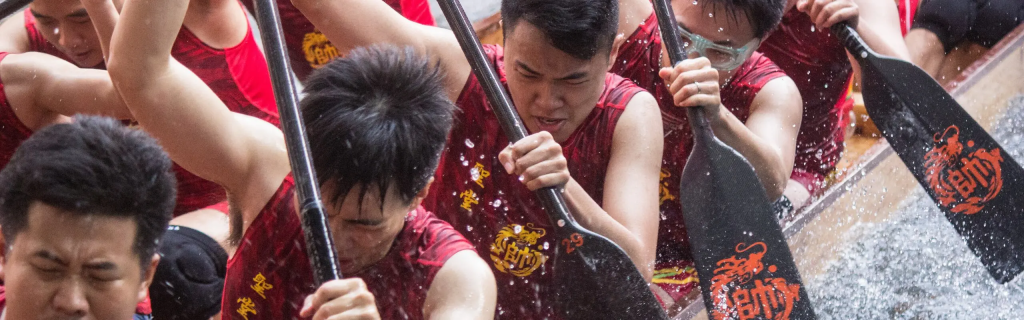
Dragon boat racing is the most exciting and prominent activity during the festival. The sport is said to have originated from people paddling out in boats to search for Qu Yuan’s body after his tragic death in 278 BCE.

Another theory suggests that the races originated more than 2,000 years ago as a ritual to worship the Dragon God or Water God.

The boats are traditionally carved and painted to resemble dragons. Depending on the region, each boat can carry 30 to 60 paddlers. Teams row in unison to the rhythm of pounding drums, creating a thrilling and energetic spectacle. Winning is believed to bring good luck and happiness for the year ahead.

Some of the most famous races take place in Hong Kong, Guangzhou, and Hangzhou.

2. Warding Off Evil and Promoting Health

a. Hanging Chinese Mugwort and Calamus

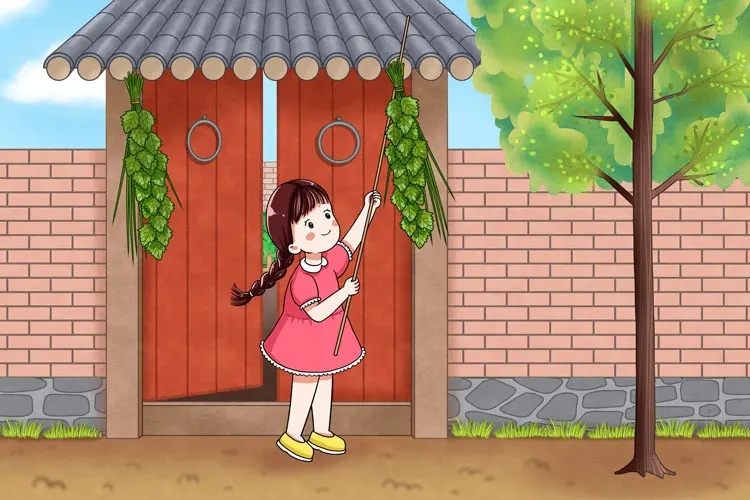
dragon boat festival celebration

The festival coincides with the early summer season, a time when illnesses were historically more common. Mugwort and calamus are medicinal herbs used to prevent disease and repel pests. Their strong fragrances are believed to drive away flies, mosquitoes, and negative energies.

On the fifth day of the fifth lunar month, people clean their homes and hang these herbs on their doors to protect against illness and bring good luck.

b. Drinking Realgar Wine

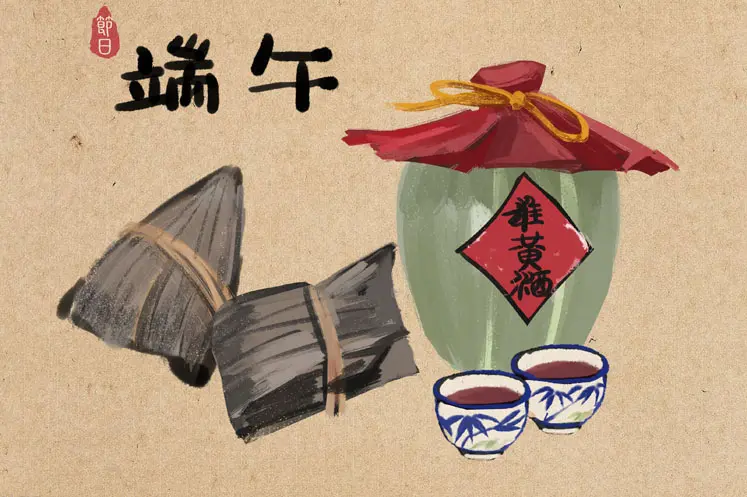
dragon boat festival celebration,

A traditional saying goes: “Drinking realgar wine drives away disease and evil spirits.” Realgar wine is made from fermented grains and realgar, a red mineral (arsenic sulfide) once believed to be an all-purpose antidote.

Historically, people drank realgar wine to kill insects, detoxify the body, and protect against spiritual harm.

c. Wearing Perfume Pouches

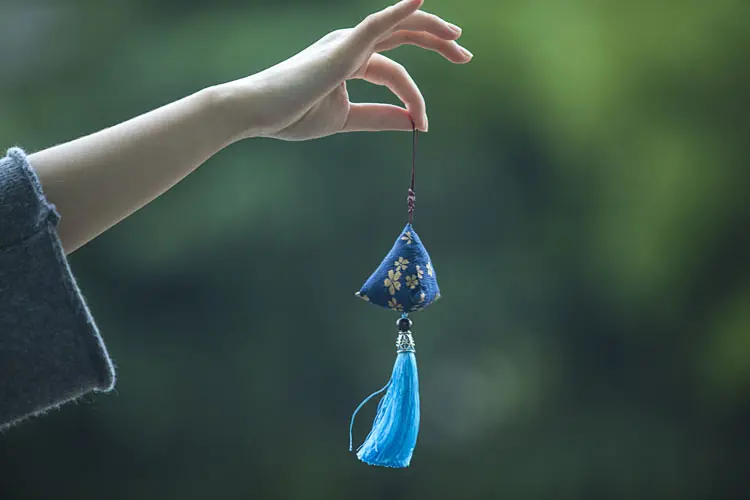
dragon boat festival celebration,

Before the festival, parents prepare small, colorful silk pouches filled with fragrant herbs or perfume for their children. These are either worn around the neck or pinned to clothing as ornaments.

Perfume pouches are believed to offer protection from evil spirits and disease, and are a cherished custom that blends health with artistry.

The Origins of the Dragon Boat Festival

There are many legends about the origin of the Dragon Boat Festival. The most popular ones are as follows:

Why Dragon Boat Festival Celebrated

The Death of Qu Yuan

The most widely accepted origin of the Dragon Boat Festival is its commemoration of Qu Yuan (340–278 BCE), a patriotic poet and loyal official of the Chu State during the Warring States Period. When his beloved state fell to the Qin, Qu Yuan, devastated by the loss, drowned himself in the Miluo River on the fifth day of the fifth lunar month.

Local people, deeply moved by his patriotism, raced out in boats to rescue him or retrieve his body, but their efforts were in vain. To keep fish and evil spirits from disturbing his remains, they beat drums and threw rice dumplings into the river. These traditions evolved into the dragon boat races and the custom of eating zongzi that continue today.

The Unlucky Fifth Month

Another explanation for the origins of the Dragon Boat Festival relates to the traditional Chinese calendar and seasonal beliefs. Since ancient times, the fifth lunar month was considered an unlucky time and was even referred to as the “Month of Poison” (毒月). This was when the “Five Poisonous Creatures” (五毒 wǔ dú)—centipedes, scorpions, snakes, toads, and spiders—began to appear in greater numbers due to the warming weather. Disease, pestilence, and natural disasters were also more prevalent during this period.

The fifth day of the fifth month, or the “Double Fifth,” was seen as especially ominous. To protect themselves, people hung wormwood and calamus on their doorways and wore sachets of fragrant mugwort (xiāng bāo, 香包). The sword-like shape and pungent aroma of calamus were believed to repel both pests and evil spirits. For this reason, the Dragon Boat Festival is also sometimes referred to as the “Calamus Festival” (菖蒲节 Chāngpú Jié).

These rich and varied customs reflect the Dragon Boat Festival’s deep cultural significance, blending ancient health practices with heartfelt traditions of honor, protection, and community celebration.

Link:https://peacelilysite.com/2025/06/05/dragon-boat-festival-and-duanwu-jie/

Source: https://www.chinahighlights.com/festivals/dragon-boat-festival.htm

A Serene Masterpiece: The Water-Moon Guanyin at the Nelson-Atkins Museum

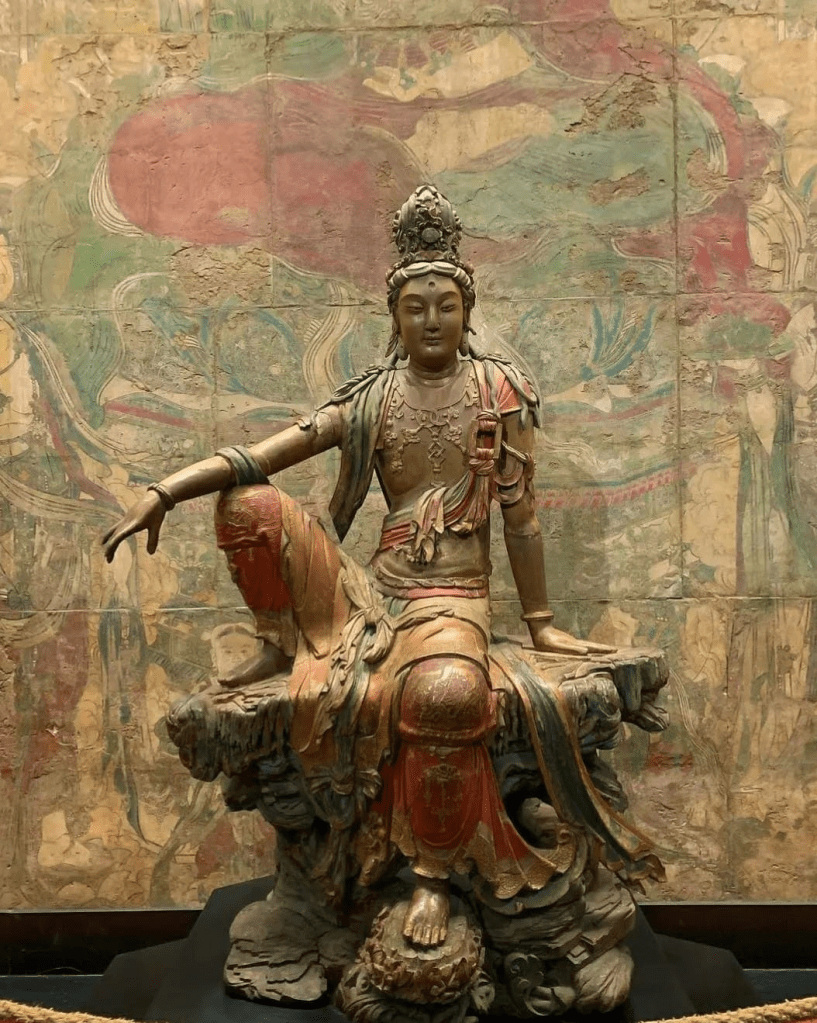
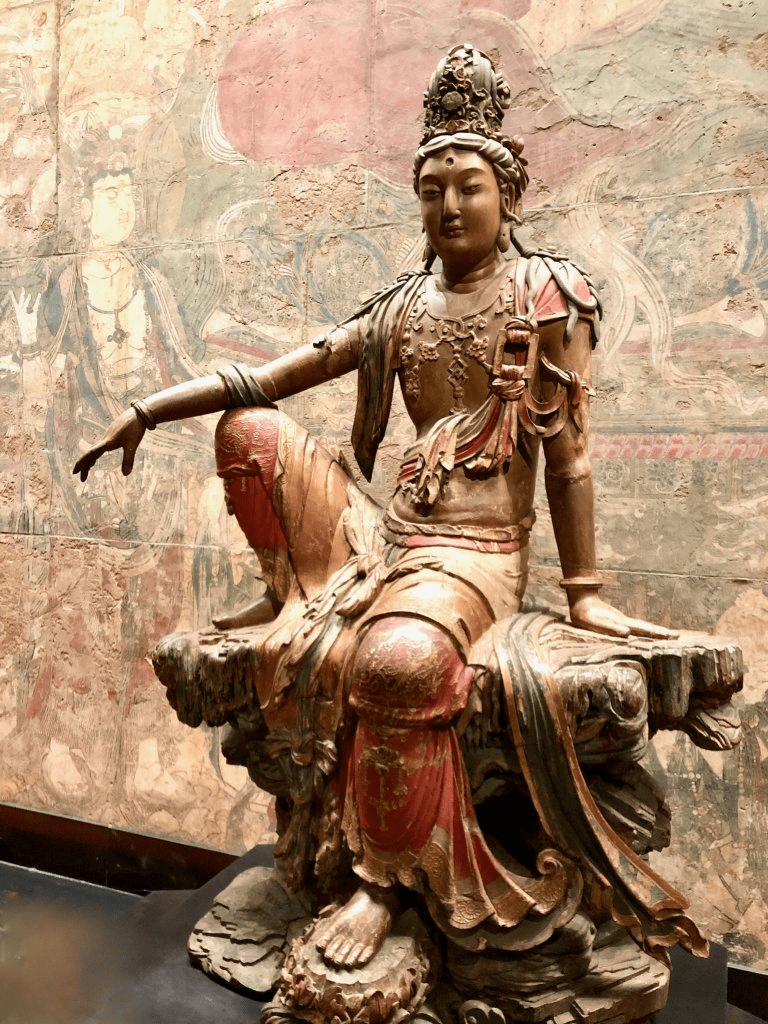
Tucked within the tranquil halls of the Nelson-Atkins Museum of Art stands a breathtaking wooden sculpture of Water-Moon Guanyin from the Liao Dynasty—a work hailed as “the most magnificent surviving sculpture in China” and “a triumph of religion and aesthetics.” It has also been honored by the media as “one of the thirty finest works held in American public institutions.”

Officially labeled by the museum as “Guanyin of the Southern Sea,” this statue rises to an impressive height of 2.4 meters. Aside from the right forearm, the entire figure—including its base—was masterfully carved from a single block of wood. Dating back to the 11th or 12th century (Liao or Jin Dynasty), the sculpture has been remarkably well-preserved over the centuries.

This Guanyin is an extraordinary example of religious artistry. Her face is gently sculpted with refined features—serene, graceful, and quietly majestic. Adorned with a jeweled crown, her eyes are softly closed, gazing downward in meditation and compassion. The statue’s pose reflects the elegance and wisdom traditionally associated with the feminine form, especially in the flowing hand gestures—while still retaining some subtle masculine traits in the upper body, a nod to Guanyin’s transcendent nature.

In classic iconography, Water-Moon Guanyin is often portrayed seated on a rock or lotus throne, gazing compassionately at the world. In this sculpture, she sits with one leg bent and the other gracefully draped downward. Her right arm rests lightly on her knee, fingers gently curved, as she gazes diagonally downward with a calm smile—evoking the image of the moon reflected in water. This visual metaphor powerfully symbolizes a core Buddhist teaching: the illusion of form and the essence of emptiness.

Every aspect of the statue—the proportions, the flowing posture, the tranquil expression—conveys a sense of effortless grace, inner freedom, and compassionate presence. It is a piece that invites quiet reflection, stirring something deep within the soul of the viewer.

The Legend Behind the Water-Moon Guanyin

The form of Water-Moon Guanyin, also known as “Auspicious Water Guanyin” or “Auspicious Water Bodhisattva,” is one of the most beloved among the thirty-three manifestations of Guanyin in Chinese Buddhist tradition. Interestingly, the name “Water-Moon” does not come from early Buddhist scriptures, but rather from Chinese folklore—born of the fusion between Buddhism and indigenous Chinese culture.

According to legend, Guanyin once appeared in Suzhou during a time of war, where she witnessed the brutal slaughter of civilians by the Jin army. Out of great compassion, she transformed into a beautiful woman, built a ritual platform, and began chanting sutras to deliver the souls of the dead. When her recitation was complete, someone among the crowd recognized her divine aura and asked to see her true form.

The Bodhisattva pointed to the riverbank. There, reflected in the still waters, was the image of a radiant full moon, within which her sacred figure appeared—graceful and ethereal. Among the witnesses was a talented artist named Qiu Zijing, who quickly sketched the vision. As his painting circulated, this image came to be known and venerated as the Water-Moon Guanyin.

A Space Worthy of the Divine

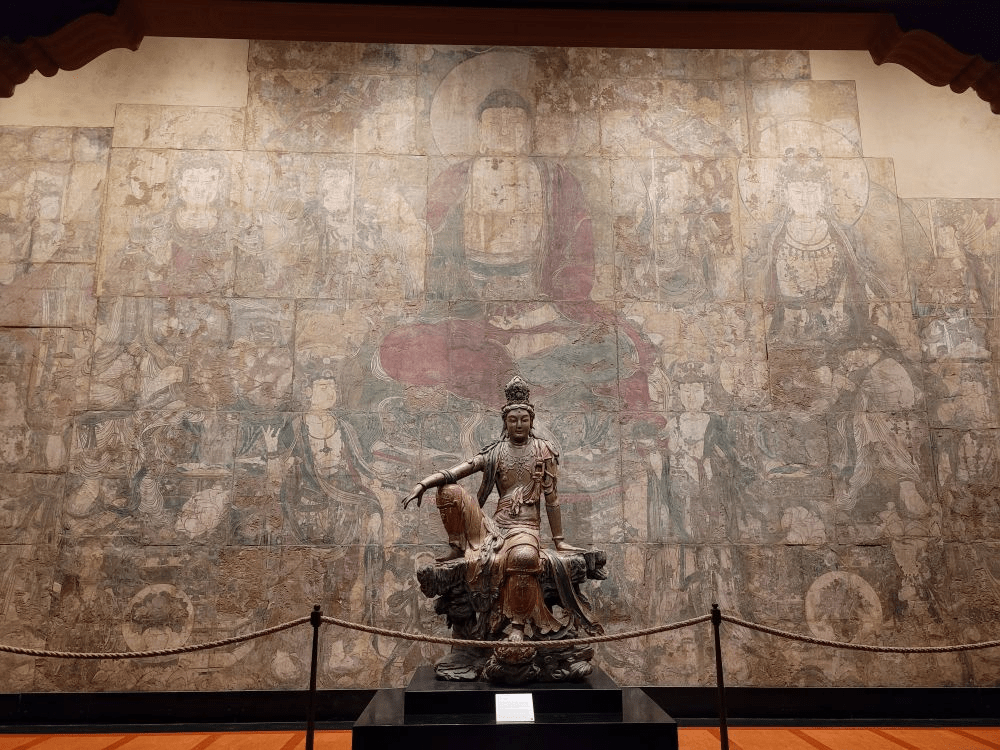
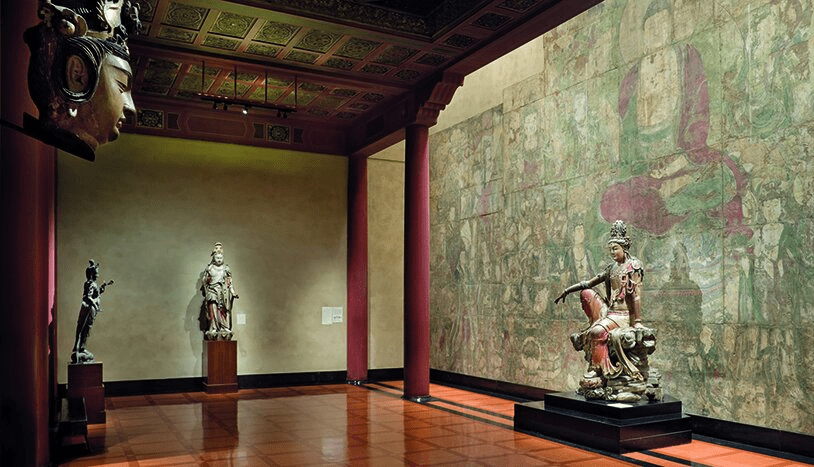
To properly honor this extraordinary statue, the Nelson-Atkins Museum created an expansive Chinese Temple Gallery. Behind Guanyin stands a Yuan Dynasty mural titled “Assembly of the Radiant Buddha,” originally from Guangsheng Temple in Shanxi Province. Above hangs a carved Ming Dynasty coffered ceiling adorned with dragons, while in front, finely carved lattice doors from a Qing Dynasty official’s residence in Beijing complete the immersive setting.

This harmonious environment allows visitors to experience the sculpture not just as a museum piece, but as a living expression of faith, beauty, and timeless spiritual insight.

https://www.orientations.com.hk/highlights/creating-spaces-for-asian-art-c-t-loo-and-the-nelson-atkins-museum-of-art

https://www.orientations.com.hk/highlights/creating-spaces-for-asian-art-c-t-loo-and-the-nelson-atkins-museum-of-art

The Water-Moon Guanyin at the Nelson-Atkins Museum is more than an ancient sculpture—it is a sacred embodiment of compassion, artistry, and transcultural storytelling. Whether viewed through the lens of religion, history, or aesthetics, it stands as a serene reminder of the enduring power of beauty to transcend time and touch the human spirit.

Link:https://peacelilysite.com/2025/05/21/a-serene-masterpiece-the-water-moon-guanyin-at-the-nelson-atkins-museum/

The Wisdom of the Empty Boat: Ancient Chinese Insight for Inner Peace

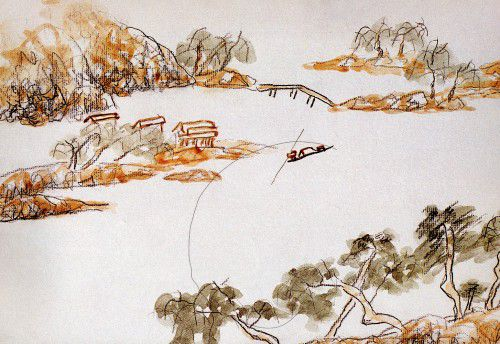
Chinese Painting by Henggong Yi

In the Mountain Tree chapter of the ancient Taoist classic Zhuangzi, there’s a simple yet profound story:

A man was crossing a river in a small boat when he noticed another boat drifting straight toward him. He shouted several times to warn the oncoming boat, but received no reply. Furious, he began cursing the other “reckless” person. But when the boats collided, he realized the other vessel was completely empty. In that moment, his anger vanished into thin air.

This story reveals a timeless truth: Often, what triggers our anger isn’t real harm but our judgment about the intention behind an event—our belief that someone shouldn’t have acted a certain way, or that people like that shouldn’t exist.

Imagine the same situation, but this time with a person steering the other boat. Most of us would react with outrage: “What’s wrong with you? Watch where you’re going!” A conflict would likely erupt. But when we know the boat is empty, we simply steer around it and move on.

This is beautifully explained in psychology by the ABC model:

  • A stands for the Activating event
  • B is our Belief about the event
  • C is the Consequence—our emotional response

It’s not the event itself that causes our reaction, but how we interpret it. Change your mindset, and your entire emotional response changes with it.

“The weak blame, the strong adjust, the wise let go.”
How you choose to interpret the world shapes the emotional and spiritual life you live.

Zhuangzi’s parable invites us to practice a mental shift: what if we saw others as “empty boats”? When a coworker unintentionally bumps into you, instead of assuming hostility, think, “Maybe they were just distracted.” When a friend speaks harshly, perhaps they’re struggling with something you don’t know. Instead of reacting with pain or revenge, consider that it may not have been personal.

Seeing others as “empty boats” helps us release resentment, practice compassion, and expand our emotional resilience. It allows us to heal ourselves faster, without getting trapped in cycles of blame and victimhood.

German philosopher Arthur Schopenhauer once said:

“To be angry at someone’s behavior is as foolish as being angry at a rock blocking your path.”
True wisdom lies in seeing through the illusion of control, and responding with tolerance rather than judgment.

When life doesn’t go our way, it’s easy to fall into the trap of self-pity: “Why is this happening to me?” But such thoughts only darken our mood and invite more misery.

The real shift happens when we stop blaming others and start examining our own mindset. By applying the “Empty Boat” perspective, we reduce conflict, soothe emotional storms, and gain a wider, calmer view of life. This isn’t just emotional regulation—it’s a deeper level of personal growth.

Zhuangzi also wrote:

“If a person can empty themselves and move through the world with humility, who can harm them?”

When we’re too attached to ego—too quick to feel offended, too focused on saving face—we inevitably clash with others. But if we release pride, prejudice, and the need to control, we become unshakable. No one can truly hurt us when we no longer take things personally.

Our mindset is the foundation of how we face adversity. Approach life with a peaceful, open heart, and life will respond in kind. Let go of the need for constant validation. Don’t let others’ words disturb your inner calm.

The journey of life is like sailing through mist—we never know what lies ahead. Complaining or getting angry doesn’t change reality; it only slows us down. But when we practice acceptance and face life with serenity, we go farther, and with greater ease.

Imagine all the unpleasant people or events in your life as “empty boats.” Let go of resentment and emotional baggage. You’ll find that forgiveness is not weakness, but a deep, penetrating wisdom. No longer a slave to your emotions, you become the true master of your mind.

May you carry an empty and serene heart, navigating life’s storms with grace, and holding on to peace amid the noise of the world.

Link: https://peacelilysite.com/2025/05/16/the-wisdom-of-the-empty-boat-ancient-chinese-insight-for-inner-peace/

The Power of a Sincere Heart: How True Generosity Creates Boundless Merit

In the Buddhist scriptures of China, a profound story is recorded—one that illuminates the immeasurable merit of a sincere offering.

Once, there was a poor girl who survived by begging. She often watched wealthy young ladies, accompanied by attendants, visit the temple to offer alms and perform good deeds. Seeing their generosity, she felt a deep yearning to cultivate merit but had nothing to give. Determined, she worked tirelessly to save whatever she could. After much effort, she managed to save a single coin. Though small in value, it represented all she had. With unwavering devotion, she took her humble offering to the temple.

The abbot, upon learning of her sincerity, was deeply moved. He gathered his disciples and announced, “Today, I will personally preside over the offering and pray for this devout laywoman!”

Not long after, an extraordinary turn of events unfolded.

After the queen of the land passed away, the grieving king sank into sorrow. To lift his spirits, his ministers organized a hunting expedition. As the royal party rode through the forest, the king noticed a shimmering light ahead. Curious, he approached and discovered a breathtakingly beautiful young woman. Though her clothes were tattered, she radiated an ethereal grace.

Captivated by her presence, the king brought her back to the palace. Before long, she became his new queen.

Overjoyed by her newfound fortune, she reflected on her past: “This must be the reward of my small act of generosity! I only donated one coin, yet it planted the seed for such incredible merit. Now that I have wealth, I should return to the temple to express my gratitude with a much grander offering!”

Determined to make a grand gesture, she dressed in the finest attire, adorned herself with jewels, and loaded dozens of carts with silver and gold for donation. As she approached the temple, she thought, “Before, when I gave only one coin, the abbot personally prayed for me. Now that I bring such vast riches, surely the reception will be even greater!”

Upon her arrival, she expected an elaborate welcome. Yet, to her surprise, only a few monks came to receive her offerings, and the rituals were conducted in the usual manner.

Perplexed, she approached an elderly monk and asked, “Why is it that when I was poor and donated a single coin, the abbot himself prayed for me? Yet today, when I bring such wealth, only a few monks perform the prayers?”

The monk smiled gently and replied, “At that time, your single coin was all you had. You gave it with pure devotion and joy, holding nothing back. Now, though you bring great wealth, it is but a fraction of your fortune, and your heart is tainted with pride. The true merit of an offering comes not from its size but from the sincerity of the giver’s heart.”

Shakyamuni Buddha taught that for a donation to generate immense benefit, it must possess three essential qualities:

  1. Before Giving – A Joyful Heart
    True generosity begins with happiness. The donor should give not out of duty, pressure, or expectation of reward, but with a heart full of joy, seeing giving as an opportunity to cultivate virtue and compassion.
  2. While Giving – A Clear and Sincere Mind
    The act of giving should be free from hesitation, regret, or pride. A pure offering is made with an open heart, solely for the benefit of others, without seeking recognition or return.
  3. After Giving – A Sense of Fulfillment
    Once the offering is made, the giver should not feel regret or attachment. Instead, they should feel a deep sense of satisfaction, knowing they have planted seeds of merit for the future.

This story serves as a timeless lesson: It is not the amount we give that determines the merit of our offering, but the purity of our heart. A sincere and joyful offering—no matter how small—carries boundless blessings.

So the next time you give, remember: True generosity is not measured in gold or silver, but in the depth of your sincerity.

Link:https://peacelilysite.com/2025/04/02/the-power-of-a-sincere-heart-how-true-generosity-creates-boundless-merit/

Celebrating the Chinese Lunar Lantern Festival: A Journey Through Tradition and Light

The Chinese Lunar Lantern Festival, also known as the Yuan Xiao Festival, is a vibrant celebration that marks the end of the Chinese New Year festivities. This enchanting festival, rich in history and culture, is an opportunity for families to come together, enjoy delicious food, and marvel at the stunning displays of lanterns that illuminate the night sky.

The Origin of the Lantern Festival

The Lantern Festival is a traditional Chinese holiday that dates back over 2,000 years to the Western Han Dynasty. The custom of enjoying lanterns began during the Ming Dynasty under Emperor Ming, who promoted Buddhism. It is said that on the 15th day of the first lunar month, monks would observe Buddhist relics and light lamps in reverence. In response, the emperor ordered that lamps be lit in the palace and temples on this night, encouraging both nobles and commoners to hang lanterns. Over time, this Buddhist ceremonial festival gradually evolved into a grand folk celebration. The festival has transitioned from the imperial court to the general public and expanded from the Central Plains to the entire country. As the tradition evolved, lanterns became a central feature of the celebrations, symbolizing hope, prosperity, and good fortune.

How the Chinese Celebrate the Festival

The Lantern Festival is celebrated with various customs and activities that bring communities together. Here are some of the most cherished traditions:

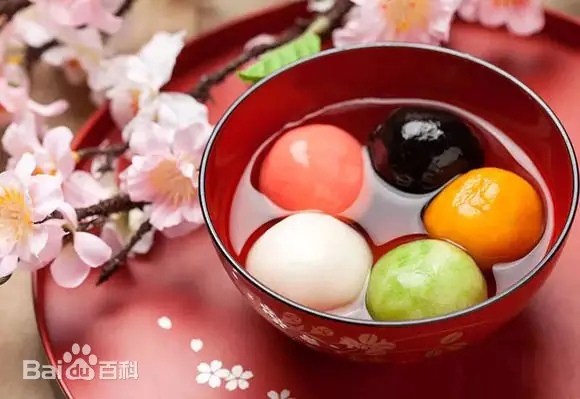
Eating Tangyuan: A key highlight of the festival is the consumption of tangyuan, sweet glutinous rice balls filled with various fillings such as sesame paste, red bean paste, or peanut butter. These round dumplings symbolize family unity and togetherness.

Fireworks: In many regions, fireworks are set off to celebrate the occasion, adding to the festive atmosphere and marking the end of the New Year celebrations.

Lion Dances and Dragon Dances: Traditional lion and dragon dances are performed to ward off evil spirits and bring good luck. The rhythmic drumming and vibrant costumes add to the festive spirit.

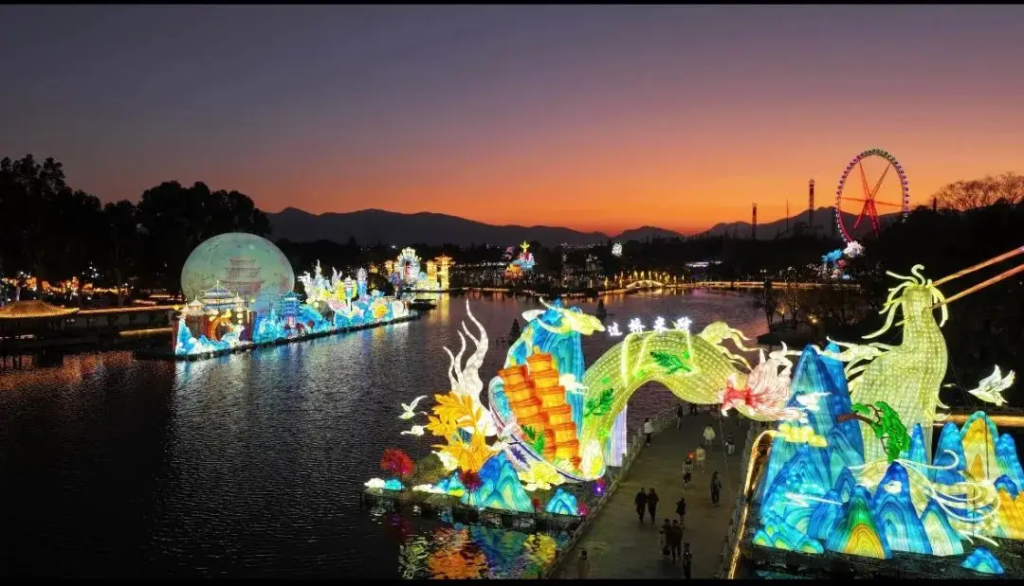
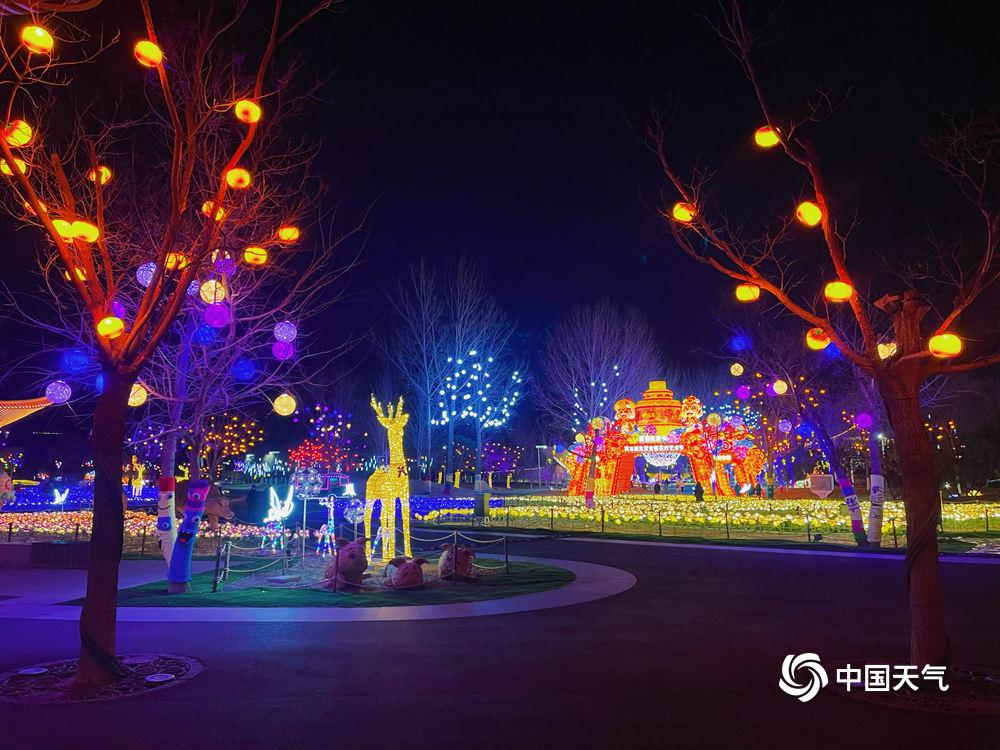
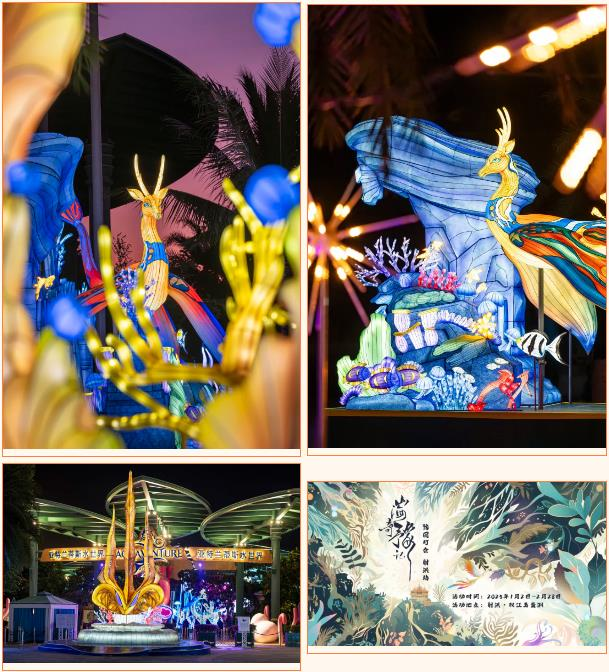
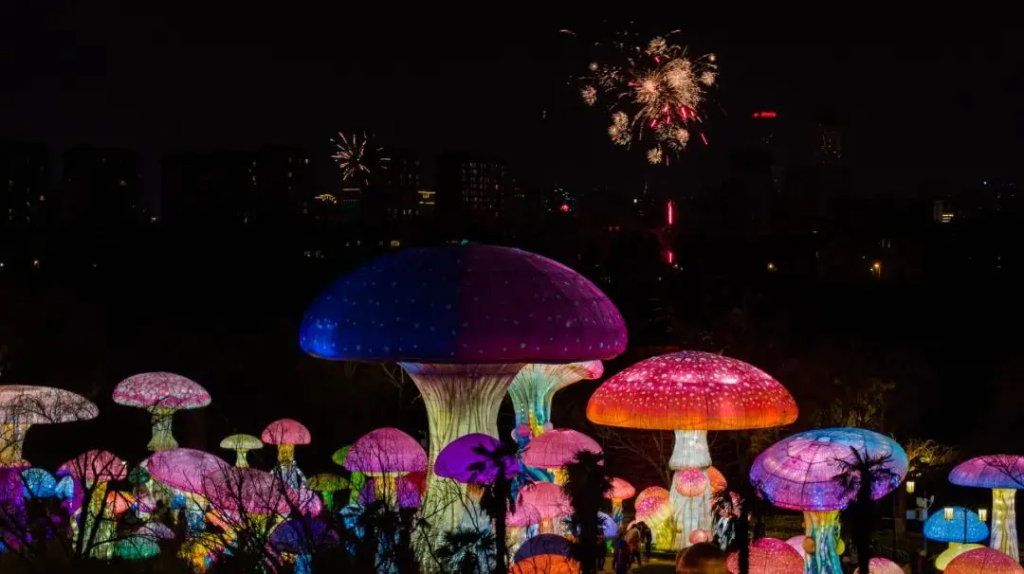
Lantern Displays: People of all ages create and display colorful lanterns, often in intricate shapes and designs. These lanterns can be found in parks, streets, and temples, creating a magical atmosphere.

Solving Lantern Riddles: A fun and engaging activity during the festival is solving riddles written on lanterns. Families and friends gather to test their wits and enjoy the playful competition.

The Most Beautiful Places to See Lanterns

If you’re looking to experience the beauty of the Lantern Festival, several locations across China are renowned for their stunning lantern displays:

  1. Beijing: The city’s parks, such as the Yuanmingyuan Park and the Temple of Earth Park, host impressive lantern displays, attracting thousands of visitors each year.
  2. Shanghai: The Yuyuan Garden in Shanghai is transformed into a lantern wonderland, featuring elaborate designs and a lively atmosphere, making it a must-visit during the festival.
  3. Hangzhou: Known for its picturesque West Lake, Hangzhou hosts beautiful lantern displays that reflect off the water, creating a breathtaking sight.
  4. Chaozhou: This city in Guangdong Province is famous for its traditional lantern-making techniques, and visitors can witness the craftsmanship and creativity of local artisans.
Beijing

Beijing

Beijing

HangZhou

Shanghai

Shanghai Yuyuan Lanter Festival
ChaoZhou

Chaozhou

Chaozhou

Chaozhou

Kunming Da Guan Lou

Kunming Da Guan Lou

The Chinese Lunar Lantern Festival is a captivating celebration that brings together tradition, culture, and community. As families gather to enjoy delicious food, admire beautiful lanterns, and participate in lively activities, the festival serves as a reminder of the importance of unity and hope. Whether you’re in China or celebrating from afar, the Lantern Festival is a time to reflect on the past year and look forward to the future, illuminated by the light of countless lanterns.

Link:https://peacelilysite.com/2025/02/13/celebrating-the-chinese-lunar-lantern-festival-a-journey-through-tradition-and-light/

Discover the Enchanting Ice and Snow World of Harbin, China

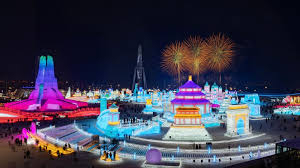
As winter blankets the northern regions of China, the city of Harbin transforms into a breathtaking wonderland, captivating visitors with its stunning ice and snow sculptures. Known as the “Ice City,” Harbin hosts the annual Harbin International Ice and Snow Festival, one of the largest and most spectacular winter festivals in the world.

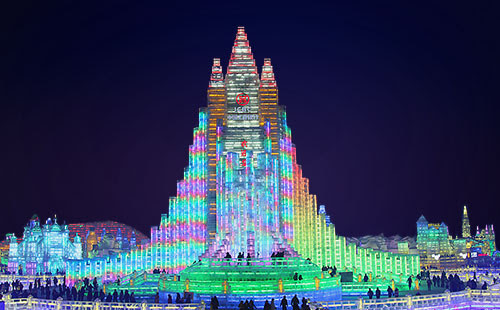
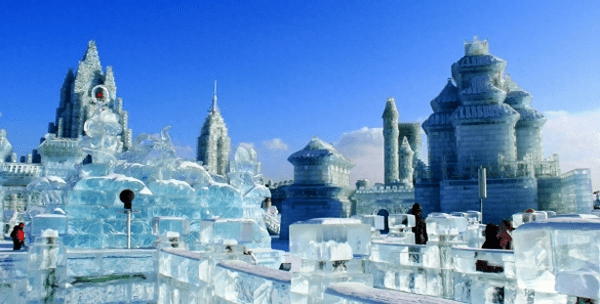
Every year, from early January to late February, Harbin comes alive with vibrant ice and snow displays that showcase the incredible artistry and creativity of sculptors from around the globe. The festival features massive ice castles, intricate sculptures, and dazzling light displays that create a fairy-tale atmosphere. The main venue, the Harbin Ice and Snow World, spans over 600,000 square meters and is filled with stunning structures made entirely of ice blocks harvested from the nearby Songhua River.

Marvel at the Sculptures

Walking through the festival is like stepping into a dream. You’ll find life-sized replicas of famous landmarks, such as the Eiffel Tower and St. Basil’s Cathedral, all crafted from glistening ice. The attention to detail is astounding, with artists using colored lights to enhance the beauty of their creations. Each year, the sculptures reflect a different theme, ensuring that no two festivals are alike.

Engage in Winter Activities

Beyond the awe-inspiring sculptures, Harbin offers a plethora of winter activities to keep visitors entertained. Ice skating, snow tubing, and even ice swimming are just a few of the thrilling experiences you can enjoy. For those seeking a more leisurely pace, horse-drawn sleigh rides through the snow-covered landscape provide a charming way to soak in the winter scenery.

Cultural Experiences

Harbin is not just about ice and snow; it’s also a city rich in history and culture. The influence of Russian architecture is evident throughout the city, particularly in the stunning St. Sophia Cathedral. Take the time to explore the local cuisine as well, with hearty dishes like dumplings and hot pot that are perfect for warming up after a day in the cold.

If you’re considering a trip to Harbin, be sure to dress warmly! Temperatures can drop well below freezing, so layers, thermal clothing, and insulated boots are essential. The best time to visit is during the festival, but the beauty of Harbin’s winter landscape can be enjoyed throughout the snowy season.

Link:https://peacelilysite.com/2025/02/04/discover-the-enchanting-ice-and-snow-world-of-harbin-china/

Exploring the Timeless Charm of Pingyao Ancient City

Pingyao Ancient City – The Best-preserved Ancient City in China

Pingyao Ancient City, with over 2,700 years of history, remains one of China’s best-preserved ancient cities. Its authentic layout features long, ancient city walls, elegant residences, courtyards, and a maze of streets and alleys that evoke the bustling county life of the Ming and Qing Dynasties. Designated a UNESCO World Cultural Heritage Site in 1997 alongside Shuanglin and Zhenguo Temples, Pingyao is one of the Four Most-Preserved Ancient Cities in China, making it a must-visit for those keen on history and culture.

A Journey Through Time

Pingyao was founded during the Western Zhou Dynasty in the 8th century BC, and it grew significantly during the Ming and Qing Dynasties. Unlike many ancient cities, it has survived wars and modernization, making it even older and more intact than famous counterparts like Lijiang Old Town, Huizhou Ancient City, and Langzhong Ancient City.

As the seat of county government since the Qin Dynasty (221 BC), Pingyao’s prominence only increased when its city walls were rebuilt and expanded in 1370. With over 400 ancient residential houses, government offices, shops, banks, and temples still standing, the city offers visitors a glimpse into traditional Chinese life, commerce, and religion.

Pingyao’s Unique Architecture

The architecture of Pingyao is one of its greatest treasures. Beyond its famous city walls and financial institutions, the city’s homes and structures reveal traditional design principles of the Ming and Qing Dynasties. Constructed using ancient techniques and materials, Pingyao’s buildings retain exquisite details in layout, decorations, and craftsmanship. When viewed from above, the city’s layout resembles a turtle, with the Southern Gate as its head, the Northern Gate as its tail, and the east and west gates representing its limbs.

Must-See Highlights in Pingyao

Ancient City Wall
Built in 1370, Pingyao’s city walls stretch over 6,163 meters and are considered among the best-preserved in China. The walls stand 12 meters high, and at the top, you can explore 72 watchtowers, said to symbolize the 72 disciples of Confucius. Walking along the walls offers breathtaking views of the city below, the surrounding countryside, and the ancient military equipment once used to defend this historic town.

Rishengchang Former Bank
As China’s first modern bank, established in 1823, Rishengchang revolutionized financial operations in the Qing Dynasty. The museum here offers a fascinating look at China’s banking history, with exhibits on ancient financial tools, account books, and original working scenes.

North China First Escort Agency
Known for its armed escorts protecting valuables, this agency thrived during the Qing Dynasty. Today, it’s a museum that tells the history of these brave escorts, showcasing the tools and techniques they used to safeguard goods during China’s bustling commercial era.

Pingyao Ancient Government Office
Dating back over 600 years, this grand office complex served as the seat of government in feudal China. Visitors can tour its judicial halls, ancient jails, and living quarters, and even watch performances of ancient court proceedings.

Temple of the City God
One of the most well-preserved City God temples in China, this Ming Dynasty complex is located in the eastern part of the city. With stunning wooden architecture, colored glazes, and vibrant frescoes, it’s a peaceful spot to take in the spiritual atmosphere while admiring the craftsmanship of centuries past.

Exploring Beyond the City

Pingyao Ancient City is part of a UNESCO-listed trio that includes the nearby Shuanglin and Zhenguo Temples, each rich with history and cultural significance.

  • Zhenguo Temple
    Although less known, Zhenguo Temple is a hidden gem, offering an impressive array of ancient painted sculptures from the Five Dynasties period. The Ten Thousand Buddha Hall houses statues with a powerful presence, showcasing techniques that date back to the Tang Dynasty.

  • Shuanglin Temple
    Located just 6 kilometers from Pingyao, Shuanglin Temple is a masterpiece of Chinese painted sculpture, with over 2,000 Ming Dynasty statues that appear lifelike, capturing human emotions and worldly charm.

The Thousand-hand Avalokitesvara

A Culinary Adventure in Pingyao

Pingyao boasts 108 types of local snacks and dishes, with noodles being the star. The city’s famous Pingyao Beef is a must-try, thinly sliced and bursting with flavor. Another local favorite is Pingyao Wantuo, a buckwheat dish with a chewy texture that’s perfect for summer, known for its cooling and detoxifying properties.

The environment is also a quaint restaurant

Tips for a Budget-Friendly Trip

Many tourist traps in Pingyao are located near the city’s outer entrances. Avoid being lured in by promotions outside and head straight into the ancient city for an authentic experience. Once inside, you can explore freely, with many areas open to the public.

  • Ancient City Pass: The ¥125 pass includes access to 22 attractions, such as the city walls, government offices, and temples. If you’re just looking to wander the streets and grab a bite, entry to the ancient city itself is free. The pass is valid for three days and can be purchased via the official “Pingyao Ancient City Scenic Area” mini-program. Discounts are available for students, military personnel, and seniors.

Where to Stay: Accommodations in Pingyao

Staying inside the ancient city is the best way to fully immerse yourself in Pingyao’s charm. Not only is it convenient for sightseeing, but it also allows you to enjoy the beautiful night views and avoid the peak tourist times. Homestays within the city are affordable, ranging from ¥100-200+ per night, with some offering traditional heated beds that add a touch of historical authenticity to your stay.

However, be sure to check the reviews and photos before booking, as the quality of accommodations can vary. Some rooms may be small or lack private bathrooms, so it’s essential to do a little research beforehand.

Pingyao Ancient City is vast, so if your time is limited, focus on exploring the main attractions around South Street and East Street. For those staying longer, take the time to wander the quieter alleys to experience local life and discover hidden gems beyond the tourist hotspots.


Pingyao Ancient City offers a unique window into China’s rich history and cultural heritage. With its well-preserved architecture, vibrant temples, and fascinating museums, it’s a destination that promises to transport you back in time, offering unforgettable experiences at every turn.

Link:https://peacelilysite.com/2024/09/20/exploring-the-timeless-charm-of-pingyao-ancient-city/

Source: https://www.chinadiscovery.com/shanxi/pingyao/pingyao-ancient-city.html, https://new.qq.com/rain/a/20210825A00UZJ00