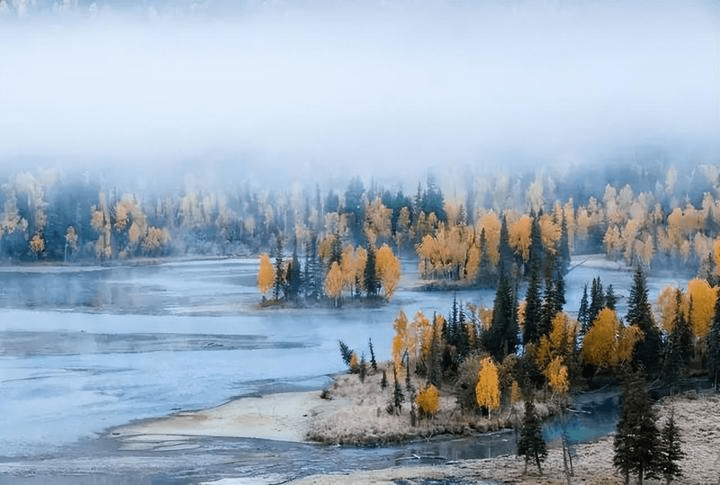
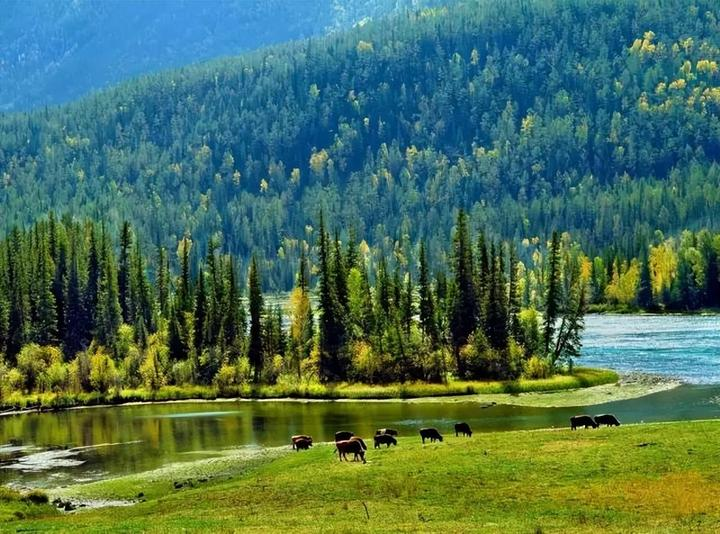
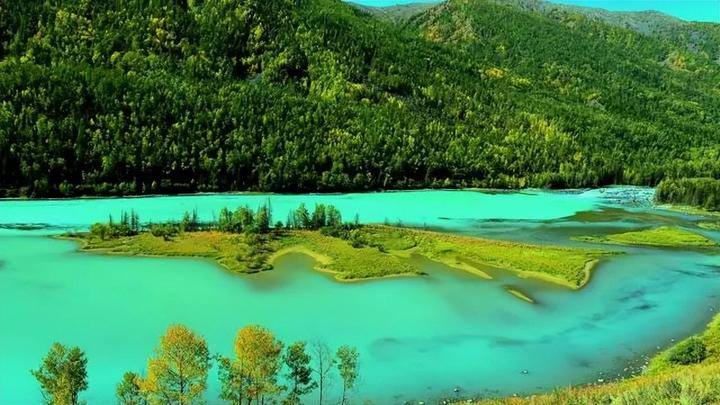
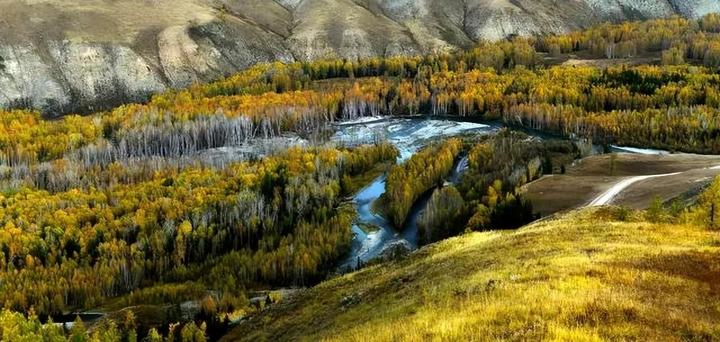
Healing in the Mountains: How Hiking and Forest Bathing Restore the Soul

I have always loved being close to nature, and one of my greatest joys is walking through the forest. Living in Santa Cruz, I am surrounded by beautiful woods and mountain trails. Each time I wander beneath the trees and along winding paths, I arrive at the end feeling lighter, calmer, and deeply refreshed—as if my body and mind have been fully recharged.

I once came across an interesting idea:
Mountains are places where we gain energy, which is why after hiking, we often feel alert and invigorated. Water, on the other hand, carries energy away. This may explain why spending long hours by the ocean or a lake can leave us feeling tired. Yet water also washes away emotional heaviness. When we feel sad, restless, or overwhelmed, a walk by the sea often brings a sense of release and ease.

Energy is constantly flowing through nature. We are simply quiet participants, allowing the natural world to gently adjust our inner frequency.

Discovering “Forest Bathing”

Recently, I was delighted to learn that the Japanese have a word that perfectly describes this healing experience: forest bathing.

In Japanese, it is called shinrin-yoku:

  • Shinrin means forest
  • Yoku means bathing

Together, shinrin-yoku means “bathing in the forest,” or allowing our entire being to absorb the atmosphere of the woods. As early as 1982, Japan officially incorporated forest bathing into its national public health program as a form of preventive and therapeutic care.

Suddenly, I realized that every breath I took in the forest had always been quietly nourishing me.

Japanese researchers have conducted extensive studies on forest bathing and found remarkable benefits for overall well-being. Research shows that forest bathing can:

  • Reduce stress
  • Strengthen the immune system
  • Lower blood pressure
  • Support recovery after illness or injury
  • Improve mood and concentration

For me personally, its most immediate effect is simple yet profound—it quickly lowers stress and brings my heart back to a place of calm.

Forest bathing is very different from running or brisk walking. It is not about exercise or distance; it is about presence. The key is to slow down and fully engage all your senses:

  • Touch the bark of trees—rough or smooth
  • Watch sunlight dance through layers of leaves
  • Breathe in the scent of earth and greenery
  • Listen to the wind moving through branches
  • Find a place to sit and feel your connection with the ground

In the past, most of my hikes were intense, goal-driven, almost like completing a task. Since practicing forest bathing, I now schedule at least one slow, mindful walk each week. By slowing down, I have discovered beauty I once overlooked—and I can’t help but smile at how much I missed before.

There is a subtle yet powerful presence in the forest. It does not announce itself, yet it gently soothes the heart.

Perhaps it is the oxygen released by the trees.
Perhaps it is the steady, unhurried rhythm of the forest.
Or perhaps it is simply that, among the trees, we can finally hear our own breath again.

When we walk in the forest, there is nothing we need to accomplish. Nothing to force. Nature naturally helps our hearts soften, open, and grow brighter.

If you feel tired, anxious, or lost in the busyness of everyday life, I invite you to find a nearby mountain trail and give yourself the gift of forest bathing.

Let nature, in its quiet way, remind you:
You are doing your best—and you deserve to be healed. 🌲

Link:https://peacelilysite.com/2025/12/12/healing-in-the-mountains-how-hiking-and-forest-bathing-restore-the-soul/

Enshi: China’s Grand Canyon

A walkway in Enshi Canyon, China’s Grand Canyon. Jean Spoljaric photos.

A Visit to the Chinese Grand Canyon in Enshi

By Jean Miller Spoljaric

My trip to the Hubei (Hu-bay) Province of Central China proved to be a real eye-opener. It was a culture shock for me, but life as they know it for them. I traveled from Beijing to Wuhan, China, and on to Enshi, the home to China’s Grand Canyon.

Enshi city was vibrant and alive, but nothing could have prepared me for the China I was about to see in the mountainous areas of Enshi Canyon. Several times during the trip, I reminded myself that, sometimes, ‘Less is More.’

Location

The view from the top of Enshi Canyon is breathtaking.

Enshi is the capital city of Hubei Province and is located inland, in the southwest region of Hubei. It’s an area of immense natural beauty with soaring mountains, deep canyons, meandering rivers, and great waterfalls. The mountain village is a two and a half-hour car ride from the bustling city.

The mountaintops are high above the skyline and the thousand-zhang waterfalls that tumble to the canyon floor below, feeding the underground rivers that flow through the Qungjiang River Valley of virgin forests and ancient villages.

Enshi proudly displays the peaks and valleys of what is known today as China’s Grand Canyon.

Enshi Grand Canyon

The Enshi Grand Canyon is located in Tunbao Village in the Town of Banqiao, high above the clouds. I climbed my way to the summit and experienced the views of a lifetime. Altogether, I hiked three of the five precipices in Enshi Canyon.

I was in awe as I gazed out toward the mystical land. The puffy clouds seemed close enough for me to touch and the precipices were like giant stalagmite stone fingers reaching toward the heavens.

Free from the hustle and bustle of the rest of China, there were no beeping horns, no crazy mopeds; just the serene stillness and beauty of nature.

A 67-Mile Canyon

The Enshi Canyon has a total length of 108 km (67 miles) and the total area is more than 300 sq. km (about 74,000 acres, or 115.8 sq. miles). As it’s only 1.7 miles wide, it makes the canyon long and narrow.

By comparison, the American Grand Canyon (1,218,560 acres/ 1,904 sq. miles) could hold sixteen Enshi Grand Canyons.

The significant difference between the two is that Enshi Grand Canyon is lush as opposed to the barren desert-like topography of America’s Grand Canyon.

Still, all the splendor and physical features that one would find in America’s Grand Canyon are contained within this smaller area, so it makes it a great place to visit for a day trip or longer.

All hard work and smiles, always, in Enshi.

The Magic

As I climbed the steep ridges of the mountains, at each turn, I came across villagers selling cold drinks, cooked potatoes, and hard-boiled eggs soaking in tea. Not an easy day’s work!

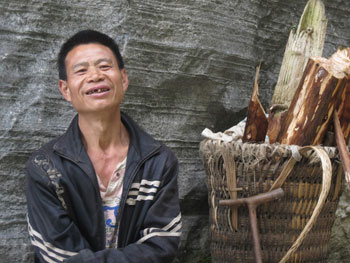
I was amazed at how the elders set up camps every day, hiking up and down these mountains with large sacks strapped on their backs. Great exercise keeps them fit.

As I paused to drink my water and catch my breath, a woman twice my age, with a gentle smile on her face, passed me. I used the universal sign for a photo to ask if I could take a picture. Her look of concern was followed by a big smile.

Moments after snapping the image, I shared it with her and several others who had stopped to watch. They seemed amazed at seeing themselves in the viewfinder. It was magic and they wanted more pictures.

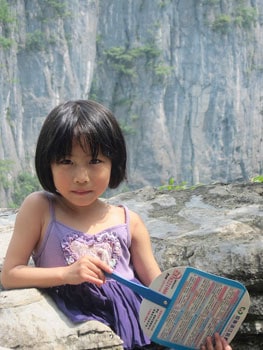
This pretty little girl hiked the Enshi Grand Canyon with her family. I was proud of her as she kept up with everyone!

Then, a little boy stopped and pointed to my iPod. I let him listen to a song and his face beamed with amazement! More magic!

And, just like that, any concerns were replaced with trusting smiles. As we smiled and laughed together, the language barrier seemed to disappear.

Giant Golden Panda

As a tall, blond, westerner, I felt the introspective eyes of the locals on me in the more urban areas, but nothing prepared me for my reception in the isolated mountain settlements.

For many of the mountain people of Enshi, it appeared to me that I was the first American they had ever seen.

The children surrounded me, seemingly mesmerized by my blonde hair and green eyes. Mothers shooed their children closer to get a better look; the shy little ones hid behind their mother’s skirt, peeking out just enough to fill their curiosity.

My tall stature and lightly colored hair had the men following my every move with their eyes. Women would gather around just to hear me speak.

I felt like a giant golden panda. I laughed to myself as I thought that I haven’t turned this many heads since I was nineteen!

They wanted to know everything about me: who I was, where I came from, why I was there! I’m happy to say, I think I left a lasting positive impression.

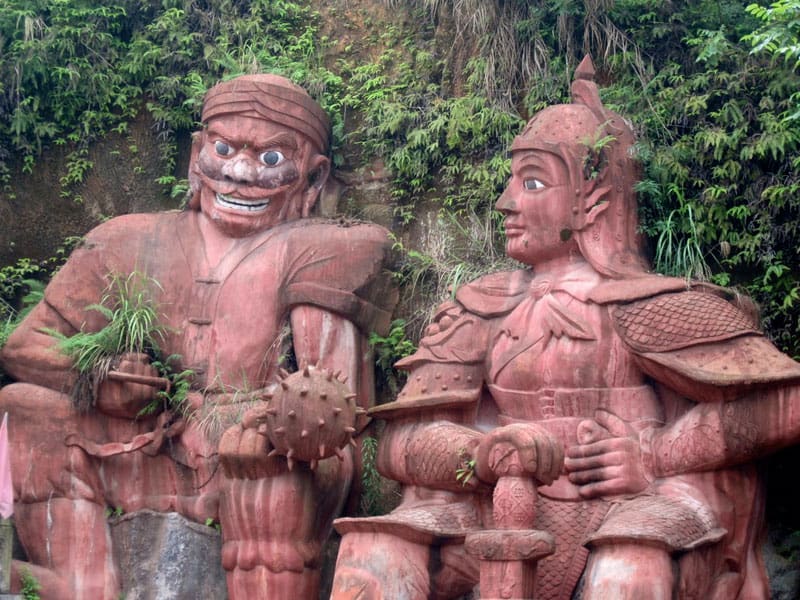
Large statues oversee the grounds at Tusi Castle in Enshi, China.

The People Of Enshi’s Mountains

The people of rural Enshi are kind, hard-working, self-sufficient, and very isolated from the world. They live a hard life off the land, but their big smiles never seem to fade.

They are farmers of vegetables and tea and are proud of their daily life with each other. There is no running water for most and squat toilets for all.

I saw children with no shoes or with one worn pair, and I thought about my children with too many shoes. I saw all the diseased and sick dogs lying in the comfortable shade of old, tired trees and wanted to rescue them all.

I guess it’s all relative. My daily life of iPods, cell phones, and laptops is a world away from the mountain people of Enshi. They are surrounded every day by trees, lakes, rivers, waterfalls, and beautiful lush green mountains. Maybe, they have it right!

The Other Enshi

There is another world below the mountains in the city of Enshi. By day, I would recommend a visit to Tusi Castle. It dates back to 700 AD and is a lesson in the culture of the area.

This Chieftain castle was destroyed by a fire in 2004 and perfectly restored soon after.

It is home to the largest archaized Pagoda style buildings in China.

As I wandered through the exhibits of architectural and decorative arts, I felt like I was walking through a living book. It tells the story of the Tujia folk cultures through sculptures, gardens, artwork, and furnishings.

Afterward, there is a must-see play that features the primitive reenactment of the local Chinese culture. It will make you feel as if you’ve been transported back in time.

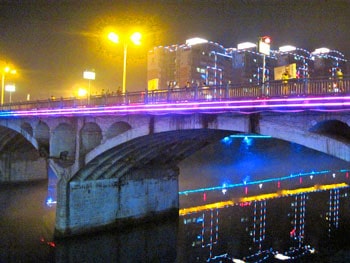
Enshi City is alive and beautiful in the evening.

Lunch in Dingshihui

Make sure you head to Dingshihui for lunch! During a long hot day, I was looking forward to lunch and a drink, but I could never have imagined the surprise that Dingshihui had in store for me.

As I followed my guide up the stairs, my eyes became wide with amazement.

This fish dish is just one of the specialties at Dingshihui in Enshi City.

Dingshihui was like walking through a boutique-style hotel in Manhattan, and the food was incredible! I couldn’t believe that a luxurious oasis such as this existed in this city.

The city came alive in the evening. Neon lights lined the buildings and bridges in the Central Square and reflected off the river below.

There were men gathered in groups playing Mahjong and residents participating in a huge outdoor aerobics class.

The Lesson

The people of Enshi are an extended community where divisions of labor know no age and responsibilities are learned.

And who would have thought that the highlight of my trip to China would be the Grand Canyon of Enshi and the people who live there?

Enshi City
Enshi City

For all I thought I knew about China, it was all that I discovered I didn’t know that has added to the quality of my life. I want to return to this great experience and, if you’re as fortunate as I was, you’ll find a new world to discover.

Useful Information about Enshi China

Dried snake anyone?
Dried snake anyone?

For more information on travel in this area of China contact the CNTO- China National Tourist Office. They were extremely helpful and knowledgeable about all things China.

List of China tourism offices

While in Enshi I used Enshi Railway Travel Service Co., Ltd. They do not have a website so it makes it difficult to book anything in advance, but I assure you if you contact them directly upon your arrival in China they will make sure you have the time of your life.

They are located at No. 64 Hangkong Road, Enshi City. the phone number you can reach them at is (0086-718-) 8236262. Ask for Lucy to be your trusted guide; she will take wonderful care of you from start to finish.

To and From

I flew Air China from JFK Airport in NYC into Beijing Airport. I also flew China Southern throughout Hubei Province, Wuhan, and Enshi. Both airlines went out of their way to make me comfortable, the staff was friendly and the seating spacious.

Places To Go

Hubei Provincal Museum in Wuhan Ruibom Tea Factory Store in Enshi City

Information about Enshi Caynon

Information on Enshi City

Information about Tusi Castle

The Enshi Dingshihui Dining Management Company, Ltd. Restaurant has no website. It remains a bit of a mystery. Ask your guide or taxi driver to bring you to the fanciest place to eat in Enshi City; I promise they will know. I do have phone numbers. Once you arrive in Enshi you can try your luck: 0718-8411717 or 0718-8495282.

Lodging

While in Enshi City I stayed at the centrally located The Yihe International Hotel.

While in Wuhan I was lucky to stay at the beautiful Shangri-La Hotel. The Shangri-La is located in the Hankou business area and is only 25 minutes from the Tianhe International Airport and only 15 minutes from the Yangtze River Pier.

Source: https://www.gonomad.com/2172-enshi-china-chinas-grand-canyon

The Most Beautiful and Magical Desert on Earth — Brazil’s Lençóis Maranhenses Desert

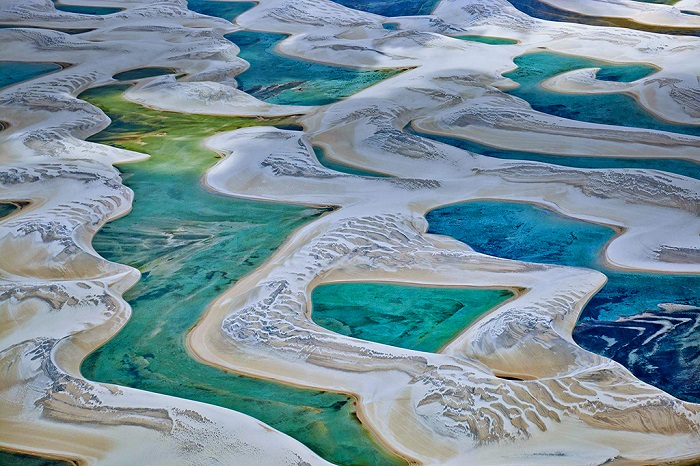
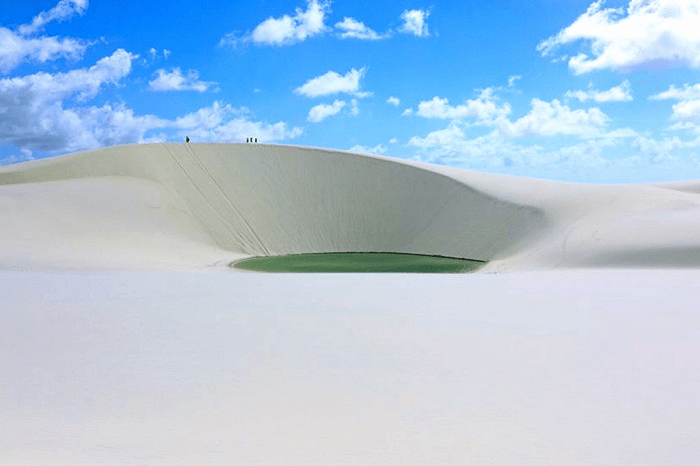
The world is vast and full of wonders—astonishing and rare phenomena that defy the imagination. One such marvel lies in Brazil: a desert with white sand dunes, turquoise and blue-green lagoons so clear you can see the bottom, filled with fish and shrimp, and set against the backdrop of breathtaking sunsets. This place seems like a paradise on Earth. It’s called Lençóis Maranhenses National Park, often hailed as “the most beautiful desert in the world.”

Unlike typical deserts, this one is dotted with thousands of lagoons formed during the rainy season, creating an extraordinary landscape of white dunes and vivid blue lakes—a natural masterpiece that amazes all who see it. You may have been lucky enough to visit, or perhaps not, and maybe you’ll never get the chance to go. But today, I’m bringing this distant beauty to you. Even if you never travel 80,000 miles around the globe, you can still enjoy the most spectacular visual experience.


A Celestial Land on Earth — The Desert of a Thousand Lakes

When people think of deserts, they often picture vast, lifeless stretches of yellow sand under a scorching sun. Water is scarce in deserts, and the sight of numerous lakes teeming with aquatic life is almost unheard of. Yet, such a magical place does exist on Earth—a place where endless deserts and crystal-clear water coexist. In this desolate land, fish and shrimp thrive. Aptly named the “Desert of a Thousand Lakes,” it is the wettest desert in the world and will completely change your perception of what a desert can be.

Located in Maranhão state in northern Brazil, just east of São José Bay and bordering the Atlantic Ocean, this desert spans 1,500 square kilometers. Despite its abundant rainfall, it has little vegetation, making it a rare desert landscape in northern South America. Scattered across the white sea of sand are countless lagoons of various sizes and colors. Fish and crabs can be seen swimming in the water, and the location is perfect for watching the sunset. Immersed in this surreal landscape, one visitor said: “So eerily beautiful, it’s breathtaking.”


How the Desert Lakes Are Formed

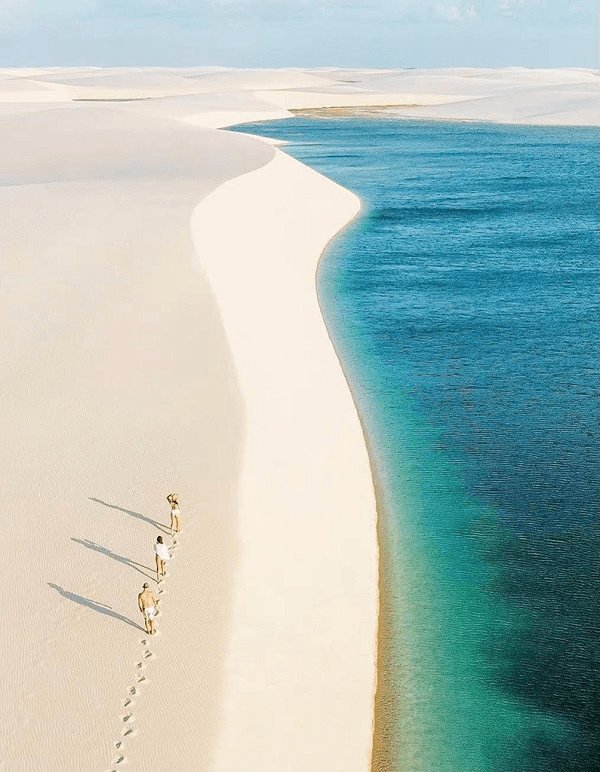
During the rainy season, valleys between dunes fill with rainwater, creating temporary lagoons that can reach depths of up to 3 meters. Every year, thousands of tourists from around the world flock here to witness this rare phenomenon. The white dunes and turquoise lagoons interlace like a massive piece of emerald from afar. Sparkling fish swim in the clear waters, while shepherds lead flocks over tall dunes and fishermen head out to sea under star-filled skies.

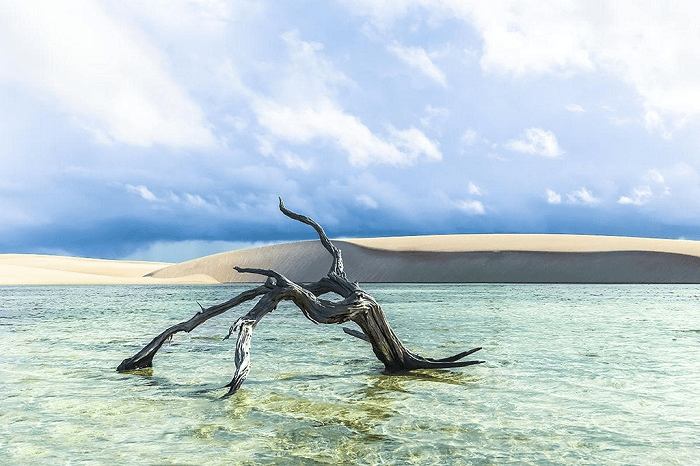
As the rainy season ends, the equatorial heat begins to evaporate the water. The lagoons can lose up to a meter of water per month, and during the dry season, they vanish completely, leaving only dry sand. Yet the dry season has its own unique beauty, with shimmering white waves of sand stretching to the horizon. From above, the crescent-shaped dunes resemble giant, sun-bleached linen sheets—hence the name “Lençóis Maranhenses,” meaning “sheets of Maranhão” in Portuguese.

This unique landscape is the result of geography and weather. With an annual rainfall of 1,600 mm—300 times more than the Sahara—rainwater is trapped beneath the sand by an impermeable rock layer, forming lagoons in shades of blue, green, and black. Nearby rivers carry heavy sediment, which is deposited at their mouths. In the dry season, strong coastal winds blow the dry sand inland, gradually creating this desert over time.


Situated along Brazil’s northeastern coast, Lençóis Maranhenses benefits from the country’s high rainfall, thanks to the world’s largest tropical rainforest. This abundance of water gives rise to the unique scenery that makes it the most beautiful desert on Earth.

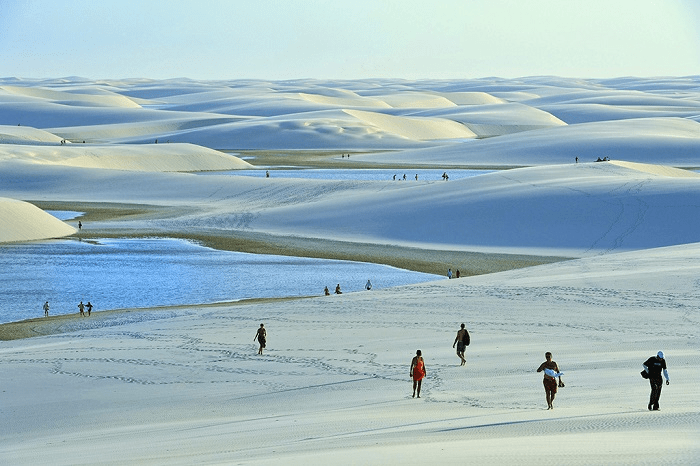
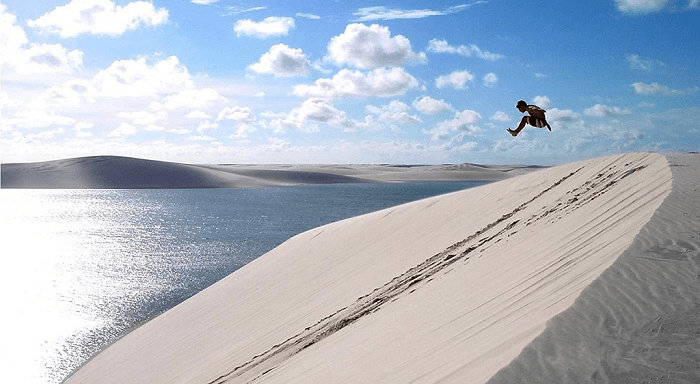
Originally called Lençóis Maranhenses, the desert is now more popularly known as the “Desert of a Thousand Lakes” and has been designated as a national park. Covering over 1,500 square kilometers, it stretches 50 kilometers inland from the dunes to the beach. The landscape is so striking that it captivates every visitor. In this place, where you would expect lifeless sand, there is water, fish, and thriving life. It’s a dream for photographers—every snapshot is like a cinematic masterpiece. You can hike with a backpack, camp, and swim in the lake that catches your eye. As the sun sets, the colorful clouds create a scene of pure magic.

A popular way to explore is by helicopter, which offers a 35-minute aerial tour across the desert. However, this misses the chance for a close-up experience. The best way is still to go in person.

From the state capital São Luís, it takes about 5 hours by car to reach Barreirinhas, the town closest to the desert. There are four daily bus services despite the high number of tourists. Barreirinhas is the main gateway into the heart of the desert.

We chose to enter the desert by water and exit by land. Riding a speedboat, we stopped at various scenic spots along the way. At a small town dock, we sampled a local fruit wine made from simply fermented mixed fruits—refreshing and unique, only $2 per glass.

At the desert’s edge, mangroves thrive, home to crabs, clams, and birds. The white sand dunes and blue lagoons make this place seem like paradise. It’s perhaps the world’s most surreal desert—where extremes meet: desert and lake, dry and wet. From afar, the landscape looks like a massive jade in white and green.


Nature’s Secrets of the Desert

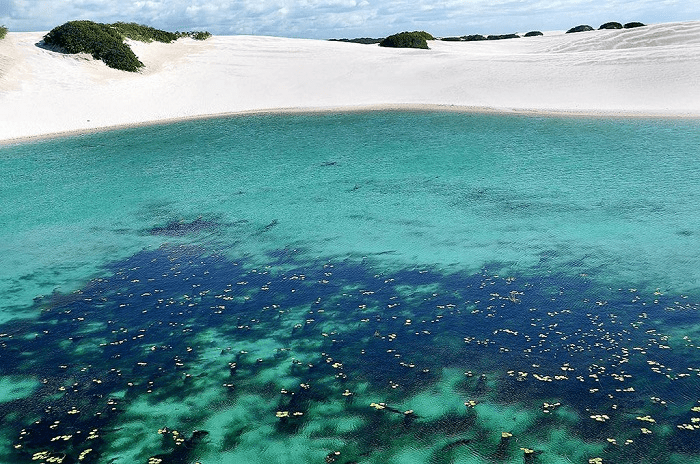
From January to June, heavy rainstorms occur almost daily. Instead of soaking into the sand, the rainwater collects in valleys between the dunes. These clear, sky-colored lagoons can appear bright blue, turquoise, or even golden at sunset. Teeming with fish and shrimp, people come here to fish, swim, or just enjoy the view.

Vegetation is sparse, as the sand has buried most of it over millennia. Under intense sun, surface temperatures can reach 80°C. The local name “Lençóis Maranhenses” captures the look of the dunes—like stretched, sun-dried linen sheets.


A Paradise of Adventure and Beauty

Thousands of lakes with different shapes and depths dot the desert, each reflecting a different color—deep blue, light green, or even reddish-brown when covered in algae. Locals give the lakes poetic names like Blue Lake, Love Lake, and Lake of Hope, reflecting their dreams and sentiments.

The most popular lakes, Blue Lake and Green Lake, are near Barreirinhas. Known locally as the “big sheet” and “small sheet,” Blue Lake is the largest, deepest, and most vibrant—and full of fish and crabs. Swimming here is not only refreshing but also offers a playful interaction with the aquatic life.

By day, the desert becomes a massive water park. You can pose for stunning photos, go on desert hikes, ride off-road jeeps with guides, or climb a dune and race down for thrills. You can even enjoy natural water slides and rafting in lake channels.

At peak water levels, adrenaline-seekers come here for kite surfing—an extreme sport powered by large kites that’s challenging but exhilarating. As dusk falls, the desert becomes a living oil painting.


Aerial Views and Jungle Adventures

For a different perspective, take a helicopter tour (about $130 USD per person) to see the lunar landscape of crescent dunes from the sky. It truly looks like linen sheets blowing in the wind.

Besides the lakes and dunes, you can explore nearby rainforests by boat, visit playful monkeys, climb lighthouses for panoramic views, or ride ATVs across the dunes, sip fresh coconuts, and savor uniquely flavored Brazilian grilled shrimp.


Final Thoughts

The Desert of a Thousand Lakes is a once-in-a-lifetime experience. During the rainy season, it transforms into an otherworldly wonder, where desert and water form a surreal harmony. But this miracle lasts only a few months each year—June and July are the best times to visit, as the lagoons are at their fullest before they begin to evaporate with the arrival of the dry season.

This desert defies logic and reshapes your understanding of the Earth. If you ever have the chance to go, don’t hesitate. It’s not just a journey—it’s a revelation.

Link: https://peacelilysite.com/2025/05/12/the-most-beautiful-and-magical-desert-on-earth-brazils-lencois-maranhenses-desert/

Source: http://m.cntgol.com/article/25758

Xinjiang’s Golden Tapestry: Exploring the Stunning Autumn Landscapes of China’s Northwest

As autumn quietly arrives on the vast land of Xinjiang, a stunning visual feast also begins. Autumn in Xinjiang is like a vivid, colorful painting, with every scene exuding its own unique charm.

If Tibet offers people a spiritual shock, then Xinjiang provides a visual impact.

This is the place in China where autumn’s colors are the richest, with vibrant hues blooming amidst alternating poplar forests, lakes, rivers, and deserts.

If you missed the lush greenery of summer, you definitely cannot miss the splendid autumn of Xinjiang. Below is a suggested itinerary for Northern Xinjiang.

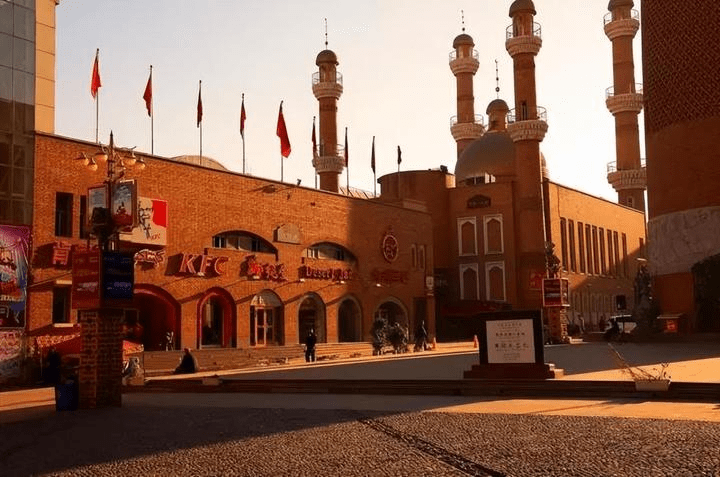
Day 1: Arrive in Urumqi, which can be reached via Urumqi International Airport. Upon arrival, explore the city with key places such as the Erdaoqiao International Bazaar, Hongshan Park, and the Xinjiang Uygur Autonomous Region Museum.

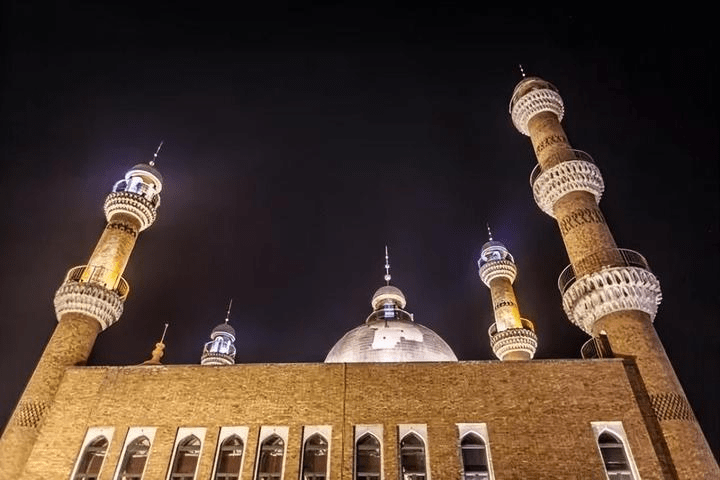
The International Bazaar is the largest bazaar in the world, combining Islamic culture, architecture, ethnic commerce, entertainment, and dining. It is known as the “Window to Xinjiang,” “Window to Central Asia,” and “Window to the World.” It symbolizes the prosperity of commerce and tourism in Xinjiang and serves as a scenic landmark in Urumqi, a city rich in ethnic diversity.

The architecture reflects a strong Islamic style, and while fulfilling modern functionality, it also recreates the historical glory of the ancient Silk Road. The bazaar showcases the deep ethnic characteristics and regional culture of Western China.

You can take Urumqi’s city rapid bus or BRT line 3 and get off at Erdaoqiao Station.Try Big Plate Chicken, baked buns, lamb kebabs, and hand-pulled rice to ignite your taste buds.

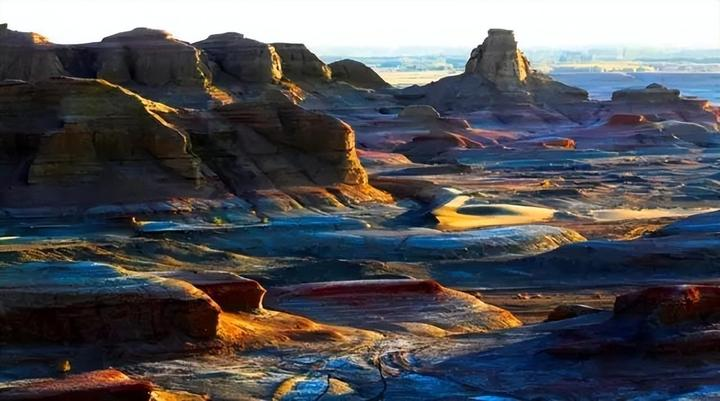
Day 2: Urumqi to Urho Ghost City, exploring the wind-eroded landscapes. Ghost City is also known as Urho Wind City.

It is a unique wind-eroded landform with bizarre shapes. The local Mongolian people call this place “Sulumuhaque,” and the Uygur people refer to it as “Shaytankarshi,” which means Ghost City. The Ghost City stands like a mighty castle in the vast Gobi desert.

This castle-like formation resembles pavilions, towers, corridors, streets, and even a demon’s treasure hall. On the western side of the city gate, there is a rock formation called the “Stone Monkey Gazing at the Sea,” and within the city, you’ll find the towering “Mount Fuji,” the temple-strewn “Angkor Wat,” the magnificent “Potala Palace,” and shapes that resemble a cobra, a roc, and other creatures. These scenes are incredibly varied and dazzling, forming a dreamlike maze.

From a distance, you’ll marvel at its grandeur and magnificence, praising nature’s incredible craftsmanship. Bathed in the glow of the setting sun, the Ghost City becomes a kaleidoscope of colors, resembling a medieval castle with uneven heights and intricate layers, creating a unique spectacle in the Gobi desert.

Day 3: Hemu Village, the most beautiful secluded village – Experience the traditional life of the Tuva people.

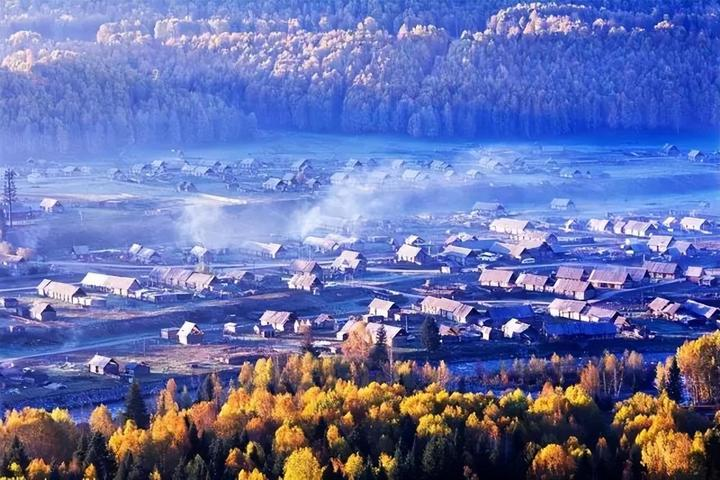
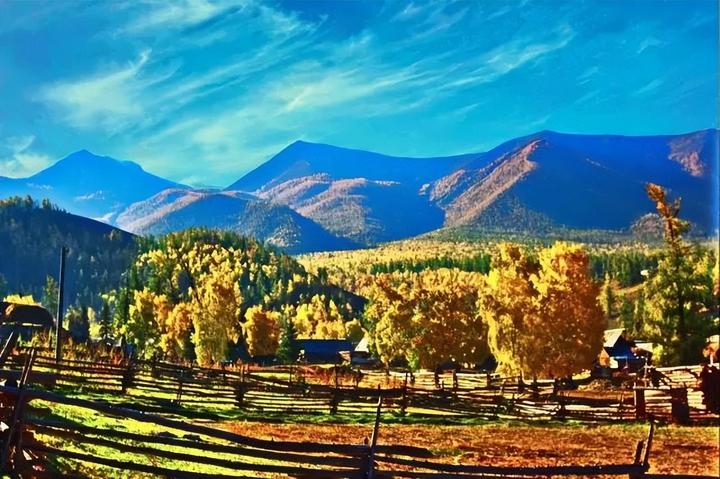
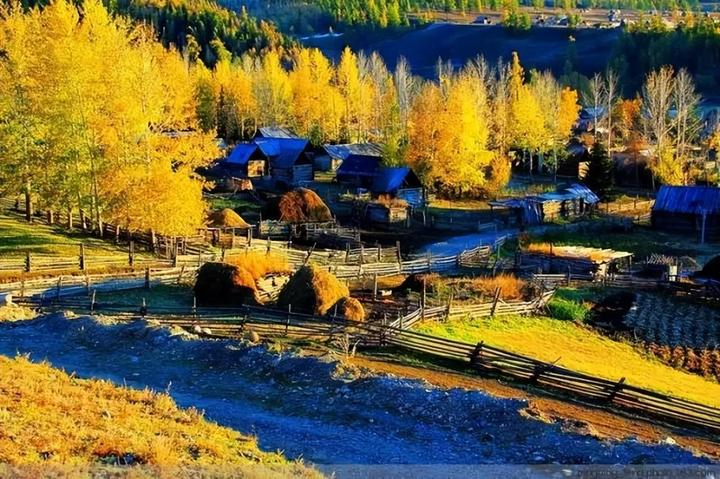
In autumn, the golden leaves of Hemu Village contrast beautifully with the rustic wooden houses. Walking along the village’s paths, the rustling of fallen leaves underfoot seems to whisper stories of the passing years. This is a great place to experience the life of the Tuva people. You can taste local delicacies, enjoy traditional singing and dancing, and immerse yourself in the charm of their unique culture.

Nestled in a vast open area surrounded by mountains, Hemu Village lies quietly, with the Tuva people’s pointed wooden houses and livestock pens scattered casually throughout the village.

A faint mist forms a winding white ribbon above the forest, drifting between the village and the mountains. The most captivating aspect of Hemu Village is its stunning autumn scenery, where mountains covered in red foliage are breathtaking. Smoke rises slowly through the autumn colors, forming a dreamy mist that makes the village look like a fairyland.

Day 4: Kanas – Immersing in the breathtaking scenery of lakes and mountains.

Kanas is one of the world’s rare “earthly paradises.” Its unparalleled beauty is something that even the best photography skills cannot fully capture.

Kanas combines the grandeur of northern landscapes with the delicate charm of southern waters. Additionally, there are other breathtaking spectacles such as the “Sea of Clouds with Buddha’s Light,” the “Color-Changing Lake,” the “Floating Wood Dyke,” and the “Lake Monster,” making it a true wonderland of the Western regions.

Kanas Lake: This lake, known as the “Earthly Fairyland,” reveals a unique charm in autumn. The lake’s water remains as emerald green as a gemstone, while the surrounding forests are transformed by autumn frost into a dazzling array of colors—fiery reds, golden yellows, and sunset oranges. These hues, set against the backdrop of a bright blue sky, form a breathtaking painting, as if nature itself had painted it with the finest brushstrokes.

Kanas Lake is an alpine lake nestled deep in the Altai Mountains’ dense forests. In 2009, it was named the “Most Beautiful Lake in China” by Chinese National Geography magazine.

Best time to visit: From June to early October.

Transportation: The Kanas Scenic Area has its own airport, and you can fly directly from Urumqi to Kanas. The flight takes about 50 minutes.

Day 5: From Baihaba to the Rainbow Beach, admire the colorful rocks and rivers.

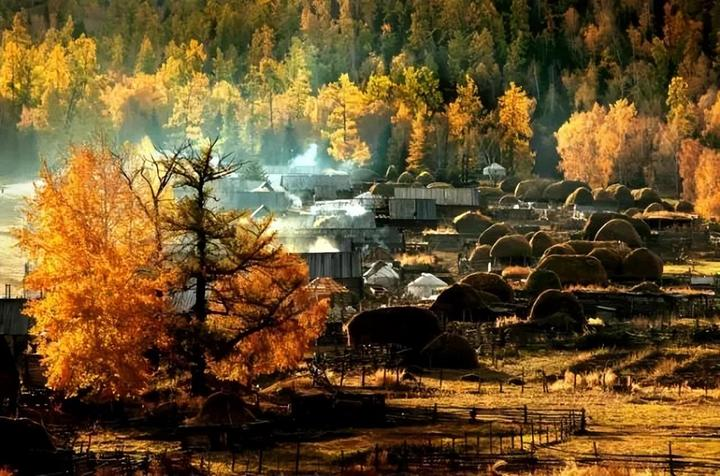
Baihaba Village, known as “the first village in the northwest,” faces the towering mountains of Kazakhstan in the distance. The dense golden pine forests of the Altai Mountains stretch all the way to Baihaba, where the villagers’ wooden houses and livestock pens are scattered harmoniously among the pine and birch forests, creating a peaceful and serene atmosphere. All of the village’s buildings are made of raw wood, with rustic log cabins as its signature feature, giving it the feel of a European-style village.

Baihaba Village: This place, known as “one of the eight most beautiful towns in China,” is especially breathtaking in autumn. The entire village is surrounded by golden birch forests, making it look like a golden fairy-tale world. The old wooden houses are scattered harmoniously among the trees, with smoke gently rising from the chimneys, creating a strong sense of rustic life.

At sunset and in the misty mornings, the smoke drifts lazily, while cows and sheep graze on the hills, painting a picture of harmony between humans and nature. If Kanas is a secluded, ancient paradise, then Baihaba is a fairy-tale world nestled in an untouched natural environment.

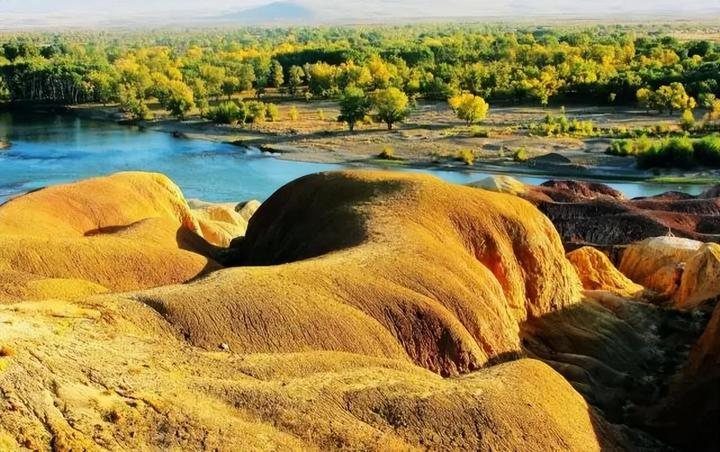
In the morning, immerse yourself in the rustic atmosphere on the grasslands of Baihaba. In the afternoon, head to the spectacular Rainbow Beach to admire Xinjiang’s most beautiful Yardang landforms. The hills here have unique geological features and display a variety of colors. At sunset, under the sunlight, the rocks primarily glow red, with shades of green, purple, yellow, white, black, and transitional hues, creating a vibrant and mesmerizing palette, which is why it’s called “Rainbow Beach.”

Whenever the wind blows, strange sounds of varying lengths and pitches echo from the gullies and beneath the rocks, adding a mysterious and otherworldly feel to the place.

Day 6: Keketohai – Enjoy the tranquility of lakes and forests.

Keketohai Town is located 48 kilometers northeast of Fuyun County in the Altai Mountains, in northern Xinjiang Uygur Autonomous Region. In Kazakh, “Keketohai” means “green forest,” and in Mongolian, it means “blue river bend.”

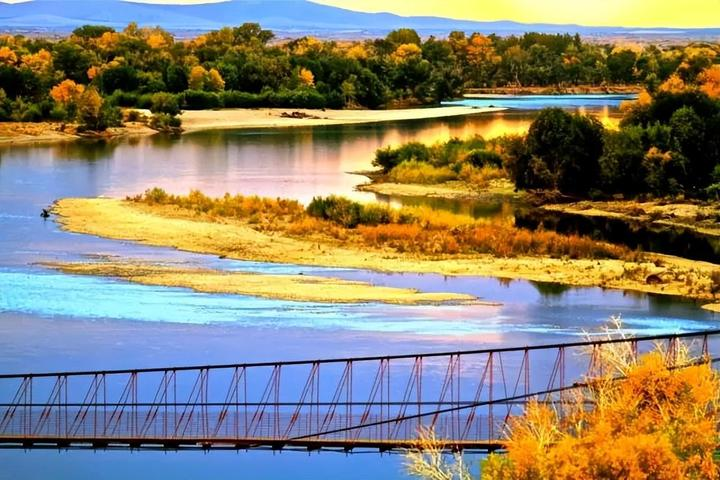
In autumn, the golden birch forests of Keketohai beautifully complement the clear river waters. The river flows gently, reflecting the stunning scenery on both banks, like a giant mirror. Strolling along the river, feeling the breeze and listening to the birds sing, fills one with a sense of peace and serenity.

From here, you will have seen most of the beautiful autumn scenery in northern Xinjiang, and you can return to Urumqi to end your trip. If you have more time, you can visit Heavenly Lake (Tianchi) to admire the snowy mountains and emerald waters.

Heavenly Lake: A fairyland amidst the surrounding mountains.

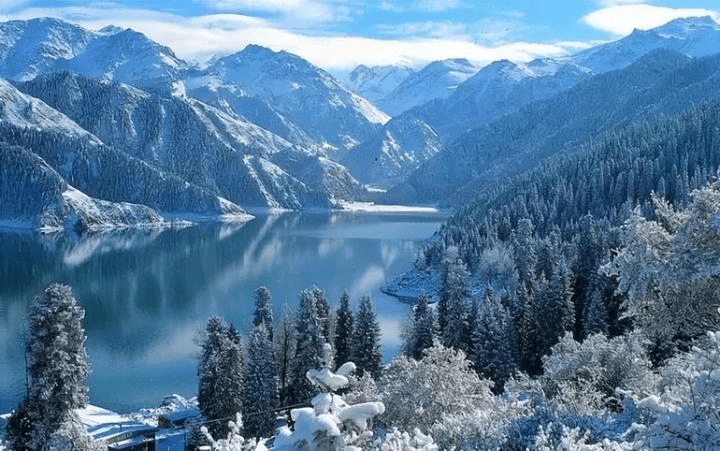
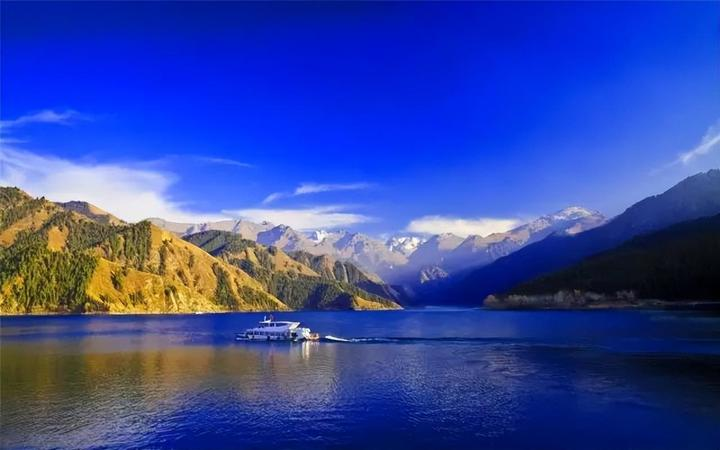
Over the course of history, in the vast wilderness of China’s western regions, a place of extraordinary beauty emerged—Heavenly Lake in the Tianshan Mountains.

Historically known as “Jade Pool,” legend has it that King Mu of the Zhou dynasty traveled west and held a feast with the Queen Mother of the West here. In the Qing dynasty, during the reign of Emperor Qianlong, it was named “Tianchi,” meaning “Heavenly Mirror” or “Divine Lake.”

Heavenly Lake is an extraordinary and mesmerizing sacred site.

Its fame not only comes from the beautiful and mysterious legends associated with it throughout history, but also from its unique natural and cultural landscapes, renowned both domestically and internationally! The Bogda Peak of the Tianshan Mountains rises to 5,445 meters above sea level, its snow-covered glaciers extending throughout the year. The snowy mountains and the blue lake complement each other, creating breathtaking scenery. The surface of the lake is crescent-shaped, and the water is crystal clear, as pure as jade.

The snow-capped peaks reflect in the lake, surrounded by towering spruce trees, with the emerald waters as smooth as a mirror, forming a picturesque landscape. Encircled by mountains, the area is lush with green grass and vibrant wildflowers, earning it the title “Pearl of the Tianshan Mountains.” Tall, verdant spruce and pine trees cover the mountains and ridges, creating a dense forest canopy.

Link:https://peacelilysite.com/2024/10/18/xinjiangs-golden-tapestry-exploring-the-stunning-autumn-landscapes-of-chinas-northwest/

Source : photos from https://www.52hrtt.com/br/n/w/info/F1665986705929
88,28. THE BULL CALLED DELIGHTFUL [ALL DESERVE RESPECT]


88,28. THE BULL CALLED DELIGHTFUL [ALL DESERVE RESPECT]

Once upon a time, in the country of Gandhara in northern India, there was a city called Takkasila. In that city the Enlightenment Being was born as a certain calf. Since he was well bred for strength, he was bought by a high class rich man. He became very fond of the gentle animal, and called him ‘Delightful’. He took good care of him and fed him only the best.

When Delightful grew up into a big fine strong bull, he thought, “I was brought up by this generous man. He gave me such good food and constant care, even though sometimes there were difficulties. Now I am a big grown up bull and there is no other bull who can pull as heavy a load as I can. Therefore, I would like to use my strength to give something in return to my master.”

So he said to the man, “Sir, please find some wealthy merchant who is proud of having many strong bulls. Challenge him by saying that your bull can pull one hundred heavily loaded bullock carts.”

Following his advice, the high class rich man went to such a merchant and struck up a conversation. After a while, he brought up the idea of who had the strongest bull in the city.

The merchant said, “Many have bulls, but no one has any as strong as mine.” The rich man said, “Sir, I have a bull who can pull one-hundred heavily loaded bullock carts.” “No, friend, how can there be such a bull? That is unbelievable!” said the merchant. The other replied, “I do have such a bull, and I am willing to make a bet.”

The merchant said, “I will bet a thousand gold coins that your bull cannot pull a hundred loaded bullock carts.” So the bet was made and they agreed on a date and time for the challenge.

The merchant attached together one-hundred big bullock carts. He filled them with sand and gravel to make them very heavy.

The high class rich man fed the finest rice to the bull called Delightful. He bathed him and decorated him and hung a beautiful garland of flowers around his neck.

Then he harnessed him to the first cart and climbed up onto it. Being so high class, he could not resist the urge to make himself seem very important. So he cracked a whip in the air, and yelled at the faithful bull, “Pull, you dumb animal! I command you to pull, you big dummy!”

The bull called Delightful thought, “This challenge was my idea! I. have never done anything bad to my master, and yet he insults me with such hard and harsh words!” So he remained in his place and refused to pull the carts.

The merchant laughed and demanded his winnings from the bet. The high class rich man had to pay him the one-thousand gold coins. He returned home and sat down, saddened by his lost bet, and embarrassed by the blow to his pride.

The bull called Delightful grazed peacefully on his way home. When he arrived, he saw his master sadly lying on his side. He asked. “Sir, why are you lying there like that? Are you sleeping? You look sad.” The man said, “I lost a thousand gold coins because of you. With such a loss, how could I sleep?”

The bull replied, “Sir, you called me ‘dummy’. You even cracked a whip in the air over my head. In all my life, did I ever break anything, step on anything, make a mess in the wrong place, or behave like a ‘dummy’ in any way?” He answered, “No, my pet.”

The bull called Delightful said, “Then sir, why did you call me ‘dumb animal’, and insult me even in the presence of others? The fault is yours. I have done nothing wrong. But since I feel sorry for you, go again to the merchant and make the same bet for two-thousand gold coins. And remember to use only the respectful words I deserve so well.”

Then the high class rich man went back to the merchant and made the bet for two-thousand gold coins. The merchant thought it would be easy money. Again he set up the one-hundred heavily loaded bullock carts. Again the rich man fed and bathed the bull, and hung a garland of flowers around his neck.

When all was ready, the rich man touched Delightful’s forehead with a lotus blossom, having given up the whip. Thinking of him as fondly as if he were his own child, he said. “My son, please do me the honor of pulling these one-hundred bullock carts.”

Lo and behold, the wonderful bull pulled with all his might and dragged the heavy carts, until the last one stood in the place of the first.

The merchant, with his mouth hanging open in disbelief, had to pay the two-thousand gold coins. The onlookers were so impressed that they honored the bull called Delightful with gifts. But even more important to the high class rich man than his winnings, was his valuable lesson in humility and respect.

The moral is: Harsh words bring no reward. Respectful words bring honor to all.

88,28. The Bull Called Delightful [All Deserve Respect]

Link: https://hhdorjechangbuddhaiiiinfo.com/2024/07/30/8828-the-bull-called-delightful-all-deserve-respect/

#Buddhisttalesforyoungandold #Buddhiststories #storiesforkids #moralstories #Buddha #Jatakastories #PansiyaPanasJataka

Mount HuangShan

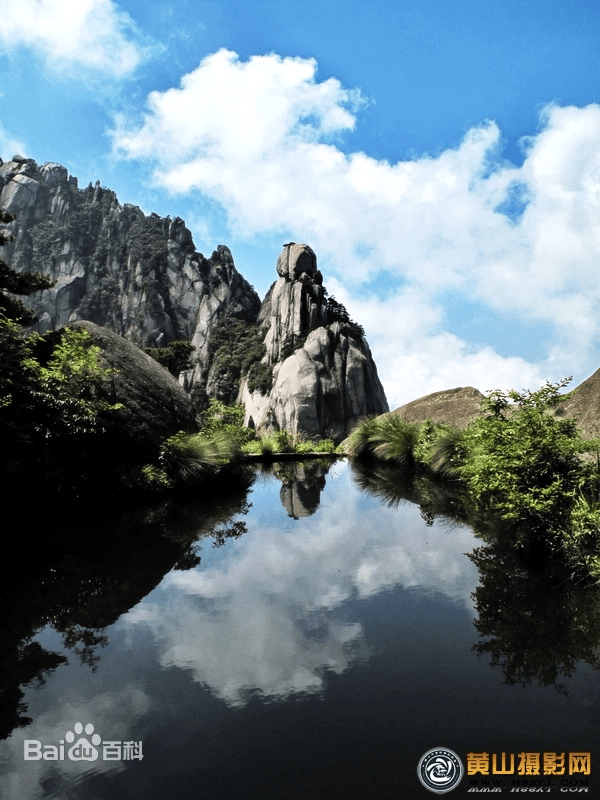
Mount Huangshan, often described as the “loveliest mountain of China,” has played a significant role in the history of Chinese art and literature since the Tang Dynasty around the 8th century. A legend from 747 AD recounts the discovery of the long-sought elixir of immortality on the mountain, which gave Mount Huangshan its name and cemented its place in Chinese history. This legend attracted hermits, poets, and landscape artists, drawn by the dramatic mountainous landscape featuring numerous granite peaks, many over 1,000 meters high, emerging through a perpetual sea of clouds. During the Ming Dynasty in the 16th century, the mountain’s unique rock formations and ancient gnarled trees inspired the influential Shanshui (“Mountain and Water”) school of landscape painting, which profoundly shaped the world’s perception of the oriental landscape.

Located in the humid subtropical monsoon climate zone of Anhui Province, Mount Huangshan covers an area of 16,060 hectares with a buffer zone of 49,000 hectares. It is noted for its botanical richness and the conservation of several locally or nationally endemic plant species, some threatened with extinction.

The cultural significance of Mount Huangshan’s scenic landscape was first recognized during the Tang Dynasty and has been revered ever since. Renamed Huangshan (Yellow Mountain) by imperial order in 747 AD, it became a popular destination for visitors who celebrated its inspiring scenery through painting and poetry, creating a rich body of art and literature of global importance. By the Yuan Dynasty (1271-1368), 64 temples had been constructed on the mountain. In 1606, the monk Pumen established the Fahai Meditation Temple. By the Ming Dynasty, Mount Huangshan had become a favorite theme of Chinese landscape painters, firmly establishing the Shanshui school of landscape painting. The interaction of man and nature in this scenic setting has inspired generations of Chinese artists and writers.

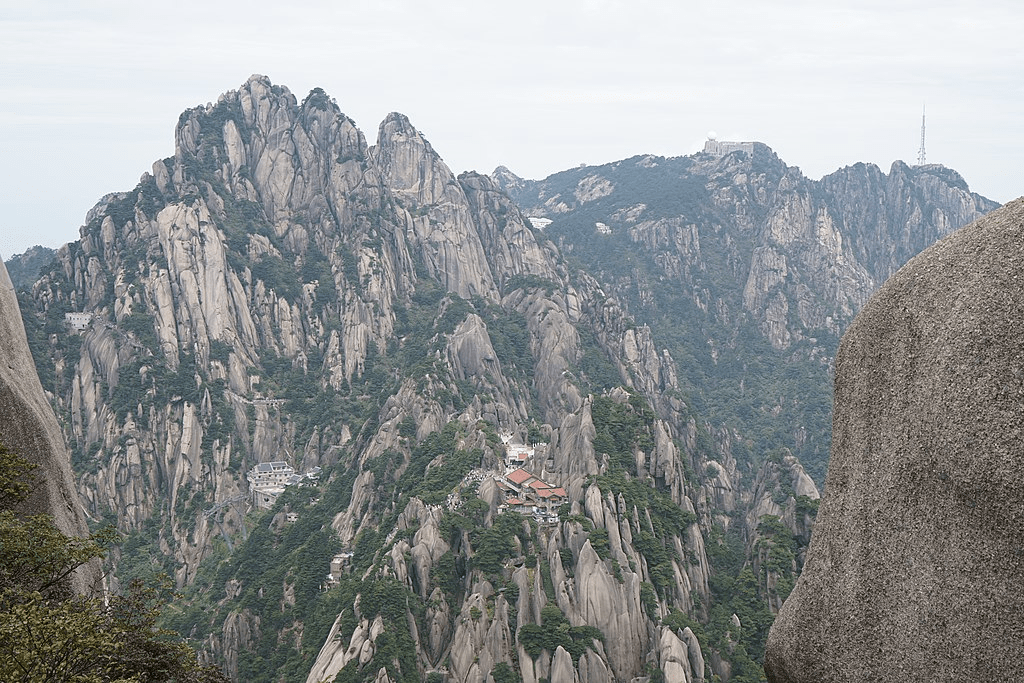
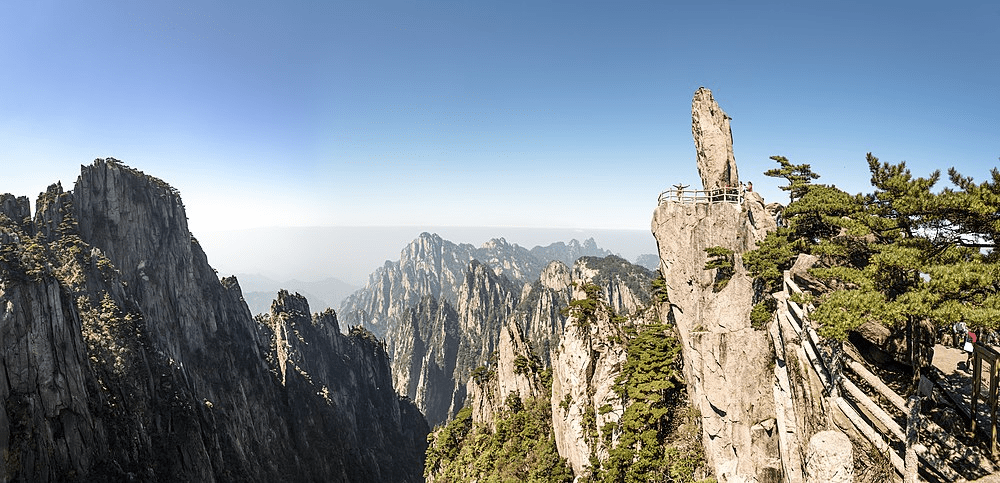
Mount Huangshan is renowned for its magnificent natural scenery, including massive granite boulders and ancient pine trees, often enhanced by cloud and mist effects. The dramatic landscape features natural stone pillars, grotesquely-shaped rocks, waterfalls, caves, lakes, and hot springs, formed by its complex geological history. The mountain range has many peaks, some over 1,000 meters high, with the three tallest and best-known being Lotus Peak (1,864 meters), Bright Peak (1,860 meters), and Celestial Peak (1,829 meters). The World Heritage Site covers a core area of 154 square kilometers and a buffer zone of 142 square kilometers. The mountains were formed in the Mesozoic era, approximately 100 million years ago, when an ancient sea disappeared due to uplift. Later, during the Quaternary Period, glaciers shaped the landscape.

Lotus Peak. By De-Shao Liu (Terry850324) – Own work, CC BY-SA 4.0, https://commons.wikimedia.org/w/index.php?curid=90823373
Celestial Peak By 江上清风1961, CC BY 3.0, https://commons.wikimedia.org/w/index.php?curid=53168150

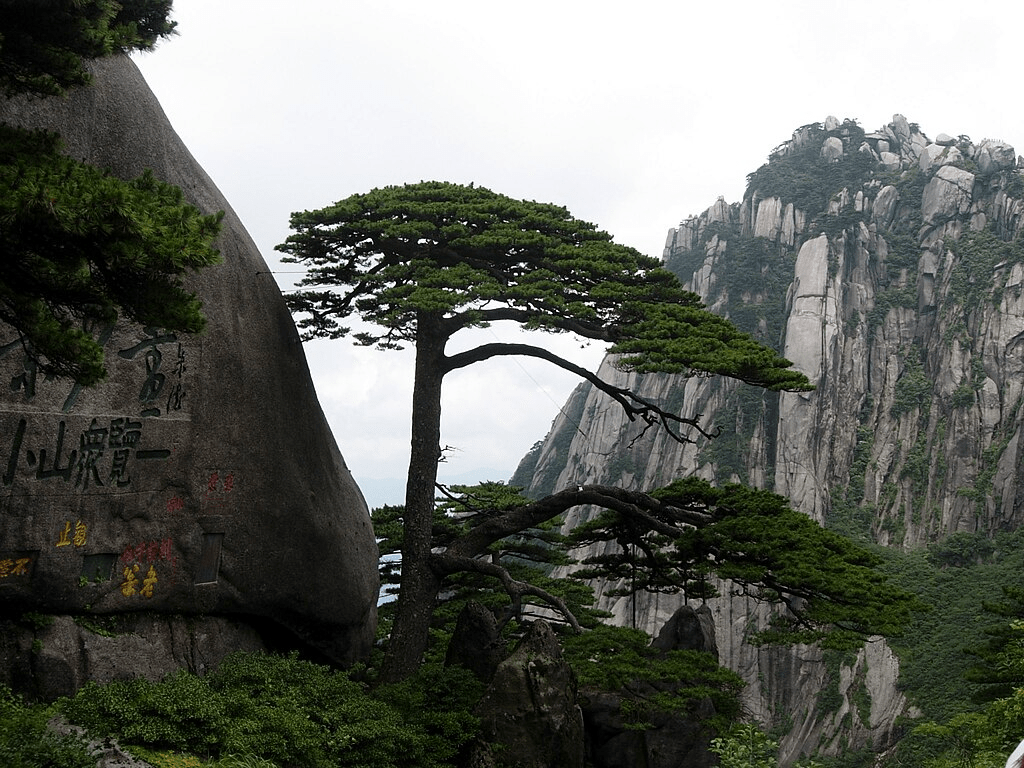
Vegetation varies with elevation, with mesic forests below 1,100 meters, deciduous forests up to the tree line at 1,800 meters, and alpine grasslands above that. The area boasts diverse flora, with one-third of China’s bryophyte families and more than half of its fern families represented. The Huangshan pine (Pinus hwangshanensis), named after the mountain, is a symbol of vigor as it thrives by growing straight out of the rocks. Many pine trees in the area are over a hundred years old and have unique names, such as the Welcoming-Guests Pine, thought to be over 1,500 years old. The pines vary greatly in shape and size, with the most crooked trees considered the most attractive. Huangshan’s moist climate also supports the growth of tea leaves, and the mountain is renowned as one of China’s premier green tea-growing areas. Mao feng cha (“Fur Peak Tea”), a famous local variety, takes its name from the downy tips of tea leaves found in the region.

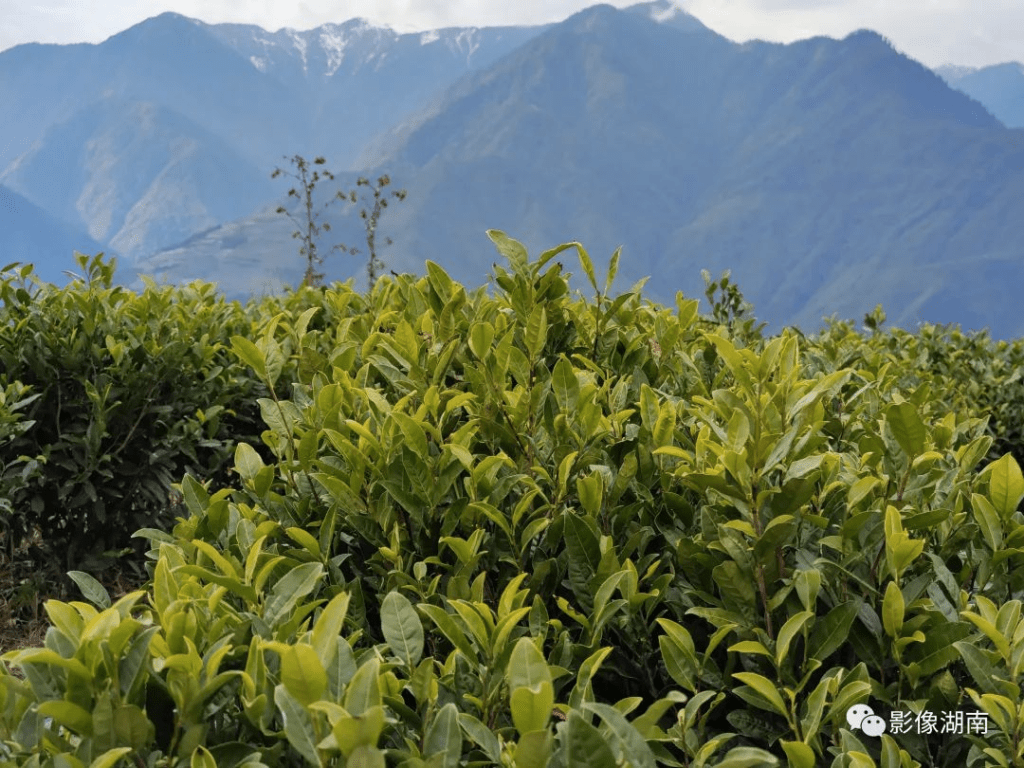
Tea Trees in the Cloud

Ying Ke Pine, literally welcome Pine By memes – Own work, CC BY-SA 3.0, https://commons.wikimedia.org/w/index.php?curid=950688

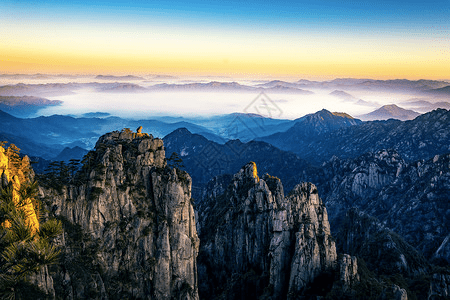
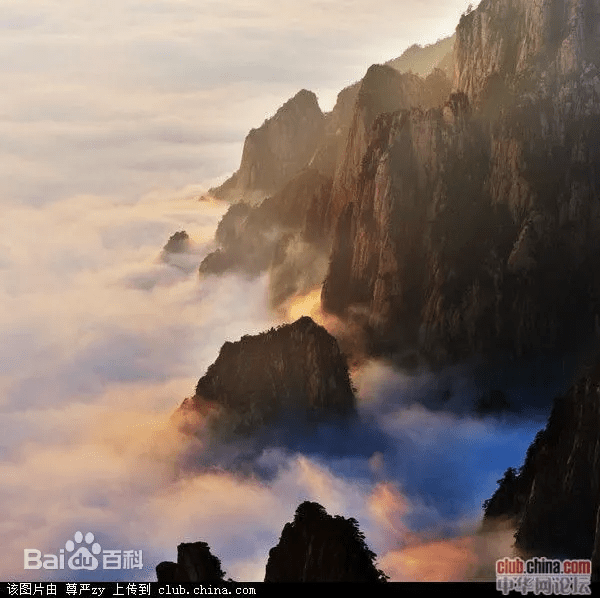
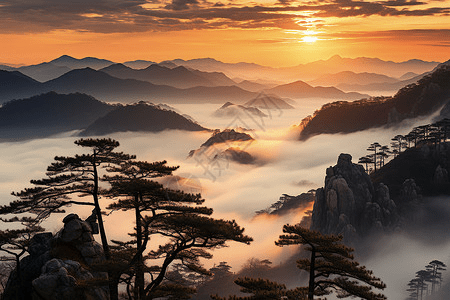
Mount Huangshan often offers views of the clouds from above, known as the Sea of Clouds (yúnhǎi) or “Huangshan Sea,” due to their resemblance to an ocean. Many vistas are named after these cloud formations, such as “North Sea” or “South Sea.” A writer once remarked that to enjoy the magnificence of a mountain, you usually look upwards, but to enjoy Mount Huangshan, you must look downward. The area is also known for notable light effects, such as the renowned sunrises and the phenomenon called Buddha’s Light (fóguāng), which appears only a few times per month.

Mount Huangshan is famous for its stone steps carved into the mountain, with over 60,000 steps throughout the area. The origin date of these steps is unknown, but they are believed to be more than 1,500 years old. Over the years, many scenic spots and physical features have been named, often with narratives behind them. For example, one legend tells of a skeptic who, upon visiting the mountains, was immediately convinced of their beauty. One of the peaks he visited was named Shixin (始信), meaning “start to believe.”

Carved steps to Tiandu Peak By Jakemete at English Wikipedia – Transferred from en.wikipedia to Commons by Wouterhagens using CommonsHelper., Public Domain, https://commons.wikimedia.org/w/index.php?curid=5810245

Shixin Peak By 江上清风1961, CC BY 3.0, https://commons.wikimedia.org/w/index.php?curid=53169922

Bijia Peak (Pen holder Peak), by 颐园新居 – Own work, CC BY-SA 4.0, https://commons.wikimedia.org/w/index.php?curid=36838268

FeiLai Peak by Carlos Adampol Galindo from DF, México – Ella me preguntó: ¿te gusta?; le contesté: De aquí soy., CC BY-SA 2.0, https://commons.wikimedia.org/w/index.php?curid=45070874

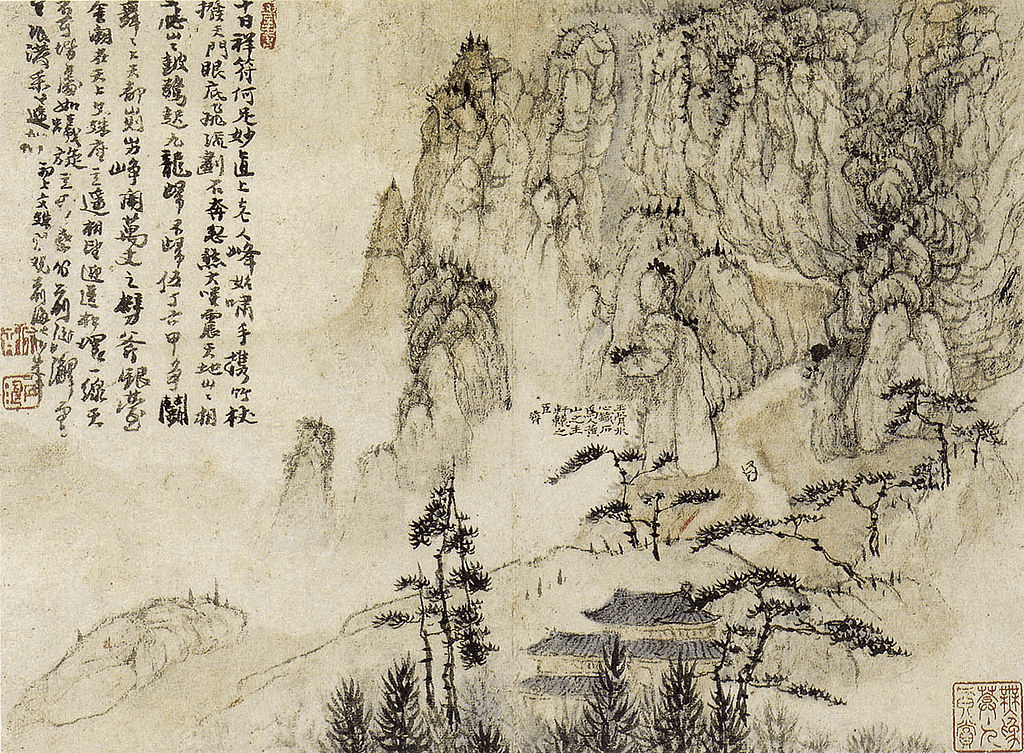
Much of Huangshan’s reputation stems from its significance in Chinese arts and literature. It has inspired poets such as Li Bai, and has been a frequent subject of poetry, Chinese ink painting, and, more recently, photography. From the Tang Dynasty to the end of the Qing Dynasty, over 20,000 poems were written about Huangshan, and a school of painting was named after it. The mountains have also appeared in modern works; director James Cameron cited Huangshan as one of his influences in designing the fictional world of his 2009 film Avatar, and the Chinese animated series Stitch & Ai, a spin-off of Disney’s Lilo & Stitch franchise, is set in the Huangshan mountains.

Ink painting depicting Huangshan by Shitao, 1670 Public Domain, https://commons.wikimedia.org/w/index.php?curid=838862

In 1982, Mount Huangshan was declared a “site of scenic beauty and historic interest” by the State Council of China. It was designated a UNESCO World Heritage Site in 1990 for its scenery and as a habitat for rare and threatened species. Later, it was certified as a National Geopark and subsequently as a regional geopark (Asia Pacific Geopark Network), before being admitted as a UNESCO Global Geopark in 2004.

Mount Huangshan is a habitat for several locally or nationally endemic plant species, many of which are globally threatened. Its flora includes one-third of China’s bryophytes and over half of its pteridophytes. Endemic species to Huangshan include 13 species of pteridophytes and 6 species of higher plants, with many other species endemic to the region or China. This rich flora is complemented by a diverse vertebrate fauna of over 300 species, including 48 mammals, 170 birds, 38 reptiles, 20 amphibians, and 24 fish. Thirteen species are under state protection, including the Clouded Leopard (Neofelis nebulosa, VU) and the Oriental Stork (Ciconia boyciana, EN).

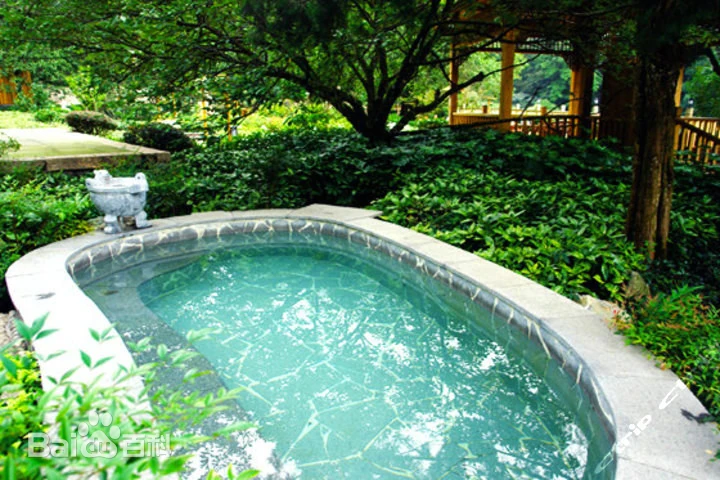
Additionally, Mount Huangshan has multiple hot springs, mainly located at the foot of Purple Cloud Peak. The water, maintaining a temperature of 42°C (107.6°F) year-round, is rich in carbonates and is said to help prevent skin, joint, and nerve illnesses.

The area has also been a site for scientific research due to its diverse flora and wildlife. In the early 20th century, both Chinese and foreign scientists studied the geology and vegetation of Huangshan. Research continues, such as a late 20th-century field study of Tibetan macaques, a local monkey species.

View from Stone Monkey Gazing at the Sea of Cloud By Nicolascornet – Own work, CC BY-SA 4.0, https://commons.wikimedia.org/w/index.php?curid=87551304

Artificial steps on the cliffs of Huangshan By Joe – IMGP1088.JPG, CC BY 3.0, https://commons.wikimedia.org/w/index.php?curid=16824799

Link:https://peacelilysite.com/2024/05/30/mount-huangshan/

Source: https://whc.unesco.org/en/list/547/https://en.wikipedia.org/wiki/Huangshanhttps://baike.baidu.com/item/%E9%BB%84%E5%B1%B1%E9%A3%8E%E6%99%AF%E5%8C%BA/1350521

Discover the Marvels of Zhangye National Geopark: A Journey Through Time and Terrain

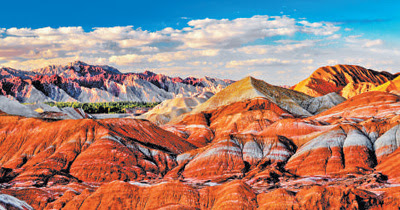
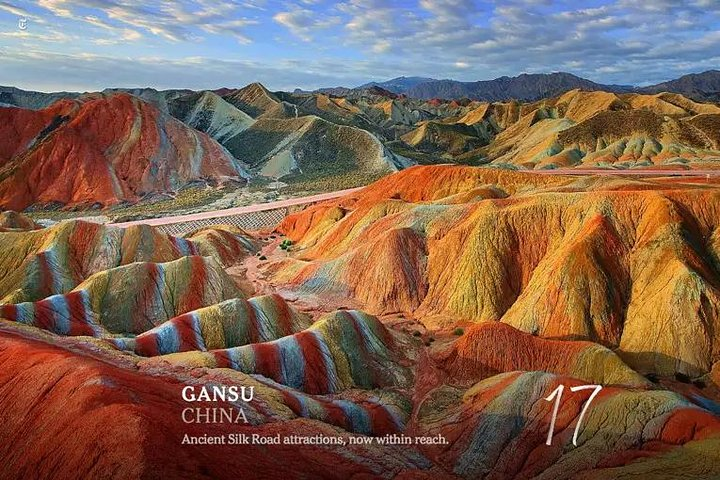
Nestled in the northwestern region of China lies a geological wonderland that seems to defy the boundaries of imagination – the Zhangye National Geopark. This awe-inspiring landscape, characterized by its vibrant hues of red, orange, and yellow, is a testament to millions of years of geological evolution. Here, layers of minerals and sandstone have been sculpted by the forces of nature, resulting in a breathtaking vista that resembles giant layer cakes stretching as far as the eye can see.

The formation of these majestic mountains is a testament to the intricate dance of geological processes that have unfolded over millennia. Millions of years ago, sedimentary layers were deposited on this land, slowly compressing and solidifying over time. As tectonic movements and erosion took their course, the once-flat layers were uplifted and exposed to the elements. Through the gradual process of oxidation and weathering, the vibrant colors we see today were revealed, creating a surreal landscape that captivates the imagination.

One of the most iconic features of the Zhangye National Geopark is the Danxia landform, characterized by its steep cliffs, towering pillars, and intricate rock formations. Among the myriad of scenic points within the park, several stand out as must-visit destinations for any traveler:

Rainbow Mountains: Undoubtedly the crown jewel of Zhangye National Geopark, the Rainbow Mountains mesmerize visitors with their surreal beauty. As sunlight dances upon the mineral-rich rock layers, the landscape transforms into a vivid tapestry of hues, creating a visual spectacle unlike any other. Hike along the designated trails to immerse yourself in this kaleidoscopic wonderland, where every turn unveils a new vista worthy of admiration.

Colourful Hills: Step into a world of vibrant hues at the Colourful Hills, where layers of sedimentary rock create a stunning mosaic of colors. From deep crimson to golden ochre, the hills are a testament to the rich geological history of the region.

Danxia Landform Scenic Area: Explore the intricate network of canyons, valleys, and rock formations that define the Danxia landform. Wander along winding paths that lead you through narrow gorges and past towering cliffs, each corner revealing a new and captivating vista.

Binggou Danxia Scenic Area: Venture into the heart of the geopark to discover the secluded beauty of Binggou Danxia. Here, you’ll find a landscape characterized by rugged peaks, deep ravines, and tranquil streams, offering a serene escape from the bustling crowds. (Photo by Bekah 06/2021)

Zhangye Danxia Geological Park: Immerse yourself in the geological wonders of Zhangye Danxia Geological Park, where you can witness the raw power of nature at work. Marvel at the sheer scale of the rock formations, carved over millions of years by the forces of wind and water.

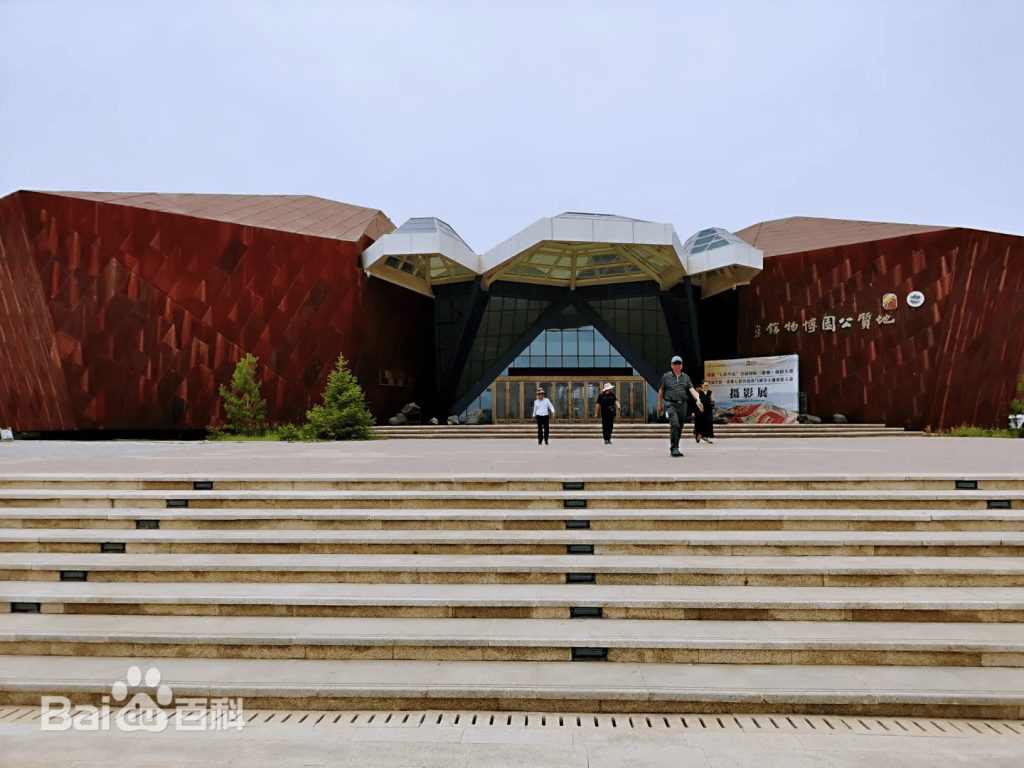
Danxia Landform Geological Museum:Delve deeper into the geological wonders of Zhangye at the Museum. Here, visitors can gain insight into the formation process of Danxia landforms through informative exhibits, interactive displays, and geological artifacts. From geological evolution to environmental conservation efforts, the museum offers a comprehensive glimpse into the natural heritage of the region.

Zhangye Danxia Peak Forest: For a panoramic view of Zhangye’s surreal landscape, venture to the Forest. Perched atop a vantage point, visitors are treated to sweeping vistas of undulating mountains, crisscrossed by winding streams and verdant valleys. As the sun sets, casting a warm glow over the rugged terrain, the scene becomes a photographer’s paradise, capturing the fleeting beauty of nature’s masterpiece.

As we marvel at the splendor of Zhangye National Geopark, it’s essential to recognize the importance of conservation efforts in preserving this natural treasure for future generations. Through sustainable tourism practices, habitat restoration initiatives, and community engagement, stakeholders strive to safeguard the integrity of the park’s fragile ecosystems while promoting awareness of its ecological significance.

Zhangye National Geopark stands as a testament to the awe-inspiring power of geological processes and the boundless creativity of nature. From the vibrant hues of the Rainbow Mountains to the rugged grandeur of the Peak Forest, every corner of this geological wonderland tells a story millions of years in the making. As we venture through its surreal landscapes, let us cherish and protect this timeless masterpiece, ensuring that its beauty endures for generations to come.

Link:https://peacelilysite.com/2024/04/01/discover-the-marvels-of-zhangye-national-geopark-a-journey-through-time-and-terrain/

Discovering the Hidden Gem of Tibet: Mêdog – Where Nature Unveils Its Mysteries

Nestled in the southeastern part of the Tibet Autonomous Region lies Mêdog, a town whose name translates to “hidden lotus” in Tibetan. Situated in the Nyingchi area, Mêdog finds its home in the lower reaches of the Yarlung Tsangpo River, nestled at the southern foothills of the eastern Himalayas. This picturesque town boasts breathtaking landscapes, abundant rainfall, and pristine ecology, making it a true hidden gem waiting to be explored.

Mêdog’s allure lies not only in its natural beauty but also in its remote location, which has preserved its untouched landscapes from excessive development and damage. With a relatively sparse population, Mêdog offers visitors a rare opportunity to experience unspoiled natural beauty and unravel the mysteries of nature.

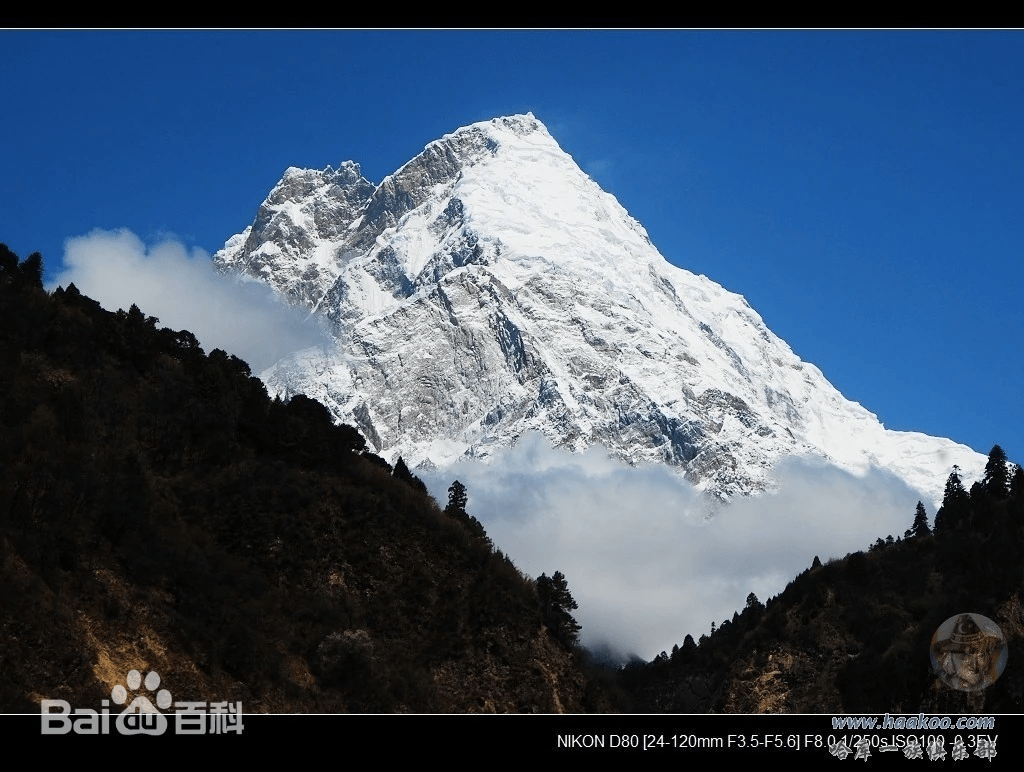
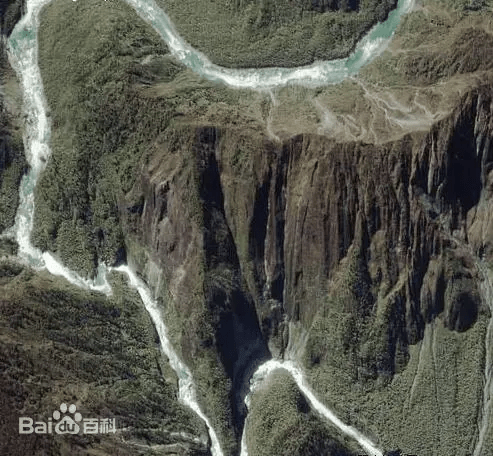
One of the most striking features of Mêdog is the majestic Yarlung Tsangpo River, which winds its way around the towering Namcha Barwa Peak, standing at an impressive 7,782 meters. As the river meanders through the territory of Mêdog, it carves a deep gorge akin to a sharp sword, creating a mesmerizing sight that resembles the Milky Way cascading towards the sea.

Big Bend

The Yarlung Tsangpo Grand Canyon stretches from Dado Kar village in Milin County at an elevation of 2880 meters in the north to Baxika village in Motuo County at an elevation of 115 meters in the south. The canyon spans a length of 504.6 kilometers, with an average depth of 2268 meters and a maximum depth reaching 6009 meters. With an average elevation of over 3000 meters, it holds the distinction of being the world’s largest canyon.

The entire canyon region is characterized by a harsh environment, where glaciers, cliffs, steep slopes, mudslides, and the turbulent Yarlung Tsangpo River converge. Many areas remain untouched by human activity, making it one of the few remaining “last frontiers” on Earth and a relatively unexplored geological blank spot.

Some of the primary waterfalls within the canyon have drop heights ranging from 30 to 50 meters. The canyon features nine vertical natural zones, ranging from high mountain snow zones to low river valley tropical rainforests. This diversity creates a habitat for a variety of biological resources, including two-thirds of known higher plant species on the Qinghai-Tibet Plateau, half of known mammal species, four-fifths of known insect species, and three-fifths of known large fungi species in China.

The convergence of warm and humid oceanic air currents with the snowy plateau gives rise to a unique climatic phenomenon in Mêdog. With annual rainfall reaching around 2000 millimeters and an average temperature of 16°C, Mêdog boasts rare South Asian climatic characteristics at its latitude. Despite its Tibetan location, Mêdog is home to the northernmost tropical rainforest in China, thriving with lush vegetation and vibrant landscapes reminiscent of Jiangnan’s greenery.

Exploring Mêdog offers visitors a chance to witness the breathtaking scenery of the Yarlung Tsangpo Grand Canyon, hailed as one of China’s ten most beautiful canyons by “National Geographic.” Here, travelers can marvel at the grandeur of nature while appreciating the unique rattan bridges that adorn the landscape, crafted without a single nail or pier.

As one traverses the mountains of Mêdog, they are greeted with mist-shrouded landscapes that change hues with the seasons, each unveiling its unique beauty. From the dense foliage to the meandering streams, Mêdog presents a captivating panorama that unfolds like a charming scroll, inviting visitors to immerse themselves in its vibrant colors and tranquil ambiance.

In the age of dinosaurs, a plant often referred to as a “living fossil” – the tree fern, also known as the “cycad,” is a nationally protected plant at the second level. It is the only woody fern species.
Wild Banana
Tea Tree Farm

For those seeking respite from the hustle and bustle of city life, Mêdog offers a sanctuary of serenity and natural beauty. Whether it’s witnessing the grandeur of the Yarlung Tsangpo River or wandering through the lush rainforests, Mêdog promises an unforgettable journey filled with awe-inspiring moments and cherished memories.

In Mêdog, every step reveals a new wonder, every corner a hidden treasure. As visitors embark on this journey of exploration, they are reminded to approach nature with humility and appreciation, embracing its beauty with a calm heart and open mind. In Mêdog, the beauty of life reveals itself in every mist-covered peak and verdant valley, leaving an indelible mark on the soul of all who venture there.

Discovering the Hidden Gem of Tibet: Mêdog – Where Nature Unveils Its Mysteries

Link:

#Travel #China #Mêdog #Tibet #YarlungTsangpoGrandCanyon

Source: https://m.voc.com.cn/xhn/news/202202/16733558.html

Winter Break Family Trip — Zion National Park

Winter Break Family Trip — Zion National Park

Our second stop on the road trip was Zion National Park. Zion National Park is a stunning natural wonder with over 200 sq. miles of diverse landscapes, towering cliffs, and diverse flora and fauna. It attracts more visitors than Yosemite National Park last year. Zion offers a unique blend of adventure, beauty, and inspiration.

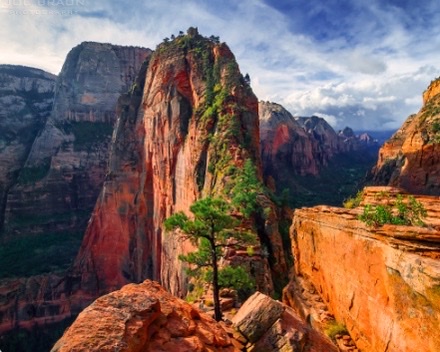
One of the hikes we did was the Angel’s Landing trail, a 5-mile round trip that is considered to be very challenging. The trail is steep and zigzags up the mountain, and a permit is required to complete the entire hike.

Despite the difficulty, my older son and husband were determined to reach the summit. They persevered and eventually made it to the top, where they were rewarded with breathtaking views of the surrounding mountains and valleys. In winter time the mountain top gets really icey, micro spikes are highly recommended.

I was unable to finish the Angel’s Landing trail, due to the challenging winding path resembling Lombard Street. I had to stop just before the permit-required section, feeling exhausted. Nevertheless, I still appreciated the views from my stopping point. Although I didn’t reach the summit, the overall experience was still memorable.

It’s worth noting that the Angel’s Landing trail can be dangerous, and since 2004, 17 people have died while attempting it. It’s important to be prepared and take all necessary precautions when tackling this challenging hike.

Riverside Trails

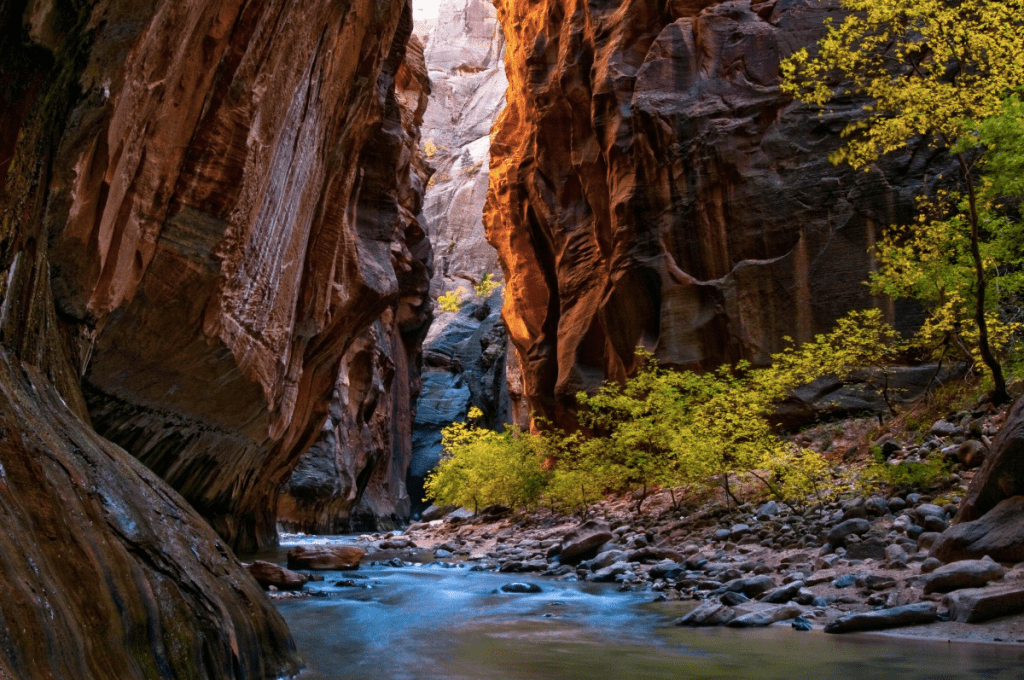
We explored other trails at the following day, like the Riverside Trail, but the weather didn’t cooperate. Despite heavy rain and feeling cold and wet, we were unable to fully enjoy the hike. However, we look forward to returning to the majestic and awe-inspiring Zion National Park in better weather. Overall, Zion National Park was an amazing experience and it is a must-see destination for anyone who loves nature and outdoor activities.

Winter Break Family Trip — Zion National Park

Link: https://peacelilysite.com/2023/02/01/winter-break-family-trip-zion-national-park/

#Travel#ZionNationalPark #Trails#Hiking#Angeleslanding