Kindness Is the Best Feng Shui

Feng shui has long held a mysterious allure in Chinese traditional culture. For centuries, it has been highly respected and followed by many. Even in today’s modern society, interest in feng shui remains strong. From choosing a home to arranging furniture, people often seek out feng shui masters to predict their fortune or improve their luck. This enthusiasm has even spread beyond China, gaining popularity in many countries as a fashionable practice.

But have you ever wondered what kind of feng shui truly brings good fortune? The following story offers a fresh and enlightening perspective.


A wealthy man once bought a piece of land and built a luxurious villa. Because his wife loved lychees, he planted many lychee trees in the backyard. During the renovation, a friend suggested that he consult a feng shui master to ensure there were no negative formations. Though skeptical of feng shui, the wealthy man decided to give it a try and traveled to Hong Kong to invite a renowned master with over thirty years of experience.

After meeting the master at the train station and sharing lunch, they drove to the man’s home. Along the way, whenever another car tried to overtake them, the master noticed that the wealthy man would gently slow down and give way. “You’re a steady driver,” the master remarked.

The man smiled and replied, “Most of the people overtaking are probably in a hurry. I don’t want to hold them up.”

As they approached the town, the streets grew narrower, and the man slowed the car even more. Suddenly, a laughing child darted out from an alley. The man quickly hit the brakes. Instead of accelerating again, he kept watching the alley. Moments later, another child ran out, chasing the first.

“How did you know there was another child coming?” the master asked, surprised.

The man explained, “Kids always run in groups when playing. One laughing child usually means others are nearby.”

The master gave him a thumbs-up and said with a smile, “You’re very thoughtful.”

When they arrived at the villa, just as the man was about to unlock the door, several birds suddenly flew up from the backyard. He turned to the master and said, “Please wait a moment.”

“Is something wrong?” the master asked.

“There are probably children in the yard stealing lychees. If we go in now, they’ll panic. If they fall while trying to run, they might get hurt. Let’s give them a bit more time. We can wait here and let them enjoy the fruit.”

The master stood in silence for a while, then said, “Take me back to the train station. There’s no need to examine the feng shui of your house.”

The man was puzzled. “Why, Master?”

The master looked at him and said sincerely, “Wherever you are, that place already has the best feng shui.”


This story opens our eyes to a deeper truth: the most powerful feng shui isn’t found in the placement of objects or the direction of a door — it’s found within us. Our behavior, compassion, and moral integrity shape the energy we bring into the world.

Everyone desires good fortune and happiness, but many look for it in the wrong places. Some rely solely on feng shui arrangements or fortune tellers, hoping for shortcuts to a better life. But these are often just psychological comforts, lacking true substance.

The law of cause and effect governs all things: “Plant good causes to reap good results; avoid bad causes to prevent misfortune.” Only by performing good deeds and cultivating a kind heart can we attract blessings and peace. Relying purely on external feng shui while ignoring inner morality goes against this fundamental principle.

In truth, our actions and intentions are our personal feng shui. Kindness is the most powerful feng shui one can have.

As the saying goes: “A fortunate person lives in a fortunate place, and a fortunate place is inhabited by a fortunate person.” Here, “fortunate person” means someone with a kind and upright heart. A person’s energy — their “magnetic field” — reflects their character. Even the best feng shui cannot save someone with selfish or harmful intent, while a good-hearted person can transform even a less-than-ideal environment into a space of warmth and harmony.

When we live with compassion and integrity, we naturally draw good karma, success, and joy into our lives. At that point, we no longer need to search for feng shui — we are the feng shui.

Kindness is the best feng shui. May we all cultivate it from within.

Link:https://peacelilysite.com/2025/05/01/kindness-is-the-best-feng-shui/
The Fusion of Technology and Art: A Stunning 3D Masterpiece

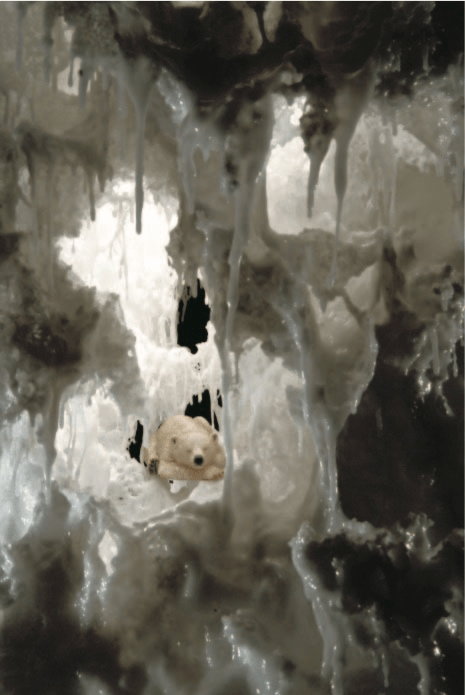
Polar Bear in an Ice Cave

Technology art is a new form of multidimensional creative expression that blends technology and art. By incorporating mechanical instruments, scientific data, and spatial elements such as light sources, temperature, and speed, it presents a unique visual experience. Imagine a three-dimensional painting on a flat sheet of paper, where the depth of space extends beyond the surface, and the imagery seems to leap out of the frame, resembling a real sculpture.

Among these art forms, glass painting is particularly breathtaking. With its transparent dual-sided effect akin to a celestial realm, it creates a mesmerizing and soothing atmosphere when paired with changing lights. Photography, on the other hand, captures emotionally stirring moments through the interplay of light, composition, and color. Whether depicting landscapes, people, or animals, it brings out a unique aesthetic through the lens.

At the convergence of these three artistic expressions, H.H. Dorje Chang Buddha III, skillfully integrates them to create stunning works of technology art. One such masterpiece, the 3D painting Polar Bear in an Ice Cave, vividly portrays the charming image of a polar bear, making viewers feel as if they are inside an icy Arctic cavern. Through the artwork, one can almost see the adorably clumsy bear sleeping soundly in the cold cave. The artist’s extraordinary craftsmanship is awe-inspiring, delivering an unparalleled visual experience.

H.H. Dorje Chang Buddha III composed a poem for this artwork. Translating it into English is incredibly challenging due to its profound meanings. However, here is a simple translation to offer a glimpse into the Buddha’s deep compassion for all beings:

The polar bear loves the cold the most,
Sleeping in ice caves through all seasons.
Do not take food from the water,
Instead, pick up the bones of wandering souls for a meal.

Not everyone understands the mysteries within the profound,
For Zen enlightenment dissolves the barriers of hunger.
The splendid affairs of the crystal palace are beyond full expression,
Within the cave, a guest drunkenly enjoys the company of an immortal.

Link:https://peacelilysite.com/2025/02/27/the-fusion-of-technology-and-art-a-stunning-3d-masterpiece/

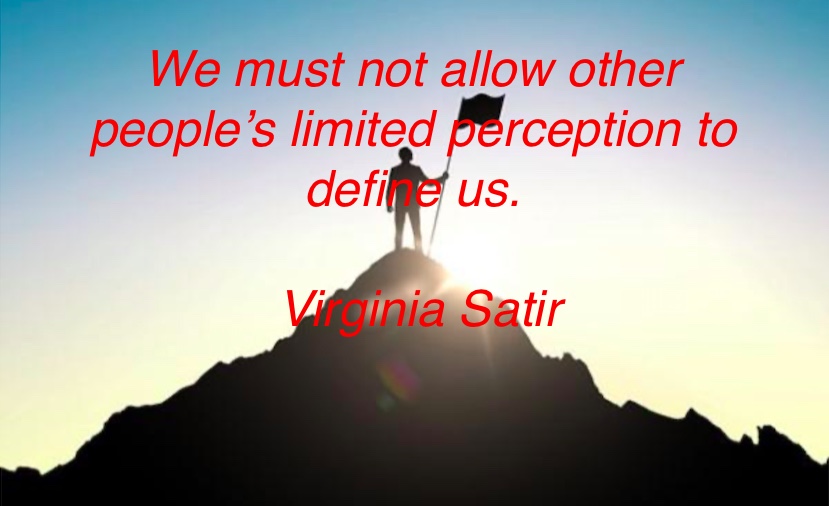
I Am Me and I am Okay

I Am Me

by Virginia Satir

In all the world there is no one else exactly like me.

Everything that comes out of me is authentically mine because I choose it…

I own everything about me, my body, my feelings, my mouth, my voice, all my actions whether they be to others or to myself

I own my fantasies, my dreams, my hopes, my fears

I own all of my triumphs and successes, all of my failures and mistakes because I own all of me.

I become intimately acquainted with me by so doing, I can love me and be friendly with me in all my parts

I know there are aspects about myself that puzzle me and other aspects I do not know…

but as long as I am friendly and loving to myself, I can courageously and hopefully look for solutions to the puzzles and for ways to find out more about me…

however I look and sound whatever I say and do, and whatever I think and feel at a given moment in time is authentically me

if later some parts of how I looked, sounded, thought and felt turned out to be unfitting, I can discard that which is unfitting and keep the rest and invent something new for that which is I discard

I can see, hear, feel, think, say and do.

I have the tools to survive, to be close to others, to be productive, and to make sense and order out of the world of people and things outside of me…

I own me and therefore I can engineer me

I am me and I AM OKAY.

Satir’s beautiful and empowering poem “I Am Me” encapsulates her core belief in self-worth and individuality. Its heartfelt lines inspire readers to embrace their authentic selves, fostering inner peace and self-acceptance. Through her words, Satir invites us to celebrate who we truly are, reminding us that personal growth is both possible and transformative.

Link:https://peacelilysite.com/2024/11/25/i-am-me-and-i-am-okay/

The World Without Complaint: A Journey to Positivity and Gratitude

In a world often overshadowed by negativity, encountering a book that challenges us to break free from the habit of complaining is like a breath of fresh air. “The World Without Complaint” by Well Bowen offers an insightful perspective on the harmful effects of constant complaints and provides practical strategies for fostering a mindset of gratitude and positivity.

We read because we crave insight, resonance, guidance, and growth. Have you ever found yourself caught in a cycle of complaints about the world, life, family, friends, or even strangers? Today, let’s explore some notes from “The World Without Complaint.” This bestselling book has reached readers in 80 countries, urging us to consider how a single book and a simple wristband can transform us from habitual complainers into ambassadors of positivity.


The Marvel of the Wristband
Have you ever participated in a lunchtime gripe session with colleagues or friends, only to find that venting seems to worsen your stress? It’s as if complaining adds fuel to the fire of our worries. The truth is, many of us are oblivious to our own negative attitudes and behaviors. While others may perceive the negativity in our speech, we often fail to recognize it ourselves. But can we change? Absolutely! By wearing the No Complaining wristband and committing to a 21-day challenge, we can become more aware of our complaints, their frequency, and ultimately, how to stop them.

The Secret to a Dream Life
The tool: The No Complaining wristband (or any accessory that reminds you to stay positive, like a fitness tracker). The secret: Consistency. As you practice the 21-day challenge and swap the wristband between your hands, you’ll start paying closer attention to your words and actions. This seemingly insignificant wristband becomes a beacon, helping you identify and release negative emotions you may not have been aware of before.

How to Use the Wristband

  • Wear the wristband on one wrist to start your 21-day journey.
  • When you catch yourself complaining, criticizing, gossiping, or being sarcastic, switch the wristband to the other hand and start over. Each time you switch, you reset your 21-day journey.
  • Keep going.

The Key to Success

  • Move the wristband with each complaint.
  • Keep track of your progress.
  • Focus on your own wristband; don’t worry about others’.
  • Don’t outsmart yourself.

Unconscious Incompetence
Complaining not only distracts us from our true desires but can also harm our health and relationships. Changing just one percent of the world’s population can create a ripple effect of positivity that uplifts everyone. Complaints never attract what we desire; instead, they reinforce what we don’t want. Our thoughts shape our lives, so let’s be fully present, steadfast, and strive to be better versions of ourselves.

Conscious Competence

  • Smile, breathe, take it slow. Our words have power. Changing what we say can change our lives.
  • Criticism and sarcasm are rarely productive. Focus on constructive feedback and encouragement.
  • Plant seeds of positivity in your interactions. Inspire others by embodying the change you wish to see.
  • Transform your mindset from one of complaint to one of gratitude. Every moment is an opportunity to create the life you desire.

Unconscious Competence

  • Transform your tools and methods into personal logic and theory.
  • The best time to plant a tree was ten years ago. The second-best time is now. Believe in your ability to change, and the solutions to all your problems will follow.

Complaining is more than just a fleeting expression of dissatisfaction; it’s a habit that can poison our minds and relationships. Continuously focusing on what’s wrong or lacking in our lives not only perpetuates a cycle of negativity but also reinforces feelings of helplessness and victimhood. Complaining can strain our relationships, as constant negativity can push others away and create a toxic environment.

Moreover, the energy we invest in complaining could be better utilized to find solutions to our problems or to appreciate the blessings we already have. Dwelling on complaints keeps us stuck in a state of discontentment, hindering personal growth and preventing us from fully embracing life’s joys.

Training Yourself to Avoid Complaints
Breaking the habit of complaining requires conscious effort and dedication. Bowen’s book offers practical techniques and exercises to help readers rewire their brains and cultivate a more positive outlook. From mindfulness practices to gratitude journaling, the book provides actionable steps to shift our focus from complaints to appreciation.

One effective strategy is to practice mindfulness and become more aware of our thoughts and emotions. By recognizing the patterns of negativity that lead to complaints, we can interrupt the cycle and choose a more constructive response. Additionally, cultivating a habit of gratitude can help us reframe our perspective and find joy in even the smallest blessings.

The Benefits of Embracing Positivity
Choosing not to complain has numerous benefits that extend beyond our personal well-being. By adopting a positive mindset, we become more resilient in the face of challenges and better equipped to navigate life’s ups and downs. Our relationships thrive in an environment of positivity, fostering deeper connections and mutual support.

Furthermore, a world without complaints has the potential to spark positive change on a larger scale. Imagine if just one percent of the population committed to refraining from complaints— the ripple effects would be profound. Communities would be filled with kindness and compassion, and collective efforts toward solving problems would be more effective and harmonious.

Link:https://peacelilysite.com/2024/03/15/the-world-without-complaint-a-journey-to-positivity-and-gratitude/