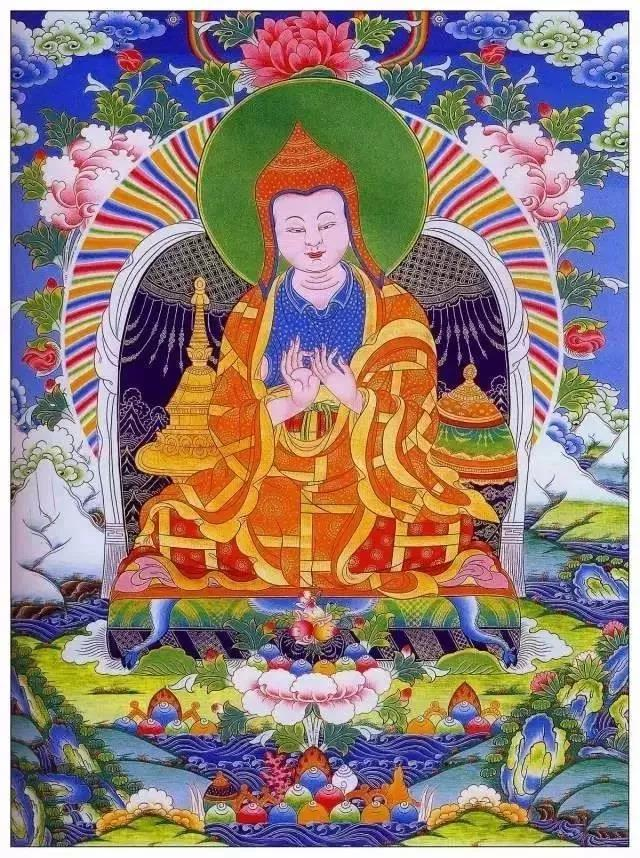
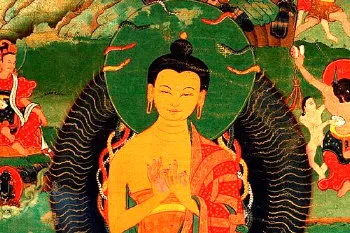
His remarkable journey, the devotion of Tibetan kings, and the legendary guidance of Tara
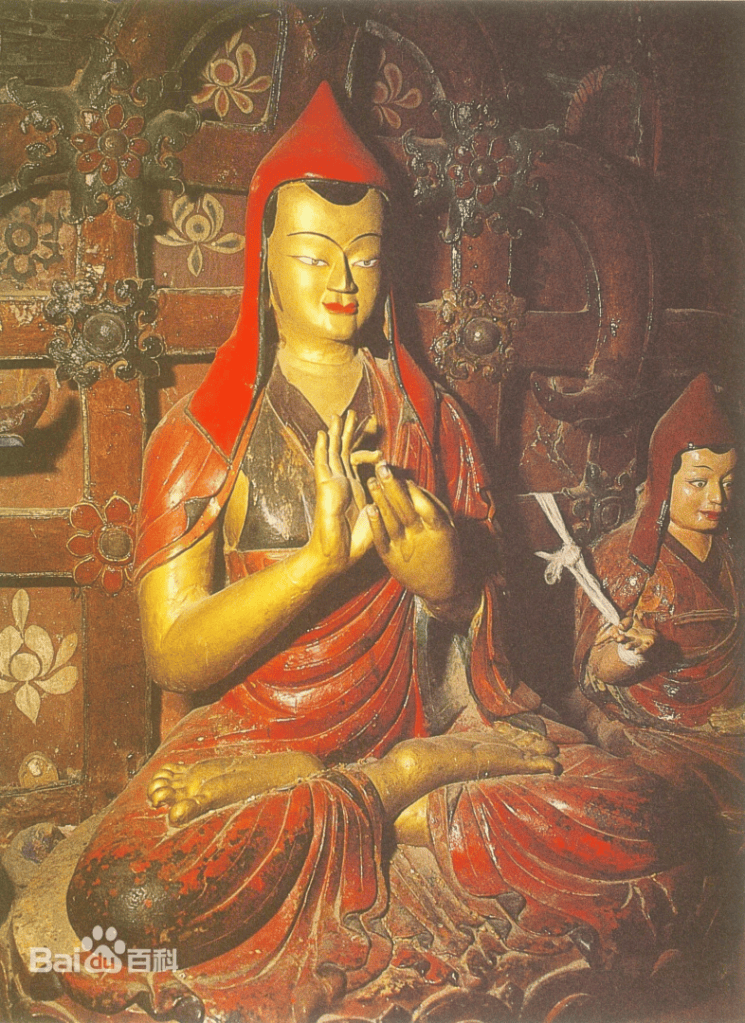
More than nine hundred years ago, an Indian Buddhist master undertook a difficult journey to Tibet that would profoundly influence the future of Tibetan Buddhism. His name was Atisha Dipankara Shrijnana (982–1054), a renowned scholar, meditation master, and spiritual teacher whose life was devoted to the liberation and well-being of sentient beings.
His story is not simply about the spread of a religion. It is about the power of compassion, the courage to leave behind worldly comfort, and the willingness to sacrifice personal interests for the benefit of others.
A Prince Who Chose the Spiritual Path
According to traditional biographies, Atisha was born into a royal family in eastern India. His birth name was Chandragarbha, and he grew up surrounded by the wealth and privileges of palace life.
Yet he was not satisfied with worldly success. Even as a young man, he felt drawn toward spiritual practice and the search for a deeper understanding of life.
Traditional accounts relate that Tara, the female Buddha associated with enlightened compassion and swift assistance, appeared to him in a vision when he was young. This encounter strengthened his determination to follow the spiritual path rather than pursue the life expected of a prince.

Atisha eventually renounced his royal future and became a monk. He studied with many distinguished Buddhist masters and developed an extraordinary command of Buddhist philosophy, meditation, ethics, and tantric teachings.
But one of the most important influences on his life came from a journey far beyond India.
Atisha traveled by sea to Suvarnadvipa, traditionally identified with present-day Sumatra, where he studied for twelve years under the great master Dharmakirti, also known as Serlingpa in Tibetan tradition.
There, Atisha received profound teachings on bodhichitta—the aspiration to attain enlightenment for the benefit of all sentient beings.
He later regarded these teachings as among the most precious gifts he had received. His life reminds us that genuine wisdom requires more than accumulating knowledge. It requires cultivating a heart that sincerely wishes to benefit others.
By the eleventh century, Buddhism in Tibet was undergoing a period of revival after earlier political upheavals and the disruption of Buddhist institutions.
The rulers of western Tibet wished to restore the teachings and strengthen the understanding and practice of the Dharma. They were particularly concerned about confusion surrounding Buddhist doctrine and the relationship between different forms of practice.
King Yeshe Ö became deeply committed to finding a qualified Indian Buddhist master who could help Tibetans recover a clear and systematic understanding of the teachings.
According to traditional Tibetan accounts, he sent young Tibetans to India to study Sanskrit and search for an appropriate teacher. Their journeys were dangerous, and many did not return.
Eventually, the name of Atisha emerged as that of a master whose learning, discipline, and compassion made him especially suitable for the mission.
The king’s efforts to invite him became one of the most moving stories in Tibetan Buddhist history.
Traditional biographies recount that Yeshe Ö was captured during his efforts to gather resources for the mission. When his nephew Jangchub Ö was unable to meet the captor’s demands for his release, Yeshe Ö urged him not to spend the remaining gold on rescuing him. Instead, he asked his nephew to use it to invite Atisha to Tibet.
In this traditional account, the king placed the future of the Dharma above his own life.
Whether every detail of this story can be historically verified or not, its spiritual message is unmistakable: the king believed that preserving the Dharma for future generations was more important than his personal safety.
After Yeshe Ö’s death, his nephew Jangchub Ö continued the mission. He sent the translator Nagtso to India with an earnest request for Atisha to come and help the people of Tibet.
Tara’s Guidance: A Decision That Changed History
Atisha did not immediately agree to leave India.
He was already an established teacher at Vikramashila, one of the great Buddhist monastic universities of the time. Leaving would mean abandoning familiar surroundings, colleagues, and responsibilities for a long and uncertain journey into a distant land.

Traditional biographies tell us that Atisha sought guidance from Tara, his revered spiritual protector.
According to these accounts, Tara appeared to him in a vision and explained that traveling to Tibet would bring great benefit to the Dharma, although it would shorten his life.
Atisha faced a profound choice: remain in India, where he could continue his work in familiar surroundings, or travel to Tibet, where his help was urgently needed.
The traditional story says that he chose Tibet, accepting the personal cost because he believed the journey would benefit countless beings.
This is one of the most inspiring parts of his life.
Tara’s appearance belongs to the spiritual narratives preserved by the Buddhist tradition; it is not something that can be independently established as a historical event. For devotees, however, the story expresses an important understanding of spiritual guidance: wisdom is not merely about choosing what is comfortable or advantageous for oneself, but discerning where one’s efforts can bring the greatest benefit.
In 1042, Atisha arrived in western Tibet, in the kingdom of Guge.
His arrival was a moment of great significance. According to traditional accounts, monks, laypeople, and local leaders gathered to welcome him in a grand procession. People had traveled to meet the Indian master whose arrival they hoped would strengthen the Dharma in their homeland.
Imagine the scene: after years of hardship and repeated efforts to bring him to Tibet, the people finally welcomed the teacher for whom they had waited so long.

Atisha was deeply moved by their enthusiasm. He was also impressed by the intelligence and dedication of the Tibetan practitioners he encountered.
Yet he recognized that many people needed a clearer understanding of how the various Buddhist teachings fit together and how they could be applied in everyday life.
King Jangchub Ö therefore asked him to teach in a way that ordinary people could understand and practice.
Rather than asking for teachings that sounded profound but were difficult to apply, the king wanted guidance on ethical conduct, karma, compassion, and the steps that lead toward enlightenment.
Atisha responded by composing one of his most influential works, A Lamp for the Path to Enlightenment (Bodhipathapradipa).
This concise text organized the Buddhist path into a clear framework, integrating ethical discipline, the cultivation of wisdom, and the development of bodhichitta. It became a foundational influence on later Tibetan Buddhist teachings about the stages of the path to enlightenment.
Atisha did not merely bring more books or philosophical ideas to Tibet. He helped present the Dharma as a coherent path that people could study, contemplate, and practice.
A Statue of Tara That Could Speak
Among the many fascinating stories associated with Atisha is the tradition that sacred images spoke to him.
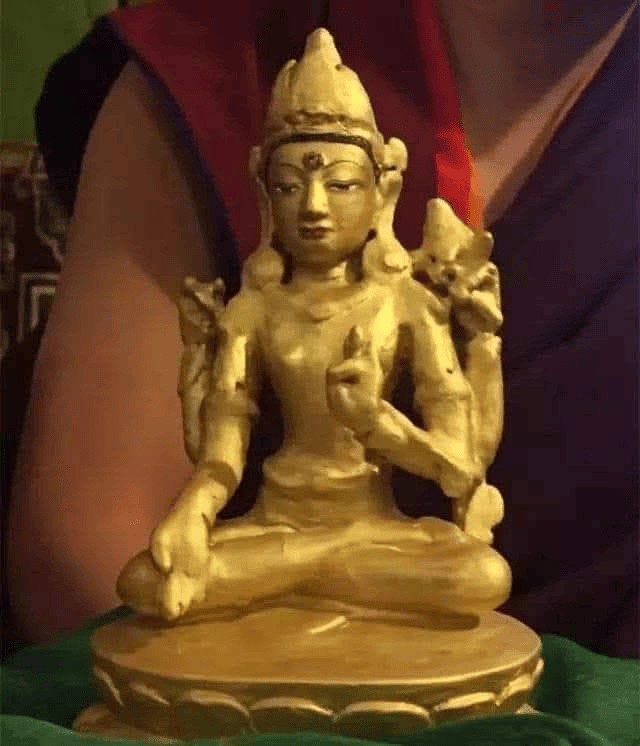
The statue is now enshrined at Tara Temple (Drolma Lhakhang) in Lhasa, Tibet.
According to his traditional biography, while circumambulating the great Buddhist stupa at Bodh Gaya in India, Atisha heard sacred statues speaking about the importance of bodhichitta. Their message was that the essential path to enlightenment lay in cultivating love, compassion, and the aspiration to benefit all beings.
The story is a reminder that, within Buddhist devotional traditions, sacred images are not always regarded as mere objects of art. They can serve as powerful reminders of the qualities that practitioners seek to develop.
Tara held a particularly important place in Atisha’s spiritual life. Traditional accounts describe her appearing in visions to guide him, including in his decision to travel to Tibet.
These narratives are cherished by many Buddhist practitioners as expressions of faith and spiritual inspiration. They are best understood as traditional religious accounts rather than independently verified historical events.
Whether one approaches them through faith, cultural history, or symbolic interpretation, their central message is meaningful: spiritual guidance should lead us toward greater compassion, wisdom, and responsibility for others.
What Can Atisha Teach Us Today?
Atisha lived in a very different world from ours, yet the questions he faced remain familiar.
We live in a time when information is abundant, opinions are everywhere, and people often disagree about what is true. It is easy to accumulate knowledge without allowing it to transform our behavior.
Atisha’s life points toward another way.
First, knowledge must be accompanied by practice. Learning about compassion is not the same as treating people compassionately. Understanding karma is not merely discussing cause and effect; it is taking responsibility for our intentions, words, and actions.
Second, true spiritual growth requires humility. Despite his extensive education, Atisha continued to learn from qualified teachers. His example reminds us that wisdom is not a reason to feel superior to others. It is an opportunity to understand ourselves more deeply and serve others more effectively.
Third, compassion sometimes asks us to step beyond our comfort zone. Atisha left a respected position in India to help people far away. We may never be called to undertake such a journey, but we can respond to the needs around us—in our families, communities, and wider world.
Sometimes compassion means giving our time. Sometimes it means listening patiently, helping someone in difficulty, or admitting that we were wrong. Small actions, when guided by sincere concern for others, can also make a meaningful difference.
Finally, Atisha’s story reminds us that the most valuable teachings are those that help us change our lives. The Dharma is not simply something to admire from a distance. It is a path to be walked.

The Light That Continues to Shine
Atisha passed away in Tibet in 1054, but his influence did not end with his life. His writings, his disciples, and the traditions that developed from his teachings helped shape the course of Tibetan Buddhism.
His journey was made possible by the devotion of Tibetan rulers, the dedication of translators and messengers, and the willingness of a great teacher to respond to a distant people’s spiritual needs.
The story of Atisha and Tara adds another dimension to this legacy: the belief that a life guided by wisdom and compassion can accomplish far more than a life devoted only to personal success.
We may not be able to travel across mountains to revive a Buddhist tradition, as Atisha did. But each of us has opportunities to bring a little more understanding into the world.
We can study sincerely, practice humbly, and treat others with compassion. We can use what we know not to elevate ourselves above others, but to lessen suffering wherever possible.
Perhaps this is one of the most enduring lessons of Atisha’s life: the true light of the Dharma shines not only through what a person teaches, but through the compassion that person is willing to put into action.