Louise Hay: From Pain to Healing, From Healing to Helping the World

There are some people whose presence feels like sunlight—warm, gentle, and full of hope. Louise Hay was one of them. An internationally renowned spiritual teacher, best-selling author, and pioneer of the self-help movement, she inspired millions of people around the world to believe in their own healing power. Her landmark book You Can Heal Your Life has sold over 50 million copies in 35 countries, translated into 29 languages, and for many, it sits by the bedside as a trusted guide through life’s storms.

To the world, Louise Hay seemed perfect—healthy, elegant, wise, always radiating grace. Her teachings lifted countless people out of despair, helped them restore their health, and gave them courage to live again. Media across the globe lovingly called her “the closest person to a saint.”

But what made Louise extraordinary was not that her life was flawless—it was that she transformed the deepest wounds into the greatest gifts. Behind her radiant presence was a childhood filled with suffering, abuse, and neglect. It was from that very pain that she forged the wisdom that changed the lives of millions.

1. Falling Amid Misfortune

When Louise was just 18 months old, her parents divorced, abruptly ending her once-happy family life.

At that time, women had little social standing. After the divorce, her mother could only work as a maid to survive, while Louise was sent to live in foster care.

At age five, her mother remarried in the hope of giving Louise a complete home. But this marked the beginning of her nightmare.

Louise was raped by a neighbor, abused and assaulted by her stepfather, and subjected to violence and sexual exploitation. These experiences left her with deep wounds and a lack of self-worth. In her teenage years, as long as a man showed her the slightest kindness, she would give herself to him. By the age of sixteen, she had already given birth to a daughter.

Her childhood was filled with tragedy, and her youth with self-destruction. Those early wounds shaped her into someone who did not know how to love herself.

Yet later in life, Louise chose not to remain trapped in resentment or regret. She said, “No little boy is born a predator, and no little girl is born a victim. These are learned behaviors shaped by childhood experiences.”

2. Awakening and Transformation

In her forties, Louise was diagnosed with cancer. That moment became her wake-up call. She realized how little she had cared for her own body, and she resolved to change.

Instead of following the conventional treatment suggested by her doctors, she turned to what she called “holistic healing.” Within six months, her cancer had disappeared.

Holistic healing, as Louise practiced it, meant changing destructive thought patterns and adopting healthier eating habits. She stopped mourning her unhappy past and stopped blaming her parents. Instead, she came to understand their own painful childhoods.

During her recovery, she ate mostly sprouts and simple natural foods, avoiding processed products entirely. She also trained her mind daily—using positive affirmations, choosing not to let negative emotions dominate her, and seeing every situation through a more uplifting perspective.

Her life changed completely. She documented her experiences and insights in books, which went on to inspire millions and transform countless lives.

3. You Can Choose Your Own Destiny

There are many in this world who have been hurt or are still suffering. Their stories move us deeply.

But as an old Chinese saying goes, “Those who seem pitiable often have traits that make them vulnerable.” In truth, much of life’s suffering continues because, consciously or unconsciously, we allow it. And the root often lies in our formative years.

Take, for example, teenage pregnancies. While news headlines may highlight shocking cases, the majority stem not from coercion but from lack of self-respect or proper knowledge. Similarly, many women trapped in abusive relationships remain because they lack self-worth and the courage to leave.

We cannot rewrite our childhoods, but we can shape our adult lives. As Louise Hay wrote in You Can Heal Your Life: Mindfulness Edition:

“Every negative message you received as a child can be transformed into a positive affirmation.”

If you had an unhappy past, stop feeding yourself negative words. Begin telling yourself: I am worthy of love. I am needed. I have many strengths. I can live the life I choose.

And if doubt still lingers, look at Louise Hay’s journey. Few have endured the kind of suffering she did—yet she lived a life admired and envied by many. If she could, why not you?

In the infinity of life where I am, all is perfect, whole, and complete.

Life Is Really Very Simple. What We Give Out, We Get Back.  What we think about ourselves becomes the truth for us. I believe that everyone, myself included, is responsible for everything in our lives, the best and the worst. Every thought we think is creating our future. Each one of us creates our experiences by our thoughts and our feelings. The thoughts we think and the words we speak create our experiences.”

Her books may be called “chicken soup for the soul,” but isn’t that exactly what we need sometimes? A warm voice reminding us that we are enough, that healing is possible, and that life can be beautiful again.

You Can Heal Your Life walks us through every stage of existence—childhood pain, love’s struggles, career challenges, health worries, aging, and even the fear of death. Louise’s message is simple but powerful: change your beliefs, and you will change your life.

This “chicken soup” has comforted millions, given them strength, and helped them step into new beginnings.


💖 A Gentle Reminder

If you feel lost, unworthy, or stuck in a cycle of pain—Louise’s story is a light in the darkness. Her life teaches us that healing begins not from the outside, but from within.

No obstacle is too great. No past is too broken. Deep within each of us lies an infinite potential waiting to bloom. When we dare to change our thoughts and love ourselves, life unfolds in colors we never imagined.

Believe it: just like Louise Hay, you too can heal your life—and create a future filled with peace, love, and joy.

Here is the link for the E-book.

Link:https://peacelilysite.com/2025/09/03/louise-hay-from-pain-to-healing-from-healing-to-helping-the-world/

Plato and Socrates on Love, Marriage, and Happiness: Timeless Lessons for Life

What is love?
What is marriage?
What is happiness?

These are questions that have echoed through time. The Greek philosopher Plato once asked his teacher Socrates these very questions. The answers he received were not in the form of lectures or definitions, but through simple, thought-provoking experiences that revealed profound truths about life.

What Is Love?

When Plato asked, “What exactly is love?” Socrates didn’t reply with words. Instead, he told Plato to walk through a wheat field and pick the biggest, fullest ear of wheat he could find. There was only one rule: he could pick only once, and he couldn’t turn back.

Plato returned empty-handed.

“I saw some very large and golden ears of wheat,” he explained, “but I kept thinking that there might be an even better one ahead, so I didn’t pick any. As I walked further, none of the wheat looked as good as what I had already passed. In the end, I walked out with nothing.”

Socrates smiled and said, “That is love. We often think something better lies ahead, so we pass by the one who may have been most right for us. And when we finally realize it, it’s too late to turn back.”

What Is Marriage?

Next, Plato asked, “Then what is marriage?”

Socrates responded, “Walk through the forest and cut down the biggest, strongest tree to use as a Christmas tree. Remember—you may only choose once, and you cannot turn back.”

This time, Plato returned with a tree that wasn’t the tallest or thickest, but still sturdy and pleasing.

When Socrates asked why he had picked it, Plato said, “I remembered the lesson from the wheat field. When I saw this tree and thought it was good enough, I cut it down. I was afraid that if I kept looking, I’d again end up with nothing. It may not be the best, but it’s mine—and I’m content with it.”

Socrates nodded and said, “That is marriage. It may not be perfect, but it’s real, reliable, and something you can walk through life with.”

What Is Happiness?

Finally, Plato asked, “What is happiness?”

Socrates told him to walk through a meadow and pick the most beautiful flower he could find, again under the same rule: choose only once, and no turning back.

After some time, Plato returned with a lovely flower in his hand.

Socrates asked, “Is this the most beautiful flower you saw?”

Plato answered with certainty: “When I saw this flower, I felt it was the most beautiful, so I picked it. Even though I saw other beautiful flowers later, I didn’t regret my choice. I stayed firm in my decision. This one, to me, is the most beautiful.”

Socrates smiled and said, “That is happiness. When you choose to see something as your happiness and cherish it, happiness is already yours.”


Through these three simple parables, Plato came to understand love, marriage, and happiness—not as things to chase endlessly, but as choices to recognize, embrace, and be content with.

  • Love is like the perfect ear of wheat you keep hoping to find ahead, only to realize—often too late—that what you passed by may have been the best match for you.
  • Marriage is like the tree that may not be flawless, but stands strong with you through the everyday winds and storms of life.
  • Happiness isn’t about always having the best. It’s about choosing something, valuing it, and finding contentment in it.

In a world driven by comparison, desire, and constant pursuit of “more,” true happiness arises when we stop looking outward and begin appreciating what we already have. When we make peace with our choices and nurture them with gratitude, we come to see: we already possess love, marriage, and happiness in their truest forms.

Link: https://peacelilysite.com/2025/08/05/plato-and-socrates-on-love-marriage-and-happiness-timeless-lessons-for-life/

The True Measure of Wealth: A Life of Kindness and Spiritual Uplift

In life, wealth is not measured solely by what we own. True richness lies in the harmony between material comfort and inner peace. Across every social and economic class, we meet people who radiate kindness and resilience—and others who, despite outward success, feel spiritually empty.

Let’s explore four types of people through the lens of both outer wealth and inner fulfillment.


1. The Poor Among the Poor

Struggling both financially and spiritually.

Imagine someone living in a rundown apartment, surviving paycheck to paycheck. The hardship of their material life is evident—but the deeper burden lies within. Stress, anxiety, and hopelessness weigh heavily on their heart.

Perhaps their past holds trauma, loss, or abandonment. With little support or healing, bitterness takes root. Trust feels dangerous. Joy seems unreachable. They may withdraw or act out, living not only in material scarcity but also emotional desolation.

This is a soul in need of compassion, connection, and light—a reminder that true poverty is not just economic, but also spiritual.


2. The Spiritually Rich in Modest Circumstances

Materially humble, yet inwardly joyful.

Now envision someone of limited means, yet abundant in heart. Their home may be small, their income meager—but their spirit shines. They greet life with gratitude, take joy in the sunrise, the warmth of a shared meal, the laughter of a friend.

They live by faith or a strong set of values. They give generously, even when they have little. Their kindness is sincere, their joy resilient. They find meaning in helping others and walk through life with dignity and grace.

Yan Hui, one of Confucius’s most cherished students, is a timeless example. Confucius admired Yan Hui for his ability to remain joyful despite poverty, exclaiming:
“How virtuous Hui is! With just a bowl of rice and a ladle of water in a humble alley, others could not endure such hardship, yet Hui never let go of his joy. How virtuous Hui is!”

His life shows us that true wealth comes from within.


3. The Restless Among the Rich

Surrounded by luxury, yet inwardly unfulfilled.

This person owns much—prestigious homes, expensive cars, elite status. But their heart feels hollow. They may look successful, yet their joy is shallow and fleeting.

They chase more: more titles, more possessions, more recognition—but the emptiness remains. Relationships feel strained. Peace eludes them. Their days are filled with doing, but not being. They struggle to find meaning.

Despite all they have, they feel poor in spirit. What they truly long for is connection, authenticity, and inner peace.


4. The Truly Abundant

Blessed with both material wealth and spiritual fullness.

Finally, imagine someone who has both outer success and a heart full of wisdom and compassion. Their generosity extends beyond money to love, time, and care. Their worth isn’t measured by what they own, but by the good they do.

They uplift others, listen deeply, and lead with humility. They use their resources to heal, not to boast. When they fall, they grow. When others suffer, they respond with empathy.

Their life radiates meaning because it is guided by the heart. They show us what true abundance looks like.


Prince Siddhartha is the ultimate role model. Born into luxury, he had everything—nobility, intelligence, beauty, and unmatched talent in both scholarship and martial arts. Yet, he realized that worldly pleasures are fleeting illusions.

Compelled by compassion, he renounced his royal life to seek a path of liberation for all beings trapped in the cycle of birth and death. Through profound wisdom and practice, he attained complete enlightenment and became the Buddha—a being of perfect wisdom and boundless compassion.

His life teaches us that the richest journey is one that leads to awakening and selfless love.


So, What Is True Wealth?

True wealth is not just what we possess—but who we are.
You can have little and still be truly rich.
You can have much and still feel deeply poor.

In the end, the real measure of success is not our bank account, but how much kindness we carry—and how we uplift others through it.

Let us not chase only riches.
Let us seek a full heart.
Let us build lives that inspire, comfort, and heal.

Are you walking a path of kindness and uplift?

Link: https://peacelilysite.com/2025/07/25/the-true-measure-of-wealth-a-life-of-kindness-and-spiritual-uplift/

It took me a lot to be this gentle

By Rye

When you grow up in a house where voices are always raised and love comes with conditions, where apologies never come and mistakes are blamed on you, it’s hard to understand what gentleness even means. I didn’t grow up with soft words or warm hugs. No one told me it was okay to make mistakes, or that I was still loved even when I failed. What I learned was to keep quiet, to survive, to toughen up.

I protected myself by building walls, not by opening up. I kept my emotions inside because showing them only led to being hurt or ignored. I became harsh with myself because that’s how others treated me. I thought strength meant being cold. I thought love had to hurt. I thought being kind to myself was weakness.

But somewhere inside, a quiet voice kept whispering “maybe there’s another way.”

It took years of breaking down and rebuilding myself. It took crying in silence and slowly learning how to listen to what my heart really needed. It meant letting go of old beliefs, painful habits, and the voices in my head telling me I wasn’t good enough.

I had to teach myself how to speak gently not just to others, but to myself.

I had to unlearn the idea that I deserved pain. I had to remind myself, again and again, that softness isn’t weakness. That it’s okay to be tender with a heart that’s been hurt too many times.

Gentleness became a daily choice—on angry days, broken days, on the days when the world told me to toughen up and stop caring.

I’ve learned that gentleness isn’t about pretending things don’t hurt. It’s about holding pain with care. It’s about choosing peace when your past only taught you chaos. It’s showing up with kindness, even when life hasn’t been kind to you.

Now I am gentle but it took everything — every scar, every sleepless night, every painful memory, every lonely moment. I lost myself. Then I found myself again.

So when others call me calm, kind, or soft, they don’t see the storms I survived. They don’t hear the silent nights or feel the weight I carried.

And that’s okay. I didn’t become gentle for others to understand me. I did it so I could breathe. So I could find peace. So I could love others the way I wish someone had loved me. Most of all, so I could finally love myself.

It took me a lot to be this gentle.

And I wouldn’t trade it for anything.

Source: https://ryeee.medium.com/it-took-me-a-lot-to-be-this-gentle-4c0801145835

Stop Comparing. Start Living.

As the saying goes, “Don’t be afraid of not knowing the quality of something—be afraid of comparing one thing with another.” Comparison is a double-edged sword. Without it, there is no disappointment. But once we begin measuring ourselves against others, dissatisfaction creeps in. Comparison is one of the root causes of suffering, and often the very reason happiness eludes us. Much of our pain in life arises not from reality itself, but from our attachments and the distinctions we draw in our minds.

I recently came across a thought-provoking story:
A king once posed a question to a wise man—“If I draw a line on a piece of paper and you’re not allowed to shorten it, how can you make it appear shorter?”
The wise man calmly stepped forward and drew a longer line next to it. Suddenly, the original line seemed shorter, not because it changed, but because of the comparison.

This simple parable reveals a profound truth: dissatisfaction often comes not from our actual circumstances, but from comparing them to someone else’s.

Take a look at real life. I weigh 170 pounds and carry a round belly. But if I constantly compare myself to someone who weighs 140 pounds and is lean and fit, I’ll label myself as “fat.” If I live on $2,000 a month and compare my lifestyle to someone spending $20,000, I’ll think I’m “poor.” But what if I didn’t compare? What if I simply appreciated what I had?

Survival is only part of life’s weight. The heavier burden is comparison. Many people spend their whole lives chasing after what others were born with, only to realize too late that what they’ve always had was someone else’s lifelong dream.

In the classic novel Demi-Gods and Semi-Devils, the character Murong Fu dedicates his entire life to a goal that Duan Yu was born into. Ironically, the woman Duan Yu longs for is someone Murong Fu already had from the beginning. And Ding Chunqiu, who went to great lengths and harmed countless people to get what he wanted, lost in the end to Xuzhu—who gained it all effortlessly, through virtue and sincerity.

We come into this world busying ourselves, striving, chasing after happiness. Yet we become trapped in appearances, constantly looking outward for fulfillment. We complain about stress and pressure, but when we pause to reflect, we often find that we’ve created most of that pressure ourselves—through endless comparison and unrealistic expectations.

It’s unwise—and even harmful—to judge the value of your own life by someone else’s standards. In life, not everything goes our way. If we spend all day comparing ourselves to others, we’ll always feel like something’s missing. But what if we started each day with gratitude instead?

Try this: When you wake up, take three minutes to feel content. Say to yourself with sincerity: “I am grateful for what I have right now. I am content. I am thankful.”
It’s a small act, but it can change your entire mindset.

Comparison doesn’t have to be harmful. It can also be a mirror for growth—if we use it wisely. Rather than feeling inferior and falling into envy or resentment, we can choose to let comparison inspire self-improvement. Let it motivate us to become a better version of ourselves.

And most importantly, compare yourself to your past self.
As a Buddhist disciple, I ask myself daily:

  • Have I improved my spiritual practice compared to yesterday?
  • Have I reduced negative thoughts and actions?
  • Have I done more good today than I did yesterday?

Over time, these small reflections add up. Bit by bit, we grow in virtue, in clarity, in compassion. And when we live this way—progressing each day, anchored in gratitude—we naturally find peace. We naturally move toward liberation and fulfillment.

Be thankful for what you have, right here, right now. Don’t compare. Don’t compete. Contentment is the true path to lasting happiness.

Fill your life with kindness and righteousness. Strengthen your heart and spirit. In a world full of comparisons, choose instead to grow, to give, and to be deeply, joyfully alive.

Link:https://peacelilysite.com/2025/05/14/stop-comparing-start-living/

A Life Well-Loved: Finding Strength in Softness and Wisdom in Time

After more than fifty years of experiencing life’s ups and downs, I have finally come to understand the profound importance of quieting down, reflecting, and learning how to truly love myself. It is only through self-love that we can genuinely love others.

“When I truly began to love myself, I started going to bed earlier and learned to enjoy exercise. I stopped getting lost in worries and anxieties. Instead, I became confident and pursued meaningful people and endeavors with passion. That was the moment my life truly began.”

Understanding another person is never easy. We must walk in their shoes, see the world through their eyes, and consider life from their perspective. Yet, this journey often brings sadness. But in that sadness, we discover clarity—we learn to focus on what truly matters.

Rather than wasting our time on trivial concerns and unfulfilling distractions, we should devote ourselves to nourishing pursuits: sleep, books, exercise, the beauty of nature, and, above all, the love we have for the world. When we consciously take control of our time, the tranquility of daily life emerges naturally, and anxiety fades away.

Kahlil Gibran once said, “If one day you stop searching for love and simply love; stop yearning for success and just do; stop pursuing empty growth and begin to cultivate your character, then your life will truly begin.” This wisdom reminds us that authentic living starts with our inner transformation.

Loving yourself means understanding that pain and emotional turmoil are often just reminders to live authentically. Unless it stems from physical illness, much of our suffering comes from misplaced values rather than objective reality. The things we cling to the most are often the very things that torment us, while those beyond our control are simply not worth our distress. True wisdom lies in knowing when to hold on and when to let go.

To be nurtured by others is a gift; to nurture others is an even greater act of cultivation.

May we have eyes that shine like stars, hearts as vast as the ocean, and lives that leave behind the fragrance of kindness wherever we go.

The Wisdom of Middle Age

Middle age teaches us the value of patience, restraint, and measured action. In our youth, we often equate eloquence with intelligence, only to later realize that true wisdom often lies in silence. As W. Somerset Maugham observed, “In a crowd, the quietest person is often the most powerful.”

In conversations, we should not rush to take center stage. Instead, we should listen more and speak less, exercising the grace of restraint. When others share, let us resist the urge to interrupt. When disagreements arise, let us not hastily refute. Instead of saying, “I think,” we can ask, “What do you think?” Instead of declaring, “You are wrong,” we can offer, “Perhaps there is another way to see this.” By replacing subjective judgment with open-minded awareness, we foster deeper understanding.

The world is not simply black and white. By speaking a beat slower and thinking a step faster, we cultivate clarity and wisdom in our lives.

In psychology, there is a concept called task separation: our emotions are our responsibility, while others’ reactions belong to them. The wisdom of softness lies in maintaining a gentle boundary between the two. It allows us to be vulnerable and to accept imperfection in ourselves and others. Harsh confrontation often leads to conflict, but a simple, “I understand your difficulties,” can resolve tensions effortlessly. As Alfred Adler wisely said, “True strength lies in the courage to expose one’s vulnerabilities.”

Try shifting from “I must win” to “We can solve this together.” Instead of “Why don’t you understand me?” consider, “Perhaps I need to express myself differently.” Softness is not weakness—it is a space that allows relationships to breathe and grow.

Kazuo Inamori once said, “What you hold in your heart is what you will encounter.” True generosity is not about calculated acts of kindness but instinctive goodwill. A small gesture—carrying a neighbor’s trash, offering a sincere compliment, or leaving a light on for a loved one—creates ripples that spread far beyond our immediate reach.

A generous heart does not tally whether kindness is repaid. As the Tao Te Ching states, “The more you give to others, the more you have yourself.” Every act of warmth we extend ultimately enriches our own lives.

As we journey through middle age, wisdom is cultivated through restraint. In youth, we may be like strong liquor—bold and fiery; with time, we become like fine tea—subtle yet deeply enriching. Speaking slowly allows us to reflect, gentleness fosters harmonious relationships, and generosity ensures lasting blessings.

These qualities of slow cultivation cannot be rushed or feigned. But with daily practice and yearly dedication, we will come to embody the depth of the old adage: “Still waters run deep.”

Link:https://peacelilysite.com/2025/04/02/a-life-well-loved-finding-strength-in-softness-and-wisdom-in-time/

I Want to Love You

Virginia Satir’s Wisdom on Love and Relationships

I want to love you without clutching,
Appreciate you without judging,
Join you without invading,
Invite you without demanding,
Leave you without guilt,
Criticize you without blaming,
And help you without insulting.
If I can have the same from you,
then we can truly meet and enrich each other.

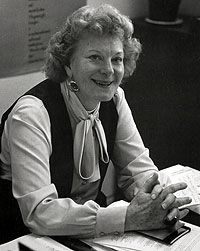
Virginia Satir, a trailblazer in family therapy, is celebrated for her profound understanding of human emotions and relationships. Her timeless poem I Want to Love You encapsulates the essence of love in tender, insightful language. Satir invites us to redefine love as not merely an emotional bond but an intentional practice rooted in respect, understanding, and wisdom. (Photo from Wikimedia commons)

Satir emphasized the importance of nurturing love that is healthy, respectful, and boundaries. Her work reveals that true love fosters connection, trust, and mutual growth. This approach provides a blueprint for enriching relationships, particularly within families and marriages, where deep emotional bonds often coexist with challenges.

Love in Parent-Child Relationships

Satir’s therapeutic approach frequently emphasized parenting as a delicate balance of nurturing and letting go. One of her core principles was the importance of validating children’s emotions and individuality.

She often used metaphors to illustrate her points. For instance, she likened parenting to tending a garden: “You water the seeds, but you cannot decide how each flower will bloom.” This philosophy highlights the role of parents in providing unconditional support during early childhood while allowing space for independence as the child matures.

A famous anecdote from her work involved a mother who struggled with her teenage daughter’s rebellion. Satir encouraged the mother to write a letter expressing her love without judgment. This simple act fostered a renewed connection, demonstrating how acknowledgment and respect can rebuild bonds.

Parenting, as Satir taught, is about cultivating trust and allowing children to flourish as autonomous individuals, experiencing love as a source of empowerment rather than control.

Cultivating Love in Marital Bonds

Satir believed that love in marriage thrives on mutual respect, clear communication, and intentional effort. She often used her Family Sculpting technique to help couples visualize the dynamics of their relationship. By arranging family members to represent emotional closeness and distance, couples could see the need for adjustments in their behavior.

For instance, Satir once worked with a couple where the wife felt unheard. By “sculpting” the wife seated with her back to the husband, the couple visualized their emotional disconnection. This powerful exercise led to a heartfelt conversation where both partners committed to active listening and mutual validation.

In practice, Satir advocated for specific behaviors to nurture marital love:

  • A wife can replace nagging with encouragement and complaints with collaboration, creating a foundation of trust and partnership.
  • A husband can demonstrate responsibility through actions rather than words, replacing criticism with appreciation and patience.

These small, intentional changes can transform the atmosphere of a marriage, fostering harmony and mutual growth.

In all relationships—whether between parents and children or spouses—Satir emphasized equality, respect, and tolerance. She taught that love devoid of attachment, judgment, or control becomes a source of profound warmth and harmony.

Satir’s work inspires us to approach love as a life-affirming practice, one that enriches our connections and empowers personal growth. Whether through her transformative therapy sessions or the tender verses of her poetry, she reminds us that love is not just an emotion but a lifelong commitment to nurturing ourselves and those around us.

Link:https://peacelilysite.com/2024/11/21/i-want-to-love-you/

A Thought-Provoking Reflection: Building a Harmonious World Through Self-Growth

I recently came across a thought-provoking video that offered a profound insight into the root cause of social disorder. A newspaper invited submissions on the topic: “What is the root cause of social disorder?” One answer stood out for its simplicity yet profound depth: “It’s me.”

This response highlights a universal truth: the state of the world mirrors the state of each individual. If “I” embody qualities like sincerity, kindness, and a willingness to help, I can foster harmony in my family and community. Conversely, if “I” succumb to selfishness, greed, and deceit, disorder and instability are inevitable.

The peace and stability of society, our nation, and even the world rest on each of us. By reducing criticism of others and turning our attention inward—reflecting on our thoughts, words, and actions—we can become catalysts for harmony.

True greatness is not about outperforming others but about improving ourselves. By focusing on personal growth, we enrich our lives and contribute to a better world.

Mother Teresa’s Timeless Wisdom

Mother Teresa’s poem “Do It Anyway” offers profound guidance for navigating life’s challenges with integrity, kindness, and resilience. It reminds us to act according to our values, regardless of external circumstances:

People are unreasonable,illogical and self-centered

Love them anyway.

If you are kind,people may accuse you of selfish,ulterior motives;

Be kind anyway.

If you are successful,you will win some false friends and some true enemies;

Succeed anyway.

The good you do today will be forgotten tomorrow;

Do good anyway.

If you are honest and frank,people may cheat you;

Be honest and frank anyway.

People favor under dogs but follow only topdogs.

Fight for a few underdogs anyway.

What you spend years building may be destroyed overnight;

Build anyway.

If you find serenity and happiness,they may be jealous;

Be happy anyway.

People really need help but may attack you if you do help them.

Help people anyway.

Give the world the best you have,And it may never be enough;

Give the world the best you have anyway.

Her words teach us that life’s meaning lies in staying true to our values, not in others’ perceptions or responses. Ultimately, our actions reflect a dialogue with our conscience, not a transaction with others.

Personal growth begins with the courage to look inward. When frustration or dissatisfaction arises, take a moment for self-reflection. Ask yourself, “How can I improve?” This practice shifts focus from external blame to internal progress. Growth unfolds through small, manageable goals—whether it’s mastering a new skill, refining emotional resilience, or nurturing patience.

Kindness is another cornerstone of personal development. Choose compassion, even when faced with misunderstanding or adversity, because every person carries unseen struggles. Alongside kindness, maintain integrity and uphold what’s right, regardless of external validation. As Mother Teresa wisely said, “Give the world the best you have, and it may never be enough; give your best anyway.”

By weaving self-reflection, purposeful improvement, and compassionate action into daily life, we not only enhance ourselves but also contribute to a more harmonious world.

World peace begins with individual actions. Change doesn’t require grand gestures; it starts with small, deliberate acts of kindness—a warm smile, a kind word, or a helping hand.

When we each commit to self-growth, compassion, and mindfulness, we create ripples of positive change in our communities and beyond. Together, these ripples can form a wave of harmony that transforms the world.

Let us strive to become better versions of ourselves, nurturing peace and love in our hearts. By doing so, we can build a brighter, more peaceful future—one person at a time.

Mastering Emotions: The Path to Inner Peace

In ancient Tibet, there was a man named Aediba. Whenever he found himself angry or in the midst of an argument, he had a peculiar habit. He would immediately run home and circle his house and land three times before sitting down by the fields to catch his breath. As the years passed, Aediba worked tirelessly, and his house and land expanded significantly. But regardless of how large his property grew, he continued his practice—whenever he got upset, he would run three laps around it.

By the time Aediba had grown old, his property stretched far and wide. One day, after yet another argument, he grabbed his walking stick and, with great effort, completed his customary three laps. When he finally sat down to rest, the sun had already set. Concerned, his grandson approached him and said, “Grandpa, you’re too old to keep doing this. No one around here owns more land than you. You don’t need to run around your property anymore when you’re angry. Can you tell me why you’ve done this your whole life?”

Aediba smiled and replied, “When I was young, every time I got angry, I would run around my house and land. As I ran, I’d think to myself, ‘My house is so small, my land is so little—what right do I have to be angry or argue with anyone?’ That thought always calmed me down, and I would pour all my energy into working harder. Now, even though my house is large and my land vast, I walk around it and think, ‘I have so much—why should I waste my time quarreling with others?’ And once again, my anger fades.”

Just as every rose has its thorns, every person has traits that may frustrate us. The key to happiness is not trying to remove these “thorns,” but learning how to live with them, avoiding getting hurt.

This simple yet profound story teaches us a vital lesson about managing emotions. With family, there’s no need to argue to prove who’s right or wrong. Winning or losing a debate doesn’t matter—home is not a battlefield. We need to make sure our own thorns don’t harm those we love.

When interacting with others, especially those who may not see the world as we do, it’s wise to avoid unnecessary arguments. Not engaging in debates over who’s right shows maturity and emotional intelligence. In fact, most arguments are futile. The real strength lies in holding back, demonstrating grace, and knowing when to step away. Spiritual teachings from ancient times remind us, “When you open your mouth, your energy scatters; when your mind stirs, your internal strength cools.” Engaging in constant disputes not only wastes time but drains our energy.

On Mount Emei, there lived an old monk named Yongtong, who was over 100 years old. Someone once asked him, “Master, what is the secret to happiness?” Yongtong calmly replied, “Never argue.” The person asking wasn’t satisfied with this simple answer and said, “Master, I don’t quite agree with your idea that this is the secret.” Yongtong smiled and said, “Yes, you’re absolutely right…”

Life is full of challenges and difficulties, and none of us can avoid them. However, if we let every problem cause frustration or every small setback lead to anger, life will be full of turmoil. Truly strong individuals know how to control their emotions, step back, and manage problems calmly. Mastering our emotions isn’t about avoiding conflict entirely, but about learning to navigate it with wisdom and grace—leading to a life of peace and fulfillment.

Link:https://peacelilysite.com/2024/10/11/mastering-emotions-the-path-to-inner-peace/

A Single Rose Can Change a Life

One day, a little girl, full of innocence and joy, picked some roses. As she wandered down the road, she saw a poor beggar lying by the roadside. She paused, glanced at the flowers in her hand, and gently placed the most beautiful rose beside the sleeping man. She smiled to herself, thinking, “When he wakes up, he’ll be so happy.” With that, she skipped away, her heart light and joyful.

The sweet fragrance of the rose stirred the beggar from his slumber. Groggily, he opened his eyes and saw the delicate flower in his hand. “Did someone really give this to me? Could something so wonderful happen to someone like me? It’s like the sun rising in the west,” he thought, bewildered. “The person who gave me this flower must be a truly kind and beautiful soul.”

Overcome with emotion, the beggar decided to return to his shabby home. He rummaged through a dusty corner and found an old, dirty bottle. Filling it with water, he placed the rose inside. For a moment, he admired the flower, but then something nagged at him. “Wait,” he thought, “This beautiful rose can’t be in such a filthy bottle.”

He carefully removed the flower, washed the bottle thoroughly, and then placed the rose back inside. But as he looked again, he noticed the dusty table beneath it. “How could such a clean flower sit on such a dirty table?” He set to work, cleaning the table until it gleamed.

As he stepped back to admire the scene, he suddenly realized: “How can this beautiful rose, in a clean bottle, on a spotless table, exist in such a cluttered, dirty room?” He made a bold decision then and there – he would clean the entire house! With renewed energy, he swept away the dust, arranged his belongings neatly, and cleared out all the trash.

With every corner he cleaned, the house became warmer, cozier. A sense of peace filled the room. It was then that he caught his reflection in the mirror – his disheveled hair, his dirty face, his ragged clothes.

“Is that really me?” he asked himself.

Without hesitation, he took a bath, put on his best (though still worn) clothes, shaved, and tidied himself up from head to toe. When he looked in the mirror again, he smiled. “Hmm, I don’t look so bad!”

“Why should I remain a beggar? Tomorrow, I will find work,” he resolved.

Unbothered by hard or dirty work, and unpicky about the job, he soon found employment.

“Someone gave me a flower, and it turns out I’m not worthless after all,” became his daily mantra. It motivated him to work diligently, and as the years passed, he found success. But more than that, he discovered a new purpose.

“A single flower changed my life,” he thought. “I must help others in the same way.” And so, whenever he encountered someone in need, he offered a helping hand. Over time, the number of people he helped grew, and within a few years, he became a respected philanthropist, known far and wide for his kindness.

The story doesn’t end here. Those he helped went on to spread kindness to others, creating a ripple effect that touched countless lives.

In truth, we all need a beautiful flower – a small act of kindness – to remind us of our worth. And that flower? It’s something we all possess and can give freely.

Isn’t it true?

  • In public, we can hold the door for someone behind us.
  • When we see someone feeling down, we can offer them a smile.
  • We can give a genuine compliment to brighten someone’s day.
  • On a rainy day, we can drive a little slower to avoid splashing water on pedestrians.
  • We can pick up a stray nail on the ground to prevent someone from getting hurt.
  • We can speak with kindness and warmth to everyone we meet.

These are simple actions, right? They require little effort, yet they have the power to transform lives. Just like that unnoticed rose changed the beggar’s life, our small acts of kindness can change the world, one person at a time.

In our daily lives, we often believe that once something is done, it’s over. Once words are spoken, they disappear. But in reality, it’s far from over. A kind word, a smile, a simple gesture – these can brighten someone’s day, create ripples of happiness, and leave a lasting impact.

Giving someone a rose, literal or figurative, not only leaves a lingering fragrance in their heart, but it also brings joy back into our own lives. Today, when we plant a seed of kindness, it may grow into a tree in ten years. In a hundred years, it could become a small forest. And in a thousand years, that forest may provide blessings to generations yet to come.

Nothing we do, say, or think ends at the moment. Whether good or bad, everything continues to spread, shaping the world around us.

Link: