Yuanmou Earth Forest

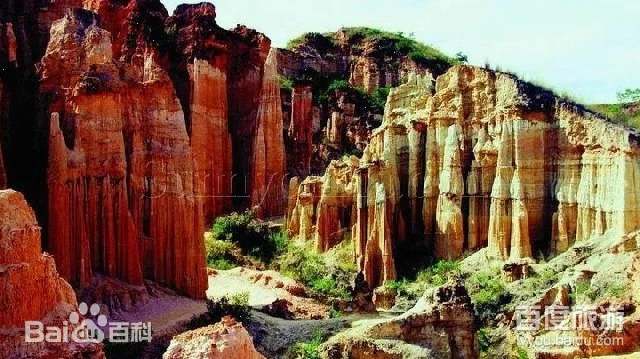
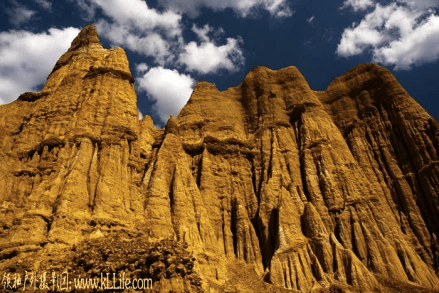
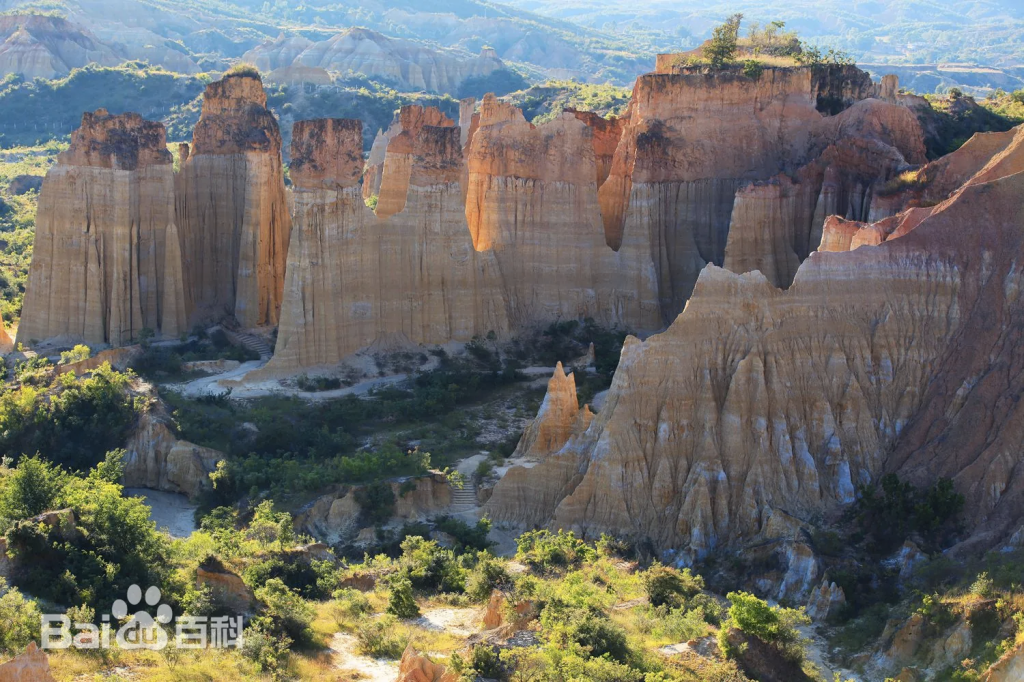
Yuanmou Earth Forest is a breathtaking area of clay formations that have developed over the past 1.5 million years. Located 210 km northwest of Kunming, this scenic wonderland features rocks composed of sand mixed with clay, giving them a distinctive yellow color and loose texture. These rocks have undergone extensive weathering, making their surface resemble earth, and they glisten like gold under the sunlight. Some are as large as castles, while others resemble pylons, all in various magnificent shapes. The earth forest covers a wide area in the Yuanmou Basin, with different regions exhibiting unique features based on the extent of weathering and erosion. Three notable scenic sites within the area are Tiger Leaping Sands, Ban Guo, and Xin Hua, each with its own distinct characteristics.

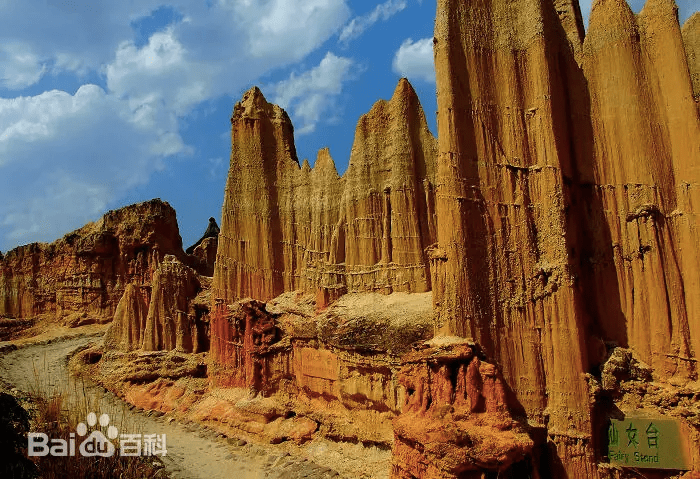
Tiger Leaping Sands is considered the most spectacular site within the Yuanmou Earth Forests. From a distance, the rocks resemble an ancient deserted castle. Tall, straight rock pillars appear as remnants of a shrine, and the rock walls resemble the enclosure of an ancient palace. What makes it truly unique is the three-color ‘roof’ on top of the ‘castle’ – red, brown, and black. This coloration is due to rain permeating the rock, causing ferrous and calcium substances to coagulate into an impermeable layer. As other parts eroded away, this layer naturally protruded and formed an ‘umbrella’ that preserved the rocks below.

Exploring this hidden world, you’ll be captivated by the abrupt clay formations that glisten like yellow crystals emerging from the ground. These formations vary in shapes, heights, and volumes, each resembling a piece of indescribable artwork.

Collectively, they create an intricate maze filled with mystery and sublime beauty. Some liken Yuanmou Earth Forest to a weathered golden monastery, a desolate Gothic church, or a giant shrine ravaged by fierce elements.

When illuminated by sunlight, these clay columns emit sparkling rays, a rare phenomenon likened to China’s clay version of the Parthenon. At twilight, their silhouettes resemble gothic structures, transforming the fairyland into a haunting terrain. It takes great courage to explore and walk among them.

To fully appreciate the beauty of Yuanmou Earth Forest, viewing from above is recommended. A bird’s-eye view reveals the meandering Longchuan River, a tributary of the Jinsha River (a major tributary of the Yangtze River), flowing like a silver ribbon alongside the attention-grabbing golden patchworks on its west bank, where you’ll find Earth Forests of Banguo, Tiger Leaping Shoal, Wanbao, Xiaoleizai, and Xinhua covering an area spanning over 5 square kilometers.

Photo taken on Nov. 17, 2021 shows the scenery of earth forest in Yuanmou County, southwest China’s Yunnan Province. The earth forest, which was formed by geological movement and soil erosion, is basically in color of yellow and the color varies in different parts. (Xinhua/Wang Guansen)

Yuanmou Earth Forest’s clay formations can be categorized into four styles based on shapes and formation processes: Earth Bud Style, Castle Style, Bamboo Shoot Style, and Mushroom Style. Earth Bud Style formations, though small, serve as precursors to other types, while Castle Style formations are larger, typically measuring 2 to 5 meters in height.

Earth Bud Style

Due to varying degrees of cementation and semi-cementation, sedimentary rocks have different water content in clay minerals and varying expansion coefficients after water absorption. Surface rock layers are subject to long-term weathering, resulting in a series of cracks. Surface runoff and rainwater initially erode along these cracks and soft rock layers, forming soil buds with heights and diameters less than 1 meter and relative heights less than 1 meter. This type serves as the embryonic form for developing other types of earth forests.

Castle Style

The continuous flow of water erodes and cuts into the base of soil buds, along vertical fissures, horizontal fissures, and other forms of cracks in the strata, as well as erosion and abrasion along the surfaces of soft and hard rock layers. This process forms shapes such as arches, platforms, and vertical shafts, creating an environment reminiscent of ancient castles.

These types of soil columns generally have a connected base, with a thick and rounded or serrated top, occupying a relatively large area and standing 2-5 meters in relative height. However, the flat tops and arches below these columns often collapse under the effects of flowing water and gravity, causing the columns to separate and evolve into other types of soil columns.

Bamboo Shoot Style

This type of earth forest is primarily composed of sand and clay, with loose consolidation and no hard covering layer at the top. As a result, it undergoes erosion and cutting by rainwater and surface runoff, forming conical soil columns. These earth pillars have sharp tops, resembling large bamboo shoots after rain or the pointed tip of a pagoda, with heights generally ranging from 5 to 10 meters.

Iron Cap Style

As a typical category of earth forest, it is the most widely distributed. Due to the leaching effect of surface water on iron, silica, and calcium in the strata, these elements gradually dissolve, penetrate, and filter to the interface of the impermeable layer, where they precipitate and accumulate, cementing the upper strata to form iron oxide caps or silica/calcium iron caps. Under the erosion and scouring action of water flow, these caps gradually expose themselves at the tops of columns, acting as natural “umbrellas” that protect the soil columns from direct erosion and scouring by flowing water and intense sunlight.

The “iron cap” above and the soil column below merge into one, forming a variety of unique landscapes within the earth forest. Some resemble old fishermen fishing, some resemble soldiers going to battle, some resemble standing cranes, and some resemble galloping wild horses, creating yet another extraordinary sight within the earth forest.

Link:https://peacelilysite.com/2024/04/24/yuanmou-earth-forest/

Source: http://www.news.cn/english/2021-11/18/c_1310317427.htm, https://www.westchinatour.com/kunming/attraction/yuanmou-clay-forest.htmlhttps://baike.baidu.com/item/%E5%85%83%E8%B0%8B%E5%9C%9F%E6%9E%97/3379396

Perseverance and Endurance: Lessons from Bamboo and Cicadas

In life, the journey towards success often mirrors the growth of bamboo and the emergence of cicadas. These natural phenomena teach us valuable lessons about perseverance, endurance, and the importance of staying committed to our goals.

Imagine the bamboo, taking four long years to grow just three centimeters above the ground. For those initial years, its roots were quietly spreading underground, preparing a strong foundation for future growth. Then, in the fifth year, something remarkable happens—bamboo shoots skyward at an astonishing rate of thirty centimeters per day, eventually reaching a towering height of fifteen meters in a mere six weeks. This phenomenal growth was not sudden; it was the result of years of patient root development. (Photo by Daniel Klein)

Success, like the bamboo’s rapid growth, often appears sudden to others but is actually the culmination of persistent effort and preparation over time. Every day contributes to the foundation upon which monumental achievements are built.

Similarly, consider the cicada, a creature that spends seventeen years underground, feeding on tree roots in utter darkness and solitude. When the time is right—after enduring years of dormancy and patiently waiting for optimal conditions—the cicadas emerge. They climb the branches, shed their old shells, and bask in the sunlight, announcing their triumph over the long period of darkness. (Right: Chinese Ink painting Song of Cicada by H.H.Dorje Chang Buddha III)

The story of the cicada reminds us that endurance and patience are vital virtues on the path to success. Just as the cicada breaks through the darkness to embrace the light, so too must we persevere through challenging times and wait for our moment to shine.

In contrast, those who stray from their goals or give up prematurely are akin to individuals who prefer the comfort of their current situation over the potential for growth and self-improvement.

People without perseverance may never exceed the three-centimeter mark of bamboo growth or endure the seventeen years of darkness like cicadas. However, those with determination and resilience can remain focused, establish strong roots, and steadily accumulate progress towards their goals.

It’s essential to recognize that achieving greatness requires either the perseverance of a snail or the strength of an eagle. The snail advances slowly but steadily towards its destination, while the eagle soars to great heights with sheer strength. Both approaches teach us that success comes to those who are determined and resolute in their pursuit.

Let the stories of bamboo and cicadas inspire us to persevere through challenges, endure periods of darkness, and stay committed to our aspirations. Success may take time, but with unwavering determination and patience, we can break through obstacles and reach new heights in our lives.

Link:https://peacelilysite.com/2024/04/19/perseverance-and-endurance-lessons-from-bamboo-and-cicadas/

Discover the Marvels of Zhangye National Geopark: A Journey Through Time and Terrain

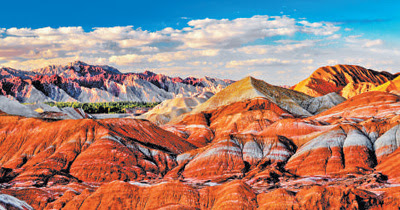
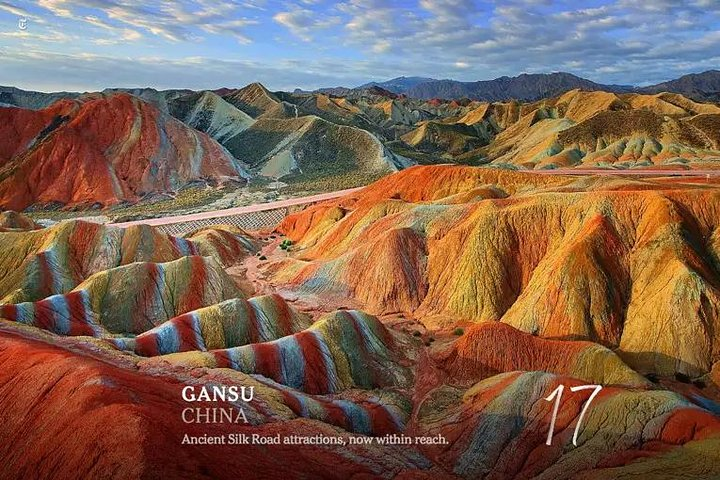
Nestled in the northwestern region of China lies a geological wonderland that seems to defy the boundaries of imagination – the Zhangye National Geopark. This awe-inspiring landscape, characterized by its vibrant hues of red, orange, and yellow, is a testament to millions of years of geological evolution. Here, layers of minerals and sandstone have been sculpted by the forces of nature, resulting in a breathtaking vista that resembles giant layer cakes stretching as far as the eye can see.

The formation of these majestic mountains is a testament to the intricate dance of geological processes that have unfolded over millennia. Millions of years ago, sedimentary layers were deposited on this land, slowly compressing and solidifying over time. As tectonic movements and erosion took their course, the once-flat layers were uplifted and exposed to the elements. Through the gradual process of oxidation and weathering, the vibrant colors we see today were revealed, creating a surreal landscape that captivates the imagination.

One of the most iconic features of the Zhangye National Geopark is the Danxia landform, characterized by its steep cliffs, towering pillars, and intricate rock formations. Among the myriad of scenic points within the park, several stand out as must-visit destinations for any traveler:

Rainbow Mountains: Undoubtedly the crown jewel of Zhangye National Geopark, the Rainbow Mountains mesmerize visitors with their surreal beauty. As sunlight dances upon the mineral-rich rock layers, the landscape transforms into a vivid tapestry of hues, creating a visual spectacle unlike any other. Hike along the designated trails to immerse yourself in this kaleidoscopic wonderland, where every turn unveils a new vista worthy of admiration.

Colourful Hills: Step into a world of vibrant hues at the Colourful Hills, where layers of sedimentary rock create a stunning mosaic of colors. From deep crimson to golden ochre, the hills are a testament to the rich geological history of the region.

Danxia Landform Scenic Area: Explore the intricate network of canyons, valleys, and rock formations that define the Danxia landform. Wander along winding paths that lead you through narrow gorges and past towering cliffs, each corner revealing a new and captivating vista.

Binggou Danxia Scenic Area: Venture into the heart of the geopark to discover the secluded beauty of Binggou Danxia. Here, you’ll find a landscape characterized by rugged peaks, deep ravines, and tranquil streams, offering a serene escape from the bustling crowds. (Photo by Bekah 06/2021)

Zhangye Danxia Geological Park: Immerse yourself in the geological wonders of Zhangye Danxia Geological Park, where you can witness the raw power of nature at work. Marvel at the sheer scale of the rock formations, carved over millions of years by the forces of wind and water.

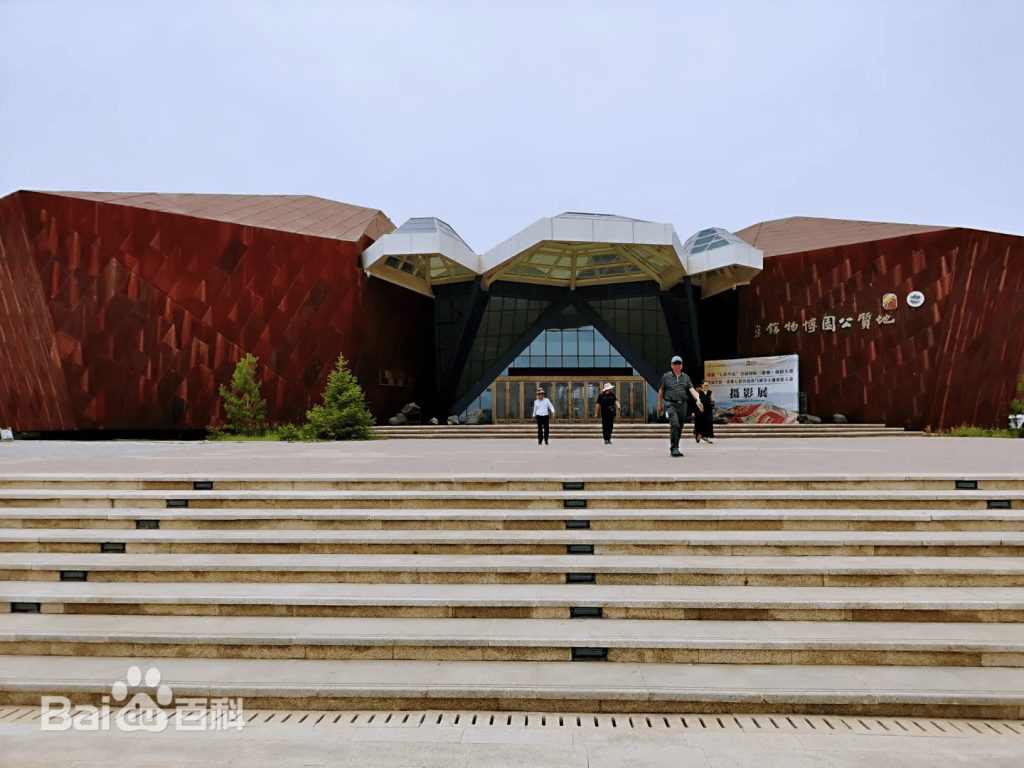
Danxia Landform Geological Museum:Delve deeper into the geological wonders of Zhangye at the Museum. Here, visitors can gain insight into the formation process of Danxia landforms through informative exhibits, interactive displays, and geological artifacts. From geological evolution to environmental conservation efforts, the museum offers a comprehensive glimpse into the natural heritage of the region.

Zhangye Danxia Peak Forest: For a panoramic view of Zhangye’s surreal landscape, venture to the Forest. Perched atop a vantage point, visitors are treated to sweeping vistas of undulating mountains, crisscrossed by winding streams and verdant valleys. As the sun sets, casting a warm glow over the rugged terrain, the scene becomes a photographer’s paradise, capturing the fleeting beauty of nature’s masterpiece.

As we marvel at the splendor of Zhangye National Geopark, it’s essential to recognize the importance of conservation efforts in preserving this natural treasure for future generations. Through sustainable tourism practices, habitat restoration initiatives, and community engagement, stakeholders strive to safeguard the integrity of the park’s fragile ecosystems while promoting awareness of its ecological significance.

Zhangye National Geopark stands as a testament to the awe-inspiring power of geological processes and the boundless creativity of nature. From the vibrant hues of the Rainbow Mountains to the rugged grandeur of the Peak Forest, every corner of this geological wonderland tells a story millions of years in the making. As we venture through its surreal landscapes, let us cherish and protect this timeless masterpiece, ensuring that its beauty endures for generations to come.

Link:https://peacelilysite.com/2024/04/01/discover-the-marvels-of-zhangye-national-geopark-a-journey-through-time-and-terrain/

The most Beautiful Spring in YiLi XinJiang

Every year in March and April, the most beautiful season arrives in Yili, Xinjiang!

This is a legacy from the fifteenth and sixteenth Centuries,

The largest primitive apricot forest,

Concentrated on the north bank of the GongJiShi river,

Covering an area of ​​over 30,000 mu.

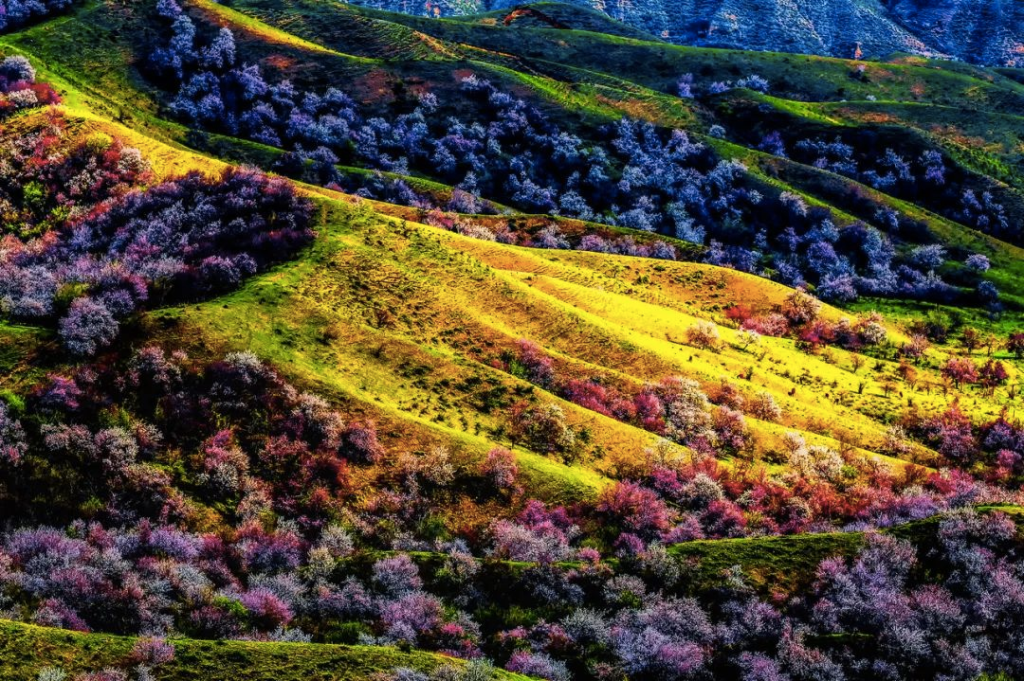
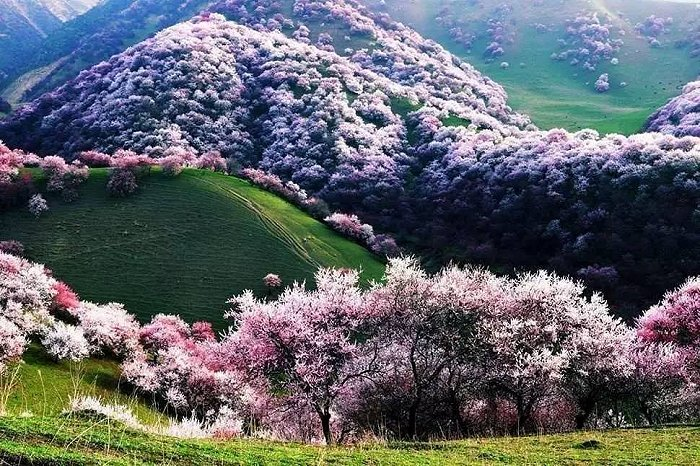
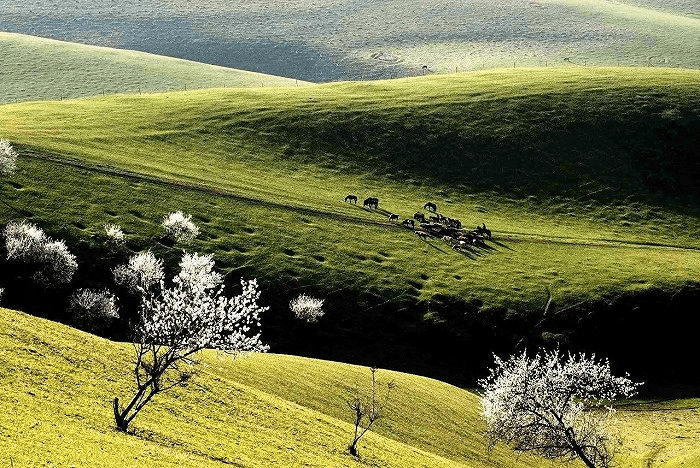
The beauty of Yili’s apricot blossom gully is not the deliberate beauty of artificial planting and processing, but the natural beauty of “natural and unadorned”. On the rolling hillsides covered with layers of grass, there are apricot blossom forests in purple, red, and pink, magnificent and dreamlike, which makes people feel excited at first sight. Mentioning Yili, the vast image of the grassland with the words “the sky is vast, the wilderness is vast, and the wind blows the grass low to see the cattle and sheep” comes to mind. Little do people know, here also has the beautiful scenery of “apricot blossoms fill the gully, and the spring scenery intoxicates people”. The apricot blossoms covering the mountains and plains make people indulge in the sea of flowers, lingering and forgetting to return. Most of the visitors who come here all year round are photographers, painters, poets, and so on, who come for fame.

Yili has picturesque grassland, sacred snow-capped mountains, and a splendid sea of ​​flowers… Any one of them is enough to conquer you!

Apricot Blossom Valley, naturally formed,

Becomes a paradise every spring.

The air is filled with the fragrance of apricot blossoms,

The valley is adorned in the robe of spring.

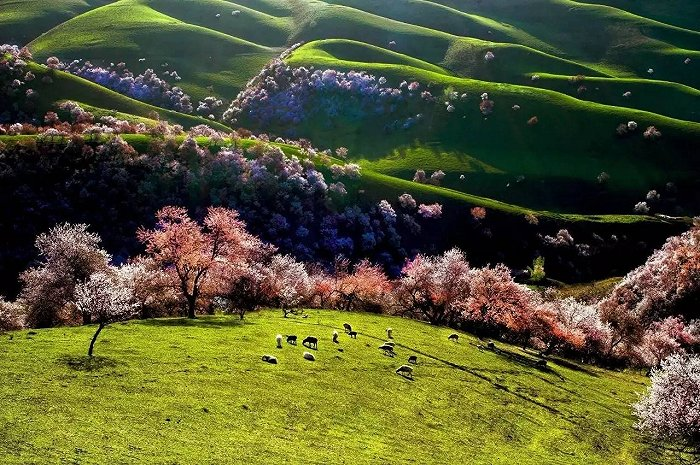
On both sides of the Yili River Valley in the foothills of the Tianshan Mountains, various ancient wild fruit trees are distributed. As April arrives and the weather warms up, wild apricots are the first to sense the temperature change, eagerly adorning their branches with blossoms, heralding the beginning of the entire apricot blossom season in the Yili Valley. In the northern part of Tuge Township in Xinyuan County, the scene of apricot blossoms in full bloom is the most spectacular in the Yili River Valley. The apricot blossoms surge like a torrential tide, climbing up the hillsides and deep into the valleys. The fresh green of the grasslands, coupled with the delicate pink of the apricot blossoms, adorned with the pastoral huts and leisurely cattle and sheep, depicts spring in an exaggerated yet perfect manner.

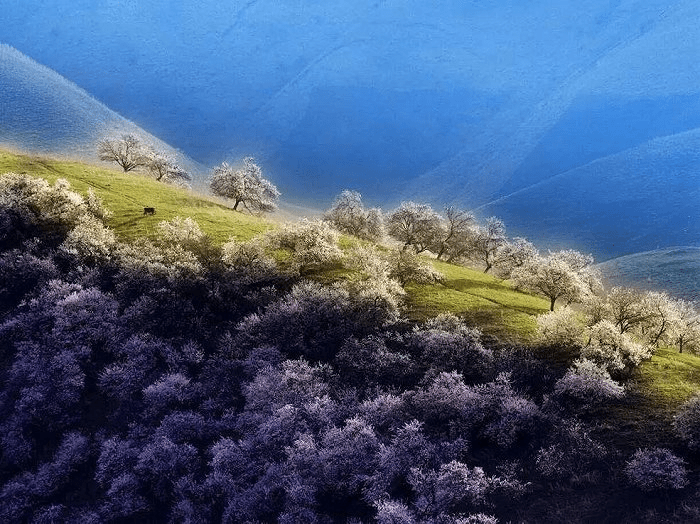
Entering April marks the most beautiful and romantic season in the Yili River Valley. The first to bloom are the pink apricot blossoms. In Xinyuan County, April is full of spring vitality, with willows budding and hillsides covered in green carpets. Most striking are the rolling hillsides on the north bank of the Gongjisi River, where wild apricot blossoms compete to bloom. The flowering wild apricot trees are snow-white or pink, exuding a bright and fresh fragrance that can be smelled several kilometers away.

Thanks to the influence of the humid climate of the Yili Basin and the nourishment from the abundant glacial meltwater from the Tianshan Mountains, the tens of thousands of mu of primitive apricot trees in the Apricot Blossom Valley have grown wild for hundreds of years, flourishing endlessly.

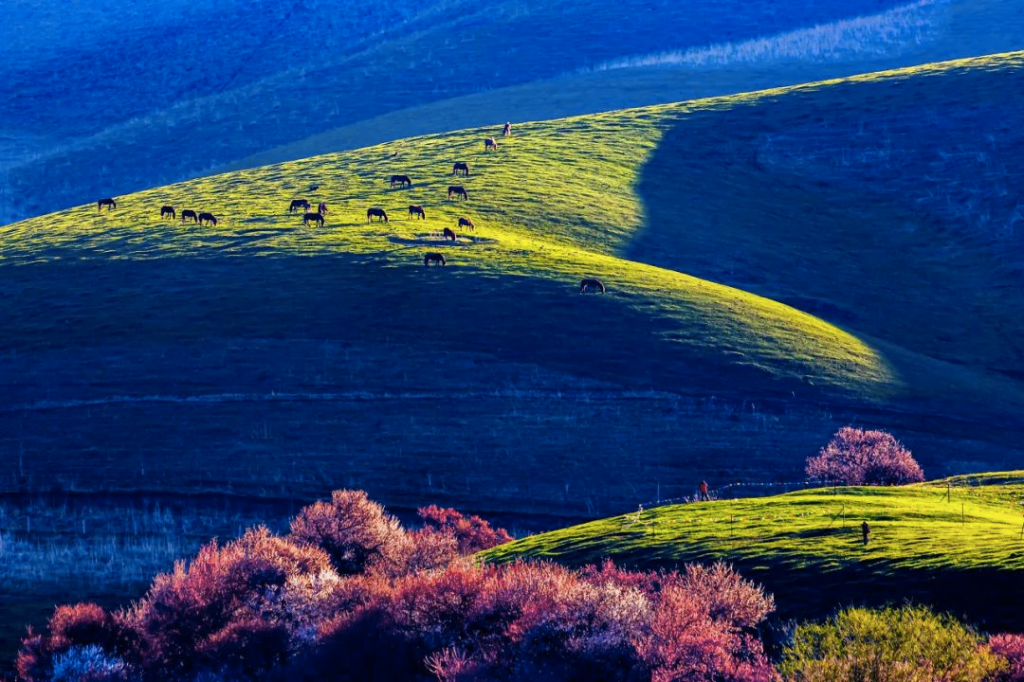
In April, the Yili region experiences frequent spring rains, gentle like silk. Under the rendering of the rain, the Apricot Blossom Valley appears even more like a hidden paradise, fresh and mysterious. Standing on a hillside and looking out, in the undulating valleys, wild apricot trees dot the landscape between the valleys and hillsides. The lush green of the valleys clashes with the purple-red of the apricot blossoms, creating a visually striking scene! The undulating lines of the valleys amidst the vast expanse of sky and earth present a majestic spectacle, with beautiful light and shadows refracted by the sunlight, creating a rare visual feast.

In spring, the Narat Grassland is a subalpine meadow plant area, renowned as a famous pasture since ancient times. The picturesque grassland scenery combines with the local Kazakh folk customs, with valleys, peaks, deep gorges, and forests complementing each other in harmony!

Link:https://peacelilysite.com/2024/03/22/the-most-beautiful-spring-in-yili-xinjiang/

Source: https://m.thepaper.cn/newsDetail_forward_21850081http://grassland.china.com.cn/2018-03/26/content_40265248.htm, https://www.jiemian.com/article/1213329.html

Discovering the Hidden Gem of Tibet: Mêdog – Where Nature Unveils Its Mysteries

Nestled in the southeastern part of the Tibet Autonomous Region lies Mêdog, a town whose name translates to “hidden lotus” in Tibetan. Situated in the Nyingchi area, Mêdog finds its home in the lower reaches of the Yarlung Tsangpo River, nestled at the southern foothills of the eastern Himalayas. This picturesque town boasts breathtaking landscapes, abundant rainfall, and pristine ecology, making it a true hidden gem waiting to be explored.

Mêdog’s allure lies not only in its natural beauty but also in its remote location, which has preserved its untouched landscapes from excessive development and damage. With a relatively sparse population, Mêdog offers visitors a rare opportunity to experience unspoiled natural beauty and unravel the mysteries of nature.

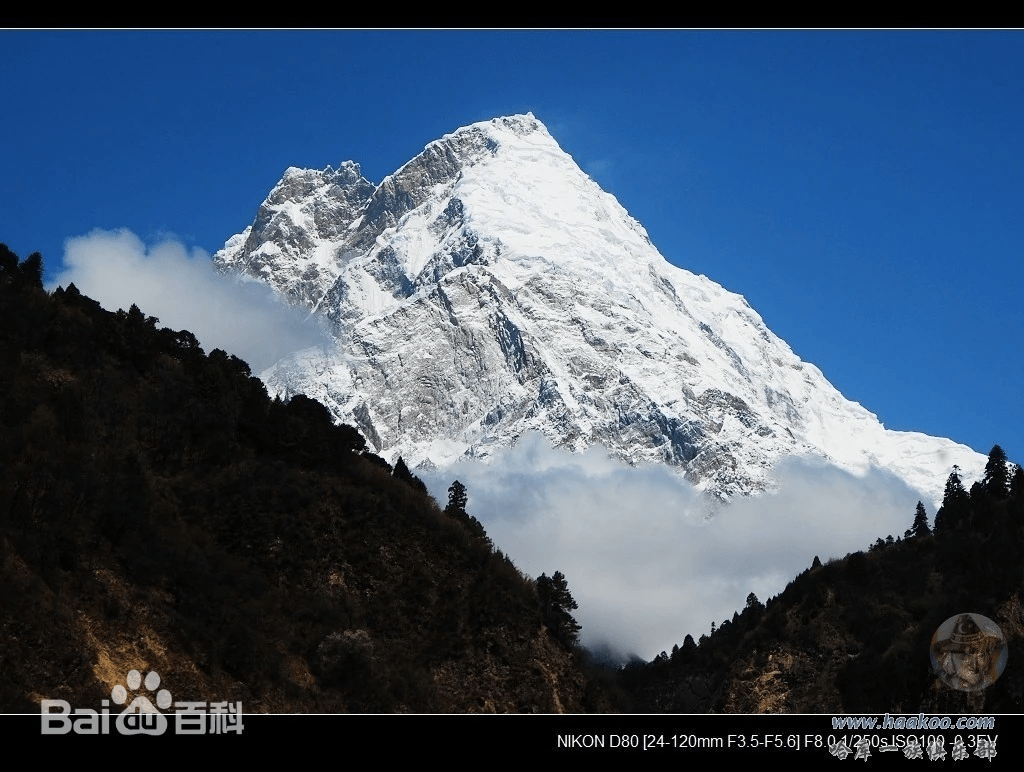
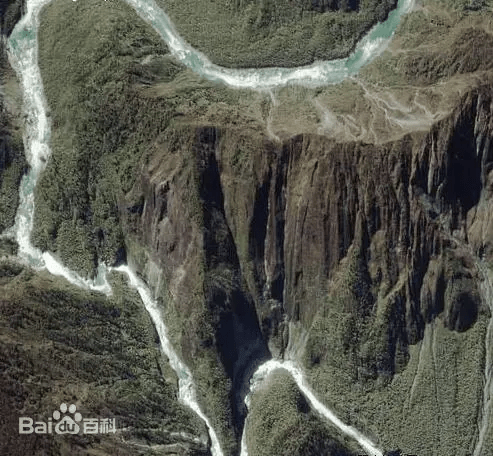
One of the most striking features of Mêdog is the majestic Yarlung Tsangpo River, which winds its way around the towering Namcha Barwa Peak, standing at an impressive 7,782 meters. As the river meanders through the territory of Mêdog, it carves a deep gorge akin to a sharp sword, creating a mesmerizing sight that resembles the Milky Way cascading towards the sea.

Big Bend

The Yarlung Tsangpo Grand Canyon stretches from Dado Kar village in Milin County at an elevation of 2880 meters in the north to Baxika village in Motuo County at an elevation of 115 meters in the south. The canyon spans a length of 504.6 kilometers, with an average depth of 2268 meters and a maximum depth reaching 6009 meters. With an average elevation of over 3000 meters, it holds the distinction of being the world’s largest canyon.

The entire canyon region is characterized by a harsh environment, where glaciers, cliffs, steep slopes, mudslides, and the turbulent Yarlung Tsangpo River converge. Many areas remain untouched by human activity, making it one of the few remaining “last frontiers” on Earth and a relatively unexplored geological blank spot.

Some of the primary waterfalls within the canyon have drop heights ranging from 30 to 50 meters. The canyon features nine vertical natural zones, ranging from high mountain snow zones to low river valley tropical rainforests. This diversity creates a habitat for a variety of biological resources, including two-thirds of known higher plant species on the Qinghai-Tibet Plateau, half of known mammal species, four-fifths of known insect species, and three-fifths of known large fungi species in China.

The convergence of warm and humid oceanic air currents with the snowy plateau gives rise to a unique climatic phenomenon in Mêdog. With annual rainfall reaching around 2000 millimeters and an average temperature of 16°C, Mêdog boasts rare South Asian climatic characteristics at its latitude. Despite its Tibetan location, Mêdog is home to the northernmost tropical rainforest in China, thriving with lush vegetation and vibrant landscapes reminiscent of Jiangnan’s greenery.

Exploring Mêdog offers visitors a chance to witness the breathtaking scenery of the Yarlung Tsangpo Grand Canyon, hailed as one of China’s ten most beautiful canyons by “National Geographic.” Here, travelers can marvel at the grandeur of nature while appreciating the unique rattan bridges that adorn the landscape, crafted without a single nail or pier.

As one traverses the mountains of Mêdog, they are greeted with mist-shrouded landscapes that change hues with the seasons, each unveiling its unique beauty. From the dense foliage to the meandering streams, Mêdog presents a captivating panorama that unfolds like a charming scroll, inviting visitors to immerse themselves in its vibrant colors and tranquil ambiance.

In the age of dinosaurs, a plant often referred to as a “living fossil” – the tree fern, also known as the “cycad,” is a nationally protected plant at the second level. It is the only woody fern species.
Wild Banana
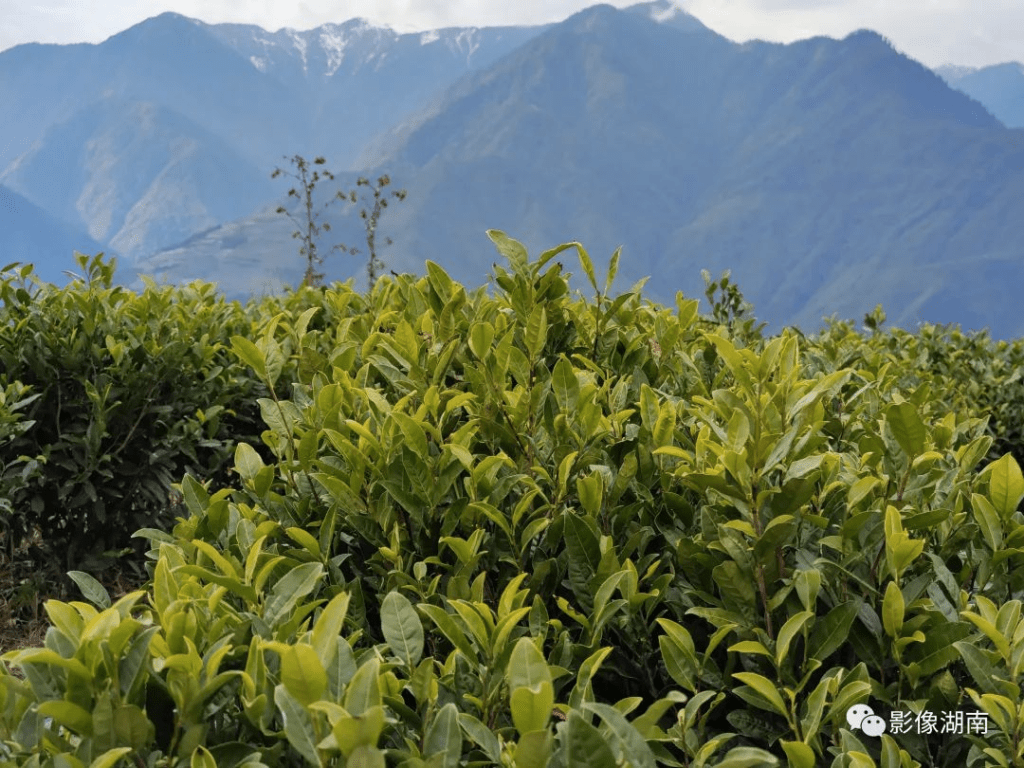
Tea Tree Farm

For those seeking respite from the hustle and bustle of city life, Mêdog offers a sanctuary of serenity and natural beauty. Whether it’s witnessing the grandeur of the Yarlung Tsangpo River or wandering through the lush rainforests, Mêdog promises an unforgettable journey filled with awe-inspiring moments and cherished memories.

In Mêdog, every step reveals a new wonder, every corner a hidden treasure. As visitors embark on this journey of exploration, they are reminded to approach nature with humility and appreciation, embracing its beauty with a calm heart and open mind. In Mêdog, the beauty of life reveals itself in every mist-covered peak and verdant valley, leaving an indelible mark on the soul of all who venture there.

Discovering the Hidden Gem of Tibet: Mêdog – Where Nature Unveils Its Mysteries

Link:

#Travel #China #Mêdog #Tibet #YarlungTsangpoGrandCanyon

Source: https://m.voc.com.cn/xhn/news/202202/16733558.html