The Man Who Saved 90 Acres: Why Bob Fletcher’s Integrity Still Matters Today

In the middle of a storm, most people look for shelter. But a rare few choose to stand in the rain to keep someone else’s home from washing away.

In 1942, the United States was a place of fear and suspicion. Following the attack on Pearl Harbor, Executive Order 9066 forced thousands of Japanese-American citizens into internment camps. They were given just days to pack what they could carry, leaving behind their businesses, their homes, and their life’s work.

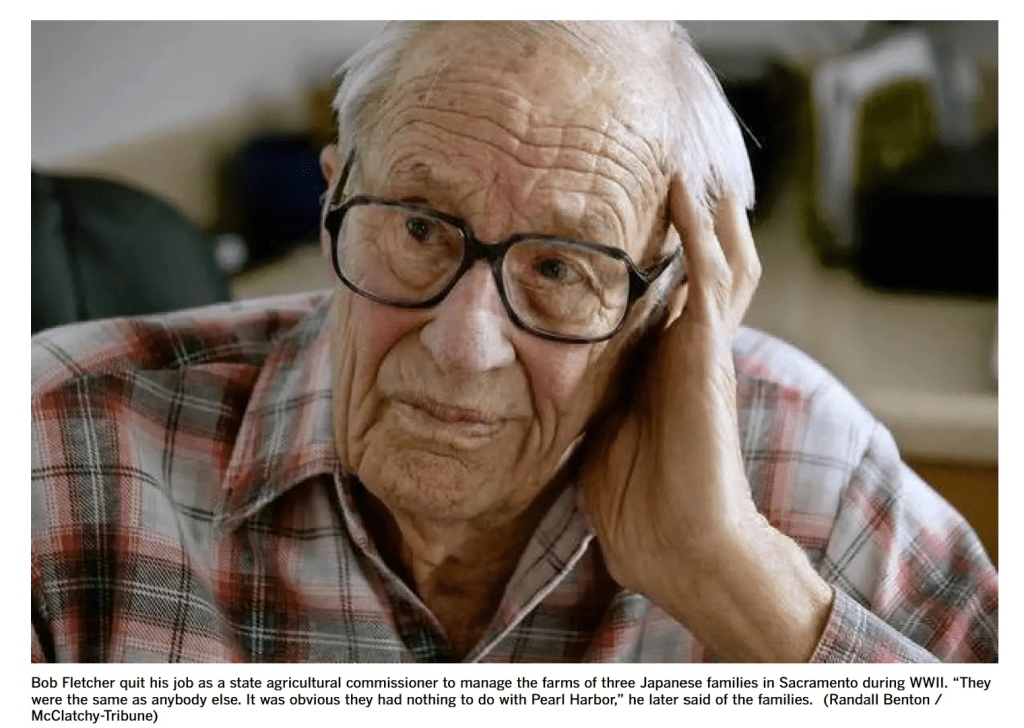
In Florin, California, most people looked away as their neighbors were taken. But an agricultural inspector named Bob Fletcher did something different. He stepped forward.

Note 1

Bob Fletcher was 31 years old when his neighbors—the Tsukamoto, Nitta, and Okamoto families—were ordered to leave. They were strawberry and grape farmers who faced losing everything to foreclosure.

They asked Bob if he would manage their farms while they were gone. Bob didn’t just say yes; he quit his stable job with the state to become a full-time farmer for people who weren’t even allowed to be there.

For three years, Bob worked 18-hour days. He managed 90 acres of flame tokay grapes across three different farms.

The Cost of Doing the Right Thing

Doing the “right thing” is rarely easy. Bob wasn’t seen as a hero by his community at the time. He was called names, shunned by neighbors, and at one point, someone even fired a shot into the barn where he was working.

But Bob had a quiet, iron-clad integrity. He lived in the migrant bunkhouses rather than the families’ main homes. He paid their mortgages, their taxes, and their bills. When the families finally returned in 1945, they didn’t return to ruins—they returned to thriving farms and a bank account full of the profits Bob had saved for them.

Bob Fletcher lived to be 101 years old. For decades, he deflected praise, often saying:

“I don’t know about being a hero. I just did what I thought was right.”

His life leaves us with enduring lessons:

Integrity is a verb.
It is not what we believe in private, but what we practice when no one is watching—and when it costs us something.

One person is enough.
Bob couldn’t stop a national injustice, but he saved three families. Sometimes protecting one corner of the world is exactly what we are called to do.

Moral courage is quiet.
It doesn’t announce itself. Sometimes it looks like long days, dirty hands, and the refusal to surrender compassion to fear.

We may not be living through a world war, but we all face moments where it is easier to go along with the crowd than to stand up for a neighbor. Bob Fletcher’s life asks us: Who are we looking out for? What are we willing to protect?

Link:https://peacelilysite.com/2026/01/05/the-man-who-saved-90-acres-why-bob-fletchers-integrity-still-matters-today/

Note 1 : Photo By Unknown Author – Original publication: LegacyImmediate source: https://www.legacy.com/us/obituaries/sacbee/name/robert-fletcher-obituary?id=11367093, Fair use, https://en.wikipedia.org/w/index.php?curid=69402868

You’ll Never Guess Why He Survived”?

At late Qing Dynasty, during the reign of Emperor Guangxu, there was a true story that took place:

Mr. Jia from Jiangsu worked for a foreign trading company in the Shanghai concession. He had earned the deep trust of his employer. Just before the Dragon Boat Festival, his boss sent him south of the city to collect debts. With a leather money pouch in hand, Mr. Jia set off.

The collections went smoothly, and by noon he had received more than 1,800 silver dollars. After walking and talking all morning, he was parched and exhausted. Passing by the famous Shiliupu teahouse, he hurried inside for a quick cup of tea before rushing back to deliver the money and finally rest.

When he returned to the company, he suddenly realized—the leather pouch was gone. Thunderstruck, drenched in sweat, and nearly fainting, he could not explain himself clearly in his panic.

Seeing his flustered state, the boss grew suspicious, believing Jia might be dishonest. He harshly rebuked him for betraying trust, warning that if the money was not returned quickly, Jia would be handed over to the authorities.

At that time, 1,800 silver dollars was a fortune—enough for a person to live on comfortably for a lifetime if carefully spent. How could Mr. Jia ever repay such a sum? With his reputation and life on the line, he felt utterly ruined and broke down in despair.

Meanwhile, in another part of the concession, a merchant from Pudong, surnamed Yi, had recently lost all his money in business. Discouraged, he bought a boat ticket for that very afternoon to return home across the river.

With time to spare before boarding, Mr. Yi also went to Shiliupu teahouse, intending to sip tea slowly while pondering his uncertain future.

By coincidence, just as Mr. Jia had hurried out, Mr. Yi walked in. As he sat down, he noticed a small leather pouch left on a chair. He paid it little mind at first and began drinking tea.

After some time, no one came to claim it. Curious, he lifted it and felt its weight. Opening it, he nearly dropped it in shock—inside was a fortune in gleaming silver coins!

At first he was overwhelmed with joy. Such a windfall could end his misfortune and secure a comfortable life. But then he thought: No, money belongs to its rightful owner. If I keep it, the loser may be ruined, disgraced, or even driven to death. The sin would be unbearable.

In those days, most decent people knew the saying: “Ill-gotten wealth must not be taken.” Mr. Yi resolved: Since fate placed this money in my hands, I have the responsibility to return it.

At lunchtime, only eight or nine guests remained in the teahouse. None appeared to be searching for lost money, so Yi, hungry as he was, decided to keep waiting.

By evening, as lamps were being lit, the teahouse emptied out—only Mr. Yi remained, watching the entrance intently.

Suddenly, he saw a pale, staggering man rush in, followed by two companions. It was Mr. Jia. As soon as he entered, Jia pointed at Yi’s table and cried, “There! That’s where I was sitting!” The three came straight toward Yi.

Yi smiled and asked, “Are you looking for a lost pouch?”

Jia stared in disbelief and nodded repeatedly. “I’ve been waiting for you,” Yi said, producing the leather pouch.

Overcome with relief, Jia trembled all over. “You are my savior! Without you, I would have hanged myself tonight!”

It turned out that when Jia had discovered the loss, he had begged to retrace his steps, though he knew recovery was unlikely. His boss, fearing he might flee, initially forbade it. After much pleading, the boss finally allowed him to go, but only under the close watch of two escorts, who were ordered to bring him back regardless of the outcome.

After exchanging names, Jia gratefully offered Yi a fifth of the money as a reward. Yi firmly refused. Jia lowered it to a tenth, then to a hundredth—Yi grew angry and sternly declined.

Flustered, Jia said, “Then at least let me treat you to a drink!” Yi still refused. Finally Jia pleaded, “If I cannot show gratitude, my conscience will not rest. Tomorrow morning, please allow me to host you at such-and-such tavern. I beg you to come—without fail.” Bowing deeply, he left.

The next morning, Yi did indeed appear. Jia was just about to bow in thanks when Yi quickly interrupted, saying:

“Actually, it is I who should thank you. If not for your lost pouch, I would not be alive today!”

Puzzled, Jia asked what he meant. Yi explained:

“Yesterday, I had bought a one o’clock boat ticket to return home. But because I waited in the teahouse to return your money, I missed the departure. When I finally returned to my lodging, I learned that the boat had capsized midway in a violent wave. All 23 passengers drowned. Had I boarded, I too would be dead. So you see, it was you who saved my life!”

The two men, overwhelmed, bowed to each other in tears.

Onlookers marveled, toasting the pair. They said Mr. Yi’s single good deed had saved not just Jia’s life, but his own as well.

The story did not end there. When Jia and his escorts returned and reported everything, the boss was astonished. “Such a virtuous man is rare indeed!” he exclaimed, insisting on meeting Yi.

The two met and felt an immediate bond. After a long conversation, the boss earnestly invited Yi to stay, offering him a high salary to manage accounts. Months later, he even married Yi into his family as a son-in-law. In time, the boss entrusted the entire business to him.

“Cause and effect of good and evil” is absolutely true, without the slightest mistake. Goodness nurtures more goodness, and goodness attracts goodness. To treat others with kindness is, in fact, to accumulate blessings and good fortune for oneself. A human life is not lived for just a fleeting moment. The speed of temporary gains or losses, the ups and downs of a single day, even honor or disgrace in the short term—none of these truly matter. Today’s kindness becomes tomorrow’s blessings. Today’s evil leads to tomorrow’s misfortune. Time is a great author, and it will always write the perfect answer.

Therefore, simply be a good person, and the future will be full of hope. Do good deeds, and the road ahead will surely be bright and promising.

Link:https://peacelilysite.com/2025/08/29/youll-never-guess-why-he-survived/

The Story of the Characteristics of Swords [AsilakkhaÏa-Jātaka]

126. The Story of the Characteristics of Swords [AsilakkhaÏa-Jātaka]

At one time Buddha was living in Jetavanārāma. At that time the king of Kosala had a Brahmin who could tell whether a sword was lucky by smelling it. When smiths would bring their swords, if they had given bribes, he said, “It is good.” To those who did not give bribes, he said to them, “It is bad.” All in the course of time knew the deceptive nature of this man. Knowing his nature, one smith made a sword and making it very sharp, put it in a sheath filled with hot chili powder. He brought it to the king. The king summoned the Brahmin and requested him to tell them the goodness or badness of the sword.

The Brahmin, in accord with the order of the king, took the sword out from the sheath and placing it near his nose tried to smell it. Immediately, before he could say anything, the chili powder smelled by him caused him to sneeze. He could not remove the sword from his nose quickly enough, so when he sneezed, the sword cut off the tip of his nose. This story spread everywhere and eventually it reached even the monks in the preaching hall.

One day in the preaching hall of Jetavanārāma the assembled monks were speaking about this. When the Buddha visited there, the monks paid respect to the Buddha.

The Buddha asked, “Oh monks, what were you discussing before I came here?” Then the monks related the story of the Brahmin who smelled swords for the king of Kosala. Buddha said, “Not only today this man faced this mishap, but also in the past he faced the same fate.” The monks requested the Buddha to disclose the past story. The Buddha spoke then the past story:

At one time, a king called Brahmadatta ruled in Benares. He had a fortune-telling Brahmin who by smelling swords could tell their goodness or badness. He took bribes from the sword smiths. He condemned the work of those smiths who had not given bribes because they had not given him bribes.

Once a certain trickster smith made a good sword and made it well sharpened. He applied hot chili powder to it and took it to the king. The king summoned the Brahmin to examine the sword. As it was covered with hot chili powder, when he smelled it, he sneezed before he was able to remove the sword from his nose. The tip of his nose was cut off, and he was ashamed because of this. The king became very sad because of this and requested his craftsmen to make a fake tip for the Brahmin’s nose with wax. And the Brahmin again asked to work for the king.

At this time the king had a nephew at his palace, and also his daughter. The two of them since they were very young, had grown up together. When they got older, they fell in love with each other. The king did not know this secret love. The king and his ministers one day discussed the marriage of the princess. The king said, “I will give my daughter to a prince of another kingdom.  If I do so, I will gain two new supporters, the prince and his father, to defend my kingdom.” Since then, the princess was not allowed to see the nephew with whom she had grown up so as to try to prevent them from falling in love. This strengthened their love for one another. And the nephew wanted to marry the princess as they both were now grown up.

The nephew therefore made a stratagem to marry the princess. He met the servant woman of the princess and gave her a bribe of a thousand gold coins. He requested her to keep the princess away for one day from the palace so that he could get to her. The woman said, “Do not worry. I will do it. I will take responsibility for that.”

Thinking of a stratagem, she went to the king and said, “Your lordship, your daughter is under the influence of an evil spirit. She is becoming unlucky and emaciated. Therefore, we will have to remove the evil spirit from her body.” The king asked, “What can we do for that?” The woman said, “In such-and-such a place there is a certain cemetery. There you need to make a stage. Keep a corpse on top of it, and cover it placing a bed over the dead body. We will place the princess on the bed and bathe her. Then the evil spirit will leave her.”

Hearing this, the king ordered her to do all these things and gave her all she had requested. She then undertook the task. She also tied some dried chili powder in a cloth, and she hid it near the bed so the nephew would be able to take it. She requested the nephew to go there and lie under the bed as the dead body. She explained to the nephew how to carry this off. The woman said to the caretakers, “When I come to the cemetery and wash the princess, the dead body will sneeze two or three times, come out from under the bed, and seize and devour the first one whom he sees. Therefore, be warned. Run away.” This was also mentioned to the nephew and princess, and the nephew was told, “When the caretakers run away, take the princess out of the cemetery, and after taking a bath with her, go wherever you like.”

On the day they set to have the service, the nephew went early and lay down under the bed she had prepared. The woman mentioned again to all the caretakers in the cemetery, “When the dead body sneezes, you will have to be ready for the death of the first one he seizes.” When, as she said, the nephew started to sneeze, all the caretakers laying their weapons down beside them, ran away from the cemetery screaming loudly. The retinue and other dignitaries who had come to witness this also all ran away.

When the nephew came out from under the bed, he took the princess, took a good bath, and went to his house with her. Hearing this news, the king became happy and he gave his daughter to the nephew.

Finalizing this story the Buddha said, “At that time the fortune-telling Brahmin who was skilled in sniffing swords was this fortune-telling Brahmin of today. The nephew prince of the king of Benares was I who am the Buddha.”

The moral: “What causes a loss for one person, may cause a gain for someone else.”

126. The Story of the Characteristics of Swords [AsilakkhaÏa-Jātaka]

Link: https://hhdorjechangbuddhaiiiinfo.com/2025/08/05/126-the-story-of-the-characteristics-of-swords-asilakkhaia-jataka/

#Buddhisttalesforyoungandold #Buddhiststories #storiesforkids #moralstories #Buddha #Jatakastories #PansiyaPanasJataka #JatakaTalesofSakyamuniBuddha #JatakaTales #SakyamuniBuddha’sPast

Dancing with Flames — The Yi Torch Festival

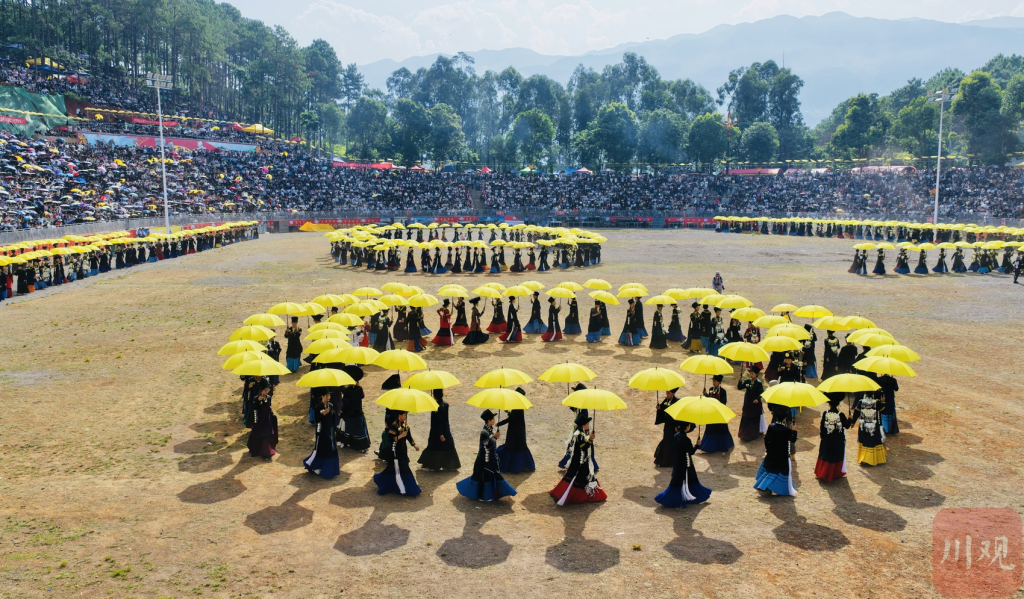
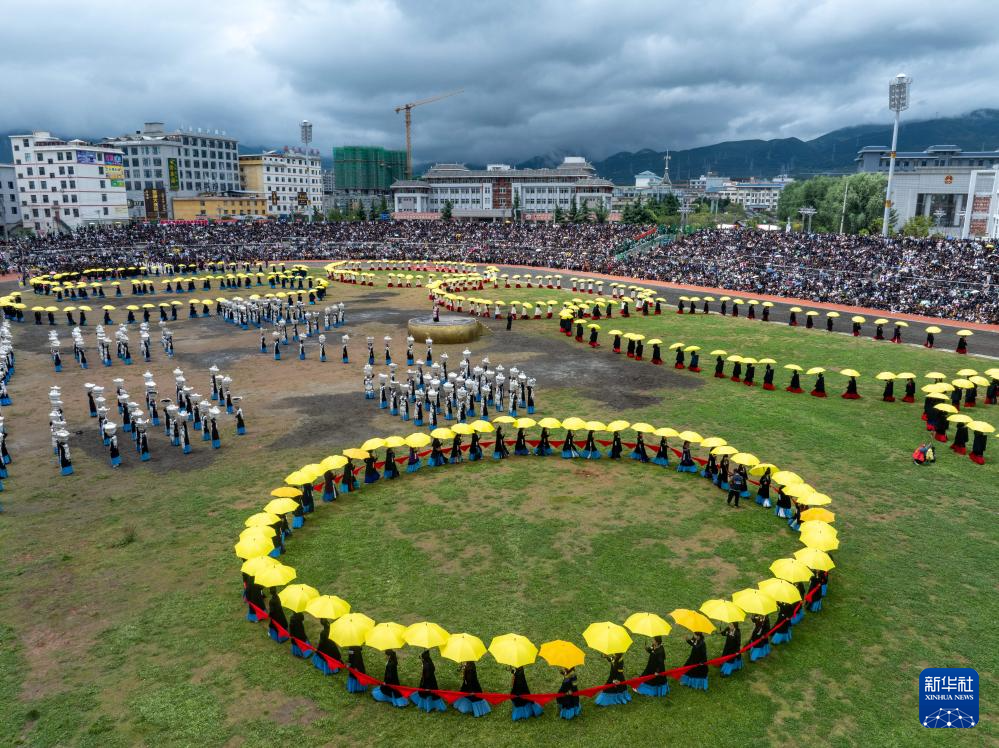
The air is warm and scented with pine smoke. In the distance, a line of golden lights winds its way down the mountainside, swaying and flickering like a living dragon. Drums beat in a steady rhythm, mingling with laughter and song. Children dash through the night clutching small torches, their faces glowing in the firelight. Elderly women hum old tunes, while young men and women steal glances beneath the shelter of bright yellow oil-paper umbrellas. This is not just a night—it is a living river of fire. You’ve just stepped into the Yi Torch Festival.

Every summer, when the moon of the sixth lunar month reaches its 24th day, the mountains and valleys of Yunnan, Guizhou, and Sichuan come alive with a sea of flickering light. This is the Yi Torch Festival, the grandest celebration of the Yi people and one of the most dazzling ethnic festivals in China.

The Yi, along with the Bai, Naxi, Jinuo, Lahu, and other ethnic groups, have celebrated this fiery tradition for centuries. For the Yi, fire is not just a source of warmth—it is a symbol of light, strength, and hope. The Torch Festival is their way of honoring fire, driving away evil, and praying for peace and abundant harvests.

On this special day, towering torches rise high in the center of each village, while every household lights their own smaller torches. As night falls, villagers carry these flames into the fields, circling the crops to symbolically chase away pests and misfortune, leaving behind protection and blessings.


The Torch Festival lasts three magical days and nights, each with its own unique charm.

Day One – Fire Worship
Morning preparations are lively, feasts are prepared, and wine and meat are offered to ancestors. At dusk, villagers gather at a site chosen by the elders. There, a sacred fire is lit using the ancient method of striking stones, and the flame is blessed by a bimo (Yi priest) chanting sacred verses. Then, torches made from mugwort are passed to each household. Children and elders alike carry them to the edges of fields, reenacting the old legend of Ashimo, the heroine who once used fire to drive away destructive insects.

Day Two – Playing with Fire
If Day One is solemn, Day Two is pure joy. Under the glow of the sacred flame, villagers gather for horse races, wrestling matches, bullfights, and singing contests. Young men compete like the legendary hero Atilaba, known for his courage and strength. Young women, dressed in vibrant handmade dresses and carrying delicate butter umbrellas, dance the graceful “Duoluohe” and Dati dances, just as Ashimo once did.
The highlight? A traditional beauty contest where elders select the most handsome man and the most beautiful woman of the year—chosen not only for looks, but also for kindness, bravery, and skill. As the night deepens, couples stroll by the streams and through the mountains, plucking moon lutes and jaw harps, their music and whispers floating into the starry sky.

Day Three – Sending Off the Fire
The final night is the festival’s grand finale. Villagers rush through the darkness carrying blazing torches, eventually gathering them into massive bonfires. Around these roaring flames, they sing, dance, and laugh until the stars fade and dawn arrives.


Beyond the rituals and dances, the Torch Festival is also a season of romance. Young men and women meet, flirt, and sometimes begin lifelong partnerships. According to tradition, a man may “steal” a token—such as a scarf or ornament—from the woman he loves as a sign of affection. For the rest of the night, they sing and dance together, expressing their feelings until sunrise.

In the end, the Torch Festival is more than just a cultural event—it is a living expression of the Yi people’s spirit: their love of life, reverence for nature, devotion to tradition, and unquenchable hope for the future. And as the last embers fade in the early morning light, the warmth of the flames lingers—both in the fields and in the hearts of the people.


If you’ve ever dreamed of seeing thousands of torches glowing like fire dragons weaving through the dark mountains, this is the place to be. The Yi Torch Festival is not only a feast for the eyes but also a journey into the beating heart of a culture that celebrates life in the glow of fire.


Video: https://fb.watch/BrJd5yhukt

Link:https://peacelilysite.com/2025/08/12/dancing-with-flames-the-yi-torch-festival/

Living with Wolves: A Wild Artist’s Journey of Love, Respect, and Coexistence

If you are willing to look with your heart, you will see starlight in a wolf’s eyes.

On this planet, humanity is not the only protagonist.
Every forest, every river, every creature shares the same sky and breath with us. True civilization is not the conquest of nature, but the choice to live in harmony with it.


Li Weiyi, a wildlife animator, has spent years drifting between forests and grasslands, sketching the fleeting emotions in an animal’s eyes and the untamed spirit in its movements. Her brush captures not just form, but soul. Gentle and perceptive, she treats animals as friends and believes, with unshakable conviction: all beings are equal.


The Call of the Grassland

In April 2010, she arrived in the vast Ruoergai grasslands of Sichuan. The wind bent the grass like waves, silver mountains gleamed under the sun, and the openness was almost intoxicating. But behind the beauty was a brutal truth—conflicts between humans and wildlife were pushing many animals toward tragedy.

Then she heard a story that broke her heart.
A male wolf, desperate to feed his mate who had just given birth, ventured into a human settlement in search of food. He was caught in a trap, killed by herders, and skinned. His mate waited for days before realizing he was gone. In grief, she ate poisoned bait and followed him in death, leaving six starving pups behind.

Li Weiyi resolved to find them. Days of searching through freezing wind and endless grass finally brought her to the den. Five pups had already died. The last survivor lay weak and trembling, barely breathing. When she whispered, it crawled toward her with eyes full of trust. At that moment, she became its only family.

She named him Green—for the color of the grasslands, for life, hope, and freedom.


Life Between a Woman and a Wolf

In Chengdu, Green grew into a curious, spirited companion. He swam instinctively the first time he fell into water, learned to press the TV remote with his paws, and loved wolf documentaries—howling whenever his kind appeared on screen.

But a wolf will always be a wolf. Green chewed through wires, stole raw meat from neighbors, and refused a leash with stubborn pride. On the streets, he walked with head held high, as if declaring to the world: I am a wolf, not a pet.

A walk with a stray dog ended in tragedy when the dog was hit by a car, sending Green into a panicked dash through traffic. Authorities warned Li Weiyi that Green could no longer live in the city.


Preparing for the Return

She briefly considered a zoo, but one look at an old wolf with dull eyes, torn ears, and walls scarred with escape attempts ended that thought. She sold her home, bought an off-road vehicle and a camera, and returned to the Ruoergai grasslands with Green to begin his rewilding.

There, he sparred with Tibetan mastiffs, relearned the fight for survival, and endured nights of hunger in temperatures as low as –15°C. Li Weiyi stayed by his side through it all, determined to awaken the wolf within him.


Parting and Return

One month later, Green’s howl was answered by a wild pack. He walked toward the mountains, pausing to look back, eyes filled with reluctance. Li Weiyi waved him on, tears blurring her vision, and he vanished into the snow.

He became a ruler of the grassland, fathering pups of his own—but three were killed by humans, a grim reminder that coexistence was still far away.

Two years later, she saw him again from a distance, carrying hares—her favorite food. He stood watching her, not approaching. He belonged to the wild now. His eyes held both sadness and something unspoken.

Li Weiyi began returning to the grassland each year to help wolves like Green survive. And in August 2020, after a decade of intertwined lives, Green ran back into her arms. She held him tightly, tears streaming—warmth, reunion, and harmony made flesh.


Li Weiyi turned her story into the book and film Back to the Wolf Pack. It ends with a haunting question:

“We can rescue a wolf, but can we change the fate of the entire pack?”


This is not only a question for wolves—it is a question for humanity. Every time we expand our territory, every time we place our wants above the needs of other life, we risk silencing the very voices that make this planet alive.

We are not the masters of the Earth. We are one part of a vast, breathing community of life.

In 2020, China’s first wild wolf sanctuary was established—a small but hopeful echo of Li Weiyi’s ten years of dedication. But the work is far from over.

If we truly wish for harmony with nature, it begins with a choice—to see, to care, and to act—before the howls fade forever.

Link: https://peacelilysite.com/2025/08/08/living-with-wolves-a-wild-artists-journey-of-love-respect-and-coexistence/

Source: https://www.sohu.com/a/355779509_99965884, https://m.thepaper.cn/newsDetail_forward_20560520

The Power of a Good Mindset in Times of Conflict

My friend Wendy used to be very emotional and overly cautious. But in recent years, she has undergone an astonishing transformation.

One day, when we met up, she shared a story that showed me just how much she has changed.

At the end of last year, Wendy finally decided to buy her daughter-in-law the new car she had dreamed of for so long. The whole family welcomed the New Year with excitement and joy.

That day, her daughter-in-law drove the car out to register it, while Wendy stayed home reading stories to her granddaughter.

Not long after, the phone rang. On the other end, her daughter-in-law’s voice trembled with panic:

“While turning, I got hit by a truck going straight. The entire front bumper is smashed. It’s all our fault. Mom, I’m too scared to come home—your son is going to be furious.”

Wendy replied calmly, “As long as you’re okay, that’s what matters. Just come home.”

A while later, her son returned from work. Before he could react, Wendy sent her granddaughter over to ask him to tell her a story about a carpenter.

He couldn’t resist her pleading eyes and began reading in an animated voice:

“There was a kind-hearted carpenter who, though already old, still had no house and couldn’t find a wife. His elderly mother was terribly worried. Finally, a young woman agreed to marry him—but only if he could provide a home.

So the carpenter worked tirelessly, chopping and hammering for two months until he built a beautiful wooden house. One day, while he was out, a fire broke out next door and burned his house to the ground.

People thought he would collapse in despair, but instead, he searched through the charred remains. Everyone was puzzled—what could he possibly be looking for? At last, he found an unburned axe and exclaimed with relief, ‘I finally found you!’

People thought he must be crazy—his house was gone, and he was happy just to find an axe? The carpenter said, ‘As long as I’m here and I have my axe, why would I worry about not having a house?’”

Just then, the daughter-in-law slipped quietly back into the house, looking like a child who had done something wrong.

When her son learned what had happened, he exploded:

“You’re such a spendthrift! No brains at all! So careless—on the very first day, you wrecked a car worth hundreds of thousands!”

Wendy looked at her son calmly and asked:

“Are you done yet? The car is already damaged—will shouting fix it?

Just a minute ago, you were telling your daughter that as long as you have an axe, you can build another house. Now you’ve turned into a chameleon—how will you teach her in the future?

What’s more important: people or cars? A damaged car can be repaired or replaced. But if something had happened to your wife, this family would be over.

It’s the New Year. What matters most is that we are safe, healthy, and together. Everything else is just material. You should be grateful she came home without a scratch. So many people are facing life-and-death partings right now. Be content.”

Her son made a face and joked, “Mom, ever since you started practicing Buddhism, you’ve changed. You’re always siding with your daughter-in-law—have you forgotten you have a son? I feel like I’m adopted!”

Wendy rolled her eyes at him, and the whole family burst into laughter as they sat down to dinner.

Later, Wendy told me that after studying Buddhism, she finally understood how to let go of the suffering that comes from clinging to the self and how to transform afflictions into wisdom.

I watched in amazement as what could have been a chaotic family argument dissolved effortlessly in her hands. In the end, everyone was able to celebrate the New Year in peace and joy.

Life will always bring troubles and joys. A grateful and content mindset makes happiness bloom everywhere, while a lack of appreciation can turn even good fortune into heartache.

Hearing Wendy’s story reminded me how powerful a positive mindset can be in times of conflict. I hope more families can draw on the wisdom of the Dharma to transform challenges into understanding, live long lives free from illness, and enjoy peace, prosperity, and lasting happiness.

Link:https://peacelilysite.com/2025/07/01/the-power-of-a-good-mindset-in-times-of-conflict/

The Lucky Table: A Story of Kindness, Chance, and Rebirth

For over three long months, Danny’s small restaurant had been bleeding money. What once was a bustling little eatery with lines stretching out the door had fallen silent in the shadow of economic downturn. On this particular evening, after tallying up the accounts, Danny made a heavy decision: Tonight will be the restaurant’s last night.

It was supposed to be the dinner rush, yet only a father and his young son sat at a corner table, quietly sharing a single meal. The child fidgeted and whined, while the father, clearly tired and irritable, snapped for him to be quiet.

Then the door creaked open.

A man wearing a cap and an expression of weariness stepped into the restaurant. Danny greeted him with a smile, thinking, Perhaps he’s my last customer ever… why not go the extra mile for him? Though he didn’t have much to give, Danny decided to offer a small surprise that might brighten someone’s day.

The Lucky Table

After taking the man’s order, Danny returned with a cheerful announcement:
“Congratulations! You’ve been seated at tonight’s Lucky Table! Your entire meal is on the house — and we’re including a complimentary dessert!”

The man blinked in disbelief. “I can’t believe I’m this lucky!” he said, breaking into a smile for the first time.

As Danny brought out the dessert, the man’s demeanor softened.

At the neighboring table, the little boy stared wide-eyed at the sweet treat and tugged at his father’s sleeve, begging for one too. The father, flustered and embarrassed, muttered, “We don’t have money for that. Stop fussing.”

The man at the Lucky Table noticed. He turned to Danny and said, “I’d like to share my good fortune. Could you bring a dessert to that little boy as well?”

Danny nodded and delivered the dessert. The child’s face lit up, laughing and clapping in delight. Even the father, moments ago so downtrodden, managed a smile and walked over to thank the kind stranger.

That’s when the conversation began.

The two men sat and talked. The stranger introduced himself as Kurt, the owner of a small business. Curious, he asked the father what he did for a living.

The man looked down and said dejectedly, “I was a sales manager, but the company’s shutting down. They’ve asked me to stay only until the end of the month…”

Kurt paused. “Actually… I’m currently looking for someone with experience in sales. Would you be interested in coming in for an interview tomorrow?”

The father looked stunned. “Really? Of course — thank you!”

They set the appointment, and the spark of hope in the father’s eyes was unmistakable.

That night, moved by what had unfolded, Danny changed his mind. Maybe I’ll keep going a little longer, he thought. From that day forward, he introduced a daily tradition: each evening, one table would be chosen at random to be the Lucky Table — free meals, and a sprinkle of kindness.

Word spread.

Curious customers came to try their luck, and Danny’s restaurant slowly regained its warmth and energy. It wasn’t long before the once-empty tables were full again.

A Twist of Fate

Years passed, and Kurt became one of the restaurant’s most loyal patrons — and a close friend of Danny.

One evening, as they chatted over dinner, Kurt suddenly asked, “Danny, do you know what I was thinking the very first time I walked into this place?”

Danny shook his head.

Kurt looked down for a moment, then said quietly, “That night, I was planning to have a final meal before ending my life.”

Danny’s eyes widened in shock.

Kurt continued, his voice steady but soft. “That night, my wife left me. She wrote in a letter that she couldn’t take being ignored anymore — that she’d fallen in love with someone else. I was devastated. I felt worthless. I had nothing left to live for.”

He paused, then smiled faintly.

“But then… I sat at the Lucky Table. At first, I thought it was a cruel joke. But when I chose to share the dessert, and saw that little boy smile — something in me shifted. I realized that even in my broken state, I could still bring joy to someone else. That moment saved me. It reminded me that I wasn’t useless after all. And that was the beginning of rebuilding my life.”

Danny’s eyes welled with tears.

He realized that true luck isn’t something we wait for. It’s something we create — through kindness, selflessness, and the courage to give even when we ourselves feel empty.

That night, Danny understood: he, too, was one of the lucky ones.

Link:https://peacelilysite.com/2025/05/23/the-lucky-table-a-story-of-kindness-chance-and-rebirth/