The Bell in the Horse’s Belly

The Buddhist concept of cause and effect (karma) is truly an unfathomable truth

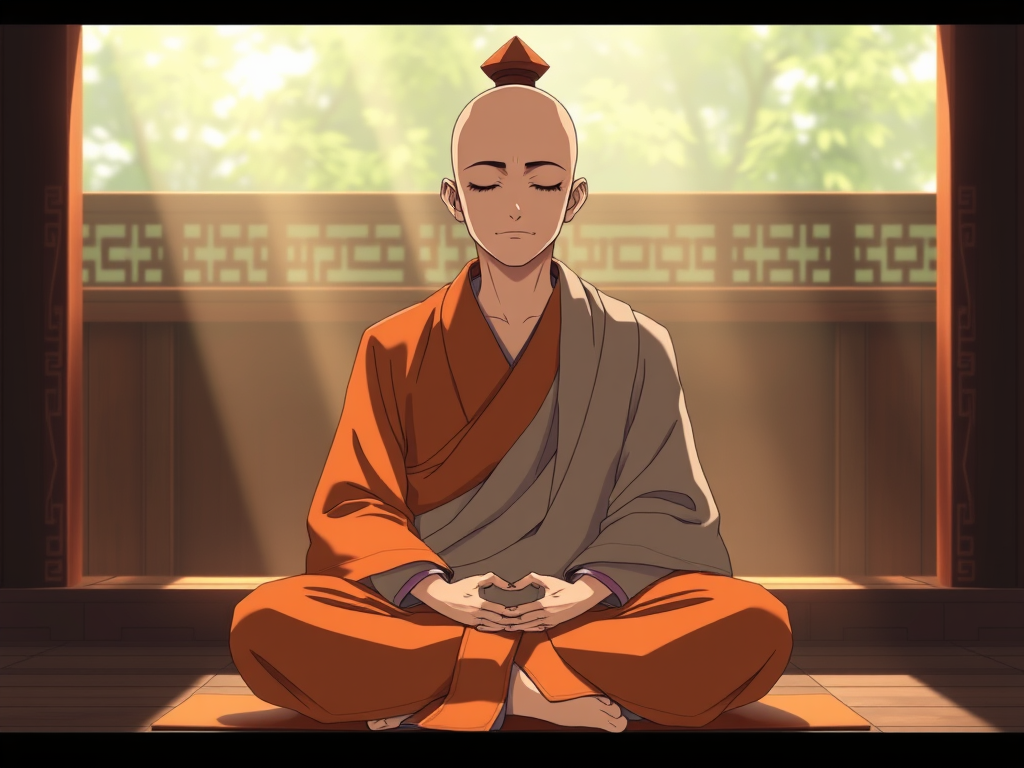
Long ago, deep in the mountains, there lived a Zen master named Wuguo(无果), a practitioner wholly devoted to meditation. For more than twenty years, he was supported by a humble mother and daughter who offered him food and daily necessities so he could cultivate the Way without distraction.

As the years passed, Master Wuguo reflected deeply on his practice. Although he had dedicated his life to meditation, he felt he had not yet realized his true nature. A quiet fear arose in his heart: If I have not awakened, how can I truly repay the kindness of these offerings?

Determined to resolve the great matter of life and death, he decided to leave the mountain to seek instruction from other masters.

When the mother and daughter heard of his departure, they asked him to stay a few more days. They wished to sew him a monastic robe for his journey. At home, the two women worked carefully, chanting the name of Amitabha Buddha with every stitch, their hearts filled with sincerity. When the robe was finished, they also wrapped four silver ingots to serve as his travel funds.

Master Wuguo accepted their offerings and prepared to leave the next morning.

That night, as he sat quietly in meditation, a vision appeared. A young man dressed in blue stood before him, holding a banner. Behind him came a procession playing music and carrying a magnificent lotus flower.

“Zen Master,” the youth said, “please ascend the Lotus Seat.”

Master Wuguo remained calm. He reflected inwardly: I am a Zen practitioner, cultivating meditative concentration. I have not practiced the Pure Land path. I should not become attached to visions. Even for a Pure Land practitioner, such an experience could be a delusion.

He ignored the vision.

Yet the youth returned again and again, urging him earnestly not to miss this rare opportunity. Finally, Master Wuguo picked up his small hand-bell (yinqing) and placed it on the lotus seat. Soon after, the youth and the entire procession vanished.

The next morning, as Master Wuguo prepared to depart, the mother and daughter hurried toward him in distress. Holding the hand-bell, they asked anxiously:

“Master, is this yours? Something very strange happened last night. Our mare gave birth to a stillborn foal. When the groom cut it open, he found this bell inside. We recognized it immediately and rushed to return it—but we cannot understand how it came from a horse’s belly.”

Upon hearing this, Master Wuguo broke into a cold sweat. Deeply shaken, he composed a verse:

One monastic robe, one sheet of hide;
Four silver ingots, four hooves inside.
Had this old monk lacked the power of Zen,
Your stable is where I would have been.

In that moment, he clearly understood the law of cause and effect. By accepting the robe and the silver, he had created a karmic debt. Had his mind been even slightly attached—to the vision, to the offerings, or to the idea of reward—he would have been reborn as a horse in that very household, laboring to repay what he had received.

Immediately, Master Wuguo returned the robe and the silver to the women and departed.

Because he did not cling to extraordinary visions, he escaped rebirth in the animal realm. An ordinary person, upon encountering such sights, would have grasped at them, fallen into delusion, and continued revolving in the cycle of rebirth.

This story reveals a profound truth: the realms are not distant places—they arise from the mind itself.

When the mind dwells in craving and greed, it becomes the realm of the Hungry Ghosts, endlessly desiring yet never satisfied.
When the mind dwells in anger and resentment, it becomes the Asura realm, filled with conflict and struggle.
When the mind is clouded by ignorance and confusion, it sinks into the Animal realm, driven by instinct and karmic habit.

In our daily lives, we often fixate on external things—lust, fame, wealth, comfort, indulgence—believing we cannot live without them. Yet we fail to see that all phenomena arise from causes and conditions. When conditions gather, things appear; when conditions disperse, they vanish. None possess a fixed or permanent essence.

Reflect carefully:
Is there anything in this world we can truly hold onto forever?

Since nothing produced by conditions can be owned, lasting happiness cannot be found through possession or attachment. True happiness arises from non-attachment, from seeking nothing and clinging to nothing. When the mind releases its grasp, it becomes light, clear, and free.

So we may ask ourselves:

Can we remain at peace amid changing emotions?
Can we stay calm in the face of conflict?
Can we remain unmoved by fame and profit?
And when the moment of death arrives, can our mind remain clear and mindful?

The law of cause and effect never errs.
What we cultivate in the mind today shapes the world we inhabit tomorrow.

Link:https://peacelilysite.com/2026/01/07/the-bell-in-the-horses-belly/

Six Powerful Habits That Will Change Your Life Forever

Once upon a time, a young man was very much troubled by his bad habits. His life was completely disturbed due to his bad habits. He did not value his time at all. He would just waste the whole day on useless things. He was also very lazy and drowsy. Whenever his family members asked him to do some work, he would try to avoid that work by making excuses. And for some reason, if he had to do that work, he would do it in haste without any interest. Whenever his parents tried to teach him something, he would argue with them without admitting his mistake. He would always postpone important tasks and decisions for tomorrow and try to avoid all kinds of responsibilities. Slowly and slowly, when all his friends started outdoing him, he began to realize that his bad habits are now causing him to lag. He tried many times to improve his bad habits, but every time he failed in it. Then one day, one of his friends told him that a monk is staying in a hut outside the village for a few days. He suggested him to meet the monk for his problem. Although the young man did not believe, he still reached the monk to meet him the next day.

When he reached there, the monk was meditating with his eyes closed. The young man went in front of him and bowed to him. The monk opened his eyes and with a smile on his face, he asked the young man to sit. The young man told his problem to the monk and told him how he wanted to change his habits but he failed every time. The monk listened to the young man patiently. Then he thought for a moment and said, “My friend, you want to change your habits in a few days, but you must know that just as it takes a long time to form habits, similarly, it will take a long time to change those habits. For this, you have to give time and change your bad habits with good habits. For example, if you want to leave the habit of lying, then you will have to adopt the habit of telling the truth first.” Then the monk became serious and said, “Son, today I will tell you about six such habits which will not only change your old habits but can also change your life.”

The first habit to adopt is reading books. Books contain answers to the questions that arise in your mind. Many people before you have had the same questions and have written down their answers in books. By reading books, you can gain knowledge and learn from the experiences of others.

It’s a way to discover your shortcomings and develop new and positive thoughts that will help you progress in life. Successful people often have the habit of reading books, so start reading today to bring about a miraculous change in your life.

The second habit recommended is writing. While reading books is a great way to gain knowledge, it’s easy to forget what you’ve learned. Writing down valuable information helps you retain and implement what you’ve learned. It also allows you to connect with your inner self, focus your mind, solidify your thoughts, and generate new ideas. Writing down your goals and keeping them visible can inspire you to work towards them.

The third habit is meditation, described as a solution for mental problems. Often, our troubles stem from dwelling on the past or worrying about the future. Meditation brings you to the present moment, reducing the flow of thoughts, calming your mind, and preventing overthinking. Regular meditation enhances your focus, reduces stress, and keeps your mind healthy.

Expressing gratitude for what you have is the fourth recommended habit. By focusing on what you have instead of what you lack, you can fill your life with happiness. Even during difficult times, taking a moment to appreciate what is going well can keep you content. Expressing gratitude reminds you of the abundance in your life and fosters a positive outlook.

The fifth habit is waking up early. This habit is common among successful individuals. Rising early makes you feel refreshed, happier, and more energetic. Mornings offer a peaceful environment with fewer distractions, enabling better concentration on work, studies, or activities such as yoga, meditation, exercise, or a morning walk. Waking up early reduces stress, anger, and fosters an optimistic and positive attitude.

The sixth habit is self-discipline. It involves creating a daily routine that promotes punctuality and hard work. Discipline contributes to present happiness and a promising future. It forms habits that shape your identity. Examples of disciplines include waking up early, consistent meditation, reading good books, consuming healthy food, avoiding junk food, exercising regularly, and practicing breathing exercises.

By adopting these six habits, your life can experience miraculous changes. Just as the young man who listened to the monk’s advice, make a promise to yourself to incorporate these habits into your life. If you want to bring positive change and progress towards your goals, start adopting these habits today. You will witness improvement and transformation in your life.

Six Powerful Habits That Will Change Your Life Forever

Link:https://peacelilysite.com/2023/07/14/six-powerful-habits-that-will-change-your-life-forever/

#Self-discipline #ReadingBooks#Meditation #Gratful #Writing #Monk #Buddhism #Gratitude

Source: https://www.youtube.com/watch?v=EUmL0zSV4Fw

How Buddhism Holds the key to Moral Clarity and Enduring Happiness.

The meaning of Buddhism is to liberate us from the limited perspective given by natural selection, and to observe and experience the world from a higher level.

Buddhism is a complex topic that has been the subject of debate among scholars and practitioners for centuries. Some see it as a religion, complete with supernatural deities and reincarnation, while others view it as a secular philosophy of life or a therapeutic practice. In his book “Why Buddhism Is True,” Robert Wright offers a nuanced perspective on Buddhism that combines elements of these different approaches.

At the heart of Buddhism is the idea that the reason we suffer, and cause suffering for others, is that we don’t see the world clearly. We are deluded by our own emotions and desires, which evolved as survival responses to our environments but may no longer make sense in modern society. By practicing mindful meditation, we can learn to see the world more clearly and gain a deep and morally valid happiness.

Wright draws on science, especially evolutionary psychology, cognitive science, and neuroscience, to support this perspective on Buddhism. He argues that the direct experiences gained through contemplative practice can weaken the hold of our once-needed delusions, making us less likely to wreak havoc on ourselves and the world around us.

One of the key strengths of Wright’s approach is its nonsectarian nature. He does not argue that people need to become Buddhists to practice its truths, and he acknowledges the value of other spiritual and philosophical traditions. Instead, he focuses on the practical benefits of mindful meditation and contemplative practice, which can be applied to any belief system or way of life.

Importantly, Wright emphasizes that simply reading about Buddhist insights into human beings is not enough. To truly benefit from the practice, one must commit to a regular practice and be willing to confront the delusions within themselves. This is why it is called practice – it takes time, effort, and dedication to see results.

Overall, Wright’s blend of Western Buddhism offers a compelling perspective on Buddhism that is rooted in science, applicable to everyday life, and inclusive of other belief systems. While it may not be the definitive answer to the question of what Buddhism really is, it is certainly a valuable contribution to the ongoing conversation about this ancient and fascinating tradition.

How Buddhism Holds the key to Moral Clarity and Enduring Happiness.

Link: https://peacelilysite.com/2023/03/16/how-buddhism-holds-the-key-to-moral-clarity-and-enduring-happiness/

#Buddhism #Buddhist #BuddhismWisedom#Meditation #MoralClarity #EnduringHappiness #RobertWright

Source: https://www.nytimes.com/2017/08/07/books/review/why-buddhism-is-true-science-meditation-robert-wright.html, https://www.barnesandnoble.com/w/why-buddhism-is-true-robert-wright/1125284005

Su Dongpo and Zen Master Foyin

Su Dongpo and Zen Master Foyin

Su Shi was a prominent figure during the Song Dynasty, renowned for his literary, artistic, calligraphic, pharmaceutical, and political contributions. He was also one of the most notable poets of his era and was known by his courtesy name, Zizhan, and his pseudonym, Dongpo Jushi (東坡居士 “Resident of Dongpo”). Su Dong Po is the commonly used name to refer to him.

In the realm of Chinese literature, Su Shi is widely recognized as a highly accomplished figure, having produced some of the most well-known poems, lyrics, prose, and essays.

Su Dongpo was a close friend of an esteemed monk named Foyin, and the two often practiced Zen meditation together. There were many stories about the two.

Buddha and Cow Dung

One day, Su Shi decided to play a prank on his good friend Foyin. He asked him, “What do I look like in your eyes?”

Foyin replied, “In my eyes, you look like a Buddha.”

Su Shi then asked, “Do you know what you look like in my eyes?” Foyin replied that he did not know.

Su Shi gleefully exclaimed, “In my eyes, you look like a pile of cow dung!”

Upon returning home, Su Shi shared his victory with his younger sister, Su Xiaomei. However, she frowned upon hearing this and told her brother that he had lost the exchange. She explained that if a person has Buddha in their heart, they will see the Buddha’s qualities in everything around them. Conversely, if a person has impure thoughts and feelings, they will see everything as dirty and unpleasant. She pointed out that Foyin’s heart was pure, while Su Shi’s was not.

Eight winds and a Fart

Su Dongpo was not only a renowned literary figure but also a Buddhist disciple who regularly practiced meditation.

One day, after a particularly serene meditation session, Su Shi felt that he had made a significant realization. He decided to capture his experience in a poem, which read, “Sitting still on the lotus platform, even the eight winds cannot move me.”

Curious about the authenticity of his realization, Su Shi asked his servant to deliver the poem to Zen Master Foyin, who resided in the Jinshang Temple across the river.

Upon receiving the poem, the Zen Master smiled and wrote two large characters on a piece of paper, which he instructed the servant to take back to Su Dongpo.

Excited to receive feedback from the Zen Master, Su Dongpo eagerly unfolded the paper, hoping to see praise for his state of practice.

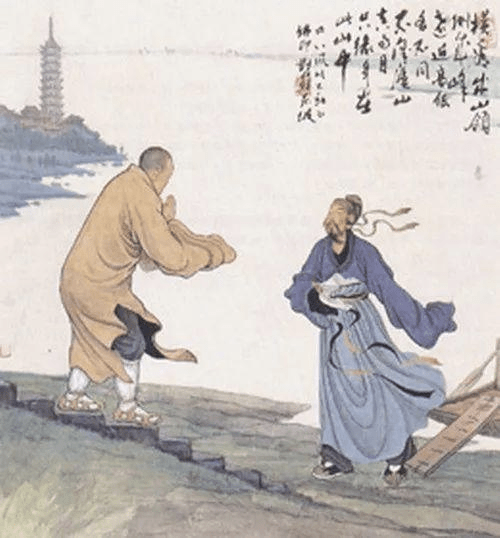
However, instead of receiving the expected validation, Su Dongpo was infuriated to see the two characters “fart” written on the paper. Without hesitation, he boarded a boat and crossed the river to confront Zen Master Foyin.

When Su Dongpo arrived at the Jinshan Temple, he found the Zen Master waiting for him on the shore. In a loud and accusatory tone, Su Dongpo asked, “Great monk! You and I are best friends. If you don’t appreciate my poems and my practice, it’s fine. How can you slander me?”

The Zen Master remained unperturbed and asked, “How did I slander you?”

Su Dongpo then showed him the word “fart” written in the poem.

The Zen Master burst into laughter and exclaimed, “Ah! Didn’t you say ‘Eight winds cannot move you’? How come just one fart was enough to blow you over the river?”

The “Eight Winds” refer to the eight worldly concerns: gain and loss, honor (fame) and disgrace (dishonor or infamy), praise and ridicule (censure, blame or criticism), pleasure and suffering (pain). Eight situations that normally preoccupy and sway unrealized people. To be unmoved by these Eight winds is a mark of a true buddhist practitioner.

Su Dongpo and Zen Master Foyin

Link:https://peacelilysite.com/2023/02/24/su-dongpo-and-zen-master-foyin/

#SuShi#SuDongpo#ZenBuddhism #ZenMasterFoyin #Eightwinds #Buddha

Gaomin Temple One of The Greatest Zen temples In China

Gaomin Temple One of The Greatest Zen temples In China

Gaomin Temple (Chinese: 高旻寺; pinyin: Gāomín Sì) is a Buddhist Temple in YangzhouJiangsu Province of China. The temple is situated in a semi-rural setting about 7 km south of downtown Yangzhou, on the western shore of the Old Channel of the Grand Canal of China, just south of its junction with the Yizheng-Yangzhou Canal.

Gaomin temple was first built in the Sui dynasty, and achieved its largest area in the Qing dynasty, when it was expanded twice. In 1651, Tianzhong Tower was built, as well as a temple next to it called the Tower Temple. During the Kangxi Emperor‘s (r. 1661–1722) stay in the temple in his fourth southern tour, he climbed on TianZhong Tower, overlooking the scenery, which was very beautiful and vast. Then named the temple for Gaomin Temple. At that time, Gaomin Temple, Zhenjiang’s Jinshan Temple, Chengdu’s Geyuan Temple and Xindu’s Baoguang Temple were known as the greatest four Zen temples.

Buddha Tower and TianZhong Tower By Jimmy Nov 2019

Water Pavilion and Zen Meditation Hall By Lisa Su Feb 2016

In ancient times, a great number of people in the temple became accomplished through the practice of zen. At the Gaomin Monastery in Yangzhou, basically every seven days one person would awaken to zen, becoming enlightened and accomplished. Last century, there were several Holy monks reached enlightenment from Gaomin Temple Zen seven-day retreat, such as XuYun ( 虚云), YiZhao( 意昭) and BenHuan (本焕).

Gaomin Temple’s zen practice was truly inexplicable but unfathomably profound. Gaomin Temple was famous for its strict precepts and Zen style. There were very strict and even cruel rules for monks participating in Zen seven-day retreat.

First of all, in ancient times when someone entered the Gaomin Monastery to practice zen, that person would first have to sign an agreement. That agreement was very simple. To put it bluntly, they agreed that they could be beaten to death with impunity. The one who beat them to death would not have to lose his own life. Additionally, they agreed to voluntarily carry out the dharma rules of the monastery. After they entered the monastery, they had to give up all of the dharmas that they previously learned. As soon as one arrived at Gaomin Monastery and entered the zen hall, one could not apply any previously learned dharmas.

Five people carried cudgels. Those five were called “the five great cudgel carriers.” Their specific task was to beat people. The practitioners had periods of running zen, each of which lasted the time it took for a stick of incense to burn from top to bottom. The stick of incense was not long. The practitioners had to jog. In the zen hall, many practitioners formed a circle and jogged. As they jogged, one of the cudgel carriers would strike his cudgel against something, which made a loud noise. As soon as he struck his cudgel against something, that loud noise sounded. When the jogging practitioners heard the striking sound from the cudgel, they had to immediately stop jogging. They were not allowed to jog even one more step. When the striking sound of the cudgel sounded again, they had to immediately resume their jogging.

Photo by Klub Boks on Pexels.com

As soon as the striking sound from his cudgel sounded, if you were still jogging, you would be taken aside and beaten to death. If you were not beaten to death, you were at the very least maimed. Thus, the minds of those practitioners were of course extremely focused. They were always focused on the sound of the cudgel. They were always fearful that they would be taken aside and severely beaten for continuing to jog after the striking of the cudgel sounded, or, if they had stopped jogging, for not immediately resuming their jogging after the striking of the cudgel sounded.

There were sitting periods as well, which lasted as long as it took for a stick of incense to burn from top to bottom. As soon as they sat down, the cudgel carriers in back of them would keep an eye on them. While sitting, the practitioners were not allowed to move in any way. The practitioners were absolutely forbidden to move. They were not permitted to recite the name of any Buddha or chant any mantra. If one was seen moving a bit, he was taken aside and severely beaten, to the extent of possible death. Therefore, after they sat down in a settled posture, as soon as the striking sound of the cudgel carrier’s cudgel could be heard, they did not dare move. They had to remain stiff for as long as the incense stick burned. They did not dare move in the slightest. The focus of their minds increased a hundredfold because they feared that they would inadvertently move, be taken aside, and be beaten, resulting in injury, deformity, or death.

There was also a rule of drinking water. The practitioners had to go to the east side to draw water and then carry the water with both hands to the west side. Only then could they drink the water. Additionally, the cup of water had to be completely filled. If a drop of water spilled to the ground as they were carrying the cup with both hands, they were taken aside and severely beaten.

Thus, the consciousness of those who practiced zen there did not wander. They did not think of other things. They did not rest. When they ate, they were not even allowed to make the sound of chopsticks hitting the bowl. As a result, their consciousness was forced to naturally not dare think of other things. Therefore, it is only natural that after our consciousness is united, we will not think things over and will not be distracted. Everyone fears being beaten to death. When you fear being beaten to death and death is used to force you, then you have no other choice. You must seriously deal with the matter. That is why in such circumstances it is very easy to cut off mistaken thinking. Through force, your thoughts are cut off. When your thoughts are cut off through force, you original nature emerges. As soon as your original nature emerges, you have broken through in your zen practice.

Photo by Pixabay on Pexels.com

Therefore, by and large, at each seven-day retreat someone broke through in his zen practice at that monastery. Basically, there would be one breakthrough every seven days. How did they know someone broke through? The day someone broke through, he was ordered to write a verse for others to hear, enabling the abbot of the zen hall and the zen master to recognize him. That practitioner was later tested again to see whether he truly awakened to the truth through the practice of zen, whether he understood his mind and saw his nature.

I have great admiration for those monks who were willing to give up their lives in pursuit of the true Buddha Dharma.

Gaomin Temple One of The Greatest Zen temples In China

Link:https://peacelilysite.com/2022/09/21/gaomin-temple-one-of-the-greatest-zen-temples-in-china/

#Buddhism#ZenBuddhism#ZenTemple#ChineseTemple#GaominTemple#ZenPractice#ZenSevendayRetreat#XuYun#Meditation#ZEnMaster#Monastery

Source: https://en.wikipedia.org/wiki/Gaomin_Temple, https://learntruebuddhism.com/the-great-dharma-of-zen-expounded-by-h-h-dorje-chang-buddha-iii/