Unveiling Insights Through the Wild Fox Koan: Understanding the Law of Cause and Effect

In the annals of Chinese Buddhist teachings, a narrative known as the “Wild Fox Koan” imparts profound insights into the principles of karma and its undeniable consequences.

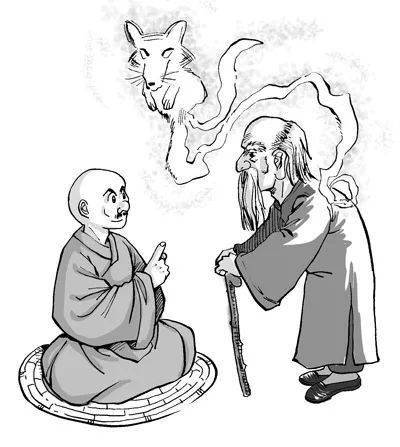
According to legend, during the Tang Dynasty in China, Master Bai Zhang Huai Hai, a venerable monk and the third-generation disciple of the Sixth Patriarch Master Huineng, played a pivotal role in this story. During his sermons, he consistently noticed an unfamiliar old man attentively listening to his teachings on Buddhism. The mysterious visitor would only depart after the session concluded. One day, after another sermon, the old man lingered, prompting the puzzled monk to inquire, “Who is standing there without leaving? Who are you?”

Huaihai, curious, asked, “Do you have something on your mind?” The old man got straight to the point, confessing, “I am not a human; I am a wild fox on this mountain. Five hundred years ago, I was a monk and once gave a Dharma talk here. One day, a junior monk asked me if enlightened beings fall under the law of cause and effect. I replied, ‘They do not fall under cause and effect.’ Unfortunately, I gave the wrong answer and fell into the realm of a fox. Today, I want to ask a question in front of you, venerable teacher. Would you be willing to enlighten me?” Huaihai replied, “Please go ahead.” The old man asked, “Do enlightened beings fall under the law of cause and effect?” Huaihai responded, “They do not ignore cause and effect.” The old man paused for a moment, then prostrated himself, saying, “Teacher, I have attained enlightenment. I have now transcended the realm of the fox. I am beneath the big stone on the back mountain. I hope that you, as a monk, will bury me according to the proper rites.” After saying this, he disappeared without a trace.

Accompanied by monks, Master Huaihai went to the back mountain and found, under a large stone, a dead black fox. Master Huaihai instructed them to light torches and cremate the fox. They then chanted sutras together, performing rites to help the fox monk attain liberation.

The Fox Zen Master, due to a single mispronounced word, uttered a great falsehood, resulting in five hundred lifetimes as a wild fox. The principle of cause and effect is unfailing, as it does not discriminate between the ordinary and the saintly. Advanced practitioners maintain a profound reverence for the law of karma. Hence, there is the notion that bodhisattvas fear the cause, while ordinary beings fear the effect. A bodhisattva contemplates the emptiness and tranquility of all phenomena, harboring no attachment or grasping. Due to their wisdom, they do not give rise to undesirable consequences such as ignorance or darkness.

If one were to claim that a bodhisattva “transcends cause and effect,” it would imply an annihilationist view. It is only by “not obscuring cause and effect” that a bodhisattva, within the profound samadhi of deep prajna paramita, can attain the ultimate wisdom.

“To keep things secret, refrain from doing them unless by oneself.” This is a commonly heard phrase advising people to do good, implying that whatever one does, there will always be someone who knows. Moreover, secrets are bound to be exposed sooner or later. Therefore, it is essential to reflect on one’s actions regularly, ensuring they align with goodness. Never assume that no one is watching, as actions that go against the laws of cause and effect will eventually come to light.

Two other frequently heard sayings are: “Within three feet, there are gods” and “Every step leaves a mark.” These cautionary words remind individuals that every action leaves an imprint, and nothing done will vanish into oblivion over time. In the realm of cause and effect, if one sows seeds of negativity, they must ultimately bear the consequences, adhering to the principle of “unobscured cause and effect.”

During the Three Kingdoms period, the king of Su, Liu Bei, offered sagacious advice to his son, Liu Shan, before his passing, saying, “Do not commit small evils, and do not refrain from doing small acts of goodness.” This counsel underscores the importance of consistently engaging in virtuous deeds, regardless of their scale, while avoiding any participation in wrongdoing. The admonition implies that accumulating small wrongs over time can lead to significant consequences.

Conversely, it’s not uncommon to encounter individuals who, despite their kindness and numerous good deeds, face repeated disasters and misfortunes. Understanding why such outcomes occur can be challenging, leading to a lack of comprehension about the concept of doing good. Some may even develop biases, assuming that avoiding wrongdoing in this life is sufficient and that there’s no need to help others since there’s no apparent reward for good deeds. This perspective represents a clear form of biased and distorted understanding, lacking insight into the law of cause and effect and focusing on one aspect without considering the other.

Applying the concept of the threefold law of cause and effect, we realize that positive causes we sow may not yield immediate results. Karmic consequences from past lives need to be accounted for and repaid. We cannot solely judge our current situation based on what we see in this lifetime. Holding the belief that “I haven’t done anything wrong, so why is life more difficult for me than for others?” is a narrow perspective. Observing others who seemingly haven’t done much good yet are living well, we might not realize that they sowed positive causes in past lives—an aspect our ordinary eyes cannot perceive, akin to the monk descending to a fox in many lifetimes.

If the notion of avoiding wrongdoing but not engaging in virtuous deeds takes root, the future may only bring unbearable misery. Reflect on whether we’ve never taken a life. Insects, ants, cockroaches, spiders—all are living beings, and consciously or unconsciously, we’ve all caused harm to one at some point. Furthermore, injuring a life means we will have to repay in kind in future lives. Without cultivating positive causes in this life, how can we expect to have a good future?

Therefore, it is crucial to firmly believe in the universal truth of “cause and effect.” You reap what you sow—good actions bring good results, and harmful actions bring harm. It’s not a matter of if, but when the time comes!

Unveiling Insights Through the Wild Fox Koan: Understanding the Law of Cause and Effect

Link:https://peacelilysite.com/2023/12/14/unveiling-insights-through-the-wild-fox-koan-understanding-the-law-of-cause-and-effect/

#Buddhism #BuddistTeaching #ZenBuddhism #ZenKoan #LawofCauseandEffect#MasterBaiZhang HuaiHai #FoxKoan #WildFox #Liberation #Enligthen

Source: https://www.sohu.com/a/493514605_121124434,

Throughout Countless Eons, Encountering the Profound and Supreme Buddha Dharma is a rare Opportunity

Throughout Countless Eons, Encountering the Profound and Supreme Buddha Dharma is a rare Opportunity

The teachings transmitted by Lord Kashyapa Buddha or possibly even more ancient Buddhas are beyond our reach today. Although the discourses of Shakyamuni Buddha are considered supremely perfect, the Tripitaka that we study now can be said to not entirely capture the original intent of the Buddha’s words. This is because during the Buddha’s lifetime, his teachings were not promptly recorded. All the scriptures were compiled after the Buddha’s parinirvana by a gathering of five hundred arhats. Despite the arhats having transcended the cycle of birth and death and possessing vast supernatural abilities, their own levels of spiritual realization were limited, and there existed a significant gap between their understanding and the Buddha’s complete enlightenment. As a result, there were certain aspects of the Buddha’s teachings that they might not have fully comprehended, leading to misunderstandings or omissions in the interpretation of certain doctrines during the compilation process.

Over the past 2,000 years, Buddhist teachings have encountered distortions and alterations due to mistranslation and misinterpretation of Buddha-dharma by Buddhist patriarchs, eminent monastics, and Buddhist scholars.

During this Age of Dharma Degeneration, H.H. Dorje Chang Buddha III descended to the earthly realm, exhibiting perfect mastery of Exoteric and Esoteric Buddhism, along with unparalleled expertise in the Five Vidyas. The Five Vidyas are what Buddhas and Bodhisattvas do to help living beings. Recognizing the distortions and errors that had infiltrated Buddhist teachings, H.H. Dorje Chang Buddha III corrected the mistakes present in the Buddhist teachings, restoring the authenticity, power, and purity of Buddha’s wisdom and views. 

H.H. Dorje Chang Buddha III has bequeathed over two thousand audio recordings of imparted Dharmas and published invaluable Buddhist books, including “A Monk Expounds the Absolute Truth to a Layperson,” “Commentary on the Prajnaparamita Heart Sutra,” “The Essence of Buddha Dharma,” “Correcting the Treatises of Patriarch Bodhidharma,” “What Is Cultivation?,” “The Supreme and Unsurpassable Mahamudra of Liberation,” and “Learning From Buddha.” H.H. Dorje Chang Buddha III imparted the subtleties of Dharmas in colloquial language so that people living in the 21st century could easily comprehend. They serve as supreme treasures and indispensable resources for Buddhist disciples seeking to escape the sufferings of this world and attain enlightenment. 

The dharma discourses encompasses the essence of the Tripitaka and the esoteric Buddhist scriptures. It covers Buddhist precepts, views, cultivation, and Dharma practices. It covers the whole spectrum of Buddhism regardless of whether it is Hinayana, Mahayana, or Vajrayana.

The audio recordings of dharma discourses given by H.H. Dorje Chang Buddha III begin with the strict progressive levels of cultivation. These discourses contain extremely incisive teachings that concisely incorporate the twelve divisions of the Tripitaka and the ten divisions of the esoteric scriptures without losing the true meaning of the Tripitaka and esoteric scriptures. The topics covered are extremely broad. They vary from analyses of the dharma regarding the Trikaya (Three Bodies) and the Four Wisdoms of a Buddha to teachings on the vajra dharma of the Supreme Division. There are explanations of the true realization and manifestation of the Great Perfection of Ultimate Wisdom. H.H. Dorje Chang Buddha III also possesses the Xian Liang Buddha Wisdom Great Perfection Dharma whereby the disciple experiences and sees the rainbow-body dharma realm state the very day that dharma is transmitted. Nothing is lacking either in theory or practice. Those recordings truly show that H.H. Dorje Chang Buddha III has complete proficiency in exoteric and esoteric Buddhism and perfect
mastery of the Five Vidyas. They also manifest His Holiness’s supreme enlightenment, wonderful prajna wisdom, and holy state of the Buddhas and Bodhisattvas, all which are part of the inner realization vidya. All of the recorded discourses are directed at Buddhas, Bodhisattvas, Arhats, and all practitioners.

The H.H. Dorje Chang Buddha III’s teachings were directly spoken and recorded without any external contamination. Moreover, with the superiority of modern technology, the Buddha’s complete teachings can resound globally in real-time, a phenomenon that was not possible during the Shakyamuni Buddha’s time. This is not a blessing originally destined for beings in the degenerate age, but rather, it is an augmentation of the merit and resources of sentient beings through the immeasurable merit of the original primordial Buddha and the compassionate power of Bodhi. It allows the Buddha’s teachings to echo in this dark and heavily burdened era. How rare and precious it is!

Throughout Countless Eons, Encountering the Profound and Supreme Buddha Dharma is a rare Opportunity

Link:https://peacelilysite.com/2023/12/08/throughout-countless-eons-encountering-the-profound-and-supreme-buddha-dharma-is-a-rare-opportunity/

#DorjeChangBuddhaIII #HHDorjeChangBuddhaIII#DharmaDiscourse

Bridging Realms: Dr. Jim B. Tucker Explores Reincarnation

Bridging Realms: Dr. Jim B. Tucker Explores Reincarnation

In the intricate tapestry of human beliefs, the concept of reincarnation has woven itself through the fabric of traditional Asian cultures for centuries. However, this idea finds little resonance in Western cultures and often faces skepticism from the scientific community. Amidst this cultural and scientific dichotomy, a pioneering exploration is unfolding at the prestigious University of Virginia School of Medicine, led by Dr. Jim B. Tucker, a child psychiatrist with a unique perspective on life after death.

Born and raised in the southern United States, Dr. Tucker’s early life was immersed in the traditional beliefs of the American South. As he embarked on his academic journey, obtaining an undergraduate degree in psychology and specializing in child psychiatry, he encountered the notion of reincarnation with a healthy dose of skepticism. The clash between cultural beliefs, scientific inquiry, and personal skepticism set the stage for Dr. Tucker’s intriguing exploration into the mysteries of existence.

The documentary, highlighted on the Discovery Channel, explores the extensive and worldwide research conducted by Dr. Tucker. The film encapsulates the core of his studies, presenting interviews, case studies, and the profound implications of his findings. Through this visual medium, viewers are welcomed to observe the intersection of traditional beliefs, modern skepticism, and scientific exploration—all in the quest to unravel the mysteries of human existence.

Buddhism holds that life undergoes reincarnation through the six realms. After a person dies, if the karmic conditions accumulated in their past life mature, they may be reborn into the heavenly realm as a deity, or into the realm of asuras, or they may be reincarnated in the human realm. If negative karma, such as killing, deception, or greed, comes to fruition, the individual will inevitably fall into the hell realm and suffer, or they may be reborn in the realms of hungry ghosts or animals to endure suffering.

As for which realm one will be reborn into among the six, it depends on the karmic conditions of their virtuous and non-virtuous actions. Why does reincarnation occur? The fundamental reason lies in the attachment of sentient beings. Attachment gives rise to the confusion of karma, and from this confusion arises ignorance. Due to the endless causes and effects generated by ignorance, various positive and negative karmic forces are produced. It is these karmic forces that determine which realm of existence one will be reborn into.

Bridging Realms: Dr. Jim B. Tucker Explores Reincarnation

Link: https://peacelilysite.com/2023/12/08/bridging-realms-dr-jim-b-tucker-explores-reincarnation/

#Buddhism #KarmicCondition #SixRealm#Reincarnation

Buddha Speaks of Amitabha

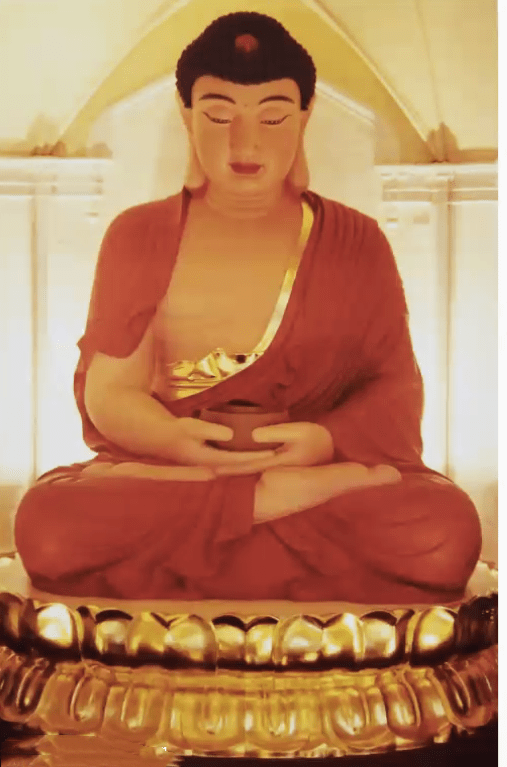
Solemn Amitabha Statue in Hua Zang Si Temple at San Francisco

Buddha Speaks of Amitabha

Once upon a time, it is said that the Buddha resided in Shravasti, within the Jeta Grove, situated in the garden of the Benefactor of Orphans and the Solitary. Accompanying him were a congregation of twelve hundred fifty great Bhiksus, all esteemed arhats whom the assembly recognized, including Elders Sariputra, Mahamaudgalyayana, Mahakasyapa, Hahakatyayana, Mahakaushtila, Revata, Suddhipanthaka, Nanda, Ananda, Rahula, Gavampati, Pindolabharadvaja, Kalodayin, Mahakaphina, Vaddujla, Aniruddha, and others. Additionally, numerous Bodhisattvas and celestial beings, including Ajita Bodhisattva, Gandhastin Bodhisattva, Nityodyukta Bodhisattva, and the chief of gods, Shakra, were present, along with countless beings from various heavens.

During that time, the Buddha addressed Elder Sariputra, saying, “Travel westward across hundreds of thousands of millions of Buddhalands, and you will reach a realm known as Ultimate Bliss. In this land, a Buddha named Amitabha currently imparts the teachings.”

“Sariputra, why is it called Ultimate Bliss? Because every being in this country is free from suffering and enjoys unbounded bliss, hence the name Ultimate Bliss.”

Furthermore, Sariputra, the land of Ultimate Bliss is enclosed by seven tiers of railing, crafted from the four treasures, thus earning its name. Pools of the seven jewels, filled with the eight waters of merit and virtue, grace this land. The pools boast pure bottoms covered in golden sand, with stairs of gold, silver, lapis lazuli, and crystal on each side. Raised pavilions, adorned with precious materials like gold, silver, lapis lazuli, crystal, mother-of-pearl, red pearls, and carnelian, grace the surroundings. Within these pools, lotuses with hues resembling carriage wheels bloom, emitting subtle, wonderfully fragrant, and pure scents.

“The realization of the land of Ultimate Bliss is thus adorned with merit,” Sariputra, the Buddha continued.

Moreover, in this Buddhaland, harmonious heavenly music perpetually resonates, and the ground is composed of yellow gold. During the six periods of day and night, a rain of mandarava flowers descends, and each morning, the inhabitants of this land offer myriad wonderful flowers to countless Buddhas in all directions. After their meals, they leisurely stroll through their homeland.

Sariputra, the land of Ultimate Bliss is abundantly adorned in this way.

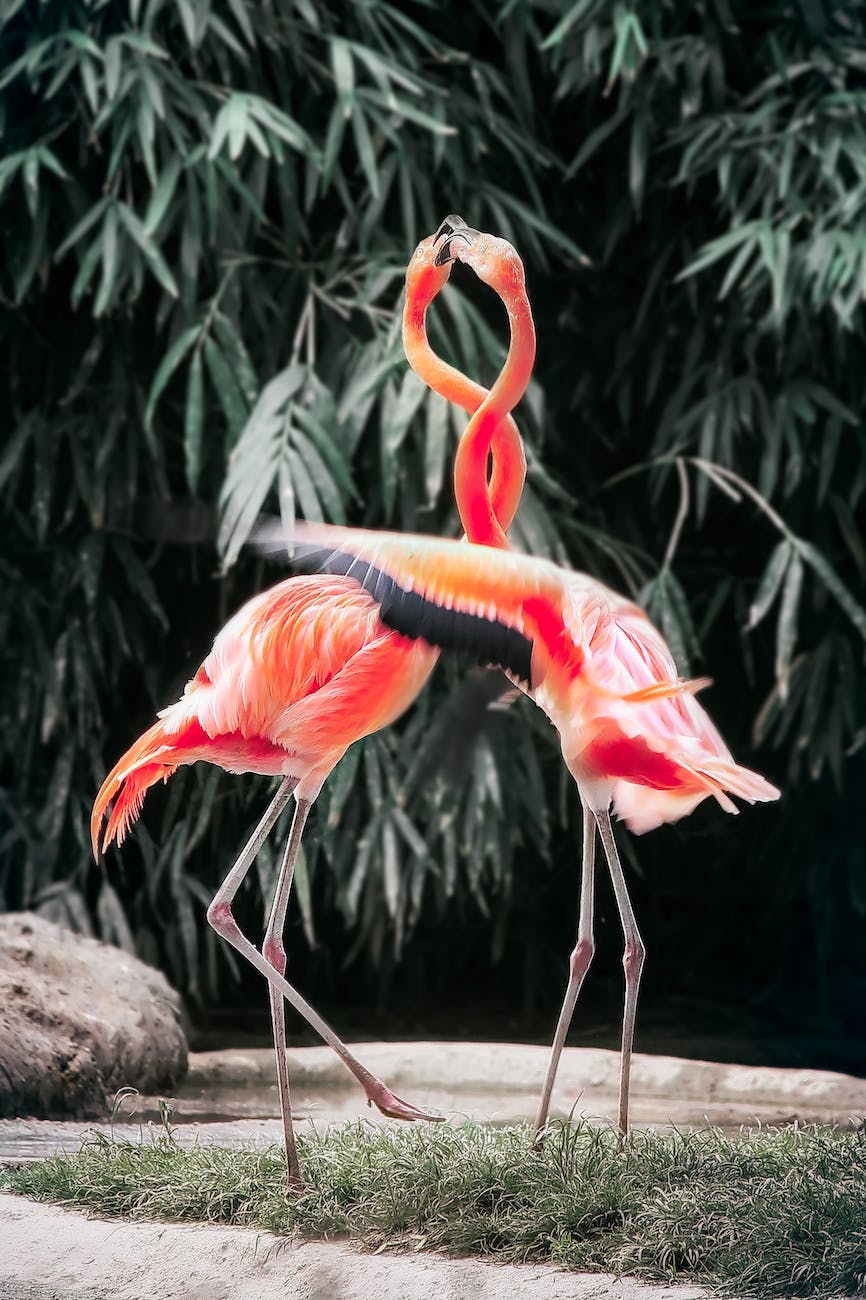
Furthermore, rare and exquisite varicolored birds, including white cranes, peacocks, parrots, egrets, kalavinkas, and two-headed birds, inhabit this land. In the six periods of the day and night, these flocks produce melodious and elegant sounds, proclaiming profound teachings such as the five roots, the five powers, the seven Bodhi shares, and the eight sagely way shares. When the inhabitants hear these sounds, they become mindful of the Buddha, the Dharma, and the Sangha.“Sariputra, do not assume these birds are karmic retribution. In this Buddhaland, there are no three evil ways of rebirth; in fact, not even the names of these ways exist. Amitabha Buddha, desiring to widely spread the Dharma sound, created this multitude of birds through transformation.”

The Buddha continued to describe the enchanting features of the land of Ultimate Bliss, its jeweled trees producing subtle and wonderful sounds when the soft wind blows. As these descriptions unfolded, Sariputra listened attentively, absorbing the profound beauty of this Buddhaland.

After detailing the splendors of the land, the Buddha turned to Sariputra and asked, “Why do you think this Buddha is called Amitabha?”

“The brilliance of Amitabha Buddha’s light is immeasurable, illuminating the lands of the ten directions without hindrance. He is called Amitabha for this reason. Furthermore, the lifespan of Amitabha Buddha and his people extends for countless kalpas, making him worthy of the name ‘Amitabha.’ Ten kalpas have passed since Amitabha attained Buddhahood.”

As the Buddha spoke, Sariputra gained deeper insights into the infinite virtues of Amitabha Buddha and the extraordinary qualities of the land of Ultimate Bliss.

The text continues to explore the presence and teachings of other Buddhas in different directions, emphasizing their encouragement for all living beings to believe, praise, and hold in reverence the inconceivable merit and virtue of the sutra.

Finally, the Buddha urged Sariputra and all present to have faith and make the vow to be born in Amitabha’s country, emphasizing the profound benefits and the irreversible attainment of anuttara-samyak-sambodhi for those who make this vow.

Upon concluding his teachings, the Buddha witnessed Sariputra, the bhiksus, gods, humans, and other celestial beings joyously receiving his words. The assembly, filled with reverence, bowed and withdrew, having absorbed the wisdom imparted by the Buddha.

Buddha Speaks of Amitabha

Link: https://peacelilysite.com/2023/12/06/buddha-speaks-of-amitabha/

#Amitabha

Source: wisdomtea.org/2023/11/30/buddha-speaks-of-amitabha/

The Abbess of Hua Zang Si– Venerable Ruo Hui RuZun

The abbess of Hua Zang Si is Venerable Ruo Hui RuZun (Golden Button Stage I). She is a disciple of H.H. Dorje Chang Buddha III. She is deeply and broadly proficient in the sutras, abides by the precepts with pure cultivation, upholds correct views, and possesses high and profound virtue and conduct.

Driven by her endowed wisdom and firm aspiration, Venerable Ruo Hui RuZun started learning Buddhism since her childhood. While she was a young person facing a splendid future, Venerable Ruo Hui RuZun decided without hesitation to abandon worldly life to become a monastic practitioner. She respectfully quested for the practice of Buddhism, studied the sutras deeply, and cherished the goal of benefiting living beings in her cultivation and practice. Additionally, she demonstrated outstanding virtue and talent in her diligent study and research in the academic arena and received a Master’s degree from the Department of Philosophy of Taiwan University. She made a vow to dedicate her life to grandly propagating Buddha-dharma and broadly saving living beings. She served as the dean of the Chien Fo Shan Girl Buddhist College in Taiwan in her early years and have been continuously making contributions to the education of Buddhist monastics. However, Venerable Ruo Hui RuZun was deeply aware of the widely prevalent chaotic phenomena in the current Buddhist world, such as confusing views, non-unified sects and schools advocating their own tenets, miscellaneous teachings that are complex but incomplete, and promoting false doctrines as authentic Buddhism. Consequently, pious Buddhist disciples are searching and questing in vain and still unable to learn the true dharma of the Tathagata. Their lifetimes are thus wasted! Therefore, Venerable Ruo Hui RuZun was continuously concerned about this situation day and night and eagerly beseeched to find the genuine lineage from the Buddha that transmits the true teachings of the Tathagata.

In 1996, Ruo Hui RuZun had the good fortune to listen respectfully to the recorded dharma discourses expounded by H.H. Dorje Chang Buddha III. At that time, she sensed strongly and received the bright manifestation of the supremely and perfectly enlightening Buddha-dharma from His Holiness the Buddha! Later, guided by the karmic affinity to true Buddha-dharma, she fulfilled her wish to become a disciple of H.H. Dorje Chang Buddha III. Since then, she eagerly and respectfully listened to the recorded dharma discourses expounded by His Holiness the Buddha day and night. Through studying deeply with reference to the sutras, she eventually became enlightened by the teaching! She also received a holy inner-tantric initiation from the Buddha Master, which enabled her to personally realize the absolute truth of Buddha-dharma as if seeing the blue sky after pushing the blocking dark clouds aside. Since then, Ruo Hui RuZun abided by the teachings to benefit living beings with loving compassion in cultivation and practice. Shortly after that, she was delighted to learn that the Buddha Master was grandly publicizing and propagating the true dharma of the Tathagata in the Western world. After deep thinking and careful pondering, Ruo Hui RuZun decided to resign from the duty of the Dean of the Buddhist College to take up the mission to serve living beings. She traveled across the ocean to the United States to follow her Buddha Master, H.H. Dorje Chang Buddha III. She piously and deeply cultivated in the authentic lineage of Buddhism and engaged in the undertaking of propagating the true dharma of the Tathagata to benefit living beings.

Through the many years, Ruo Hui RuZun received true Buddha-dharma transmitted by H.H. Dorje Chang Buddha III in person and realized the key attainment of the dharma. In the dharma mandala, she manifested deeply cultivated power and superior state of realization. Once, she fortunately attended a grand and magnificent Vajra obstruction-removing dharma assembly. At that time, dharma masters and abbots of many monasteries and rinpoches were present. When stepping forward to receive empowerment, almost all of them were subdued by the power of the Buddha-dharma to show a suffering appearance and unable to support themselves by their power of concentration. Only Ruo Hui RuZun remained firmly unperturbed and successfully went through the holy power of Samadhi. She handled the situation magnificently and perfectly by calm without even any change in her facial expression. For that, she was praised by H.H. Dorje Chang Buddha III! Additionally, Ruo Hui RuZun also received a dharma of state practice transmitted by the Buddha Master in person and attained the accomplishment of crown-opening within two hours.

Since the grand opening of Hua Zang Si in December 2004 to now, Ruo Hui RuZun has served at the positions of prior (warden), deputy abbess, and abbess at this temple, which is the first temple of true dharma of Buddhism established in the Western world by H.H. Dorje Chang Buddha III. Since the temple’s establishment, her responsibilities cover a wide range of the temple’s dharma affairs and operations including various dharma assemblies, training and education of the monastic personnel, defining the system and rules to manage the temple, and so on.

With her abundant and solid knowledge in the theory of Buddhism and the teaching of practicing in silence, experience in managing and operating a temple, as well as deeply cultivated power in meditative concentration, she continuously serves since the beginning as the karma monastic master in awarding the complete set of grand precepts through three dharma assemblies and the professor/teacher of various courses in precepts, rituals, meditation, group practice, education of monastics and others at the Academy of Exoteric Buddhism of Hua Zang Si. She also conducted teaching and training at Buddhist institutions in the United States and overseas. Many of the disciples she taught have now become dharma masters or monastic practitioners. Actually, quite a number of them have even become excellent managerial personnel at some temples in different countries.

Ruo Hui RuZun consistently maintains a low-key demeanor in her cultivation and practice, exemplifying patience in the pursuit of her significant mission. She remains humble and modest, avoiding self-promotion or publicity. Through her words and actions, she serves as an exemplary teacher for Buddhist disciples, embodying the principles of loving compassion. Devoting herself quietly to the welfare and joy of sentient beings, she seeks enlightenment for both herself and others.

Adhering to the teachings and true dharma of H.H. Dorje Chang Buddha III, Ruo Hui RuZun upholds principles, follows rules rigorously, and engages in concrete cultivation to guide disciples on the path of accomplishment and liberation. She is an accomplished and eminent Buddhist monk whose example we should emulate and learn from.

Since September 2015, Ruo Hui RuZun has officially served as the abbess of Hua Zang Si. Recognizing the immense responsibility entrusted to her, especially given that Hua Zang Si is not an ordinary temple but a true dharma temple established in the Western world by H.H. Dorje Chang Buddha III, her Buddha Master, she is acutely aware of the need for unwavering commitment. Determined to lead the monastics and lay followers, she strives to transform Hua Zang Si into a temple faithfully practicing the teachings of H.H. Dorje Chang Buddha III and Sakyamuni Buddha, benefitting and nurturing sentient beings. In pursuing this mission, Hua Zang Si aims to contribute tangibly to compassion, happiness, peace, and joy in America and worldwide, fostering the perfect good fortune and wisdom, liberation, and accomplishment of living beings. The temple is committed to meeting the high expectations of Buddhas, Bodhisattvas, and sentient beings alike.

The Abbess of Hua Zang Si– Venerable Ruo Hui RuZun

Link:https://peacelilysite.com/2023/12/01/the-abbess-of-hua-zang-si-venerable-ruo-hui-ruzun/

#DorjeChangBuddhaIII #HHDorjeChangBuddhaIII#HuaZangSi#HolyManifestation #RuoHuiRuZun

#Abbess #Temple

Experience and Lessons from the Buddha by Zhaxi Zhuoma Rinpoche

I have followed this Buddha – H.H. Dorje Chang Buddha III, before I even knew He was a Buddha, because I wanted to learn the Buddha-dharma of Shakyamuni Buddha; the dharma that can enlighten and enable one to attain liberation from samsara. I am grateful to all the other teachers who helped me on this path, but I have come to know that H.H. Dorje Chang Buddha III is truly a holy being and has the Buddha-dharma that can enable us to become Bodhisattvas and eventually Buddhas. I don’t see that anywhere else, but I do see a lot of erroneous and even evil practices that do not provide the power of the dharma that Shakyamuni Buddha brought to this world. I am alarmed at the secularization of Buddhism that has occurred in the West. It would seem that much of what is presented as Buddhism today is mainly a form of mindfulness that is a method to develop concentration, reduce stress, and achieve serenity. These are all worthy by-products and useful, but fall far short of the wonders and marvelous existence taught by Shakyamuni Buddha. People do not believe in the power of the Buddha-dharma, because they have never experienced or seen it.

 I would like to share two true stories about my wonderful Buddha Master, H.H. Dorje Chang Buddha III:

Some time ago my Buddha Master, asked me to practice the Modesty and Patience Dharma taught by Shakyamuni Buddha. The Buddha Master taught me how to respect persons lower than myself and told me to prostrate to those who were lower than me in their cultivation. To tell you the truth this bothered me. How could I possibly prostrate to them? The Buddha Master told me that in His past lives Shakyamuni Buddha prostrated to everyone. Shakyamuni Buddha practiced in this way to cut off self-attachment and practice forbearance.

One night at Hua Zang Si, a rinpoche attempted the Hidden Mani Stone Selection Dharma. After finding the first stone, he tried for a long time and was never able to locate the second stone  that we had hidden. However, I was able at that time to see them. Because he found one of the mani stones, the temple arranged for me to prostrate to him at the end of the Dharma Assembly. To tell you the truth, my first reaction was resentment—I was almost even angry. Based on my own practice, how could I prostrate to this person who had not been able to successfully complete the test, when I could have easily done so?  When this thought just appeared, I saw my Buddha Master teaching me forbearance again and I was very ashamed. However, several days passed, but I was still bothered by this, so I went to see my Buddha Master and asked: “How can I prostrate to a person who doesn’t have my vajra power in front of so many people?” My Buddha Master asked me, “Did you forget the true story I told you about Shakyamuni Buddha? Putting yourself as low as possible is the true way to true cultivation.” At the same time I saw that my Buddha Master had the best understanding in all of esoteric and exoteric Buddhism and had complete mastery of all five of the vidyas. My Buddha Master is a great Dharma King. At that time His identity as a Buddha had not yet been announced to the public, but we already knew that He was a great Dharma King. How could I not listen to His teachings?

I thought for some time, just which great Bodhisattva is my Buddha Master? Then I had a shocking experience that I have not shared publicly before. I actually saw my Dharma King Master drastically change His appearance in a very short period of time. Even though my Buddha Master had predicted that He would on such and such a day take on the negative karma of others and would not be available to meet the public, I was not prepared for what I saw. He appeared on the predicted day looking very ugly and old—His face was bloodied as if He had just been severely beaten. His eyes were swollen and half closed! There were many people standing around, but they seemed to be accepting of this condition. I had been thinking that,  because of His accomplishments in both exoteric Buddhism and esoteric Buddhism and the Five Vidyas, my Master must be a Buddha, but how could this be true when He looks so old and decrepit? I could barely stand looking at my beloved Dharma King Master when He was like this. Remember, at that time we did not know that our Dharma King Master was a Buddha. In less than an hour, I looked again, and my Buddha Master had changed to a beautiful young man. I was shocked. Oh, my God. How could this be? My Master is a Buddha! What I was thinking is true! He is not just a Bodhisattva, but a Buddha. I looked around, but no one else was shocked or showing any reaction at all to what had just happened. I looked again at my Master and He just smiled. He put His finger to His mouth and quietly said “shhh” and I realized that no one else had seen this transformation, but I knew this fact about the Buddha. 

These photos were true records of the holy miracle Buddha Dharma, they are now displayed at Hua Zang Si, at San Francisco

Another disciple of H.H. Dorje Chang Buddha III, bhiksuni Shi Zheng Hui, has documented a genuine personal account of a sacred transformative experience in the book titled “Revealing The Truth: What Is the Truth about Reversing An Old Age Back to Youth?

Experience and Lessons from the Buddha by Zhaxi Zhuoma Rinpoche

Link:https://peacelilysite.com/2023/12/01/experience-and-lessons-from-the-buddha-by-zhaxi-zhuoma-rinpoche/

#DorjeChangBuddhaIII #HHDorjeChangBuddhaIII#HuaZangSi#HolyManifestation#ReversingAn OldAgeBacktoYouth#RevealingTheTruth#Tripitaka#BuddhaDharma#Zhaxi Zhuoma Rinpoche

Religions should be Tolerant, Compassionate, and Loving

When Shakyamuni Buddha first propagated the true teachings of Buddhism, there were already numerous religions in India and its neighboring countries. Shakyamuni Buddha, with his unparalleled wisdom, tolerance, and compassion, inspired many followers of other religions to convert to Buddhism. Venerable Upali was one such devotee who, deeply moved by the Buddha’s wisdom, became an exemplary disciple of Shakyamuni Buddha.

Upāli, residing in North Magadha, was a wealthy and talented young man and a major supporter of the Jains under the leadership of Mahāvīra. The Jain ascetics lived a very austere life, even going without clothes, a lifestyle admired by many.

In the spring of that year, the Buddha visited Upāli’s mango grove in Nālandā, where he was received by the ascetic Upavāṇa, a faithful follower of Mahāvīra. In the conversation with Upavāṇa, the Buddha learned that Jain followers never mentioned mental defilements, focusing only on actions constituting offenses.

In a dialogue with the Buddha, Upavāṇa revealed that Jain practitioners discussed three types of offenses: bodily, verbal, and mental. When asked which was considered the gravest, Upavāṇa asserted that bodily offenses held the highest severity.

The Buddha countered this view, asserting that, according to the path of awakening, unwholesome thoughts are the most severe since they are more fundamental than actions. This principle, though stated by the Buddha, had to be reiterated thrice before Upavāṇa accepted it.

Following this, Upavāṇa left and conveyed the Buddha’s words to Mahāvīra, who found the Buddha’s perspective erroneous, emphasizing the seriousness of bodily actions.

During this discussion, several disciples, including Upāli, were present. Upāli, having brought a friend from Vājī, expressed his desire to visit the Buddha, intending to challenge the Buddha’s stance.

Although Upavāṇa endorsed Upāli’s initiative, Mahāvīra was hesitant, fearing Upāli might be swayed. Nevertheless, Upāli was determined to meet the Buddha.

Upon meeting the Buddha, Upāli was captivated by his articulate discourse. The Buddha used seven analogies to elucidate why unwholesome thoughts are fundamentally more significant than unwholesome actions.

Aware of the Jains’ strict observance of the non-killing precept, the Buddha asked Upāli if accidentally killing insects constituted an offense. Upāli, echoing Mahāvīra’s teaching, responded that unintentional killing is not an offense.

The Buddha then questioned Upāli’s certainty in the Jain stance. Upāli confidently replied, referring to Mahāvīra’s teachings. The Buddha, smiling, acknowledged that his initial analogy should have sufficed.

Impressed by the Buddha’s wisdom, Upāli expressed his admiration and sought to become a disciple. The Buddha, advising him to contemplate thoroughly, accepted Upāli only after his sincere conviction.

Upon Upāli’s decision to join the Buddha’s order, the Buddha emphasized that while Upāli had shifted allegiance, he should continue supporting the Jains.

As more people in Magadha and Kosala embraced the path of enlightenment, monks visiting Śrāvastī reported this joyful news to the Buddha. In response, the Buddha reminded them that the crucial factor was the diligent practice of the monks, not merely the growth or decline in the number of followers. He encouraged an equanimous outlook towards success and failure, happiness and unhappiness.

The teachings of Shakyamuni Buddha echo through time, emphasizing the compatibility and mutual respect of religions. The contemporary Buddha, H.H.  Dorje Chang Buddha III , extends this ethos by praising figures like Jesus Christ as great holy beings. In Dharma discourses, His Holiness calls for global cooperation, transcending religious, cultural, and national boundaries. He underscores the importance of treating each other as dear relatives, a collective effort necessary for the peace and auspiciousness of the world.

Religions should be Tolerant, Compassionate, and Loving

Link: https://peacelilysite.com/2023/11/24/religions-should-be-tolerant-compassionate-and-loving/

#DorjeChangBuddhaIII #HHDorjeChangBuddhaIII #ShakyamuniBuddha #VenerableUpali

On Right View

On Right View

Translated from the Pali by Thanissaro Bhikkhu

Residing in Savatthi, Ven. Kaccayana Gotta approached the Blessed One and, upon arrival, respectfully bowed and took a seat to the side. While seated, he inquired of the Blessed One, “Lord, it is often spoken of as ‘Right view, right view.’ To what extent does right view prevail?”

The Blessed One replied, “In general, Kaccayana, the world is understood through the dichotomy of existence and non-existence. However, when one comprehends the world’s origin with accurate discernment, the concept of ‘non-existence’ in relation to the world does not arise. Similarly, when one perceives the cessation of the world as it truly is, the notion of ‘existence’ in reference to the world does not manifest.

“By and large, this world is ensnared in attachments, clingings, and biases. Yet, an individual such as this does not entangle themselves in these attachments, clingings, fixations of awareness, biases, or obsessions. Neither do they identify with a self. They harbor no uncertainty or doubt, recognizing stress simply as arising when it does and passing away when it must. In this, their understanding stands independent of others. It is to this extent, Kaccayana, that right view exists.

“The belief in ‘Everything exists’ represents one extreme, while the stance of ‘Everything doesn’t exist’ constitutes another extreme. The Tathagata, avoiding these two extremes, imparts the Dhamma through the middle path: Ignorance serves as a condition for fabrications. Fabrications, in turn, condition consciousness. From consciousness arises name-and-form, leading to the development of the six sense faculties. The six sense faculties then give rise to contact, which begets feeling. Feeling, as a requisite condition, sparks craving, and craving leads to clinging and sustenance. From clinging and sustenance arises becoming, culminating in birth. Birth, as a requisite condition, sets in motion the cycle of aging and death, along with sorrow, lamentation, pain, distress, and despair. Such is the origination of this entire conglomerate of stress and suffering.

“Now, with the complete fading and cessation of that very ignorance, the cessation of fabrications follows. The cessation of fabrications results in the cessation of consciousness, leading to the cessation of name-and-form, and so on. This domino effect leads to the cessation of the entire process, bringing an end to aging and death, sorrow, lamentation, pain, distress, and despair. Such is the cessation of this entire mass of stress and suffering.”

Link: https://wisdomtea.org/2023/11/09/on-right-view/

The transformative story of Angulimala

A Tale of Compassion and Transformation

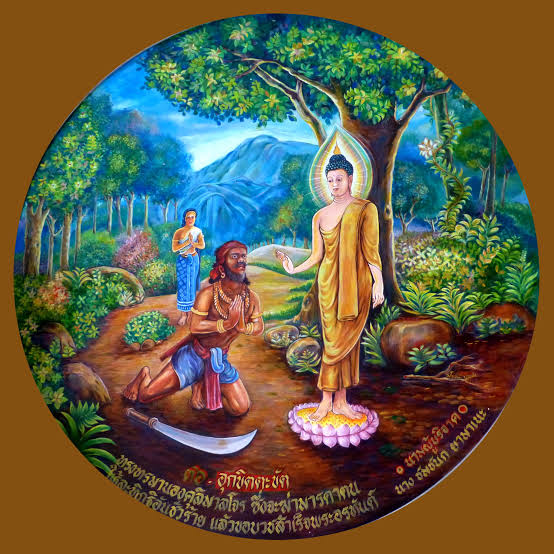
The Angulimala Sutta, a captivating narrative from Buddhist scriptures, recounts the remarkable transformation of a blood-thirsty murderer into a compassionate monk under the profound influence of the Buddha. Angulimala, notorious for his brutal killings and a garland of severed fingers, terrorized the realm of King Pasenadi. The tale unfolds during a time when the Buddha, with unwavering compassion, confronted the darkness that shrouded Angulimala’s soul.

Angulimala’s notoriety as a ruthless killer, leaving villages and towns in a state of fear, paints a grim picture of his violent nature. His garland of fingers serves as a gruesome testament to the lives he had taken, making him a symbol of terror and malevolence.

Undeterred by Angulimala’s fearsome reputation, the Buddha ventured into the region where the murderer roamed freely. Despite warnings from locals about the dangers posed by Angulimala, the Buddha calmly continued his journey, determined to confront the source of darkness.

As the Buddha walked towards Angulimala’s lair, the air thick with tension, he encountered the menacing killer. Rather than responding with fear, the Buddha skillfully engaged Angulimala in a dialogue that would alter the course of his life. The Buddha’s words, laden with wisdom and compassion, began to unravel the tightly woven fabric of Angulimala’s violent identity.

In a pivotal moment, as Angulimala sought to chase down the Buddha with murderous intent, the Buddha employed a feat of psychic power. Despite running at full speed, Angulimala found himself unable to catch up with the Buddha walking at a normal pace. This display of supernatural ability left Angulimala astonished and created a space for the transformative dialogue that followed.

Angulimala urgently called out, “Stop, contemplative! Stop!” The Buddha calmly replied, “I have stopped, Angulimala. You stop.”

Perplexed, Angulimala asked, “While walking, contemplative, you say, ‘I have stopped.’ But when I have stopped, you say I haven’t. I ask you the meaning of this: How have you stopped? How haven’t I?”

The Buddha responded, “I have stopped, Angulimala, once and for all, having cast off violence toward all living beings. You, though, are unrestrained toward beings. That’s how I’ve stopped and you haven’t.”

Baffled by the Buddha’s profound words, Angulimala sought clarity on the apparent contradiction. The Buddha’s response not only clarified the cessation of violence within his own heart but also illuminated the unrestrained nature of Angulimala’s actions. This insightful exchange marked the beginning of a transformative journey within Angulimala, planting the seeds of change in his consciousness.

With a heart now inclined towards virtue, Angulimala, in an impromptu moment, requested ordination from the Buddha. The Buddha, recognizing the sincerity of Angulimala’s transformation, granted his request, welcoming him into the community of monks adorned with saffron robes and shaven heads.

Even as Angulimala embraced the monastic life, local villagers, fearing his past atrocities, sought protection from King Pasenadi. The king, in response, assembled an army and approached the monastery. Despite the villagers’ pleas to “stamp him out,” the Buddha’s wisdom paved the way for an unexpected resolution.

When questioned by the Buddha about how he would treat Angulimala if he had truly renounced violence, King Pasenadi underwent a profound transformation. The Buddha’s teachings on discernment and compassion prompted the king to reconsider his stance. Witnessing Angulimala’s monkhood, the king shifted from disbelief to acceptance, vowing to support him on his path to redemption.

The Angulimala Sutta not only narrates the personal transformation of a notorious murderer but also highlights the transformative power of compassion and wisdom. The Buddha’s fearlessness, compassion, and skillful means shattered the shackles of violence that bound Angulimala. Moreover, the sutta portrays the ripple effect of transformation, as even King Pasenadi undergoes a change of heart. This timeless tale serves as an enduring testament to the potential for redemption, forgiveness, and the profound impact of the Buddha’s teachings on even the most deeply entrenched patterns of suffering.

The transformative story of Angulimala

Link:https://peacelilysite.com/2023/11/15/the-transformative-story-of-angulimala/

#AngulimalaSutta #ShakymuniBuddha #Transformation #Compassion #Wisdom #Monk

Source: https://blogs.icrc.org/religion-humanitarianprinciples/a-humanitarian-re-reading-of-the-angulimala-sutta/#:~:text=Moved%20by%20the%20Buddha’s%20words,saffron%20robes%20and%20shaven%20heads.

Global Buddhists Unite in Compassion: Commemorating the Buddha-Stipulated Day of Releasing Lives

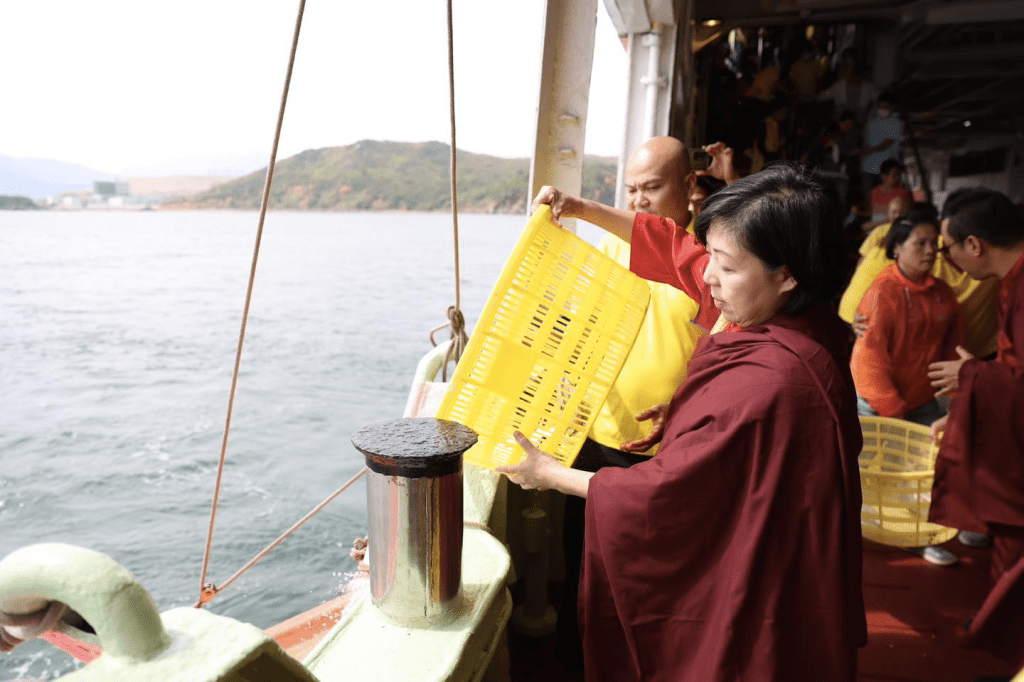
Buddhists worldwide converged on October 29th to observe the Buddha-Stipulated Day of Releasing Lives, an admirable day dedicated to compassion and liberation. Originating in 2009, this tradition finds its roots in the teachings of H.H. Dorje Chang Buddha III, who, after completing a monumental Buddhist activity, led His disciples in releasing captive lives and declared this day as a time to extend compassion to all beings. In 2023, the H.H. Dorje Chang Buddha III Culture and Art Museum and the World Buddhism Association Headquarters commemorated this occasion with life-releasing events in Marina Del Ray, California, and World’s Fair Marina, Flushing, New York.

The practice of releasing captive lives holds deep significance for Buddhists. H.H. Dorje Chang Buddha III once imparted in the Dharma of Cultivation, “All living beings in the six realms of reincarnation within the three spheres of the universe have been since beginningless time my fathers and mothers in the revolving cycle of reincarnation.” Furthermore, “The Brahma’s Net Sutra – The Book of Bodhisattva Precepts” explicitly teaches the importance of compassionately engaging in the practice of releasing captive animals into the wild and freeing living beings from suffering.

On October 28th, the Monastery of Hua Zang Si Temple in San Francisco, along with Buddhist disciples, organized a fish release event at the San Rafael Port, located at 110 Loch Lomond.

Hua Zang Si Abbess Ruzun Ruohui emphasized, “Our acts of compassion are not confined to specific days or places. Guided by the teachings of H.H. Dorje Chang Buddha III and Shakyamuni Buddha, we believe in intervening whenever and wherever beings face dire fear or calamity, offering them safety and liberation from suffering. As the saying puts it, ‘We hold dear the continuity of their lives and cannot bear to witness their untimely end.’ Our driving force is compassion and empathy, with a desire to bestow happiness and freedom upon all sentient beings, relieving them from the burdens of suffering.”

Buddhist disciples in Taiwan organized a fish release event at the ocean beach.

Buddhist disciples at PinDong Taiwan released crickets.

In 2023, nations worldwide continuously struggle with prolonged regional conflicts, ongoing wars, economic turmoil, and the devastating impacts of climate change, resulting in a profound loss of lives and widespread suffering. From storms, flooding, earthquake, to wildfires, 2023 has already been a record catastrophic year for weather and climate disasters globally. On this occasion of the Buddha-Stipulated Day of Releasing Lives, individual Buddhists, temples, and religious organizations from around the world have come together in unity to conduct life-releasing activities. Their shared aspiration is to dedicate all merits to the well-being of living beings. May adversity be vanquished, and may all living beings find prosperity and wisdom, leading to lives filled with goodness. May nations thrive and may peace reign supreme throughout the world.

Global Buddhists Unite in Compassion: Commemorating the Buddha-Stipulated Day of Releasing Lives

Link: https://peacelilysite.com/2023/11/10/global-buddhists-unite-in-compassion-commemorating-the-buddha-stipulated-day-of-releasing-lives/

#Buddha-StipulatedDayReleasingLives #DorjeChangBuddhaIII #HHDorjeChangBuddhaIII #HuaZangSi #ReleasingLives #FishReleasing #Compassion

Source: https://nyweekly.com/lifestyle/global-buddhists-unite-in-compassion-commemorating-the-buddha-stipulated-day-of-releasing-lives/