The Three Questions

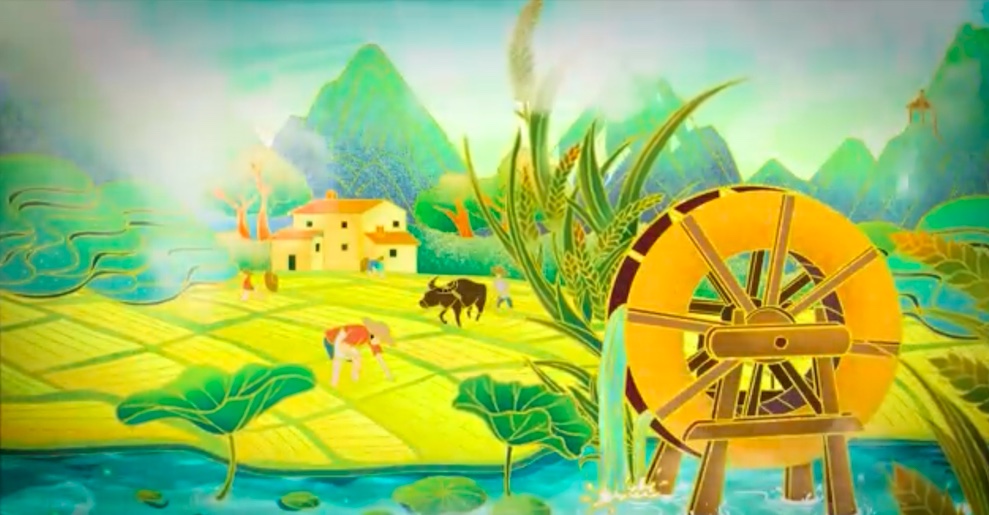
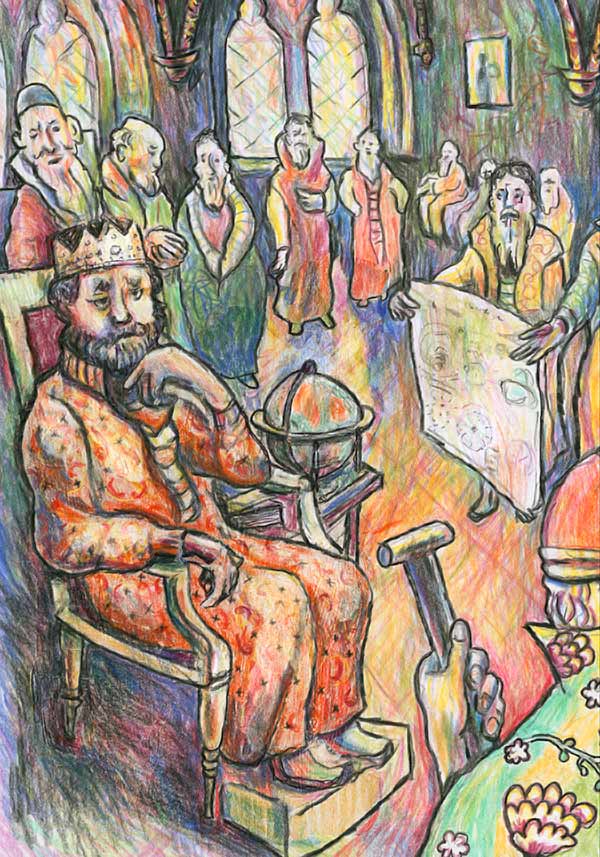
drawing of a kings throne room

By Leo Tolstoy

It once occurred to a certain king that if he always knew the right time to begin everything; if he knew who were the right people to listen to, and whom to avoid; and, above all, if he always knew what was the most important thing to do, he would never fail in anything he might undertake.

And this thought having occurred to him, he had it proclaimed throughout his kingdom that he would give a great reward to anyone who would teach him what was the right time for every action, and who were the most necessary people, and how he might know what was the most important thing to do.

And learned men came to the king, but they all answered his questions differently.

In reply to the first question, some said that to know the right time for every action, one must draw up in advance a table of days, months, and years, and must live strictly according to it. Only thus, said they, could everything be done at its proper time. Others declared that it was impossible to decide beforehand the right time for every action, but that, not letting oneself be absorbed in idle pastimes, one should always attend to all that was going on, and then do what was most needful. Others, again, said that however attentive the king might be to what was going on, it was impossible for one man to decide correctly the right time for every action, but that he should have a council of wise men who would help him to fix the proper time for everything.

But then again others said there were some things which could not wait to be laid before a council, but about which one had at once to decide whether to undertake them or not. But in order to decide that, one must know beforehand what was going to happen. It is only magicians who know that; and, therefore, in order to know the right time for every action, one must consult magicians.

Equally various were the answers to the second question. Some said the people the king most needed were his councilors; others, the priests; others, the doctors; while some said the warriors were the most necessary.

To the third question, as to what was the most important occupation, some replied that the most important thing in the world was science. Others said it was skill in warfare; and others, again, that it was religious worship.

All the answers being different, the king agreed with none of them, and gave the reward to none. But still wishing to find the right answers to his questions, he decided to consult a hermit, widely renowned for his wisdom.

The hermit lived in a wood which he never quitted, and he received none but common folk. So the king put on simple clothes and, before reaching the hermit’s cell, dismounted from his horse. Leaving his bodyguard behind, he went on alone.

When the king approached, the hermit was digging the ground in front of his hut. Seeing the king, he greeted him and went on digging. The hermit was frail and weak, and each time he stuck his spade into the ground and turned a little earth, he breathed heavily.

The king went up to him and said: “I have come to you, wise hermit, to ask you to answer three questions: How can I learn to do the right thing at the right time? Who are the people I most need, and to whom should I, therefore, pay more attention than to the rest? And, what affairs are the most important and need my first attention?”
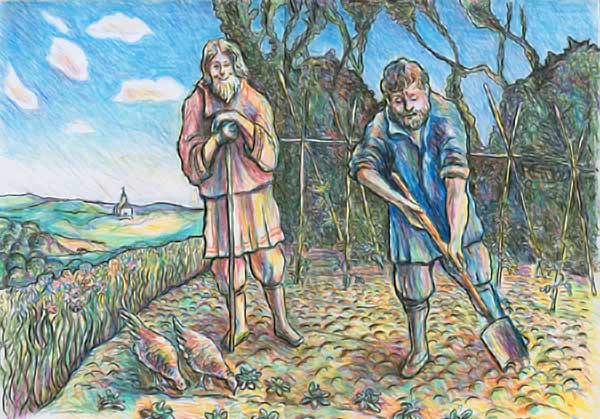
drawing of a man working in garden

The hermit listened to the king, but answered nothing. He just spat on his hand and recommenced digging.

“You are tired,” said the king, “let me take the spade and work awhile for you.”

“Thanks!” said the hermit, and, giving the spade to the king, he sat down on the ground.

When he had dug two beds, the king stopped and repeated his questions. The hermit again gave no answer, but rose, stretched out his hand for the spade, and said:

“Now rest awhile – and let me work a bit.”

But the king did not give him the spade, and continued to dig. One hour passed, and another. The sun began to sink behind the trees, and the king at last stuck the spade into the ground, and said:

“I came to you, wise man, for an answer to my questions. If you can give me none, tell me so, and I will return home.”

“Here comes someone running,” said the hermit. “Let us see who it is.”

The king turned round and saw a bearded man come running out of the wood. The man held his hands pressed against his stomach, and blood was flowing from under them. When he reached the king, he fell fainting on the ground, moaning feebly. The king and the hermit unfastened the man’s clothing. There was a large wound in his stomach. The king washed it as best he could, and bandaged it with his handkerchief and with a towel the hermit had. But the blood would not stop flowing, and the king again and again removed the bandage soaked with warm blood, and washed and re-bandaged the wound. When at last the blood ceased flowing, the man revived and asked for something to drink. The king brought fresh water and gave it to him. Meanwhile the sun had set, and it had become cool. So the king, with the hermit’s help, carried the wounded man into the hut and laid him on the bed. Lying on the bed, the man closed his eyes and was quiet; but the king was so tired from his walk and from the work he had done that he crouched down on the threshold, and also fell asleep – so soundly that he slept all through the short summer night.
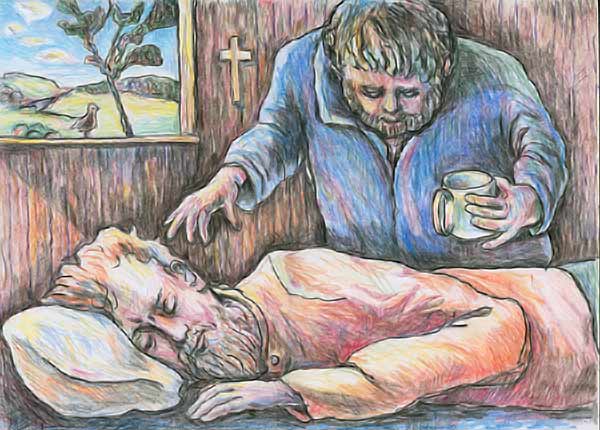
drawing of a man caring for sick person

When he awoke in the morning, it was long before he could remember where he was, or who was the strange bearded man lying on the bed and gazing intently at him with shining eyes.

“Forgive me!” said the bearded man in a weak voice, when he saw that the king was awake and was looking at him.

“I do not know you, and have nothing to forgive you for,” said the king.

“You do not know me, but I know you. I am that enemy of yours who swore to revenge himself on you, because you executed his brother and seized his property. I knew you had gone alone to see the hermit, and I resolved to kill you on your way back. But the day passed and you did not return. So I came out from my ambush to find you, and came upon your bodyguard, and they recognized me, and wounded me. I escaped from them, but should have bled to death had you not dressed my wound. I wished to kill you, and you have saved my life. Now, if I live, and if you wish it, I will serve you as your most faithful slave, and will bid my sons do the same. Forgive me!”

The king was very glad to have made peace with his enemy so easily, and to have gained him for a friend, and he not only forgave him, but said he would send his servants and his own physician to attend him, and promised to restore his property.

Having taken leave of the wounded man, the king went out into the porch and looked around for the hermit. Before going away he wished once more to beg an answer to the questions he had put. The hermit was outside, on his knees, sowing seeds in the beds that had been dug the day before.

The king approached him and said, “For the last time, I pray you to answer my questions, wise man.”

“You have already been answered!” said the hermit, still crouching on his thin legs, and looking up at the king, who stood before him.

“How answered? What do you mean?” asked the king.

“Do you not see?” replied the hermit. “If you had not pitied my weakness yesterday, and had not dug these beds for me, but had gone your way, that man would have attacked you, and you would have repented of not having stayed with me. So the most important time was when you were digging the beds; and I was the most important man; and to do me good was your most important business. Afterwards, when that man ran to us, the most important time was when you were attending to him, for if you had not bound up his wounds he would have died without having made peace with you. So he was the most important man, and what you did for him was your most important business. Remember then: there is only one time that is important – now! It is the most important time because it is the only time when we have any power. The most necessary person is the one with whom you are, for no man knows whether he will ever have dealings with anyone else: and the most important affair is to do that person good, because for that purpose alone was man sent into this life.”

This story reminded me of something that Henry Shukman, an English Spiritual Director Emeritus and a Zen Buddhism practitioner, once said: ‘Now… is always and ever the most important thing… there is only one place that fulfillment can happen: here and now.’

The Three Questions

Link: https://peacelilysite.com/2023/03/09/the-three-questions/

#LeoTolstoy #Hermit#Spiritual #HenryShukman #King #ZenBuddhism#MoralStory

Source: https://www.plough.com/en/topics/culture/short-stories/the-three-questions
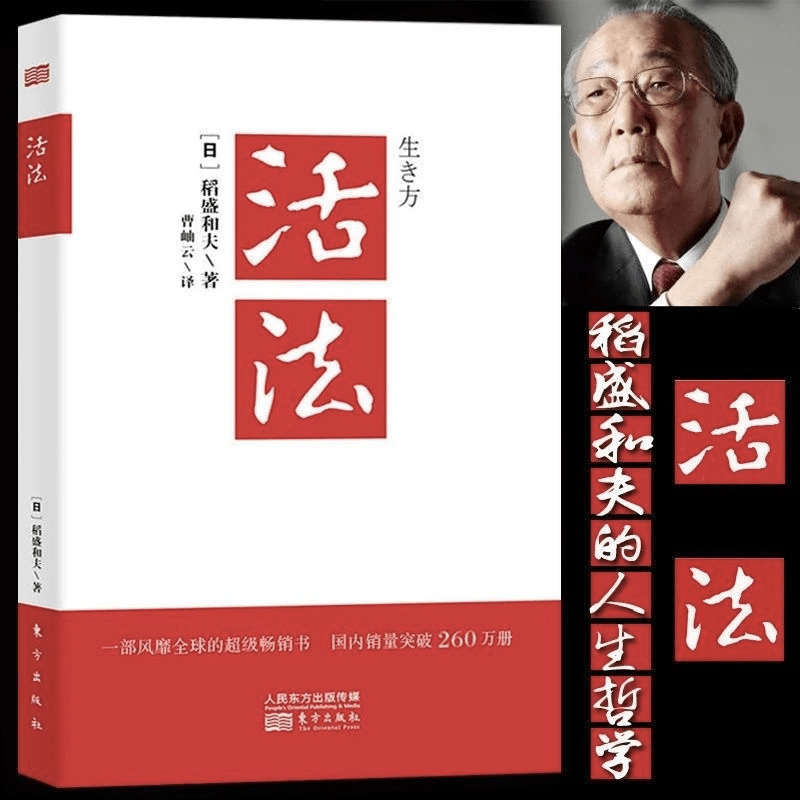

Live Act: Philosophy of Life of Kazuo Inamori “Respect the Divine and Love People”

Kazuo Inamori, born in 1932 in Kagoshima, Japan, was one of seven children. During his elementary school years, he showed a strong interest in science and machines, particularly those in his father’s printing shop. However, in the sixth grade, he contracted tuberculosis, which led him to read a book by a Buddhist monk, sparking his interest in religion. When Inamori was young, his father took him to see a monk who advised him to recite “Namo Amitabha Buddha” every day. He has been chanting it every day since then without interruption.

According to Inamori, the initial 20 years of life should be dedicated to learning, growing, and preparing for entry into society, while the following 40 years from age 20 to 60 should be focused on working hard and contributing to society. He also maintains that at least 20 years of preparation are necessary to face death.

At the age of 65, Inamori decided to shave his head and embrace Buddhism. His intention was to rediscover the meaning of life and prepare for death.

The philosophy of Dr. Kazuo Inamori, who founded Kyocera, centers around the mission “to do what is right as a human being.” This concept is included in all decision making, emphasizing the importance of fairness and diligent effort.

When Inamori’s start-up business faced dissatisfied employees who demanded regular salary increases and guaranteed bonuses, he spent several days and nights negotiating with them. This incident made him realize the importance of securing the future of his employees. He adjusted the company’s business philosophy to be “a place to protect employees’ self and their family’s material and spiritual life.”

In Buddhism, there is a saying called “self-interest and altruism.” It emphasizes that if one wishes to benefit oneself, they must also benefit others. This philosophy encourages individuals to not only focus on their own interests but also consider the well-being of others. As a leader, I often encourage my employees to lend a helping hand to others during business operations.

In Japan, there is a saying that goes, “Human affection is not for others,” implying that treating others kindly will ultimately bring rewards. However, Mr. Inamori disagree with the notion that Buddhism is incompatible with capitalism and corporate profits. In fact, he believe that conducting business operations based on Buddhist principles is far more admirable than conducting business solely for profit.

Inamori founded KDDI with the lofty spirit of devoting himself to society and the world, leading to its success as the second-largest communication company in Japan after NTT.

In 1985, Kazuo Inamori founded The Kyoto Prize, which is considered Japan’s most prestigious private award for lifetime achievement in the arts and sciences. The prize is bestowed upon individuals who have not only excelled in their respective fields but also contributed significantly to the advancement of human knowledge, culture, and spirituality.

In 2010, at the age of 77 and with no prior experience in the industry, Inamori became chief executive of Japan Airlines. The following year, he returned the carrier to profit and led it out of bankruptcy. He relisted it on the Tokyo stock exchange in 2012. Inamori changed employees’ mentality by printing a small book for each staff member outlining his philosophies, emphasizing the company’s dedication to their growth, explaining the social significance of their work, and outlining Buddhist-inspired principles for how employees should live.

Kazuo Inamori holds the belief that the universe has an expectation for us when we are brought into the world. While it may be a question beyond human wisdom on how we should live in accordance with this expectation, he firmly believes that the only answer lies in “enhancing the mind”.

He has often expressed his desire to depart from this world with a heart that is kinder and more beautiful than when he was born.

When asked about his future goals in a 2002 interview with the New Sun, Inamori answered, “As long as I live, I would like to continue to contribute to the material and spiritual happiness of humanity and society.”

Live Act: Philosophy of Life of Kazuo Inamori “Respect the Divine and Love People”

Link: https://peacelilysite.com/2023/03/03/live-act-philosophy-of-life-of-kazuo-inamori-respect-the-divine-and-love-people/

Source: https://economictimes.indiatimes.com/magazines/panache/kazuo-inamori-buddhist-priest-who-became-a-billionaire-snubbing-investors/articleshow/49680260.cms

Inamori Kazuo : The Working Method

Fundamental significance of work for individuals is that It can help to develop their personality, sharpen their minds, and elevate their souls to become more noble and better.

Inamori Kazuo : The Working Method

Kazuo Inamori’s “Working Method” is an incredibly inspiring book that has completely transformed my perspective on my job and career. I used to view my job solely as a means to make money, which often left me feeling frustrated whenever I encountered obstacles in a project. I believed that I could only start enjoying life after I retired and had enough savings. However, the reality is that I spend one-third of my time at work, and if I’m not happy there, how can I be happy in my life?

Why we need to work?

Kazuo Inamori observed that many people have lost the correct understanding of the goals and meaning of their work, leading to more and more confused lives, especially among young people. He believed that the fundamental significance of work for individuals is to help develop their personality, sharpen their minds, and elevate their souls to become more noble and better.

Inamori’s life achievements have attracted worldwide attention. He started his own business at 27, establishing two Fortune 500 companies, Kyocera and KDDI, with his bare hands over 40 years. At the age of 65, he retired, only to be repeatedly asked by the Japanese government to serve as chairman of Japan Airlines for bankruptcy and reconstruction. Within a year, he brought JAL back to life, achieving the highest profit in its 60-year history, which is still the highest among aviation companies worldwide. With his background as a scientist, entrepreneur, and philosopher, Kazuo Inamori has become a global marvel, juggling three roles at once.

Inamori’s success did not come easily. When he entered the workforce at age 23, he lamented his fate, wondering, “Why do misfortune and suffering come to me again and again, and what will my life be like in the future?” Fortunately, he found a solution: to face up to the “view on labor” and “view on work,” and to treat work as a “good medicine for curing all diseases.” Inamori believed that work could also help overcome the hardships of life and turn fate around.

The “Working Method” is a work methodology based on Inamori’s life experiences, which seems to describe how to work effectively. However, Inamori’s focus is on a more profound question: why do people work, and what is the purpose of labor? He used his own experiences to deeply interpret the “concept of labor” and the “concept of work” that one should stick to. He firmly believed that if one could understand the profound meaning of “labor” and “work,” their mentality towards work would change, and the god of fate may favor them.

Inamori emphasized that the purpose of work is to improve one’s own aspirations, not just to earn money. Life is not always smooth, and the same goes for work. Only by working hard and persevering in adversity can one develop a strong character, remain steady, and not falter in life. When a person has the tenacity to work hard and persevere, even in the face of setbacks, those difficulties will eventually accumulate into experience, which may become the greatest “lucky” moment in life.

Working earnestly

Diligence and a sincere attitude towards work are key elements of a successful career. Kazuo Inamori believes that we can derive true happiness from work itself, rather than just from hobbies or recreation. Neglecting work may provide temporary pleasure, but it won’t bring lasting satisfaction. We spend most of our lives working, so finding a sense of fulfillment in our work is crucial.

According to Kazuo Inamori, there are only two ways to have a fulfilling life: either “do what you like” or “make yourself like work.” However, the chances of finding a job that one truly likes are slim. Instead of constantly searching for a job that one loves, it’s better to give up this fantasy and fall in love with the work in front of them.

By changing their mindset, the world around them will also change. Despite countless days and nights spent in the research room, and countless failures, Inamori found that he started to enjoy his work. From infatuation to love, he fully embraced his work, and success followed as he persisted.

When we focus on our work with diligence and earnestness, we can experience unfettered happiness from accomplishing something meaningful. The best way to motivate ourselves is to love our work and put in all our effort to do it well. With each success, we gain a sense of achievement, confidence, and the desire to take on new challenges. Repeating this process reinforces our fondness for our work and helps us to achieve wonderful results.

Only when we reach this state of mind can we accomplish truly outstanding work. So, let’s strive to love our work, be diligent and sincere in our efforts, and find true happiness in our careers.

From “ordinary” to “extraordinary

When it comes to electrical products, Japanese manufacturing often overwhelms us with its sophistication. Behind each of these products lies the operator’s attitude towards achieving excellence. This is the fundamental reason for their transformation from “ordinary” to “extraordinary”.

But how much effort does it take for a person to make this transformation? Inamori Kazuo has two mantras that answer this: “Run at the speed of a 100-meter race” and “Pay no less than anyone’s efforts”. He demands these from himself and every Kyocera employee.

Kyocera’s corporate goal, according to Inamori Kazuo, is “There is never a product that Kyocera cannot develop.” This is not because of their advanced technology and equipment, but because as the last company to enter the race, their only chance to survive is by accepting products that their competitors cannot make.

Therefore, only through efforts that are no less than anyone’s, and by running at the speed of a 100-meter race, can Kyocera overcome technical difficulties and ultimately produce perfect, high-quality products to meet their customers’ demanding requirements.

Inamori Kazuo believes that success is very difficult to achieve with the same effort as ordinary people. Only through extraordinary “efforts no less than anyone else” can we achieve outstanding results in fierce competition.

According to Kazuo Inamori, it is essential to adhere to correct values and moral principles, whether in work or life. Doing so is critical to achieving success and making progress in both personal and professional endeavors. By upholding these values, one can navigate challenges more smoothly and reach greater heights in their career and life. Inamori believes that a commitment to ethical principles and values is key to building a fulfilling and meaningful life, both personally and professionally.

Have you ever wondered why some people succeed in both their work and personal lives while others struggle? Is there a set of rules to follow? In his studies of successful work and life, Kazuo Inamori uses an equation to express the results:

Results of life and work = way of thinking x passion x ability

By using the correct way of thinking and being filled with enthusiasm, you can do your best work, and the happy life you desire may not be too far away.

I wish I had read this book earlier, as it would have given me a different experience in my profession. It could have improved my performance and relationships with my co-workers.

Inamori Kazuo : The Working Method

Link: https://peacelilysite.com/2023/02/16/inamori-kazuo-the-working-method/

#TheWorkingMethod#KazuoInamori#Culture#Japan#Japanese

Source: https://inf.news/en/career/6ce2ee7bb7a22cb836b87bf5e8130c44.html

Reached the State of Nirmanakaya

Reached the State of Nirmanakaya

by Yundun Duojibai V Gadu Rinpoche

Gadu Rinpoche is the fifth venerable Yundun Duojibai. Having a supremely wonderful karmic destiny in this lifetime, he received profound initiations from H.H. Dorje Chang Buddha III. He cultivates himself diligently. The venerable one has become deeply accomplished in the practice of second-level Great Perfection Dharma and attained the nirmanakaya state. In his book Cultivate Honestly, he recounts his experiences upon receiving the Niwan Crown-Opening Heaven Mandala.

 Several years ago, at one day my Buddha Master told me “I will open the mandala and transmit the very profound Buddha-dharma to you. This Buddha-dharma is the state practice empowerment dharma from  The Supreme and Unsurpassable Mahamudra of Liberation and belongs to the dharma of the heaven realm. Once you receive the empowerment, within two hours, a hole will be opened at the Niwan spot on the top of your head. Your spirit and consciousness can come out and appear from there.”

At that time, however, although I felt fortunate to learn the dharma, there was doubt in my mind that I could not get rid of. I simply could not believe what my Buddha Master stated about having my crown opened at the Niwan spot within two hours. The more I thought about this, the more I was worried. This was truly peculiar and absolutely unheard of. Having a hole opened on the crown was definitely not an ordinary matter. How could the person be alive after that? On the other hand, based on my Buddha Master’s holy realization, I kept telling myself not to have doubt because it is in violation of the precepts. However, I just couldn’t remove the doubt in my mind. Now I think about this, I felt that I was really very inferior and my karmic impedance was too heavy. Being Yundun Duojibai V – Gadu, I am still a tiny speck before my Buddha Master. I am really ashamed and ashamed!

My Buddha Master selected a good time on an auspicious day at the solemn mandala to hold the initiation of the empowerment dharma from The Supreme and Unsurpassable Mahamudra of Liberation, Niwan Crown-Opening Heaven Mandala. My Buddha Master discoursed to me, “This dharma is a very important one. Very few people have the opportunity of learning this dharma. After learning the dharma from the master, true form of realization will arise quickly within two hours. You will then attain the Niwan Daoguo. You should make a good effort to practice this dharma and benefit living beings.” Thus I entered the state of receiving the very profound empowerment. My Buddha Master sat on a high platform at a far distance. However, my Buddha Master did not touch my head and only let me visualize practicing the tantric rituals. The ceremony was conducted to open the door to acquiring the correct Buddha-dharma. Two hours passed. At that time, the frontal fontanel spot at the top of my head warmed up. I had a very unusual feeling but I really did not know whether my crown opened or not.

On the seventh day of my practicing the dharma, an extremely strong force of empowerment was felt at the position of frontal fontanel on my forehead. This is the location of the soft spot on the head of a new-born baby where movement corresponding with the heart beat can be seen. It is called the Niwan Palace. Taoists call it the Heaven Gate. This huge force of empowerment poured in from the Niwan Palace with the magnitude of a tidal wave and the momentum of an avalanche. Then my body received a very strong electric shock. With a loud sound of cracking, the Niwan spot opened up. At this time, my mind was in a state of ignorance in terms of knowing where I was, either in existence or emptiness. Very quickly, this ignorance transformed into boundless light beams. I transformed out of a “me” who was meditating in a cross-legged sitting into another “me.” Then I flew up, with incredibly fast speed, into the sky. Strong pressure from wind was felt on top of my head. My ears also heard sharp and harsh sounds from the wind. At this moment, I was not in the state of ignorance. I saw clearly and unambiguously my second nirmanakaya.

At that time, all scenes I saw of mountains, rivers, lands, Sun, Moon, stars, homes, crop fields, farms, and pedestrians on streets were true existence and real in front of my eyes. I was not in a dream state. My biggest concern was staying outside for too long and risking my original body getting harmed. I thought about the story of Taoist Iron-Crutch Li. His body was destroyed by other people because of his late return. Then he could only settle into the body of a crippled and hunchbacked beggar. Although this is a legendary story of Taoists, it is true state in my current reality. Do I want to follow the path of Iron-Crutch Li? So I felt very worried and immediately started to return to the mundane world. I clearly saw that the spot of the Niwan Palace on my head was emitting light. I followed the light and re-entered my body. Since then, I experienced endless wonders that cannot be described in words.

When I reported my experience and feeling from practicing this dharma to my Buddha Master, my Buddha Master transmitted a secret mantra to me. Sometime later, in recorded dharma lessons that were distributed to the public, my Buddha Master mentioned that my dharma practice had reached the preliminary stage of the state of nirmanakaya, or simple nirmanakaya.

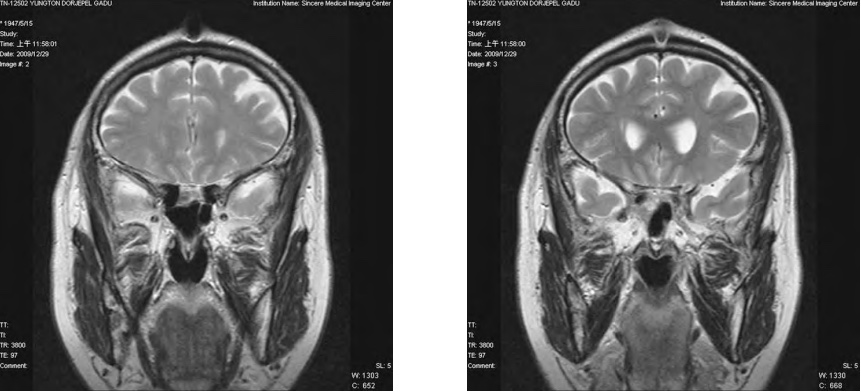
Several years later, in order to let living beings know the greatness of Buddha-dharma, on December 29, 2009, I took a magnetic resonance image (MRI) exam on my head at the Sincere Medical Imaging Center. The result showed a deep gap at the position of the Niwan Palace with a width of 1.5 cm. Also, the images captured the real situation of my spirit and consciousness rushing out of my head. The doctor conducting the examination was very surprised but was not able to explain it and attributed it to non-human cause. I was really very clear because this is where my nirmankaya came out and returned. Please see the scan films from my MRI exam.

Heaven Gate opening at the position of the Niwan Palace, side view

Heaven Gate opening at the position of the Niwan Palace, front view

Reached the State of Nirmanakaya

Link:https://peacelilysite.com/2023/02/10/reached-the-state-of-nirmanakaya/

#DorjeChangBuddhaIII # HHDorjeChangBuddhaIII  #HolyManifestation#GaduRinpoche #TheSupremeandUnsurpassableMahamudraofLiberation #Cultivation#GreatHolyAcharya#Innertantricinitiation#Niwan Crown-Opening Heaven Mandala

I consider my personal suffering a blessing because, from it, I learned the Tathagata Buddha Dharma

I consider my personal suffering a blessing because, from it, I learned the Tathagata Buddha Dharma

My life journey has been accompanied by a multitude of disasters and suffering. Even though I protested and complained, I could never find the answer to why I had to endure so much. At the same time, I felt lost and was at a loss as to what my life path should be.

Perhaps, because I had suffered so much, the compassionate Buddhas and Bodhisattvas provided an opportunity for me to finally listen to the dharma discourse “Do you Truly Believe in Cause and Effect,” expounded by H.H. Dorje Chang Buddha III.  From the unfathomable expanse of the universe to a minor thought rising from our consciousness, the law of cause and effect never errs. It became clear to me; all my trials and tribulations, from birth, were of my own doing since time immemorial.

I was born in a rural village to parents who did not receive much education. I was the second child and, because I was short, was nicknamed “the little one.”

One day, at the age of one, my parents had to work in the mountains, so they left me alone in the house. When I woke up, I climbed onto a table and knocked over a lantern, which fell onto my bed. The bed immediately caught fire as the whole house quickly filled with dense smoke. Our neighbor saved me from the fire just in the nick of time.

Photo by Pixabay on Pexels.com

When I was three years old, I fell from the 3rd floor and struck my forehead on a rock just missing my eye.  There was no surgeon to sew up my injury. Consequently, a deep scar would forever remain on my forehead. Later, for unknown reasons, I dislocated my shoulder and fractured a bone. At the time, the neighbors speculated that I would not remain in this world much longer. Not only were boys heavily favored over girls, but I was born in the year of the tiger. My family thought I would bring bad luck upon them. If not for my mother’s love and insistence, my grandfather would have given me away. 

Later on, due to economic hardship, my parents travelled extensively to make a living for the family. I remained behind, in the care of relatives and neighbors, alternating from home to home.

I started to look after myself when I was only eight years old.  I raised rabbits, a hen, and a pig. Finally, my grandfather took me in when I entered the third grade of grammar school. As young as I was at that time, I often wondered what was the purpose of living? Was there any purpose to life? To me, life felt like nothing more than chewing on bitter grass and swallowing acrid and nauseating liquid. I thought about gulping down pesticides to end my life, thinking there would be no more suffering after death.

Perhaps the benevolent Buddhas and Bodhisattvas instilled a reason for me not to take my own life – I would break my mother’s heart. I could not bear the thought of my mother suffering so much for my actions…

So I did not take my own life, but misery seemed to enjoy my company. How could my misfortunes not be attributed to retribution for past transgressions? My suffering had nothing to do with unfairness or fate, but as the direct result of my past actions motivated by greed, hatred, and ignorance. The laws of cause and effect require there be no diminishment to retribution.

Through respectfully listening to dharma discourses expounded by H.H. Dorje Chang Buddha III , I finally realized that suffering was not imposed upon me by accident, but the unavoidable retribution of my past transgressions. The only way to steer clear of suffering and disaster is to undertake all righteous actions, regardless how minor, and avoid wrongdoing, no matter how minuscule. From the bottom of my heart, I repented all of my past wrongdoings and began facing every misfortune without fear.  Life is but a dream; good fortune and suffering are equal in many ways, but for me, suffering carries even greater significance. It’s imperative to face the consequences of one’s own actions. Now, I am able to face them from a very different mindset. Suffering was the genesis that led me to understand why I need to learn Buddhism. From the teachings of the Buddhas, we discover the purpose and true meaning of life. To eliminate greed, hatred, ignorance, pleasure-seeking, happiness, anger, sadness, and joy; to let go of our egos; to guide and encourage more people to do all that is good and avoid committing wrongdoings. We shall follow the great teachings of H.H. Dorje Chang Buddha III to transcend from this mundane and afflicted world to reach true liberation and enlightenment!

I consider my personal suffering a blessing because, from it, I learned the Tathagata Buddha Dharma

Link: https://peacelilysite.com/2023/02/03/i-consider-my-personal-suffering-a-blessing-because-from-it-i-learned-the-tathagata-buddha-dharma/

#DorjeChangBuddhaIII # HHDorjeChangBuddhaIII  #Cultivation #Buddhism#Buddhist # Causality

Source: http://www.hzbi.us/?p=353

Winter Break Family Trip — Zion National Park

Winter Break Family Trip — Zion National Park

Our second stop on the road trip was Zion National Park. Zion National Park is a stunning natural wonder with over 200 sq. miles of diverse landscapes, towering cliffs, and diverse flora and fauna. It attracts more visitors than Yosemite National Park last year. Zion offers a unique blend of adventure, beauty, and inspiration.

One of the hikes we did was the Angel’s Landing trail, a 5-mile round trip that is considered to be very challenging. The trail is steep and zigzags up the mountain, and a permit is required to complete the entire hike.

Despite the difficulty, my older son and husband were determined to reach the summit. They persevered and eventually made it to the top, where they were rewarded with breathtaking views of the surrounding mountains and valleys. In winter time the mountain top gets really icey, micro spikes are highly recommended.

I was unable to finish the Angel’s Landing trail, due to the challenging winding path resembling Lombard Street. I had to stop just before the permit-required section, feeling exhausted. Nevertheless, I still appreciated the views from my stopping point. Although I didn’t reach the summit, the overall experience was still memorable.

It’s worth noting that the Angel’s Landing trail can be dangerous, and since 2004, 17 people have died while attempting it. It’s important to be prepared and take all necessary precautions when tackling this challenging hike.

Riverside Trails

We explored other trails at the following day, like the Riverside Trail, but the weather didn’t cooperate. Despite heavy rain and feeling cold and wet, we were unable to fully enjoy the hike. However, we look forward to returning to the majestic and awe-inspiring Zion National Park in better weather. Overall, Zion National Park was an amazing experience and it is a must-see destination for anyone who loves nature and outdoor activities.

Winter Break Family Trip — Zion National Park

Link: https://peacelilysite.com/2023/02/01/winter-break-family-trip-zion-national-park/

#Travel#ZionNationalPark #Trails#Hiking#Angeleslanding

Winter Break Family Trip – Day One

Winter Break Family Trip

(Day One)

Winter break is a time for family, fun, and relaxation, and this year my family and I decided to take a road trip. My sons planned all the details, from where to go and what to see, to where to stay. Our itinerary included stops in Las Vegas, Zion National Park, Antelope Canyon Valley, and Grand Canyon National Park. We set off right after Christmas, with our first destination being Las Vegas.

During the 9-hour drive to Las Vegas, my husband and two boys took turn to drive. To my surprise I felt a sense of calm and relaxation that I had never experienced before while on a road trip. In the past, I would have been sweating and nervous while my sons were driving, but this time I was able to enjoy the scenery, nap, and snack while calmly chanting the Buddha’s name in my mind. This experience helped me to understand the Heart Sutra more deeply, which states “…. Without any hindrance, no fears exist, far apart from every perverted view, the bodhisattva entered complete nirvana….”

The Heart Sutra teaches about the nature of reality, and this passage in particular expresses the idea that when we let go of our attachments and fears, we can experience true freedom and peace. This is what I felt during my road trip – a sense of having no worries, fears, or hindrances. I was able to fully enjoy the beauty of the landscape and the company of my family without any distractions.

Not only did I have a great time on the trip, but I also feel a sense of progress in my personal cultivation. I am happy to see that I have made some progress in my mindfulness and relaxation practices. This road trip was a perfect opportunity to put them into practice and experience the benefits firsthand.

A road trip is a way to disconnect from the daily stressors and focus on the present moment. It is also a great opportunity to explore new places, create memories with loved ones, and reflect on your personal growth.

First Stop: Las Vegas

The first stop on the road trip was Las Vegas, and we had a great time exploring the city. One of the highlights of my trip was seeing the beautiful music fountain and Christmas-themed conservatory at the Bellagio. The water was choreographed to the beat of the music and the colorful lights added to the visual spectacle. It was a perfect way to relax after a day of sightseeing.

In addition to the music fountain, I also got to experience the festive holiday atmosphere in Las Vegas. The city was decked out in holiday decor, with colorful lights and decorations adorning the streets and buildings. It really added to the holiday cheer and made me feel like I was in a winter wonderland.

To get around the city, we took the monorail, which was a convenient and easy way to travel. It was a great alternative to driving or taking a taxi and it allowed me to see some of the city’s landmarks and attractions from a different perspective.

Winter Break Family Trip (Day One)

Link: https://peacelilysite.com/2023/01/26/winter-break-family-trip-day-one/

#WinterBreak#Family#RoadTrip#LasVegas#MusicFountain #Monorail #Christmas #Buddha #HeartSutra#Cultivation

H.H. Dorje Chang Buddha III Day

H.H. Dorje Chang Buddha III Day

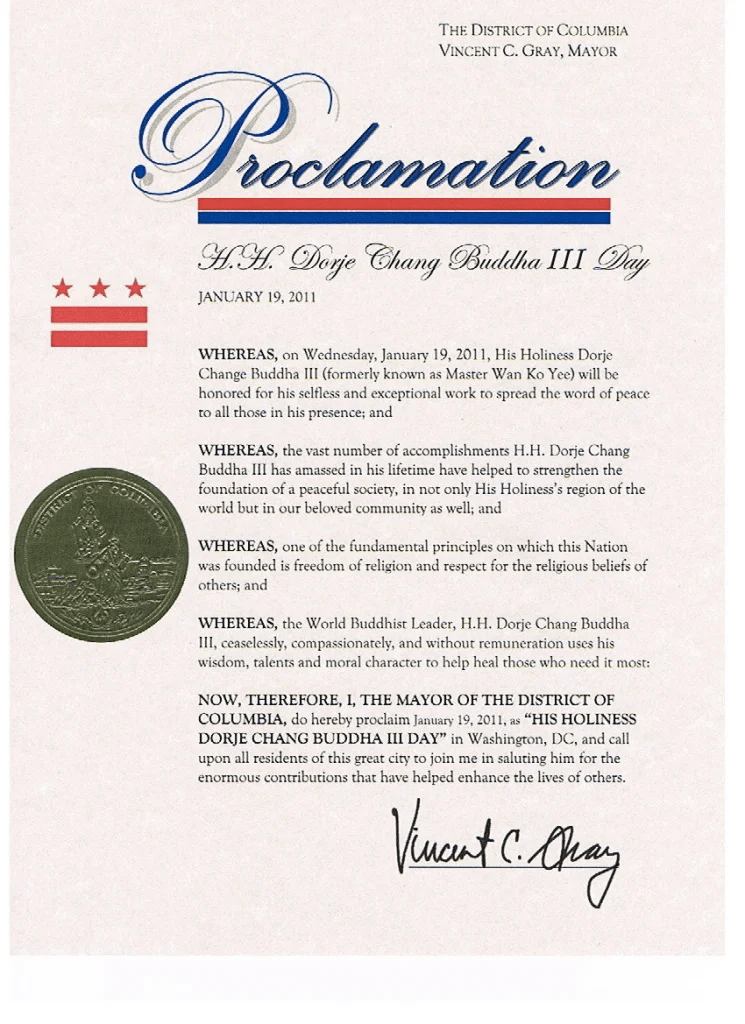
On January 19, 2011, Mayor Vincent C. Gray, the mayor of our nation’s capital Washington, DC, personally signed and issued a proclamation in which January 19, 2011 was proclaimed as His Holiness Dorje Chang Buddha III Day.

        In that proclamation, Mayor Gray called upon all residents of Washington, DC to join him in saluting H.H. Dorje Chang Buddha III! The mayor stated that H.H. Dorje Chang Buddha III has, through his selfless and exceptional work, spread the word of peace to all those in his presence. The mayor commended H.H. Dorje Chang Buddha III for his vast accomplishments that have helped to strengthen the foundation of a peaceful society, in not only His Holiness’s region of the world but in the Washington, DC community as well. Additionally, Mayor Gray praised H.H. Dorje Chang Buddha IIIas the World Buddhist Leader who ceaselessly, compassionately, and without remuneration uses his wisdom, talents and moral character to help those in need.

The video below has a brief introduction of H.H. Dorje Chang Buddha III, that helps you to know some great achievements and teachings of the Buddha.

Buddha taught that all living beings have Buddha-nature, and that we shall treat them as family members and relatives. To celebrate this very special day, Hua Zang Si held a Dharma Assembly to release captive lives and pray for blessings at a beautiful port in San Rafael CA , on January 19th 2023. Many laypersons in the bay area and central CA participated the event.

Namo H.H. Dorje Chang BuddhaIII and Namo Shakyamuni Buddha taught us :”No matter where it is and when it is, if we see living beings in horrible fears and calamitous adversity, we must save them. Therefore, for any lives that are facing the urgent and terrible fear of going to be hurt or killed, we shall save them out and release them into an environment that suits them, so as to let them regain the freedom and be free from fears. There is a phrase that says, ‘I love to see them live, and I dare not see them die.’ Based on our compassion and empathy, we want to endow living beings with happiness and rid them of sufferings.

With the Dharma Assembly, participants returned the merit to all living beings, holding the hope that they shall be rid of suffering, obtain happiness, and have the opportunity to listen to authentic Buddha Dharma, perfecting fortune and wisdom, and leading to prosperity and peace throughout the world.

H.H. Dorje Chang Buddha III Day

Link: https://peacelilysite.com/2023/01/20/h-h-dorje-chang-buddha-iii-day/

#DorjeChangBuddhaIII #HHDorjeChangBuddhaIII #FishRelease#HuaZangSi #HHDorjeChangBuddhaIIIDay

Facing the Truth: Life is Difficult

Facing the Truth: Life is Difficult

Recently, my two college-aged sons have been expressing that they find life to be difficult. In an effort to provide them with guidance and support, I have been offering them spiritual advice and emotional support. While searching for resources to assist in this endeavor, I stumbled upon the profound and enlightening book, The Road Less Traveled, by Scott Peck. The insights and philosophy presented within the book have been incredibly inspiring and beneficial in helping me to support my sons in their journey.

The Road Less Traveled is a self-help book by American psychiatrist and author Scott Peck, first published in 1978. The book has had a significant impact, selling millions of copies and remaining on the New York Times bestseller list for more than ten years. One of the main themes of the book is the concept of the four disciplines: psychiatry, psychology, religion, and philosophy. Each discipline offers unique perspectives on how to navigate the challenges of life and achieve personal growth.

The book’s central message is that life is difficult, but that this difficulty can be transcended by understanding and accepting it. Peck argues that discipline is the basic tool we need to solve life’s problems, and that with enough discipline we can solve all problems. Additionally, the book explores themes of love, relationships, parenting, and self-discovery, as well as teaching about distinguishing dependency from love and how to become one’s true self.

Life is a series of problems. It is something that we all must face and deal with on a daily basis. Some of these problems may be small and easily solved, while others may be more complex and difficult to overcome. The question we must ask ourselves is: do we want to moan about these problems or do we want to solve them?

As adults, we have the power to choose how we react to life’s problems. We can choose to bemoan our difficulties and wallow in our troubles, or we can choose to take action and find solutions. The latter approach is far more productive and will ultimately lead to greater satisfaction and fulfillment in life.

In addition to making this choice for ourselves, it is also important to teach our children to solve problems in a similar manner. As parents, we have a responsibility to guide and teach our children, helping them to develop the skills and mindset needed to overcome the challenges that life will inevitably present to them.

One of the most important tools we have for solving life’s problems is discipline. Without discipline, we will not be able to effectively tackle the issues that we face. With only some discipline, we may be able to solve only some problems, but with total discipline, we can solve all problems. Discipline is the key to success in any endeavor. It allows us to focus our minds and efforts, to set goals and make plans, and to persist in the face of adversity.

It is important to note that problems do not go away on their own. They must be worked through and dealt with, otherwise they will remain forever, acting as a barrier to the growth and development of the spirit. It is essential that we learn to face and overcome problems, rather than avoiding or ignoring them.

One way to do this is by learning to Delay Gratification. By scheduling the pain and pleasure of life in a way that we deal with pain first and get it over with, it allows us to enhance the pleasure we gain from it. This is the only decent way to live. With discipline, we can solve most of the problems, and delay gratification is a process that can help us to get through the most difficult moments.

Peck also emphasizes the importance of Love and Community in personal growth. He argues that true love is not just an emotional state, but also an action, and that it requires a commitment to growth and self-discipline. He also stresses the importance of community, stating that “the love of community is the only true love.”

I have also found out in Buddhism, love has a deeper meaning that goes beyond romantic or familial feelings. It encompasses compassion and the belief in treating all beings as if they were our own relatives or parents. In What is Cultivation by H.H. Dorje Chang Buddha III, says: “Loving-kindness: At all times, through the actions of my three karmas, I am loving and kind toward all living beings, who have been my parents. I wish them a long life without illness, good fortune, good luck, and a happy life. ” This means that at all times, through all our actions, thoughts, and words, we should strive to be loving and kind towards all living beings, recognizing that they have been our parents in past lives. This belief is expressed through the wish for all beings to have a long life free from illness, good fortune, good luck, and happiness. This unconditional love can have a positive impact on individuals who are facing challenges and difficulties in their lives.

Everyone must face and deal with the challenges and difficulties in life. Moaning about them or solving them, it’s a choice we make, and the latter can lead to greater satisfaction and fulfillment in life. Teaching our children to solve problems in a similar manner and helping them to develop the discipline and tools needed, that could be in religions or philosophy or psychology, to succeed in life is an essential responsibility of parenthood.

Facing the Truth: Life is Difficult

Link: http://What is Cultivation by H.H.Dorje Chang Buddha III

#TheRoadLessTraveled#ScottPeck#Discipline#Love#Compassion#Philosophy#DelayGratification#Religions#Phsycology#Truth#Discipline#WhatisCultivation #H.H.DorjeChangBuddhaIII

The Power of Miracles (Full Episode in National Geographic)

The Story of God with Morgan Freeman

In the National Geographic channel’s “The Power of Miracles” episode of “The Story of God with Morgan Freeman,” Freeman delves into the concept of miracles and the role they play in different cultures and religions around the world. Throughout the episode, Freeman explores the various stories and accounts of miracles that have been passed down through traditional cultures and religions. These stories often involve healing, protection, and other seemingly miraculous events.

One of the main focuses of the episode is the stories of miracle in Christianity. Freeman visits the site of a Catholic pilgrimage in Lourdes, France, where thousands of people travel each year to pray for healing. Freeman also visits the site of a Marian apparition in Medjugorje, Bosnia, where six children reported seeing the Virgin Mary in 1981. Freeman also meets with people who believe they were healed as a result of the apparition, which is still ongoing. Freeman also explores other religion’s records of miracles like the Jewish Kabbalah, and the Islamic Hadith.

While some people may be skeptical of these stories, Freeman makes it clear that they hold great significance for the people who believe in them. For many, these stories of miracles provide hope, inspiration, and a sense of connection to something greater than themselves. Freeman ultimately concludes that miracles are about the power of belief, and that the belief in something larger than ourselves can have a profound impact on our lives.

Watching this episode is a miracle for me. I explored so many beautiful places, cultures and religions. It’s a must watch for people with an interest in the intersection of faith and science, and in the power of belief to shape our lives.

The Story of God with Morgan Freeman

Link: https://peacelilysite.com/2023/01/11/the-power-of-miracles-full-episode-in-national-geographic/

#Miracle#MorganFreeman#NationalGeographicchannel#PowerofMiracles#Religions#Cultures#Christianity#Church#JewishKabbalah#Islamic Hadith #Healing#Belief