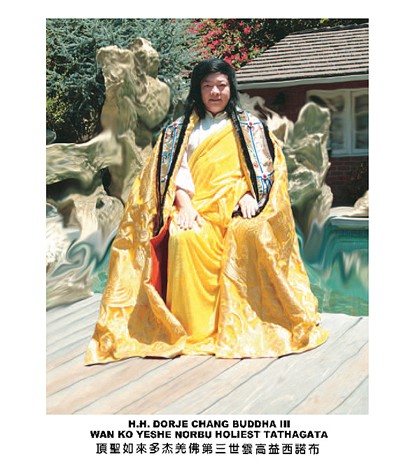
My Buddha Master, H. H. Dorje Chang Buddha III

My Buddha Master, H. H. Dorje Chang Buddha III

by Gadu Rinpoche

When I was respectfully on my knees and holding my palms together in front of my kind Buddha Master’s dharma seat for the first time, as soon as I raised my eyebrows to have my eyesight in a light contact with the loving, compassionate, and benevolent eyes of my Buddha Master, I immediately had the belief that my Master is a Buddha! However, my Buddha Master never stated to anyone what holy being he was in past lifetimes. Conversely, he always claimed to be a servant of everyone.

During the past ten years, I closely attended by the side of my Buddha Master and also carried out quite a number of Buddhist deeds following my Buddha Master. The holy states and holy realizations manifested by my Buddha Master such as proficient in both exoteric and esoteric Buddhism, perfect and deep mastery of the Five Vidyas, and great wisdom unrivaled by any human or holy beings are unprecedented in the history of both exoteric and esoteric Buddhism.

My firm belief of “My master is a Buddha” that I had in my mind for years was finally confirmed from the treasure book of H. H.  Dorje Chang Buddha III that was presented to the Congress of the United States by the International Buddhism Shanga Association on April 3, 2008. The identity of my Buddha Master, known by people in the world as Master Wan Ko Yee, was revealed through either meditation or practice of the dharma in a profound state of supernatural vision by the first-class great holy virtuous ones, who are incarnations of Buddhas and Bodhisattvas. They announced the background of H.H. Wan Ko Yeshe Norbu, who was long ago recognized by H.H. Great Dharma King Zunsheng (the manifestation of Mahavairocana Buddha) as Buddha Vajradhara. Through strict practice of the dharma and meditation these holy monastics deeply entered the dharma realm and supernaturally saw the true source. The result was they learned that this being of great virtue and holiness is the second incarnation of Vimalakirti and the third incarnation of Dorje Chang Buddha. They wrote down their certificates of recognition according to the rules of Buddhism in which they recognized that H.H. Master Wan Ko Yee is H.H. Dorje Chang Buddha III — the highest ancient Buddha in exoteric, esoteric, Mahayana, Hinayana, and Vajrayana Buddhism; the master of the Five Buddhas in the five directions; and the master of the great mahasattva Vajrasattva. That is, they recognized that H.H. Master Wan Ko Yee is the Holiest Tathagata Wan Ko Yeshe Norbu, the current greatest leader of Buddhism in the entire dharma realm!

Those eminent monks and dharma kings also wrote words praising H.H.  Dorje Chang Buddha III  as being the highest and greatest holy being and the only one in the history of Buddhism who has truly exhibited before living beings item after item of accomplishments in the Five Vidyas.

From that, I realized the truth behind what I experienced quite a few years ago when a huge and gigantic material, in less than two hours of time, became a piece of extremely finely carved and crafted miraculously wondrous holy Yun sculpture artwork. Such holy realization was just a manifestation of the craftsmanship vidya of the Five Vidyas by my magnificent Buddha Master, due to the affinity of living beings.

My Grand Master, H.H. Great Dharma King Zunsheng, stated in a formal pronouncement about my great and kind Buddha Master that the realization of any eminent monastic or person of great virtue in the world today cannot rival the realization of Holiest Tathagata Wan Ko Yeshe Norbu. H.H. Great Dharma King Zunsheng also made the following vow of truth: “If any person or holy being is able to duplicate the mysterious sculpted treasures created by H.H. Wan Ko Yeshe Norbu, then this formal pronouncement of Great Dharma King Zunsheng has deceived the public.” (The mysterious sculpted treasures are “Enchanting Colors of Utmost Mystery,” “Mysterious Boulder with Mist,” and certain other Yun sculptures with specific names.)

Yun Sculpture by H.H. Dorje Chang Buddha III

According to the system and rules of Buddhism in this world, there are only two beings of great holiness whose expositions of the dharma can be categorized as sutras. One of them is Sakyamuni Buddha. The other is the holy and venerable Vimalakirti. Besides those two, all other expositions of the dharma can only be called commentary rather than sutras. This is true no matter how great the Bodhisattva who has expounded the dharma is.

Some people say that Hui Neng (the sixth patriarch master of the Zen School) gave the Platform Sutra of the Sixth Patriarch. Actually, the word sutra was used due to exaggerated praise given to Hui Neng by people of the world who did not understand the system and rules of Buddhism. The rank of the sixth patriarch was even lower than that of many Bodhisattvas. For example, Maitreya Bodhisattva is the next Buddha, who will conduct the Dragon Flower Assembly. The position of Maitreya Bodhisattva is very much higher than that of Hui Neng. However, expositions of the dharma given by Maitreya Bodhisattva cannot be called sutras. They can only be accepted as commentary. An example of this is the Yogācāra-bhūmi-śāstra. (Discourse on the Stages of Concentration Practice)

The holy and venerable Vimalakirti descended into this world during the time of Sakyamuni Buddha. He is the only ancient Buddha who transformed into a layman to expound the dharma. Sakyamuni Buddha personally taught the four types of disciples. Among them were the 500 monks who were difficult to teach and who did not want to arouse Mahayana bodhicitta. A skillful means was used to teach all of the monastics and 8,000 Bodhisattvas. After the ancient Buddha Dorje Chang expounded dharma in Abhirati (World of Wonderful Joy), the Buddha responded to karmic conditions by transforming into the holy and venerable Vimalakirti to help the Buddha teach the sangha, Bodhisattvas, and other disciples. The goal was to protect and uphold the Buddha-dharma taught by Sakyamuni Buddha. The level of realization attained by the holy and venerable Vimalakirti was the same as that attained by Sakyamuni Buddha. However, He did not want to assume the status of another leader of the religion in the human realm, thereby causing sectarianism and adding to the self-centeredness of practitioners. Considering that Sakyamuni Buddha became a Buddha in this earthly World, the holy and venerable Vimalakirti acknowledged Sakyamuni as Buddha and chose to assist Sakyamuni Buddha by manifesting as a Bodhisattva.

Thus, the holy and venerable Vimalakirti acted in the same way that the ancient Buddha Zheng Fa Ming (True Dharma Brightness) Tathagata acted when the Buddha transformed into Kuan Shi Yin Bodhisattva and also acted in the same way as Manjushri Bodhisattva, the Master of seven Buddhas, did to play the role of a Bodhisattva to support Sakyamuni Buddha. All of this was done to benefit living beings. If two Buddhas of the same rank appeared at the same time, it would cause worldly divisions. It would hinder the development of Buddha-dharma and the saving of living beings. Actually, Buddhas do not care who emerges as the leader of Buddhism. The Buddhas appear in whatever form and manner that best benefit living beings. Everything is done for the benefit of living beings based upon bodhicitta.

Therefore, people in general have no way of discovering that the realization and enlightenment of the holy and venerable Vimalakirti were that high and that He was the incarnation of Dorje Chang Buddha, the foremost ancient Buddha who existed before Sakyamuni Buddha. However, the dharma discourses of the holy and venerable Vimalakirti are sutras, just as the dharma discourses of the Buddha, not commentaries. In the system of Buddhism, one such discourse is called Vilmalakirti-nirdesa Sutra (The Sutra of Vimalakirti). That sutra came into being during the same time period Sakyamuni Buddha was giving sutras. It is a very important Buddhist sutra. The Vimalakirti-nirdesa Sutra has been studied and followed in both Mahayana Buddhism and Hinayana Buddhism that was mostly propagated in Southern Asia.

When H.H.  Dorje Chang Buddha III  was born, the beating of drums suddenly sounded in the sky, and beautiful, heavenly music could be heard. Three rainbows approximately forty to fifty meters (131-164 feet) apart appeared simultaneously in the sky. The middle one was primarily blue, the right one primarily red, and the left one primarily white. At birth, the entire body of His Holiness was dark blue. No cries from His Holiness could be heard. Rather, His Holiness opened his mouth and very clearly stated, “I have entered this world. I am completely proficient in exoteric and esoteric Buddhism and will wondrously manifest the Five Vidyas. Compare and you will know.” After speaking such words, His Holiness remained silent and appeared just like an ordinary child. The parents of His Holiness thought that they had given birth to a mysterious and extraordinary human being but did not tell anyone about this. His Holiness did not speak again until He was three years old.

When His Holiness was three years old, H.H. Mahavairocana Dharma King Zunsheng guided His Holiness in learning the Tripitaka. At that time, His Holiness was taught to recite the heart mantra of Dorje Chang Buddha seven times. This little child suddenly laughed heartily and immediately manifested the Three Bodies and Four Wisdoms. H.H. Great Dharma King Zunsheng at once tested His Holiness’s knowledge of the Tripitaka and the esoteric scriptures. The Dharma Prince child explained such writings with great facility. There was nothing in them that His Holiness did not understand. His Holiness had realized all of the doctrines and principles of such teachings.

H.H. Mahavairocana Dharma King Zunsheng then gave the following formal pronouncement: “Dorje Chang Buddha has come to this world a third time. The holy and venerable Vimalakirti has descended from the skies a second time. He completely understands the scriptures on the dharma. His Four Wisdoms are wonderfully perfect. He is an ancient Buddha upon whom living beings can rely. No master is qualified to teach Him. His mysterious sculpted treasures will be spectacular and unique in the world. He will be able to take mist that will stay inside His sculptures. He will manifest His realization and consummate skills. No holy person in the world will be able to duplicate such works. If anyone will be able to duplicate such works without differing from the original at all, my words have deceived the world. Vimalakirti Wan Ko is Buddha Vajradhara. He will cause the Buddhas to bestow nectar that many will see descend from the sky. He is of utmost benefit to sentient beings. He has the compassion and wisdom of an ancient Buddha. I hereby reveal these words to prove the veracity of my formal pronouncement.” H.H. Mahavairocana Dharma King Zunsheng also gave His Holiness the dharma name Yangwo Yizhi Dharma Prince, which means Dharma Prince supreme leader of Buddhism with the highest wisdom.

H.H. Mahavairocana Zunsheng then said, “During the Dharma-Ending Age in the earthly world, there will be many evil teachers and demons who will claim to be genuine holy persons. In order to distinguish the genuine from the false, I now make a strict formal pronouncement that will serve as the testing standard. The pronouncement is as follows: There will not be a fourth incarnation of Dorje Chang Buddha in this earthly realm within the next 5,000 years. The third Dorje Chang Buddha will be the only such holy being, and there will not be an incarnation of another Dorje Chang Buddha in this earthly realm for 5,000 years. Based on causes and conditions that accord with the dharma, I now lay out tests to determine whether a person is that true Buddha if he claims to be the true incarnation of that Buddha. He must successfully invoke the Buddhas to bestow nectar. He must be able to perform the Golden Vase Selection of Karmic Affinity and predict the results of that ceremony beforehand. He must be able to eliminate karmic obstructions in a clearly visible manner. He must be able to replicate wondrous multicolored sculptures. He must be able to take mist, place it inside a hollowed out sculpted boulder, and have the mist stay there. If a person is able to do all five of these things without exception, then he is the true fourth Dorje Chang Buddha. No matter how great a holy terton may be, no matter if a person leaves concave imprints on rocks with his hands or feet, no matter how vast a person’s manifold supernatural powers may be, if he cannot do these five holy things, then he certainly is not the true incarnation of Dorje Chang Buddha. An ancient Buddha who descends to this earthly realm will have no difficulty meeting these five tests. I leave these five observable tests to guard against those in the future who make false claims.”

The Dharma Prince was acting as the holy and venerable Vimalakirti did when Vimalakirti received different teachings and knowledge, took on the appearance of an ordinary person, and learned things tirelessly. No one knows why the Dharma Prince did so. At the age of sixteen, the Dharma Prince wrote a work on the dharma called A Monk Expounds the Absolute Truth to a Layperson. After that writing was buried, great master Hui Yong unearthed it. Renqing Luozhu and Suolang Danbu respectfully offered that writing to H.H. Mahavairocana Zunsheng Yeshe Norbu to evaluate. H.H. Zunsheng Yeshe Norbu personally promulgated that dharma called A Monk Expounds the Absolute Truth to a Layperson in front of the four types of Buddhist disciples. After He finished promulgating that dharma, He personally led the four types of Buddhist disciples in kneeling down and facing that writing on the dharma. He then made the following formal pronouncement: “An ancient Buddha has arrived in the east.” He recognized that the Dharma Prince was H.H. Dorje Chang Buddha III, conferred upon His Holiness the title Yangwo Wan Ko Yeshe Norbu, and said that His Holiness is the Holiest Tathagata. He also called that dharma A Monk Expounds the Absolute Truth to a Layperson Sutra.

There are certain time periods relating to H.H.  Dorje Chang Buddha III ’s propagating the dharma and benefiting living beings. Before the age of eleven was the period during which His Holiness was engaged in the Tripitaka of exoteric Buddhism. From the age of eleven to fifteen was the period during which His Holiness was engaged in the esoteric dharma of the Kagyu school. During that time, he was called Dusum Khenpa Lion’s Roar Dharma Prince. After the age of fifteen was the period during which His Holiness was engaged in the esoteric teachings of the Geluk school. His Holiness was at that time called the reincarnation of Master Tsongkhapa. That was also the time period during which His Holiness flawlessly propagated the tantric scriptures of the Sakya, Nyingma, and all of the other schools. At this time, His Holiness was called the embodiment of the body, speech, and mind of Guru Padmasambhava.

Because my Buddha Master is an ancient Buddha who has come to this world again, His Holiness upholds the principles of “making no distinction between exoteric and esoteric Buddhism or among all of the sects and schools; teaching living beings according to their particular circumstances; and pervasively propagating the teachings of the Buddhas to all.” Thus, His Holiness is the Buddha Vajradhara Great Dharma King of the “Buddha Sect” who pervasively saves all living beings. My Buddha Master has repeatedly admonished everyone with the following counsel: “There is no differentiation among the various schools and sects in my mind. There is only Buddhism. However, for a dharma king, rinpoche, or acharya of any school or sect,  as long as he or she does not commit violations in the 128 evil and erroneous views, abides by the teachings of the Buddha, attains liberation, and then saves other living beings based on their particular karmic conditions, he or she is worthy of praise.” Of course, The Supreme and Unsurpassable Mahamudra of Liberation  is the greatest dharma among supreme great dharmas for cultivators to receive and practice. That is why my Buddha Master is the only one in this world possessing the realization of opening up the Niwan Daoguo for all kinds people to enable them to attain heavenly and holy states.

[ Please respectfully read in detail the treasure book of H. H. Dorje Chang Buddha III to acquire great wisdom, accomplishment and liberation. If you have the affinity to receive and practice the dharma of The Supreme and Unsurpassable Mahamudra of Liberation, you will be certain to get great wisdom and attain great accomplishment and liberation. ]

My Buddha Master, H. H. Dorje Chang Buddha III

Link: https://peacelilysite.com/2023/01/06/my-buddha-master-h-h-dorje-chang-buddha-iii/

#MasterWanKoYee #DorjeChangBuddhaIII #HHDorjeChangBuddhaIII#DorjeChangBuddha#GaduRinpoche#BuddhaMaster

Source: https://xuanfa.net/bibliography/free-books-to-download/cultivating-honesty/?hilite=gadu+rinpoche

Build a Beautiful garden in my mind

James Allen, As A Man Thinketh

Build a Beautiful garden in my mind

At the beginning of the new year, I try to think of how to improve my life spiritually. Some beautiful lines by James Allen come to mind.

“Good thoughts and actions can never produce bad results; bad thoughts and actions can never produce good results. This is but saying that nothing can come from corn but corn, nothing from nettles but nettles. Men understand this law in the natural world, and work with it; but few understand it in the mental and moral world (though its operation there is just as simple and undeviating), and they, therefore, do not cooperate with it.”

“A man is literally what he thinks, his character being the complete sum of all his thoughts.”

James Allen, As A Man Thinketh

These words are indeed very inspiring. Mind is the control center of one’s words and actions. I want to be a better person that talk nicely, act kindly, then I should have beautiful mind.

An ancient chinese worthy, Zeng Zi said, “Everyday I examine myself many times. Do I do my best
when doing things for others? Am I honest and reliable when associating with friends? Whether do I review and practise what my teachers teach me?” In traditional Confucianism teaching: Everyday, one should brush away the faults from yesterday, not to tell lies and be humble. One should purify the heart and rectify the mind, to confront genuinely, and start afresh. Thus, one will be renewed every day and have daily renovation, this is the way to be a new man. This old wisdom is very helpful on how to examine my mind daily.

However, in this modern era, there is so much informations from everywhere all at once, and I have a lot of thoughts in my mind. I have pondered more about what are the good thoughts and actions, and what are the bad. Every civilized culture in the world has adopted similar standards for its people based on this inherent understanding of good and evil. Murder, theft, and deceit are universally understood to be wrong. I keep on searching in Religions for a better answer.

In christianity: As darkness is defined by the absence of light, sin is defined by the absence of goodness (James 4:17). Since God is the very embodiment of good (Psalm 86:5119:68), anything contrary to His nature is evil (Romans 3:23). We learn to distinguish good from evil by getting to know God. His Word is the foundation for understanding Him (Psalm 1:1–2119:160John 17:17).The closer we draw to the holiness of God, the worse sin appears (Isaiah 6:15). A t-shirt may appear white against a black wall. But when you place that shirt on newly fallen snow, it appears quite dingy. Similarly, our attempts at goodness look quite dingy when placed next to the holiness of God. As we enter His presence, we start to notice how self-centered our thoughts and actions are. We see our own greed, covetousness, lust, and deceit for the evils that they are. It is only in God’s light that we begin to see ourselves clearly.

God’s Word is filled with examples of those who did right and those who did wrong. Those examples are there for us to learn what God is like and what He desires from us (1 Corinthians 10:11). Micah 6:8 gives a brief summary of God’s desire for every person: “He has shown you, O mortal, what is good. And what does the LORD require of you? To act justly and to love mercy and to walk humbly with your God.” Malachi 3:18 makes it even clearer. God says, “And you will again see the distinction between the righteous and the wicked, between those who serve God and those who do not.” Here the Lord is equating righteousness with serving Him. If good is defined as serving God, then evil is rejecting God and refusing to serve Him. Regardless of how philanthropic a person may appear to others, his good works amount to little if they are done for selfish reasons. If we make it our goal to seek God and honor Him in everything we do (1 Corinthians 10:31), we will understand right and wrong and know that our life choices are pleasing to Him (Jeremiah 29:131 Peter 3:12Psalm 106:3).

Photo by Pixabay on Pexels.com

In Buddhism, Buddha provided more precise and broad concepts on what are right. Such as the ten precepts:  (1) not killing; (2) not stealing; (3) not committing adultery; (4) not lying; (5) not speaking harshly; (6) not speaking divisively; (7) not speaking idly; (8) not being greedy (9) not being angry; (10) not having wrong views.

In Learning From Buddha, Namo  Dorje Chang Buddha III  says:Establish great compassion as your foundation. Do not do anything that is evil. Do all things that are good. Give up self-interests and benefit others. Patiently endure humiliation and adversity. Practice humility. Purify the mind. When encountering living beings, regardless of whether they are handicapped, deficient, sick, or healthy, treat them all equally as family members. Know that all phenomena are governed by causality. With good causes, you receive good retributions. Good retributions yield good fruits. Good fruits enable you to receive the true Dharma. Relying on the Dharma, you can achieve perfect good fortune and wisdom. Then you can step into the state of accomplishment, break away from the sufferings that living beings experience, cease transmigrating in the cycle of birth and death, and accomplish the perfect enlightenment of a Buddha!

Namo  Dorje Chang Buddha III  further more provide a guidance on our mind cultivation — the three daily introspections :“Before I went to sleep at night, did I think of anything unbeneficial to living beings? Did I think about doing those things? Did I think of doing something not good to others for the sake of myself, my children, or my relatives? Did I think of doing something not good to my fellow brothers and sisters? Did I crave credit or merit for myself? If I did, I must repent at once, I must correct myself! By doing that every day, I will naturally and gradually become purified and will become a great holy person.”

This year I will try my best to follow his guidance diligently, eliminate all my wrong thoughts, build a beautiful garden in my mind, and be kinder in my speech and conducts. Love all beings equally, do not have discriminate against other countries and peoples in the world. Wish peace, harmony and good fortune to all.

Build a Beautiful garden in my mind

Link:https://peacelilysite.com/2023/01/06/build-a-beautiful-garden-in-my-mind/

#JamesAllen#Buddhism#Buddhist#LearningFromBuddha#Christianity#God#Cultivation#H.H. Dorje Chang Buddha III #TenPrecepts

Source: https://www.gotquestions.org/right-from-wrong.html

New Year’s Resolutions for a Healthy, Happy Life

New Year’s Resolutions for a Healthy, Happy Life

New Year’s resolutions have long been a way to take stock of what’s truly important in our lives, allowing us to pause and reflect on the year behind us, as well as plan for the year ahead. If living through a global pandemic has taught us anything, it’s that we shouldn’t take health and wellness for granted. In 2023, improving your body, mind and soul is a great way to organize your long-term goals for the new year.

Focusing on your health and well-being doesn’t have to translate to starting a new diet or workout plan, though. You can set your sights on taking charge of your mental health, finally optimizing a better sleep routine or diving headfirst into reclaiming your space (wave goodbye to messy closets and  disastrous bathrooms).

Your resolutions don’t have to be big, instead of workout everyday for two hours you could just set a goal like walking 15 minutes a day. Doing small things persistently, will bring big changes.

Keep your new resolutions by using a planner to help you stay on track, checking off daily fitness goals  and tackling frequent decluttering tasks. This year, it’s time to put you first!

Here are some ideas to help you to kick off the year with a stronger, well-nourished body and an enriched mind.

Do some low intensity breath focusing exercise

Each week, try to do 15 to 30 minutes of slow and mind focusing exercise, such as Yoga or Tai chi. Tai chi is an ancient Chinese tradition that, today, is practiced as a graceful form of exercise. It involves a series of movements performed in a slow, focused manner and accompanied by deep breathing.

Yoga is also a mind and body practice. Yoga combines physical postures, breathing techniques, and meditation or relaxation. Yoga involves movement, meditation, and breathing techniques to promote mental and physical well-being. According to the National Institutes of Health, scientific evidence shows that yoga supports stress management, mental health, mindfulness, healthy eating, weight loss and quality sleep.

Do a short prayer

Each night, before you go to bed, do a short prayer. Praying can reduce anxiety and promote relaxation, gratitude, and thankfulness. In less than 3 minutes, you can express your gratitude to your body, your family, your friends, society, and your country. In this quiet time remind yourself to admire others, to accept others, to be attentive of others, and to forgive others. Wish for everyone to have a happy, healthy and auspicious life, wish for peace and harmony of the world, and wish that tomorrow will be better.

Build a better budget

If there’s one New Year’s resolution that will help you the most in the long run, it’s making a vow to save more money.

Before you head back to the office in January, outline a rough budget that works for you — and make a plan for how you’ll stick to it. Budgeting apps can help you do this as painlessly as possible. And supercharge your shopping habits by rethinking when and how you buy things for your home and family; often, there are savings you’re leaving on the table.

Photo from pexels.com

Practice mindfulness

Anxiety can nag at anyone during any season, in all parts of life — and it can be easy to let the idea of the future or past experiences inform your reality of the present. Practicing mindfulness means doing everything you can to be grateful for what you have in the moment, where you are in life, and who you are right now. Some leading psychological experts say committing to mindfulness can help you become a better person in less than a year’s time.

Read more books

January is the perfect time of year to snuggle up with a new book. Some of us like to unwind with a great fiction book that transports us to places we’ve never been, into lives that differ from our own. Others love the shiver that goes up your spine when you crack open a creepy ghost story that makes you think twice before turning off the light to go to bed. And who among us can resist a juicy romance novel that reminds us that chivalry isn’t dead? Of course, the best nonfiction books can also open our eyes to lived experiences far beyond our own perspective. Needless to say: books can change lives, whether they’re intended to be inspirational or just come to us at the moment we need them most.

Commit to a healthier sleep routine.

best new year's resolution ideas  fix your sleep routine

So many issues can be traced back to a poor night’s sleep. And yet, there is so much more that we can aim to improve beyond a reasonable bedtime. Creating a plan to improve your sleep hygiene — the habits you maintain to get good sleep every night — may look different for everyone, as it depends on when you need to be active and working throughout the day. Your brain actually relies on cues to regulate your internal circadian rhythm, and the choices you make throughout the day can interfere with these. Start taking charge of your sleep by mastering these 10 to-dos as the year progresses.

ANNA BLAZHUKGETTY IMAGES

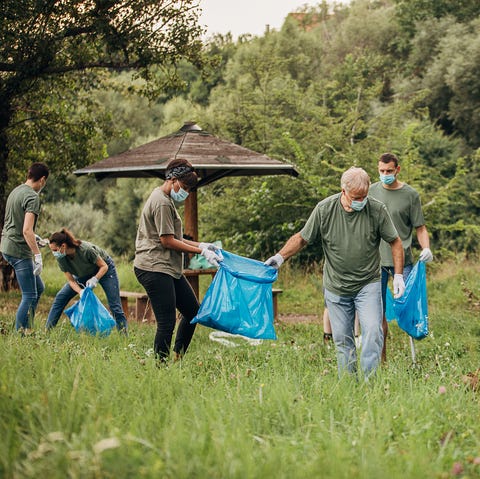
Volunteer regularly.

Research shows that pitching in regularly can lead to less stress and lower blood pressure. Try to schedule an outreach mission of your own on a day of service; many recognize Martin Luther King Day as a prime opportunity, or even Veteran’s Day in November. So use this day to jumpstart a longer-term personal commitment — and consider working on this goal with loved ones all year round.

SOUTH_AGENCYGETTY IMAGES

ny resolutions

Explore new hobbies.

paint palette
Getty Images

Another sleepy Sunday? Today’s the day you try Ethiopian food, attend a ballet, or take a painting class — whatever feels fun. When researchers followed 7,500 people for 25 years, they found that those who complained of major boredom were roughly twice as likely to die from heart disease.

Start walking more

Even if you can’t keep track of a new fitness routine, keeping yourself moving on a simple walk around the neighborhood is a must. The U.S. Department of Health and Human Services maintains that adults should spend as much time moving each day as possible — and some physical activity (even just walking!) is better than none.

Do one thing at a time.

Multitasking doesn’t make you more efficient, but it does stress you out, says mindfulness expert Pedram Shojai, author of Focus: Bringing Time, Energy, and Money Into Flow“If your focus is fragmented, you’ll likely find yourself getting anxious as new items come up when old ones are still incomplete,” he says.

Instead, he suggests, organize your activities into chunks of time, such as kid time and cooking time, and then “commit to being focused in those allotted minutes and see what happens.” It’ll help stop you from overthinking everything.

Getty Images

to do list

Give yourself more compliments.

compliment
Getty Images

Repeat after us: “Today is my day. I’m thankful for me.” Positive self-talk can help you focus on what’s good in your life, says psychologist Joy Harden Bradford, Ph.D.

Research shows that a little vitamin G (for gratitude) can make you feel happier and more satisfied and even improve your sleep. “If you repeat an affirmation related to gratitude in the morning, you’re likely to show and feel more of it throughout that day,” Bradford says. You’re so welcome!

Head outside without your phone

In a previous GH survey, 83% of people told us they lost track of how long they spent on their devices. But short of deleting all social apps, it can be hard to trade screen time for more productive pastimes like walking the dog and coffee with friends. Whether you’re Team iPhone or Team Android, download the latest software to access built-in tools that help you track your personal app usage. Set screen downtime is also very helpful to remind you need to stop.

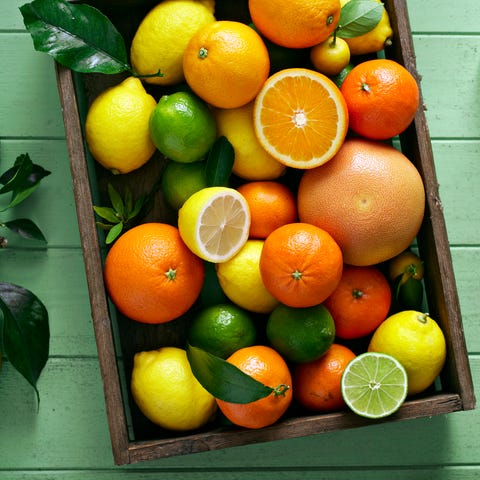
Add more citrus to your grocery cart.

When you see all those gorgeous in-season grapefruits, oranges, clementines, and pomelos in the produce aisle, grab an armful.

Winter citrus can help keep skin looking healthy thanks to vitamin C, which aids in collagen production. In fact, an American Journal of Clinical Nutrition study found that people who ate foods high in C had fewer wrinkles and less age-related dry skin than those who didn’t. Try clementine sections sprinkled with pistachios or sweet grapefruit dipped in Greek yogurt for a snack.

Getty Images

achievable new year's resolutions

New Year’s Resolutions for a Healthy, Happy Life

Link: https://peacelilysite.com/2023/01/05/new-years-resolutions-for-a-healthy-happy-life/

Source: https://www.goodhousekeeping.com/health/wellness/advice/g985/achievable-new-year-resolutions/. https://www.goodhousekeeping.com/life/g38322638/life-changing-books/

Patience Helps Us Slow Down When Things Speed Up

Patience Helps Us Slow Down When Things Speed Up

By Sophie Caldecott

I recently realized that I live most of my waking hours in a state of perpetual striving. There’s a nagging voice at the back of my mind constantly adding new items to my to-do list. My phone is littered with notes made at odd times of the day and night, reminding me to email this person, pitch that idea, edit my website, write this blog post, make a healthier meal plan, and complete a complicated DIY craft project with my kids. 

The lists spill out over the pages of my notebooks and diary, onto sticky notes and scraps of paper in my purse. The to-do list is an ever-evolving beast that is never satisfied, and leaves me feeling impatient, frustrated, and restless. Can you relate?

Overstimulation sets us up for failure

We crave peace — to be fully present in the here and now; to soak it all up; to be grateful for all that we have. But our minds constantly skip ahead to the next task. We barely notice when we reach or surpass one goal because we’re so focused on what we haven’t achieved yet.  

We live in an unnaturally fast-paced culture, with a 24/7 digital connection to the rest of the world. With all the noise that surrounds us, we feel pressure to cram as much into our schedules and brains as possible. 

One of the many consequences of this overstimulation can be that we end up holding ourselves to impossible standards and get impatient with our limitations and seemingly “slow” progress. There are so many things we could do, and we’re more aware of all our options and potential than ever. It can be hard to remember how impossible it would be to actually do it all.

Patience can unlock productivity and open the door to growth

Research shows multitasking damages our productivity and can negatively impact the way our brains process information. We know that rest is essential for our well-being and creativity. The benefits of disconnecting from our tech and making an intentional choice to slow down our lives are more and more widely discussed. 

I’ve found in my own life, however, that understanding the benefits and actually internalizing those beliefs are two different things. One of the trickiest aspects of choosing to unplug and slow down is to tune out that frantic, impatient voice telling us that we’re not achieving enough fast enough. So what’s the solution?

Patience is the antidote to this sense of restless striving — especially learning to have patience with ourselves. Here are a few ideas to help you cultivate this in your own life. 

Tips for cultivating patience

1. Understand that your energy will ebb and flow

Despite what our post-Industrial Revolution capitalist society would like us to think, we’re not machines, and our bodies have more in common with the natural world and the seasons than our constantly switched-on devices. Research shows that our brains rarely work well for long uninterrupted stretches of time, and, as Inc. put it, “An 8-hour workday only makes sense if you’re screwing in widgets on an assembly line.”

You’re probably already aware of your favorite time of day, and have a sense of whether you work better in the morning, afternoon, or evening. This applies to the seasons, as well — your productivity and whether or not you’re feeling at your best, in general, can be hugely influenced by other factors like your hormonal cycle, your health, and whatever is going on in your life at that particular time.

Remembering you’re not a machine and that your mood, abilities, and needs will be constantly shifting and changing can help you become more patient with yourself. 

2. Grow in self-awareness

In their online course, A Seasonal Year, Maddy Lawson and Eleanor Cheetham suggest mapping out the year to find where your energy is naturally highest and where it’s lowest. Think about what kind of work fills you up, and what kind of work leaves you feeling more drained. Consider which seasons find you scribbling down new ideas like there’s no tomorrow, and which ones make you feel like hunkering down and staying firmly in your comfort zone.

Once you’ve learned to recognize your own patterns, you’ll be better placed to think creatively about how you can work with your tendencies, rather than against them. We don’t always have a choice about how much work we have on our plates or how we spend our days, but we usually have at least a little more choice than we think we do. And growing in self-awareness is the first step toward becoming more patient with yourself.

On my own journey towards self-awareness, for example, I’ve learned that my energy tends to be the lowest in the winter. So now I can prepare myself to be less ambitious and more patient with myself during that particular season.

3. Stay curious about your roadblocks

Nir Eyal, the author of Indistractable, encourages us to watch out for the moments when we start to procrastinate and question why we’re putting something off. He points out that there’s always a deeper emotion underneath the instinct to procrastinate — whether that’s fear of failing, not knowing how to do something, weariness and feeling too burnt out to engage with it, or just plain boredom. 

When you cultivate a habit of observing the things that trip you up — that hold you back from making the progress you’d like to make without judgment — you can have more empathy for yourself instead of beating yourself up or calling yourself lazy. Keep in mind, though, that this isn’t about making excuses or trying to get out of doing the necessary work. When you can say, “That’s interesting, I’m trying to put off doing this thing because I’m really tired right now,” it’s easier to be patient with yourself. This allows you to find potential solutions — like rearranging your schedule in order to tackle a task later on with renewed focus and energy — rather than just getting frustrated with yourself.

4. Notice, celebrate, and cultivate gratitude for the good

I’m guilty of not taking the time to reflect on — or celebrate — the good things in my life. I recently achieved a dream I’d been harboring for years, and after about five minutes of feeling excited and happy about it, I went back to worrying about the next thing. This experience helped me realize that patience is a habit — a mindset that we have to cultivate — and that it’s intimately linked with gratitude.

It can feel kind of corny or egotistical to stop and pat yourself on the back when something goes well or you handle something in a way that you’re proud of, but as I get older I’m realizing how important it is to celebrate the small victories. Regularly refocusing on the bigger picture can help you see how far you’ve come, have a deeper sense of gratitude for where you’re at, and make peace with the time it takes to get anywhere good.  

Patience is a virtue

Ultimately, having patience with ourselves helps us to develop deeper patience for others, and it all starts with understanding ourselves better. These tips will help you to self-assess, put patience into practice, and reap the benefits of increased self-awareness and productivity throughout your life. It might seem counterintuitive, but when things speed up, we should slow down — and watch the wonderful results that patience provides. 

Patience Helps Us Slow Down When Things Speed Up

Link:https://peacelilysite.com/2022/12/28/patience-helps-us-slow-down-when-things-speed-up/

#Patience#Cultivate#Self-assess#Self-awareness

Source: https://grottonetwork.com/navigate-life/health-and-wellness/how-to-be-patient-with-yourself-tips/

The Story of Bhiksuni Weimiao

The Story of Bhiksuni Weimiao

Sutra about Wisdom and the Foolishness [賢愚経] ( A sutra translated into Chinese in 445 by Hui-chüeh and others. It contains sixty-two Buddhist tales (sixty-nine tales, in a separate extant edition). A Collection of Records concerning the Tripitaka, the catalog of the Buddhist canon compiled by Seng-yu (445–518), ascribes the translation of the Sutra on the Wise and the Foolish to others. According to that work, T’an-hsüeh, Wei-te, and six other priests went westward from northwestern China to Khotan on the southern edge of the Takla Makan Desert to seek Buddhist scriptures. They happened upon a great Buddhist ceremony that was held once every five years at a monastery. There they heard the learned monks expound the Buddhist scriptures and rules of monastic discipline in the language of Khotan. T’an-hsüeh and the others translated and recorded the lectures in Chinese. Later they returned from Khotan and, upon reaching the region of Turfan, compiled the lectures given by the monks in Khotan as a single sutra, which is known as the Sutra on the Wise and the Foolish. The sutra contains stories explaining the causal relationship between incidents in one’s past existence and those in one’s present existence. In each of these stories, Shakyamuni Buddha makes a connection between someone living in the present and a person involved in a past incident. The law of cause and effect states that every single action in the universe produces a reaction no matter what. We need to abstain from anything that is evil, do everything that is good, and use the correct understanding and views to cultivate. Don’t violate any of the precepts, otherwise you will end in miserable retribution. 

This story comes from ” Karma Scriptures about Wisdom and Foolishness “, the third volume in the ” Weimiao Bhiksuni “. In the era of Buddha Sakyamuni, many aristocratic women after ordination were very worried that their habits, such as lust, anger and ignorance, had not been eliminated yet. So they gathered to consult Bhiksuni Weimiao who had already attained the arhatship. Weimiao Bhiksuni told everyone the pain of the desire to bring, and tells the story of her previous life experience…

The Story of Bhiksuni Weimiao

Link:https://peacelilysite.com/2022/12/28/the-story-of-bhiksuni-weimiao/

#Buddhism#BuddhistSutra#Wisedom#Foolishness#KarmaScriptures#WeimiaoBhiksuni#CauseandEffect#Casulity

Source: https://www.nichirenlibrary.org/en/dic/Content/S/329

What Gratitude Journaling Taught Me About Happiness

It's easy to focus on the negative aspects of life, but gratitude journaling can change your perspective.

What Gratitude Journaling Taught Me About Happiness

By Lillian Fallon

“You cannot have happiness without gratitude.”

I heard these words in a homily years ago and have struggled to put them into practice ever since. I’m the type of person to lay awake in bed at night planning my next step in life, ruminating over different career advancing tactics, and fantasizing about the future I want. I tend to reflect more on things I want than the things I already have.

The idea of keeping a gratitude journal for a month was like partaking in an intriguing experiment. I wondered if I’d finally experience the elusive gratitude = happiness equation I hadn’t solved yet.

So on the first of the month, I drafted up a little doc titled, “Gratitude Journal” in the notes app on my iPhone. Four weeks and 2,000 words later, I concluded my journey for gratitude. Here’s what happened.

During

“Oh crap, I gotta do this now so I don’t forget.” This is the thought that would come to me every night at 10 p.m. when my journal reminder went off. But what initially felt like a to-do task eventually became something I looked forward to, simply because I was constantly surprised by the things I was grateful for.

When I thought back on my day, I’d suddenly remember odd moments that brought me joy that I’d typically forget about. For example, during the first week of that month, I helped a designer prepare their collection for a runway show. While this was, of course, a big thing to be grateful for, my journal mostly consisted of smaller things from that week.

I was especially grateful for an authentic encounter I shared with a model. She was just very sincere and kind and I remember my heart being warmed by the genuine human connection we shared. When I was writing down the things I was grateful for, that encounter stood out to me more than anything. It made me realize that it’s more important to value the people I meet than the things I do.

At the end of the day, I’d find myself feeling the most gratitude for the human encounters I had. Whether it was chatting with a stranger on the train, listening to music all day in friend’s apartment, having a heart-to-heart with my sister on FaceTime, playing guitar with my neighbor, or sharing a meal with my aunt, my gratitude journal ended up being very people-centric.

The things I was grateful for during my nightly reflection began leaking into my day-to-day experience. Instead of later identifying moments of joy, I began thinking, “This is making me happy right now,” and I started embracing the feeling of happiness while it was happening. By taking a few moments every night to reflect on the things I was grateful for, I was conditioning myself to be more grateful 24/7.

Photo by Polina Sirotina on Pexels.com

After

Re-reading my gratitude journal allows me to be transported back to moments that were specifically positive. In life, it’s easy to just focus on the negative. Even when the good outweighs the bad, we remember the bad over everything. Because a gratitude journal quite literally only focuses us on the good, it made me reflect on the good that I experienced for a whole month, thus prompting a “hey, life ain’t that bad” moment.

Some things I straight up forgot about. Like one day I got distracted and walked too far, missed the block my train was on, and got lost. My wrong turned landed me on a street that held a Catholic church. The doors were wide open and warm light poured out. I took this as a sign to visit Jesus. It was such a cool, surprising moment, and I felt the call to visit Him in the tabernacle so strongly — but I somehow forgot it until re-reading my gratitude journal. Now I get to relive how cool that experience was.

Re-reading my journal also allowed me to connect some dots. Aside from the theme of valuing authentic human interaction, I noticed that the days I felt the most gratitude were days I wrote about the little things. I can’t tell you how many times I wrote down that I was grateful “for heat in winter,” or “for my comfy bed,” “for being friends with my neighbors,” or even more simply, “for feeling happy again.”

And there you have it, the gratitude = happiness equation. As I look through my journal now, the last days all repeat the same thing: gratitude for feeling happy. At the beginning of the month, I felt suffocated and limited by the very things that I was grateful for by the end of the month. I’ll admit that this was a big month for me internally — I was searching for direction and meaning. I believe I received it through lots of prayer and learning to be more grateful for all the things I jotted down at night.

I’ve realized that change doesn’t necessarily come from the big life events that happen to us — usually, it’s the smaller, internal events that build up over time until we’re transformed without realizing it. I think that’s what keeping a gratitude journal is all about: writing down the little things from each day, and then reflecting on how all those little things actually amount to big things.

Come to think of it, happiness doesn’t come from something big happening to you, either. Real happiness comes from making daily decisions to cherish the gifts you’ve been given, no matter how big or small. Having gratitude for the little things will slowly but surely build genuine joy.

Honestly, I wasn’t planning on keeping a gratitude journal after one month, but after reflecting on the impact it had on me after just four weeks, I think I’d better.

What Gratitude Journaling Taught Me About Happiness

Link: https://peacelilysite.com/2022/12/20/what-gratitude-journaling-taught-me-about-happiness/

#Happiness#Grateful#Gratitude

Source: https://grottonetwork.com/navigate-life/health-and-wellness/how-gratitude-journaling-helps-with-happiness/

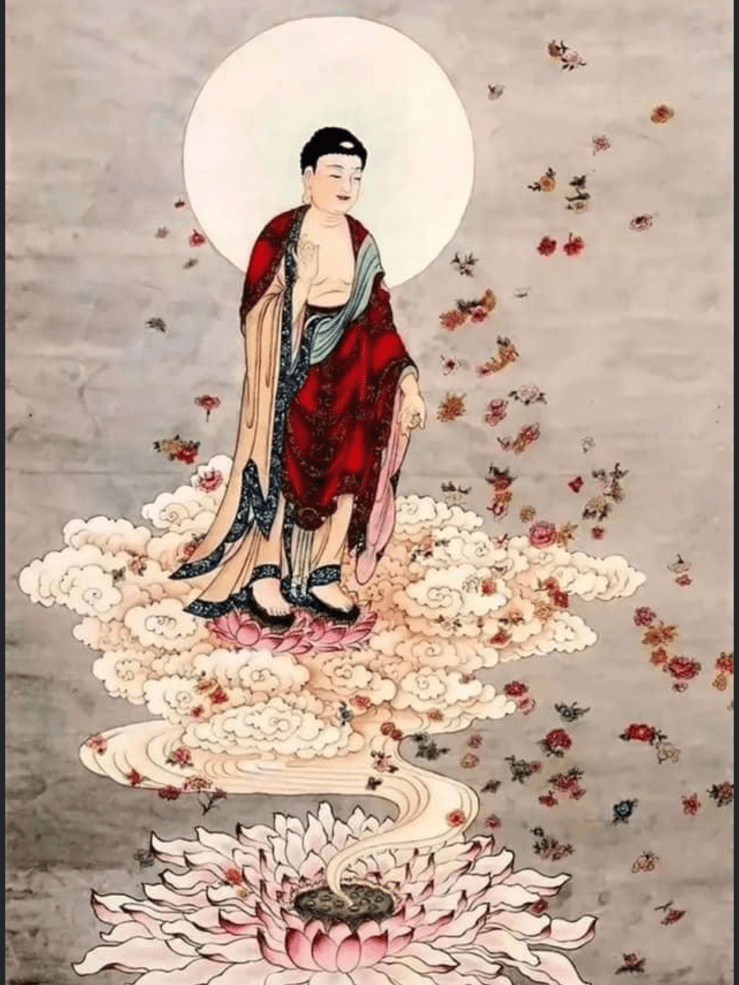
Amitabha Pureland Practice and Amituofo Chanting

Amitabha Pureland Practice and Amituofo Chanting

Pure Land Buddhism (Chinese: 淨土宗) is a broad branch of Mahayana Buddhism focused on achieving rebirth in a Buddha’s Buddha-field or Pure Land. It is one of the most widely practiced traditions of Buddhism in East Asia. 

Pure Land is a tradition which is primarily focused on achieving rebirth in a Buddha’s “pure land” or buddha-field (Sanskrit: buddhakṣetra), which generally speaking is a Buddha’s field of influence. Some Buddha-fields are considered to be superior places to spiritually train for full Buddhahood, since a Buddha has compassionately “purified” it for this purpose and since in these realms, one can meet a Buddha face to face and study under them. The most common pure land today is that of Amitābha, called Sukhavati, “Land of Bliss”.

For many Buddhists, simply chanting the name of Amitabha Buddha, the Buddha of Infinite Light, is a complete mindfulness and devotional practice. Taking refuge in this way brings a feeling of immediate peace. Shakyamuni Buddha taught this method in the Amitabha Sutra. This simple, yet divinely rich practice combines devotion with mindfulness, of the sacred name of the Buddha.

The Buddha taught us many ways to practice in decades of teaching the Buddha Dharma, mapped out in 80,000 discourses and Sutras. Some of these are “learning practices” such as “Sutra recitation.” Others are vastly intricate and beautiful, such as Vajrayana visualization Sadhanas. Yet, for most of us, the sublimely simple practices are the best way to approach the Dharma, from mindfulness practice, to the most misunderstood of practices, chanting Amituofo. Ten Benefits of Chanting Namo Amituofo Practice Shakyamuni Buddha taught the 10 great benefits of chanting the name of Amitabha Buddha, as a complete practice, in the Amitabha Sutra. This is a devotional mindfulness practice. Single-Pointed focus and mindfulness is the ultimate goal, and can be achieved a number of ways.

Three Holy Beings in Western Pure Land

Zen Koans are blissfully challenging. Watching the breath is a relaxing mindfulness practice. Chanting the Name or Name Praise of Amitabha is another quintessentially simple — yet penetratingly deep — practice. It makes the focus of our mindfulness, the Perfect Buddha. These ten great benefits of chanting Amitabha, as taught in sutra, include protection, support of all the Buddhas and Bodhisattvas, purification of negative karmas, restful sleep, a peaceful mind, and rebirth in Amitabha’s Pure Land. When you participate in this elegant and powerful practice, you feel immediate peace and comfort.

The entire practice is to mindfully chant the name — sometimes just the name, sometimes as a praise — of the Buddha of Infinite Light, Amitabha. Often this is embellished with the wondrous sound of the hypnotic fish drum, or the regular gong of a bell. Sometimes it is chanted musically; sometimes spoken; sometimes whispered. The immediate reward: a feeling of peace and protection. Many Buddhists — in Non-Pureland traditions — tend to think the practice is too simple, too reliant on faith and praise. If we think this way, we are missing the point. Single-Pointed Focus on Amitabha Like other traditions with single-focus meditation methods, Pureland Buddhist’s chant the name of Amitabha over and over. Mindfulness of the name of Amitabha is a powerful and profound practice. Instead of remaining mindful of something mundane, such as breath, or your walk in the park, Amituofo chanting keeps our mind focused in the present moment on the Enlightened Perfection of Amitabha Buddha. The entire practice is to simply chant, or say, with mindfulness: Amitabha, Amitabha, Amitabha… nothing else. Or using the Chinese version of the name Amituofo, Amituofo, Amituofo. Fo translates as Buddha. Keep the mind focused, in the present moment, on just the sound of your own voice: Amituofo, Amituofo, Amituofo.

Amitabha Pureland Practice and Amituofo Chanting

Link: https://peacelilysite.com/2022/12/16/amitabha-pureland-practice-and-amituofo-chanting/

#AmitabhaBuddha#WesternParadise#BuddhaStatue#BuddhaNameChanting#PureLand#BuddhistSutra#AmituofoChanting

Meeting My Buddha Master and Becoming a Disciple

Meeting My Buddha Master and Becoming a Disciple

By Gadu Rinpoche

In the beginning of 1999, a short trip of pilgrimage to the Buddhist holy sites in ancient India gave me the second feeling of returning home. In particular, when we were all prostrating around the Buddha’s Nirvana Temple in Kushinagar and respectfully lighting up 108 lights during the morning practice, suddenly dharma joy grabbed my entire body. I felt pleasantly serene and happy as if I was at the side of Sakyamuni Buddha. The feeling of coming back to home was so good! However, this was only a feeling from my emotions. I did not reach enlightenment in Buddha-dharma. There was no realization power to talk about. I kept asking myself whether this was due to my heavy karmic blockage. Otherwise why didn’t I receive practical benefits from the practice of meditation and some other dharmas? The more I thought about this, the more I felt that I was a very inferior person. The more inferior I felt, the more I was determined to learn and master Buddha-dharma.

One day, I received a copy of the book True Stories about a Holy Monk from a fellow Buddhist friend. I opened the book and started to read. Upon reading into the section about Buddha bestowing nectars, I suddenly entered into a somewhat dazed state of mind. The holy scene of Buddha bestowing nectars emerged in my mind. Such impression appeared real but was illusionary, gave the feeling of between existence and non-existence, was felt like my own experience and lasted a long time before disappearing. There was an indescribable joy in my mind.  From that, I was sure that this is the true Buddha-dharma and is truly what I should quest for, rely upon and practice. After reading the book, I often felt in my mind an urge of wishing to meet and pay respect to the great holy one in person as early as possible. On the other hand, I also felt sad for the expected departure from the monk students at the Buddhist Academy whom I supported for quite a few years.

One day, on my way to work in the morning, this question came to my mind again. I suddenly felt a lump in my throat and tears gushed out from my eyes. I uncontrollably burst into a big cry. I managed to hold off my feelings to drive into the underground parking lot of my company. Once the car stopped, I could not control my emotions any longer and I cried for 20 minutes in the car. My eyes became swollen. I repeatedly beseeched Kuan Shi Yin Bodhisattva to empower me and point out my way. After a while, I thought that for a person with such heavy karmic blockage, how could it be possible for me to receive empowerment and guidance from Kuan Shi Yin Bodhisattva?

I put on a pair of sunglasses and went into my office. I sat on my chair with my mind being blank. Within five minutes, my secretary came in and asked me if I wanted to answer a phone call from a fellow Buddhist sister. I said yes. Once I picked up the phone, from whatever she told me over the phone, the only thing I could remember was “Brother, would you like to go on a trip to pay respect to the great holy master?” At that time, I happily answered, “Yes, Yes, I do!” I immediately prostrated on the ground with my palms together to thank Kuan Shi Yin Bodhisattva for pointing out the path for me.

I flew across the Pacific Ocean to the United States to pay respect to my greatest and kindest Buddha Master, H. H. Dorje Chang Buddha III, in the end of 1999. When I respectfully presented my offering gift as homage to the dharma with a pure white hada in prostration, my heart was beating heavily and my eyes dared not face upward. However, with only one brief peek, I felt enlightened right away. My instinct told me that this great holy being in front of my eyes is a Buddha! At the instant when the Buddha’s eyes were staring very benevolently at me, I felt that an extremely strong force of empowerment was transmitted from the top of my head into my entire body. My whole body felt very warm. This time I really came back home! I felt extremely confident and tears flooded out of my eyes. I did not have enough words to describe the dharma joy I had at the time.

After I had calmed down my feeling, my Buddha Master spoke to me, “Weren’t you looking at the sky since your childhood to search for answers? I will tell you now.” My Buddha Master told me the important affinities in my current life as well as the affinities between my Buddha Master and me from the past lifetimes. My Buddha Master also told me to buy an alms bowl and bring it back immediately. I and Henghsing Gyatso Rinpoche immediately bid farewell to my Buddha Master and left. We asked a fellow sister to drive us to a shopping mall to buy an alms bowl. Because of our unpreparedness, we could not find the alms bowl we needed. In the end, I had to buy a porcelain soup bowl with cover and came back. My Buddha Master looked at it and then asked Henghsing Gyatso Rinpoche who took me to buy the bowl whether he had provided any suggestion or advice to me. Henghsing Gyatso Rinpoche answered, “No, I did not. He chose the bowl and bought it on his own decision. I did not do anything for him.” At that time, I presented the bowl to my Buddha Master. My Buddha Master told me, “Do not hand it to me. I will not touch your bowl. You go and fill it with water by yourself.”

I immediately washed clean the porcelain bowl I bought with pure water and wiped it dry with the hada. Then I, by myself, filled it with pure water and respectfully laid it on a square dharma table that was before us.  My wife and I prostrated in front of the dharma table. We respectfully held our palms together and kept chanting “Om, Ah, Hum!” My Buddha Master was at a distance of more than three meters from us and conducting the dharma at the top of a tall dharma rostrum. Not long after, at my Buddha Master’s dharma decree, bodhi holy water penetrated the side of the bowl and flowed out. I saw with my eyes that dharma water permeated through the surface of the porcelain bowl filled with pure water and flowed onto the table. At this time, at every dharma decree from my Buddha Master, the dharma water flowed to the left, right, or forward, exactly as instructed. My wife and I gazed at the scene and were simply speechless. My Buddha Master told us, “I will use this bodhi holy water to set up the mandala to guard against demons from stealing the dharma. I am going to perform an initiation for you two.” After that, my Buddha Master sprinkled dharma water around the perimeter of the mandala (Buddhist altar for transmitting Buddha-dharma or worshipping Buddhas and Bodhisattvas) to prevent evil beings and demons from listening to the Tathagata Dharma. Then the ceremony of initiation started. At the moment of dharma water sprinkling down to my head, I felt an extremely pleasantly cool feeling of empowerment that was pouring from the top of my head to my heart. The dharma joy I experienced at the time cannot be described in written languages.

During the six years before meeting my kind Buddha Master, because of my foolishness, deep and heavy attachment to the self and various types of ignorance, I created much dark karma. Consequently, my health was deteriorating steadily as time went by and eventually had to be sustained by medicine and the injection of placenta extract. My complexion was black and dark. Upon seeing me for the first time, my Buddha Master told me, “Your health is not good. I will teach you a dharma now. You should make a good effort in practicing it. You will get well.” In the years since then, I cultivated by adhering to the teaching and practiced according to the dharma. Miraculously, my health has recovered completely. From the year end of 2002 until now, I have not had much illness to speak of. Except going to the dentist office once a year to clean my teeth, I did not visit any hospital or clinic. For a 1,000-mile long-distance driving of 16 hours from Los Angeles to Portland, Oregon, I drove by myself without a stop and did not even feel tired. All these come from the empowerment of the great Buddha-dharma from my Buddha Master!

Before respectfully meeting my Buddha Master, I heard that my Buddha Master had been living in a room on the second floor of a fellow brother’s home, where the space is small. My wife and I immediately had the idea of offering a house to my great and kind Master, for propagating Buddha-dharma in America. Upon being led into the mandala where we became my Buddha Master’s disciples, the wish of offering the house emerged immediately. We respectfully reported to my Buddha Master and beseeched my Buddha Master’s benevolence to accept it. However, while my wife and I respectfully stated what we intended to present, my Buddha Master replied, “I accept your sincere wish but I do not accept the house. However, I will temporarily stay in your home for two years.” My Buddha Master’s discourse made me very surprised. For years, I had been cultivating and practicing in exoteric sects of Buddhism. I supported and made offerings to many monks, dharma masters and major temples. I never received a response like that. The conduct of the Buddha is so pure, selfless, faultless and great as to beyond my imagination. Later on, I also made offerings of great sums of money. My Buddha Master also declined them all. Where in the world can you find such person? There is no such eminent monk even among eminent monks. Only Buddhas and Bodhisattvas in Buddha-land possess such holiness and pureness.

Meeting My Buddha Master and Becoming a Disciple

Link:https://peacelilysite.com/2022/12/16/meeting-my-buddha-master-and-becoming-a-disciple/

Source: https://xuanfa.net/bibliography/free-books-to-download/cultivating-honesty/?hilite=gadu+rinpoche
#DorjeChangBuddhaIII #HHDorjeChangBuddhaIII#GaduRinpoche#BuddhaMaster#BuddhistDisciple

How to be Patient with Yourself and Others in a Changing World

How to be Patient with Yourself and Others in a Changing World

By: Rochelle Perper, Ph.D. | July 10, 2020

We live in a time where everything can change at an accelerated pace. No protocol exists for a time like this, no wisdom upon which to rely or set a course to follow. If ever there was a time when we should show patience, it would be now, right? After all, we’ve never done this before, and we can’t expect to get it right the first time. Sadly, too many of us do the exact opposite. We hold ourselves and others to unrealistic standards, beat ourselves up for not doing it well enough, criticize ourselves for lagging behind too long, and expect not to feel natural, human emotions.

Patience is that natural power we have within ourselves to wait for something without getting angry or upset. The longer we must wait, however, the more patience escapes us. In our changing world today, it’s no wonder that our patience is being tested. We are still waiting for answers to questions like “When can we resume usual activity?”“What will school look like next semester?” or “When will we see a real change for racial equality?”

In our changing world today,
we could all use a little more patience –
with ourselves, our world around us, and with others.

Why is it important to be patient?

In the best of circumstances, disruptions to our daily routine cause frustrations that unnerve us. Now, consider the added stressors of:

  • Negotiating new social norms and health protocols
  • Grappling with anxiety and fear for the future
  • Feelings of outrage in response to police brutality and racial injustice
  • Suffering with personal and collective grief
  • Managing added responsibilities

No wonder we have a tough time. Quite frankly, it’s exhausting.

We all want to feel or be better as quickly as possible, an understandable goal in our achievement-driven world. The common misconception prevails that if we push ourselves, we will drive ourselves toward reaching our goals. This is simply incorrect.

When we are inpatient with ourselves, we reject parts of who we are, judge ourselves harshly, and speak to ourselves unkindly. Do thoughts like “I should be used to this by now,” “I can’t get anything done,” or “I’m so exhausted all the time; there must be something wrong with me” sound familiar?

This lack of patience blocks change because we deny ourselves support and knock ourselves down. This leads to lack of motivation to keep trying, and we end up stopping before we’ve really ever started.

Tips to be more patient:

Learning to stay patient with ourselves and others is one of the hardest skills to master in life. And, we need it now more than ever. Use the tips below to engender patience:

1. Focus on progress, not perfection

Think for a moment how you would talk to a child when learning something new. You would likely offer this child encouragement and support while passing off mistakes and errors because this is how kids learn and grow. So, why would you speak to yourself any differently?

You wouldn’t blame a child if they didn’t get it right the first time or get frustrated along the way. Even as adults, we never outgrow the need for gentle, supportive guidance. Try focusing on the progress you make and what you learn rather than beating yourself up for not doing it right or aren’t far enough along.

The same goes for others too. When your partner, a neighbor, co-worker, or stranger at the store acts in an irritable, unhelpful, or unkind way, try giving them the benefit of the doubt. We easily imagine the worst in people, but we never really know their story or what situations they come from. We can safely assume that these times present difficulties for everyone. We all deserve a little grace when we fall short now and again.

2. Practice

Like anything else, learning to garner patience with ourselves takes practice. Research shows that waiting makes us happier in the long run. Give yourself the opportunity of time to earn your reward and resist the urge for immediate gratification. For example, try the following:

  • Allow someone to go in front of you in line at the post office
  • Really listen to someone else’s opinion without interrupting them and before you respond
  • Watch half of a movie one night, and the other half the next night
  • Wait a few moments to begin eating when you sit down for a meal

As you practice, you will begin to gain more patience, and may even realize that you feel calmer, can come to agreements more quickly, and feel happier overall.

3. Reduce stress

Patience comes with more difficulty when you have a lot on your plate and a lot on your mind. When overscheduled or preoccupied with worries, you have diminished capacity to put forth the effort required for patience. To remedy this, examine the things in your life that cause your stress. Try to find solutions to these problems and ask for help when you need it. Look at where you spend your time and see what you can cut out to allow more time to focus on the things that are important to you.

There is no substitute for good old-fashioned self-care to reduce stress. Research shows that three deep abdominal breaths three times a day lowers your levels of stress hormone in your bloodstream. Other relaxation techniques include imagery, guided meditation, body scan, or mindfulness practice. Of course, you also reduce stress if you get enough sleep, allow for physical activity in your day, and eat healthy (especially avoiding too many sweets and alcohol.)

Photo by Marek Piwnicki on Pexels.com

4. Stop multitasking

We are more impatience when we juggle too many things at once. We all do it, we jump from one task to another without finishing the first. This practice proves ineffective time and time again. Worse, it causes a great deal of frustration because you do not do any one of these things well. By focusing on one thing at a time you will feel calmer and accomplish a great deal more.

Bonus tip: Before you go to bed, write down 3 things on a post-it note that you want to do the next day. Make these tasks a priority by tackling them first and resist the urge to get distracted by other things. Research in organizational settings demonstrated that this strategy significantly increased productivity in the workplace.

Change isn’t easy. Quick fixes reside mostly in theory, and lasting change takes time. We will experience challenges, and we may even go backwards at times. Long-term success includes small steps in the direction of your goal. With calm, controlled perseverance and loving kindness, you will achieve whatever you’ve set out to do.

5. Say kind things to yourself

Patience with ourselves and others requires mindful recognition of our humanity and that none of us are perfect. Patience means embracing yourselves with self-acceptance and focusing on progress rather than on perfection. It means giving yourself compassion rather than withholding it. It means speaking to yourself with more kindness and empathy such as:

“I know this is hard. I know you’re struggling,
but I believe in you. You can get through this.”

Changing your internal dialogue provides the most helpful practice you can do to develop the patience that resides within you. Cognitive Behavioral Therapy (CBT) is a technique used to identify critical, negative thoughts and develop a more balanced way of thinking. Learning to change your internal dialogue takes time, so try to be patient with yourself as you learn to be more patient with others.

How to be Patient with Yourself and Others in a Changing World

Link: https://peacelilysite.com/2022/12/08/how-to-be-patient-with-yourself-and-others-in-a-changing-world/

#Patient#Multitasking#Stress#Practice#Kind

Source: https://therapychanges.com/blog/2020/07/how-to-be-patient-with-yourself-and-others-in-a-changing-world/#:~:text=Patience%20means%20embracing%20yourselves%20with,I%20know%20this%20is%20hard.

Slow down and Look Around

Slow down and Look Around

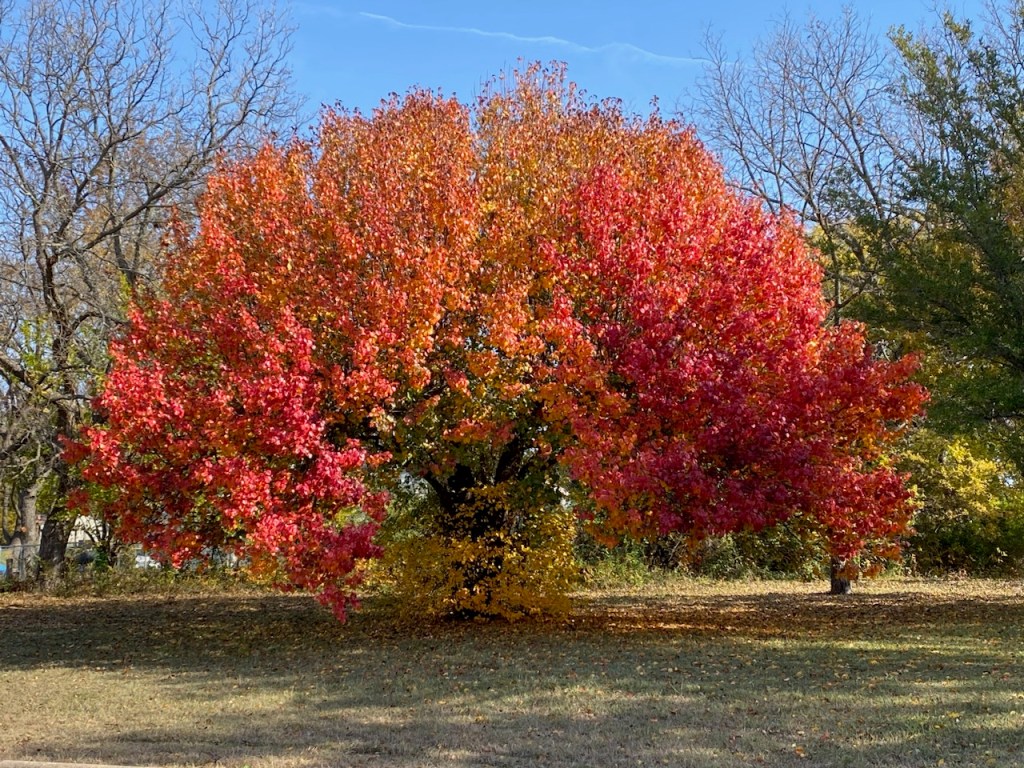
On weekday mornings, I hurriedly drive my son to school. Trying to beat the traffic and catch as many green lights as possible, the drive is usually a blur. One particular morning’s drive changed my perspective. While rushing down a wide arterial road, my son exclaimed to me that the trees on the sidewalk looked very beautiful.

Glancing over to the trees, I suddenly noticed the vibrant reds and yellows of the leaves clinging onto branches or drifting onto the sidewalk as the wind blew. Despite driving down this street every morning, in my hurry I had not noticed the changing colors of the trees until now, nearly the end of fall. The bright hues of the fall foliage was absolutely beautiful. This nature beauty made me slowing down my daily past pace. I feel the healing power of nature relaxing my tense nerves, and filled my heart with joy, peace, and harmony.

As I admired the scenery on the commute, I felt how wonderful it was to be present in the moment. I realized that oftentimes we lose sight of the little elements of natural beauty that are all around us. Life can be hectic, but we must make a conscious effort to enjoy the omnipresent beauty of our world.

A poem by a ancient Zen Master came to my mind:

Blossoms in Spring, Breezes in Summer,
Glorious moons in Fall, and Snow in Winter.
When one is not held back by nothing,
Every moment can be wonderful.

Egg Shells and Patience

Photo by Pixabay on Pexels.com

Eggs are an essential part of a good breakfast. There are countless ways to prepare them, but not all recipes are made equal. I used to cook omelettes for the family, but recently I learned that hard boiled eggs are actually a better choice. Hard boiled egg can keep more nutrients from the egg and avoid extra oil.

The only problem is, peeling a hard boiled egg is a rather arduous task. The shell and egg white absolutely refuse to be parted. Usually, the peeled egg ends up looking kind of like the moon, full of craters and lumps and whatnot. This morning, I got very frustrated trying to peel my hard boiled egg. It felt like the shell and egg white were superglued together. Even my mother’s old trick of placing the boiled eggs into cold water didn’t seem to work. After my first peeled egg ended up looking like a misshapen golf ball, I was ready to throw them all onto the floor.

Fortunately, I am a Buddhist disciple, and I remembered one of the most important things I’d learned: patience. I told myself, as a student of the Buddha who cultivates myself everyday, why am I still so easily distressed by outside events?

So I decided to let myself calm down for a while. I left the eggs in the cold water and went off to relax. After maybe fifteen minutes, I returned to give making breakfast another shot. Surprisingly, the shell peeled off easily this time. I realized that by being patient and giving the eggs more time to cool down, it was now much easier to complete my task. So when annoying things happen, we must first be patient. Let it all cool down, and things will be much easier to deal with.

Patient means embracing  yourself and all things around you with gentleness and kindness, and doing so will get happy and more productive results.

Slow down and Look Around

Link: https://peacelilysite.com/2022/12/08/slow-down-and-look-around/

Source: http://atranslatorsfarm.blogspot.com/2013/09/blog-post_2.html

#Slowdown#LookAround#NaturalBeauty#Patients#Eggshell#Buddhism#BuddhistDisciple