Yungang Grottoes

The Yungang Buddhist grottoes, a massive complex comprising 252 caves and niches with 51,000 statues carved into an area of 18,000 square meters, are a remarkable achievement of Buddhist cave art in China. Constructed from the mid-5th to early-6th century AD, the grottoes were influenced by Buddhist cave art from South and Central Asia but also incorporated distinct Chinese elements and local spirit. They played a crucial role among early Oriental Buddhist grottoes and had a far-reaching impact on Buddhist cave art in China and East Asia.

The five caves of Tanyao and their imperial patronage 

The construction of Yungang began with five cave-temples, known today as caves 16 to 20, at the west end of the cliff. These caves were imperial commissions of the Northern Wei dynasty in around 460 C.E. The Northern Wei rulers, who belonged to the Tuoba clan from northern China, had recently unified northern China after centuries of political turmoil and established Buddhism as the state religion. The dynasty’s capital, Pingcheng, became a significant center for Buddhist religious and artistic expression.

The five caves of Tanyao, created by Tan Yao, are classical masterpieces of the first peak of Chinese art, displaying a strict unity of layout and design. These caves each contain a colossal Buddha as the central icon, with Cave 20 housing a gigantic seated Buddha in a meditation posture and a standing attendant Buddha on one side. Another attendant Buddha likely existed on the other side, but it has been lost along with the cave’s exterior wall. The imperial patronage of these caves reflects the Northern Wei dynasty’s fusion of state power and religious devotion.

Buddha, Cave 20 at Yungang, Datong, China (photo: xiquinhosilva, CC BY 2.0)

The main Buddha measures roughly 13 meters in height. He has plump cheeks, a thick neck, elongated eyes, a sharply cut nose, slightly smiling lips, and broad shoulders, all of which produce a solemn appearance.

The well-preserved halo behind the main Buddha is composed of an outer band of flame patterns and two inner bands decorated with seven seated Buddhas of miniature size. The robe features zigzag patterns on the edge. The right shoulder of the main Buddha is left exposed, whereas the standing attendant Buddha on the east wall wears a robe that covers both shoulders with a high neckline. 

Historical records recount that Tanyao, a renowned monk cleric with official ranks, advised Emperor Wencheng to undertake construction of five cave-temples (Caves 16–20) to commemorate the five founding emperors of the Northern Wei dynasty. Claiming that the emperor of Northern Wei was the living Buddha, this project declared the emperor’s political and spiritual legitimacy, and strengthened the rule of the imperial family.

Buddha (left) and attendant Buddha (right), Cave 20 at Yungang (photo: xiquinhosilva, CC BY 2.0)

The statues housed in the caves and niches are in good condition and all of the caves and statues have not suffered major damage from vandalism and/or natural disasters. Restoration and repair had been made on deficient parts of some statues in the past. All the necessary attributes demonstrating the Outstanding Universal Value of Yungang Grottoes are contained within the boundary of the property area. The buffer zone provides a necessary safe area for the conservation of the Grottoes, the setting and the historic environment. These measures have enabled the Yungang Grottoes to serve as one of the greatest ancient stone carving art treasure houses in the world.

The location, caves and statues of the Yungang Grottoes have retained their historic appearance. The eaves of wooden pavilions of the caves and the related historical remains have kept the distinctive character of the times when they were constructed. The daily maintenance and conservation intervention have been conducted following the conservation principle of minimal intervention in design, materials, methodology, techniques and craftsmanship.

The cross-legged Bodhisattva Maitreya, on the east wall of the antechamber of Cave 9, phase II, Yungang Grottoes, Datong, China (photo: G41rn8, CC BY-SA 4.0)

The paired caves and the major development at Yungang

Beginning roughly a decade after the initial commission, the imperial projects at Yungang advanced to a second phase that lasted from c. 470s until 494 C.E. In contrast to the monumental Buddha found in Cave 20, the interior of the second-phase cave-temples are decorated with reliefs that depict Buddhas, bodhisattvas, and other divine figures in various scales and configurations.

One of the most distinctive features developed in the second phase of construction are paired caves—two adjacent caves featuring a similar architectural plan and pictorial program. The paired cave-temple layout is understood to symbolically represent the reign of two coincident rulers: Emperor Xiaowen (471–499 C.E.) and Empress Dowager Wenming (442–490 C.E.). The use of paired cave-temples became another means to demonstrate the dynasty’s imperial power.  
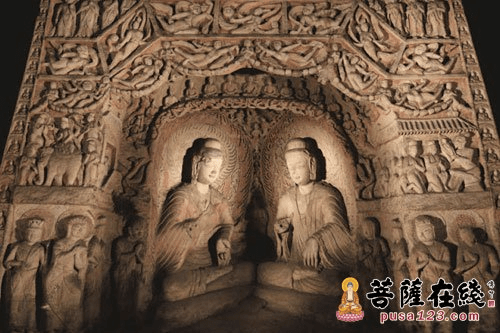
The paired Caves 5 and 6 are among the most lavishly decorated cave-temples at Yungang. Cave 6 has an antechamber and a square main chamber supported by a central pillar (see the full cave 6 in 3D). A square clerestory (window) is opened right above the passageway to the main chamber to let in light (although it is hard to see in photos or the 3D image).

In the main chamber of Cave 6, the east, south, and west walls are divided vertically into three main registers that include complex pictorial programs (the north wall features a large niche housing a trinity of Buddhas that are later repairs). We find seated Buddha figures and scenes from the Buddha’s life throughout the chamber. Depictions of the historical Buddha, who was believed to live in the Ganges River basin during the 6th century B.C.E., derived largely from Buddhist texts. The Buddha’s biography details the course of his life from birth to enlightenment, and eventually to nirvana, the final extinction. The life of the Buddha was among the most popular themes for artistic representation throughout the Buddhist world. 

The First Sermon of the Buddha at Deer Park, Cave 6, Yungang, Datong, China

One scene from the Buddha’s life (at the southern end of the east wall) shows the First Sermon of the Buddha at Deer Park, identifiable by the depiction of a pair of deer on the Buddha’s throne. We see a canopied standing Buddha flanked by two standing bodhisattvas and a myriad of worshippers in the background. Just below the standing Buddha niche, a seated Buddha with his right hand raised (the fearless gesture) can be seen in a trapezoidal-shaped niche flanked by two five-story pagodas (just visible at the edges of the scene in the photograph). Worshippers either kneel in front of the throne or stand facing the Buddha on his two sides.   

Rock-cut cave-temples

Rock-cut cave-temples first appeared in western India in the 1st century B.C.E. There are two basic types: apsidal-shaped (semicircular) chaitya (sanctuary, temple, or prayer hall in Indian religions) and vihāra caves where monks resided—both of which we find at places like the caves of Ajanta, India. Both types were transmitted eastwards to Central Asia up to the 5th century with modifications of the structures. At Yungang, the sanctuary type was further adapted into a square shape that houses a central pillar in the middle, as we find in Cave 6. At the same time, a number of architectural features find their precedents in Goguryeo tombs from present-day northeastern China and North Korea. 

But what facilitated these different traditions coming together at Yungang?

Ajanta, Cave 26, (photo: Arian Zwegers, CC: BY 2.0)

Transmissions and transformations of artistic styles

Yungang was a hub where multiple artistic traditions of South Asia, Central Asia, and pre-Buddhist China synthesized into something new. This was made possible by the Silk Road, a network of ancient trade routes linking East Asia with the rest of Eurasia. Goods and ideas have been exchanged along the Silk Road since at least the second century B.C.E. Central to the economic, cultural, and religious interactions between different parts of Eurasia, the Silk Road tied the Northern Wei territory to the sacred heartland of Buddhism in South Asia, and to Central Asian kingdoms that promoted Buddhist teachings. 

A primary factor facilitating the encounter of these varied traditions was the gathering of human resources and materials from different regions. In the 430s and 440s, the Northern Wei court issued decrees that relocated artisans and monks from its conquered lands to the capital city of Pingcheng. The concentration of people and craftsmanship in the capital led to the artistic flourishing of well-executed Buddhist monasteries, cave-temples, sculptures, and murals. Eminent monks who were active in Pingcheng had also engaged with religious activities in other urban centers such as Chang’an and Wuwei, and maintained close ties with Central Asian Buddhist communities.

Just as the form of the rock-cut cave-temples was adapted from earlier traditions in South Asia, statues and reliefs at Yungang exhibit strong stylistic and iconographic affinities with earlier Buddhist art traditions from northwestern India and Central Asia. For instance, the main colossal Buddha images in Caves 16 to 20 feature a round face, with a gentle, calm expression that creates an impression of sanctity, and a robe style that clings tightly to the body yet is rendered with schematic patterns. All of these features echo the aesthetics found in previous traditions, especially the Buddhist sculptures in Gandhara, a Buddhist center located in present-day northwest India and Pakistan. 

Yungang art exerted influence, in turn, on Central Asian cave-temples starting in the later 6th century, such as Dunhuang, indicating that a dynamic exchange took place among the major cultural centers along the Silk Road. 

An iconic form of the Buddha, 2nd–3rd century C.E., Kushan period, Gandhara, schist, 19.76 x 16.49 x 4.56 inches (The British Museum)

Sinicization reforms under the reign of Emperor Xiaowen

One of the new developments shown at Yungang that would have a long-lasting effect on Chinese Buddhist art was Sinicization, a process of adapting non-Chinese traditions into Han Chinese culture. In Cave 1, between the canopy of the central pillar and the ceiling we find intertwined dragons surrounding mountains that represent Mount Meru (the sacred mountain considered to be the center of the universe in Buddhist cosmology). The design shows strong influence of the pre-Buddhist Chinese tradition in two aspects. First, the dragons are depicted with typical Chinese conventions—a snake-like curving body with four legs. Mount Meru was not related to dragons in pre-Chinese Buddhist art traditions. The incorporation of dragons in the design reveals an integration of the motif’s symbolic reference to a spiritual life force in traditional Chinese beliefs.

Central pillar in Cave 1, c. 480s, Northern Wei, Yungang (photo: Zhangzhugang, CC BY-SA 3.0)

In Cave 6, we also see Sinicized traits in a new style of the Buddha’s monastic robe, which features loose drapery that falls around the body and clothes the Buddha entirely instead of the earlier style that clings closely to a partly exposed body. The new style finds parallel in the contemporary dress of court officials.

Overall, these new styles and motifs were a response to the political reform of Sinicization promoted by Emperor Xiaowen and Dowager Wenming during their reign in the Taihe era (477–499 C.E.). The reform aimed at legitimizing the Northern Wei regime, built by non-Chinese nomadic groups, as an imperial Chinese dynasty, and promoting a greater sense of conformity throughout the empire.
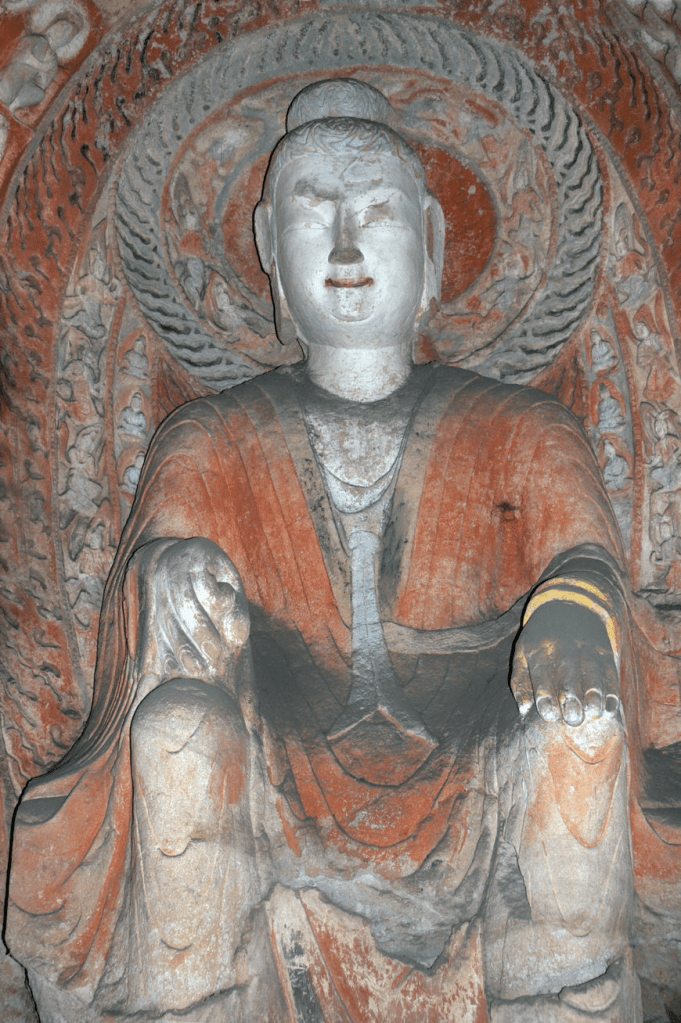
Buddha with Sinicized traits, Cave 6, Yungang, China (photo: Gisling, CC BY-SA 3.0)

The legacy of Yungang 

Despite the move of the capital to Luoyang in 494 C.E., constructions at Yungang continued for another three decades. Cave-temples of this phase are much smaller in size than at the earlier western end of the complex. Over half a millennium later in the 13th century when Yungang was the capital of the Liao Dynasty, Yungang witnessed another era of glory, with restorations of the caves and installation of wooden structures attached to their façades. Yet it was only a temporary phenomenon. The site later stayed silent for centuries until its early 20th-century rediscovery along with other major cave-temples by foreigners on expeditions.

Modern scholarship about the history and the art of Yungang Cave-temples has continued to provide new information about the site. The most recent archaeological excavations at Yungang unearthed the remains of a monastery dated to the Northern Wei dynasty above the western section of the cliff. The well-preserved foundations of courtyards, the central stupa (a sepulchral monument that refers to the Buddha), residential cells for monks, and objects continue to enrich our understanding of the site as a significant religious center from the 5th century. 

Yungang Grottoes

Link: https://peacelilysite.com/2023/03/31/yungang-grottoes/

#BuddhistArt #YungangGrottoes #BuddhaStatus #Buddhist #SilkRoad #TravelChina #BuddhistHistory #Cave-Temples #Religion

Source: smarthistory.org/yungang-grottoes

The Life and Legacy of A Great Translator — Kumarajiva (II)

Journey on Learning Buddhism

When his mother joined the monastery, it was said that Kumarajiva had already memorised many texts and sutras. Kumarajiva proceeded to learn the Dharma further and followed his mother into monastic life at the age of seven. When he was nine years old, mother and son undertook the arduous journey to India, eventually reaching the Kashmiri kingdom known to the Chinese as Chi-pin, which was probably his father’s native home. Bandhudatta, a renowned Buddhist teacher and cousin of the king, instructed Kumarajiva in the agamas (the nikayas of the Theravadin tradition). During the next two years Kumarajiva mastered these texts and was honoured by the king. Once he defeated several non-Buddhist teachers in a debate held before the ruler, and from this moment his reputation preceded him wherever he travelled. In addition to learning the scriptures and treatises of the Sarvastivadin school, Kumarajiva seized the opportunity afforded by his presence in India to study medicine, astronomy and astrology, exegetical and hermeneutical methods of exposition, logic and the applied sciences.

By the time Kumarajiva was twelve, he and his mother set out on the journey back to Kucha. The pace was leisurely, for every kingdom and principality along the way fêted and honoured him, and several urged him to take up residence as a teacher and adviser. As he was making his way through the mountains of the Yueh-chih region, he met an arhat who volunteered a prediction to his mother:

You must watch over and protect this novice. If by the time he reaches the age of thirty-five he has not abandoned the rules of religious discipline, he will become a great propagator of buddhadharma, enlightening countless people, and he will be the equal of Upagupta.

Upagupta was the fourth Indian patriarch after Buddha, famous for having converted the emperor Ashoka to the Buddhist way. Though Kumarajiva was forced by circumstances to break one vow late in life, he met the conditions of the prophecy and fulfilled the prediction.

By PHGCOM – Own work, CC BY-SA 3.0, https://commons.wikimedia.org/w/index.php?curid=2110032

Passing through Yueh-chih, Kumarajiva and his mother came to Kashgar, a Buddhist kingdom known for its excellent teachers and libraries. He settled there for a year and completed his studies of the Abhidharma and the texts revered by the Sarvastivadins. During this time he concentrated intently on Vedic literature and studied the most important systems of chanting the Vedas. Whilst he learnt a great deal about Hindu philosophical schools, he focussed upon the power of sound to affect the receptivity of consciousness to transcendental truths. The knowledge he gained later influenced his stirring translations of sutras and texts into Chinese. He also expanded his considerable grounding in Sanskrit and Pali and learnt more of the languages of Central Asia. On the advice of a monk, the king of Kashgar invited Kumarajiva to take the seat of honour and expound a sutra to a prestigious assembly which included the king himself. Kumarajiva did so, and as a result the monks of Kashgar were indirectly impelled to reform their previously lax monastic disciplines. At the same time, the king of Kucha heard of the high esteem in which Kumarajiva was held in Kashgar and sent a delegation to cement friendly relations between the two kingdoms.

While living in Kashgar, Kumarajiva met Sutyasoma, a prince of Yarkend (So-ch’e), perhaps as a result of his public discourse. Sutyasoma had renounced his royal inheritance and gone to Kashgar for spiritual instruction, and he was a revered teacher when he took Kumarajiva under his guidance. As a follower of Sarvastivadin doctrines, Kumarajiva held that the dharmas or ultimate constituents of existence are eternally real, whereas empirical phenomena which arise out of the momentary confluence of dharmas under karma are unreal. Sutyasoma adhered to the Mahayana view that all dharmas are themselves unreal; ontologically, dharmas are like empty space and assume distinct existence only in their momentary, ever-changing combinations. Although Kumarajiva initially found such teachings difficult to comprehend, Sutyasoma’s more universal application of Buddha’s doctrine of impermanence soon won him over to the Mahayana standpoint. Kumarajiva felt a tremendous sense of release and emancipation, declaring that he had been like a person who did not know what gold is and had previously taken brass for something wonderful.

Kumarajiva took up an intensive study of the sutras with the same enthusiasm he had brought to all his earlier training. He learnt the doctrines of the Madhyamika schools, memorized treatises by Nagarjuna and Aryadeva and rapidly assimilated Mahayana teachings. Just how fundamental a turning point Kumarajiva’s encounter with Sutyasoma was for his life is illustrated by his insistence that Bandhudatta, his first teacher in India, come to Kashgar. There Kumarajiva and Bandhudatta engaged in friendly but intensive debate, and eventually Bandhudatta was won over. During this time Sutyasoma foresaw something of the magnificent work Kumarajiva would undertake in China. Years after he left Kashgar, Kumarajiva recounted to his disciples in China what Sutyasoma once told him:

The sun of Buddha has gone into hiding behind the western mountains, but its lingering rays shine over the Northeast. These texts are destined for the lands of the Northeast. You must make sure that they are transmitted to them.

After spending a memorable year in Kashgar, Kumarajiva and his mother set out for Kucha. They stopped for a time in the kingdom of Wen-su and then moved on to their home. By the time Kumarajiva reached Kucha, his reputation had gone ahead of him as far as northern China. Monks from all over Central and East Asia gathered in Kucha to learn from him, even though he was only twenty years old and still officially a novice or shramanera. Within the year he was made a full monk in the Sangha and spent much of his time teaching others. For almost a decade he prepared himself for the mission to China which had been prophesied and which he felt was the central focus of his life work.’ This period lacked the peacefulness and prosperity that had marked his earlier years, for he witnessed the steady decline of the Kuchan state and heard reports of the incessant internal struggles which plagued northern China. Nonetheless, he worked quietly in the conviction that he was destined to go to the East one way or another.

Around this time, Jiva said to her son, “You should propagate the profound teachings of the Vaipulyasutras (the most important of the Mahayana sutras) in China. Its dissemination in the eastern countries will depend only on you. Does it matter that there will be no personal advantage for you (in this)?” To which he famously replied, “The teachings of the great master are there to serve (others) and to forget oneself (in the process). If one is able to spread the great conversion and awaken the blind masses, then, even if one’s body were burning in a red hot oven, one may suffer but feel no regret.” His mother, seeing the decline in Kucha’s fortunes and believing that she had done all she could for her son, exhorted him to follow unwaveringly the Bodhisattva Path and left to return to India. They never met again.

Kumarajiva stayed in Kucha and studied extensively the Pancavimsatika-Prajnaparamita and other Mahayana sutras and shastras. When he was first exposed to the Prajnaparamita texts, legend has it that Mara came to distract him by covering the pages so that they appeared blank. Ever more resolute when he discovered it was the devil’s work, Kumarajiva recited the sutras with vigour. Mara then spoke to him, declaring him already wise and questioned his need to read the sutras. Kumarajiva responded by telling him he was “a small devil” and to leave immediately. Reflecting the celebrated words of Buddha Shakyamuni, he declared, “My heart is (firm) like the earth; it is immutable.”

The Life and Legacy of A Great Translator — Kumarajiva (II)

Link:https://peacelilysite.com/2023/03/28/the-life-and-legacy-of-a-great-translator-kumarajiva-ii/

#Buddhism #Kucha#Kumarajiva #Buddhist# Kashgar#GreatTranslator #BuddhistSutra #Prajnaparamita #Mahayanasutra

Source: https://www.tsemrinpoche.com/tsem-tulku-rinpoche/great-lamas-masters/kumarajiva-the-great-translator-from-kucha.html, https://khyentsefoundation.org/the-life-and-legacy-of-kumarajiva/, https://japanesemythology.wordpress.com/study-notes-the-influence-of-kumaraju-kumarajiva-upon-japan/

The Life and Legacy of the Great Translator — Kumarajiva (I)

Kumarajiva’s statue in front of the Kizil Caves in Baicheng County, Xinjiang, China

The Buddhist scriptures from China are an invaluable repository of knowledge that was made possible by the benevolence of Buddhist masters who risked their lives to travel to China and spread the Dharma. Despite facing significant hardships along their journeys, they remained steadfast in their mission to share the Buddha’s precious teachings with a foreign culture. Thanks to their efforts in translating the teachings into Chinese and conveying their true meanings, people have been able to benefit from these teachings for over 25 centuries and continue to do so by achieving higher spiritual attainments.

The translation of the Buddha’s teachings took place between the 2nd and 13th centuries, with a significant number of translations carried out during the Tang Dynasty (7th – 10th centuries). In total, approximately 6,000-7,000 versions of various sutras were transmitted to China, and almost 200 renowned translators, including Kumarajiva, one of the most distinguished translators of the 4th and 5th centuries, were involved in the process.

A genius boy born in a buddhist kingdom Kucha

By User:Schreiber – Created with Inkscape (using Image:Bm taklamakan.jpg). Data based on: Marylin M. Rhie, Early Buddhist Art of China and Central Asia (Handbook of Oriental Studies / Handbuch der Orientalistik – Part 4: China, 12, Vol. 1) (Handbook of Oriental Studies/Handbuch Der Orientalistik). Brill Academic Publishers, ISBN 90-04-11201-4, CC BY-SA 3.0, https://commons.wikimedia.org/w/index.php?curid=2722471

Kucha played a crucial role in the spread of Buddhism during ancient times. In the last quarter of the 4th century CE, Kucha became a dominant force, overshadowing the Southern Silk Road, which ran along the southern edge of the Tarim Basin. According to the Jinshu(晋书), Kucha was a heavily fortified city with a magnificent royal palace, numerous Buddhist stupas, and temples. Book 97 of Jinshu states, “There are fortified cities everywhere, their ramparts are three-fold, inside there are thousands of Buddhist stupas and temples (…) The royal palace is magnificent, glowing like a heavenly abode.”

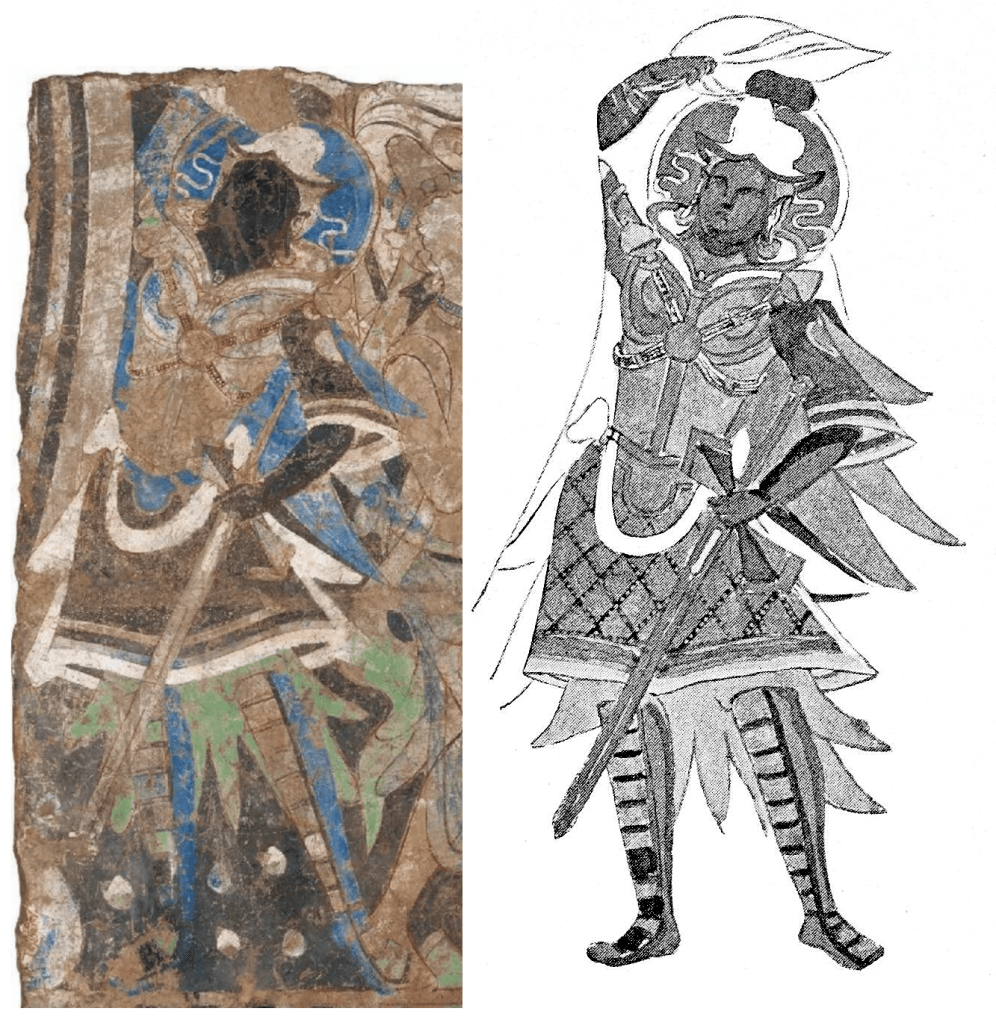
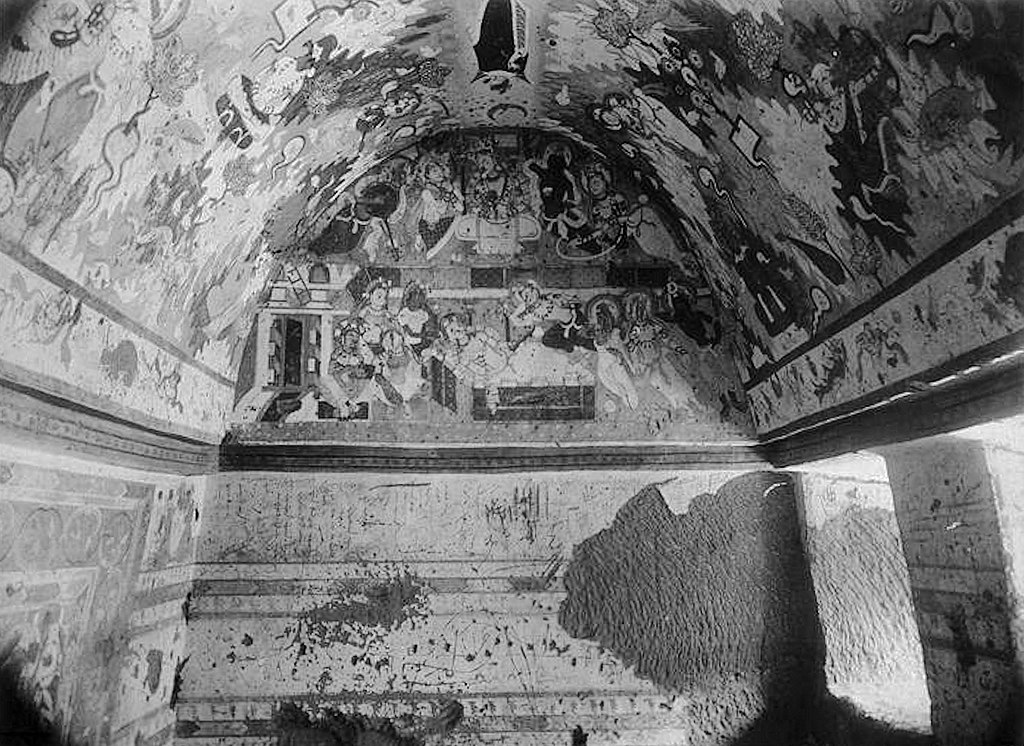
The culture and civilization of Kucha during this period can be glimpsed from the discoveries in the famous Kizil caves. In 1906, the German expedition team of Albert Von Le Coq and Albert Grunwedel explored the Kizil Caves, with different objectives. Grunwedel copied the murals, while Von Le Coq took them with him and placed most of the fragments in the Museum of Asian Art in Dahlem, Berlin. Other explorers also took the murals and placed them in various museums in Russia, Japan, Korea, and the United States.

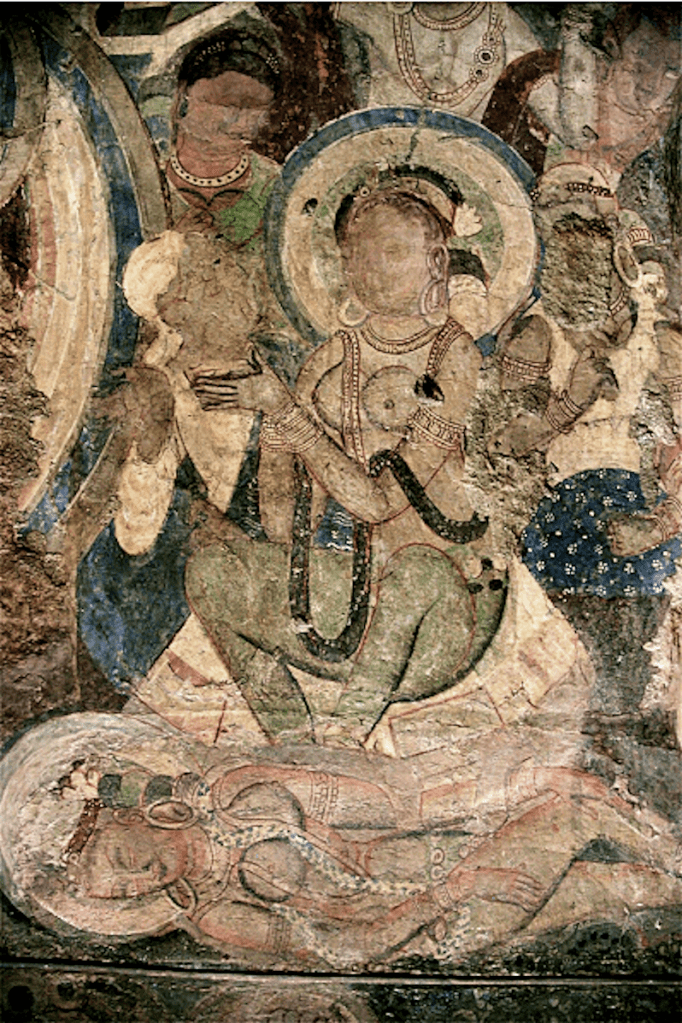
The murals in the Kizil Thousand-Buddhist Caves are considered “The most beautiful murals in Central Asia,” and can be found in 81 caves with a total area of over 10,000 square meters (11,960 yards). The diamond grid pattern is the most impressive feature of the caves, with each grid depicting a story about Buddha’s reincarnation through a single picture. Besides themes related to Buddha, Bodhisattva, Arhat, Flying Apsaras, and Buddhist fables, the murals also showcase various depictions of daily life, farming, hunting, pastures, riding, mountains and rivers in the West Region, animals, birds, and ancient architectures. The styles are not limited to local arts, indicating influences from diverse cultures.

Cave 4 Vajrapani, removed original and in-situ drawing by Grunwedel
Cave of the Hippocampi (Cave 118, mural)
Right portion of the cave, as photographed by Charles Nouette  (1869-1910) Photographed in 1907. Public Domain – [1], Public Domain, https://commons.wikimedia.org/w/index.php?curid=99375823

Attendant, Cave 84 Painting: 6th century painter, Kizil Photography: Undetermined 
Blue pigment used on mural. Greco-Buddhist Wind God Boreas or Vayu, central part of the ceiling of Cave 38
Ancient Uyghur Civilization (1)-Cave art by ancient Uyghurs

Kumarajiva was born around C.E. 344 in kingdom Kucha. Kumarajiva’s father, Kumarayana, was descended from an honourable line of prime ministers of a kingdom in Kashmir. Though Kumarayana was expected to become prime minister after his father, he renounced his hereditary claim and became a Buddhist monk. Eventually, he set out along the silk route which threaded its way across the mighty Pamirs and into the Takla Makan Desert and Central Asia. Following the northern route, he came in time to the devoutly Buddhist kingdom of Kucha on the northern rim of the great Tarim River basin. The Kuchan king either knew of Kumarayana by reputation or showed a shrewd perception of human nature, for he welcomed the traveller warmly and at once made him a trusted adviser. Soon he was elevated to kuo-shih, Teacher of the Nation, a privileged position which entailed political and cultural duties as well as religious functions. …

The great translator’s mother, Jiva (Jivaka), was the younger sister of the king of Kuchi. She was well known for her intelligence, wit, memory, and devotion to the dharma. It was said that she had only to glance at a written passage to comprehend it, and only to hear something once to repeat it from memory. These qualities attracted numerous suitors. Jiva had a red mole (or spots) on her body, an indication that she would give birth to a wise son.

She had politely rejected a number of eligible suitors from neighbouring kingdoms, but when she saw Kumarayana she expressed the desire to become his wife. The king was delighted and insisted that Kumarayana accept the proposal. Even though he was a monk, he bowed to the wishes of this generous and devout monarch.

When Kumarajiva was in utero, Jiva became considerably sharper and more perceptive than before. For example, although her language was what is now known as Tokharian B, while pregnant with Kumarajiva she was able to understand Sanskrit without ever having studied it; after Kumarajiva was born, this ability disappeared. Such an “omen” suggests that the child Kumarajiva was predisposed to master Sanskrit and thus the original Buddhist scriptures.

When their son was born, Kumarayana and Jivaka each gave a part of their names to him and called him Kumarajiva. With two devout parents, Kumarajiva was exposed to Buddhist texts and practice from the day he was born. At the age of seven, he trained with a learned master and memorized a thousand verses every day until he could recite all the teachings of the scholastic treatises of the Abhidharma.

As if an occult design of invisible Nature had become manifest, hardly had the remarkable child turned six before Jivaka received permission from her husband to become a Buddhist nun. By that time Kumarajiva had already learnt the vast literature of the Abhidharma by heart, understood it and entered the Sangha. Kumarajiva’s mother clearly recognized the penetrating intelligence of her son and was determined to give him the best available philosophical and spiritual training. 

The Life and Legacy of the Great Translator — Kumarajiva

LInk: https://peacelilysite.com/2023/03/24/the-life-and-legacy-of-a-great-translator-kumarajiva-i/

#Buddhism #Kucha#Kumarajiva #Buddhist#KizilCaves#GreatTranslator #BuddhistSutra

Source: https://khyentsefoundation.org/the-life-and-legacy-of-kumarajiva/, https://japanesemythology.wordpress.com/study-notes-the-influence-of-kumaraju-kumarajiva-upon-japan/, https://www.tsemrinpoche.com/tsem-tulku-rinpoche/great-lamas-masters/kumarajiva-the-great-translator-from-kucha.html

THE MYSTERY OF THE LONGYOU CAVES

Longyou Caves are known as the ninth wonder of the ancient world. Source: Zhangzhugang / CC BY-SA 4.0

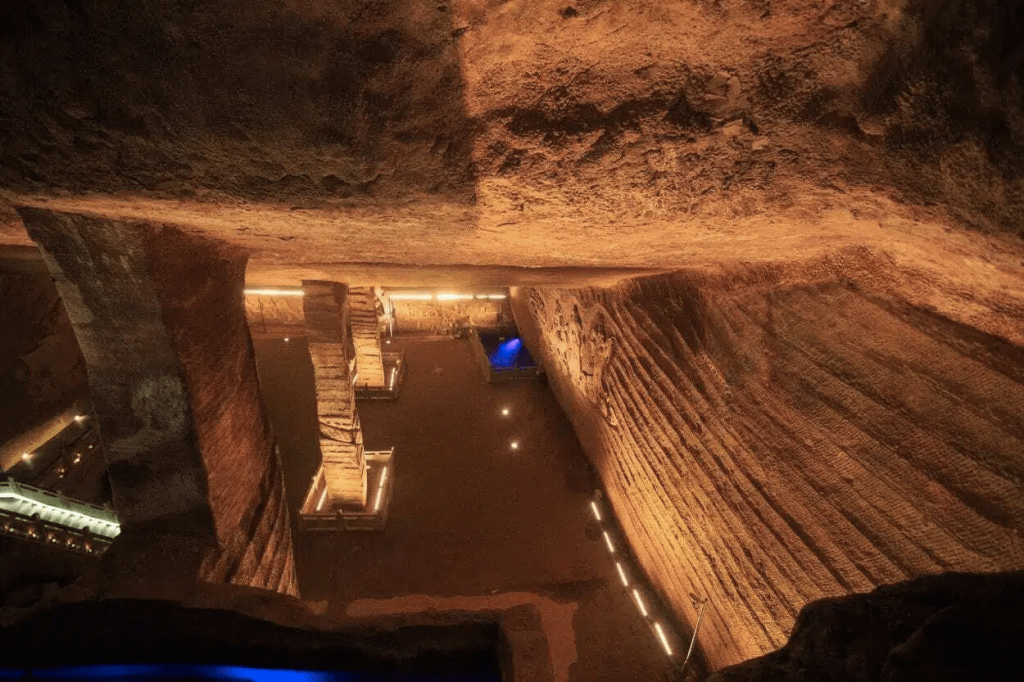
LONGYOU CAVES IS A COMPLEX OF 24 ARTIFICIAL CAVES, CONSTRUCTED INTO THE SANDSTONE GEOLOGY OF FENGHUANG HILL IN THE ZHEJIANG PROVINCE OF CHINA.

The caves were discovered by accident in 1992, when local farmers drained several ponds revealing five large manmade caverns and 19 smaller caves.

The five caverns, independent from each other measure between 18-34 metres, reaching heights of up to 20 metres with supporting pillars and distinctive shapes remarkably curved with shaking imprints across the cavern walls and ceilings.

After news of the discovery spread across China, it was first proposed that the caves were an obscure natural wonder, as the design and formation was completely distinct from other ancient caves, quarries, mines, or ceremonial caverns constructed in china throughout antiquity to draw a comparison.

Image Credit : Zhangzhugang – CC BY-SA 3.0

Upon further study, it was found that each complete cavern has only one portal, associated with a vertical shaft with a carved stairwell that allows rainfall and surface runoff to enter the caverns. To manage the water intake, a system of drainage troughs, some drainage channels, and a water trap was carved into the cavern base to collect the water.

The caverns are also aligned along a south to southwest orientation, maximising the use of sunlight to illuminate the interior, with inclined sidewalls that reduces the stress on the cave ceilings preventing collapse.

It is highly possible that the cavern was formed by carving rock stones from top to bottom and layer by layer using short chisels with different sizes (based on several short chisels made from steel, discovered in one of the larger caves).

Image Credit : Zhangzhugang – CC BY-SA 3.0

Only one of the caves has been opened for tourism, chosen because of the stone carvings found inside which depict a horse, fish and bird. The Longyou Caves of Zhejiang province in China truly are an enigma and it has ten enduring mysteries that remain unresolved, despite more than two decades of research.

1. How Were the Longyou Caves Constructed?

A rough estimation of the workload involved in building the Longyou Caves is awe-inspiring. The quantity of rock that would have been removed in the overall excavation of the grottoes is estimated to be nearly 1,000,000 cubic meters (35,314,666 cu ft). Taking into account the average digging rate per day per person, scientists have calculated that it would take 1,000 people working day and night for six years to complete.

These calculations are based purely on hard labor, but what they haven’t taken into account is the incredible care and precision of the sculptors, meaning that the actual workload would far surpass the theoretical estimation. As for how they were constructed and what tools were used, it is still unknown. No tools have been found in the area, and, as we will explore later, scientists still don’t know how they achieved such symmetry, precision, and similarity between the different caves.

2. No Traces of Construction

Despite their size and the effort involved in creating them, so far no trace of their construction, or even their existence, has been located archival sources. Although the overall excavation involved almost a million cubic meters of stone, there is no archaeological evidence revealing where that quantity of stone went, and no evidence of the work. Moreover, there is not a single historic document that refers to them, which is highly unusual considering the sheer scale of the project. The origin of the Longyou Caves is a complete and utter mystery.

Experts wonder why the walls at the Longyou Caves in China are covered in chiseled parallel lines. (Zhangzhugang / CC BY-SA 4.0 )

3. Why Were the Walls Chiseled?

Every single one of the Longyou Caves is covered, from floor to ceiling, in parallel lines that have been chiseled into virtually every surface. The effect is a uniform pattern throughout the caves, which would have required immense manpower and endless hours to create. The question is why? Was such labor-intensive work purely for decoration? Are the lines or patterns symbolic in some way? All that is currently known is that the markings are similar to those found on pottery housed in a nearby museum, which is dated between 500 and 800 BC.

4. Lack of Fish in the Longyou Caves

When the caves were first discovered, they were filled with water, which presumably had been there for a long period of time. They had to be pumped out in order to realize that these were not just like the other “bottomless ponds” found within the area, but rather man-made structures. Most villages in southern China contain very deep ponds, which have been called “bottomless ponds” by generations of villagers. These ponds teem with fish, which are easily caught. However, after the first cave was pumped dry, not a single fish was to be seen, or any other sign of life.

5. How Did the Longyou Caves Remain So Well Preserved?

One of the most interesting and challenging questions is how the Longyou Caves have been able to keep their structural integrity for more than 2,000 years. There are no signs of collapse, no piles of rubble, and no damage despite the fact that in some areas the walls are only 50 centimeters (20 in) thick. Over the centuries, the area has gone through numerous floods, calamities and wars, the mountains have changed their appearance and exposed stones have been weathered, but inside the Longyou Caves, the form, patterns and markings are still clear and precise – it is as though they were built yesterday.

6. How Did the Builders Work in the Dark?

Due to the great depths of the caves, some areas at the bottom, which are not exposed to the opening above, are pitch-black. Yet even those dark areas are decorated with thousands of parallel lines on the walls, columns, and ceiling. So how did ancient people work in the dark? 

According to Jia Gang, a Tongji University professor specializing in civil engineering: “There should be lamps, because the cave’s mouth is very small, and the sunbeam could only shine in the cave at a certain angle during a certain period of time. As one goes deeper into the cave, the light becomes dimmer. At the cave’s bottom, which is usually dozen of meters from the mouth, one could hardly see anything.” However, this was at least two millennia ago and nothing that could have been used for lighting has been found.

7. Were the Longyou Caves Meant to be Connected?

All of the Longyou Caves are distributed across an area of only one square kilometer (0.38 sq mi). Considering such a high density, one cannot help asking whether some grottoes were meant to be connected. What would be the purpose of making so many separate caves in such a tight area without connecting them? In many areas, the walls between the caves are very thin, only 50 centimeters (20 in), but they were never linked so it appears they were intentionally kept apart. What’s more, many of the Longyou Caves are almost identical to each other.
8. Who Built the Longyou Caves?

Nobody has any idea who built the caves. Some scientists have claimed that it was not possible or logical for such as mammoth job to have been undertaken by regular village people. Only the emperor and the leaders could have organized such a huge project, like the construction of the Great Wall , which was built to defend against invasion from the outside world. But if it was commissioned by an Emperor, why are there no historical records of its construction?

9. How Did They Achieve Such Precision?

The scale of the Longyou Caves is magnificent and momentous, the design was delicate and scientific, the construction was sophisticated, and the precision is indicative of superior craftsmanship. The model, pattern and style of each cave is extremely similar. Every grotto is like a grand hall. One side is steep and another side is 45% inclined. The four walls are straight; the edges and corners are clearly demarcated. The chiseling marks within the Longyou Caves are uniform and precise.

“At the bottom of each cave, the ancient [builders] wouldn’t be able to see what the others were doing in the next grotto,” explained Yang Hongxun, an expert at the Archaeological Institute of Chinese Academy of Social Sciences. Nevertheless, “the inside of each cave had to be parallel with that of the other, or else the wall would be holed through. Thus the measure apparatus should have been very advanced. There must have been some layout about the sizes, locations, and the distances between the caves beforehand.”

With the help of modern equipment and methods, the investigators measured the sizes of the walls, and surprisingly found that the overall construction is extremely accurate. The walls between the caves are of the same thickness in different sections. So how did they achieve this precision? What were their methods?

Stairs leading down into one of the once-submerged Longyou Caves. (Zhangzhugang / CC BY-SA 4.0 )

10. What Were the Longyou Caves Used for?

Following extensive investigations and study, scientists and scholars have attempted to put forward explanations for the grottoes, but none so far provide a convincing explanation for why they were built and what they were used for.

Some archaeologists have suggested that the grottoes were the tombs of old emperors, emperor halls, or places for storage. But this interpretation is far-fetched. No funeral objects or tombs have been found and no artifacts left behind. If it were used like an emperor’s palace, the caves surely would have been designed differently, with separate rooms for different purposes like entertaining, meeting, and sleeping. But no evidence can be found of this and no traces of habitation have been found.

Another hypothesis is that the Longyou Caves were used for mining and extracting some type of mineral resource. However, mining operations would have required equipment and apparatus to extract the rocks and transport them. Again, no traces of this have been found, nor any evidence of where the rocks were taken. And of course, if the caves were just for mining, why create such intricate decorations on the walls, columns and ceilings?

Finally, some have suggested that these caves were the places for troops to be stationed and that an emperor of the past wanted to keep his soldiers out of view in order to keep his war preparations secret. However, these caves could not have been built in a short period of time. They would have taken many, many years to build so it is unlikely to have been done in preparation for war, which tends to come about much more quickly. Furthermore, there are no signs of people having stayed in the caves.

Despite decades of research, very few answers have emerged to explain the enigma of the Longyou Caves . Our ancient ancestors have achieved many wondrous things throughout history, but this discovery from China is truly an unsolved mystery which has yet to be cracked.

THE MYSTERY OF THE LONGYOU CAVES

Link: https://peacelilysite.com/2023/03/24/the-mystery-of-the-longyou-caves/

#Travel #TravelChina #LongyouCaves #Mistery

Source: https://www.ancient-origins.net/ancient-places-asia/longyou-caves-001248, https://www.heritagedaily.com/2020/08/the-mystery-of-the-longyou-caves/134874

Leshan Giant Buddha

Leshan Giant Buddha

Around a 2-hour drive from downtown Chengdu lies one of the most marvelous ancient wonders of China, the Leshan Giant Buddha, also known as Lingyun Giant Buddha. Carved into a cliff-face along a peaceful river, this imposing figure, at 71 meters (over 200 feet) in height, dates back over a thousand years and is the largest and tallest stone Buddha statue in the world.

Carved in the 8th century during the Tang Dynasty, the Leshan Giant Buddha was built during a peak period of Buddhist culture in ancient China. The sculpture depicts Maitreya, a very popular Buddha in the Tang Dynasty. The sutras say that when Maitreya comes into world, the world will be at peace. The female Chinese female sovereign Wu Zetian even proclaimed she was the reincarnation of Maitreya and was a strong advocate of Maitreya sculptures being built as a way to maintain her rule. People liked to carve Maitreya sculptures and believed that Maitreya would bring light and happiness into their lives in the future.

This remarkable historic site was listed as a UNESCO World Heritage Site since 1996. It is an amazing and immense religious relic that was built over a period of 90 years from 713 to 803 AD. The statue was constructed at the confluence of three rivers notorious for their turbulent waters; it was hoped that the Buddha’s presence would help calm the rivers’ waters.

Hai Tong’s Legacy

The Buddhist monk Hai Tong was concerned about the safety of the local people who earned their living around the three rivers. Many people traveling by boat in the area were killed by the turbulent waters each year before the Leshan Giant Buddha was created. Hai Tong decided to carve a statue of Buddha beside the river and believed that this sculpture would appease the river gods and keep the locals safe.

He had begged for over 20 years to accumulate enough money needed to build this statue. During this hard period in his life, he refused official help because the parties who offered it didn’t just want to help him but wanted to gain personal profits from the project. He even gouged out his eyeball in protest against the local authorities. These officials backed off after this behavior. Fortunately, Hai Tong’s disciples continued his work after he passed away and finally completed the sculpture in 803 AD after 90 years of hard work.

There is a cleverly designed drainage system behind the Buddha’s head and between his two ears. This important design aspect is the reason why the great Buddha of Leshan has not eroded despite having existed for thousands of years. The “spectacle”

Interestingly, there haven’t been any shipwrecks since the Buddha was built. Many stones were actually removed from the cliff and transferred to the rivers during construction, which made the waters calmer and safer than before. The project didn’t end after the Leshan Giant Buddha was finished.

Buddhism had been one of the most important religions in ancient China and many other people built statues around the giant Buddha to thank the gods . Numerous small Buddhas were carved around this huge statue. People even excavated the cliff tombs of the Han Dynasty around the Leshan Giant Buddha. Multiple historic sites make the Leshan Giant Buddha particularly important for archaeologists and researching people’s lifestyles in ancient times.

With the most sunny days and beautiful scenery, April and October are the best months of the year to travel to see the Leshan Giant Buddha.

There are two ways for visitors to see the Giant Buddha. One is to walk down from the top near the head and end at its feet. This involves some waiting in line, sometimes for hours on particularly busy days, and larger crowds, as well as many narrow and steep stairs, but offers you a more intimate perspective of the Buddha. This up-close view will allow you to appreciate the statue’s enormity; its shoulders spread over a width of 28 meters (as long as a basketball court!) and its pinky toe is large enough for a person to sit on.

The other option is to view the statue from a boat on the river immediately in front of it. The boat trip allows you to get the best and fullest front-facing view of the Buddha from a distance and is ideal for those who prefer not to wait in line and climb the stairs. The cruise takes around 30 minutes there and back, stopping for several minutes in front of the Buddha for visitors to appreciate the statue and take pictures. It’s best to sit on the right side of the boat, as the Buddha will end up being on that side once you arrive.

Leshan Giant Buddha

Link:https://peacelilysite.com/2023/02/23/leshan-giant-buddha/

#Travel#China#LeshanGiantBuddha#Buddhism#MarvelousAncientWonder

Source: https://www.trippest.com/chengdu-travel-guide/leshan-giant-buddha/ https://www.thechinaguide.com/sight/leshan-giant-buddha#:~:text=It’s%20best%20to%20sit%20on,worth%20seeing%20from%20both%20angles.

The Hanging Temple in China

By Charlie fong – Own work, CC BY-SA 4.0, https://commons.wikimedia.org/w/index.php?curid=82753942

The Hanging Temple in China

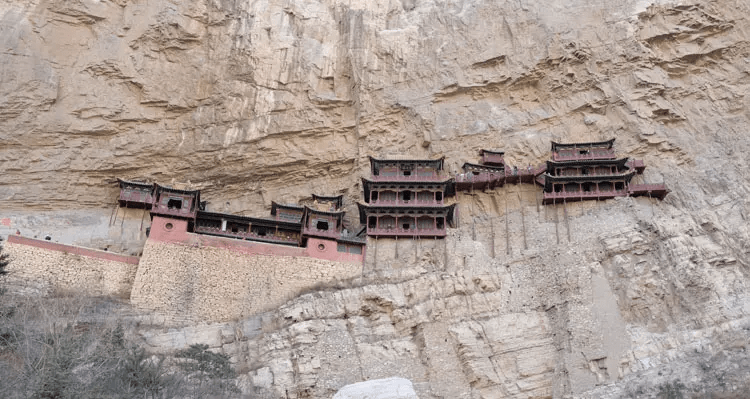
China have about a dozen of hanging temples. They are truly relics in Chinese architecture history. The most famous hanging Temple, is Hengshan Hanging Temple, Hanging Monastery or Xuankong Temple, is a unique and ancient structure located in Hunyuan County, Datong City, Shanxi Province, China. This temple is built into a cliff that stands 75 meters or 246 feet above the ground, near Mount Heng. The closest city, Datong, is located 64 kilometers or 40 miles to the northwest.

The Hanging Temple is one of the main tourist attractions and historical sites in the Datong area, along with the Yungang Grottoes. It is considered unique because it is the only existing temple that combines three Chinese traditional philosophies or religions: Buddhism, Taoism, and Confucianism. The structure is held in place with oak crossbeams that are fitted into holes chiseled into the cliffs, and the main supportive structure is hidden inside the bedrock.

The temple was built more than 1,500 years ago by a monk named Liaoran in 491 AD. Over the years, many repairs and extensions have been made to the temple, leading to its present-day scale. The temple comprises of 40 halls and pavilions that are all built on cliffs that are over 30 meters or 98 feet from the ground. The distance from north to south is longer than from east to west, and it becomes higher and higher as one moves from the south gate to the north along the mountain.

The temple’s layout includes the Qielan Hall (Hall of Sangharama), Sanguan Hall (Hall of Three Officials), Chunyang Hall, Hall of Sakyamuni, Hall of Three Religions, and Guanyin Hall. The Hall of Three Religions mainly enshrines Buddhist deities, as well as both Taoism and Confucianism. The statues of Sakyamuni (middle), Lao-Tze (left) and Confucius (right) are enshrined in the hall, reflecting the prevailing idea of “Three Teaching Harmonious as One” in the Ming and Qing dynasties (1368–1911).

By Zhangzhugang – Own work, CC BY-SA 3.0, https://commons.wikimedia.org/w/index.php?curid=32138611

The Hanging Temple is a unique and ancient structure that combines three Chinese traditional philosophies or religions, and is one of the main tourist attractions and historical sites in the Datong area. Its location on a sheer precipice and its history make it a must-see destination for anyone visiting China.

You can visit the Hanging Temple all year around, but considering the Datong weather, normally from April to October is the best period. Datong has a temperate continental climate with distinct seasons, low rainfall, a short summer, and a long freezing winter (November–March).

There are big temperature differences between morning and night, day to day, and mountain and valley, so please bring a warm jacket with you even if you travel in the summer time.

In order to protect the temple, the number of visitors is limited to 80 in the temple at a time. Therefore, it is recommended to visit the Hanging Temple early in the morning to avoid long waits especially in the high travel seasons (summer and holidays).

The Hanging Temple in China

link: https://peacelilysite.com/2023/01/27/the-hanging-temple-in-china/

#HangingTemple#Buddhism#Datongcity#TravelChina # Architecture #ChineseCulture#Travel #Temple

Source: https://www.chinahighlights.com/datong/attraction/hanging-monastery.htm, https://en.wikipedia.org/wiki/Hanging_Temple

The Power of Miracles (Full Episode in National Geographic)

The Story of God with Morgan Freeman

In the National Geographic channel’s “The Power of Miracles” episode of “The Story of God with Morgan Freeman,” Freeman delves into the concept of miracles and the role they play in different cultures and religions around the world. Throughout the episode, Freeman explores the various stories and accounts of miracles that have been passed down through traditional cultures and religions. These stories often involve healing, protection, and other seemingly miraculous events.

One of the main focuses of the episode is the stories of miracle in Christianity. Freeman visits the site of a Catholic pilgrimage in Lourdes, France, where thousands of people travel each year to pray for healing. Freeman also visits the site of a Marian apparition in Medjugorje, Bosnia, where six children reported seeing the Virgin Mary in 1981. Freeman also meets with people who believe they were healed as a result of the apparition, which is still ongoing. Freeman also explores other religion’s records of miracles like the Jewish Kabbalah, and the Islamic Hadith.

While some people may be skeptical of these stories, Freeman makes it clear that they hold great significance for the people who believe in them. For many, these stories of miracles provide hope, inspiration, and a sense of connection to something greater than themselves. Freeman ultimately concludes that miracles are about the power of belief, and that the belief in something larger than ourselves can have a profound impact on our lives.

Watching this episode is a miracle for me. I explored so many beautiful places, cultures and religions. It’s a must watch for people with an interest in the intersection of faith and science, and in the power of belief to shape our lives.

The Story of God with Morgan Freeman

Link: https://peacelilysite.com/2023/01/11/the-power-of-miracles-full-episode-in-national-geographic/

#Miracle#MorganFreeman#NationalGeographicchannel#PowerofMiracles#Religions#Cultures#Christianity#Church#JewishKabbalah#Islamic Hadith #Healing#Belief

The Story of the “Six-foot Alley”

The Story of the “Six-foot Alley”

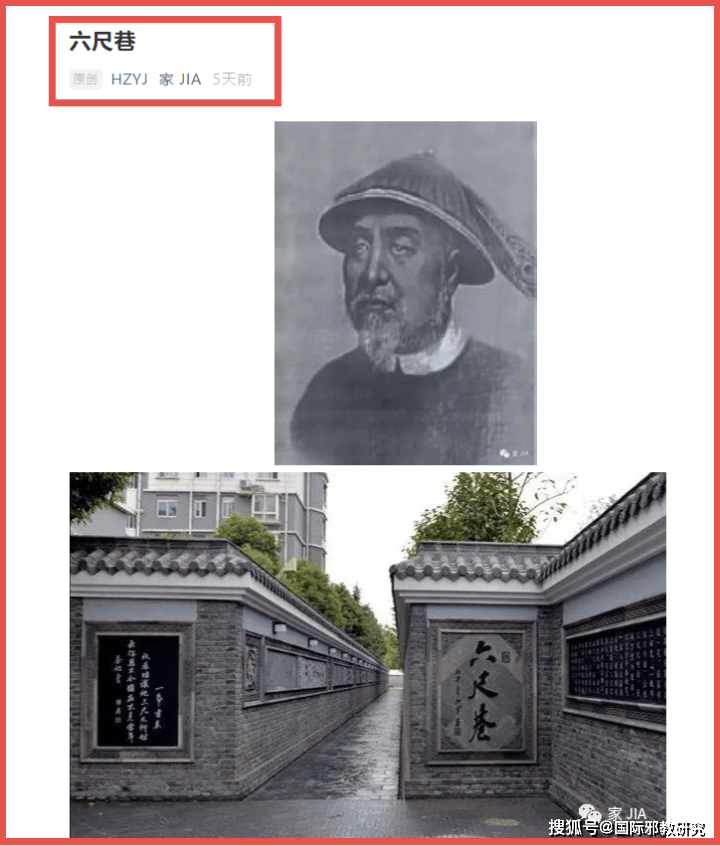
“Liu Chi Alley” (六尺巷 in chinese) is located between Xihou Street and Wumu Garden in Tongcheng District, Tongcheng city, Anhui Province. The allusion of “Six-foot Alley” has become a historical story stems from the land dispute between Zhang’s family and his neighbors.

In the Qing Dynasty, there was a famous family in Tongcheng, Anhui Province. Father and son were the prime ministers of the two generations and had great power. Their names were Zhang Ying and Zhang Tingyu.
During the reign of Emperor Kangxi in the Qing Dynasty, Zhang Ying was a Bachelor of Arts at Wenhua Palace and a minister of rites. At that time, the Zhang family’s old house in Tongcheng was adjacent the house of the Wu family. There was only about 3 feet of space between the land owned by each family.

The Wu family wanted to expand their property to occupy this space. The Zhang family vehemently disagreed. The two sides brought the case to the county courthouse of Yamen. County officials knew that both families involved in the dispute were well-known families with prominent officials. They dared not easily break the dispute.
During this period, the Zhang family wrote a letter to Zhang Ying, now a senior official in Beijing, asking Zhang Ying to come out and interfere in this matter. After receiving the letter, Zhang Ying thought that he should humble the neighbors, and wrote a poem to his home in reply:


Thousands of miles of a mail is only for a wall.

Why not give up him three feet?

The Great Wall still stands today.

But where is the Empire Qishihuang now?


The Zhang family read it and eventually realized they understood its meaning. They took the initiative to give up three feet of space for the Wu family’s property. The Wu family, deeply touched by this gesture, decided to concede three feet of their own adjacent land, thus forming a six-foot lane between the properties. The two courtesy concessions and the Zhang family’s non-oppressive approach were passed on to be good folk stories.

From this story, we learn to be modest and tolerant in life. Mutual humility can avoid many contradictions and reduce disputes between people. Mutual understanding and tolerance can help people get along harmoniously, and can greatly improve people’s happiness index. As the saying goes, “A bit of forbearance will calm the wind and silence the wave. Take a step back and have the vastness of sea and sky.”

The virtues of tolerance and equality have been passed down since ancient times. In the process of building a harmonious society for people who are open-minded and respectful, this tradition of humility needs to be carried forward even more. The allusions to a “Six-Foot Lane” have gone far beyond its original meaning and has become a testimony to the virtues of harmony and humility of the Chinese nation.

The Story of the “Six-foot Alley”

Link: https://peacelilysite.com/2022/10/19/the-story-of-the-six-foot-alley/

#ChineseCulture#Six-footAlley#Toleranceandequality#Humility#Virtues#Harmony

Source: http://mandarinedu.org/English/news/12390.html

Tow Song Ci lyrics Appreciation

Tow Song Ci lyrics Appreciation

Su Shi was a writer, artist, calligrapher, pharmacologist, and statesman of the Song Dynasty, and one of the major poets of the era. His courtesy name was Zizhan and his pseudonym was Dongpo Jushi (東坡居士 “Resident of Dongpo”), and he is often referred to as Su Dong Po (蘇東坡). When we appreciate Chinese literature, Su Shi is widely regarded as one of the most accomplished figures, having produced some of the most well-known poems, lyrics, prose, and essays. His poetry has a long history of popularity and influence in China, Japan, and other areas in the near vicinity and is well known in the English-speaking parts of the world through the translations. Su Shi was the greatest writer of Song ci lyrics, often celebrating the joys of relaxed and transitory pleasures. This “To the Tone of Nian Nu Jiao Memories of the Past at Red Cliff” is one the most popular poems.

大江东去,浪淘尽,千古风流人物。故垒西边,人道是,三国周郎赤壁。乱石穿空,惊涛拍岸,卷起千堆雪。江山如画,一时多少豪杰。
遥想公瑾当年,小乔初嫁了,雄姿英发。羽扇纶巾,谈笑间,樯橹灰飞烟灭。故国神游,多情应笑我,早生华发。人生如梦,一尊还酹江月。

Nian Nu Jiao

Memories of the Past at Red Cliff

Su Shi

East flows the mighty river,

Sweeping away the heroes of times past;
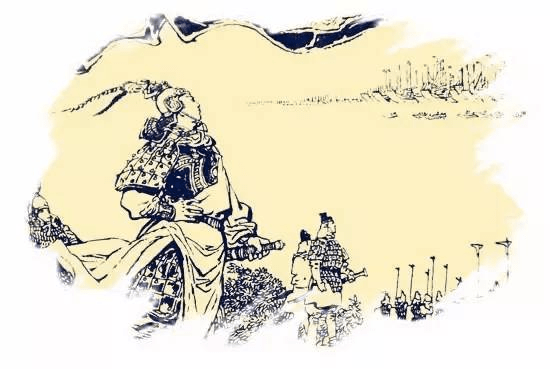
This ancient rampart on its western shore

Is Zhou Yu’s Red Cliff of Three Kingdoms’s fame;

Here jagged boulders pound the clouds,

Huge waves tear banks apart,

And foam piles up a thousand drifts of snow;

A scene fair as a painting,

Countless the brave men here in time gone by!

I dream of Marshal Zhou Yu in his day

With his new bride, the Lord Qiao’s younger daughter,

Dashing and debonair,

Silk-capped, with feather fan,

He laughed and jested

While the dread enemy fleet was burned to ashes!

In fancy through those scenes of old I range,

My heart overflowing, surely a figure of fun.

A man grey before his time.

Ah, this life is a dream,

Let me drink to the moon on the river!

This poem was a tribute to the famous battle at Red Cliff, which took place on the Yangtze river in Sichuan at year 208 CE.  Through the description of the magnificent scenery on the Moonlit Night River, he expressed the remembrance of the famous and heroic characters of that era. The lyrics are vigorous and create a majestic atmosphere. It is a powerful poem, and has been ranked as a masterpiece throughout the ages.

I heard a song recently, that touched me so deeply, I could not help but cry. The song uses the lyrics of a poem written by H.H. Dorje Chang Buddha III, with the same Song ci style as “To the Tune of Nian-Nu-Jiao”. The bold and unconstrained poem entitled “To the Tune of Nian-Nu-Jiao: Abruptly Entering the Universe” has a powerful spirit that moved me deeply. Here is the English translation.

To the Tune of Nian-Nu-Jiao : Abruptly Entering the Universe

Abruptly entering the universe,
The universe of a billion worlds,
Stand firmly against all hardships and obstacles.
Seeing through glory and riches, I simply smile.
The rooster crows announcing the dawn,
The morning bell hurries the moon,
The whole Soha world is revealed.
Everybody bustles about to survive,
Life, like smoke and snow, gone!


Recalling when I was young,
I mastered the pen and the sword but liked Buddhism best.
The lion’s roar of the Buddha shook the universe!
Countless suffering patients visited me,
Day and night I pondered their cures.
Millions of strands of thoughts
Slowly turn toward prajna wisdom,
Swaying the three worlds.
I wish that my remaining life
Be devoted to the benefit of all sentient beings.

Here I Come by H.H. Dorje Chang Buddha III

The mood of this poem is broad and vast, and filled with emotion. The poem manages to capture the massiveness of the universe and centuries of human affairs. It begins with aspiration soaring to the sky, and ends with a very down to the earth message: serving and helping all living beings with all that he has.

Comparing the two poems, it is evident that the work of H.H. Dorje Chang Buddha III not only provides a much broader view of the world and human existence, but also uplifts the reader to a much higher spiritual level. H.H. Dorje Chang Buddha III truly is an outstanding and timeless master of letters and also has boundless compassion and mercy to all living beings.

I also found an astonishing fact, based upon his extraordinary accomplishments in the areas of Buddhism, the humanities, painting, calligraphy and ethics, the World Poets and Culture Congress, which is composed of 5,612 experts and scholars from 48 different countries and regions, selected Master Wan Ko Yee (H.H. Dorje Chang Buddha III ) as the world’s only “Distinguished International Master.” The resolution conferring upon him this title was mailed to the People’s Republic of China and was made public in Hungary on September 15, 1994. The “Distinguished International Master” certificate was signed by the then President of the international Olympic Committee, Juan Antonio Samaranch.

Tow Song Ci lyrics Appreciation

Link:https://peacelilysite.com/2022/10/11/tow-song-ci-lyrics-appreciation/

#MasterWanKoYee #DorjeChangBuddhaIII #HHDorjeChangBuddhaIII#DorjeChangBuddha#SongCi#SuShi#Memories of the Past at Red Cliff#DistinguishedInternationalMaster

Source: https://www.sohu.com/a/129380761_256852诗苑|苏轼《念奴娇·赤壁怀古》

Neue Wache – Memorial of the Victims of War and Tyranny

Neue Wache – Memorial of the Victims of War and Tyranny

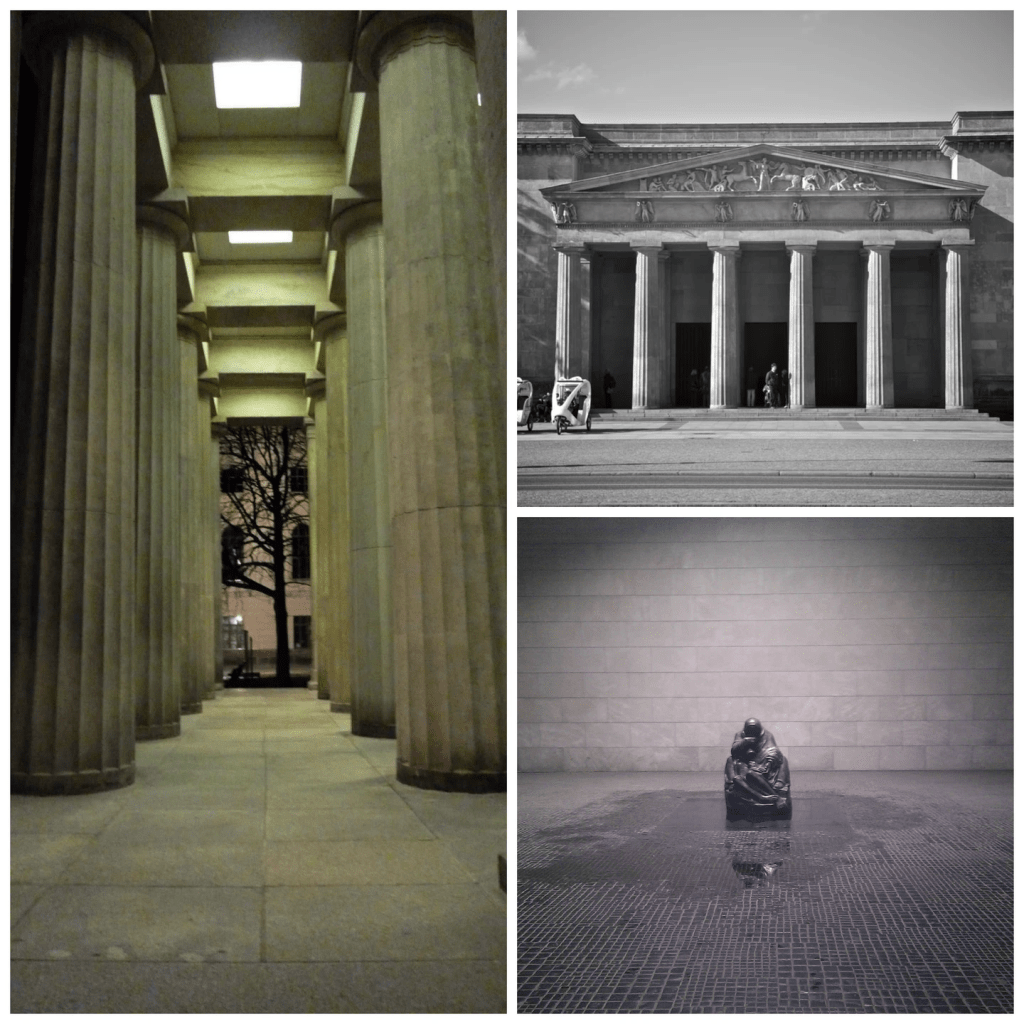
Originally commissioned by King Frederick William III of Prussia in 1816 to be the new guard house for the royal family, The Neue Wache building, still very much intact, is used as the Central Memorial of the Federal Republic of Germany for the Victims of War and Dictatorship. Rich in history and architecturally significant, the Neue Wache building is a prodigious landmark in the capital.

Placed on the bustling boulevard of Unter Den Linden, it rubs elbows with Humboldt University and the Zueghaus. Its neoclassical architecture is thanks to Karl Friedrich Schinkel, who was the demonstrative figure in the Greek architectural revival movement that took place during his time. His intent was to keep the building as open as possible, as seen by the columns and the courtyard. Like many buildings in Berlin, it has seen many tumultuous political and social tides, bearing witness to monarchy, fascism, disintegration, and reunification. Starting as a royal guard house until the devastation of World War I, it now serves as a house of remembrance.

To step inside the Neue Wache today is to be confronted by a different memorial – with the similarly empty interior now interrupted by another eye catching detail – that of a small bronze statue of a grieving mother sits on the ground, holding her son who died in the war. It is placed directly under the Oculus and on top of the remains of the unknown soldier and concentration camp victim. The empty hall made the mother seem so weak and helpless, and the grief so great…

In front of the statue, you will sharply experience the pain of the mother who lost her son, and the cruelty and ugliness of war. This “old, lonely, remorseful woman” represents all the postwar mothers in the world.

The casualties of war are a number for a country, but for any mother, it is a life-and-death separation that can never be accepted!

Reminiscent of Michaelangelo’s pieta housed in St. Peter’s Basilica in Vatican City, this provocative sculpture was the work of Prussian artist Käthe Kollwitz – famous for her depictions of the effects of war and poverty on the lives of the poor. In this instance secularising traditional imagery of Christian suffering to address social justice issues.  

Greek philosopher Plato would say that only the dead know the end of war. While the suffering continues without conclusion, its victims have a memorial in Berlin waiting for them. A place of contemplation and peaceful reflection. In a country that has, in only the last 100 years, experienced so much conflict and destruction.

This is the most ingeniously designed museum I have ever seen. There is only one exhibit in the huge building. The sun rises and sets, and the projection and spotlight of the skylight are different at different times, but the focus is always on that one statue. This simple sculpture amidst empty space can sting people’s hearts and make people feel the pain of war.

Neue Wache – Memorial of the Victims of War and Tyranny

Link: https://peacelilysite.com/2022/09/27/neue-wache-memorial-of-the-victims-of-war-and-tyranny/

#NeueWache#Museum#KingFrederickWilliamIII#Berlin#Germany#PrussianArtistKätheKollwitz#History#WorldWarI#WorldWarII#Memorial

Source: https://theculturetrip.com/europe/germany/articles/the-history-of-the-neue-wache-in-1-minute/, https://www.berlinexperiences.com/featured-berlin-experiences/step-inside-the-neue-wache/