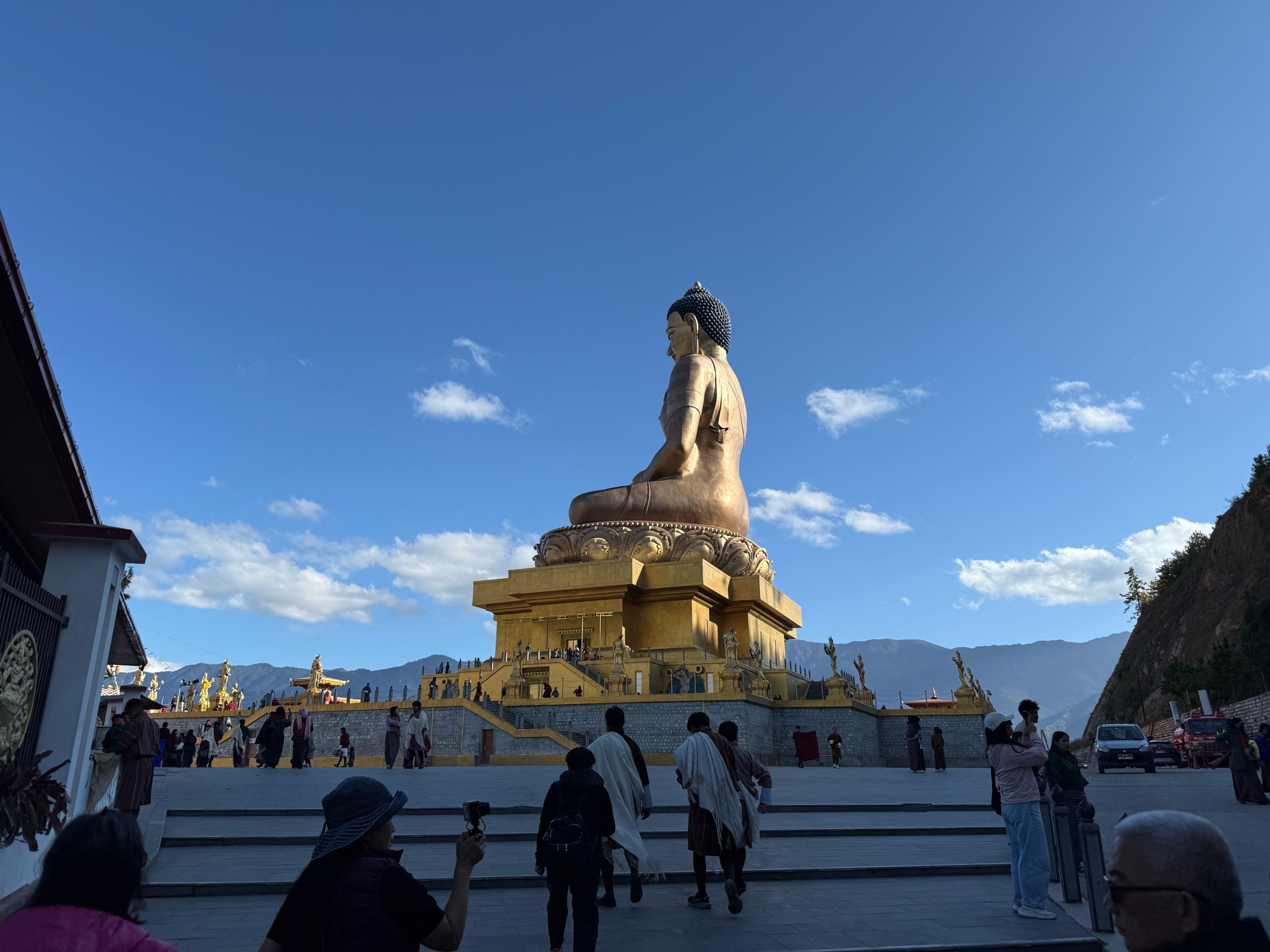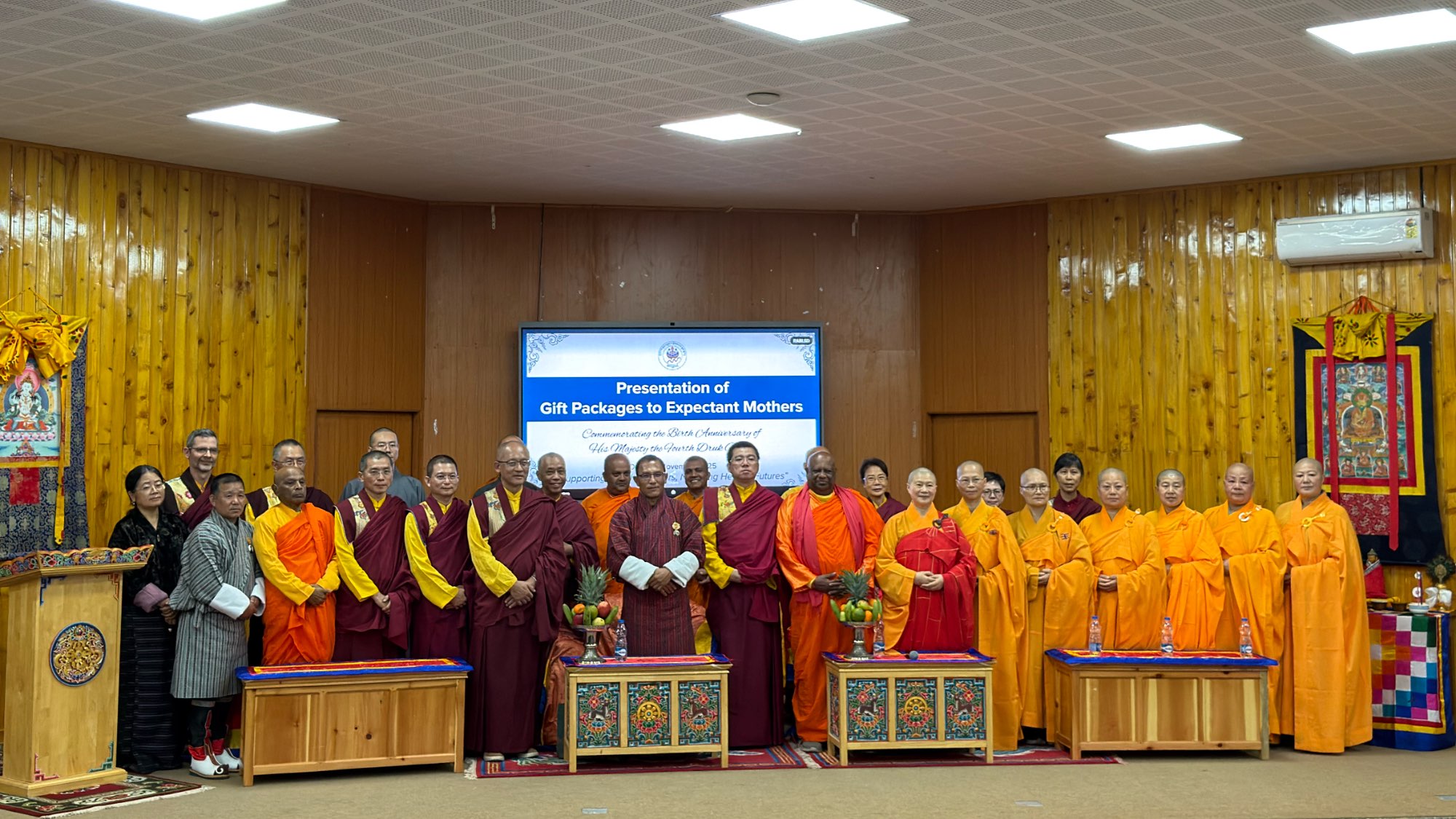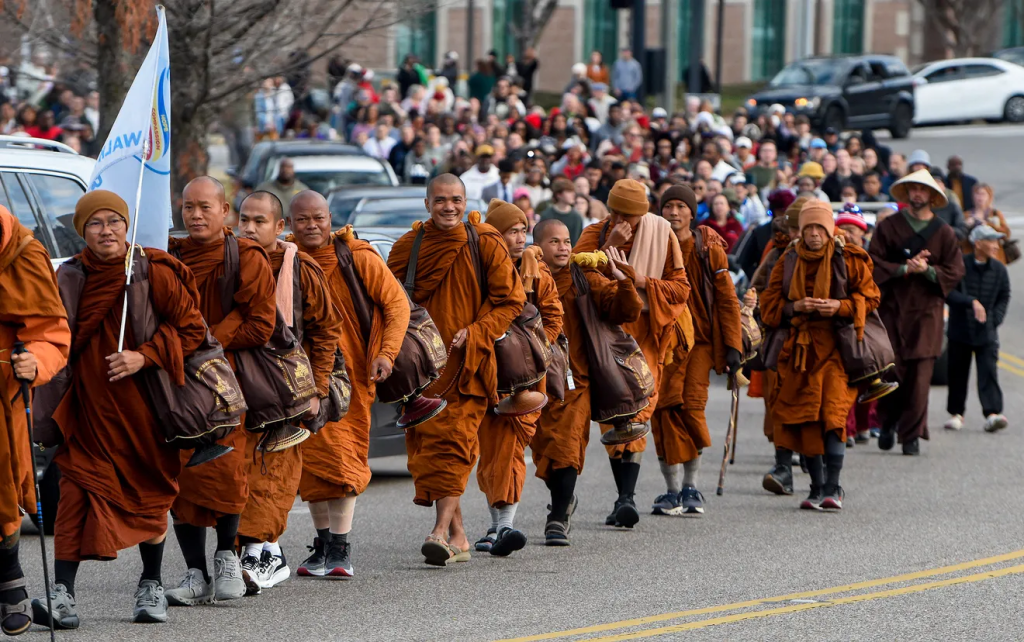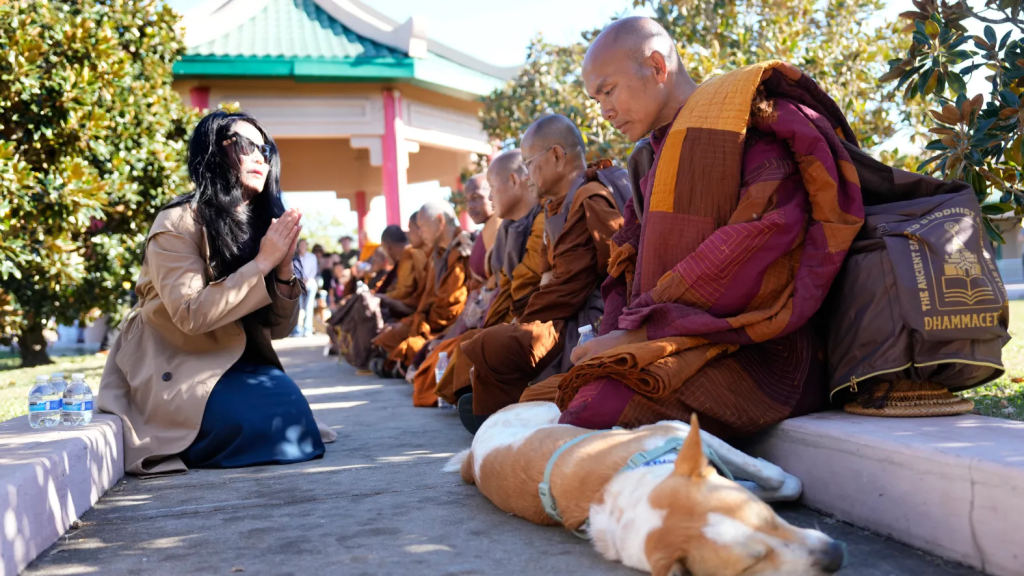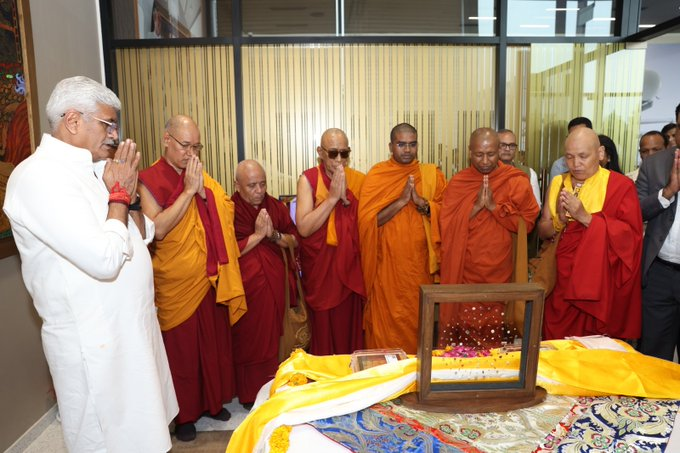
Ancient Buddha relics returned to India

A joyous day for our cultural heritage! It would make every Indian proud that the sacred Piprahwa relics of Bhagwan Buddha have come home after 127 long years. These sacred relics highlight India’s close association with Bhagwan Buddha and his noble teachings. It also illustrates our commitment to preserving and protecting different aspects of our glorious culture. #VikasBhiVirasatBhi Source: https://x.com/narendramodi/status/1950483627323670760

The following article was published by the BBC News, Soutik Biswas, July 31, 2025:

Auction house Sotheby’s has returned a set of sacred jewels believed to be linked to the Buddha’s remains in India, after facing mounting pressure from the Indian government and global Buddhist leaders.

The Piprahwa Gems – described by archaeologists as one of the most astonishing finds of the modern era – were due to be auctioned in Hong Kong in May. But the sale was called off following diplomatic intervention and threats of legal action from Delhi.

The Mumbai-based conglomerate Godrej Industries Group has acquired the jewels, Sotheby’s said.

Sotheby’s said it was “delighted” to facilitate the return, following two months of negotiations involving the owner, the new buyer and the Indian government. The relics will now go on permanent public display in India, the auction house said.

Photo of William Claxton Peppé, an English estate manager, excavated the stupa and found the jewels. courtesy of the Peppé family.
William Claxton Peppé, an English estate manager, excavated the stupa and found the jewels. courtesy of the Peppé family.

Indian Prime Minister Narendra Modi announced the return on Wednesday, calling it a “proud and joyous moment” and a victory for the country’s cultural heritage. The relics, he said on X, were coming home after 127 years.

Godrej Industries Group, the buyer of the jewels, serves over 1.1 billion consumers worldwide across sectors including consumer goods, real estate, agriculture, finance, and chemicals, according to its website. Many of its products are household names in India.

“We are deeply honoured to contribute to this historic moment. The Piprahwa gems are not just artifacts – they are timeless symbols of peace, compassion, and the shared heritage of humanity,” Pirojsha Godrej, Executive Vice Chairperson of Godrej Industries Group, was quoted as saying in a government press statement.

Unearthed in 1898 by English estate manager William Claxton Peppé from a stupa in Piprahwa in northern India, near the Buddha’s birthplace, the cache included nearly 1,800 pearls, rubies, sapphires and gold sheets – buried alongside bone fragments identified by an inscribed urn as belonging to the Buddha himself.

Photo of The jewels were unearthed from this stupa in Piprahwa, northern India in 1898, Icon Films.
The jewels were unearthed from this stupa in Piprahwa, northern India in 1898, Icon Films.

Peppé eventually handed most of the gems, relics and reliquaries to the colonial Indian government: the bone relics went to the Buddhist King of Siam (Rama V). Five relic urns, a stone chest and most other relics were sent to the Indian Museum in Kolkata – then the Imperial Museum of Calcutta.

Photo of Four containers made of steatite (a type of stone) and one made of rock crystal were found inside a sandstone box at the Piprahwa stupa, courtesy of Peppe family.
Four containers made of steatite (a type of stone) and one made of rock crystal were found inside a sandstone box at the Piprahwa stupa, courtesy of Peppe family.

For over a century, the rest of the dazzling jewels remained largely hidden in a British private collection.

A set of 300 gems held by the Peppé family was publicly displayed at Sotheby’s Hong Kong in February and May. Over the past six years, the gems have appeared in major exhibitions, including The Met in 2023. The family has also launched a website to share their research.

Historians consider the relics the shared heritage of the Buddha’s Sakya clan and Buddhists worldwide. The bone fragments have since been distributed to countries like Thailand, Sri Lanka, and Myanmar, where they remain objects of veneration.

Photo of The jewels are considered among the most extraordinary archaeological finds of all time, courtesy of Sotheby's.
The jewels are considered among the most extraordinary archaeological finds of all time, courtesy of Sotheby’s.

The planned sale of the Buddha relics by Sotheby’s in Hong Kong had sparked widespread ethical concerns, with scholars and Buddhist leaders questioning whether sacred objects – especially those linked to human remains – should be treated as commodities.

Critics challenged the seller’s authority to auction the relics, while defenders said a transparent sale was the fairest way to transfer custody. For many Buddhists, the jewels are inseparable from the sacred remains and meant to be venerated, not sold.

“Are the relics of the Buddha a commodity that can be treated like a work of art to be sold on the market?” Naman Ahuja, a Delhi-based art historian, had told the BBC in May. “And since they aren’t, how is the seller ethically authorised to auction them?

“Since the seller is termed the ‘custodian’, I would like to ask – custodian on whose behalf? Does custodianship permit them now to sell these relics?”

Chris Peppé, great-grandson of William, had told the BBC in May that the family looked into donating the relics, but all options presented problems and an auction seemed the “fairest and most transparent way to transfer these relics to Buddhists”.

He said that in all the monasteries he had visited “no Buddhists regard these as corporeal relics”.

“A few Buddhist academics at Western universities have recently offered a convoluted, fact-defying logic whereby they may be regarded as such. It’s an academic construct that is not shared by Buddhists in general who are familiar with the details of the find,” he said.

On 7 May, Sotheby’s postponed the auction of the jewels following media reports and concerns raised by the Indian government, citing the need for further discussions. A week later, it confirmed ongoing talks with India to find a mutually agreeable resolution.

This week, confirming the return of the jewels, Sotheby’s said it was “grateful to the Peppé family for having safeguarded the gems and for having worked with us – and with the Government of India – in good faith to achieve this historic outcome”.

Link:https://peacelilysite.com/2025/09/05/ancient-buddha-relics-returned-to-india/

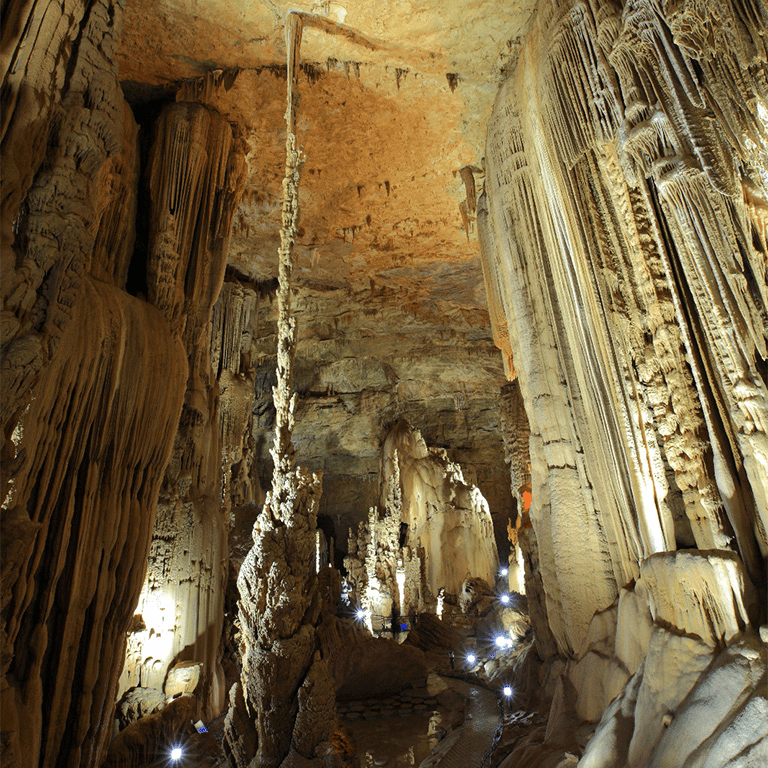
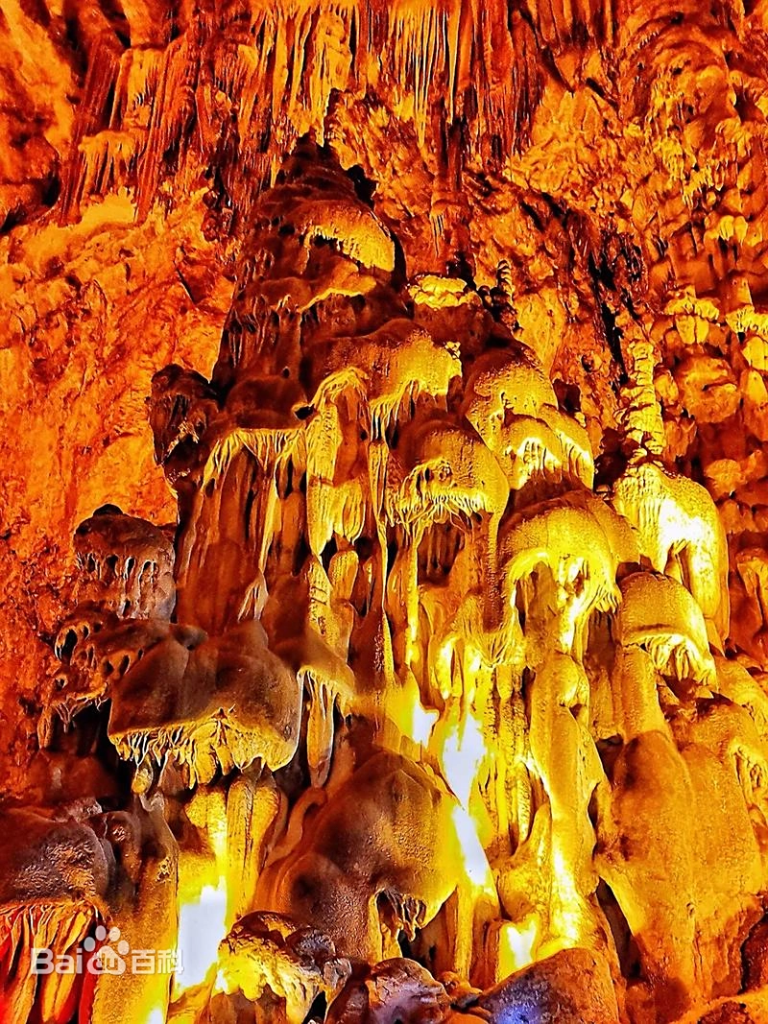
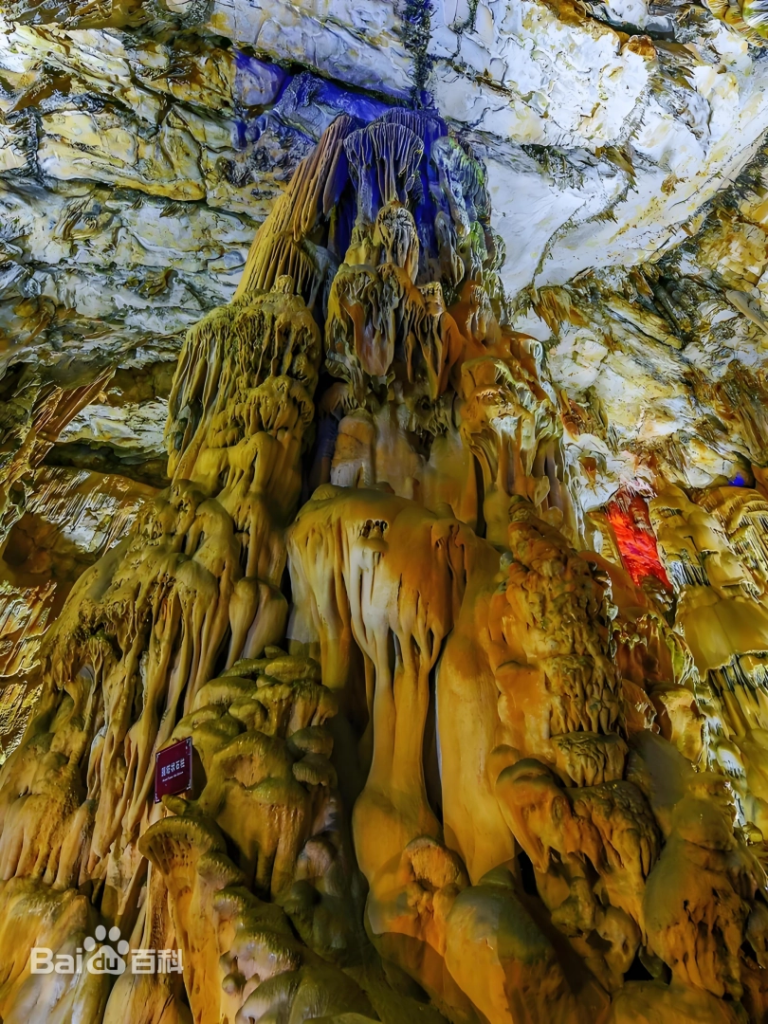
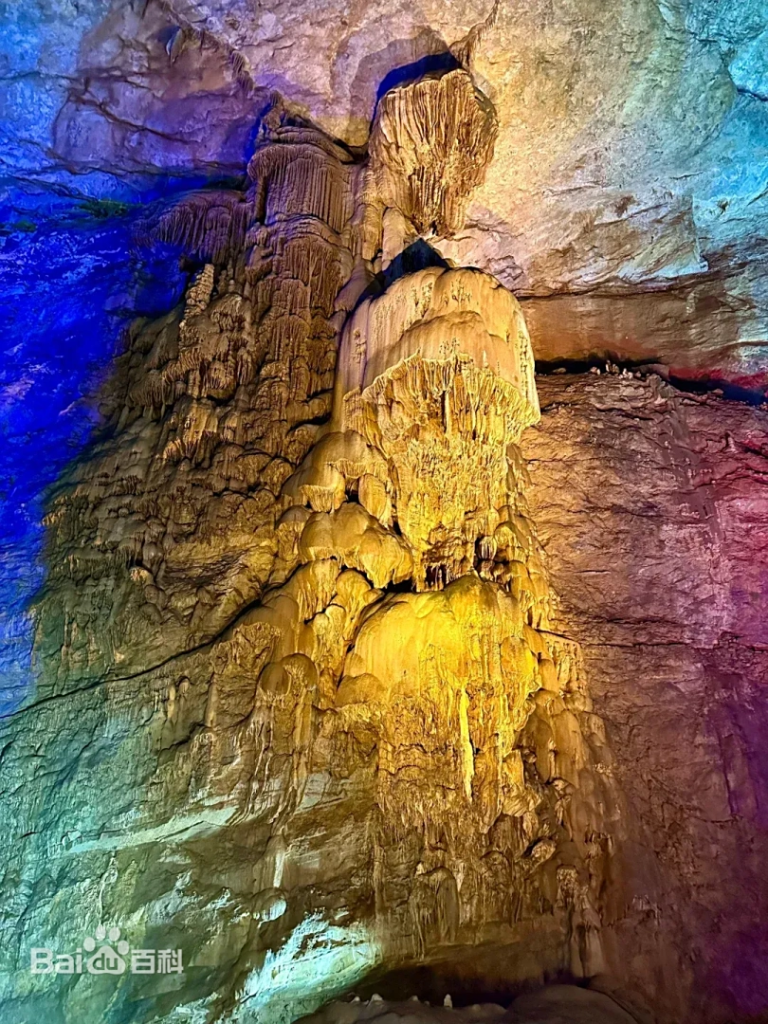
Zhijin Cave – The King of Karst Caves in China

Zhijin Cave, located in Zhijin County, Bijie City, Guizhou Province, is a high-altitude dry cave of great diversity, complexity, and scale. Inside, the karst formations are unique, vast, majestic, and breathtakingly exquisite, making it a dream destination for countless visitors.

Zhijin Cave, renowned as the “King of Karst Caves,” stands out among other famous karst caves such as Zhangjiajie’s Yellow Dragon Cave (about 100,000 sqm), Chongqing’s Furong Cave (about 37,000 sqm), and Guilin’s Reed Flute Cave (about 14,900 sqm) due to its unparalleled size and grandeur. Spanning over 700,000 square meters, Zhijin Cave is the largest of its kind, featuring 12 grand halls and 47 chambers, each adorned with unique and breathtaking formations. The cave’s largest chamber reaches an impressive width of 175 meters, while six of its halls exceed 10,000 square meters in area, highlighting its monumental scale.

The cave is adorned with a wide variety of karst formations, including stalactites, stalagmites, stone pillars, flowstones, and stone curtains. These formations come in unique shapes, resembling pagodas, plants, animals, and even mythical creatures, showcasing nature’s artistic craftsmanship.

Among its countless highlights, several are especially unforgettable:

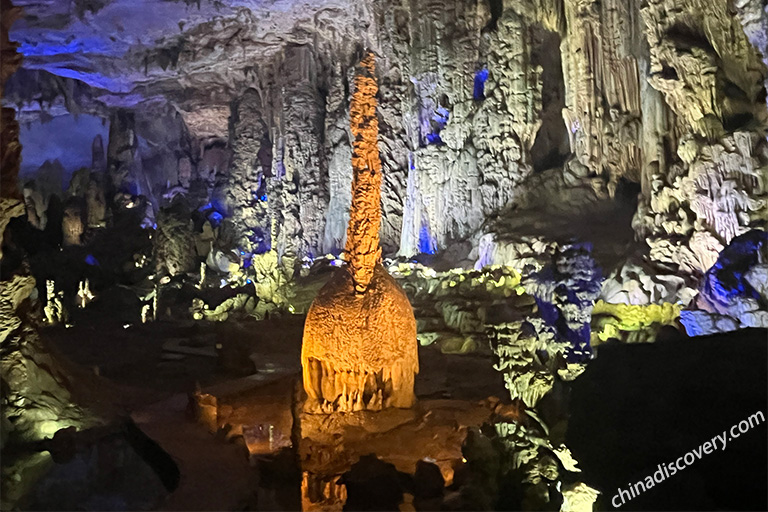
  • The Overlord’s Helmet (“Ba Wang Kui”) – A 17-meter-tall stalagmite shaped like a warrior’s helmet, known as the crown jewel of Zhijin Cave. Lit by orange light and reflected in the pool below, it appears both majestic and lifelike, as if the legendary warlord Xiang Yu himself had left his helmet behind.
  • The Pillar of Heaven (“Qian Ceng Bao Ta”) – At the junction of the North and South Gates stands a towering stone column that seems to prop up the sky. Called the “Mainstay of the River,” it symbolizes strength, resilience, and the ability to stand tall in times of trial.
  • Mother-in-law and Daughter-in-law (“Po Xi Qing Shen”) – Two pine-shaped stalagmites, one stooped like an old woman and the other upright like her filial daughter-in-law massaging her back. The scene is tender, lifelike, and moving, embodying the Chinese virtue of filial piety.
  • The Lingxiao Palace – A stunning stone waterfall, one of the largest yet discovered, cascading magnificently from the ceiling. Around it stand stone banners, draperies, and a majestic hall of “stalagmite soldiers,” as if a grand palace had opened its doors for a celestial council.

  • Snow Pressing on the Green Pine (“Xue Ya Qing Song”) – A 20-meter-tall stalagmite shaped like a pine tree blanketed in snow, one of the cave’s signature sights. Its upright strength recalls Marshal Chen Yi’s famous poem: “Though snow weighs heavily on the pine, the pine stands tall and straight.” It symbolizes resilience, dignity, and unyielding spirit.

The spectacular karst landscapes of Zhijin Cave embody grandeur, vastness, and beauty beyond imagination. A tour through its endless halls, lasting over two hours, is an ever-unfolding journey of wonder—each chamber a new astonishment, each formation a marvel of nature.

It’s no surprise that Zhijin Cave is honored as the “King of Caves.” As the saying goes: “After Huangshan, no other mountains; beyond Zhijin Cave, no other caves.” The reputation is well deserved.

Practical Tips to Visit Zhijin Cave

Zhijin Cave is located in Guanzhai Miao Ethnic Village, Zhijin County, Bijie City, Guizhou Province. The cave is approximately 120 kilometers (75 miles) from Guiyang, the capital of Guizhou Province.

Bijie City has a total of 9 railway stations and 1 airport. 2 stations are located in Zhijin County, only serving normal trains. The closest high-speed rail station to Zhijin Cave is Qianxi Railway Station, about 45 km away.

Footwear: The cave has stairs and a small section of uneven paths, and the ground can be wet and slippery. Anti-slip footwear is recommended for safety and comfort.

Clothing: The cave maintains a constant temperature of 16°C (61°F). However, the humidity and cool air can make it feel chilly, so it’s best to carry a light jacket.

Food and Drinks: There are no dining options or shops within the cave, so it’s a good idea to bring your own snacks and drinks to stay energized during your visit. If you forget to bring snacks, there is a convenience store at the cave exit where you can purchase refreshments.

Link:https://peacelilysite.com/2025/08/28/zhijin-cave-the-king-of-karst-caves-in-china/

Source: https://www.chinadiscovery.com/guizhou/zhijin-cave.html

Dancing with Flames — The Yi Torch Festival

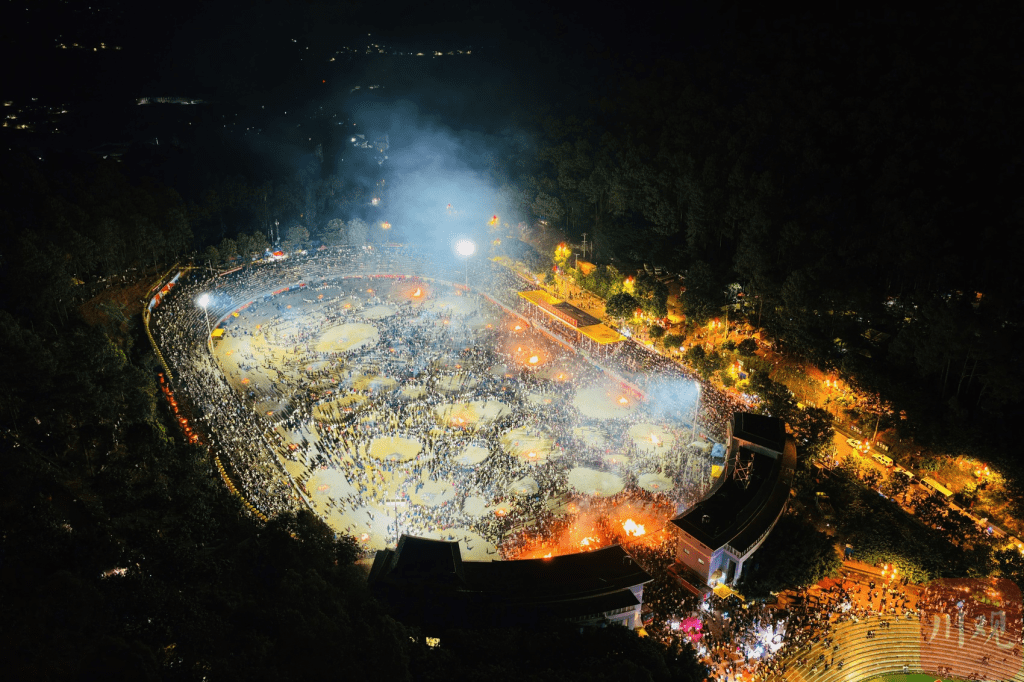
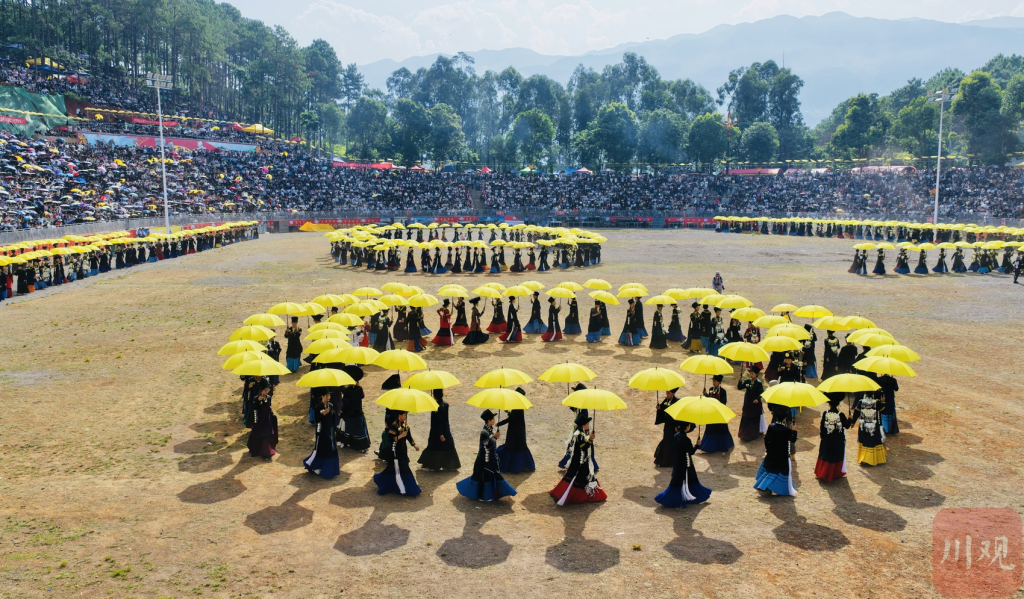
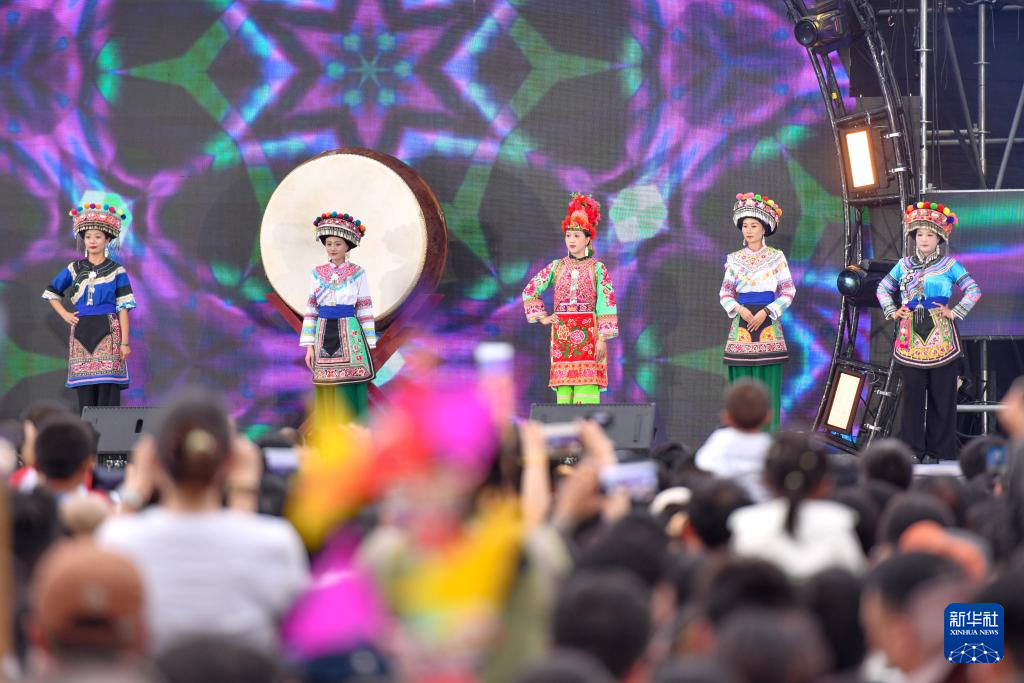
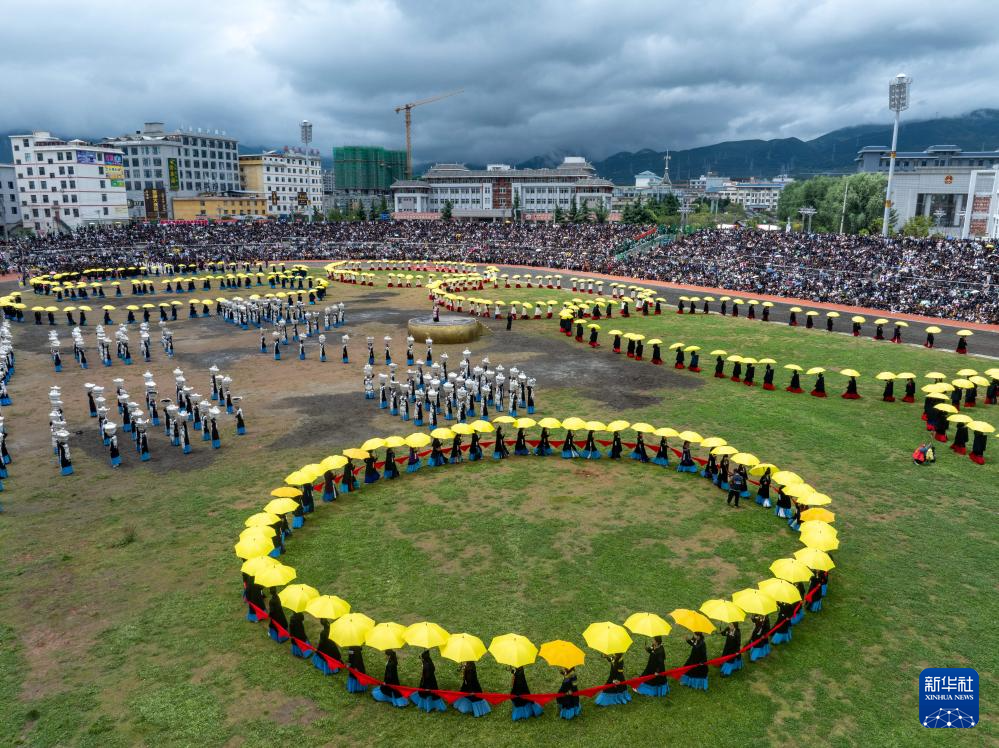
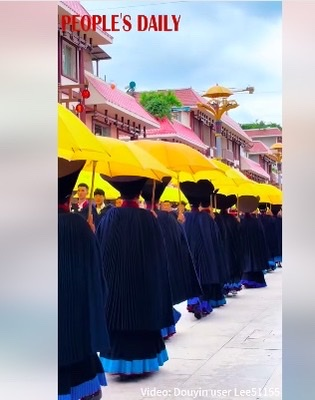
The air is warm and scented with pine smoke. In the distance, a line of golden lights winds its way down the mountainside, swaying and flickering like a living dragon. Drums beat in a steady rhythm, mingling with laughter and song. Children dash through the night clutching small torches, their faces glowing in the firelight. Elderly women hum old tunes, while young men and women steal glances beneath the shelter of bright yellow oil-paper umbrellas. This is not just a night—it is a living river of fire. You’ve just stepped into the Yi Torch Festival.

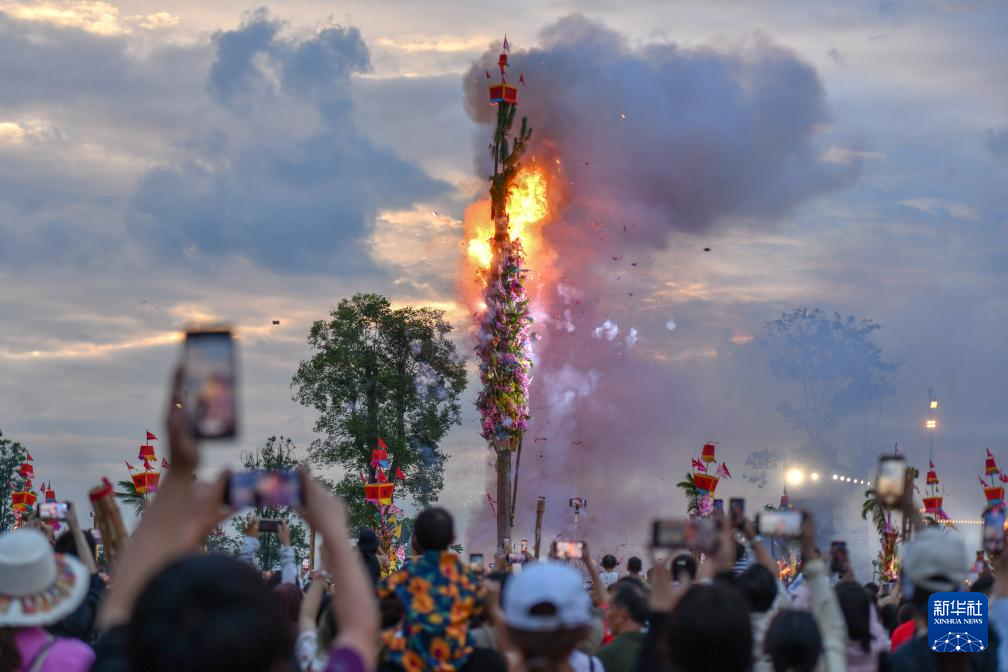
Every summer, when the moon of the sixth lunar month reaches its 24th day, the mountains and valleys of Yunnan, Guizhou, and Sichuan come alive with a sea of flickering light. This is the Yi Torch Festival, the grandest celebration of the Yi people and one of the most dazzling ethnic festivals in China.

The Yi, along with the Bai, Naxi, Jinuo, Lahu, and other ethnic groups, have celebrated this fiery tradition for centuries. For the Yi, fire is not just a source of warmth—it is a symbol of light, strength, and hope. The Torch Festival is their way of honoring fire, driving away evil, and praying for peace and abundant harvests.

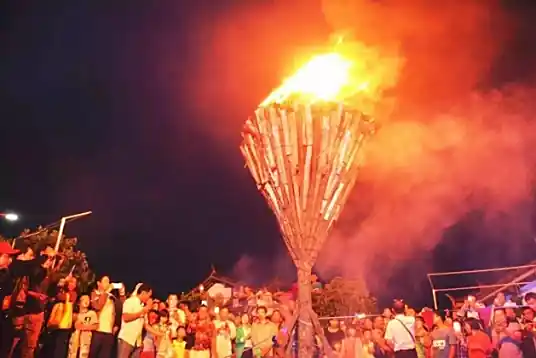
On this special day, towering torches rise high in the center of each village, while every household lights their own smaller torches. As night falls, villagers carry these flames into the fields, circling the crops to symbolically chase away pests and misfortune, leaving behind protection and blessings.


The Torch Festival lasts three magical days and nights, each with its own unique charm.

Day One – Fire Worship
Morning preparations are lively, feasts are prepared, and wine and meat are offered to ancestors. At dusk, villagers gather at a site chosen by the elders. There, a sacred fire is lit using the ancient method of striking stones, and the flame is blessed by a bimo (Yi priest) chanting sacred verses. Then, torches made from mugwort are passed to each household. Children and elders alike carry them to the edges of fields, reenacting the old legend of Ashimo, the heroine who once used fire to drive away destructive insects.

Day Two – Playing with Fire
If Day One is solemn, Day Two is pure joy. Under the glow of the sacred flame, villagers gather for horse races, wrestling matches, bullfights, and singing contests. Young men compete like the legendary hero Atilaba, known for his courage and strength. Young women, dressed in vibrant handmade dresses and carrying delicate butter umbrellas, dance the graceful “Duoluohe” and Dati dances, just as Ashimo once did.
The highlight? A traditional beauty contest where elders select the most handsome man and the most beautiful woman of the year—chosen not only for looks, but also for kindness, bravery, and skill. As the night deepens, couples stroll by the streams and through the mountains, plucking moon lutes and jaw harps, their music and whispers floating into the starry sky.

Day Three – Sending Off the Fire
The final night is the festival’s grand finale. Villagers rush through the darkness carrying blazing torches, eventually gathering them into massive bonfires. Around these roaring flames, they sing, dance, and laugh until the stars fade and dawn arrives.


Beyond the rituals and dances, the Torch Festival is also a season of romance. Young men and women meet, flirt, and sometimes begin lifelong partnerships. According to tradition, a man may “steal” a token—such as a scarf or ornament—from the woman he loves as a sign of affection. For the rest of the night, they sing and dance together, expressing their feelings until sunrise.

In the end, the Torch Festival is more than just a cultural event—it is a living expression of the Yi people’s spirit: their love of life, reverence for nature, devotion to tradition, and unquenchable hope for the future. And as the last embers fade in the early morning light, the warmth of the flames lingers—both in the fields and in the hearts of the people.


If you’ve ever dreamed of seeing thousands of torches glowing like fire dragons weaving through the dark mountains, this is the place to be. The Yi Torch Festival is not only a feast for the eyes but also a journey into the beating heart of a culture that celebrates life in the glow of fire.


Video: https://fb.watch/BrJd5yhukt

Link:https://peacelilysite.com/2025/08/12/dancing-with-flames-the-yi-torch-festival/

Living with Wolves: A Wild Artist’s Journey of Love, Respect, and Coexistence

If you are willing to look with your heart, you will see starlight in a wolf’s eyes.

On this planet, humanity is not the only protagonist.
Every forest, every river, every creature shares the same sky and breath with us. True civilization is not the conquest of nature, but the choice to live in harmony with it.


Li Weiyi, a wildlife animator, has spent years drifting between forests and grasslands, sketching the fleeting emotions in an animal’s eyes and the untamed spirit in its movements. Her brush captures not just form, but soul. Gentle and perceptive, she treats animals as friends and believes, with unshakable conviction: all beings are equal.


The Call of the Grassland

In April 2010, she arrived in the vast Ruoergai grasslands of Sichuan. The wind bent the grass like waves, silver mountains gleamed under the sun, and the openness was almost intoxicating. But behind the beauty was a brutal truth—conflicts between humans and wildlife were pushing many animals toward tragedy.

Then she heard a story that broke her heart.
A male wolf, desperate to feed his mate who had just given birth, ventured into a human settlement in search of food. He was caught in a trap, killed by herders, and skinned. His mate waited for days before realizing he was gone. In grief, she ate poisoned bait and followed him in death, leaving six starving pups behind.

Li Weiyi resolved to find them. Days of searching through freezing wind and endless grass finally brought her to the den. Five pups had already died. The last survivor lay weak and trembling, barely breathing. When she whispered, it crawled toward her with eyes full of trust. At that moment, she became its only family.

She named him Green—for the color of the grasslands, for life, hope, and freedom.


Life Between a Woman and a Wolf

In Chengdu, Green grew into a curious, spirited companion. He swam instinctively the first time he fell into water, learned to press the TV remote with his paws, and loved wolf documentaries—howling whenever his kind appeared on screen.

But a wolf will always be a wolf. Green chewed through wires, stole raw meat from neighbors, and refused a leash with stubborn pride. On the streets, he walked with head held high, as if declaring to the world: I am a wolf, not a pet.

A walk with a stray dog ended in tragedy when the dog was hit by a car, sending Green into a panicked dash through traffic. Authorities warned Li Weiyi that Green could no longer live in the city.


Preparing for the Return

She briefly considered a zoo, but one look at an old wolf with dull eyes, torn ears, and walls scarred with escape attempts ended that thought. She sold her home, bought an off-road vehicle and a camera, and returned to the Ruoergai grasslands with Green to begin his rewilding.

There, he sparred with Tibetan mastiffs, relearned the fight for survival, and endured nights of hunger in temperatures as low as –15°C. Li Weiyi stayed by his side through it all, determined to awaken the wolf within him.


Parting and Return

One month later, Green’s howl was answered by a wild pack. He walked toward the mountains, pausing to look back, eyes filled with reluctance. Li Weiyi waved him on, tears blurring her vision, and he vanished into the snow.

He became a ruler of the grassland, fathering pups of his own—but three were killed by humans, a grim reminder that coexistence was still far away.

Two years later, she saw him again from a distance, carrying hares—her favorite food. He stood watching her, not approaching. He belonged to the wild now. His eyes held both sadness and something unspoken.

Li Weiyi began returning to the grassland each year to help wolves like Green survive. And in August 2020, after a decade of intertwined lives, Green ran back into her arms. She held him tightly, tears streaming—warmth, reunion, and harmony made flesh.


Li Weiyi turned her story into the book and film Back to the Wolf Pack. It ends with a haunting question:

“We can rescue a wolf, but can we change the fate of the entire pack?”


This is not only a question for wolves—it is a question for humanity. Every time we expand our territory, every time we place our wants above the needs of other life, we risk silencing the very voices that make this planet alive.

We are not the masters of the Earth. We are one part of a vast, breathing community of life.

In 2020, China’s first wild wolf sanctuary was established—a small but hopeful echo of Li Weiyi’s ten years of dedication. But the work is far from over.

If we truly wish for harmony with nature, it begins with a choice—to see, to care, and to act—before the howls fade forever.

Link: https://peacelilysite.com/2025/08/08/living-with-wolves-a-wild-artists-journey-of-love-respect-and-coexistence/

Source: https://www.sohu.com/a/355779509_99965884, https://m.thepaper.cn/newsDetail_forward_20560520

Lingyan Temple: A Millennium of Buddhist Grace and Sculptural Treasures in the Heart of Mount Tai

Photo from Wikipedia

Located in the northwest of Mount Tai, Lingyan Temple was founded during the Eastern Jin Dynasty and boasts a history of over 1,600 years. It is regarded as one of the most important sacred sites of Chinese Buddhist culture. Since the Tang Dynasty, Lingyan Temple has enjoyed great renown, and together with Qixia Temple in Nanjing, Guoqing Temple on Mount Tiantai in Zhejiang, and Yuquan Temple in Dangyang, Hubei, it has been hailed as one of the “Four Great Temples of China.” The eminent monk Tang Xuanzang once resided here to translate Buddhist scriptures. From Emperor Gaozong of Tang onward, many emperors stopped to worship at this temple on their way to perform imperial rites at Mount Tai, a testament to its revered historical status.

Although I personally prefer the majestic beauty of untouched natural landscapes, I was deeply moved by the profound cultural and religious artistry of Lingyan Temple. Within the temple grounds, ancient trees such as Chinese wingnut, cypress, and banyan rise skyward, creating a tranquil and sacred atmosphere. As an integral part of the World Natural and Cultural Heritage site of Mount Tai, Lingyan Temple is especially renowned for its colored clay sculptures of Arhats, which hold a prominent place in the history of Chinese sculpture.

Stepping into the solemn Thousand Buddha Hall, one is struck by the breathtaking sight of the Arhat statues—40 lifelike clay figures arranged in a semicircle along the inner walls. Among them, 29 represent disciples of Shakyamuni and Indian masters such as Bodhidharma and Kumarajiva. The remaining 11 depict eminent Chinese monks, including Huiyuan, Huike, Huichong, and various abbots of Lingyan Temple. According to inscriptions and scholarly research, the original set consisted of 32 statues, first created in the third year of the Zhiping reign of Emperor Yingzong of the Song Dynasty (1066). Additional painting and sculpting were done in the first year of the Zhiyuan reign (1328) during the Yuan Dynasty. The Thousand Buddha Hall was renovated in the 15th year of the Wanli reign (1587) in the Ming Dynasty, at which time the number of Arhats was increased to 40. The final touch-up was completed in the 13th year of the Tongzhi reign (1874) of the Qing Dynasty.

Each statue stands about 1.6 meters tall and is seated on a waist-high brick pedestal roughly 80 centimeters in height, with the top of each statue rising 105 to 110 centimeters above the seat. The overall sculptural style is remarkably realistic, emphasizing the individuality and inner spirit of each figure: square faces, prominent noses, distinct facial features, and dynamic, textured robe patterns. The ancient artisans broke away from conventional, stylized Buddhist iconography and instead grounded their work in real life, endowing each Arhat with unique expressions and postures—some sit in meditation, others clasp their hands or hold staffs; some appear ragged and emaciated, while others exude noble dignity and elegance. Each figure is infused with spirit and personality, appearing almost alive, as if they might speak or move at any moment.

What’s even more astonishing is the meticulous attention to detail in both facial expressions and bodily movement, as well as the relationship between the robes and the human form. The flowing lines of the garments, the way the folds respond to motion, and the tactile quality of the fabric all reflect a masterful understanding of form and rhythm. One medical expert even remarked that, “Through the Arhats’ robes, one can perceive the ancients’ precise grasp of human anatomy.”

The Arhat sculptures at Lingyan Temple are not only masterpieces of religious art but also represent the pinnacle of ancient Chinese realistic sculpture. The renowned scholar Liang Qichao once visited the site and inscribed a stone tablet calling them “The finest sculptures in the land.” Famed art master Liu Haisu also praised them, writing: “The Arhats of Lingyan—first under heaven—vivid and lifelike, with flesh and spirit.”

Lingyan Temple is more than a place of worship—it is a living chronicle of Buddhist heritage carved from clay and shaped by the hands of genius. Whether you are a devout practitioner, a history enthusiast, or an art lover, a visit to Lingyan Temple will surely leave you moved by its rich cultural legacy and breathtaking artistic beauty.

Link:https://peacelilysite.com/2025/07/31/lingyan-temple-a-millennium-of-buddhist-grace-and-sculptural-treasures-in-the-heart-of-mount-tai/

Why Ancient Roman Buildings Still Stand—And Modern Ones Don’t

Have you ever stood before the Pantheon in Rome or looked up at the towering aqueducts from ancient times and thought:
“How are these structures—built over 2,000 years ago—still standing strong, while modern buildings crack, rust, and collapse in just a few decades?”

It’s not a miracle. It’s ancient wisdom and material science far ahead of its time.

By Rabax63 – File:Pantheon_Rom_1.jpg, CC BY-SA 4.0, https://commons.wikimedia.org/w/index.php?curid=87626466

Pantheon, Rome, c. 125 C.E. (photo: Darren Puttock, CC BY-NC-ND 2.0)

Sanctae Mariae Rotundae (photo: Steven Zucker, CC BY-NC-SA 2.0)

🏛 The Secret of Roman Concrete

Unlike the Portland cement we use today, ancient Roman concrete was made with volcanic ash (pozzolana), lime, water, and volcanic rock. This special mix triggered a chemical reaction known as the pozzolanic reaction, which formed a remarkably stable and durable material.

This volcanic ash came from regions like Campi Flegrei near Naples, rich in silica and alumina. When mixed with lime and water, it formed bonds that strengthened over time—rather than weakened.


🌊 Stronger with Time—Even Underwater

Even more amazing? Roman concrete exposed to sea water didn’t erode—it grew stronger. Scientists discovered that seawater reacted with the volcanic materials to create a rare mineral called tobermorite, which reinforced the concrete’s internal structure.

This is why many ancient Roman ports and sea walls still stand intact after 2,000 years—even without modern rebar or waterproofing.

Ruins in Privernum, near Rome, where researchers collected ancient concrete samples from a bordering city wallREDA & CO srl/Alamy


🔧 Self-Healing Capabilities

Roman concrete even had a kind of “self-healing” ability. When small cracks formed, water seeping into the cracks would trigger new chemical reactions, filling the gaps with more binding minerals and sealing the damage naturally.

No wonder structures like the Pantheon’s massive unreinforced concrete dome—still the largest in the world—have stood strong for two millennia.

Today’s concrete (Portland cement) is fast to produce and easy to use—but it’s not built to last. It’s vulnerable to carbonization, water infiltration, and the corrosion of internal steel reinforcements. Many modern buildings begin to deteriorate in as little as 50 to 100 years.

What’s more, many structures are built with thinner supports and cheaper materials to cut costs and speed up construction—further sacrificing long-term durability.

Ancient Roman builders weren’t just engineers—they were environmental designers who worked with nature rather than against it. Their materials were local, natural, and synergistic. They designed for longevity, not just appearance or convenience.

Modern architecture, for all its technological advancements, could learn a powerful lesson:
Durability is a form of sustainability.


We often assume that more advanced technology means better quality. But perhaps what truly makes a structure strong isn’t just engineering—it’s wisdom, respect for nature, and a mindset rooted in harmony and longevity.

If we embrace these ancient insights, maybe our future buildings won’t just house us—they’ll endure for generations.

Link:https://peacelilysite.com/2025/07/21/why-ancient-roman-buildings-still-stand-and-modern-ones-dont/

Turpan’s Hidden Lifelines: The Ingenious Karez Irrigation System of Xinjiang

Nestled in the heart of Xinjiang, the Turpan Basin holds several extraordinary records: it’s the lowest geographical point in China, and during summer, it’s the hottest place in the country. With scorching sunlight, relentless winds, and almost no rainfall, Turpan earns its title as the “Land of Fire.”

In the peak of summer, the surface temperature in the surrounding Gobi Desert can soar to 82.3°C (180.1°F), while the air temperature often exceeds 49°C (120°F). Rain is almost nonexistent—Turpan receives an average of just 16.4 mm of rainfall annually, and in some years, as little as 4.3 mm. Yet, amidst this harsh, parched environment, an ancient miracle has quietly sustained life for over two thousand years: the Karez irrigation system.


A Miracle Beneath the Earth

While nature was unforgiving above ground, it hid a gift below. Meltwater from the distant Tianshan Mountains seeps underground through coarse gravel and sand, eventually blocked by the Flaming Mountains and surfacing as springs. Ingenious local people found a way to capture and guide this underground treasure—thus, the Karez was born.

The Karez system channels water from mountain sources through a network of underground tunnels and vertical shafts, delivering it to the arid land without evaporation loss. Remarkably, this ancient system operates entirely without pumps, relying solely on gravity and terrain.

A complete Karez includes:

  • Vertical shafts for ventilation and maintenance
  • Underground tunnels to carry water
  • Open canals to distribute it
  • Storage ponds to hold it

Across Turpan’s landscape, you can still see long rows of small mounds—each one marking a shaft, a glimpse into the remarkable infrastructure below.


A Testament to Ingenuity and Endurance

The origins of the Karez can be traced back to the Han Dynasty, over 2,000 years ago. Most of the surviving systems were built during the Qing Dynasty, including during historical moments like Lin Zexu’s fourth inspection of Turpan, when over 300 new Karez channels were added, and Zuo Zongtang’s campaigns, which saw nearly 200 more constructed.

At its peak in the 1950s, there were about 1,700 Karez systems in Turpan, stretching over 3,000 kilometers. Today, about 725 remain, a number slowly dwindling due to modernization, drought, and human impact.

The construction of each Karez was no small feat. Generations of laborers worked in dark, narrow tunnels, often barefoot in icy water, chiseling stone with simple tools and oil lamps. They carried earth and rock out by hand, surviving on dry flatbread and enduring brutal conditions.


A Culture of Water, Wisdom, and Survival

More than just a hydraulic system, the Karez represents a culture—a story of human resilience, harmony with nature, and intergenerational wisdom. In this water-scarce land, the Karez has nurtured lush vineyards, fertile fields, and diverse communities, offering life where none should thrive.

Today, many of these systems are dry or abandoned, relics of a past shaped by necessity and brilliance. But for those who walk among them, they are still very much alive—whispers from the earth, reminding us of what is possible when people respect and work with nature.


If you ever find yourself in Turpan, do not miss the chance to explore the Karez wells. They are more than ancient engineering marvels—they are monuments of perseverance, and living echoes of a civilization that made the desert bloom.

Link:https://peacelilysite.com/2025/06/18/turpans-hidden-lifelines-the-ingenious-karez-irrigation-system-of-xinjiang/

Dragon Boat Festival and Duanwu Jie

The Dragon Boat Festival, also known as Duanwu Jie, is one of the four major traditional Chinese festivals, alongside the Spring Festival, Tomb-Sweeping Day, and Mid-Autumn Festival. It is celebrated on the fifth day of the fifth month of the Chinese lunar calendar, which is why it is also called the “Double Fifth Festival” (Chongwu Jie, 重五节). On the Gregorian calendar, it usually falls in late May or early June.

In addition to Chinese mainland, many other Asian countries and regions also celebrate this festival. In Malaysia, Indonesia, Singapore, and Taiwan, China, it is known as Bak Chang Festival (‘Dumpling Festival’). Learn more facts about the Dragon Boat Festival

Why Is Dragon Boat Festival So Important?

Many believe that the Dragon Boat Festival is celebrated to commemorate the death of Qu Yuan, a renowned Chinese poet and minister known for his patriotism and profound contributions to classical poetry. He ultimately became a national hero.

However, historical evidence shows that the origins of the Dragon Boat Festival actually predate Qu Yuan’s death. The festival’s earliest roots are tied to the fifth lunar month, which the ancients considered the “month of poison.” As summer began, people were more prone to illness, and epidemics often spread. This made the month seem ominous, prompting ancient communities to adopt various practices to ward off disease and evil spirits.

Thus, the Dragon Boat Festival was originally observed as a traditional health and wellness festival. It was a time for people to carry out rituals and customs aimed at protecting themselves from illness and repelling harmful forces.

Dragon Boat Festival

Dragon Boat Festival Customs

The customs of the Dragon Boat Festival can generally be divided into two main categories. One centers on honoring dragons and historical heroes—most notably Qu Yuan—while the other focuses on warding off evil spirits and promoting health and well-being.

1. Honoring Heroes and Dragons

a. Eating Sticky Rice Dumplings

dragon boat festival celebration, eating sticky rice dumplings

Zongzi (粽子, zòngzi) are the most iconic food of the Dragon Boat Festival. According to legend, after the patriotic poet Qu Yuan drowned himself in the river, local people threw lumps of rice into the water to prevent fish from eating his body. This evolved into the custom of making zongzi.

Traditionally, families would prepare and share homemade zongzi. Today, while some older generations still hand-make them, most people buy them from restaurants or bakeries.

Zongzi are made with glutinous rice and often filled with meats, beans, or other ingredients. They are wrapped in bamboo or reed leaves into triangular or rectangular shapes and tied with soaked stalks or colorful silk cords. Flavors and fillings vary widely across different regions of China.

b. Participating or Watching Dragon Boat Races

dragon boat festival celebration, dragon boat race

Dragon boat racing is the most exciting and prominent activity during the festival. The sport is said to have originated from people paddling out in boats to search for Qu Yuan’s body after his tragic death in 278 BCE.

Another theory suggests that the races originated more than 2,000 years ago as a ritual to worship the Dragon God or Water God.

The boats are traditionally carved and painted to resemble dragons. Depending on the region, each boat can carry 30 to 60 paddlers. Teams row in unison to the rhythm of pounding drums, creating a thrilling and energetic spectacle. Winning is believed to bring good luck and happiness for the year ahead.

Some of the most famous races take place in Hong Kong, Guangzhou, and Hangzhou.

2. Warding Off Evil and Promoting Health

a. Hanging Chinese Mugwort and Calamus

dragon boat festival celebration

The festival coincides with the early summer season, a time when illnesses were historically more common. Mugwort and calamus are medicinal herbs used to prevent disease and repel pests. Their strong fragrances are believed to drive away flies, mosquitoes, and negative energies.

On the fifth day of the fifth lunar month, people clean their homes and hang these herbs on their doors to protect against illness and bring good luck.

b. Drinking Realgar Wine

dragon boat festival celebration,

A traditional saying goes: “Drinking realgar wine drives away disease and evil spirits.” Realgar wine is made from fermented grains and realgar, a red mineral (arsenic sulfide) once believed to be an all-purpose antidote.

Historically, people drank realgar wine to kill insects, detoxify the body, and protect against spiritual harm.

c. Wearing Perfume Pouches

dragon boat festival celebration,

Before the festival, parents prepare small, colorful silk pouches filled with fragrant herbs or perfume for their children. These are either worn around the neck or pinned to clothing as ornaments.

Perfume pouches are believed to offer protection from evil spirits and disease, and are a cherished custom that blends health with artistry.

The Origins of the Dragon Boat Festival

There are many legends about the origin of the Dragon Boat Festival. The most popular ones are as follows:

Why Dragon Boat Festival Celebrated

The Death of Qu Yuan

The most widely accepted origin of the Dragon Boat Festival is its commemoration of Qu Yuan (340–278 BCE), a patriotic poet and loyal official of the Chu State during the Warring States Period. When his beloved state fell to the Qin, Qu Yuan, devastated by the loss, drowned himself in the Miluo River on the fifth day of the fifth lunar month.

Local people, deeply moved by his patriotism, raced out in boats to rescue him or retrieve his body, but their efforts were in vain. To keep fish and evil spirits from disturbing his remains, they beat drums and threw rice dumplings into the river. These traditions evolved into the dragon boat races and the custom of eating zongzi that continue today.

The Unlucky Fifth Month

Another explanation for the origins of the Dragon Boat Festival relates to the traditional Chinese calendar and seasonal beliefs. Since ancient times, the fifth lunar month was considered an unlucky time and was even referred to as the “Month of Poison” (毒月). This was when the “Five Poisonous Creatures” (五毒 wǔ dú)—centipedes, scorpions, snakes, toads, and spiders—began to appear in greater numbers due to the warming weather. Disease, pestilence, and natural disasters were also more prevalent during this period.

The fifth day of the fifth month, or the “Double Fifth,” was seen as especially ominous. To protect themselves, people hung wormwood and calamus on their doorways and wore sachets of fragrant mugwort (xiāng bāo, 香包). The sword-like shape and pungent aroma of calamus were believed to repel both pests and evil spirits. For this reason, the Dragon Boat Festival is also sometimes referred to as the “Calamus Festival” (菖蒲节 Chāngpú Jié).

These rich and varied customs reflect the Dragon Boat Festival’s deep cultural significance, blending ancient health practices with heartfelt traditions of honor, protection, and community celebration.

Link:https://peacelilysite.com/2025/06/05/dragon-boat-festival-and-duanwu-jie/

Source: https://www.chinahighlights.com/festivals/dragon-boat-festival.htm

A Serene Masterpiece: The Water-Moon Guanyin at the Nelson-Atkins Museum

Tucked within the tranquil halls of the Nelson-Atkins Museum of Art stands a breathtaking wooden sculpture of Water-Moon Guanyin from the Liao Dynasty—a work hailed as “the most magnificent surviving sculpture in China” and “a triumph of religion and aesthetics.” It has also been honored by the media as “one of the thirty finest works held in American public institutions.”

Officially labeled by the museum as “Guanyin of the Southern Sea,” this statue rises to an impressive height of 2.4 meters. Aside from the right forearm, the entire figure—including its base—was masterfully carved from a single block of wood. Dating back to the 11th or 12th century (Liao or Jin Dynasty), the sculpture has been remarkably well-preserved over the centuries.

This Guanyin is an extraordinary example of religious artistry. Her face is gently sculpted with refined features—serene, graceful, and quietly majestic. Adorned with a jeweled crown, her eyes are softly closed, gazing downward in meditation and compassion. The statue’s pose reflects the elegance and wisdom traditionally associated with the feminine form, especially in the flowing hand gestures—while still retaining some subtle masculine traits in the upper body, a nod to Guanyin’s transcendent nature.

In classic iconography, Water-Moon Guanyin is often portrayed seated on a rock or lotus throne, gazing compassionately at the world. In this sculpture, she sits with one leg bent and the other gracefully draped downward. Her right arm rests lightly on her knee, fingers gently curved, as she gazes diagonally downward with a calm smile—evoking the image of the moon reflected in water. This visual metaphor powerfully symbolizes a core Buddhist teaching: the illusion of form and the essence of emptiness.

Every aspect of the statue—the proportions, the flowing posture, the tranquil expression—conveys a sense of effortless grace, inner freedom, and compassionate presence. It is a piece that invites quiet reflection, stirring something deep within the soul of the viewer.

The Legend Behind the Water-Moon Guanyin

The form of Water-Moon Guanyin, also known as “Auspicious Water Guanyin” or “Auspicious Water Bodhisattva,” is one of the most beloved among the thirty-three manifestations of Guanyin in Chinese Buddhist tradition. Interestingly, the name “Water-Moon” does not come from early Buddhist scriptures, but rather from Chinese folklore—born of the fusion between Buddhism and indigenous Chinese culture.

According to legend, Guanyin once appeared in Suzhou during a time of war, where she witnessed the brutal slaughter of civilians by the Jin army. Out of great compassion, she transformed into a beautiful woman, built a ritual platform, and began chanting sutras to deliver the souls of the dead. When her recitation was complete, someone among the crowd recognized her divine aura and asked to see her true form.

The Bodhisattva pointed to the riverbank. There, reflected in the still waters, was the image of a radiant full moon, within which her sacred figure appeared—graceful and ethereal. Among the witnesses was a talented artist named Qiu Zijing, who quickly sketched the vision. As his painting circulated, this image came to be known and venerated as the Water-Moon Guanyin.

A Space Worthy of the Divine

To properly honor this extraordinary statue, the Nelson-Atkins Museum created an expansive Chinese Temple Gallery. Behind Guanyin stands a Yuan Dynasty mural titled “Assembly of the Radiant Buddha,” originally from Guangsheng Temple in Shanxi Province. Above hangs a carved Ming Dynasty coffered ceiling adorned with dragons, while in front, finely carved lattice doors from a Qing Dynasty official’s residence in Beijing complete the immersive setting.

This harmonious environment allows visitors to experience the sculpture not just as a museum piece, but as a living expression of faith, beauty, and timeless spiritual insight.

https://www.orientations.com.hk/highlights/creating-spaces-for-asian-art-c-t-loo-and-the-nelson-atkins-museum-of-art

https://www.orientations.com.hk/highlights/creating-spaces-for-asian-art-c-t-loo-and-the-nelson-atkins-museum-of-art

The Water-Moon Guanyin at the Nelson-Atkins Museum is more than an ancient sculpture—it is a sacred embodiment of compassion, artistry, and transcultural storytelling. Whether viewed through the lens of religion, history, or aesthetics, it stands as a serene reminder of the enduring power of beauty to transcend time and touch the human spirit.

Link:https://peacelilysite.com/2025/05/21/a-serene-masterpiece-the-water-moon-guanyin-at-the-nelson-atkins-museum/

Enshi: China’s Grand Canyon

A walkway in Enshi Canyon, China’s Grand Canyon. Jean Spoljaric photos.

A Visit to the Chinese Grand Canyon in Enshi

By Jean Miller Spoljaric

My trip to the Hubei (Hu-bay) Province of Central China proved to be a real eye-opener. It was a culture shock for me, but life as they know it for them. I traveled from Beijing to Wuhan, China, and on to Enshi, the home to China’s Grand Canyon.

Enshi city was vibrant and alive, but nothing could have prepared me for the China I was about to see in the mountainous areas of Enshi Canyon. Several times during the trip, I reminded myself that, sometimes, ‘Less is More.’

Location

The view from the top of Enshi Canyon is breathtaking.

Enshi is the capital city of Hubei Province and is located inland, in the southwest region of Hubei. It’s an area of immense natural beauty with soaring mountains, deep canyons, meandering rivers, and great waterfalls. The mountain village is a two and a half-hour car ride from the bustling city.

The mountaintops are high above the skyline and the thousand-zhang waterfalls that tumble to the canyon floor below, feeding the underground rivers that flow through the Qungjiang River Valley of virgin forests and ancient villages.

Enshi proudly displays the peaks and valleys of what is known today as China’s Grand Canyon.

Enshi Grand Canyon

The Enshi Grand Canyon is located in Tunbao Village in the Town of Banqiao, high above the clouds. I climbed my way to the summit and experienced the views of a lifetime. Altogether, I hiked three of the five precipices in Enshi Canyon.

I was in awe as I gazed out toward the mystical land. The puffy clouds seemed close enough for me to touch and the precipices were like giant stalagmite stone fingers reaching toward the heavens.

Free from the hustle and bustle of the rest of China, there were no beeping horns, no crazy mopeds; just the serene stillness and beauty of nature.

A 67-Mile Canyon

The Enshi Canyon has a total length of 108 km (67 miles) and the total area is more than 300 sq. km (about 74,000 acres, or 115.8 sq. miles). As it’s only 1.7 miles wide, it makes the canyon long and narrow.

By comparison, the American Grand Canyon (1,218,560 acres/ 1,904 sq. miles) could hold sixteen Enshi Grand Canyons.

The significant difference between the two is that Enshi Grand Canyon is lush as opposed to the barren desert-like topography of America’s Grand Canyon.

Still, all the splendor and physical features that one would find in America’s Grand Canyon are contained within this smaller area, so it makes it a great place to visit for a day trip or longer.

All hard work and smiles, always, in Enshi.

The Magic

As I climbed the steep ridges of the mountains, at each turn, I came across villagers selling cold drinks, cooked potatoes, and hard-boiled eggs soaking in tea. Not an easy day’s work!

I was amazed at how the elders set up camps every day, hiking up and down these mountains with large sacks strapped on their backs. Great exercise keeps them fit.

As I paused to drink my water and catch my breath, a woman twice my age, with a gentle smile on her face, passed me. I used the universal sign for a photo to ask if I could take a picture. Her look of concern was followed by a big smile.

Moments after snapping the image, I shared it with her and several others who had stopped to watch. They seemed amazed at seeing themselves in the viewfinder. It was magic and they wanted more pictures.

This pretty little girl hiked the Enshi Grand Canyon with her family. I was proud of her as she kept up with everyone!

Then, a little boy stopped and pointed to my iPod. I let him listen to a song and his face beamed with amazement! More magic!

And, just like that, any concerns were replaced with trusting smiles. As we smiled and laughed together, the language barrier seemed to disappear.

Giant Golden Panda

As a tall, blond, westerner, I felt the introspective eyes of the locals on me in the more urban areas, but nothing prepared me for my reception in the isolated mountain settlements.

For many of the mountain people of Enshi, it appeared to me that I was the first American they had ever seen.

The children surrounded me, seemingly mesmerized by my blonde hair and green eyes. Mothers shooed their children closer to get a better look; the shy little ones hid behind their mother’s skirt, peeking out just enough to fill their curiosity.

My tall stature and lightly colored hair had the men following my every move with their eyes. Women would gather around just to hear me speak.

I felt like a giant golden panda. I laughed to myself as I thought that I haven’t turned this many heads since I was nineteen!

They wanted to know everything about me: who I was, where I came from, why I was there! I’m happy to say, I think I left a lasting positive impression.

Large statues oversee the grounds at Tusi Castle in Enshi, China.

The People Of Enshi’s Mountains

The people of rural Enshi are kind, hard-working, self-sufficient, and very isolated from the world. They live a hard life off the land, but their big smiles never seem to fade.

They are farmers of vegetables and tea and are proud of their daily life with each other. There is no running water for most and squat toilets for all.

I saw children with no shoes or with one worn pair, and I thought about my children with too many shoes. I saw all the diseased and sick dogs lying in the comfortable shade of old, tired trees and wanted to rescue them all.

I guess it’s all relative. My daily life of iPods, cell phones, and laptops is a world away from the mountain people of Enshi. They are surrounded every day by trees, lakes, rivers, waterfalls, and beautiful lush green mountains. Maybe, they have it right!

The Other Enshi

There is another world below the mountains in the city of Enshi. By day, I would recommend a visit to Tusi Castle. It dates back to 700 AD and is a lesson in the culture of the area.

This Chieftain castle was destroyed by a fire in 2004 and perfectly restored soon after.

It is home to the largest archaized Pagoda style buildings in China.

As I wandered through the exhibits of architectural and decorative arts, I felt like I was walking through a living book. It tells the story of the Tujia folk cultures through sculptures, gardens, artwork, and furnishings.

Afterward, there is a must-see play that features the primitive reenactment of the local Chinese culture. It will make you feel as if you’ve been transported back in time.

Enshi City is alive and beautiful in the evening.

Lunch in Dingshihui

Make sure you head to Dingshihui for lunch! During a long hot day, I was looking forward to lunch and a drink, but I could never have imagined the surprise that Dingshihui had in store for me.

As I followed my guide up the stairs, my eyes became wide with amazement.

This fish dish is just one of the specialties at Dingshihui in Enshi City.

Dingshihui was like walking through a boutique-style hotel in Manhattan, and the food was incredible! I couldn’t believe that a luxurious oasis such as this existed in this city.

The city came alive in the evening. Neon lights lined the buildings and bridges in the Central Square and reflected off the river below.

There were men gathered in groups playing Mahjong and residents participating in a huge outdoor aerobics class.

The Lesson

The people of Enshi are an extended community where divisions of labor know no age and responsibilities are learned.

And who would have thought that the highlight of my trip to China would be the Grand Canyon of Enshi and the people who live there?

Enshi City
Enshi City

For all I thought I knew about China, it was all that I discovered I didn’t know that has added to the quality of my life. I want to return to this great experience and, if you’re as fortunate as I was, you’ll find a new world to discover.

Useful Information about Enshi China

Dried snake anyone?
Dried snake anyone?

For more information on travel in this area of China contact the CNTO- China National Tourist Office. They were extremely helpful and knowledgeable about all things China.

List of China tourism offices

While in Enshi I used Enshi Railway Travel Service Co., Ltd. They do not have a website so it makes it difficult to book anything in advance, but I assure you if you contact them directly upon your arrival in China they will make sure you have the time of your life.

They are located at No. 64 Hangkong Road, Enshi City. the phone number you can reach them at is (0086-718-) 8236262. Ask for Lucy to be your trusted guide; she will take wonderful care of you from start to finish.

To and From

I flew Air China from JFK Airport in NYC into Beijing Airport. I also flew China Southern throughout Hubei Province, Wuhan, and Enshi. Both airlines went out of their way to make me comfortable, the staff was friendly and the seating spacious.

Places To Go

Hubei Provincal Museum in Wuhan Ruibom Tea Factory Store in Enshi City

Information about Enshi Caynon

Information on Enshi City

Information about Tusi Castle

The Enshi Dingshihui Dining Management Company, Ltd. Restaurant has no website. It remains a bit of a mystery. Ask your guide or taxi driver to bring you to the fanciest place to eat in Enshi City; I promise they will know. I do have phone numbers. Once you arrive in Enshi you can try your luck: 0718-8411717 or 0718-8495282.

Lodging

While in Enshi City I stayed at the centrally located The Yihe International Hotel.

While in Wuhan I was lucky to stay at the beautiful Shangri-La Hotel. The Shangri-La is located in the Hankou business area and is only 25 minutes from the Tianhe International Airport and only 15 minutes from the Yangtze River Pier.

Source: https://www.gonomad.com/2172-enshi-china-chinas-grand-canyon