The Miraculous Event Experienced Around the Buddha

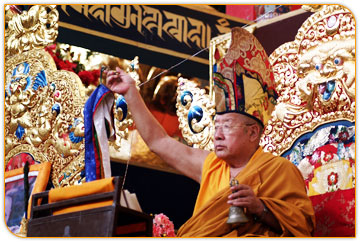
Rinpoche’s Life Saved by His Holiness Dorje Chang Buddha III

By Zhaxi Zhuoma, January 20, 2006

At early year 2006, I found that my strength was leaving my body. I had tried various alternative medical treatments, but it seemed that I was loosing energy every day. When a friend gave me a thermometer, I started taking my temperature and found that my body temperature was constantly at around 95 degrees—way below normal. I just felt that my life force was leaving me and that one by one all my body functions were beginning to shut down. I had watched my elderly father die several years earlier and knew that was what happened in the death process, so I became convinced that I was about to die.

I am fortunate to be able to see the H.H.  Dorje Chang Buddha III fairly often, but he is so busy, I did not want to bother him with my problems. I figured that if this was my time to go, I would go. If not I would stay. I am 65 years old and ready. His Holiness had told me that as soon as he was finished with a particular project, he would take care of my problems. Since I have seen His Holiness help many of his disciples and how they have miraculously become well or heal after receiving the Buddha Master’s blessing, I was not too concerned. I had also seen the Buddha Master help people who were not even Buddhists go to the Western Paradise. Whether I lived or died, it would be ok. Either way I had faith in my vajra master and knew he would take care of me.

One afternoon, I could not bear to stay with the Buddha Master any longer. I simply had to go home and rest. As I was paying my respects to leave, His Holiness looked at me and stopped what He was doing and asked what was wrong. I told him how I was very, very tired and wanted to get some rest.

The Buddha Master said, “No, wait. I will help you.” His Holiness was very busy right then and in the middle of doing some very important matters, but the Buddha Master stopped and went into the next room and when He came back, His Holiness said that He would practice a particular dharma for me. What I did not know until later, because it was not translated at the time (I do not understand Chinese), was that His Holiness told the other disciples who were there, that I was in a very dangerous state. In hindsight, I should have suspected as much, since the Buddha Master was so very busy and it was His Holiness who volunteered to help me. I did not even ask. His Holiness told those present that my chakras had almost completely shut down and, if He could not reactivate them by transferring his energy to me, I might as well go home and prepare to die. They should contact my relatives to prepare for my funeral. I know the disciples had suddenly gathered around us and looked very serious, but that often happened when the Buddha Master transmitted any dharma, so I was not alarmed. The first few times the Buddha Master tried to open my chakras, nothing happened. His Holiness practiced the dharma and recited many mantras. I felt nothing. He then told the other disciples (and they told me afterwards) that He could try one more time and if that did not work I was a goner. Some of the disciples thought at first that the Buddha Master was joking, but by now they realized how serious the matter was. All this time the Buddha Master was very jolly and since I knew no better, I was not frightened. Then His Holiness did another dharma and, while reciting a secret mantra, he was able to transfer his energy to me. It was like being hit by a lightening bolt. POW! I can’t say it was painful, but it was certainly overwhelming!

His Holiness showed us how He could turn this transfer of energy on and off. I would feel the energy, then I would not. The Buddha Master had complete control over this process. It was amazing. The Buddha Master was very happy. I knew from his reaction that His Holiness had healed me. His Holiness said my chakras were now functioning and open and “That was what I have been waiting for. This is the last step you needed to receive the Dharma. Now I can teach you.” Over the past few years the Buddha Master had given me many initiations and empowerments to remove my negative karma and prepare me for receiving the esoteric dharma.

Of course I was ecstatic. I went home and slept for a very long time. I woke up feeling that my entire body had been run over by a semi. Every cell in my body ached, but I could tell my energy or life force was back. This very understandable “cell fatigue” only lasted a few days. When I remembered to take my temperature again it was back to normal. I have had extraordinary energy ever since. I normally only sleep a few hours a night and feel great! My Buddha Master is truly magnificent. The healing powers of His Holiness are amazing. The Buddha Master has attained perfection in all of the Five Vidyas and the Buddha-dharma! I am very, very grateful for the kindness and compassion of my Buddha Master. Amitabha!

Rinpoche’s Life Saved by His Holiness Dorje Chang Buddha III

Link:https://peacelilysite.com/2024/04/04/the-miraculous-event-experienced-around-the-buddha/

#DorjeChangBuddhaIII#HHDorjeChangBuddhaIII#ZhaxiZhuomaRinpoche#BuddhaDharma

The Transformative Encounter: King Ajatasattu and the Buddha’s Teachings

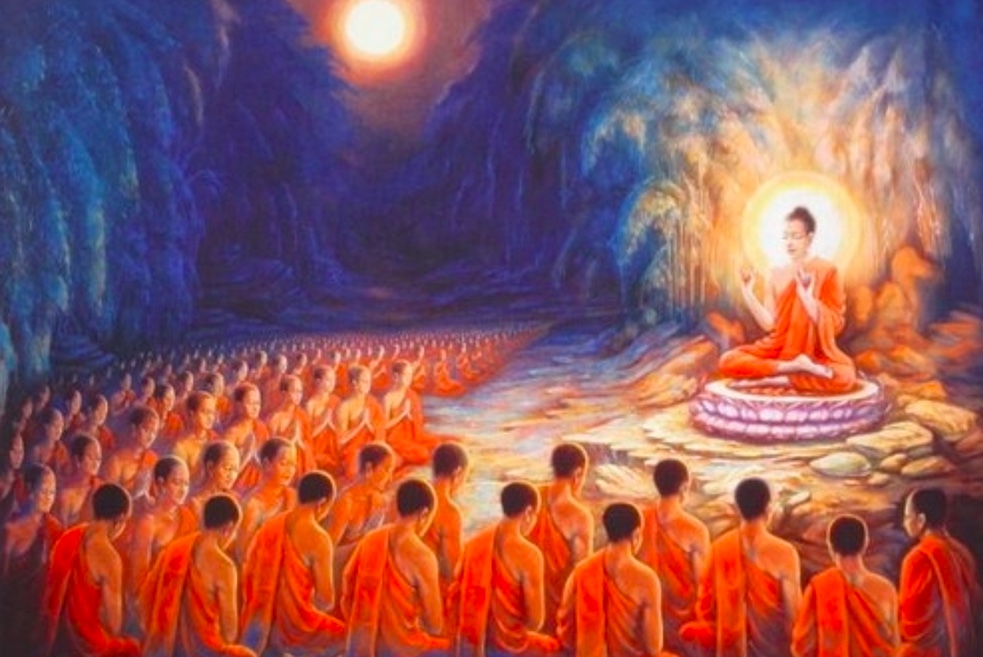
King Ajatasattu, in order to seize the throne, murdered his own father, King Bimbisara. Afterwards, he felt constant pain and fear in his mind and body, seeking help from various physicians and religious experts but to no avail. Finally, at the urging of a monk named Jivaka, he went to seek the Buddha.

At that time, the Buddha was residing in a grove with a thousand monks. King Ajatasattu entered the assembly hall and saw a thousand monks sitting peacefully around the Buddha, not even the sound of rustling robes could be heard. King Ajatasattu had only briefly encountered the Buddha before, as he had never attended any of the Buddha’s teachings with his father. The Buddha invited them to sit down, and after bowing, the king said, “World-Honored One, I remember hearing you speak when I was young in the palace. Now I have a question for you: what practice can lead thousands of people to renounce worldly life and seek enlightenment?”

The Buddha asked if he had asked the same question to other teachers. King Ajatasattu said he had asked many different teachers, including Devadatta, but had never received a satisfactory answer. The Buddha said, “Your Majesty, tonight the Tathagata will explain to you the fruits of the true Dharma, some of which can be enjoyed in the present and some of which can be harvested in the future. You do not need to seek lofty answers; you just need to see clearly the mango you hold in your hand. Your Majesty, let me give you an analogy: a servant who obeys his master’s every command from morning till night. One day, he asks himself, ‘Why should I willingly be enslaved by my master?’ This servant decides to renounce his servitude and become a monk. He lives a life of celibacy, diligence, and mindfulness, eating only one meal a day, practicing walking and sitting meditation. His demeanor exudes peace and dignity in his actions and speech; he becomes a virtuous and respected monk. Although you know he was once a servant, when you see him now, would you say to him, ‘Come here, boy, I want you to serve me from morning till night, obeying all my orders’?”

King Ajatasattu said, “Certainly not, World-Honored One. I would never speak to him in such a manner. I would respectfully bow to him, offer him food, and ensure he receives the legal protections due to a monk.”

The Buddha said, “Your Majesty, this is the first fruit of the monk’s practice: he has liberated himself from prejudices of race, society, and class, and he has regained the dignity of being a human being.”

The Buddha continued, “Your Majesty, a person’s dignity is just the first fruit. A monk who observes the two hundred and fifty precepts can reside in a state of tranquility. Those who do not observe precepts are more prone to stray from the path; they may commit sins such as deception, intoxication, adultery, theft, or even murder. Such actions bring terrible punishments to their bodies and minds, and they may face severe penalties when caught. A monk who observes the precepts of non-killing, non-stealing, chastity, truthfulness, abstinence from intoxicants, and over two hundred other precepts finds it easier to live a psychologically freer life than ordinary people. This is another fruit that can be enjoyed in the present.

The Buddha continued, “Your Majesty, a monk possesses only three robes and an alms bowl. He never fears robbery nor needs to guard against thieves at night. He can sleep under a tree without worry. The freedom released from fear is the greatest joy. This is another fruit attained through practice. A monk’s life is very simple; although he eats only one meal a day, the food in his bowl comes from thousands of different households. He does not pursue fame or profit; he only uses what he truly needs, seeking nothing else. Dwelling in such unfettered freedom is a fruit that can be enjoyed at this moment.

King Ajatasattu said, “Truly remarkable, World-Honored One! Please continue.”

The Buddha said, “Your Majesty, if you understand how to cultivate mindfulness and contemplation of breathing, you can experience the joy of those who walk the path of practice. That is the bliss of meditation. A monk observes the six senses to overcome the five hindrances of desire, anger, delusion, sloth, and doubt. He attentively observes the breath to create joy nourishing body and mind, which helps him progress on the path to enlightenment. The pleasure derived from sensory experiences cannot compare with the joy obtained through meditation. The joy of meditation permeates body and mind, dispelling all anxieties, sorrows, and grief, allowing the practitioner to experience the true wonder of life. Your Majesty, this is one of the most important fruits of practice that can be enjoyed at this moment.”

The Buddha continued, “Your Majesty, because a monk consistently maintains mindfulness and adheres to the precepts, he can develop right concentration and insight into all phenomena. Through this insight, he sees the impermanent and selfless nature of all phenomena, thus no longer being bound by worldly affairs. He can then sever all entanglements of afflictions such as greed, anger, desire, sloth, doubt, attachment to views, speculative views, distorted views, and mistaking wrong views for right ones. After cutting off all these entanglements, the monk can attain liberation and freedom.”

“Your Majesty, liberation is true happiness and one of the greatest fruits of practice. Some of the monks sitting here tonight have already attained this fruit. Your Majesty, this is a fruit that can be realized in this very life.”

King Ajatasattu exclaimed, “Excellent, World-Honored One! I hope you can say more.”

The Buddha said, “Your Majesty, by illuminating the true nature of all phenomena, a monk knows that all phenomena are neither born nor extinguished, neither defiled nor pure, neither increasing nor decreasing, neither one nor many, neither coming nor going. With this understanding, a monk no longer discriminates; he regards all phenomena with equanimity, without hindrance. He rides the waves of birth and death to rescue sentient beings from the sea of suffering. He introduces sentient beings to the Great Way, allowing them to taste the joy of liberation. Your Majesty, helping others to break free from the maze of greed, anger, and delusion is the greatest joy. This joy extends from the present into the future as the supreme fruit of practice.

Your Majesty, in all his interactions, a monk never forgets the responsibility to guide others towards virtue and liberation. Monks do not engage in politics; they only contribute to the peace, morality, and happiness of society. The fruits of practice are not only for the benefit of monks; they are also the legacy that can be inherited by the people of the country.

The king stood up, sincerely clasping his hands together. He said, “Most Honored Teacher! World-Honored One! With your simple words, you have enlightened me, showing me the true value of the Dharma. World-Honored One, you have helped me rebuild what was shattered, revealed what was concealed. You have guided me back to the right path in my confusion, turning darkness into light. I beseech you, World-Honored One, to accept me as your disciple, just as you accepted my parents in the past.”

The king prostrated himself before the Buddha, who nodded in acceptance. He asked venerable Shariputra to teach king Ajatasattu the Three Refuges.

The meeting between the Buddha and King Ajatasattu was beneficial for all present, greatly alleviating the king’s mental torment. That night, he dreamt of his father smiling at him, healing all the wounds of the past. The king’s disposition completely changed, bringing infinite joy to his subjects. From then on, the king often visited the Buddha privately, no longer arriving on an elephant and without any guards. He climbed the meticulously carved stone steps up the mountain as his father had done in the past. In these conversations, King Ajatasattu confessed his innermost thoughts to the Buddha and repented for his past sins. The Buddha regarded him as his own son and advised the king to associate with virtuous people.

Link:https://peacelilysite.com/2024/03/28/the-transformative-encounter-king-ajatasattu-and-the-buddhas-teachings/

The Essence of Buddha’s Teachings: A Journey of Wisdom and Self-Discovery

In the tranquil setting of one afternoon, Sariputra and Maudhara, the first disciples of the Shakyamuni Buddha, introduce an ascetic named Tigaro to the profound teachings of enlightenment. Little did they know that this encounter would unveil a tapestry of insights and narratives, offering timeless wisdom that transcends doctrines and narrow beliefs.

Upon meeting the Buddha, Tigaro’s skepticism manifests through his query: “What exactly is your doctrine?” His disdain for theories is palpable as he voices his disbelief. However, the Buddha, with a serene countenance, responds with an unexpected question, challenging Tigaro’s perspective: “Then you don’t believe yourself? What about those who don’t believe in any theory? Do you believe in unbeliefism?” This exchange sets the stage for an enlightening discourse on the nature of truth and belief.

With a calm and understanding demeanor, the Buddha delves into his teachings, addressing the perils of rigid doctrines. He elucidates how attachment to perceived truths stifles freedom and engenders conflict. Through poignant storytelling, exemplified by the narrative of a young widower and his son, the Buddha illustrates the consequences of attachment and false perceptions.

In the heartrending tale, a young widower cherishes his 5-year-old son deeply. However, tragedy strikes when one day the father must depart on business, leaving his son alone. Bandits ravage the village on that very day, and upon his return, the widower discovers his home burned and his son presumed dead. Overwhelmed by grief, he cremates what he believes to be his son’s remains and carries the ashes with him daily, a poignant symbol of his attachment.

A month later, the son miraculously returns, only to find his father clinging to the ashes. Despite his son’s pleas and knocking on the door, the widower, consumed by his attachment to his perceived reality, remains oblivious. In a heartbreaking moment, the son departs once more, unable to break through his father’s delusion. The narrative poignantly illustrates the impermanence of existence and the tragedy of clinging to false perceptions.

The essence of Buddha’s teachings transcends philosophical abstraction. Rooted in direct experience and empirical truth, Buddhism offers a profound understanding of oneself and the world. The Buddha invites practitioners to explore the depths of their minds, guiding them toward liberation from suffering.

The Buddha employs a metaphorical finger pointing to the moon to elucidate the nature of his teachings. He emphasizes that his teachings serve as a guide, directing attention toward ultimate truth rather than being the truth itself. This analogy underscores the importance of experiencing reality directly, beyond the confines of doctrinal interpretations.

As Tigaro seeks guidance on overcoming painful feelings, the Buddha imparts practical wisdom. He elucidates the nature of feelings and their origins, offering a pathway to transcend suffering through awareness and understanding.

In the presence of disciples such as Sariputra and Maudhara, the Buddha’s teachings resonate as a beacon of wisdom and self-discovery. The narrative serves as an invitation to embark on a journey beyond doctrines and limiting beliefs, toward a profound understanding of reality. In embracing the impermanence of existence and cultivating awareness, individuals can unlock the profound truth that lies within—an eternal truth accessible to all who seek it with an open heart.

Link:https://peacelilysite.com/2024/03/14/the-essence-of-buddhas-teachings-a-journey-of-wisdom-and-self-discovery/

#ShakyamuniBuddha #Buddha #Buddhism

Thus Have I Seen

by Zhaxi Zhuoma Rinpoche

Zhaxi Zhuoma Rinpoche recalls several holy manifestations and unusual supernormal events that she personally witnessed after following her Buddha Master, H.H.  Dorje Chang Buddha III  Many other students have other similar experiences and are included in books and various articles reported elsewhere on this website. It must be noted that H.H.  Dorje Chang Buddha III  does not encourage or advocate practicing any form of supernatural power and is very modest about His own abilities. He is constantly warning us not to be attached to these states and experiences, but to instead practice our cultivation and develop our morality, concentration, and wisdom. A more complete accounting of what Zhaxi Zhuoma Rinpoche has seen and experienced is now available in book form on this website and at Amazon and other book stores.

After receiving a small blue “Return-to-Youth Pill”, my hair changed from salt & pepper to the original light brown of my youth. I even let my hair grow, just to see for sure. 

  • When I could not understand why I was asked to do something (although, of course, I did what was asked), several unrelated events occurred that explained why this was so.
  • I saw three-colored nectar suddenly manifested in a freshly washed bowl after a group of us disciples chanted mantras. Click for news article.
  • My students have also seen and even received advice from certain holy beings. Several of my students have had the Buddha Master appear and bless them.
  • I have never seen the Buddha not be able to answer any question asked of him.
  • On a special occasion, the Buddha Master blessed me and after that a diamond formed on my head that would turn bright red and pulsate from time to time. This also happened when I read the Buddha Master’s discourses, but other times as well.
  • “Once, when in Washington, D.C., preparing to introduce the book H. H. Dorje Chang Buddha III, to various congressional staff, I saw a very large bright neon pink light jump from tree to tree across a field from where I was staying. Earlier that morning and at other times, I would see bright yellow lights flash when I was doing dharma work for the Buddha Master. They were like the lights that flashed when the discourse What Is Cultivation? was first transmitted.” Click for article on this event.
Rainbow jewel-lights appear on site where many inter-tantric initiations and special ceremonies had been performed.

I saw rainbow “jewels” appear on a holy site where many inner-tantric initiations had been held and where “Auspicious Grass of the Four Jewels” had grown. Click for news article.

  • After having a minor stroke, I was again healed so as to be able to go on a strenuous trip to visit all fifty states in the U.S.
  • On several occasions, I have seen pillars of light descend from the heavens, sometimes being able to capture them on digital cameras.
  • I have seen nectar fall several times and places, the first being in southern California under a certain magnolia tree and the last under that same tree after it had been moved to Hua Zang Si, a temple in San Francisco. It also rained under a flowering jacaranda tree on the veranda where students performed skits and other shows in honor of the Buddha Master’s birthday. Click for news  article.
  • I have seen students practice the tummo (inner heat or fire) dharma and raise their body temperature to very high levels–even high enough to burn the fingers of those who touched a metal bowl lying on the student’s stomach. Click for article.
  • I have seen sacred seed syllables form on the bodies of students and holy ones.
  • I have had my crown opened as documented by a MRI devise. Read article on this miraculous event.
  • Several very large koi fish came and did a dance for the Buddha Master in the pond at the Holy Vajrasana Temple & Retreat Center in Sanger. Schools of fish also followed the Buddha Master around as He toured a Japanese garden south of San Francisco and Dragon Fish came to pay respect to the Buddha when he gave a discourse in Thailand.
  • A vajra pill sang and danced while I held it.

I saw a particular type of flower called “Auspicious Grass of the Four Jewels” grow directly in front of where the Ultimate Bathing the Buddha ceremony took place. The flowers had four distinct very thin parts. They grew in a particular pattern and formed a perfect circle. Prior to the Dharma Assembly the area was perfectly flat. After the ceremony, the ground became slightly elevated, forming a mound upon which these special flowers grew. These flowers grew no other place in the yard. Click for news article.

Grass Mandala forms where ceremony took place.

  • Another red vajra pill flew from my hand to a holy place and was recovered and empowered by the Kalachakra Vajra, a manifestation of Shakyamuni Buddha. The pill danced in my hand and also in a clear stupa where it remains. It continues to dance in the stupa from time to time. Click for article.
  • An old metal pole started shaking quite violently at the temple and over time was joined by four more poles. Sometimes the shaking is constant, sometime it seems to pulsate as if sending coded messages. Others report seeing various lights or feel energy emanating from these poles. Pilgrims travel from all over the world to see these poles. Click for article. Also see many news articles of pilgrims visiting the poles.
  • Many light beings from other realms appear and can sometimes be seen by the naked eye and sometimes only on video or digital recordings at the temple in Sanger. Visitors to the temple have also seen and recorded them. Click for photos.
Sharira from Madam Wang。

I saw the beautiful and amazing relics or sharira from a special close disciple of the Buddha Master. Click for article.

  • The Buddha Master was able to transfer His energy to me and enable me to raise my temperature after it continued to decline to dangerous levels.
  • A colored mandala was written on top of a large flat stone. After dharma was done, the stone was removed and the same mandala had been transferred through the stone and appeared on a bed of sand beneath the stone. This I saw done twice. The second time a pile of mixed various colored sands was placed below the stone, but were sorted out into seed characters after the dharma was performed on the stone. Click for photo.
  • I experienced the elimination of dark karma by having the Buddha Master’s magical Dharma Wheel placed on my chest. I could not bear the heat of the small metal object, but the Buddha Master picked it up with no problem. Click for news article.

I saw the Buddha Master create incredible works of art in very short periods of time. Some even contained a permanent fog or mist. Click for photo

Mist appears in Yun sculpture

  • I saw the Buddha Master change very quickly from an old beaten and bruised person to His usual self. This happened after the Buddha Master had predicted what would happen the previous day. An even more amazing transformation from an old man to a handsome youth happened and was was documented more recently. Click for more.
  • I saw the Buddha Master turn blue during an empowerment ceremony. I did not know at the time that He was an incarnation of Dorje Chang Buddha who is blue. Click for article.
  • I saw my roommate and another rinpoche lift a pool of water weighing over two tons with only the power of their mantras at the Ultimate Bathing of the Buddha Dharma Assembly. Click for more.
  • I have seen the consciousness of my relatives and those of my students raised to a higher level. One western student’s mother (who was not a Buddhist) had the Buddha Master come to help her go to the Pure Land. Click for news article.
  • I was there when a very young rinpoche took a vow that she would become accomplished in a very short period of time after she had received a Prajna Empowerment and she did.
Buddha Light with bright green light appears over Holy Vajrasana Temple & Retreat Center.

  • I have seen many, many Buddha Lights appear around both the sun and the moon prior or after or during special dharma assemblies or events.
  • I saw an antique wooden statue of Kuan Yin emit golden light after another dharma of selection ceremony. This time I shook a large container of long bamboo sticks. Each stick had a certain number that corresponded to a given outcome. I did this three or four times for each event and each time the results for each time I shook the sticks was the same AND exactly what the Buddha Master had predicted. I witnessed variations on this dharma many times.
  • I received a dharma of selection whereby I printed a number of outcomes on small pieces of paper for a major life decision that I was about to make; rolled these pieces of paper into tight rolls; placed these rolls in a round vase, and then asked to shake the vase and remove one. I rerolled it and replaced it doing this at least three times. Each time, I drew the same answer, which was the answer the Buddha Master gave me in the beginning.
Elder Dharma King manifest a cloud of nectar that is filled with jewels.
  • I was present when various colored sharira appeared in a cloud of nectar.
  • I experienced a “freak” rain of hail one summer in Los Angeles that only rained where the Buddha Master was staying and right after a speech given by the Buddha Master that had forecasted such an event.
  • I saw sand from the Ganges River in India assemble to form strands of hair that created a three-dimensional crown on certain images of H.H. Dorje Chang Buddha and Shakyamuni Buddha to prove that they were both incarnations of Buddhas.

Link:https://peacelilysite.com/2024/03/08/thus-have-i-seen/

#DorjeChangBuddhaIII #HHDorjeChangBuddhaIII#DorjeChangBuddha#ZhaxiZhuoMaRinpoche

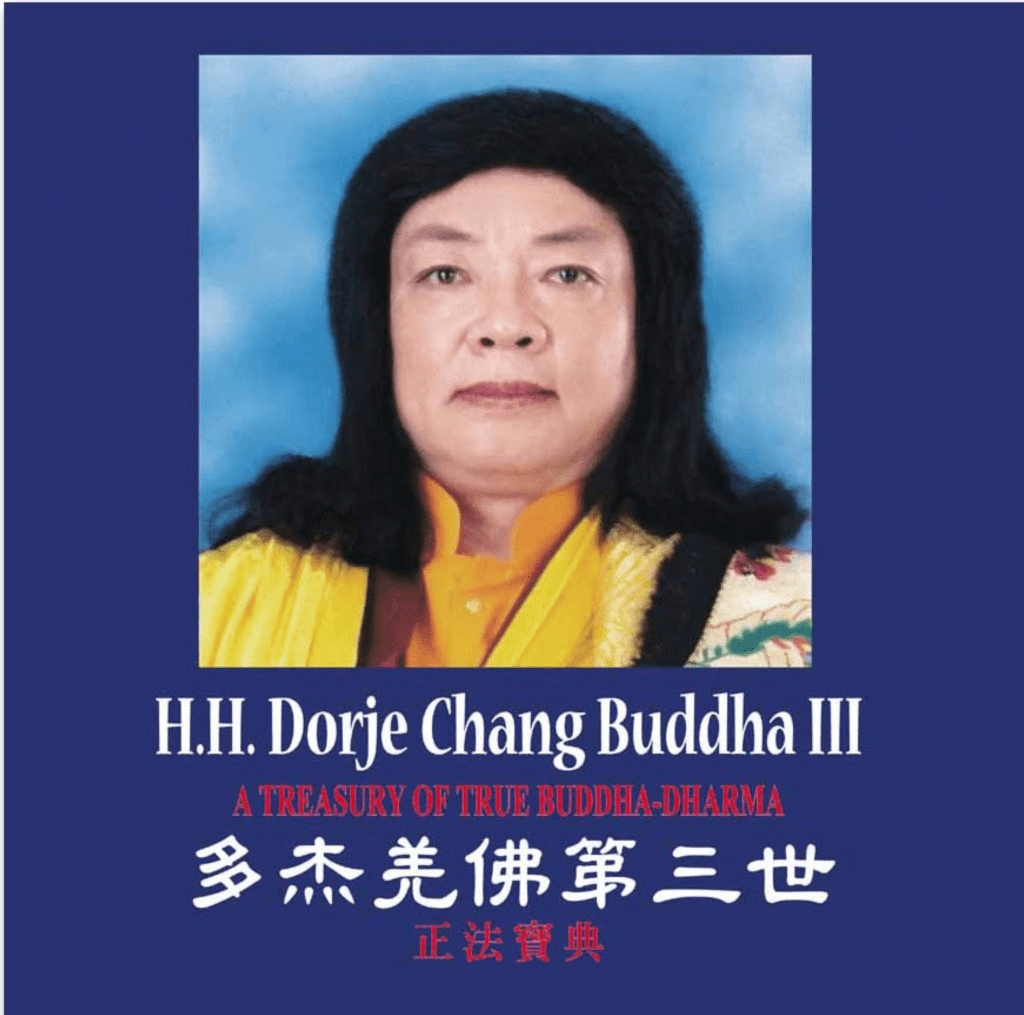
Who is H.H. Dorje Chang Buddha III to Achieve such Astonishing overall Accomplishments?

A brief overview of the extraordinary achievements of H.H.Dorje Chang Buddha III

Among all Buddhas in the Dharma realm, Dorje Chang Buddha is the Primordial Buddha, the first Buddha with form, and the only Supreme Lord of Buddhism throughout the entire universe. Dorje Chang Buddha propagated Dharma throughout the universe, hence, all other Buddhas and Great Mahasattvas learned Dorje Chang Buddha’s Dharma and cultivation to attain holy state and liberation, and eventually became Buddhas and Great Bodhisattvas. Dorje Chang Buddha is the primordial ancestor of all Buddhas and Bodhisattvas. Samantabhadra, the Dharmakaya from which Dorje Chang Buddha perfectly manifested, is the Tathagata that has no form at all. The words and deeds of Dorje Chang Buddha are the compass and guiding principles of cultivation for all ordinary and holy beings in the universe.

To help Shakyamuni Buddha, Namo Dorje Chang Buddha II —Venerable Virmalakirti—applied His supreme wisdom and limitless supernormal power to edify Hinayana Arhats who then advanced themselves and eventually became Mahayana Bodhisattvas who helped living beings attain liberation. And, innumerable living beings attained liberationby learning the teachings of Venerable Virmalakirti.

After coming to the sahā world with the Buddha level enlightenment of the Primordial Sambhogakaya Buddha, His Holiness Dorje Chang Buddha III established countless number one records in the world, every one of which was for the sake of benefiting living beings. At a very young age, He saved others without any regard to His own life and was honored with the title “Young Hero.” As He grew older, His Holiness Dorje Chang Buddha III applied His inherent Healing Vidya to heal the sick, purely on a voluntary basis. More than 500 patients used to seek His help every day. His Holiness Dorje Chang Buddha III never accepted one penny from them. Plaques and pennants with words of gratitude sent by the recovered piled up in the Buddha’s house.

As His Holiness Dorje Chang Buddha III continued to benefit living beings on a larger scale, the Central Newsreels and Documentary Studio of China produced a documentary, “One Who Is Dedicated to Advance Himself,” about His life and work. The film was shown nationwide.

In 1987, the highly respected young His Holiness Dorje Chang Buddha III was named Chairman of the Chinese Painting Research Association of the National Commission of China for UNESCO. Honorary chairpersons of the Association included Liao Jingdan 廖井丹, Li Wenqing 李文清, Lü Ji 呂驥, Yuan Xiaoyuan 袁曉園, Wu Zhangshu 吳丈蜀, Qian Juntao 錢君匋, Xie Zhiliu 謝稚柳, and others. Advisors to the Association included Luo Zhanglong 羅章龍, Zhang Kejia 臧克家, and so forth.

In 1992, His Holiness Dorje Chang Buddha III was accorded the “Art Maestro of the East” title. In 1994, during the fourth conference of the World Poets and Culture Congress held in Hungary, 5,612 experts and scholars unanimously voted to confer the “Preeminent Distinguished International Master” title, which was a Head of State level honor, to His Holiness Dorje Chang Buddha III.

The conferment certificate was signed by Juan Antonio Samaranch, the then President of the International Olympic Committee. In the same year, the Museum of Master Yi Yungao officially opened in Dayi 大邑, the hometown of His Holiness Dorje Chang Buddha III in Sichuan. That was the first memorial museum in China, or even in the world, being built by a government for a living person.

In 1995, when His Holiness Dorje Chang Buddha III went from Mainland China to visit Taiwan for the first time, Taiwanese people spontaneously gave His Holiness Dorje Chang Buddha III an overwhelmingly ceremonious welcome. More than 20,000 people went to the airport to greet and pay respect to His Holiness Dorje Chang Buddha III. A motorcade of more than 1,700 cars followed the lead of police motorcycles to escort His Holiness Dorje Chang Buddha III from the airport to the hotel. That became the largest welcoming event in human history. Within the short three weeks that His Holiness Dorje Chang Buddha III stayed in Taiwan, General Chiang Wei-kuo 蔣緯國, former Secretary-General of the Taiwan National Security Council, and many other high level government officials formally requested to become disciples of His Holiness Dorje Chang Buddha III. They expressed that they wanted to truly emulate the noble morality, humanistic ethics, thoughts, and deeds of His Holiness Dorje Chang Buddha III.

After His Holiness Dorje Chang Buddha III moved to the United States, His noble morality and unparalleled achievements won the love and admiration of the American people from all walks of life. In 2002, His Holiness Dorje Chang Buddha III was presented with the “Presidential Gold Medal” by the Commissioner to the President’s Advisory Commission on Asian Americans, on behalf of President Bush.

In 2003, the Organization of American States, composing of 34 countries including the United States, Canada, and Mexico,organized the Master Wan Ko Yee Yun Sculpture Exhibition in Washington D.C. at the Capitol of the United States.

The Master Wan Ko Yee Yun Sculpture Exhibition was also held at the Congressional Office Building. That was the first time the U.S. Congress held an art exhibition in their Congressional Office Building. Visitors expressed their praises in the guest book, exclaiming that the exhibition was “unprecedented,” and that the artworks were “treasures brought to the human realm by God.”

In 2004, His Holiness Dorje Chang Buddha III was named “Fellow” of the Royal Academy of Arts in the U.K.. Professor Phillip King, President of the Royal Academicians of the Royal Academy of Arts, presented the certificate to His Holiness Dorje Chang Buddha III at the British Embassy in Washington D.C., capital of the United States. The Cultural Attaché of the British Embassy personally attended the ceremony. Professor Phillip King stated that His Holiness Dorje Chang Buddha III was the first artist ever accorded this title in their renowned academy’s more than 200-year history.

The mayor of the U.S. capital Washington D.C.pronounced January 19, 2011 as “His Holiness Dorje Chang Buddha III Day” and called on people to salute to His Holiness Dorje Chang Buddha III.

His Holiness Dorje Chang Buddha III was also accorded the “King Legacy Award for International Service & Leadership” by An International Salute to The Life and Legacy of Dr. Martin Luther King, Jr.. Dozens of great honors have also been presented to His Holiness Dorje Chang Buddha III by U.S. senators, members of the House of Representatives, governors, and governments of all levels.

More remarkably exceptional, Namo Dorje Chang Buddha III was awarded the 2010 World Peace Prize Top Honor Prize, presented to Him at the United States Congress on June 14, 2011 at the U.S. Capitol. On occasions of the holy birthday of His Holiness Dorje Chang Buddha III, the U.S. Congress has held ceremonies to raise the national flag to celebrate, and President Trump and President Biden have sent personal congratulations.

In 2018, the World Peace Prize Awarding Council and the World Peace Prize Religious Leader Title Awarding Council resolved that His Holiness Dorje Chang Buddha III was the Pope of Buddhism of this world and decided to present the Pope of Buddhism Scepter to Him. Namo Dorje Chang Buddha III, however, did not accept the Scepter, but returned it instead. In September 2020, the World Peace Prize Awarding Council and the World Peace Prize Religious Leader Title Awarding Council made a joint resolution that solemnly stated, “The title, status, and authority of the Pope of Buddhism belong only to His Holiness Dorje Chang Buddha III and cannot be exercised by anyone else. This is a permanent and unalterable determination!” The two Councils also entrusted the World Buddhism Association Headquarters to present the Pope of Buddhism Scepter on their behalf to His Holiness Dorje Chang Buddha III.

Upon coming to this world, His Holiness Dorje Chang Buddha III immediately started teaching and saving living beings. He has always called Himself a “nameless cultivator.” His Holiness Dorje Chang Buddha III voluntarily served living beings and did not accept any offerings. One incident clearly shows how Namo Dorje Chang Buddha III taught and saved living beings selflessly. At the Heart Sutra Mandala on Xinhua West Road, Chengdu, Dharma Master Guozhang 果章法師 once recounted to some people that when he received initiation from His Holiness Dorje Chang Buddha III on Paoma Mountain 跑馬山, His Holiness the Buddha was only two and a half years old! After the identity of Namo Dorje Chang Buddha III being the true incarnation of the Primordial Buddha was formally recognized by Dharma kings, regent Dharma kings, and great rinpoches of major Buddhist sects in written congratulations and corroboration letters, His Holiness Dorje Chang Buddha III continued, as always, to teach and save living beings solely on a voluntary basis, and whole-heartedly devoted Himself to serving living beings. Whenever people made offerings to His Holiness Dorje Chang Buddha III, whether they were big or small offerings, in amounts as little as one dollar or as large as a few million US dollars, in the form of 37 acres of land in the city of San Francisco, or even a planeload or a shipload of gold, Namo Dorje Chang Buddha III categorically refused to accept. His Holiness Dorje Chang Buddha III was whole-heartedly dedicated to serving living beings voluntarily.

In the many years that His Holiness Dorje Chang Buddha III was propagating Dharma to save living beings, He imparted more than 2,000 Dharma Discourses in response to living beings’ levels and karmic conditions. Not only did His Holiness Dorje Chang Buddha III reveal the truth about humanity and the universe, He also elucidated the truths relevant to various stages of practices, from elementary to profound accomplishment levels.

Those Dharma Discourses were audio-recorded, and some of which such as What Is Cultivation 什麽叫修行, Sutra on Understanding and Realizing Definitive Truth 了義經, Imparting the Absolute Truth Through the Heart Sutra 藉心經說真諦, and Learning from Buddha 學佛, have been published into books.

In restoring Buddhist texts to their original meaning, His Holiness Dorje Chang Buddha III pointed out that the morning and evening chants used in Buddhist temples nowadays had been tampered with by the descendants of Mara, and those texts are filled with evil views and fallacies. Namo Dorje Chang Buddha III has corrected many errors made by patriarchs and translators in their interpretations of Dharma principles, and directly revealed the chaotic phenomena in Buddhism during this Dharma Ending Era. His Holiness Dorje Chang Buddha III pointed out the path that everyone who wants to attain liberation must take: That is to build our foundation on practicing cultivation. After cultivating ourselves well, we can then learn Dharma, and naturally attain liberation and accomplishment. The correct truths and Dharmas imparted by His Holiness Dorje Chang Buddha III enable listeners to develop their wisdom and good fortune, to help each other, care about each other, and be compassionate to all living beings.

In different countries, Namo Dorje Chang Buddha III has performed great Dharmas including Holy Amrita Bestowed by Buddhas 佛降甘露, Xianliang Great Perfection 現量大圓滿, Holy Fire Offering 勝義火供, Vajra Faman Determination by Holy Selection 金剛法曼擇決, Hayagrīva Raja Water Mandala Bead Divination 馬頭明王水壇珠卦, Determination by Holy Selection on the Regression or Progression on the Bodhi Path 菩提道損減增益法, Guaranteed Delivery to Buddha Land Dharma 保送法, Vajra Array 金剛陣, and Eight Wind Array 八風陣, all of which manifested authentic holy states, enabling living beings to see with their own eyes that Buddha Dharmas are scientific, have veritable power, and absolutely are not just empty talk or theory. More importantly, Namo Dorje Chang Buddha III has brought The Supreme and Unsurpassable Mahamudra of Liberation to living beings in the sahā world, showing humanity the shortcut to attaining liberation. The Supreme and Unsurpassable Mahamudra of Liberation is the highest Dharma that Dorje Chang Buddha transmitted to Amitabha Buddha as well as Buddhas and Great Bodhisattvas in the ten directions during their cultivation stage.

In The Supreme and Unsurpassable Mahamudra of Liberation, His Holiness Dorje Chang Buddha III has made the biggest and highest vow in the entire Dharma realm, “I bear all the sinful karma for living beings, I give living beings all the good karma and merit that I have planted.” Namo Dorje Chang Buddha III has actualized the greatest and holiest vow, sacrificed His life to save the lives of numerous living beings, and returned to the Sambhogakaya Buddha Land!

The unprecedented records established by Namo Dorje Chang Buddha III in this world:

Namo Dorje Chang Buddha III was, historically, the first Buddha to have received the largest, unprecedented number of status-recognition and congratulatory letters by top level great Dharma kings and rinpoches.

Namo Dorje Chang Buddha III was recognized with the highest status in history: an Ancient Buddha.

Namo Dorje Chang Buddha III is the first Ancient Buddha who manifested perfect mastery in Exoteric and Esoteric Buddhism, and perfection of the Five Vidyas. No one else has been able to accomplish the same in the past few thousand years.

Namo Dorje Chang Buddha III manifested Buddha-level wisdom in the creation of Yun Sculpture, which nobody has been able to replicate. Historically, this is the first art form that cannot be replicated.

Namo Dorje Chang Buddha III is the first Ancient Buddha throughout history who only benefited others but did not accept any offerings.

Namo Dorje Chang Buddha III is, historically, the first Ancient Buddha who manifested the most holy miracles.

Namo Dorje Chang Buddha III is, historically, the only Buddha who could offer the kind of Buddha Dharma that enables disciples to attain liberation within two hours: Xianliang Great Perfection, the quickest path to successfully enter the Buddha Land.

Namo Dorje Chang Buddha III had the largest number of disciples who attained accomplishments; for example: Dharma King Daxila of the Tsalpa Kagyu Sect attained the rainbow body; respected layperson Wang Lingze 王靈澤 and Dharma King Gar Tongstan attained freedom from death and rebirth and passed away in a sitting meditative pose; Dharma Master Puguan 普觀法師 and Elder Monk Wuming 悟明長老 attained incorruptible flesh bodies; the Elder Monk Yizhao 意昭老和尚 vowed to return to the sahā world to save living beings; and many others.

Namo Dorje Chang Buddha III has transmitted Dharma to disciples and invoked Avalokiteshvara Bodhisattva to come at a specific time to take the disciple to the Buddha Land; even non-Buddhists saw with their own eyes when the disciple Zhao Yusheng 趙玉勝 was taken away by Avalokiteshvara Bodhisattva. Some disciples, such as Hou Yushan 侯欲善 and Lin Liu Hui-Hsiu 林劉惠秀, were able to visit the World of Ultimate Bliss, then return to the human world before ascending at a specific time to the Buddha Land. The above listed are just a few examples of the numerous Buddhist disciples who followed Namo Dorje Chang Buddha III and attained liberation.

Namo Dorje Chang Buddha III possessed Buddha-level physical constitution and physical strength that are unmatched in the world. Just about a little more than a month ago, on December 23, 2021, at the Holy Miracles Temple, His Holiness Dorje Chang Buddha III lifted the Supreme Holy Vajra Pestle that weighs 437.2 pounds, by using just four fingers to hook on to the Pestle, lifted it up, and held it for more than 13 seconds, surpassing His own base weight standard by 72 levels. Taizun Poshan Waxiang 破山瓦象太尊 asserted: “In this world, from the ancient past up to now, and even before Maitreya Bodhisattva attain Buddhahood, no ordinary or holy being will be able to lift the Buddha Pestle that Namo Dorje Chang Buddha III lifted, surpassing His own base weigh standard by 72 levels!”

The morality of Namo Dorje Chang Buddha III is so noble, His accomplishments so great, and the holy miracles He performed so numerous that it is impossible for us to list them all. What was listed above was just a drop in the ocean. If we were to tell you about all the magnificent feats of His Holiness Dorje Chang Buddha III, it would take more than ten days and ten nights. The magnificent greatness of Namo Dorje Chang Buddha III is not limited to His well-respected humanistic ethics, His noble personality and morality, His erudition, His distinguished accomplishments, His selfless compassion toward humanity and all living beings, and His passion in teaching and actualizing the practice of Buddha Dharma.Through altruistic endeavors, His Holiness Dorje Chang Buddha III truthfully, sincerely, and persistently actualized the principle of compassion, and He diligently worked toward the development of world peace. Many people are moved and motivated by His Holiness Dorje Chang Buddha III. Many people in this world aspire to Namo Dorje Chang Buddha III as their model, referencing His state of morality as their standard, and using His teachings as guidance to elevate their own morality and to benefit living beings. In doing so, not only have they fulfilled happiness in their lives, but many of them have ascended to the Buddha Land, attained freedom from death and rebirth, or attained even higher states of realization and accomplishments.

More importantly, Namo Dorje Chang Buddha III pointed out a bright path for humanity to stay far away from violence, a path that leads to benevolence and loving kindness, successful endeavors, happy families, peace in humanity, and prosperity in societies. Throughout different countries and regions in the world, more and more people of different ethnicities and cultures are actively learning and following the teachings of Namo Dorje Chang Buddha III to cultivate themselves and benefit living beings. Consequently, they have greatly elevated the level of morality in society, advanced human civilization, motivating more and more people in this world to become good, kind, and ethical people, and enabling the world to become an auspicious and green planet. These are the tremendous and inexhaustible contributions that Namo Dorje Chang Buddha III has brought to all human and other sentient beings in this world, so they may increase their happiness.

Link:https://peacelilysite.com/2024/03/01/who-is-h-h-dorje-chang-buddha-iii-to-achieve-such-astonishing-overall-accomplishments/

#DorjeChangBuddhaIII #HHDorjeChangBuddhaIII#DorjeChangBuddha#H.H.DorjeChangBuddha IIICulturalAndArtMuseum#YunSculpture#Art#IrreplicableArt#FiveVidyas#Buddhism#Buddha#

The Eight Worldly Conditions

The Eight Worldly Conditions

by Venerable Narada Mahathera

This complex world is neither exclusively rosy nor entirely thorny. The rose, soft, beautiful, and fragrant, grows on a stem filled with thorns. What is rosy remains so, and what is thorny persists. One should not interfere with the thorns due to the presence of the rose, nor disparage the rose because of the thorns.

To an optimist, the world appears absolutely rosy; to a pessimist, it seems entirely thorny. However, a realist views the world neither as entirely rosy nor wholly thorny. From a realistic perspective, the world is a blend of beautiful roses and prickly thorns.

An understanding person appreciates the rose’s beauty without becoming infatuated, acknowledging the thorns’ nature and taking precautions not to be wounded.

Similar to a pendulum swinging between right and left, four inevitable conditions prevail in life — gain and loss, fame and defame, praise and blame, happiness and pain.

Gain and Loss: Businesspeople experience both gain and loss. While it’s natural to be pleased with profits, one must exhibit moral courage and maintain a balanced mind in the face of losses. Anticipating losses and being prepared helps reduce disappointment.

Fame and Defame: Fame and defame are inevitable in life. Seeking undue praise or avoiding criticism can lead to unfulfillment. True greatness is indifferent to external approbation.

Praise and Blame: Wise individuals remain unaffected by praise or blame, recognizing that opinions vary. The Buddha’s teachings emphasize responding to false accusations with patience and understanding.

Happiness and Pain: Genuine happiness is not solely derived from material possessions, power, or external circumstances. Inner happiness is found in non-attachment and leading a blameless life.

Facing pain, whether from old age, disease, separation, or death, requires equanimity. The Buddha himself endured physical suffering but maintained a balanced mind. Death, inevitable for all, should be faced with perfect equanimity.

Amidst these dualities, a balanced mind is crucial. The Buddha’s teachings encourage cultivating equanimity in the face of worldly conditions.

Link: https://wisdomtea.org/2024/02/08/the-eight-worldly-conditions/

Incredible Power of Zhuo Huo Ding – Tummo Concentration

The term “Zhuo Huo Ding” (Tummo Concentration 拙火定) is widely recognized in Tibet. Practicing this skill has the potential to alter body temperature, and when mastered, it is believed to eliminate all diseases within oneself. Moreover, adept practitioners can employ Zhuo Huo to heal others, and advanced individuals may even achieve the transformation of their bodies into light. However, finding individuals who have truly mastered this skill is rare nowadays. Notably, there have been recent reports of Tibetan yogis practicing Zhuo Huo in winter, gradually drying wet felt cloth draped over their bodies.

While many have heard about the dharma of Tummo Concentration, witnessing a genuine manifestation of Tummo power is exceptionally challenging. In contemporary Tibet, India, and other locations, numerous lamas engage in Tummo concentration. However, when they emerge from extended seclusion practices, only a few manage to demonstrably raise their body temperature. At most, they symbolically wear a wet blanket while moving around the temple. Those who attain this initial level are revered as holy and venerable, reflecting the gradual loss of tantric dharmas across generations.

Tummo concentration, as a high-class Buddha-dharma of meditation, is an essential practice for cultivating the life power of the body, mind-wind, and bright spot, leading to the accomplishment of a rainbow-light body. Regardless of the ailment, Tummo practice is believed to have the capacity to eliminate it entirely, making it the nemesis of the demon of illness. Positioned within the realm of supreme yoga, mastering this dharma combined with Vajra Body Substitution Meditation can elevate one to the rank of a Bodhisattva at the twelfth stage or higher.

Two types of Tummo concentration practices exist: Yoga Tummo from Tibetan Esoteric Buddhism and Corpse-Laying Tummo, regarded as the “King of Tummo.” The practitioner’s ability to raise body temperature correlates with their realization power, surpassing typical human body temperatures. The realization power evolves through four steps, from the Initial Warmth Step to the Delight at Extreme Temperature. Each step corresponds to an increase in body temperature and an augmentation of the practitioner’s healing abilities.

Comparisons between practitioners often highlight the mastery of Zhuo Huo, with some claiming attainment of high levels. However, when juxtaposed with the technique of the renowned Rinpoche Wangze, these claims fall short.

On October 15, 2009, five Buddhist masters of the Gelug school, including the 8th SongJi Rinpoche, Gamadega Gonglare Rinpoche, Yongdeng Gongbu Rinpoche, American Rinpoche Zhaxi Zhuoma, and the 16th Chongdi Rinpoche, received a “Zhuo Huo removal of obstacles blessing” from the highly respected Holy Master Wangze Rinpoche, in the United States. Wangze Rinpoche is a devoted disciple of H.H. Dorje Chang Buddha III. This blessing miraculously eliminated their illnesses and negative karma.

During the blessing ceremony, Rinpoche Wangze engaged in a sequence of actions with SongJi Rinpoche. First, he placed his palm in front of SongJi, making three deliberate motions of opening and closing his hand while instructing him to pay close attention. Subsequently, Rinpoche Wangze gently rested his palm on the top of SongJi’s head. Initially, SongJi perceived the touch as gentle and soft. However, within a few minutes, a sensation of heat began to radiate from his feet, gradually enveloping his back, neck, the back of his head, and culminating at the top of his head.

Suddenly, Rinpoche Wangze’s palm emitted an intense, fiery sensation at the crown of SongJi’s head, causing an unbearable pain within a mere two seconds. Describing the experience, SongJi expressed, “It was more agonizing than placing a red-hot iron on the top of my head.” In that brief span, a conspicuous red lump manifested on the crown, with certain areas burning through the skin and emitting black smoke. Simultaneously, SongJi experienced an extraordinary sense of physical and mental comfort. Several hours later, a yellow, crystal-like substance emerged at the site of the lump. According to insights from an elderly hidden yogi, this phenomenon is known as “merit honey,” a rare and auspicious occurrence indicating the elimination of impurities or karmic obstacles accumulated by Buddhists.

SongJi Rinpoche experienced an extraordinary sense of physical and mental comfort. Several hours later, a yellow, crystal-like substance emerged at the site of the lump

Following the release of merit honey, all existing ailments in SongJi Rinpoche’s body miraculously vanished. Kama Dege Gongla Rinpoche, belonging to the Kagyu sect, also underwent the Zhuo Huo Dispelling Obstacles Empowerment from Wangze Rinpoche. In a matter of seconds, a distinctive mark was burned into his philtrum. Yongdeng Gongbu Rinpoche bore a notable imprint on his forehead and between his eyebrows, outcomes of the empowerment. Zhaxi Zhuoma Rinpoche, too, retained a Zhuo Huo mark on her throat, accompanied by the flow of black qi from the respective marks.

Zhaxi Zhuoma Rinpoche
Yongdeng Gongbu Rinpoche

Link:https://peacelilysite.com/2024/02/23/incredible-power-of-tummo-concentration/

#Buddhist #BuddhaDharma #ZhuoHuoDing #TummoConcentration #WangzeRinpoche #DorjeChangBuddhaIII  #HHDorjeChangBuddhaIII #ZhaxiZhuomaRinpoche

Dharma Master Tonghui —- Great Achievers

Dharma Master Tonghui —- Great Achievers-图片2

Dharma master Tonghui

Venerable Dharma Teacher Tonghui (1922-2013) served as the Abbot of Longju Temple, renowned for Jiangxi Mazu. A devoted disciple of H.H. Dorje Chang Buddha III, he immersed himself in the teachings and practices of dharma. Also known as Elder Monk Tonghui, he transcended the ordinary, attaining the revered status of a holy monk.

Venerable Master Tong Hui, born Tang Zhenbang on March 5, 1922, in Penglai town, Suining City, Sichuan Province, belonged to the Han ethnicity. Renowned for his intelligence from a young age, he adhered to a vegetarian diet and practiced abstinence, following his parents’ guidance. In 1931, he entered monkhood under Master Pu Jing at Jinwen Temple in Pengxi. Full ordination followed in 1940, under Venerable Master Miaoneng at Baoguang Temple, and further studies in Chengdu’s Jingci Temple under Master Nenghai in 1941. Residing at Longju Temple with Master Miaoneng in 1942, he served during the transmission of the Great Precepts by Master Nenghai. Master Nenghai was one of the most eminent monks in last century.

Post-liberation, Longju Temple faced dispersion, confiscation of properties, and occupation during the Cultural Revolution. As the warehouse keeper, Venerable Master Tong Hui personally bore the repercussions of stolen food, enduring imprisonment to spare innocent people. False accusations regarding the team’s beekeeping further led to additional years in prison. His unwavering compassion and selflessness epitomized the Buddhist spirit.

Reopened by the government on December 16, 1986, Longju Temple underwent extensive renovations under the venerable master’s guidance. The Arhat Hall, Main Hall, Scripture Hall, and Accommodation Building were constructed, while the main gate, Ksitigarbha Hall, Hall of Heavenly Kings, and Bell Tower were restored. The restoration of large Buddha and Bodhisattva statues, as well as Arhat statues, showcased the venerable master’s dedication. Numerous instances of his awe-inspiring virtue were evident, such as his ability to attract dharma-protecting deities and revive a withered ginkgo tree with Bodhi Holy Water.

Front Entrance of Longju Temple

Grand Hall in Longju Temple

Moreover, Venerable Master Tong Hui made significant contributions to Buddhism by bringing back Buddha and Bodhisattva statues made of Burmese jade from temples in Dayi County and Daying County.

A legendary story recounts Master Tonghui’s visit to Burma in 1992. Venerable Dharma Teacher Tonghui went to Burma to respectfully receive and take back with him a Jade Statue of the Buddha. The night before the Dharma teacher arrived, many people in Burma suddenly dreamed that he was a golden Arhat and would soon come to Burma. The next day when he arrived in Burma, hoards of people made offerings to him. In Hinayana Buddhism, Arhats are praised in the same way that Bodhisattvas who attained the marvelous fruit of enlightenment are praised. It is clear that Venerable Dharma Teacher Tonghui was an amazing and great sage.

Venerable Dharma Teacher Tonghui peacefully passed away on February 26, 2013, at the age of 92. His preserved body, following ancient Buddhist rituals, was respectfully opened three years later on June 12, 2016, revealing a full and jade-colored flesh body in the urn. This sacred event reaffirmed the authenticity and practicality of true Buddha Dharma.

The flesh body of Venerable Dharma Teacher Tonghui is now enshrined in Longju Temple for people to respectfully admire.

Dharma master Tonghui — Great Archivers

Link:https://peacelilysite.com/2024/02/16/dharma-master-tonghui-great-achievers/

#Buddhist #BuddhaDharma #LonjuSiTemple #MasterTonghui #DorjeChangBuddhaIII  #HHDorjeChangBuddhaIII

A Bhikkhuni Who Appears Once in a Century

Venerable Shi ZhengDa Jiaozun

Throughout the ages, in the pursuit of happiness, countless individuals have renounced worldly life to engage in spiritual practice. Monks and nuns who have shaved their heads and taken vows can be seen wandering in the secular world. People become monastics for various reasons, including pressure from material needs, family discord, social conflicts, life hardships, or a desire to seek liberation from the suffering of birth, aging, sickness, and death. Some renounce the worldly life to transcend desires, cultivate spiritual practices, and embark on the path to enlightenment. However, those who renounce a life of wealth, family, and worldly pleasures to become monastics are extremely rare.

Modern figures like Venerable Xuyun, Master Hongyi, Master Nenghai, and Master Longlian are typical examples of genuine monastics. Their renunciation was wholeheartedly directed towards the Buddha, without worldly attachments. When they made the decision to become monastics, their minds were solely focused on Buddha and Bodhisattvas, despite their flourishing family lives, prosperity, talents, and widespread respect. They left their homes without any attachments, not even informing their families. Suddenly, they abandoned their comfortable lives and became ascetics in the temples. Such individuals are rare, occurring perhaps once in several decades.

However, today, there is a Bhikshuni (Buddhist nun) who has renounced the world in an extraordinary way, captivating people’s hearts. She was originally known as Renbo Rinpoche, with the Dharma name “Awangdeji,” and held some reputation in Chinese Buddhist circles. She had centers in over twenty provinces in China, and her organization had a presence in Taiwan and Hong Kong. Wherever she went, male and female disciples welcomed her with reverence. Despite her prosperous personal business, she decided to renounce her worldly life.

Twenty years ago, she practiced the Sakya tradition but found no progress in her path. Seeking guidance, she turned to the profound teachings of the H.H. Dorje Chang Buddha III. Within a year, she completed her studies and realized that her previous practice was a common worldly path accessible to everyone, not true Buddhist teachings. In 2011, after rigorous examinations, she obtained certificates of realization that many other high lamas could not attain.

Her dedication, compassion, and influence attracted jealousy and rumors from some ordinary practitioners. However, Awangdeji Rinpoche bore no resentment, remaining calm and patient, even praising those who spread rumors. In response to societal criticisms, the International Buddhist Sangha Association sought an objective assessment from the United International World Buddhist Headquarters. After a solemn examination, she was praised by seventeen examiners for her moral virtues and realization.

During the examination, when Awangdeji Rinpoche’s consciousness soared, she personally saw Buddhas and Bodhisattvas, fulfilling a vow made to Avalokiteshvara. Overwhelmed with gratitude, she immediately renounced worldly life. Without her family’s knowledge, she underwent tonsure in Lianfeng Temple, Taiwan, adopting the Dharma name “Zhengda.” She relinquished all worldly wealth and family joy, untainted by the six dusts, transcending the ordinary and entering the realm of the holy.

On December 12th, 2012, a Assembly was held to bestow the initiation of “Selection Made in Dark Confinement from One-Hundred Dharmas to Choose the Door toward Enlightenment” upon Dharma Master Zhengda. This Assembly concluded that Dharma Master Zhengda was a reincarnated holy one and a trusted aide of the Tara. Her status of the dharma was extremely high, at the upper level representing the summit of esoteric Buddhism.

On May 25, 2013, Master Zhengda was honored with the Grand Cross of Humanitarian Merit by the Spanish Humanitarian Merit Association. This award, established and presented by the association, is specifically given to international figures who have made outstanding contributions to promoting world peace, advocating for humanitarian equality, and excelling in public administration, education, arts, charity, and other fields.

After receiving the sacred inner tantric initiation from H.H.  Dorje Chang Buddha III, she experienced a remarkable transformation, surpassing ordinary spiritual attainments and delving into profound realms. The International World Buddhist Headquarters at October 25th, 2019 officially acknowledges her as a JiaoZun (Golden Button Stage II), having successfully passed examination conducted and validated by about twenty buddhist masters and monastics. She stands as an embellishment to Buddhism, a virtuous teacher, and a refuge for sentient beings.

ZhengDa Jiaozun is currently the Vice President of the World Buddhist Headquarters, concurrently serving as the Honorary Chairman of the International Buddhist Sangha and the abbot of many temples worldwide. Presently, she resides at the Holy Miracle Temple in Los Angeles and the Benevolence Temple in Las Vegas.

A Bhikkhuni Who Appears Once in a Century

Link:https://peacelilysite.com/2024/02/01/a-bhikkhuni-who-appears-once-in-a-century/

#Buddha ##HHDorjeChangBuddhaIII #DorjeChangBuddhaIII #BuddhaDharma #MasterZhengDa #EsotericBuddhism#InternationalWorldBuddhistHeadquarters

Reflecting on the Greatness and Compassion of Buddha on Buddha Day

Namo H.H. Dorje Chang Buddha III is the only certified Buddha in our world and the first in history to truly manifest the great accomplishments of the Five Vidyas according to the highest standards of Buddhism, encompassing both exoteric and esoteric teachings. Additionally, he is the only Buddha, apart from Shakyamuni Buddha, to have a government proclamation of ‘Buddha Day’ worldwide. As the true embodiment of the Supreme Dharma Lord, Namo H.H. Dorje Chang Buddha III is the highest leader of the entire Buddhist faith.

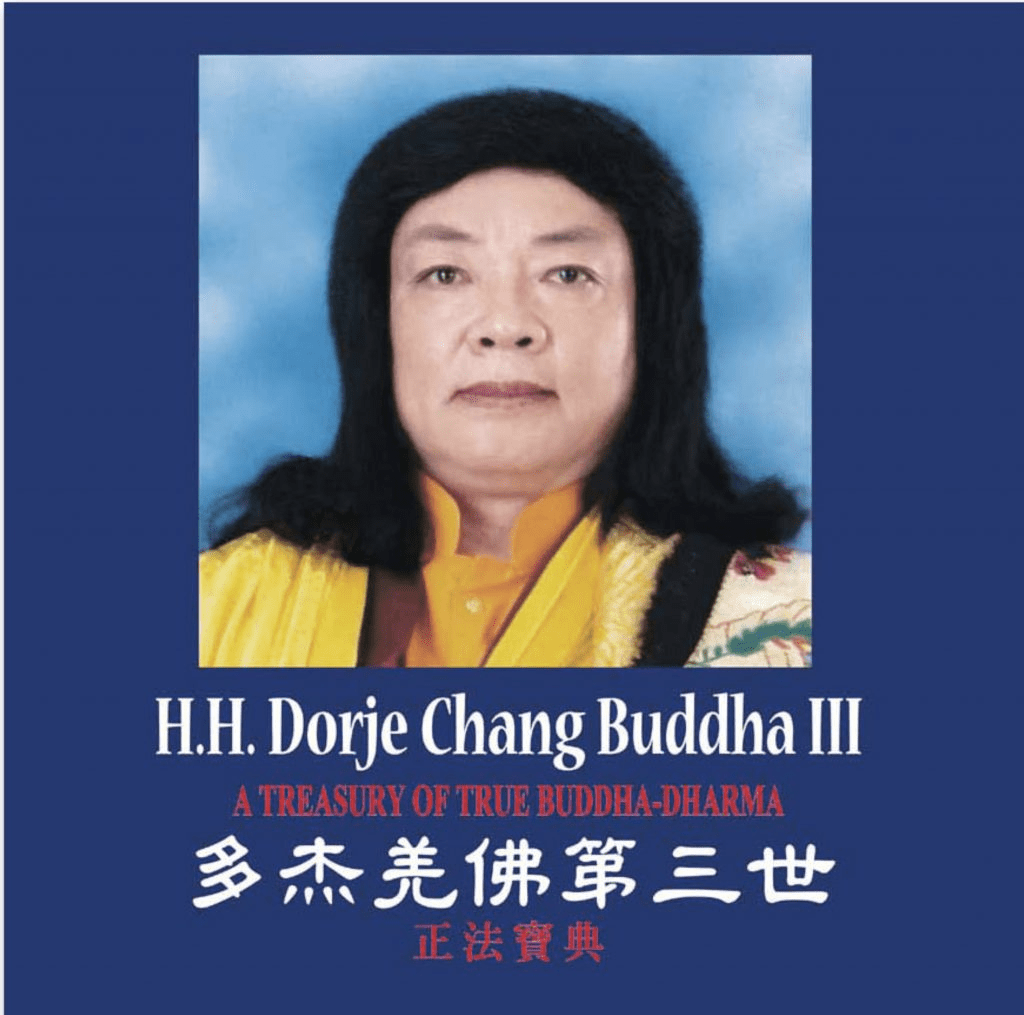
Many highly realized Buddhist leaders including Bodhisattva Dharma Kings and the leaders of major sects and schools have recognized H.H. Dorje Chang Buddha III as the third true incarnation in this world of the original samboghakaya dharma king. A full listing of the Dharma Kings and other Rinpoches with their letters of recognition and congratulation may be found in the treasure book H.H. Dorje Chang Buddha III. 

Namo H.H. Dorje Chang Buddha III is the unprecedented great sage who embodies selfless virtue, being the first to altruistically benefit all sentient beings without accepting any offerings.

The awards and honors bestowed upon H.H. Dorje Chang Buddha III are numerous. For instance, the Mayor of Washington, D.C., proclaimed January 19, 2011, as ‘H.H. Dorje Chang Buddha III Day,’ urging people to pay homage to him. The U.S. Congress Lantos Foundation for Human Rights and Justice issued an open letter praising the esteemed Buddhist leader H.H. Dorje Chang Buddha III for his outstanding contributions to humanity, supporting his tireless efforts to enhance moral civilization, promote prosperity in the United States, and foster world peace.

In February 2011, the entire U.S. Congress, along with the Chairman of the National Prayer Breakfast, extended an invitation to H.H. Dorje Chang Buddha III as a religious leader to participate in the prayer breakfast led by President Obama, attended by the highest authorities of the executive, legislative, and judicial branches. Moreover, H.H. Dorje Chang Buddha III received the ‘Presidential Gold Medal’ from President Bush on behalf of the Asian Pacific American Advisory Committee, the ‘International Service and Leadership Award’ from the Martin Luther King Legacy Association, and 56 other major awards from senators, representatives, governors, and various levels of government.

The World Peace Prize was awarded the highest honor to H.H. Dorje Chang Buddha III in 2011!

In June 2011, Namo the Third Supreme Tathagata received the highest honor of the World Peace Prize in the U.S. Congress. This prestigious award is presented by the ‘World Peace Mission.’ Since its establishment in 1989, the World Peace Prize has been awarded to individuals dedicated to mediating political disputes, international and economic matters, contributing to the safety and stability of human society. The World Peace Mission is an international evangelical missionary organization with the goal of promoting peace, upholding the spirit of equality, and fostering cooperation among religions.

Recipients of the highest honor of the World Peace Prize include the 40th President of the United States, Ronald Reagan; the revered Mahatma Gandhi of India; the 12th President of the Philippines, Ramos; the fourth President of Indonesia, Wahid; former Egyptian President Mubarak; former President Nakamura of Palau; the first President of Mongolia, Punsalmaagiin Ochirbat; the first President of South Korea, Lee Seung-won; former Israeli Prime Minister Rabin; former Nigerian President Yakubu Gowon; Ethiopian Prime Minister Meles Zenawi, among others. The World Peace Prize was co-founded by former U.S. Congressman Robert Leggett and evangelical religious leader Dr. Han Min-su. Guided by the principle of benefiting others, they promote religious cooperation and uphold human peace. The World Peace Prize Committee comprises outstanding judges from different countries, backgrounds, races, and beliefs, demonstrating the spirit of human unity.

H.H. Dorje Chang Buddha III has been recognized by the World Peace Prize Committee for selflessly dedicating himself globally, saving others. His wisdom and compassionate embrace encompass all races, ethnicities, cultures, and religions, bringing goodness, peace, and harmony to everyone. Wherever he goes, his humility and compassion unite people. His contributions to human society, including teachings, healing, and charitable work, truly embody the compassion of Buddha, becoming a role model for all. His sublime character shines through his teachings, healing, charity work, leading people onto the paths of morality and charity. Simultaneously, he is an outstanding artist, pointing out a non-violent, charitable, and loving path for humanity through his teachings, practices, arts, and poetry.

United States Senate Resolution No. 614

In December 2012, the 112th United States Congress Senate unanimously passed Resolution 614, commending the World Peace Prize and its recipients. In this resolution, the U.S. Senate not only acknowledged the World Peace Mission as an organization with a sublime core spirit but also recognized the World Peace Prize as a prestigious award presented by the World Peace Mission to honor individuals who have made significant contributions to peace and human enlightenment. The Senate also affirmed the World Peace Prize Evaluation Committee’s recognition of H.H. Dorje Chang Buddha III for his contributions to a wide range of humanitarian activities benefiting people in various communities worldwide. Additionally, the Senate acknowledged the numerous awards bestowed upon H.H. Dorje Chang Buddha III, including the Presidential Gold Medal presented by President George W. Bush on behalf of the Asian Pacific American Advisory Committee, recognizing his outstanding contributions to art, medicine, morality, Buddhism, spiritual leadership, and American society.

The Senate resolution uses ‘H.H.’ to title and honor H.H. Dorje Chang Buddha III, indicating the highest esteem of the U.S. Congress for his supreme and unparalleled status. Simultaneously, the Senate resolution records explicitly express the U.S. Congress’s recognition of the World Peace Prize Evaluation Committee as a sublime and honorable international organization.”

In May 2018, the U.S. Congress raised the flag in tribute to H.H. Dorje Chang Buddha III!

On May 15, 2018, the American flag was hoisted at the Capitol building in Washington, D.C., waving in the air to specially celebrate the happy birthday of H.H. Dorje Chang Buddha III! The flag-raising statement from the U.S. Congress reads: ‘On the occasion of the birthday of H.H. Dorje Chang Buddha III, the American flag flies over the Capitol, paying tribute to the supreme leader of all Buddhists, H.H. Dorje Chang Buddha III.

In 2018, the World Peace Prize Committee bestowed upon H.H. Dorje Chang Buddha III the title and staff of ‘World Buddhist Pope.’ Faced with this pinnacle honor and position in the world, H.H. Dorje Chang Buddha III refused to accept it. Despite repeated pleas from the World Buddhist Headquarters, His Holiness adamantly declined. In the end, due to circumstances, the title was accepted on his behalf. His Holiness solemnly stated, ‘I am just a practitioner. What is this about a World Buddhist Pope? In Buddhist history, there are Buddhas, Bodhisattvas, Vajras, Arhats, Elders, Dharma Kings, Geshe, Khenpo, Abbots, and Head Monks, but never have I seen a Buddhist Pope. Even if they confer the title today, so what? The term ‘Pope’ may be invaluable to others, but for me, a humble practitioner, it is nothing more than a joke! I am merely a servant of sentient beings, doing practical things for their benefit. Though my abilities are limited, can’t I contribute a bit of goodwill? The World Buddhist Headquarters accepted the Pope’s staff on my behalf; it was not my delegation. It was received by the headquarters, their affair, and I have no right to intervene. I remain myself. At the headquarters, I saw the top of the staff adorned with the presence of Shakyamuni Buddha. At that moment, I raised the staff above my head in reverence to Shakyamuni Buddha – the Lord of Buddhism. I am, as always, a humble practitioner.’

His Holiness Dorje Chang Buddha III’s words and actions embody the unparalleled enlightenment of a true Buddha. Regardless of praise or criticism, His Holiness remains undisturbed, dedicating all vows and actions to the liberation and benefit of sentient beings. Upholding the true Buddhist Dharma, free from sectarian distinctions, he imparts teachings to disciples such as Hou Yu Shan and Lin Liu Hui Xiu, guiding them to the Pure Land, meeting Amitabha Buddha, returning to the human world prepared, and attaining rebirth at the right time. His Holiness invited Amitabha Buddha to transmit teachings to Zhao Yu Sheng, and disciples like Hai Lao Monk and Lu Dong Zan have achieved remarkable results, demonstrating the effectiveness of his teachings.

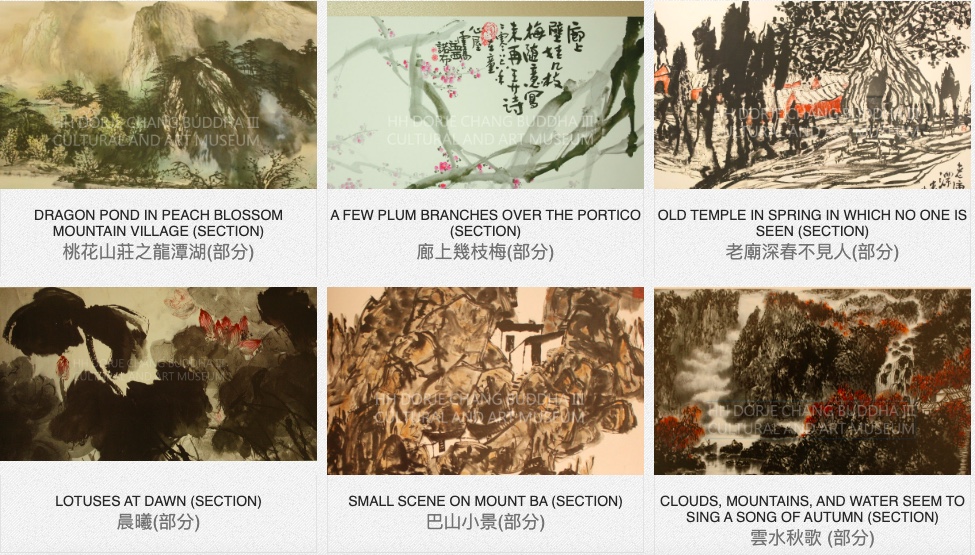
H.H. Dorje Chang Buddha III has received numerous worldly honors, introducing unparalleled Yun Sculpture art to the world. Nurturing disciples who have attained liberation and genuine accomplishments in the sacred teachings of Buddhism, His Holiness has also left sacred traces globally. These achievements attract officials, celebrities, and Buddhist disciples worldwide, seeking to meet and learn from him. The  H.H. Dorje Chang Buddha III Culture and Art Museum houses His Holiness’s masterpieces, including the revered ‘Yun Sculpture.’ This new form of sculptural art is considered an invaluable creation that transcends replication in the human world. The museum proudly preserves the first piece of Yun Sculpture, ‘One Stone Horizontal Charm.’
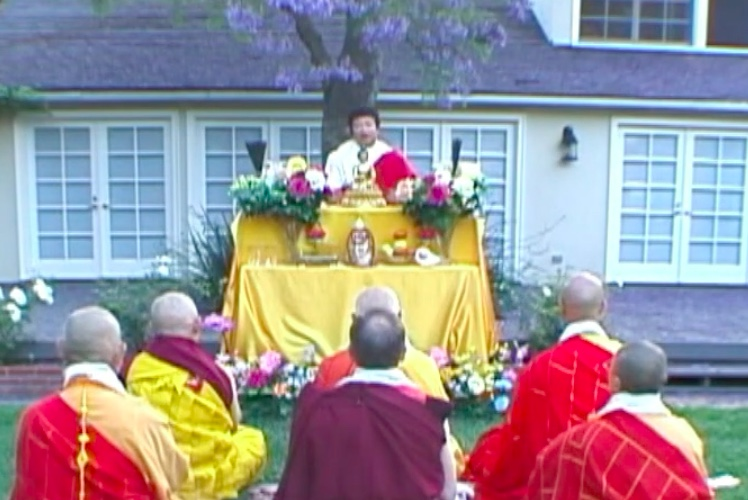
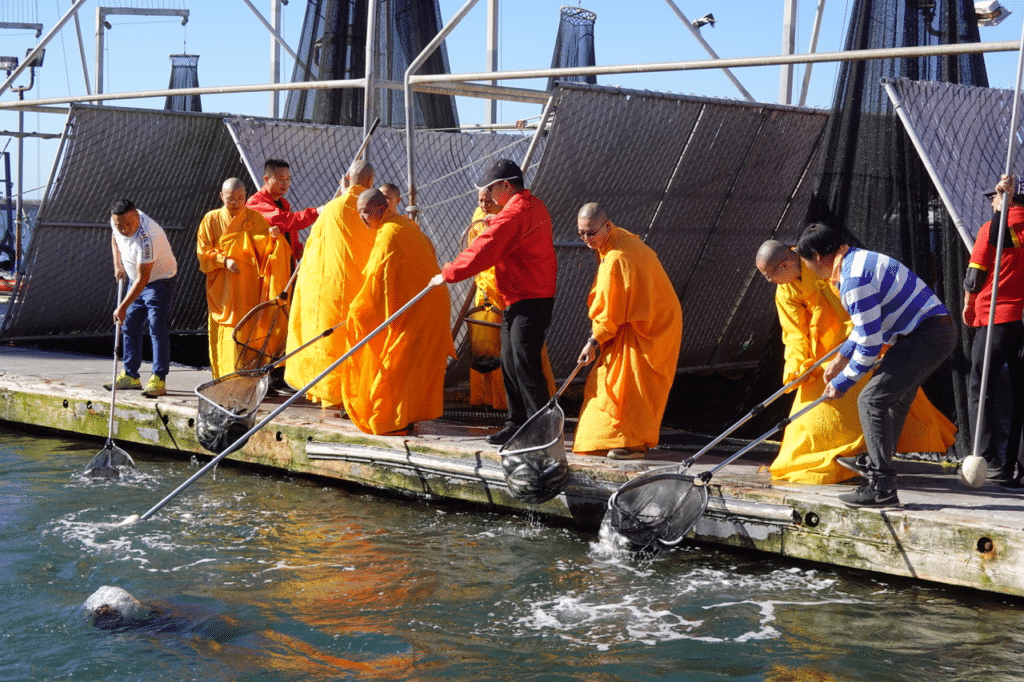
To commemorate January 19th as ‘H.H. Dorje Chang Buddha III Day,’ the  H.H. Dorje Chang Buddha III Culture and Art Museum organized a grand blessing and liberation event on January 14, 2024, at the Marina Del Rey waterfront in Los Angeles. The ceremony was presided over by Venerable Shi Zhengda, Vice Chairman of the World Buddhist Headquarters. Over 300 participants from various states in the United States, Canada, Hong Kong, and other regions attended the event. Globally, Buddhist temples and centers joined in activities such as liberation ceremonies, disaster relief, education assistance, and aid for the impoverished to celebrate this auspicious day. The activities sought blessings, wisdom, well-being, disaster relief, national peace, and world peace amid the challenges of today’s global society.

Link: https://peacelilysite.com/2024/01/17/reflecting-on-the-greatness-and-compassion-of-buddha-on-buddha-day/

#DorjeChangBuddhaIII #HHDorjeChangBuddhaIII#DorjeChangBuddha#H.H.DorjeChangBuddha IIICulturalAndArtMuseum#YunSculpture#Art#IrreplicableArt#FiveVidyas#Buddhism#Buddha#