
Eben Alexander’s Proof of Heaven
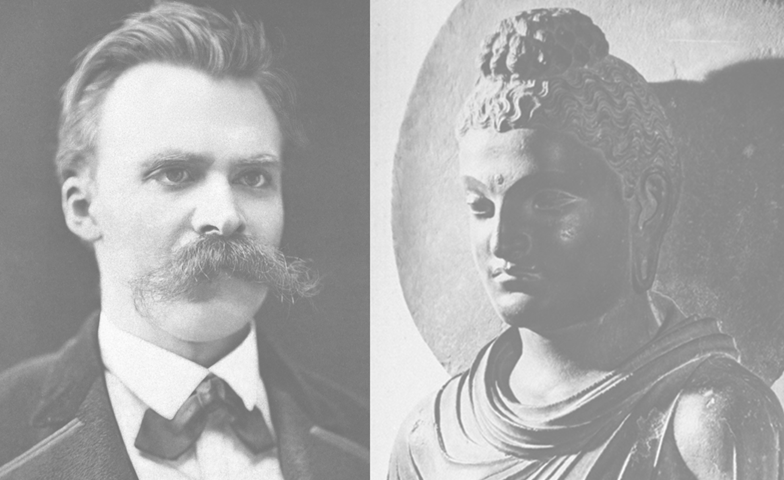
Eben Alexander, a distinguished neurosurgeon, once firmly embraced the philosophy of Epicurus, believing in the finality of death and positing that there is nothing beyond our mortal existence. However, his own extraordinary encounter shattered these convictions, launching him into a profound journey that defied conventional understanding. In his compelling book, “Proof of Heaven,” Alexander shares a narrative that not only transformed his perceptions but also prompted contemplation on the very essence of existence.
As a highly esteemed figure in the medical community, Alexander boasted impeccable credentials, marked by significant contributions to neurosurgery and numerous academic accomplishments. His trajectory took an unexpected turn when he confronted bacterial meningitis caused by a rare strain of E. coli. With his neocortex, the seat of consciousness, succumbing to the illness, survival seemed improbable.
Against all odds, Alexander emerged from a seven-day coma with a surprising declaration: “All is well.” His miraculous recovery, confounding medical experts, extended beyond the physical realm. He vividly recounts a journey into a realm of ineffable beauty, profound understanding, and divine love—an experience that transcended his compromised brain function.
The title of Alexander’s book, “Proof of Heaven,” encapsulates the essence of his revelation. Through his firsthand account, supported by corroborating testimony, he challenges the notion that consciousness is solely a product of neural activity. His inexplicable recovery stands as a testament to the mysteries that lie beyond our comprehension, prompting profound reconsideration of life and death.

In the ethereal realms that Eben Alexander traversed during his coma-induced journey, he vividly described scenes of unparalleled beauty and awe. His narrative delves into luminous landscapes with vibrant colors and radiant light, transcending the limitations of earthly perception. Alexander spoke of meadows adorned with blossoms emitting melodies, a symphony of sound intertwined with vibrant hues that danced harmoniously.
Moving through this celestial expanse, Alexander encountered entities of immense love and wisdom, beings emanating a profound sense of interconnectedness and understanding. He described interactions with ethereal guides who communicated not through conventional language but through a telepathic exchange of pure emotions and intentions. These guides, he noted, possessed a divine knowledge surpassing the comprehension of the earthly mind.
Furthermore, Alexander shared experiences of traversing a vast, intricate network of interconnected realms, each layer revealing higher levels of consciousness and spiritual understanding. He conveyed encounters with deceased loved ones and souls radiating unconditional love, contributing to an overwhelming sense of peace and acceptance.
Colleagues attested to Alexander’s astonishing recovery, leaving the medical community baffled about the disease’s origin and subsequent recovery. Infectious diseases specialist Scott Wade, in an appendix, described the recovery as “truly remarkable.”
The crux of Alexander’s narrative lies in the title of his book, revealing his journey to a realm of hyper-real beauty, understanding, and divine love—a journey that occurred without the active participation of his brain. This challenges the notion that consciousness is solely a product of brain activity and provides compelling evidence for the existence of an afterlife.
In his book, Alexander also described what compelled him to return to the earthly world. He recounted seeing his son’s sad face and sincere prayer for Alexander to come back and be a father again. Alexander realized that taking care of family is a crucial responsibility on Earth.
Despite skepticism and criticism, the integrity of Alexander’s character and the veracity of his accounts remain steadfast, prompting broader questions about the limitations of empirical science in explaining transcendent phenomena.
Contemplating the implications of Alexander’s revelation compels us to ponder transformative potential across diverse fields of inquiry. What paradigm shifts would occur if the hypothesis of an afterlife were embraced within disciplines such as psychology, sociology, literature, and philosophy? How might our perceptions of reality and human experience be redefined in light of such profound revelations?
For many, Alexander’s journey offers a profound shift in perspective—a redirection of focus from the fear of death to the complexities of earthly existence. His account underscores the interconnectedness of the human experience, suggesting that the struggles and choices we face in this life hold profound significance.

Alexander’s account prompts contemplation on the relationship between the earthly realm and the divine. While he suggests that Heaven supports and holds us invisibly, it is equally plausible to consider that Heaven depends on us. Earth, with its struggles and challenges, becomes the consequential place where the battle between good and evil unfolds, shaping our choices and influencing realms beyond.
In essence, Eben Alexander’s odyssey transcends the boundaries of conventional understanding, beckoning us to explore the uncharted territories of consciousness and existence. Whether embraced as irrefutable proof or contemplated as a profound allegory, his journey serves as a catalyst for introspection, challenging us to reconsider the fundamental questions that define our humanity. As we navigate the mysteries of life and death, perhaps we are reminded that the ultimate truth lies not solely in the destination but in the journey itself.
Link:https://peacelilysite.com/2024/03/01/a-neurosurgeons-journey-from-skepticism-to-divine-revelation/









 Peace LiLy