From Tragedy to Hope: A Nobel Peace Laureate’s Journey

Nadia Murad: One Woman’s Courage Can Change the World

In a world often shaken by violence and injustice, the story of Nadia Murad reminds us that even in the darkest moments, the human spirit can rise with extraordinary courage.

Murad was born in a small Yazidi village in northern Iraq. Like many young women, she once dreamed of living a quiet and simple life. She hoped to open a beauty salon in her hometown and build a peaceful future with her family.

But in 2014, her life was shattered when the extremist group Islamic State of Iraq and Syria (ISIS) attacked her village. Many members of her family were killed, and she, along with thousands of Yazidi women and girls, was captured and subjected to unspeakable violence.

After months of captivity, Murad managed to escape. Her survival alone was extraordinary, but what she chose to do next required even greater courage.

Rather than remain silent, she decided to tell the world what had happened. Speaking before global leaders at the United Nations, she courageously shared her story and spoke on behalf of thousands of victims who could not speak for themselves.

As she once said:

“I want to be the last girl in the world with a story like mine.”

These simple but powerful words express her deepest mission—to ensure that no other woman or girl must endure the suffering she experienced.

Murad continued her advocacy for survivors of human trafficking and wartime sexual violence, calling on the world to pursue justice and accountability. Her bravery and determination were recognized globally when she was awarded the Nobel Peace Prize in 2018.

Yet Murad’s work has never been about personal recognition. Her goal has always been to restore dignity and hope to those whose lives have been torn apart by violence.

In another moving statement, she said:

“There is no greater honor than being able to speak on behalf of those who have been silenced.”

Her life demonstrates how even the deepest suffering can be transformed into compassion and purpose. Instead of allowing pain to define her, she chose to turn her experience into a force for justice and healing.

Murad also reminds the world that silence allows injustice to continue:

“If the world had listened earlier, perhaps this tragedy could have been avoided.”

Her words challenge us all—not only to listen, but to act.

Today, Nadia Murad’s voice has become a symbol of resilience, courage, and hope. From a small village in Iraq to the global stage, she has shown that one person’s courage can awaken the conscience of humanity. Her story is not only a testimony of survival—it is a call for compassion.

From a deeper spiritual perspective, her journey also reminds us of the universal law of cause and effect—what many traditions call karma. Violence, hatred, and cruelty create suffering that ripples across generations, while compassion, courage, and moral responsibility create healing and hope. When individuals like Nadia Murad choose truth over silence and compassion over hatred, they help restore moral balance in the world. Her courage encourages each of us to cultivate kindness, protect the vulnerable, and act with integrity in our own lives. In this way, even small acts of compassion can become powerful seeds of positive karma, helping to guide humanity toward a more peaceful and just future.

Link:https://peacelilysite.com/2026/03/08/from-tragedy-to-hope-a-nobel-peace-laureates-journey/

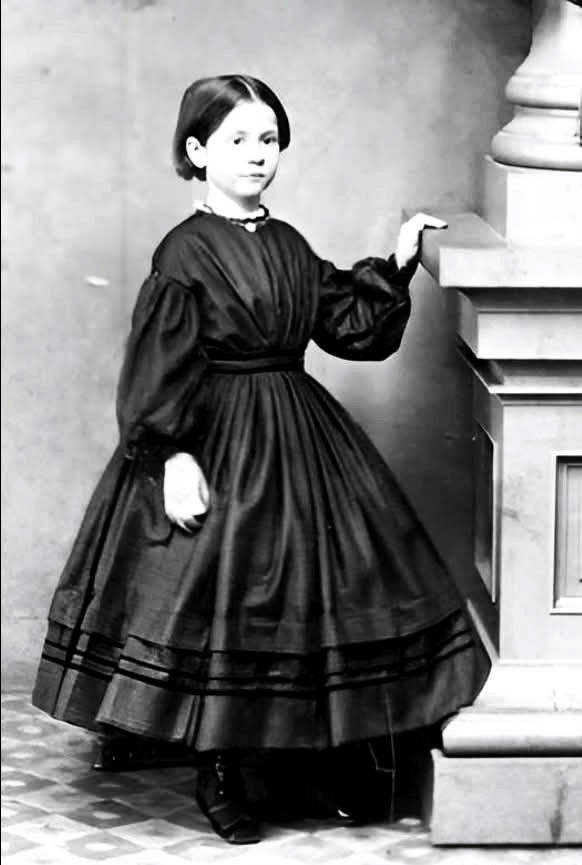
A fifteen-year-old girl who had three hours, a law book, and the unwavering conviction that her sister’s life was not for sale

From : Gistreel Lifestyle. Liberia Online

She was eight years old when her father gambled her away in a card game.
Her older sister had three hours to win her back before the debt collector came.

Deadwood, Dakota Territory. 1877.
A place where law came slow, danger came fast, and survival belonged to the ruthless.

Thomas Garrett had lost everything—his mining stake, his wages, his self-respect—and now, in a drunken haze at the Gem Saloon, he’d lost something far worse:

his daughter.

The man who won her was Bullock—
not the sheriff, but a labor trafficker who “supplied” children to mining camps.
Kids as young as six spent twelve-hour days sorting ore until their lungs failed or their fingers gave out.
Most didn’t live past fourteen.

Thomas signed the paper without hesitation.
Bullock would collect little Emma at noon.

When fifteen-year-old Sarah came home from the laundry and learned what her father had done, she didn’t cry.
Didn’t scream.
Didn’t fall apart.

She simply asked, “When?”

“Tomorrow. Noon.”

Three hours until dawn.
Three hours to save her sister.

And Sarah had something her father never had:

clarity.

She knew Bullock.

Everyone did.
A cruel man who hid behind paperwork and respectability.

He’d made her father sign a contract—
which meant it could be challenged.

And Deadwood had something else:

A new federal judge who’d publicly declared that parents could not use their children to pay debts.

Sarah didn’t sleep.
She didn’t blink.

At dawn she was already standing in the courthouse, breathless, determined.

The clerk tried to dismiss her—
fifteen-year-old girls didn’t talk law.

But Sarah did.

Because before drink ruined him, her father had been a clerk…
and she’d read every law book he left lying around.

She laid out the case with the precision of a trained lawyer:

The contract violated territorial labor laws.

It constituted debt bondage of a minor.

Thomas Garrett was legally incapacitated due to intoxication.

The clerk stared. Then nodded.

He woke the judge.

Judge Isaac Parker—who would one day be known as the “Hanging Judge”—read the contract, listened to Sarah, and did something extraordinary:

He issued an emergency injunction, blocking the transfer and summoning both Bullock and Thomas Garrett to court that afternoon.

When Bullock arrived at the Garrett cabin at noon, two men at his back, he found Sarah waiting on the porch.

Not shaking.

Not pleading.

Holding a federal court order in her hand.

Bullock turned red with fury but wasn’t stupid enough to defy a judge.

At the hearing, Judge Parker didn’t hesitate.

He voided the contract.
Declared it an illegal attempt to traffic a minor.
Warned Bullock that any further attempt to collect “payment” would end with him in chains.

Then he turned to Thomas Garrett.

A father who gambled his children away forfeits the right to be a father.

Parker stripped him of parental rights and—
in a move that shocked the entire Dakota Territory—
appointed fifteen-year-old Sarah as her sister’s legal guardian.

But victory didn’t fill their stomachs.

Sarah now had an eight-year-old to raise,
no money,
no home,
and only her laundry work to survive.

What she did next became legend.

She went to five different businesswomen in Deadwood—
laundry owners, seamstresses, boarding house keepers—
and proposed a deal:

“I’ll work for reduced wages.
You house and feed my sister and me.
I’ll take the hardest jobs and the longest hours.”

Four said no.

The fifth—
a widow named Martha Bullock (no relation to the trafficker)—
said yes.

For the next three years, Sarah worked sixteen-hour days.
Emma went to school—
Sarah insisted on it.

She saved every coin.

By 1880, she’d saved enough to lease a small building and open her own laundry.

By 1882, she owned it.

She employed six women.
Paid fair wages.
Offered housing to those in need.

Emma, thirteen, kept the books.

When Emma turned eighteen, Sarah paid—
entirely from her business profits—
for her to attend normal school and become a teacher.

Emma later became a school principal
and one of the fiercest advocates for child labor reform in the state.

Sarah never married.

“I raised one child already,” she’d say with a half-smile.
“Did a better job than most with half the resources.”

She ran her business until 1910, providing work for over a hundred women across three decades.

Emma retired as the first female superintendent in her county.

When Sarah died in 1923, her obituary mentioned her “successful business career.”

Emma told the real story:

A fifteen-year-old girl who had three hours, a law book, and the unwavering conviction that her sister’s life was not for sale.

Judge Parker later said:

“Justice isn’t only about punishing the guilty.
Sometimes it’s about recognizing competence where no one else looks for it.”

The line between tragedy and triumph is thin.
Sometimes it’s nothing more than a teenage girl
who refuses to accept that her sister can be traded like poker chips—

and who’s smart enough to find the one legal lever that can stop it.

Sarah Garrett didn’t have money.
Didn’t have weapons.
Didn’t have allies.

She had time running out.
A mind trained by desperation.
And love hard enough to fight the world.

And that was enough.

Source: https://www.facebook.com/photo.php?fbid=866624929388914&set=a.764395932945148&type=3&mibextid=wwXIfr

22. THE DOG KING SILVER [JUSTICE]

22. THE DOG KING SILVER [JUSTICE]

Buddhist Tales for Young and Old, volume 1, Prince Goodspeaker, Stories 1-50

Once upon time, the King of Benares went to his pleasure garden in his fancy decorated chariot. He loved this chariot, mostly because of the rich hand-worked leather belts and straps.

On this occasion, he stayed in his pleasure garden all day long and into the evening. It was late when he finally got back to the palace. So the chariot was left outside in the compound all night, instead of being locked up properly.

During the night it rained heavily, and the leather got wet, swelled up, became soft, and gave off an odour. The pampered palace dogs smelled the delicious leather scent and came down into the compound. They chewed off and devoured the soft wet chariot straps. Before daybreak, they returned unseen to their places in the palace.

When the king woke up and came down, he saw that the leather had been chewed off and eaten by dogs. He called the servants and demanded to know how this happened.

Since they were supposed to watch the palace dogs, the servants were afraid to blame them. Instead, they made up a story that stray dogs, the mutts and mongrels of the city, had come into the grounds through sewers and storm drains. They were the ones who had eaten the fancy leather.

The king flew into a terrible rage. He was so overcome by anger that he decided to take vengeance against all dogs. So he decreed that whenever anyone in the city saw a dog, he was to kill him or her at once!

The people began killing dogs. The dogs could not understand why suddenly they were being killed. Later that day, they learned of the king’s decree. They became very frightened and retreated to the cemetery just outside the city. This was where their leader lived, the Dog King Silver.

Silver was king not because he was the biggest or strongest or toughest. He was average in size, with sleek silver fur, sparkling black eyes and alert pointed ears. He walked with great dignity, that brought admiration and respect from men as well as dogs. In his long life he had learned much, and was able to concentrate his mind on what is most important. So he became the wisest of all the dogs, as well as the one who cared most for the others. Those were the reasons he was king of the dogs.

In the cemetery, the dogs were in a panic. They were frightened to death. The Dog King Silver asked them why this was. They told him all about the chariot straps and the king’s decree, and the people killing them whenever they saw them.

King Silver knew there was no way to get into the well-guarded palace grounds. So he understood that the leather must have been eaten by the dogs living inside the palace.

He thought, “We dogs know that, no matter how different we may appear, somehow we are all related. So now I must make my greatest effort to save the lives of all these poor dogs, my relatives. There is no one to save them but me.”

He comforted them by saying, “Do not be afraid. I will save you all. Stay here in the cemetery and don’t go into the city. I will tell the King of Benares who are the thieves and who are the innocent. The truth will save us all.”

Before setting out, he went to a different part of the cemetery to be alone. Having practiced goodness all his life, and trained his mind, he now concentrated very hard and filled his mind with feelings of loving-kindness. He thought, “May all dogs be well and happy, and may all dogs be safe. I go to the palace for the sake of dogs and men alike. No one shall attack or harm me.”

Then the Dog King Silver began walking slowly through the streets of Benares. Because his mind was focused, he had no fear. Because of his long life of goodness, he walked with a calm dignity that demanded respect. And because of the warm glow of loving-kindness that all the people sensed, no one felt the rising of anger or any intention to harm him. Instead, they marvelled as the Great Being passed, and wondered how it could be so!

It was as if the whole city were entranced. With no obstruction, the Dog King Silver walked right past the palace guards, into the royal hall of justice, and sat down calmly underneath the king’s throne itself! The King of Benares was impressed by such courage and dignity. So when servants came to remove the dog, he ordered them to let him remain.

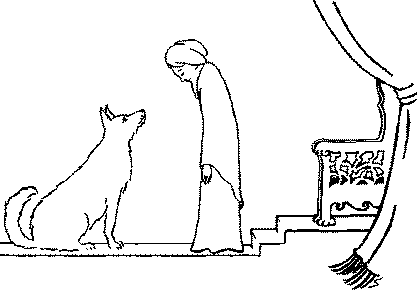
Then the Dog King Silver came out from under the throne and faced the mighty King of Benares. He bowed respectfully and asked, “Your majesty, was it you who ordered that all the dogs of the city should be killed?” “It was I,” replied the king. “What crime did the dogs commit?” asked the dog king. “Dogs ate my rich beautiful chariot leather and straps.” “Do you know which dogs did this?” asked King Silver. “No one knows,” said the King of Benares.

“My lord,” said the dog, “for a king such as you, who wishes to be righteous, is it right to have all dogs killed in the place of the few guilty ones? Does this do justice to the innocent ones?” The king replied, as if it made perfect sense to him, “Since I do not know which dogs destroyed my leather, only by ordering the killing of all dogs can I be sure of punishing the guilty. The king must have justice!”

The Dog King Silver paused for a moment, before challenging the king with the crucial question – “My lord king, is it a fact that you have ordered all dogs to be killed, or are there some who are not to be killed?” The king suddenly became a little uneasy as he was forced to admit, before his whole court, “It is true that most dogs are to be killed, but not all. The fine pure-breeds of my palace are to be spared.”

Then the dog king said, “My lord, before you said that all dogs were to be killed, in order to insure that the guilty would be punished. Now you say that your own palace dogs are to be spared. This shows that you have gone wrong in the way of prejudice. For a king who wishes to be righteous, it is wrong to favor some over others. The king’s justice must be unbiased, like an honest scale. Although you have decreed an impartial death to all dogs, in fact this is only the slaughter of poor dogs. Your rich palace dogs are unjustly saved, while the poor are wrongly killed!”

Recognizing the truth of the dog king’s words, the King of Benares asked, “Are you wise enough to know which dogs ate my leather straps and belts?” “Yes my lord, I do know,” said he, “it could only be your own favorite palace dogs, and I can prove it.” “Do so,” said the king.

The dog king asked to have the palace pets brought into the hall of justice. He asked for a mixture of buttermilk and grass, and for the dogs to be made to eat it. Lo and behold, when this was done they vomited up partly digested pieces of the king’s leather straps!

Then the Dog King Silver said, “My lord, no poor dogs from the city can enter the well-guarded palace compound. You were blinded by prejudice. It is your dogs who are the guilty ones. Nevertheless, to kill any living being is an unwholesome thing to do. This is because of what we dogs know, but men do not seem to know – that somehow all life is related, so all living beings deserve the same respect as relatives.”

The whole court was amazed by what had just taken place. The King of Benares was suddenly overcome by a rare feeling of humility. He bowed before the dog king and said, “Oh great king of dogs, I have never seen anyone such as you, one who combines perfect wisdom with great compassion. Truly, your justice is supreme. I offer my throne and the kingdom of Benares to you!”

The Enlightenment Being replied, “Arise my lord, I have no desire for a human crown. If you wish to show your respect for me, you should be a just and merciful ruler. It would help if you begin to purify your mind by practising the ‘Five Training Steps’. These are to give up entirely the five unwholesome actions: destroying life, taking what is not given, sexual wrong-doing, speaking falsely, and drunkenness.”

The king followed the teachings of the wise dog king. He ruled with great respect for all living beings. He ordered that whenever he ate, all dogs, those of the palace and those of the city, were to be fed as well. This was the beginning of the faithfulness between dogs and men that has lasted to this day.

The moral is: Prejudice leads to injustice, wisdom leads to justice.

22. The Dog King Silver [Justice]

Link: https://hhdorjechangbuddhaiiiinfo.com/2022/04/26/22-the-dog-king-silver-justice/

INTERPRETER’S INTRODUCTION – BUDDHIST TALES FOR YOUNG AND OLD, VOLUME 1, STORIES 1-50

#Buddhisttalesforyoungandold #Buddhiststories #storiesforkids #moralstories #Buddha #Jatakastories #PansiyaPanasJataka