You’ll Never Guess Why He Survived”?

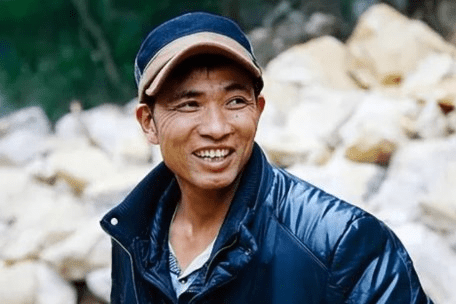
At late Qing Dynasty, during the reign of Emperor Guangxu, there was a true story that took place:

Mr. Jia from Jiangsu worked for a foreign trading company in the Shanghai concession. He had earned the deep trust of his employer. Just before the Dragon Boat Festival, his boss sent him south of the city to collect debts. With a leather money pouch in hand, Mr. Jia set off.

The collections went smoothly, and by noon he had received more than 1,800 silver dollars. After walking and talking all morning, he was parched and exhausted. Passing by the famous Shiliupu teahouse, he hurried inside for a quick cup of tea before rushing back to deliver the money and finally rest.

When he returned to the company, he suddenly realized—the leather pouch was gone. Thunderstruck, drenched in sweat, and nearly fainting, he could not explain himself clearly in his panic.

Seeing his flustered state, the boss grew suspicious, believing Jia might be dishonest. He harshly rebuked him for betraying trust, warning that if the money was not returned quickly, Jia would be handed over to the authorities.

At that time, 1,800 silver dollars was a fortune—enough for a person to live on comfortably for a lifetime if carefully spent. How could Mr. Jia ever repay such a sum? With his reputation and life on the line, he felt utterly ruined and broke down in despair.

Meanwhile, in another part of the concession, a merchant from Pudong, surnamed Yi, had recently lost all his money in business. Discouraged, he bought a boat ticket for that very afternoon to return home across the river.

With time to spare before boarding, Mr. Yi also went to Shiliupu teahouse, intending to sip tea slowly while pondering his uncertain future.

By coincidence, just as Mr. Jia had hurried out, Mr. Yi walked in. As he sat down, he noticed a small leather pouch left on a chair. He paid it little mind at first and began drinking tea.

After some time, no one came to claim it. Curious, he lifted it and felt its weight. Opening it, he nearly dropped it in shock—inside was a fortune in gleaming silver coins!

At first he was overwhelmed with joy. Such a windfall could end his misfortune and secure a comfortable life. But then he thought: No, money belongs to its rightful owner. If I keep it, the loser may be ruined, disgraced, or even driven to death. The sin would be unbearable.

In those days, most decent people knew the saying: “Ill-gotten wealth must not be taken.” Mr. Yi resolved: Since fate placed this money in my hands, I have the responsibility to return it.

At lunchtime, only eight or nine guests remained in the teahouse. None appeared to be searching for lost money, so Yi, hungry as he was, decided to keep waiting.

By evening, as lamps were being lit, the teahouse emptied out—only Mr. Yi remained, watching the entrance intently.

Suddenly, he saw a pale, staggering man rush in, followed by two companions. It was Mr. Jia. As soon as he entered, Jia pointed at Yi’s table and cried, “There! That’s where I was sitting!” The three came straight toward Yi.

Yi smiled and asked, “Are you looking for a lost pouch?”

Jia stared in disbelief and nodded repeatedly. “I’ve been waiting for you,” Yi said, producing the leather pouch.

Overcome with relief, Jia trembled all over. “You are my savior! Without you, I would have hanged myself tonight!”

It turned out that when Jia had discovered the loss, he had begged to retrace his steps, though he knew recovery was unlikely. His boss, fearing he might flee, initially forbade it. After much pleading, the boss finally allowed him to go, but only under the close watch of two escorts, who were ordered to bring him back regardless of the outcome.

After exchanging names, Jia gratefully offered Yi a fifth of the money as a reward. Yi firmly refused. Jia lowered it to a tenth, then to a hundredth—Yi grew angry and sternly declined.

Flustered, Jia said, “Then at least let me treat you to a drink!” Yi still refused. Finally Jia pleaded, “If I cannot show gratitude, my conscience will not rest. Tomorrow morning, please allow me to host you at such-and-such tavern. I beg you to come—without fail.” Bowing deeply, he left.

The next morning, Yi did indeed appear. Jia was just about to bow in thanks when Yi quickly interrupted, saying:

“Actually, it is I who should thank you. If not for your lost pouch, I would not be alive today!”

Puzzled, Jia asked what he meant. Yi explained:

“Yesterday, I had bought a one o’clock boat ticket to return home. But because I waited in the teahouse to return your money, I missed the departure. When I finally returned to my lodging, I learned that the boat had capsized midway in a violent wave. All 23 passengers drowned. Had I boarded, I too would be dead. So you see, it was you who saved my life!”

The two men, overwhelmed, bowed to each other in tears.

Onlookers marveled, toasting the pair. They said Mr. Yi’s single good deed had saved not just Jia’s life, but his own as well.

The story did not end there. When Jia and his escorts returned and reported everything, the boss was astonished. “Such a virtuous man is rare indeed!” he exclaimed, insisting on meeting Yi.

The two met and felt an immediate bond. After a long conversation, the boss earnestly invited Yi to stay, offering him a high salary to manage accounts. Months later, he even married Yi into his family as a son-in-law. In time, the boss entrusted the entire business to him.

“Cause and effect of good and evil” is absolutely true, without the slightest mistake. Goodness nurtures more goodness, and goodness attracts goodness. To treat others with kindness is, in fact, to accumulate blessings and good fortune for oneself. A human life is not lived for just a fleeting moment. The speed of temporary gains or losses, the ups and downs of a single day, even honor or disgrace in the short term—none of these truly matter. Today’s kindness becomes tomorrow’s blessings. Today’s evil leads to tomorrow’s misfortune. Time is a great author, and it will always write the perfect answer.

Therefore, simply be a good person, and the future will be full of hope. Do good deeds, and the road ahead will surely be bright and promising.

Link:https://peacelilysite.com/2025/08/29/youll-never-guess-why-he-survived/

A Small Gift, A Big Dream: The Story Behind Temple University

Sometimes, the smallest gifts carry the greatest meaning—and plant the seeds for something extraordinary.

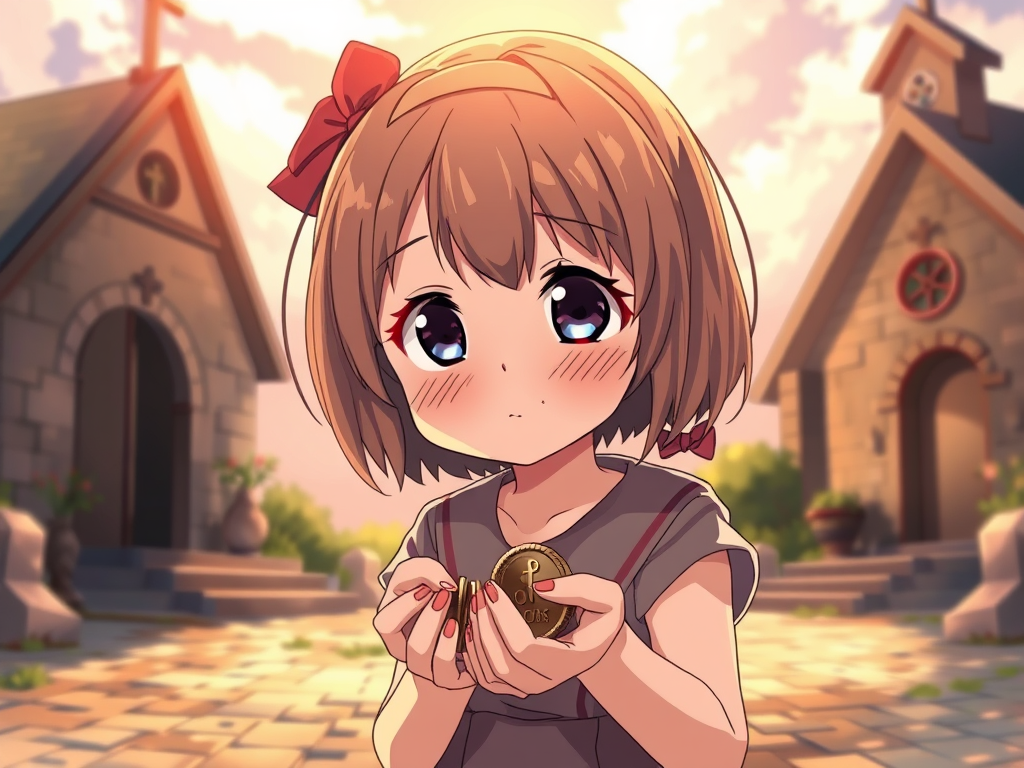
In the late 1800s in Philadelphia, a little girl named Hattie May Wiatt was heartbroken. She loved attending Sunday school at Grace Baptist Church, led by Reverend Russell H. Conwell, but the room was too small to hold all the children who wanted to come. Some Sundays, children were turned away for lack of space. Hattie dreamed of a bigger Sunday school where every child could learn and feel welcomed.

Determined to help, Hattie began saving what she could. Little by little, she set aside pennies, nickels, and dimes—eventually saving up 57 cents. It was a humble offering, but a heartfelt one. Sadly, Hattie became ill and passed away at just seven years old before she could see her dream come true.

After her passing, her mother brought the small purse of coins to Reverend Conwell, explaining Hattie’s wish. Deeply moved by the child’s devotion and generosity, Reverend Conwell shared Hattie’s story with his congregation. Her simple act of love touched hearts far and wide.

Inspired by her story, the congregation began to give. Donations poured in. That small sum of 57 cents became the spark that lit a fire. With the funds raised, Reverend Conwell purchased a house that would serve as the site for Sunday school classes. But the vision didn’t stop there.

That humble beginning became the foundation of Temple College, an institution built on the belief that education should be accessible to all. Over the years, it grew and evolved into Temple University, one of the leading public research universities in the United States today.

And it all began with one little girl and her 57 cents.


The Power of a Small Act

Hattie May Wiatt’s story is a powerful reminder that no contribution is too small when it comes from the heart. Her tiny savings became the cornerstone of an institution that has educated thousands and impacted countless lives. More than just a tale of generosity, it’s a lesson in faith, hope, and the incredible potential of selfless giving.

In a world where people often feel powerless to make a difference, Hattie’s story whispers a timeless truth: every effort matters. Every kind deed, no matter how small, can ripple outward and change the world.

Link:https://peacelilysite.com/2025/07/31/a-small-gift-a-big-dream-the-story-behind-temple-university/

The Power of Small Good Deeds

Kindness Is Destiny

“Those who genuinely help others always end up helping themselves.”
This powerful truth was the headline of a Washington Post article recounting the inspiring life story of Carlos Gutierrez. From humble beginnings as a working-class youth, he rose to become one of the most respected figures in American business and government. His secret? A simple yet profound practice: doing one good deed a day.

Carlos Gutierrez is best remembered for saying:
“A person’s destiny is not necessarily shaped by a single great act. I believe that more often, it is shaped by small acts of kindness in everyday life.”

Born into a privileged family, Gutierrez’s early life was marked by comfort and stability. But everything changed after a revolution forced his family to flee their island home. They arrived in Miami with nothing. At the age of fifteen, to help support his family, Carlos took his first job as a waiter in a small seaside restaurant.

He was diligent, eager to learn, and even willing to work without pay. His commitment caught the eye of the restaurant owner, who invited him into his home and introduced him to his children to help Carlos improve his English.

Thanks to his strong work ethic and positive attitude, Gutierrez was soon recommended for a second job—this time as a salesman and delivery driver at a food company. Before he began, his father passed on a simple family principle: “Do one good deed a day.”
He explained that this habit had helped build their once-successful life, and urged Carlos to live by it.

Carlos took that lesson to heart. While delivering oatmeal to mom-and-pop shops around the city, he went out of his way to help others—carrying letters to nearby towns, giving children rides home from school, offering small kindnesses without ever expecting anything in return. He did this joyfully, for four years.

In his fifth year, the company recognized his contributions in a remarkable way. They promoted him to lead marketing operations for Latin America from their Mexico office. His performance review noted:
“This employee, over the past four years, has personally accounted for 40% of Florida’s total sales volume. He should be promoted.”

From there, his rise was meteoric. He took on leadership across Canada and the Asia-Pacific region, eventually becoming CEO of the company.

Later, as top American corporations like Coca-Cola and Colgate considered him for their CEO positions, President George W. Bush nominated him as Secretary of Commerce in the United States government.

Carlos Gutierrez’s story reflects a timeless truth found in Buddhist teachings. A Buddhist master once shared how, in the early days of his Dharma teaching, only a few rural housewives followed him. He taught them to practice kindness in the simplest way:
“Take a small coin from your grocery money—just a dime—and use it each day to do a good deed.”
At the end of the month, they would have performed thirty selfless acts from the heart. One good deed a day, and one’s merit grows.

The practice may seem simple, but when carried out with sincerity and perseverance, it awakens our inner awareness. Like a stream that flows quietly but never ceases, daily kindness trains the mind to stay rooted in goodness and deepens our spiritual cultivation—from surface-level thoughts to the very heart of intention.

Traditional Chinese culture also upholds the principle of “doing one good deed a day.” This value is deeply reflected in the classic text The Four Lessons of Liaofan, where Yuan Liaofan outlines a path of self-transformation through the active cultivation of virtue. By committing to perform a thousand good deeds, he not only benefited others but also profoundly changed his own destiny.

Even a single kind thought toward others is an act of goodness. A word that uplifts or benefits someone is a good deed. And a small action—no matter how minor—that helps another person is still a meaningful expression of kindness.

Whether through our thoughts, speech, or actions, if we put others first, we are cultivating virtue. That is the essence of being a good human being.

And importantly, we must remember: never withhold kindness just because it seems too small.
Do good whenever the opportunity arises. Act from the heart, with sincerity and joy—not for show, not for praise—but naturally and spontaneously, with the intention to benefit others.
This is the foundation of true bodhisattva conduct.

Goodness does not need an audience. “Virtue does not require recognition; Heaven always sees our good deeds.”
A seed of kindness, planted in silence, will one day bloom with beautiful results—often when we least expect it.

So let us each begin with just one small act of kindness a day. It may seem simple, but over time, it has the power to change not just our lives—but the world.

Link:https://peacelilysite.com/2025/06/05/the-power-of-small-good-deeds/

The Power of Karma: The Story of Princess Shanguang’s Virtuous Deeds

During the time of Shakyamuni Buddha, King Prasenajit and his queen were devoted disciples of the Buddha. They had a beloved daughter named Shanguang, who was compassionate, kind-hearted, graceful, intelligent, gentle, and exceptionally wise. Despite her royal status, Shanguang remained humble and approachable, never flaunting her nobility, which earned her the love and admiration of the entire kingdom. The king and queen cherished their beautiful daughter, treating her like a precious gem.

One day, while walking in the royal garden with her father, King Prasenajit said, “Shanguang, the blessings you enjoy today are because of me, your father, the king.”

Shanguang gently replied, “That is not true, Father. My blessings come from my own virtuous deeds and karmic causes, not because of your royal status.”

This exchange occurred three times, with Shanguang steadfast in her belief. Her conviction angered the king, who felt she was ungrateful. Determined to test her, he thought, “I will see if she can enjoy the blessings of a princess on her own!”

The king ordered his servants to find a beggar from the streets and betrothed Shanguang to him. Without complaint, Shanguang removed her fine silk robes and precious jewelry, dressed in coarse clothing, and left with the beggar.

The beggar, who had long lost both parents and wandered alone, was astonished that a princess would marry him. When they returned to his old home, the house was dilapidated, with collapsed walls and overgrown weeds, except for one small patch where no grass grew.

Shanguang instructed her husband to dig at the bare spot. To their amazement, they unearthed a vast treasure of gold and silver. Astonishingly, wherever Shanguang bought land, gold was discovered beneath it. Using these treasures, she built a palace as grand and magnificent as the royal palace itself.

After some time, the king’s anger subsided, and he began to miss his daughter. Curious to see how she was living, he visited her new home. To his astonishment, he saw a palace even more splendid than his own, with countless servants attending to her needs. He was left speechless.

Shanguang explained to her father, “The blessings I enjoy in this life are the result of my past virtuous deeds.”

Perplexed, the king sought answers from the Buddha, asking, “What virtuous deeds did Shanguang perform in her past that she was born into royalty, married a poor beggar, yet still enjoys such wealth and prosperity?”

The Buddha revealed, “Ninety-one eons ago, during the time of Vipashyin Buddha, a king built a stupa to enshrine the Buddha’s relics after His nirvana. The king’s queen made an offering of a magnificent pearl crown, placing it atop the stupa. The radiant jewels on the crown illuminated all directions. That queen was Shanguang in a past life.

Later, during the time of Kashyapa Buddha, Shanguang again performed virtuous deeds by preparing heavenly offerings and the finest food for the Buddha. However, her husband at the time tried to discourage her. Shanguang replied, ‘Please do not stop me. Allow me the opportunity to make offerings to Kashyapa Buddha so I may experience peace and happiness in both body and mind.’ Her sincerity moved her husband, and they made the offerings together.

The beggar she married in this life was that same husband from her past. Because he once tried to prevent Shanguang’s offerings, he faces poverty in this life. However, since he later supported her, he now shares in her accumulated blessings, enjoying prosperity through her merits.

This story illustrates the infallible law of cause and effect. Good and bad karmic actions bring precise results. The blessings one rightfully earns cannot be taken away by others, and blessings not belonging to you cannot be forced into your life. Even the most elaborate schemes can fail, as a single disaster can reduce one to poverty again. Therefore, cultivating virtue and performing good deeds is truly the most rewarding ‘investment’ one can make.

Link:https://peacelilysite.com/2025/01/16/the-power-of-karma-the-story-of-princess-shanguangs-virtuous-deeds/

A Single Rose Can Change a Life

One day, a little girl, full of innocence and joy, picked some roses. As she wandered down the road, she saw a poor beggar lying by the roadside. She paused, glanced at the flowers in her hand, and gently placed the most beautiful rose beside the sleeping man. She smiled to herself, thinking, “When he wakes up, he’ll be so happy.” With that, she skipped away, her heart light and joyful.

The sweet fragrance of the rose stirred the beggar from his slumber. Groggily, he opened his eyes and saw the delicate flower in his hand. “Did someone really give this to me? Could something so wonderful happen to someone like me? It’s like the sun rising in the west,” he thought, bewildered. “The person who gave me this flower must be a truly kind and beautiful soul.”

Overcome with emotion, the beggar decided to return to his shabby home. He rummaged through a dusty corner and found an old, dirty bottle. Filling it with water, he placed the rose inside. For a moment, he admired the flower, but then something nagged at him. “Wait,” he thought, “This beautiful rose can’t be in such a filthy bottle.”

He carefully removed the flower, washed the bottle thoroughly, and then placed the rose back inside. But as he looked again, he noticed the dusty table beneath it. “How could such a clean flower sit on such a dirty table?” He set to work, cleaning the table until it gleamed.

As he stepped back to admire the scene, he suddenly realized: “How can this beautiful rose, in a clean bottle, on a spotless table, exist in such a cluttered, dirty room?” He made a bold decision then and there – he would clean the entire house! With renewed energy, he swept away the dust, arranged his belongings neatly, and cleared out all the trash.

With every corner he cleaned, the house became warmer, cozier. A sense of peace filled the room. It was then that he caught his reflection in the mirror – his disheveled hair, his dirty face, his ragged clothes.

“Is that really me?” he asked himself.

Without hesitation, he took a bath, put on his best (though still worn) clothes, shaved, and tidied himself up from head to toe. When he looked in the mirror again, he smiled. “Hmm, I don’t look so bad!”

“Why should I remain a beggar? Tomorrow, I will find work,” he resolved.

Unbothered by hard or dirty work, and unpicky about the job, he soon found employment.

“Someone gave me a flower, and it turns out I’m not worthless after all,” became his daily mantra. It motivated him to work diligently, and as the years passed, he found success. But more than that, he discovered a new purpose.

“A single flower changed my life,” he thought. “I must help others in the same way.” And so, whenever he encountered someone in need, he offered a helping hand. Over time, the number of people he helped grew, and within a few years, he became a respected philanthropist, known far and wide for his kindness.

The story doesn’t end here. Those he helped went on to spread kindness to others, creating a ripple effect that touched countless lives.

In truth, we all need a beautiful flower – a small act of kindness – to remind us of our worth. And that flower? It’s something we all possess and can give freely.

Isn’t it true?

  • In public, we can hold the door for someone behind us.
  • When we see someone feeling down, we can offer them a smile.
  • We can give a genuine compliment to brighten someone’s day.
  • On a rainy day, we can drive a little slower to avoid splashing water on pedestrians.
  • We can pick up a stray nail on the ground to prevent someone from getting hurt.
  • We can speak with kindness and warmth to everyone we meet.

These are simple actions, right? They require little effort, yet they have the power to transform lives. Just like that unnoticed rose changed the beggar’s life, our small acts of kindness can change the world, one person at a time.

In our daily lives, we often believe that once something is done, it’s over. Once words are spoken, they disappear. But in reality, it’s far from over. A kind word, a smile, a simple gesture – these can brighten someone’s day, create ripples of happiness, and leave a lasting impact.

Giving someone a rose, literal or figurative, not only leaves a lingering fragrance in their heart, but it also brings joy back into our own lives. Today, when we plant a seed of kindness, it may grow into a tree in ten years. In a hundred years, it could become a small forest. And in a thousand years, that forest may provide blessings to generations yet to come.

Nothing we do, say, or think ends at the moment. Whether good or bad, everything continues to spread, shaping the world around us.

Link:

Homage to H.H. Dorje Chang Buddha III–A Filial Daughter Took Care of Her Paralyzed Elderly Father for Ten Years, and Became Thoroughly Awakened to the Subtle Truth of “Filialness Ranked the First among All Kind Deeds”.

Homage to H.H. Dorje Chang Buddha III–A Filial Daughter Took Care of Her Paralyzed Elderly Father for Ten Years, and Became Thoroughly Awakened to the Subtle Truth of “Filialness Ranked the First among All Kind Deeds”.

A few days ago, Qingmian’s father passed away.

When it was late at night and everything was silent, she would always toss and turn on the bed, with all kinds of feelings in mind. Ten years ago, Qingmian’s father had suddenly suffered from cerebral infarction. Since then, the warm and pleasant life of Qingmian’s family came to a halt. Qingmian witnessed with her own eyes how her father’s body figure changed from tall, broad, and upright to totally skinny, and his temperament turned from warm and cheerful to silent and peculiar. Once a PE teacher, he now had to rely on others for everything in life. Being a strong-willed and determined person, he almost collapsed mentally. The situation turned particularly worse after he became incontinent. He had mood swings, and he became grumpy and would act up without reasons.

If her father’s situation is called suffering in hell, then Qingmian’s taking the responsibility of attending him would be staying in a sea of fire. Seeing her beloved father in suffering, pain ripped through her heart. On the other hand, spending all her time taking care of a person with such illness strained her out mentally and physically.

One day, Qingmian and her mother cooked quite a few dishes. However, right after the food was placed onto the dining table, her father became offended by some casual and harmless words in the conversation and suddenly became furious.

“Why should I have a daughter like you? You are not filial at all! Do you look down on me because I am ill, and you don’t want to take care of me? Both you and your mother just get lost!”

“What happened, father? There is nothing I complain about you. Is this because the food does not suit your taste?” Qingmian put up a smile and asked cautiously.

“I don’t want to eat!” Then, with the smashing sounds, all food dishes were thrown to the ground.

Such incidents of “blaming for nothing” occurred very often. When the father had an outburst, he would even beat up Qingmian and her mother with his stick, causing bruises all over their bodies. “Your illness was not caused by me. Why do you treat me like that?” Life like this gradually brought Qingmian down.

At that time, Qingmian was under tremendous financial pressure. Her father’s mood was unstable, her child was less than one year old, and her husband was working far away from home most of the time. There was a period of time when her mother was also ill and had to be hospitalized. She stuck it up all by herself and became even more worn out. Neighbors all admired that Qingmian’s father had a good daughter who did not mind doing anything regardless of whether it is dirty or a lot of work. Actually, Qingmian just had to keep all the bitterness in heart, but she still had to keep going while biting her teeth to endure. All was due to the fact that she happened to have a paralyzed father.

However, in late night when all had quieted down, she felt like being a helpless mariner in the bitter sea under the cover of the dark night not seeing any lighthouse. For quite a few times, she thought about giving up taking care of her paralyzed father. On an occasional karmic condition, Qingmian was told by a layperson who was learning from the Buddha that many problems can be resolved through learning from the Buddha.

While Qingmian was still having doubt about that, she met a Buddhist brother during an activity of releasing living beings in captivity, who told Qingmian many explanations about the truth of impermanence in human life. Qingmian noticed that as a disabled person who had been badly burned in a fire, the Buddhist brother still worked so actively to lead the life-releasing activity and was able to explain the truth of the Buddha Dharma very clearly.  Qingmian respected and admired him very much. As a result, she decided to go to the Buddhist center run by this Buddhist brother.

On the first day of her listening to the Dharma at the Buddhist center, Qingmian was already deeply moved by the warmth from the Buddhist brothers and sisters. She felt the warmth and loving care that she had not experienced for the last several years. The Dharma imparted by Namo H.H. Dorje Chang Buddha III that uses simple language to penetrate the profound truth was moisturizing her almost dried-out heart like rain and dew. While weeping with teary eyes, Qingmian seemed to have untied the knot that had been in her heart for quite a few years.

“All matters and all phenomena are based on causality. This physical body of ours is a body to experience karmic retributions. Whether you are enjoying a good life or experiencing a bad life, you are simply paying back the karmic consequences since the beginningless eons.”

Under the tireless guidance of the fellow Buddhist brothers and sisters, Qingmian gradually understood the karmic affinity between her father and her. Without karmic debt created in the past, there would be no encounter or companionship in the current lifetime. It doesn’t matter whether she is returning the kindness or repaying back the debt. She should just accept the reality and resolve this karmic affinity willingly. Only by doing so can she step toward the eventual liberation.

“A human life is extremely difficult to get. For any day that I am living through, I must treat all living beings with kindness to broadly create good karmic conditions. Within my family, I must even more so fulfill my responsibility and duty as a child, a mother, and a wife. My father gave me care and love in the past due to our karmic affinity. Now he is ill and needs my care. That is our karmic affinity, too. These are all conditions and opportunities for my cultivation. I need to face the situation directly.” This was how Qingmian thought, and what she did.

After the change in her state of mind, her conduct also changed accordingly. Then, karmic conditions for success also came along. In October 2016, Qingmian took refuge in the Three Jewels and became a Buddhist disciple. Very fortunately, she also attained the Dharma Assembly to Receive the Empowerment by the Greatly Compassionate Avalokiteshvara Bodhisattva. The absolutely true empowerment from the Buddha Dharma that she experienced deeply even more so enhanced her confidence toward the Buddha Dharma. She seemed to have changed into a different person and began a new life.

From then on, Qingmian got rid of the emotions of sadness, sorrow, and bitterness. Gradually, the bitter expression on her face changed into joy. In the past, she regarded what she did in cooking, feeding, body cleaning, and fulfilling filial duty as a necessity out of having no other choice.  At the end, she was filled with complaints. Now, she took taking care of her father as an opportunity to cultivate filial ways, gratitude, loving compassion, and forbearance.

When she was walking in light steps to push her father in a wheelchair for sun-bathing and sight-seeing, she felt the smooth wind touching her face and the warmth of sunlight. While she was humming Buddhist music and happily fanning for cooling for her father, wiping his back, cooking, and feeding him, her mind was full of intimate family feeling with abundant patience. Her state of mind brought her enjoyment. Her father’s eyes were revealing gratification. Though being busy, she was delightful! Other than taking care of her father, she actively attended the group sessions of listening to the Dharma scheduled twice a week. She also joined the teams of volunteers doing life-releasing and life-protecting work. Every month, she went to nursing homes to deliver roses to benefit others. She was benefited the most from doing all these. She was able to feel the meaning and value of life. She also dedicated all the merit attained from her listening to the Dharma, chanting Sutras, releasing living beings in captivity, lamp offering, and attaining Dharma assemblies to her father and other members of her family.

Whenever there was an opportunity, she shared the principles of the Buddha Dharma with her family members. Due to the change in Qingmian, her father’s temperament was much improved. His impulsive mood was slowly pacified. The home once again was having happiness and joyful conversations after a long dry spell of such things.

Human life is impermanent after all. In the spring of 2020, the death still took away her father after his paralysis for 10 years. However, he passed away in peace and tranquility. He left with a smile due to the filial care by his daughter. People often say that a parent constrained in a sickbed for long will have no filial children. Yet Qingmian told everyone with her own personal experience that a father, ill-stricken for 10 years could still have a filial daughter. Before learning from the Buddha, Qingmian’s filial acts might have been mixed with bitterness. After beginning to learn from the H.H. Dorje Chang Buddha III; however, Qingmian regarded taking care of her father as an inherent act of a child and a challenging situation to cultivate herself.

Love, compassion, sympathetic joy, and generosity without attachment are not only for one’s thought and speech, but even more so for carrying out in actions. The cultivation of that is to start from dealing with one’s family members and apply that into every bit of one’s life. “Filialness ranks first among all deeds of kindness.” One who does not fulfill filial duty well has nothing to speak of with regard to learning from H.H. Dorje Chang Buddha III .

Homage to H.H. Dorje Chang Buddha III-A Filial Daughter Took Care of Her Paralyzed Elderly Father for Ten Years, and Became Thoroughly Awakened to the Subtle Truth of “Filialness Ranked the First among All Kind Deeds”.

Link: https://dharma-hhdorjechangbuddhaiii.org/homage-to-h-h-dorje-chang-buddha-iii-a-filial-daughter-took-care-of-her-paralyzed-elderly-father-for-ten-years-and-became-thoroughly-awakened-to-the-subtle-truth-of-filialness-ranked-the-fi/

#DorjeChangBuddhaIII #HHDorjeChangBuddhaIII #DorjeChangBuddha 
#MasterWanKoYee   #FilialDaughter #Cultivation #ParalyzedFather