The Buddha once taught at the Jeta Grove in Anathapindika’s Park in the kingdom of Shravasti. At that time, there lived a wealthy elder whose fortune was immeasurable. He had five intelligent daughters but no sons. Upon his passing, the law dictated that if no male heir existed, the family estate would be seized by the state. However, the elder’s wife was pregnant. His daughters humbly petitioned the king to delay the confiscation until the child was born.
Not long after, a baby boy was born. Yet to everyone’s shock, the child was severely deformed—he had no eyes, ears, tongue, hands, or feet, only male genitals. Despite this, the king acknowledged him as the rightful heir, saving the family’s wealth. The boy was named Mantuipili.
Puzzled by this karmic outcome, an elder approached the Buddha and asked, “Why would a child be born into such wealth, yet with such tragic physical deformities?”
The Buddha then revealed a powerful story from a distant past:
In a previous life, there were two noble brothers: Dhanavasita, the elder, and Shilavasita, the younger. Dhanavasita was known for his honesty and generosity from a young age. He gave freely to the poor and upheld moral integrity. Because of his character, the king appointed him as a judge, and people trusted his word above all else. At that time, written debt contracts were unnecessary—a judge’s witness sufficed.
One day, a merchant preparing for a sea voyage borrowed a large sum from Shilavasita. Bringing his young son and the money, Shilavasita went to Dhanavasita and asked, “Brother, this merchant has borrowed money. Please bear witness. If anything happens to me, ensure my son receives what is owed.”
Dhanavasita agreed. Soon after, Shilavasita passed away. The merchant’s ship was wrecked in a storm, and he barely survived, returning empty-handed. Out of compassion, Shilavasita’s son decided not to demand repayment while the merchant was destitute.
Years later, the merchant sailed again and returned wealthy. Believing the boy had forgotten or was too kind to collect the debt, the merchant decided to test him. He paraded into the city riding a jeweled horse, dressed in luxurious robes. Seeing this, the boy sent someone to request the repayment.
The merchant, seeking to avoid repayment, schemed to silence the judge. He offered a precious gem worth 100,000 silver coins to Dhanavasita’s wife, asking her to persuade the judge not to testify. She warned, “My husband is a man of virtue, but I’ll try.”
That evening, she told the judge. Dhanavasita was unwavering: “I was made a judge because of my honesty. I cannot speak even a single false word.” She returned the gem.
The merchant returned with a gem worth 200,000 silver coins, and the wife—overcome by greed—accepted. That night, she again tried to persuade her husband. He refused once more, saying, “If I lie, I will lose all honor in this life and suffer in future lives.”
In desperation, the wife threatened, “If you don’t comply, I’ll kill our child and take my own life!” Dhanavasita was heartbroken. He agonized: “If I refuse, I lose my child. If I agree, I lose my integrity and invite endless suffering.”
Overwhelmed, he gave in.
The merchant, emboldened, paraded through the streets again—this time on a jewel-adorned elephant. The boy approached him: “It’s time to repay the debt.”
Feigning confusion, the merchant said, “What debt? Who witnessed this?” The boy replied, “My father and I gave you the money, and my uncle, the judge, was the witness.” The two went before the judge. The boy recounted the event. To his shock, the judge responded, “I know nothing of this matter.” The boy cried out, “Uncle! You saw it with your own eyes and agreed to witness it. How can you deny this?” The judge replied coldly, “That never happened.”
In deep pain, the boy exclaimed, “You were trusted for your integrity and chosen to judge others. If you betray your own nephew, how many others have suffered injustice? The truth will be known in time.”
The Buddha then turned to the elder and said: “Do you know who that judge was? He is now the deformed child, Mantuipili. Because he uttered just one false word, he fell into the great hell realms and endured tremendous suffering. For five hundred lifetimes, he was born with severe deformities. Yet due to his past acts of generosity, he continued to be born into wealthy families.
This is the law of karma. Good and evil never cancel each other out—each brings its own result, no matter how long it takes.
Therefore, practice diligently. Guard your body, speech, and mind. Never create evil karma lightly.”
This profound tale offers a timeless lesson. A single dishonest act can result in unimaginable suffering, even over lifetimes. On the other hand, a heart inclined toward generosity continues to yield blessings, regardless of outer form.
Buddhism teaches us to live with integrity, mindfulness, and compassion—not only for the peace of this life, but for the well-being of lives to come.
My revered Master, H.H. Dorje Chang Buddha III, is the incarnation of the ancient, supreme Buddha. Out of boundless compassion, His Holiness willingly bears worldly hardships and concerns to rescue sentient beings from suffering. His accomplishments across the Thirty Categories of the Five Vidyas have astounded the world and brought immeasurable blessings to countless lives. These works—each awe-inspiring in its own right—will soon be compiled into a book to benefit humanity. Yet even these remarkable achievements represent only a small fraction of His Holiness’s true realization.
Most people are unaware that the Buddha Master also possesses the highest and most profound esoteric Dharma. Because His Holiness operates with the enlightened mind of a Buddha and has attained the ultimate state in Buddhism, He was able to receive the rare and authentic vajra needle lineage—a powerful healing method.
I have personally witnessed numerous people with karmic connections to the Buddha Master be cured of serious illnesses, including cancer. Among them were:
Guangdong Yan and Zhiyong Luo, both diagnosed with nasopharyngeal carcinoma;
Zhuang Yan, who suffered from skin cancer;
Jingxing Wu, with a brain tumor;
And Lehui Xie, who endured decades of debilitating phlegm, inflammation, and migraines.
I know these individuals personally. I saw them healed. People from Hong Kong, Taiwan, and Malaysia who suffered from leukemia, AIDS, and strokes traveled to China to seek healing from the Buddha Master—and they, too, were cured.
This verse, from a poem written by the Buddha Master titled “To the Tune of Nian-Nu-Jiao,” perfectly captures that miraculous period:
“Three thousand suffering patients visited me, Day and night I cured them.”
And now, I wish to share my own experience. Over twenty years ago, I stood at death’s door, suffering from late-stage uterine cancer. It was the Buddha Master who brought me back to life through the sacred power of the Buddha-Dharma.
In August of 1985, I began experiencing continuous menstruation lasting over two weeks. At first, I assumed it was just an irregularity and sought treatment through Chinese medicine, but nothing improved. I turned to Western medicine, yet the bleeding continued endlessly. After more than two months, I was transferred from a local hospital to Sichuan Provincial Hospital, where a biopsy confirmed the devastating diagnosis: late-stage uterine cancer.
Professor Zhang, the attending physician, told my husband Hui Han Da—who is also a fellow disciple of the Buddha Master—“The cancer has already spread. Surgery is no longer an option. Take her home. Let her eat what she wants, go where she wishes, and spend her final days with loved ones.”
Refusing to give up, my husband took me to Huaxi Medical University Hospital. The diagnosis remained unchanged. Still determined, he took me to the China-Japan Friendship Hospital in Beijing, then to Peking Union Medical College Hospital, and finally to Suzhou University Hospital. Each hospital gave the same grim verdict: there was nothing more they could do.
As my condition worsened, I lost the ability to eat and became emaciated, reduced to just 79 pounds. My hematin level was a mere 3 grams—far below the normal 16 grams. In a desperate attempt to stop the bleeding, my husband brought me back to Huaxi Medical University Hospital. The doctor took one look at me and shook his head: “She has seven days left at most. Go home and prepare for her funeral.”
Back at home, lying in bed and feeling the nearness of death at only 36 years old, I told my husband through tears, “Before I die, could you please go to the Buddha Master and ask Him to help elevate my soul after I pass?” He replied, “The Buddha Master is currently traveling, spreading the Dharma and saving beings. I will go see His Holiness once He returns.” Silently, I prayed with all my heart to Avalokiteshvara Bodhisattva (Guan Yin), hoping the Buddha Master would come back soon.
The very next day, around noon, a miracle happened. The Buddha Master appeared at my bedside.
I tried to get up to prostrate, but I was too weak. His Holiness gently stopped me and told me to lie still. With immense compassion, the Buddha Master began to expound the profound truths of life and the universe, explaining the root cause of suffering—how beings are bound by karma born from delusion, which leads to the inevitable cycle of birth, aging, sickness, and death.
In a moment of deep reflection, I suddenly came to a painful realization: In order to make money through business, I had once helped others produce a type of beef by slaughtering more than a thousand yaks. Whether or not I had intentionally killed other living beings in the past, how many lifetimes would it take to repay the karmic debt from taking just those thousand lives?
Their blood had once flowed because of my actions—and now, my own blood flowed endlessly due to illness. It was then that I truly understood: this was karmic retribution. The causes I had planted were dark, and now I was receiving their bitter fruits. The more I contemplated this, the more fearful and remorseful I became. From the depths of my heart, I sincerely repented and prayed to the Buddha Master to elevate me to a higher realm after death.
The Buddha Master compassionately said to me:
“If you truly repent, change your ways, never again kill any living being, and resolve to learn Buddhism and cultivate yourself, I will block your negative karma and delay your retribution. Cancer is nothing formidable! I will heal you—and I will also save those yaks that you killed.”
Then and there, the Buddha Master treated me with the vajra needle—a holy object of profound lineage, part of a supreme Dharma that only a true Buddha can apply. The vajra needle is no ordinary tool; it acts according to the will of the Buddha Master. When instructed to send sensation to a specific part of the body, it obeys instantly. When told to stop, it immediately ceases. It was truly beyond anything I had ever imagined.
At the time, I was wearing both a sweater and a fur coat. His Holiness applied the needle through my clothing to an acupuncture point on my back. After releasing the needle, the Buddha Master formed various mudras (sacred hand gestures). As each mudra changed, the sensations from the needle also changed—sometimes weak, sometimes strong—spreading throughout my entire body. I felt tingling, pressure, and swelling sensations, almost too intense to endure.
Then the Buddha Master explained:“Illness arises when energy channels in the body are blocked. It’s like a machine clogged with old, dirty oil that needs to be cleaned. This treatment is cleansing and unblocking your channels. Now, with just my words, the sensations will stop.”
The moment His Holiness spoke, all sensations vanished instantly.
The second round of treatment brought even sharper sensations, again perfectly controlled by the Buddha Master. When His Holiness gave the command, the sensations stopped at once. After a third round of treatment, I felt completely at ease. The Buddha Master then said:
“Today I opened your energy channels. But for complete healing, I must prepare a medicine using the highest Buddha-Dharma methods.”
Soon after, the Buddha Master instructed my husband, Hui Han Da, and me to drive Him to a mountain village—the very place where those yaks had been slaughtered. There, in front of a large yak, the Buddha Master began preparing the medicine. My husband and I were both present.
As the Buddha Master began the ritual, a white mist suddenly appeared in the clear sky, drifting from west to east. The mist grew denser and denser until we couldn’t even see our hands before our faces. During that time, many auspicious and mysterious phenomena occurred. Once the preparation was complete, the Buddha Master had me drink the fragrant herbal liquid.
As soon as I drank it, I felt a surge of warmth fill my body, followed by a deep, refreshing coolness. I was completely rejuvenated—energetic, peaceful, and miraculously healed. The endless bleeding stopped. Overwhelmed with gratitude, I immediately prostrated before the Buddha Master, tears of joy flowing down my face.
From that day forward, I took no more medicine. My strength and body weight gradually returned to normal. One month later, a doctor from Sichuan Provincial Hospital called to follow up, assuming I had already passed away. I answered the phone myself and said:“I’m alive—and completely healed!”
He didn’t believe me and requested I come in for an examination. At the time, fellow disciple Guangdong Yan, who had also been cured by the Buddha Master of nasopharyngeal carcinoma, was visiting my home. We both agreed to go together.
The next day, we were re-examined. The test results showed not a single cancer cell in either of us. The doctors were stunned. They asked what medicine I had taken, who had treated me, and how I had recovered. I answered:“It was the Buddhas and Bodhisattvas who saved me.”
It has now been twenty-one years since the Buddha Master healed me. Ever since I began sincerely practicing the Buddha-Dharma under His Holiness’s guidance, my health has only improved. Recent physical exams show that all my health indicators are excellent. I now weigh 165 pounds, more than double my weight when I was sick.
Friends and family who saw me during my illness are astonished when they see me now. Many say I look like a completely different person.
The Buddha Master also performed special Buddhist rites to liberate the yaks whose lives were taken. The compassion and grace the Buddha Master has shown me and my entire family are immeasurable.
From this life onward, all I can do to repay His Holiness is to devote myself wholeheartedly to cultivation, do good for others, and strive to attain true realization in order to be worthy of the sacred blessings and infinite kindness of my most revered Buddha Master.
Buddhist disciple, Chi Lie Er (This is a complete translation of the Chinese text that follows originally written and signed by Chi Lie Er.)
During the time of the Buddha, King Fugasya and King Bimbisāra of Magadha were close friends. One day, King Fugasya gifted King Bimbisāra a magnificent flower crafted from seven kinds of treasures—gold, silver, and glazed tiles among them. Realizing that King Fugasya had never encountered the Buddha’s teachings, King Bimbisāra decided to offer the exquisite flower to the Buddha instead.
He said to the Buddha, “My good friend, King Fugasya, gave me this precious flower. I now offer it to the World-Honored One, wishing that the merit from this offering may help open his heart. May he let go of his attachments, come to revere the Three Jewels, and seek the Dharma. However, I am unsure what I can offer him in return.”
The Buddha replied, “Write down the Sutra of the Twelve Links of Dependent Origination and give it to him. Once he receives this sutra, he will surely begin to develop faith and understanding.”
King Bimbisāra immediately copied the sutra and sent it to King Fugasya with a message: “You have given me a priceless flower of treasures; I now return a flower of Dharma. If you contemplate its meaning, you will understand the truth of dependent origination and karmic consequences. I hope you will recite it sincerely, and experience the taste of the Dharma.”
Upon receiving the sutra, King Fugasya read it repeatedly and deeply contemplated its meaning. The teachings resonated with him. He exclaimed, “This Dharma is truly subtle and profound! It calms the mind and brings peace to the nation. Wealth, desire, fame, food, and sleep—these worldly pursuits are the root of suffering. For countless lifetimes I have been lost in delusion, but now I finally see the true nature of existence. There is nothing in this world worth clinging to.”
With this realization, King Fugasya gathered his ministers, announced his abdication, and passed the throne to the crown prince. Then he shaved his head, donned robes, and left the worldly life behind.
He set out on foot to seek the Buddha in Rājagṛha, determined to receive the precepts and deepen his cultivation. When he arrived at the outskirts of the city in the evening, he decided to rest overnight at a potter’s house. The next morning, he planned to go on alms-round and visit the monastery.
However, the Buddha, with His all-seeing wisdom, knew that King Fugasya’s life would end the next day—he would not live to meet the Buddha or hear the Dharma in the conventional way. Out of great compassion, the Buddha manifested as an ordinary monk and went to the potter’s house seeking shelter.
The potter said, “There’s already a monk here tonight. He’s resting in the kiln cave—you may stay with him.”
The Buddha took some dry grass, entered the kiln cave, and sat in a corner. He gently asked the monk, “Where are you from? Who is your teacher? What brought you to the monastic path? Have you ever seen the Buddha?”
King Fugasya replied, “I have never seen the Buddha. I only read the Sutra of the Twelve Links of Dependent Origination. It inspired me to renounce the world and seek the path. Tomorrow, I plan to go into the city for alms, then visit the monastery to meet the Buddha and request the precepts.”
The Buddha responded with heartfelt words: “Human life is fragile—impermanence arrives without warning. This body is made of the four elements—earth, water, fire, and wind—and when death comes, they simply return to their natural state. There is no need to fear. Keep your mind clear, let go of deluded thoughts, and place your trust in the Three Jewels. Practice generosity and maintain pure precepts with sincerity. If you understand the truth of impermanence in this way, it is as if you have already seen the Buddha. Do not cling to the idea of seeing Him tomorrow, for true benefit lies in your present awareness.”
Then, the Buddha expounded the profound truths of suffering, emptiness, and impermanence. King Fugasya listened with deep concentration, entered meditative absorption, and swiftly attained the Anāgāmi (Non-returner) stage. Recognizing his realization, the Buddha revealed His true, radiant form.
Overwhelmed with joy and reverence, King Fugasya prostrated and received a final teaching: “When impermanence comes, do not be afraid.”
He vowed to uphold the Dharma faithfully.
The next morning, while going into the city for alms, King Fugasya was fatally gored by a mother cow protecting her newborn calf. Because he had already attained realization, his rebirth was in the Anāgāmi Heaven.
The Buddha, upon hearing of his passing, instructed the disciples to cremate his body and build a stupa in his honor. He then solemnly reminded them: “Be ever mindful, for the root of all karmic offenses lies in carelessness.”
This world of samsara is full of the inevitable sufferings of birth, aging, sickness, and death. For those attached to fleeting worldly pleasures, this story is a powerful reminder to awaken.
By placing faith in the Dharma, recognizing our inherent pure Buddha-nature, contemplating impermanence, practicing wholesome deeds, and accumulating both merit and wisdom, we can transcend the pain of impermanence and attain lasting peace and happiness.
Once upon a time in a small village, an old man spread a rumor that his neighbor was a thief. The accusation quickly circulated, and the young man was arrested. However, after a thorough investigation, the truth emerged—the young man was innocent. Though he was released, the damage had already been done. As he walked home, shame and humiliation clung to him like a heavy shadow. In pain and frustration, he took the old man to court for defamation.
In court, the old man defended himself, saying, “They were just comments. I didn’t mean any real harm.”
The judge paused and then said, “Before I pass judgment, I want you to do something. Write down everything you said about this young man on a piece of paper. Then cut the paper into small pieces, and on your way home, scatter them to the wind. Tomorrow, return for your sentence.”
The old man did as he was told. The next day, he stood before the judge once again.
“Before I deliver your sentence,” the judge said, “go out and gather every piece of paper you threw away yesterday.”
“But that’s impossible!” the old man protested. “The wind has carried them far and wide—I’ll never be able to get them all back.”
The judge nodded gravely. “Exactly. Just like those pieces of paper, your careless words have been scattered beyond recall. A few simple comments have the power to destroy a person’s honor and reputation—damage that can be nearly impossible to undo.”
The old man bowed his head in shame and asked for forgiveness.
This story speaks to a deep truth: our words, once spoken, can never be fully taken back.
Benjamin Franklin once said, “Fool’s hearts are in their mouths; wise men’s mouths are in their hearts.” These timeless words caution us against speaking recklessly. A wise person thinks carefully before they speak—choosing words with care, filtering emotion through understanding, and weighing their potential impact. Such restraint not only prevents misunderstandings and harm but also reflects emotional maturity and compassion.
Think more. Speak less.
In Buddhist teachings, this idea is beautifully echoed through the precepts on right speech. Practitioners are taught to be mindful of their word karma and to avoid four kinds of harmful speech:
Lying
Harsh speech
Divisive speech
Idle chatter
Each of these can sow seeds of suffering—for others and for ourselves.
Let’s remind ourselves daily: Be the master of your mouth, so you’re not a slave to your words.
Gossip can be more damaging than theft—it steals a person’s dignity, honor, and credibility, none of which are easy, or even possible, to restore. A wise saying puts it well: “When your feet slip, you can recover your balance. But when your tongue slips, you can never recover your words.”
Let us choose silence over harm, kindness over carelessness, and wisdom over impulse. Because our words, like our actions, carry the power to build—or break—the world around us.
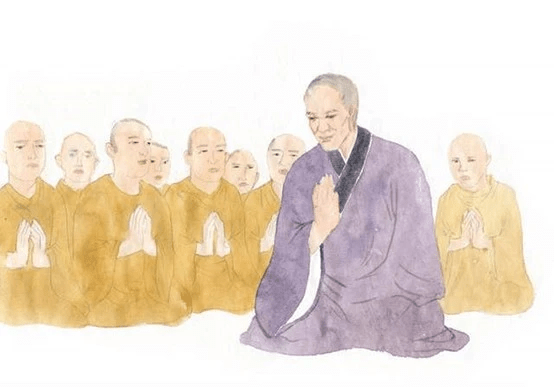
I have heard that on one occasion the Blessed One was staying at Sāvatthī, in Jeta’s Grove, Anāthapinḍika’s monastery. It was the rainy season, and the forest hummed with the soft patter of raindrops falling upon leaves. The scent of wet earth filled the air, and a gentle mist curled around the trees.
A great assembly of monks had gathered, their saffron robes glowing in the dim light of dawn. They sat in deep silence, their hands folded in reverence, awaiting the Blessed One’s words. He gazed upon them, his serene face illuminated by the morning light, and addressed them:
“Monks!”
“Yes, lord,” the monks replied in unison.
The Blessed One spoke:
“When a monk is intent on the heightened mind, there are five themes he should attend to at appropriate times. Which five?
“There is the case where evil, unskillful thoughts—connected with desire, aversion, or delusion—arise in a monk while he is referring to and attending to a particular theme. He should attend to another theme, apart from that one, connected with what is skillful. As he does so, those unskillful thoughts are abandoned and subside. With their abandoning, he steadies his mind, settles it, unifies it, and concentrates it.
“But if those thoughts persist, he should reflect on their drawbacks: ‘These thoughts lead to suffering. They darken the mind. They are thorns in the path of peace.’ Just as a traveler carrying a heavy sack realizes that dropping the burden brings relief, so too should the monk see how abandoning unwholesome thoughts brings lightness to the heart.
“If even then the thoughts persist, he should withdraw his attention—he should give them no mind. As a man walking through a marketplace ignores the clamor of voices around him and focuses only on his path, so too should the monk disregard the noise of unwholesome thoughts.
“If they still do not subside, he should attend to the relaxing of thought-fabrication, gently calming the movement of the mind. Just as a potter, shaping a vessel, slows the turning of his wheel to smooth its edges, so too does the wise monk soften the momentum of thought, guiding it toward stillness.
“And finally, should all else fail, he should take up the final method—firm and resolute. With teeth clenched and tongue pressed against the roof of his mouth, he should subdue the mind with force, constraining and crushing the unwholesome impulses with clear awareness, as a strong man might subdue a wild beast.
The Parable of the Two Farmers
The Blessed One paused, then continued:
“Monks, this is like two farmers who inherited the same land.
“One farmer was negligent and careless. He did not prepare his field properly. He let weeds grow alongside the crops, believing they would not harm the harvest. When pests came, he did not chase them away, thinking they would leave on their own. When the sun was too hot, he cursed the sky but did not shade his plants. And when the rains came, he lamented his ruined field but had done nothing to build proper irrigation.
“In the end, his harvest was meager, his efforts wasted. He blamed the land, the weather, and misfortune, but never did he see that it was his own negligence that had led to his failure.
“The other farmer was diligent and wise. He knew the land required effort. He removed the weeds as soon as they sprouted, before their roots took hold. When pests arrived, he drove them away with patience and care. If the sun was too harsh, he adjusted his crops and provided shade. When the rains came, he had already prepared the channels to guide the water where it was needed.
“In the end, his harvest was abundant, his granaries full. When asked the secret to his success, he simply smiled and said, ‘I cared for my field, and in return, it cared for me.’
“Monks, the untrained mind is like the lazy farmer’s field—overrun by weeds of desire, pests of aversion, and floods of delusion. But the well-trained mind is like the diligent farmer’s field—protected, cultivated, and yielding the fruits of wisdom.
“Just as the wise farmer does not despair when weeds appear but instead removes them skillfully, so too should you train your minds.
“Do not be disheartened when unskillful thoughts arise. Attend to them wisely, knowing that a well-tended mind, like a well-tended field, leads to a bountiful harvest—peace, clarity, and liberation.
The Power of a Well-Trained Mind
The Blessed One looked over the assembly and continued:
“Monks, you may ask, ‘What is the fruit of a well-trained mind?’ I will tell you.
“It is like a still lake in the heart of the forest. The surface is clear and unmoving, reflecting the moon and the stars without distortion. When an animal approaches to drink, it sees its own reflection perfectly. In such a lake, the sky, the trees, and the mountains appear as they are, undisturbed.
“But an untrained mind is like a lake constantly churned by the wind. Its waters are muddy, and no reflection can be seen. Even if the stars shine above, they are lost in the restless movement of the waves.
“When a monk, by these five methods, steadies his mind, unifies it, and concentrates it, he becomes a master of thought sequences. He thinks only what he chooses to think, and does not think what he does not. He has broken the bonds of craving and aversion. He has seen through conceit, and with right view, has reached the end of suffering and stress.
“Monks, train yourselves well. Be like the diligent farmer. Master the field of your own mind. Be like the still lake, where truth is seen clearly. For in doing so, you will not only benefit yourselves but all beings who come into your presence.”
The Awakening of the Monks
As the Blessed One spoke, a great stillness settled over the gathering. Some monks felt their minds clear as if a veil had been lifted. Others, who had struggled with restless thoughts, felt their burdens lighten. Among them was a young monk who had long battled with doubt.
That night, he sat beneath a great tree, reflecting on the Blessed One’s words. He thought of the two farmers and saw himself in the lazy one. But now, he resolved to change. He would uproot his weeds, guard his field, and let no impurity take hold.
With renewed determination, he entered deep meditation. As the night passed, his mind grew still, and as the first light of dawn touched the horizon, insight arose within him. He saw the nature of thought, the impermanence of all things, and in that moment, a great joy filled his heart.
The next morning, when the monks gathered once more before the Blessed One, the young monk stepped forward, bowed deeply, and said, “Lord, the field of my mind is now tended. The weeds are gone. The path is clear.”
The Blessed One smiled, his eyes filled with knowing. “Then, monk, walk that path with diligence. For now, you have truly begun.”
That is what the Blessed One said. Deeply inspired, the monks rejoiced in the words of the Blessed One, and many resolved then and there to train with renewed vigor, knowing that mastery over the mind was the key to liberation.
During the time of Shakyamuni Buddha, King Prasenajit and his queen were devoted disciples of the Buddha. They had a beloved daughter named Shanguang, who was compassionate, kind-hearted, graceful, intelligent, gentle, and exceptionally wise. Despite her royal status, Shanguang remained humble and approachable, never flaunting her nobility, which earned her the love and admiration of the entire kingdom. The king and queen cherished their beautiful daughter, treating her like a precious gem.
One day, while walking in the royal garden with her father, King Prasenajit said, “Shanguang, the blessings you enjoy today are because of me, your father, the king.”
Shanguang gently replied, “That is not true, Father. My blessings come from my own virtuous deeds and karmic causes, not because of your royal status.”
This exchange occurred three times, with Shanguang steadfast in her belief. Her conviction angered the king, who felt she was ungrateful. Determined to test her, he thought, “I will see if she can enjoy the blessings of a princess on her own!”
The king ordered his servants to find a beggar from the streets and betrothed Shanguang to him. Without complaint, Shanguang removed her fine silk robes and precious jewelry, dressed in coarse clothing, and left with the beggar.
The beggar, who had long lost both parents and wandered alone, was astonished that a princess would marry him. When they returned to his old home, the house was dilapidated, with collapsed walls and overgrown weeds, except for one small patch where no grass grew.
Shanguang instructed her husband to dig at the bare spot. To their amazement, they unearthed a vast treasure of gold and silver. Astonishingly, wherever Shanguang bought land, gold was discovered beneath it. Using these treasures, she built a palace as grand and magnificent as the royal palace itself.
After some time, the king’s anger subsided, and he began to miss his daughter. Curious to see how she was living, he visited her new home. To his astonishment, he saw a palace even more splendid than his own, with countless servants attending to her needs. He was left speechless.
Shanguang explained to her father, “The blessings I enjoy in this life are the result of my past virtuous deeds.”
Perplexed, the king sought answers from the Buddha, asking, “What virtuous deeds did Shanguang perform in her past that she was born into royalty, married a poor beggar, yet still enjoys such wealth and prosperity?”
The Buddha revealed, “Ninety-one eons ago, during the time of Vipashyin Buddha, a king built a stupa to enshrine the Buddha’s relics after His nirvana. The king’s queen made an offering of a magnificent pearl crown, placing it atop the stupa. The radiant jewels on the crown illuminated all directions. That queen was Shanguang in a past life.
Later, during the time of Kashyapa Buddha, Shanguang again performed virtuous deeds by preparing heavenly offerings and the finest food for the Buddha. However, her husband at the time tried to discourage her. Shanguang replied, ‘Please do not stop me. Allow me the opportunity to make offerings to Kashyapa Buddha so I may experience peace and happiness in both body and mind.’ Her sincerity moved her husband, and they made the offerings together.
The beggar she married in this life was that same husband from her past. Because he once tried to prevent Shanguang’s offerings, he faces poverty in this life. However, since he later supported her, he now shares in her accumulated blessings, enjoying prosperity through her merits.
This story illustrates the infallible law of cause and effect. Good and bad karmic actions bring precise results. The blessings one rightfully earns cannot be taken away by others, and blessings not belonging to you cannot be forced into your life. Even the most elaborate schemes can fail, as a single disaster can reduce one to poverty again. Therefore, cultivating virtue and performing good deeds is truly the most rewarding ‘investment’ one can make.
Language is one of the most powerful tools in human communication. It has the capacity to warm hearts, yet it can also deeply wound others. The ancient Chinese saying, “Illness enters through the mouth; misfortune comes out of the mouth,” serves as a profound reminder of the critical importance of our words. Another popular saying states, “A kind word can warm one for three winters, but a harsh word wounds deeply and is hard to forget.” Those who speak thoughtfully build strong relationships, while careless words often lead to unintended enmity or trouble. Indeed, many of life’s great misfortunes arise from verbal mistakes.
The Chinese ancients emphasized the principle of “cautious speech and careful actions,” which is not only a foundational aspect of personal conduct but also key to cultivating one’s character. In modern times, misunderstandings and conflicts often stem from believing rumors and passing on unverified information. This carelessness turns small issues into major problems, causing unnecessary harm. The impact of careless words can extend beyond personal relationships, disrupting families, friendships, and even society, sometimes escalating into widespread societal issues.
Buddhism’s Teachings on Verbal Karma: The Four Types of Harmful Speech
Buddhism profoundly explains the karmic consequences of speech. Among the “three karmas” — body, speech, and mind — verbal karma is especially critical. The Buddha taught that the consequences of verbal karma can be even more destructive than a raging fire because hurtful speech inflicts suffering on others. Buddhism identifies four types of harmful verbal karma:
Harsh Speech: Using cruel or aggressive words that directly harm someone’s spirit.
Slander: Spreading rumors or sowing discord, leading to broken relationships and disputes.
False Speech: Speaking untruthfully or deceiving others.
Frivolous Speech: Words that may seem pleasant but mislead or confuse others, distracting them from right mindfulness.
These forms of verbal karma not only harm relationships but also sow seeds of negative karma, inevitably leading to future suffering.
Chinese Buddhist texts record a story from the Song Dynasty: One day, Zen Master Guang XiaoAn observed two monks engaged in a discussion about the Dharma, during which they were surrounded and protected by heavenly beings. However, as soon as their conversation shifted to worldly topics, the deities departed, and evil spirits appeared, mocking the monks with vulgar language. This story serves as a reminder that even monks, when they deviate from righteous speech, will attract negative consequences.
In today’s world, the effects of verbal karma are even more pervasive. Carelessly spreading rumors, posting unverified information online, or making inflammatory remarks can cause lasting damage. Every harsh word is like a sharp blade, hurting not only others but also oneself.
Here is another powerful example that highlights the benefits of controlling one’s speech. At Mount Jiuhua, a sacred Buddhist site renowned for venerating Ksitigarbha Bodhisattva, there once lived a venerable nun. She was widely respected for her virtuous life and profound wisdom, embodying the transformative power of positive speech.
Even at the remarkable age of 136, she remained in good health, continuously reciting the mantra “Amitabha Buddha.” This practice not only reflected her spiritual merit but also her mastery of speech, and self-discipline.
The venerable nun understood the profound impact of verbal karma and strictly adhered to the principle of “cautious speech.” She refrained from gossip and focused her speech on chanting the Buddha’s name. In conversations about spiritual matters, she offered concise and clear guidance, leading people toward the right path. When topics were unrelated to spiritual practice, she chose silence. This self-discipline brought her immense merit, making her a role model for others. She often said, “For women, whether lay or ordained, if one can guard against verbal karma, one is halfway to becoming a Buddha.” Her words highlighted the critical role verbal karma plays in the spiritual path.
The venerable nun’s teachings emphasized the severe consequences of verbal karma. She made it clear that verbal karma is one of the greatest obstacles in spiritual practice and explained its multiple harmful effects:
Verbal Karma Obstructs Spiritual Progress: Every instance of harsh speech, slander, or frivolous talk not only harms others but also pollutes one’s mind, hindering spiritual purification.
Verbal Karma Leads to Lower Rebirths: Harsh speech is like a wildfire, burning away one’s merit and leading to severe karmic consequences.
Verbal Karma Disrupts Harmony: In families, communities, or society, harmful speech creates discord, making it difficult to maintain a peaceful environment for practice.
Verbal Karma Weakens Faith: Harsh and false words can cause others to lose faith in their spiritual path, even destroying their potential for future practice.
Her virtuous life and disciplined speech accumulated immeasurable merit. It is said that many patients with difficult illnesses were cured after receiving her blessings, a testament to the power of pure verbal karma.
Guarding Verbal Karma in Modern Life
In today’s world, controlling speech is more essential than ever. Here are some practical steps to guard against verbal karma:
Speak Cautiously: Think before you speak. Avoid spreading unverified information and refrain from gossiping or discussing others carelessly.
Control Emotions: When emotions are high, it’s easy to say things that cause harm. Cultivate a calm and peaceful mind to avoid saying hurtful things in the heat of the moment.
Cultivate Positive Speech: Use kind and uplifting words to resolve conflicts, build trust, and foster harmony in your relationships.
By understanding Buddhism’s teachings on verbal karma, we can become aware of the power of language and use it to bring peace and happiness to ourselves and others. Guarding speech is not only a sign of respect for others but also an essential aspect of personal spiritual practice.
Through mindful and compassionate speech, we can spread kindness, promote harmony, and enhance both the quality of our lives and the happiness of those around us. Let us strive together to use the wisdom of language to create more peace and happiness in our lives and in the lives of others.
Once upon a time, the son of Brahmadatta was ruling righteously in Benares, in northern India. It came to pass that the King of Kosala made war, killed the King of Benares, and made the queen become his own wife.
Meanwhile, the queen’s son escaped by sneaking away through the sewers. In the countryside he eventually raised a large army and surrounded the city. He sent a message to the king, the murderer of his father and the husband of his mother. He told him to surrender the kingdom or fight a battle.
The prince’s mother, the Queen of Benares, heard of this threat from her son. She was a gentle and kind woman who wanted to prevent violence and suffering and killing. So she sent a message to her son — “There is no need for the risks of battle. It would be wiser to close every entrance to the city. Eventually the lack of food, water and firewood will wear down the citizens. Then they will give the city to you without any fighting.”
The prince decided to follow his mother’s wise advice. His army blockaded the city for seven days and nights. Then the citizens captured their unlawful king, cut off his head, and delivered it to the prince. He entered the city triumphantly and became the new King of Benares.
Once upon a time, the Enlightenment Being was born in a merchant’s family in Benares, in northern India. He was given the name Wise. When he grew up, he began doing business with a man whose name just happened to be Verywise.
It came to pass that Wise and Verywise took a caravan of 500 bullock carts into the countryside. After selling all their goods they returned to Benares with their handsome profits.
When it came time to split their gains between them, Verywise said, “I should get twice as much profit as you.” “How come?” asked Wise. “Because you are Wise and I am Verywise. It is obvious that Wise should get only half as much as Verywise.”
Then Wise asked, “Didn’t we both invest equal amounts in this caravan trip? Why do you deserve twice as much profit as I?” Verywise replied, “Because of my quality of being Verywise.” In this way their quarrel went on with no end in sight.
Then Verywise thought, “I have a plan to win this argument.” So he went to his father and asked him to hide inside a huge hollow tree. He said, “When my partner and I come by and ask how to share our profits, then you should say, ‘Verywise deserves a double share.”‘
Verywise returned to Wise and said, ‘My friend, neither of us wants this quarrel. Let’s go to the old sacred tree and ask the tree spirit to settle it.”
When they went to the tree Verywise said solemnly, “My lord tree spirit, we have a problem. Kindly solve it for us.” Then his father, hidden inside the hollow tree, disguised his voice and asked, “What is your question?” The man’s cheating son said, “My lord tree spirit, this man is Wise and I am Verywise. We have done business together. Tell us how to share the profits.” Again disguising his voice, his father responded, “Wise deserves a single share and Verywise deserves a double share.”
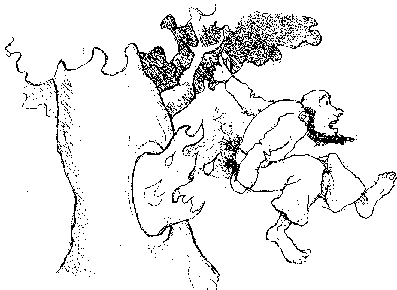
Hearing this solution, Wise decided to find out if it really was a tree spirit speaking from inside the tree. So he threw some hay into it and set it on fire. Immediately Verywise’s father grabbed onto a branch, jumped out of the flames and fell on the ground. He said in his own voice, “Although his name is Verywise, my son is just a clever cheater. I’m lucky that the one named Wise really is so, and I’ve escaped only half toasted!”
Then Wise and Verywise shared their profits equally. Eventually they both died and were reborn as they deserved.
The moral is: A cheater may be clever but not wise.
During the Buddha’s lifetime, there was a time when he was teaching on the far side of a river. Eager to hear his wisdom, many monks wished to cross the river, but there was only one boat available. The boatman warned them, “My boat is very old, and with so many of you on board, it could be dangerous!” Yet, in their eagerness to reach the Buddha, the monks ignored the boatman’s caution and all climbed aboard. Reluctantly, the boatman set sail.
As they reached the middle of the river, the monks noticed water seeping into the bottom of the boat, and panic began to spread. The boatman calmly said, “I told you this boat is old, but you didn’t listen. Now, if you can’t stay calm, the boat will sink even faster.”
Upon hearing this, the monks stilled themselves and did not dare move. Thankfully, the boatman’s experience guided them safely to the other shore.
When the monks arrived and recounted the incident to the Buddha, he offered this teaching: “When you were in the boat, you feared for your safety. But in daily life, you fail to realize that danger is ever-present. Many people worry about the uncertainty of the future, yet neglect the most important thing — being mindful of the present moment. Focus on this life, this moment. Pay attention to your thoughts and purify your mind of the five poisons: greed, anger, ignorance, pride, and doubt.”
The Buddha continued, “Our bodies are like that old, leaky boat. We must reduce its burden, and the heaviest load is the weight of greed, anger, ignorance, pride, and doubt. Just like in the boat, if we don’t repair our minds and lighten our burdens, we risk sinking. Only by addressing these burdens can we safely reach the other shore.”
“Do not be preoccupied with the thought of being reborn in the Western Pure Land in your next life. Instead, focus on your present condition. Are you free from afflictions in this very moment? Do you act with an open heart? Can you humble yourself in the eyes of others? These are the true questions we must face in life.”
The contemporary Buddha H.H. Dorje Chang Buddha III has also imparted timeless wisdom on cultivation. His Holiness teaches that true cultivation stems from the depths of your heart, from your bodhicitta — the awakened mind of compassion. Be genuinely friendly and loving to your spouse, your brothers, and your sisters. Foster harmony with your friends, act cooperatively with others, and extend care and help to all sentient beings. Apply the Four Limitless States of Mind — loving-kindness, compassion, joy, and equanimity — and cultivate bodhicitta in every action. Constantly reflect on yourself: How do you treat others with your words? With your thoughts? With your actions?
The conduct of Buddhas and great Bodhisattvas is marked by complete disregard for personal gain. When interests conflict, they give way to others, willingly taking fewer benefits or even none. You must remind yourself, “When others harm or slander me, I will not be disturbed. Even to those who harm me, I will wish them well, sincerely hoping for their happiness. Furthermore, I will take practical steps to help them, even offering financial aid — without letting them know that I am doing so.”
By living in accordance with these teachings, we become holy ones at the causal stage. Without a doubt, such cultivation leads to the perfection of wisdom and virtue. Achieving liberation and accomplishment becomes as simple as turning over one’s hand!
















 Peace LiLy