To honor the Holy Birthday of Avalokitesvara Bodhisattva, Buddhists and local residents converged at the Holy Miracles Temple in Pasadena, California, for the Avalokitesvara Bodhisattva Dharma Assembly. Held on March 17, 2024, within the Sakyamuni Buddha Hall, this event was a collaborative effort between the World Buddhism Association Headquarters, Holy Miracles Temple, and Sanger Mission.
Presided over by the Abbess of the Hua Zang Si Temple, Ruzun Ruohui, and jointly guided by Dharma Master JueHui and Dharma Master MiaoKong, the assembly brought together a congregation of holy gurus, eminent monks, dedicated monastics, and others. Their shared purpose was to pay homage to Avalokitesvara Bodhisattva, whose boundless compassion and loving kindness have been a beacon of hope for countless beings throughout the ages.
The Avalokitesvara Bodhisattva Dharma Assembly was held in the Sakyamuni Buddha Hall of Holy Miracles Temple. Photo Courtesy: Joyce Lee
Avalokitesvara Bodhisattva, also known as Guan Shi Yin Bodhisattva in Chinese, is revered for profound compassion and unwavering commitment to alleviating the suffering of all sentient beings. According to Buddhist scriptures, Avalokitesvara Bodhisattva attained Buddhahood eons ago and is known as Zheng Fa Ming Ru Lai, the Correct Dharma Realization Tathagata. Through sacred vows and bodhicitta, the Correct Dharam Realization Tathagata manifests as a Bodhisattva to extend aid to those in need and save sentient beings from suffering. Avalokitesvara Bodhisattva expounded one of the most influential Buddha Sutras – “The Prajna Paramita Heart Sutra,” which encapsulates the profound wisdom of the Buddha, illustrating the meaning of prajna.
While honoring Avalokitesvara Bodhisattva’s great compassion, sovereign wisdom, profound power, and benevolence, the assembly also reflected on the significance of bodhicitta, as elucidated by H.H. Dorje Chang Buddha III in the Sutra – “What is Cultivation.” He imparted, “The broad meaning of bodhicitta encompasses all of the Mahayana Dharma related to saving living beings out of great compassion and the causes leading to attaining the stages of enlightenment of a Bodhisattva.” This essence of conduct rooted in compassion deeply resonated with the attendees, reinforcing their dedication to selflessness and enlightenment.
The assembly witnessed the recitation of passages from “The Lotus Sutra’s Universal Gate Chapter on Avalokitesvara Bodhisattva,” a revered text extolling the virtues and profound wisdom of Avalokitesvara Bodhisattva. Participants engaged in practices such as meal offerings to the Buddhas, seeking blessings for happiness, auspiciousness, and the enhancement of fortune and wisdom. The gathering also collectively expressed their aspirations for the endurance of world peace, the cessation of calamities, while invoking prosperity, good health, and longevity for all.
As incense wafted through the temple and chants echoed in the halls, attendees were reminded of the profound teachings of compassion and empathy advocated by Avalokitesvara Bodhisattva. The ceremony served as a reminder of the transformative power of faith, uniting individuals from all walks of life in celebration of the Dharma.
A Zen practitioner was meditating by the river when he heard struggling sounds. Upon opening his eyes, he saw a scorpion struggling in the water.
He reached out to lift it up, only to be stung by the scorpion’s raised stinger. He placed the scorpion on the bank and continued meditating.
After a while, he heard struggling sounds again. Opening his eyes, he saw the scorpion had fallen back into the water.
He rescued it again, and of course, was stung once more. He continued meditating.
After a while, he had the same unfortunate encounter.
A nearby fisherman said, “You’re so foolish, don’t you know that scorpions sting people?”
The Zen practitioner replied, “I know, I’ve been stung three times.”
The fisherman asked, “Then why do you still save it?”
The Zen practitioner said, “Stinging is its nature, compassion is mine. My nature will not change because of its nature.”
At that moment, he heard struggling sounds again. Looking down, it was the same scorpion.
He looked at his swollen hand, then at the struggling scorpion in the water, and without hesitation, reached out to it again.
This story beautifully illustrates the Buddhist principle of compassion and loving-kindness towards all living beings, regardless of their actions. It embodies the teachings of the Buddha, who emphasized the importance of cultivating a heart full of compassion.
The practice of compassion is central to the Buddhist path. In Mahayana Buddhism, the Bodhisattva ideal embodies the ultimate expression of compassion. A Bodhisattva is one who, motivated by great compassion, has generated bodhicitta, the spontaneous wish to attain Buddhahood for the benefit of all sentient beings.
Moreover, the story reminds us of the great sacrifices made by Siddhartha Gautama, who later became known as Shakyamuni Buddha. He renounced his life of luxury and privilege to seek the ultimate truth of life and the universe. His journey was fueled by the desire to find a way to liberate all beings from the cycle of birth and death, known as samsara.
However, after two and a half millennia, the profound teachings of Shakyamuni Buddha have been gradually forgotten. To revive and propagate the Dharma once more, the primordial Tathagata Buddha, Dorje Chang Buddha, incarnated as H.H. Dorje Chang Buddha III in our world.
H.H. Dorje Chang Buddha III has not only brought the highest form of Buddha Dharma to this world but also set a remarkable example for all disciples through his boundless compassion and humility.
In the past decade, H.H. Dorje Chang Buddha III has endured significant suffering due to long-term persecution for his religious activities. A member country of Interpol once requested that the organization issue a warrant for his arrest. This request was later voluntarily withdrawn by the member country after several years. Following a thorough investigation, in October of 2008, the 72nd session of the Commission for the Control of Interpol’s Files withdrew the arrest warrant and dismissed the entire case against H.H. Dorje Chang Buddha III. Interpol also issued a document stating unequivocally that the arrest warrant against H.H. Dorje Chang Buddha III has been canceled and all member countries have been informed of the cancellation.
Although H.H. Dorje Chang Buddha III received official notification of the withdrawal of the arrest warrant and the removal of the entire case, he has never publicly displayed such documents to prove his innocence. Despite enduring slander, H.H. Dorje Chang Buddha III chose not to disclose this irrefutable evidence. When the World Peace Prize Awarding Council inquired about this, he responded by explaining that his duty is to bear all of the karmic offenses committed by living beings and to bestow upon them all of the good karma and merit that he has cultivated. He expressed concern that if he were to prove his innocence using those documents, those who slandered him would be perceived as guilty. He questioned, “Who, then, will bear their karmic offenses?”
There have been many instances that highlight his holiness’s profound compassion. For example, some of his disciples once left and defamed him, but he still welcomed them back with open arms and treated them no differently than before.
H.H. Dorje Chang Buddha III often reminds his disciples that he harbors no enemies and that all sentient beings are his dearest relatives. He encourages everyone to reflect on their own actions and to strive to lead a life filled with kindness, patience, and understanding.
His Holiness Dorje Chang Buddha III embodies the essence of selflessness and serves as a moral beacon for all to follow. He has also demonstrated how peace can be achieved through determination, humility, and the perseverance to champion its cause even in the face of adversity.
“The Story of the Nine-Colored Deer King” is the main theme of the murals in Cave 257 of the Mogao Caves. It unfolds in a long horizontal scroll, narrating many stories from the past life of the founder of Buddhism, Siddhartha Gautama.
Legend has it that long ago, on the banks of the Ganges River in India, there lived a beautiful and kind nine-colored deer king (the previous incarnation of Siddhartha Gautama)…
One day, as the nine-colored deer king was leisurely strolling by the river, he suddenly heard a pitiful cry from the water. Without hesitation, the brave nine-colored deer leaped into the river, risking its own safety, and rescued the drowning person. The saved individual, overwhelmed with gratitude for a second chance at life, repeatedly bowed in thanks to the nine-colored deer.
The nine-colored deer king said, “No need for thanks; just go on your way. My only request is that you do not reveal my whereabouts to anyone.” The drowning person solemnly swore, “Kind benefactor, rest assured. If I ever betray this promise, may my body be covered in sores and my mouth emit a foul odor.” With that, the person departed.
Before long, the queen of that country dreamt of a deer—one with nine colors and silver-like antlers. She told the king about her dream and requested that he order the capture of such a deer. She had a strong desire to use its colorful hide for clothing and its antlers for earrings. Consequently, the king issued a proclamation and offered a substantial reward.
Upon seeing the proclamation, the person who had been saved reported to the king, leading soldiers to the mountain to hunt down the nine-colored deer.
When the nine-colored deer was surrounded by the king’s troops… it spotted the person it had rescued from drowning, tears of sorrow welled up in its eyes…
The nine-colored deer leaped in front of the king and recounted the story of how it had saved the person from drowning and how that person had broken his promise. The king and the soldiers were deeply moved by the deer’s account. The king ordered the soldiers to clear a path, allowing the nine-colored deer to regain its freedom. He also issued a decree: “From now on, people are not allowed to shoot deer.”
As for the person who had broken his promise, in an instant, sores covered his body, and a foul odor emanated from his mouth. From that moment on, he was despised and reviled by the people.
The story of the nine-colored deer is vividly portrayed in Cave 257 of the Dunhuang Grottoes, which is what we now see as “The Story of the Nine-Colored Deer King.” While the mural is not particularly large in size, it holds significant importance in Chinese art history.
This artwork takes the form of a horizontal scroll with the story unfolding from both ends and converging in the middle. It consists of multiple scenes depicting various stages of the story, such as its origin, development, climax, and conclusion, all seamlessly connected to create a cohesive narrative.
“The Story of the Nine-Colored Deer King” is composed of nine panels, illustrating five key plot points: the person drowning, the nine-colored deer rescuing the drowning person, the drowning person expressing gratitude to the deer, the queen’s desire to capture the deer, the informant revealing the deer’s whereabouts to the king, and the confrontation between the king and the deer.
The story progresses from both ends of the mural towards the center, placing the pivotal conversation between the king and the deer in the middle. This unique composition style captures the essence of continuous horizontal scroll art from the Wei and Jin dynasties, showcasing the distinctive historical aesthetics of the era.
In the artwork, the depiction of mountains, rocks, and rivers occupies a significant portion. The rendering of the landscape primarily serves to fill the space and delineate the composition, providing a brief description of the specific environment, thereby enhancing the visual impact of the artwork and its storytelling function.
“The Story of the Nine-Colored Deer King” places the climax of the story—the moment when the nine-colored deer recounts the events—at the center of the composition. At the same time, both nine-colored deer on the left and right sides turn their bodies toward the center, serving as visual guides.
This is precisely the turning point in the storyline of the nine-colored deer, where the drowning person’s affliction receives its retribution. It places the Buddhist concept of rewarding goodness and punishing evil at the visual forefront, narrating the sequence of events step by step to gradually reveal the story’s progression to the viewer.
The entire process is rhythmic, marked by the ebb and flow of the narrative, skillfully aligning the chronological order with the spatial arrangement, showcasing the artist’s unique conceptualization of the composition.
In terms of color usage, “The Story of the Nine-Colored Deer King” appears to be very vibrant, but in reality, it uses a limited color palette, consisting of only six colors. The earthy red color dominates the entire painting, which is a prominent color characteristic of the Wei, Jin, Northern and Southern Dynasties period.
Complementing this are touches of stone blue and stone green, along with the harmonious blending of black, white, and gray. This blending softens the strong contrast between earthy red and stone green and blue, achieving a harmonious contrast of warm and cool tones. At the same time, it also accentuates the brightness of contrasting colors.
The introduction of Buddhism had a significant impact on the development of portraiture in China, introducing a set of strict conventions for Buddhist iconography. During the Northern Wei dynasty, the Dunhuang murals began to emphasize body proportions and adopted more attention to three-dimensionality after incorporating color shading techniques.
In “The Story of the Nine-Colored Deer King,” most of the figures on the canvas have slender bodies, with their clothing belts fluttering in the wind. Their gestures and movements exude a graceful dance-like elegance, evoking the style of figures that “float like wandering dragons and are delicate as startled swans.”
In the murals of the Northern Wei period in Dunhuang, Jataka stories are an important theme. Jataka stories refer to the countless events and experiences in the past lives of Siddhartha Gautama, who would later become the founder of Buddhism. In history, there are numerous Jataka stories related to Siddhartha Gautama.
Within Buddhist art themes, there are many Jataka story paintings, and “The Story of the Nine-Colored Deer King” is just one of them. Story paintings are used to promote the Buddhist concept of karmic retribution and to praise the spirit of self-sacrifice displayed by the Nine-Colored Deer King.
In reality, all Jataka paintings ultimately convey one message: that by performing good deeds, selflessly giving, and enduring hardships, one can achieve positive outcomes, whereas engaging in wrongful actions will lead to self-destruction.
A view of the New Golden Summit, looking west. Costfoto / Barcroft Media via Getty
Clouds roll past the New Golden Summit on Mount Fanjing. Clkraus / Shutterstock
Fanjingshan, also known as Mount Fanjing, is situated in the eastern part of Guizhou Province, China, within Tongren City. It is positioned approximately 248 kilometers away from Guiyang and 220 kilometers from Zhangjiajie. Mount Fanjing proudly claims the title of being the highest peak within the Wuling Mountains, with an impressive elevation of 2572 meters. The mountain stands adorned with primitive vegetation, its landscape characterized by majestic peaks, a continuous succession of towering summits, babbling streams interwoven with cascading waterfalls.
Moreover, Fanjingshan holds great spiritual significance as a revered Buddhist site. It’s widely believed among Buddhists that Fanjingshan is a place where spiritual enlightenment akin to that of Maitreya Buddha can be attained.
The appellation “Fanjing” finds its origins in “Fantian Jingtu,” a Buddhist term that translates to “Brahma’s Pure Land.” This hallowed mountain has been acclaimed as China’s Fifth Buddhist Mountain, a distinction following the likes of Mount Wutai in Shanxi Province, Mount Putuo in Zhejiang Province, Mount Emei in Sichuan Province, and Mount Jiuhua in Anhui Province. With a history spanning over 2000 years, embellished by extraordinary rock formations and abundant biodiversity, Mount Fanjing unveils itself as a serene, distinct haven. A sojourn to this tranquil expanse offers a revitalizing and spiritual respite from the bustling clamor of urban life.
Unique geological landforms, including the “Mushroom Stone” at right. Sanyanwuji / Shutterstock
In geological terms, Mount Fanjing assumes the form of a “fold belt,” an arrangement akin to stacked layers of rock resembling an assemblage of intricate shapes, an occurrence seldom witnessed elsewhere. The Mushroom Stone serves as a prime exemplar, where layers of rock have taken on the semblance of a towering mushroom.
Throughout antiquity, Fanjing Mountain stood as a venerable hub of Buddhist culture within the Wuling Mountain range. Historical records attest to the proliferation of numerous Buddhist temples along its slopes, catering to pilgrims from around the world. Yet, during the 16th century in the Ming Dynasty, a substantial number of these temples met destruction, effectively suppressing Fanjing Mountain’s renown. The subsequent Qing Dynasty saw a revival of fortunes, with governmental initiatives aimed at temple reconstruction and expansion along the mountain’s pathway to the “Red Clouds Golden Summit.” Notable temples such as Cheng’en Temple and Baoguo Temple were erected. By 1896, the fifth phase of Fanjingshan Temple reconstruction reached its culmination, bestowing upon Fanjing Mountain an esteemed status in the global Buddhist sphere and solidifying its position as China’s “No. 5 Great Buddhist Mountain.”
Mount Fanjing boasts three soaring summits that pierce the heavens – the Red Clouds Golden Summit (2336 meters), the Old Golden Summit (2493 meters), and the Phoenix Golden Summit (2572 meters). From these majestic pinnacles, visitors are treated to breathtaking panoramic vistas of Mount Fanjing’s expansive landscape. Crowning the preeminent “Red Clouds Golden Peak” stands the remarkable Fanjingshan Temple, perched at a daring elevation of 2,336 meters above sea level. Nestled atop the columnar peak, this temple’s elusive location beckons travelers to witness its ethereal presence firsthand and capture mesmerizing, novel photographs.
Fanjingshan Temple, encompassing the revered Temple of the Buddha (释迦殿) and the Maitreya Temple (弥勒殿), graces the summit of the “Red Clouds Golden Summit” (also known as the New Golden Summit) on Fanjing Mountain. The former is dedicated to the worship of Sakyamuni, symbolizing the present, while the latter venerates Maitreya, representing the future. These two temples trace their origins back to the Yongle period of the Ming Dynasty, over five centuries ago. Presently, they have been meticulously reconstructed to echo their original splendor, their structures fortified with iron tiles to withstand the mountain’s formidable winds. Each temple is embodied by a single hall, constructed from meticulously arranged stone pieces measuring 5.4 meters in width and 5.55 meters in depth. A bridge gracefully connects the two temples, spanning the depths of the Gold Sword Gorge.
For pilgrims journeying to Fanjingshan, the ascent involves ascending thousands of steps to initially reach the Temple of the Buddha on the southern facet. Subsequently, crossing the bridge leads to the Maitreya Temple on the northern side of the “Red Clouds Golden Summit.” This sequence mirrors the Buddhist concept of transition from the present (Sakyamuni) to the future (Maitreya). As the “Red Clouds Golden Summit” often finds itself enshrouded by mist and enveloped in sea of clouds, standing upon the terrace outside Fanjingshan Temple offers a surreal experience of gazing upon the world from above, capturing an otherworldly perspective amidst the natural elements.
Much like the iconic Avatar Hallelujah Mountain in Zhangjiajie National Forest Park, Fanjingshan stands as a towering pinnacle, slender and vertically oriented, evoking the image of a pencil standing upright on a desk. Scaling its summit requires ascending over 8,000 steps or opting for a cable car ride up from the road below. Most visitors opt for a full day to thoroughly explore this remarkable sacred mountain. Its attractions span a diverse range, encompassing the Red Cloud Golden Peak, Old Golden Summit, Ten-Thousand Sleeping Buddha, Mushroom Stone, Jiulong Pond, Fenghuang Mountain, Numerous Rolls of Books, and more.
Situated in the mountainous expanse of Guizhou Province, Fanjingshan falls within the ambit of a subtropical humid monsoon climate, distinctly marked by four seasons. Throughout the year, the average annual temperature oscillates between 13.1°C and 14.7°C. July witnesses the hottest days, with an average temperature hovering around 24°C, while January holds the chilliest nights, registering an average temperature of approximately 4.6°C. On the whole, Fanjingshan enjoys a temperate climate, graced by ample sunlight and rainfall. Summers remain moderate, and winters remain mild, with neither excessive heat nor biting cold. Rainfall predominantly occurs from May to October, while the frost-free period spans a generous 270 to 278 days annually.
The prime window to explore Mount Fanjing extends from March to November. For those seeking to capture stunning photographs, the early morning hours are particularly enchanting. The aftermath of rain unveils captivating spectacles, such as the Sea of Clouds, Zen Fog, Buddha Light, and breathtaking sunrises, which contribute to the mountain’s mystique and allure.
It is said “on the load to Linqui, a passenger from Hogdu can heal deceased souls with his spiritual power.” This tale has been handed down for thousands of years. Yet very few people have ever witnessed it with their own eyes. Fortunately, the author has become one of the very few.
It was 1997, April in Linqui is the season when grass sprouts and fireflies flit. In an early morning, accompanied by our friend Guanxiu, a monk, we set off our expedition with food and light camping equipment.
In spite of the fact that I had not traveled on foot for a long time, and was use to traveling by car, I was refreshed by the scent of flowers, chiming of birds, and the flowing brooks, and thus forgot fatigue.
Guanxiu, with his familiarity with the area, let us walk in the wilderness, picking his way through the seemingly impassable forest and bringing us to new sites now and then. We walked in this fashion during the day, and in the evening, we set up camp on the ground to sleep. At noon of the third day, we finally reached “a thread of sky.” Mysterious and enchanting, this “a thread of sky” can be described as a masterpiece of nature.
Two sheer cliffs, facing each other, tower to the sky with immeasurable height. The ridges are so steep, it is as if they were cut deliberately. There are no trees except some vines growing attached to the surface of the ridges. The sunlight in the middle of the day pours down through the narrow ravine which is barely two feet wide which gives travelers a little bit of relief in such a perilous atmosphere.
While my mind was wandering, Guanxiu said something loudly which I could not understand. Shortly thereafter, a chant of “Amitabha Buddha” was heard. Looking up I saw a spot in the middle of the mountain ridge where vines were poked apart, and from that opening a hanging ladder made of vine descended slowly. A monk came down with the ladder. “This is Guanxin, the servant of the Master,” Guanxiu introduced him to me. I presented my name card hastily to Guanxin. But he waved his hand and said, “You didn’t come at a right time and may not be able to meet the Master.” “Then, how about tomorrow?” I asked eagerly. “It’s difficult to tell. The Master has been in meditation for two days already. He usually remains in meditation for a half or even one month.” Noticing my anxiousness, Guanxiu tried to comfort me by saying, “Whatever is going to happen, let up go up to pay respect to the Master.”
We climbed up the ladder and at its end entered into a cave whose space was about twenty square meters. In the middle of the cave, an old man sat cross-legged, motionlessly like a rock. His face was elegant with a long and beautiful beard. He looked more dignified than Damuo (Patriarch Bodhidharma), the Master of Zen, as portrayed in a movie. I took out my camera and began to take pictures. Seeing this, Guanxiu stopped me immediately and pushed me to pay respect to the Master. As soon as we knelt down, a voice sounding like a bell echoed to my ears, “Get up quickly. You have walked for three days. Your right shoe was broken and your toe is bleeding.” Hearing the voice, I was shocked, partly because the voice was so loud, and partly because on the afternoon of the first day of our journey my right foot hit a rock which cut a long cut in the sole and wounded by toe. It had started bleeding and was still painful at this moment. I could not imagine how this Master can point out my problems immediately. I raised my head to him. Looking at my amazement, the Master smiled and said, “It’s all right. You will be fine soon.” And then he asked us to sit on the chairs.
Elder Dharma King Dorje Losang in 1997 at age of 89 when his vajra hair and beard started to grow.
The chair was so old that sitting on it I began to worry that it might collapse. Looking around I noticed that the furnishings in the cave were very simple, yet very clean. A stone table and four stone stools shined like mirrors. The stool on which the Master sat was a little bit larger with a straw cushion laid on the top. There was no bed, nor what we city folks call “furniture.” In a stone niche were a couple of bowls, and at the entrance of the cave there was a wok supported by three rocks. A teapot, which could have been several decades old, was placed on the stone table. There was nothing else in the cave.
Guanxiu was a student of the Master. I could not quite understand their conversation, and thus felt that I was not in the position to join the conversation but should listen quietly while watching carefully. I was told that the Master’s name was Lao Na Monk. For many years he had practiced the Buddha-dharma and attained the inner power of Vajra (Jin Gang). He never slept during the year. Although 89 years old, his voice was strong and clear, and his bearing and demeanor possessed more vitality than a middle aged person. More amazing was that a tuft of hair which was a mixture of black and white grew on his forehead between his two eyebrows, curling upward, about one inch long. I noticed that during his conversation with Guanxiu the hair flashed three times. Unable to resist my curiosity, I started asking questions about this mystery. But the Master ignored my questions.
Seeing that I was digging out answers, Guanxiu, with the approval of the Master, provided me some background information about the Master. When the Master was born, a tuft of black hair, several inches long, grew from his forehead between his eyebrows. His parents believed it was an ominous sign and pulled the hair out completely. Furthermore, in order to ensure that the boy would grow up smoothly, the parents entrusted him to the care of a Buddhist temple. Probably because this was a predestined cause, the boy was initiated into monkshood at a very early age, and became a senior monk when he was still a young boy. He had apprenticed under Master Taixi and Xuyun, and afterwards went to Tibet to study Tibetan esoteric Buddhism. There, he studied Esoteric Dharma and received blessings and initiations of empowerment from a number of world renowned great Masters including the Honored Deng-bashiming, Ah Wang Kan Bu, the Master of Dharma of the Sakya-pa sect, Jiangba Gexi of Paoma Mountain, the living Buddha Zhangjia, Ahuqing Rinpoche of Zhuqing Temple where the Ning-ma-pa sect was originated, and Kangsa Rinpoche. The Honored Chiming Chisong once predicted: “If the hair on your forehead grows again, you will attain limitless achievement and save numerous sentient beings.” However, during the time Lao Na Monk enlightened his practice the hair never appeared. Eventually when the predestined causes were met, he met H.H. Master Yisinubu (Wan Ko Yeshe Norbu who was later recognized as H.H. Dorje Chang Buddha III), the Supreme Master of Dharma of the White sect of Exoteric Buddhism. This Supreme Master was thoroughly knowledgeable in the Sutras, Canons, and Commentaries of Buddhism and achieved outstanding accomplishments in the five illustrious arts (five vidyas)
His remarkable abilities were peerless among the world famed experts in these five areas. Lao Na Monk begged the Supreme Master for transmitting Dharma and the initiation of empowerment. The Supreme Master, before transmitting Dharma to him, made a prediction: “After you practice the Dharma, I am going to transmit to you, the Vajra hair on your forehead will grow again. Then, you will not need to sleep. Every year the hair will grow about three to five inches. When the hair grows to the length of two to three feet you will achieve extraordinary super-natural power, and the highest degree of wisdom and empowerment.” As a result, 36 hairs suddenly grew on the forehead, and now they were nearly one inch long.
Vajra Hair beginning to grow out of Elderly Dharma King Dorje Losang’s forehead
Before Guanxiu completed the story, Lao Na Monk interrupted him and said seriously:
“You should not advocate these mysterious and strange things. Since it’s not easy for you to come, you should return with some result. As a Buddhist disciple and a person who has already devoted himself to Buddhism, you should have correct knowledge and perceptions of Buddhism. Yes, there are mysterious empowerments. But they are only illusory, and one should not stick to them. When you return home you should read more and practice the Dharma I taught you, and not to believe the nonsense of Living Buddhas and Dharma Masters. Nowadays, in both the region inhabited by the Han people and the region inhabited by Tibetans most so called Living Buddhas (rinpoches) are fake, even some Dharma Masters are highly questionable. It is because these Living Buddhas and Dharma Masters are but ordinary people found by ordinary people, not selected according to the Dharma essence. Many people believe that someone is the reincarnation of someone simply based on the legend of reincarnation, or on an inherited legacy. This is completely wrong. This practice is not in conformity with the teaching of the buddhas and bodhisattvas and the meaning of Esoteric Buddhism. Yes, reincarnation of buddha does occur. Nevertheless, most reincarnations today are false, and even a Buddhist legacy can be fabricated. Someone uses a skull or tooth to claim that they are the relics of such and such Master in such and such generation, so on and so forth.
If you think about it carefully you will find out the truth. Any authentic Master of Dharma is the rebirth of a Buddha or Bodhisattva. A Buddha or Bodhisattva, if authentic, shall leave the world by either turning himself into a flash of red light, or turning his entire body into everlasting Buddhist relics when passing way, or leave the three letters “OM AH HUNG.” Lastly, his body, after being cremated, shall turn into “sheli” Buddhist relics (sharira) usually in a form of colored stones, and never leave such a fiendish skull to horrify sentient beings. All these things are fabricated by the false Living Buddhas and Masters for the purpose of cheating sentient beings. They by no means represent Buddha-dharma. What truly represents the Dharma is Tibetan’s “Doctrines of Knowing Truth.” You should read it carefully when you return home. You must learn how to identify an authentic master, authentic Living Buddhas, and authentic buddhas and bodhisattvas. The method is to find out whether one is thoroughly knowledgeable in the five commentaries of Buddhism, and whether one possesses real supernormal spiritual powers and abilities.
Sakyamuni Buddha Finger Sharira at Famen Temple Shanxi China
Layperson Wang left beautiful Sheli Flower and Sharira at Xindu BaoGuang Temple SiChuan China
You must devote yourself to Buddhism only according to the meaning of Dharma. Just think about it: how can someone who can’t master both Esoteric and Exoteric Buddhism, who can’t achieve the mastery of the five illustrious arts (vidyas), and who doesn’t possess supernormal spiritual powers, claim to be a great Living Buddha (Rinpoche)? If someone who is not able to write good articles, not able to paint excellent pictures, and not able to invite buddhas and bodhisattvas to descend to bless sentient beings in front of people, is not a master of Buddha-dharma, and he is not even qualified to be a master of laws of the earthly world. He is no different from and maybe even less capable than an ordinary person. How can he claim himself to be a buddha? Is it a big joke? Can it be that the wisdom of a Buddha is even inferior to the cleverness of an ordinary person? Master Wan Ko Yee(H.H. Dorje Chang Buddha III), Supreme Master of Dharma, and my paramount master who bestowed me with great kindness said to me, “You should perform all the virtues, not commit any evil deeds, and practice Buddhism wholeheartedly. Should you maintain absolute faith, accept the transmission of Dharma, and practice according to Master’s instructions you will benefit unlimitedly and liberate yourself by entering the Land of Supreme Happiness.”
Honestly, I could not fully comprehend what the Master had said. However, seeing that Guanxiu was repeatedly prostrating himself to the Master with palms held together, I began to follow him. Finally, the Master said, “You better leave now. I won’t keep you and you are not used to the lifestyle here.” When we were ready to leave, another surprising miracle happened: the crack on my right shoe disappeared, my toe no longer felt painful, and the wound was completely healed. While I was shocked, Lao Na Monk smiled to me. “Come next time if there is a predestined cause.” He said.
Before our departure, I presented one thousand US Dollars as an offering to the Master, but the Master rejected it. With a smile he said, “I never take any offering. As a matter of fact, I live here on vegetables, fruits and mountain water. At dawn I watch clouds in the sky and in the evening I listen to the wind whistling in the forest. What use does money have to me?” I then offered the money to Guanxiu who, again rejected it and said, “My Master has taught me to practice with a mind of humbleness, and not to take any offerings from anyone.” He then walked us out several miles and repeatedly urged us not to report the whereabouts of the Master so that his practice would remain undisturbed.
We returned through the original route. Now retreating to a corner of this busy and noisy city to write this article, I still feel very much confused and seek in vain for explanations. The experience in those several days were dreamlike. Should I disbelieve it? But the Master did know that my shoe was broken and that my toe was injured. And he fixed by shoe and healed my wound without me noticing it.
Furthermore, he has been in meditation for years without sleep! Should I believe it? Yet I can’t reason out how the hair between his eyebrows which is now merely one inch long would grow to two to three feet. At least, up to this date there hasn’t been any report of such a thing in the world. Since a reporter must provide stories based on facts, I am obliged to write this story based on my true experience although feeling confused. However, to respect the advice of the Master, his whereabouts is not revealed.
Perhaps, the best way to answer all these questions would be to visit him again two or three years from now to find out whether Lao Na Monk’s Vajra hair has grown.
When Sakyamuni Buddha first established Buddhist theories, there was no dual character of Buddhist theories. There was only the sameness of theories and nature (the essence of everything). The theories in the Tripitaka expounded by the world-honored Sakyamuni Buddha came from the Buddha’s state of realization. They are a kind of explanation of the ways to realize the holy state and attain liberation and nirvana. They can be called objective writings. Such Buddhist theories were born from true holy realization. They are not groundless writings based on assumptions that arose from the level of consciousness. This is recorded in the Buddhist scriptures.
In the beginning, Buddhist theory and Buddha-dharma realization were one integral body. At first, a complete body of dharma theories and rituals were born from true realization of the Buddha-dharma holy state. Later, people attained the holy state of true realization from this complete body of dharma theories and rituals. Theory and dharma were in harmony. Theory was used to further the dharma. The dharma was manifested to further theory.
“The sect of theories and true holy realization” is in accord with the sutras and abhidharma. Those of this sect apply cognition based on correct views to directly understand cultivation, the nature of the mind, and ultimate reality. They truly realize holiness that transcends intelligence and theories. Moreover, they manifest their actual realization and thereby prove that they have attained the ultimate nirvana.
This sect uses the orthodox theories contained in the Tripitaka and esoteric scriptures as its foundation. However, its goal is not the useless speaking of theories. Those in this sect must manifest their holy state of realization.
However, as the karmic connection living beings had with the dharma changed and as a large amount of dharma and rituals were lost, Buddhism’s sameness of theories and nature (essence) imperceptibly and gradually generated a dual character. One aspect was the complete retention of theory and holy realization where each brought out the best in the other. The other aspect was pure theory that arose out of a fundamental separation from the holy state of realization. The advent of this dual character of Buddhist theories objectively caused Buddhism to form two main sects. No matter what the sect or school may be within Buddhism—whether it be Mahayana, Hinayana, exoteric or esoteric Buddhism—all sects or schools ultimately belong to one of these two main sects. The first is “the sect of theories and true holy realization.” The second is “the sect of theories, views, and understanding.” Of course, the theories I am referring to here are Buddhist theories based upon correct understanding and correct view. I am not bringing up a third category of misunderstandings and heretical views that go against the sutra teachings.
The purpose of cultivation and practice for this sect is to actually transcend, in both body and mind, the fetters of samsara. This sect has an integral lineage, integral teachings, and integral rituals. Those of this sect are able to manifest supernatural wisdom powers that transcend both the material and mental spheres. It is a sect that truly accords with the essence of the Tipitaka, the esoteric scriptures, and the various commentaries and treatises. This is the sect of perfect Buddha-dharma where theory and nature (essence) are in accord. This was the original characteristic of Buddhist theory. Such Buddha-dharma played a decisive role in the liberation and accomplishment of living beings. Included in this Buddha-dharma is the Buddha-dharma of Sakyamuni Buddha during the True Dharma Age, the Buddha-dharma transmitted by Guru Padmasambhava, the Buddha-dharma transmitted by Venerable Atisha, Master Marpa, Master Milarepa, Master Tsongkhapa, Master Nairatmya, Master Rigdzin Jigme Lingpa, Bodhidharma, Xuan-zang, Hui-neng, Master Xu-yun, and the Buddha-dharma transmitted by other truly holy beings and patriarchs throughout history. All such Buddha-dharma is the Buddha-dharma of “the sect of theories and true holy realization.” Unfortunately, at this present time on earth, this sect is very rare and very seldom seen. “The sect of theories, views, and understanding” has taken its place and become the mainstream.
“The sect of theories, views, and understanding” also uses the orthodox theories contained in the Tripitaka and esoteric scriptures as its foundation. Those of this sect apply cognition based on correct views to approach and directly understand the nature of the mind in the hope that in the end they will realize nirvana. The Buddha-dharma of this sect is only able to express theories and that which arises out of mental processes. Those in this sect do not have actual holy realization that they can display. Consequently, all they can do is use the realization states and achievements of patriarchs in earlier generations as cases in point. Most present-day Buddha-dharma belongs to this sect. This is a prevalent phenomenon in current Buddhism.
However, we must see that although the theories of this sect are also based on correct understanding and correct view, it is very difficult for this sect to produce complete liberation. It is easy for this sect to fall into meaningless intellectual frivolity. It is still a question as whether those of this sect can truly attain the liberation of ultimate nirvana. That is because it is extremely difficult to lead people into the state of holy beings by relying solely upon theories. Moreover, these theories were expressed by different people and therefore vary. For example, the views expressed in the prajna writings and Middle School (Madhyamaka) writings are not the same. The “other emptiness view” also has its own way of explaining things.
I will use the modern terms of “software” and “hardware” to give an analogy. Which one of these schools of theories is practical software that can attain the positive results that hardware can attain? It is very difficult to determine this by relying only on software itself. Only when the positive results of hardware are actually produced can it be shown whether a certain theory (software) is right or wrong. Furthermore, that which is called the dharma of Buddha-dharma should be dharma that transcends the ordinary and leads to liberation. Theories alone cannot express this extraordinariness.
This phenomenon of seeking liberation from theories and views alone is mainly the result of the loss of many dharma teachings and rituals in the course of passing down the Buddha-dharma. In the case of Tibetan esoteric dharma, there has not been much change in the theoretical part since the initial stage of esoteric dharma until now. The greatest change has been in the true realization part. When the patriarchs of Tibetan esoteric Buddhism transmitted dharma in the past, there were countless manifestations of supernatural realization powers. These astounding supernatural realization powers caused people of the world to regard Tibetan esoteric dharma as holy and special. Guru Padmasambhava and Venerable Atisha displayed a great many supernatural powers. Master Marpa practiced a dharma whereby he brought back to life animals that had already died. Patriarch Milarepa flew in the air and entered the horn of a bull to avoid hail. Guwen Rinpoche flew into the air and took with him his entire family, including the tent and domestic animals. Both of the 4th Dodrupchen Dharma Kings displayed wondrous realization powers, and so on and so forth. One can give endless examples of such holy realization powers.
The original special quality of the Buddha-dharma was that it was of “the sect of theories and true holy realization,” which manifests actual realization powers. However, with the arrival of the Dharma Ending Age, many dharmas are no longer whole. The practice of them will not produce realization powers. Much Buddha-dharma, especially the esoteric dharma, has begun to devolve toward “the sect of theories, views, and understanding.”
Take, for example, the colored sand used to form a mandala during an inner-tantric initiation in the holy form. During the time of Guru Padmasambhava, this inner-tantric initiation dharma required that certain things be done. On the surface of a large flat stone, colored sand would be used to form the shape of a mandala or a vajra seed character. A person would then apply holy realization powers, causing that design on the surface of the stone to penetrate the stone and form the same design on the sand in the mandala plate underneath that large flat stone. Such sand design in the mandala plate thereby became vajra sand that went through a stone.
However, at this present time, there is no integral dharma. People cannot produce holy realization powers through dharma practice. Thus, inner-tantric initiations in the holy form cannot be performed. The above-described process of using colored sand to form a mandala has already devolved into sprinkling colored sand directly into the mandala plate to form a mandala design. As such, there is not the slightest manifestation of holy power.
Another example is vajra pills used in inner-tantric initiations. Sixty or seventy years ago, most of the people of true and holy virtue within Tibetan esoteric Buddhism were able to make a vajra pill come to life by telekinetically making it shake or even move around. However, in present-day Tibetan esoteric dharma, a vajra pill is nothing more than a medicinal pill that is a symbolic expression of dharma.
Another example is secret-division initiations relating to gods of wealth. This is a dharma source of inner-tantric dharma in the holy sense. The practitioner receiving such an initiation will generate a holy stage right then and there in the mandala. Moreover, gold dollar treasures or a treasure-spitting mongoose made of three white things and roasted barley flour will turn over and jump into the air before the practitioner, demonstrating a holy state of physics not produced by humans. The practitioner receiving the initiation will right then and there ingest a “dharma mother seed.” Out of this practice of dharma, the god of wealth will naturally descend, thereby accomplishing the completion stage. However, this type of dharma has also been lost.
It is not just these few dharmas. Most inner-tantric initiation dharmas have already deteriorated. Accomplished ones who attained the rainbow body basically cannot be found, even in the Kathok Monastery, which was the monastery of Padmasambhava and the place where more people attained the rainbow body than anywhere else. In modern times, many dharma kings did not transform into the rainbow body and fly away at death. There are many people now who at every opportunity leave their handprints or footprints on stones to show their realization powers. However, such realization powers were not manifested under the observation of masters and witnesses there at the time. What credibility do they have?
In an interview, the famous Kasuo Rinpoche of the Longwu Monastery of the Geluk sect talked about the special societal circumstances that existed in Tibet during the fifties and sixties. As a result of those circumstances, a large number of sutras, treatises, and dharma manuals were burned. Many people of great virtue were unable to pass down integral dharma before they were forced to die. Those people of great virtue who fled to India did not take with them many dharma manuals. After that, at most only twenty or thirty percent of Tibetan esoteric dharma still remained in the world. Most such dharma has been lost forever.
It is because of this type of loss of dharma that most present-day Buddha-dharma does not produce people who can show actual realization powers. Candidly speaking, people do not understand dharma and get bogged down in hollow theories over a long period of time. Many people even misunderstand the Buddha-dharma as simply something to comprehend that is theoretical or mental in nature. Of course, they are apathetic to the matter of realization powers or even feel that it is very normal not to have realization powers. This way of thinking is actually very wrong. Theories can be used to distinguish the holy ones from the ordinary ones. However, the most important way to distinguish the genuine ones from the false ones is seeing who actually manifests holy realization powers.
Take, for example, emptiness. Even practitioners with a little knowledge are able to speak copiously about theories related to emptiness. However, are those well-organized and impressive theories, understandings, and views right or wrong in the end? This is something that understandings and views alone cannot determine. It is also something that no conscious experience born of causes and conditions can determine. Only when one abides in emptiness and true such-ness and generates supernatural wisdom powers can one truly know whether an understanding or view is right or wrong.
There was a time when Ananda had not yet realized holiness. The Arhats excluded him from the hall where they were assembling the sutras. After he realized true such-ness, returned to that hall, and stood outside its door, Venerable Mahakasyapa asked him to enter the door through the keyhole to prove that he had become enlightened. Ananda then entered the hall through the keyhole. Those who have realized emptiness and untied the knot must have supernatural holy powers enabling them to enter another dimension that ordinary human ability cannot reach. Additionally, they must have this “software accomplishment” in the form of actual and extraordinary holy powers. Only then can they prove whether a given “theory software” is correct and practical.
Thus, as for this issue, the difference between “the sect of theories, views, and understanding” and “the sect of theories and true holy realization” is that the former stops at theoretical understanding. Whether people of “the sect of theories, views, and understanding” actually realize and enter the holy state that is beyond consciousness and thereby attain liberation is something unknown. It is not that people of such sect feel secure and therefore do not manifest holy powers. Rather, they do not manifest holy powers born of enlightenment because the incomplete dharma of that sect has resulted in its followers being unable to realize such powers from their practice. “The sect of theories and true holy realization” also propagates correct dharma theories. However, it definitely does not stop at purely theoretical, quick, sharp, and incisive repartee on the dharma, nor does it get entangled with theories on understanding emptiness. Rather, by following integral dharma and rituals, the people of this sect truly realize the essence or nature of true such-ness, transcend the level of consciousness, untie the knot of suffering, attain holiness and the resulting structural transformation of body and mind, and actually reach the dimension of holiness that is beyond the cycle of reincarnation.
Although both “the sect of theories, views, and understanding” and “the sect of theories and true holy realization” strive for nirvana based upon orthodox Buddhist theories, nonetheless, due to the Buddha-dharma of each of these two sects, there are great differences in the time it takes to become accomplished and the level of accomplishment. Furthermore, because “the sect of theories, views, and understanding” is limited to purely theoretical understanding and inquiry, it is often very difficult for its followers to see things from the standpoint of the pure, liberated state of holiness in order to understand the original meaning of some super-mundane (other-worldly) dharmas. This leads them to easily adopt mistaken views and understandings. If they are slightly careless, they can even slide toward heretical views.
In this Dharma Ending Age, it is very rare to be able to learn the integral dharma of “the sect of theories and true holy realization.” Moreover, this sect is not something that is fixed. Rather, it is something that evolves. It is like those Buddha-dharmas I mentioned above. When the patriarchs transmitted Buddha-dharma, they were still part of “the sect of theories and true holy realization” in which theory and nature (essence) were one. At that time, there were numerous manifestations of true realization states. The mandala dharma rules were strict. There was an orderly distinction between what was inner-tantric, outer-tantric, and inner-tantric in the holy form. However, dharmas gradually became lost. Dharmas passed down to later generations devolved into the hollow theories of “the sect of theories, views, and understanding.”
Many people of great holiness and virtue think that because of the loss of Buddha-dharma “the sect of theories and true holy realization” composes only about one or two percent of Buddhism in the world today as compared with “the sect of theories, views, and understanding.” So-called “greatly virtuous ones” within Buddhism who have heretical understanding and views are cropping up everywhere. It is distressing to see this trend in present-day Buddhism.
Do Buddhists advocate supernatural powers? Actually, this is not a matter of advocating or not advocating. Rather, supernatural powers are that which everyone who is accomplished in the dharma possesses. Such powers are the manifestation of realization achieved through cultivation. They are phenomena that exist in the course of cultivation but are not the goal of cultivation, which is liberation from the cycle of birth and death. They are by-products that arise during one’s practice. These by-products called supernatural phenomena naturally exist in all liberating paths within the Buddha-dharma. Becoming attached to these by-products and regarding them as the goal is heretical supernatural powers. Applying these by-products in a free and unattached way and regarding them as illusory is treating supernatural powers based on the correct Buddha-dharma view.
Sakyamuni Buddha manifested supernatural powers and also was against supernatural powers. Each of those two tacks reflects different underlying karmic conditions. To those with higher vehicle (Mahayana) faculties, the Buddha spoke of supernatural powers as enjoyment resulting from incredible realization and the free and unattached application of samadhi. Examples of this are in the Lotus Sutra, the Samyuktagama Sutra, and other sutras. To those practitioners with low faculties, the Buddha spoke of not being attached to supernatural powers in order to reach the goal of realizing emptiness. An example of this is in the Shurangama Sutra.
Anyone with low faculties who wants to become a Buddha must go through the stage of cultivation corresponding to those with high faculties. In one’s course of cultivation, this is analogous to going from one city to another city. If one does not travel along the pathway between the two cities, one will not reach that other city. When one is walking toward that other city, one will certainly see and encounter all of the phenomena that are on the way. This is like the supernatural phenomena that arise in the course of one’s cultivation when wisdom is being opened. If one does not experience such phenomena that arise during the cultivation process, then one will not reach the other shore of liberation. Because one has not traversed the path of the Buddha-dharma leading to liberation, one cannot encounter phenomena that occur while traversing that path. That is why such a person has not experienced the stage in the process whereby wisdom is opened and supernatural powers are realized. Thus, all Buddhist who become accomplished in the dharma must go through the stage of supernatural powers.
Is it true that the authentic Buddha-dharma does not speak of supernatural powers? If that were the case, then why did the great leader of Buddhism, Sakyamuni Buddha, manifest supernatural powers everywhere? Why did he even manifest great supernatural powers right before entering nirvana? What crazed and demonic person would dare say that Sakyamuni Buddha did not practice the true Buddha-dharma? Just think. If someone with great accomplishment in the dharma did not have any supernatural realization powers, what would be the difference between that person and an ordinary person who had not learned Buddhism?
Based on the Sutra, it is stated that one who attains liberation and becomes a Saint must possess six great supernormal powers or superknowledges (abhijna). These powers are as follows:
Rddhi-saksatkriya: This power grants the ability to be anywhere or do anything at will, including extraordinary feats such as flying through the air and performing miraculous acts.
Divyasrotra: This power enables the individual to hear sounds from any location, even those that are normally inaudible, such as the subtle sounds of ants walking or distant noises emanating from other realms. It is also referred to as clairaudience or “the divine ear.”
Paracittajnana: With this power, one gains the ability to understand the thoughts and read the minds of other beings.
Purvanivasanu-smrtijnana: This power allows the recollection of previous existences or past lives, both one’s own and those of others.
Divyacakus: This power provides an instantaneous view of anything, regardless of its physical presence. It encompasses the ability to see events and occurrences in faraway places or even in other realms of existence. This power is also known as clairvoyance or “the divine eye.”
The sixth supernormal power, known as asavakkhaya, is unique to Buddhism and complements the other five powers. While individuals from non-Buddhist traditions can achieve the first five powers, their significance is not as profound as those attained by a Buddha due to the absence of complete enlightenment and wisdom. For instance, a Hindu practitioner remains bound by the world of Brahma, whereas a Buddhist practitioner is not limited in such a way. A Buddha’s powers are boundless. The sixth power refers to the understanding that one’s defilements have been extinguished and that liberation from the cycle of reincarnation has been attained. It represents the state of enlightenment. This is sometimes referred to as anasrava, which denotes the cessation of outflows or asravas. These powers are also known as the six superknowledges (abhijna) or supernatural cognitions.
The Dharma Protectors guard the use of these powers very closely. They will block the chakras of those unworthy to obtain these powers. Likewise they will untie the knots in the chakras of those cultivators who are worthy of such powers, causing the supernormal dharma powers of the buddhas and bodhisattvas to suddenly turn into light and enter the chakras. At that time, the mandala in each practitioner’s body will respond and will accept the powers. When your three karmas of body, speech, and mind unite into one body and correspond with the teachings, supernormal dharma powers will come into being. When your state of realization and state of virtue have reached the level where it is appropriate to obtain supernormal dharma powers, then as soon as you practice according to the dharma, supernormal dharma powers will appear. You cannot attain supernormal powers without proper moral discipline, concentration and wisdom. You must first be able to master the Dharma.
H.H. Dorje Chang Buddha III Wan Ko Yeshe Norbu Holiest Tathagata, is the highest ancient Buddha with complete proficiency in both exoteric and esoteric Buddhism and perfect mastery of the Five Vidyas. A portion of His Holiness’s realization powers is openly shown in this book A Treasury of True Buddha-Dharma for all to clearly see.
However, the clear and definite views expressed by His Holiness have enabled us to understand the principles and direction of cultivation. H.H. Dorje Chang Buddha III said the following:
“Not only did the Buddha speak a great deal about supernatural powers in the sutras, he also manifested supernatural powers. Such words and facts were directed at those who reached the higher vehicle (Mahayana) sambhogakaya state or nirmanakaya state. The Buddha also stated in the sutras that one must not become attached to supernatural powers. Such teachings were directed at those who were at the beginning stage of realizing their original nature and dharmakaya in order to protect them. If practitioners who are at the beginning stage of realizing the true nature or true-suchness of all phenomena become attached to supernatural powers, they will fall into that which is conditioned. They will then be practicing heresy. Thus, you should understand that supernatural powers are a reflection of the unhindered, unobstructed nature of Buddhas and great Bodhisattvas. Such powers are not that which beginning stage practitioners can possess and enjoy.”
May Buddha and Bodhisattva bestow their blessings upon all, guiding them towards liberation and enabling them to reside in the realm of ultimate bliss.
In the “Buddha Imparts The Parables Sutra,” Sakyamuni Buddha explained a story to King Shengguang that conveyed the true meaning of life. The story goes like this: A thousand eons ago, there was a man wandering in the wilderness who was suddenly chased by a ferocious elephant. With no place to rely on, he ran in fear and came across an empty well with a large tree beside it. Desperate to escape, he followed the roots of the tree and hid in the well. However, the well was not a safe place either. There were two mice, one black and one white, constantly gnawing at the tree roots. And there were four poisonous snakes surrounding the well, ready to strike, and a poisonous dragon at the bottom of the well. The man was afraid of the snakes and the dragon, and also worried that the mice would eat away the tree roots. Just then, five drops of honey from a honeycomb on the tree fell into the man’s mouth, and he immediately forgot his fear and worries. But soon, bees from the honeycomb stung him due to the shaking of the tree, and a wildfire suddenly broke out and burned the tree.
The Buddha told King Shengguang that the wilderness represents the long night of ignorance, the man represents all sentient beings, the elephant represents impermanence, the well represents life and death, the tree root represents life, and the black and white mice represent night and day. The four poisonous snakes symbolize the four elements of earth, water, fire, and wind; the honey represents the five desires of wealth, sex, fame, food, and sleep; the bees represent evil thoughts; the wildfire represents aging and disease; and the poisonous dragon represents death. The Buddha emphasized that birth, old age, sickness, and death are inevitable and frightening. One should always be vigilant and not be consumed by the desires for wealth, sex, fame, food, and sleep. Upon hearing the Buddha’s teachings on the parables of life and death, King Shengguang was deeply moved.
This story serves as a reminder for us as well. Have we become absorbed in the sweetness of “honey” in our lives, forgetting that the “black and white mice” are constantly nibbling away at our time? Life is like a fleeting dream, and it is empty. It is crucial for us to awaken from this dream of fleeting existence.
Recently I have read a book titled Revealing the Truth, in which there is one chapter called A Vicious Demon and Formidable Beast. It is an unexpectedly frightening chapter, almost like a horror movie. As a buddhist disciple, I totally believe in the law of cause and effects. We need to abstain from anything that is evil, do everything that is good, and use the correct understanding and views to cultivate. Don’t violate any of the precepts, otherwise you will end in miserable retribution. After reading the book, I completely believe that the true and original Dharma transmitted by Sakyamuni Buddha and Dorje Chang Buddha III can defeat any demon or evil spirit.
There was a rinpoche brother who claimed that he was a reincarnation of Buddhas and Bodhisattvas and cheated living beings everywhere he went. He deluded many people to put up everything they had as offerings for him, causing problems in many families. Since he had seriously violated the precepts, the Buddha Master sternly reprimanded him a number of times. However, he ignored all that and even dared to lie to the Buddha Master (H.H.Dorje Chang Buddha III).
Because his conduct of swindling and bluffing was so bad that it caused many living beings to suffer, eventually dharma protectors had to inform him that he was going to meet with a miserable and menacing retribution. He was then captured by order of the Yama King and died miserably. He became a blood-flashing vicious ghost. In order to lessen his sins and dark karmas, and also for the purpose of educating and transforming two persons who were masters and had the same behaviors, a group of people who were involved in the endeavor of propagating Buddha-dharma and saving living beings including dharma kings, rinpoches, dharma masters, and others were asked to confront this blood-flashing vicious ghost, evil demon Nuori, to gain practical experience. Therefore, the Buddha Master ordered dharma protectors to arraign this evil demon to the home base to be educated and transformed. After that, what had been a very auspicious backyard became a gloomy dark forest. Its horror was beyond description.
In the afternoon of that day, the Buddha Master was setting up an altar In the backyard. Out of curiosity, I stayed right by the Buddha Masters side. When the Buddha Master took out a photo of this vicious ghost taken after his death, I was very scared, “That is so horrible” The eyes in the photo had been closed originally but were now insidiously and ruthlessly opened into a slit. The eyes were also moving and he gave me a treacherous cunning smile, as if he were about to eat me. I hurriedly diverted my eyes away and dared not look at the photo anymore. My whole body was trembling with goose bumps swelling up all over. If you just took a look, the formidable image would immediately be imprinted into your memory and could no longer be removed.
The Buddha Master was going to tell dharma protectors to send Nuori’s spirit to the home base. I hid myself behind the Buddha Master, because that was the only safe place. The Buddha Master suddenly spoke, “Attention! He is coming!” Right after that, a round of gloomy, miserable, and terrifying ghost howling was heard from a distance of about two or three miles and then arrived with unimaginably fast speed right in front of me at the next instant. Meanwhile, a strong gloomy wind blew over, causing tree leaves to drop down all over the place. Now this vicious ghost was captured and brought back. The eyes in the photo were blinking, and I felt as if some accomplice of his had arrived as well! At this time, the temperature had a big sudden drop of more than ten degrees. This garden that had previously been filled with warmth, comfort, elegance, auspiciousness, and peace changed completely. The shadow of the ghost emitting blue light with the after-death desolation, terror, and gloom appeared in the backyard garden every night.
Only the Buddha Master could walk there freely. No one else dared to get close. From then on, we formed groups when walking in there and dared not move around alone. When the evening was about to come, we would withdraw from the backyard spontaneously. Even during daytime, no one dared stay there alone. There was a strong gloomy and pressing air that made people feel suffocated. That atmosphere tended to make people want to run away immediately without staying for even one moment. Even the dog Jie Ben who had used to love playing in the backyard garden day and night now dared not go there during the day. Additionally every time the Buddha Master called it to get in there, right after the Buddha Master finished talking, he would run back to the front living room immediately. Then he would hide his tail while his limbs trembled at a very high frequency. The photo of that vicious ghost was put on the altar set up within the gloomy dark woods. It was very startling that the horrible eyes seemed to be staring at your beating heart, as if he was ready to assault you with his claws reaching out to scoop out your heart.
The Buddha Master intended to use this reality to educate and transform venerable ones, dharma kings, rinpoches, and dharma masters into abstaining from everything that is evil, doing everything that is good, and using correct understanding and views to cultivate, learn Buddhism, and to treat cultivators. Of course, it was also for educating and transforming me. Therefore, some people were arranged to go to this altar in the evening to meet with the ghost and obtain an experience in person. The blood-flashing vicious ghost made a vow at the time of his death. He was going to find those disciples who violated the precepts like him and did not listen to the Buddha Master’s teaching to let these people know the eventual outcome of violating the precepts. This would be his way of creating merit to offset his sins.
When the Buddha Master led a disciple walking to the front of the altar, a golden leopard with a body length of more than two meters suddenly appeared from where the photo was on the altar. It opened its mouth to show its sharp teeth and put up a pose to launch a leaping assault. The Buddha Master gave an order, “Bad beast! Don’t go wild!” Immediately, a black leopard appeared by the Buddha Master’s side. It was even fiercer. The two leopards then confronted each other. Step by step, the black leopard eventually forced the golden leopard to go away. This scene was already scary enough. What happened next was even tenser because, after the Buddha Master led the disciple to the altar, the Buddha Master would leave the site. The disciple would be left there alone to practice the dharma. The Buddha Master would not be with the disciple.
When dharma assembles were held in the past, people would all try to get ahead to secure an opportunity to attend. This time, however, no one volunteered to go. People all wanted to shy away from this event and were afraid of hearing their names called to confront the ghost.
Even the phrase “rounds of merciless gloomy winds” was not sufficient to describe the atmosphere at the site. The originally calm woods now suddenly had gusty winds everywhere, blowing tree leaves with the sounds of “Shua Shua!” The photo of the the blood-flashing vicious ghost that had been laid flat there jumped up all of a sudden and stood upright. Even the sound of opening a coffin could be heard. Amid the crying and howling of ghosts under a sky without the moon and stars, a shrill yelling was heard. The next moment, the blood-flashing vicious ghost was walking out of the photo. People who had participated in this event all said that it was really very dreadful. Some were so terrified as to pee their pants wet. Some were too scared to walk and were shivering all over.
When Brother Gongla Rinpoche saw the ghost walking out of the photo and leaping toward him, he used the Vajra rice empowered by the Buddha Master to shoot at the ghost with a form called “Scattering Blooms by a Heavenly Lady” that he learned while he was still in high school. That did beat the blood-flashing vicious ghost to the ground. The brother then went forward to check if the ghost was dead. While he bowed down to look at the ghost’s face, this vicious ghost unexpectedly spit out a mouthful of poisonous corpse water that was extremely foul smelling. The brother’s facial features immediately became deformed and dislocated. Seeing his deformed and dislocated facial features, other people were also very scared.
When her turn came, Sister Huei-Chin Yang wanted to console the demonic ghost. She prepared a big piece of fried crispy pork chop to offer to him. She thought that the outcome might be a little better. As soon as the pork chop was put down, the ghost quickly rushed out of the photo and swallowed the pork chop with bone in one gulp. Sister Huel-Chin Yang was scared and trembling all over. Moreover, she was not forgiven either. The ghost blew a mouthful of poisonous corpse vapor toward her, distributing the fetid smell all over her body. She immediately started to wash herself with water from the swimming pool. However, the stinking smell could not be washed away.
There was also Brother Venerable Xirao Jiebu. He carried the Vajra rice empowered by the Buddha Master and entered the site by himself. The photo of the the blood-flashing vicious ghost suddenly jumped up to stand on the ghost’s platform and began to walk forward. Brother Xirao Jiebu threw the Vajra rice toward him and loudly chanted the Buddha Master’s mantra. The Buddha Master knew that the situation was dangerous and rescued Brother Xirao Jiebu right away. Then the Buddha Master drew a circle on the lawn and told Brother Xirao Jiebu not to get out of the circle. At this time, the vicious ghost transformed into a golden leopard at a distance of a little over three meters from Brother Xirao Jiebu and was getting ready to eat him. At this extremely crucial moment, Brother Xirao Jiebu sat up inside the circle and threw the Vajra rice toward the outside. As the situation was becoming extremely dangerous, the Buddha Master appeared again. Then the golden leopard got scared and fled in panic.
Dharma king brother Muya Jiongzha also gave this testimony, “The blood-flashing vicious ghost was really scary. I clearly heard his miserable howling coming from a place very, very far away. Then he came before me very quickly in just one or two seconds. Gusty winds were blowing with sands flying and rocks rolling. The picture stood up and walked. Even the image on the picture suddenly became bigger with a cunning and creepy smile. The eyes opened and blood was flowing down from the corner of his mouth. He suddenly leaped towards me. If I had not had the Vajra rice to resist him, I could definitely have been eaten alive. I can say that no one could have kept himself or herself from being extremely horrified in such a situation.” In addition to the others mentioned, Great Dharma Master XiangeQiongwa had a confrontation with the ghost as well. He and Venerable Xirao Jiebu and Dharma King Muya longha were all highly capable masters of the Nyingma Sect. However, they were all defeated.
Fellow brothers and sisters who had confronted the blood-flashing vicious ghost also included harma King Palden Lodoe, Master Long Hui, Baima Dorie Chuomu Rinpoche, Hangila Rinpoche, Luoben Rinpoche, Cacon Di Rinpoche, Layperson Weicheng, and others. They all said that the horror of the ghost could not be described in words. His demonic power was too strong and too vigorous. If not protected by the Buddha Master, I thought none of them would have been able to get out of the gloomy dark forest alive!
At one night during this period, the Buddha Master suddenly told us to bring flashlights and led us to the backyard. Using the flashlights, we unexpectedly discovered many wild beasts there. Because they were somewhat far away, the animals seemed to be mountain lions, leopards, sable wolves, and nine-tailed foxes. When they saw us coming, they all jumped out of the swimming pool to the ground. In such a situation, we had to be led by the Buddha Master. Otherwise, with a probability of eight or nine out of ten, we would have been eaten by the wild beasts. At this time, we used flashlights to illuminate the surrounding trees. Doing so made us terrified. Actually the beasts did not leave. Rather, they were not far from us and were on the trees, on the wall, on the ground, and on the roof. In different types of body profile and as fierce as tigers and wolves, they were peeking at us. We decided to set up video cameras there during the day so these animals could be videotaped at night. When we played the video recordings, what actually appeared in the videos were snow leopards and panthers. There were many of them. They were happily inhabiting and playing on the deck. However, It was strange that they were completely out of sight during the day. Where did they come from and where did they go? None of us knew.
After the arrival of the leopards, we closed the door to the backyard garden rather early before dusk every day. However, at night, we could still hear them jumping from the roof to the deck. One day, a leopard even showed up in the front yard before dark. Several brothers saw it on the roof above a room. It was a little after five o’clock in the afternoon, before the sky had turned dark, that made us very scared. Every time we went to the front yard to get something, we had to look around in all directions and were still terror stricken.
This situation, keeping us in fear, lasted a few months. Eventually, the time came when the vicious ghost was to be sent away. Before entering sleep that night in a half-dream and half-awake state, I saw large iron-fence cage drop down from above to cover him completely. At the same moment, I also heard the sound of his forceful struggling and yelling, “Buddha Master! I, the disciple, will correct myself. I will be a good ghost who does not harm people! I will definitely cultivate myself!” To this day, I am still unable to forget his voice. The next day, the Buddha Master led us to hold a ceremony for the demonic ghost, to see him off. I sensed that he was restrained with handcuffs and fetters. He was escorted onto a prison van and left. Alas! Abstain from everything that is evil and do everything that is good. Brother in the past and vicious ghost at present, I wish that you rest in peace and cultivate well after paying for your retributions.
After sending away the blood-flashing vicious ghost, mountain lions and leopards also vanished. However, they left lots of urine and feces in the backyard for us to clean up. Also, one or two of them had died there because we found their skeletons in the corners one or two years later. The home base finally returned to its prior auspiciousness. However, not long after that, we found five newborn infant leopards inside a tent in the backyard garden. Good Heavens! A female leopard gave birth to five infant leopards here. Now we would be in misery! None of us had the experience of taking care of leopards. Fortunately, this was a false alarm. They were five newborn black kittens. Since the mother cat was too weak, the kittens suffered malnutrition. In the end, only three survived. One fee it was sent to another place. The other two were named Xiao Ding Mad”and Black Rose perspectively. They were kept at the home base and became members of our family.
The dharma kings, rinpoches, and dharma masters who underwent the confrontation also wrote about their personal experiences at the site in order to bear witness to the truth of these events. Those who participated include Dharma King Palden Lodoe, Ga Chong Di Rinpoche, Great Dharma Master Xiangge Qiongwa, Venerable Xirao Jiebu, Great Master Long Hui, Baima Dorje Cuomu Rinpoche, Layper. son Yang Huei-Chin, Dharma King Muya Jongzha, Jiangjia Rinpoche, Loben Rinpoche, Layperson Weicheng, and Gongla Rinpoche. Their hand-written manuscripts are still kept. I personally read the handwritten manuscripts they wrote. What I wrote in this chapter was just a brief account. Their writings were very complete. To prove their truthfulness, they all took oaths against very severe consequences.
Actually, their oaths were not even necessary. I myself experienced this event too. The experience of this event gave many people a good education. However, based on what I knew, two of them still did not learn from this lesson and could not correct much of their bad habits. The Buddha Master already made the greatest effort to educate and transform them and was also very concerned about the difficulties they faced for liberation and accomplishment. Actually, this fact was quite normal. Among the disciples taught and transformed by Sakyamuni Buddha at that time, some cultivated correctly but others degenerated.
This dharma assembly made me deeply understand a fact. Throughout thousands of years, only my Buddha Master, H.H. Dorje Chang Buddha III, and Sakyamuni Buddha could be regarded as utmost supreme. Which of the dharma kings and venerable ones of esoteric Buddhism or foremost masters of exoteric Buddhism in history had such capabilities? There were no extremely great holy ones who had such truly great Buddha-dharma among them!

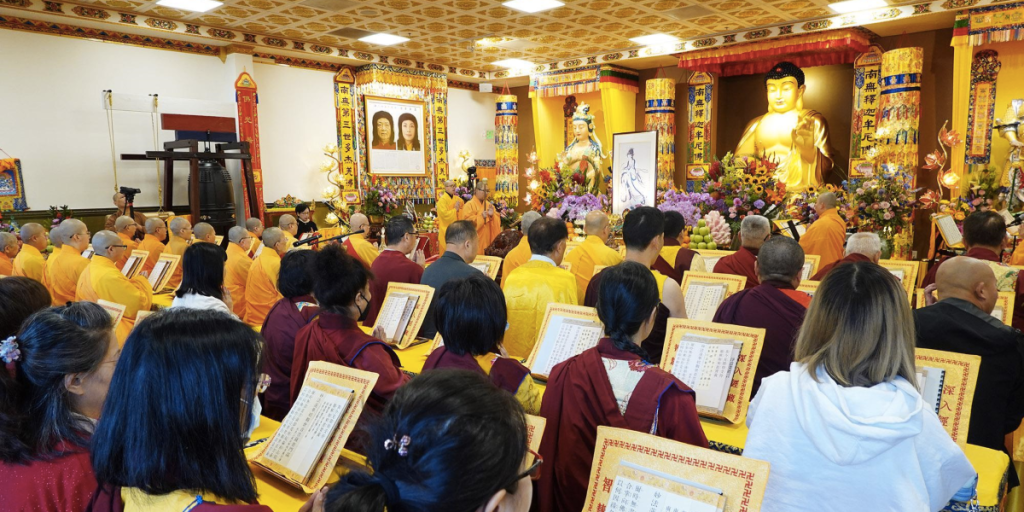
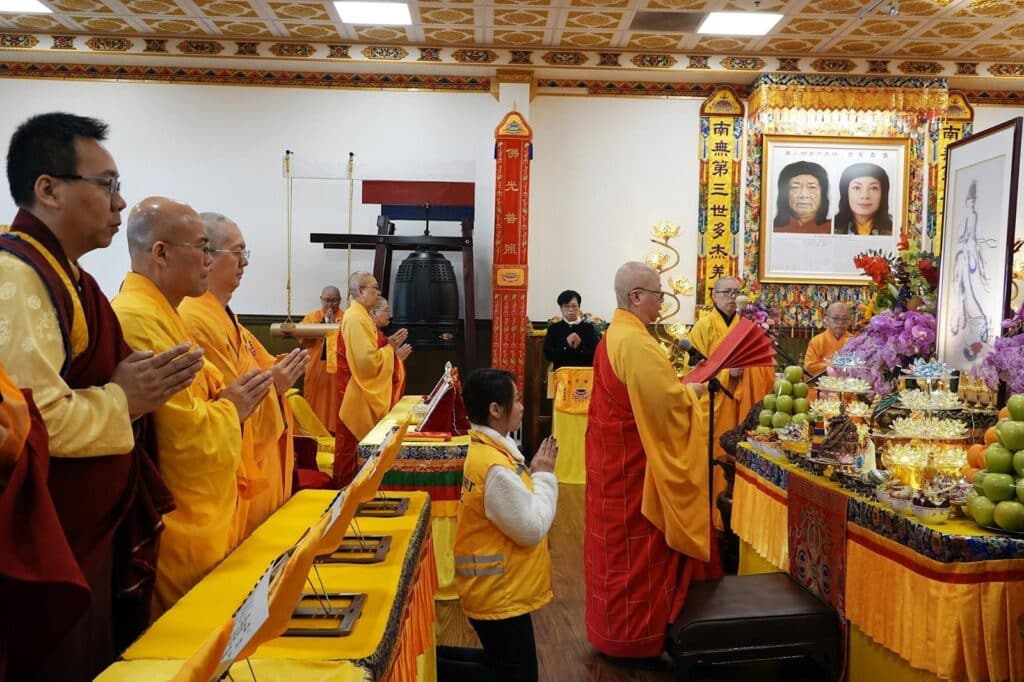




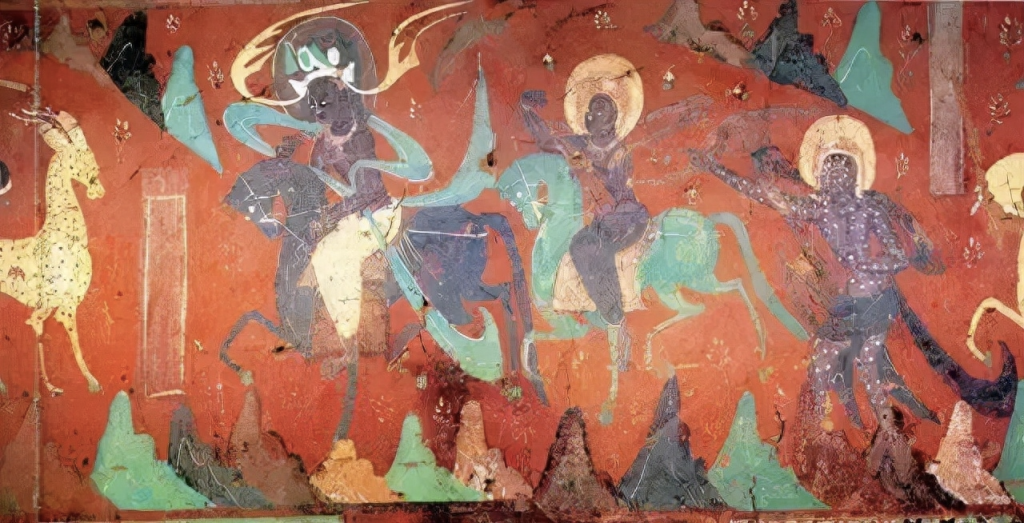


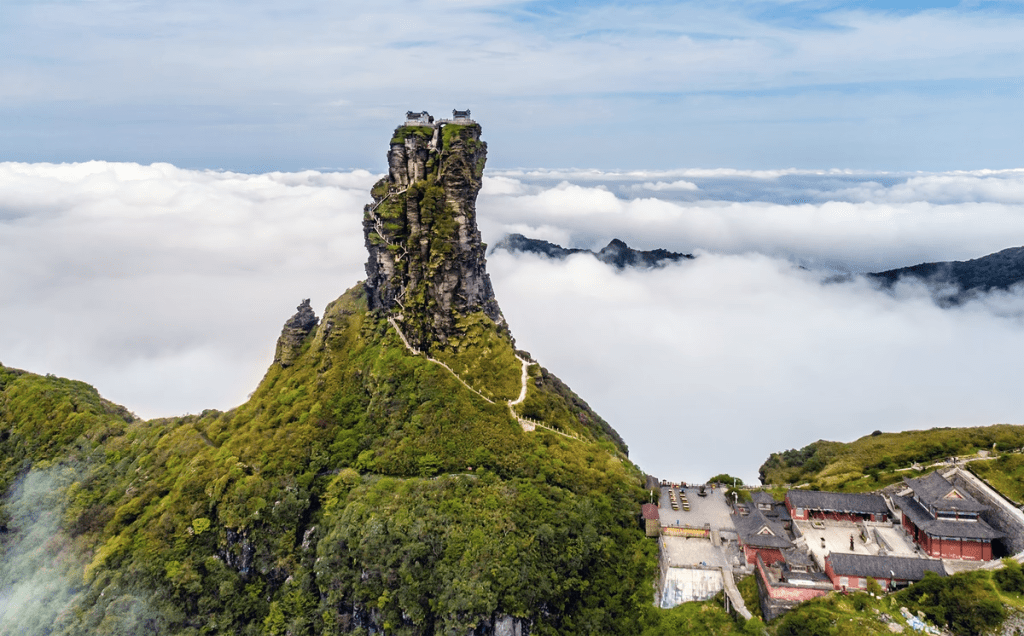
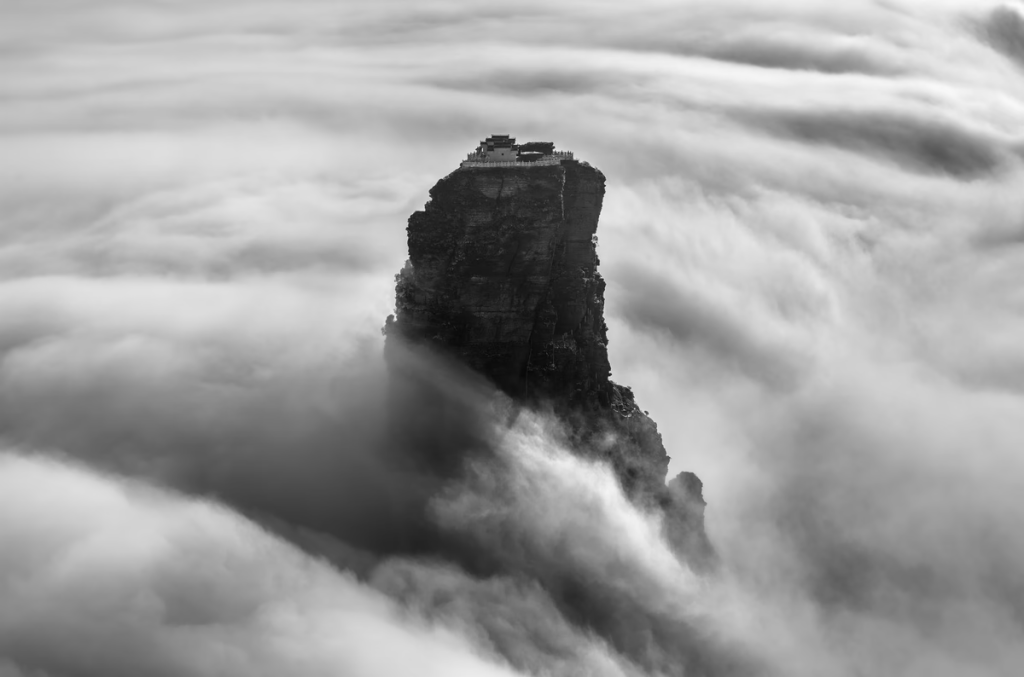
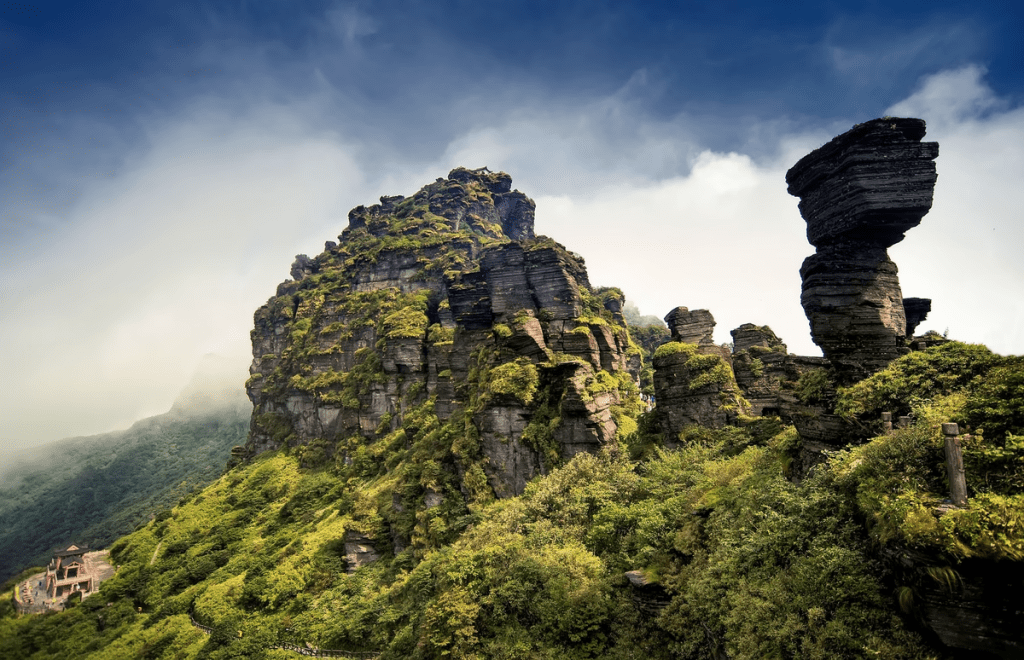
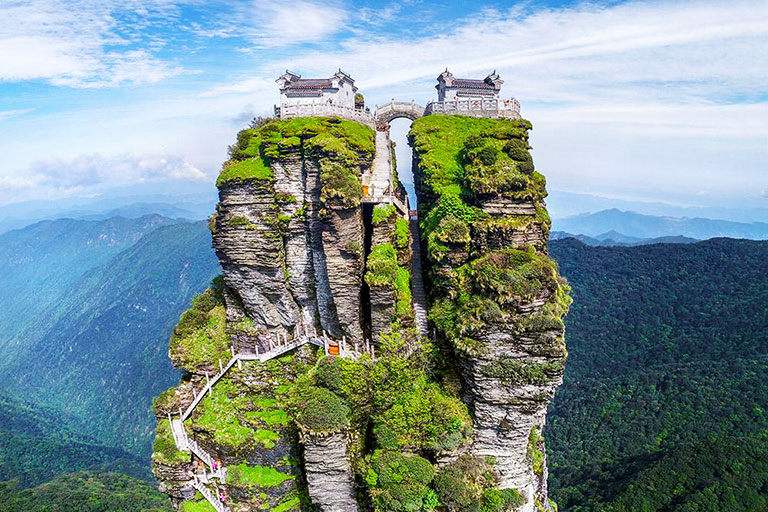



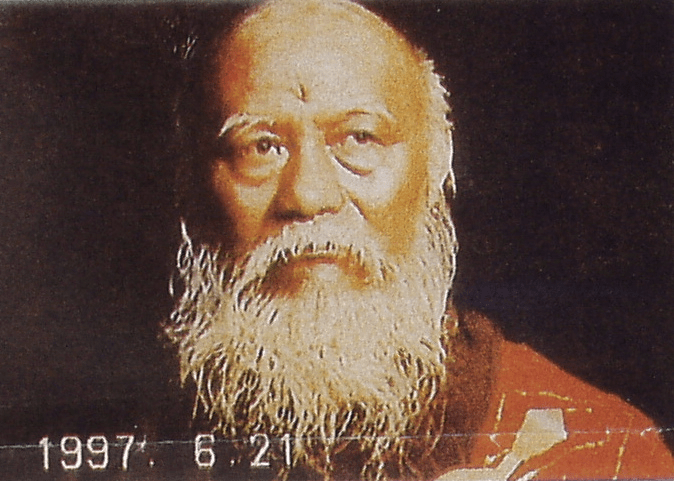


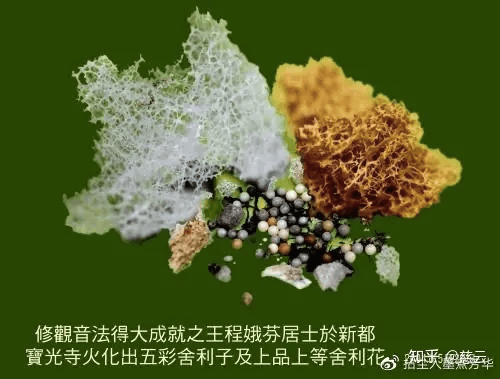

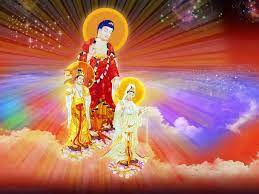


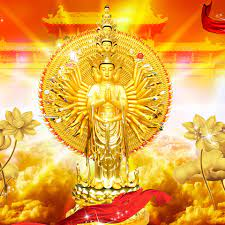

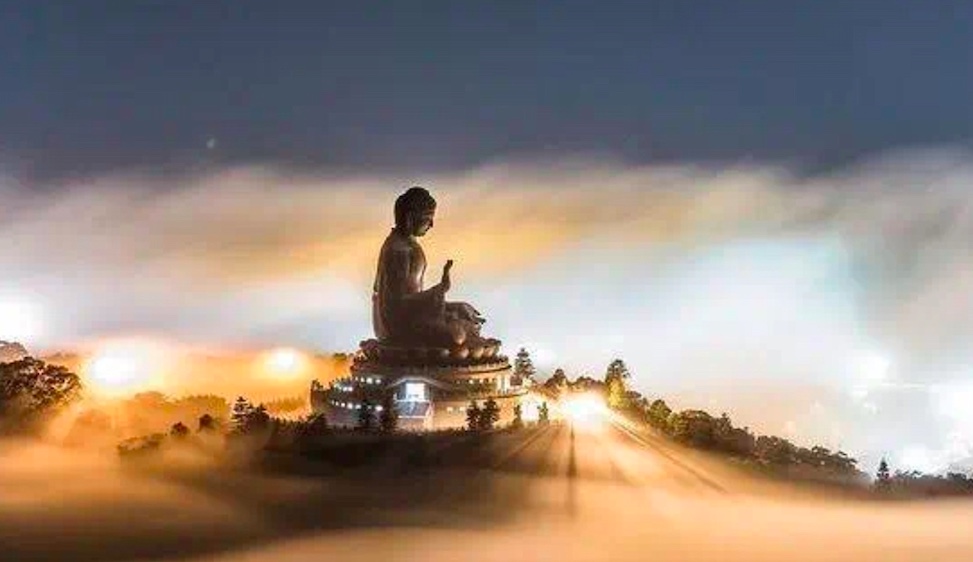




 Peace LiLy