How to Discern Authentic Dharma Teachings

You can receive the Dharma from many sources—through discourses given by Dharma Kings, Rinpoches, Lamas, or great Dharma teachers, as well as by reading their writings. You can also study exoteric and esoteric texts along with classic commentaries by fully realized masters. However, how can you determine whether these are authentic teachings? How do you know if the master or teacher is truly enlightened? And even if they are, how can you be sure that the translations you receive are accurate if the original text was not in English?

This issue applies even to the holy sutras and tantras, which have been transmitted through various traditions, cultures, and translations. Remember, it took centuries and the combined efforts of kings, emperors, and accomplished holy beings to complete these translations in China, Japan, Tibet, and other Buddhist countries. These translations were tested for their correctness by greatly realized beings. The authenticity of teachings must be verified by their efficacy—do they lead to full enlightenment?

Recognizing Accomplished Masters

How can you tell if someone is truly accomplished? A genuine master exhibits complete mastery of the sutras and tantras and demonstrates proficiency in all five vidyas. It is crucial to develop wisdom to discern true Dharma Kings or Rinpoches from those who are not. A reliable way to do this is by listening to the discourses and reading the books of H.H. Dorje Chang Buddha III. His Holiness teaches the correct Buddha-Dharma and has demonstrated mastery of all five vidyas.

Master Mipam Gyatso (1846-1912) of the Nyingma sect warned:

“…. As the sutras and tantras prophesy, there are many who, having abandoned the profound meaning through dry analysis, distribute quasi-doctrine for material gain, leading those of low merit and small intelligence onto a perverse path at this time of the Dharma-Ending Age….”

H.H. Dorje Chang Buddha III has stated that true Dharma teachings enlighten people, increase their good fortune, eliminate disasters, and help them attain the Bodhi state. The Buddha further emphasized that the Dharma must align with the Tripitaka and the commentaries of those who have attained enlightenment. It does not matter whether the teacher is a layperson or a monastic—if the teachings do not conform to the Tripitaka, tantras, or bodhichitta and are not given with compassion, they will contain errors. The Dharma must guide us toward happiness, liberation, and freedom from the cycle of reincarnation; otherwise, it holds no real value.

The Rarity of Listening to True Dharma

The opportunity to listen to the true Dharma is a rare and precious karmic condition. H.H. Dorje Chang Buddha III has said that listening to the true Dharma for one day can yield more progress than ten years—or even decades—of self-practice and meditation. The ability to hear the Dharma is a reward for accumulated merit. Without sufficient merit, one may not even have the opportunity to encounter it.

If you do not understand the principles of Buddhism, your cultivation may be in vain, as you may practice based on a confused understanding of the teachings. Listening to the discourses of H.H. Dorje Chang Buddha III and reading authentic Buddhist books is essential for proper cultivation.

The Proper Way to Listen to the Dharma

How you listen to the Dharma is just as important as receiving it. The analogy of the three pots is often used to illustrate this point. A pot can have three faults:

  1. It can be upside down, meaning it cannot receive water (Dharma cannot enter if one does not pay attention).
  2. It can be dirty, meaning the water is contaminated (Dharma is misunderstood or received with impure motivation).
  3. It can be full of holes, meaning it cannot retain water (Dharma is heard but not remembered or applied).

Even if you have the fortune to hear the Dharma, it will not benefit you if you do not pay attention, misunderstand the teachings, or fail to retain and practice them.

In ancient India and Tibet, practitioners had an extraordinary capacity for memorization. While modern individuals may lack this ability, we have the advantage of electronic recordings and printed texts. We should repeatedly listen to and reread the teachings until we thoroughly understand their principles and integrate them into daily practice—this is true understanding.

Applying the Dharma in Daily Life

It is not enough to merely listen, read, or even memorize the Dharma. True practice requires applying it in daily life. The Buddha’s teachings were meant to be lived, not just studied intellectually. Our actions, speech, and thoughts must align with the Dharma.

Dorje Pa Mu’s book, Dharma That Every Buddhist Must Follow, is an excellent guide, as are the books and discourses of H.H. Dorje Chang Buddha III. However, to truly recognize authentic Buddha-Dharma in the world today, one must read H.H. Dorje Chang Buddha III.

Guidelines for Evaluating Dharma Teachings

The sutras teach that when attending a Dharma lecture or listening to a teacher, one should focus on the teachings rather than the teacher’s personal attributes. Avoid distractions such as whether the teacher:

  • Has or has not violated precepts
  • Comes from a poor or wealthy background
  • Has a pleasant or unpleasant physical appearance
  • Has good diction or a speech impediment
  • Has a melodious or harsh voice

Instead, follow the Buddha’s four guidelines from the Catuhpratisarana and Samdhinirmocana Sutras:

  1. Rely upon the teaching, not the teacher.
  2. Rely upon the meaning, not the text.
  3. Rely upon the definitive meaning, not the provisional meaning.
  4. Rely upon prajna (wisdom), not consciousness.

By becoming familiar with the Tripitaka and tantras, you will be able to evaluate the authenticity of any teaching. Then, through practice, you will discover whether they truly lead to enlightenment. True Dharma will bring real transformation, guiding you toward liberation and awakening.

Link:https://peacelilysite.com/2025/02/28/how-to-discern-authentic-dharma-teachings/

Source: https://holyvajrasana.org/dharma-and-ritual/receiving-dharma

The Story Behind Dharma Discourse: The Dharma of Concentration and Visualization Essential for Enlightenment

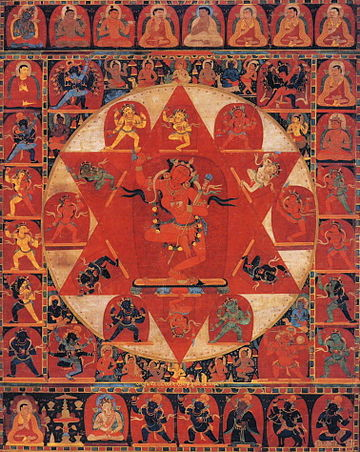
Vajravārāhī

By Yang Zong Da Wa Rinpoche

Pamu has been seriously ill for three months. She is often in a state of unconsciousness, with sores all over her body. Since she can only intake a small amount of liquid food, her body is as dry and thin as rattan. Her once youthful and solemn face has already become like that of a 100-year-old lady, with spots and deep wrinkles. She often says:

“Time does not wait for anyone. Everything is changing. Everything is in a state of impermanence. You should use this as a lesson. After you have read the books I have written, you should put into practice the principles contained in those books. Otherwise, you will not be able to end the cycle of birth and death.”

We used all kinds of medicine and thought of all kinds of methods, yet we could not cure her illness. Thus, on March 29 of this year, Sang Ba Kun Jue Rinpoche and I returned to Lalong-gegan. On the fifth day after our return, we made our way to Lhasa. We went to the Zu Pu Temple to worship, make offerings, and pray for Pamu’s swift recovery. Due to time constraints, we stayed there for only three days and then rushed back to our meditation cells.

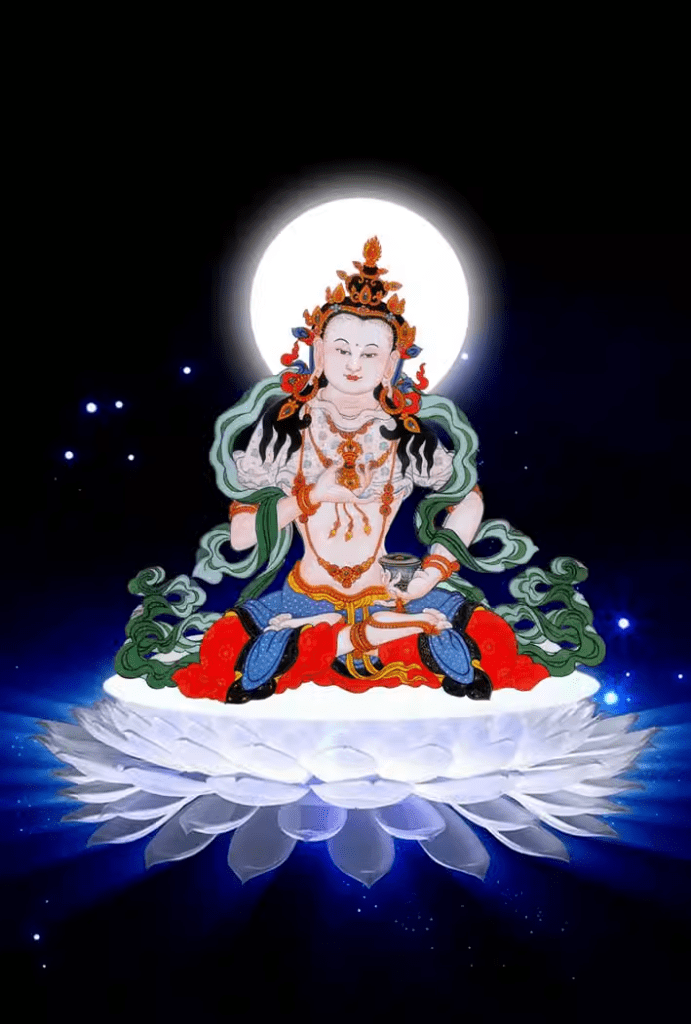
Vajrasattva

Sang Ba Kun Jue and I together practiced the Wu Xiu Yoga Samadhi. We decided to go to the Tusita Heaven to ask Maitreya Bodhisattva to save Pamu. In my state of concentration, I arrived at the inner palace of the Tusita Heaven and paid my respects to Maitreya Bodhisattva. After prostrating myself, I suddenly saw Vajrasattva and Pamu each sitting on a lotus throne, discussing the Dharma with Maitreya Bodhisattva.

At this time, Maitreya Bodhisattva said to me:

“Yang Zong Da Wa, go back and tell those good men and women that Amang Nopu Pamu is the magnificent Buddha Mother of wisdom.”

I joined my palms in front of my heart and asked, “If people ask me how she is magnificent, how should I answer them?”

Maitreya Bodhisattva replied:

“When looking at the history of Buddhism in the human realm, which Buddha Mother in the earthly world has been able to master the Tripitaka and write so many commentaries by the age of 20? Her Dharma water can cause a beard that has stopped growing to grow again rapidly. This is the true Vajravarahi. Have you seen any Buddha Mother who simply saves living beings without accepting any offerings? Her magnificence fills infinite space and cannot be completely expressed to living beings with words. You should quickly go back. Your Pamu will at once return to the earthly world to preach ‘The Dharma of Concentration and Visualization Essential for Enlightenment.’ If you do not quickly leave, you will miss this class.”

I again joined my palms in respect and said to Maitreya Bodhisattva:

“Greatly Honored Maitreya Mahasattva, Pamu is now ill. Why is she here with you? I will go back together with Pamu.”

Maitreya Bodhisattva smiled but did not speak. Vajrasattva then said:

“Do not say anything more. Such deep Dharma is so seldom heard in the world. Quickly go back to the human realm.”

I hurriedly prostrated before Pamu, Vajrasattva, and Maitreya Bodhisattva and bid farewell to them. Through my state of samadhi, I returned to the human realm.

After I emerged from my concentration, three months and six days had already passed. Without even thinking about washing myself, I hurriedly went to pay my respects to Pamu. When I saw her, she still looked so old. She was in the sacred state of having only a faint breath of life left.

Pamu said: “You entered that state of concentration for a few months. I was waiting for you to return. I will soon give discourses on the essential Dharma for practicing concentration and visualization.”

Representing all living beings, I hurriedly prostrated myself before Pamu, joined my palms in respect, and asked:

“Most kind Pamu, when did you return?”

Pamu replied:

“Return from where? With such a serious illness, I did not go anywhere.”

I said, “I clearly saw you in the inner palace of the Tusita Heaven.”

Pamu rejoined:

“This is what you viewed in your state. Do not speak nonsense. Things of the world are all impermanent. One must make the best use of one’s time to benefit living beings.”

As soon as we obtained Pamu’s kind approval, we took a few photographs of her virtuous face. After the film was developed, one photograph showed a young, solemn appearance, while another showed an aged appearance. These two photographs were taken within a few seconds of each other but were totally different. This is truly unbelievable.

We immediately took the photographs to Pamu and asked her to explain the causative factors surrounding this. When we entered the door, everyone was startled. Pamu could hardly speak. Her face was shriveled and had no color. The Great Rinpoches all began to cry.

The next day, when everyone was terribly sad and hopeless, Pamu got up from her seat. My heavens! After only one night, she who was sitting before us was not an old lady about to die but our young and solemn Pamu! All who witnessed this were stupefied. The sound of crying mixed with laughter filled the room.

Pamu then said:

“Do you think I can mysteriously change myself? In fact, you are mistaken! You were not able to see clearly since there was medicine on my face and I was under the lamplight. I only have a heart of humility. How could I have such great skills? You must realize that everything is impermanent and always changing.”

The next day, Pamu formally ascended her throne to give a discourse. The subject was the Dharma of concentration and visualization. With utmost sincerity, I am telling everyone that this is the transcription of the discourses of Amang Nopu Pamu Rinpoche, the greatest and most outstanding Holy Mother in the history of Buddhism. She has never accepted any offerings, silently contributing to the benefit of living beings throughout the three spheres of existence.

This lesson of Dharma practice was given after Pamu returned from the inner palace of the Tusita Heaven. No other Buddha Mother or Dakini can compare with her loftiness and magnificence. We should prostrate ourselves before and feel grateful to the Great Jewel Amang Nopu Rinpoche Holy Mother, appreciating the empowerment of the Buddhas and Bodhisattvas abiding in the ten directions.

Link:https://peacelilysite.com/2025/01/04/the-story-behind-dharma-discourse-the-dharma-of-concentration-and-visualization-essential-for-enlightenment/

Source: Dharma that every Buddhist must follow by Amang Nopu Pamu, translated by Bodi Wentu Rinpoche. This post is an excerpt from the original article, taken from the preface of The Dharma That Every Disciple Must Follow, pages 55 to 58, by the great Rinpoche Yang Zong Da Wa.

Lessons Induced From Nectar

Dharma Discourse by Amang Nopu Pamu in Nectar Assembly

Amang Nopu Pamu is an extraordinary Dharma King and Holy Mother, revered for her unparalleled realization. Her spiritual achievements stand as truly exceptional, placing her at the forefront among female yidams at the highest level.

Remarkably, at the tender age of eight, she demonstrated remarkable intellectual prowess by composing a profound commentary on logical reasoning—a feat unparalleled by anyone else in the world. Her intellectual brilliance continued to shine, as she accomplished the mastery of the entire Tripitaka by the age of 20.

In addition to her scholarly achievements, Amang Nopu Pamu authored five insightful commentaries, including notable works such as “The Prajna of Ultimate Reality” and “Entering the Door of the Dharma,” alongside other contributions to Buddhist literature.

In the rich tapestry of Buddhist history, finding a figure as exemplary as Amang Nopu Pamu is a rare occurrence. Her greatness is acknowledged and praised not only by mortal beings but also by all Bodhisattvas and Arhats in the sacred realm. Amang Nopu Pamu stands as the most exalted, earning the admiration and reverence of those who recognize the profound depth of her spiritual attainment.

On September 8th, 1997, a significant gathering unfolded as several Rinpohes actively engaged in different segments of a Nectar Sharma Assembly presided over by Amang Nopu Pamu. The following is the discourse delivered by Pamu during this Sacred Assembly.

In the Nectar Assembly Pamu Sat at the Dharma King Throne Many Rinpoches sitting around


The live videotape of the Buddhas bestowing nectar and the scenes of myself and Buddhist disciples cannot be shown to those who do not understand the Buddha Dharma. This is because outsiders would not recognize or understand the wonderful states concerned with unworldly Dharma. Of course, those practitioners of Buddhism who are Great Rinpoches and those who have deep roots of kindness’ may view the videotape.


You have requested numerous times that proof of the truth of the Buddha Dharma be provided. You can use real photographs of my practicing the nectar Dharma. You can also use the attestations of the Great Rinpoches that they personally participated in the Dharma Assembly and that they personally saw the Buddhas bestow nectar. However, one must use only group scenes. I am not qualified to claim personal merit or engage in self acclamation. As Long as living beings are benefited, that is enough.
The Buddhas have bestowed nectar in response to the ripening of conditions of good fortune of those of you who were able to partake of the nectar. I think that the Buddhas bestowing of nectar must have been due to a Great Virtuous One among our disciples here who was helping me practice the Dharma. I am just a humble person. How could I have such great abilities?


I and all of you practitioners of Buddhism seated here today, including Great Bodhisattvas, should constantly maintain a heart of humility. You must remember what I say. I will never accept any offerings from anyone. This is because we are practitioners of Buddhism who maintain a heart of humility. We have come to this world to benefit living beings, not to covet and accept the money and property of others.


One of my disciples said that those false Rinpoches will hate me. I said that this is exactly the law or principle of cause and effect. This is because whoever is a false Rinpoche does not understand the Buddha Dharma. Such people are ordinary beings with ignorance, defilements, anger, and hatred.
They are not able to obtain the true nectar of the Buddhas, are not able to experience true empowerment, and do not possess the qualifications to receive Supreme Division initiations. They must accept many disciples and rely upon the offerings of such disciples.


I do not accept many disciples. I only teach several dozen people of noble character. Anyone else who wants to learn the Buddha Dharma from me can only learn from the books I have written. Through learning from the books I have written, one can in the same manner obtain great fortune and end the cycle of birth and death. I do not have time to receive more disciples. Unlike those false Rinpoches, I do not accept any offerings.


If they did not hate me, whom would they hate? In previous times, were Sakyamuni Buddha, Master Padmasambhava, and Master Marpa not despised by false Rinpoches and followers of erroneous ways? If any of you who are my disciples meet up with evil people who defame me, you must not become angry or hateful. You must not use your supernormal powers to kill them. On the contrary, you must have great compassion for them and must be concerned for them. You must vow to bring them good fortune. You must vow to enable them to receive the correct Dharma as soon as possible. You must not give rise to even the slightest harmful thought, since we are living in this world to benefit and save living beings.


There is another point I would like to especially remind those Rinpoches and Dharma Teachers here today to convey to all other practitioners of Buddhism. Under no circumstances should one, upon seeing a Rinpoche, think of beseeching him or her to practice the Dharma to have true nectar bestowed. It could be said that this is impossible. Even those Rinpoches who are at the level of Dharma King may not have attained such realization. Practicing such Dharma is only for true Holy Ones who are Great Dharma Kings.


As for myself, if the conditions for all of you in attendance here today to receive the blessing of nectar were not mature, and if there was not a Holy Dharma King among you practicing the Dharma whom I do not have the ability to see, then I would not have been able to cause you to taste true nectar bestowed by the Buddhas! Thus, you disciples of mine who are Rinpoches and Great Virtuous Ones should tell your students not to make unrealistic demands upon other Rinpoches. As long as they are truly Great Virtuous Ones who actually propagate the correct Dharma of the Tathagata and are not false Rinpoches, we should be respectful toward them.

Lessons Induced From Nectar

Link:https://peacelilysite.com/2024/01/26/lessons-induced-from-nectar/

#Nectar #DharmaKing#Rinpoche #TathagataDharma #Buddhism #Buddhist#AmangNopuPamu #Yidam

Confessions of a Rinpoche

Many individuals perceive magical events, such as the Statue of Liberty disappearing or David Copperfield flying through the air, as mysterious. They find Krisha Lawar’s ability to walk through concrete walls equally enigmatic. However, what truly encapsulates magnificence in mystery is Amang Nopu Pamu’s remarkable ability to draw nectar from the realm of the Buddhas into our world. We firmly believe that this transcends the ordinary and qualifies as an accredited mystery.

On September 8th, 1997, numerous Rinpohes participated in various segments of a Nectar Sharma Assembly hosted by Amang Nopu Pamu. The following account, penned by Rinpoche Ga Du, provides an authentic narrative of the event.

Nectar Dharma Assembly

Confessions of a Rinpoche

by Ga Du

A FAMOUs RINPOCHE OF THE Nyingma school said the following: “When Dharma King Pamu conducted the Nectar Dharma Assembly, I was in Seattle.
I truly planned to rush over to Washington D.C. to attend, but there were always some doubts in my mind. I was not able to vanquish such doubts. I was not able to rush over to the Dharma Assembly.
“In our minds, Pamu is, of course, a Holy Mother. Her realization is truly foremost. She is pre-eminent among female yidams at the highest level. At the age of eight, she was able to write a penetrating commentary on logical reasoning. No other person in this world has been able to do that. Further-more, she mastered the entire Tripitaka at the age of 20. She also wrote five commentaries, such as The Prajna of Ultimate Reality and Entering the Door of the Dharma, along with other Buddhist books. Throughout the history of Buddhism, it is truly difficult to find such a Holy One. In our hearts, Pamu is truly the most revered one on whom we can rely.
“As a Rinpoche who has reached a rather high state of realization, I do not have any doubt whatsoever about the Buddha Dharma. I practice the Dharma every day and have seen many supernormal states. I transmit the Dharma to others to save them and have many disciples. These are the duties of those of us who are Rinpoches. However, the doubt that I had was as fol-lows: Is there really such a thing as the Buddhas bestowing nectar from the sky? I have seen the magnificent Buddhas during my meditation. However, I have never seen a state where the Buddhas transform themselves and appear in this world, where they appear live in our real world right before us.
“Because of various causes and conditions, I was not able to personally attend the Nectar Dharma Assembly conducted by Pamu. This is something that I regret most of all. It was only after I saw the live videotape of the Buddhas bestowing nectar, along with the photographs, that I realized I was like an immature, ignorant, and pitiful child!

“According to mundane logical thinking, it is impossible for such a mysterious thing to have occurred in this world. However, it truly did occur in this world in front of a number of people! I would like to say that I do not know how to explain this. Ordinary language, high-tech principles, or the most advanced scientific theories cannot explain such a thing. This mysterious thing simply cannot be explained. It is truly wonderful, magnificent, and unbelievable!”
The true feelings expressed by that Rinpoche were also the feelings I had 30 years ago. When I was a boy, I was acknowledged as the reincarnation of a Holy One, as a Rinpoche. Thus, I have always been extremely loyal to the Buddha Dharma, and I respectfully learned the Buddha Dharma. I can be called a devout Buddhist disciple. However, with respect to the Buddhas and Bodhisattvas taking away a piece of paper on the spot!’ or the Buddhas themselves bestowing nectar from clouds in the sky, I always harbored some doubts, which I could not overcome. This is the reason why I never personally encountered, experienced, or saw such things.


Thirty years later, I extricated myself from that diabolical state of doubt when I received the Inner-Tantric Initiation. Because I was able to remove the shackles of doubt, I experienced many wonderful benefits. My supernormal skills and depth of realization increased dramatically. I also believe that my having had the good fortune to participate in the great Buddhas Bestowing Nectar Dharma Assembly conducted by Amang Nopu Pamu, thereby obtaining firsthand experience, was probably due to the fact that I finally overcame those diabolical doubts. It was probably connected with the fact that the Buddhas and Bodhisattvas, seeing in my mind that those doubts were overcome, bestowed upon me this good fortune.


I saw the entire Buddhas Bestowing Nectar Dharma Assembly conducted by Dharma King Pamu and the incomparably wonderful states that appeared on the ground and in the air. I personally saw no fewer than 1,000 Buddhas and Bodhisattvas. I saw the Long Life Buddha bestow nectar. When thinking of how ignorant I was 30 years ago, I feel deeply disgusted with myself and deeply remorseful. When I think about those who are ignorant, pitiful Rinpoches, I think of those practitioners who have not seen true Buddha Dharma states. I believe that not seeing such states is due to their ignorance and foolishness. Maybe even after they see photographs of true nectar, they will still harbor doubts about its genuineness.


In order to prevent other practitioners of Buddhism from taking the tortuous and sinful route that I took, as a Rinpoche with a heart of humility and as one who has been through it before, I must remind and warn those who harbor such doubts that if you continue to give rise to such doubts, you will definitely be guilty of a huge sin!

White Bodhi Nectar

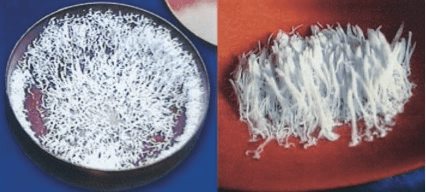
You ought to step back and consider the mysteriously natural structure of the nectar. Other than the Buddhas and Bodhisattvas, who could construct such a wonderful and mysterious structure? What skilled craftsman or master artisan in the world could do so? In the entire world, there is no such skilled craftsman or master artisan!


What is even more important is that the Rinpoches and other Buddhist practitioners in attendance all attested to their personal participation in the assembly and what they personally saw. If they spoke falsely, they would naturally descend into the Vajra Hell realm! Is it really possible that these Rinpoches do not know the incomparable suffering of hell? Is it really possible that these Rinpoches and other practitioners of Buddhism are willing to falsely attest and descend into hell? Every sentence that I have written here is from the bottom of my heart.
I would like to earnestly tell all of those ignorant people who still harbor doubts that they must definitely not follow in my ignorant footsteps of 30 years ago!

Confessions of a Rinpoche

Link:https://peacelilysite.com/2024/01/05/confessions-of-a-rinpoche/

#Confessions# Rinpoche #Nectar #BuddhaDharma #Assembly#AmangNopuPamu#Buddhism


Understanding Karma

Karma literally means action. It refers to the universal law of cause and effect whereby positive actions produce happiness and negative actions produce suffering. You must be willing to rid yourself of evil according to the principles of karmic retribution for doing evil and likewise be willing to do good for the same reasons. Only in this manner will you bring about true happiness and good fortune for yourself and others. All Buddhist disciples must understand cause and effect, but, as Dorje Pa Mu explains, merely understanding this principle is not enough. You must clearly believe in the principle and live accordingly. You must use this principle in your actual practice to solve your worldly problems. You end causes and effects through cultivation whereby you train your mind and correct your erroneous ways so that your actions of body, speech, and mind (also known as your three karmas) correspond with the teaching of your vajra master and the Buddhas. Remember that greed, anger (hatred), and ignorance are the three great obstacles of cultivation.

You must remember that the so-called good effects or bad effects of karma are not a judgment nor given as a reward or punishment by a supra mundane authority such as God. The good or bad effect produced by good or bad karma is purely and simply a natural phenomenon governed by natural laws that act automatically, with complete justice. It is just like the law of gravity and other similar rules. This Law of Karma, or cause and effect, is so powerful that it governs everything in the universe except enlightened beings or those who recognize their basic original nature. Upon enlightenment, the round of cause and effect loses its significance, just as samsara, or the round of birth and death, ceases with enlightenment. Since basic or original nature transcends all duality and is ultimate, there is no one to receive the effect, whether it is good or bad, and no one to whom any effect can apply. This unique explanation by the Buddha of the nullification of the Law of Karma is very important.

H.H. Dorje Chang Buddha III has said, “Thus, only through learning from the Buddha, cultivating the conduct of the Buddha, and ultimately becoming a Buddha can we thoroughly liberate ourselves from the karma (cause and effect) that binds us to the cycle of reincarnation. Cause and effect still exists when one becomes a Buddha. However, cause and effect can not affect a Buddha. For example, the Buddha saw mountains of swords and seas of fire in the hell realm. The mountains of swords and seas of fire continued to exist as extremely painful means by which living beings undergo karmic retribution. When the Buddha suddenly jumped into the mountains of swords and seas of fire in order to undergo suffering on behalf of other living beings, the mountains and seas immediately transformed into a lotus pond of nectar. They transformed into a wonderful state. With respect to a Buddha, all bad or evil karmic conditions turn into the manifestation of good karma. Not only is there no suffering, there is instead a manifestation of great happiness.”

However, until we become enlightened, we must remember that it is as Dharma King Tsongkhapa said, “the things I’ve done, the white or black and what these deeds will bring to me, follow always close behind, as certain as my shadow.”

Understanding Karma

Link:https://peacelilysite.com/2023/05/12/understanding-karma/

#DorjeChangBuddhaIII #HHDorjeChangBuddhaIII  #DharmaKingTsongkhapa #Karma #causeandeffect #AhwangNobuPamu

Not Abiding by the Precepts is Superficial Practice of the Buddha Dharma

For Buddhist Monks and Nuns, The Superficiality of Practicing While Not Abiding by the Precepts

From Dharma That Every Buddhist Must Follow

By Ahmong Nuobu Pamu


If monastics do not abide by the Buddha Dharma precepts and tenets, there will be mistakes in their practice, and their practice will become superficial. Such practice will not produce any true accomplishment. Sakyamuni Buddha spoke of those monks who do not abide by the precepts of Buddhism. He said that even if they do not covet the affection and love of others, they still covet personal gain and the offerings of disciples. This means that those monastics who do not abide by the precepts will covet worldly gain and will thus not have minds set upon cultivation. Naturally, it will not be possible for them to become accomplished.
Most contemporary practitioners who have gone forth from the household life do not abide by the precepts. These range from certain Dharma Teachers and Rinpoches all the way down to the myriad monastics.
Before monastics went forth from the household life, they were attached to worldly feelings of affection and love. They therefore had thoughts of worldly affection and desire. They were no different from the ordinary person. After they cut off their hair and went forth from the household life, if they did not renounce worldly desires, the defilements that obstruct enlightenment naturally would not vanish. They would not be able to cut off the defilements. At this time, even though they are not allowed to give rise to feelings of desire, it is difficult for them to stop coveting their own gain and the offerings of disciples. Thus, the longing they have at this time is longing for their own gain and the offerings of disciples. Therefore, their attachment to the five aggregates is still strong. As monastics, they are not able to abide by the Dharma and precepts. Their practice becomes false, and in the end they are not able to accomplish anything.
Many monks do not abide by Buddhism. They covet their own personal gain and the offerings of disciples. They pretend to be pure. They quietly sit in meditation, yet their thoughts run wild. They long for the objects of the five desires and are deluded by sounds, smells, and tastes. They have hearts covered with ignorance and are bound by craving. Such phenomena are described in writings on the Dharma and are manifested in the practice of a portion of those practitioners who have gone forth.

Many monastics have the appearance of being pure. While practicing, they show refined and exquisite expressions. They lower their heads and are serious in speech. They often say “Amitabha!” They are frequently seen meditating in a remote, quiet place. They very much appear to be true cultivators, but in fact they are not.


Although these monastics give the impression of being very pure and scrupulous in their practice, they still have not understood the principle that all Dharmas and all things are empty. Why have they not understood this?
Because their six bases are not yet pure. Their attachment to things of the world is not yet broken. Thus, they still crave forms, sounds, smells, tastes, touches, and thoughts. They still think that the five aggregates of form, feelings, perceptions, mental formations, and consciousness are not empty. They cannot cut off their infatuation with things of the world and thus engage in distorted, dreamlike thinking. They still allow themselves to be tossed about by the illusory things of the world. They cannot see clearly that such things, in essence, are empty. Thus, they are constantly obstructed from attaining enlightenment due to the defilements. Both day and night, they cannot avoid such confusion.
Hence, this type of monastic, although appearing to be at peace, in truth has not yet become aware. Although they meditate, their thoughts run wild and are manipulated by the outside environment. Their thoughts are confused due to both inner and outer devils. They are unable to give rise to right mindfulness. Their thoughts are affected by the external environment. Their negative karma, born of ignorance, covers their original bright nature. They are obstructed and disturbed by the defilements. Although their bodies are in one place, who knows where their minds have roamed! Other people meditate and enter into a state of concentration. Their thoughts, however, are scattered, and they think of other things. They sit in the meditative posture, but they allow their good and bad thoughts – the two types of obstructions in attaining concentration – to pour into their minds in waves. They cannot attain peace.

There are a number of those who have gone forth from the household life, including some Dharma Teachers, who covet personal gain and the offerings of disciples and who devise ways to obtain money. In the end, they ruin their reputation and destroy their moral integrity. Those who ruin the reputation of Buddhist disciples are numerous. One often hears about such things.


Since monastics of this type have not yet cut off their defilements and are not permitted to fulfill their desire for love and affection, they then turn to seeking improper gain. It is just as Sakyamuni Buddha said. They will definitely turn to coveting personal gain and the offerings of disciples. Many monastics, under the pretense of furthering Buddhist affairs, cheat good Buddhist followers out of their money and property. Every now and then, some of them secretly embezzle such money or property. Some of them openly incite others to do bad. Some even brazenly steal money and property that would have been used in the furtherance of Buddhism.

There are also those who use the Buddha Dharma in other ways in order to cheat people. For example, there are many people who stand in front of certain Buddhist temples in Tibet. Holding an alms bowl, they force others to contribute money to them. Additionally, some people prostrate themselves a few times on the ground before another person, get up, and then thrust their alms bowl before this person, forcing him to contribute something.


There are many who covertly accumulate wealth. It can be said that they are experts in making money. In the end, they ruin the reputation of true monastics, who are the majority of monastics. They cause people of the world to think that all Dharma Teachers and monks cheat people out of their money, that all of those who have gone forth, whether true or false monastics, are birds of the same feather who hoodwink devout men and women out of their money.
These monastics do not abide by the precepts of the Buddha Dharma. They not only destroy themselves since they ultimately cannot become accomplished and will descend into the hell realm, they also destroy the Buddha Dharma.
When their lowly, foul conduct is revealed to the world, it not only causes a great uproar in Buddhist circles, it also causes some practitioners to be unable to practice in peace. These practitioners fall into a state of improper desires. It further causes people of the world to be unable to distinguish between who is true and who is false, who is sincere and who is fake. It causes people to think of leaving the Buddha Dharma. It stirs up prejudice towards even those who are upright monastics. It causes those who have roots of kindness to stay away from the Buddha Dharma. It thus cuts off people’s interest to learn Buddhism and realize liberation.
If this continues, it will be a huge disaster for the Buddha Dharma and a great misfortune for living beings. If these practitioners who have gone forth do not immediately cease such behavior and repent, they will harm themselves by descending into the hell realm. This might not matter to them.
However, causing countless sentient beings to stay painfully trapped in the burning house of the six realms of samsara for eons and cons without attaining liberation is an offense that is extremely worrisome. The consequences of such an offense are too dreadful to contemplate!
I have thus vowed not to accept any offerings. This demonstrates that one can cultivate oneself, propagate the Dharma, and benefit living beings without accepting offerings. It is easy for living beings to give rise to prejudicial thoughts that will cut off their interest to learn Buddhism and realize liberation. This is caused by some monastics who neglect the Dharma and violate the precepts.
It can be said that these people cannot possibly become accomplished. Even if they meditate and recite sutras every day just like others, their cultivation will always be superficial. It will not produce any results.

Photo by Maria das Dores on Pexels.com


There is the following old story. A monk went to a certain village on his alms round. He constantly reminded himself that he must carefully abide by the precepts and must not violate the Buddha Dharma or proper etiquette. When he arrived before the door of a certain house, the woman of the house invited him inside in order to test whether he strictly abides by the precepts.
She said that she greatly respects those who cultivate themselves and that she wanted to offer him the best roasted barley flour and cheese. Who would have known that as soon as he stepped into the house, this woman immediately jumped up and locked the door shut! She then said, “There are three things – if you do any one of them, I will give you the key and let you go. Otherwise, do not even think of leaving here.” This monk, having no other choice, could only ask, “Tell me, what three things?” The woman cunningly smiled and replied, “First, I have here a jar of wine. Drink it all. Second, on the table there is high quality mutton. Eat it. Third, if you and I engage in sexual relations, I will let you go. Of these three, you must do one. You choose!”
After the monk heard this, he was greatly surprised, since all three things involved violating the precepts. He was at his wits’ end and did not know what to do. He thought of grabbing the key away from her, opening the door, and escaping. However, she was a woman, and such conduct was not befitting of practitioners who have gone forth from the household life. On the other hand, he feared that if he did not leave, people would certainly become suspicious.
He reasoned that of those three things, sexual misconduct and eating meat were both serious violations of the precepts, whereas drinking wine was the lightest violation of the precepts. After thinking it over again and again, he decided to drink the wine. After he drank the entire jar of wine, he was completely drunk. He could not tell the difference between north, south, east, and west. Thus, he ate all of the mutton and engaged in sexual misconduct with that woman. He committed all three violations of the precepts. One can imagine the consequences of such conduct!
This story has been passed down and disseminated widely within Buddhist circles. Its meaning is self-evident. It tells all practitioners, especially monastics, of the seriousness of violating the precepts. Not one of the precepts may be violated. Even if it appears to be an insignificant precept, one must be very scrupulous and absolutely must not violate it. If one violates one precept, then there will inevitably be a second violation. After one violates a relatively minor precept, there is the possibility of violating a major precept. If monastics cannot scrupulously abide by the precepts, then they may violate all of the precepts. In the end, they can only blame themselves and will reap what they have sown.
Thus, the practice of monastics who do not abide by the precepts will certainly be superficial. For them, becoming accomplished will be like the reflection of flowers on water or the appearance of the moon on a mirror – something that, in the end, they will not obtain.


There is the following saying in Buddhism: “At the door of hell are many monastics.” Its meaning is what I just described. Those practitioners who have gone forth must be vigilant. They must be careful in upholding the precepts!
Violating the precepts is committing an offense. Committing offenses will not lead one to the land of the Buddhas. Rather, it will lead one to the three evil realms to spend time in endless suffering!

Not Abiding by the Precepts is Superficial Practice of the Buddha Dharma

Link: https://peacelilysite.com/2023/04/20/not-abiding-by-the-precepts-is-superficial-practice-of-the-buddha-dharma/

#BuddhaDharma #Buddhism #AhmongNuobuPamu #DharmaThatEveryBuddhistMustFollow #Precepts

Source: Dharma That Every Buddhist Must Follow by Amang Nopu Pamu

Elder Dharma King Dorje Losang Respectfully Beseech the Great Dharma King (H.H.Dorje Chang Buddha III) for Clarification

The Explanation of the Buddha’s Title – “H.H. Dorje Chang Buddha III

On April 3, 2008, a solemn and dignified first-publishing ceremony of a fact-recording book entitled H.H. Dorje Chang Buddha III, which published jointly by the World Buddhism Publishing LLC and the World Dharma Voice, Inc., was held at the Library of the Congress of the United States. The book was also formally accepted into the collection of the Library of the Congress of the United States. Only since that time, did people in the world know that Master Wan Ko Yee, who had been broadly respected by the great masses and who had also been known as Great Dharma King Yangwo Yeshe Norbu, had been recognized by the world’s leaders, regent dharma kings, and great rinpoches of Buddhism through official documents as the third incarnation of Dorje Chang Buddha, who is the primordial Sambhogakaya Buddha of the universe. The Buddha’s name is H.H. Dorje Chang Buddha III Since then, people began to address His Holiness the Buddha by “Namo[1] Dorje Chang Buddha III.” This is similar to the situation that Sakyamuni Buddha’s name was Prince Siddhartha Gotama before attaining Buddhahood. However, after Sakyamuni Buddha had attained Buddhahood, His title changed to “Namo Sakyamuni Buddha.” That is why we now address His Holiness the Buddha as “H.H. Dorje Chang Buddha III

In particular, on December 12, 2012, the Senate Resolution No. 614 of the United States Congress officially used “His Holiness” in the name addressing Dorje Chang Buddha III (That is to say, “H.H. Dorje Chang Buddha III”) Since then, the title and status of H.H. Dorje Chang Buddha III has been definitive by nature. And, as a matter of fact, “Dorje Chang Buddha III” is a name used legally in governmental and official legislative documents. Therefore, the previously used respected name and titles such as “Wan Ko Yee,” Great Master, and Great Dharma King no longer exist.

Several decades ago, Elder Dharma King Dorje Losang approached the Great Dharma King seeking clarification on certain Buddhist questions that troubled living beings. Provided below are the English translations of these questions.

The elder Dharma king asked: Living beings have certain questions, which I would like to ask on their behalf. Great Dharma King and respected Master who is supreme, would you instruct us?
The Great Dharma King answers: If you have any questions, then raise them.


Q: What types of practitioners of Buddhism have the ability to successfully invoke nectar?
A: Those Holy Ones and Great Dharma Kings who have reached the level of a Buddha or Mahasattva.
Q: According to what the Great Dharma King just said, do all Dharma Kings within Vajrayana Buddhism have the ability to successfully invoke the Buddhas to bestow nectar?
A: Not all of them are able.
Q: Why are not all of them able?
A: It is not necessarily true that all Dharma Kings are able to successfully invoke nectar.
Q: What is the reason for this?
A: Since there are those who are Dharma Kings in name but who have not attained the realization of a Dharma King, they are, therefore, not true Dharma Kings. Naturally, they are unable to commune with the Buddhas. How, then, could nectar be bestowed?
Q: Can the present Dalai Lama successfully invoke the Buddhas to bestow nectar?
A: I have not heard it said that he has such ability.
Q: What is nectar?
A: Holy food that corresponds with the miraculous powers and great wisdom of the Buddhas and Bodhisattvas.
Q: What is the function of nectar?
A: To plant the holy seeds of Vajra in order to realize enlightenment.
It can eliminate all karma one produced in this world. Ending the cycle of birth and death becomes as easy as turning one’s hand.
Q: How big is the difference in power between true nectar and the five types of nectar in this earthly world?
A: As big as the difference between the great ocean and a drop of water, between 10,000 miles and a small step. There is no comparison.
Q: What is the reason for this?
A: Those five types of nectar are called nectar. In fact, they are ordinary things of this world that are empowered by mantras. True nectar bestowed by the Buddhas is something sacred that has come from the realm of the Holy Ones and Buddhas. There is a world of difference. It is the difference between the ordinary and the sacred. How could they be mentioned in the same breath?
Q: Have there been any ordinary Rinpoches who have successfully practiced the nectar Dharma?
A: Throughout Buddhist history until the present, there has not been one.
Q: You are the Great Dharma King and Holy Master in our world. Could you invoke some nectar to empower everybody?
A. When certain causes and conditions of living beings mature, nectar will fall naturally. If the Buddhist practitioner does not possess enough merit, there will be no nectar. I am an ordinary practitioner of Buddhism. I do not have the ability to successfully invoke nectar.
Q: Then why did I personally see you successfully invoke the Buddhas to bestow nectar?
A: That was due to the fullness of merit of those who were able to partake of the nectar. I alone do not have the depth of realization to successfully invoke the Buddhas to bestow nectar.
Q: In this world, how many Rinpoches are able to successfully practice the Dharma of invoking the Buddhas to bestow true nectar?
A: All of those who have attained the realization of a true Dharma King can successfully practice it. Furthermore, they must practice it.
O: Is it unacceptable not to practice it?
A: It is unacceptable.
Q: Why is that?
A: With respect to the highest Dharma within Vajrayana Buddhism, the initiation of Ati Yoga, Great Perfection of the Vajra division, nectar is an indispensable holy element for cleansing one’s negative karma and is the resource for planting the seeds of Vajra. If the truc nectar Dharma is not practiced, then it is an ordinary initiation.

Crystal Bodhi Nectar


Q: The level of realization of Amang Nopu Pamu is extremely high. She is also able to successfully invoke nectar. Is she a Dharma King?

A: In order to successfully invoke the Buddhas to bestow true nectar, one must recite the holy mantras of a Dharma King, must put one’s hands in the mudra of a Dharma King, and must ascend to the throne of a Dharma King.
Q: I would like to ask if the Great Dharma King’s Buddha Dharma is any different from her Buddha Dharma?
A: The Buddha Dharma is the same. It is all passed down from the ancient Buddhas.
Q: Does the Great Dharma King study the Buddha Dharma with Pamu?
A: I have not seen her yet in this lifetime. Until now, I have not yet spoken to her. The Buddha Dharma is not the study of Buddhism. It does not contain the element of study. Only ordinary people of the world study it.
Q: Generally speaking, what is the Buddha Dharma?
A: It is cultivating yourself to live in accord with the law of cause and effect or karma. It is that simple. It is the same with nectar.
Q: What is the reason for that?
A: No reason. For example, you, Dorje Losang, have attained the position of an Elder Dharma King. However, your realization deepened and your beard grew only after you received empowerment from Pamu.
This is cause and effect.
Q: Can the Eight Great Rinpoches of Tibetan Tantric Buddhism successfully invoke the Buddhas to bestow nectar?
A: Even the Four Great Dharma Princes do not have such power.
Q: Why does each and every Rinpoche in today’s world have nectar pills?
A: This is correct, but such pills are ordinary things of this world, such as medicine or other things, that are empowered by adding shar-ira and chanting mantras. After such empowerment, they are called nectar or the five great pills.
Q: Thus, can 100 out of 10,000 Rinpoches successfully invoke nectar?
A: It would not be a disappointing result if there were only 1 out of 10,000 Rinpoches who can successfully invoke nectar.
O: If there are so few, how can they save living beings?
A: All 84,000 Dharma methods can be used to save living beings. As long as any method is the Buddha Dharma, it can be used to save living beings.
O: Which Dharma is the best and easiest method for attaining liberation?
A: It is best to learn the Dharma spoken by Sakyamuni Buddha and the Dharma of true Great Dharma Kings. In today’s world, the Buddha Dharma that can liberate living beings most easily can be found in Buddhist books which are composed of commentary and instruction by Amang Nopu Pamu!
O: Is there any usefulness in being initiated without real nectar?
A: There is usefulness in being initiated by ordinary Rinpoches. As long as it is the correct Buddha Dharma, accomplishment can be achieved.


Q: If accomplishment can be achieved through both real nectar and ordinary nectar, then why distinguish between real nectar bestowed by the Buddhas and nectar made from ordinary objects that have been empowered?
A: The difference lies in whether the accomplishment is great or small and the time it takes for such accomplishment. If one cultivates oneself according to the Dharma after having been initiated with real nectar, then one day of such cultivation would be better than 10 years, or even 20 or 30 years, of cultivation after having been initiated with ordinary nectar of this world. After having been initiated with real nectar, one can achieve in this lifetime the Three Bodies.
Q: Why are the initiations performed by many Rinpoches not called nectar initiations?
A: Nectar is the basic ingredient used in any initiation. This basic ingredient of nectar is then mixed with other things according to different tantra. Therefore, there are different names for various initiations.
Q: Are those who were able to receive an ordinary initiation also able to receive a true nectar initiation or a true nectar empowerment?
A: If one devotedly practices the Buddha Dharma and lives in accordance with Buddhism, then this will be clearly known by the Buddhas and Bodhisattvas. When one has accumulated enough merit, a Great Dharma King will initiate such person with nectar bestowed by the Buddhas! I already told you. Everything is cause and effect.

Elder Dharma King Dorje Losang Respectfully Beseech the Great Dharma King (H.H.Dorje Chang Buddha III) for Clarification

Link:https://peacelilysite.com/2023/04/07/elder-dharma-king-dorje-losang-respectfully-beseech-the-great-dharma-king-h-h-dorje-chang-buddha-iii-for-clarification/

#BuddhaDharma #Buddhism #AhmongNuobuPamu #DharmaThatEveryBuddhistMustFollow  #SupernormalPower #Nectar #DharmaKing #MasterWanKoYee #DorjeChangBuddhaIII  #HHDorjeChangBuddhaIII#

Source: Dharma That Every Buddhist Must Follow by Amang Nopu Pamu

How to Obtain Supernormal Power

Photo by Rostislav Uzunov on Pexels.com

From Dharma That Every Buddhist Must Follow

By Ahmong Nuobu Pamu

SUPERNORMAL DHARMA POWERS ARE skills that will inevitably appear during the course of a Buddhist’s cultivation and his striving for enlightenment. These powers are also a type of realization that the cultivator must naturally possess.
This is especially true with respect to practitioners of Vajrayana Bud-dhism. When the Vajra Acarya Master manifests the Dharma at the Buddhist altar area, these skills will provide empowerment that is an indispensable part of the Buddhist altar area state. Those who are Rinpoches, Dharma Teachers, and Great Virtuous Ones desire and require such skills.
Even ordinary cultivators who have just begun to follow Buddhism want to possess a few supernormal Dharma powers! Because of such ignorant thinking, these practitioners will not only cultivate themselves for their entire lives without attaining any supernormal powers, they will also never have the opportunity to even meet up with a teacher of great virtue who does possess supernormal Dharma powers! What is the reason for this result?


Can it be said that desiring supernormal Dharma powers is blameworthy and produces hindrances?
Desiring supernormal powers can be a proper desire for the Dharma. The desire for supernormal powers can be divided into two types: blameworthy and non-blameworthy. It is blameworthy if one desires supernormal Dharma powers primarily for one’s own use. This would include desiring to appear impressive and awe-inspiring by showing off one’s Dharma powers. It would also include using one’s miraculous powers to subdue people, reap fame and Bain, cheat people out of money, hoodwink people into sexual misconduct, further one’s worldly selfish and evil intentions, and do all kinds of bad things.

These people do not know that the Dharma Protectors in space are inspecting and can see their evil minds. The Dharma Protectors will then immediately exercise their samadhi obstructive powers. These Dharma Protectors will seal up the chakras in the bodies of these ill-intentioned people. Their chakras will be confined to this earthly realm. As a result, for their entire lives, these people will only be able to manifest the state of an ordinary person. It will be impossible for them to obtain supernormal powers. This is because if these evil people were ever to obtain supernormal Dharma powers, they would immediately become sorcerers. That would be horrible. Wouldn’t the three spheres of the universe thereby fall into great chaos?


The Buddhas and Bodhisattvas in the various Dharma realms look back into beginningless time and look forward into the eternal future. They know all living beings in the three spheres of existence like the palms of their own hands. They specifically designate certain conditions under which they will bestow supernormal Dharma powers. Additionally, they dispatch Dharma Protectors, who keep watch on all practitioners, to manage the miraculous powers of living beings. Even if a Great Virtuous One is momentarily deceived by a person with such evil intent and consequently transmits the Buddha Dharma to him, as long as this person’s evil intentions still remain, it will be impossible for him to obtain supernormal Dharma powers no matter how diligently he may practice. This is because the Dharma Protectors inspecting from above do not dare to violate the precepts! They see that evil person’s preposterous ideas and immediately cease his miraculous Dharma powers. They block his chakras to prevent his chakras from developing. This is the responsibility of these Dharma Protectors.

There is a second type of person. Their desire to obtain supernormal Dharma powers is not blameworthy. The main reason why this type of person desires miraculous powers is to enlighten themselves and others. The practice of this type of person is based upon the four limitless states of mind. They constantly carry out the six paramitas. They have taken the great bodhicitta vows. They cultivate themselves in order to liberate all living beings. They want to obtain miraculous Dharma powers in order to liberate living beings from the suffering connected with samsara. They desire to obtain supernormal powers in order to benefit all living beings. They themselves clearly believe in the law of cause and effect. They even often fear that obtaining supernormal powers will bring about karmic hindrances and will cause them to go against the law of cause and effect. Thus, they are frightened of miraculous powers and maintain a heart of humility. They are Great Bodhisattvas, yet they always consider themselves to be ordinary living beings.


The practice of this type of person is entirely in accordance with Buddhism. Since their practice is in accordance with what I am now lecturing on – Dharma That Every Buddhist Must Follow – the Dharma Protectors inspecting from above will provide them with the most wonderful assistance. These deities will untie the knots in the energy channels of these practitioners and will cause the supernormal Dharma powers of the Buddhas and Bodhisattvas to suddenly turn into light and enter their chakras. At that time, the mandala in each practitioner’s body will respond well and will accept these powers. As a result, miraculous powers will naturally appear and Dharma powers will open up!
Now then, how does one obtain supernormal Dharma powers after all? Those who are smart might already know the answer. However, perhaps those ignorant people who fantasize about learning miraculous Dharma powers do not yet understand. Hence, I, Pamu, will now clearly tell all of you! How should we obtain supernormal Dharma powers?


There are methods to obtain miraculous Dharma powers. There are mantras, mudras, and visualization techniques. When one’s three karmas unite into one body and correspond with the teachings, supernormal Dharma powers will come into being. One can then exhibit power and light. The uniting of one’s three karmas into one body and their correspondence with the teachings will be manifested in the state of realization and state of virtue one has attained through practice of the Buddha Dharma. When one’s state of realization and state of virtue have reached the level where it is appropriate to obtain supernormal Dharma powers, then as soon as one practices according to the Dharma, supernormal Dharma powers will appear. If one’s state of realization and state of virtue have not yet reached the level where it is appropriate to obtain supernormal Dharma powers, then even if one recites mantras until one’s lips crack, and even if one practices mudras until one’s Wrists fall off, one will still not obtain the slightest Dharma power.
The ordinary practitioner of exoteric Buddhism knows that without moral discipline, one cannot develop concentration. Without concentration, One cannot attain wisdom. One also cannot attain supernormal powers. Without concentration, one cannot master the Dharma.

I am telling this to all of you here today in the hope that you will pass these instructions on to all of those people who fantasize about having limitless Dharma powers and great supernormal powers. If one does not learn the Tripitaka well and does not live according to Buddhism, or if one does not deeply study and truly practice the teachings contained in the books I have written, such as The Prajna of Ultimate Reality, Entering the Door of the Dharma, Dharma That Every Buddhist Must Follow, Brief Commentary on the Precepts and Discipline Treatise, etc., then one will not be able to obtain supernormal Dharma powers! This is because the great door leading to supernormal Dharma powers is opened by living according to the teachings of Buddhism and by possessing a high state of realization and a high state of virtue. There are no other means by which one can obtain supernormal Dharma powers!


Supernormal Dharma powers are arranged by the Buddhas and are managed by the Dharma Protectors who patrol and inspect in the sky. Since the beginning of Buddhist history, not one Dharma Protector has bestowed supernormal Dharma powers upon any cultivator who does not live in accordance with the teachings of Buddhism and who does not have a high state of realization and a high state of virtue. Since the beginning of Buddhist history, not one Dharma Protector has opened up the energy channel knots of any cultivator who does not live in accordance with the teachings of Buddhism and who does not have a high state of realization and a high state of virtue.

How to Obtain Supernormal Power

Link: https://peacelilysite.com/2023/03/24/how-to-obtain-supernormal-power/

#BuddhaDharma #Buddhism #AhmongNuobuPamu #DharmaThatEveryBuddhistMustFollow #SupernormalPower

Source: Taken from Dharma That Every Buddhist Must Follow, by Ahmong Nuobu Pamu, translated by Bodi Wentu Rinpoche