About one thousand and seven hundred years ago, in China’s Jin Dynasty, there was a very famous writer named Tao, Yuanming. He wrote a fictional short story called “Land of Peach Blossoms”. The story described the people that lived in Qin dynasty who found a remote and secretive place to escape from their oppressive government. After many years of fighting between the small countries, Qin Shi Huang finally conquered whole mainland of China. The ordinary people already suffered a lot from constant wars and battles. Yet, they were still forced to built the Great Wall, the A Fang Palace and the Terracotta Warriors. All people in the country lived a miserable life, and they wanted to find a place they could hide away from the turmoil. Since that time, “Land of Peach Blossoms” is a symbol of a place that is extremely beautiful and where everything seems perfect; there is no killing, no massacre, no horror, a place far away from modern life.
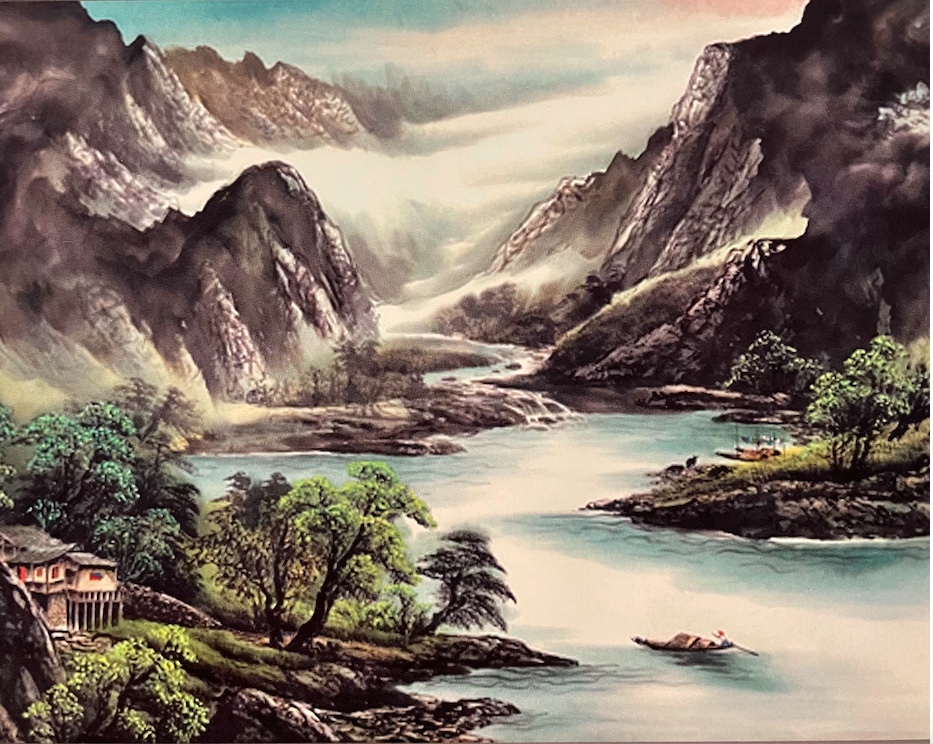
When I look at the painting of H.H. Dorje Chang Buddha III: A Hidden Wonderland, I immediately think about the “Land of Peach Blossoms”. I have imaged the “Land of Peach Blossoms” many times in my heart, wishing I could live there sometime. This painting is a tangible reflection of what I had imagined, and even more beautiful, splendid, and heavenly like.
The style of this painting is Western oil painting plus a mysterious technique that combines the dual skills of fine brushwork and freehand brushwork. The paint has three dimensional sculpture-like effects. From the harmonious unification of these three elements, a holy land of immortals with an unusual landscape of inexhaustible beauty comes into being. It is as if the viewer is taken to a palatial cave, to a world of no worries, and is looking over this wonderland that is beyond our world. The marvelous variations in color, light, and atmosphere are so enchanting that the viewer is carried away to that place, fascinated in the loveliness of it all.
Could such a paradise, this Land of Peach Blossoms, truly exist? Could I set foot in that painted world?
“The remotest corners of the earth are still part of the human world. Those who search for the truth in their dreams perceive themselves as wise, virtuous persons. To find out through which mountain pass you can leave this dusty world full of impediments, look for the cave hole with remnants of light, for that will lead to the land of Peach Blossoms”.
H.H. Dorje Chang Buddha III wrote this poem containing a profound message in order to express the true meaning of this painting: Nowhere in this human realm can one find a place not of ordinary people, not of this mundane world. All born as human beings are in a dream of confusion. However, they usually believe they are seeking the truth. In realty, they are just indulging in self-appreciation and self-consolation. As such, they cannot block the great flow of impermanence. However, there is one opportunity whereby you can attain control over your own living and dying and be guaranteed to transcend this world of mortals. When you see the wondrously intriguing cave hole with remnants of light, know this is the source you are seeking. That is the paradise of immortals, the land of Peach Blossoms, a holy land beyond this world.
The first time I saw this Chinese ink painting, I cried from the bottom of my heart. What a wonderland beyond this world, how I wish I could live there! It gave me the deep impression of otherworldliness, leisureliness and tranquility. This place is not for ordinary people, it is the place for the holy hermits living untethered from the world. The painting seems like a clear spring flowing through my body and purifying my soul. People have said: a good painting is like a fine poem, like a beautiful song. Looking at this transcendental art piece, I could hear the elegant Chinese classic music “River flowing down from the tall mountain”, and see the gentle pleasant whisper of the clouds sweeping through the forest. It also reminds me one of the Cold Mountain’s poem:
Clambering up the Cold Mountain path, The Cold Mountain trail goes on and on: The long gorge choked with scree and boulders, The wide creek, the mist blurred grass. The moss is slippery, though there’s been no rain The pine sings, but there’s no wind. Who can leap the world’s ties And sit with me among the white clouds?
Here you can see the artist combined different kinds of painting skills: center brush-tip technique, side brush-edge technique, large-scale freehand brush work, splash-ink technique and fine brush stroke. The mountain scenery was painted with black ink and heavy hues of green. This artwork not only preserves traditional painting skills but also manifests the realistic effect of modern Western oil paintings.
In Chinese paintings, it is very difficult to apply the perspective technique, with its three-dimensional look, to paintings in which the center brush-tip technique is used to express scholarly charm. However, this painting combines four different elements: the three-dimensional perspective technique together with the scattered perspective technique, the splash-ink technique with lines freehand brushwork, and realism. Attributes from both Chinese and Western paintings form a single stylish charm. It depicts a pristine rural setting, a land accompanied by mountain, river, sun and moon spirits. One regards a place as home when one has cherished feelings toward the local customs and conditions of that place. Wouldn’t you like such a home?
H.H. Dorje Chang Buddha III Wan Ko Yeshe Norbu Holiest Tathagata was awarded the title of “Master of Oriental Art” at year 1991. The representative presenting that award praised H.H. Dorje Chang Buddha III for restoring the 5,000 year old culture of China. In 1994, the 5,612 experts and scholars representing forty-eight countries and regions at the World Poets and Culture Congress unanimously named H.H. Dorje Chang Buddha III as a “Distinguished International Master.” However, H.H. Dorje Chang Buddha III did not want to accept such honors and continued making further contributions to mankind in a quiet and selfless manner.
H.H. Dorje Chang Buddha III is selfless and noble, and the first person in Buddhism to possess substantive holy realization power of a Buddha and perfectly flawless accomplishments at the pinnacle of the Five Vidyas. One of the Five Vidyas is called Sabdavidys (sound vidya), including literature, poems, music, drama, etc. Here are few examples of his mastery in this field.
The poems of this ancient Buddha H.H. Dorje Chang Buddha III, such as His qi jue poems (four-line poems with seven characters to a line and a strict tonal pattern and rhyme scheme) and qi lu poems (eight-line poems with seven characters to a line and a strict tonal pattern and rhyme scheme), retain the ancient poetic style and have reached a level on par with that of the ancient great poets. However, in the area of expressing philosophy, His Holiness’s poetry has surpassed the poetry of the ancient virtuous ones. It is self-evident that H.H. Wan Ko Yeshe Norbu Holiest Tathagata is truly the most outstanding master of Chinese poetry from ancient times to the present.
After you are enraptured by poems of H.H. Dorje Chang Buddha IIIand reflect on His poetic style, you will discover that H.H. Dorje Chang Buddha III has reached the peak of perfection in both the hao fang and the wan yue styles. Those are the two major styles of the ci type of Chinese poetry. The hao fang style is bold and powerful, while the wan yue style is soft, elegant, and graceful.
Take, for example, the bold and stirring ci type of poem entitled “To the Tune of Nian-Nu-Jiao.”(念奴嬌) It is an excellent poem due to its extensive and powerful spirit that moves the universe as well as its expansive and transcendent poetic perspective. You cannot find such an exceptional poem anywhere else in the world. In contrast, the ci type of poem entitled “To the Tune of Ye-Ban-Le”(夜半樂) has the feel of the enchanting moon on the Xiao and Xiang Rivers, the reflection of towering pagodas on the water, and the beautiful sound of a Chinese lute played under willow trees. How enrapturing, elegant, and charming that poem is!
Actually, we lack the understanding to give an in-depth appraisal of the poetry of H.H. Dorje Chang Buddha III. However, we do know that writing poetry is a simple matter for this ancient Buddha and represents less than a drop of water in the vast ocean of His Holiness’s talents.
To the Tune of “Jiang Jun Song”
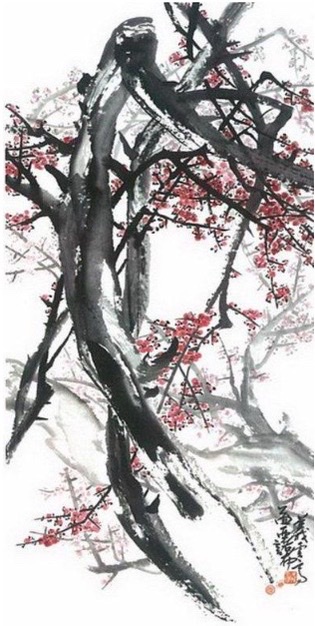
Plum Fragrance in the Holy Realm
Reveal her icy bearing and proud bones,
See how plum blossom commands the scene,
The crowd of beauties suddenly lacks color,
Seductive peach has lost its looks.
A few casual strokes,
So many eons of wind and dust.
The smoke and fire of the human world all disappears,
Leaving only a pure fragrance from the paper,
It wafts over me, awakening my mind.
The smile of the enchanted dream still remains,
Buddha Vajradhara has come
Three times to this world.
To this Buddha Land of merciful compassion
That great one has brought purity,
Feelings of the brush,
Traces of the brush,
One smile in the wind and dust,
Now the wind and dust,
So many eons of wind and dust.
To the Tune of “Jiang Jun Song”
Cold Harmony Heralds the Spring
I remember: myriad lofty peaks,
And scattered everywhere, sparkling gems of light,
The smile of cold fragrance,
Red plum trees hanging from the cliffs.
Unhurried, gentle,
Such feelings of tranquility.
Cliff walls and high valleys – where have they gone?
Midnight dreams of branches beneath a drunken moon
Ah, she returns after roaming in vast space.
Roaming thoughts,
And a return to the great world.
Drifts of fragrance wind around pavilion and hall,
Returning emptiness,
As before, to the great world.
Open the window,
Graceful she stands,
There is a plum tree,
Growing tall and strong,
Growing tall and strong.
To the Tune of “Ying Ge Chun”
Strong Feelings in the Scroll
On the paper, this shade of pink,
Ah, who can guess its real color?
Next to her, all the flower queens are slaves,
Ah, alluring brows and vermilion ink songs.
Ah, she remains here in the painting,
Until the guest comes.
Tenderness everywhere heralds the dawn of spring,
Ah, the guest has gone,
Yet later will come again.
Ah, gaze in the distance,
Breaths of cold harmony,
Ah, the perfume of the plum,
Tenderness in the scroll,
Tenderness in the scroll.
To the Tune of “Pu Sa Mahn”
Mind Realm
One dark, one pale, a pair of buds grow on the
branches
Light green, dark green, samadhi nourishes the world
Following karma, you lightly dance and float,
Immutably still, yourself an ancient Buddha.
You ask about the color of the plum blossom?
It is learning contained in virtue.
Wait until it is plucked, and without bonds
Then freely hold it and turn it in your hands.
To the Tune of “Wang Hai Chao”
The Plum Greets All Beings
The frozen purity of a jade grove
The startled soul of space
Spreads out far to east and west.
Cold fragrance, down of pink,
And though only a single spray of blossoms,
Loveliness greater than any mood,
So time itself becomes a mulberry dream.
Look: wind and bone expressed in ink,
In ten-thousand ages it will never fade.
The compassion of an ancient Buddha,
Captivates all beings, and brings them to truth.
Color artistry, free and graceful,
Powerful brushstrokes crossing vast space,
An atmosphere of erudition,
These words and paintings, year after year,
Bring constant blessings,
The auspiciousness of plum blossoms.
Look: within is a mysterious power,
Which I offer to the ten-thousand ages,
From the brush, an elegant air.
Just look at delightful spring color,
And all beings will enter holiness.
Vocal Mastery
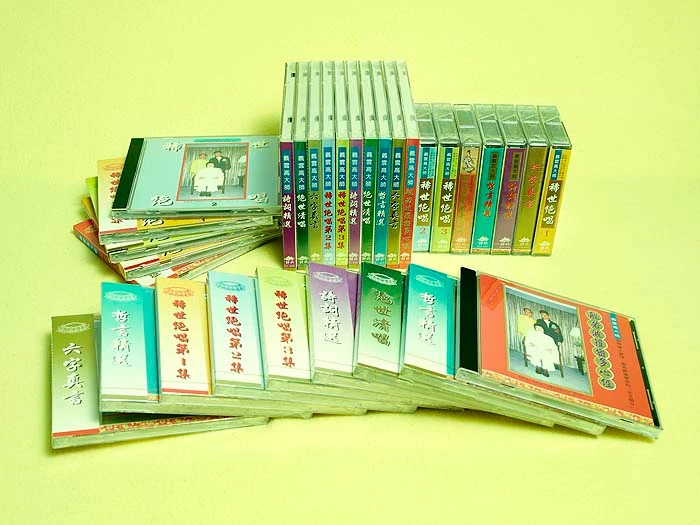
His Holiness is also a vocalist whose songs are unique masterpieces. Whether singing in a robust, resonant, stirring, and thunderous manner, or in a quietly elegant, floating, light, sweet, and captivating manner, His Holinesss vocal performances are marvelous and heavenly. His Holinesss songs and lyrics contain true Buddha-dharma. They teach goodness, impart wisdom, and benefit people. Moreover, H.H. Dorje Chang Buddha III composes the melody, writes the lyrics, and sings these songs all by Himself. There are many audiotapes and CDs of these songs. Even expert vocalists have sought the guidance of H.H. Dorje Chang Buddha III on singing. An example of this is a disciple of H.H. Dorje Chang Buddha III by the name of Jacky Cheung, who is known as a tremendous singer.
Hua Zang Si at San Francisco, has many Holy Treasures and holy manifestations. Several years ago, I was very fortunate to have a chance to see an unimaginable Buddha Dharma relic — Dharma Tent. According to mundane logical thinking, it is impossible for such a mysterious thing to have occurred in this world. However it truly did occur in tis world in front of a number of people! I would like to say that I do not know how to explain this. Ordinary language, high-tech principles, or the most advanced scientific theories cannot explain such a thing. This mysterious thing simply cannot be explained. It is truly wonderful, magnificent, and unbelievable!
The monastic introduced to me, the holy feat occurred in January of 2005. After the grand opening of the Hua Zang Si temple, Rinpoches and Dharma Teachers exhibited their ultimate artistic wisdom relating to carving vines. They made a dharma tent. They then went to H.H. Dorje Chang Buddha III and asked him to consecrate their tent.
Kuru Rinpoche said, “This Padmasambhava dharma tent is an indestructible treasure that removes the negative karma of living beings.”
H.H. Dorje Chang Buddha III smiled and said, “Everything that comes into being through causes and conditions illusorily exists. All sentient beings must die. All non-sentient things must perish. All of these things are impermanent.”
A Dharma Teacher then said, “This dharma tent looks very wonderful. It is not impermanent in the least.”
H.H. Dorje Chang Buddha III replied, “In every moment, it is arising, growing old, and dying. In every moment, it is in a state of impermanence. Your ordinary eyes cannot see such a process. If in a few hundred years from now you take another look at it, you will see that those entangled vines on the top of the tent are dried up. Actually, with respect to time and space, there is no past or future. Today, the causes and conditions are ripe. Watch!”
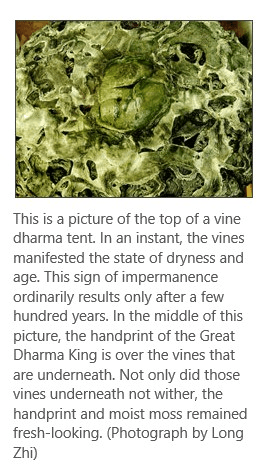
H.H. Dorje Chang Buddha III then pressed his hand upon the top of the dharma tent in the middle of the entangled vines. Halfway turning his hand, he then hit the vines once. A crackling sound could then be heard. A few minutes later, people looked at the vines and saw that their color had changed. They had withered and were dried up. In just a moment of time, they became a thousand-year-old cultural relic. They were thoroughly dried up, withered, and ruined. When the Great Dharma King lifted his hand, everyone saw that the Great Dharma King’s hand left an impression upon the vines when it pressed them down. Everyone also saw that the vines that were under the Great Dharma King’s hand did not wither, their color and luster did not change, they did not have any wrinkles, and they did not show any signs of dryness or aging. With respect to that part of the vines, no sign of the process of impermanence could be seen. Everyone was shocked!
At that time, H.H. Dorje Chang Buddha III gave the following explication: “All such phenomena do not truly exist. They are illusory phenomena. The Buddha expounded the dharma for forty-nine years, which was also a manifestation of illusory existence. There actually was not dharma that he had spoken of. If you obtain the Mahamudra of Liberation and realize the true, original nature of all phenomena (i.e. the original essence of all being, the true thusness or reality-nature), then it is exactly like this hand imprint analogy–there will be no impermanence nor birth and death. The Buddha expounded all of the dharmas. Sages attained the state of realization, and such dharmas were thereby real. Ordinary beings were confused, and such dharmas were thereby false. But who can turn the false into the real? Who possesses the dharma that leads to realization? Thus, only the correct dharma of the Buddha turns illusion into reality. All of you should listen, ponder, and deeply understand the Great Master’s discourse entitled “The Essence of Seeing One’s Original Nature.” Receiving such an initiation is truly an indestructible treasure. Today you have seen signs of impermanence relating to the dharma tent. Such signs are only an analogy. Such a manifestation is illusory and was done for fun only. Do not take it as being the absolute or ultimate truth. It is just art that one can dismiss with a laugh.”
This lecture by H.H. Dorje Chang Buddha III has profound meaning and is worthy of pondering. Although this feat is illusory in nature, who else can manifest such an impermanent illusion? If one cannot manifest illusory phenomena, nor can one turn illusion into reality, then how can one give expression to one’s realization? How can such a person possibly claim that he possesses the Buddha-dharma?
The dharma tent with vines on top is a wonderful treasure and evidence of a holy feat. Monastics have already respectfully received it in San Francisco, where it is worshipped as an object of veneration at the Hua Zang Si temple.
Rinpoches, Great Dharma Teachers, and laypersons observe the holy signs of permanence and impermanence that appeared on the top of the Padmasambhava dharma tent. (Photograph by Ru-Jun Zheng)
Professor Yuhua Shouzhi Wang is a world-renowned painter. Throughout Asia, she is the only artist to whom the New York Academy of Art conferred the title of international preeminent artist of first class standing.
The art world has classified the quality of ink painting into four different levels: Class of Proficiency, Class of Wonderment, Class of Divinity, and Class of Ease. Artwork of the Class of Proficiency has the ability to present a resemblance of objective reality, achieving likeness in form. This is the first stage of artistic creation. The art world calls it the stage of sketching. This is a stage that an artist cannot skip, yet they also cannot remain at this status quo, because this is an elementary stage. The next level is the Class of Wonderment. Artworks of this Class demonstrates highly skilled techniques. The artist is able to paint anything at will without revealing any trace of effort. However, one also cannot remain stagnant at this stage.
The next level after the Class of Wonderment is the Class of Divinity where the art carries likeness of ‘form’ and likeness of ‘spirit.’ In ink painting, the highest state of accomplishment is the Class of Ease where the artist attains natural ease by using simple brushstrokes to fully capture the form. With the most succinct brushwork and the most superb technique, the artist depicts objective reality and attains a state of miraculousness where both form and spirit are fully captured. This is the kind of art that viewers never get tired of appreciating; it leaves a wonderful aftertaste. There are only about a dozen people in the history of art who have attained such a class.
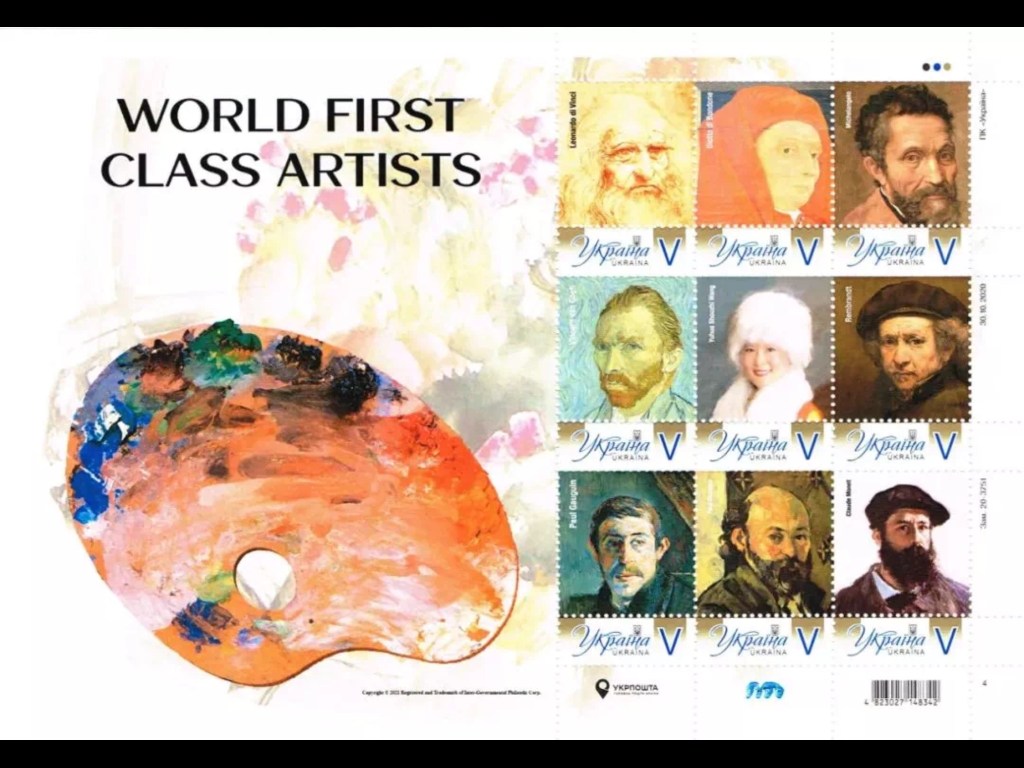
Stamps published in Ukraine
In 2008, the United States Congress exhibited her sculptures and paintings in the Gold Room in the Rayburn Congressional Building which received rave reviews. Professor Stephen Farthing of the University of the Arts in London, United Kingdom, determined that “Professor Wang’s paintings reach across cultures to celebrate the space that exists intellectually and emotionally between representation and abstraction, between a fact and an idea…Dr. Wang’s paintings may draw heavily on the traditions of Eastern art, but they present themselves as extraordinarily Western ideas and images.”
in 2013, out of the works of all painters, the World Federation of UNESCO Clubs, Centers and Associations (WFUCA) awarded the title “WFUCA2013” to the artworks of Professor Yuhua Shouzhi Wang. In 2020, the United States National Commission for UNESCO Clubs, Centers, and Associations conferred on her the “International First-Class Artist” title along with the issuance of a certificate and badge.
In 2019, When Professor Wang’s solo exhibition was held at the Shanghai Exhibition Center that used to be the Sino-Soviet Friendship Building, a record-breaking number of people visited the show. The Museum Director Wu Shufang stated that the museum had never experienced such an overwhelming number of visitors since its official opening, and for this exhibition, they had to post notices to limit admission. Same year, she held a solo exhibition, titled One Flower, Two Worlds at the Louvre in Paris in 2019 and created a sensation in French art circles. This exhibition showcases 27 of Professor Wang’s extraordinary artworks each of which has reached the height of the Class of Ease.
More than 200 distinguished members of society, artists, collectors, entrepreneurs, and art lovers attended the exhibition opening; including representatives from French museums, professors from French art institutes, French nobilities, renowned artists, celebrities, representatives from auction houses, art critics and journalists from major news media. They all marveled at the artworks and expressed their praises. They considered this an unprecedented experience for French people.
Simply put, the artistry of Professor Yuhua Shouzhi Wang has attained the highest level of artistry in ink painting which is the Class of Ease. One of Professor Yuhua Shouzhi Wang’s paintings Pomegranates in a Basket realized a top auction price of US$1.27 million at the Gianguan Auction House in New York on March 13 of 2019. It clearly shows that the art of Professor Yuhua Shouzhi Wang is recognized by art collectors and people of foresight alike.
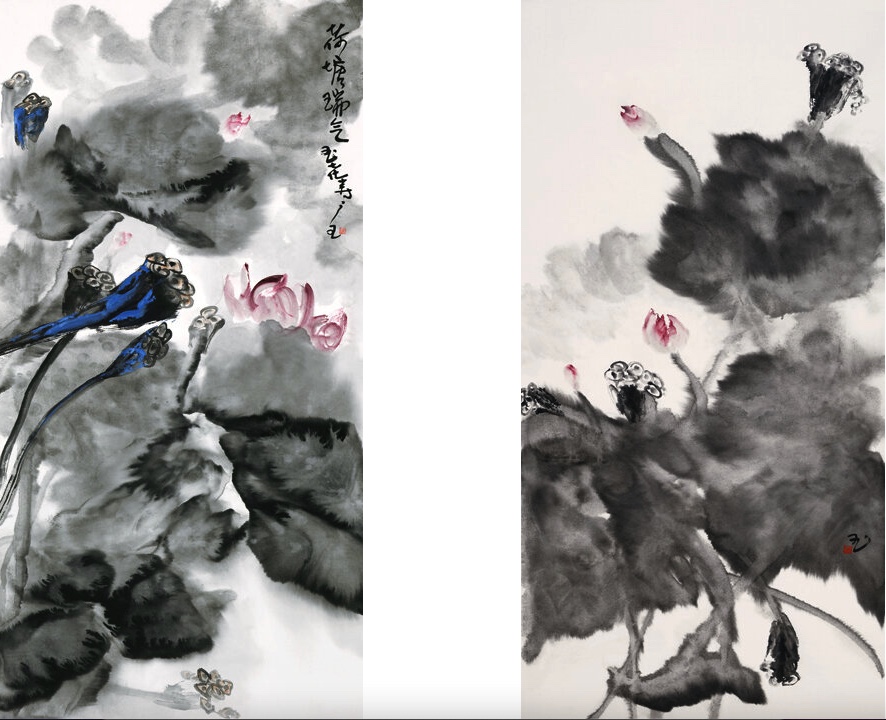
Dr. Yuhua Shouzhi Wang is the Lifetime Honorary Chairwoman of the International Art Museum of America. The museum has a dedicated gallery exhibiting her artworks. Her paintings encompass a broad range of styles and subject matters, including landscapes, animals, flowers, birds, and so forth, all of which have reached the summit of world class artistic excellence. Based on her lotus and water lily paintings, artists have acclaimed that Professor Yuhua Shouzhi Wang is the foremost lotus painter of all times. No artist in the past would have been able to surpass her accomplishment, and her works will continue to inspire generations to come. Among all notable lotus painters, her skills are extremely profound, substantial, and masterful, and she is among the most distinguished artists in history. Her artistic achievement has reached perfection at the summit of the “ten ultimate artistries.”
The well-known saying, “Deeply hidden talent not easily revealed” aptly describes Dr. Yuhua Shouzhi Wang’s morality and inner refinement. The characteristics of an artist’s paintings essentially reflect the character of the painter. From the paintings below you can find humility, inner peace, harmony and noble morality of professor Wang.
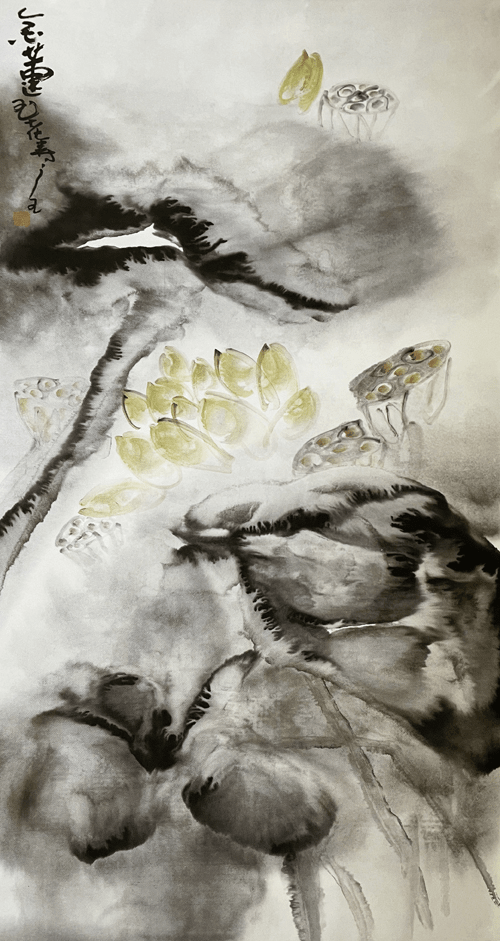
Golden Lotuses
The approach of Professor Yuhua Shouzhi Wang to draw flowers in gold and create leaves with splashed watery ink exhibits high elegance, great beauty, and lovely simplicity. The technique of Professor Yuhua Shouzhi Wang to paint lotus flowers in varying degrees of darkness and lightness enables her to represent fully a striking charm in both tone and form. Every stroke is lively, vigorous, graceful, and without the slightest air of affectation. Applying mature and seasoned artistry, she fully displays on paper her unfettered, natural, unattached state of mind. The brushwork was completed with ease and spontaneity, free of any inhibition. The atmosphere is strong but very elegant and pure. This entire painting provides much comfort to the eyes.
Brushstrokes as Spontaneous as Dancing Dragons and Snakes
Springtime Snow-White Plum Blossoms as Pure as Jade
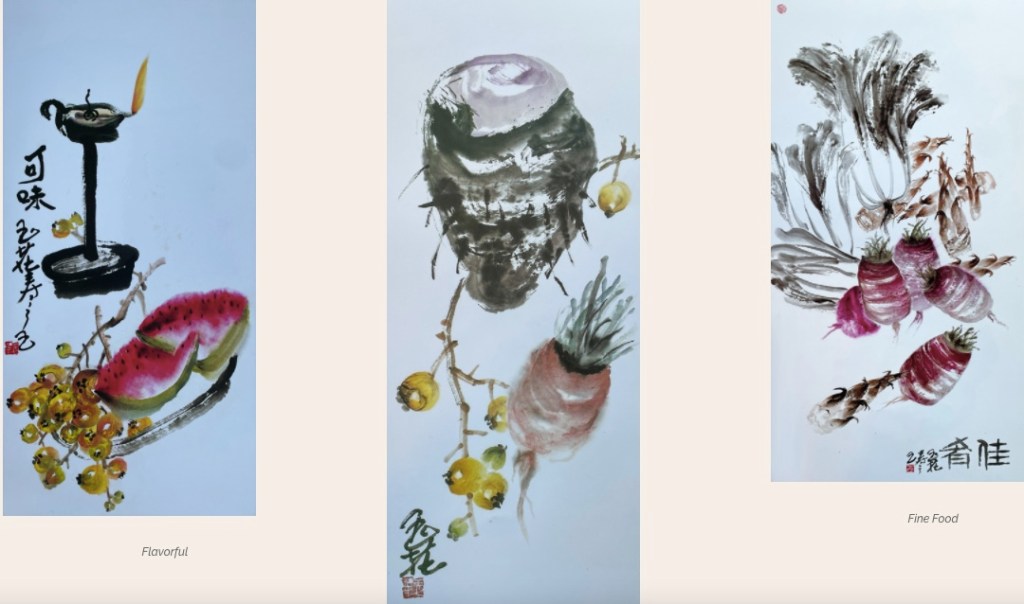
The Ink-wash paintings of Dr. Yuhua Shouzhi Wang
Loquats and Radish Staring at Taro
Some of professor Wang’s paintings have been published on stamps.
Have you ever seen a man-made sculpture like real withered vines? In The International Art Museum of America located at San Francisco, there is just such a sculpture, called Ancient withered vines become a fossil fortress. The artist is H.H. Dorje Chang Buddha III. I was told the sculpture is made of the material like PVC, stone and oil paint. The astonishing fact is the artist needed to carve the sculpture in super fast speed; the material hardens into a mold in less than ten seconds after melting. I can’t image how this huge sculpture could be done in such short time. It has many layers from inside to outside. The sculpture is well lit, and I can see clearly the inside structures. I can only say the artist superior craftsmanship skill is beyond human imagination.
H.H. Dorje Chang Buddha III, Holiest Tathagata created high-quality withered vines through a form of carving called “Yun Sculpture.” All of those Yun Sculpture vines must have certain distinguishing attributes in four categories: visual quality, style, shape, and texture. Of these four categories, texture is the most important and indispensable.
Ancient-looking withered vine
The four distinguishing attributes in the area of visual quality are old, withered, dry, and beautiful. As for old, the vines must appear to be old vines from the ancient past. As for withered, the vines must look dehydrated, withered, and wrinkly. As for dry, the winding vines must seem desiccated. As for beautiful, they must have a graceful look to them. The four distinguishing attributes in the area of style are scholarly, otherworldly, highly elegant, and comforting. As for scholarly, the style of sculpting must be imbued with a feeling of literary or poetic genius. As for otherworldly, the vines must appear to transcend the handwork of human artisans such that they look not of this world. As for highly elegant, the vines must look highly refined, aesthetically pleasing, and far above the ordinary.
As for comforting, the vines must convey a feeling of auspiciousness, grace the place in which they are present, and give those who view them a feeling of harmony and well-being. The four distinguishing attributes in the area of shape are as follows: natural-looking, genuine-looking, weathered over time, and intertwining.
Regarding the first attribute, the vines must match the winding look of real vines. Regarding the second attribute, the vines must look exactly like real ancient vines. The viewer should have the impression that the carved vines are no different from real vines that grew in nature. Indeed, the viewer should conclude that the sculpted vines look even more ancient than their natural counterparts. Regarding the third attribute, the vines must convey a natural sense that they have been exposed to wind, frost, rain, dew, and sunshine over a very long time and have aged over that long time period. Regarding the fourth attribute, thick and thin vines must intertwine to look like one natural, connected body that has grown together month after month.
The four distinguishing and extremely subtle attributes in the area of texture are as follows: the vines must have the texture and appearance of having withered in different time periods; the skin of the vines must have the texture of real vines with tiny pores; the lines and wrinkles on the vines must follow the natural course of the vines; and the shades of colors of the vines must be just like those of real ancient vines. The meticulousness shown in the area of texture is the best way to tell whether or not a work of art is a genuine carving of withered vines created by H.H. Dorje Chang Buddha III through His Holiness’s Yun Sculpture form of art. These four attributes, which cannot be matched by any other artist, are essential in determining whether or not the withered vines are masterpieces sculpted by H.H. Dorje Chang Buddha III himself. These four attributes are most important and indispensable in distinguishing the works of H.H. Dorje Chang Buddha III from other works. The first attribute is that the vines must have the texture and appearance of having withered in different time periods. Since interwoven withered vines come into being and grow in different time periods, they dry, age, and shrivel to different degrees. Their texture and color also vary. Thus, His Holiness’s Yun Sculpture vines give the impression of being historical relics of different time periods. The second attribute is that the skin of the vines must have the texture of real vines with tiny pores. This means that when one touches the texture of the carved vines, their stems and skin will feel exactly like those of real vines. One can see that the carved vines have minute pores, such as old pores of various colors, pores that follow the course of the stem, inverted pores, miscellaneous pores, and concave and convex pores.
Furthermore, one can see that there are spots of color, shades of color, flows of color, differences in color, and harmony of color relating to the pores. Even under the scrutiny of a magnifying glass, the sculpted pores appear tiny and no different from those of real vines. Indeed, the vines are much more beautiful than real vines. The third attribute is that the lines and wrinkles on the vines must follow the natural growth of the vines. Having existed through a very long period of time, ancient vines will manifest wrinkles. The key factors in carving the highest quality wrinkles relate to the course or direction in which the wrinkles run, their size, their degree of thickness, their depth, their length, and their degree of visibility. They must not have the slightest appearance of disorder or randomness. Rather, the lines and wrinkles must totally follow the natural growth patterns of the vines. They must follow the track of the winding vines. As the vines change directions, the lines must follow the twists and turns. They must look natural and no different from real lines on ancient vines.
The fourth attribute is that the shades of colors of the vines must be just like those of real ancient vines. The color or hue of the carved vines must convey a feeling of antiquity and a wondrous quality of age. The sculpted vines must seem old, parched, and shriveled, but in a very fascinating and attractive way. They must not show any trace of having been sculpted by man. All of the freshness and brightness of living vines must be gone. They must appear as relics that are thousands of years old. There are two Chinese sentences that aptly summarize the artistic skills of H.H. Dorje Chang Buddha III in carving withered vines: “There is nothing more beautiful than faux jade, ganoderma lucidum frames, and cactus frames. There is no higher art than creating ancient withered vines that even go beyond the appearance of real vines.”
Only those works of art that possess all of the above–described distinguishing characteristics can be called genuine Yun Sculpture withered vines created by H.H. Dorje Chang Buddha III. When these frames of withered vines accompany other Yun Sculpture works of art, the result is “double supreme beauty.” This combination is also solid evidence to determine the authenticity of Yun sculptures created by H.H. Dorje Chang Buddha III. When His Holiness’s withered vines are part of Yun Sculpture art frames, such as “Ancient Jade”and “Emerald,” these art frames become even more phenomenal and take on the ancient air of precious and splendid cultural relics. Truly, such works are national treasures that have no equal in the entire world. They are wonderful masterpieces to hang on your wall. More importantly, we should understand that these sculptures of ancient-looking withered vines are actually a manifestation of His Holiness’s mastery of the inner-realization vidya. Persons of holy virtue who are able to leave their footprints on stones are unable to create such ancient-looking withered vines. The source of these works of art is the enlightenment of a Buddha that H.H. Dorje Chang Buddha III possesses. That is why they are precious withered vines that cannot be found anywhere else in the world.
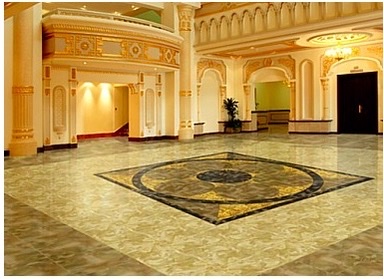
Extremely beautiful and glittering jewel-like floor tiles covered all the hall ways and open areas at the first floor of the The International Art Museum of America (IAMA). H.H. Dorje Chang Buddha III, the artist, wielded his brush and applied colors to create those gorgeous and resplendent as gemstones and with rustic, charming tiles. So ordinary people could replace common tiles, marble, and granite slabs in the old style, and enjoy the splendor of earthly mansions and the beauty of heavenly palaces.
When you see these four tiles with gemstone patterns, it seems there is nothing more to say other than they give you a feeling of beauty and naturalness. However, as soon as you realize they are actually four paintings, you will marvel at them in a state of perplexity. All of them are indeed paintings in patterns of jade. They are representative of works that belong to the “Chaoshi” (super fine) style of painting. Starting clockwise from the top left, they are Dragon-Scale Jade, Autumn Aqueous, Fortune Vase Jade, and Yellow Loveliness Jade. Their patterns, watery tone, luster, and moist appearance are completely the same as those of natural jade objects. Such accomplishment clearly shows the calligraphic and painting mastery of H.H. Dorje Chang Buddha III in the style of “Chaoshi.”
In The H.H. Dorje Chang Buddha III Cultural and Art Museum, has more many different color-painted tiles on display. They all completely resemble natural stones in terms of color, luster, grain, and aesthetic impression. These tiles can be classified into six main categories: the Rustic Elegance Collection, the Lyrical Charm Collection, the Luxurious Gem Collection, the Serene Nobility Collection, the Contemporary Distinction Collection, and the Heavenly Stone Collection.
In many world-class building and decoration material exhibitions held in the United States, China, and elsewhere, the tiles created by H.H. Dorje Chang Buddha III have each time attracted the greatest stream of people. They have been appraised as being the best tiles in the world. Those who view them, including experts in the same trade, marvel at and highly praise the beauty before their eyes, smiling as they bask in the pleasure of the moment. The tiles created by H.H. Dorje Chang Buddha III are judged by everyone to be the highest-class, most beautiful, and most elegant decorative material in the world today.
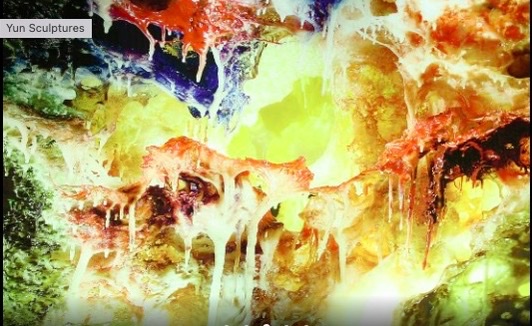
Yun Sculpture is a new form of art that H.H. Dorje Chang Buddha III created for humanity. It has never appeared before in history. Since the advent of Yun sculptures, artwork that can never be duplicated has appeared for the first time in the human world.
H.H. Dorje Chang Buddha III created these miraculous sculptures containing mysterious mist in order to make people around the world understand the magnificence of the True Buddha-dharma. These miraculous works can be seen and touched. However, they cannot be created by anyone who is not a being of the highest holiness.
The mysterious mist in these sculptures can be found floating among wondrously carved, seemingly changing, and intriguingly interconnected hanging rock formations. Why is such art called sculptures containing mysterious mist? It is because in those sculptures there is the mysterious and beautiful scene of auspicious mist swirling in between hanging rock formations. This is a manifestation of the realization of H.H. Dorje Chang Buddha III in the craftsmanship vidya and the inner realization vidya.
In the treasure room of International Art Museum of America, there is a sculpture entitled “Mysterious Boulder With Mist.” After carving the material into the form of an oval boulder, H.H. Dorje Chang Buddha III created two grottoes inside the boulder, each of which contains its own scenery. When you look inside the right grotto, you will see thick mist enveloping everything. The structure of the carved scenery inside this hole is vague, since it cannot be clearly seen through the mist. You are left with the impression that the mist is a few dozen yards deep inside the hole when it is actually only three or four feet deep. When you look inside the left grotto, you will see that there is no mist at all. You will clearly see the structure of the carved scenery inside this hole. The material used to carve those two grottoes was the same, the colors applied to both of them were the same, and their depth is the same. The carving skills and inner-realization of H.H. Dorje Chang Buddha III caused this mysterious phenomenon of one side containing thick, enveloping mist and the other side containing no mist at all.
Mysterious Boulder with Mist
It is no wonder that people praise these sculptures containing mysterious mist as the only form of art in human history that contains natural mist. People also praise them as unique and precious masterpieces that cannot be found in nature. These works of art are one type of sculpture created by H.H. Dorje Chang Buddha III.
Many people have been astonished by the breathtaking beauty of Yun sculpture artwork created by H.H. Dorje Chang Buddha III. They spoke heartfelt words, such as, “This is a treasure sent to the human world from God,” “This is a holy object from a Buddha-land brought here by a Buddha,” “Its beauty captures people’s souls,” and “Since the appearance of Yun sculptures, earthly jewels are like stars surrounding a bright Moon, losing all their color and splendor.” This is indeed true. Some people brought the most exquisite jade and jewelry as well as splendid stone sculptures for comparison. All of those objects immediately lost their beauty and luster when compared with Yun sculptures. There is a world of difference between those objects and Yun sculptures. None of those objects can be regarded as being in the same category as Yun sculptures.
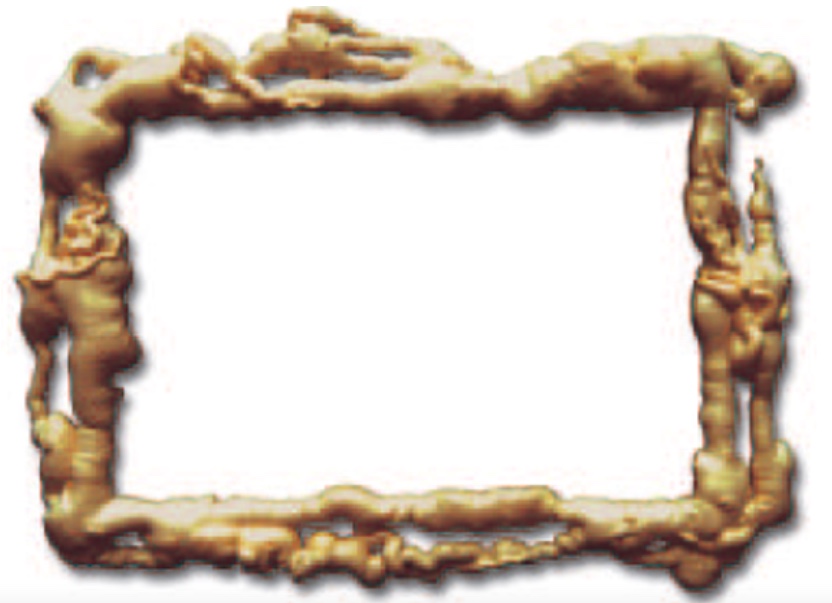
From ancient times to the present, the art of making frames has existed in the East, the West, regions of different nationalities, among the general population and within imperial palaces. There have been many kinds of frames for pictures, paintings, and other forms of art. There are truly unique, beautiful, and elegant art frames displayed in International Art Museum of America, located in San Francisco downtown, that I never seen at anywhere else before.
H.H. Dorje Chang Buddha III, the artist created sculpted art frames in the style of various natural elements. Examples of this include frames made in the style of ganoderma lucidum (a type of hard dark brown fungus supposed to possess supernatural powers), tropical plants that wind around trees, coral, ancient-looking unearthed cultural relics, white and green jade, and winding vines, faux withered vines, faux tree roots, faux white jade, faux old wood, faux spotted jade, faux ganoderma lucidum, faux red coral, etc. All frames there are artistic fascinating.
The ganoderma lucidum art frames are formed by putting together many of those hard mushroom-type fungi. Of course, such frames are not composed of real ganoderma lucidum. Rather, the ganoderma lucidum in such frames are created from carving and application of colors. The shapes of the Ganoderma lucidum are connected together on the wooden frame to form an exquisite, integrated shape. Those ganoderma lucidum have the same color, air, and shape of real ganoderma lucidum. Furthermore, rare thousand-year-old ganoderma lucidum, old hundred-year-old ganoderma lucidum, and new tender Ganoderma lucidum are interconnected to form an elegant and charming appearance. Many ganoderma lucidum mushroom caps and mushroom stems are interconnected in a beautifully rhythmic manner. The interchange between substance and emptiness, highness and lowness, largeness and smallness, and thickness and thinness creates a highly elegant appearance.
Reishi Mushroom art frame was sculpted and painted with oil colors. It captures the form and texture of reishi mushrooms and has the gracefulness of an aged cultural relic.
The faux green jade art frames have an ancient-looking green jade color to them that is steady and elegant. This color is not stale or old-fashioned in the least. Rather, it is a natural combination of refined blackish green and sprightly verdant, although there is not much verdant hue. This color expresses the essence of old jade that has slowly matured over thousands of years, with a vigorous and spirited quality that is clearly seen. This refined green jade color will every now and again reveal a lustrous white, like the color of the feathers of immortal cranes. Such a mixture of hues truly transcends all traces of the mundane. The color green alone could be further divided into many different types based upon its various hues. There is aged green, light green, blackish green, glossy dark green, pastel green, verdant, fresh green, deep green, translucent green, etc. There actually are countless gradations of green in these art frames, all of which are natural looking. All of these various shades of green interconnect and interact so naturally there is not the slightest sign they were created by man. Therefore, it is difficult to fathom how the creator of these frames could harmonize these colors so masterfully, fittingly, flawlessly, and beautifully.
Faux emerald-jade art frame has the pattern, color watery tone, and texture of real jade This is a faux natural tree-root art frame, has the pattern, color, and texture of real tree roots
Each and every detail of the frames in the museum, expresses an extremely natural quality in both form and spirit. Some frames are devoid of the dark spots or broken parts that natural objects have after being exposed to wind, frost, rain, and snow. His Holiness has developed to a perfect degree the depiction of the fleeting beauty that natural treasures display during their growth process. Simply put, the worth and prestige of any painting mounted to those frames will increase tremendously.
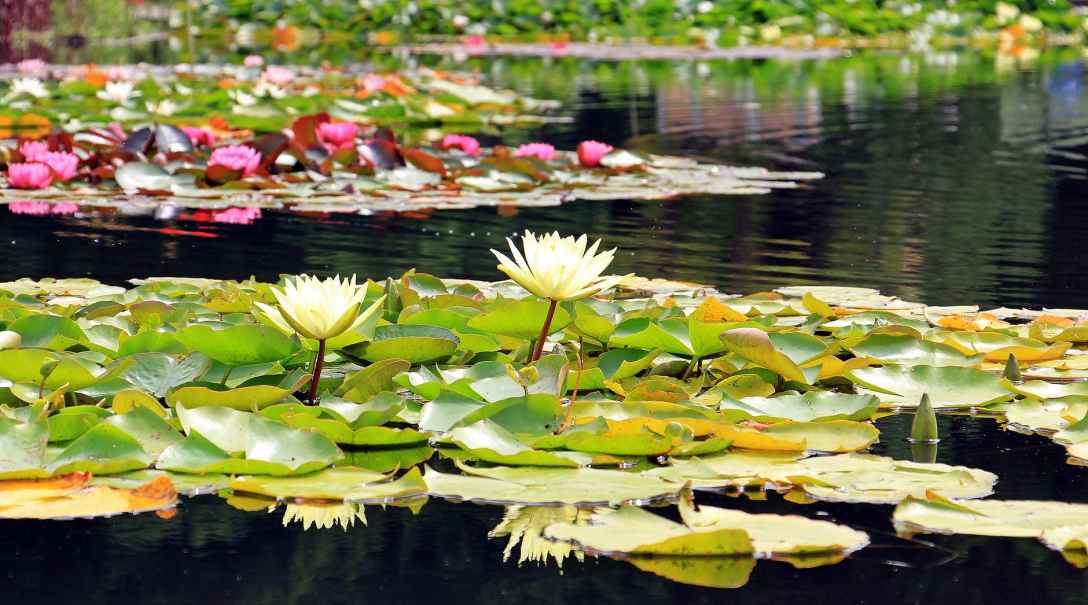
The exhibition was a dialogue between the water lily paintings of Claude Monet and Professor Yuhua Shouzhi Wang. Monet is the founder of “impressionism.” Professor Yuhua Shouzhi Wang is the founder of “imagery-naturalism.” Both artists are the most distinguished virtuosos among International First-Class Artists. This Exhibition of Paintings in Dialogue features 16 oil color water lily paintings from each artist. At the same time, 16 lotus ink paintings created by Yuhua Shouzhi Wang are also on view. The Monet paintings are high-definition reproductions from his water lily paintings.
Master Claude Monet is the founder of the “impressionism” painting style known throughout the world. He was an International First-Class Artist with landmark accomplishment. His Water Lily Paintings are renowned throughout the world. His color is dynamic. With brushstrokes that capture changing light and shadow over the lily pond, Monet portrays foggy morning sceneries of all seasons. Monet is adept at presenting the changes in light and shadow, placing special emphasis on their haziness in the atmosphere. With oil color and technical mastery, he infuses the landscape with the floating light, moving shadow, and atmosphere to present the beauty and colors of water lilies in many layers of depth.
In his late years, he immersed his entire mind and being into his pond of water lilies in Giverny. From then on, his subject matter never deviated from the water lilies. He lived and breathed water lilies. He was a world-renowned master in water lily painting. Monet’s colors are fresh, graceful, sophisticated, seasoned, and brilliant. With sweeping and carefree brushwork, he applies color at will. He places emphasis on haziness, and his use of bright colors are not at all garish. Monet’s paintings are devoid of artisanal dullness, both his technique and form are natural and audacious, achieving the oneness of form and spirit. He is a world master of water lily painting, and fittingly an International First-Class Virtuoso. His artistry has achieved the Class of Divinity and the Class of Ease.
Master Yuhua Shouzhi Wang is the founder of the “imagery-naturalism” style in painting. She has attained the landmark achievement of being the only Asian top-level world virtuoso today who has been accorded the International First-Class Artist title. Her paintings are characterized by noble style, magnificent artistry, masterful technique, magnificent composition, richness of layer and depth, and audacious, beautiful impasto color. The misty atmospheres within them exude another-worldly elegance. She is a very versatile painter. Her paintings encompass landscape, flower-bird composition, animal, flower, fish-shrimp composition, and figure, as well as super realistic art and surrealistic abstraction. Stemming from a foundation of oil color painting, she shatters the normative form of everyday objects, capturing the naturally evolving nature of the imageries that come from everyday life yet transcend everyday life. She has founded the unique “imagery-naturalism” painting style and established a landmark artistic achievement. She has attained the “ten ultimate artistries” in her infinitely evolving style, and her accomplishments are unprecedented.
In 2008, the artworks of Dr. Yuhua Shouzhi Wang were exhibited in the Gold Room at the United States Capitol. The United States Congress recognized her as “a great artist and sculptor” for her outstanding accomplishments, and officially chronicled such recognition in the Congressional Record. The same record also mentioned that Dr. Wang “takes great pleasure in helping others, is a selfless person whose moral character is noble, and has made great contributions to the development of cultural exchange between the East and the West.”
Out of many artists’ works, the World Federation of UNESCO (WFUCA) accorded Professor Yuhua Shouzhi Wang’s artworks the “WFUCA2013” title. The New York Academy of Art, upon assessing and determining Professor Wang’s level of artistry, conferred to her the “International First-Class Artist” title. An “International First-Class Artist” title certificate was also issued by the U.S. National Commission for WFUCA to Professor Wang on December 20, 2020, in which they recognized the professor’s accomplishment as among the top of International First Class Artists.


















 Peace LiLy