Find Your Spirit, Find Your Soul

Find Your Spirit, Find Your Soul

I really enjoy animation movies for their humor and cheerfulness. What better way to relax, than to watch Garfield shovel down 450 pounds of lasagna? However, beneath the appearance of levity and simple fun, animation has it own unique way of handling the serious and abstract philosophical questions. Spirited Away and Soul are outstanding works in this regard. They sparked my interest, and made me value what I have in my life, and look at the world with a different point of view.

Spirited Away 

Twenty years ago, on July 20, 2001, a film that would become one of the most celebrated animated movies of all time hit theaters in Japan. Directed by Hayao Miyazaki and produced by Studio Ghibli, Sen to Chihiro no Kamikakushi, titled Spirited Away in English, would leave an indelible mark on animation in the 21st century. The movie arrived at a time when animation was widely perceived as a genre solely for children, and when cultural differences often became barriers to the global distribution of animated works. Spirited Away shattered preconceived notions about the art form and also proved that despite being a Japanese film with elements of Japanese folklore central to its core, it could resonate deeply with audiences around the world.

Imaginative and inspired, Spirited Away immerses the viewer in a fantastical world that at once astounds and alarms. Many of the deities are based on figures in Japanese folklore, and part of the Japanese title itself, kamikakushi, refers to the concept of disappearance from being taken away by gods. The story is a tale of resilience and persistence, as Chihiro, our protagonist, gradually draws on her inner strength to endure this land where humans are designed to perish.

The story follows an ordinary 10-year-old girl name Chihiro and her parents as they stray into a strange world. Her parents turned into pigs because of greed, and Chihiro must go through various tests before finally rescuing her parents and returning to the human world. The parents, who were turned into pigs, have forgotten that they are human, and no matter how Chihiro calls, they just slumber. Just like the reincarnation of Sahas, there is no real reunion. Who do you remember? Are the parents of the previous life? Do we remember ourselves? In the film, those who forget their names cannot find their way home; and if we forget our true nature, we will also be lost in reincarnation for a long long time. For countless kalpas, we have had countless names, but they are all pseudonyms. What is our real name? Where are we originated? Why we come to this world? Everyone has to search inward to find their own answer.

Soul

What is it that makes you, well, you? “Soul” introduces Joe Gardner a middle-school band teacher who has a passion for jazz. “Joe wants more than anything to become a professional jazz pianist,” says director Pete Docter. “So when he’s offered a rare, once-in-a-lifetime opportunity to play with one of the greats, Joe feels he’s reached the top of the ultimate mountain.”

But one small misstep takes him from the streets of New York City to The Great Before – a fantastical place where new souls get their personalities, quirks and interests before they go to Earth. According to Docter, the idea for this unique world was 23 years in the making. “It started with my son—he’s 23 now—but the instant he was born, he already had a personality,” says Docter. “Where did that come from? I thought your personality developed through your interaction with the world. And yet, it was pretty clear that we’re all born with a very unique, specific sense of who we are.

In the film, Joe is about to usher in a turning point in his life to realize his dream, but inadvertently becomes a blue soul and becomes the mentor of Soul 22. He only wanted to return to earth, but due to 22, arrives in the “land of ecstasy”. In “The Realm of Ecstasy”, the mysterious old man called Wind of the Moon helps people who have lost themselves to find themselves, and even allows them to return to their consciousness through a special channel, and connect with the body through spiritual consciousness. He is like an accomplished practitioner of practice, who can go to various paths in meditation, and even go to hell to save sentient beings. After many twists and turns, Joe returned to Earth and performed on the same stage with his idol. But when the dream came true, he felt a little lost after the excitement of success. The lead player of the band tells him a story: a small fish swims up to an old fish and says,

“I’m going to find what they call the ocean.”

“Ocean?” the old fish replied, “You’re in the ocean right now. Here.”

“Is it here?” said the little fish, “here is water, what I want is the ocean.”

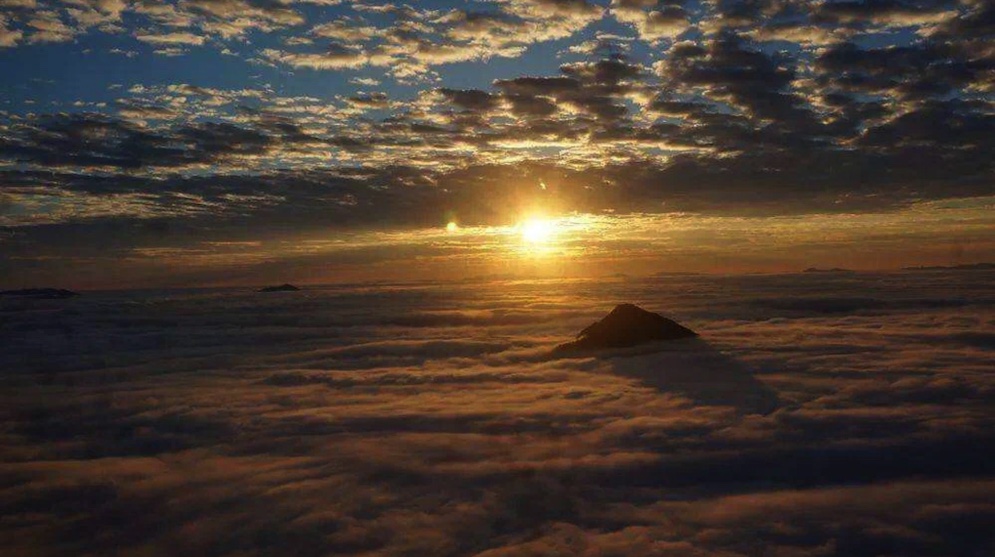
If a fish can’t feel the sea around it in the water, it can’t feel the real sea. The sea in its heart is actually the subtle existence in which it lives.

Photo by Emiliano Arano on Pexels.com

Joe eventually returned to Earth. At this time, he has realized that every step of life is like a piece of music, with the beauty of its notes anytime, anywhere. He has completely turned his life into jazz. At this time, his life has become beautiful and full of agility, and at the same time, he will not be overjoyed. His music score is no longer an external program, but a flow after inner awakening.

Find Your Spirit, Find Your Soul

Link:https://peacelilysite.com/2022/06/08/find-your-spirit-find-your-soul/

#SpiritedAway#Soul#AnimationMovie#Ocean#Jazz#Music#Pixar#JapaneseFolklore

Source: https://time.com/6081937/spirited-away-changed-animation-studio-ghibli/, https://www.pixar.com/soul

27.BEST FRIENDS [THE POWER OF FRIENDSHIP]

27. Best Friends [The Power of Friendship]

Buddhist Tales for Young and Old, volume 1, Prince Goodspeaker, Stories 1-50

Before the time of this story, people in Asia used to say that there would never be a time when an elephant and a dog would be friends. Elephants simply did not like dogs, and dogs were afraid of elephants.

When dogs are frightened by those who are bigger than they are, they often bark very loudly, to cover up their fear. When dogs used to do this when they saw elephants, the elephants would get annoyed and chase them. Elephants had no patience at all when it came to dogs. Even if a dog were quiet and still, any nearby elephant would automatically attack him. This is why everybody agreed that elephants and dogs were ‘natural enemies’, just like lions and tigers, or cats and mice.

Once upon a time, there was a royal bull elephant, who was very well fed and cared for. In the neighbourhood of the elephant shed, there was a scrawny, poorly fed, stray dog. He was attracted by the smell of the rich sweet rice being fed to the royal elephant. So he began sneaking into the shed and eating the wonderful rice that fell from the elephant’s mouth. He liked it so much, that soon he would eat nowhere else. While enjoying his food, the big mighty elephant did not notice the tiny shy stray dog.

By eating such rich food, the once underfed dog gradually got bigger and stronger and became very handsome looking. The good-natured elephant began to notice him. Since the dog had gotten used to being around the elephant, he had lost his fear. So he did not bark at him. Because he was not annoyed by the friendly dog, the elephant gradually got used to him.

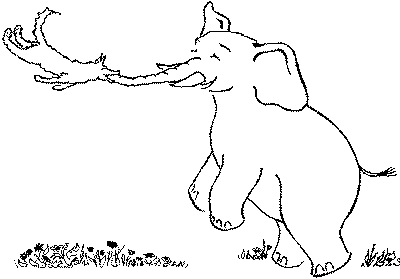
Slowly they became friendlier and friendlier with each other. Before long, neither would eat without the other, and they enjoyed spending their time together. When they played, the dog would grab the elephant’s heavy trunk, and the elephant would swing him forward and backward, from side to side, up and down, and even in circles! So it was that they became ‘best friends’, and wanted never to be separated.

Then one day a man from a remote village, who was visiting the city, passed by the elephant shed. He saw the frisky dog, who had become strong and beautiful. He bought him from the mahout, even though he didn’t really own him. He took him back to his home village, without anyone knowing where that was.

Of course, the royal bull elephant became very sad, since he missed his best friend the dog. He became so sad that he didn’t want to do anything, not even eat or drink or bathe. So the mahout had to report this to the king, although he said nothing about selling the friendly dog.

It just so happened that the king had an intelligent minister who was known for his understanding of animals. So he told him to go and find out the reason for the elephant’s condition.

The wise minister went to the elephant shed. He saw at once that the royal bull elephant was very sad. He thought, “This once happy elephant does not appear to be sick in any way. But I have seen this condition before, in men and animals alike. This elephant is grief-stricken, probably due to the loss of a very dear friend.”

Then he said to the guards and attendants, “I find no sickness. He seems to be grief-stricken due to the loss of a friend. Do you know if this elephant had a very close friendship with anyone?”

They told him how the royal elephant and the stray dog were best friends. “What happened to this stray dog?” asked the minister. He was taken by an unknown man,” they replied, “and we do not know where he is now.”

The minister returned to the king and said, “Your majesty, I am happy to say your elephant is not sick. As strange as it may sound, he became best friends with a stray dog! Since the dog has been taken away, the elephant is grief-stricken and does not feel like eating or drinking or bathing. This is my opinion.”

The king said, “Friendship is one of life’s most wonderful things. My minister, how can we bring back my elephant’s friend and make him happy again?”

“My lord,” replied the minister, “I suggest you make an official announcement, that whoever has the dog who used to live at the royal elephant shed, will be fined.”

This was done, and when the villager heard of it, he released the dog from his house. He was filled with great happiness and ran as fast as he could, straight back to his best friend, the royal bull elephant.

The elephant was so overjoyed, that he picked up his friend with his trunk and sat him on top of his head. The happy dog wagged his tail, while the elephant’s eyes sparkled with delight. They both lived happily ever after.

Meanwhile, the king was very pleased by his elephant’s full recovery. He was amazed that his minister seemed to be able to read the mind of an elephant. So he rewarded him appropriately.

The moral is: Even ‘natural enemies’ can become ‘best friends.’

27. Best Friends [The Power of Friendship]

Link: https://hhdorjechangbuddhaiiiinfo.com/2022/06/06/27-best-friends-the-power-of-friendship/

INTERPRETER’S INTRODUCTION – BUDDHIST TALES FOR YOUNG AND OLD, VOLUME 1, STORIES 1-50

#Buddhisttalesforyoungandold #Buddhiststories #storiesforkids #moralstories #Buddha #Jatakastories #PansiyaPanasJataka

One May Distinguish Himself In Every Walk Of Life

One May Distinguish Himself In Every Walk Of Life

An old Chinese saying goes, “There are three hundred and sixty trades, and every trade has its master.” Jill Perez, a doorman of 35 years at the Christie‘s Auction house, is a perfect proof of these words. Anyone could be an expert in their profession through their efforts.

Jill Perez was an ordinary child born in a poor family in the black area of ​​New York. Because of poor family circumstances, Jill started working as a security guard when he was very young, earning a meager salary to subsidize his family. But fortunately, Jill’s company is the world-renowned art auction house Christie’s company. After working diligently as a security guard for a year, the boss solemnly handed over the key of the warehouse door to Jill. You know, the company’s warehouses hold valuable auction items from all over the world, and Jill could keep the keys, which shows the company’s trust in him.

Jill have worked for several years and there has never been any difference. When the seniority was enough, the boss wanted to promote him to the supervisor of the warehouse, but surprisingly, Jill refused on the spot, because he prefers to work with people eagerly, and to look after the warehouse alone, which really does not fit his personality.

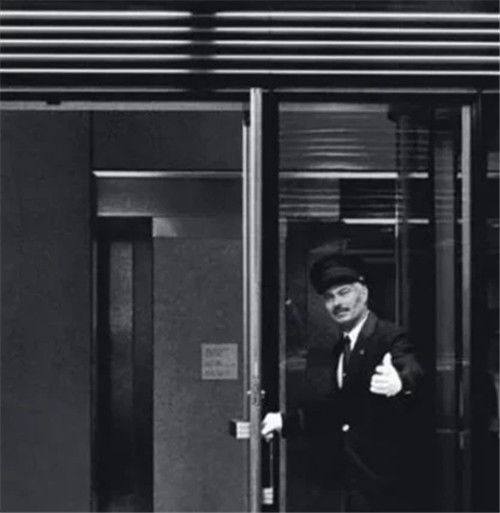
In this way, under Jill’s voluntary application, he became a concierge in charge of sliding doors for guests. Although this job had to stand upright for a whole day, it was very hard, but Jill enjoyed it. Of course, Jill is not perfunctory at this simple job, showing 100% enthusiasm. In order to make each guest feel enthusiasm and warmth, he forced himself to write down the name, appearance and basic life experience of each guest. In this way, when sliding the door, he can say a cordial sentence: Welcome, Mr./Madam!

Every day on the way to work, he is practicing more natural greetings. Every supper, he asks his wife to test himself, and strives to imprint the appearance of every guest in his mind.

Time flies, Jill’s outstanding performance has made countless guests feel as warm as a spring breeze, and has also earned Christie’s a lot of goodwill.

Until the company is about to hold a grand auction in London, the superior attaches great importance to this event, hoping to select a receptionist who knows all the artists and guests. The result was chosen, only Jill had this extraordinary ability.

But Jill’s child is only three weeks old, and the small family cannot do without him. Because of the backbone, Jill declined the request of his boss. Unexpectedly, the boss was resolute and asked Jill to go to London with his wife and children, and the company was responsible for settling his wife and children.

On the day of getting off the plane, someone from the company drove an extended Lincoln to pick up them. Although Jill understands that this is the company’s emphasis on this event, the feeling of being respected is so wonderful that it makes him even more convinced that his efforts are correct.

At this event, Jill put on a gorgeous tuxedo, but he said that the back of the tuxedo was very uncomfortable, and he was not as good as when he was a doorman. Jill did not fail the company’s trust and became a perfect part of the event. Since then, his work has remained the same, and it has not caused any waves.

After 35 years of conscientious work, Jill finally ushered in the day of retirement. He thought he would leave the market in such a bleak manner, but unexpectedly, the company gave him a big surprise.

The leader held a grand farewell banquet for him alone, and praised Jill at the banquet: Jill has been in the company for 35 years. During this period, he has seen the changes in the company and the price of art Ups and downs, but never lost the heart to treat customers warmly. Not only that, the leader also announced on the spot that Jill will retire as a “vice president” and enjoy a pension at the vice president level and various benefits.

The story of such a humble person is always more touching than the successful case of a wealthy son. Jill finally set a great example to young people: Treat work and life with enthusiasm and sincerity, and life will not treat you badly. In fact his story is very inspiring; it makes people reevaluate the definition of success. Success does not just mean wealth, power and fame, it also simply means one can enjoy and try their best to fulfill the responsibilities one has in their life.

One May Distinguish Himself In Every Walk Of Life

Link: https://peacelilysite.com/2022/05/27/one-may-distinguish-himself-in-every-walk-of-life/

#ChristieActionHouse#Doorman#Success

Source: https://inf.news/en/world/ee40f1f1bc0b5b7566a5af7bdf57b83a.html

The Chinese Hermit Tradition: An Interview with Red Pine

The Chinese Hermit Tradition: An Interview with Red Pine

Bill Porter (a.k.a. Red Pine) outside his home in California. Courtesy Andy Ferguson.

Bill Porter lived for three years in the early seventies as a Buddhist monk in Taiwan where he began his translations of poetry by the famous Chinese poet-recluse Cold Mountain. Porter’s mentor in this undertaking was the Buddhist scholar and translator John Blofield. After leaving monastic life, he married a Chinese woman and continued his translation work. Years later, Porter began the first of many long journeys in mainland China that he chronicled for radio audiences in Hong Kong and Taiwan. He produced over 1,100 short programs about different Chinese locales, embellishing his narratives with details from Chinese history and culture. In recent years he has focused on China’s great Zen monasteries, traveling to scores of the remaining abodes of famous ancient Zen teachers.

Porter’s main books of translation, published under the name Red Pine, include The Zen Teaching of Bodhidharma (North Point Press), The Zen Works of Stone House (Mercury House), The Clouds Should Know Me by Now: Buddhist Poet Monks of China (Wisdom Publications), and his latest, The Collected Songs of Cold Mountain (Copper Canyon). Road to Heaven: Encounters with Chinese Hermits (Mercury House) is published under the name Bill Porter because it is not a book of translation. This interview was conducted in Ukiah, California, north of San Francisco, by ANDY FERGUSON.

Tell me about your background and how you became interested in Buddhism.

My dad was a bank robber. He and his gang were knocking off banks in the South and worked their way north to the Michigan area. There they got in a shoot-out with police. All the robbers were killed except my dad, who was wounded in the knee and lost his kneecap. Then, of course, he went to prison. In the meantime, the family farm down South got sold and when Dad got out he used his portion to get into the hotel business in Texas. He then became a top hotel magnate and the family got very rich. So my childhood was one of wealth, with maids and big homes. First we lived in L.A., then later we lived near Coeur D’Alene in Idaho.

Dad bought Bing Crosby’s house. He liked Democratic Party politics and actually became head of the Democratic Party in California. He toyed with the idea of running for office, but he had this problem with his background, so he’d just get himself nominated for different offices and then turn down the nomination. Eleanor Roosevelt nominated my dad, Arnold Porter, to be President of the United States on national TV at the 1956 Democratic Convention. The Kennedy brothers, Ted and Robert, used to visit our house. John never came there, but when he was in the White House Dad used to get drunk and call him on the phone. He’d just do it to show off to us kids. My sister and brother and I went to fancy private schools, but even at a young age I hated it all. It was so phony, with everyone caught up in wealth and ego and power. It all seemed to me to be so hollow. Later, my dad divorced my mother and subsequently we lost everything. It all went into receivership. My sister and brother had a very difficult time learning to live without lots of money. But as for me, I was actually relieved when this happened. After some unsuccessful stints in junior college I served for three years in the Army as a clerk in a medical unit in Germany, and when I got out the GI Bill paid for my college education at UC Santa Barbara. When I encountered Buddhism, I didn’t have any problem understanding exactly what it was talking about. The whole thing was quite clear to me. After four years of college, I could have gone further into graduate school, but at that point all I wanted to do was become a Buddhist monk.

You’re recognized as an authority on Chinese religious culture not only among many Westerners, but among Chinese as well. For example, the head of the mainland Chinese Buddhist Association, Abbot Jing Hui of Bailin Monastery, has directed his head monk Minghai to translate your English book Road to Heaven: Encounters with Chinese Hermits into Chinese. Many Chinese learn about their traditions from you. In this case, your book is a window on the phenomenon of Chinese hermits. Talk about the perception of hermits in China and whether it is very different from our regard for them in the West.

The hermit tradition is actually one of the most important parts of Chinese society. We [in the West] almost always think of hermits as misanthropes, as people who want to step out of, and have nothing to do with, society—whereas in China the hermit has always been seeking the wisdom with which to guide society. My conversations with hermits in China led me to conclude that [for them] seclusion was like going to graduate school. Afterwards they can teach. Seclusion did not necessarily mean individual seclusion. It could also occur in a relatively secluded monastery. Persons who could “break the mold” and become teachers almost always required a period of seclusion for maturation. The Zen tradition represented one aspect of this tradition by producing these individuals en masse. You almost never hear of anybody who became a teacher by just working their way up through the ranks of an organization. This was true not only in Zen, but among other Buddhist schools such as Pure Land or T’ien-t’ai. It was true in Taoism as well. There was an awareness that to bring the teachings they had learned to fruition, individuals needed to be alone with them, and so Chinese hermits have been doing that. Nowadays, when I visit my hermit friends, I often find Chinese Communist officials visiting them too. One woman hermit I visited had six Communist officials in her hut, seeing if they could do anything to help her out. The Chinese previously maintained, and have recently revived, an awareness that these people were doing society a lot of good. They’re like a mountain stream that brings fresh water down into town. The water eventually reaches the town, no matter whether you pipe it down or it comes down as a spring.

Poet on a Mountain Top, Shen Chou (1427-1509), Album leaf mounted as a handscroll, ink on paper. The Nelson-Atkins Museum of Art, Kansas City, Missouri (Purchase: Nelson Trust).

In your book, Road to Heaven, it’s notable that at least one-half of the hermits you interviewed were women. How do you account for there being so many women hermits in China?

One of the reasons is because of the inequality between the sexes in China. It was a major decision for a family to allow a son to enter the clergy, since a son represented the parents’ social security. For daughters to marry out of the family, however, was expensive. It also represented a loss of labor to the family. Plus, the family had to make a big dowry payment. So it’s been easier for women to leave home to become hermits or enter religious orders for this reason. Sixty to seventy percent of the hermits I interviewed were women. It was very unlikely for a family to let a single son become a monk because he wanted to become one. If there was an extra son, however, it might be considered a good religious investment to let him become a monk.

You have a new book on the poetry of Cold Mountain out now. How did your interest in Cold Mountain come about and how did you come to translate his work?

I lived at a monastery in Taiwan run by Dharma Master Wuming, Chiang Kai-shek’s personal teacher. He gave me a copy of Cold Mountain poems that he had published. I liked them so much that I translated them myself. After I had done 150 of them, I wanted to publish them but didn’t know how to go about it. An Australian friend saw a lot of books on my bookshelf by John Blofield and said, “Why don’t you send them to him and ask him what to do with them?” So I did. John Blofield kindly answered my letter and we then began a relationship. Eventually I published three hundred of the poems and John Blofield provided the foreword for the book. Now, with my latest book, I’m revisiting those poems. It hadn’t occurred to me when I did the first book that when you translate a poem you have to write a poem.

I know that seems obvious, but it hadn’t really occurred to me. Now, after fifteen years, I feel I can translate a poem as a poem.

A hermit poet you’ve written about who had profound influence, not only in China, but also in Korea, was the Chinese Zen master Stone House. Can you talk about his place in the hermit tradition and why he came to have such a widespread influence?

Well, he was one of the exceptional Zen students who became a poet. Stone House had a genius for poetry that is unique. I’ve always said that he was the greatest of all the Chinese Buddhist poets. And although he was a hermit, he was a Zen teacher, too, and he taught individuals through his poetry. Stone House loved the hermit tradition, but managed to attract people to his hermitage just as if he was living downtown. He is a good example of how the hermit tradition affects society. By staying up on his mountain, he was able to affect the course of Zen in Korea. A prominent Korean monk came and studied with him at his hermitage and then took the robe and bowl of Stone House back to his country and established the Chogye Order, Korea’s main Zen tradition.

So Stone House was able to affect people by being a hermit, and his influence as a teacher was bound up in his skill as a poet. There were Zen masters in China who were his equal or even his superior in their Zen understanding, but nobody wrote a better poem.

Photo by Klub Boks on Pexels.com

What was it like to visit the place where Stone House lived?

One of the things I always try to do in China is “revisit the scene of the crime.” I go to the sites associated with figures that I admire. On one trip, I sought out the mountain where Stone House lived as a hermit. In the last five hundred years a road was actually built to the top of the mountain and now there’s a military electronic relay installation there. Within a few minutes after we arrived we were surrounded by the authorities there. But as soon as I whipped out my published translations of Stone House’s poems along with the original Chinese, the officer in charge told the soldiers to put away their guns. He then got out his machete and personally led me through the undergrowth to an old farmhouse made of rocks on the mountain. He said, “This is where those poems were written. When we moved here it used to be a little Buddhist temple.” There was a farmer living there who confirmed that this was where Stone House lived. The spring was still flowing right behind the hut, the only spring on the mountain. It was just remarkable to go to a site where someone you know lived a long time ago and find the same old hut there, with only a few bricks replaced or the roof having been repaired after falling in six or seven times since he lived there. That’s what I love to do in China. I love to visit these old places.

It sounds like the Chinese officer in charge was quite interested in helping you.

Even though there’s religious oppression going on in China, it is mainly a political oppression. It doesn’t have anything to do with the underlying cultural appreciation that remains with the people of China, even with the Communist Party officials at the local level. It goes to show that despite fifty years of Communist rule, the Chinese people themselves have an amazing appreciation for their own culture, their history, and the religions of China.

The Chinese Hermit Tradition: An Interview with Red Pine

Link:https://peacelilysite.com/2022/05/20/the-chinese-hermit-tradition-an-interview-with-red-pine/

Source: https://tricycle.org/magazine/the-chinese-hermit-tradition-an-interview-with-red-pine/

Dirty Bath Water [Cleanliness]

25. Dirty Bath Water [Cleanliness]

Buddhist Tales for Young and Old, volume 1, Prince Goodspeaker, Stories 1-50

Once upon a time, in a kingdom in India, the finest of the royal horses was taken down to the river to be bathed. The grooms took him to the same shallow pool where they always washed him.

However, just before they arrived, a filthy dirty horse had been washed in the same spot. He had been caught in the countryside and had never had a good bath in all his life.

The fine royal horse sniffed the air. He knew right away that some filthy wild horse had bathed there and fouled the water. So he was disgusted and refused to be washed at that place.

The grooms tried their best to get him into the water, but could do nothing with him. So they went to the king and complained that the fine well-trained royal stallion had suddenly become stubborn and unmanageable.

It just so happened that the king had an intelligent minister who was known for his understanding of animals. So he called for him and said, “Please go and see what has happened to my number one horse. Find out if he is sick or what is the reason he refuses to be bathed. Of all my horses, I thought this one was of such high quality that he would never let himself sink into dirtiness. There must be something wrong.”

The minister went down to the riverside bathing pool immediately. He found that the stately horse was not sick, but in perfect health. He noticed also that he was deliberately breathing as little as possible. So he sniffed the air and smelled a slight foul odour. Investigating further, he found that it came from the unclean water in the bathing pool. So he figured out that another very dirty horse must have been washed there, and that the king’s horse was too fond of cleanliness to bathe in dirty water.

The minister asked the horse grooms, “Has any other horse been bathed at this spot today?” “Yes,” they replied, “before we arrived, a dirty wild horse was bathed here.” The minister told them, “My dear grooms, this is a fine royal horse who loves cleanliness. He does not wish to bathe in dirty water. So the thing to do is to take him up river, where the water is fresh and clean, and wash him there.”

They followed his instructions, and the royal horse was pleased to bathe in the new place.

The minister returned to the king and told what had happened. Then he said, “You were correct your majesty, this fine horse was indeed of such high quality that he would not let himself sink into dirtiness!”

The king was amazed that his minister seemed to be able to read the mind of a horse. So he rewarded him appropriately.

The moral is: Even animals value cleanliness.

25. Dirty Bath Water [Cleanliness]

Link: https://peacelilysite.com/2022/05/12/dirty-bath-water-cleanliness/

INTERPRETER’S INTRODUCTION – BUDDHIST TALES FOR YOUNG AND OLD, VOLUME 1, STORIES 1-50

#Buddhisttalesforyoungandold #Buddhiststories #storiesforkids #moralstories #Buddha #Jatakastories #PansiyaPanasJataka

Poems of the Legendary Hermit Cold Mountain (Hanshan)

Poems of the Legendary Hermit Cold Mountain (Hanshan)

Photo by Denis Linine on Pexels.com

Cold Mountain (Hanshan) was a legendary master of Hermetic poetry and Zen practice, although there are few records about his life in the history. Yet his poems, more than three hundred pieces, miraculously survived. He lived in southeastern China during the Tang dynasty, approximately 1300 years ago. People said that Hanshan was the incarnation of Manjushri Bodhisattva. His poems are full of inner realization wisdom. I am really surprised that there are many English versions of his poems. There are even some podcasts to narrate the poems for the audience. I do hope that different cultures can learn from each other, adapting the good parts from each other. Let us work together to make the world a better place for all beings.

Based on the hundreds of poems he wrote on the walls of the cave where he made his home after leaving behind what he called “the dusty world” of getting, spending and delusion, so he could spend his life in the natural world with his heart and mind uninterrupted by such distractions, as his poem said : “with nothing to do I write poems on rock walls/trusting the current like an unmoored boat.” Hanshan found that he was often able to put an end to what he called “useless mixed-up thinking” and enjoy a good measure of peace and tranquility as a “person of nondoing” who wandered in the mountains, idly read a copy of an ancient sage, or played his humble lute on the precipice outside his cave.

Living a life unhindered by worldly concerns, much of Hanshan’s beautifully imagined poetry is filled with compassionate discernment, profound tranquility, and a quiet but compelling purity of unexpected insight. But that is not all. The hermit-poet known as Hanshan discovered that it is not as easy to leave the world behind as one might think. Decades of solitude and wandering brought forward other elements from the full depth of his humanity, and so his poems also express his loneliness, longing for a companion of the way, sorrow at the loss of friends, as well as an occasional biting critique of the many ways his fellow human beings created harm in the world, though it must be said that even in these poems there is a compassion that reveals Hanshan’s deepest longing for others to know the wholeness, serenity and peace he experienced within his tender and all too human heart.

Here are some poems translated by Gary Snyder

1.

Men ask the way to Cold Mountain
Cold Mountain: there’s no through trail.
In summer, ice doesn’t melt
The rising sun blurs in swirling fog.
How did I make it?
My heart’s not the same as yours.
If your heart was like mine
You’d get it and be right here.

2.

Clambering up the Cold Mountain path,
The Cold Mountain trail goes on and on:
The long gorge choked with scree and boulders,
The wide creek, the mist blurred grass.
The moss is slippery, though there’s been no rain
The pine sings, but there’s no wind.
Who can leap the world’s ties
And sit with me among the white clouds?

3.

In my first thirty years of life
I roamed hundreds and thousands of miles.
Walked by rivers through deep green grass
Entered cities of boiling red dust.
Tried drugs, but couldn’t make Immortal;
Read books and wrote poems on history.
Today I’m back at Cold Mountain:
I’ll sleep by the creek and purify my ears.

4.

I can’t stand these bird songs
Now I’ll go rest in my straw shack.
The cherry flowers are scarlet
The willow shoots up feathery.
Morning sun drives over blue peaks
Bright clouds wash green ponds.
Who knows that I’m out of the dusty world
Climbing the southern slope of Cold Mountain?

5.

There’s a naked bug at Cold Mountain
With a white body and a black head.
His hand holds two book scrolls,
One the Way and one its Power.
His shack’s got no pots or oven,
He goes for a long walk with his shirt and pants askew.
But he always carries the sword of wisdom:
He means to cut down senseless craving.

Photo by Pixabay on Pexels.com

6.

Cold Mountain is a house
Without beams or walls.
The six doors left and right are open
The hall is sky blue.
The rooms all vacant and vague
The east wall beats on the west wall
At the center nothing.
Borrowers don’t bother me
In the cold I build a little fire
When I’m hungry I boil up some greens.
I’ve got no use for the kulak
With his big barn and pasture –
He just sets up a prison for himself.
Once in he can’t get out.
Think it over –
You know it might happen to you.

7.

If I hide out at Cold Mountain
Living off mountain plants and berries –
All my lifetime, why worry?
One follows his karma through.
Days and months slip by like water,
Time is like sparks knocked off flint.
Go ahead and let the world change –
I’m happy to sit among these cliffs.

8.

My home was at Cold Mountain from the start,
Rambling among the hills, far from trouble.
Gone, and a million things leave no trace
Loosed, and it flows through galaxies
A fountain of light, into the very mind –
Not a thing, and yet it appears before me:
Now I know the pearl of the Buddha nature
Know its use: a boundless perfect sphere.

Poems of the Legendary Hermit Cold Mountain (Hanshan)

#ChinesePoems#LegendaryHermit#Hanshan#ColdMountain#Zen#HermeticPoetry#ChineseCulture

Link: https://peacelilysite.com/2022/05/05/poems-of-the-legendary-hermit-cold-mountain-hanshan/

Source: https://www.upaya.org/2020/06/levitt-tanahashi-poetry-legendary-hermit-hanshan-7-parts/ poems from https://www.writewww.com/topic.php?tkey=1309068539&theme_id=1388

Finding Them Gone: Visiting China’s Poets of the Past

Finding Them Gone: Visiting China’s Poets of the Past

Bill Porter (Red Pine)

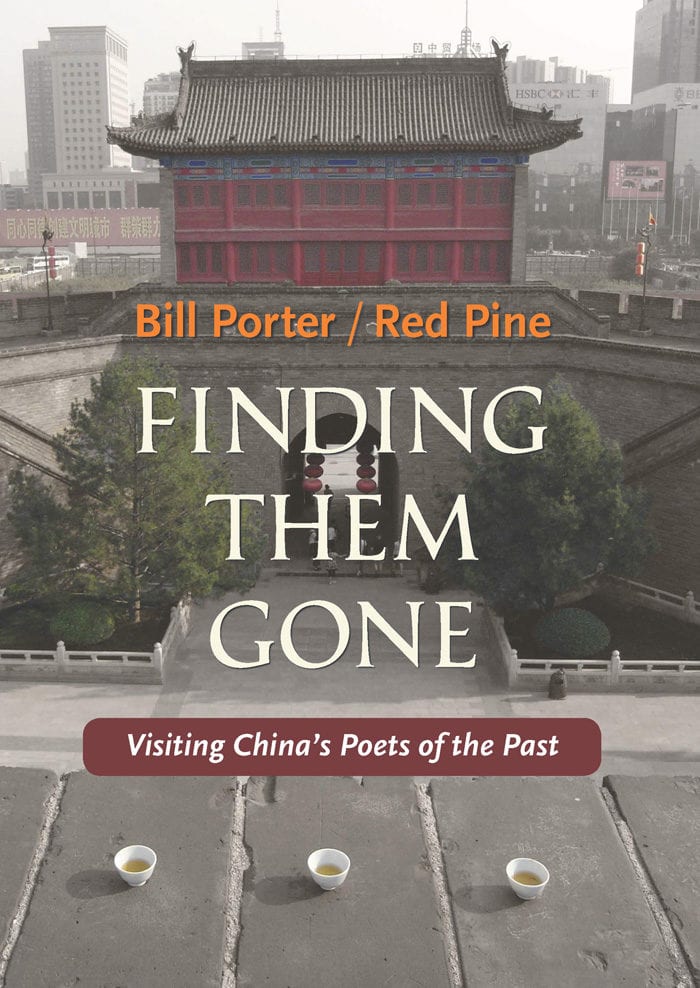
To pay homage to China’s greatest poets, renowned translator Bill Porter—who is also known by his Chinese name “Red Pine”—traveled through China visiting dozens of poets’ graves and performing idiosyncratic rituals that featured Kentucky bourbon and reading poems aloud to the spirits. Combining travelogue, translations, history, and personal stories, this intimate and fast-paced tour of modern China celebrates inspirational landscapes and presents translations of classical poems, many of which have never before been translated into English. Porter is a former radio commentator based in Hong Kong who specialized in travelogues. As such, he is an entertaining storyteller who is deeply knowledgeable about Chinese culture, both ancient and modern, who brings readers into the journey—from standing at the edge of the trash pit that used to be Tu Mu’s grave to sitting in Han Shan’s cave where the Buddhist hermit “Butterfly Woman” serves him tea. Illustrated with over one hundred photographs and two hundred poems, Finding Them Gone combines the love of travel with an irrepressible exuberance for poetry. As Porter writes: “The graves of the poets I’d been visiting were so different. Some were simple, some palatial, some had been plowed under by farmers, and others had been reduced to trash pits. Their poems, though, had survived… Poetry is transcendent. We carry it in our hearts and find it there when we have forgotten everything else.”

These are some of the Poets’ graves that Bill has visited : Li Pai, Tu Fu, Wang Wei, Su Tung-p’o, Hsueh T’ao, Chia Tao, Wei Ying-wu, Shih-wu (Stonehouse), Han-shan (Cold Mountain). 

With Finding Them Gone as your map, you will encounter rural and industrial China’s shifting cultural landscape without ever leaving the page. On your journey, you’ll set off by train in Beijing and arrive in the cave where Cold Mountain, a master of Hermetic poetry and Zen practice, once sang his verses—“with nothing to do I write poems on rock walls/trusting the current like an unmoored boat.” 

Each step of the pilgrimage is marked with poetry from Chinese masters—among them Stonehouse, Cold Mountain, and Li Po—including poems never before translated into English.

Finding Them Gone: Visiting China’s Poets of the Past

Link: https://peacelilysite.com/2022/05/03/finding-them-gone-visiting-chinas-poets-of-the-past/

Source: https://www.coppercanyonpress.org/books/finding-them-gone-visiting-chinas-poets-of-the-past-by-bill-porter-red-pine/, https://www.indiegogo.com/projects/finding-them-gone-red-pine-s-poetry-pilgrimage#/

A Close Look at Hua Zang Si

A Close Look at Hua Zang Si

Hua Zang Si is my favorite sacred spiritual worship place in the bay area. In there I find peace, relaxation, and harmony, and a home for my soul. I have gone there many times, to chant the sutra, join the meditation sessions, and participate in Dharma assemblies.

Hua Zang Si, an impressive-looking temple located in the center of the Mission District in San Francisco. The building was formerly the St. John’s Evangelical Lutheran Church, built in 1903, and has been repurposed as a Chinese temple. To me it is really a friendly symbol that different religions can coexist in harmony.

The large outside facade of the temple is painted red color, made the building a very outstanding and eye-catching landmark in the neighborhood. Red is a good color in Chinese culture that symbolizes auspiciousness and warding off evil spirits。

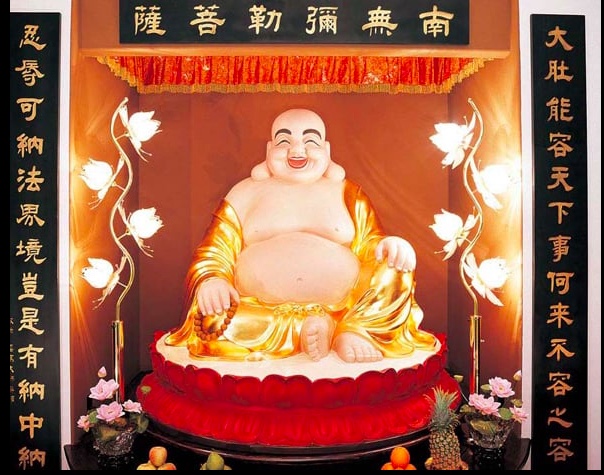
Once entering the temple, I feel like I am in another world. The marvelous statue at the entrance of the temple is an oversize representation of a jolly, laughing Buddha: Maitreya Bodhisattva (the next Buddha in this Saha world). It is such a warm welcoming sign. The big belly not only means jolly, it also means tolerating those intolerable things in the world. So when you look at the statue, you will start to feel that learning Buddhism is happy and kind.

The right line of the couplet is “da du neng rong tian xia shi he lai bu rong zhi rong.” As self-cultivators, we should be like the Buddhas and Bodhisattvas. We should have a broad mind, open heart, and great tolerance.
The left line of the couplet is “ren ru ke na fa jie jing qi shi you na zhong na.” The first priority for one who learns Buddhism and cultivates himself is to be patient and forbearing under insult. The thought of patience or tolerance does not arise from his mind. Everything in all of the dharma realms can change from ordinary to holy. 

Walking inside, the first floor is Shakyamuni Buddha Hall. The golden statue of Shakyamuni Buddha is a very dignified-looking Buddhist statue. On the left side is the one thousand-armed and one thousand-eyed Guanyin Bodhisattva, an awe-inspiring statue. On the right side is Skanda Bodhisattva, a standing majestic full-body armored statue. With a sword in hand, Skanda Bodhisattva is a Buddha Dharma protector, and it is believed he can subjugate demons and evil spirits.

Shakyamuni Buddha
One thousand-armed and one thousand-eyed Guanyin Bodhisattva
Skanda Bodhisattva

The second floor is Amitabha Buddha Hall. The twenty-one-foot-high statue of Amitabha Buddha (designed by H.H. Dorje Chang Buddha III) has been generally recognized as the most majestic Buddhist statue in the world. It is an extremely solemn sight. The color painted on the face is so lifelike, one feels like seeing the real Amitabha Buddha from western paradise. The Buddha’s eyes seem alive as well, looking down at all beings full of compassion and love. Every time when I look at the Buddha, I feel so moved and touched, tears fill my eyes. I can’t help but to kneel down and pray wholeheartedly: Please Buddha save me from the birth-death cycle, please take me to the western pure land. I feel my whole body melted into the compassionate gaze of the Buddha.

In the center of Amitabha Buddha hall, there is a large circular mandala on which a Yun sculpture (carved by H.H. Dorje Chang Buddha III) depicting Mt. Sumeru is placed. In that Yun sculpture are shariras (sacred relics) of the Shakyamuni Buddha for worshipping.

Directly facing the Amitabha Buddha is a tall Dharma altar, there is a huge blue Dorje Chang Buddha image. Dorje Chang Buddha is also called Buddha Vajradhara or Ruler of the Vajra Beings. In the entire universe, Dorje Chang Buddha is the first Buddha with form and is the highest Buddha. That is, the highest leader of Buddhism in the entire universe came into being in the form of Dorje Chang Buddha. It was Dorje Chang Buddha who began transmitting dharma and saving living beings in the dharmadhatu. As a result, Buddhism was born and the Buddha-dharma began spreading.

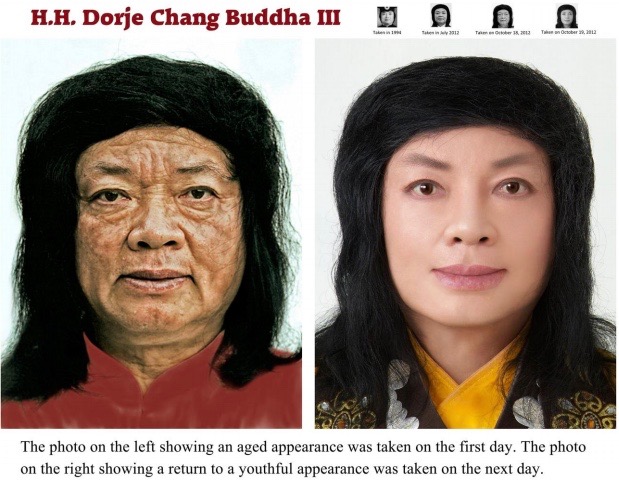
In front of the image of Dorje Chang Buddha are photos of H.H. Dorje Chang Buddha III.  Dorje Chang Buddha has come to this world twice. The first time was in the form of the holy and venerable Vimalakirti, who was Dorje Chang Buddha II. The second time was in the form of H.H. Wan Ko Yeshe Norbu, who is Dorje Chang Buddha III.

 Dorje Chang Buddha III

These photos were true records of the holy miracle Buddha Dharma. On October 18, 2012, H.H. Dorje Chang Buddha III within ten minutes, reversed his appearance back to a youthful look. This incredible Buddha Dharma ever practiced successfully by Guru Rinpoche long time ago in Tibet.

A large Tibet thangkas hang on the north wall of the hall, it is about BRIEF BUDDHIST LINEAGE REFUGE TREE.

Hua Zang Si has many Holy Treasures , make sure you check them out at the corner of this hall as well.

The third floor contains a library of Buddhist scriptures.

The backyard — a city oasis in the shadow of surrounding Victorians — is home to a magnolia tree, which the faithful say rained nectar for three days, along with a miraculous lotus tub used in the bathing of the Buddha and heavenly beings.

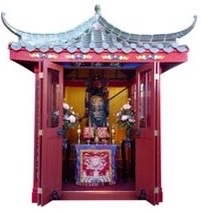
Further back, there is Dharma protector pavilion, a statue of the Dharma Protecting Deity Guan Yu was installed inside.

Guan Yu took refuge in Master Zhiyi at Yuquan Hill. He then manifested great supernatural power and constructed the Yuquan Temple overnight on a barren lot, where he resolved to become a protector of Buddhism. That is why, upon the plea of many Buddhist practitioners, he was recommended to be the Dharma Protecting Deity of Hua Zang Si.

Hua Zang Si is different from other temples that propagate only one sect within Buddhism. It teaches all of the various sects within Buddhism. If you want to know and learn Buddhism, Hua Zang Si is the best place to start with.

Hua Zang Si has many Holy Treasures and Holy Manifestations, make it a very special and inspiring place worth visiting. Here is the website for details: http://huazangsi.org/en/home.php

Temple address is 3134 22nd St., phone: 415-920-9816.

A Close Look at Hua Zang Si

Link:https://peacelilysite.com/2022/04/27/a-close-look-at-hua-zang-si/

#DorjeChangBuddhaIII#HHDorjeChangBuddhaIII#HuaZangSi #Buddha #Buddhism #buddhist #Temple#GuanYinBodhisattva#BuddhismTemple#SanFrancisco#Maitreya Bodhisattva#SkandaBodhisattva#DharmaProtector#DharmaProtectingDeity#GuanYu

Nietzsche and Eastern Philosophy (Buddhism)

Nietzsche and Eastern Philosophy (Buddhism)

Posted by Eternalised Posted in Eastern philosophy

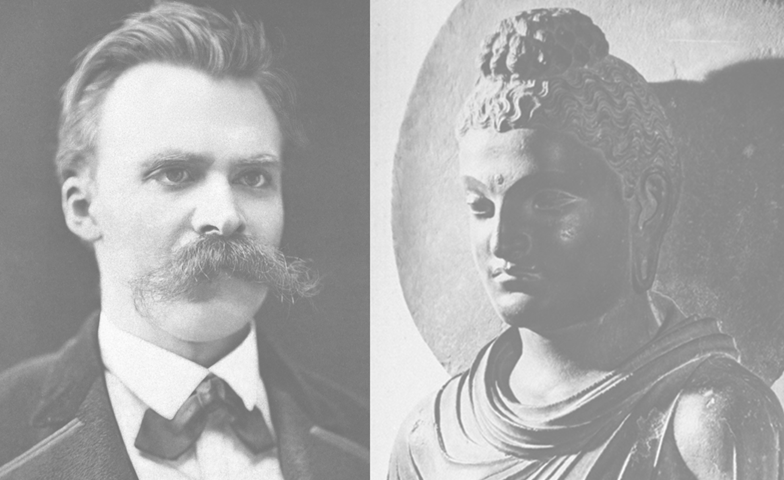
There are some good reasons to believe that Nietzsche was interested in Eastern philosophy during his lifetime. In the Antichrist he states:

“Buddhism, I repeat, is a hundred times more austere, more honest, more objective. It no longer has to justify its pains, its susceptibility to suffering, by interpreting these things in terms of sin—it simply says, as it simply thinks, ‘I suffer’”

Nietzsche, The Antichrist, 23

Buddhism, as a pessimistic and decadent religion for Nietzsche resembles Christianity but it seems that he had far more admiration for Buddhism. He inherited most of his understanding of Buddhism from Schopenhauer, who considered his own pessimistic philosophy a European relative of Buddhism.

Schopenhauer, in his research into Indian philosophy, appears to have attained the most comprehensive understanding among nineteenth century German thinkers of a system of Asian thought.

Arthur Schopenhauer

Although Nietzsche did read about Buddhism, it was usually second-hand and westernised, he was predisposed to react to Buddhism in terms of his close reading of Schopenhauer. Many Buddhists have since disputed Schopenhauer’s comprehension of their religion.

Influenced by Schopenhauer, Nietzsche criticised both Christianity and Buddhism as forms of nihilism, where the will to nonentity prevails over the will to life. However, he soon feared the rise of pessimism in Europe would culminate in the triumph of the weary and passive nihilism.

It is important to know that Nietzsche was not a nihilist as some suggest, stating that the modern man would have to create his own values through a Revaluation of All Values, leading to the Ubermensch, affirming the world and saying yes to existence, the pinnacle of self-overcoming.

The foundation of his critique of Buddhism is his characterisation of Nirvana as a nothingness and as a form of nihilism. However, this does not best describe the Buddhist path.

There are Four Noble Truths in Buddhism. The first one is the acknowledgement of duhkha or “suffering”, an inseparable characteristic in the realm of Samsara, which suggests that human beings, at the time of death, are reborn to a realm determined by their karma. It is the cycle of aimless drifting, wandering or mundane existence.

Samsara

If we stop here, we can see why Nietzsche considers it nihilistic. However, this is but one of the noble truths. The second one is the origin of this suffering which comes from craving, desire or attachment and the third one states that there is an end to suffering, by letting go of this craving. This leads to the final noble truth, which is the path that gives way to renouncement of craving and the cessation of suffering, following the Noble Eightfold Path, which liberates one from Samsara, the painful cycle of rebirth – achieving Nirvana, the cessation of all afflictions, actions, rebirths and suffering that are a consequence of afflictions and actions.

8 Rights: The Noble Eightfold Path — the Heart of the Buddha's Teaching -  Buddha Weekly: Buddhist Practices, Mindfulness, Meditation
Noble Eightfold Path

Nirvana refers to the realisation of the “non-self” and “emptiness”, marking the end of rebirth by stilling the fires that keep the process of rebirth going. This is what Nietzsche thought of as a longing for nothingness. However, it is not a longing for nothingness, it is simply the end of Samsara. Thus, different from Schopenhauer’s pessimism, Buddhism starts pessimistic but ends with the positive experience of Nirvana.

It is not an escape from the world, one begins with the suffering inherent in life, one is to overcome pleasure and pain, before beginning a mindful examination of one’s self and reality as perceived by the self. Upon this examination, one realises that there is no self, but only the combination of mental and physical states (skandhas).

How can the five skandhas in Buddhism be elucidated? - Quora
The Five Skandhas

This realisation of non-self is also misunderstood. It is not a destruction of a self, but rather a rejection of the existence of a self. Buddhists believe that the concept of “emptiness” means that all things are empty of inherent existence, there is no such thing as inherent existence, everything arises mutually. Thus, negation in the East does not have the same pessimistic connotation that it has in the West.

Perhaps the most serious misreading we find in Nietzsche’s account of Buddhism was his inability to recognise that the Buddhist doctrine of emptiness was an initiatory stage leading to a reawakening.

Throughout Nietzsche’s books and notes, he refers to different aspects of Eastern philosophy on more than four hundred occasions, and in several of these he claims to be interested in it.

Although Nietzsche considers Eastern philosophy as nihilistic, he does indicate its profundity. It seems that he studied this material closely and appreciated it greatly, this is important to note. And even if Nietzsche despised sacred texts, he upholds the beauty and grandeur of them as literary documents.

Nietzsche’s interest in studying Buddhism seems to be seeing it as a psychological symptom, as well as a historically embedded phenomena. Having chosen Buddhism to comment on might be in line with his idea of having the courage to engage with worthy adversaries. He states:

He (the Buddha) does not advocate any conflict with unbelievers; his teaching is antagonistic to nothing so much as to revenge, aversion ressentiment. And in all this he was right, for it is precisely these passions which, in view of his main purpose, are unhealthful.

Nietzsche, The Antichrist, 20

Here he agrees on the Buddha’s doctrine, which is opposed to the feelings of revenge, antipathy and ressentiment. And in Thus Spoke Zarathustra he said:

“For that man be delivered from revenge, that is for me the bridge to the highest hope, and a rainbow after long storms”

Nietzsche’s conceptions of the Eternal Recurrence and Samsara, Zarathustra and Bodhisattva (a person who is able to reach Nirvana but delays doing so through compassion for suffering beings), the Transvaluation of All Values and Nirvana, are all examples of similarities.

In his analysis of the self, Nietzsche contended:

“the subject is only a fiction: the ego of which one speaks when one censures egoism does not exist at all”. This is remarkably similar to the Buddha’s doctrine of non-existence of the self.

Nietzsche’s philosophy may have been much more similar to Buddhism than he might have realised. This should not be surprising, given Nietzsche’s respect for the Buddha and that Buddhism concerns itself with one of the basic problems with which Nietzsche was grappling: the structure and meaning of the human condition.

At the onset of his mental collapse, he even came to identify himself with Buddha:

“I have been Buddha in India, Dionysus in Greece.

However, on the whole, this impression is deceptive.


Watch The Full Video 📺

Eastern Philosophy and Nietzsche | Buddhism and Hinduism

Although Nietzsche considers Eastern philosophy as nihilistic (wrongly), he does indicate their profundity. It seems that he studied this material closely and appreciated it greatly.

Nietzsche and Eastern Philosophy (Buddhism)

Link: https://peacelilysite.com/2022/04/27/nietzsche-and-eastern-philosophy-buddhism/

Source: https://eternalisedofficial.com/2020/11/11/nietzsche-and-buddhism/

#Buddhism#Nietzsche#Christianity#Philosophy#FriedrichNietzsche#Nihilistic#FourNobleTruths#Nirvana

Dr. Yuhua Shouzhi Wang’s Paintings and Achievements

Dr. Yuhua Shouzhi Wang’s Paintings and Achievements

Professor Yuhua Shouzhi Wang is a world-renowned painter. Throughout Asia, she is the only artist to whom the New York Academy of Art conferred the title of international preeminent artist of first class standing. 

The art world has classified the quality of ink painting into four different levels: Class of Proficiency, Class of Wonderment, Class of Divinity, and Class of Ease. Artwork of the Class of Proficiency has the ability to present a resemblance of objective reality, achieving likeness in form. This is the first stage of artistic creation. The art world calls it the stage of sketching. This is a stage that an artist cannot skip, yet they also cannot remain at this status quo, because this is an elementary stage. The next level is the Class of Wonderment. Artworks of this Class demonstrates highly skilled techniques. The artist is able to paint anything at will without revealing any trace of effort. However, one also cannot remain stagnant at this stage.

The next level after the Class of Wonderment is the Class of Divinity where the art carries likeness of ‘form’ and likeness of ‘spirit.’ In ink painting, the highest state of accomplishment is the Class of Ease where the artist attains natural ease by using simple brushstrokes to fully capture the form. With the most succinct brushwork and the most superb technique, the artist depicts objective reality and attains a state of miraculousness where both form and spirit are fully captured. This is the kind of art that viewers never get tired of appreciating; it leaves a wonderful aftertaste. There are only about a dozen people in the history of art who have attained such a class.

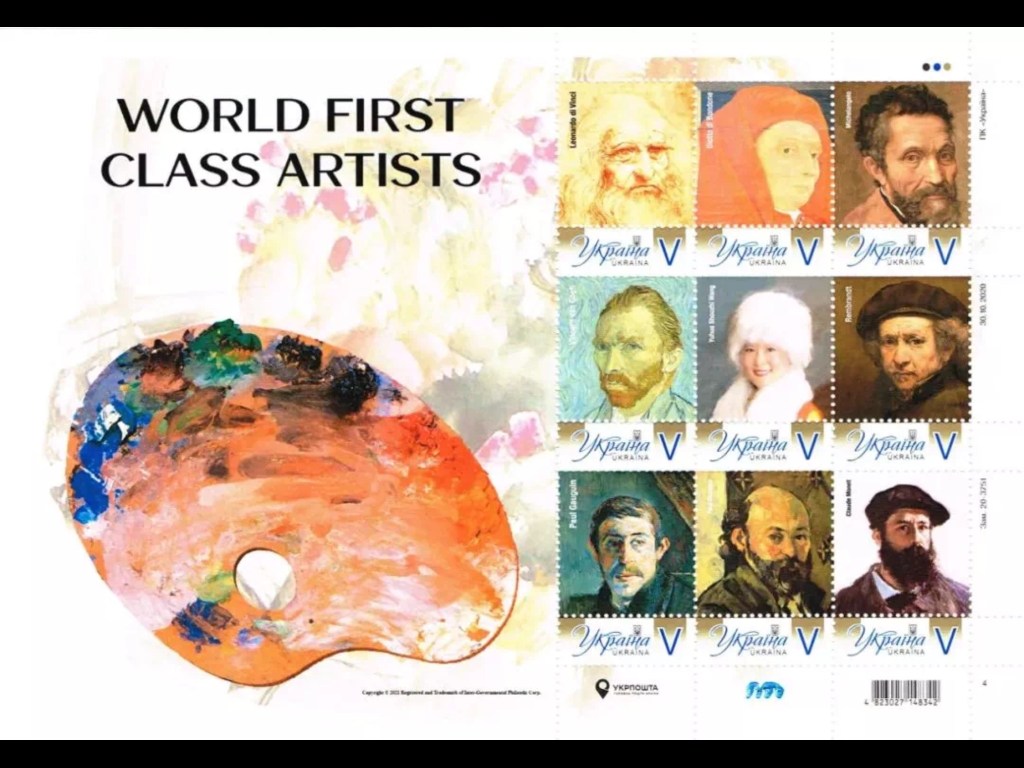
Stamps published in Ukraine

 In 2008, the United States Congress exhibited her sculptures and paintings in the Gold Room in the Rayburn Congressional Building which received rave reviews. Professor Stephen Farthing of the University of the Arts in London, United Kingdom, determined that “Professor Wang’s paintings reach across cultures to celebrate the space that exists intellectually and emotionally between representation and abstraction, between a fact and an idea…Dr. Wang’s paintings may draw heavily on the traditions of Eastern art, but they present themselves as extraordinarily Western ideas and images.”

in 2013, out of the works of all painters, the World Federation of UNESCO Clubs, Centers and Associations (WFUCA) awarded the title “WFUCA2013” to the artworks of Professor Yuhua Shouzhi Wang. In 2020, the United States National Commission for UNESCO Clubs, Centers, and Associations conferred on her the “International First-Class Artist” title along with the issuance of a certificate and badge.

In 2019, When Professor Wang’s solo exhibition was held at the Shanghai Exhibition Center that used to be the Sino-Soviet Friendship Building, a record-breaking number of people visited the show. The Museum Director Wu Shufang stated that the museum had never experienced such an overwhelming number of visitors since its official opening, and for this exhibition, they had to post notices to limit admission. Same year, she held a solo exhibition, titled One Flower, Two Worlds at the Louvre in Paris in 2019 and created a sensation in French art circles. This exhibition showcases 27 of Professor Wang’s extraordinary artworks each of which has reached the height of the Class of Ease.

More than 200 distinguished members of society, artists, collectors, entrepreneurs, and art lovers attended the exhibition opening; including representatives from French museums, professors from French art institutes, French nobilities, renowned artists, celebrities, representatives from auction houses, art critics and journalists from major news media. They all marveled at the artworks and expressed their praises. They considered this an unprecedented experience for French people.

Simply put, the artistry of Professor Yuhua Shouzhi Wang has attained the highest level of artistry in ink painting which is the Class of Ease. One of Professor Yuhua Shouzhi Wang’s paintings Pomegranates in a Basket realized a top auction price of US$1.27 million at the Gianguan Auction House in New York on March 13 of 2019. It clearly shows that the art of Professor Yuhua Shouzhi Wang is recognized by art collectors and people of foresight alike.

Dr. Yuhua Shouzhi Wang is the Lifetime Honorary Chairwoman of the International Art Museum of America. The museum has a dedicated gallery exhibiting her artworks. Her paintings encompass a broad range of styles and subject matters, including landscapes, animals, flowers, birds, and so forth, all of which have reached the summit of world class artistic excellence. Based on her lotus and water lily paintings, artists have acclaimed that Professor Yuhua Shouzhi Wang is the foremost lotus painter of all times. No artist in the past would have been able to surpass her accomplishment, and her works will continue to inspire generations to come. Among all notable lotus painters, her skills are extremely profound, substantial, and masterful, and she is among the most distinguished artists in history. Her artistic achievement has reached perfection at the summit of the “ten ultimate artistries.”

The well-known saying, “Deeply hidden talent not easily revealed” aptly describes Dr. Yuhua Shouzhi Wang’s morality and inner refinement. The characteristics of an artist’s paintings essentially reflect the character of the painter. From the paintings below you can find humility, inner peace, harmony and noble morality of professor Wang.

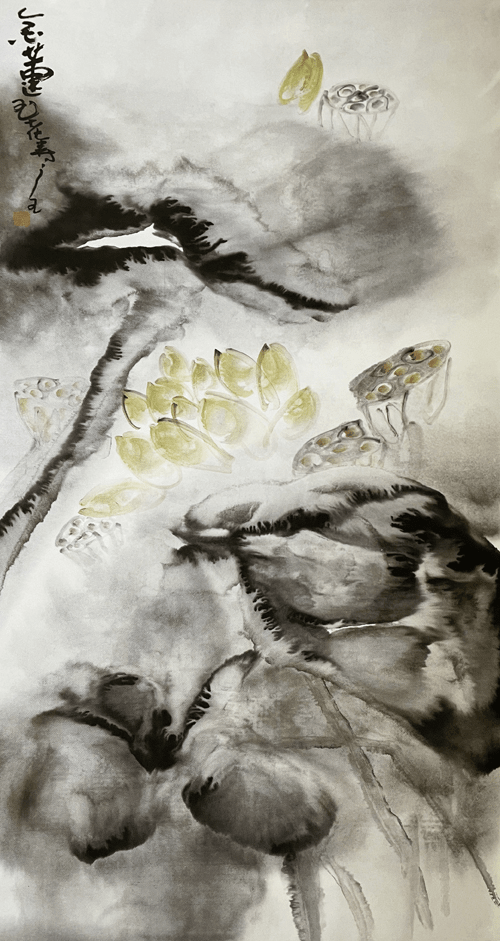
Golden Lotuses

The approach of Professor Yuhua Shouzhi Wang to draw flowers in gold and create leaves with splashed watery ink exhibits high elegance, great beauty, and lovely simplicity. The technique of Professor Yuhua Shouzhi Wang to paint lotus flowers in varying degrees of darkness and lightness enables her to represent fully a striking charm in both tone and form. Every stroke is lively, vigorous, graceful, and without the slightest air of affectation. Applying mature and seasoned artistry, she fully displays on paper her unfettered, natural, unattached state of mind. The brushwork was completed with ease and spontaneity, free of any inhibition. The atmosphere is strong but very elegant and pure. This entire painting provides much comfort to the eyes.

Brushstrokes as Spontaneous as Dancing Dragons and Snakes
Springtime Snow-White Plum Blossoms as Pure as Jade
The Ink-wash paintings of Dr. Yuhua Shouzhi Wang
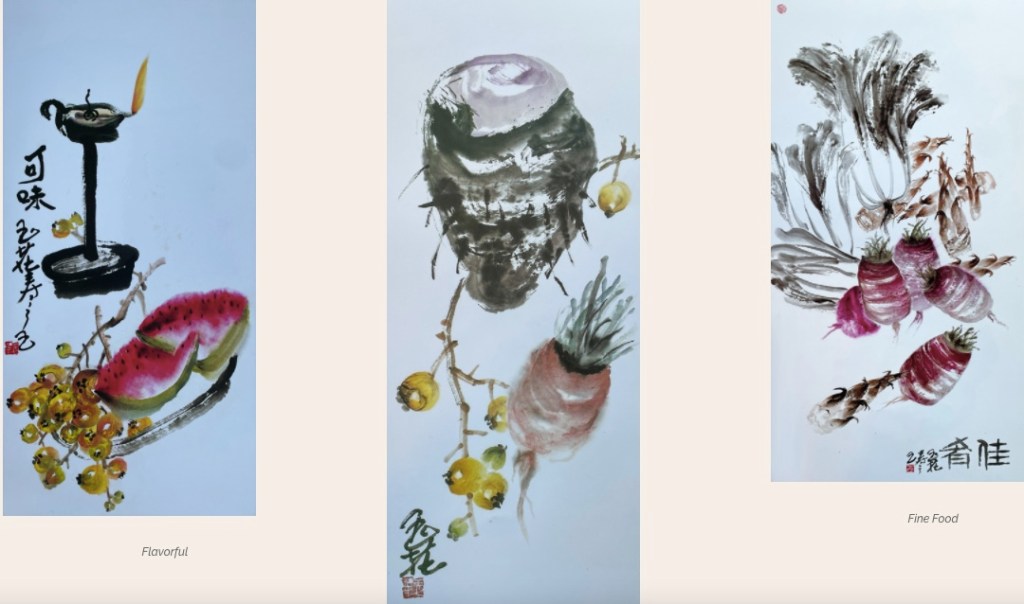
Loquats and Radish Staring at Taro

Some of professor Wang’s paintings have been published on stamps.

Dr. Yuhua Shouzhi Wang’s Paintings and Achievements

Link: https://peacelilysite.com/2022/04/20/dr-yuhua-shouzhi-wangs-paintings-and-achievements/

#ProfessorYuHuaShouZhiWang#Art#Artist#ClassofEase#InternationalArtMuseumofAmerica#TenUltimateArtistries#ArtistofFirstclassstanding#Inkpaintings#LotusPainters

Source: Professor Xingyi Gu   |  Wed, 16 Oct 2019, 12:40:15 EDT https://www.send2press.com/wire/solo-exhibition-of-professor-yuhua-shouzhi-wang-international-preeminent-artist-of-first-class-standing-amazes-art-world-at-palais-du-louvre/h International Art Museum of America.