The Essence of Buddha’s Teachings: A Journey of Wisdom and Self-Discovery

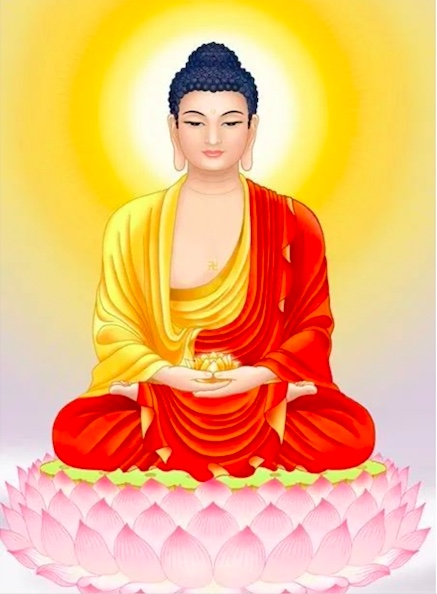
In the tranquil setting of one afternoon, Sariputra and Maudhara, the first disciples of the Shakyamuni Buddha, introduce an ascetic named Tigaro to the profound teachings of enlightenment. Little did they know that this encounter would unveil a tapestry of insights and narratives, offering timeless wisdom that transcends doctrines and narrow beliefs.

Upon meeting the Buddha, Tigaro’s skepticism manifests through his query: “What exactly is your doctrine?” His disdain for theories is palpable as he voices his disbelief. However, the Buddha, with a serene countenance, responds with an unexpected question, challenging Tigaro’s perspective: “Then you don’t believe yourself? What about those who don’t believe in any theory? Do you believe in unbeliefism?” This exchange sets the stage for an enlightening discourse on the nature of truth and belief.

With a calm and understanding demeanor, the Buddha delves into his teachings, addressing the perils of rigid doctrines. He elucidates how attachment to perceived truths stifles freedom and engenders conflict. Through poignant storytelling, exemplified by the narrative of a young widower and his son, the Buddha illustrates the consequences of attachment and false perceptions.

In the heartrending tale, a young widower cherishes his 5-year-old son deeply. However, tragedy strikes when one day the father must depart on business, leaving his son alone. Bandits ravage the village on that very day, and upon his return, the widower discovers his home burned and his son presumed dead. Overwhelmed by grief, he cremates what he believes to be his son’s remains and carries the ashes with him daily, a poignant symbol of his attachment.

A month later, the son miraculously returns, only to find his father clinging to the ashes. Despite his son’s pleas and knocking on the door, the widower, consumed by his attachment to his perceived reality, remains oblivious. In a heartbreaking moment, the son departs once more, unable to break through his father’s delusion. The narrative poignantly illustrates the impermanence of existence and the tragedy of clinging to false perceptions.

The essence of Buddha’s teachings transcends philosophical abstraction. Rooted in direct experience and empirical truth, Buddhism offers a profound understanding of oneself and the world. The Buddha invites practitioners to explore the depths of their minds, guiding them toward liberation from suffering.

The Buddha employs a metaphorical finger pointing to the moon to elucidate the nature of his teachings. He emphasizes that his teachings serve as a guide, directing attention toward ultimate truth rather than being the truth itself. This analogy underscores the importance of experiencing reality directly, beyond the confines of doctrinal interpretations.

As Tigaro seeks guidance on overcoming painful feelings, the Buddha imparts practical wisdom. He elucidates the nature of feelings and their origins, offering a pathway to transcend suffering through awareness and understanding.

In the presence of disciples such as Sariputra and Maudhara, the Buddha’s teachings resonate as a beacon of wisdom and self-discovery. The narrative serves as an invitation to embark on a journey beyond doctrines and limiting beliefs, toward a profound understanding of reality. In embracing the impermanence of existence and cultivating awareness, individuals can unlock the profound truth that lies within—an eternal truth accessible to all who seek it with an open heart.

Link:https://peacelilysite.com/2024/03/14/the-essence-of-buddhas-teachings-a-journey-of-wisdom-and-self-discovery/

#ShakyamuniBuddha #Buddha #Buddhism

Thus Have I Seen

by Zhaxi Zhuoma Rinpoche

Zhaxi Zhuoma Rinpoche recalls several holy manifestations and unusual supernormal events that she personally witnessed after following her Buddha Master, H.H.  Dorje Chang Buddha III  Many other students have other similar experiences and are included in books and various articles reported elsewhere on this website. It must be noted that H.H.  Dorje Chang Buddha III  does not encourage or advocate practicing any form of supernatural power and is very modest about His own abilities. He is constantly warning us not to be attached to these states and experiences, but to instead practice our cultivation and develop our morality, concentration, and wisdom. A more complete accounting of what Zhaxi Zhuoma Rinpoche has seen and experienced is now available in book form on this website and at Amazon and other book stores.

After receiving a small blue “Return-to-Youth Pill”, my hair changed from salt & pepper to the original light brown of my youth. I even let my hair grow, just to see for sure. 

  • When I could not understand why I was asked to do something (although, of course, I did what was asked), several unrelated events occurred that explained why this was so.
  • I saw three-colored nectar suddenly manifested in a freshly washed bowl after a group of us disciples chanted mantras. Click for news article.
  • My students have also seen and even received advice from certain holy beings. Several of my students have had the Buddha Master appear and bless them.
  • I have never seen the Buddha not be able to answer any question asked of him.
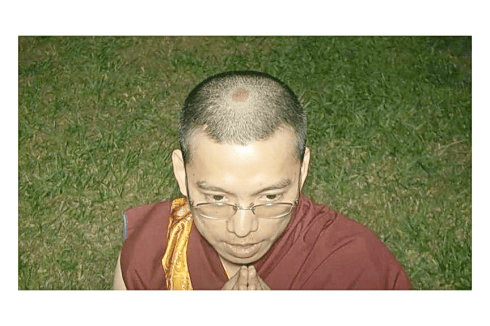
  • On a special occasion, the Buddha Master blessed me and after that a diamond formed on my head that would turn bright red and pulsate from time to time. This also happened when I read the Buddha Master’s discourses, but other times as well.
  • “Once, when in Washington, D.C., preparing to introduce the book H. H. Dorje Chang Buddha III, to various congressional staff, I saw a very large bright neon pink light jump from tree to tree across a field from where I was staying. Earlier that morning and at other times, I would see bright yellow lights flash when I was doing dharma work for the Buddha Master. They were like the lights that flashed when the discourse What Is Cultivation? was first transmitted.” Click for article on this event.
Rainbow jewel-lights appear on site where many inter-tantric initiations and special ceremonies had been performed.

I saw rainbow “jewels” appear on a holy site where many inner-tantric initiations had been held and where “Auspicious Grass of the Four Jewels” had grown. Click for news article.

  • After having a minor stroke, I was again healed so as to be able to go on a strenuous trip to visit all fifty states in the U.S.
  • On several occasions, I have seen pillars of light descend from the heavens, sometimes being able to capture them on digital cameras.
  • I have seen nectar fall several times and places, the first being in southern California under a certain magnolia tree and the last under that same tree after it had been moved to Hua Zang Si, a temple in San Francisco. It also rained under a flowering jacaranda tree on the veranda where students performed skits and other shows in honor of the Buddha Master’s birthday. Click for news  article.
  • I have seen students practice the tummo (inner heat or fire) dharma and raise their body temperature to very high levels–even high enough to burn the fingers of those who touched a metal bowl lying on the student’s stomach. Click for article.
  • I have seen sacred seed syllables form on the bodies of students and holy ones.
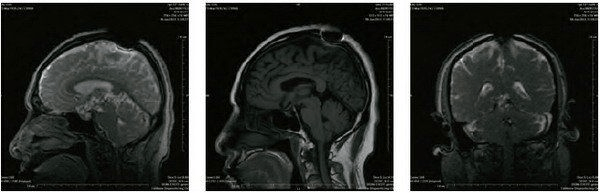
  • I have had my crown opened as documented by a MRI devise. Read article on this miraculous event.
  • Several very large koi fish came and did a dance for the Buddha Master in the pond at the Holy Vajrasana Temple & Retreat Center in Sanger. Schools of fish also followed the Buddha Master around as He toured a Japanese garden south of San Francisco and Dragon Fish came to pay respect to the Buddha when he gave a discourse in Thailand.
  • A vajra pill sang and danced while I held it.

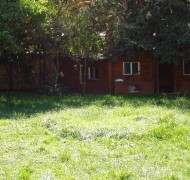
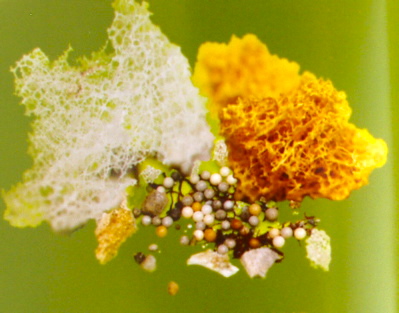
I saw a particular type of flower called “Auspicious Grass of the Four Jewels” grow directly in front of where the Ultimate Bathing the Buddha ceremony took place. The flowers had four distinct very thin parts. They grew in a particular pattern and formed a perfect circle. Prior to the Dharma Assembly the area was perfectly flat. After the ceremony, the ground became slightly elevated, forming a mound upon which these special flowers grew. These flowers grew no other place in the yard. Click for news article.

Grass Mandala forms where ceremony took place.

  • Another red vajra pill flew from my hand to a holy place and was recovered and empowered by the Kalachakra Vajra, a manifestation of Shakyamuni Buddha. The pill danced in my hand and also in a clear stupa where it remains. It continues to dance in the stupa from time to time. Click for article.
  • An old metal pole started shaking quite violently at the temple and over time was joined by four more poles. Sometimes the shaking is constant, sometime it seems to pulsate as if sending coded messages. Others report seeing various lights or feel energy emanating from these poles. Pilgrims travel from all over the world to see these poles. Click for article. Also see many news articles of pilgrims visiting the poles.
  • Many light beings from other realms appear and can sometimes be seen by the naked eye and sometimes only on video or digital recordings at the temple in Sanger. Visitors to the temple have also seen and recorded them. Click for photos.
Sharira from Madam Wang。

I saw the beautiful and amazing relics or sharira from a special close disciple of the Buddha Master. Click for article.

  • The Buddha Master was able to transfer His energy to me and enable me to raise my temperature after it continued to decline to dangerous levels.
  • A colored mandala was written on top of a large flat stone. After dharma was done, the stone was removed and the same mandala had been transferred through the stone and appeared on a bed of sand beneath the stone. This I saw done twice. The second time a pile of mixed various colored sands was placed below the stone, but were sorted out into seed characters after the dharma was performed on the stone. Click for photo.
  • I experienced the elimination of dark karma by having the Buddha Master’s magical Dharma Wheel placed on my chest. I could not bear the heat of the small metal object, but the Buddha Master picked it up with no problem. Click for news article.

I saw the Buddha Master create incredible works of art in very short periods of time. Some even contained a permanent fog or mist. Click for photo

Mist appears in Yun sculpture

  • I saw the Buddha Master change very quickly from an old beaten and bruised person to His usual self. This happened after the Buddha Master had predicted what would happen the previous day. An even more amazing transformation from an old man to a handsome youth happened and was was documented more recently. Click for more.
  • I saw the Buddha Master turn blue during an empowerment ceremony. I did not know at the time that He was an incarnation of Dorje Chang Buddha who is blue. Click for article.
  • I saw my roommate and another rinpoche lift a pool of water weighing over two tons with only the power of their mantras at the Ultimate Bathing of the Buddha Dharma Assembly. Click for more.
  • I have seen the consciousness of my relatives and those of my students raised to a higher level. One western student’s mother (who was not a Buddhist) had the Buddha Master come to help her go to the Pure Land. Click for news article.
  • I was there when a very young rinpoche took a vow that she would become accomplished in a very short period of time after she had received a Prajna Empowerment and she did.
Buddha Light with bright green light appears over Holy Vajrasana Temple & Retreat Center.

  • I have seen many, many Buddha Lights appear around both the sun and the moon prior or after or during special dharma assemblies or events.
  • I saw an antique wooden statue of Kuan Yin emit golden light after another dharma of selection ceremony. This time I shook a large container of long bamboo sticks. Each stick had a certain number that corresponded to a given outcome. I did this three or four times for each event and each time the results for each time I shook the sticks was the same AND exactly what the Buddha Master had predicted. I witnessed variations on this dharma many times.
  • I received a dharma of selection whereby I printed a number of outcomes on small pieces of paper for a major life decision that I was about to make; rolled these pieces of paper into tight rolls; placed these rolls in a round vase, and then asked to shake the vase and remove one. I rerolled it and replaced it doing this at least three times. Each time, I drew the same answer, which was the answer the Buddha Master gave me in the beginning.
Elder Dharma King manifest a cloud of nectar that is filled with jewels.
  • I was present when various colored sharira appeared in a cloud of nectar.
  • I experienced a “freak” rain of hail one summer in Los Angeles that only rained where the Buddha Master was staying and right after a speech given by the Buddha Master that had forecasted such an event.
  • I saw sand from the Ganges River in India assemble to form strands of hair that created a three-dimensional crown on certain images of H.H. Dorje Chang Buddha and Shakyamuni Buddha to prove that they were both incarnations of Buddhas.

Link:https://peacelilysite.com/2024/03/08/thus-have-i-seen/

#DorjeChangBuddhaIII #HHDorjeChangBuddhaIII#DorjeChangBuddha#ZhaxiZhuoMaRinpoche

Unlocking Life’s Wisdom: Lessons from Benjamin Franklin

In the intricate tapestry of life, the tragedy often unfolds in the untimely aging of our bodies and the delayed acquisition of wisdom. The relentless pace of time is keenly felt as we advance in age, and it appears to quicken its stride. Acknowledging the finite and precious nature of life, the imperative emerges to use time judiciously, ensuring it doesn’t slip away in vain. Wisdom, a product of experience, demands the investment of time to mature.

Many traverse their youthful years without a profound understanding of life or the ability to make sound decisions. These capabilities tend to evolve slowly, sculpted by the crucible of life and work experiences. Regrettably, just as individuals amass the wisdom to navigate life effectively, the opportune moments for significant changes might have already slipped through their grasp.

To avert the arrival of wisdom too late, one must treasure time, actively seek learning and growth opportunities, and expedite wisdom acquisition through continuous learning, reflection, and introspection. Making sagacious choices early in life becomes a shield against future regrets.

The aforementioned philosophy mirrors Franklin D. Roosevelt’s contemplation and insight into life, urging individuals to proactively plan and reflect on their lives from a young age. Striving for the wisdom that typically takes years to acquire allows for the optimal utilization of limited time, resulting in a more fulfilling and meaningful life.

Persuasion: Appealing to Interests Over Reason

In the realm of persuasion, appealing to interests often outshines the use of reason alone. The driving force behind human behavior lies in the pursuit of benefits and the avoidance of harm. To sway others convincingly, it is crucial to showcase the tangible or intangible benefits they stand to gain by adopting a suggestion. This pragmatic approach surpasses relying solely on logic and rational arguments.

Rooted in fundamental psychological principles of human decision-making, individuals tend to weigh their interests and benefits when making choices. Clearly illustrating how adopting a suggestion directly or indirectly benefits them—such as saving time, reducing costs, improving health, or increasing happiness—makes the suggestion more likely to be accepted.

While rational thinking plays a pivotal role in decision-making, emotions profoundly influence human choices. Emphasizing how a suggestion meets others’ needs, desires, or alleviates their pain can evoke emotions and enhance the persuasiveness of the argument.

The call to appeal to interests doesn’t negate the importance of logic and reason in persuasion. Rather, it recognizes that addressing individuals’ interests alongside rational thinking fosters emotional resonance, increasing the likelihood of persuasive success.

Combining the demonstration of benefits with sound reasoning can comprehensively influence the audience’s decision-making process. Yet, the essence lies in the reminder that, in persuading others, emphasis should be placed on making them see the direct benefits of following the advice. Such appeals are more attractive and compelling, urging action.

Words of Wisdom: Thoughtful Speech and Lifelong Learning

“Fool’s hearts are in their mouths; wise men’s mouths are in their hearts.” This timeless advice urges against reckless or thoughtless speech, stemming from the eagerness to express ideas without due consideration. A wise person contemplates before speaking, filtering thoughts and emotions before choosing words. This not only avoids misunderstandings and conflicts but also reflects maturity and wisdom.

Thinking more and speaking less is the mantra. Caution with words prevents reckless speech. Investing in knowledge, unlike wealth, provides lasting returns. Allocating resources to personal growth and wisdom yields valuable returns. While wealth can be stolen or lost, knowledge gained through learning becomes an everlasting asset, guiding individuals to make wise decisions and achieve success.

Investing time, money, and energy in education and learning ensures acquired knowledge becomes an intrinsic part of oneself—a secure and irrevocable asset. Returns from self-improvement far exceed material wealth accumulation.

Stages of Life: Wisdom’s Evolution

At twenty, willpower dominates; at thirty, wit takes control; at forty, judgment prevails. Different life stages exhibit distinct psychological and competency characteristics. The twenties are often driven by willpower, with decisions based on impulses and passion. By thirty, adaptability and mechanisms take precedence, with accumulated experience guiding creative problem-solving. Wit becomes crucial for survival and success. By forty, decisions are grounded in mature judgment, informed by rich experiences.

Judgment becomes the key ability for this age group—guiding individuals to make rational and long-term decisions in complex environments. Mental development undergoes changes with age, and active learning and adaptation should be encouraged at every stage. Utilizing each period’s characteristics to achieve personal potential and goals is the key.

Continuous Growth: The Lifelong Pursuit

In the journey of life, successful individuals strive for daily self-improvement. Failures, on the other hand, repeat the same patterns daily. The distinction between success and failure lies in continuous self-improvement versus stagnation.

Some individuals stagnate in the early stages of life, and while physically alive, they lack true meaning and vitality. The essence of life isn’t solely in its length but in its depth and quality. Lifelong learning, continuous self-improvement, and exploration are crucial to maintaining vitality and meaning. Regardless of life stage, the pursuit of growth and change is paramount, avoiding premature spiritual death and infusing life with vibrancy and progress.

Positive Communication: The Power of Praise

“I won’t say anything negative about anyone; I’ll only speak positively about everyone I know.” Focusing on people’s strengths rather than weaknesses builds and maintains good relationships. Choosing to selectively share opinions about others, even if aware of their shortcomings, promotes a positive atmosphere.

This practice avoids hurting others’ self-esteem, reduces conflicts, and fosters a positive environment. Commending others’ strengths and achievements makes them feel respected and recognized, enhancing relationships and intimacy. Praise motivates individuals, opens their hearts, and fosters a positive and constructive attitude in interpersonal relationships.

By concentrating on others’ strengths and offering sincere praise, a harmonious social environment is cultivated, and deeper connections are formed. This approach applies not only to personal relationships but also to interactions in the workplace and public life.

Thoughtful Debate: Constructive Communication

Debating and refuting in interpersonal communication can have potential negative impacts, particularly when this behavior becomes habitual. Even if one proves their point in an argument, victories may lack substantive value, potentially sacrificing relationships. People value being respected and understood more than being persuaded or defeated.

Adopting an open and constructive attitude in communication, listening, respecting others’ viewpoints, and seeking understanding fosters healthy relationships. This approach prioritizes effective communication over the pursuit of victory in every argument.

Practical Wisdom: Testing Thoughts Through Action

Thoughts lead to actions, and actions have consequences. The true test of thoughts lies in observing the effects of the behavior they guide. Judging the value of a thought is most effectively done by observing the practical effects of the behavior it influences. Actions guided by positive thoughts, leading to personal growth and societal improvement, are considered valuable and correct.

The effectiveness of thoughts and beliefs is best evaluated by their application in real life, focusing on outcomes rather than theoretical consistency. A results-oriented approach encourages critical thinking based on actual consequences, promoting self-awareness and a practical mindset.

Navigating Contradictions: Empathy and Self-Reflection

In a world where fools and cowards coexist, Franklin’s observation highlights the contradiction in human behavior. People often find enough courage and wisdom to endure others’ misfortunes and mind others’ business. This contradiction emphasizes the need for self-improvement rather than excessive intervention in others’ lives.

“Love thy neighbor, but do not tear down your fence” underscores the importance of maintaining good social relations while respecting personal boundaries and privacy. Balancing relationships while preserving personal independence and dignity fosters both community welfare and personal growth.

Overcoming Poverty: The Power of Mindset

“Poverty itself is not frightening; what is truly frightening is the mindset that believes one is destined to be poor or bound to die poor.” The real danger lies in negative thought patterns perceiving oneself as inevitably poor. Poverty is a changeable condition, and individuals can improve their situations through effort, education, and innovation.

Rejecting the acceptance of poverty as an unchangeable fate and believing in the ability to alter life circumstances fosters optimism. Maintaining a positive mindset provides the motivation to seek change, find opportunities, and achieve personal growth and success.

Benjamin Franklin’s Timeless Wisdom

Franklin’s thoughts and quotes encompass various facets of life, offering lessons in personal growth, interpersonal relationships, professional ethics, and social responsibility. His profound insights and pragmatic philosophy remain relevant, providing guidance on how to balance personal development with social responsibility, navigate complex relationships, and approach life’s challenges with a positive attitude.

As we absorb Franklin’s wisdom, we gain not only a deeper understanding of human nature and social phenomena but also a blueprint for a more fulfilling and meaningful life. Franklin’s legacy endures as a beacon of practical wisdom, encouraging us to embrace continuous learning, cultivate positive relationships, and face life’s journey with resilience and optimism.

Link:https://peacelilysite.com/2024/03/07/unlocking-lifes-wisdom-lessons-from-benjamin-franklin/

A Neurosurgeon’s Journey from Skepticism to Divine Revelation

Eben Alexander’s Proof of Heaven

Eben Alexander, a distinguished neurosurgeon, once firmly embraced the philosophy of Epicurus, believing in the finality of death and positing that there is nothing beyond our mortal existence. However, his own extraordinary encounter shattered these convictions, launching him into a profound journey that defied conventional understanding. In his compelling book, “Proof of Heaven,” Alexander shares a narrative that not only transformed his perceptions but also prompted contemplation on the very essence of existence.

As a highly esteemed figure in the medical community, Alexander boasted impeccable credentials, marked by significant contributions to neurosurgery and numerous academic accomplishments. His trajectory took an unexpected turn when he confronted bacterial meningitis caused by a rare strain of E. coli. With his neocortex, the seat of consciousness, succumbing to the illness, survival seemed improbable.

Against all odds, Alexander emerged from a seven-day coma with a surprising declaration: “All is well.” His miraculous recovery, confounding medical experts, extended beyond the physical realm. He vividly recounts a journey into a realm of ineffable beauty, profound understanding, and divine love—an experience that transcended his compromised brain function.

The title of Alexander’s book, “Proof of Heaven,” encapsulates the essence of his revelation. Through his firsthand account, supported by corroborating testimony, he challenges the notion that consciousness is solely a product of neural activity. His inexplicable recovery stands as a testament to the mysteries that lie beyond our comprehension, prompting profound reconsideration of life and death.

In the ethereal realms that Eben Alexander traversed during his coma-induced journey, he vividly described scenes of unparalleled beauty and awe. His narrative delves into luminous landscapes with vibrant colors and radiant light, transcending the limitations of earthly perception. Alexander spoke of meadows adorned with blossoms emitting melodies, a symphony of sound intertwined with vibrant hues that danced harmoniously.

Moving through this celestial expanse, Alexander encountered entities of immense love and wisdom, beings emanating a profound sense of interconnectedness and understanding. He described interactions with ethereal guides who communicated not through conventional language but through a telepathic exchange of pure emotions and intentions. These guides, he noted, possessed a divine knowledge surpassing the comprehension of the earthly mind.

Furthermore, Alexander shared experiences of traversing a vast, intricate network of interconnected realms, each layer revealing higher levels of consciousness and spiritual understanding. He conveyed encounters with deceased loved ones and souls radiating unconditional love, contributing to an overwhelming sense of peace and acceptance.

Colleagues attested to Alexander’s astonishing recovery, leaving the medical community baffled about the disease’s origin and subsequent recovery. Infectious diseases specialist Scott Wade, in an appendix, described the recovery as “truly remarkable.”

The crux of Alexander’s narrative lies in the title of his book, revealing his journey to a realm of hyper-real beauty, understanding, and divine love—a journey that occurred without the active participation of his brain. This challenges the notion that consciousness is solely a product of brain activity and provides compelling evidence for the existence of an afterlife.

In his book, Alexander also described what compelled him to return to the earthly world. He recounted seeing his son’s sad face and sincere prayer for Alexander to come back and be a father again. Alexander realized that taking care of family is a crucial responsibility on Earth.

Despite skepticism and criticism, the integrity of Alexander’s character and the veracity of his accounts remain steadfast, prompting broader questions about the limitations of empirical science in explaining transcendent phenomena.

Contemplating the implications of Alexander’s revelation compels us to ponder transformative potential across diverse fields of inquiry. What paradigm shifts would occur if the hypothesis of an afterlife were embraced within disciplines such as psychology, sociology, literature, and philosophy? How might our perceptions of reality and human experience be redefined in light of such profound revelations?

For many, Alexander’s journey offers a profound shift in perspective—a redirection of focus from the fear of death to the complexities of earthly existence. His account underscores the interconnectedness of the human experience, suggesting that the struggles and choices we face in this life hold profound significance.

Alexander’s account prompts contemplation on the relationship between the earthly realm and the divine. While he suggests that Heaven supports and holds us invisibly, it is equally plausible to consider that Heaven depends on us. Earth, with its struggles and challenges, becomes the consequential place where the battle between good and evil unfolds, shaping our choices and influencing realms beyond.

In essence, Eben Alexander’s odyssey transcends the boundaries of conventional understanding, beckoning us to explore the uncharted territories of consciousness and existence. Whether embraced as irrefutable proof or contemplated as a profound allegory, his journey serves as a catalyst for introspection, challenging us to reconsider the fundamental questions that define our humanity. As we navigate the mysteries of life and death, perhaps we are reminded that the ultimate truth lies not solely in the destination but in the journey itself.

Link:https://peacelilysite.com/2024/03/01/a-neurosurgeons-journey-from-skepticism-to-divine-revelation/
Great Holy Beings Give Their Approval

Great Holy Beings Give Their Approval

By: Zhaxi Zhuoma

The book H.H. Dorje Chang Buddha III contains a more detailed explanation by Gadu Rinpoche of what happened when H.H. Dorje Chang Buddha III gave the discourse “What Is Cultivation?” However, I would like to give my own personal testimonial of what I experienced. Like Gadu Rinpoche, I was very fortunate to be present when these holy events occurred. Since I have followed my Buddha Master, H.H. Dorje Chang Buddha III, I have seen many awesome and unbelievable events and been blessed by being able to participate in and witness many Buddhist ceremonies and receive dharma empowerments and initiations. This experience was truly amazing and was also an example of how different people saw or experienced different things. This is often the case when we witness holy states. Our karma is different, so the manifestation of holy states appear to us differently.

These lights first appeared when we were sitting and respectfully listening to a dharma discourse. I had requested that my Buddha Master give us a discourse on “What is Cultivation?” and His Holiness had graciously consented. We knew this would be a special discourse, since it was being recorded and many great dharma teachers and rinpoches had been summoned to attend. Suddenly there appeared a bright flashing light. I thought someone was using a flash camera, only that seemed very disrespectful and this was much brighter and dazzling and had a more golden color than that of a camera. I very rudely looked around. There was no camera nor apparent source. My second thought was that I was just imagining it. Of course no one else was showing any signs of seeing anything–they were all so engrossed in our Buddha Master’s discourse, and much too well behaved to respond. The lights came again many times–I lost count after the third, but I know it was more than three times. They were very bright and quite distinct. No sooner had the Buddha Master ended the discourse and we had paid our respects, did everyone begin talking at once. Even though it was in Chinese I could gather from the hand gestures and excitement that they had seen the same thing I saw. I believe all of this was recorded on the CD of this discourse. Ven. Gadu Rinpoche, whose English is quite good, explained what he had seen as did several others. It appeared that everyone present had seen something. There was no doubt that holy beings had come to listen to this very important discourse (it is printed in the book H.H. Dorje Chang Buddha III and included on this web-site) and they were very pleased and showed their joy by blessing us with their presence.

For a short period of time after that, these lights would miraculously appear. Once they flashed most auspiciously when the Buddha Master was talking to Ven. Gadu Rinpoche. At that time the Holy Beings were indicating approval of the design proposed for the cover of A Treasury of True Buddha-Dharma (the manuscript version of H.H. Dorje Chang Buddha III). They also flashed one Sunday morning at the hermitage where I live when I was reading one of His Holiness’s discourses in preparation for a class that would be taught later on that day. They came at another time when the Buddha Master was giving a discourse, but this time I was told to not be distracted and pay attention to the Buddha Master. I am pretty sure that was also included in the recording, but I must confess that before I was reprimanded, I searched the mandala thoroughly for any possible sources of light. There were none. These were truly blessings from another dimension. These were the manifestation of the Buddhas and Bodhisattvas who came to show their respect to our great Buddha Master!

There is no doubt that the book H.H. Dorje Chang Buddha III is an extraordinary work. Not only does it introduce H.H. Dorje Chang Buddha III to the world and share the reactions to the book of the leading Buddhists in the world today, it also documents a few of the awe inspiring accomplishments of this magnificent Holy Buddha the most important of which are the many teachings that can lead many beings to liberation. Since most of the book will be published in English as well as Chinese, it is truly a most auspicious blessing to the entire world. It represents the dissemination of the true Buddha-dharma for this time and age and in the Western and Asian worlds.

Link: https://wisdomtea.org/2024/02/22/great-holy-beings-give-their-approval/

GREATLY ACCOMPLISHED PRACTITIONER OF TUMMO (INNER-HEAT) AND VAJRA MEDITATION DHARMA: H.E. KAICHU RINPOCHE

H.E. Kaichu Rinpoche, an extremely loyal disciple of H.H.  Dorje Chang Buddha III, cultivates himself with apure heart in accordance with the dharma. He was recognized by H.H. Dharma King Mohe as the reincarnation of a rinpoche. He truly cultivates himself and has true realization. In fact, his realization is the most successful among all rinpoches in the entire world today.

Within one hour from the time he received the “Xian Liang Great Perfection” State Practice Initiation from H.H.  Dorje Chang Buddha III, he attained the rainbow body state, enabling him to enter directly a Buddha-land state. He thereby attained realization and accomplishment in an unheard-of short time.

In order to manifest the dharma, Kaichu Rinpoche practiced the Corpse-Pose Tummo (Inner-Heat) Dharma in front of many people. The heat he generated in his body rose to 197.4 degrees Fahrenheit. Numerous dharma kings and rinpoches have been burned by the inner-heat he has generated. Among all dharma kings and rinpoches in the entire world today who practice tummo concentration dharma, Kaichu Rinpoche has generated the second highest inner-heat. The pre-eminent practitioner of tummo concentration dharma in the world today and the only one ahead of Kaichu Rinpoche is Mozhi Rinpoche, who is the highest disciple of H.H. Dorje Chang Buddha III.

Picture on top: Infrared thermal sensor detects the initial ignition and high temperature of fire Picture on bottom: The crowd gathered around the fire ignited and controlled by the infrared thermal sensor

Additionally, through the Vajra Substitute Body Mediation, the crown of the head of Kaichu Rinpoche opened a width of more than two fingers. His consciousness can freely leave and enter his body. He has attained the state of non-attachment to anything and unification with the dharma realm.

KaiChu Rinpoche MRI magnetic resonance imaging brain CT scan medical images

The following is a sincere account written by H.E. Kaichu Rinpoche to convey his deepest admiration and gratitude to H.H.  Dorje Chang Buddha III.

IN THIS ENTIRE WORLD, ONLY H.H. DORJE CHANG BUDDHA III CAN TRANMIT THE XIAN LIANG GREAT PERFECTION DHARMA

I prostrate to H.H Dorje Chang Buddha III!

All Buddhist disciples know that the Longchen Nying-thik Great Perfection Dharma was the highest Buddha-dharma in this world. If one practices that Buddha-dharma well, one can attain the rainbow body in twelve years and thereby become liberated.

However, within one hour I entered a rainbow Buddha-land when H.H. Dorje Chang Buddha III transmitted to me the highest and greatest dharma in the universe — the Xian Liang Great Perfection Dharma. I was so fortunate to receive that dharma. When one compares one hour with twelve years, one can see just how supreme and magnificent the Xian Liang Great Perfection Dharma is! H.H. Dorje Chang Buddha III has brought that Buddha-dharma to this world for the first time in the history of this world. Even Sakyamuni Buddha did not transmit that Buddha-dharma to any of His disciples. Great Bodhisattvas and patriarchs do not know that dharma and therefore are unable to transmit it.

I also personally experienced many inconceivable supernatural Buddha-dharma states when H.H.  Dorje Chang Buddha III transmitted to me other dharmas, such as when the crown of my head opened more than the width of two fingers, when my consciousness left and entered my body at will, when I experienced the other-empty exchange state, and when I experienced high- temperature tummo heat (internal heat). Only a true Buddha such as H.H. Dorje Chang Buddha III possesses such Buddha-dharma, morality, and wisdom!

Therefore, only H.H.  Dorje Chang Buddha III is the highest refuge for all holy beings and all living beings!

Buddhist disciple Kai Chu
March 2010

Link:https://peacelilysite.com/2024/02/23/greatly-accomplished-practitioner-of-tummo-inner-heat-and-vajra-meditation-dharma-h-e-kaichu-rinpoche/

#Buddhist #BuddhaDharma #ZhuoHuoDing #TummoConcentration #KaiChuRinpoche #DorjeChangBuddhaIII  #HHDorjeChangBuddhaIII #VajraMeditation

Source: https://medium.com/@cultivator108/only-h-h-dorje-chang-buddha-iii-can-tranmit-the-xianliang-great-perfection-dharma-kaichu-dc72d96ea911

Incredible Power of Zhuo Huo Ding – Tummo Concentration

The term “Zhuo Huo Ding” (Tummo Concentration 拙火定) is widely recognized in Tibet. Practicing this skill has the potential to alter body temperature, and when mastered, it is believed to eliminate all diseases within oneself. Moreover, adept practitioners can employ Zhuo Huo to heal others, and advanced individuals may even achieve the transformation of their bodies into light. However, finding individuals who have truly mastered this skill is rare nowadays. Notably, there have been recent reports of Tibetan yogis practicing Zhuo Huo in winter, gradually drying wet felt cloth draped over their bodies.

While many have heard about the dharma of Tummo Concentration, witnessing a genuine manifestation of Tummo power is exceptionally challenging. In contemporary Tibet, India, and other locations, numerous lamas engage in Tummo concentration. However, when they emerge from extended seclusion practices, only a few manage to demonstrably raise their body temperature. At most, they symbolically wear a wet blanket while moving around the temple. Those who attain this initial level are revered as holy and venerable, reflecting the gradual loss of tantric dharmas across generations.

Tummo concentration, as a high-class Buddha-dharma of meditation, is an essential practice for cultivating the life power of the body, mind-wind, and bright spot, leading to the accomplishment of a rainbow-light body. Regardless of the ailment, Tummo practice is believed to have the capacity to eliminate it entirely, making it the nemesis of the demon of illness. Positioned within the realm of supreme yoga, mastering this dharma combined with Vajra Body Substitution Meditation can elevate one to the rank of a Bodhisattva at the twelfth stage or higher.

Two types of Tummo concentration practices exist: Yoga Tummo from Tibetan Esoteric Buddhism and Corpse-Laying Tummo, regarded as the “King of Tummo.” The practitioner’s ability to raise body temperature correlates with their realization power, surpassing typical human body temperatures. The realization power evolves through four steps, from the Initial Warmth Step to the Delight at Extreme Temperature. Each step corresponds to an increase in body temperature and an augmentation of the practitioner’s healing abilities.

Comparisons between practitioners often highlight the mastery of Zhuo Huo, with some claiming attainment of high levels. However, when juxtaposed with the technique of the renowned Rinpoche Wangze, these claims fall short.

On October 15, 2009, five Buddhist masters of the Gelug school, including the 8th SongJi Rinpoche, Gamadega Gonglare Rinpoche, Yongdeng Gongbu Rinpoche, American Rinpoche Zhaxi Zhuoma, and the 16th Chongdi Rinpoche, received a “Zhuo Huo removal of obstacles blessing” from the highly respected Holy Master Wangze Rinpoche, in the United States. Wangze Rinpoche is a devoted disciple of H.H. Dorje Chang Buddha III. This blessing miraculously eliminated their illnesses and negative karma.

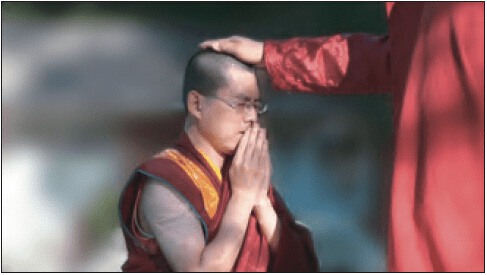
During the blessing ceremony, Rinpoche Wangze engaged in a sequence of actions with SongJi Rinpoche. First, he placed his palm in front of SongJi, making three deliberate motions of opening and closing his hand while instructing him to pay close attention. Subsequently, Rinpoche Wangze gently rested his palm on the top of SongJi’s head. Initially, SongJi perceived the touch as gentle and soft. However, within a few minutes, a sensation of heat began to radiate from his feet, gradually enveloping his back, neck, the back of his head, and culminating at the top of his head.

Suddenly, Rinpoche Wangze’s palm emitted an intense, fiery sensation at the crown of SongJi’s head, causing an unbearable pain within a mere two seconds. Describing the experience, SongJi expressed, “It was more agonizing than placing a red-hot iron on the top of my head.” In that brief span, a conspicuous red lump manifested on the crown, with certain areas burning through the skin and emitting black smoke. Simultaneously, SongJi experienced an extraordinary sense of physical and mental comfort. Several hours later, a yellow, crystal-like substance emerged at the site of the lump. According to insights from an elderly hidden yogi, this phenomenon is known as “merit honey,” a rare and auspicious occurrence indicating the elimination of impurities or karmic obstacles accumulated by Buddhists.

SongJi Rinpoche experienced an extraordinary sense of physical and mental comfort. Several hours later, a yellow, crystal-like substance emerged at the site of the lump

Following the release of merit honey, all existing ailments in SongJi Rinpoche’s body miraculously vanished. Kama Dege Gongla Rinpoche, belonging to the Kagyu sect, also underwent the Zhuo Huo Dispelling Obstacles Empowerment from Wangze Rinpoche. In a matter of seconds, a distinctive mark was burned into his philtrum. Yongdeng Gongbu Rinpoche bore a notable imprint on his forehead and between his eyebrows, outcomes of the empowerment. Zhaxi Zhuoma Rinpoche, too, retained a Zhuo Huo mark on her throat, accompanied by the flow of black qi from the respective marks.

Zhaxi Zhuoma Rinpoche
Yongdeng Gongbu Rinpoche

Link:https://peacelilysite.com/2024/02/23/incredible-power-of-tummo-concentration/

#Buddhist #BuddhaDharma #ZhuoHuoDing #TummoConcentration #WangzeRinpoche #DorjeChangBuddhaIII  #HHDorjeChangBuddhaIII #ZhaxiZhuomaRinpoche

The Healing Power of Forgiveness: Unlocking Peace with the REACH Method

In a world often torn apart by conflict and grievances, the importance of forgiveness cannot be overstated. The ability to release resentment and embrace reconciliation is a formidable tool for personal healing and societal harmony. In this blog post, we will explore the REACH Method—a powerful approach to forgiveness created by renowned clinical psychologist Everett Worthington. By delving into each step of the REACH Method—Recall, Empathize, Altruistic gift, Commit, and Hold onto forgiveness—we can learn how forgiveness, under the guidance of Worthington’s methodology, has the potential to bring about positive change, even in the most challenging circumstances.

Recall the Hurt:

The first step in the REACH Method is to Recall the Hurt. It involves acknowledging the pain caused by the wrongdoing. This step allows individuals to confront their emotions head-on and understand the impact of the offense. It’s crucial to remember that forgiving does not mean forgetting; rather, it is a conscious decision to release the grip of resentment.

Empathize with the Offender:

Empathy is a cornerstone of forgiveness. By putting ourselves in the shoes of the person who caused the hurt, we can gain insight into their motivations and struggles. Understanding that everyone is capable of making mistakes and causing harm helps humanize the offender, making forgiveness a more attainable goal. South Africa’s reconciliation process is a testament to the power of empathy in healing deep-seated wounds.

Altruistic Gift of Forgiveness:

The Altruistic Gift of Forgiveness involves recognizing our shared humanity. We all make mistakes and have hurt others at some point. Through the stages of guilt and gratitude, we come to understand the liberating power of forgiveness. This realization inspires us to give the gift of forgiveness to others, fostering a cycle of healing and compassion.

Commit Publicly to Forgive:

Public commitment adds a layer of accountability to the forgiveness process. By expressing forgiveness openly, whether through spoken words, a written letter, or a symbolic gesture, we solidify our commitment to letting go of resentment. This step not only aids personal healing but can also inspire others to embark on their journey of forgiveness.

Hold onto Forgiveness:

Holding onto forgiveness is a continuous process that requires resilience. Painful memories may resurface, but it’s crucial to distinguish them from harboring unforgiveness. The REACH Method acknowledges the challenges of maintaining forgiveness, offering guidance on navigating triggers and doubts. Understanding that forgiveness is a journey, not a destination, empowers individuals to persevere.

Benefits of Forgiveness:

Everett Worthington, with decades of experience studying forgiveness, highlights numerous benefits for the person who forgives. According to Worthington, the primary way forgiveness affects mental health is by lowering rumination—the constant replaying of negative events in our minds. This reduction in rumination leads to improved mental well-being and emotional health. Additionally, forgiveness has been linked to decreased stress, anxiety, and depression, contributing to an overall positive impact on one’s life.

As we navigate a world rife with conflicts, it’s essential to recognize the transformative power of forgiveness. The REACH Method, developed by clinical psychologist Everett Worthington, provides a structured approach to forgiving, offering a pathway to healing and reconciliation. Worthington’s decades of experience studying forgiveness underscore the profound impact it can have on individual and societal well-being.

Beyond personal benefits, forgiveness has the potential to reshape societies and bridge divides. Instead of responding to conflicts with weapons and troops, let us consider the humanity support that the REACH Method embodies—a powerful tool to address the root causes of strife and build a foundation for lasting peace.

By embracing forgiveness, we not only free ourselves from the burden of resentment but also pave the way for a more compassionate and harmonious world. As Everett Worthington aptly puts it, “There are a lot of benefits to the person who forgives.” Lowering rumination and improving mental health are just a few of the many rewards awaiting those who choose the path of forgiveness.

In a world hungry for healing and reconciliation, let us embrace the REACH Method and its transformative potential. Together, we can unlock the power of forgiveness and sow the seeds of peace for generations to come.

Link:https://peacelilysite.com/2024/02/22/the-healing-power-of-forgiveness-unlocking-peace-with-the-reach-method/

#Forgivness #Happiness #REACH #EverettWorthington

https://www.cnbc.com/2023/05/06/forgiveness-can-boost-happiness-improve-mental-health-how-to-start.html

Dharma Master Tonghui —- Great Achievers

Dharma Master Tonghui —- Great Achievers-图片2

Dharma master Tonghui

Venerable Dharma Teacher Tonghui (1922-2013) served as the Abbot of Longju Temple, renowned for Jiangxi Mazu. A devoted disciple of H.H. Dorje Chang Buddha III, he immersed himself in the teachings and practices of dharma. Also known as Elder Monk Tonghui, he transcended the ordinary, attaining the revered status of a holy monk.

Venerable Master Tong Hui, born Tang Zhenbang on March 5, 1922, in Penglai town, Suining City, Sichuan Province, belonged to the Han ethnicity. Renowned for his intelligence from a young age, he adhered to a vegetarian diet and practiced abstinence, following his parents’ guidance. In 1931, he entered monkhood under Master Pu Jing at Jinwen Temple in Pengxi. Full ordination followed in 1940, under Venerable Master Miaoneng at Baoguang Temple, and further studies in Chengdu’s Jingci Temple under Master Nenghai in 1941. Residing at Longju Temple with Master Miaoneng in 1942, he served during the transmission of the Great Precepts by Master Nenghai. Master Nenghai was one of the most eminent monks in last century.

Post-liberation, Longju Temple faced dispersion, confiscation of properties, and occupation during the Cultural Revolution. As the warehouse keeper, Venerable Master Tong Hui personally bore the repercussions of stolen food, enduring imprisonment to spare innocent people. False accusations regarding the team’s beekeeping further led to additional years in prison. His unwavering compassion and selflessness epitomized the Buddhist spirit.

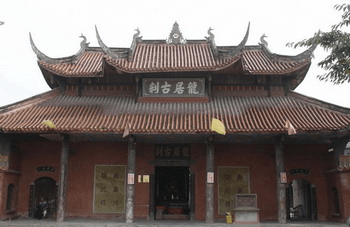
Reopened by the government on December 16, 1986, Longju Temple underwent extensive renovations under the venerable master’s guidance. The Arhat Hall, Main Hall, Scripture Hall, and Accommodation Building were constructed, while the main gate, Ksitigarbha Hall, Hall of Heavenly Kings, and Bell Tower were restored. The restoration of large Buddha and Bodhisattva statues, as well as Arhat statues, showcased the venerable master’s dedication. Numerous instances of his awe-inspiring virtue were evident, such as his ability to attract dharma-protecting deities and revive a withered ginkgo tree with Bodhi Holy Water.

Front Entrance of Longju Temple

Grand Hall in Longju Temple

Moreover, Venerable Master Tong Hui made significant contributions to Buddhism by bringing back Buddha and Bodhisattva statues made of Burmese jade from temples in Dayi County and Daying County.

A legendary story recounts Master Tonghui’s visit to Burma in 1992. Venerable Dharma Teacher Tonghui went to Burma to respectfully receive and take back with him a Jade Statue of the Buddha. The night before the Dharma teacher arrived, many people in Burma suddenly dreamed that he was a golden Arhat and would soon come to Burma. The next day when he arrived in Burma, hoards of people made offerings to him. In Hinayana Buddhism, Arhats are praised in the same way that Bodhisattvas who attained the marvelous fruit of enlightenment are praised. It is clear that Venerable Dharma Teacher Tonghui was an amazing and great sage.

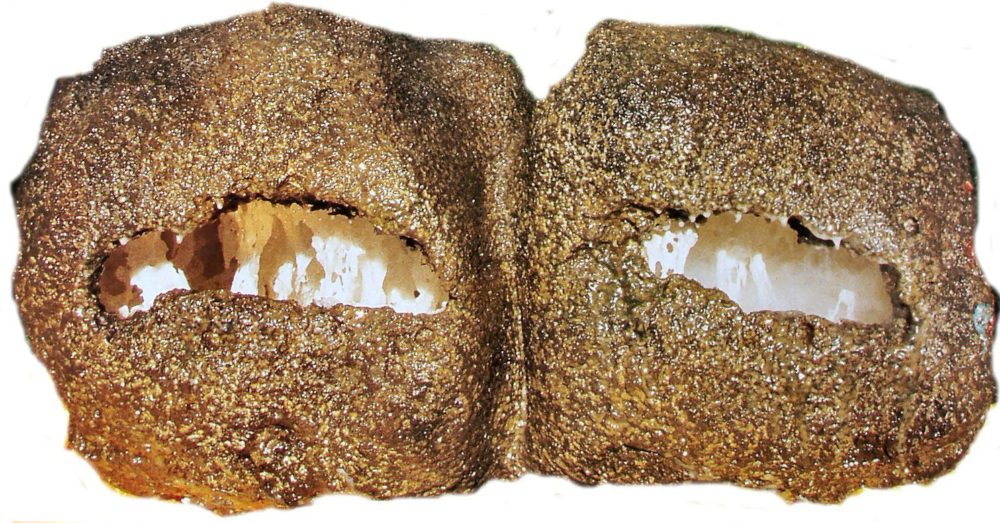
Venerable Dharma Teacher Tonghui peacefully passed away on February 26, 2013, at the age of 92. His preserved body, following ancient Buddhist rituals, was respectfully opened three years later on June 12, 2016, revealing a full and jade-colored flesh body in the urn. This sacred event reaffirmed the authenticity and practicality of true Buddha Dharma.

The flesh body of Venerable Dharma Teacher Tonghui is now enshrined in Longju Temple for people to respectfully admire.

Dharma master Tonghui — Great Archivers

Link:https://peacelilysite.com/2024/02/16/dharma-master-tonghui-great-achievers/

#Buddhist #BuddhaDharma #LonjuSiTemple #MasterTonghui #DorjeChangBuddhaIII  #HHDorjeChangBuddhaIII

Navigating Turbulent Times: Harnessing the Power of Positive Thought for a Peaceful Life

Exploring the Wisdom from Peace Pilgrim

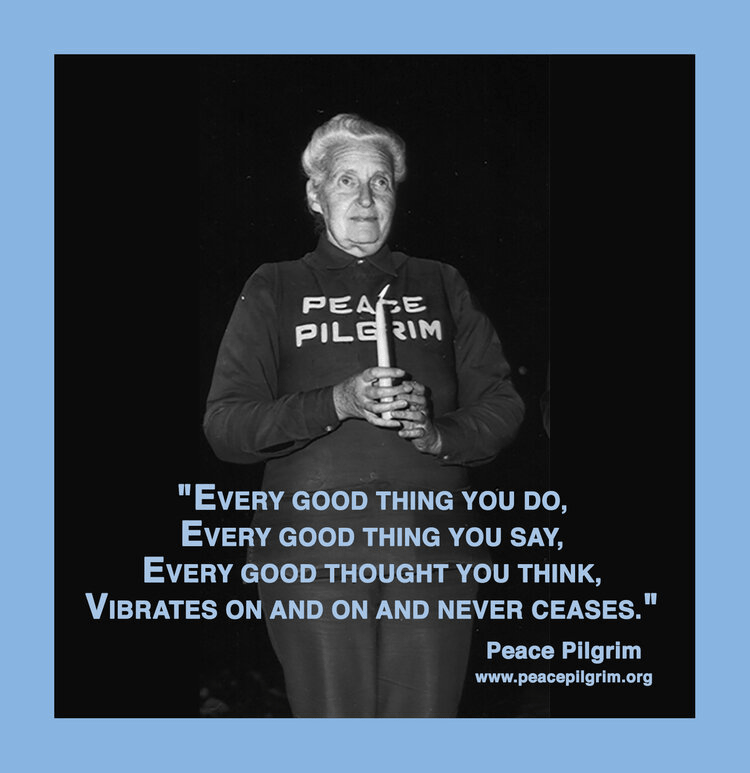
In the midst of pandemic, economic uncertainty, racial injustice, civil unrest, and widespread unemployment, it’s easy to feel overwhelmed and disheartened. Yet, in these challenging and unprecedented times, the wisdom of Peace Pilgrim, who traversed through tumultuous periods in history, resonates profoundly.

Peace Pilgrim’s life story is a testament to the power of unwavering peace, love, and positive thought amidst adversity. Born into a world torn apart by two World Wars and marked by the specter of nuclear devastation, she embarked on a remarkable journey that spanned decades of social upheaval and change.

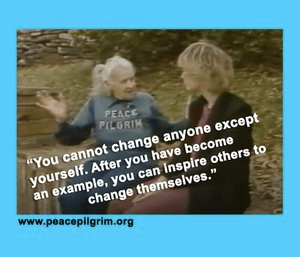
Throughout her pilgrimage, which began amidst the backdrop of the Korean War, Peace Pilgrim held steadfast to a simple yet profound message: “This is the way of peace—overcome evil with good, and falsehood with truth, and hatred with love.” Her words echo through the corridors of time, offering a timeless formula for navigating the complexities of our world today.

At the heart of Peace Pilgrim’s philosophy lies the transformative power of thought. She understood that our thoughts shape our reality and wield immense influence over our well-being. “If you realized how powerful your thoughts are, you would never think a negative thought,” she professed. Her admonition to eschew “junk thoughts” reminds us of the importance of nurturing a positive mental environment, free from the toxins of negativity and fear.

For Peace Pilgrim, true fulfillment came not from the pursuit of material gain, but from a life dedicated to service and love. “I began to live to give what I could, instead of to get what I could, and I entered a new and wonderful world,” she reflected. Her emphasis on living in the present, doing good each day, and cultivating faith in the triumph of love offers a beacon of hope in troubled times.

In a world plagued by division and discord, Peace Pilgrim prescribed love as the ultimate remedy. “The medicine this sick world needs is love,” she asserted. Through acts of kindness, compassion, and empathy, we have the power to heal the wounds of hatred and fear that afflict our society.

As we navigate the uncertainties of the present moment, let us draw inspiration from Peace Pilgrim’s timeless wisdom. Let us commit ourselves to the practice of peace, love, and positivity in our thoughts and actions. Let us embrace the present moment with courage and conviction, knowing that the future will unfold according to the seeds of goodness we sow today.

In the words of Peace Pilgrim, “Live in the present. Do the things you know need to be done. Do all the good you can each day. The future will unfold.” Let us heed her call and strive to create a world where peace, love, and happiness reign supreme.

Navigating Turbulent Times: Harnessing the Power of Positive Thought for a Peaceful Life

Link:https://peacelilysite.com/2024/02/14/navigating-turbulent-times-harnessing-the-power-of-positive-thought-for-a-peaceful-life/

#PeacePilgrim #Peace #Positive #Power #Love

Source: https://www.peacepilgrim.org/links-relating-to-peace-pilgrim