The Celestial Window of the Western Pure Land Opens, Revealing the Blissful Sacred Realm for all to Behold

(This is the text of an article published in the Asian Journal on Oct. 6, 2004.)

Elder laywoman Quan-Fang Lu who was a disciple of Great Dharma King Yangwo Yisinubu1, was from Chengdu, Sichuan. She and her husband, layman Guang-Ming Wang, had been Buddhists since the 1950’s. When they took refuge in Buddhism, they received an initiation and Dharma transmission from the Great Dharma King. In the 1950’s, they were working in Tibet. Because of their underlying karmic conditions, they received the guidance of an outstanding Rinpoche of Tibetan esoteric Buddhism. That Rinpoche told them that Great Dharma King Yangwo Yisinubu possessed the best and highest Buddha Dharma. After going through many hardships, they brought their son to the Great Dharma King. The Great Dharma King was not even seven years old at the time. The three of them formally acknowledged the Great Dharma King as their Master. Laywoman Quan-Fang Lu and her husband Guang-Ming Wang then resolutely decided to have their son stay by the side of the Great Dharma King in order to receive his training and Dharma teachings.

They have been very pious and respectful toward the Great Dharma King, and they have diligently practiced the Dharma that the Great Dharma King transmitted to them. Over the past years, certain people have spread rumors and made false accusations against the Great Dharma King. Laywoman Quan-Fang Lu and her husband Guang-Ming Wang were filled with righteous indignation at this. They vigorously berated the contemptible conduct of those rascals who spread rumors, fabricated lies, and deceived people.

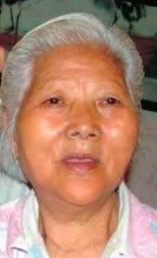
Based upon layman Guang-Ming Wang’s own pious heart and upon the Great Dharma King’s realization, which is like that of a Buddha, in November of 2003, layman Guang-Ming Wang passed on to the Western Paradise of Ultimate Bliss. At his cremation, layman Guang-Ming Wang left behind 11 sarira firm relics.

In the middle of August, 2004, laywoman Quan-Fang Lu told her son Min Wang that she would soon pass away. Min Wang telephoned the Great Dharma King a few times, beseeching the Great Dharma King to cause his loving mother to stay alive longer. When Min Wang’s mother found out about these calls, she admonished her son, “Those who learn Buddhism and cultivate themselves must understand that the law of cause and effect never fails. My karmic connection with this world is about to end. My karmic connection with the Dharma is now complete. The Dharma King Master will help me go to the Western Paradise of Ultimate Bliss.”


As expected, at around noon on September 9th, the crown of elder laywoman Lu’s head suddenly opened. The crown of her head became as soft as cotton. At that time, a colorful auspicious light filled the room. Amitabha Buddha came to escort her away. Beautifully set off by a huge white Buddha light, the pure gold bowl of Amitabha Buddha slowly descended. The red lotus flowers in the bowl were bright-colored. Two photographs were hurriedly taken of this extremely rare and holy sight. Heavenly music could be heard. Imitating the Buddha, elder laywoman Lu assumed the “auspicious recumbent posture.” Amid the Buddha light, she passed on to the Western Paradise of Ultimate Bliss.
The next day, her body was placed in the Buddha worshipping hall of Bao Guang Temple in Xindu, which is one of the four great Chan (Zen) temples in China. Right after her body was placed there, an image of the Great Dharma King suddenly emitted bright light. A colorful Buddha light went round and round the Great Dharma King’s image. A fragrant scent wafted through the air.

Photo showed lotus light on the top of laywoman Lu’s house


News of such phenomena began to spread. More and more people came to chant mantras and sutras for the benefit of laywoman Lu, respectfully see her off to the next realm, and observe the ceremony. Day and night, the chanting of Amitabha Buddha’s name did not stop. On the evening of September 10th, eminent Tibetan Rinpoches and Lamas who were all disciples of the Great Dharma King arrived at the temple after having traveled a great distance. They came to perform Buddhist rites. On the evening of September 11th, the machine used to chant the name of Amitabha Buddha suddenly emitted the shocking sound of the Great Dharma King chanting the name of Amitabha Buddha. The Great Dharma King was in the United States. The monastics and laypersons in attendance were all extremely moved.


At around noon on September 12th, a holy sight appeared for the first time in history! A painting of Amitabha Buddha hangs in the Buddha worshipping hall of the temple. In front of Amitabha Buddha’s chest, a heavenly window to the Western Paradise of Ultimate Bliss suddenly opened. This heavenly window directly displayed the sights of the Western Paradise of Ultimate Bliss! People were seething with excitement. They were so pleasantly surprised they could hardly control themselves. Through that heavenly window to a Buddha land that appeared in front of the painting of Amitabha Buddha, all of those who had the requisite karmic affinity saw Amitabha Buddha. They even saw the protuberance on top of Amitabha Buddha’s head. They saw Kuan YinBodhisattva wearing white clothes and holding willow tree branches. They alssaw Mahasthamaprapta Bodhisattva. In that heavenly window, elder laywoman Lu was reciting the name of Amitabha Buddha. Her lips were constantly moving, her
eyes blinked, and her head swayed. She looked the same as when she recited Amitabha Buddha’s name when she was alive.


The image of Great Dharma King Yangwo Yisinubu appeared in that heavenly window. He was wearing a red Dharma robe and a Dharma crown. When he appeared, people excitedly shouted words such as, “Master, I see you!” “Great Dharma King Master, by following you we do not fear even death!” “Great
Dharma King, my whole family wants to take refuge in you! We want to learn the true Buddha Dharma from you!” People were awestruck by these holy scenes. They could not control their emotions. The sounds of people marveling, shouting, and kowtowing could be heard.

During the cremation of laywoman Lu, holy sights continually appeared. Lotus flowers emerged. Images of the Dharma King, the Three Holy Ones of the Western Paradise (Amitabha Buddha, Kuan Yin Bodhisattva, and Mahasthamaprapta Bodhisattva), and Maitreya Bodhisattva all appeared. Vajra
Dharma protecting deities and dragon-spirit Dharma protecting deities stood in a circle on both sides of her. Fire phoenix flew to and fro inside the cremation furnace. Beautiful scenes of pagodas and towers from the Western Paradise of Ultimate Bliss repeatedly appeared. People before the cremation furnace were filled with Dharma joy and began prostrating. They were so moved they began to
cry. The sound of joyous laughter filled the temple.After the cremation was completed, people collected 49 sarira firm relics from the bone ashes of laywoman Quan-Fang Lu.
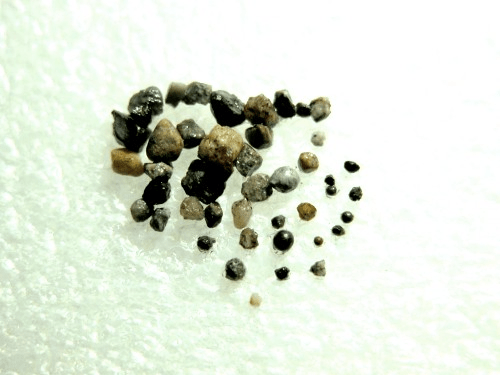
49 solid relics from the ashes of the remains of Layman Lu Quanfang after his cremation

1.Here and below the words Great Dharma King Yangwo Yisinubu, Great Dharma King, or Dharma King Master refers to H.H. Dorje Chang Buddha III Wan Ko Yeshe Norbu Holiest Tathagata.

Link:https://peacelilysite.com/2024/02/09/the-celestial-window-of-the-western-pure-land-opens-revealing-the-blissful-sacred-realm-for-all-to-behold/

#DorjeChangBuddhaIII #HHDorjeChangBuddhaIII  #MasterWanKoYee #Buddha#AmitabhaBuddha#KuanYinBodhisattva #MahasthamapraptaBodhisattva# Relics#ThreeHolyBeings

A Beautiful Love Story Carved in the Dunhuang Grotto China

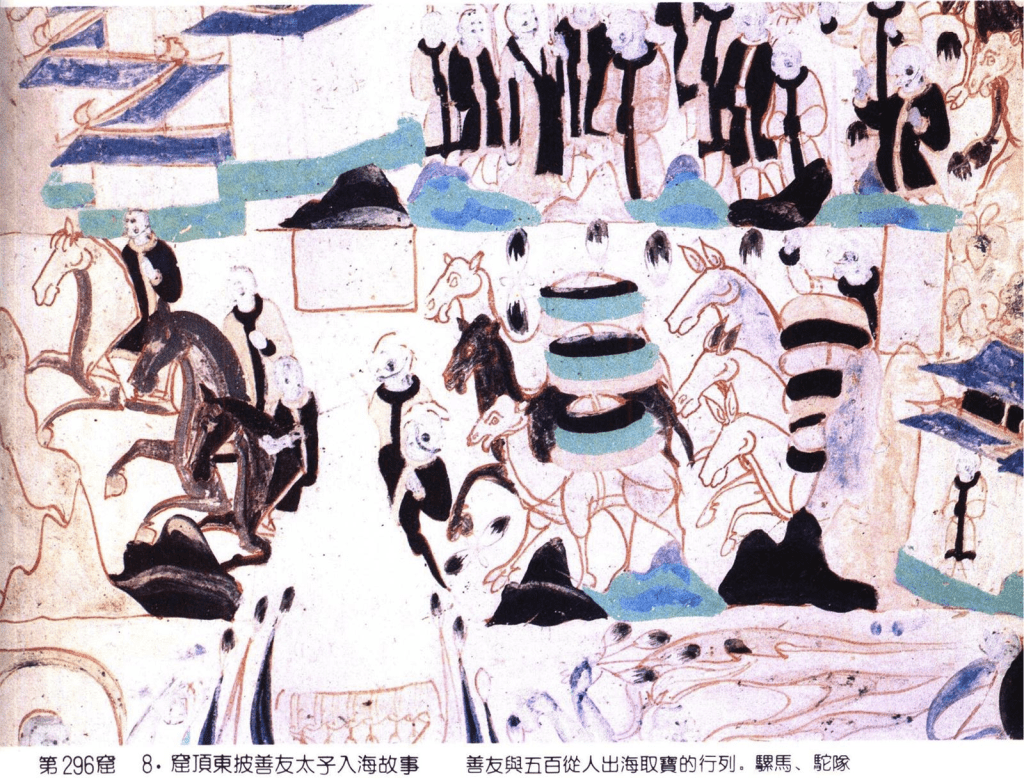
Prince Sunwoo ventured into the sea in search of treasures

In the ancient Dunhuang Grottoes of China, a mesmerizing love story unfolds, delicately captured in murals that have withstood the test of time. Let us immerse ourselves in this enchanting tale of kindness, courage, and wisdom.

Once upon a time, in the Kingdom of Polo, a joyous occasion marked the birth of a prince named Sunwoo. Born to the noble king and queen after twelve years of fervent prayers, the young prince brought immense happiness to the royal family.

As Sunwoo grew, so did his wisdom and kindness. His presence was a beacon of light, radiating love and compassion. However, alongside him was a stepbrother, an evil friend, whose heart harbored jealousy and resentment towards the virtuous prince.

The tale takes an unexpected turn when Sunwoo, driven by a desire to alleviate the suffering of his people, embarks on a perilous journey to seek treasures from the sea. His selflessness touches the hearts of many, but it also ignites the envy of his malevolent stepbrother.

Prince Sunwoo accompanied by 500 volunteers to search for treasur

Guided by an elderly instructor and accompanied by 500 volunteers, Sunwoo reaches Haizhou Jumbo Island. As he ventures further, facing challenges and loss, he encounters the benevolent Dragon King, who grants him the priceless Ruyi pearl.

Prince Sunwoo and his team sailed across the ocean

Meanwhile, back in the Kingdom of Polo, Sunwoo’s absence is keenly felt. His parents, yearning for his return, send a white goose as a messenger. The devoted goose delivers a letter revealing the Prince’s dire circumstances.

As Sunwoo’s journey unfolds, his evil stepbrother, fearing Sunwoo’s increased popularity upon return, decides to sabotage him. The malicious act blinds Sunwoo, leaving him vulnerable and alone.

In his darkest hour, a compassionate cowherd boy comes to Sunwoo’s aid. Unaware of his royal identity, the boy rescues Sunwoo and becomes his loyal companion, leading him back to the kingdom.

The love story takes an unexpected twist when the blind Sunwoo, reduced to a beggar, meets a kind princess during his wanderings. The princess was very touched by Sunwoo’s music. Her genuine affection and determination to marry him, despite societal norms, lead to a grand wedding.

In a poignant moment, the princess, deeply in love, makes a solemn vow. She promises to restore Sunwoo’s sight if her love is true and vows to take away her own eyes if she ever betrays him. Miraculously, her unwavering love restores one of Sunwoo’s eyes.

The narrative weaves through twists and turns, revealing the complex interplay of good and evil, karma, and ultimate redemption. Sunwoo’s evil stepbrother, realizing the consequences of his actions, repents and reveals the hidden Ruyi pearl.

In a grand reunion, Sunwoo’s parents regain their sight, and the entire kingdom is bathed in prosperity. The murals in Dunhuang and Kaihua Temple immortalize this timeless love story, showcasing not only the artistic brilliance of ancient China but also the enduring power of kindness and virtue.

As we reflect on this captivating tale, may it inspire us to embrace compassion, navigate life’s challenges with wisdom, and believe in the transformative power of love and redemption. The Dunhuang Grottoes stand as a testament to the rich tapestry of human stories etched in history, inviting us to cherish the enduring lessons embedded in their ancient walls.

Link:https://peacelilysite.com/2024/02/08/a-beautiful-love-story-carved-in-the-dunhuang-grotto-china/

#DunhuangGrottes #Murals #AcientArts

Source: photos from http://m.news.cctv.com/2020/08/09/ARTIoQSmgcAEjtx5j0cLVoos200809.shtml, https://www.sohu.com/a/334453850_120259260#google_vignette

Restoring Buddhist Practices, The True Dharma in the Human Realm

On April 18, 2014, a contest of skills of Buddha-dharma was held at Sanger Temple in the greater Los Angeles area of the United States of America. Rinpoches, dharma masters, and acaryas from the USA, mainland China, Taiwan, Hong Kong, Australia, New Zealand, and other countries were present. Among them, there were great dharma kings, venerable ones, and great dharma masters who possess uncommon abilities of realization. The master of the contesting stage was Jianggong Kangqing Rinpoche (Gong Kang), who is over 70 years old and is one of the four prominent dharma princes. He demonstrated an imposing grandeur and blustered arrogantly. The Contest was presided by Dharma King Gar Tongstan, who is a great holy virtuous one at the level of two Sun-Moon wheels.

The karmic condition of this dharma assembly was induced by a dharma master from Taiwan, whose name is Long Jing. This dharma master brought a highly capable rinpoche whose name is Baizhe Lamu and who had the title of Smiling-Face Fighter in her previous lifetime. They came to America with three laypersons Wang Sixia, Meiling, and Lianying as a group. They proposed to have a contest of dharma with dharma masters at the International Buddhism Sangha Association (IBSA). Dharma masters at IBSA thought they just wanted to have a debate on the Tripitaka and therefore accepted their proposal without hesitation. However, in addition to debating the sutras, they insisted on having a contest of dharma in the end. Baizhe Lamu stated that the purpose of the contest was to publicize the dharma and benefit living beings. Dharma Master Long Jing said that after winning the contest and returning to Taiwan they would look for a great dharma king and other great dharma masters and great laypersons to contest the dharma, because Baizhe Lamu would like to meet with them and learn each other’s realization of cultivation to see who is superior after all. When they were paying respect to H.H. Dorje Chang Buddha III in person, Baizhe Lamu’s speech and conduct showed her gaffes of arrogance and ignorance.

Coincidentally at that time, Jianggong Kangqing Rinpoche from China was in the United States. This rinpoche was fond of dharma contest even when in China. Through contesting with many famous dharma kings and venerable ones, he never met anyone who was a good match to him. After coming to America, he looked everywhere for superior persons for contesting. He declared that there was not even one dharma king or venerable one in China who could be a good match for him, and that dharma kings, dharma masters, and great laypersons in Taiwan could not withstand a single blow of his. Therefore, he came to America to find superior persons for contesting. Because of this, his Buddha Master H.H. Dorje Chang Buddha III seriously scolded him, “Your cultivation is only skin deep and very laughable. You must clearly understand that learning Buddhism requires cultivating patience, severing attachment to the self, and applying the bodhicitta of great compassion to benefit living beings. You should read and understand Expounding the Absolute Truth through the Heart Sutra to know the true dharma and the absolute truth. Showing one’s strength and pursuing winning runs counter to the undertaking of learning Buddhism and cultivation. Manifesting miraculous abilities to prove one’s power of cultivation is nothing other than playing with untrue illusions. Doing so can only produce one more actor or magician.”

At that time, Gong Kang nodded with obedience, “Yes! Yes!” Afterwards, he still did all he could to look for opponents to make appointments of contesting. He even said, “Many people who are learning from the sutras not only could not understand the sutras but also had hollow and wrong comprehension. That is why they do not have true Buddha–dharma and dare not contest with the dharma. Without comparing each other’s’ dharma through contesting, how can living beings be reminded not to be deceived by false holy ones and false Buddha-dharma?” Because he had won every fight so far, he was naturally indulged in self-pride and arrogance.

At the time, he met with the team of Baizhe Lamu Rinpoche, Dharma Master Longjing, and others. After a debate of sutras, the battle of contesting the dharma finally began on April 18!

Baizhe Lamu Rinpoche didn’t dare to engage in a one-on-one fight with Gong Kang. All five of the team joined force to participate in the match using the dharma of Kuan Yin. They climbed onto the stage and launched an imposing momentum. With focused concentration, they applied mudras and mantras. Their roars were swinging within the Hall of Three Holy Beings, demonstrating an all-out effort striving for winning. Gong Kang heightened his vigilance and responded cautiously. He practiced the dharma of Four-Armed Kuan Yin to fight back. A fierce battle was fought between the two sides with mental power, spirit, and crisscrossed movement. Additionally, with the karmadana shouting loudly to announce the battling field situation, the atmosphere was bustling and tense. Attacking mudras applied silently in unison created a scene of fighting as if sharp and flickering weapons were intercrossing. It was really an unprecedented great battle of dharma contest. Jianggong Kangqing Rinpoche truly deserved the status of one of the four prominent dharma princes. He fought bravely by himself against five in a very hard battle. In the end, Gong Kang applied the Besieging-God Battle Position to have all his five opponents tightly confined, unable to move, and thereby defeated.

In the second match, the two parties switched sides and roles. The losing party in the previous match was to confine and tie up the winning party. All five joined forces in the fighting. With an imposing manner and a sweating effort, they moved forward together with an extremely mighty power to practice the dharma to try to besiege and seize Gong Kang. Spectators at the scene were all holding their breath tightly. At this time of heavy contesting, Gong Kang chanted the Six-Character Great Bright Mantra to practice the dharma of Horsehead Vajra Armor (Horsehead Vajra is a manifestation of Kuan Yin Bodhisattva) as counter-attack. Then the five opponents were unable to defend themselves and were thrown off the stage by Gong Kang. The karmadana declared victory for Jianggong Kangqing Rinpoche, and the surrounding audience gave a loud applause.

Jianggong Kangqing Rinpoche in the contest

Gong Kang was very arrogant and put up an air of pride. He suddenly made a hand gesture to invite Great Dharma Master Zhengda who was present to contest with Buddha-dharma for learning from each other. Dharma Master Zhengda was unable to decline and had to step on the stage. In their earlier years, Jianggong Kangqing and Shi Zhengda were dharma brother and sister. They both are disciples of H.H. Dorje Chang Buddha III. However, Gong Kang was not happy to see this fellow sister taking the highest position of chief abbot at IBSA and being revered as a superior one. Therefore, he thought it was a good time to teach her a lesson on that day. That was why he invited her to contest the dharma in front of others. This arrogant act of Gong Kang scared the venerable ones and dharma masters who were present. Their hearts were trembling due to fear and they were afraid of being called by Gong Kang for contesting. It could be seen that, except Dharma King Gar Tongstan and Venerable Long Zhi Denma Tsemang, people in high ranks all lowered their heads and dared not to face Gong Kang’s eyesight.

Master Zhengda in the contest

Right after Jianggong Kangqing Rinpoche and Dharma Master Zhengda walked onto the stage, Gong Kang sneered with an air of pride and gave an arrogant statement, “You will not keep me still.” Zhengda replied, “I will besiege you and will not let you move.” The two fellow brother and sister started a verbal exchange before contesting the dharma. Later, they sat down facing each other along the north-south direction and both practiced the dharma of Kuan Yin to contest. The two entered deep concentration and manifested their dharma powers. Spectators were greatly impressed. For a long time, they fought to a match of draw without showing who could overpower the other. However, eventually the outcome could only be one defeating the other. Upon seeing Gong Kang’s extraordinary power, Dharma Master Zhengda used Kuan Yin’s dharma of Pure-Water Bottle in combination with the God-Besieging Rope. At that time, Gong Kang was tied up and captured. He was powerless and unable to move his limbs. Therefore, Dharma Master Zhengda won the first match.

They switched side to start the second match. Suffering this defeat had a great impact to Gong Kang’s record. He could never have imagined that Dharma Master Zhengda had truly became one with superior realization and was so great. Now he had to use his highest secretive method of Besieging-God Battle Position. That was truly powerful and had Dharma Master Zhengda bounded up. She was trembling all over her body and her body was as cold as ice. At this time, Dharma Master Zhengda unexpectedly used the dharma of Kuan Yin’s Pure-Water Bottle Willow-Branch Breaking Siege. Her voice of chanting the Six-Character Great Bright mantra sounded like rotating pearls and she was quickly revived. Gong Kang’s God-Besieging formation became seriously disorganized and he lost his power of concentration. Dharma Master Zhengda then made a punch to knock him off the stage. Because Gong Kong had spoken arrogantly before in public, this defeat made him very embarrassed. The Karmadana then announced, “Dharma Master Zhengda won and becomes the champion of the dharma contest.”

However, Gong Kang strongly disagreed. He said that the referee had judged erroneously, and asked for having another match of “Viewing the Realm and Exiting the Samsara” with Dharma Master Zhengda. Dharma Master Zhengda did not want to have another dharma contest with him, but Gong Kong insisted. Therefore, this big battle was fought on April 20. The battleground was a grassy lawn, with a very big piece of cubic cordierite. This is a mani stone used by a great holy virtuous one to practice the dharma. After the referee Dharma Master Long Hui sprinkled the pure soil that was empowered by an extremely great holy virtuous one onto the mani stone, the two fighters sat away from the huge stone by about three meters. Jianggong Kangqing Rinpoche started first to practice the dharma of Four-Armed Kuan Yin. He practiced 15 rounds of the mantra and the mudra, but was unable to push the mani stone into movement across the separation of empty space.

Next it was Dharma Master Zhengda’s turn in the contest. She also practiced the dharma of Four-Armed Kuan Yin. With three rounds of the mantra and the mudra, the mani stone was pushed to move across the separation of empty space. Then, after Dharma Master Zhengda, Jianggong Kangqing Rinpoche, and Dharma Master Long Hui prostrated to the mani stone to pay homage, the mani stone suddenly flew to the sky and disappeared in the sea of clouds. They were all stunned so as to be speechless. It was not known which extremely great holy virtuous one did this. Everyone could only utter exclamation and praise of surprise! The realization power of doing this is hundreds or thousands of times greater than the power of a female great rinpoche from Tibet who let a big mani stone circling around her in the empty space in 2002. The weight of this mani stone that flew to and disappeared in the sky was not exactly known. It was estimated to be about two tons heavy. Actually, weight is not the issue. Even making a pillow fly to the sky would be a world-shocking miracle.

Now, the referee announced that the dharma contest of “Viewing the Realm and Exiting the Samsara” was to begin. After the two had a conversation, Gong Kang still insisted on having the contest. Then they sat facing each other with a far distance in between to begin the dharma contest. According to the rules of the contest, Gong Kang was to besiege Dharma Master Zhengda. On the other hand, Dharma Master Zhengda had to exit samsara to win. Each of them practiced the dharma of the Tathagata to engage quickly in the battle. After only two encounters, Dharma Master Zhengda used Green Tara’s dharma of Breaking Siege by Bodhicitta of Great Compassion to break open Gong Kang’s iron peripheral surrounding of the Besieging-God Battle Position. In a moment, she started from the mandala of samsara and went through the outer court of the Tusita Heaven. After looking and verifying a few times, she quickly found the right direction and directly approached the siddhi of Bodhisattva. After arriving there, she stayed firmly unperturbed. Referee Long Hui who is IBSA’s chairperson was full of praises for her. The host of this dharma contest Great Dharma King Gar Tongstan announced, “Jianggong Kangqing Rinpoche was defeated. Dharma Master Zhengda exited samsara and won the victory. She is the champion of this contest.” The meaning of this one-to-one dharma contest is even more profound than the previous one. For details, readers can watch the live video recording of the contest.

Since ancient times, debating sutras has existed in Buddhism as a preliminary form of dharma contest. This belongs to the theoretical aspect of Buddhism. After practitioners’ cultivation and conduct reached the state of manifesting true utilization and realization, dharma contest is used as the main method of distinguishing whether one belongs to hollow theory only and appraising one’s realization for the purpose of benefiting living beings.

The earliest dharma contest in Buddhism was between two disciples of Sakyamuni Buddha, Shariputra who took the first-place in wisdom and Mahamaudgalyayana who was regarded as the best in supernatural power. Shariputra won the contest. Other examples of dharma contest in history include:

  • Baltsa Takdelwa (who later became a disciple of Dusongchienba) looked for Dusongchienba (the first-generation Great Jewel Dharma King of the Kyagu Sect) to have a dharma contest, but was defeated by a disciple of Dusongchienba.
  • Karma Pakshi (the second-generation Great Jewel Dharma King of the Kyagu Sect) lost to Chojal Pakpa in a dharma contest at the Mongolian Palace.
  • A dharma contest between Zhaguo Longjue Songmou Rinpoche (from Songzhanling Temple in Shangri-La) and Naizhang Qujiong of Lasa.
  • A dharma contest between the 13th Dalai Lama and the abbot of Kumbum Monastery Agya Rinpoche recorded in history that can be found on the internet.

During the last several hundred years, however, it became rare to see dharma contests between eminent monks. This is because true Buddha-dharmas are becoming extinct. Some rinpoches, dharma masters, and great laypersons who only have hollow theories to write books and give discourses dare not even mention the term “dharma contest.” They are afraid that their disciples would know the thing of dharma contest that can prove one’s true power of cultivation. They fear that their disciples would see the fact that their master can only talk about hollow and erroneous theories and therefore does not have Buddha-dharma. That is why the recorded stories of eminent monks contesting their dharma in the past have almost been completely wiped out within a short period of time. Today, Jianggong Kangqing Rinpoche, Baizhe Lamu Rinpoche, Dharma Master Long Jing, and others are fond of contesting with Buddha-dharma. Their deeds are opposed by H.H. Dorje Chang Buddha III. However, looking from a different angle, what they did does have boundless merit. Otherwise, the stories of holy virtuous ones contesting the dharma in the history of Buddhism would have completely disappeared without a trace. Then Buddhism would only be left with theories. Consequently false rinpoches and false dharma masters who have no understanding in the sutras could freely create and teach erroneous theories without having to prove with real Buddha-dharma. Therefore, we should thank the people who contest with Buddha-dharma on the stage. They proved the real existence of true Buddha-dharma and wrote the fact “Buddhism is not just talking about hollow theories” into the history of Buddha-dharma.

Link:https://peacelilysite.com/2024/02/02/restoring-buddhist-practices-the-true-dharma-in-the-human-realm/

#Buddhist #BuddhaDharma #Contest #ZhengdaJiaozun #DorjeChangBuddhaIII  #HHDorjeChangBuddhaIII

Source: Translated from a report in Chinese published in Taiwan Times on April 28, 2014) 

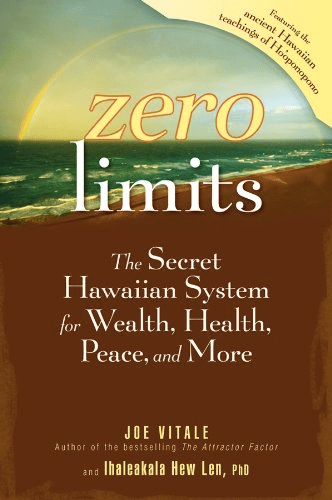
Zero Limits: Clearing Negative Energy, Returning to Perfect Emptiness

The Secret Hawaiian System for Wealth, Health, Peace, and More

In 1984, a therapist in Hawaii achieved remarkable results over three years, healing mentally ill patients at the Hawaii State Hospital without resorting to clinical counseling or medication. Reviewing their records, he repeatedly recited four phrases to “clear” himself: “I’m sorry, please forgive me, thank you, I love you.”

This extraordinary tale intrigued Mr. Vitale, inspiring him to seek out this extraordinary therapist and learn from him. Vitale discovered that Dr. Hew Len employed these four sentences as part of a traditional Hawaiian healing technique known as “Hooponopono,” which translates to “to correct, to clear, to make right” in Hawaiian.

This method not only restored the health of mentally ill patients but also miraculously cured a woman who had suffered from asthma for 50 years overnight. Can four sentences really resolve all problems? Smooth out everything?

These four affirmations have the power to clear all negative energy, balance emotions, and enable you to return to the divine state of “zero limits” (a state of returning to zero, also known as emptiness in Buddhist philosophy, where nothing exists, and anything is possible). By embracing these four phrases, you can face your life more freely and elegantly, leading to health, wealth, and joy.

By approaching each day with an unrestricted perspective, repeating these four sentences concerning your mind, subconscious, experiences, people, and encountered problems with a sincere, repentant, and grateful heart, you will learn to love yourself, forgive yourself, and appreciate yourself. This practice will lead you to live a more fulfilling, wise, and abundant life.

Let us not only refrain from complaining but also say, “I love you!”

What is the Zero Limits method?

It’s straightforward—just four sentences: “I’m sorry, please forgive me, thank you, I love you.”

What do these four sentences represent? In simple terms:

“I’m sorry”: Acknowledge 100% responsibility for what has happened (because everything is created by oneself).

“Please forgive me”: Request forgiveness (forgive oneself).

“Thank you”: Express gratitude, show trust, and believe that all problems will be resolved in the best way for everyone involved.

“I love you”: Invoke the power of divinity to clear related memories and heal all wounds.

Although these four sentences in Ho’oponopono therapy are simple, they encompass profound states and meanings. This is a convenient method that can be used at any time during our spiritual growth journey, transcending various spiritual practices.

How to use this method? It’s straightforward—whenever you encounter a problem, simply keep repeating these sentences (there’s no need to rush into belief or doubt; give it a try).

Fundamental Theory of Zero Limits:

You are not aware of what is happening.

Whether consciously or unconsciously, it is impossible to be aware of everything happening within and around you. At this very moment, your body and brain are self-adjusting without your conscious awareness. Countless invisible signals are transmitted through the air, from radio waves to thoughts and consciousness. All of this occurs unconsciously, and your consciousness is not aware of nor in control of this process. This is why you can think positively but still face challenges. In essence, you must understand that your consciousness is not the true creator of everything.

You cannot control everything

If you are unaware of what is happening, you certainly cannot control it. Believing that the world follows your commands is merely a manifestation of satisfying the desires of the ego. Since your ego cannot completely comprehend what is happening in the world, allowing the ego to decide what is best for you is obviously unwise. You can make choices, but you cannot control. You can use your consciousness to choose what you want to experience, but you must also learn to let go and not worry about how or when it will happen; surrender is the key.

You can heal everything that happens.

Regardless of what appears in your life and how it comes about, it requires healing. Because it is now within your perception, if you can feel it, you can heal it. If you see it in others and it troubles you, you must heal it. You may not understand why it appeared in your life or how it happened, but you can let go now. As you have become aware of it, the more you heal, the simpler it becomes to manifest your desires. By releasing blocked energy, you allow this energy to be used for other things.

You must take 100% responsibility for everything you experience.

The events in your life are not your fault, but they are your responsibility. This responsibility includes everything said, done, and thought, as well as everything said, done, and thought by others appearing in your life. If you take 100% responsibility for everything in your life, then when others have problems, those problems also become yours. In short, you cannot blame anyone or anything for your current situation. All you can do is take responsibility, accept it, embrace it, and love it. The deeper you heal, the more connected you become to the source of life.

The ticket to the state of Zero Limits is saying “I love you.”

To overcome the bottleneck of understanding, to obtain a pass from healing to manifestation, is that simple phrase “I love you.” Saying “I love you” to divinity clears everything within you, allowing you to experience the miracle of “Zero Limits.” The key is to love all things: love the excess fat, love the hidden pain, love the troublesome issues, love children with problems, or love neighbors and partners—in short, love everything. Love transforms and releases blocked energy, and by saying “I love you,” you can experience the power of divinity, just like saying “Open sesame.”

Inspiration is more important than thought.

Thoughts are toys of the mind, while inspiration is a directive from divinity. From a certain point onward, you will surrender and learn to listen instead of begging and waiting. Thought is an attempt by the ego to control life from a limited perspective, while inspiration is a reception of messages from divinity and taking action. Thought yields results, while inspiration produces miracles.

Even if you are not sure what is happening, you can still solve problems.

A part of the purpose of survival is to solve problems. To solve problems, you must first understand: Who am I? Who is actually in charge? The consciousness thinks that intellect is the problem solver, capable of controlling what happens, what one experiences, and when. However, in reality, decisions are made before the consciousness decides, and intellect is unaware of this. If it is not intellect or consciousness, then who is in charge?

It is your subconscious. The subconscious is dominated by replayed memories, and it imitates, repeats, and resonates with these memories. The actions, understanding, feelings, and decisions of the subconscious are entirely dictated by memory. Similarly, consciousness operates through replayed memories without awareness. Therefore, replayed memories dominate everything the subconscious and consciousness experience.

The subconscious is the repository of accumulated memories since the beginning. It constantly replays past memories, and the power of choice that consciousness possesses is the power to choose. Both the subconscious and consciousness do not create their own thoughts, feelings, or actions; rather, their experiences resonate with replayed memories and inspirations.

To solve problems, it is crucial to understand that the physical body and the world itself are not the issue; the problem lies in the replayed memories within the subconscious.

The universe comes from nothing and will return to nothing. The universe begins at zero and ends at zero.

Zero Limits: Clearing Negative Energy, Returning to Perfect Emptiness

Link:https://peacelilysite.com/2024/02/02/zero-limits-clearing-negative-energy-returning-to-perfect-emptiness/

#SecretHawaiianSystem #Wealth #Health#Peace #ZeroLimits #NegativeEnergy #Forgiveness #Grateful #Thanks

A Bhikkhuni Who Appears Once in a Century

Venerable Shi ZhengDa Jiaozun

Throughout the ages, in the pursuit of happiness, countless individuals have renounced worldly life to engage in spiritual practice. Monks and nuns who have shaved their heads and taken vows can be seen wandering in the secular world. People become monastics for various reasons, including pressure from material needs, family discord, social conflicts, life hardships, or a desire to seek liberation from the suffering of birth, aging, sickness, and death. Some renounce the worldly life to transcend desires, cultivate spiritual practices, and embark on the path to enlightenment. However, those who renounce a life of wealth, family, and worldly pleasures to become monastics are extremely rare.

Modern figures like Venerable Xuyun, Master Hongyi, Master Nenghai, and Master Longlian are typical examples of genuine monastics. Their renunciation was wholeheartedly directed towards the Buddha, without worldly attachments. When they made the decision to become monastics, their minds were solely focused on Buddha and Bodhisattvas, despite their flourishing family lives, prosperity, talents, and widespread respect. They left their homes without any attachments, not even informing their families. Suddenly, they abandoned their comfortable lives and became ascetics in the temples. Such individuals are rare, occurring perhaps once in several decades.

However, today, there is a Bhikshuni (Buddhist nun) who has renounced the world in an extraordinary way, captivating people’s hearts. She was originally known as Renbo Rinpoche, with the Dharma name “Awangdeji,” and held some reputation in Chinese Buddhist circles. She had centers in over twenty provinces in China, and her organization had a presence in Taiwan and Hong Kong. Wherever she went, male and female disciples welcomed her with reverence. Despite her prosperous personal business, she decided to renounce her worldly life.

Twenty years ago, she practiced the Sakya tradition but found no progress in her path. Seeking guidance, she turned to the profound teachings of the H.H. Dorje Chang Buddha III. Within a year, she completed her studies and realized that her previous practice was a common worldly path accessible to everyone, not true Buddhist teachings. In 2011, after rigorous examinations, she obtained certificates of realization that many other high lamas could not attain.

Her dedication, compassion, and influence attracted jealousy and rumors from some ordinary practitioners. However, Awangdeji Rinpoche bore no resentment, remaining calm and patient, even praising those who spread rumors. In response to societal criticisms, the International Buddhist Sangha Association sought an objective assessment from the United International World Buddhist Headquarters. After a solemn examination, she was praised by seventeen examiners for her moral virtues and realization.

During the examination, when Awangdeji Rinpoche’s consciousness soared, she personally saw Buddhas and Bodhisattvas, fulfilling a vow made to Avalokiteshvara. Overwhelmed with gratitude, she immediately renounced worldly life. Without her family’s knowledge, she underwent tonsure in Lianfeng Temple, Taiwan, adopting the Dharma name “Zhengda.” She relinquished all worldly wealth and family joy, untainted by the six dusts, transcending the ordinary and entering the realm of the holy.

On December 12th, 2012, a Assembly was held to bestow the initiation of “Selection Made in Dark Confinement from One-Hundred Dharmas to Choose the Door toward Enlightenment” upon Dharma Master Zhengda. This Assembly concluded that Dharma Master Zhengda was a reincarnated holy one and a trusted aide of the Tara. Her status of the dharma was extremely high, at the upper level representing the summit of esoteric Buddhism.

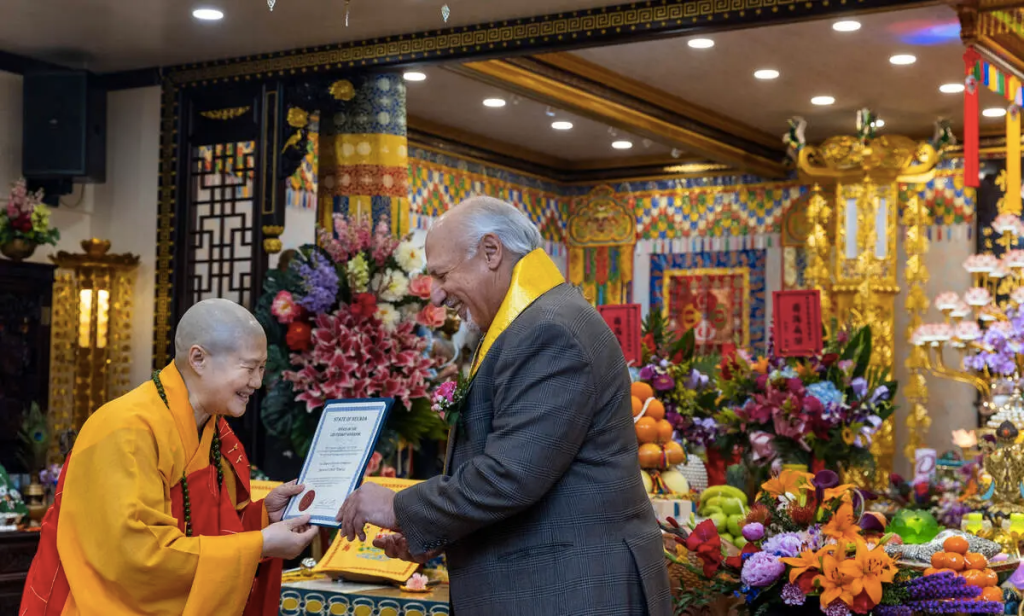
On May 25, 2013, Master Zhengda was honored with the Grand Cross of Humanitarian Merit by the Spanish Humanitarian Merit Association. This award, established and presented by the association, is specifically given to international figures who have made outstanding contributions to promoting world peace, advocating for humanitarian equality, and excelling in public administration, education, arts, charity, and other fields.

After receiving the sacred inner tantric initiation from H.H.  Dorje Chang Buddha III, she experienced a remarkable transformation, surpassing ordinary spiritual attainments and delving into profound realms. The International World Buddhist Headquarters at October 25th, 2019 officially acknowledges her as a JiaoZun (Golden Button Stage II), having successfully passed examination conducted and validated by about twenty buddhist masters and monastics. She stands as an embellishment to Buddhism, a virtuous teacher, and a refuge for sentient beings.

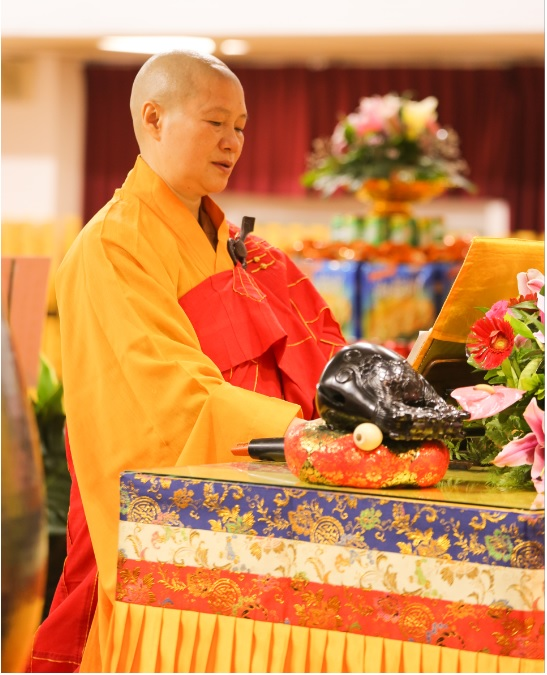
ZhengDa Jiaozun is currently the Vice President of the World Buddhist Headquarters, concurrently serving as the Honorary Chairman of the International Buddhist Sangha and the abbot of many temples worldwide. Presently, she resides at the Holy Miracle Temple in Los Angeles and the Benevolence Temple in Las Vegas.

A Bhikkhuni Who Appears Once in a Century

Link:https://peacelilysite.com/2024/02/01/a-bhikkhuni-who-appears-once-in-a-century/

#Buddha ##HHDorjeChangBuddhaIII #DorjeChangBuddhaIII #BuddhaDharma #MasterZhengDa #EsotericBuddhism#InternationalWorldBuddhistHeadquarters

Vibrant Ceremony Marks Grand Opening of new Buddhist Temple

Benevolence Temple Opened at Las Vegas

Disciples of Buddhism and honorary guests were treated to a vibrant grand opening for a new house of worship in central Las Vegas.

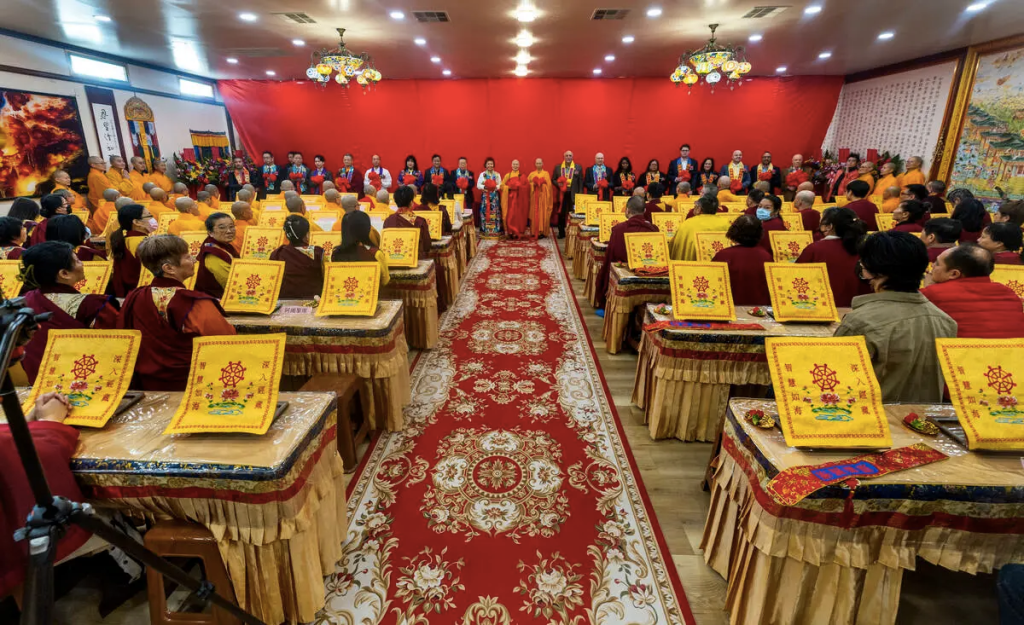
On the morning of January 18, 2024, the Benevolence Temple came alive with the vibrant festivities that commenced with a traditional Dragon Dance. Performers skillfully gyrated to the rhythmic beats of booming and clanking drums, creating an electrifying atmosphere. As they made their entrance into the packed temple, cloth-covered deities loomed overhead, surrounded by bountiful fresh fruit and food offerings.

The temple “will extend equal care to all sentient beings regardless of race, gender, or religion,” according to the organization. “The term ‘benevolence’ signifies language, actions, and thoughts that are kind, caring, and beneficial to others.”

Elected officials — or their representatives — entered and lined up in front of the main shrine, each holding a red ribbon shaped like a flower. They each were handed scissors to cut strands in a lavish ribbon-cutting ceremony.

The curtain shielding the shrine was pulled to reveal a large golden statue at the center of what appeared to be a tranquil garden.

“Great day for the state of Nevada,” Nevada Lt. Gov. Stavros Anthony said in his opening remarks. “I want to congratulate you on this significant milestone for your temple and your efforts to unify local residents and people from different religions and races.”

The temple — led by Holy Guru Jiaozun Zhengda, vice president of the World Buddhism Headquarters — will preach the teachings of Namo Dorje Chang Buddha III and Namo Shakyamuni Buddha, according to the organization.

“Naming a Buddhist temple with these words expresses the original intention of Holy Guru Jiaozun Zhengda to propagate the cause of Buddhism through selflessness and compassionate virtuous deeds, with the vow to enable sentient beings to learn the Buddhist Dharma and attain liberation through a compassionate Bodhi mind,” the organization wrote.
The Las Vegas Benevolence Temple was founded in 2019 but operated at a temporary site before it found its new home, 700 E. St. Louis Ave., which was vacant four months ago.

The Buddha statues were declared sacred in a Thursday ceremony. Now, the temple will offer meditation guidance, teach Dharma discourses and the chants of Mahayana Buddhism, according to the organization.

The disciples will participate in charity, the organization wrote. “The objective is to contribute in a practical way to the local community while spreading the doctrines of Buddhism to the public.”

The Metropolitan Police Department and City Council members Victoria Seaman and Olivia Diaz sent representatives.

“The community will benefit from the sanctuary that your temple provides,” Anthony said to applause.

Link: https://peacelilysite.com/2024/01/26/vibrant-ceremony-marks-grand-opening-of-new-buddhist-temple/

Source: https://www.reviewjournal.com/life/religion/vibrant-ceremony-marks-grand-opening-of-new-buddhist-temple-photos-2984063/?fbclid=IwAR1V2j4SbxQIeB2f6GEJQBsz7CyxPFU05AfDDqZ7deLRO9pNRimkI9dTtd4

Lessons Induced From Nectar

Dharma Discourse by Amang Nopu Pamu in Nectar Assembly

Amang Nopu Pamu is an extraordinary Dharma King and Holy Mother, revered for her unparalleled realization. Her spiritual achievements stand as truly exceptional, placing her at the forefront among female yidams at the highest level.

Remarkably, at the tender age of eight, she demonstrated remarkable intellectual prowess by composing a profound commentary on logical reasoning—a feat unparalleled by anyone else in the world. Her intellectual brilliance continued to shine, as she accomplished the mastery of the entire Tripitaka by the age of 20.

In addition to her scholarly achievements, Amang Nopu Pamu authored five insightful commentaries, including notable works such as “The Prajna of Ultimate Reality” and “Entering the Door of the Dharma,” alongside other contributions to Buddhist literature.

In the rich tapestry of Buddhist history, finding a figure as exemplary as Amang Nopu Pamu is a rare occurrence. Her greatness is acknowledged and praised not only by mortal beings but also by all Bodhisattvas and Arhats in the sacred realm. Amang Nopu Pamu stands as the most exalted, earning the admiration and reverence of those who recognize the profound depth of her spiritual attainment.

On September 8th, 1997, a significant gathering unfolded as several Rinpohes actively engaged in different segments of a Nectar Sharma Assembly presided over by Amang Nopu Pamu. The following is the discourse delivered by Pamu during this Sacred Assembly.

In the Nectar Assembly Pamu Sat at the Dharma King Throne Many Rinpoches sitting around


The live videotape of the Buddhas bestowing nectar and the scenes of myself and Buddhist disciples cannot be shown to those who do not understand the Buddha Dharma. This is because outsiders would not recognize or understand the wonderful states concerned with unworldly Dharma. Of course, those practitioners of Buddhism who are Great Rinpoches and those who have deep roots of kindness’ may view the videotape.


You have requested numerous times that proof of the truth of the Buddha Dharma be provided. You can use real photographs of my practicing the nectar Dharma. You can also use the attestations of the Great Rinpoches that they personally participated in the Dharma Assembly and that they personally saw the Buddhas bestow nectar. However, one must use only group scenes. I am not qualified to claim personal merit or engage in self acclamation. As Long as living beings are benefited, that is enough.
The Buddhas have bestowed nectar in response to the ripening of conditions of good fortune of those of you who were able to partake of the nectar. I think that the Buddhas bestowing of nectar must have been due to a Great Virtuous One among our disciples here who was helping me practice the Dharma. I am just a humble person. How could I have such great abilities?


I and all of you practitioners of Buddhism seated here today, including Great Bodhisattvas, should constantly maintain a heart of humility. You must remember what I say. I will never accept any offerings from anyone. This is because we are practitioners of Buddhism who maintain a heart of humility. We have come to this world to benefit living beings, not to covet and accept the money and property of others.


One of my disciples said that those false Rinpoches will hate me. I said that this is exactly the law or principle of cause and effect. This is because whoever is a false Rinpoche does not understand the Buddha Dharma. Such people are ordinary beings with ignorance, defilements, anger, and hatred.
They are not able to obtain the true nectar of the Buddhas, are not able to experience true empowerment, and do not possess the qualifications to receive Supreme Division initiations. They must accept many disciples and rely upon the offerings of such disciples.


I do not accept many disciples. I only teach several dozen people of noble character. Anyone else who wants to learn the Buddha Dharma from me can only learn from the books I have written. Through learning from the books I have written, one can in the same manner obtain great fortune and end the cycle of birth and death. I do not have time to receive more disciples. Unlike those false Rinpoches, I do not accept any offerings.


If they did not hate me, whom would they hate? In previous times, were Sakyamuni Buddha, Master Padmasambhava, and Master Marpa not despised by false Rinpoches and followers of erroneous ways? If any of you who are my disciples meet up with evil people who defame me, you must not become angry or hateful. You must not use your supernormal powers to kill them. On the contrary, you must have great compassion for them and must be concerned for them. You must vow to bring them good fortune. You must vow to enable them to receive the correct Dharma as soon as possible. You must not give rise to even the slightest harmful thought, since we are living in this world to benefit and save living beings.


There is another point I would like to especially remind those Rinpoches and Dharma Teachers here today to convey to all other practitioners of Buddhism. Under no circumstances should one, upon seeing a Rinpoche, think of beseeching him or her to practice the Dharma to have true nectar bestowed. It could be said that this is impossible. Even those Rinpoches who are at the level of Dharma King may not have attained such realization. Practicing such Dharma is only for true Holy Ones who are Great Dharma Kings.


As for myself, if the conditions for all of you in attendance here today to receive the blessing of nectar were not mature, and if there was not a Holy Dharma King among you practicing the Dharma whom I do not have the ability to see, then I would not have been able to cause you to taste true nectar bestowed by the Buddhas! Thus, you disciples of mine who are Rinpoches and Great Virtuous Ones should tell your students not to make unrealistic demands upon other Rinpoches. As long as they are truly Great Virtuous Ones who actually propagate the correct Dharma of the Tathagata and are not false Rinpoches, we should be respectful toward them.

Lessons Induced From Nectar

Link:https://peacelilysite.com/2024/01/26/lessons-induced-from-nectar/

#Nectar #DharmaKing#Rinpoche #TathagataDharma #Buddhism #Buddhist#AmangNopuPamu #Yidam

Sacred Occurrences at the Great Nectar Dharma Assembly

True Words Respectfully Written by Zhou Ma Rinpoche

I AM ZHUO MA Rinpoche. I and nearly 100 Rinpoches, Geshés, Khenpos, and Dharma Teachers participated in the Great Nectar Dharma Assembly conducted by Pamu. At the Dharma Assembly, I saw sacred occurrences that I had never seen before in my life. Pamu was seated on the Dharma King dais.
Part of her discourse was as follows:
“Everybody look clearly. This is a pure gold, empty Dharma bowl that has just been washed by a Rinpoche. There is nothing in it. Nobody is allowed to approach it. The video camera is not allowed to move during the entire videotaping today. The scene shot by the video camera will not change. Your eyes and the video camera will be used to keep watch on the bowl so as to see how this nectar arrives. Of course, it will be bestowed by the Buddhas themselves!
Although I am now living overseas, I know how difficult it is for many Chinese people and other practitioners of Buddhism who do not understand the Tibetan language to learn Vajrayana Buddhism. Additionally, the entire practice of the Dharma today is the result of the ripening of conditions for there to be a great Buddha Dharma event in the land of the Chinese people. I will, therefore, solely use the Chinese language to give a discourse on the Dharma and to practice the Dharma.”


In the middle of the Dharma Assembly, it seemed as if my entire body was filled with a warm current. It was incomparably wonderful. It was not as if I had entered samadhi, yet it was not as if I had not entered samadhi. I truly do not know the reason why. The sky was changing. The earth was changing. There were numerous sacred sights at the Buddhist altar area. I can truthfully say that this is the first time I saw the Buddhas and Bodhisattvas come to the human realm. The empowerment that those virtuous ones in attendance received cannot be described in words.


At the Dharma Assembly, specifically for the Great Perfection Rainbow Body Accomplishment Dharma Initiation, Pamu practiced the Dharma for invoking the bestowal of the Most Precious Nectar. This nectar is indispensable for such initiation. The Most Precious Nectar can also be made into Most Precious Pills. It is the highest level of nectar. With just one taste of it, one will definitely have no obstacles in this lifetime in attaining accomplishment.
At the time the nectar descended, the Buddhas also bestowed more than 1,000 yellow, white, and black shariras into the gold bowl.

White Bodhi Nectar
Red Bodhi Nectar
Long Life Nectar


At the Dharma Assembly, Pamu practiced the Dharma to have five types of nectar bestowed. Each type of nectar was of a separate grade. There was Long Life Nectar. It can extend one’s life span, increase one’s merit, deepen one’s state of realization, and help one develop supernormal powers. With just one taste of the silver-gray nectar bestowed by the Long Life Buddha, one’s life span will increase to over 120 years. With two tastes, one’s life span will increase to over 150 years.

There was also the Crystal Body Nectar bestowed by Aksobhya Buddha. Its luster was much more captivating than that of any precious gem. After being initiated with this type of nectar, one can successfully practice the Dharma to achieve the Transparent Crystal Reward Body. With just one taste of this nectar, one can immediately go through walls and have other miraculous powers.

Crystal Bodhi Nectar

There is also the Red Bodhi Nectar. This was bestowed by Amitabha, the first leader of the Vajrayana. This nectar is specially used in the highest and most sacred initiation within Vajrayana Buddhism: The Great Perfection Rainbow Body Dharma.
We Rinpoches who were in attendance also saw that the nectar did not have the slightest semblance of anything which was made by man. The difterent types of nectar could not possibly have been objects made by an ordinary person. Each type of nectar had a mysterious and natural structure and seemed to be alive.

When the Dharma Assembly was about to end, Pamu gave the following instructions:
Whoever saw the Buddhas descending from the sky and the bestowing of nectar into the Buddhist altar area must attest here today to what they saw in order to uphold the correct view for living being
Those of you who did not see these things and who falsely attest will receive karmic retribution.
Those Rinpoches and Great Virtuous Ones in attendance all attested to what they saw. The descending of nectar enabled all of us to understand the true tantra and especially enabled us to understand the magnificence of Pamu’s Buddha Dharma. I do not need to say what type of Holy One Pamu is, since everyone already knows. What else can I say at this point? I can only say the following words: Maintain a heart of humility, cultivate yourself well, and save living beings everywhere.

Sacred Occurrences at the Great Nectar Dharma Assembly

Link:https://peacelilysite.com/2024/01/19/sacred-occurrences-at-the-great-nectar-dharma-assembly/

# Rinpoche #Nectar #BuddhaDharma #Assembly#AmangNopuPamu#Buddhism


Benjamin Franklin’s 13 Virtues: A Blueprint for Personal Development

A Path to Personal Excellence

George Washington may rightly be known as the “Father of his Country,” but for the two decades before the American Revolution, Benjamin Franklin held the title of the world’s most famous American.

Franklin, a celebrated scientist and inventor, earned recognition for his groundbreaking electrical experiments, winning the Royal Society’s Copley Medal—a prestigious 18th-century equivalent of the Nobel Prize. His notable inventions included the lightning conductor, the first map of the Gulf Stream, and a unique musical instrument, the glass armonica. Renowned composers like Gluck, Mozart, and Beethoven created concertos for this instrument. Franklin’s genius received international acclaim, with Immanuel Kant describing him as “The Prometheus of Modern Times,” and David Hume hailing him as America’s “first great man of letters.”

Benjamin Franklin, a polymath and one of the Founding Fathers of the United States, left an enduring legacy not only for his political contributions but also for his philosophy of personal development. In his autobiography, Franklin outlined 13 virtues that he believed were crucial for leading a virtuous and successful life. This blog post will explore each of these virtues and delve into how Franklin practiced them in his own life.

  1. Temperance: Franklin advised moderation in eating and drinking, emphasizing the importance of avoiding excess. By maintaining temperance, individuals could achieve a clear and focused mind. Franklin recognized that a balanced lifestyle laid the foundation for success in cultivating other virtues.
  2. Silence: The virtue of silence urged individuals to speak only when their words could benefit others or themselves, discouraging trifling conversation. Franklin realized the power of listening and the importance of thoughtful communication for personal and intellectual growth.
  3. Order: To bring order to one’s life, Franklin recommended organizing belongings and allocating time efficiently. By assigning specific places for possessions and dedicating time to each aspect of one’s business, an individual could enhance productivity and reduce chaos.
  4. Resolution: Resolution involved the commitment to fulfill one’s duties and promises without fail. Franklin understood that steadfast determination was crucial for personal and professional success, encouraging individuals to set goals and work relentlessly towards achieving them.
  5. Frugality: Franklin advocated for mindful spending, emphasizing that expenses should serve a purpose, either benefiting oneself or others. This virtue highlighted the importance of avoiding wastefulness and making financial decisions with a long-term perspective.
  6. Industry: Losing no time and being consistently engaged in useful activities formed the basis of the virtue of industry. Franklin valued hard work and believed that avoiding unnecessary actions was essential for personal progress and achievement.
  7. Sincerity: Sincerity required the avoidance of deceit and the cultivation of honest and just thoughts and speech. Franklin believed that sincerity contributed to building trust in personal and professional relationships.
  8. Justice: The virtue of justice focused on treating others fairly and fulfilling one’s duty to both prevent harm and provide benefits. Franklin emphasized the importance of not wronging others through actions or neglect.
  9. Moderation: Avoiding extremes in emotions and reactions, particularly in response to injuries, was crucial for maintaining composure and cultivating the virtue of moderation. Franklin recognized the value of forbearance in dealing with challenges.
  10. Cleanliness: Tolerating no uncleanliness in body, clothes, or habitation reflected Franklin’s belief in the importance of personal hygiene and a clean environment for overall well-being.
  11. Tranquility: Tranquility involved maintaining a calm and composed demeanor, especially in the face of trifles and common accidents. Franklin valued the ability to remain undisturbed and focused on long-term goals.
  12. Chastity: Chastity, as outlined by Franklin, suggested a responsible approach to intimate relationships, emphasizing health and the well-being of oneself and others.
  13. Humility: Imitating the virtues of Jesus and Socrates, humility was the capstone of Franklin’s 13 virtues. Humility involved recognizing one’s strengths and weaknesses, learning from others, and continually striving for self-improvement.

Franklin’s approach to acquiring these virtues was systematic. He advised focusing on one virtue at a time, mastering it before moving on to the next. By prioritizing temperance, Franklin believed that a clear and focused mind would make subsequent virtues easier to acquire. This deliberate and methodical approach allowed him to build a foundation for a virtuous life.

Benjamin Franklin’s 13 virtues remain a timeless guide to personal development and success. By understanding and incorporating these principles into our lives, we can strive towards a more virtuous and fulfilling existence, following in the footsteps of one of history’s most influential thinkers and statesmen.

Benjamin Franklin’s 13 Virtues: A Blueprint for Personal Development

Link:https://peacelilysite.com/2024/01/12/benjamin-franklins-13-virtues-a-blueprint-for-personal-development/

#BenjaminFranklin #Virtues #PersonalDevelopment #Thinkers #Statesmen#Temperance#Humility

Source: https://www.mountvernon.org/library/digitalhistory/digital-encyclopedia/article/benjamin-franklin/

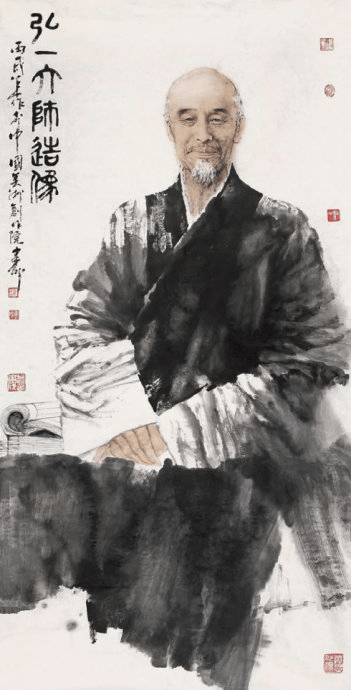
Li Shutong: From Prodigy to Monk – A Journey Beyond Wealth and Artistry

Master Hongyi (弘一大师, October 23, 1880 – October 13, 1942) was originally named Li Shutong (李叔同) and was born into a prosperous family in the bustling northern city of Tianjin on October 23, 1880. The family, originally hailing from Hongdong County, Shanxi, had relocated to Tianjin during the Ming Dynasty.

Li Shutong’s grandfather, a prosperous banker and salt merchant, and his father, Li Shizhen (李世珍), a scholar deeply immersed in Chan Buddhism and the teachings of Ming Neo-Confucian philosopher Wang Yangming (1472-1529), reflected the family’s intellectual and financial standing.

In contrast, Li Shutong’s mother had a modest upbringing as the daughter of a farmer in Pinghu, Zhejiang Province. She became Li Shizhen’s fourth wife in their multi-courtyard household, marrying him at the age of 20 when he was 68.

Tragically, Master Hongyi’s father passed away when he was just four years old. Subsequently, his mother faced challenges in maintaining her position within the complex dynamics of the household while residing under her eldest son’s roof. Fortunately, Li Shutong found support from two of his elder half-brothers during his early years, allowing him to access a quality education and a firm foundation in the Confucian classics.

The young Li Shutong mastered the art of calligraphy and after his ordination as Master Hongyi, he continued to engage in this artistic tradition. This calligraphy, produced during the period of his life when he was known as Master Hongyi, reads from right to left “Zijing Qixin” (自净其意). It means “to cleanse one’s mind” and is an extract from a famous verse

Influenced by his formative experiences, Li Shutong eloquently expressed a profound perspective on life through poetry at the tender age of 15, capturing the fleeting nature of wealth and honor: “Life is truly like the setting sun on the western hills; wealth and nobility are as transient as frost on the grass.” His personal life, marked by an unconventional marriage, served as a poignant reflection of the internal conflict between societal expectations and his genuine affections.

Li Shutong’s participation in the Hundred Days’ Reform and subsequent rumors prompted his relocation to Shanghai, where he thrived in the dynamic literary scene. Becoming a prominent figure in Shanghai’s cosmopolitan lifestyle, he joined the Chengnan Wenshe and co-founded the “Five Friends of Tianya.”

His impact extended beyond literature. Collaborating with the painter Ren Bonian, he established the Shanghai Calligraphy and Painting Association, marking a pivotal moment in Chinese art history. Li Shutong’s engagement in Liyuan activities showcased his versatility as a performer in plays such as “Bai Shuitan” and “Huang Tianba.”

Li Shutong’s literary repertoire included numerous poems and songs, among them the renowned poem “Farewell” (《送别》, Song Bie), which later inspired the widely sung “The Farewell Song” (《送别歌》, Song Bie Ge).

The Farewell Song

Outside the long pavilion, along the ancient route, fragrant green grass joins the sky,
The evening wind caressing willow trees, the sound of the flute piercing the heart, sunset over mountains beyond mountains.

          At the brink of the sky, at the corners of the earth,                 my familiar friends wander in loneliness and far from home,
          One more ladle of wine to conclude the little happiness that remains;      don’t have any sad dreams tonight.

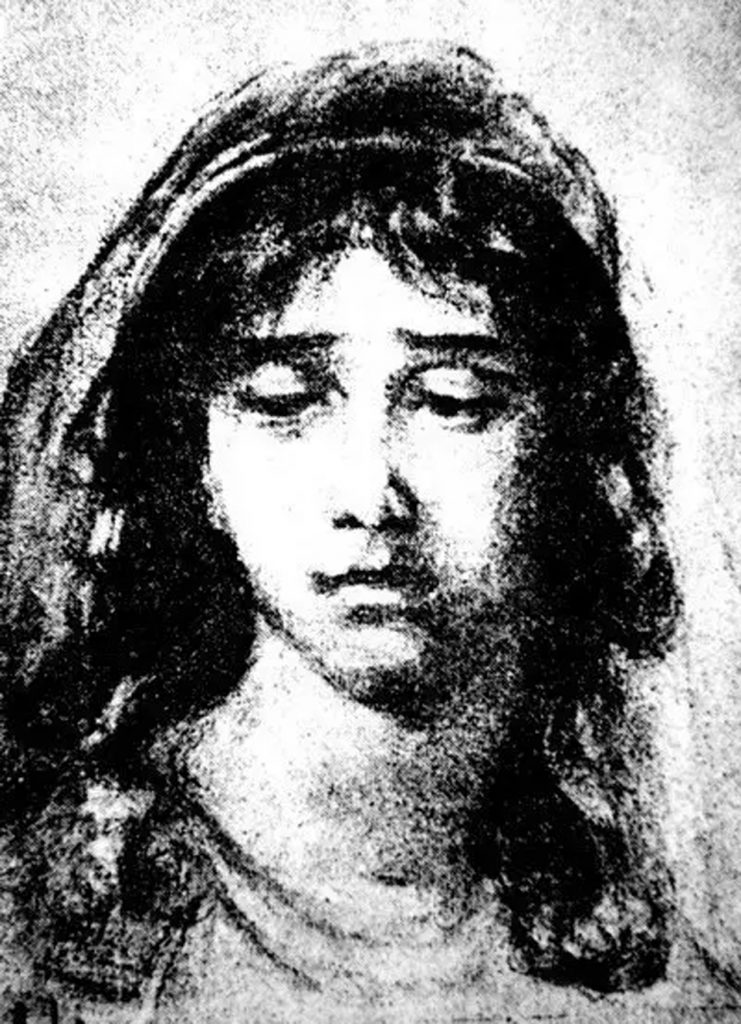
Li Shutong’s charcoal drawing titled ‘Maiden’
“A Half-naked Woman” by Li Shutong, collected by CAFA Art Museum, China

However, Li Shutong’s life underwent a profound transformation. Confronted with personal and financial challenges, he voluntarily entered a self-imposed exile in Japan. The success of the Xinhai Revolution in 1911 further complicated his circumstances, resulting in financial ruin. Undeterred by these setbacks, Li Shutong maintained composure and supported his family by teaching in Tianjin and Shanghai.

His teaching career, notably at Zhejiang First Teachers’ College, left an indelible mark. Li Shutong played a pivotal role in introducing Western painting to China, earning him the title of the forefather of Chinese oil painting. As the first Chinese art educator to incorporate nude models in his painting classes and introduce Western music to China, his influence was far-reaching. Some of his personally groomed students, including contemporary Chinese artist, educator, and musician Feng Zikai (丰子恺), and Singaporean artist Chen Wenxi (陳文希), went on to become accomplished artists in their own right. His impact on students, such as the renowned painters Pan Tianshou and Shen Benqian, underscored his lasting influence.

During this period, Li Shutong delved deeper into Buddhism. In 1916, he embarked on a 21-day fast at a temple in Hangzhou to experience aspects of the spiritual path. This experience prompted his decision to embrace the ordained life, leading to his monastic vows at Hupao Temple. His disciplined lifestyle, which included fasting therapy for deeper insights, marked a significant spiritual transformation.

Li Shutong’s transition from a worldly existence to a monk, detailed in a letter to his second wife, Yu, reflected his detachment from transient fame and wealth. His decision to leave behind a worldly life for monastic vows occurred only a month after joining the Order. He was known by the monastic names Yanyin (演音) and Hongyi (弘一) after undergoing full ordination rites at Lingyinsi, the largest monastery in Hangzhou.

His departure, though painful for those close to him, exemplified Master Hongyi’s profound understanding of Buddhism. In a conversation with his second wife, he elucidated the nature of love, defining it as compassion, aligned with Buddhist teachings that emphasize letting go of attachment and cultivating compassion.

Master Hongyi’s transformation from the proud and arrogant Li Shutong to a humble and receptive teacher was evident in his approach to teaching Dharma. Contrary to expectations of flawless mastery, Master Hongyi sought feedback from student monks and welcomed constructive criticism without defending himself.

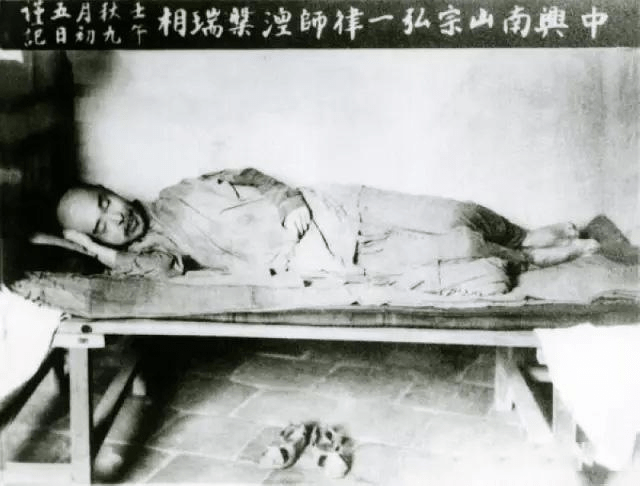
By early 1942, the toll of austerities and fasts began affecting Master Hongyi’s health, and by mid-May, his condition deteriorated rapidly.

The paranirvana of Master Hongyi

Three days before his passing at Busi Temple in Quanzhou, Fujian Province, on October 13, 1942, Master Hongyi inscribed his final calligraphic strokes, creating the work known as “Sorrow and Joy Comingle,” “Worldly Sorrows and Joy Are Intertwined,” or “Sorrow or Joy Are Inextricably Bound to Each Other” (《悲欣交集》, Beixin jiaoji).

Master Hongyi’s philosophical framework posited three distinct stages in human life: material, intellectual, and spiritual. The material phase pertains to mundane existence, the intellectual phase characterizes the life of ordinary intellectuals, while the spiritual phase encompasses the religious realm.

Material, intellectual, spiritual; beauty, profundity, deity. These concepts are intricately tied to the principles of abstinence, composure, and wisdom in Buddhism.

Abstinence, in this context, denotes the renunciation of materialistic pursuits. Composure signifies the practice of deep meditation—tranquil and remote—a path that ultimately leads to the attainment of wisdom. The imagery of Venerable Hongyi experiencing both sorrow and joy (欣) symbolizes the dynamic interplay between these various dimensions of life.

Li Shutong: From Prodigy to Monk – A Journey Beyond Wealth and Artistry

Link:Li Shutong: From Prodigy to Monk – A Journey Beyond Wealth and Artistry

Source: https://www.tsemrinpoche.com/tsem-tulku-rinpoche/great-lamas-masters/master-hongyi-the-maverick-patriarch-of-the-chinese-buddhism.html