Chinese Calligraphy: Intangible Cultural Heritage of Humanity

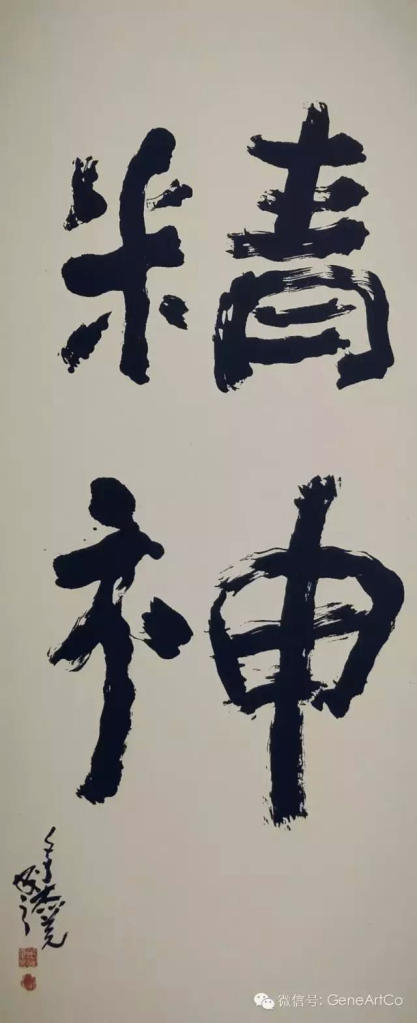
精神 Spirit by H.H. Dorje Chang Buddha III

H.H. Dorje Chang Buddha III Calligraphy Artworks

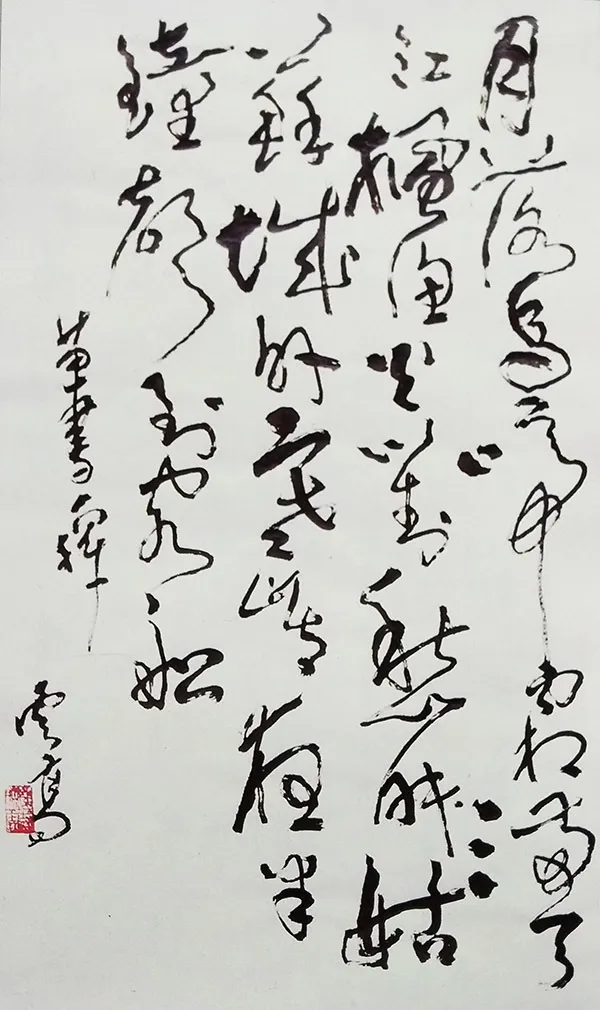
Chinese calligraphy has transcended its role as a mere communication tool and has become an art form highly esteemed even in an era dominated by ballpoint pens and computers. No longer limited to intellectuals and officials, calligraphy is now practiced by professional artisans and enthusiastic amateurs. Calligraphers employ brushes to beautifully ink five distinct styles of script: ‘seal’, ‘official’, ‘cursive’, ‘running’, and ‘regular’. While calligraphy can be found on various surfaces, even adorning the rocky walls of cliffs, it is most commonly seen on letters, scrolls, literary works, and fan coverings.

Throughout history, the Chinese have believed that no art form or field of study can truly reflect a person’s moral character and knowledge as effectively as calligraphy. The accomplishments or creations in other arts or fields often overshadow one’s shortcomings in knowledge and character. However, calligraphy stands apart from this convention. It functions as a three-dimensional mirror, projecting the depth of knowledge, moral character, and mental strength with each brushstroke. There is no hiding or concealing these qualities. When examining an individual’s ordinary handwriting of Chinese characters, one can often discern their level of education. This is even more evident when examining their calligraphy.

In the annals of history, there is no account of an unknowledgeable person making significant contributions to calligraphy. Profound and extensive knowledge does not necessarily guarantee expertise in calligraphy. However, great calligraphers possess both knowledge and skillful brushwork. Without exception, the renowned calligraphers of past generations were literary masters who possessed deep knowledge. Notable examples include Xizhi Wang, Su Huai, Shaoji He, Huaiguan Zhang, Fei Yue, and in more recent times, Youren Yu. Each of them was an erudite literary figure and exemplar of virtue.

Knowledge serves as the pillar and cornerstone of calligraphy, while moral character is reflected in the style and allure of the art form. Thus, calligraphy demands a combination of knowledge and moral character.


When one appreciate the calligraphy of H.H. Dorje Chang Buddha III, one can understand that why chinese believe that calligraphy combines one’s knowledge, moral character and mental strength .The calligraphy of H.H. Dorje Chang Buddha III Wan Ko Yeshe Norbu Holiest Tathagata is not bound by worldly conventions and is devoid of unnecessary flamboyance. It is highly refined and based upon ingenious artistic conception. His Holiness’s strokes are sometimes written in a swift curling style.
However, in an instant, His Holiness can express the innocent and natural charm of a child. There is wonder in even common strokes. His calligraphy is naturally graceful, exhibiting depth and brilliance. The calligraphy of His Holiness contains an invisible force that makes the characters seem much grander than they appear on a superficial level. His strokes look harmoniously smooth and unbroken. The Chinese characters may appear strong and vigorous, like a soaring dragon or mighty tiger. They may appear clear and gently elegant, like slowly floating clouds, cranes flying among pine trees, or dancing swans. They may appear simple and unadorned, like the free heart of a child. They are gracefully understated and completely devoid of any mundane quality. The calligraphy of H.H. Dorje Chang Buddha IlI is natural in quality and resonates with the true nature of the universe. A deep power underlies His Holiness’s strokes.
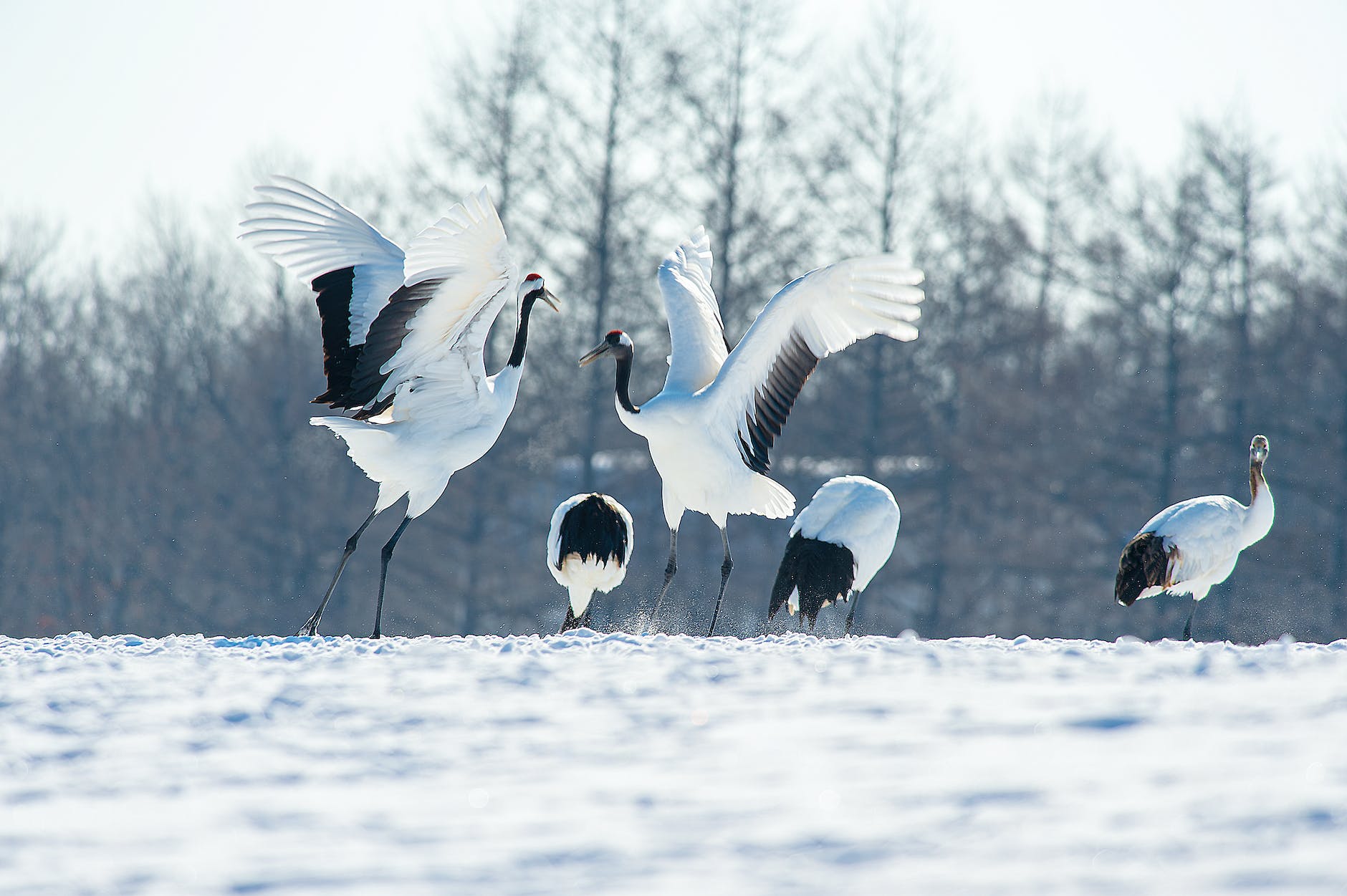
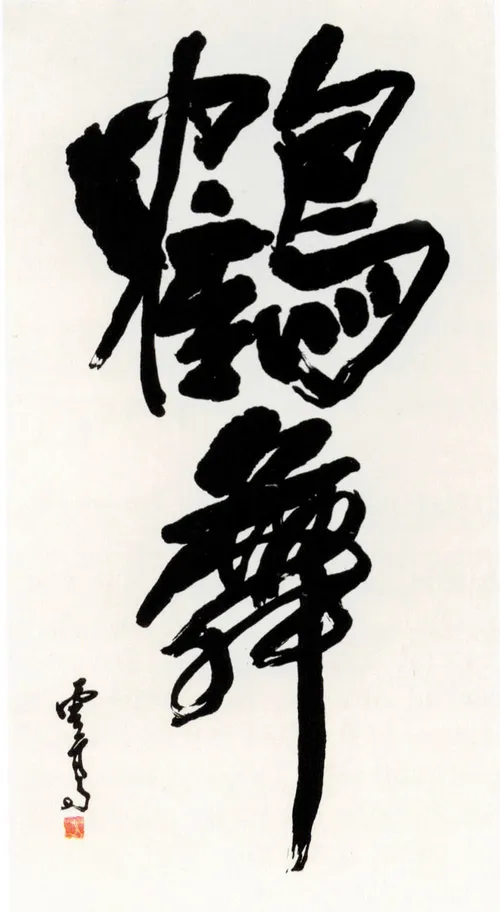
Photo by Klub Boks on Pexels.com
Crane Dance by H.H. Dorje Chang Buddha III at 1990

Red-crowned cranes tend not to build ness for themselves since they often stay in various places. When quiet, they frequently engage in meditational observation. When in motion, they frequently dance. Their nature is noble, pure, elegant and simple. They develop their virtue, are not attached to a specific abode, and take care of themselves so as to enjoy their natural lifespan. That is why since ancient times they have been praised for their longevity.


The ability of H.H. Dorje Chang Buddha III to reach such great heights in calligraphy is completely due to His Holiness’s vast knowledge and profound talents. Of course, His Holiness is extremely adept at learning from the styles of others since this is a simple matter for a Buddha. For example, even in the initial stage of learning calligraphy, H.H. Dorje Chang Buddha III had solid skills in the traditional cursive style of writing and also had extensive learning.
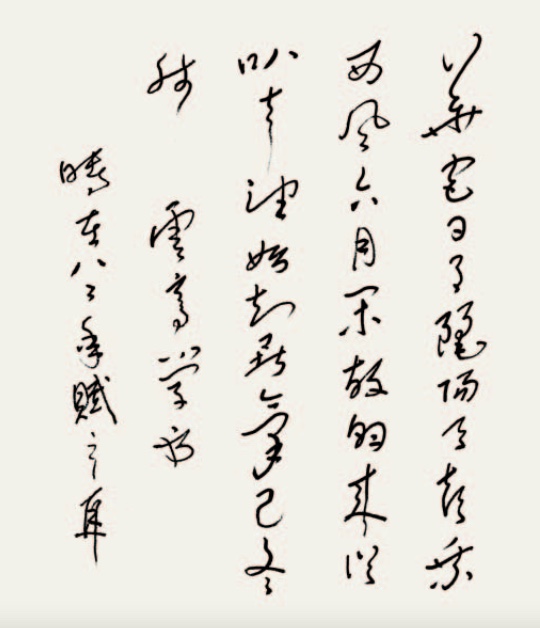
Calligraphy : A Qi jue poem (Thin Gold Cursive Style of Calligraphy)


Above is a qi jue poem written by H.H. Dorje Chang Buddha IIIat 1982. A qi jue poem is a four-line poem with seven characters to a line and a strict tonal pattern and rhyme scheme. The phonetic reading of the poem is as follows: “hua gong ri yue li yang tian, xi cheng xi feng liu yue xian, gu peng lai cong ba sheng wang, shi zhi shu qi yi dong can.” One can see that this work has surpassed all traces of the mundane and has transcended all earthly impurities. Its style is lofty and pure.
When that poem was written, H.H. Dorje Chang Buddha III was living in the seclusion of an ancient temple. His Holiness used his extraordinary realization to express his thoughts and feelings. The first line expresses that although His Holiness lived alone and secluded in the room of a temple, He governed the universe and bestowed blessings upon living beings.
The next line, “xi cheng xi feng liu yue xian,” conveys the scene that during the idle month of June H.H. Dorje Chang Buddha III bathed in the Buddha-state of coolness while under the scorching sun. His Holiness was free of all worldly cares and attachments, and his body merged with the universe. When friends came, His Holiness heard the horns of their cars, but He had already transcended the world, residing in quietude and non-action. H.H. Dorje Chang Buddha III kept no notion of the date, and His Holiness’s mind did not abide in anything whatsoever. The people of the world were ignorantly attached to the changing seasons and came in their cars and horses to inform H.H. Dorje Chang Buddha III that summer had long passed and the winter was about to end. The ancient Buddha acknowledged this and smiled.

In recent years, there are works of H.H. Dorje Chang Buddha III that have been written in the cursive mode of calligraphy, showing a flowing and unobstructed style, and expressing even more than before the charm of this writing technique. For example, the work Fei Cui Jade expresses the spirit of an immortal or Buddha, thoroughly transcending the three worlds of reincarnation, standing proudly above the five elements of the universe. It is truly calligraphy beyond the category of calligraphy, expressing a feeling that incorporates the whole universe.
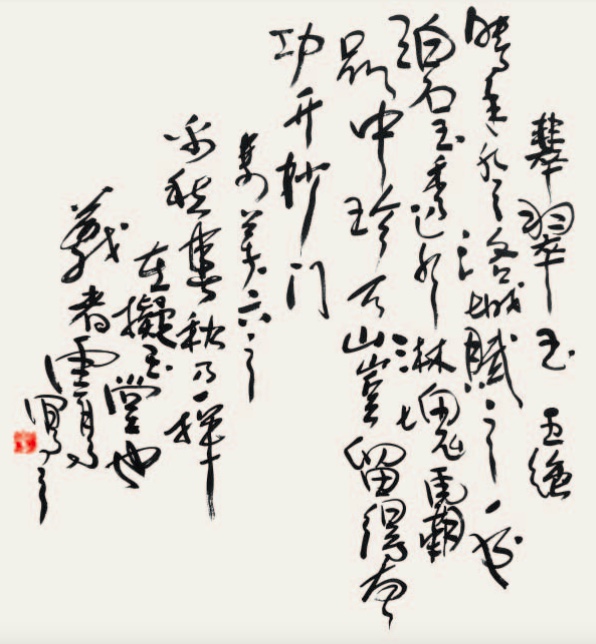
Fei Cui Jade: Created with an unfettered hand and unattached mind, it has the appearance of a celestial writing accomplished with a childlike mind and steady strokes of the brush.


His Holiness’s calligraphy of the Chinese characters lang ga luo bu (Treasure of Heaven) excels the writing of calligraphers throughout history. It transcends all traces of worldliness. It expresses deep strength, like that which can break jade. The style of another calligraphic work called wu wo nai da cheng (No-Self Is Great Accomplishment), conveys the firmness and simplicity of steel and the vigor of a sharp knife. However, these same characters also contain delicate beauty. That calligraphic style truly surpasses styles of the past and present.
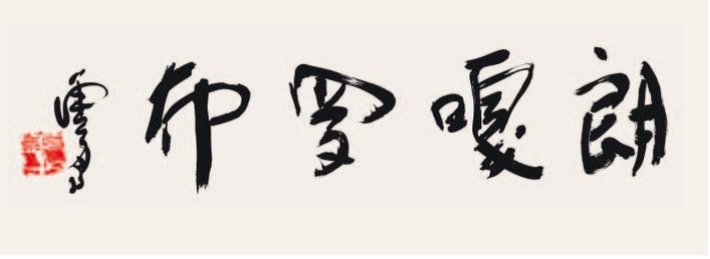
Lang ga luo bu (Treasure of Heaven)


Another calligraphic style of H.H. Dorje Chang Buddha III is revealed in the writing of the Chinese characters xiao bu dian (Tiny). Such calligraphy shows the childlike innocence of a very old man, and its arrangement expresses the utmost ease and lack of rigid constraints. It is high-class calligraphy that does not even seem to be calligraphy. It is so elegant and refined that it completely transcends the mundane.
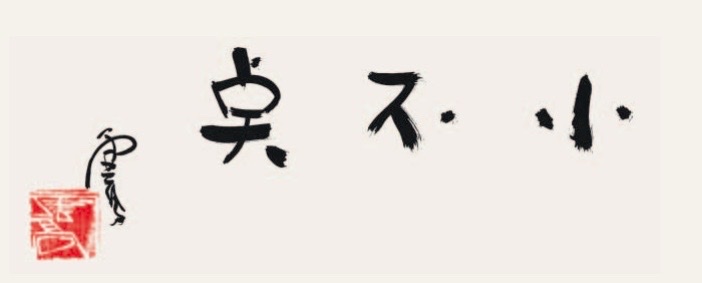
Tiny (Xiao bu dian)


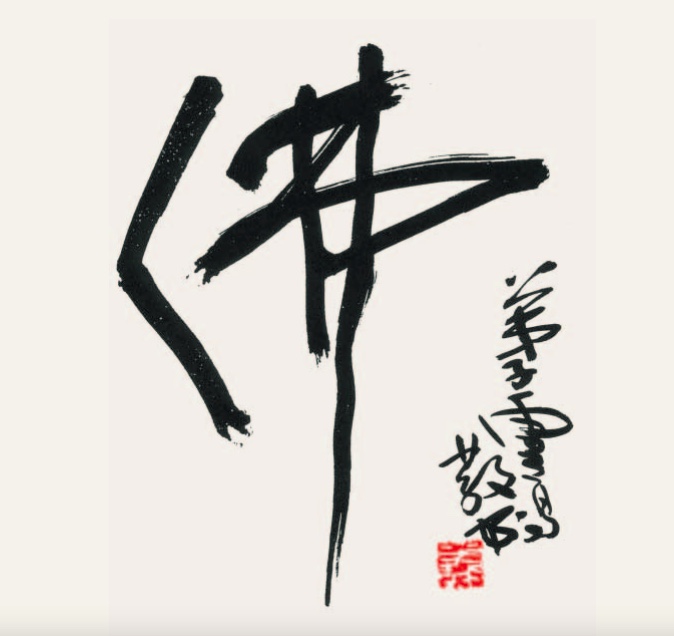
Beholding the character sheng (holy) written by His Holiness, one can see that it simultaneously embodies both the softness of ribbons and the inner-firmness of steel. Its inner beauty flows to the surface. Another example is the character fo, which means Buddha. The writing of that character demonstrates that His Holiness has truly attained the summit of calligraphic skills that the ancients extolled in the old saying, “the old pine branch cannot be weighed down by heavy snow; the might of a brush will lift a thousand-pound bronze cauldron.”
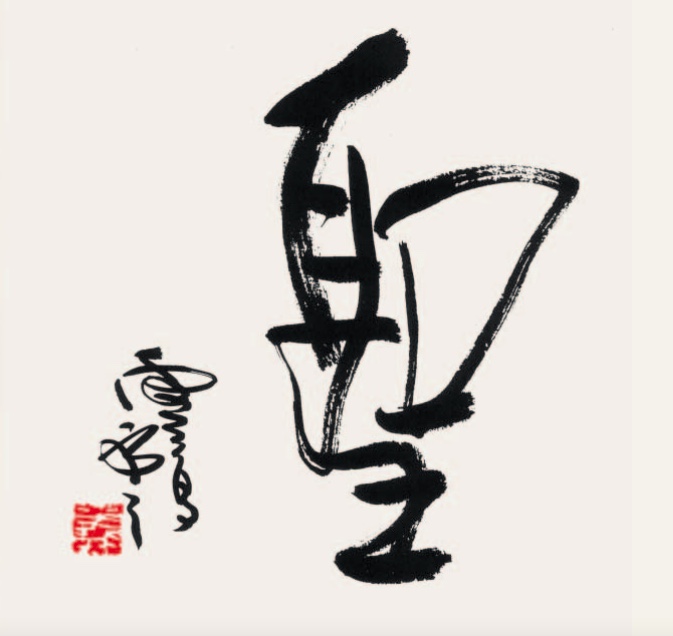
The Chinese character “sheng,” which means “holy.”
The Chinese character “fo,” which means “Buddha.”


In fact, the calligraphy of H.H. Dorje Chang Buddha III has a deep foundation and an internal richness. It embodies the manifold sensations that one could possibly experience in one lifetime. The essence of all things in the universe converges at the tip of His Holiness’s brush. With such a transcendent state of realization, the myriad things of the universe are in the palm of this Buddha. The calligraphy of H.H. Dorje Chang Buddha III is like a treasury. It can be vigorous, smooth, or naturally beautiful. His Holiness incorporates the best techniques of all of the schools of calligraphy. No words can really describe this!
His Holiness’s calligraphic skills have reached the highest degree of proficiency and naturalness that only a Buddha could reach!
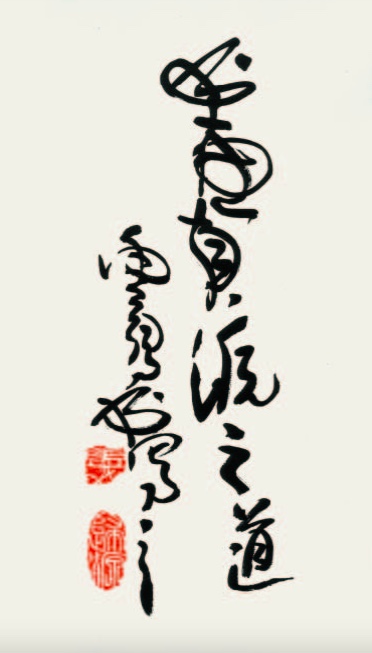
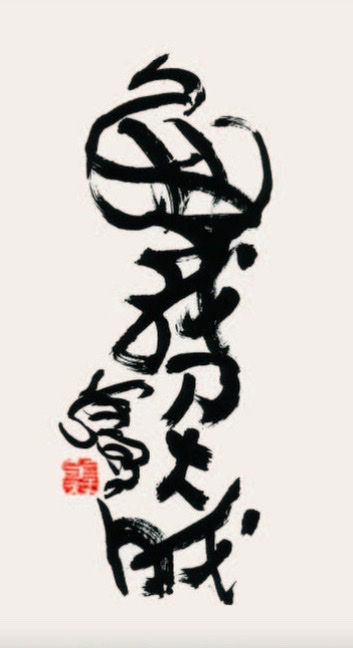
The Way to the True Source of Calligraphy and Painting
No-Self Is Great Accomplishment
Hua Zang Si (Inscription of a Buddhist temple in San Francisco)

Chinese ancient poem Han Shan Si Temple in rapid cursive style by H.H. Dorje Chang Buddha III

You can discover a wealth of calligraphy artworks at The International Art Museum of America, situated in downtown San Francisco.

H.H. Dorje Chang Buddha III Calligraphy Artworks

Link:https://peacelilysite.com/2023/06/16/chinese-calligraphy-intangible-cultural-heritage-of-humanity/

#DorjeChangBuddhaIII #HHDorjeChangBuddhaIII#DorjeChangBuddha#IAMA#InternationalArtMuseumofAmerica#ChineseCalligraphy#Art
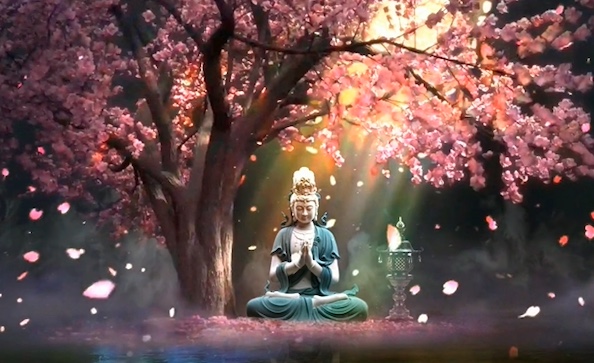
The Best Buddhist Dharma to Rebirth at Paradise of Ultimate Bliss

Buddhist Devotee Hou Yushan Passed Away, Leaving a Legacy of Spiritual Journey

On June 1st, 2002 Buddhist disciple Hou Yushan peacefully passed away at his home in Los Angeles. Witnessed by his wife, Hou Li Qingqiu, the celestial realm appeared before him as Shakyamuni, Amitabha Buddha, and Avalokiteshvara, guiding him towards the ultimate state of bliss. Prior to his passing, Hou Yushan expressed his unwavering determination to learn Buddhism in this lifetime under the guidance of his master.

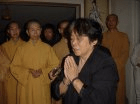
Hou Liqingqiu, a devoted practitioner of Chinese medicine in California, addressed over 20 monks who gathered in their home for a Buddhist practice session in honor of Hou Yushan. She shared the remarkable journey of her husband, stating that he had dedicated many years to the study of Buddhism. Diagnosed with lung cancer four years ago, Hou Yushan had endured arduous and prolonged treatments. However, his life took a transformative turn a year and a half ago when he and his wife attended the Yiyungao International Cultural Foundation, where they listened to the enlightening teachings of Master Yiyungao (H.H. Dorje Chang Buddha III).

Deeply inspired by the teachings on the pre-recorded dharma discourse, Hou Yushan developed profound admiration and sincerity towards Great Master Yi. He actively participated in the group cultivation programs of the foundation, he never missed an opportunity to listen to the pre-recorded dharma discourse. Despite the advice of others to focus on rest and recovery, Hou Yushan insisted on continuing his full-time volunteer work at the foundation, driven by his desire to meet Master Yun Gao Yi as soon as possible.

In February of year 2002, Hou Yushan and his wife sought refuge under the guidance of Great Master Yi Yungao (H.H. Dorje Chang Buddha III) through the American Master Yiyungao International Cultural Foundation, led by Lobsang Gyatso Rinpoche. Upon meeting the revered master, they were pleasantly surprised to find that their preconceived notions were far from reality. Master Yi was not the distant figure they had imagined, instead, he displayed approachability and warmth. With utmost sincerity, they sought empowerment to learn the Dharma, presenting their offerings. However, Master Yi, without even glancing at them, humbly declined their offerings, explaining that he could not set such a precedent. Nonetheless, Great Master Yi graciously provided them with the empowerment and transmission of the Dharma. Hou Yushan diligently practiced the teachings and swiftly progressed, experiencing a sudden disappearance of his cancer pains.

Hou Yushan’s wife Hou Liqingqiu shared the incredible experience with the monastery

On the auspicious occasion of Buddha Bathing Day in May 2002, Hou Yushan and Hou Liqingqiu had the opportunity to reunite with Master Yi Yungao (H.H. Dorje Chang Buddha III). When asked about his wishes, despite his terminal illness, Hou Yushan expressed his sole desire to learn how to attain a stable rebirth in the Land of Ultimate Bliss. In response, Master Yi advised him to adopt a different practice method, specifically the Pure Land School’s method of reciting Buddha, with a particular emphasis on Amitabha. Additionally, Master Yi imparted a secret handprint of rebirth, promising that through this method, Hou Yushan would soon witness the state of Amitabha and be guided by Buddhas and Bodhisattvas to the Paradise of Ultimate Bliss. The compassion demonstrated by the master was profound, as he called Hou Yushan to his side and secretly shared the sacred handprint with him. Hou Yushan experienced indescribable excitement and joy upon receiving this precious gift—the profound Great Dharma of the Supreme PureLand Buddha Dharma.

Ever since Hou Yushan received the transmission of Amitabha Dharma on the Buddha Bathing Festival, his wife has witnessed a remarkable transformation in his condition. Hou Liqingqiu, the wife saw golden rays of yellow and red light radiating from his head and back at any given time. As a result, all the cancer-related pains in his body have vanished, along with the swelling. He no longer required the morphine painkillers prescribed by the hospital.

One day, Hou Yushan asked his daughter Lily, who worked as an anesthetist in the hospital, about his complexion. Lily responded, saying, “Dad, your complexion is genuinely vibrant, and your spirits are high. One would never guess that you are a patient.” On the morning of May 25, Hou Yushan shared with his wife that during his Dharma practice the previous night, he entered a state of samaya and visited the Land of Ultimate Bliss. He described the indescribable beauty of the paradise, filled with captivating shades of red, green, and purple.

Hou Liqingqiu eagerly inquired, “Can you provide me with an analogy to illustrate its beauty?” After a moment of contemplation, Hou Yushan responded, “The Paradise of Ultimate Bliss surpasses any scenery in this world. Do you recall our visit to West Lake when we were young? In the early morning, the misty air and the colorful reflections on the lake created a breathtaking view. However, the beauty of the Paradise surpasses even that. Furthermore, the Buddha informed me that he would come to fetch me in seven days, urging me to proclaim to the world that the greatest Dharma in existence is with our master.”

On May 31, Hou Yushan carefully settled all family matters and left final words for his daughter. He advised her, “Do not hold your mother responsible for everything in her life. However, there is one thing you can admonish her for: if your mother ever strays from Buddhism and deviates from following Vajra Master (Master Yi Yungao – H.H. Dorje Chang Buddha III), remind her to earnestly practice under our Master Yungao’s guidance without hesitation.” Then, he turned to his wife, Hou Li Qingqiu, and earnestly said, “In your life, it doesn’t matter if you make other mistakes, but there is one thing you must not falter in: wholeheartedly follow the Vajra Master in dedicated practice. Your success lies solely in following his guidance, as his Dharma is the true path.”

Hou Yushan informed his wife that he would pass away that night and advised her, “Pay close attention tonight. At the moment of my passing, I fear I may fall into drowsiness and enter a demonic realm. Do not sleep, but remind me to visualize the Vajra Master above my head and Amitabha Buddha atop my head, while reciting the mantra wholeheartedly.” That night, in their seaside home, Hou Li Qingqiu had already foreseen that her husband, Hou Yushan, would depart to the Buddhist realm. Therefore, she set four alarms to ring at different times, once every hour. True to her premonition, at 6:15 a.m. on June 1st, Hou Yushan’s pulse and breathing slowed down. Hou Li Qingqiu shook his bed, and together they chanted, “Namo Vajra Guru! Namo Amitabha!” Hou Yushan held the secret handprint taught by Master Yi Yungao.

At that moment, Hou Li Qingqiu heard heavenly music, and Hou Yushan’s body emitted increasingly powerful golden light. She witnessed the appearance of Shakyamuni Buddha, Amitabha Buddha, Guanyin Bodhisattva, and other Buddhas and Bodhisattvas in the sky by the seaside. The merging rays of light grew more potent. After about five minutes, the Buddhas and Bodhisattvas, along with the celestial splendor, disappeared. It was then that she remembered to check Hou Yushan’s pulse, which had ceased along with his heartbeat.

Zhang Tianyou, the president of the American Master Yi Yungao International Cultural Foundation, was the first to arrive at Hou Yushan’s residence after his passing. He observed Hou Yushan, who appeared peacefully asleep, with no signs of pain on his face. Hou Yushan’s hands held the secret handprint from his previous life.

The incident deeply moved Long Hui, the chairman of the International Federation of Buddhist Monks and Nuns and the abbot of Huazang Temple. She continuously praised the greatness of Master Yi, stating that she often witnessed the suffering experienced by lung cancer patients at the end of their lives. However, the Pure Land method of reciting Buddha taught by Master Yi could transform a lung cancer patient’s condition within a month, filling their surroundings with auspicious golden light and relieving their pain. This would ultimately lead them to be reborn in the Land of Ultimate Bliss under the guidance of Buddhas and Bodhisattvas. Long Hui marveled at the tremendous power of Tathagata-rectification, beyond the capacity of words to express.

On the night before his passing, Hou Yushan personally prepared gifts and $5,000, and said to his wife, “The master never accepts offerings. He did not accept my offerings. Tonight, as I pass away, tomorrow you shall make the offerings and send them to the master. Please ensure he accepts them.” On June 1st, Hou Li Qingqiu faithfully followed her husband’s final instructions and sent the offering package to Yi Yungao, kneeling on the ground with tears in her eyes. She implored Master Yi to accept the offering, shouting loudly, “My supreme Buddha Vajra Master!” The master replied, “Do not address me as such, for I am not a Buddha. I am merely an ordinary practitioner, just like everyone else.” Hou Li Qingqiu explained that it was Hou Yushan’s testamentary offering, to which the master responded, “It seems there is no other way. These relics of Layman Hou shall be displayed in the temple and not for individual use.” The master immediately transferred $6,000 from his personal funds for Layman Hou’s burial expenses and informed the masters of two prominent temples to offer their support in accumulating merit for the deceased.

Photo from weixin.com

Buddhist Devotee Hou Yushan Passed Away, Leaving a Legacy of Spiritual Journey

Link: https://peacelilysite.com/2023/06/09/the-best-buddhist-dharma-to-rebirth-at-paradise-of-ultimate-bliss/

#DorjeChangBuddhaIII #HHDorjeChangBuddhaIII#DorjeChangBuddha #PureLand #Shakyamuni Buddha #AmitabhaBuddha #Avalokiteshvara #Cancer #ParadiseofUltimateBliss #MasterYiYungao #HouYunshan #Compassion #SupremeBuddhaDharma

Gao Zu Bao MaXi (High-Leg Treasure Horses)

Gao Zu Bao MaXi (High-Leg Treasure Horses)
Artist: H.H. Dorje Chang Buddha III 

The High-Leg Treasure Horse is a thoroughbred horse with great stamina. When this treasure horse perspires, it appears to be bleeding due to the color of its perspiration. According to ancient legend, it is the most precious among all species of horses. It has the reputation of being able to travel over three hundred miles a day. Long mane hairs and a mighty, strong-willed, handsome appearance are its prominent characteristics.
The High-Leg Treasure Horses in this painting have longer legs than horses commonly seen in paintings. The hairs of their manes are also long and strong. An extremely rare brushwork technique that combines haziness with clarity was applied to paint the hairs of the horses. The gossamer-thin hairs are strong but pliable. One can clearly see the natural effect of sunlight on the horses’ manes. Moreover, contrasting variations of dark and light are seen in every hair. The hairs of the horses are depicted with a realistic effect that nonetheless transcend their natural look.


An artistic technique was used to thoroughly capture on paper the charm and atmosphere of the grassland, lake, sky, and land. The “haziness technique” was applied to express a state of realization in which there is no distinction between emptiness and form.
The ancient cypress tree was drawn in one shade of green without the need to add decorative touches in several different shades of green. Both the spirit and form of the tree were captured through the artist’s brush. In addition, elegant charm is revealed by a small number dots of red leaves in the background that compliment the scene. The most difficult part of this work of art was painting the roots, trunk, and leaves in a spontaneous, casual manner using the center brush-up technique yet maintaining a scholarly tone. Such mastery of painting cannot be easily attained and requires solid skills in calligraphy, literature, and painting as well as a noble moral character.
From the brushwork style and details of this painting, we can sense the profound inner-cultivation of a renowned scholar. The abilities of a literary giant with abundant talent are visible everywhere. The scholarly tone and brushwork style are skinful and vigorous, totally free of any trace of the mundane, and reflect the highest level of painting and calligraphy.
Anyone who lifts a brush in an attempt to paint such painting will appreciate the fact that this scholarly style cannot be accomplished by anyone other than a literary giant who is a great master of art.
This painting coherently unites realism and small-scale freehand brushwork as well as the use of haze and clarity.

This painting is in the permanent exhibition of The International Art Museum of America. H.H. Dore Chang Buddha III, an artist of great talent, has created sixteen distinctive painting styles. The composition we are discussing here belongs to the “Menglong” style. This style combines realism and non-realism to capture the essence of the portrayed subject, resulting in a seemingly realistic but actually non-representational depiction. The brush strokes and color application in these paintings create a whimsical and dreamlike appearance, where the real and surreal merge into a lovely and hazy composition.

Gao Zu Bao MaXi (High-Leg Treasure Horses)

Link:https://peacelilysite.com/2023/04/25/gao-zu-bao-maxi-high-leg-treasure-horses/

#MasterWanKoYee #DorjeChangBuddhaIII #HHDorjeChangBuddhaIII#DorjeChangBuddha#IAMA#InternationalArtMuseumofAmerica

My Buddha Master, H. H. Dorje Chang Buddha III

My Buddha Master, H. H. Dorje Chang Buddha III

by Gadu Rinpoche

When I was respectfully on my knees and holding my palms together in front of my kind Buddha Master’s dharma seat for the first time, as soon as I raised my eyebrows to have my eyesight in a light contact with the loving, compassionate, and benevolent eyes of my Buddha Master, I immediately had the belief that my Master is a Buddha! However, my Buddha Master never stated to anyone what holy being he was in past lifetimes. Conversely, he always claimed to be a servant of everyone.

During the past ten years, I closely attended by the side of my Buddha Master and also carried out quite a number of Buddhist deeds following my Buddha Master. The holy states and holy realizations manifested by my Buddha Master such as proficient in both exoteric and esoteric Buddhism, perfect and deep mastery of the Five Vidyas, and great wisdom unrivaled by any human or holy beings are unprecedented in the history of both exoteric and esoteric Buddhism.

My firm belief of “My master is a Buddha” that I had in my mind for years was finally confirmed from the treasure book of H. H.  Dorje Chang Buddha III that was presented to the Congress of the United States by the International Buddhism Shanga Association on April 3, 2008. The identity of my Buddha Master, known by people in the world as Master Wan Ko Yee, was revealed through either meditation or practice of the dharma in a profound state of supernatural vision by the first-class great holy virtuous ones, who are incarnations of Buddhas and Bodhisattvas. They announced the background of H.H. Wan Ko Yeshe Norbu, who was long ago recognized by H.H. Great Dharma King Zunsheng (the manifestation of Mahavairocana Buddha) as Buddha Vajradhara. Through strict practice of the dharma and meditation these holy monastics deeply entered the dharma realm and supernaturally saw the true source. The result was they learned that this being of great virtue and holiness is the second incarnation of Vimalakirti and the third incarnation of Dorje Chang Buddha. They wrote down their certificates of recognition according to the rules of Buddhism in which they recognized that H.H. Master Wan Ko Yee is H.H. Dorje Chang Buddha III — the highest ancient Buddha in exoteric, esoteric, Mahayana, Hinayana, and Vajrayana Buddhism; the master of the Five Buddhas in the five directions; and the master of the great mahasattva Vajrasattva. That is, they recognized that H.H. Master Wan Ko Yee is the Holiest Tathagata Wan Ko Yeshe Norbu, the current greatest leader of Buddhism in the entire dharma realm!

Those eminent monks and dharma kings also wrote words praising H.H.  Dorje Chang Buddha III  as being the highest and greatest holy being and the only one in the history of Buddhism who has truly exhibited before living beings item after item of accomplishments in the Five Vidyas.

From that, I realized the truth behind what I experienced quite a few years ago when a huge and gigantic material, in less than two hours of time, became a piece of extremely finely carved and crafted miraculously wondrous holy Yun sculpture artwork. Such holy realization was just a manifestation of the craftsmanship vidya of the Five Vidyas by my magnificent Buddha Master, due to the affinity of living beings.

My Grand Master, H.H. Great Dharma King Zunsheng, stated in a formal pronouncement about my great and kind Buddha Master that the realization of any eminent monastic or person of great virtue in the world today cannot rival the realization of Holiest Tathagata Wan Ko Yeshe Norbu. H.H. Great Dharma King Zunsheng also made the following vow of truth: “If any person or holy being is able to duplicate the mysterious sculpted treasures created by H.H. Wan Ko Yeshe Norbu, then this formal pronouncement of Great Dharma King Zunsheng has deceived the public.” (The mysterious sculpted treasures are “Enchanting Colors of Utmost Mystery,” “Mysterious Boulder with Mist,” and certain other Yun sculptures with specific names.)

Yun Sculpture by H.H. Dorje Chang Buddha III

According to the system and rules of Buddhism in this world, there are only two beings of great holiness whose expositions of the dharma can be categorized as sutras. One of them is Sakyamuni Buddha. The other is the holy and venerable Vimalakirti. Besides those two, all other expositions of the dharma can only be called commentary rather than sutras. This is true no matter how great the Bodhisattva who has expounded the dharma is.

Some people say that Hui Neng (the sixth patriarch master of the Zen School) gave the Platform Sutra of the Sixth Patriarch. Actually, the word sutra was used due to exaggerated praise given to Hui Neng by people of the world who did not understand the system and rules of Buddhism. The rank of the sixth patriarch was even lower than that of many Bodhisattvas. For example, Maitreya Bodhisattva is the next Buddha, who will conduct the Dragon Flower Assembly. The position of Maitreya Bodhisattva is very much higher than that of Hui Neng. However, expositions of the dharma given by Maitreya Bodhisattva cannot be called sutras. They can only be accepted as commentary. An example of this is the Yogācāra-bhūmi-śāstra. (Discourse on the Stages of Concentration Practice)

The holy and venerable Vimalakirti descended into this world during the time of Sakyamuni Buddha. He is the only ancient Buddha who transformed into a layman to expound the dharma. Sakyamuni Buddha personally taught the four types of disciples. Among them were the 500 monks who were difficult to teach and who did not want to arouse Mahayana bodhicitta. A skillful means was used to teach all of the monastics and 8,000 Bodhisattvas. After the ancient Buddha Dorje Chang expounded dharma in Abhirati (World of Wonderful Joy), the Buddha responded to karmic conditions by transforming into the holy and venerable Vimalakirti to help the Buddha teach the sangha, Bodhisattvas, and other disciples. The goal was to protect and uphold the Buddha-dharma taught by Sakyamuni Buddha. The level of realization attained by the holy and venerable Vimalakirti was the same as that attained by Sakyamuni Buddha. However, He did not want to assume the status of another leader of the religion in the human realm, thereby causing sectarianism and adding to the self-centeredness of practitioners. Considering that Sakyamuni Buddha became a Buddha in this earthly World, the holy and venerable Vimalakirti acknowledged Sakyamuni as Buddha and chose to assist Sakyamuni Buddha by manifesting as a Bodhisattva.

Thus, the holy and venerable Vimalakirti acted in the same way that the ancient Buddha Zheng Fa Ming (True Dharma Brightness) Tathagata acted when the Buddha transformed into Kuan Shi Yin Bodhisattva and also acted in the same way as Manjushri Bodhisattva, the Master of seven Buddhas, did to play the role of a Bodhisattva to support Sakyamuni Buddha. All of this was done to benefit living beings. If two Buddhas of the same rank appeared at the same time, it would cause worldly divisions. It would hinder the development of Buddha-dharma and the saving of living beings. Actually, Buddhas do not care who emerges as the leader of Buddhism. The Buddhas appear in whatever form and manner that best benefit living beings. Everything is done for the benefit of living beings based upon bodhicitta.

Therefore, people in general have no way of discovering that the realization and enlightenment of the holy and venerable Vimalakirti were that high and that He was the incarnation of Dorje Chang Buddha, the foremost ancient Buddha who existed before Sakyamuni Buddha. However, the dharma discourses of the holy and venerable Vimalakirti are sutras, just as the dharma discourses of the Buddha, not commentaries. In the system of Buddhism, one such discourse is called Vilmalakirti-nirdesa Sutra (The Sutra of Vimalakirti). That sutra came into being during the same time period Sakyamuni Buddha was giving sutras. It is a very important Buddhist sutra. The Vimalakirti-nirdesa Sutra has been studied and followed in both Mahayana Buddhism and Hinayana Buddhism that was mostly propagated in Southern Asia.

When H.H.  Dorje Chang Buddha III  was born, the beating of drums suddenly sounded in the sky, and beautiful, heavenly music could be heard. Three rainbows approximately forty to fifty meters (131-164 feet) apart appeared simultaneously in the sky. The middle one was primarily blue, the right one primarily red, and the left one primarily white. At birth, the entire body of His Holiness was dark blue. No cries from His Holiness could be heard. Rather, His Holiness opened his mouth and very clearly stated, “I have entered this world. I am completely proficient in exoteric and esoteric Buddhism and will wondrously manifest the Five Vidyas. Compare and you will know.” After speaking such words, His Holiness remained silent and appeared just like an ordinary child. The parents of His Holiness thought that they had given birth to a mysterious and extraordinary human being but did not tell anyone about this. His Holiness did not speak again until He was three years old.

When His Holiness was three years old, H.H. Mahavairocana Dharma King Zunsheng guided His Holiness in learning the Tripitaka. At that time, His Holiness was taught to recite the heart mantra of Dorje Chang Buddha seven times. This little child suddenly laughed heartily and immediately manifested the Three Bodies and Four Wisdoms. H.H. Great Dharma King Zunsheng at once tested His Holiness’s knowledge of the Tripitaka and the esoteric scriptures. The Dharma Prince child explained such writings with great facility. There was nothing in them that His Holiness did not understand. His Holiness had realized all of the doctrines and principles of such teachings.

H.H. Mahavairocana Dharma King Zunsheng then gave the following formal pronouncement: “Dorje Chang Buddha has come to this world a third time. The holy and venerable Vimalakirti has descended from the skies a second time. He completely understands the scriptures on the dharma. His Four Wisdoms are wonderfully perfect. He is an ancient Buddha upon whom living beings can rely. No master is qualified to teach Him. His mysterious sculpted treasures will be spectacular and unique in the world. He will be able to take mist that will stay inside His sculptures. He will manifest His realization and consummate skills. No holy person in the world will be able to duplicate such works. If anyone will be able to duplicate such works without differing from the original at all, my words have deceived the world. Vimalakirti Wan Ko is Buddha Vajradhara. He will cause the Buddhas to bestow nectar that many will see descend from the sky. He is of utmost benefit to sentient beings. He has the compassion and wisdom of an ancient Buddha. I hereby reveal these words to prove the veracity of my formal pronouncement.” H.H. Mahavairocana Dharma King Zunsheng also gave His Holiness the dharma name Yangwo Yizhi Dharma Prince, which means Dharma Prince supreme leader of Buddhism with the highest wisdom.

H.H. Mahavairocana Zunsheng then said, “During the Dharma-Ending Age in the earthly world, there will be many evil teachers and demons who will claim to be genuine holy persons. In order to distinguish the genuine from the false, I now make a strict formal pronouncement that will serve as the testing standard. The pronouncement is as follows: There will not be a fourth incarnation of Dorje Chang Buddha in this earthly realm within the next 5,000 years. The third Dorje Chang Buddha will be the only such holy being, and there will not be an incarnation of another Dorje Chang Buddha in this earthly realm for 5,000 years. Based on causes and conditions that accord with the dharma, I now lay out tests to determine whether a person is that true Buddha if he claims to be the true incarnation of that Buddha. He must successfully invoke the Buddhas to bestow nectar. He must be able to perform the Golden Vase Selection of Karmic Affinity and predict the results of that ceremony beforehand. He must be able to eliminate karmic obstructions in a clearly visible manner. He must be able to replicate wondrous multicolored sculptures. He must be able to take mist, place it inside a hollowed out sculpted boulder, and have the mist stay there. If a person is able to do all five of these things without exception, then he is the true fourth Dorje Chang Buddha. No matter how great a holy terton may be, no matter if a person leaves concave imprints on rocks with his hands or feet, no matter how vast a person’s manifold supernatural powers may be, if he cannot do these five holy things, then he certainly is not the true incarnation of Dorje Chang Buddha. An ancient Buddha who descends to this earthly realm will have no difficulty meeting these five tests. I leave these five observable tests to guard against those in the future who make false claims.”

The Dharma Prince was acting as the holy and venerable Vimalakirti did when Vimalakirti received different teachings and knowledge, took on the appearance of an ordinary person, and learned things tirelessly. No one knows why the Dharma Prince did so. At the age of sixteen, the Dharma Prince wrote a work on the dharma called A Monk Expounds the Absolute Truth to a Layperson. After that writing was buried, great master Hui Yong unearthed it. Renqing Luozhu and Suolang Danbu respectfully offered that writing to H.H. Mahavairocana Zunsheng Yeshe Norbu to evaluate. H.H. Zunsheng Yeshe Norbu personally promulgated that dharma called A Monk Expounds the Absolute Truth to a Layperson in front of the four types of Buddhist disciples. After He finished promulgating that dharma, He personally led the four types of Buddhist disciples in kneeling down and facing that writing on the dharma. He then made the following formal pronouncement: “An ancient Buddha has arrived in the east.” He recognized that the Dharma Prince was H.H. Dorje Chang Buddha III, conferred upon His Holiness the title Yangwo Wan Ko Yeshe Norbu, and said that His Holiness is the Holiest Tathagata. He also called that dharma A Monk Expounds the Absolute Truth to a Layperson Sutra.

There are certain time periods relating to H.H.  Dorje Chang Buddha III ’s propagating the dharma and benefiting living beings. Before the age of eleven was the period during which His Holiness was engaged in the Tripitaka of exoteric Buddhism. From the age of eleven to fifteen was the period during which His Holiness was engaged in the esoteric dharma of the Kagyu school. During that time, he was called Dusum Khenpa Lion’s Roar Dharma Prince. After the age of fifteen was the period during which His Holiness was engaged in the esoteric teachings of the Geluk school. His Holiness was at that time called the reincarnation of Master Tsongkhapa. That was also the time period during which His Holiness flawlessly propagated the tantric scriptures of the Sakya, Nyingma, and all of the other schools. At this time, His Holiness was called the embodiment of the body, speech, and mind of Guru Padmasambhava.

Because my Buddha Master is an ancient Buddha who has come to this world again, His Holiness upholds the principles of “making no distinction between exoteric and esoteric Buddhism or among all of the sects and schools; teaching living beings according to their particular circumstances; and pervasively propagating the teachings of the Buddhas to all.” Thus, His Holiness is the Buddha Vajradhara Great Dharma King of the “Buddha Sect” who pervasively saves all living beings. My Buddha Master has repeatedly admonished everyone with the following counsel: “There is no differentiation among the various schools and sects in my mind. There is only Buddhism. However, for a dharma king, rinpoche, or acharya of any school or sect,  as long as he or she does not commit violations in the 128 evil and erroneous views, abides by the teachings of the Buddha, attains liberation, and then saves other living beings based on their particular karmic conditions, he or she is worthy of praise.” Of course, The Supreme and Unsurpassable Mahamudra of Liberation  is the greatest dharma among supreme great dharmas for cultivators to receive and practice. That is why my Buddha Master is the only one in this world possessing the realization of opening up the Niwan Daoguo for all kinds people to enable them to attain heavenly and holy states.

[ Please respectfully read in detail the treasure book of H. H. Dorje Chang Buddha III to acquire great wisdom, accomplishment and liberation. If you have the affinity to receive and practice the dharma of The Supreme and Unsurpassable Mahamudra of Liberation, you will be certain to get great wisdom and attain great accomplishment and liberation. ]

My Buddha Master, H. H. Dorje Chang Buddha III

Link: https://peacelilysite.com/2023/01/06/my-buddha-master-h-h-dorje-chang-buddha-iii/

#MasterWanKoYee #DorjeChangBuddhaIII #HHDorjeChangBuddhaIII#DorjeChangBuddha#GaduRinpoche#BuddhaMaster

Source: https://xuanfa.net/bibliography/free-books-to-download/cultivating-honesty/?hilite=gadu+rinpoche

Tow Song Ci lyrics Appreciation

Tow Song Ci lyrics Appreciation

Su Shi was a writer, artist, calligrapher, pharmacologist, and statesman of the Song Dynasty, and one of the major poets of the era. His courtesy name was Zizhan and his pseudonym was Dongpo Jushi (東坡居士 “Resident of Dongpo”), and he is often referred to as Su Dong Po (蘇東坡). When we appreciate Chinese literature, Su Shi is widely regarded as one of the most accomplished figures, having produced some of the most well-known poems, lyrics, prose, and essays. His poetry has a long history of popularity and influence in China, Japan, and other areas in the near vicinity and is well known in the English-speaking parts of the world through the translations. Su Shi was the greatest writer of Song ci lyrics, often celebrating the joys of relaxed and transitory pleasures. This “To the Tone of Nian Nu Jiao Memories of the Past at Red Cliff” is one the most popular poems.

大江东去,浪淘尽,千古风流人物。故垒西边,人道是,三国周郎赤壁。乱石穿空,惊涛拍岸,卷起千堆雪。江山如画,一时多少豪杰。
遥想公瑾当年,小乔初嫁了,雄姿英发。羽扇纶巾,谈笑间,樯橹灰飞烟灭。故国神游,多情应笑我,早生华发。人生如梦,一尊还酹江月。

Nian Nu Jiao

Memories of the Past at Red Cliff

Su Shi

East flows the mighty river,

Sweeping away the heroes of times past;

This ancient rampart on its western shore

Is Zhou Yu’s Red Cliff of Three Kingdoms’s fame;

Here jagged boulders pound the clouds,

Huge waves tear banks apart,

And foam piles up a thousand drifts of snow;

A scene fair as a painting,

Countless the brave men here in time gone by!

I dream of Marshal Zhou Yu in his day

With his new bride, the Lord Qiao’s younger daughter,

Dashing and debonair,

Silk-capped, with feather fan,

He laughed and jested

While the dread enemy fleet was burned to ashes!

In fancy through those scenes of old I range,

My heart overflowing, surely a figure of fun.

A man grey before his time.

Ah, this life is a dream,

Let me drink to the moon on the river!

This poem was a tribute to the famous battle at Red Cliff, which took place on the Yangtze river in Sichuan at year 208 CE.  Through the description of the magnificent scenery on the Moonlit Night River, he expressed the remembrance of the famous and heroic characters of that era. The lyrics are vigorous and create a majestic atmosphere. It is a powerful poem, and has been ranked as a masterpiece throughout the ages.

I heard a song recently, that touched me so deeply, I could not help but cry. The song uses the lyrics of a poem written by H.H. Dorje Chang Buddha III, with the same Song ci style as “To the Tune of Nian-Nu-Jiao”. The bold and unconstrained poem entitled “To the Tune of Nian-Nu-Jiao: Abruptly Entering the Universe” has a powerful spirit that moved me deeply. Here is the English translation.

To the Tune of Nian-Nu-Jiao : Abruptly Entering the Universe

Abruptly entering the universe,
The universe of a billion worlds,
Stand firmly against all hardships and obstacles.
Seeing through glory and riches, I simply smile.
The rooster crows announcing the dawn,
The morning bell hurries the moon,
The whole Soha world is revealed.
Everybody bustles about to survive,
Life, like smoke and snow, gone!


Recalling when I was young,
I mastered the pen and the sword but liked Buddhism best.
The lion’s roar of the Buddha shook the universe!
Countless suffering patients visited me,
Day and night I pondered their cures.
Millions of strands of thoughts
Slowly turn toward prajna wisdom,
Swaying the three worlds.
I wish that my remaining life
Be devoted to the benefit of all sentient beings.

Here I Come by H.H. Dorje Chang Buddha III

The mood of this poem is broad and vast, and filled with emotion. The poem manages to capture the massiveness of the universe and centuries of human affairs. It begins with aspiration soaring to the sky, and ends with a very down to the earth message: serving and helping all living beings with all that he has.

Comparing the two poems, it is evident that the work of H.H. Dorje Chang Buddha III not only provides a much broader view of the world and human existence, but also uplifts the reader to a much higher spiritual level. H.H. Dorje Chang Buddha III truly is an outstanding and timeless master of letters and also has boundless compassion and mercy to all living beings.

I also found an astonishing fact, based upon his extraordinary accomplishments in the areas of Buddhism, the humanities, painting, calligraphy and ethics, the World Poets and Culture Congress, which is composed of 5,612 experts and scholars from 48 different countries and regions, selected Master Wan Ko Yee (H.H. Dorje Chang Buddha III ) as the world’s only “Distinguished International Master.” The resolution conferring upon him this title was mailed to the People’s Republic of China and was made public in Hungary on September 15, 1994. The “Distinguished International Master” certificate was signed by the then President of the international Olympic Committee, Juan Antonio Samaranch.

Tow Song Ci lyrics Appreciation

Link:https://peacelilysite.com/2022/10/11/tow-song-ci-lyrics-appreciation/

#MasterWanKoYee #DorjeChangBuddhaIII #HHDorjeChangBuddhaIII#DorjeChangBuddha#SongCi#SuShi#Memories of the Past at Red Cliff#DistinguishedInternationalMaster

Source: https://www.sohu.com/a/129380761_256852诗苑|苏轼《念奴娇·赤壁怀古》

A True Account of Henghsing Gyatso Rinpoche Vajra Meditation

Ven. Henghsing Gyatso being tonsured by H.H. Dorje Chang Buddha III.

A True Account of Henghsing Gyatso Rinpoche Vajra Meditation

Henghsing Gyatso Rinpoche is a disciple of H.H. Dorje Chang Buddha III Wan Ko Yeshe Norbu. His last incarnation was in Tibet, he was one of the four most outstanding disciples of Atisha of the Kadampa Sect. In this lifetime, he was born in Taiwan. He learned the highest dharma essence of Shakyamuni Buddha—the practice of vajra meditation from H.H. Dorje Chang Buddha III. He went into retreat during which he meditated for 27 days, 22 days of which he did not touch any water or food. All of the food and liquid sent in to him was returned untouched.

On April 10, 2005, Henghsing Gyatso Rinpoche came out of retreat. His face was placid. He had become thin, but his spirit was glowing. The first thing he did after he left the meditation cushion was prostrate before an image of his Vajra Master, H.H. Dorje Chang Buddha III Wan Ko Yeshe Norbu, in order to express his appreciation. He had finally learned the highest Buddha-dharma. He had finally attained true skills relating to the magnificent meditation Buddha-dharma that leads to enlightening one’s mind and seeing one’s original nature. He was happy for all living beings in that there truly exists such a wonderful and precious meditation dharma method that leads to enlightening one’s mind and seeing one’s original nature!

At the height of summer 2004, Henghsing Gyatso Rinpoche, out of great compassion, decided to endure hardship for the sake of other living beings. He vowed to prostrate around the island of Taiwan, which is a more than 1,100 kilometer journey (i.e. more than 684 miles). More than half a year later, he had completed half the journey. Along the way, his great compassion and piety moved Kuan Yin Bodhisattva to appear in the sky, empower him, and expound the dharma to him.  This event caused a sensation throughout the island of Taiwan and beyond. Many people within Buddhism expressed their great admiration over such an event.

Kuan Yin Bodhisattva appears on cloud in Taiwan

H.H. Dorje Chang Buddha III Wan Ko Yeshe Norbu Teaches the True Meditation Practice

The great compassion and sincerity of the rinpoche moved the Buddhas and Bodhisattvas to empower him. At February 2005, when he had prostrated as far as Kaohsiung, he suddenly received a notice from the Buddhas and Bodhisattvas telling him to open immediately the secret, small bag made of brocade that H.H. Dorje Chang Buddha III Wan Ko Yeshe Norbu gave him and told him to wear on his chest. Inside the brocade bag was a piece of paper telling him the mantra he would intone during his meditation retreat. That brocade bag is no ordinary thing.

In the summer of year 2004, Henghsing Gyatso Rinpoche vowed to prostrate around the island of Taiwan so as to suffer on behalf of other living beings. This vow moved H.H. Dorje Chang Buddha III Wan Ko Yeshe Norbu to transmit dharma to him and confer an initiation upon him. He and two other famous Dharma Masters were initiated together. They received the highest esoteric dharma. It is the essential dharma that leads to enlightening one’s mind and seeing one’s original nature. Shakyamuni Buddha practiced that dharma under the bodhi tree when he became enlightened. This dharma is called the Vajra Samadhi Buddha Great Enlightenment Meditation. Later, Guru Padmasambhava taught this dharma in Tibet. In the Supreme Secret-Tantric Division of Tibetan esoteric Buddhism, this dharma is called “Great Perfection Whispered (i.e. transmitted from mouth to ear) Profound Essence Vajra Meditation.” It is also called “Three Disciples Meditation.”

Besides the rinpoche, two other eminent monastics were transmitted the dharma that day. During the time His Holiness performed the initiation and transmitted dharma, suddenly, all three of them saw that the altar area, the building they were in, and everything else completely disappeared. They could only perceive the voice of His Holiness, which was loud and clear. Various kinds of startling special phenomena appeared. It was extremely wonderful. After transmitting the dharma, His Holiness blessed that small brocade bag and gave it to Rinpoche Henghsing Gyatso.

However, H.H. Dorje Chang Buddha III told him that he must wait until the Buddhas and Bodhisattvas instruct him to open it.

Henghsing Gyatso Rinpoche continued his prostrations around the island of Taiwan. When he reached Kaohsiung, he received notice from the Buddhas and Bodhisattvas to open the brocade bag. The paper in the bag told him that he should enter into retreat to practice the dharma since the karmic conditions had matured.

Henghsing Gyatso Rinpoche prostrated around the island of Taiwan

The First Retreat Was Not Carried Out in Accordance With the Dharma; Demons Entered the Retreat Room and Almost Killed the Lama

On February 27, 2005, Henghsing Gyatso Rinpoche returned to his retreat room in Jiayi. There he began his first retreat. He entered into meditation and stopped eating for four days. However, the people whose responsibility was to guard the retreat room during the retreat did not follow the dharma rules. They did not seal the windows and doors with a certain type of paper according to the dharma rules. They saw real demons make their way into the room to interfere with the rinpoche’s dharma practice. The situation was very dangerous. At this critical time, the people who were guarding the retreat room received a phone call from the Dharma Matters Department of His Holiness. The person who called said, “A problem has arisen in the retreat room. Demons have entered the room. Quickly call your master out of meditation by hitting the metal bowl (the metal bowl is a Buddhist instrument). Following the instructions they were given, the guards used the metal bowl to call out the rinpoche, who, in his meditation, was in the midst of battling with those demons.

On March 15, 2005 at noon in Jiayi, Henghsing Gyatso Rinpoche entered into retreat for a second time. This time, learning their lesson from the first retreat, the guards arranged the retreat room according to the dharma rules. The dharma stipulates that ten people must guard the outside of a retreat room in which someone practices this vajra meditation. The disciples of Henghsing Gyatso Rinpoche selected ten people to be guards. Their names are Shi Zong Guan, Shi Fa Yun, Wang Jin-Rong, Chi Hai-Ao, Ao Jing-Zhong, Xue Xiu-Fen, Cai Chun-Tao, He Yan-Yan, Cai Yu-Nu, and Lu Ke-Yun. With the addition of the cook, Liu Ming-Hui, there were all together eleven people. The ten guards cleared the retreat room, even removing the Buddhist altar. Downstairs from the retreat room is the area where the guards stayed. The entire retreat room was cleared of everything except dharma instruments and one rush cushion used for meditation.

During the Second Retreat, the Ten Guards Did Not Leave Their Posts

All of the doors and windows of the retreat room must be nailed shut with iron nails. Furthermore, the Buddha-dharma stipulates that each guard must sign a yellow paper that has dharma power and use it to seal the seams of those doors and windows. This is to prevent demons from intruding into the retreat room and causing havoc. It also prevents anyone from opening those doors and windows. There were fifteen places to be sealed in the retreat room. Ten yellow pieces of paper, each containing the signature of one guard, was pasted over each of those fifteen places. Thus, all together 150 yellow pieces of paper were pasted over the various seams.

Even the only door of the retreat room through which meals were sent was also sealed with one yellow paper containing the signatures of all ten guards. When they sent meals into the retreat room, the ten guards chanted a mantra and practiced dharma together. They had to together tear off the yellow paper sealing the door in order to open the door. After they delivered a meal, they together locked the door and sealed the door with paper again.

Those ten guards kept watch outside the door of the retreat room and did not leave their posts at any time. Even if some of them needed to use the restroom, there were at least seven of them guarding the door all day and night. It can be said that not even a bird, mosquito, or fly could enter. Only through these measures did they prevent the dangerous situation that occurred during the first retreat when the demons entered the retreat room and engaged in battle with the rinpoche.

At the beginning, the rinpoche ate on a normal basis. After three days, on March 18th, the amount of food he consumed dropped dramatically. On March 19th, the rinpoche rang a bell and beat a drum morning, noon, and evening. He drank only one cup of rice tea that whole day. Starting from March 20th, Henghsing Gyatso Rinpoche did not consume any more food or water. The food and water sent in were not touched. No sound could be heard coming from inside the retreat room. On March 23rd, the Dharma Matters Department of H.H. Wan Ko Yeshe Norbu, which is located in the United States, made a phone call to Taiwan to show their concern about how the rinpoche ’s practice was going. On March 25th, the rinpoche had stopped eating for five days. There was no sound at all coming from inside the retreat room. Even the sound of the toilet flushing, which happened three day earlier, could not be heard anymore. Hence, some of the guards started to worry, fearing that something had happened.

Then, that evening at 7:00, from the retreat room came the sounds of the striking of a metal bowl, the ringing of a bell, and the beating of a drum. The guards became excited. They immediately felt relieved. Then, the retreat room returned to total silence.

A few days later, the food that was delivered into the retreat room every day was taken out without having been touched. Upon seeing this situation, those guards became very worried over the rinpoche ’s situation in the retreat room.

On April 1st at 11:50 a.m., the sounds of the ringing of a bell and the beating of a drum again emanated from the room. The rhythm was clear and vigorous. Those disciples who were guarding the room became ecstatic. Although the rinpoche had stopped eating for twelve days, he was still able to ring a bell and beat a drum. The meditation practice of this great rinpoche is indeed extraordinary!

On April 8th at noon, the rinpoche had entered meditation and fasted for twenty days. The clear and vigorous sounds of a bell ringing and a drum being struck again arose from inside the retreat room. The disciples outside were very moved. They continually praised the magnificence of the Buddha-dharma. Their master was truly amazing. He had attained the goal of his retreat and was able to abide in vajra mediation for twenty days.

On April 9th, the rinpoche had entered into meditation and practiced the dharma for twenty-one days. He was not consuming any food or water. At 9:00 that day, a loud beating of a drum suddenly was heard. The disciples then knew that their master had attained the goal of his retreat and was about to come out of retreat. Before he went into retreat, Henghsing Gyatso Rinpoche announced to his disciples that when they hear the loud beating of a drum it means that he has attained the goal of his retreat and realized dharma skills. His disciples understood that their master had entered into a holy state. Thus, they notified the news media. They did not sleep day or night, keeping strict watch over the retreat room so that no mistakes would be made at that critical moment.

During His Meditation, He Heard the Teachings of the Buddha;
He Realized That the Dharma of His Master Was Most Revered

On April 10th at 11:00, while chanting the name of Amitabha Buddha, the ten guards together with other disciples from all over the island of Taiwan respectfully invited Henghsing Gyatso Rinpoche to come out of his retreat. When the yellow paper that sealed the entrance to the retreat room was torn off and the door opened, members of the news media, carrying cameras and tripods, followed the disciples into the room. Those reporters and the guards saw Henghsing Gyatso Rinpoche sitting cross-legged on a rush cushion. His eyes were almost completely closed. His face was placid. Clearly, he was still in a state of concentration.

After everyone crowded into the almost twenty-four square foot room, the guards beat the metal bowl three times next to his ear. Henghsing Gyatso Rinpoche then slowly opened his eyes. He saw that the room was filled with people and there were cameras all around. He appeared slightly surprised. He immediately put his palms together and said, “First of all, I am very grateful to my most magnificent and most honored Buddha Master, H.H. Vajradhara Great Dharma King Wan Ko Yeshe Norbu.” He then stood up and prostrated before a small gawu (kau) box hanging over his rush cushion that had in it an image of H.H. Dorje Chang Buddha III Wan Ko Yeshe Norbu. The rinpoche ’s body was limber, and he had obviously lost weight. Still, he was in high spirits and radiated vitality.

In a sonorous voice, he spoke to his disciples. His first sentence was, “I finally obtained the highest Buddha-dharma.” We asked him to explain this. He said that during this period of meditation he saw a great many supernatural phenomena. He did not elaborate upon this other than to describe the most wonderful experience of all.

He said, “I finally saw the most magnificent world-honored one, Shakyamuni Buddha. I beseeched the Buddha to kindly bestow upon me the highest Buddha-dharma initiation. The Buddha stretched out his arm, touched the top of my head, and said, “If you had not learned the highest Buddha-dharma, how could you have seen me?” Beseeching the Buddha’s instruction again, I asked, “In this world, where can one still find the highest Buddha-dharma?” The Buddha gave me the following teaching: “During the past few thousand years, many great Masters and great Bodhisattvas have appeared in human history. Which one of them attained perfect mastery over the Five Sciences (Vidyas)and was able to create Yun Sculpture, a great wisdom form of art that has no equal in the human world? Which great Master was able to create Yun Sculpture frames, which are the most beautiful in the human world? Those who are smart will immediately know upon thinking about it who possesses truly most magnificent Buddha-dharma!” The rinpoche then said to everyone, “I will not say anything more.”

Henghsing Gyatso Rinpoche shortly after he came out of vajra meditation retreat

He Did Not Consume Any Food or Water for Twenty-Two Days; He Lost About Six Pounds

In today’s world, whether one practices exoteric dharma, esoteric dharma, or the dharma of the various sects within Hinayana Buddhism, the dharma one learns is basically superficial, empty, and without substance. Such dharma lacks very much real usefulness, not to mention the ability to lead the practitioner to enlightening his mind, seeing his original nature, and entering vajra samadhi (deep concentration). The meditational attainment of the Buddha whereby he was able to “use meditation as food” has long since vanished from this world. This has caused many people to think that the Buddha-dharma is just empty formalities or legends.

The most eminent monk of the Chan (Zen) School in modern times, elder monk Xu Yun, practiced vajra meditation in Yunnan Province. He meditated for twenty-one days without eating or drinking. He thereby earned the great admiration of a local warlord by the name of Tang Ji-Yao, who built for the elder monk a temple on Mount Jizu. It would be an amazing attainment for one who has true meditation skills to meditate for ten days without eating or drinking. Throughout all these years, we have hardly heard of anyone else besides elder monk Xu Yun who was able to abstain from food and liquid for twenty-one days. Through Henghsing Gyatso Rinpoche, we have finally seen again vajra meditation skills based on the authentic and magnificent Buddha-dharma. This proves that the genuine Buddha-dharma relating to meditation has again appeared in this world!

After he came out of retreat, Henghsing Gyatso Rinpoche stated that he would fulfill his vow and complete his journey around the island of Taiwan. During that journey, he prostrates after every step in order to endure hardship on behalf of other living beings.

A True Account of Henghsing Gyatso Rinpoche Vajra Meditation

Link:https://peacelilysite.com/2022/07/01/a-true-account-of-henghsing-gyatso-rinpoche-vajra-meditation/

#MasterWanKoYee #DorjeChangBuddhaIII #HHDorjeChangBuddhaIII#DorjeChangBuddha#VajraMeditation#HenghsingGyatsoRinpoche#Retreat#FiveVidyas#BuddhaDharma#KuanYinBodhisattva

Source: https://xuanfa.net/articles/spending-twenty-two-days-without-any-food-and-water-a-lama-learns-the-true-vajra-meditation-of-the-buddha/

Outstanding Mastery in Poetry and Music – H.H. Dorje Chang Buddha III

Outstanding Mastery in Poetry and Music – H.H. Dorje Chang Buddha III

 H.H. Dorje Chang Buddha III Wan Ko Yeshe Norbu Holiest Tathagata was awarded the title of “Master of Oriental Art” at year 1991. The representative presenting that award praised H.H. Dorje Chang Buddha III for restoring the 5,000 year old culture of China. In 1994, the 5,612 experts and scholars representing forty-eight countries and regions at the World Poets and Culture Congress unanimously named H.H. Dorje Chang Buddha III as a “Distinguished International Master.” However, H.H. Dorje Chang Buddha III did not want to accept such honors and continued making further contributions to mankind in a quiet and selfless manner.

 H.H. Dorje Chang Buddha III  is selfless and noble, and the first person in Buddhism to possess substantive holy realization power of a Buddha and perfectly flawless accomplishments at the pinnacle of the Five Vidyas. One of the Five Vidyas is called Sabdavidys (sound vidya), including literature, poems, music, drama, etc. Here are few examples of his mastery in this field.

The poems of this ancient Buddha H.H. Dorje Chang Buddha III, such as His qi jue poems (four-line poems with seven characters to a line and a strict tonal pattern and rhyme scheme) and qi lu poems (eight-line poems with seven characters to a line and a strict tonal pattern and rhyme scheme), retain the ancient poetic style and have reached a level on par with that of the ancient great poets. However, in the area of expressing philosophy, His Holiness’s poetry has surpassed the poetry of the ancient virtuous ones. It is self-evident that H.H. Wan Ko Yeshe Norbu Holiest Tathagata is truly the most outstanding master of Chinese poetry from ancient times to the present.

  After you are enraptured by poems of H.H. Dorje Chang Buddha IIIand reflect on His poetic style, you will discover that H.H. Dorje Chang Buddha III has reached the peak of perfection in both the hao fang and the wan yue styles. Those are the two major styles of the ci type of Chinese poetry. The hao fang style is bold and powerful, while the wan yue style is soft, elegant, and graceful.

  Take, for example, the bold and stirring ci type of poem entitled “To the Tune of Nian-Nu-Jiao.”(念奴嬌) It is an excellent poem due to its extensive and powerful spirit that moves the universe as well as its expansive and transcendent poetic perspective. You cannot find such an exceptional poem anywhere else in the world. In contrast, the ci type of poem entitled “To the Tune of Ye-Ban-Le”(夜半樂) has the feel of the enchanting moon on the Xiao and Xiang Rivers, the reflection of towering pagodas on the water, and the beautiful sound of a Chinese lute played under willow trees. How enrapturing, elegant, and charming that poem is!

  Actually, we lack the understanding to give an in-depth appraisal of the poetry of H.H. Dorje Chang Buddha III. However, we do know that writing poetry is a simple matter for this ancient Buddha and represents less than a drop of water in the vast ocean of His Holiness’s talents.

To the Tune of “Jiang Jun Song”

Plum Fragrance in the Holy Realm

Reveal her icy bearing and proud bones,

See how plum blossom commands the scene,

The crowd of beauties suddenly lacks color,

Seductive peach has lost its looks.

A few casual strokes,

So many eons of wind and dust.

The smoke and fire of the human world all disappears,

Leaving only a pure fragrance from the paper,

It wafts over me, awakening my mind.

The smile of the enchanted dream still remains,

Buddha Vajradhara has come

Three times to this world.

To this Buddha Land of merciful compassion

That great one has brought purity,

Feelings of the brush,

Traces of the brush,

One smile in the wind and dust,

Now the wind and dust,

So many eons of wind and dust.

To the Tune of “Jiang Jun Song”

Cold Harmony Heralds the Spring

I remember: myriad lofty peaks,

And scattered everywhere, sparkling gems of light,

The smile of cold fragrance,

Red plum trees hanging from the cliffs.

Unhurried, gentle,

Such feelings of tranquility.

Cliff walls and high valleys – where have they gone?

Now all I can see is a willow-like sway.

A few threads lightly float,

Moved by the west wind,

Suddenly I realize,

Cold clouds are heralding the spring,

And this contented mind,

Intoxicates the man,

Intoxicates the mind,

Self-possessed tranquility,

It seems like tranquility,

Such feelings of tranquility.

To the Tune of “Sheng Jun Tong”

A Painting on the Wall

This square wall

A vast, white space of nothing,

Ah, I see now,

A brilliant blaze in a grove of trees,

With not even a bird there.

Gaze in the distance,

Ai!

It is an ocean of self-nature in a garden,

With not even an insect there.

Ah, I see now,

There is no grove;

Ah, I see now,

There is no brilliant blaze,

Ai!

Where are the insects?

Ah, in fact,

Hanging on the wall,

A painting,

Colored ink,

Vermilion paste,

And a few brushstrokes,

Ah, in fact,

I am roaming in a dream,

From whence does the dream come?

Ah, do not cling to it,

There is no wall;

Ah, do not cling to it,

There is no painting.

Ai!

Roaming thoughts should not be,

Should not be.

To the Tune of “Ling Jun Hui”

Heralding Spring in the Wondrous

Realm

Dark figure of a tree,

Light, refined blossoms,

Bewitches a myriad peaks,

How many times has cold fragrance come?

The scent rises in your nose,

As a most cherished memory

Mysteriously reveals her graceful bearing,

She is here again to herald the spring.

It is in this way,

Plum greets the spring,

That parting will come soon matters not,

For now perfume wafts through the Wondrous Realm.

Photo by Tabitha Mort on Pexels.com

To the Tune of “Ying Ge Chun”

A Plum That Grows Tall and Strong

The herald of spring, where does she sleep?

Ah, cold harmony before the window,

Midnight dreams of branches beneath a drunken moon

Ah, she returns after roaming in vast space.

Roaming thoughts,

And a return to the great world.

Drifts of fragrance wind around pavilion and hall,

Returning emptiness,

As before, to the great world.

Open the window,

Graceful she stands,

There is a plum tree,

Growing tall and strong,

Growing tall and strong.

To the Tune of “Ying Ge Chun”

Strong Feelings in the Scroll

On the paper, this shade of pink,

Ah, who can guess its real color?

Next to her, all the flower queens are slaves,

Ah, alluring brows and vermilion ink songs.

Ah, she remains here in the painting,

Until the guest comes.

Tenderness everywhere heralds the dawn of spring,

Ah, the guest has gone,

Yet later will come again.

Ah, gaze in the distance,

Breaths of cold harmony,

Ah, the perfume of the plum,

Tenderness in the scroll,

Tenderness in the scroll.

To the Tune of “Pu Sa Mahn”

Mind Realm

One dark, one pale, a pair of buds grow on the

branches

Light green, dark green, samadhi nourishes the world

Following karma, you lightly dance and float,

Immutably still, yourself an ancient Buddha.

You ask about the color of the plum blossom?

It is learning contained in virtue.

Wait until it is plucked, and without bonds

Then freely hold it and turn it in your hands.

To the Tune of “Wang Hai Chao”

The Plum Greets All Beings

The frozen purity of a jade grove

The startled soul of space

Spreads out far to east and west.

Cold fragrance, down of pink,

And though only a single spray of blossoms,

Loveliness greater than any mood,

So time itself becomes a mulberry dream.

Look: wind and bone expressed in ink,

In ten-thousand ages it will never fade.

The compassion of an ancient Buddha,

Captivates all beings, and brings them to truth.

Color artistry, free and graceful,

Powerful brushstrokes crossing vast space,

An atmosphere of erudition,

These words and paintings, year after year,

Bring constant blessings,

The auspiciousness of plum blossoms.

Look: within is a mysterious power,

Which I offer to the ten-thousand ages,

From the brush, an elegant air.

Just look at delightful spring color,

And all beings will enter holiness.

Vocal Mastery

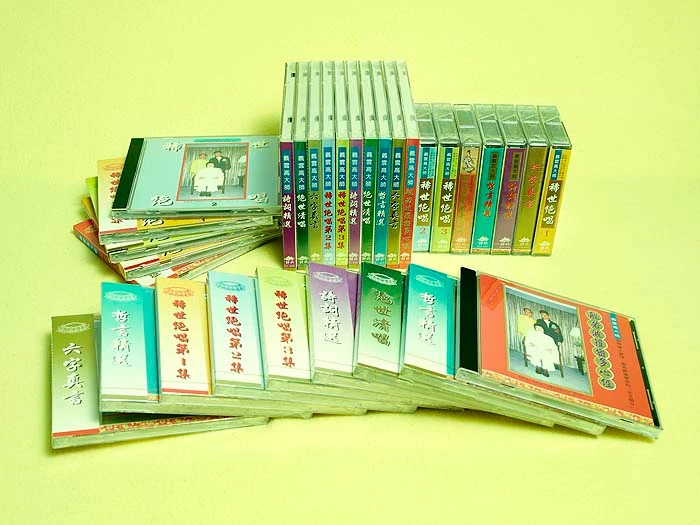
His Holiness is also a vocalist whose songs are unique masterpieces. Whether singing in a robust, resonant, stirring, and thunderous manner, or in a quietly elegant, floating, light, sweet, and captivating manner, His Holinesss vocal performances are marvelous and heavenly. His Holinesss songs and lyrics contain true Buddha-dharma. They teach goodness, impart wisdom, and benefit people. Moreover, H.H. Dorje Chang Buddha III composes the melody, writes the lyrics, and sings these songs all by Himself. There are many audiotapes and CDs of these songs. Even expert vocalists have sought the guidance of H.H. Dorje Chang Buddha III on singing. An example of this is a disciple of H.H. Dorje Chang Buddha III by the name of Jacky Cheung, who is known as a tremendous singer.

#DorjeChangBuddhaIII#HHDorjeChangBuddhaIII#Poetry#Vocal #Buddha #Buddhism #buddhist #Music#BuddhaDharma#MasterofOrientalArt#DistinguishedInternationalMaster

Outstanding Mastery in Poetry and Music – H.H. Dorje Chang Buddha III

Link: https://peacelilysite.com/2022/05/20/outstanding-mastery-in-poetry-and-music-h-h-dorje-chang-buddha-iii/

Soure: https://truebuddhas.org/en/classical-poetry-and-songs/

Respected Zhaxi Zhuoma Rinpoche

Respected Zhaxi Zhuoma Rinpoche

A Western Disciple of H.H. Dorje Chang Buddha III

Among Caucasian female Rinpoches, Respected Zhaxi Zhuoma Rinpoche is one of outstanding cultivation. She has realized the power to telekinetically awaken a vajra pill. In order to seek the highest dharma, in her early years she learned under Japanese, Korean, and American Buddhist masters. Still, she did not obtain the true Buddha-dharma. She went through all kinds of hardships in her search for the supreme Buddha-dharma master. Finally, she was accepted by H.H. Dorje Chang Buddha III as a disciple, deeply penetrated the Buddha-dharma, and fulfilled her wish. The rinpoche is very conversant in English material on the various dharma lineages and their history. The rinpoche has had a wide range of experiences throughout her life, such as personally seeing Buddha Vajradhara Wan Ko Yeshe Norbu Holiest Tathagata amid the clouds, hearing a vajra pill speak the dharma, seeing a vajra pill transform into rainbow light and fly away, and having a photograph of her deceased uncle shake on the palm of her hand when the consciousness of that deceased uncle was raised to a higher realm of existence.

Currently she is president of the Xuanfa Institute located in Sanger, California, a nonprofit established to propagate the true Buddha-dharma of Shakyamuni Buddha and is the abbot of the Holy Vajrasana Temple and Retreat Center that is being established there. She is in the process of establishing the Xuanfa Five Vidyas University, a distant learning program to provide free or low-cost Buddhist studies to those understanding English. She has many disciples throughout America and in Europe and Asia.

She has not only found answers to her earlier questions, but being a rinpoche, she knows that she needs to benefit all living beings, friends and foes alike, with the dharma she has learned and received. Her job is to benefit living beings and propagate the true dharma, which she has devoted her life to doing.

Respected Zhaxi Zhuoma Rinpoche

Link: https://peacelilysite.com/2022/04/27/respected-zhaxi-zhuoma-rinpoche/

Source: https://xuanfa.net/about-us/zhaxi-zhuoma-rinpoche/?hilite=zhaxi+zhuoma

#DorjeChangBuddhaIII #HHDorjeChangBuddhaIII  #MasterWanKoYee #Buddha#XuanfaInstitute#Rinpoche#ZhixiZhuomaRinpoche#VajraPill#HolyVajrasanaTempleandRetreatCenter

Ancient-Looking Withered Vines

Ancient-Looking Withered Vines

Have you ever seen a man-made sculpture like real withered vines? In The International Art Museum of America located at San Francisco, there is just such a sculpture, called Ancient withered vines become a fossil fortress. The artist is H.H.  Dorje Chang Buddha III. I was told the sculpture is made of the material like PVC, stone and oil paint. The astonishing fact is the artist needed to carve the sculpture in super fast speed; the material hardens into a mold in less than ten seconds after melting. I can’t image how this huge sculpture could be done in such short time. It has many layers from inside to outside. The sculpture is well lit, and I can see clearly the inside structures. I can only say the artist superior craftsmanship skill is beyond human imagination.

Ancient withered vines become a fossil fortress by H.H.  Dorje Chang Buddha III

I tried to find out more information about the artist and details about this type of artwork. Very fortunately found a book titled “H.H. Dorje Chang Buddha III A TREASURY OF TRUE BUDDHA-DHARMA“. It gave me all the information I wanted.

H.H.  Dorje Chang Buddha III, Holiest Tathagata created high-quality withered vines through a form of carving called “Yun Sculpture.” All of those Yun Sculpture vines must have certain distinguishing attributes in four categories: visual quality, style, shape, and texture. Of these four categories, texture is the most important and indispensable.

Ancient-looking withered vine

The four distinguishing attributes in the area of visual quality are old, withered, dry, and beautiful. As for old, the vines must appear to be old vines from the ancient past. As for withered, the vines must look dehydrated, withered, and wrinkly. As for dry, the winding vines must seem desiccated. As for beautiful, they must have a graceful look to them.
The four distinguishing attributes in the area of style are scholarly, otherworldly, highly elegant, and comforting. As for scholarly, the style of sculpting must be imbued with a feeling of literary or poetic genius. As for otherworldly, the vines must appear to transcend the handwork of human artisans such that they look not of this world. As for highly elegant, the vines must look highly refined, aesthetically pleasing, and far above the ordinary.

As for comforting, the vines must convey a feeling of auspiciousness, grace the place in which they are present, and give those who view them a feeling of harmony and well-being.
The four distinguishing attributes in the area of shape are as follows: natural-looking, genuine-looking, weathered over time, and intertwining.

Regarding the first attribute, the vines must match the winding look of real vines. Regarding the second attribute, the vines must look exactly like real ancient vines. The viewer should have the impression that the carved vines are no different from real vines that grew in nature. Indeed, the viewer should conclude that the sculpted vines look even more ancient than their natural counterparts. Regarding the third attribute, the vines must convey a natural sense that they have been exposed to
wind, frost, rain, dew, and sunshine over a very long time and have aged over that long time period. Regarding the fourth attribute, thick and thin vines must intertwine to look like one natural, connected body that has grown together month after month.


The four distinguishing and extremely subtle attributes in the area of texture are as follows: the vines must have the texture and appearance of having withered in different time periods; the skin of the vines must have the texture of real vines with tiny pores; the lines and wrinkles on the vines must follow the natural course of the vines; and the shades of colors of the vines must be just like those of real ancient vines. The meticulousness shown in the area of texture is the best way to tell whether or not a work of art is a genuine carving of withered vines created by H.H.  Dorje Chang Buddha III through His Holiness’s Yun Sculpture form of art. These four attributes, which cannot be matched by any other artist, are essential in determining whether or not the withered vines are masterpieces sculpted by H.H.  Dorje Chang Buddha III himself. These four attributes are most important and indispensable in distinguishing the works of H.H.  Dorje Chang Buddha III from other works.
The first attribute is that the vines must have the texture and appearance of having withered in different time periods. Since interwoven withered vines come into being and grow in different time periods, they dry, age, and shrivel to different degrees. Their texture and color also vary. Thus, His Holiness’s Yun Sculpture vines give the impression of being historical relics of different time periods.
The second attribute is that the skin of the vines must have the texture of real vines with tiny pores. This means that when one touches the texture of the carved vines, their stems and skin will feel exactly like those of real vines. One can see that the carved vines have minute pores, such as old pores of various colors, pores that follow the course of the stem, inverted pores, miscellaneous pores, and concave and convex pores.

Furthermore, one can see that there are spots of color, shades of color, flows of color, differences in color, and harmony of color relating to the pores. Even under the scrutiny of a magnifying glass, the
sculpted pores appear tiny and no different from those of real vines. Indeed, the vines are much more beautiful than real vines.
The third attribute is that the lines and wrinkles on the vines must follow the natural growth of the vines. Having existed through a very long period of time, ancient vines will manifest wrinkles. The key factors in carving the highest quality wrinkles relate to the course or direction in which the wrinkles run, their size, their degree of thickness, their depth, their length, and their degree of visibility. They must not have the slightest appearance of disorder or randomness. Rather, the lines and wrinkles must totally follow the natural growth patterns of the vines. They must follow the track of the winding vines. As the vines change directions, the lines must follow the twists and turns. They must look natural and no different from real lines on ancient vines.


The fourth attribute is that the shades of colors of the vines must be just like those of real ancient vines. The color or hue of the carved vines must convey a feeling of antiquity and a wondrous quality of age. The sculpted vines must seem old, parched, and shriveled, but in a very fascinating and attractive way. They must not show any trace of having been sculpted by man. All of the freshness and brightness of living vines must be gone. They must appear as relics that are thousands of years old.
There are two Chinese sentences that aptly summarize the artistic skills of H.H.  Dorje Chang Buddha III in carving withered vines: “There is nothing more beautiful than faux jade, ganoderma lucidum frames, and cactus frames. There is no higher art than creating ancient withered vines that even go beyond the appearance of real vines.”

Only those works of art that possess all of the above–described distinguishing characteristics can be called genuine Yun Sculpture withered vines created by H.H.  Dorje Chang Buddha III. When these frames of withered vines accompany other Yun Sculpture works of art, the result is “double supreme beauty.” This combination is also solid evidence to determine the authenticity of Yun sculptures created by H.H.  Dorje Chang Buddha III. When His Holiness’s withered vines are part of Yun Sculpture art frames, such as “Ancient Jade”and “Emerald,” these art frames become even more phenomenal and take on the ancient air of precious and splendid cultural relics. Truly, such works are national treasures that have no equal in the entire world. They are wonderful masterpieces to hang on your wall.
More importantly, we should understand that these sculptures of ancient-looking withered vines are actually a manifestation of His Holiness’s mastery of the inner-realization vidya. Persons of holy virtue who are able to leave their footprints on stones are unable to create such ancient-looking withered vines. The source of these works of art is the enlightenment of a Buddha that H.H.  Dorje Chang Buddha III possesses. That is why they are precious withered vines that cannot be found anywhere else in the world.

Ancient-Looking Withered Vines

Link: https://peacelilysite.com/2022/04/15/ancient-looking-withered-vines/

#DorjeChangBuddhaIII #HHDorjeChangBuddhaIII  #MasterWanKoYee #Buddha#The InternationalArtMuseumofAmerica#ATreasuryofTrueBuddhaDharma#Art#Artist#YunSculpture#Sculpture#FiveVidyas#InnerRealization#Enlightment

H.H. Dorje Chang Buddha III A TREASURY OF TRUE BUDDHA – DHARMA

H.H. Dorje Chang Buddha III

A TREASURY OF TRUE BUDDHA-DHARMA

In 2008, the Great Dharma King Wan Ko Yeshe Norbu’s identity was finally published in the treasure book of “H.H. Dorje Chang Buddha III“. The Great Dharma king’s true identity is the third incarnation of the primordial and highest Buddha in the dharma realm, Dorje Chang Buddha.

On April 3, 2008, a solemn and dignified book-launching ceremony was held at the Library of Congress of the United States; on occasion of the first release of a fact-recording book entitled H.H. Dorje Chang Buddha III, jointly published by the World Buddhism Publishing LLC and the World Dharma Voice, Inc. At the same time, the book was formally accepted into the collection of the Library of Congress of the United States. From then on, people came to know that the widely respected Master Wan Ko Yee, the one who has been recognized and corroborated through official written documents issued by top leaders, regent dharma kings, and great rinpoches of major Buddhist sects throughout the world; actually, is the third incarnation of Dorje Chang Buddha, the primordial Buddha. Ever since, people address the Buddha by the name Dorje Chang Buddha III. This is similar to the precedent regarding the name of Sakyamuni Buddha—before Sakyamuni Buddha attained Buddhahood, His name was Prince Siddhartha Gotama. Once Prince Siddhartha Gotama attained Buddhahood, He was thereafter addressed as “Namo Sakyamuni Buddha.”

《多杰羌佛第三世》

On June 21, 2008 in San Francisco the world’s first ceremony to welcome the treasure book “H.H. Dorje Chang Buddha III” was held at Hua Zang Si by the International Buddhism Sangha Association (IBSA). When the banner welcoming the treasure book “H.H. Dorje Chang Buddha III” was hung above Hua Zang Si, a giant Buddha light appeared in the sky above Hua Zang Si. It was gorgeously bright and auspicious. This was what is called a celebration taking place in both the human world and the heavens. And furthermore, the most precious gift from Buddhas and Bodhisattvas was presented, nectar from the heavens. At that time, from the clear and blue sky totally free of any cloud, thunder rolled continuously. The uninterrupted sounds of the torrent of thunder had never been heard before, as if fireworks were launched in the heavens. The densely descending nectar appeared from nowhere coming through the Magnolia tree branches, the tree was planted at the backyard of the temple. People could neither see where it came from nor how it eventually disappeared. Floating like goose feathers and flocs, the nectar was rolling and dancing in the space between the tree branches. In contrast, right outside the perimeter of Hua Zang Si temple, it was dry everywhere under the cover of a completely fine summer sky with the bright sun shining.

On December 12, 2012, in the Senate Resolution No. 614 of the United States Congress, the title “His Holiness” was officially used with the name Dorje Chang Buddha III; the Buddha was addressed as “H.H. Dorje Chang Buddha III.” Since then, the title H.H. Dorje Chang Buddha III was definitively affirmed.

The accomplishments of H.H. Dorje Chang Buddha III are the highest in the entire world. No one of holy virtue within Buddhism can be mentioned in the same breath with His Holiness when it comes to showing real evidence of wisdom and realization attained through proficiency in exoteric and esoteric Buddhism and mastery of the Five Vidyas. The standard that the Buddha set for measuring one’s level of accomplishment in the Buddha-dharma is the degree to which one is proficient in both exoteric and esoteric Buddhism and the degree to which one has mastered the Five Vidyas. However, in the history of Buddhism up to the present time, only H.H. Dorje Chang Buddha III Holiest Tathagata has truly and fully manifested complete proficiency in exoteric and esoteric Buddhism and perfect mastery of the Five Vidyas! H.H. Dorje Chang Buddha III actually exhibits for all to see item after item of accomplishments relating to complete proficiency in exoteric and esoteric Buddhism and perfect mastery of the Five Vidyas as laid down by the Buddha. His Holiness, an ancient Buddha, is the first being of holy virtue in history who has truly manifested such lofty and complete realization! Clear evidence of this are all of the single-handed accomplishments of H.H. Dorje Chang Buddha III mentioned in the thirty main categories listed in this book, H.H. Dorje Chang Buddha III —A Treasury of True Buddha-Dharma.


H.H. Dorje Chang Buddha III

The contents of the Book:

Truly Outstanding Dharma Kings, Rinpoches, and Eminent Monastics in the World Today
Who Are Incarnations of Buddhas and Bodhisattvas

Brief Buddhist Lineage Refuge Tree

Dorje Chang Buddha Lineage Refuge Tree

Brief Discription of the Incarnation of Dorje Chang Buddha

Brief Introduction to H.H. Dorje Chang Buddha III Wan Ko Yeshe Norbu Holiest Tathagata

The Real Meaning of the Five Vidyas

Recognitions in Accordance with the Dharma

They Will Oppose This Precious Book

Explanation of the Publishers

Blue Platform Verification

CATEGORY 1: Recognitions and Congratulations

CATEGORY 2: The Virtue of H.H. Dorje Chang Buddha III and Holy Occurrences

CATEGORY 3: The Holy Realization of the Holiest Tathagata

CATEGORY 4: Supreme and Profound Buddha-Dharma That Is Difficult to Encounter in Millions of Eons

CATEGORY 5: Couplets

CATEGORY 6: Calligraphy

CATEGORY 7: Stone Seals

CATEGORY 8: Classical Poetry and Songs

CATEGORY 9: Vajra Needle That Eliminates Illness

CATEGORY 10: Healing Illnesses

CATEGORY 11: Medicine and Health Care Products

CATEGORY 12: Wondrous Multicolored Sculptures

CATEGORY 13: Faux Jade Plates

CATEGORY 14: Philosophical Sayings About Worldly Matters

CATEGORY 15: Classical Prose and Modern Poetry

CATEGORY 16: Academic Writings

CATEGORY 17: Hand-Sculpted Artwork

CATEGORY 18: Vocal Mastery

CATEGORY 19: Sculptures Containing Mysterious Mist

CATEGORY 20: Ancient-Looking Withered Vines

CATEGORY 21: Chinese Paintings

CATEGORY 22: Western Paintings

CATEGORY 23: Art Frames

CATEGORY 24: Designs of Buddha Images

CATEGORY 25: Tiles

CATEGORY 26: Decorative Wall Hangings

CATEGORY 27: Buildings and Decorative Landscape Scenes

CATEGORY 28: Teas

CATEGORY 29: Technological Art

CATEGORY 30: Saving Living Beings by Liberating Them

Supernatural Powers in Buddhism

The Dharma of Cultivation

Sutra on Understanding and Realizing Definitive Truth

Persons of Great Holiness and Virtue Mentioned after the Main Subject

#DorjeChangBuddhaIII #HHDorjeChangBuddhaIII  #MasterWanKoYee #Buddha#HuaZangSi#InternationalBuddhismSanghaAssociation#IBSA#WorldBuddhismPublishingLLC#WorldDharmaVoice#LibraryofCongressoftheUnitedStates#UnitedStatesCongress

H.H. Dorje Chang Buddha III A TREASURY OF TRUE BUDDHA-DHARMA

Link: https://peacelilysite.com/2022/04/14/h-h-dorje-chang-buddha-iii-a-treasury-of-true-buddha-dharma/

Source:www.huazangsi.org http://goo.gl/HuCZoW
FACEBOOK PAGE: www.facebook.com/huazangsi