
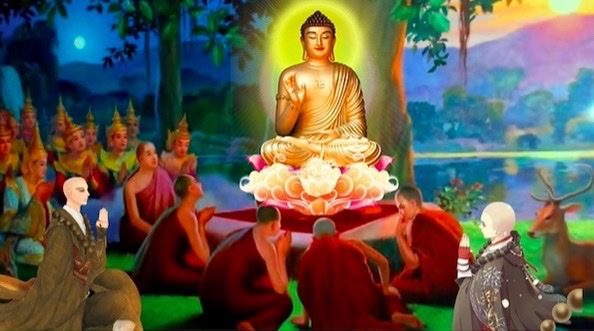
More than 2,500 years ago, when Shakyamuni Buddha walked the earth, even He—an enlightened being of supreme virtue—was not immune to slander and false accusations. Yet, through profound wisdom and boundless compassion, the Buddha addressed these challenges with grace, setting an eternal example for all beings on how to face adversity.
One such episode is recorded in the sutras and remains deeply relevant in our modern world, where misunderstandings and grievances often escalate due to fear, anger, or ego.
One morning in Jetavana Monastery, as the Buddha and his monks were preparing to go on their daily alms round, a group of royal guards suddenly stormed in. They announced that they were under orders to search the monastery grounds for a female corpse.
The monks were shocked. Venerable Baddiya inquired further and discovered that the deceased was Sundari, a young woman known for her recent attendance at the Buddha’s teachings. She belonged to a large sect in the city of Savatthi.
Despite the monks’ firm belief that no such thing could happen in their peaceful community, the guards began their search. To the horror of all present, Sundari’s body was found hastily buried in a shallow pit—shockingly close to the Buddha’s own residence.
The body was taken away, and almost immediately, members of Sundari’s sect began parading through the streets of Savatthi, wailing and pointing fingers. They accused the monks—disciples of the Buddha—of rape and murder. Their shouts pierced the hearts of the city’s residents:
“Is this what compassion looks like? Is this the kindness preached by the monks of the Sakya clan?”
Faith began to waver. The once-revered monks were now questioned and ridiculed. Even devout followers hesitated. Doubts crept in like shadows.
But amidst this storm of falsehood, the Buddha remained calm. He instructed his disciples:
“Do not be disturbed. Do not feel shame for what you have not done. As long as we uphold the Dharma, the truth will reveal itself.”
Compassionate Action and the Power of Truth
While the Buddha taught patience, some of his lay supporters took discreet action. Visakha, a wise and generous patroness of the Sangha, consulted with Sariputta, one of the Buddha’s chief disciples. Together, they enlisted the help of Prince Jeta and hired a private investigator to uncover the truth.
Within seven days, the real story surfaced. Two men, drunk and arguing over their ill-gotten gains, confessed: they had been paid by Sundari’s sect leader to murder her and bury the body near the monastery—an act designed solely to discredit the Buddha and his followers.
The culprits were arrested. The truth was undeniable. King Pasenadi, deeply moved and ashamed that such injustice had occurred, visited Jetavana to publicly reaffirm his trust in the Sangha.
Yet the Buddha, ever compassionate, requested the king not to seek vengeance. He said:
“As long as jealousy and hatred exist in the human heart, such misdeeds will continue. Let us rise above them, not descend to their level.”

The people of Savatthi, now enlightened by the truth, restored their faith in the Buddha and the monastic community. What began as a moment of crisis ended as a testament to the strength of integrity and the enduring power of compassion.
This story serves as a profound reminder: when facing unjust accusations, our greatest protection lies in truth, patience, and inner peace.
We cannot control the words or actions of others, but we can choose how we respond. If we hold fast to our principles, walk the path with sincerity, and act from compassion rather than reaction, the light of truth will inevitably shine through the darkness of misunderstanding.



















 Peace LiLy