The Potala Palace: Jewel of the Roof of the World

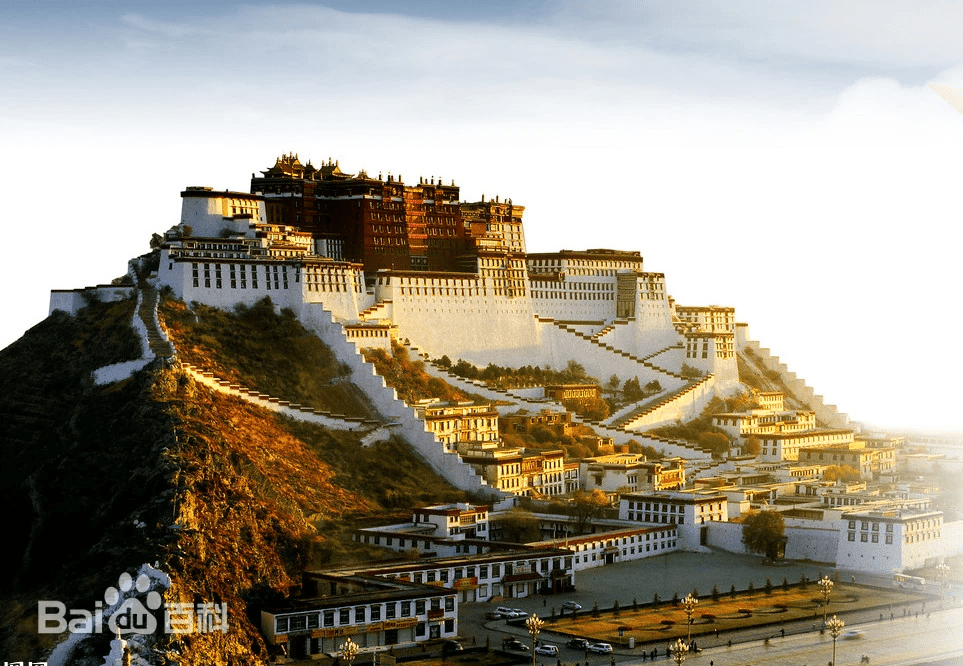
Located in the Tibet Autonomous Region of China, the Potala Palace is known as the “Jewel of the Roof of the World.” It stands as a symbol of China, Lhasa, and the Qinghai-Tibet Plateau. This palace, the highest and most majestic in the world, houses an incredibly rich collection of cultural relics and artifacts, preserving the unique heritage of the Snowy Plateau. The palace is renowned for its architectural layout, civil engineering, metal smelting, painting, and carving, showcasing the extraordinary skills of Tibetan artisans and the architectural achievements of the Tibetan people, as well as contributions from Han, Mongolian, and Manchu craftsmen. In December 1994, the Potala Palace was inscribed on the World Heritage List.

The magnificent Potala Palace stands at an altitude of 3,700 meters, covering a total area of 360,000 square meters, with a total building area of 130,000 square meters. The main building is 117 meters high, appearing to have 13 floors from the outside, while actually containing 9 levels internally. The complex includes palaces, stupas, Buddhist halls, scripture halls, monks’ quarters, and courtyards.

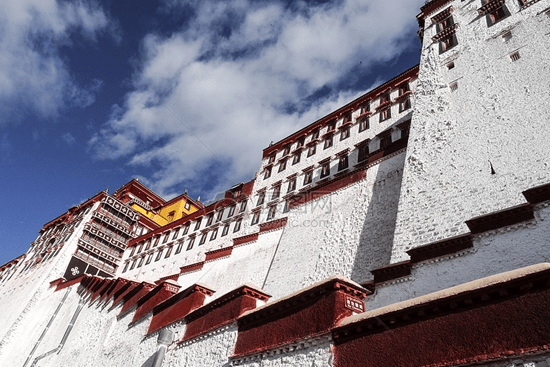
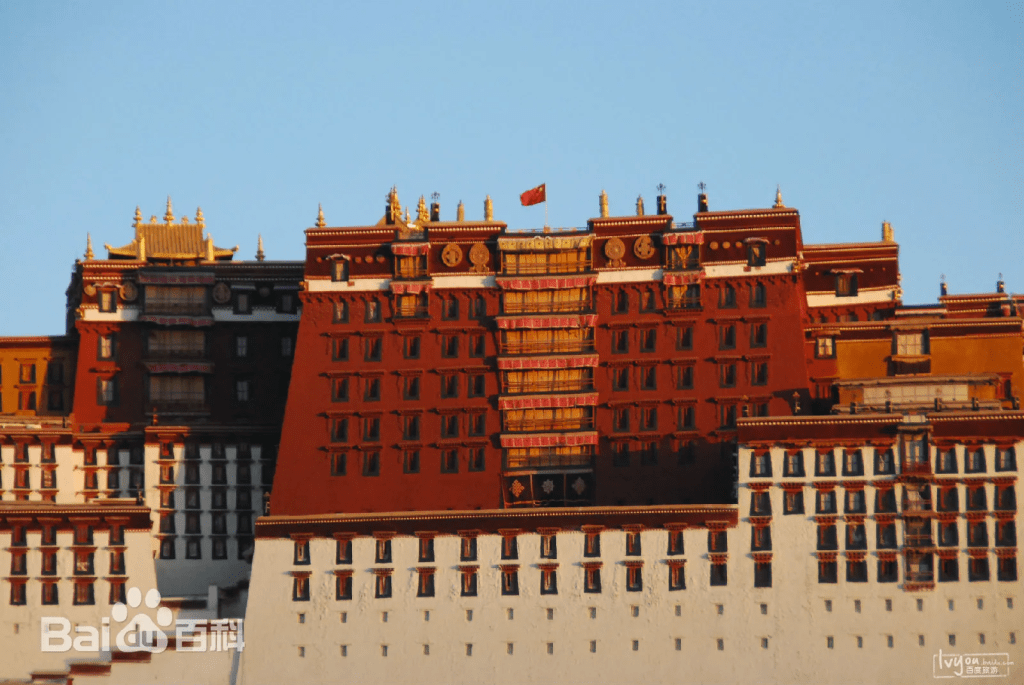
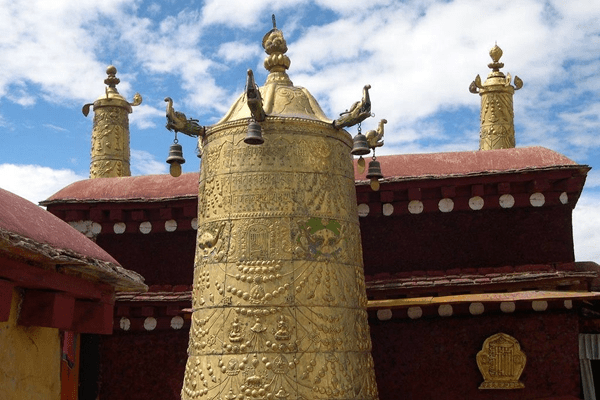
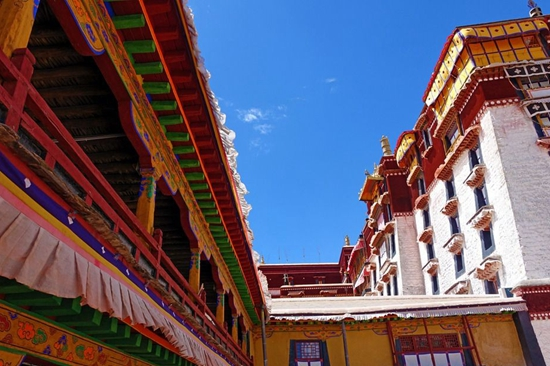
The Potala Palace’s main structure is divided into the White Palace and the Red Palace. Built into the mountainside, the complex features overlapping buildings, imposing halls, and a grand, sturdy granite structure. The white balustrades made of smooth bema grass, the resplendent golden roofs, and the large gilded bottles, stupas, and red banners create a striking decorative effect. The vivid contrast of red, white, and yellow, along with the intricate interlocking architecture, highlights the enchanting characteristics of ancient Tibetan buildings.

Historical records indicate that the Potala Palace was first constructed in the 7th century during the reign of Songtsen Gampo of the Tubo Kingdom, making it 1,300 years old. In the early 7th century, after moving the capital to Lhasa, Songtsen Gampo built three nine-story buildings with a total of one thousand rooms on Red Hill to welcome Princess Wencheng of the Tang Dynasty. The palace was named Potala Palace. The three walls surrounding Red Hill and a silver and copper bridge connecting the palaces of Songtsen Gampo and Princess Wencheng were part of the original structure. Outside the east gate of the Potala Palace was Songtsen Gampo’s horse-racing track.

When Princess Wencheng traveled to Tibet, she brought with her a large collection of books and documents, greatly promoting the development of Tibetan culture. It is said that there were more than 300 types of books on astronomy and calendrical calculations alone. The Tibetan calendar, still in use today, was created by absorbing and learning from the Han calendar, combined with the characteristics of Tibetan-inhabited areas and the experiences of the Tibetan people’s production labor. Classic works representing the excellent traditional culture of China, such as “Liezi,” “Shangshu,” “Strategies of the Warring States,” and “The Book of Questions Between Confucius and Xiang Tuo,” were also introduced to Tibet.

Ingenious Design and Construction

The design and construction of the Potala Palace take into account the patterns of sunlight in the plateau region. The foundation walls are broad and sturdy, featuring a network of tunnels and ventilation openings beneath them. Inside, the palace employs pillars, brackets, wooden struts, beams, and rafters to form its framework. The floors and roofs are made from a hard soil called “Arga.” Skylights are installed in the ceilings of each main hall and bedroom to facilitate lighting and air circulation. The pillars and beams inside the palace are adorned with various carvings, and the colorful murals on the walls cover an area of more than 2,500 square meters.

The Red Palace’s Enchanting Halls

The Red Palace, situated in the central position of the Potala Palace, is distinguished by its red outer walls and mandala layout. The Hall of the Dharma King (Qujiejiebu) and the Hall of the Sage (Pabalakang) within the Red Palace are said to be structures remaining from the Tubo period. The Hall of the Dharma King is located in the middle of the Potala Palace, directly above the peak of Marpori Mountain. It is believed that this hall was once the meditation retreat of Songtsen Gampo and now houses statues of Songtsen Gampo, Princess Chizun, Princess Wencheng, and other ministers. The Hall of the Sage enshrines Songtsen Gampo’s principal deity, a naturally formed sandalwood statue of Avalokiteshvara. The rooftop platform of the Red Palace is adorned with the golden roofs of various stupa halls, all single-eaved hip-and-gable structures supported by wooden brackets and covered with gilded copper tiles.

Songtsen Gampo and Princess Wencheng (Image source: Potala Palace official website)
White Palace

A Masterpiece of Tibetan Architecture

The Potala Palace is a masterpiece of ancient Chinese architecture and an outstanding representative of Tibetan architecture. Its architectural artistry is the most remarkable example among the thousands of Tibetan Buddhist temples and palaces, unmatched anywhere in the world. At the pinnacle of the palace stand three gilded pagodas, one large and two small, shining brightly and dazzling the eyes. The parapet around the rooftop is constructed from a deep purple-red shrub, decorated with various gold ornaments. The roof is adorned with large gilded finials and red prayer flags, reflecting a strong Tibetan style.

A Fusion of Artistic Traditions

The sculptural art within the Potala Palace combines techniques from Han, Indian, and Nepalese Buddhist art. The palace houses a vast collection of treasures, including heavy-colored clay sculptures, wood carvings, stone carvings, and a significant number of metal statues made from gold, silver, copper, and iron. These works of art range in size from over ten meters tall to just a few centimeters.

Thangka Paintings and Cultural Treasures

“Thangka,” a Tibetan transliteration, refers to scroll paintings mounted on colorful silk brocade, depicting religious figures, historical events, and doctrines, as well as subjects like Tibetan astronomy, calendrical calculations, and traditional medicine. The Potala Palace preserves nearly ten thousand thangkas, some of which are several tens of meters long.

The palace also houses numerous religious and artistically significant artifacts, including Tibetan carpets, prayer cushions, prayer flags, canopies, and embroidered satin hangings.

Thangka of a stupa inscribed with the calligraphy of Emperor Qianlong. (Image source: Potala Palace official website)

Gilded bronze openwork incense burner with handle from the Potala Palace. (Image source: Potala Palace official website)

A National Treasure and World Heritage Site

The Potala Palace preserves a vast number of statues, murals, scriptures, and other cultural relics, making it a treasure trove of national art and culture. It is listed as a national cultural relic protection unit and a UNESCO World Heritage Site, reflecting its immense cultural and historical significance.


Explore the Potala Palace and immerse yourself in the rich tapestry of Tibetan history, art, and culture. Its breathtaking architecture and priceless artifacts offer a unique glimpse into the soul of Tibet, making it a must-visit destination for anyone seeking to understand the heritage of the Roof of the World.

Link:https://peacelilysite.com/2024/08/01/the-potala-palace-jewel-of-the-roof-of-the-world/

Source: https://www.brxuefo.com/2862.html,

Renowned Buddhist Scholar Jeffrey Hopkins, Professor Emeritus at the University of Virginia, Has Died

Photo courtesy Christof Spitz

Jeffrey Hopkins, a brilliant scholar, author, teacher, and translator who founded one of the largest Tibetan Buddhist Studies programs in the West, died on July 1 in Vancouver, Canada. He was 83.

For more than three decades, beginning in 1973, Hopkins was a leading light at the University of Virginia. He directed UVA’s Center for South Asian Studies for twelve years and taught Tibetan Buddhist studies and Tibetan language for thirty-two years, but his signature achievement was the Tibetan Buddhist studies doctoral program he established in 1975, which became the largest in North America. Among its graduates are some of the most esteemed academics in the field today, including Anne C. Klein of Rice University, Donald Lopez of the University of Michigan, Georges Dreyfus of Williams College, and Bryan Cuevas of Florida State University. Hopkins’s program, by placing Tibetan Buddhism (rather than Indian, Chinese, or Japanese Buddhism) at its center and bringing prominent Tibetan masters from India to Charlottesville to teach the classic texts of that tradition, “changed the way Buddhism is taught in the American academy,” Donald Lopez says.

Hopkins’s singular force was evident from the moment he arrived at UVA in 1973. Lopez, a senior when Hopkins joined the faculty, remembers: 

Despite being a newly arrived assistant professor, he immediately gained a large following among the “Be Here Now” crowd. By the second semester, students were walking around campus wearing buttons that said, “Buddha’s Slogan: Dependent Arising.” In a men’s room on campus one day I noticed something written on a urinal. Assuming it said “R. Mutt” [as Marcel Duchamp had signed his urinal artwork, “The Fountain”], I went closer and saw that it was four words stamped in red letters: “DOES NOT INHERENTLY EXIST.” Inspired by such visions, I wrote my senior thesis, master’s thesis, and doctoral dissertation under Hopkins’s direction.

Convinced that scholars of Tibet must be able to both read classical Tibetan and speak modern Tibetan, Hopkins established the first Tibetan language program at UVA and coauthored a comprehensive language course, Fluent Tibetan: A Proficiency Oriented Learning System. He also compiled a 900-page Tibetan-Sanskrit-English dictionary of Buddhist terms that is posted online

During his career, Hopkins also held visiting professorships at the University of Hawaii and the University of British Columbia. After he retired from UVA, he focused on translating. He was the founder and president of the UMA (Union of the Modern and Ancient) Institute for Tibetan Studies and from 2011 directed its Great Books Translation Project, set up to make Tibetan texts freely available. 

Hopkins was also a peace and human rights activist and published The Art of Peace, edited from talks at a conference of Nobel laureates he organized in 1998 for UVA and the Institute for Asian Democracy, a Washington, D.C.-based non-profit that promoted self-governance in Asia, particularly in Burma. Hopkins was president of the institute from 1994 to 2000.

One of the most respected Tibetologists of his generation, Hopkins authored, edited, or translated more than fifty books. His extensive published work includes scholarly books on emptiness and tantra, as well as translations of works by such famed figures as Nagarjuna, Chandrakirti, and Tsongkhapa. His first and most influential work was his massive 1973 doctoral dissertation, Meditation on Emptiness, which provided the first detailed presentation of the Geluk synthesis of philosophy and practice. After circulating widely as a bound Xerox copy, it was published by Wisdom Publications in 1983. A fortieth-anniversary edition will be published next year. Much of Hopkins’s work was devoted to the Geluk founder Tsongkhapa, translating major sections of his massive exposition on tantra, Stages of the Path of Mantra. Later he turned to Tsongkhapa’s most beloved work among Geluk scholars, Essence of Eloquence, a text recited from memory by the monks of Ganden Monastery at his funeral in 1419. Although Tsongkhapa’s text is rather brief, Hopkins devoted three large volumes to it: Emptiness in the Mind-Only SchoolReflections on Reality: The Three Natures and Non-Natures in the Mind-Only School, and Absorption in No External World

In 1979, Hopkins was instrumental in arranging His Holiness the Dalai Lama’s first visit to the United States and served as his chief translator from 1979 to 1989 on tours of the US, Canada, Europe, Southeast Asia, and Australia. Hopkins translated and edited His Holiness’s teachings for sixteen books, including The Dalai Lama at Harvard, along with titles aimed at a general audience, such as Kindness, Clarity and InsightHow to See Yourself As You Really AreHow to Practice: The Way to a Meaningful LifeMind of Clear Light, Mind of Clear Life: Advice on Living Well and Dying ConsciouslyHow to Be Compassionate; and How to Expand Love: Widening the Circle of Loving Relationships

Hopkins collaborated with the tulkus Lati Rinpoche and Denma Locho Rinpoche on Meditative States in Tibetan Buddhismbased on a text by the Geluk master Panchen Sonam Drakpa. With the Nyingma lama Khetsun Sangpo he published Tantric Practice in Nyingma, a translation of a famous work by Patrul Rinpoche that would later be translated as Words of My Perfect Teacher.

Born Paul Jeffrey Hopkins in 1940, he grew up in Barrington, Rhode Island. A rebellious youth, he was a member of what he later described as a “suburban gang . . . disgusted by the aims that were being presented to us: merely making money and so forth.” Hopkins was then sent to Pomfret, a prep school in Connecticut, where he thrived. During his freshman year at Harvard, he read Thoreau’s Walden and retreated to the woods of Vermont, where he lived in a one-room cabin, wrote poetry, and “began finding my own integrity,” he later told an interviewer. Further inspired by Herman Melville’s Typee and W. Somerset Maugham’s The Moon and Sixpence, he hopped a freighter to Tahiti. It was during this period that Hopkins began meditating—in a fashion. 

Hopkins returned to Harvard after a year and a half, then between his junior and senior years, took off again. While floating down a river in Oklahoma, he saw a dead man propped up on a bank. It was a turning point. “I suddenly realized that his last perception in this lifetime would be no fuller than any of his other perceptions,” he recalled. “I began to recognize the ultimate futility of external activities and to turn my attention inward, to a light within. When I returned to Harvard in the fall of 1962, it was as if a coffin had been opened. I had been living my life in a coffin and had not recognized the presence of the sky.”

During Christmas vacation from college that year, a classmate drove Hopkins to Freewood Acres, New Jersey, to meet Geshe Wangyal,  a Kalmyk Mongolian Tibetan Buddhist who had established a monastery there in 1958. In 1963, after graduating magna cum laude from Harvard—an English major, Hopkins won the Leverett House Poetry Prize for his translation of the Anglo-Saxon poem “The Wanderer”—Hopkins spent seven years studying with Geshe Wangyal in New Jersey. After a false start in graduate school at the University of Pennsylvania, he enrolled in the doctoral program at the University of Wisconsin-Madison. 

Later, Hopkins called his time in the Buddhist Studies program at Wisconsin as “thrilling in many ways and . . . certainly a crucial choice for my career.” At Hopkins’s urging, Richard Robinson, the head of the Buddhist Studies program, hired Geshe Lhundup Sopa, a Geluk scholar who had been living at the Kalmyk monastery in New Jersey. He was instrumental in the hiring of renowned tantric master Kensur Ngawang Lekden, former abbot of the Tantric College of Lower Lhasa. Anne Klein, then a master’s candidate at Wisconsin, recalls that Hopkins, with Robinson, “founded Tibet House on a farm outside Madison, where Kensur, Jeffrey, and grad students could live, learn Tibetan, and share kitchen duties. Jeffrey served ice cream on small, flat plates, which, as Kensur demonstrated with delight, meant you could lick them clean.” Hopkins read with Kensur daily, Klein remembers, material that formed his dissertation, Meditation on Emptiness.

Throughout his career, Hopkins’s interest in Buddhist studies was broad, encompassing South Asia, Tibet, and East Asia. He was the recipient of three Fulbright fellowships and made twelve trips to India and five to Tibet for research.

As a translator, Hopkins had an approach unusual among his peers at the time: working closely with Tibetan scholars and regarding them not as “native informants” but as collaborative partners. “I thought it was . . . extremely important to treat every Tibetan scholar fairly, to give them credit for their part in producing any book,” he said. “If I couldn’t understand the text without somebody informing me of its meaning, then that person has played an equal role in its translation even if they don’t know English.” 

In 1991, Hopkins suffered a debilitating, near-fatal case of Lyme disease that temporarily left him partially paralyzed with noticeable mental gaps. He recovered, but “I had to reconstruct my mind,” he later told Tibetan Buddhist nun Robina Courtin. “In any field, I had to consciously make a logical connection, and then once the connection had been made, that area was reopened.” What saved him, he ventured, was a habit formed in his years at the monastery in New Jersey: repeating the intelligence mantra of Manjushri, bodhisattva of wisdom, aimed at enhancing mental acuity: Om ah ra pa tsa na dhih. “I overheard Geshe Wangyal tell one Mongolian boy who was having trouble memorizing it, ‘Then do dhih dhih dhih . . . endlessly,’ ” he recalled. 

Link:https://peacelilysite.com/2024/07/05/renowned-buddhist-scholar-jeffrey-hopkins-professor-emeritus-at-the-university-of-virginia-has-died/

Source: https://tricycle.org/article/jeffrey-hopkins-obituary/, By Joan Duncan Oliver
 JUL 02, 2024

Exploring the Significance of Qingming Festival

Discovering Chinese Traditional Culture

April 5th, or April 4th in leap years, marks the Qingming Festival in China. This festival is a nostalgic occasion, harmonizing solemn remembrance with a celebration of nature through outings and reveling in the spring scenery. It stands as a festival steeped in cultural heritage, seamlessly combining the solemnity of honoring ancestors with the delight of outdoor activities.

Originating from ancient rituals of tomb-sweeping by emperors and officials, Qingming Festival dates back over 2,500 years to the Zhou Dynasty. Initially named after a solar term, it evolved into a day for commemorating ancestors, closely linked to the Cold Food Festival.

The Cold Food Festival typically falls 105 days after the winter solstice. Legend has it that its origin dates back to the Spring and Autumn Period when Prince Chong’er of the state of Jin was on the run, exhausted and starving. Finding himself in a desolate area with no one around, his loyal servant Jie Zitui cut a piece of flesh from his own leg and cooked it into a soup to feed Chong’er. After Chong’er ascended to the throne as Duke Wen of Jin, Jie Zitui chose to live in seclusion with his mother rather than seek rewards. Duke Wen repeatedly tried to persuade him to return, even resorting to burning down the mountains surrounding his hideout, hoping to force him out. Tragically, Jie Zitui and his mother perished in the fire, unmoved by Duke Wen’s efforts. Overwhelmed with grief, Duke Wen declared this day as the Cold Food Festival in honor of Jie Zitui’s sacrifice.

Qingming Festival, a day for ancestral worship, embodies moral beliefs, poetic sentiments, and genuine emotions. It is an expression of filial piety and remembrance towards ancestors, a cultural tradition emphasizing reverence and familial bonds. It serves as a poignant reminder of our roots and a moment to express gratitude.

The act of ancestral worship symbolizes not belief in spirits, but faith in the enduring love of our loved ones. Therefore, their memories remain etched in our hearts, and our gestures of respect hold profound significance.

Death merely transitions life’s state; it does not sever our connection with loved ones. Through this annual ritual, we learn to remember and let go, finding solace in expressions of love. Qingming Festival encompasses grief, remembrance, responsibility, and gratitude, serving as a cornerstone of familial and national heritage.

Qingming ancestral rites reflect traditional Chinese values of filial piety and ancestor reverence, rooted in Confucian ethics. This moral compass guides contemporary attitudes of respect, gratitude, and harmony with nature, embodying the essence of Confucian teachings.

Moreover, Qingming customs extend beyond tomb-sweeping to include outdoor activities such as spring outings. As nature rejuvenates during this season, families venture into the countryside to enjoy the blossoming scenery, fostering a sense of harmony with the natural world.

During Qingming, planting trees has become a common tradition, stemming from the practice of wearing willow sprigs. Legend has it that the tree from which Jie Zitui made his sacrifice revived, leading to the tradition of planting willow trees during Qingming.

Another customary delight during Qingming Festival is Qingtuan, or green rice balls, a delicacy with a sweet and fragrant taste. Made from glutinous rice flour mixed with mugwort juice, stuffed with fillings like red bean paste or sesame, these green dumplings symbolize renewal and abundance.

In essence, Qingming Festival embodies the essence of Chinese civilization, honoring our ancestors, nurturing familial bonds, and fostering harmony with nature. It serves as a testament to our cultural heritage and a reminder of the values that bind us as a people.

Link:https://peacelilysite.com/2024/04/05/exploring-the-significance-of-qingming-festival/

Source: http://m.xinhuanet.com/jl/2019-04/05/c_1124329263.htm, http://news.enorth.com.cn/system/2022/04/05/052503270.shtml, https://www.ahjzu.edu.cn/jwjc/2020/0402/c8861a142385/pagem.htm

Transforming Destiny: The Inspirational Journey of Yuan Liaofan

In the heart of Ming Dynasty China, a man named Yuan Liaofan emerged, leaving an indelible mark on history. Born in the picturesque Wujiang County, Jiangsu Province, China, Yuan Liaofan’s original name was Yuan Huang. With the courtesy name Kunyi and the alternative name Xuehai, he later adopted the name Liaofan, symbolizing a profound shift in his life’s trajectory. During his life, he underwent a precise fortune-telling by an adept in divination, which turned out to be accurate. However, Yuan Liaofan later transformed his own destiny.

Yuan Liaofan’s transformative journey began when he sought guidance from a revered monk, a master in the art of divination. The monk, through precise fortune-telling, revealed a predetermined path for Yuan Liaofan. Undeterred by this revelation, the monk imparted invaluable wisdom on how to change his fate.

The monk emphasized the importance of performing virtuous deeds and accumulating positive karma. He outlined a path that involved actively engaging in a thousand good deeds, actions that would not only benefit others but also bring about profound changes in Yuan Liaofan’s own destiny.

Embracing the monk’s teachings, Yuan Liaofan dedicated himself to a life of kindness, compassion, and generosity. He embarked on a mission to perform a thousand good deeds, each act carefully documented in a personal ledger. His deeds ranged from helping the needy and supporting the less fortunate to acts of kindness that reverberated through his community.

As Yuan Liaofan diligently pursued this virtuous path, the effects on his life were nothing short of remarkable. Contrary to the fortune-teller’s prediction that he would not have a son, Yuan Liaofan became a father, experiencing the joys of parenthood. His household, once devoid of the laughter of children, now echoed with the sounds of familial bliss.

Additionally, the diviner had foretold that Yuan Liaofan’s life would be limited to fifty-three years. However, Yuan Liaofan defied this prediction, living a full and fulfilling life until the age of seventy-four. The positive energy generated by his virtuous deeds not only defied fate but also led to a prolonged and healthy existence.

The transformative effects were not confined to his personal life alone. Yuan Liaofan’s career path witnessed an upward trajectory. Through his dedication, hard work, and the positive energy he exuded, he achieved professional success, earning promotions and garnering respect within his professional sphere.

“The Four Lessons of Liaofan,” penned by Yuan Liaofan himself, stands as a testament to his transformative experiences. It serves as a guiding light for all who aspire to harness the potential within themselves to cultivate positive change.

As we navigate the complexities of our modern existence, let Yuan Liaofan’s story inspire us to embark on a journey of goodwill. Embrace the opportunity to contribute to the well-being of others, and in doing so, witness the transformative effects it can bring to your own life.

May Yuan Liaofan’s tale be a beacon of encouragement for us all, urging us to embrace the inherent ability within ourselves to shape our destinies. After all, the power to create a life of abundance and health lies not in the stars, but within the choices we make each day.

Transforming Destiny: The Inspirational Journey of Yuan Liaofan

Link:https://peacelilysite.com/2024/01/26/transforming-destiny-the-inspirational-journey-of-yuan-liaofan/

Source: https://www.pure-land-buddhism.com/blog/liaofans-four-lessons-your-destiny-is-in-your-hands

Harbin Ice and Snow World – A Colorful Ice Disneyland

Steve222_11 2019

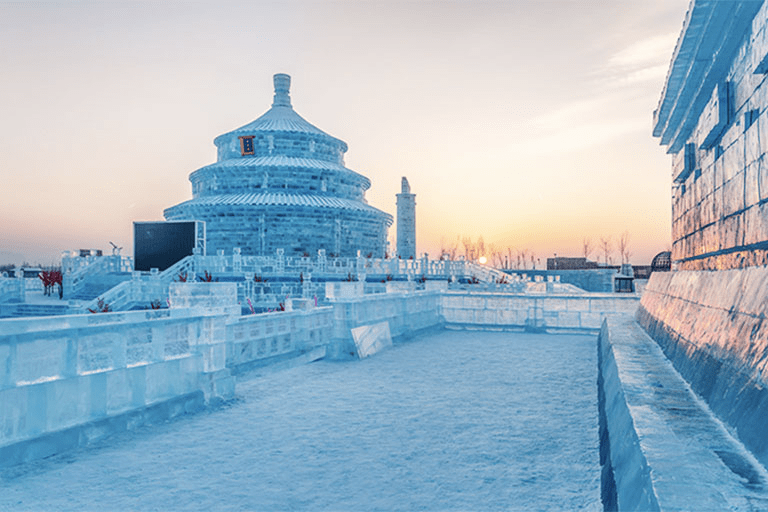
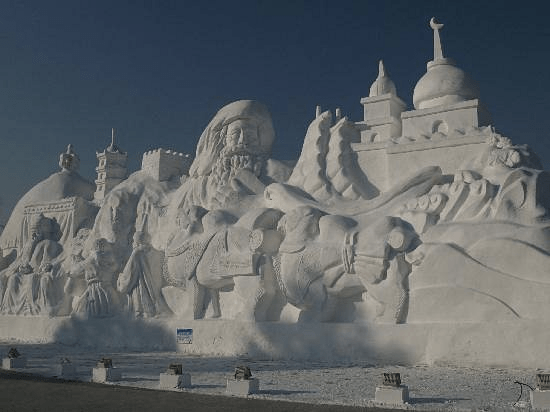
The Harbin Ice and Snow World stands as one of the largest ice and snow theme parks globally, encompassing an expansive area of 600,000 square meters. It not only serves as an irreplaceable landmark for Harbin City but has also become a renowned international ice and snow tourism brand. Boasting over 2,000 ice sculptures, landscapes, ice castles, rides, and stage shows, this man-made winter wonderland is often referred to as the “Disneyland of Ice and Snow.”

Aligned with the International Ice and Snow Festival of Harbin, the Harbin Ice and Snow World recently celebrated its 20th consecutive year. Unlike traditional construction materials, the park is crafted entirely from ice each winter, featuring delicate and intricate ice and snow sculptures designed under different themes annually. The night view of the park, adorned with vibrant lights accentuating the sculptures, is a mesmerizing spectacle.

The winter experience in Harbin is not limited to visual delights; it encompasses various cultural activities and winter sports. For those seeking relief from summer heat, an indoor ice and snow paradise awaits exploration.

Entering the Ice and Snow World, visitors are greeted by awe-inspiring sculptures, some towering over three stories high, showcasing intricate designs. The park transforms into a magical realm at night, as multicolored lights embedded in the ground illuminate the ice structures, creating a surreal kaleidoscope of colors against the dark night sky.

The exhibition within the park is a display of international ice engraving competitions, ice and snow LED lighting competitions, photography shows, oil painting exhibitions, and other forms of art themed around ice and snow. Marvel at award-winning works and iconic structures, such as those depicting scenes from popular games like Arena of Valor.

A visit to Harbin Ice and Snow World offers not only a feast for the eyes with illuminated sculptures and performances but also a chance to partake in diverse cultural activities and winter sports. The recreation area, spanning over 200,000 square meters, provides more than 20 options, including ice sports like skating, curling, sleighing, ice biking, and the thrilling 320-meter long ice slide. Snow sports enthusiasts can engage in skiing, snow football, snow circling, and the classic snowman and snowball-making activities.

Families can enjoy quality time together in the Parent-kid Paradise, fostering close contact with nature. Furthermore, the dazzling shows presented by skilled actors, combining dancing, acrobatics, and various art forms themed around ice and snow, promise to leave a lasting impression. Don’t miss the opportunity to dance with the actors at the Dream Stage, adding an interactive element to your visit. The Harbin Ice and Snow World is not merely a destination; it’s an immersive experience that seamlessly blends artistic excellence and technological marvels for visitors of all ages.

Harbin Ice and Snow World – A Colorful Ice Disneyland

Link:https://peacelilysite.com/2023/12/22/harbin-ice-and-snow-world-a-colorful-ice-disneyland/

#SnowIceFestival #TravelChina#Harbin#IceDisneyland#ChinaDiscovery #WinterWonderland

Source: https://www.chinadiscovery.com/heilongjiang/harbin/harbin-ice-snow-world.html

Maijishan Grottoes – Buddhist Treasure Well-preserved on Maiji Mountain Cliff

Maijishan Grottoes, also known as Maiji Mountain Grottoes or Maijishan Caves, is situated in Maiji District, Tianshui City, Gansu Province, in northwest China. Alongside the Longmen Grottoes, Yungang Grottoes, and Dunhuang Grottoes, it holds the esteemed title of being one of the “Four Greatest Grottoes in China.”

If the Mogao Caves are likened to a vast mural museum, the Maijishan Caves undoubtedly resemble an expansive sculpture museum. Boasting 10,632 clay sculptures, Maijishan is hailed as “the Oriental Sculpture Art Exhibition Hall.”

Much like the Parthenon temple in ancient Greece, the stone and clay carvings at Maijishan have been remarkably preserved since ancient times, earning it the moniker of “China’s Parthenon Temple.”

In contrast to the exotic sculptures found in the Mogao Caves, the sculptures in Maijishan are characterized by a more secular, human, and distinctly Chinese quality.

Unlike the exotic sculptures in Mogao Caves, the sculptures in Maijishan Caves are more secularized, human, and more Chinese

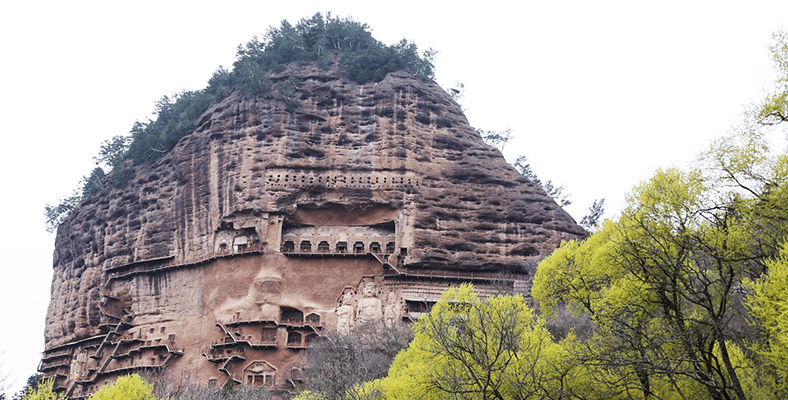
The name Maiji in Chinese translates to “piled sheaves of wheat,” reflecting the mountain’s appearance and the origin of its name. The Maijishan Grottoes were initially constructed in A.D. 384-417 and underwent subsequent expansions in dynasties such as Northern Zhou (A.D. 557-581) and Tang (A.D. 618-907). The site currently comprises 221 caves, 10,632 clay sculptures, and over 1300 square meters of murals, earning global acclaim for its exquisite clay sculpture art and recognition as the “Oriental Sculpture Art Exhibition Hall.”

While Maijishan Grottoes may not be as renowned as the other three great grottoes, it stands out as the best-preserved among them. Carved into the steep cliff of the mountain, the caves were not easily accessible, thus escaping much of the destruction that plagued other sites throughout tumultuous periods in history. Today, visitors can marvel at Buddha sculptures and murals along a narrow path clinging to the cliff’s edge.

Marsman Rom, Wikimediia Commons

Shizao, Wikimedia Commons

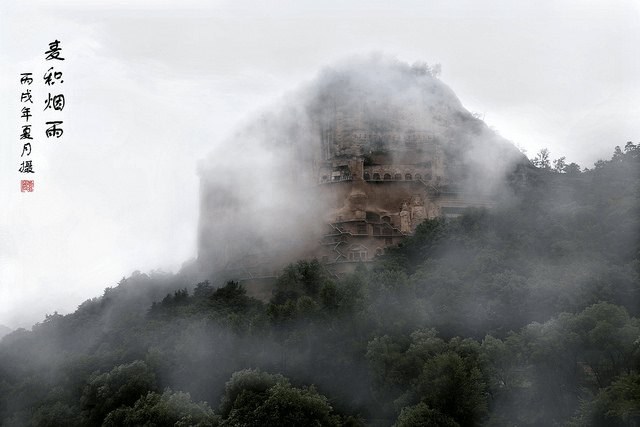
Maijishan in a sea of fog. ©Maijishan Grotto Art Institute and Global Heritage Fund

Located just a few miles south of the main road connecting China and Central Asia, Maijishan emerged as a hub of cross-cultural exchange, drawing hundreds of thousands of itinerants and serving as a historical canvas reflecting the art of 12 distinct dynasties. Indians, Mongols, Huns, Sogdians, Tibetans, Chinese, and others traversed its halls, leaving enduring imprints of their cultures in the form of art.

The mountain’s 194 grottoes stand as tangible evidence of this diverse influence, showcasing seven architectural variations, housing over 7,000 statues, and adorned with more than 100 square meters of murals. Everything within reflects a dedication to Buddhism, from depictions of Siddhartha’s birth to bodhisattvas engaged in meditation and scenes of new devotees arriving. While Maijishan’s physical features initially garnered attention, it is the heritage inscribed, painted, and sculpted onto the soft golden stone that solidified its place in the globalized consciousness of Buddhism, akin to Mount Sumeru, the sacred Buddhist mountain often considered the “mythical axis of the universe.”

The history of Maijishan, like the tales along ancient trade routes, commences with a journey. One account tells of the priest Hsüan-kao meditating at Maijishan, later joined by the shaman T’an-Hung. Together, they founded the mountain’s first monastic community, growing to nearly 300 people before their departure, marking a departure filled with religious fervor, and in T’an-Hung’s case, a morbidly poetic self-immolation in Cochin.

This semi-mythical origin, whether entirely factual or not, undeniably solidified Maijishan as a significant religious site for Chinese rulers. In the Fang-yü sheng-lan, a Sung Dynasty-era book, it is noted that Yao Hsing transformed the mountains, carving 1,000 cliffs and 10,000 images, transforming the cliffs into halls. A stele from 1222 attests to the site’s prominence, with 10,000 people praying there, empires granting land for farming, and seven kingdoms continuously contributing to its maintenance. Subsequent imperial decrees bestowed various names, including “Ching-nien ssu,” “Ying-chien kan ssu,” and “Jui-ying ssu,” before settling on the name Maijishan.

Examples of how brilliantly these works of art were once colored. Shizao, Wikimedia Commons

Differences between Maijishan’s Grottoes and Mogao’s

The Maijishan Grottoes and the Mogao Grottoes, both situated in Gansu Province along the Silk Road, offer distinct experiences, prompting consideration for visitors on a Silk Road journey. Despite being grottoes, they differ significantly, making a visit to both a worthwhile endeavor.

  1. The Maijishan Grottoes are renowned for their clay sculptures, whereas the Mogao Grottoes impress with expansive and beautiful murals. The arid climate in Dunhuang aids mural preservation, while the Maiji Mountain area, with more rainfall and looser mountain rock (clay), is conducive to sculpture carving.
  2. Sculptures in the Maijishan Caves are primarily plain clay pieces, while in the Mogao Caves, they are predominantly painted sculptures integrated with murals. Buddha statues in Maijishan exhibit a more secularized and daily-life-oriented character.
  3. The surrounding natural landscapes vary. Maijishan Caves, located in the Maiji Mountain Reserve area, offer a summer retreat with lush trees and springs, providing opportunities to explore diverse wildlife. In contrast, the Mogao Grottoes are situated in the Gobi Desert, surrounded by wild desert scenery.
  4. The Maiji Grottoes were carved into a steep 100-meter-high cliff face, requiring travelers to ascend the “floating plank road” for a more adventurous experience. In comparison, the Mogao Grottoes were carved into a 30-meter-high sandstone outcrop distributed over four floors.

The breathtaking Maiji Caves, carved into the steep cliffs of Maiji Mountain, stand about 100 meters (330 feet) above the ground, divided into East and West Cliffs. These caves, resembling honeycombs in hives, are interconnected by plank walkways suspended in the air from the cliff face.

Have you ever pondered how this feat was accomplished over a thousand years ago without modern machinery?

Legend has it that the Maijishan Grottoes were excavated at the expense of clearing all the woods near Maiji Mountain. Ancient people built wooden scaffolds from the mountain’s foot to the top, serving as precursors to the later generations’ “plank roads.”

During the Tang Dynasty (618–907), an earthquake divided Maiji Mountain into two cliffs, east and west. Over subsequent dynasties — Song, Yuan, Ming, and Qing — the Maijishan Grottoes underwent development, evolving into the cohesive complex seen today.

The Maijishan Caves stand as a testament to human wisdom and art along the Silk Road, embodying profound respect for Buddhism and an unending yearning for a better life.

Part of the Maiji Mountain Scenic Reserve area (including Xianren (‘Fairy’) Cliff, Shimen, Quxi, and Jieting Hot Spring), the Maijishan Grottoes boast diverse forests and a rich array of plants and animals.

While the Maijishan Grottoes can be visited year-round, the best time to explore the Maiji Mountain Scenic Reserve area is from July to October when the mountain, adorned with dense foliage, provides an ideal summer getaway.

Maijishan Grottoes – Buddhist Treasure Well-preserved on Maiji Mountain Cliff

Link:https://peacelilysite.com/2023/12/15/maijishan-grottoes-buddhist-treasure-well-preserved-on-maiji-mountain-cliff/

#MaijishanGrottoes #BuddhistTreasure #MaijiMountainCliff #Travel #China#Art#TravelChina

Source: https://globalheritagefund.org/2018/02/13/inside-the-lost-grottoes-of-maijishan/, https://www.chinadiscovery.com/gansu/maijishan-grottoes.html, https://www.chinahighlights.com/tianshui/attraction/mount-maiji-grottoes.htm

Autumn in Jiuzhaigou: A Colorful Paradise

Jiuzhaigou National Park is located in southwestern China in the north part of the Sichuan Province. The park covers an area of 280 square miles (720 sq km). It is a UNESCO World Heritage Site and a World Biosphere Reserve.

The elevation varies from 6,600 to 14,800 feet (2,000 to 4,500 m). The Jiuzhaigou valley falls within the Min Mountains and serves as the heart of the national park. The national park is renowned for its beautifully colored lakes, the numerous layered waterfalls, and peaks that are frequently snow-capped.

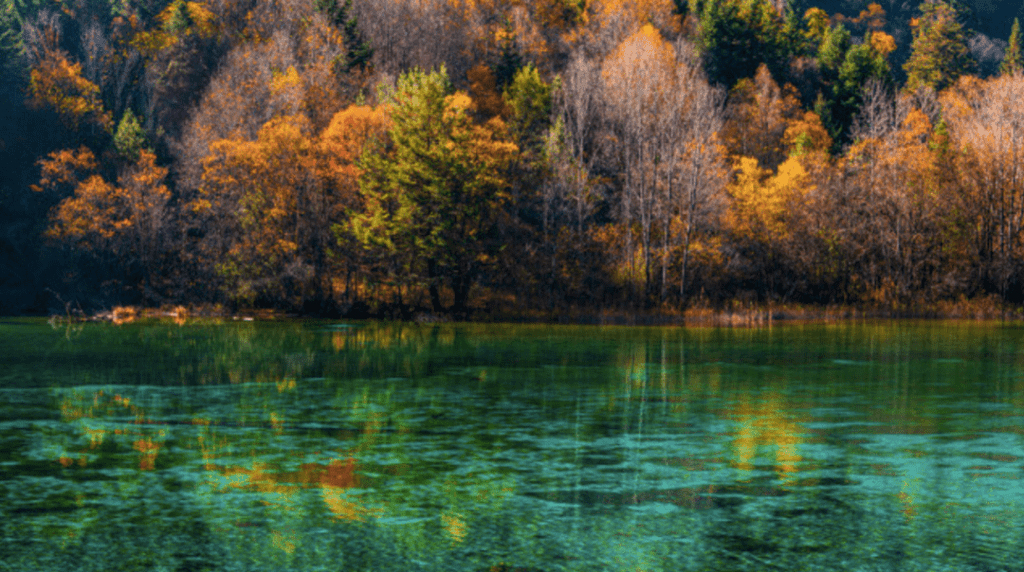
The autumn season in Jiuzhaigou is nothing short of a masterpiece, painted with a palette of vibrant colors. As mid-to-late October arrives, the transformation of the trees in Jiuzhaigou nears completion. The leaves change from a lush green to a brilliant gold, while others take on a stunning red hue that blankets the mountains.

The forest is ablaze with shades of red and yellow, creating a dazzling display that is reflected in the tranquil waters of the lake. The backdrop of a clear, clean blue sky enhances the refreshing atmosphere. Standing amidst this natural wonder, you can’t help but feel like you’ve stepped into a colorful paradise.

When autumn graces Jiuzhaigou, it feels as if you’ve entered a fairy tale world. The leaves compete in a brilliant display, reminiscent of flowers vying to bloom. But Jiuzhaigou is not just about the autumn leaves; it’s also about the countless streams that flow gracefully between the red and yellow leaves. These streams create a spectacular scene that is a rare sight to behold. In that moment, it feels as if all your worries and troubles simply melt away. In Jiuzhaigou, there is also the Five Flower Sea, which offers a 360-degree unobstructed view of breathtaking beauty.

Autumn in Jiuzhaigou is akin to a pot of warm and soothing wine that makes the earth’s cheeks blush and the eyes sparkle. As you stroll along the winding walkways, the warm sunlight bathes your face and body, gently warming your body and soul. The light dances through the valleys, casting a dazzling glow on the bright colors of the forest. The colorful mountains reflect in the calm water, creating a harmonious display of colors between the mountains and the water. It feels as if you’ve stepped into a dreamlike world. Every glance is met with stunning scenery, capturing your heart and leaving you in awe. The water’s surface, stirred by the autumn wind, shimmers with sparkling light and patchy colors, creating a captivating display of colorful rays of light cascading across the water.

If you wish to witness the sunrise in Jiuzhaigou during autumn, the best time is after 8:30 AM and before 5:00 PM for sunset. For those looking to capture the beauty of the “seas” (lakes) in Jiuzhaigou, the lighting is optimal during these times, ensuring that you can showcase the captivating colors of Jiuzhaigou’s “seas”.

Autumn in Jiuzhaigou: A Colorful Paradise

Link:https://peacelilysite.com/2023/11/03/autumn-in-jiuzhaigou-a-colorful-paradise/

#Autumn #Jiuzhaigou #NationalPark #ColorfulParadise #UNESCOWorldHeritageSite

Source: https://national-parks.org/china/jiuzhaigou all photos from website https://www.sohu.com/a/423494066_120065322, https://www.expatsholidays.com/14-unique-places-to-see-autumn-foliage-in-china

Seven Wonders of the Buddhist World-BBC

This YouTube documentary by the BBC was done several years ago, but is worthy of another visit as it gives us a glimpse of the various forms of Buddhism and some of the great monuments and architectural expressions in the different cultures where it took root including our own. 

In this fascinating documentary, historian Bettany Hughes travels to the seven wonders of the Buddhist world and offers a unique insight into one of the most ancient belief systems still practised today. Buddhism began 2,500 years ago when one man had an amazing internal revelation underneath a peepul tree in India. Today it is practised by over 350 million people worldwide, with numbers continuing to grow year on year. In an attempt to gain a better understanding of the different beliefs and practices that form the core of the Buddhist philosophy and investigate how Buddhism started and where it travelled to, Hughes visits some of the most spectacular monuments built by Buddhists across the globe. Her journey begins at the Mahabodhi Temple in India, where Buddhism was born; here Hughes examines the foundations of the belief system – the three jewels. At Nepal’s Boudhanath Stupa, she looks deeper into the concept of dharma – the teaching of Buddha, and at the Temple of the Tooth in Sri Lanka, Bettany explores karma, the idea that our intentional acts will be mirrored in the future. At Wat Pho Temple in Thailand, Hughes explores samsara, the endless cycle of birth and death that Buddhists seek to end by achieving enlightenment, before travelling to Angkor Wat in Cambodia to learn more about the practice of meditation.

Seven Wonders of the Buddhist World-BBC

Link:https://peacelilysite.com/2023/06/30/seven-wonders-of-the-buddhist-world-bbc/

#SevenWonders #BuddhistWorld #BBCdocumentary #BuddhistHistory#SriLanka#India#China #Temple#History

Discovering a Hidden Gem in IAMA Gift Shop

A Majestic Wood Carving Depicting Spiritual Growth and Achievements in Buddhism

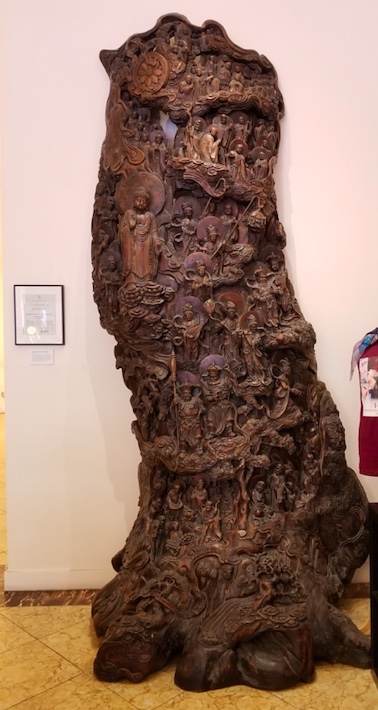
In a world where art manifests itself in countless forms, there are rare instances when we stumble upon something truly extraordinary—a concealed treasure that enthralls our senses and moves us on a deep level. Such a remarkable encounter occurred one fateful day as I explored the gift shop at The International Art Museum of America (IAMA), nestled in the heart of downtown San Francisco. Amidst the vast array of artistic wonders, my gaze became fixated on an exquisitely crafted wood carving—a masterpiece that exuded an ethereal essence of spirituality and profound significance.

This awe-inspiring sculpture, meticulously chiseled from a single tree, originated from China and was skillfully brought to life by gifted folk artists. It portrayed an enchanting realm of spiritual growth and profound accomplishments in Buddhism. Towering at an impressive height of approximately three and a half meters and spanning one meter in width, this artwork was a testament to the dedication and artistry of its creators. Every intricate detail, meticulously carved figures, and delicate embellishments, painted a vivid tableau illustrating the virtues of compassion, enlightenment, and the transformative journey towards Nirvana.

The intricately carved sculpture was a masterpiece that depicted the journey of practitioners from being ordinary to mastering the higher levels of Buddhahood. The figures in the relief were so vividly carved that it was easy to see their progression towards enlightenment and Nirvana. Every detail, from the facial expressions to the flowing cloth, the delicate flowers, and the instruments, was so meticulously presented that it was impossible not to be impressed.

The beauty of this piece lay not just in its stunning visual presentation but also in the message it conveyed. It illustrated the importance of practicing compassion in thoughts, words, and deeds to achieve spiritual growth. It reminded us that every act of kindness, every gesture of love, and every moment of selflessness is a step towards enlightenment and Nirvana.

The sculpture had a calming effect on me. It was a tangible reminder of the power of art to transcend language, culture, and time. It spoke to me in a language that was universal, one that transcended borders and connected people across the world.

As an art lover, I have seen many beautiful pieces over the years, but this wood carving sculpture stood out as a true masterpiece. It was a testament to the skill and craftsmanship of the folk artists who created it, and it served as a reminder of the timeless beauty of art.

Discovering a Hidden Gem in IAMA Gift Shop

Link:https://peacelilysite.com/2023/05/18/discovering-a-hidden-gem-in-iama-gift-shop/

#Buddhism #IAMA#InternationalArtMuseumofAmerica #Art #Artist#ChineseCulture#Sculpture #WoodCarving #Buddhahood #Enlightenment #Nirvana

To Live, To Dance, To Translate

CAFA Lecture Bill Porter: To Live, To Dance, To Translate

TEXT:Sue Wang    DATE:2014.6.19

Bill Porter assumes the pen name Red Pine for his translation work. He was born in Los Angeles in 1943, grew up in the Idaho Panhandle, served a tour of duty in the US Army, graduated from the University of California with a degree in anthropology, and attended graduate school at Columbia University. Uninspired by the prospect of an academic career, he dropped out of Columbia and moved to a Buddhist monastery in Taiwan. After four years with the monks and nuns, he struck out on his own and eventually found work at English-language radio stations in Taiwan and Hong Kong, where he interviewed local dignitaries and produced more than a thousand programs about his travels in China. His translations have been honored with a number of awards, including two NEA translation fellowships, a PEN Translation Prize, and the inaugural Asian Literature Award of the American Literary Translators Association. He was awarded a Guggenheim Fellowship to support work on a book based on a pilgrimage to the graves and homes of China’s greatest poets of the past, which was published under the title Finding Them Gone in January of 2016. More recently, Porter received the 2018 Thornton Wilder Prize for Translation bestowed by the American Academy of Arts and Letters. He lives in Port Townsend, Washington.

At 6:30 pm on June 12, 2014, the American writer, translator and Sinologist Bill Porter gave a lecture entitled “To Live, To Dance, To Translate” at the Auditorium of the CAFA (Central Academe of Fine Art) Art Museum. The lecture was jointly organized by the School of Humanities, CAFA, and CAFA Art Museum, the poet Xichuan presided over the lecture, and honoured guests included Xu Bing, Vice President of CAFA, Yu Fan, Jiang Jie, teachers of the Department of Sculpture, and poets Zhai Yongming, Ouyang Jianghe, etc., were also presentat the lecture.

Host Xichuan initially told the audience of his experience of his meeting with Bill Porter, whose pen name was Red Pine, his publications of the Chinese edition included “Road to Heaven”, “Zen Baggage”, “The Tour of Yellow River”, “Reading the Heart Sutra”, “Finding Tao in China”, “Silk Road”, etc.; his English translations include “Tao Te Ching”, “One Thousand Poems”, “Cold Mountain Poems”, “In Such Hard Times: The Poetry of Wei Ying-wu”, etc. Xichuan said Bill Poter’s translation was distinctive and creative which also made a contribution to English poetry itself, and he called Bill Porter immortal.

Bill Porter gave a lecture starting from his childhood experiences. He was born into a rich family, but he felt rich people had a deceptive smiling face, so they weren’t “real people”. Instead, he thought the “real people” were the servants of his family. At the age of 15, his parents divorced, and his father soon became bankrupt which made him relaxed and happy. It also made him clear that money was not the target he pursued in his life.

In 1972 Porter went to the Fo Kwang Shan Buddhist monastery in Taiwan, to concentrate on studying Zen. During this period of practice, Bill learned and translated Chinese, and he thought through translating, he would be able to learn another foreign language. In addition, this experience brought him freedom which was the biggest harvest for him, because he found that, although he could learn a lot of knowledge at Columbia University, it seemed like“delusions”, his thinking was controlled by the system. But the practice in the temple helped him depose the “delusion”, and obtain freedom.

In 1989, funded by Wang Wenyang, the son of a rich man in Taiwan, Bill was able to travel in China, and he started an historical record looking for hermits in the Zhongnan Mountains, combining the experience and the historical anecdotes, he wrote a book Road to Heaven. In 2012, at 69, Bill began the last trip – “finding them gone”. This time, along the Yellow River and the Yangtze River, he followed the footprints of 36 poets including Chen Zi-ang, Cao Zhi, Ruan Ji, Ouyang Xiu, Su Dongpo, Li Qingzhao, Bai Juyi and was able to have a dialogue with them across time and space.

In the lecture, Bill Porter wittily told the story of his learning Chinese and practicing in the mountains, engaging in translation for almost 40 years, his discovery that translating was the best way to understand a culture. For Bill, translation was a kind of “dance”, and moreover, the dance relied on Chinese culture. He took the translating process as the metaphor of the story Jiang Ziya Fishing, sometimes he spends a lot of time on the translation, waiting for inspiration through meditation, and with the help of others’ strength.

In the following Q & A, Bill Porter shared the harvest on the road of translation, the feeling of China, and the understanding of Zen. Bill said there wasn’t any correct or wrong translation, as there wasn’t any perfect “dance”, but one needed to see the inner heart, because translation was a performing art which allowed the pursuit of your own happiness. Bill was like a practicing person, he thought Zen had no thought, and the so-called“enlightenment” was also a kind of delusion.

After the end of the lecture, Xichuan gave some small gifts to Bill on behalf of CAFAM, and he himself gave a set of ancient coins of the Tang Dynasty to Bill Porter.

Text: Ye Yuanfeng, translated by Chen Peihua and edited by Sue/CAFA ART INFO

Photo: Hu Zhiheng, Quan Jing/CAFA ART INFO

CAFA Lecture Bill Porter: To Live, To Dance, To Translate

Link:https://peacelilysite.com/2022/04/02/to-live-to-dance-to-translate/

Source: https://cafa.com.cn/en/news/details/8322914

#CAFA#Translater#Sinologist#BillPorter#CultureExchange#China