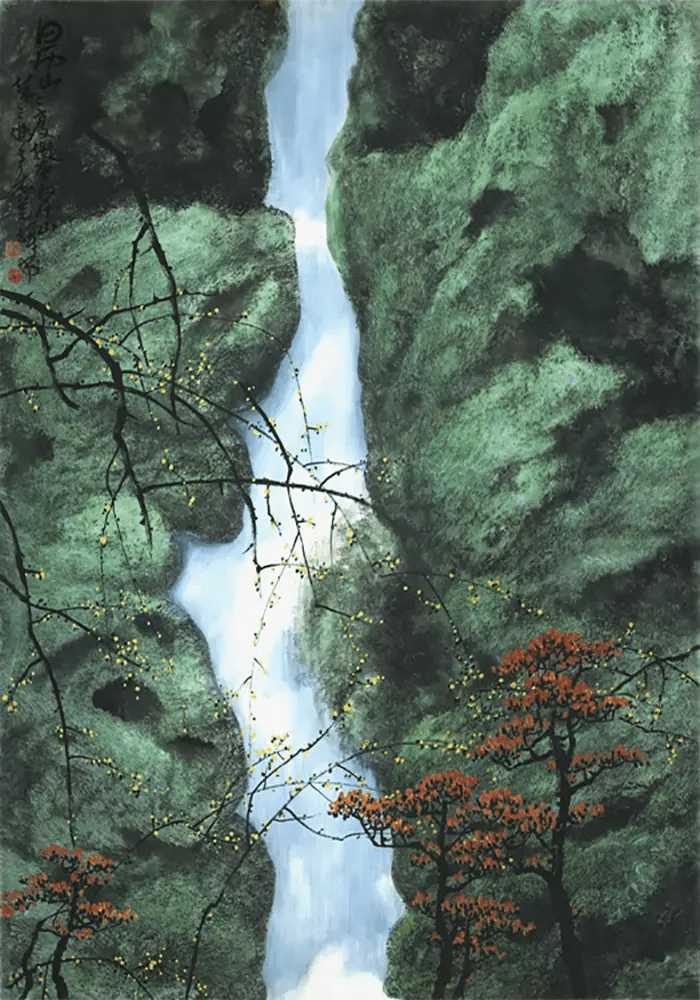
Beyond Form: Entering the Dreamlike Realm of Chinese Painting

Sometimes beauty finds us when we least expect it—appearing like a sudden blossom of color in an ordinary moment, stopping us in our tracks and opening our hearts to wonder.

I happened to come across two traditional Chinese paintings online, both dominated by bright pink, and was utterly astonished. I couldn’t help but study them carefully. In Chinese painting, it is rare to see large areas of pink used as the main color, since it often risks appearing vulgar. Yet in the works of H.H. Dorje Chang Buddha III, there is not the slightest trace of vulgarity. On the contrary, they radiate grandeur and magnificence, and the artist’s confident mastery of color bursts forth boldly from the canvas.

The above piece in particular was painted with a heart as pure and untainted as that of a child. Within the seemingly naïve brushstrokes lies immense skill and mastery. The style is free and natural, bold and unrestrained yet still gentle. Its simple composition is infused with deep emotion and imagination, brimming with the vitality of childlike wonder that uplifts the viewer’s spirit.

A few pink houses stand in the scene, behind which several pink fruit trees sway delicately. Ink outlines give the houses their structure, while the softly hanging trees add a tender rhythm to the picture. The artist’s unique technique and extraordinary control of color are truly breathtaking. The inscription on the work further enhances its spiritual resonance:

“Brilliant colors, vivid yet dignified; consummate skill that reveals the heart of a child.”

Indeed, this is a rare and outstanding masterpiece of Chinese painting.

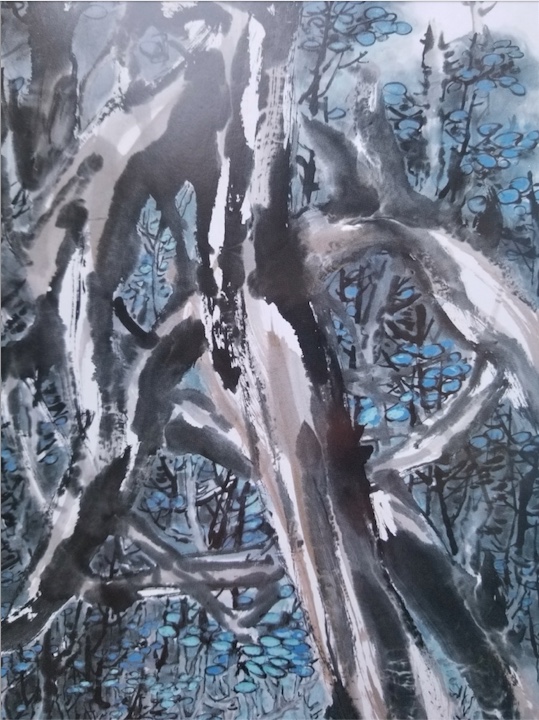
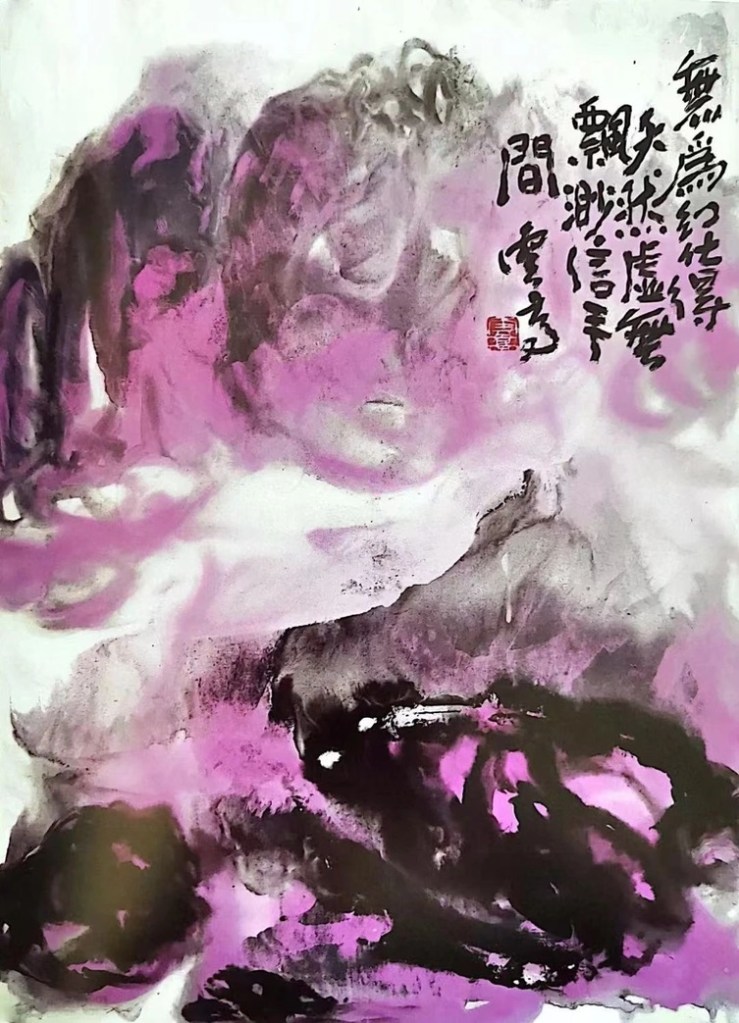
This masterpiece is a freehand splash-ink landscape, where the brush moves with effortless freedom. Layer upon layer of crimson cliffs rise as though born from the artist’s own heart—lines powerful, vigorous, and full of life. Ink strokes carve the very bones of mountains and rocks, each one natural, unrestrained, yet perfectly balanced. Broad washes of pink suffuse the scene, creating an ethereal, dreamlike realm that lingers between presence and absence, as if belonging to an immortal world. To gaze upon this painting is to step into another dimension—where the heart gradually settles into stillness and begins to sense the hidden rhythms of the cosmos.

This painting was not created to showcase skill or to dazzle the eye, but as a natural outpouring of inspiration and emotion. Both ink and color arise directly from the pure stirrings of the artist’s heart.

Here, the true essence of Chinese painting—shen yun (spiritual resonance)—is revealed in its fullest clarity. The inscription makes the artist’s intent unmistakable: “With effortless spontaneity, illusion transforms into nature; in the fleeting and ethereal, the hand finds its way.” The purpose is not simply to depict form, but to open a gateway into a spiritual realm that transcends the material.

Shen yun is at once vivid and elusive—an ineffable charm, a subtle spiritual force that cannot be captured in words. It flows from the painter’s inner cultivation and profound state of mind. When spirit and technique merge seamlessly, the work attains a power far beyond outward appearance.

It is only when the viewer is touched by this shen yun that the formal elements of the painting—the structure of its composition, the interplay of colors, the rhythm of the brush, the unity of poetry and image, the harmony of form and spirit—truly come alive. These elements are essential, of course, but they are not the destination. They are the pathway to something deeper, pointing always toward a higher, transcendent experience.

These two paintings are rare gems of Chinese art, that surprise, inspire, and open a doorway to beauty both profound and pure.

Link:https://peacelilysite.com/2025/08/29/beyond-form-entering-the-dreamlike-realm-of-chinese-painting/

Mountain Village with Memories of Mother”: A Painting That Speaks to the Soul

This is a deeply moving landscape painting by H.H.Dorje Chang Buddha III, marked by smooth, flowing brushwork and a natural rhythm. The undulating crimson cliffs seem to rise freely from the artist’s heart, while the vigorous lines brim with vitality and strength. Ink strokes form the skeletal structure of the mountains and rocks, while delicate willows hang softly across the scene, adding a quiet touch of green serenity. The overall palette is vivid but never garish, exuding a warm and nostalgic atmosphere.

In the painting, two thatched cottages nestle beside the mountains and water. Their deep-set doors and silent windows seem to hold untold, quiet stories. It was under these eaves, by these doors, that a loving mother once stood—sending her children off into the world with silent heartache, and waiting countless times in patient hope for their return. That wordless farewell, those tears of longing, have gently seeped into the fabric of time. Among all human emotions, none is greater than a mother’s love. Our memory of that love stirs an innate sense of gratitude—a sacred emotion that transcends the ordinary.

This work embodies the style known as the “Childlike Native School”, which embraces the beauty of rural life through the innocence of a child’s heart. Though the brushstrokes appear naïve and spontaneous, they conceal great depth and mastery. The painting style is free and unrestrained, exuding both boldness and tenderness. The soft, flowing lines connect seamlessly—like a mother’s love, endlessly enduring, gentle yet firm. Its simple composition holds rich emotional meaning and invites the viewer’s imagination to wander. The scene pulses with a childlike liveliness that fills the heart with joy.

The painting’s pure and innocent imagery evokes a return to the carefree days of childhood. No matter where you are, simply gazing at this piece can bring the scene and its emotions vividly before your eyes, awakening the deepest tenderness and longing in your soul.

In creating Mountain Village with Memories of Mother, the artist approached the work with the pure heart of a child, yet painted with the maturity and finesse of a seasoned master. The brush technique draws from traditional Chinese calligraphy—guided by the wrist, powered by the arm—each stroke flowing naturally with graceful spontaneity. This painting was not created for show or technical display, but as a sincere outpouring of emotion and inspiration. Every application of ink and color arises from genuine feeling.

What is art?
At its essence, art is the ability to immediately evoke inner peace, comfort, joy, or spiritual fulfillment in the viewer. But where does this feeling come from? Is it merely the subject matter or visual beauty of the work? Certainly not. A painting does not become great simply because it looks pleasing.

In the context of Chinese painting, the true heart of art lies in a quality called “spiritual resonance” (shen yun). It is vivid, yet elusive—a mysterious charm and subtle power that cannot be described with words. It is born when the artist’s personal cultivation, emotional depth, and spiritual awareness infuse the work, allowing spirit and technique to merge. The result is an artistic vitality that transcends mere form.

Only when viewers are moved by this spiritual resonance do they begin to explore the painting’s formal elements—its composition, color palette, brush technique, balance between painting and calligraphy, and the portrayal of the subject in both spirit and form. While these aspects matter, they ultimately serve a deeper, more profound experience.

In Chinese art, the true value of a painting—its ability to soothe the soul—does not depend on technical skill alone. It lies in whether the work can touch the heart and stir the spirit. Mountain Village with Memories of Mother beautifully embodies this artistic spirit. Every brushstroke gently stirs the viewer’s emotions, evoking tender memories and inviting the soul to linger in its serene beauty.

This exceptional work is housed in the permanent collection of the International Art Museum of America, located in San Francisco—a fitting home for a piece that speaks a universal language of love, nostalgia, and spiritual beauty.

Link:https://peacelilysite.com/2025/07/11/mountain-village-with-memories-of-mother-a-painting-that-speaks-to-the-soul/

The Mystical Cat: A Masterpiece of Chinese Ink Painting

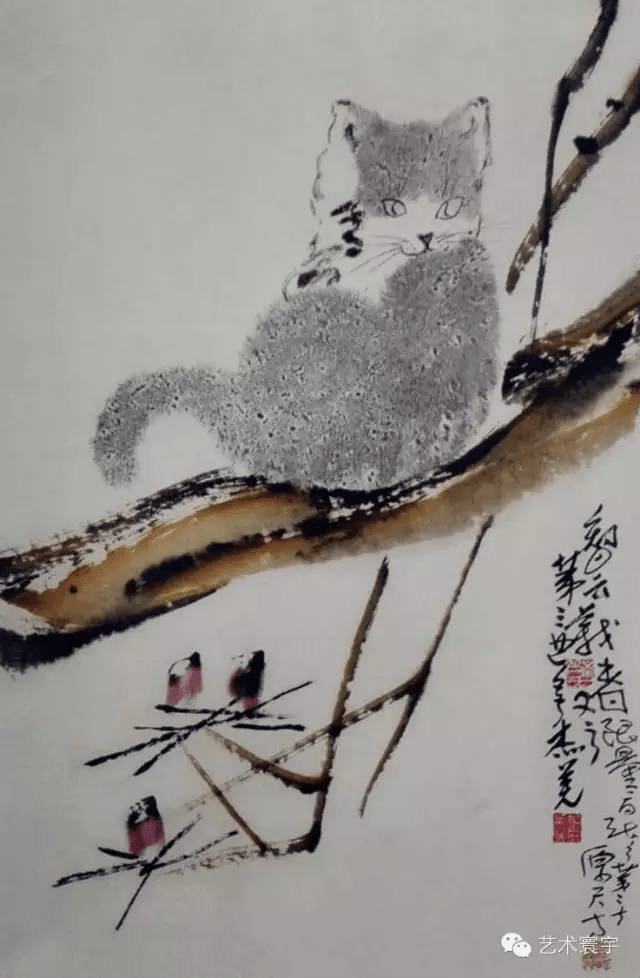
Among the finest expressions of Chinese ink artistry stands the extraordinary masterpiece, The Mystical Cat. This enchanting work features a mystical cat rendered in soft gray tones, brought to life with just a few expressive strokes. Its piercing eyes radiate spirit and depth, while a mysterious, subtle smile lingers—captivating and thought-provoking.

The cat’s fur, depicted with delicate and fluid brushwork, dances between the forms of flowing water and drifting clouds. The texture appears so soft and inviting that one feels compelled to reach out and touch it. Yet, upon closer examination, the illusion reveals itself—those masterful brushstrokes are undeniably the cat’s fur. The intricate variations and richness of detail make this artwork a visual marvel, leaving one to wonder: What extraordinary technique could produce such brilliance?

In terms of artistic style, this piece is truly unparalleled, belonging to the “Fangfa School” style created by the esteemed master H.H. Dorje Chang Buddha III. The fluid strokes around the cat’s neck echo the elegance of cursive calligraphy, with each brushstroke flowing like clouds and water—graceful, yet powerful. Perched steadily on a tree trunk, the cat exudes a sense of calm and quiet dignity, drawing the viewer into a state of serene contemplation.

The tree trunk itself, rendered with bold, sweeping strokes and vibrant hues, pulses with energy and rhythm, reminiscent of the stirring notes of a cello performance—uplifting and profound. Behind the cat, two slender branches interlace gracefully, adorned with delicate flower buds. They seem to sway like young maidens dancing in spring, infusing the composition with poetic charm.

The most captivating feature, however, remains the cat’s eyes. With just two elegantly curved strokes, the artist has infused the cat’s gaze with a sense of life and spiritual depth. When meeting the cat’s eyes, one feels as though the feline is speaking directly to the soul, its wisdom and elegance unmistakable. It transcends the ordinary, radiating a sense of profound spirituality rarely captured in art.

This small yet profound piece not only showcases extraordinary technical mastery but also offers a transformative visual and spiritual experience. It transports the viewer beyond the material world, leaving an indelible impression on the heart and mind. Many are left to wonder—who could create such an extraordinary work of art?

The Mystical Cat is the work of the revered artistic master H.H. Dorje Chang Buddha III. Created in 1991, it belongs to the “Fangfa School” style, one of sixteen unique painting styles founded by the Buddha Himself. This technique, blending profound wisdom and artistic expression, remains unmatched in the art world. Apart from Him, no artist has been able to replicate such divine craftsmanship.

What sets this piece apart is its miraculous charm within a two-dimensional form—impossible to replicate through mere technical skill. The art emerges from a realm of wisdom and enlightenment, far surpassing the ordinary. The minimalistic background, created with a few well-placed strokes, echoes the elegance of ancient inscriptions while preserving a harmonious balance between form and spirit. It represents the pinnacle of ink conservation and calligraphic mastery—a true summit of artistic achievement.

The rarity of The Mystical Cat is beyond comparison. Since creating this piece, H.H. Dorje Chang Buddha III has sealed this divine style, ensuring that such masterpieces will not be produced again. This fact alone transforms the artwork into a priceless, limited edition treasure of the highest order.

The painting’s extraordinary value was confirmed at the Christie’s Chinese Treasures Christmas and New Year Auction hosted by the New York GianGuan International Auction Company on December 9, 2012. A reproduction of The Mystical Cat sold for an astonishing $253,000 USD, achieving the highest recorded price for a reproduction painting per square foot.

The Mystical Cat is not just a painting—it is a gateway to a realm where art, wisdom, and spiritual depth converge. A true testament to the artistic genius of H.H. Dorje Chang Buddha III, this masterpiece stands as an eternal symbol of artistic perfection and spiritual transcendence.

This beautiful artwork is part of the permanent exhibition at the International Art Museum of America, located in downtown San Francisco.

Link:https://peacelilysite.com/2025/01/17/the-mystical-lynx-a-masterpiece-of-chinese-ink-painting/

Artful Resilience: The Timeless Elegance of Dr. Yuhua Shouzhi Wang’s Bamboo Paintings

Bamboo of Noble Integrity By Professor Yuhua Shouzhi Wang

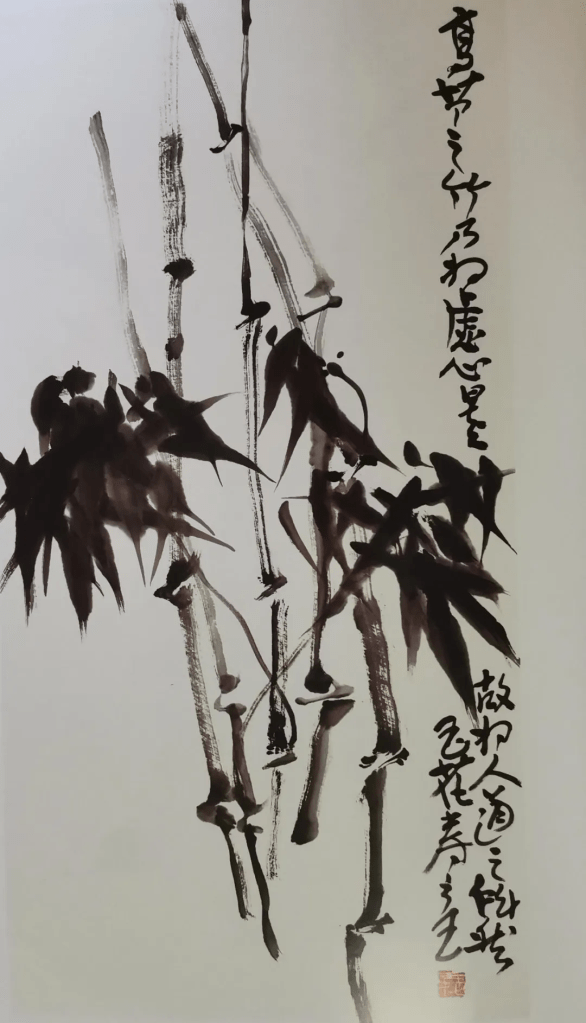
Bamboo, as a plant with profound cultural significance, carries rich and diverse symbolism. It represents resilience, noble character, vitality, humility, modesty, harmony, and unity. With its graceful posture and vibrant green appearance, bamboo evokes a sense of freshness and refinement. Though its exterior is simple and unadorned, it embodies a noble inner quality. This unique temperament has made bamboo a symbol of integrity and uprightness. In ancient times, it often served as a metaphor in the writings of scholars and poets for individuals of high moral character and self-discipline.

For the Chinese, admiration for bamboo has endured throughout history. Countless poets and literati have celebrated its virtues, grouping it alongside plum blossoms, orchids, and chrysanthemums as one of the “Four Gentlemen,” embodying the character and aesthetic spirit of the Chinese people. Bamboo’s simplicity belies its profound cultural significance. In traditional Chinese culture, it is a symbol of auspiciousness and virtue, carrying layers of meaning that resonate deeply with the human spirit.

Professor Wang’s Chinese paintings of bamboo are a testament to her extraordinary ability to bring this cultural icon to life. Each stroke captures the essence of bamboo’s resilience and unyielding spirit while emphasizing its humility and integrity. Her works not only celebrate the elegant charm of bamboo but also evoke its vibrant vitality and enduring strength.

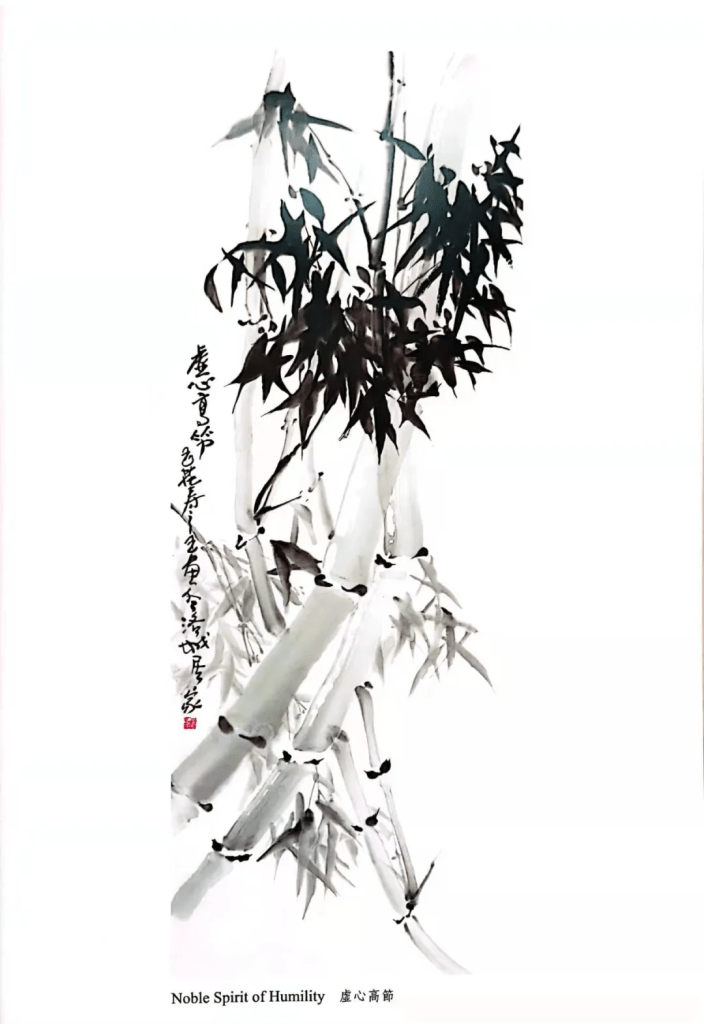
Professor Wang’s Artwork “Noble Spirit of Humility”

The artwork Noble Spirit of Humility depicts a cluster of bamboo deep within a dense forest. Two tall and robust bamboo stalks stand prominently in the foreground, their lush branches and leaves rendered in bold ink. Behind them, a few smaller bamboo stalks, delicately painted in lighter ink, appear to lean on the larger ones, as if embraced by Mother Earth. Together, they form a unified group, advancing and retreating in harmony.

Look closely, and you’ll see their branches intertwine amidst the clouds, and their roots tightly clasp together underground. Neither torrential rain nor fierce winds can break them down. The bamboo’s unyielding resilience is vividly and profoundly brought to life.

Dr. Yuhua Shouzhi Wang was recognized and chronicled in the United States Congressional Record as “a great artist and sculptor,” and “treasure of the world.” In 2013, President George Christophides of the World Federation of UNESCO Clubs, Centers, and Associations (WFUCA) conferred the title “2013WFUCA” to one of her artworks.

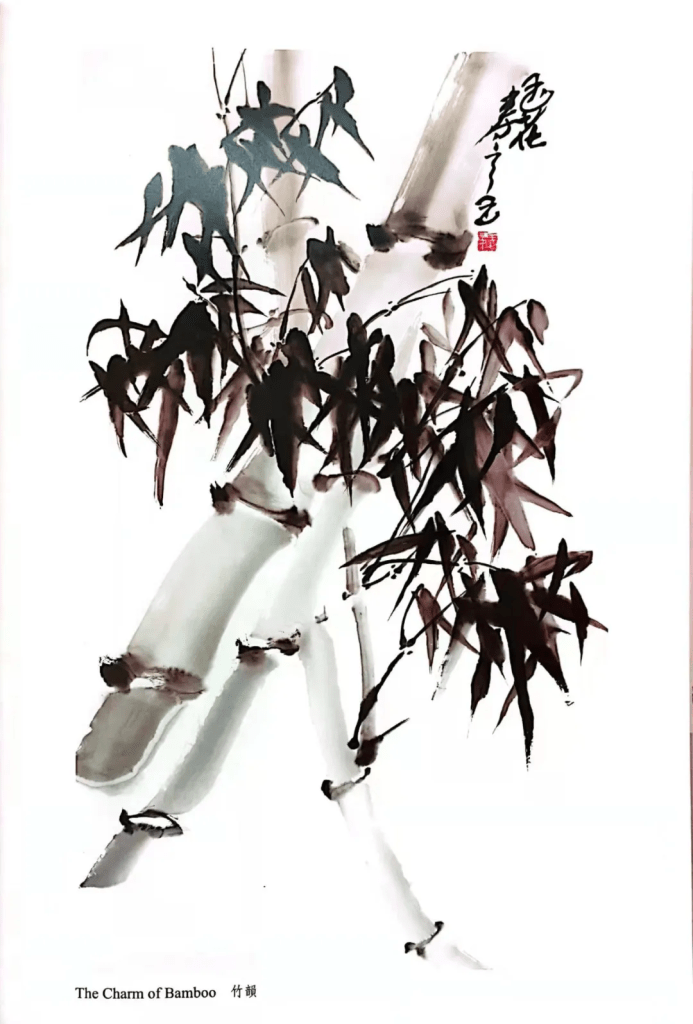
The artwork “The Charm of Bamboo” conveys the fresh and elegant essence of bamboo, exuding a gentle and harmonious beauty. It seems to remind us that in life and work, we should not only take responsibility but also foster an atmosphere of harmony and mutual respect. The use of varying ink tones, alternating between light and dark, strikes a balance of simplicity and ingenuity, greatly enhancing the dynamic energy of the piece.

Dr. Yuhua Shouzhi Wang’s bamboo paintings are truly exceptional. Through her art, she vividly conveys bamboo’s noble qualities, leaving viewers with a deep appreciation for this remarkable plant and its timeless symbolism. Her work serves as a bridge between nature and art, reminding us of the profound lessons we can draw from the natural world.

Link:https://peacelilysite.com/2024/12/27/artful-resilience-the-timeless-elegance-of-dr-yuhua-shouzhi-wangs-bamboo-paintings/

“Dragon Carp Frolicking in the Lotus Pond”: A Masterpiece Beyond Time

Art has the power to transcend boundaries, evoke emotions, and stir the soul. One such masterpiece is “Dragon Carp Frolicking in the Lotus Pond”, created by H.H. Dorje Chang Buddha III. This extraordinary painting, executed with ink and color on paper, seamlessly blends freehand brushwork with meticulous detail. It has been rightfully hailed as a world-class “treasure of unparalleled excellence” and a “divine masterpiece.” Experts agree that this work surpasses conventional artistic techniques, reaching a level of spiritual depth that few can replicate.

At first glance, the painting’s lotus leaves and carp, rendered with freehand techniques, captivate the viewer with their delicate yet vibrant forms. The wide, majestic leaves appear to breathe, their veins subtly flowing and shifting in unpredictable ways. Bold strokes define the water grasses, infusing the scene with a palpable sense of movement. This is a world that feels “drawn from life, yet elevated above it.”

The lotus pods are painted with a playful, almost fantastical touch, while the decaying lotus stems evoke a vivid realism. The carp glide effortlessly through varying depths of water, with natural ripples enhancing the impression of life in motion.

What makes “Dragon Carp Frolicking in the Lotus Pond” so compelling is the swirling energy that permeates the entire composition. Fish, water, lotus leaves, flowers, ripples, mist, and lotus roots all come together as one. Every element is in harmony, creating a profound sense of vitality. The interplay between stillness and motion is masterfully orchestrated, with tension and fluidity imbuing the painting with a life of its own. The spiritual resonance of the ink and brushstrokes is so powerful that it touches the soul, offering a rare glimpse into the artist’s mastery.

H.H. Dorje Chang Buddha III’s ability to manipulate ink and water produces endless visual effects, creating an atmosphere where life itself seems to flow through the brush. The dragon carp, swimming through the water with ease, symbolize the very essence of vitality.

Compared to past masters, who captured the beauty of carp but failed to unite the fish with the water, H.H. Dorje Chang Buddha III elevates his work to a higher realm. His brushwork achieves perfect harmony between the fish and water, with the two becoming one in a symbiotic relationship that enhances both their liveliness and texture.

Traditional Chinese ink painting often uses blank spaces to represent water’s stillness, while lines suggest movement. “Dragon Carp Frolicking in the Lotus Pond” takes this concept even further, incorporating the refraction of light through the water’s surface and depths.

The dynamic light waves, combined with the seamless interaction of the carp and the ever-changing water, create a breathtaking depiction of the concept “fish finding their element.”

The true brilliance of this work lies in its extraordinary attention to detail and the artist’s mastery of brush techniques. From the texture of the carp’s scales to the intricate interplay between fish and water, every detail contributes to the painting’s vibrant spirit. This level of craftsmanship goes beyond what other media, such as oil painting, can achieve, making “Dragon Carp Frolicking in the Lotus Pond” a unique artistic treasure. Its spiritual resonance and profound beauty leave a lasting impression.

This painting is not just a visual masterpiece; it is a profound experience that speaks to the heart, a testament to the transformative power of art.

In 2016, there was already an offer of 60 million USD to purchase this painting. However, H.H. Dorje Chang Buddha III declined the sale, considering that once it was owned by a private collector, the public would have little opportunity to appreciate it. Currently, “Dragon Carp Frolicking in the Lotus Pond” is permanently displayed in the Master Artist Fish Hall at the  H.H. Dorje Chang Buddha III Cultural And Art Museum in Covina, California.

Link:https://peacelilysite.com/2024/10/10/dragon-carp-frolicking-in-the-lotus-pond-a-masterpiece-beyond-time/

#DorjeChangBuddhaIII # HHDorjeChangBuddhaIII#DorjeChangBuddha#Art# Artist #H.H.DorjeChangBuddhaIIICulturalAndArtMuseum#YunSculpture #Craftsmanship
#Dragon #Carp #Lotus

Exploring Tranquility: A Glimpse into an Ancient City Through Art

Spring Rain in the Ancient City

H.H. Dorje Chang Buddha III’s painting “Spring Rain in the Ancient City” creates a pure and exquisite inner world with extremely concise brushstrokes. Upon viewing it, one feels a sense of ethereal illusion, akin to gazing at the moon reflected in water, or the fresh and invigorating sound produced by pressing down a piano key. This artistry, which combines reality with the abstract and exudes a transcendent naturalness, enlightens the mind and often transports individuals to a realm of beauty and wonder.

With a stroke of the artist’s ingenious brush, the reality of the impermanent years and the philosophical insights contained within natural phenomena are presented on the canvas. The aesthetician, Zong Baihua, once said, “By focusing on the specifics of universal life, appreciating its colors, order, rhythm, and harmony, one glimpses the highest reflection of the self; transforming reality into the realm of the abstract, creating images as symbols, and concretizing the highest human spirit, embodying it physically – this is the realm of art.”

When admiring the Chinese painting “Spring Rain in the Ancient City,” my past painting ideas and perplexities suddenly melted away. The artistic conception in the artwork shook my inner being, and the marvelous composition deeply enlightened my mind. In the painting, a towering tree stands, firmly rooted and majestic, with branches reaching up to the sky. Through the spaces between the branches, one can see the lush greenery of trees lining the streets, exuding the freshness of spring. Above the canopy stretches the boundless sky, evoking the infinite implications of universal life. Beneath the crisscrossing branches lies the bustling city streets, where people hurry about their business. A sudden spring rain brings a new aesthetic perspective: under the vast sky, countless beings toil diligently in the wind and rain…

From the painting, we can observe that during that time in this ancient city, there weren’t many cars on the streets. People were either riding buses, bicycles, or walking. It portrays vivid, serene scenes, offering a soothing and comforting feeling to the heart.

This philosophical painting also reminds me of the verses from the poem “Nian Nu Jiao” by H.H. Dorje Chang Buddha III: “Abruptly entering the universe, The universe of a billion worlds, Stand firmly against all hardships and obstacles. Seeing through glory and riches, I simply smile. The rooster crows announcing the dawn, the morning bell hurries the moon, the whole Soha world is revealed everybody bustles about to survive,life, like smoke and snow, gone!….. “

The artist, with skillful brushstrokes and delicate ink, creates a realm that is subtle, almost mysterious. The shades of ink, varying in density and wetness, complement each other, resulting in a loose and unrestrained style, with a serene and unadorned visual essence. Whether in form, color, brushwork, or ink application, the painting breaks free from rigid constraints and embraces a sincere expression of artistic intention. Through subtle ink shades, it seeks to capture the essence beyond mere representation, embodying a style characterized by simplicity and refinement. There is no wild passion, no dramatic rhythm that sets the heart racing, and no dazzling colors. Even the composition seems to emerge effortlessly from the void. Everything is harmonious and natural, with the entire painting radiating a luminous brilliance, like jade coming to life.

This work skillfully combines the macro and micro perspectives. Through the delicate depiction of trees and leaves, it unfolds the vastness of the cosmos, as if to say, “Every stroke creates a marvelous realm.” This brushwork embodies profound Zen principles. Upon contemplation, the boundless wonders of the universe and life are revealed within this ethereal painting, inviting deep reflection.

The scenes depicted in the painting have long existed objectively within our familiar yet overlooked surroundings. The artist extracts them from everyday life and presents them anew, allowing us to view our own existence from a fresh perspective.

Just as when I first heard the violin concerto “Liang Shanbo and Zhu Yingtai,” the moment the poignant melody gently flowed out, I was immediately moved by the unfamiliar yet familiar notes. The unforgettable melody seemed like a long-lost acquaintance, evoking excitement and beauty as if meeting an old friend in a dream. This sense of beauty seems to have always existed deep within our souls, waiting to be discovered. The artist perceives this beauty and presents it to people in an appropriate form. Perhaps this is a commonality among all great and extraordinary art in the world, which is why art history refers to this type of art as the ideal reality.

This painting is at the permanent exhibition housed at The International Art Museum of America, located in downtown San Francisco.
Link:https://peacelilysite.com/2024/05/17/exploring-tranquility-a-glimpse-into-an-ancient-city-through-art/

#DorjeChangBuddhaIII #HHDorjeChangBuddhaIII#DorjeChangBuddha #ChinesePainting

Simplicity, Innocent Charm, and Natural Appearance

Minimal Brush Strokes Create Charming Paintings

It is often said that the essence of a high-quality painting lies in its incorporation of the calligraphic brushstrokes, the commanding presence reminiscent of engraved stone seals, a tonal quality derived from the artist’s mastery of literature, a stylistic expression emanating from the artist’s virtue, and a captivating allure that springs from the artist’s state of realization—this, indeed, is the true spirit of the painting.

In the International Art Museum of America, several paintings, executed with only a minimal number of strokes, possess the robust appeal akin to stone seal engravings. These artworks convey the artistic conception of returning to original purity and simplicity. With a liberated hand and mind, the artist applies their most refined skills, devoid of any lingering attachments, creating with minimal yet natural brushstrokes.

Za Chai Shi Gu (Brushwork Resembling Smashed Jade)

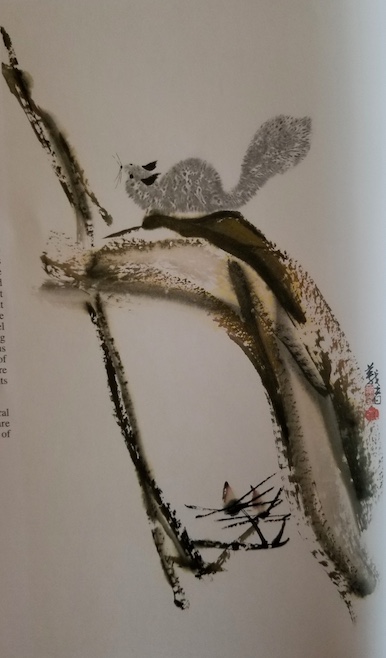
There is a phrase used in commenting upon Chinese paintings and calligraphy that related to smashed jade. This painting exemplifies that charming style of smashed jade.

The pine tree, rendered with just a few simple strokes, emanates a pervasive sense of strength across the entire painting. The exquisite and lively portrayal of the little squirrel employs a truly remarkable and mysterious technique, combining simplicity, innocent charm, a natural appearance, and authenticity into a harmonious whole.

Loquat

H.H. Dorje Chang Buddha III painted ‘Loquat’ in 2013. This painting achieves the skill of cherishing ink like gold in its conception, with no wasted or faulty strokes. With just a few strokes, it is high and lofty, vibrant and lively, containing an elegant and comforting sense of ease, as if the brush strokes were divinely inspired.

At the autumn auction of the New York Zhenguan International Auction Company on September 12, 2015, this painting ‘Loquat’ was auctioned for a staggering 10.2 million U.S. dollars.

Yi Chen Bu Ran (Immaculate)

With only a small number of strokes, a comforting and natural appeal appears vividly on paper. The style is neither overly cautious nor affected. A scholarly tone and an air of stone seals are revealed in the brushwork. This is a work of art with an attractiveness that stems from mature skills. The title “Immaculate” means that this painting is free of any trace of the mundane.

Cat of Unique Charm

In this painting, the cat is portrayed with a vibrant yet natural presence, achieved through the dynamic and captivating use of scattered ink. The entire artwork, painted with only a few brushstrokes, exudes the style of stone seals and an air of scholarly refinement. Both the form and spirit of the scene are skillfully captured. This work truly exemplifies masterful ink usage in a restrained manner.

One of the one hundred limited release copies of this small-scale, painting “Cat of Unique Charm” sold at auction for US$253,000, which is the highest per square foot selling price of any duplicate painting in the world. The prices of sold duplicate paintings by the most famous first-rate masters of art in the world cannot match the prices of sold duplicate paintings by H.H. Dorje Chang Buddha III.

Si Yu Sheng Hui (Resplendent Like Jade)

With just a few simple strokes, the entire painting is remarkably infused with a robust jade-like charm and an auspicious aura. Both the plantain tree and fruits exhibit a lack of mediocrity and were painted without the slightest mental attachment in the artist’s mind. They appear natural, elegant, and enchanting. This sentiment is succinctly captured in the accompanying short poem: “Unfurl the painting scroll, and the particularly fragrant scent of ink is released, permeating the viewer’s mind and intoxicating them to the core. Only a minimal number of strokes were applied. This exemplifies the regal art of using ink as sparingly as gold.”

H.H. Dorje Chang Buddha III, the artist behind these magnificent paintings, has crafted a pure and enchanting spiritual realm with his incredibly succinct brush and ink technique. Upon viewing, it evokes a sense of ethereality, akin to the moon reflected in water, and a freshness that pierces the heart, reminiscent of the sound produced when a piano key is pressed. This unique artistic essence, bridging the real and the virtual, transcends the ordinary, providing a natural and enlightening experience that often transports individuals into a realm of wonder.

Simplicity, Innocent Charm, and Natural Appearance

Link: https://peacelilysite.com/2023/11/10/simplicity-innocent-charm-and-natural-appearance/

#DorjeChangBuddhaIII #HHDorjeChangBuddhaIII##IAMA#InternationalArtMuseumofAmerica #Simplicity #InnocentCharm #Natural Appearance #StoneSeal

Bi Shang Zhi Gong – Skillful Brushwork

After learning about Eastern painting, American painter Graves said: “I realized that art and nature are landscapes of the soul, from which we can perceive the essence of human existence.” When you are fortunate enough to encounter these masterpieces, you will gain insight into the essence of Eastern art.

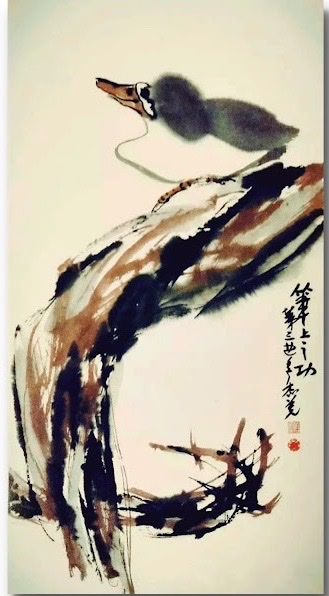
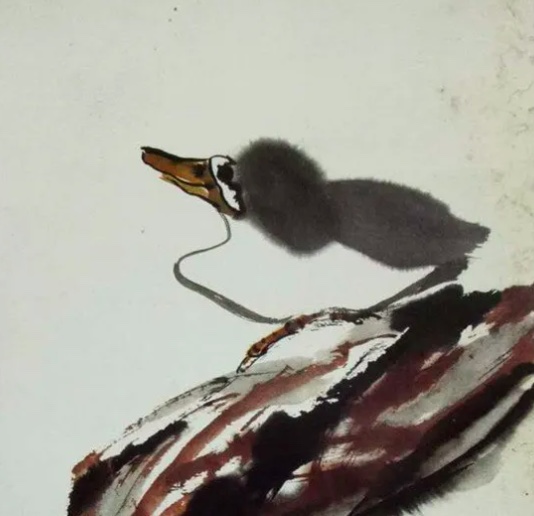
“Bi Shang Zhi Gong (Skillful Brushwork)” is a masterpiece of Chinese flower and bird painting that appears fresh and clear at first glance, profound in meaning after viewing, and unforgettable after further contemplation. The composition is extremely simple: in the center of the painting is a uniquely shaped bird with a flat, long beak and a spotlessly white belly. It sits comfortably and alone on the curved, thick trunk. Its eyes are ethereal and deep, as if completely focused; its posture demonstrates that wherever it is, is the focal point.

Upon careful observation, you will find that everything in the painting is in a state of colorful transformation. The bird’s head and back are painted with two blocks of ink that are close in shade, creating a melting effect, with the ink color seemingly still wet and spreading around.

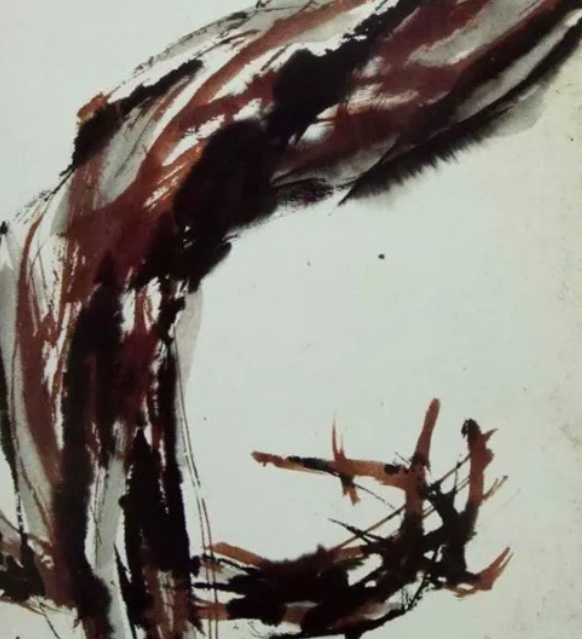
The trunk’s ink lines are clear and distinct, resembling a tree yet not quite a tree, as if constantly changing in the impermanence. At the bottom left of the tree, a branch twists and turns out, creating an S-shaped composition in the painting that is still in motion. The painting also uses color sparingly, with only a warm and friendly purple-brown color applied to the bird’s beak and the trunk.

This painting has a fascinating story behind it. It was created in 1982 during the filming of a movie in Sanhe, Sichuan. The painting captures an on-the-spot portrayal of a real-life scene. The artist used ink sparingly, treating it as if it were as precious as gold, while still showcasing his exceptional skills. At the time, the News Film Studio of China was producing a documentary exclusively about the artist, Master Yi Yungao (H.H. Dorje Chang Buddha III).

The cameramen and other observers witnessed a wild duck landing on a withered tree trunk. Master Yi Yungao quickly picked up his brush and swiftly completed the entire painting. By the time the wild duck took flight again, the painting had already been finished. Furthermore, the artistic mastery embodied in this artwork is extraordinary. It not only preserves the elegance, purity, and high-quality of traditional paintings but also introduces a new style—expressing the artistic conception of returning to original purity and simplicity. The artist, with an unfettered hand and mind, applies his most mature skills without the slightest attachment and with minimal, natural brushstrokes.

This masterpiece Chinese painting by H.H. Dorje Chang Buddha III is rich in literary atmosphere and varied in layers. It does not merely depict the external world, but rather it serves as a true manifestation of the inner spirit, transcending the natural material form to open up the world through the illumination of life’s spiritual light, reflecting the spiritual world. Appreciating the painting can reveal the pure world behind it, where everything, including the self, is forgotten, remaining untainted.

This painting is part of the permanent exhibition at The International Art Museum of America, located in the heart of San Francisco.

Bi Shang Zhi Gong – Skillful Brushwork

Link:https://peacelilysite.com/2023/10/26/bi-shang-zhi-gong-skillful-brushwork/

#DorjeChangBuddhaIII #HHDorjeChangBuddhaIII#DorjeChangBuddha#IAMA#InternationalArtMuseumofAmerica #ChinesePainting #MasterYiYunGao

The Three Perfections: Image, Poem, and Calligraphy in Chinese Painting

In traditional China, painting was revered as “silent poetry,” while poetry was seen as “painting with sound.” Both art forms found expression through the medium of calligraphy, which was considered the “art of handwriting.” Scholars and artist-scholars incorporated calligraphic brushstrokes into their paintings, viewing their artworks as vehicles for self-expression. Consequently, painting was not only regarded as an art form of equal purity and lyricism to poetry and contemplative thought but also as a means to evoke sensory experiences, emotions, and a holistic engagement with the world.

For Western observers, it may be intriguing why Chinese artists incorporate writing in their paintings and what significance the characters hold. By examining some of H.H. Dorje Chang Buddha III’s paintings, we can gain insight into these questions and witness the embodiment of the concept known as the “Three Perfections.” This concept represents the harmonious fusion of fine painting, poetry, and calligraphy within a single artwork.

Song of the Waves in the Three Gorges by H.H. Dorje Chang Buddha III

This painting, titled “Song of the Waves in the Three Gorges,” beautifully captures the grandeur of splash-ink technique alongside the charm of water and ink colors. Its overall tone carries a weighty presence. The brushwork employed in this artwork evokes a powerful sense of momentum, lively charm, and a vividness akin to the scene of a long, flowing river just passing by. The inclusion of a few small sailboats adds elegance to the water scene as they gracefully navigate through it. The combination of the mighty river and awe-inspiring mountains, enveloped in mist and holding sacred spaces, has a purifying effect on one’s emotions. This painting possesses a quality that is reminiscent of both poetry and calligraphy.

Notably, H.H. Dorje Chang Buddha III has inscribed an elegant Chinese poem onto this painting, which can be translated as follows: “The song of waves echoes in the gorge. Hanging colors of rocky cliffs burst with charm. A few cloudy, misty mountains reveal shades of blue. The vast water’s melody sets the sails in motion.” This poem aptly captures the beautiful and misty landscape of the Three Gorges, where the water and sky harmoniously blend, and human emotions become intertwined with the scenery. This painting serves as an artistic paragon, showcasing the mastery of poetic, calligraphic, and painting skills.

Yi Shan Shui Yun Liang Qing Nong ( One Landscape Charm Presents Two Strong Emotions) By H.H. Dorje Chang Buddha III

This remarkable painting showcases a rare combination of splash-ink and splash-color techniques, displaying the artist’s bold and skillful brushwork. The resulting natural effect achieved through these techniques is truly indescribable. Within the bold and dynamic brushstrokes, one can discern countless intricate details and traces of charm emerging from the flowing watery ink.

The painting depicts a scene of mountains and water during the approaching dusk, conveying a profound message. The poem imparts the wisdom that we should strive to engage in virtuous deeds rather than harmful actions, treating all living beings with kindness and respect. By embodying such a way of life, one can transcend to another realm and grasp the truth of existence beyond the concepts of birth and death. This painting offers a profound contemplation on the purpose and significance of human existence.

The calligraphy in the two art works are executed in a cursive style, known for its swift and dynamic strokes. Cursive writing is often characterized by its rapidity and vitality, effectively conveying the artist’s profound emotions.

These paintings are in the permanent exhibition at The International Art Museum of America  in downtown San Francisco. Admission of the museum is free.

The Three Perfections: Image, Poem, and Calligraphy in Chinese Painting

Link:https://peacelilysite.com/2023/06/02/the-three-perfections-image-poem-and-calligraphy-in-chinese-painting/

#DorjeChangBuddhaIII #HHDorjeChangBuddhaIII  #MasterWanKoYee #Buddha#IAMA#InternationalArtMuseumofAmerica #ChineseCulture #ChinesePainting#ChineseCalligraphy #SplashInk #WaterColor

Ode to The Plum Blossom

Ode to The Plum Blossom

Recently, I stumbled upon breathtaking plum blossoms while taking a walk. These delicate flowers evoked feelings of warmth and joy, reminding me of the arrival of spring. In Chinese culture, plum blossoms, beyond just being a physical flower, have become a symbol of perseverance and resilience in the face of harsh winter conditions. This significance was achieved through the extensive descriptions, sublimations, and chanting by literati and scholars over the ages. In ancient China, plum blossoms were considered a lucky symbol and were welcomed as a sign of the arrival of spring during the New Year.

When I was a child, my father taught me to recite the poem “Ode to the Plum Blossom” by Zedong Mao, reminding me to be fearless and strong like the plum blossom that blooms amidst harsh winter conditions. I really like the poem, and can still remember it.

Ode to the Plum Blossom

—to the tune of Bu Suan Zi

By Zedong Mao, December 1961

Wind and rain escorted Spring’s departure, 

Flying snow welcomes Spring’s return. 

On the ice-clad rock rising high and sheer 

A flower blooms sweet and fair. 

Sweet and fair, she craves not Spring for herself alone, 

To be the harbinger of Spring she is content. 

When the mountain flowers are in full bloom 

She will smile mingling in their midst.

But after many years of struggles, I realized that bravery and strength aren’t always enough, especially in managing relationships and family. As a wife and mother, I learned the importance of being magnanimous, compassionate, forbearing, and not rigid. I have since embraced the peaceful and compassionate philosophy of Buddhism.

H.H. Dorje Chang Buddha III, the contemporary Buddha, wrote a poem “Plum Fragrance in the Holy Land.” He broke from traditional poetry styles, instead opting for surreal techniques to directly convey spiritual essence.

To the Tune of “Jiang Jun Song”

Plum Fragrance in the Holy Realm

Reveal her icy bearing and proud bones,

See how plum blossom commands the scene,

The crowd of beauties suddenly lacks color,

Seductive peach has lost its looks.

A few casual strokes,

So many eons of wind and dust.

The smoke and fire of the human world all disappears,

Leaving only a pure fragrance from the paper,

It wafts over me, awakening my mind.

The smile of the enchanted dream still remains,

Buddha Vajradhara has come

Three times to this world.

To this Buddha Land of merciful compassion

That great one has brought purity,

Feelings of the brush,

Traces of the brush,

One smile in the wind and dust,

Now the wind and dust,

So many eons of wind and dust.

The Buddha also created an ink painting to accompany the poem. The poem delves deeper into the artist’s thoughts, while the painting provides a visual representation.

The plum blossoms depicted in the paintings symbolize the artist’s state of mind, embodying inner beauty refined from impurities. The brushwork, casually applied, was accomplished with an unfettered hand and detached mind, free of the slightest artificiality. It is a seemingly ever-changing work. Its charm, tone, transitions, and depictions represent the highest level of Eastern ink-and-wash paintings. A transparent layer of lighter ink on top of darker ink is clearly visible, imbuing the painting with a pure and fragrant air and providing the viewer with a feeling of comfort and ease.

The plum blossoms created by these skilled pens are eternal. While natural blooms may come and go, Buddha’s compassion remains steadfast.

Ode to The Plum Blossom

Link: https://peacelilysite.com/2023/02/02/ode-to-the-plum-blossom/

#DorjeChangBuddhaIII #HHDorjeChangBuddhaIII#DorjeChangBuddha#IAMA#InternationalArtMuseumofAmerica#ChinesePaintings#PlumBlossom#Paintings#

Source: https://www.oktranslation.com/LiteraryTranslation/lt_info32200.html