The Story of the Characteristics of Swords [AsilakkhaÏa-Jātaka]

126. The Story of the Characteristics of Swords [AsilakkhaÏa-Jātaka]

At one time Buddha was living in Jetavanārāma. At that time the king of Kosala had a Brahmin who could tell whether a sword was lucky by smelling it. When smiths would bring their swords, if they had given bribes, he said, “It is good.” To those who did not give bribes, he said to them, “It is bad.” All in the course of time knew the deceptive nature of this man. Knowing his nature, one smith made a sword and making it very sharp, put it in a sheath filled with hot chili powder. He brought it to the king. The king summoned the Brahmin and requested him to tell them the goodness or badness of the sword.

The Brahmin, in accord with the order of the king, took the sword out from the sheath and placing it near his nose tried to smell it. Immediately, before he could say anything, the chili powder smelled by him caused him to sneeze. He could not remove the sword from his nose quickly enough, so when he sneezed, the sword cut off the tip of his nose. This story spread everywhere and eventually it reached even the monks in the preaching hall.

One day in the preaching hall of Jetavanārāma the assembled monks were speaking about this. When the Buddha visited there, the monks paid respect to the Buddha.

The Buddha asked, “Oh monks, what were you discussing before I came here?” Then the monks related the story of the Brahmin who smelled swords for the king of Kosala. Buddha said, “Not only today this man faced this mishap, but also in the past he faced the same fate.” The monks requested the Buddha to disclose the past story. The Buddha spoke then the past story:

At one time, a king called Brahmadatta ruled in Benares. He had a fortune-telling Brahmin who by smelling swords could tell their goodness or badness. He took bribes from the sword smiths. He condemned the work of those smiths who had not given bribes because they had not given him bribes.

Once a certain trickster smith made a good sword and made it well sharpened. He applied hot chili powder to it and took it to the king. The king summoned the Brahmin to examine the sword. As it was covered with hot chili powder, when he smelled it, he sneezed before he was able to remove the sword from his nose. The tip of his nose was cut off, and he was ashamed because of this. The king became very sad because of this and requested his craftsmen to make a fake tip for the Brahmin’s nose with wax. And the Brahmin again asked to work for the king.

At this time the king had a nephew at his palace, and also his daughter. The two of them since they were very young, had grown up together. When they got older, they fell in love with each other. The king did not know this secret love. The king and his ministers one day discussed the marriage of the princess. The king said, “I will give my daughter to a prince of another kingdom.  If I do so, I will gain two new supporters, the prince and his father, to defend my kingdom.” Since then, the princess was not allowed to see the nephew with whom she had grown up so as to try to prevent them from falling in love. This strengthened their love for one another. And the nephew wanted to marry the princess as they both were now grown up.

The nephew therefore made a stratagem to marry the princess. He met the servant woman of the princess and gave her a bribe of a thousand gold coins. He requested her to keep the princess away for one day from the palace so that he could get to her. The woman said, “Do not worry. I will do it. I will take responsibility for that.”

Thinking of a stratagem, she went to the king and said, “Your lordship, your daughter is under the influence of an evil spirit. She is becoming unlucky and emaciated. Therefore, we will have to remove the evil spirit from her body.” The king asked, “What can we do for that?” The woman said, “In such-and-such a place there is a certain cemetery. There you need to make a stage. Keep a corpse on top of it, and cover it placing a bed over the dead body. We will place the princess on the bed and bathe her. Then the evil spirit will leave her.”

Hearing this, the king ordered her to do all these things and gave her all she had requested. She then undertook the task. She also tied some dried chili powder in a cloth, and she hid it near the bed so the nephew would be able to take it. She requested the nephew to go there and lie under the bed as the dead body. She explained to the nephew how to carry this off. The woman said to the caretakers, “When I come to the cemetery and wash the princess, the dead body will sneeze two or three times, come out from under the bed, and seize and devour the first one whom he sees. Therefore, be warned. Run away.” This was also mentioned to the nephew and princess, and the nephew was told, “When the caretakers run away, take the princess out of the cemetery, and after taking a bath with her, go wherever you like.”

On the day they set to have the service, the nephew went early and lay down under the bed she had prepared. The woman mentioned again to all the caretakers in the cemetery, “When the dead body sneezes, you will have to be ready for the death of the first one he seizes.” When, as she said, the nephew started to sneeze, all the caretakers laying their weapons down beside them, ran away from the cemetery screaming loudly. The retinue and other dignitaries who had come to witness this also all ran away.

When the nephew came out from under the bed, he took the princess, took a good bath, and went to his house with her. Hearing this news, the king became happy and he gave his daughter to the nephew.

Finalizing this story the Buddha said, “At that time the fortune-telling Brahmin who was skilled in sniffing swords was this fortune-telling Brahmin of today. The nephew prince of the king of Benares was I who am the Buddha.”

The moral: “What causes a loss for one person, may cause a gain for someone else.”

126. The Story of the Characteristics of Swords [AsilakkhaÏa-Jātaka]

Link: https://hhdorjechangbuddhaiiiinfo.com/2025/08/05/126-the-story-of-the-characteristics-of-swords-asilakkhaia-jataka/

#Buddhisttalesforyoungandold #Buddhiststories #storiesforkids #moralstories #Buddha #Jatakastories #PansiyaPanasJataka #JatakaTalesofSakyamuniBuddha #JatakaTales #SakyamuniBuddha’sPast

Dancing with Flames — The Yi Torch Festival

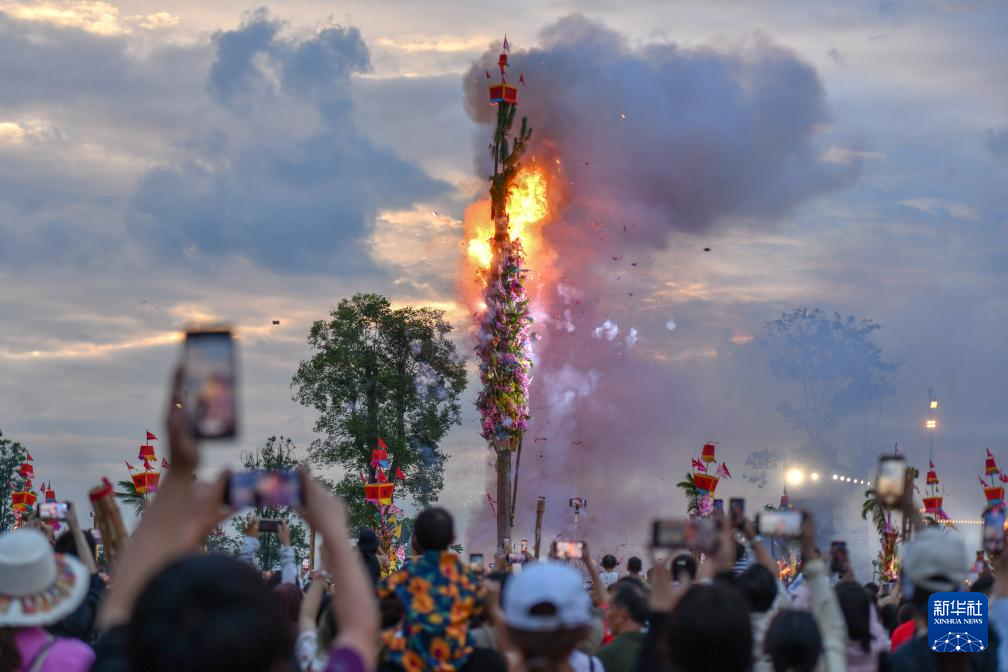
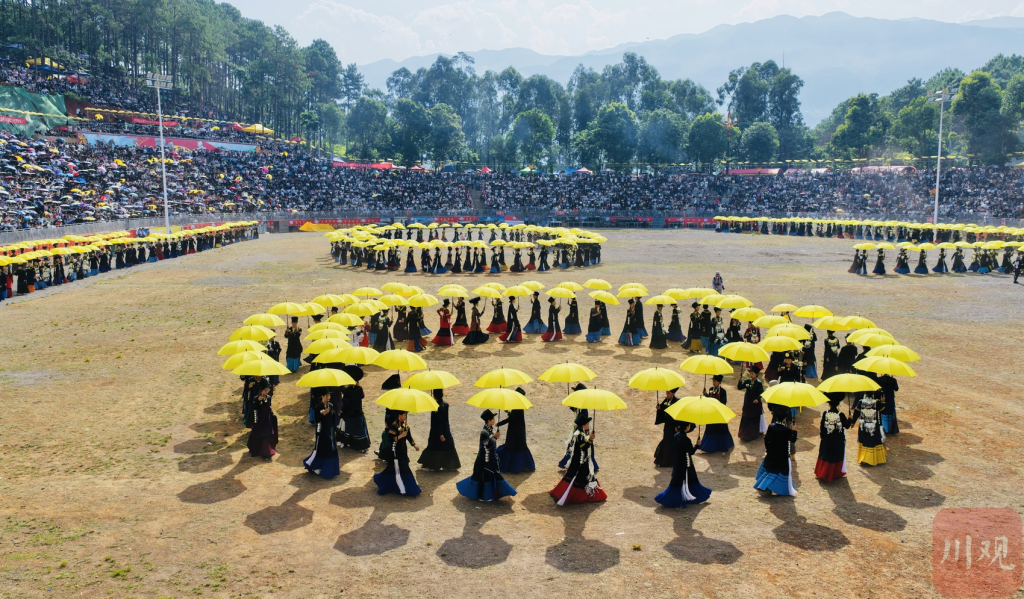
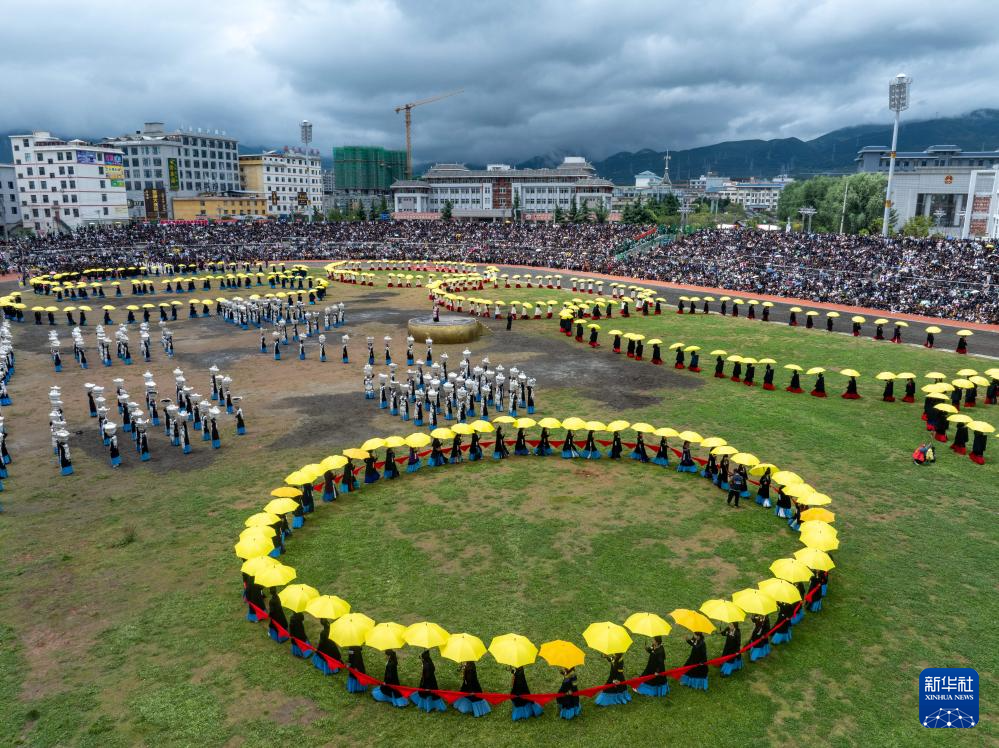
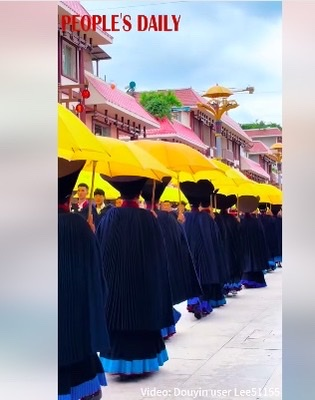
The air is warm and scented with pine smoke. In the distance, a line of golden lights winds its way down the mountainside, swaying and flickering like a living dragon. Drums beat in a steady rhythm, mingling with laughter and song. Children dash through the night clutching small torches, their faces glowing in the firelight. Elderly women hum old tunes, while young men and women steal glances beneath the shelter of bright yellow oil-paper umbrellas. This is not just a night—it is a living river of fire. You’ve just stepped into the Yi Torch Festival.

Every summer, when the moon of the sixth lunar month reaches its 24th day, the mountains and valleys of Yunnan, Guizhou, and Sichuan come alive with a sea of flickering light. This is the Yi Torch Festival, the grandest celebration of the Yi people and one of the most dazzling ethnic festivals in China.

The Yi, along with the Bai, Naxi, Jinuo, Lahu, and other ethnic groups, have celebrated this fiery tradition for centuries. For the Yi, fire is not just a source of warmth—it is a symbol of light, strength, and hope. The Torch Festival is their way of honoring fire, driving away evil, and praying for peace and abundant harvests.

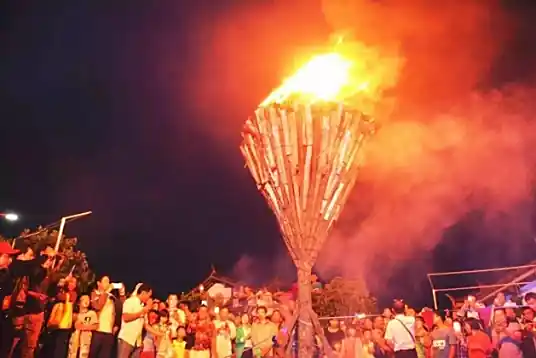
On this special day, towering torches rise high in the center of each village, while every household lights their own smaller torches. As night falls, villagers carry these flames into the fields, circling the crops to symbolically chase away pests and misfortune, leaving behind protection and blessings.


The Torch Festival lasts three magical days and nights, each with its own unique charm.

Day One – Fire Worship
Morning preparations are lively, feasts are prepared, and wine and meat are offered to ancestors. At dusk, villagers gather at a site chosen by the elders. There, a sacred fire is lit using the ancient method of striking stones, and the flame is blessed by a bimo (Yi priest) chanting sacred verses. Then, torches made from mugwort are passed to each household. Children and elders alike carry them to the edges of fields, reenacting the old legend of Ashimo, the heroine who once used fire to drive away destructive insects.

Day Two – Playing with Fire
If Day One is solemn, Day Two is pure joy. Under the glow of the sacred flame, villagers gather for horse races, wrestling matches, bullfights, and singing contests. Young men compete like the legendary hero Atilaba, known for his courage and strength. Young women, dressed in vibrant handmade dresses and carrying delicate butter umbrellas, dance the graceful “Duoluohe” and Dati dances, just as Ashimo once did.
The highlight? A traditional beauty contest where elders select the most handsome man and the most beautiful woman of the year—chosen not only for looks, but also for kindness, bravery, and skill. As the night deepens, couples stroll by the streams and through the mountains, plucking moon lutes and jaw harps, their music and whispers floating into the starry sky.

Day Three – Sending Off the Fire
The final night is the festival’s grand finale. Villagers rush through the darkness carrying blazing torches, eventually gathering them into massive bonfires. Around these roaring flames, they sing, dance, and laugh until the stars fade and dawn arrives.


Beyond the rituals and dances, the Torch Festival is also a season of romance. Young men and women meet, flirt, and sometimes begin lifelong partnerships. According to tradition, a man may “steal” a token—such as a scarf or ornament—from the woman he loves as a sign of affection. For the rest of the night, they sing and dance together, expressing their feelings until sunrise.

In the end, the Torch Festival is more than just a cultural event—it is a living expression of the Yi people’s spirit: their love of life, reverence for nature, devotion to tradition, and unquenchable hope for the future. And as the last embers fade in the early morning light, the warmth of the flames lingers—both in the fields and in the hearts of the people.


If you’ve ever dreamed of seeing thousands of torches glowing like fire dragons weaving through the dark mountains, this is the place to be. The Yi Torch Festival is not only a feast for the eyes but also a journey into the beating heart of a culture that celebrates life in the glow of fire.


Video: https://fb.watch/BrJd5yhukt

Link:https://peacelilysite.com/2025/08/12/dancing-with-flames-the-yi-torch-festival/

Living with Wolves: A Wild Artist’s Journey of Love, Respect, and Coexistence

If you are willing to look with your heart, you will see starlight in a wolf’s eyes.

On this planet, humanity is not the only protagonist.
Every forest, every river, every creature shares the same sky and breath with us. True civilization is not the conquest of nature, but the choice to live in harmony with it.


Li Weiyi, a wildlife animator, has spent years drifting between forests and grasslands, sketching the fleeting emotions in an animal’s eyes and the untamed spirit in its movements. Her brush captures not just form, but soul. Gentle and perceptive, she treats animals as friends and believes, with unshakable conviction: all beings are equal.


The Call of the Grassland

In April 2010, she arrived in the vast Ruoergai grasslands of Sichuan. The wind bent the grass like waves, silver mountains gleamed under the sun, and the openness was almost intoxicating. But behind the beauty was a brutal truth—conflicts between humans and wildlife were pushing many animals toward tragedy.

Then she heard a story that broke her heart.
A male wolf, desperate to feed his mate who had just given birth, ventured into a human settlement in search of food. He was caught in a trap, killed by herders, and skinned. His mate waited for days before realizing he was gone. In grief, she ate poisoned bait and followed him in death, leaving six starving pups behind.

Li Weiyi resolved to find them. Days of searching through freezing wind and endless grass finally brought her to the den. Five pups had already died. The last survivor lay weak and trembling, barely breathing. When she whispered, it crawled toward her with eyes full of trust. At that moment, she became its only family.

She named him Green—for the color of the grasslands, for life, hope, and freedom.


Life Between a Woman and a Wolf

In Chengdu, Green grew into a curious, spirited companion. He swam instinctively the first time he fell into water, learned to press the TV remote with his paws, and loved wolf documentaries—howling whenever his kind appeared on screen.

But a wolf will always be a wolf. Green chewed through wires, stole raw meat from neighbors, and refused a leash with stubborn pride. On the streets, he walked with head held high, as if declaring to the world: I am a wolf, not a pet.

A walk with a stray dog ended in tragedy when the dog was hit by a car, sending Green into a panicked dash through traffic. Authorities warned Li Weiyi that Green could no longer live in the city.


Preparing for the Return

She briefly considered a zoo, but one look at an old wolf with dull eyes, torn ears, and walls scarred with escape attempts ended that thought. She sold her home, bought an off-road vehicle and a camera, and returned to the Ruoergai grasslands with Green to begin his rewilding.

There, he sparred with Tibetan mastiffs, relearned the fight for survival, and endured nights of hunger in temperatures as low as –15°C. Li Weiyi stayed by his side through it all, determined to awaken the wolf within him.


Parting and Return

One month later, Green’s howl was answered by a wild pack. He walked toward the mountains, pausing to look back, eyes filled with reluctance. Li Weiyi waved him on, tears blurring her vision, and he vanished into the snow.

He became a ruler of the grassland, fathering pups of his own—but three were killed by humans, a grim reminder that coexistence was still far away.

Two years later, she saw him again from a distance, carrying hares—her favorite food. He stood watching her, not approaching. He belonged to the wild now. His eyes held both sadness and something unspoken.

Li Weiyi began returning to the grassland each year to help wolves like Green survive. And in August 2020, after a decade of intertwined lives, Green ran back into her arms. She held him tightly, tears streaming—warmth, reunion, and harmony made flesh.


Li Weiyi turned her story into the book and film Back to the Wolf Pack. It ends with a haunting question:

“We can rescue a wolf, but can we change the fate of the entire pack?”


This is not only a question for wolves—it is a question for humanity. Every time we expand our territory, every time we place our wants above the needs of other life, we risk silencing the very voices that make this planet alive.

We are not the masters of the Earth. We are one part of a vast, breathing community of life.

In 2020, China’s first wild wolf sanctuary was established—a small but hopeful echo of Li Weiyi’s ten years of dedication. But the work is far from over.

If we truly wish for harmony with nature, it begins with a choice—to see, to care, and to act—before the howls fade forever.

Link: https://peacelilysite.com/2025/08/08/living-with-wolves-a-wild-artists-journey-of-love-respect-and-coexistence/

Source: https://www.sohu.com/a/355779509_99965884, https://m.thepaper.cn/newsDetail_forward_20560520

The Desert-Conquering Queen: Yin Yuzhen’s 36-Year Battle Against the Sands

In 1985, a drunken promise set a young woman on a path that would change not only her life, but the fate of an entire desert.

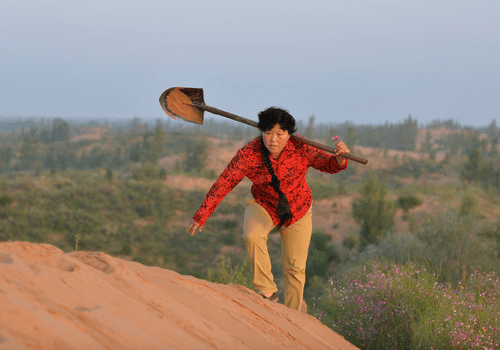
At just 19 years old, Yin Yuzhen was forced to marry Bai Wanxiang, a man living deep in China’s Mu Us Desert.

On her wedding night, while Bai lay down early to rest, Yin Yuzhen sat awake until dawn, her eyes red from weeping. When she looked out from her tiny dugout home, she saw nothing but endless waves of yellow sand stretching to the horizon. She felt as if her life had ended before it began.

Her new home was a four-square-meter pit carved into a sand dune. To enter, she had to stoop under a doorway so low it nearly grazed her back. Inside, there was nothing but a bed of dry twigs and straw.

Her husband was four years older and came from a family who had battled the desert for generations. Years earlier, Yin’s father had been saved by Bai’s father when a sandstorm left him lost in the dunes. Grateful, the men became sworn brothers, and in a haze of alcohol, her father vowed to give his daughter to the Bai family. Though he regretted it once sober, he felt bound to keep his word.

Life was brutal. There was no electricity or running water. Summers scorched and winters froze. They survived on millet, wild plants, and the occasional scavenged animal carcass. For forty days after her wedding, Yin Yuzhen saw no one but her husband—until, at last, a wandering herder passed by.

The isolation was unbearable. In her loneliness, she would cover footprints in the sand with a basin, pretending someone was still there.

Seven times she tried to flee, and seven times she became lost in the swirling sand. Once, she walked for two days and nights, only to find herself back where she started. That was when she realized the desert was not going to let her go.

At her lowest point, she contemplated ending her life. But in that moment, she remembered her mother’s tearful face the day she left home—and she stepped back from the edge. If she couldn’t escape, she decided, she would have to find a way to survive.

Hope arrived in the form of two poplar saplings she brought home from a visit to her parents. Miraculously, one took root. That little sprig of green whispered a possibility: maybe the desert wasn’t completely invincible.

In 1986, Yin Yuzhen made a bold choice. She sold their only “three-legged sheep”—a wounded animal that was still precious—and used the money to buy 600 young trees.

That spring, she and Bai planted each sapling in the sand around their cellar.

The challenges were immediate. Every day, they walked kilometers to fetch water. Under the searing sun, most of the saplings withered. By summer’s end, fewer than 100 remained. But for Yin Yuzhen, that was enough to keep going.

From then on, reclaiming the desert became her life’s purpose. Bai took work wherever he could to buy more trees, while she stayed behind to plant, water, and protect them.

Every morning she rose at 4 a.m. and worked until late into the night.

Through years of trial and error, she devised a three-layer planting method: shrubs to anchor the sand, trees to form a windbreak, and fruit trees to sustain their livelihood. This innovation transformed survival rates.

But the desert kept testing her resolve.

In 1989, a monstrous sandstorm struck while they were returning with new saplings. The wind tore the trees from their cart and buried them. Yin Yuzhen clung to their ox’s tail, stumbling forward in the blinding grit. When they finally reached home, she didn’t rest—she planted every surviving sapling that same night.

Setbacks never stopped coming.

They flattened kilometers of sand to make water channels, only to watch them swallowed again and again.

She went into premature labor from exhaustion. He developed pneumonia. But neither ever quit.

For the first ten years, the progress was almost invisible. The trees grew painfully slowly, and the dunes kept advancing. Still, she believed that if she didn’t give up, someday the desert would yield.

In the fifteenth year, signs of hope appeared. The dunes near their home began to stabilize. The wind softened. Small animals returned.

After twenty years, their desolate hollow had transformed into an oasis that drew neighbors to settle nearby.

Today, after thirty-six years of relentless labor, Yin Yuzhen and Bai Wanxiang have reclaimed more than 70,000 acres of desert.

They have planted over 20 million trees—forming a vast green barrier against the sands.

Their perseverance has inspired 84 families to join in the mission, proving that even the harshest landscapes can be transformed.

Yin Yuzhen’s story has captured global attention. She has won over 100 honors, including “National Model Worker” and “Green China Person of the Year.” She was the first Chinese woman nominated for the Nobel Peace Prize, and the United Nations has praised her work as a model of ecological restoration.

What began as a forced marriage became the catalyst for a transformation no one imagined possible.

The young bride who wept in despair became a legend—China’s Desert-Conquering Queen.

Standing in her thriving “green kingdom,” she often reflects on her journey from hopelessness to triumph.

“At first, I only wanted to survive,” she says. “Later, it became my life’s mission.”

Today, the cellar where she once had to crawl inside has been replaced by a bright brick house surrounded by orchards and forests. That place—once a symbol of despair—has become a destination where people come to learn, to marvel, and to be inspired.

Yin Yuzhen’s life is a powerful reminder that in the most unforgiving environments, the strongest life force can grow.

One woman’s 36-year battle against the desert ended in a victory of green.

Link:https://peacelilysite.com/2025/07/08/the-desert-conquering-queen-yin-yuzhens-36-year-battle-against-the-sands/

Source: https://www.facebook.com/permalink.php?story_fbid=pfbid02UztZikitftmaF5mxFQ5hoJtqtvEFZSQjnfhEWWR12h9vKd4zhVZN2mMUcGoAVAcdl&id=100063478189650

Photos from: https://www.chinastory.cn/PCzwdbk/chinastory/wap/detail/20190617/1006000000039761560767204146970666_1.html

88,28. THE BULL CALLED DELIGHTFUL [ALL DESERVE RESPECT]


88,28. THE BULL CALLED DELIGHTFUL [ALL DESERVE RESPECT]

Once upon a time, in the country of Gandhara in northern India, there was a city called Takkasila. In that city the Enlightenment Being was born as a certain calf. Since he was well bred for strength, he was bought by a high class rich man. He became very fond of the gentle animal, and called him ‘Delightful’. He took good care of him and fed him only the best.

When Delightful grew up into a big fine strong bull, he thought, “I was brought up by this generous man. He gave me such good food and constant care, even though sometimes there were difficulties. Now I am a big grown up bull and there is no other bull who can pull as heavy a load as I can. Therefore, I would like to use my strength to give something in return to my master.”

So he said to the man, “Sir, please find some wealthy merchant who is proud of having many strong bulls. Challenge him by saying that your bull can pull one hundred heavily loaded bullock carts.”

Following his advice, the high class rich man went to such a merchant and struck up a conversation. After a while, he brought up the idea of who had the strongest bull in the city.

The merchant said, “Many have bulls, but no one has any as strong as mine.” The rich man said, “Sir, I have a bull who can pull one-hundred heavily loaded bullock carts.” “No, friend, how can there be such a bull? That is unbelievable!” said the merchant. The other replied, “I do have such a bull, and I am willing to make a bet.”

The merchant said, “I will bet a thousand gold coins that your bull cannot pull a hundred loaded bullock carts.” So the bet was made and they agreed on a date and time for the challenge.

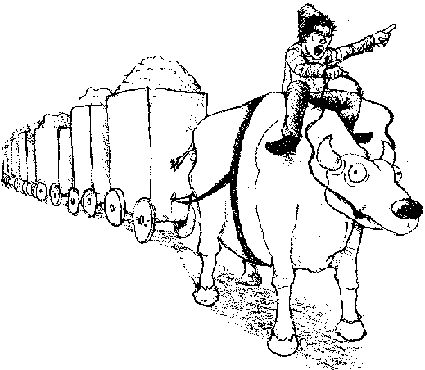
The merchant attached together one-hundred big bullock carts. He filled them with sand and gravel to make them very heavy.

The high class rich man fed the finest rice to the bull called Delightful. He bathed him and decorated him and hung a beautiful garland of flowers around his neck.

Then he harnessed him to the first cart and climbed up onto it. Being so high class, he could not resist the urge to make himself seem very important. So he cracked a whip in the air, and yelled at the faithful bull, “Pull, you dumb animal! I command you to pull, you big dummy!”

The bull called Delightful thought, “This challenge was my idea! I. have never done anything bad to my master, and yet he insults me with such hard and harsh words!” So he remained in his place and refused to pull the carts.

The merchant laughed and demanded his winnings from the bet. The high class rich man had to pay him the one-thousand gold coins. He returned home and sat down, saddened by his lost bet, and embarrassed by the blow to his pride.

The bull called Delightful grazed peacefully on his way home. When he arrived, he saw his master sadly lying on his side. He asked. “Sir, why are you lying there like that? Are you sleeping? You look sad.” The man said, “I lost a thousand gold coins because of you. With such a loss, how could I sleep?”

The bull replied, “Sir, you called me ‘dummy’. You even cracked a whip in the air over my head. In all my life, did I ever break anything, step on anything, make a mess in the wrong place, or behave like a ‘dummy’ in any way?” He answered, “No, my pet.”

The bull called Delightful said, “Then sir, why did you call me ‘dumb animal’, and insult me even in the presence of others? The fault is yours. I have done nothing wrong. But since I feel sorry for you, go again to the merchant and make the same bet for two-thousand gold coins. And remember to use only the respectful words I deserve so well.”

Then the high class rich man went back to the merchant and made the bet for two-thousand gold coins. The merchant thought it would be easy money. Again he set up the one-hundred heavily loaded bullock carts. Again the rich man fed and bathed the bull, and hung a garland of flowers around his neck.

When all was ready, the rich man touched Delightful’s forehead with a lotus blossom, having given up the whip. Thinking of him as fondly as if he were his own child, he said. “My son, please do me the honor of pulling these one-hundred bullock carts.”

Lo and behold, the wonderful bull pulled with all his might and dragged the heavy carts, until the last one stood in the place of the first.

The merchant, with his mouth hanging open in disbelief, had to pay the two-thousand gold coins. The onlookers were so impressed that they honored the bull called Delightful with gifts. But even more important to the high class rich man than his winnings, was his valuable lesson in humility and respect.

The moral is: Harsh words bring no reward. Respectful words bring honor to all.

88,28. The Bull Called Delightful [All Deserve Respect]

Link: https://hhdorjechangbuddhaiiiinfo.com/2024/07/30/8828-the-bull-called-delightful-all-deserve-respect/

#Buddhisttalesforyoungandold #Buddhiststories #storiesforkids #moralstories #Buddha #Jatakastories #PansiyaPanasJataka
80. FEAR MAKER AND LITTLE ARCHER [SELF-DECEPTION]

80. FEAR MAKER AND LITTLE ARCHER [SELF-DECEPTION]

Some say that the world comes into being, disappears, and comes into being … over and over, throughout time. In one of these previous worlds, countless years ago, Truth was unknown and the Five Training Steps were practiced by only a few. Even the Enlightenment Being — the Bodhisatta — did not know Truth, and had not yet discovered the Five Training Steps.

Once upon a time in that long ago world, there was a king named Brahmadatta. Like many other kings of that name, he ruled in the place known today as Benares.

The Bodhisatta was born in a rich high class family in a market town, also in northern India. He happened to be a dwarf, bent over and partly hunchbacked. When he became a young man he remained short and stooped. Many people found him unpleasant to look at.

He studied under a very outstanding teacher. He learned all there was to know at that time, about the two great branches of knowledge — religion and science. He also learned how to use a bow and arrow better than anyone else in India. For this reason his teacher called him ‘Little Archer’.

Like most new graduates he was quite clever. He thought, “Many people judge by appearance alone. If I go to a king and ask for a job, he’ll probably ask, ‘Having such a short body, what can you possibly do for me?’ Therefore it would be better if I can team up with a front man — someone who is handsome in appearance, tall and well-grown in body, and strong in personality. I will provide the brains, but remain out of sight behind his shadow. In this way we can earn a good living together.”

One day he was walking in the district where the weavers live and work. He happened to see a big, strong looking man. He greeted him and asked his name. The weaver said, “Because of my appearance, people call me Fear Maker.”

“With such an impressive name.” said Little Archer, “and being so big and strong looking, why do you have such a low paying job?” “Because life is hard,” he replied.

“I have an idea.” Said the dwarf “In all India there is no one as skilled with a bow and arrow as I am. But I don’t look the part! If I asked a king for work he would either laugh or get angry at me. He would not believe that a hunchbacked little dwarf could be the greatest archer in India!

‘But you look perfect. And your name helps too. Therefore, let us go together to the king. You will be the front man and do all the talking. The king will hire you immediately. Meanwhile I will remain as if hidden underneath your shadow. I will be the real archer and we will prosper and be happy. You just have to do whatever I tell you.”

Thinking he had nothing to lose, Fear Maker agreed, saying, “It’s a deal, my friend!”

The two partners went off to Benares to see the king. When they entered the throne room, they bowed respectfully to the king. He asked them, “Why have you come here?”

Fear Maker stood in front and did all the talking. He answered, “I am the great archer known as Fear Maker. There is no one in all India who understands the science of archery as well as I do. I wish to be in your service, your majesty.”

The king was quite impressed. He asked, “What shall I pay you?” “I will serve you for 500 pieces of money per week your majesty,” he replied.

Nodding, the king noticed the silent dwarf stooping behind him, almost out of sight. “Who is this little man?” he asked. “What does he do for you?” “He’s my little assistant,” said Fear Maker. ‘Very well,” said King Brahmadatta, “the job is yours.”

In this way Fear Maker was accepted into the king’s service, but it was Little Archer who did all the work.

Before long, news came to the palace that there was a ferocious tiger living in the jungle next to the king’s highway. He ambushed travellers, and then killed and ate them. Many began to avoid the king’s highway out of fear of the man-eater.

The king summoned Fear Maker and asked, “Can you capture this rampaging tiger, young man?” “Your majesty,” he answered, “I am known as your best archer. Why wouldn’t I be able to capture a tiger?” Hearing this, the king gave him an extra sum of money and sent him out to catch the tiger.

Fear Maker went home and told all this to his partner. “All right,” said Little Archer, “be on your way!” “Aren’t you coming too?” asked the surprised Fear Maker. “No, I won’t go,” he replied, “but I will give you a perfect plan. You must do exactly as I say.” “I will, my little friend. Please tell me,” said the big front man.

The clever little dwarf said to his friend, “Go to the district of the tiger, but don’t rush straight to his home by yourself. Instead, gather together a thousand local villagers and give them all bows and arrows. Take them directly to the tiger’s home. But then you must let them go on ahead while you hide in the underbrush.

‘The local villagers will be very afraid of the tiger. When they see him they will surround him and beat him. Being so terrified, they won’t stop beating him until he’s dead!

“Meanwhile you must cut a piece of vine with your teeth. Then come out of hiding and approach the dead tiger, holding the vine in your hand. When you see the tiger’s body, shout at the people, ‘Hey! Who has killed the tiger? I was going to capture him with this vine and lead him like a bull to the king. That’s why I’ve been searching in the jungle. Now tell me who has killed the tiger before I could get here with my vine.’

“The villagers will be easily frightened by this. They will say, ‘Lord Fear Maker, please don’t tell the king! Then they will give you a big bribe to be quiet. Thinking you have killed the dangerous tiger, King Brahmadatta will also reward you greatly.” This was the tricky plan of the clever Little Archer.

Fear Maker did exactly as he had been instructed. The man-eating tiger was killed, and fear was removed from that part of the king’s highway. Followed by a big crowd he returned to the king and said, “Your majesty, I have killed the tiger and made the jungle safe for people again.” The king was pleased and gave him a huge reward.

Before long there were similar complaints about a buffalo who threatened another royal road. Again the king sent Fear Maker. Following Little Archer’s strategy he did exactly as before. He took credit for killing the buffalo and was greatly rewarded again by the grateful king.

By this time Fear Maker had become a very rich and powerful nobleman. All the wealth and praise, which he didn’t really deserve, soon went to his head. He became intoxicated with his own conceit and began thinking he was a ‘big man’ in his own right. He even looked down on Little Archer and ignored his advice. He said to him, “You think this is all because of you. But I don’t need you. I can do all this without you!” He had come to believe the appearance created by Little Archer’s plan.

Then it happened that an enemy king attacked. He surrounded the city of Benares with his army. He sent a message to King Brahmadatta that he must either surrender his kingdom or wage war. The King of Benares ordered his greatest hero, Fear Maker, to go out and fight the enemy.

Fear Maker was dressed in full military armour. He mounted the mightiest armoured war elephant. Little Archer knew that the ungrateful conceited braggart, called Fear Maker was really scared to death underneath. So he too mounted the elephant and sat behind Fear Maker. The mighty elephant walked through the city gates towards the battlefield, followed by a big crowd.

When Fear Maker heard the huge noise made by the war drums, he began trembling with fear. To keep him from falling off the elephant and being killed, Little Archer tied a rope around him and held him with it.

When Fear Maker saw the field of battle he was overwhelmed by the terrible fear of death. So much so, that he couldn’t help but release his bowels and urinate at the same time — all over the back of the poor brave war elephant!

The Enlightenment Being said, “Before you bragged and spoke roughly like a big man. But now, the only big thing you do is make a filthy mess all over this elephant’s back! Your present actions prove your past appearance was false.”

Fear Maker had embarrassed himself. Little Archer had humbled him by speaking the truth. But he couldn’t help feeling sympathy for him. He said, “Don’t be afraid anymore, my friend. With me to protect you, your life is safe. Climb down from the elephant and go home and take a bath.”

Alone atop the great elephant, the Enlightenment Being thought, “Now is the time to show what is in the heart of this hunchbacked little dwarf!” Shouting mightily as he rode he charged into the field of battle. Without killing any men or animals, he crashed through the enemy’s defences. He broke into the king’s camp, captured him, and took him back as prisoner to the King of Benares.

King Brahmadatta was delighted with Little Archer’s great victory. He rewarded him with wealth and fame. He became known throughout all India as ‘Little Archer the Wise’. He sent his friend Fear Maker back to his home village and supported him with monthly payments.

Little Archer the Wise practiced generosity and other meritorious deeds. When he died he was reborn as he deserved.

The moral is: “Appearances can be deceiving.”

80. Fear Maker and Little Archer [Self-deception]

Link: https://hhdorjechangbuddhaiiiinfo.com/2024/04/16/80-fear-maker-and-little-archer-self-deception/

#Buddhisttalesforyoungandold #Buddhiststories #storiesforkids #moralstories #Buddha #Jatakastories #PansiyaPanasJataka

A Beautiful Love Story Carved in the Dunhuang Grotto China
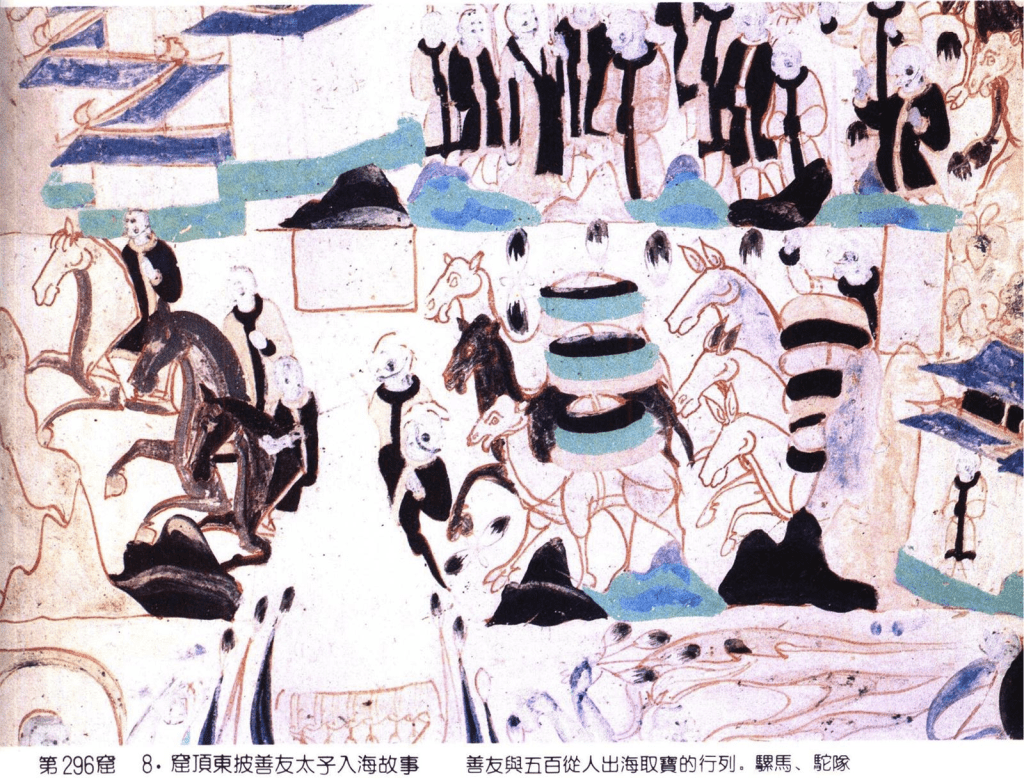
Prince Sunwoo ventured into the sea in search of treasures

In the ancient Dunhuang Grottoes of China, a mesmerizing love story unfolds, delicately captured in murals that have withstood the test of time. Let us immerse ourselves in this enchanting tale of kindness, courage, and wisdom.

Once upon a time, in the Kingdom of Polo, a joyous occasion marked the birth of a prince named Sunwoo. Born to the noble king and queen after twelve years of fervent prayers, the young prince brought immense happiness to the royal family.

As Sunwoo grew, so did his wisdom and kindness. His presence was a beacon of light, radiating love and compassion. However, alongside him was a stepbrother, an evil friend, whose heart harbored jealousy and resentment towards the virtuous prince.

The tale takes an unexpected turn when Sunwoo, driven by a desire to alleviate the suffering of his people, embarks on a perilous journey to seek treasures from the sea. His selflessness touches the hearts of many, but it also ignites the envy of his malevolent stepbrother.

Prince Sunwoo accompanied by 500 volunteers to search for treasur

Guided by an elderly instructor and accompanied by 500 volunteers, Sunwoo reaches Haizhou Jumbo Island. As he ventures further, facing challenges and loss, he encounters the benevolent Dragon King, who grants him the priceless Ruyi pearl.

Prince Sunwoo and his team sailed across the ocean

Meanwhile, back in the Kingdom of Polo, Sunwoo’s absence is keenly felt. His parents, yearning for his return, send a white goose as a messenger. The devoted goose delivers a letter revealing the Prince’s dire circumstances.

As Sunwoo’s journey unfolds, his evil stepbrother, fearing Sunwoo’s increased popularity upon return, decides to sabotage him. The malicious act blinds Sunwoo, leaving him vulnerable and alone.

In his darkest hour, a compassionate cowherd boy comes to Sunwoo’s aid. Unaware of his royal identity, the boy rescues Sunwoo and becomes his loyal companion, leading him back to the kingdom.

The love story takes an unexpected twist when the blind Sunwoo, reduced to a beggar, meets a kind princess during his wanderings. The princess was very touched by Sunwoo’s music. Her genuine affection and determination to marry him, despite societal norms, lead to a grand wedding.

In a poignant moment, the princess, deeply in love, makes a solemn vow. She promises to restore Sunwoo’s sight if her love is true and vows to take away her own eyes if she ever betrays him. Miraculously, her unwavering love restores one of Sunwoo’s eyes.

The narrative weaves through twists and turns, revealing the complex interplay of good and evil, karma, and ultimate redemption. Sunwoo’s evil stepbrother, realizing the consequences of his actions, repents and reveals the hidden Ruyi pearl.

In a grand reunion, Sunwoo’s parents regain their sight, and the entire kingdom is bathed in prosperity. The murals in Dunhuang and Kaihua Temple immortalize this timeless love story, showcasing not only the artistic brilliance of ancient China but also the enduring power of kindness and virtue.

As we reflect on this captivating tale, may it inspire us to embrace compassion, navigate life’s challenges with wisdom, and believe in the transformative power of love and redemption. The Dunhuang Grottoes stand as a testament to the rich tapestry of human stories etched in history, inviting us to cherish the enduring lessons embedded in their ancient walls.

Link:https://peacelilysite.com/2024/02/08/a-beautiful-love-story-carved-in-the-dunhuang-grotto-china/

#DunhuangGrottes #Murals #AcientArts

Source: photos from http://m.news.cctv.com/2020/08/09/ARTIoQSmgcAEjtx5j0cLVoos200809.shtml, https://www.sohu.com/a/334453850_120259260#google_vignette

The Abbess of Hua Zang Si– Venerable Ruo Hui RuZun

The abbess of Hua Zang Si is Venerable Ruo Hui RuZun (Golden Button Stage I). She is a disciple of H.H. Dorje Chang Buddha III. She is deeply and broadly proficient in the sutras, abides by the precepts with pure cultivation, upholds correct views, and possesses high and profound virtue and conduct.

Driven by her endowed wisdom and firm aspiration, Venerable Ruo Hui RuZun started learning Buddhism since her childhood. While she was a young person facing a splendid future, Venerable Ruo Hui RuZun decided without hesitation to abandon worldly life to become a monastic practitioner. She respectfully quested for the practice of Buddhism, studied the sutras deeply, and cherished the goal of benefiting living beings in her cultivation and practice. Additionally, she demonstrated outstanding virtue and talent in her diligent study and research in the academic arena and received a Master’s degree from the Department of Philosophy of Taiwan University. She made a vow to dedicate her life to grandly propagating Buddha-dharma and broadly saving living beings. She served as the dean of the Chien Fo Shan Girl Buddhist College in Taiwan in her early years and have been continuously making contributions to the education of Buddhist monastics. However, Venerable Ruo Hui RuZun was deeply aware of the widely prevalent chaotic phenomena in the current Buddhist world, such as confusing views, non-unified sects and schools advocating their own tenets, miscellaneous teachings that are complex but incomplete, and promoting false doctrines as authentic Buddhism. Consequently, pious Buddhist disciples are searching and questing in vain and still unable to learn the true dharma of the Tathagata. Their lifetimes are thus wasted! Therefore, Venerable Ruo Hui RuZun was continuously concerned about this situation day and night and eagerly beseeched to find the genuine lineage from the Buddha that transmits the true teachings of the Tathagata.

In 1996, Ruo Hui RuZun had the good fortune to listen respectfully to the recorded dharma discourses expounded by H.H. Dorje Chang Buddha III. At that time, she sensed strongly and received the bright manifestation of the supremely and perfectly enlightening Buddha-dharma from His Holiness the Buddha! Later, guided by the karmic affinity to true Buddha-dharma, she fulfilled her wish to become a disciple of H.H. Dorje Chang Buddha III. Since then, she eagerly and respectfully listened to the recorded dharma discourses expounded by His Holiness the Buddha day and night. Through studying deeply with reference to the sutras, she eventually became enlightened by the teaching! She also received a holy inner-tantric initiation from the Buddha Master, which enabled her to personally realize the absolute truth of Buddha-dharma as if seeing the blue sky after pushing the blocking dark clouds aside. Since then, Ruo Hui RuZun abided by the teachings to benefit living beings with loving compassion in cultivation and practice. Shortly after that, she was delighted to learn that the Buddha Master was grandly publicizing and propagating the true dharma of the Tathagata in the Western world. After deep thinking and careful pondering, Ruo Hui RuZun decided to resign from the duty of the Dean of the Buddhist College to take up the mission to serve living beings. She traveled across the ocean to the United States to follow her Buddha Master, H.H. Dorje Chang Buddha III. She piously and deeply cultivated in the authentic lineage of Buddhism and engaged in the undertaking of propagating the true dharma of the Tathagata to benefit living beings.

Through the many years, Ruo Hui RuZun received true Buddha-dharma transmitted by H.H. Dorje Chang Buddha III in person and realized the key attainment of the dharma. In the dharma mandala, she manifested deeply cultivated power and superior state of realization. Once, she fortunately attended a grand and magnificent Vajra obstruction-removing dharma assembly. At that time, dharma masters and abbots of many monasteries and rinpoches were present. When stepping forward to receive empowerment, almost all of them were subdued by the power of the Buddha-dharma to show a suffering appearance and unable to support themselves by their power of concentration. Only Ruo Hui RuZun remained firmly unperturbed and successfully went through the holy power of Samadhi. She handled the situation magnificently and perfectly by calm without even any change in her facial expression. For that, she was praised by H.H. Dorje Chang Buddha III! Additionally, Ruo Hui RuZun also received a dharma of state practice transmitted by the Buddha Master in person and attained the accomplishment of crown-opening within two hours.

Since the grand opening of Hua Zang Si in December 2004 to now, Ruo Hui RuZun has served at the positions of prior (warden), deputy abbess, and abbess at this temple, which is the first temple of true dharma of Buddhism established in the Western world by H.H. Dorje Chang Buddha III. Since the temple’s establishment, her responsibilities cover a wide range of the temple’s dharma affairs and operations including various dharma assemblies, training and education of the monastic personnel, defining the system and rules to manage the temple, and so on.

With her abundant and solid knowledge in the theory of Buddhism and the teaching of practicing in silence, experience in managing and operating a temple, as well as deeply cultivated power in meditative concentration, she continuously serves since the beginning as the karma monastic master in awarding the complete set of grand precepts through three dharma assemblies and the professor/teacher of various courses in precepts, rituals, meditation, group practice, education of monastics and others at the Academy of Exoteric Buddhism of Hua Zang Si. She also conducted teaching and training at Buddhist institutions in the United States and overseas. Many of the disciples she taught have now become dharma masters or monastic practitioners. Actually, quite a number of them have even become excellent managerial personnel at some temples in different countries.

Ruo Hui RuZun consistently maintains a low-key demeanor in her cultivation and practice, exemplifying patience in the pursuit of her significant mission. She remains humble and modest, avoiding self-promotion or publicity. Through her words and actions, she serves as an exemplary teacher for Buddhist disciples, embodying the principles of loving compassion. Devoting herself quietly to the welfare and joy of sentient beings, she seeks enlightenment for both herself and others.

Adhering to the teachings and true dharma of H.H. Dorje Chang Buddha III, Ruo Hui RuZun upholds principles, follows rules rigorously, and engages in concrete cultivation to guide disciples on the path of accomplishment and liberation. She is an accomplished and eminent Buddhist monk whose example we should emulate and learn from.

Since September 2015, Ruo Hui RuZun has officially served as the abbess of Hua Zang Si. Recognizing the immense responsibility entrusted to her, especially given that Hua Zang Si is not an ordinary temple but a true dharma temple established in the Western world by H.H. Dorje Chang Buddha III, her Buddha Master, she is acutely aware of the need for unwavering commitment. Determined to lead the monastics and lay followers, she strives to transform Hua Zang Si into a temple faithfully practicing the teachings of H.H. Dorje Chang Buddha III and Sakyamuni Buddha, benefitting and nurturing sentient beings. In pursuing this mission, Hua Zang Si aims to contribute tangibly to compassion, happiness, peace, and joy in America and worldwide, fostering the perfect good fortune and wisdom, liberation, and accomplishment of living beings. The temple is committed to meeting the high expectations of Buddhas, Bodhisattvas, and sentient beings alike.

The Abbess of Hua Zang Si– Venerable Ruo Hui RuZun

Link:https://peacelilysite.com/2023/12/01/the-abbess-of-hua-zang-si-venerable-ruo-hui-ruzun/

#DorjeChangBuddhaIII #HHDorjeChangBuddhaIII#HuaZangSi#HolyManifestation #RuoHuiRuZun

#Abbess #Temple