Looking for Love? Two Very Good Reasons to Be Single

by Nanice Ellis

It is fairly easy to see that society defines us by our relationship status, with those being in committed relationships having more status than those who are single. Friends, family, culture, society, TV, and, even Facebook posts, all tell us that we should be part of a couple.

If I’m honest, I have to admit that I bought into this hook, line and sinker; from the age of fourteen on, there was always a guy in my life. Like most people, having a relationship was of utmost importance, and, as a result, I often compromised other areas of my life. If I wasn’t in some sort of relationship, I felt empty inside, which only reinforced the hunt for Mr. Right.


I was on a perpetual roller coaster ride of seeking, finding, questioning and ultimately, letting go. There was a great deal of heartache and pain on the downside of this endless relationship ride, resulting in two failed marriages, and I don’t know how many “dead-end” relationships.

Sacred Singlehood

Biologically, we need partnership in order to procreate and keep the species going, but with 7 billion people on the planet, I don’t believe this is still the motivation for “needing to be” in a relationship. If we are truthful, our drive to be in relationships is more about personal habit, societal pressure and, yes, the dreaded fear of being alone topping this list.

Many of us even stay in relationships, well past their expiration date, because we think that we won’t find someone “better” and because we are growing older, we are even more afraid to risk being alone.

About ten years ago, I did something I thought I would never do. After a tumultuous break-up, I made a conscious choice to be single. At first, it was quite difficult being single; my relationship-addicted mind still searched for potential partners, but the greater part of me said, “No, not now.” It took me about a year to make peace with being single but even longer to discover the treasures of what I have come to call “Sacred Singlehood.”

Now, this isn’t an advertisement to choose singlehood over couple-hood. I certainly don’t know what is best for anyone, other than myself, but, this is an invitation to give yourself permission to consider who you might be (or become) all by yourself – without a partner.

What if it was okay to be alone, and, at least, for a little while, you gave up the search?

Whether you are experiencing a break-up, thinking about ending a relationship, or searching for that new one, consider that the relationship that you most desire, and the one that can bring you the most joy and fulfillment is with yourself.

Maybe you want a good reason for being single; well, how about two?

Being Single: Reason #1

Become Empowered, Explore Opportunities and Create an Amazing Life!

If you go from being in a relationship to mourning the end of a relationship to looking for a new relationship, where is the time and space for self-exploration?

Having the courage to be single allows you to create sacred space where you get to know yourself and you become your own best friend; from this space of growing confidence and security, you can go past your comfort zone, explore new ideas, travel to interesting places, create masterpieces, develop spiritual connection, take care of your body and mind, and maybe, even heal or strengthen relationships with your children, siblings, parents or friends.

Imagine giving yourself the time and space for emotional, mental, physical and spiritual healing or alignment. This might mean healing beliefs that don’t support you, claiming your unconditional worth and stepping into your intrinsic power. How wise and powerful might you become on a solo journey?

I can’t tell you what would have unfolded in these past ten years, if I had been in a relationship, but, I can tell you that during these sacred years, I experienced tremendous personal growth, spiritual awakening and creative inspiration that resulted in the publishing of several books. As I uncovered who I really am, and I discovered my self-made place in the world, I fell in love with me. Equally as important, my relationship with each of children drastically improved; because there was no longer someone else in the mix trying to influence my radical parenting style, I was free to parent in my own unique way. For this reason alone, my choice to be single was phenomenal.

When you give yourself the gift of being single, it can be the most sacred experience of your life.

Being Single: Reason #2

Meet Your Soul Mate by becoming the perfect partner for your perfect partner.

What if you took the time to really get to know yourself in order to become the person who can attract your ideal mate? Consider that any partner that you attract before you grow into your best self is very different than the partner you will attract from your highest and best self. Mr. Right can’t show up, if you are not yet Ms. Right and vice versa.

Law of Attraction
Maybe we keep meeting the “wrong person” because we don’t measure up to our wants and desires in a partner. In other words, if you desire a partner who is open, honest and communicative, you must be open, honest and communicative. If you desire a partner who is in great shape, spontaneous and adventurous, you must be in great shape, spontaneous and adventurous.

In the quest for your perfect partner, you must be his/her perfect partner. This means that in order to attract your ideal mate, you must really know yourself and be true to your dreams and desires.

It is helpful to make a list of the qualities and attributes that you desire in a partner and rate yourself accordingly. If you don’t score high in each of those same qualities/attributes, according to the law of attraction, you are not yet a perfect match.

In order for the law of attraction to work in relationships, you must become that which you desire in another. Instead of jumping into a new relationship, imagine taking the time to develop these desired qualities and attributes, so that you can become the perfect partner for your perfect partner.

Heal Emotional Wounds
If you keep ending up in relationships where you feel abandoned, misunderstood or unappreciated, chances are, there are some emotional wounds that require healing. If you want to be in an emotionally healthy relationship, you must be emotionally healthy. Being single offers you the time and energy required to heal past wounds, allowing you to align with an emotionally healthy partner.

Afraid of Being Alone
I am going to guess that your perfect partner isn’t afraid of being alone, so, if you want to meet him/her, it is probably necessary to heal any fears of being alone – because, no doubt, you will attract potential partners who align with your fears. This means that if you are afraid of being alone, you will attract someone who is also afraid of being alone, or you will attract someone who will trigger your fear of being alone. If you do not want to attract a relationship based on this fear, it is essential that you fearlessly embrace singlehood.

Filling that Empty Space
Many of us desire a partner to fill the empty space, but it never works because the only one who can ever fill your empty space is you. Being single allows you the opportunity to find yourself and experience fulfillment. Once you fill that space with yourself, you will be a perfect match for a man/woman who is whole, conscious and empowered.

The Desire for Love
Okay, it’s normal to desire a relationship so that we feel loved, but, oftentimes, our relationships leave us feeling unloved. If you want to experience love in a relationship, it is important to take time alone in order to learn to love yourself unconditionally. Your unconditional self-love has the power to attract a partner who also loves him/herself unconditionally and together you can experience unconditional love for each other. This is the foundation for the loving relationship you seek.

Whether you are looking to find yourself or you are seeking a soul mate, being single may hold the answers.

The Point of Sacred Singlehood

The point of Sacred Singlehood is not to be single forever, unless that is what you choose, but, rather to become the highest version of you, who is emotionally secure, confident and free to express uninhibited authenticity, and, then, if you choose to share your life with another, you can attract your ideal partner, who is also consciously authentic, and together you can experience an enlightened paradigm of partnership that is truly amazing.

There is something so beautiful and transformative about being single, and, if I had missed it, I might have missed myself entirely. I am so grateful to my past self for making the courageous decision, and sticking to it.

Whatever your reasons to explore being single, Sacred Singlehood offers a Golden Opportunity where you can become the Real You and create the life you most desire.

About the Author:

As a Conscious Creation Coach since 1997, Nanice teaches mastery level manifestation skills, and, as a result, her powerful coaching style is often referred to as the “Nanice Effect.” Bridging the gap from imagination to realization, Nanice coaches people to live their true dreams. Nanice is the author of several inspirational books including, “Is There a White Elephant in Your Way? – a comprehensive guidebook to awakening and self-empowerment.” Sign up for Nanice’s Free 7 Part Awakening Series. To find out more, please visit www.Nanice.com.

Link:https://peacelilysite.com/2026/01/27/looking-for-love-two-very-good-reasons-to-be-single/

Source: https://www.beinghappybuddha.com/blogs/insights/looking-for-love-two-very-good-reasons-to-be-single

Louise Hay: From Pain to Healing, From Healing to Helping the World

There are some people whose presence feels like sunlight—warm, gentle, and full of hope. Louise Hay was one of them. An internationally renowned spiritual teacher, best-selling author, and pioneer of the self-help movement, she inspired millions of people around the world to believe in their own healing power. Her landmark book You Can Heal Your Life has sold over 50 million copies in 35 countries, translated into 29 languages, and for many, it sits by the bedside as a trusted guide through life’s storms.

To the world, Louise Hay seemed perfect—healthy, elegant, wise, always radiating grace. Her teachings lifted countless people out of despair, helped them restore their health, and gave them courage to live again. Media across the globe lovingly called her “the closest person to a saint.”

But what made Louise extraordinary was not that her life was flawless—it was that she transformed the deepest wounds into the greatest gifts. Behind her radiant presence was a childhood filled with suffering, abuse, and neglect. It was from that very pain that she forged the wisdom that changed the lives of millions.

1. Falling Amid Misfortune

When Louise was just 18 months old, her parents divorced, abruptly ending her once-happy family life.

At that time, women had little social standing. After the divorce, her mother could only work as a maid to survive, while Louise was sent to live in foster care.

At age five, her mother remarried in the hope of giving Louise a complete home. But this marked the beginning of her nightmare.

Louise was raped by a neighbor, abused and assaulted by her stepfather, and subjected to violence and sexual exploitation. These experiences left her with deep wounds and a lack of self-worth. In her teenage years, as long as a man showed her the slightest kindness, she would give herself to him. By the age of sixteen, she had already given birth to a daughter.

Her childhood was filled with tragedy, and her youth with self-destruction. Those early wounds shaped her into someone who did not know how to love herself.

Yet later in life, Louise chose not to remain trapped in resentment or regret. She said, “No little boy is born a predator, and no little girl is born a victim. These are learned behaviors shaped by childhood experiences.”

2. Awakening and Transformation

In her forties, Louise was diagnosed with cancer. That moment became her wake-up call. She realized how little she had cared for her own body, and she resolved to change.

Instead of following the conventional treatment suggested by her doctors, she turned to what she called “holistic healing.” Within six months, her cancer had disappeared.

Holistic healing, as Louise practiced it, meant changing destructive thought patterns and adopting healthier eating habits. She stopped mourning her unhappy past and stopped blaming her parents. Instead, she came to understand their own painful childhoods.

During her recovery, she ate mostly sprouts and simple natural foods, avoiding processed products entirely. She also trained her mind daily—using positive affirmations, choosing not to let negative emotions dominate her, and seeing every situation through a more uplifting perspective.

Her life changed completely. She documented her experiences and insights in books, which went on to inspire millions and transform countless lives.

3. You Can Choose Your Own Destiny

There are many in this world who have been hurt or are still suffering. Their stories move us deeply.

But as an old Chinese saying goes, “Those who seem pitiable often have traits that make them vulnerable.” In truth, much of life’s suffering continues because, consciously or unconsciously, we allow it. And the root often lies in our formative years.

Take, for example, teenage pregnancies. While news headlines may highlight shocking cases, the majority stem not from coercion but from lack of self-respect or proper knowledge. Similarly, many women trapped in abusive relationships remain because they lack self-worth and the courage to leave.

We cannot rewrite our childhoods, but we can shape our adult lives. As Louise Hay wrote in You Can Heal Your Life: Mindfulness Edition:

“Every negative message you received as a child can be transformed into a positive affirmation.”

If you had an unhappy past, stop feeding yourself negative words. Begin telling yourself: I am worthy of love. I am needed. I have many strengths. I can live the life I choose.

And if doubt still lingers, look at Louise Hay’s journey. Few have endured the kind of suffering she did—yet she lived a life admired and envied by many. If she could, why not you?

In the infinity of life where I am, all is perfect, whole, and complete.

Life Is Really Very Simple. What We Give Out, We Get Back.  What we think about ourselves becomes the truth for us. I believe that everyone, myself included, is responsible for everything in our lives, the best and the worst. Every thought we think is creating our future. Each one of us creates our experiences by our thoughts and our feelings. The thoughts we think and the words we speak create our experiences.”

Her books may be called “chicken soup for the soul,” but isn’t that exactly what we need sometimes? A warm voice reminding us that we are enough, that healing is possible, and that life can be beautiful again.

You Can Heal Your Life walks us through every stage of existence—childhood pain, love’s struggles, career challenges, health worries, aging, and even the fear of death. Louise’s message is simple but powerful: change your beliefs, and you will change your life.

This “chicken soup” has comforted millions, given them strength, and helped them step into new beginnings.


💖 A Gentle Reminder

If you feel lost, unworthy, or stuck in a cycle of pain—Louise’s story is a light in the darkness. Her life teaches us that healing begins not from the outside, but from within.

No obstacle is too great. No past is too broken. Deep within each of us lies an infinite potential waiting to bloom. When we dare to change our thoughts and love ourselves, life unfolds in colors we never imagined.

Believe it: just like Louise Hay, you too can heal your life—and create a future filled with peace, love, and joy.

Here is the link for the E-book.

Link:https://peacelilysite.com/2025/09/03/louise-hay-from-pain-to-healing-from-healing-to-helping-the-world/

Vibrations of the Soul: How Dr. David Hawkins’ Energy Scale Reveals the Secret to Health and Happiness

What if your thoughts and emotions were not just fleeting states of mind, but actual energy frequencies that shape your physical health and the world around you?

Dr. David R. Hawkins, a renowned American psychiatrist and spiritual teacher, spent decades studying human consciousness and developed a revolutionary model known as the Map of Consciousness. His work, presented in the best-selling books Power vs. Force and Letting Go, offers profound insight into how our energy levels—shaped by our emotions, beliefs, and spiritual awareness—directly impact our health and happiness.


🧠 The Energy Scale That Maps Our Inner World

Hawkins created a logarithmic scale of consciousness, ranging from 1 to 1000, where each level reflects a specific emotional and spiritual frequency. These levels are not abstract—they can be measured through kinesiology (muscle testing) and are believed to influence not only individual wellbeing but also global consciousness.

Here’s a simplified breakdown:

LevelEmotion/StateEffect on Health
20–100Shame, Guilt, Apathy, FearWeakens body and immune system
200Courage (Turning Point)Threshold into empowering, healing energy
300–400Willingness, AcceptanceEnhances emotional resilience and balance
500Love, CompassionPromotes deep healing and joy
600–700+Peace, EnlightenmentSpiritual transcendence and lasting vitality

Hawkins emphasized that 200 is the critical dividing line. Below this threshold, people are ruled by fear, anger, or despair—states that are energetically draining and often linked to physical illness. Above 200, individuals begin to reclaim their personal power, align with truth, and tap into energies that support healing, vitality, and inner peace.


Dr. David R. Hawkins, stated that many people fall ill because they lack love and are filled only with pain and despair. When a person’s vibrational frequency is below 200, they are more prone to illness.

Dr. Hawkins, who interacted with many patients daily, said that he could tell why a person was sick just by looking at them—because he couldn’t find even a trace of love in them. Instead, their entire being was enveloped in pain and despair, living in a state dominated by negative thoughts.

According to Hawkins, many people fall ill not because of viruses or external factors alone, but because their emotional vibration is too low. When we live in fear, hold grudges, dwell in guilt, or resist life, our frequency drops—and the body, being energy-sensitive, responds with imbalance and dis-ease.

Chronic stress, suppressed anger, and emotional numbness are not just psychological burdens—they create an environment where illness can thrive.

If a person’s vibrational frequency is above 200, they are less likely to become ill. In contrast, emotions like anger, constantly blaming others, and harboring resentment consume a great deal of energy.


💖 Love, Faith, and Healing: The Power of High Frequency

Dr. David R. Hawkins observed that when Nobel Peace Prize laureate Mother Teresa appeared at the award ceremony, the atmosphere in the entire venue became remarkably elevated. The vibrational frequency of the space rose significantly, and her powerful presence allowed everyone there to tangibly feel her energy. In her presence, no one harbored negative thoughts.

According to Dr. Hawkins, when a person with a high vibrational frequency enters a space, they uplift everything around them—people, emotions, and even the environment itself. In contrast, someone who is filled with negative thoughts not only harms their own well-being but also disrupts the energetic field of their surroundings.

From a medical standpoint, Dr. Hawkins found the power of thought to be truly extraordinary. Through millions of tests and global surveys conducted across different races and cultures, he discovered that the impact of human consciousness was consistent and universal.


🌿 How to Raise Your Energy Level and Stay Healthy

You don’t need to be a spiritual master to benefit from Hawkins’ insights. Simple, daily practices can help you maintain a high vibrational state and support your health:

  1. Practice Gratitude
    Start and end each day reflecting on what you are thankful for. Gratitude is a natural vibration lifter.
  2. Choose Forgiveness Over Resentment
    Let go of past hurts. Forgiveness is not for others—it’s a gift you give yourself to release energetic baggage.
  3. Meditate or Pray Daily
    Quieting the mind and focusing on divine compassion, love, or light raises your frequency significantly.
  4. Speak with Kindness and Honesty
    Truthfulness and compassion are energetically aligned with the higher levels of consciousness.
  5. Surround Yourself with Uplifting Influences
    Avoid negative media, toxic relationships, or environments that lower your energy. Choose art, nature, music, and people who inspire joy.
  6. Invoke Higher Consciousness
    Repeating sacred names—such as “Amitabha Buddha,” “Guanyin,” or “Jesus Christ”—with pure faith has been shown to uplift energy and bring healing calm.


✨ The Ultimate Wellness Is a Shift in Consciousness

Dr. David Hawkins teaches us that wellness begins from within. By raising our consciousness, choosing love over fear, and aligning with truth and compassion, we can live not only healthier lives—but more joyful, meaningful ones.

Your mind is more powerful than you think. And your heart—when opened fully—has the power to heal not just your body, but the world around you.


“What you are looking for is what is looking.” — David R. Hawkins

Link:https://peacelilysite.com/2025/07/08/vibrations-of-the-soul-how-dr-david-hawkins-energy-scale-reveals-the-secret-to-health-and-happiness/

It took me a lot to be this gentle

By Rye

When you grow up in a house where voices are always raised and love comes with conditions, where apologies never come and mistakes are blamed on you, it’s hard to understand what gentleness even means. I didn’t grow up with soft words or warm hugs. No one told me it was okay to make mistakes, or that I was still loved even when I failed. What I learned was to keep quiet, to survive, to toughen up.

I protected myself by building walls, not by opening up. I kept my emotions inside because showing them only led to being hurt or ignored. I became harsh with myself because that’s how others treated me. I thought strength meant being cold. I thought love had to hurt. I thought being kind to myself was weakness.

But somewhere inside, a quiet voice kept whispering “maybe there’s another way.”

It took years of breaking down and rebuilding myself. It took crying in silence and slowly learning how to listen to what my heart really needed. It meant letting go of old beliefs, painful habits, and the voices in my head telling me I wasn’t good enough.

I had to teach myself how to speak gently not just to others, but to myself.

I had to unlearn the idea that I deserved pain. I had to remind myself, again and again, that softness isn’t weakness. That it’s okay to be tender with a heart that’s been hurt too many times.

Gentleness became a daily choice—on angry days, broken days, on the days when the world told me to toughen up and stop caring.

I’ve learned that gentleness isn’t about pretending things don’t hurt. It’s about holding pain with care. It’s about choosing peace when your past only taught you chaos. It’s showing up with kindness, even when life hasn’t been kind to you.

Now I am gentle but it took everything — every scar, every sleepless night, every painful memory, every lonely moment. I lost myself. Then I found myself again.

So when others call me calm, kind, or soft, they don’t see the storms I survived. They don’t hear the silent nights or feel the weight I carried.

And that’s okay. I didn’t become gentle for others to understand me. I did it so I could breathe. So I could find peace. So I could love others the way I wish someone had loved me. Most of all, so I could finally love myself.

It took me a lot to be this gentle.

And I wouldn’t trade it for anything.

Source: https://ryeee.medium.com/it-took-me-a-lot-to-be-this-gentle-4c0801145835

Kindness Is the Best Feng Shui

Feng shui has long held a mysterious allure in Chinese traditional culture. For centuries, it has been highly respected and followed by many. Even in today’s modern society, interest in feng shui remains strong. From choosing a home to arranging furniture, people often seek out feng shui masters to predict their fortune or improve their luck. This enthusiasm has even spread beyond China, gaining popularity in many countries as a fashionable practice.

But have you ever wondered what kind of feng shui truly brings good fortune? The following story offers a fresh and enlightening perspective.


A wealthy man once bought a piece of land and built a luxurious villa. Because his wife loved lychees, he planted many lychee trees in the backyard. During the renovation, a friend suggested that he consult a feng shui master to ensure there were no negative formations. Though skeptical of feng shui, the wealthy man decided to give it a try and traveled to Hong Kong to invite a renowned master with over thirty years of experience.

After meeting the master at the train station and sharing lunch, they drove to the man’s home. Along the way, whenever another car tried to overtake them, the master noticed that the wealthy man would gently slow down and give way. “You’re a steady driver,” the master remarked.

The man smiled and replied, “Most of the people overtaking are probably in a hurry. I don’t want to hold them up.”

As they approached the town, the streets grew narrower, and the man slowed the car even more. Suddenly, a laughing child darted out from an alley. The man quickly hit the brakes. Instead of accelerating again, he kept watching the alley. Moments later, another child ran out, chasing the first.

“How did you know there was another child coming?” the master asked, surprised.

The man explained, “Kids always run in groups when playing. One laughing child usually means others are nearby.”

The master gave him a thumbs-up and said with a smile, “You’re very thoughtful.”

When they arrived at the villa, just as the man was about to unlock the door, several birds suddenly flew up from the backyard. He turned to the master and said, “Please wait a moment.”

“Is something wrong?” the master asked.

“There are probably children in the yard stealing lychees. If we go in now, they’ll panic. If they fall while trying to run, they might get hurt. Let’s give them a bit more time. We can wait here and let them enjoy the fruit.”

The master stood in silence for a while, then said, “Take me back to the train station. There’s no need to examine the feng shui of your house.”

The man was puzzled. “Why, Master?”

The master looked at him and said sincerely, “Wherever you are, that place already has the best feng shui.”


This story opens our eyes to a deeper truth: the most powerful feng shui isn’t found in the placement of objects or the direction of a door — it’s found within us. Our behavior, compassion, and moral integrity shape the energy we bring into the world.

Everyone desires good fortune and happiness, but many look for it in the wrong places. Some rely solely on feng shui arrangements or fortune tellers, hoping for shortcuts to a better life. But these are often just psychological comforts, lacking true substance.

The law of cause and effect governs all things: “Plant good causes to reap good results; avoid bad causes to prevent misfortune.” Only by performing good deeds and cultivating a kind heart can we attract blessings and peace. Relying purely on external feng shui while ignoring inner morality goes against this fundamental principle.

In truth, our actions and intentions are our personal feng shui. Kindness is the most powerful feng shui one can have.

As the saying goes: “A fortunate person lives in a fortunate place, and a fortunate place is inhabited by a fortunate person.” Here, “fortunate person” means someone with a kind and upright heart. A person’s energy — their “magnetic field” — reflects their character. Even the best feng shui cannot save someone with selfish or harmful intent, while a good-hearted person can transform even a less-than-ideal environment into a space of warmth and harmony.

When we live with compassion and integrity, we naturally draw good karma, success, and joy into our lives. At that point, we no longer need to search for feng shui — we are the feng shui.

Kindness is the best feng shui. May we all cultivate it from within.

Link:https://peacelilysite.com/2025/05/01/kindness-is-the-best-feng-shui/

Virginia Satir: A Master of Family Therapy and the Healing Power of Her Words

When I Am Strong Enough Inside

Virginia Satir (1916–1988) was a trailblazer in the field of family therapy, earning worldwide recognition as a distinguished psychotherapist and one of America’s most influential family therapists. Dubbed “everybody’s family therapist” by Human Behavior magazine, Satir devoted her life to uncovering the complexities of human relationships and exploring the essence of what it means to be human. Her groundbreaking principles for fostering effective family communication continue to be revered and applied by professionals across the globe.

Satir’s legacy extends beyond therapy rooms. Her poetic insights capture the depth of her understanding of human nature and emotions. One of her most touching poems, “When I Am Strong Enough Inside,” serves as a mirror reflecting our inner strength and vulnerability. These verses remind us that the negative voices within us can often overshadow our resilience. However, by engaging with empowering words like hers, we can nurture psychological flexibility and cultivate a more compassionate perspective toward ourselves and others. Here is an excerpt from her poem that encapsulates her profound messag.

When I Am Strong Enough Inside

When I’m strong enough inside,
You blame me,
I feel your pain;
You flatter me,
I see you need approval;
You’re crazy,
I understand your vulnerability and fear;
You interrupt,
I know how much you want to be seen.

When I’m strong enough inside,
I no longer defend,
All the forces,
Free flow between us.
Grievance, depression, guilt, sadness, anger, pain,
When they flow freely.
I feel warm in sorrow,
Find strength in anger,
See hope in pain.

Screenshot

When I’m strong enough inside,
I will not attack.
I know,
When I stop hurting myself,
Then no one can hurt me.
I lay down my arms,
Open heart,
When my heart softens,
In love and compassion,
Meet you bright and warm.

Originally, let the heart strong,
All I need is,
Seeing myself,
Accept what I can’t do,
Appreciate what I’ve done.
And believe,
Through this journey,
Can live out their own, bloom their own.

In these lines, Satir masterfully conveys her belief in the transformative power of understanding the reasons behind others’ actions. Instead of reacting with judgment, she calls on us to see the humanity in others, even when their behavior is challenging.

Her poem continues with a heartfelt reminder that by releasing our own emotions—be it anger, sadness, or guilt—we can uncover strength, warmth, and hope. She encourages us to let go of self-defensiveness, to embrace compassion, and to see ourselves and others with clarity and acceptance.

When I encountered this poem, I was struck by Satir’s tender view of humanity. It eloquently sheds light on behaviors we often judge harshly—blaming, seeking approval, over-rationalizing, or interrupting. Yet, rather than condemning these actions, she invites us to see the vulnerability and pain behind them. This perspective challenged me to think: if my heart were stronger, if I could move beyond my own wounds, perhaps I too could approach the world with such gentle understanding.

Satir’s poem inspires a transformative journey of self-awareness and growth. To build inner strength, she suggests we:

  • See ourselves as we truly are, without judgment.
  • Accept our imperfections with kindness.
  • Appreciate our progress and achievements.
  • Trust in our ability to live authentically and bloom fully.

Her words serve as both a reminder and an invitation—to embrace our humanity, nurture our resilience, and extend the same understanding to others.

Even today, Virginia Satir’s work continues to inspire people to heal, connect, and thrive. Through her profound poetry and her legacy as a master therapist, she reminds us that inner strength and compassion are at the heart of meaningful relationships and a fulfilling life.

Link:https://peacelilysite.com/2024/11/12/virginia-satir-a-master-of-family-therapy-and-the-healing-power-of-her-words/

The Healing Power of Forgiveness: Unlocking Peace with the REACH Method

In a world often torn apart by conflict and grievances, the importance of forgiveness cannot be overstated. The ability to release resentment and embrace reconciliation is a formidable tool for personal healing and societal harmony. In this blog post, we will explore the REACH Method—a powerful approach to forgiveness created by renowned clinical psychologist Everett Worthington. By delving into each step of the REACH Method—Recall, Empathize, Altruistic gift, Commit, and Hold onto forgiveness—we can learn how forgiveness, under the guidance of Worthington’s methodology, has the potential to bring about positive change, even in the most challenging circumstances.

Recall the Hurt:

The first step in the REACH Method is to Recall the Hurt. It involves acknowledging the pain caused by the wrongdoing. This step allows individuals to confront their emotions head-on and understand the impact of the offense. It’s crucial to remember that forgiving does not mean forgetting; rather, it is a conscious decision to release the grip of resentment.

Empathize with the Offender:

Empathy is a cornerstone of forgiveness. By putting ourselves in the shoes of the person who caused the hurt, we can gain insight into their motivations and struggles. Understanding that everyone is capable of making mistakes and causing harm helps humanize the offender, making forgiveness a more attainable goal. South Africa’s reconciliation process is a testament to the power of empathy in healing deep-seated wounds.

Altruistic Gift of Forgiveness:

The Altruistic Gift of Forgiveness involves recognizing our shared humanity. We all make mistakes and have hurt others at some point. Through the stages of guilt and gratitude, we come to understand the liberating power of forgiveness. This realization inspires us to give the gift of forgiveness to others, fostering a cycle of healing and compassion.

Commit Publicly to Forgive:

Public commitment adds a layer of accountability to the forgiveness process. By expressing forgiveness openly, whether through spoken words, a written letter, or a symbolic gesture, we solidify our commitment to letting go of resentment. This step not only aids personal healing but can also inspire others to embark on their journey of forgiveness.

Hold onto Forgiveness:

Holding onto forgiveness is a continuous process that requires resilience. Painful memories may resurface, but it’s crucial to distinguish them from harboring unforgiveness. The REACH Method acknowledges the challenges of maintaining forgiveness, offering guidance on navigating triggers and doubts. Understanding that forgiveness is a journey, not a destination, empowers individuals to persevere.

Benefits of Forgiveness:

Everett Worthington, with decades of experience studying forgiveness, highlights numerous benefits for the person who forgives. According to Worthington, the primary way forgiveness affects mental health is by lowering rumination—the constant replaying of negative events in our minds. This reduction in rumination leads to improved mental well-being and emotional health. Additionally, forgiveness has been linked to decreased stress, anxiety, and depression, contributing to an overall positive impact on one’s life.

As we navigate a world rife with conflicts, it’s essential to recognize the transformative power of forgiveness. The REACH Method, developed by clinical psychologist Everett Worthington, provides a structured approach to forgiving, offering a pathway to healing and reconciliation. Worthington’s decades of experience studying forgiveness underscore the profound impact it can have on individual and societal well-being.

Beyond personal benefits, forgiveness has the potential to reshape societies and bridge divides. Instead of responding to conflicts with weapons and troops, let us consider the humanity support that the REACH Method embodies—a powerful tool to address the root causes of strife and build a foundation for lasting peace.

By embracing forgiveness, we not only free ourselves from the burden of resentment but also pave the way for a more compassionate and harmonious world. As Everett Worthington aptly puts it, “There are a lot of benefits to the person who forgives.” Lowering rumination and improving mental health are just a few of the many rewards awaiting those who choose the path of forgiveness.

In a world hungry for healing and reconciliation, let us embrace the REACH Method and its transformative potential. Together, we can unlock the power of forgiveness and sow the seeds of peace for generations to come.

Link:https://peacelilysite.com/2024/02/22/the-healing-power-of-forgiveness-unlocking-peace-with-the-reach-method/

#Forgivness #Happiness #REACH #EverettWorthington

https://www.cnbc.com/2023/05/06/forgiveness-can-boost-happiness-improve-mental-health-how-to-start.html

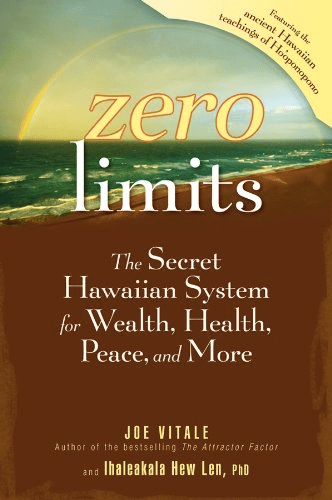
Zero Limits: Clearing Negative Energy, Returning to Perfect Emptiness

The Secret Hawaiian System for Wealth, Health, Peace, and More

In 1984, a therapist in Hawaii achieved remarkable results over three years, healing mentally ill patients at the Hawaii State Hospital without resorting to clinical counseling or medication. Reviewing their records, he repeatedly recited four phrases to “clear” himself: “I’m sorry, please forgive me, thank you, I love you.”

This extraordinary tale intrigued Mr. Vitale, inspiring him to seek out this extraordinary therapist and learn from him. Vitale discovered that Dr. Hew Len employed these four sentences as part of a traditional Hawaiian healing technique known as “Hooponopono,” which translates to “to correct, to clear, to make right” in Hawaiian.

This method not only restored the health of mentally ill patients but also miraculously cured a woman who had suffered from asthma for 50 years overnight. Can four sentences really resolve all problems? Smooth out everything?

These four affirmations have the power to clear all negative energy, balance emotions, and enable you to return to the divine state of “zero limits” (a state of returning to zero, also known as emptiness in Buddhist philosophy, where nothing exists, and anything is possible). By embracing these four phrases, you can face your life more freely and elegantly, leading to health, wealth, and joy.

By approaching each day with an unrestricted perspective, repeating these four sentences concerning your mind, subconscious, experiences, people, and encountered problems with a sincere, repentant, and grateful heart, you will learn to love yourself, forgive yourself, and appreciate yourself. This practice will lead you to live a more fulfilling, wise, and abundant life.

Let us not only refrain from complaining but also say, “I love you!”

What is the Zero Limits method?

It’s straightforward—just four sentences: “I’m sorry, please forgive me, thank you, I love you.”

What do these four sentences represent? In simple terms:

“I’m sorry”: Acknowledge 100% responsibility for what has happened (because everything is created by oneself).

“Please forgive me”: Request forgiveness (forgive oneself).

“Thank you”: Express gratitude, show trust, and believe that all problems will be resolved in the best way for everyone involved.

“I love you”: Invoke the power of divinity to clear related memories and heal all wounds.

Although these four sentences in Ho’oponopono therapy are simple, they encompass profound states and meanings. This is a convenient method that can be used at any time during our spiritual growth journey, transcending various spiritual practices.

How to use this method? It’s straightforward—whenever you encounter a problem, simply keep repeating these sentences (there’s no need to rush into belief or doubt; give it a try).

Fundamental Theory of Zero Limits:

You are not aware of what is happening.

Whether consciously or unconsciously, it is impossible to be aware of everything happening within and around you. At this very moment, your body and brain are self-adjusting without your conscious awareness. Countless invisible signals are transmitted through the air, from radio waves to thoughts and consciousness. All of this occurs unconsciously, and your consciousness is not aware of nor in control of this process. This is why you can think positively but still face challenges. In essence, you must understand that your consciousness is not the true creator of everything.

You cannot control everything

If you are unaware of what is happening, you certainly cannot control it. Believing that the world follows your commands is merely a manifestation of satisfying the desires of the ego. Since your ego cannot completely comprehend what is happening in the world, allowing the ego to decide what is best for you is obviously unwise. You can make choices, but you cannot control. You can use your consciousness to choose what you want to experience, but you must also learn to let go and not worry about how or when it will happen; surrender is the key.

You can heal everything that happens.

Regardless of what appears in your life and how it comes about, it requires healing. Because it is now within your perception, if you can feel it, you can heal it. If you see it in others and it troubles you, you must heal it. You may not understand why it appeared in your life or how it happened, but you can let go now. As you have become aware of it, the more you heal, the simpler it becomes to manifest your desires. By releasing blocked energy, you allow this energy to be used for other things.

You must take 100% responsibility for everything you experience.

The events in your life are not your fault, but they are your responsibility. This responsibility includes everything said, done, and thought, as well as everything said, done, and thought by others appearing in your life. If you take 100% responsibility for everything in your life, then when others have problems, those problems also become yours. In short, you cannot blame anyone or anything for your current situation. All you can do is take responsibility, accept it, embrace it, and love it. The deeper you heal, the more connected you become to the source of life.

The ticket to the state of Zero Limits is saying “I love you.”

To overcome the bottleneck of understanding, to obtain a pass from healing to manifestation, is that simple phrase “I love you.” Saying “I love you” to divinity clears everything within you, allowing you to experience the miracle of “Zero Limits.” The key is to love all things: love the excess fat, love the hidden pain, love the troublesome issues, love children with problems, or love neighbors and partners—in short, love everything. Love transforms and releases blocked energy, and by saying “I love you,” you can experience the power of divinity, just like saying “Open sesame.”

Inspiration is more important than thought.

Thoughts are toys of the mind, while inspiration is a directive from divinity. From a certain point onward, you will surrender and learn to listen instead of begging and waiting. Thought is an attempt by the ego to control life from a limited perspective, while inspiration is a reception of messages from divinity and taking action. Thought yields results, while inspiration produces miracles.

Even if you are not sure what is happening, you can still solve problems.

A part of the purpose of survival is to solve problems. To solve problems, you must first understand: Who am I? Who is actually in charge? The consciousness thinks that intellect is the problem solver, capable of controlling what happens, what one experiences, and when. However, in reality, decisions are made before the consciousness decides, and intellect is unaware of this. If it is not intellect or consciousness, then who is in charge?

It is your subconscious. The subconscious is dominated by replayed memories, and it imitates, repeats, and resonates with these memories. The actions, understanding, feelings, and decisions of the subconscious are entirely dictated by memory. Similarly, consciousness operates through replayed memories without awareness. Therefore, replayed memories dominate everything the subconscious and consciousness experience.

The subconscious is the repository of accumulated memories since the beginning. It constantly replays past memories, and the power of choice that consciousness possesses is the power to choose. Both the subconscious and consciousness do not create their own thoughts, feelings, or actions; rather, their experiences resonate with replayed memories and inspirations.

To solve problems, it is crucial to understand that the physical body and the world itself are not the issue; the problem lies in the replayed memories within the subconscious.

The universe comes from nothing and will return to nothing. The universe begins at zero and ends at zero.

Zero Limits: Clearing Negative Energy, Returning to Perfect Emptiness

Link:https://peacelilysite.com/2024/02/02/zero-limits-clearing-negative-energy-returning-to-perfect-emptiness/

#SecretHawaiianSystem #Wealth #Health#Peace #ZeroLimits #NegativeEnergy #Forgiveness #Grateful #Thanks

The Healing and Spiritual Mastery of Bert Hellinger: “I Allow” Poem and Life Inspiration

In the realm of healing and spirituality, few names shine as brightly as that of Bert Hellinger. His profound insights, therapeutic approach, and the timeless poem “I Allow” have touched countless lives, offering a path towards inner transformation and emotional well-being. In this blog post, we’ll delve into the life and teachings of Bert Hellinger, exploring the power of “I Allow” and the enduring impact he has had on individuals seeking healing and spiritual growth.

Born in Germany in 1925, Bert Hellinger’s journey into the realm of healing and spirituality was marked by an insatiable curiosity and a deep commitment to understanding the human psyche. After pursuing studies in philosophy, theology, and pedagogy, he worked as a priest, psychotherapist, and teacher. His diverse experiences provided the fertile ground for the development of his unique therapeutic approach, known as Family Constellations or Systemic Constellations.

At the heart of Bert Hellinger’s teachings lies the powerful and transformative poem, “I Allow.” This simple yet profound declaration serves as a guiding principle for healing and spiritual growth. It invites individuals to surrender to the flow of life, embracing its joys and challenges with open arms. “I Allow” is a reminder that true healing and transformation can occur when we release resistance and accept the present moment as it is.

I allow anything to happen,
I allow it, things start like this,
develop like this, and end like this
because I know that
all things are caused by the combination of fate and
everything happens,
if I think it should be another way May
hurt, but myself
the only thing I can do
is allow

I allow someone to be who he is
and I allow him to think this way and judge
me and treat me this way
because I know
he is who
he is and he is right
if I think he should be otherwise A look
that hurts, just myself
the only thing I can do
is allow

I allow my thoughts like this
I allow each thought to exist,
let it exist, let it disappear
because I know that
the thought itself is meaningless and has nothing to do with me
It should come and go,
if I think it should not The only thing I can do is allow
myself to be hurt by such thoughts.

I allow my emotions to arise
I allow each emotion to happen
and let it go,
because I know that
emotions are just physical sensations that are
neither good nor bad
The more I resist, the stronger
I feel Emotional
hurt like this shouldn’t happen , just myself
the only thing I can do
is allow

I allow it to be what
I am I allow it
to be what I do I do what I do
because I know
what it looks like on the outside, it’s just a build up of
me The real me, I’m smart enough
If I think it should be something else
Hurt, just myself
the only thing I can do
is allow

I know that
I am here for the experience of life in the present moment and the only thing I have to do
in each present moment is to fully allow to fully experience fully to enjoy seeing, just watching

Bert Hellinger’s pioneering work in Family Constellations has touched lives around the world. This therapeutic modality explores the intricate web of family dynamics, uncovering hidden dynamics and unresolved issues that may be causing emotional pain and suffering. Through the process of constellations, individuals gain profound insights into their family system and are offered the opportunity to heal deep-seated wounds, fostering greater harmony and well-being.

In China, there is a widely embraced old proverb that states, “A family that accumulates goodness will have blessings left over, while a family that accumulates wrongdoing will have misfortunes left over.” There are also sayings such as “Ancestral accumulation of virtues brings blessings to descendants,” all of which underscore the profound and far-reaching influence of the family. I believe that these sayings may offer insight into the reasons behind hereditary diseases within a family.

I find that his work beautifully integrates elements of ancient Eastern culture and wisdom. It has greatly enhanced my understanding of the fundamental Buddhist law of “Cause and Effect.” In Buddhist teachings, it is believed that individuals with common karmic conditions tend to live in the same groups, regions, and time periods.

Furthermore, in Buddhism, it is held that the causes of illness in one’s life stem from external natural factors such as wind, rain, cold, heat, bacteria, viruses, emotions, and so forth. Additionally, it is believed to be a consequence of one’s own karmic imprints accumulated over countless lifetimes. To attain good health and prevent illness, addressing the root causes is essential. According to Buddhist principles, this entails repenting for one’s past wrongdoings, actively engaging in self-cultivation, and earnestly practicing true Buddhism to transform one’s karmic outcomes, ultimately leading to a life characterized by health, happiness, and liberation.

The Healing and Spiritual Mastery of Bert Hellinger: “I Allow” Poem and Life Inspiration

Link:https://peacelilysite.com/2023/09/29/the-healing-and-spiritual-mastery-of-bert-hellinger-i-allow-poem-and-life-inspiration/

#FamilyConstellations #SystemicConstellations #BertHellinger #HealingandSpiritualMastery #CauseandEffect #ChineseCulture #CultureExchange

Source: https://min.news/en/news/bf1f69c4daf472e7efcc10bbded29c8c.html