Lessons Induced From Nectar

Dharma Discourse by Amang Nopu Pamu in Nectar Assembly

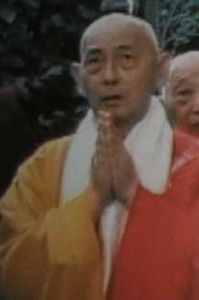
Amang Nopu Pamu is an extraordinary Dharma King and Holy Mother, revered for her unparalleled realization. Her spiritual achievements stand as truly exceptional, placing her at the forefront among female yidams at the highest level.

Remarkably, at the tender age of eight, she demonstrated remarkable intellectual prowess by composing a profound commentary on logical reasoning—a feat unparalleled by anyone else in the world. Her intellectual brilliance continued to shine, as she accomplished the mastery of the entire Tripitaka by the age of 20.

In addition to her scholarly achievements, Amang Nopu Pamu authored five insightful commentaries, including notable works such as “The Prajna of Ultimate Reality” and “Entering the Door of the Dharma,” alongside other contributions to Buddhist literature.

In the rich tapestry of Buddhist history, finding a figure as exemplary as Amang Nopu Pamu is a rare occurrence. Her greatness is acknowledged and praised not only by mortal beings but also by all Bodhisattvas and Arhats in the sacred realm. Amang Nopu Pamu stands as the most exalted, earning the admiration and reverence of those who recognize the profound depth of her spiritual attainment.

On September 8th, 1997, a significant gathering unfolded as several Rinpohes actively engaged in different segments of a Nectar Sharma Assembly presided over by Amang Nopu Pamu. The following is the discourse delivered by Pamu during this Sacred Assembly.

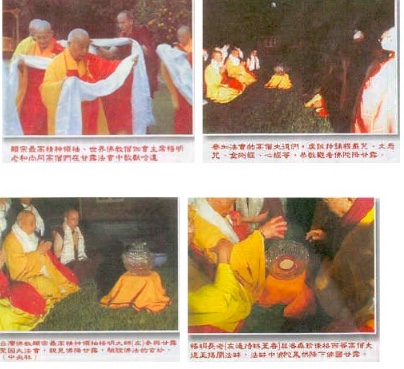
In the Nectar Assembly Pamu Sat at the Dharma King Throne Many Rinpoches sitting around


The live videotape of the Buddhas bestowing nectar and the scenes of myself and Buddhist disciples cannot be shown to those who do not understand the Buddha Dharma. This is because outsiders would not recognize or understand the wonderful states concerned with unworldly Dharma. Of course, those practitioners of Buddhism who are Great Rinpoches and those who have deep roots of kindness’ may view the videotape.


You have requested numerous times that proof of the truth of the Buddha Dharma be provided. You can use real photographs of my practicing the nectar Dharma. You can also use the attestations of the Great Rinpoches that they personally participated in the Dharma Assembly and that they personally saw the Buddhas bestow nectar. However, one must use only group scenes. I am not qualified to claim personal merit or engage in self acclamation. As Long as living beings are benefited, that is enough.
The Buddhas have bestowed nectar in response to the ripening of conditions of good fortune of those of you who were able to partake of the nectar. I think that the Buddhas bestowing of nectar must have been due to a Great Virtuous One among our disciples here who was helping me practice the Dharma. I am just a humble person. How could I have such great abilities?


I and all of you practitioners of Buddhism seated here today, including Great Bodhisattvas, should constantly maintain a heart of humility. You must remember what I say. I will never accept any offerings from anyone. This is because we are practitioners of Buddhism who maintain a heart of humility. We have come to this world to benefit living beings, not to covet and accept the money and property of others.


One of my disciples said that those false Rinpoches will hate me. I said that this is exactly the law or principle of cause and effect. This is because whoever is a false Rinpoche does not understand the Buddha Dharma. Such people are ordinary beings with ignorance, defilements, anger, and hatred.
They are not able to obtain the true nectar of the Buddhas, are not able to experience true empowerment, and do not possess the qualifications to receive Supreme Division initiations. They must accept many disciples and rely upon the offerings of such disciples.


I do not accept many disciples. I only teach several dozen people of noble character. Anyone else who wants to learn the Buddha Dharma from me can only learn from the books I have written. Through learning from the books I have written, one can in the same manner obtain great fortune and end the cycle of birth and death. I do not have time to receive more disciples. Unlike those false Rinpoches, I do not accept any offerings.


If they did not hate me, whom would they hate? In previous times, were Sakyamuni Buddha, Master Padmasambhava, and Master Marpa not despised by false Rinpoches and followers of erroneous ways? If any of you who are my disciples meet up with evil people who defame me, you must not become angry or hateful. You must not use your supernormal powers to kill them. On the contrary, you must have great compassion for them and must be concerned for them. You must vow to bring them good fortune. You must vow to enable them to receive the correct Dharma as soon as possible. You must not give rise to even the slightest harmful thought, since we are living in this world to benefit and save living beings.


There is another point I would like to especially remind those Rinpoches and Dharma Teachers here today to convey to all other practitioners of Buddhism. Under no circumstances should one, upon seeing a Rinpoche, think of beseeching him or her to practice the Dharma to have true nectar bestowed. It could be said that this is impossible. Even those Rinpoches who are at the level of Dharma King may not have attained such realization. Practicing such Dharma is only for true Holy Ones who are Great Dharma Kings.


As for myself, if the conditions for all of you in attendance here today to receive the blessing of nectar were not mature, and if there was not a Holy Dharma King among you practicing the Dharma whom I do not have the ability to see, then I would not have been able to cause you to taste true nectar bestowed by the Buddhas! Thus, you disciples of mine who are Rinpoches and Great Virtuous Ones should tell your students not to make unrealistic demands upon other Rinpoches. As long as they are truly Great Virtuous Ones who actually propagate the correct Dharma of the Tathagata and are not false Rinpoches, we should be respectful toward them.

Lessons Induced From Nectar

Link:https://peacelilysite.com/2024/01/26/lessons-induced-from-nectar/

#Nectar #DharmaKing#Rinpoche #TathagataDharma #Buddhism #Buddhist#AmangNopuPamu #Yidam
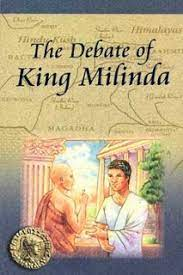
The Debate of King Milinda – Nagasena Bhikkhu Sutra

The twelfth among the Eighteen Arhats is recognized as Nagasena in Sanskrit, meaning “Dragon Army.” Often referred to as “Bhikshu Nagasena,” he was a Buddhist theoretical philosopher who received full ordination at the age of twenty and eventually attained the state of Arhat. Bhikshu Nagasena journeyed to the ancient kingdom of Shakyadesha in northwestern India to engage with King Milinda. Responding to the king’s inquiries, Nagasena eloquently expounded on the impermanence of life, the law of karma, and various facets of Buddhist practice, employing metaphors to convey profound insights. This discourse is encapsulated in the “Nagasena Bhikshu Sutra,” representing a comprehensive exposition of fundamental Buddhist teachings.

Below are excerpts from conversations between Nagasena and King Milinda, where the king poses questions and Nagasena responds with profound wisdom and intelligence.

First Question

Once, King Milinda intentionally sought to challenge Bhikkhu Nagasena and questioned him, saying, “You did not live in the same era as the Buddha, and you never met Siddhartha Gautama. How can you be sure that the Buddha actually existed?”

Wise Bhikkhu Nagasena responded by asking, “Great King, how did you inherit your throne?”

“It was passed down to me by my father,” replied the king.

“And from whom did your father receive the throne?” Nagasena inquired.

“From his father, my grandfather.”

“And your grandfather’s throne, from whom did he receive it?”

“From his forefather, my great-grandfather!”

Nagasena continued, “If we trace this lineage generation by generation, do you believe that there was an original founder of your kingdom?”

King Milinda replied with certainty, “Certainly, I believe so!”

“Have you ever seen this founder?” Nagasena asked.

“No, I haven’t.”

“How can you believe in someone you haven’t seen?” Nagasena questioned further.

The king explained, “Our founding monarch established laws, systems, and regulations, all of which are recorded in history. Though I haven’t seen him, I believe in his existence because there are historical records.”

Smiling, Bhikshu Nagasena nodded and said, “In the same way, we believe that the Buddha indeed existed. In Buddhism, there is the Triple Gem of Buddha, Dharma, and Sangha, along with scriptures, Vinaya (monastic rules), and Abhidharma (philosophical teachings). The Buddha’s ethical guidelines and historical events are not fabrications; they are as real as your founding monarch in historical terms!”

Second Question:

Unable to find fault with Bhikkhu Nagasena in the first question, King Milinda, using his wit, posed another challenging query. He asked, “Buddhists often speak of the ultimate happiness being the realization of Nirvana, attaining a state beyond birth, death, and cessation. Bhikshu Nagasena, have you attained Nirvana?”

Bhikshu Nagasena humbly replied, “I’m ashamed to admit that I haven’t.”

King Milinda, feeling triumphant, questioned, “If you haven’t experienced it yourself, how do you know about the state of Nirvana?”

If this question were posed to you, how would you respond?

Rather than directly answering, Bhikshu Nagasena turned the question back to King Milinda, asking, “Great King, if I were to take a large knife and cut off your arm right now, would it be painful?”

King Milinda’s expression changed, and he said, “Certainly, it would be painful! How could having one’s arm cut off not be painful?”

Nagasena pressed on, “But your arm has never been cut off before, so how do you know it would be painful?”

The king replied, “I have seen others experience the pain of having their arms cut off, so I know it would be painful!”

Smiling, Bhikshu Nagasena respectfully remarked, “Great King, just as you can understand the pain of losing an arm by witnessing others, I, too, have seen the joy of those who have realized Nirvana. Hence, I am certain about the sublime nature of the Nirvana state!”

Third Question:

King Milinda, persisting in his skepticism, attempted a third inquiry, asking, “Monastics are supposed to embrace compassion. How do you forgive your enemies?”

Bhikshu Nagasena smiled and replied, “Great King, if you had a festering wound on your leg, would you chop off your entire leg?”

“No, I wouldn’t,” answered the king.

Nagasena continued, “So, what would you do?”

“I would carefully clean it, apply medication, and with time, the wound would heal,” explained the king.

Bhikshu Nagasena stated, “Exactly! Enemies and wrongdoers are like festering wounds. If not taken care of and treated, they will spread and worsen. Therefore, one must use the water of dharma to cleanse them, encouraging them to abandon wrongdoing and turn towards righteousness. This principle is similar to how you, Great King, nurture and care for the wound on your leg!”

Fourth Question:

King Milinda nodded in acknowledgment but remained unconvinced. After contemplating, he posed another question, “You often advise people to accumulate merits for the next life. Since you haven’t experienced death, how do you know there is life after death?”

Bhikshu Nagasena responded with a simile, “It’s similar to a mandarin orange. When the fruit ripens and falls to the ground, the flesh rots away. However, the seed remains buried in the soil. When the time is right, it sprouts, grows, and becomes a robust mandarin orange tree. The human body is just a temporary aggregation of the four elements. When the illusion shatters, the body dies. Yet, the karmic consciousness continues the cycle of birth and death. It is like the seed of the mandarin orange, persistently reincarnating in the six realms, not just once but countless times, with an endless cycle of rebirths.”

Fifth Question:

Despite King Milinda’s lingering dissatisfaction, he presented a fifth question, each one more challenging than the last. However, Bhikshu Nagasena, wise and composed, continued to respond with a smile.

King Milinda asked, “Do monastics love their own bodies?”

Bhikshu Nagasena replied, “The body is merely a temporary confluence of the four elements and five aggregates. Monastics do not have attachment to it.”

King Milinda, feeling confident, cleverly countered, “Oh! You claim not to love your body, but monastics still dress, eat, and sleep. Isn’t that a way of protecting the physical form? If you say you don’t love it, isn’t that a contradiction?”

Bhikshu Nagasena smiled and offered a different perspective, “Great King, if you had a boil on your body, would you love it?”

“A boil? Such a dirty and unpleasant thing! Who would like it?” exclaimed the king.

“If you dislike it, why bother cleaning it, applying medication, and taking constant care to prevent it from worsening? Checking on it every day to see if it’s improving. If you claim not to like the boil, isn’t that contradictory behavior?” Nagasena questioned.

King Milinda, somewhat defiantly, argued, “I do it for the health of my body!”

Bhikshu Nagasena chuckled and said, “Exactly! Monastics may not love this body, but for the purpose of cultivating the spiritual path, they still have to care for this illusory form.”

Sixth Question:

King Milinda, undeterred by previous responses, continued with his inquiries, asking, “Can Siddhartha Gautama, the Buddha, know the causes and effects of the past, present, and future?”

“Buddha possesses great supernatural powers, and indeed, he can know the past, present, and future!” answered Nagasena.

“If that’s the case, why doesn’t he teach all of you those supernatural powers? Then, disciples could instantly know the past, present, and future karmic obstacles, and everyone would attain enlightenment quickly. Why go through gradual training?” questioned the king.

The clever Nagasena, handling the question with ease, asked in return, “Great King, if you were a physician, wouldn’t you know about various medicinal herbs?”

“Of course! A physician needs to know the properties of different herbs and their healing abilities,” replied the king.

“Since a physician knows about numerous medicinal herbs, can he prescribe all of them to a single patient?” Nagasena asked.

King Milinda, dismissing the idea, responded, “Certainly not! Treating an illness requires targeted medications, gradual adjustments, and specific remedies tailored to the patient’s condition. Haphazard prescriptions won’t cure the patient; it needs careful consideration!”

Seizing the opportunity, Nagasena continued, “Likewise, the Buddha imparts the Dharma based on individual capacities, tailoring the teachings to each disciple’s unique qualities. Gradual instruction is necessary, adapting to the disciples’ diverse capacities, to guide them step by step on the path to enlightenment. Otherwise, trying to rush the process might lead to unintended consequences!”

The Debate of King Milinda – Nagasena Bhikkhu Sutra

Link:https://peacelilysite.com/2024/01/11/the-debate-of-king-milinda-nagasena-bhikkhu-sutra/

Source: https://hk.aboluowang.com/2020/0519/1453067.html

Confessions of a Rinpoche

Many individuals perceive magical events, such as the Statue of Liberty disappearing or David Copperfield flying through the air, as mysterious. They find Krisha Lawar’s ability to walk through concrete walls equally enigmatic. However, what truly encapsulates magnificence in mystery is Amang Nopu Pamu’s remarkable ability to draw nectar from the realm of the Buddhas into our world. We firmly believe that this transcends the ordinary and qualifies as an accredited mystery.

On September 8th, 1997, numerous Rinpohes participated in various segments of a Nectar Sharma Assembly hosted by Amang Nopu Pamu. The following account, penned by Rinpoche Ga Du, provides an authentic narrative of the event.

Nectar Dharma Assembly

Confessions of a Rinpoche

by Ga Du

A FAMOUs RINPOCHE OF THE Nyingma school said the following: “When Dharma King Pamu conducted the Nectar Dharma Assembly, I was in Seattle.
I truly planned to rush over to Washington D.C. to attend, but there were always some doubts in my mind. I was not able to vanquish such doubts. I was not able to rush over to the Dharma Assembly.
“In our minds, Pamu is, of course, a Holy Mother. Her realization is truly foremost. She is pre-eminent among female yidams at the highest level. At the age of eight, she was able to write a penetrating commentary on logical reasoning. No other person in this world has been able to do that. Further-more, she mastered the entire Tripitaka at the age of 20. She also wrote five commentaries, such as The Prajna of Ultimate Reality and Entering the Door of the Dharma, along with other Buddhist books. Throughout the history of Buddhism, it is truly difficult to find such a Holy One. In our hearts, Pamu is truly the most revered one on whom we can rely.
“As a Rinpoche who has reached a rather high state of realization, I do not have any doubt whatsoever about the Buddha Dharma. I practice the Dharma every day and have seen many supernormal states. I transmit the Dharma to others to save them and have many disciples. These are the duties of those of us who are Rinpoches. However, the doubt that I had was as fol-lows: Is there really such a thing as the Buddhas bestowing nectar from the sky? I have seen the magnificent Buddhas during my meditation. However, I have never seen a state where the Buddhas transform themselves and appear in this world, where they appear live in our real world right before us.
“Because of various causes and conditions, I was not able to personally attend the Nectar Dharma Assembly conducted by Pamu. This is something that I regret most of all. It was only after I saw the live videotape of the Buddhas bestowing nectar, along with the photographs, that I realized I was like an immature, ignorant, and pitiful child!

“According to mundane logical thinking, it is impossible for such a mysterious thing to have occurred in this world. However, it truly did occur in this world in front of a number of people! I would like to say that I do not know how to explain this. Ordinary language, high-tech principles, or the most advanced scientific theories cannot explain such a thing. This mysterious thing simply cannot be explained. It is truly wonderful, magnificent, and unbelievable!”
The true feelings expressed by that Rinpoche were also the feelings I had 30 years ago. When I was a boy, I was acknowledged as the reincarnation of a Holy One, as a Rinpoche. Thus, I have always been extremely loyal to the Buddha Dharma, and I respectfully learned the Buddha Dharma. I can be called a devout Buddhist disciple. However, with respect to the Buddhas and Bodhisattvas taking away a piece of paper on the spot!’ or the Buddhas themselves bestowing nectar from clouds in the sky, I always harbored some doubts, which I could not overcome. This is the reason why I never personally encountered, experienced, or saw such things.


Thirty years later, I extricated myself from that diabolical state of doubt when I received the Inner-Tantric Initiation. Because I was able to remove the shackles of doubt, I experienced many wonderful benefits. My supernormal skills and depth of realization increased dramatically. I also believe that my having had the good fortune to participate in the great Buddhas Bestowing Nectar Dharma Assembly conducted by Amang Nopu Pamu, thereby obtaining firsthand experience, was probably due to the fact that I finally overcame those diabolical doubts. It was probably connected with the fact that the Buddhas and Bodhisattvas, seeing in my mind that those doubts were overcome, bestowed upon me this good fortune.


I saw the entire Buddhas Bestowing Nectar Dharma Assembly conducted by Dharma King Pamu and the incomparably wonderful states that appeared on the ground and in the air. I personally saw no fewer than 1,000 Buddhas and Bodhisattvas. I saw the Long Life Buddha bestow nectar. When thinking of how ignorant I was 30 years ago, I feel deeply disgusted with myself and deeply remorseful. When I think about those who are ignorant, pitiful Rinpoches, I think of those practitioners who have not seen true Buddha Dharma states. I believe that not seeing such states is due to their ignorance and foolishness. Maybe even after they see photographs of true nectar, they will still harbor doubts about its genuineness.


In order to prevent other practitioners of Buddhism from taking the tortuous and sinful route that I took, as a Rinpoche with a heart of humility and as one who has been through it before, I must remind and warn those who harbor such doubts that if you continue to give rise to such doubts, you will definitely be guilty of a huge sin!

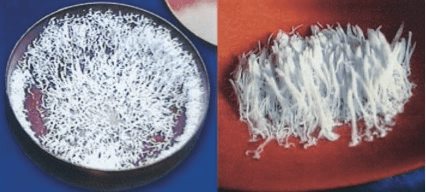
White Bodhi Nectar

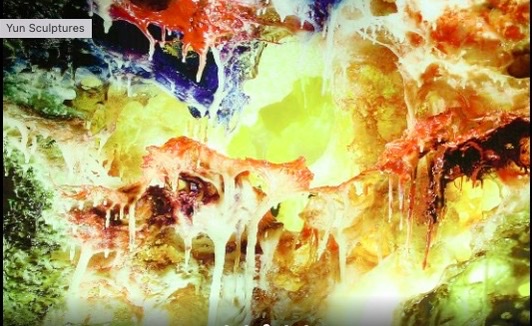
You ought to step back and consider the mysteriously natural structure of the nectar. Other than the Buddhas and Bodhisattvas, who could construct such a wonderful and mysterious structure? What skilled craftsman or master artisan in the world could do so? In the entire world, there is no such skilled craftsman or master artisan!


What is even more important is that the Rinpoches and other Buddhist practitioners in attendance all attested to their personal participation in the assembly and what they personally saw. If they spoke falsely, they would naturally descend into the Vajra Hell realm! Is it really possible that these Rinpoches do not know the incomparable suffering of hell? Is it really possible that these Rinpoches and other practitioners of Buddhism are willing to falsely attest and descend into hell? Every sentence that I have written here is from the bottom of my heart.
I would like to earnestly tell all of those ignorant people who still harbor doubts that they must definitely not follow in my ignorant footsteps of 30 years ago!

Confessions of a Rinpoche

Link:https://peacelilysite.com/2024/01/05/confessions-of-a-rinpoche/

#Confessions# Rinpoche #Nectar #BuddhaDharma #Assembly#AmangNopuPamu#Buddhism


Interview with Elder Monk Yi Zhao After Buddhas Bestowing Nectar Dharma Assembly

The Explanation of the Buddha’s Title – “H.H. Dorje Chang Buddha III

On April 3, 2008, a solemn and dignified first-publishing ceremony of a fact-recording book entitled H.H. Dorje Chang Buddha III, which published jointly by the World Buddhism Publishing LLC and the World Dharma Voice, Inc., was held at the Library of the Congress of the United States. The book was also formally accepted into the collection of the Library of the Congress of the United States. Only since that time, did people in the world know that Master Wan Ko Yee, who had been broadly respected by the great masses and who had also been known as Great Dharma King Yangwo Yeshe Norbu, had been recognized by the world’s leaders, regent dharma kings, and great rinpoches of Buddhism through official documents as the third incarnation of Dorje Chang Buddha, who is the primordial Sambhogakaya Buddha of the universe. The Buddha’s name is H.H. Dorje Chang Buddha III. Since then, people began to address His Holiness the Buddha by “Namo[1] Dorje Chang Buddha III.” This is similar to the situation that Sakyamuni Buddha’s name was Prince Siddhartha Gotama before attaining Buddhahood. However, after Sakyamuni Buddha had attained Buddhahood, His title changed to “Namo Sakyamuni Buddha.” That is why we now address His Holiness the Buddha as “H.H. Dorje Chang Buddha III.” In particular, on December 12, 2012, the Senate Resolution No. 614 of the United States Congress officially used “His Holiness” in the name addressing Dorje Chang Buddha III (That is to say, “H.H. Dorje Chang Buddha III.”) Since then, the title and status of H.H. Dorje Chang Buddha III has been definitive by nature. And, as a matter of fact, “Dorje Chang Buddha III” is a name used legally in governmental and official legislative documents. Therefore, the previously used respected name and titles such as “Wan Ko Yee,” Great Master, and Great Dharma King no longer exist. However, the news below was published before the Buddha’s title of H.H. Dorje Chang Buddha III was publicly announced. At that time, people did not know about the true status of His Holiness the Buddha. Therefore, to respect the true history, we still kept the names used before the title of H.H. Dorje Chang Buddha III was legitimately determined in republishing this news. However, all must clearly know that the only legitimate name of His Holiness the Buddha is H.H. Dorje Chang Buddha III and all other names used before the legitimate determination no longer exist.

Elder Monk Yi Zhao, the rightful heir of the Dharma lineage of Elder Monk Xu Yun, holds the esteemed position of the 44th great master within the Lin Chi sect of Zen Buddhism. Currently, he stands as the highest master in the realm of Zen Buddhism worldwide.

In June 2000, H.H. Dorje Chang Buddha III presided over a Buddhas Bestowing Nectar Dharma Assembly. Following the assembly, an interview with Elder Monk Yi Zhao took place. The following is a transcription derived from the video tape of the Nectar Dharma Assembly.

QUESTION: Could you please briefly describe the wonderful occurrences that took place during the Buddhas Bestowing Nectar Dharma Assembly that you attended? ANSWER: We first saw the Dharma King. We then saw the Dharma King practice the Dharma to raise the consciousness of certain beings to higher realms of existence. We took a look and there were only a few wasps (yellow-jackets). After the Dharma King practiced the Dharma for a period of time, he said that he had already summoned many beings, such as solitary spirits, Kinnaras, etc. in order to raise their consciousness. When we went to take another look, we saw that there were many wasps. I do not know the exact number, but there must have been over ten thousand of them. During another period of time the Dharma King said that the raising of their consciousness is almost complete. Those wasps were specially benefited. Why were there all of those wasps? Certain solitary spirits, certain kinnaras and other beings took on the physical form of wasps, arrived at the scene and received the consciousness raising Dharma. What is receiving the consciousness raising Dharma?

We human beings must eat and drink in order to survive and grow. However, after those solitary spirits received the consciousness raising Dharma, they were able to take birth in a heavenly realm in the Western Paradise or in another buddha realm. We went over and took another look. We noticed that all of the wasps had departed. Why did none of them remain? They received the consciousness raising Dharma and were raised. Therefore, none of them remained, because they were liberated. This is what we first saw at the dharma assembly. The next part of the assembly was the “Buddhas Bestowing Nectar.” There were five or six of us. There were about a dozen monks and nuns. It was not only Chinese people who participated in this part of the assembly. There were even non-Chinese people there! At this time, a bowl was placed about 30 feet away from the Dharma King. What type of bowl was this? It was a crystal bowl. The crystal bowl was placed on the ground. The bowl was in the middle of two opposite lines of people. The bowl was not far from the two lines of people. Everyone sat on the ground and looked at the bowl. This crystal bowl had a lid and was a bit smaller than a washbowl.

There was another bowl that was small. Elder Wu Ming was asked to wash that small bowl with water. After he washed it, he was asked to wipe it dry. He wiped the inside of the bowl so well that not one drop of water remained. This bowl was then placed back inside of the crystal bowl. The Dharma King then told everybody to stare at the bowl. He said that our vision must remain fixed on the bowl. All of us began to stare at the bowl. After awhile, what did the bowl appear to contain? A meteor. Of course, it was not a real meteor. It seemed as if rain had fallen. What exactly was in the bowl? It was white. It descended with flashes of light. It took a while for it to descend. The Dharma King then told us to open the bowl and look inside. The small bowl was inside the crystal bowl, yet flashes of light could be seen within the crystal bowl. This interior bowl slowly became filled. What color was the substance that filled the bowl? It seemed to be white. It was not pure white. It looked like milk, but it was not milk. It was like that of the finest cream. It was a a very savory taste with a bit of sweetness. The Dharma King personally fed it to all of us during the Dharma Assembly. Rays of red light descended. Flashes of red light descended. The strange thing was that each person’s perception of the color of this light was different.

Why? Since each person’s level of cultivation and state of realization are different, there were differences in the supernormal states they perceived. I followed Elder Monk Xu Yun ever since I was young. I also met Master Tai Xu. The two of them practiced different dharma methods and therefore had different states of realization. I have met many practitioners of Buddhism such as those who practice the dharma of the Pure Land School, those who practice Zen meditation, etc. However, I have never seen the supernormal state of nectar descending from the sky. What about this time? This time, I personally saw it. I truly saw it. This is a very rare occurrence. I obtained a certain insight from this experience. Of course, people have different levels of realization. What did the Great Dharma King rely upon in his Tantric visualization? He relied upon our original nature in his visualization. The usefulness arose from the prajna of true emptiness. This even includes nectar bestowed from the sky. The light of the Tathagata descended out of emptiness. This was the wonderful effect of the Dharma King’s application of prajna.

What is Prajna? It is realization that all phenomena are empty. Things arise from true emptiness. Emptiness can bring about wonderful effects. Wonderful effects arise from prajna. All realities thus arise. All phenomena thus arise. Over the past several decades of my life, that was the only time when I actually saw the supernormal state of nectar descending from the sky. I have followed many great elderly monks when they practice the dharma in private. I could not see any effects. However, this time at the Dharma Assembly, I truly saw certain effects. Today I am describing to everybody the facts concerning nectar that descended from the sky. So that everybody will understand, I am not talking about exoteric Buddhism or esoteric Buddhism. I am saying that the wonderful effects of the buddha dharma are beyond logic and reason. If we cultivate ourselves sincerely, we certainly will experience these wonderful effects. Of course, if you meet a good teacher, your cultivation will progress rapidly. If you do not meet up with a good teacher, yet you still diligently cultivate yourself on your own, you will naturally encounter a good teacher in the future. These are my personal insights. Today I have briefly described nectar descending from the sky, which I personally saw. It truly occurred.

QUESTION: With respect to the effects of the nectar on you, after you ate the nectar, was there any great change in your state of realization?

ANSWER: After eating nectar one’s physical strength naturally increases and one’s internal practices are benefited. It helps one’s cultivation, no matter what method of cultivation one practices. Of course, this is something incredible. Whenever a thought arises in my mind, no matter what type of thought it may be, I will introspect upon it. I will immediately become vigilant. I will immediately introspect. If my mind has even just a little greed or anger, I will get rid of it. I feel better physically. Although I am now over 70 years old, my physical condition is not bad. It is a little better than before. I think that each person will experience different effects from having eaten nectar. Why? Each person’s karma is different and each person’s insights into life are different.

For example, fish see the ocean water as something to live in. Human beings view the ocean water as a means of eating, yet celestial beings see this body of water as colored glaze. Each person’s insights are different. Each person will experience different effects from having eaten nectar. Although the effects are different, the nectar will plant a certain seed within the person. Take for example, those who recite Amitabha Buddha’s name. Even though they continually recite Amitabha Buddha’s name, who knows when they will be able to obtain Buddhahood. However, some people recite Amitabha Buddha’s name only a few times or ten times, yet they are able to be reborn in the Western paradise. This is because the underlying karmic conditions of each person are different. Therefore, each person will experience different effects from having eaten nectar. Nevertheless, the nectar will provide each of them with benefits to further their liberation. These are my opinions, understandings, and feelings.

QUESTION: Did the lecture of the Great Dharma King provide you with any insight or great benefit?

ANSWER: What did the Great Dharma King speak about: Emptiness and prajna. Each sentence that he spoke contained prajna wisdom. It was not a general lecture. If it had been, then the words would have been simple. However, all of his words reflected prajna wisdom. That is, all phenomena arise out of emptiness. All of our thoughts of greed, hatred, ignorance, conceit, and doubt arise out of attachment to the concept of self or out of attachment to the concept that the things of the world are real. When these two attachments spur our thoughts, then the various afflictions arise. What type of affliction arises? Pleasure and suffering. From the perspective of our pure, original nature, pleasure and suffering are born of ignorance. Why? To do evil is suffering. One does evil due to the obscuration of ignorance. We can turn this around and speak of pleasure. There is an impure way of doing good. For example, when we do good, we might do so in order to be benefited in a future life. This is an impure way of doing good which leads to more suffering within cyclic existence.

This way of doing good is tainted. Why? When we do a good deed we must not have any attachment in our minds. If we have any attachment in our mind then we will not obtain liberation. Therefore, the Dharma King said that all phenomena are empty. Prajna is the most important thing in the nature of everything. We, if we can understand the Dharma King’s words that all phenomena are empty, then we can simply see the objective truth without giving rise to thoughts of suffering, pleasure, goodness, and evil. Everything arises from the coming together of the four great elements. We should realize prajna through understanding that true emptiness is the true nature of all phenomena. Wonderful effects are produced from true emptiness.

We should understand that all phenomena must go through the process of arising, existing, changing (deteriorating), and passing away. Living beings go through the process of birth, aging, sickness, and death. From where does this process originate? It originates from true emptiness. Using the prajna that has penetrated the empty nature of phenomena we can see the four great elements of earth, water, fire, and wind come together due to the maturing of certain conditions. The four great elements disperse when these conditions end. However, why do we become attached to the worldly phenomenon so as to give rise to all afflictions and all hindrances? We must rely upon the contemplation of prajna to eliminate all ignorance. we must use the flames of wisdom to burn away all negative karma created out of ignorance. every sentence spoken by the Dharma King was permeated with prajna. We will be tremendously benefited from reflecting upon his words. These are my impressions. In the future all one has to do is read just one of the Dharma King’s works and that will be enough. It will be sufficient to only focus on one method. Even if you only assimilate one sentence of the Dharma King’s words, the beneficial effects could last for your entire life or even last for an infinite amount of time in the future.

The original nature of all phenomena is emptiness. Out minds should not dwell on the past, present, or future. Our minds should not dwell on any phenomena or anything that exists in the external world. When we do not dwell on anything, what type of mind do we have? A pure mind. Our various views emanate from our consciousness and form the external environment. These views are based on ignorance. If based upon a pure mind, we are able to contemplate phenomena, yet not become attached to phenomena; abide in emptiness, yet not become attached to emptiness. If we are able to practice the total detachment of the Middle Way, then we can obtain liberation. Each sentence that the Dharma King spoke truly went to the heart of prajna. Each sentence has the potential to break our cycles of birth and death and totally eliminate our ignorance.

Interview with Elder Monk Yi Zhao After Buddhas Bestowing Nectar Dharma Assembly

Link:https://peacelilysite.com/2023/12/29/interview-with-elder-monk-yi-zhao-after-buddhas-bestowing-nectar-dharma-assembly/

#DorjeChangBuddhaIII #HHDorjeChangBuddhaIII#DorjeChangBuddha#HolyFeat #TrueBuddha-Dharma #Nectar #DharmaAssembly #MasterYiZhao #ElderMonkYiZhao

Bridging Realms: Dr. Jim B. Tucker Explores Reincarnation

Bridging Realms: Dr. Jim B. Tucker Explores Reincarnation

In the intricate tapestry of human beliefs, the concept of reincarnation has woven itself through the fabric of traditional Asian cultures for centuries. However, this idea finds little resonance in Western cultures and often faces skepticism from the scientific community. Amidst this cultural and scientific dichotomy, a pioneering exploration is unfolding at the prestigious University of Virginia School of Medicine, led by Dr. Jim B. Tucker, a child psychiatrist with a unique perspective on life after death.

Born and raised in the southern United States, Dr. Tucker’s early life was immersed in the traditional beliefs of the American South. As he embarked on his academic journey, obtaining an undergraduate degree in psychology and specializing in child psychiatry, he encountered the notion of reincarnation with a healthy dose of skepticism. The clash between cultural beliefs, scientific inquiry, and personal skepticism set the stage for Dr. Tucker’s intriguing exploration into the mysteries of existence.

The documentary, highlighted on the Discovery Channel, explores the extensive and worldwide research conducted by Dr. Tucker. The film encapsulates the core of his studies, presenting interviews, case studies, and the profound implications of his findings. Through this visual medium, viewers are welcomed to observe the intersection of traditional beliefs, modern skepticism, and scientific exploration—all in the quest to unravel the mysteries of human existence.

Buddhism holds that life undergoes reincarnation through the six realms. After a person dies, if the karmic conditions accumulated in their past life mature, they may be reborn into the heavenly realm as a deity, or into the realm of asuras, or they may be reincarnated in the human realm. If negative karma, such as killing, deception, or greed, comes to fruition, the individual will inevitably fall into the hell realm and suffer, or they may be reborn in the realms of hungry ghosts or animals to endure suffering.

As for which realm one will be reborn into among the six, it depends on the karmic conditions of their virtuous and non-virtuous actions. Why does reincarnation occur? The fundamental reason lies in the attachment of sentient beings. Attachment gives rise to the confusion of karma, and from this confusion arises ignorance. Due to the endless causes and effects generated by ignorance, various positive and negative karmic forces are produced. It is these karmic forces that determine which realm of existence one will be reborn into.

Bridging Realms: Dr. Jim B. Tucker Explores Reincarnation

Link: https://peacelilysite.com/2023/12/08/bridging-realms-dr-jim-b-tucker-explores-reincarnation/

#Buddhism #KarmicCondition #SixRealm#Reincarnation

A Unique Integration of Western Psychology and Eastern Spirituality

Carl Jung’s Psychology Theory and Zen Buddhism

Carl Jung, a pioneer of western psychology, is renowned for his extensive studies of different cultures, religions, and mythologies. He was able to integrate the knowledge from these diverse fields into his theories, making him a unique figure in the field of psychology. One area that had a particularly profound impact on Jung’s thinking was Buddhism, and in particular, Zen Buddhism.

Jung conducted a deep study of Zen Buddhism, and even wrote a foreword for a book by D.T. Suzuki (“An Introduction to Zen Buddhism”), a pioneering Buddhist teacher who introduced Zen Buddhism to the west. In his foreword, Jung used his western perspective and psychological insights to explain the concepts of Zen Buddhism, offering a fresh and new perspective on this ancient tradition.

Could any of us boast that he believes in the possibility of a boundlessly paradoxical transformation experience to the extent moreover of sacrificing many years of his life to the wearisome pursuit of such a goal? And finally , who would dare to take upon himself the responsibility for such an unorthodox transformation experience – except a man who  was little to be trusted, one who, maybe for pathological reasons has too much to say for himself? Just such a person would have no cause to complain of any lack of following among us. But let a ‘Master’ set us a hard task, which requires more than mere parrot-talk, and the European begins to have doubts, for the steep path of self-development is to him as mournful and gloomy a the path to hell.

(Psychology and the East by C. G. Jung – Forward to D.T. Suzukis Introduction to Zen Buddhism, pub. Ark 1978)

One of the key concepts in Zen Buddhism that fascinated Jung was the idea of enlightenment. In Zen, enlightenment is seen as a state of perfect awareness and understanding, where one transcends the limitations of the ego and experiences a deep connection with the universe. Jung was intrigued by the way that Zen Buddhists achieved this state through meditation and other spiritual practices, and saw parallels between their experiences and his own ideas about the unconscious mind.

Jung’s understanding of Zen enlightenment was different from the way that western religions typically view spiritual enlightenment. In western religions, enlightenment is often seen as a state of moral perfection or divine union, and is usually achieved through faith and devotion to a higher power. In contrast, Zen enlightenment is seen as a direct experience of the true nature of reality, and is achieved through introspection and self-realization.

Jung believed that the concepts of Zen Buddhism could offer valuable insights into the human psyche, and he incorporated many of these ideas into his own theories of psychology. He saw the practice of meditation and mindfulness as a way to access the unconscious mind and achieve greater self-awareness, and he believed that the teachings of Zen Buddhism could help people to find inner peace and balance in their lives.

However, many Buddhist masters, experts, and scholars have their own unique understanding of Zen, which often comes from their own experiences. The contemporary Buddha, H.H. Dorje Chang Buddha III has expounded a dharma titled “The Great Dharma of Zen Practice.” In this teaching, the Buddha used perfect wisdom to profoundly explain what Zen is, how the ancient patriarchs practiced Zen and realized the way, and the specific methods of Zen meditation. If you want to understand Zen and practice Zen meditation, this is a must-read classic. Readers will surely gain great benefits and guidance from it.

A Unique Integration of Western Psychology and Eastern Spirituality

Link: https://peacelilysite.com/2023/11/09/a-unique-integration-of-western-psychology-and-eastern-spirituality/

#DorjeChangBuddhaIII #HHDorjeChangBuddhaIII# CarlJung #ZenBuddhism#WesternPsychology #EasternSpirituality #Dharma #ZenPractice #Meditation

Source: https://www.thezengateway.com/culture/c-g-jung-forward-to-d-t-suzuki-s-introduction-to-zen-buddhism

Control Your Anger and Do not React

Many people struggle with the challenge of controlling their emotions. When faced with situations that contradict our feelings, desires, or goals, frustration and anger can easily overwhelm us, causing us to lose our temper and shift blame onto others. Unfortunately, such reactions often exacerbate the problem, leading to harm for ourselves and those around us. However, there are valuable lessons we can learn from a story that might inspire us to gain control over our anger and maintain peace and calm within our hearts.

The following story serves as a powerful reminder of the importance of non-reaction:

Once upon a time, there was a young man who was very interested in Zen Buddhism. He had read many books and articles about it, and he was eager to learn more. One day, he decided to visit a Zen master to ask him about the art of non-reaction.

The Zen master was a very old man with long white hair and a beard. He was sitting in the Lotus position on a cushion in his meditation room. The young man bowed respectfully and asked the Zen master to teach him about non-reaction.

The Zen master smiled and said, “Non-reaction is the ability to let go of your thoughts and emotions. It is the ability to see things as they are without judgment or attachment. When you can non-react, you are free from suffering.”

The young man was confused and asked, “How can I let go of my thoughts and emotions? They are a part of me.”

The Zen master replied, “Your thoughts and emotions are not a part of you. They are simply passing through you. You are the witness, not the actor. When you can see your thoughts and emotions for what they are, you will be free from them.”

The young man thought about this for a moment. He had never thought of his thoughts and emotions as being separate from him before, but the Zen master’s words made sense. “I will try to practice non-reaction,” he said.

The Zen master smiled and said, “Good, but remember, it is not something that can be forced. It comes with practice.”

The young man left the Zen master’s house and went on his way. He tried to practice non-reaction throughout the day, but it was difficult. Every time he thought about something that made him angry or upset, he would react. But the young man didn’t give up; he kept practicing, and slowly but surely, he began to get better at it.

He started to notice that when he didn’t react to his thoughts and emotions, they would eventually pass away on their own. One day, while walking down the street, he saw a man arguing with a woman. The man was yelling at the woman, and she was crying. The young man felt angry and upset, but he remembered what the Zen master had said. He took a deep breath and let go of his anger. He saw the man and the woman for what they were: two people caught up in their own suffering of karma. The young man walked away feeling peaceful and at ease. He had finally learned the art of non-reaction.

The young man continued to practice non-reaction throughout his life. He found that it was a powerful tool that helped him live a more peaceful and fulfilling life. He was able to let go of his anger, fear, and sadness, and he was able to see the world with a clear and open mind. The art of non-reaction is a powerful tool that can help us live happier and more fulfilling lives. It is not easy to master, but it is worth the effort.

Control Your Anger and Do not React

Link:https://peacelilysite.com/2023/07/27/control-your-anger-and-do-not-react/

#BuddhismTeaching #BuddhistTales #BuddhistStory #Non-reaction # ControlAnger #Peace#Calm #Innerpeace #Happiness

Source: https://www.youtube.com/watch?v=C8h36cFt6X8

The Transformative Power of Good Habits

Insights from “The Power of Habit”

From a young age, many of us were taught by our parents about the importance of cultivating good habits. Whether it was going to bed early, exercising regularly, or refraining from negative behaviors, these habits were instilled in us with the belief that they would pave the way for success and a fulfilling life. Charles Duhigg, in his influential book “The Power of Habit,” sheds light on the mechanisms of habit formation and transformation. Drawing from scientific discoveries and captivating narratives, Duhigg offers fresh insights into human nature’s capacity for profound change. In addition, religious teachings, such as those found in Buddhism, also emphasize the significance of good habits in leading a virtuous and enlightened life.

“The Power of Habit” explores the scientific foundations behind habit formation. Duhigg introduces the concept of the habit loop, consisting of cues, routines, and rewards, which shape our behaviors and become deeply ingrained in our lives. By comprehending this loop, we gain a better understanding of how habits are formed and how they can be consciously modified or replaced.

Duhigg highlights the power of keystone habits, pivotal behaviors that have the potential to ignite positive transformations in various aspects of our lives. Through real-life examples, such as the habits of Olympic swimmer Michael Phelps, Starbucks CEO Howard Schultz, and civil-rights icon Martin Luther King Jr., the book demonstrates how cultivating keystone habits can lead to remarkable achievements. These habits act as catalysts, triggering a chain reaction of positive changes in other areas of our lives.

In Buddhism, there is a strong emphasis on discipline and the cultivation of good habits. Buddhist monks and nuns follow a set of precepts—more than 200 rules—that guide their daily lives. These precepts serve as a framework for moral conduct, urging practitioners to refrain from harmful behaviors and cultivate virtuous habits. By adhering to these precepts, disciples develop good habits in all aspects of life, fostering mindfulness, compassion, and ethical behavior.

In the pre-recorded Dharma discourse delivered by H.H. Dorje Chang Buddha III, His Holiness expounded on the profound concept that habits can become second nature, highlighting the transformative potential of consistent practice. Through consistent meditation, individuals develop a habit of introspection and mindfulness, leading to increased concentration and ultimately enlightenment. Similarly, the habit of performing good deeds accumulates positive merits, shaping one’s character and promoting spiritual growth.

“The Power of Habit” by Charles Duhigg reveals the malleability of habits and their potential for transformative change. By understanding the science behind habit formation and exploring keystone habits, individuals can consciously shape their behaviors and make positive changes in their lives. Additionally, Buddhism provides valuable insights into the significance of good habits in fostering moral conduct and spiritual development. By embracing these teachings, we can harness the power of habits to lead more fulfilling, successful, and enlightened lives.

Insights from “The Power of Habit”

Link: https://peacelilysite.com/2023/07/07/the-transformative-power-of-good-habits/

#Habit #Cultivatinggoodhabits #Buddhism #CharlesDuhigg #ThePowerofHabit

Why ‘Why Buddhism Is True’ Is True

By Adam Frank

Gargolas/Getty Images

Here is one thing author Robert Wright and I agree on when it comes to Buddhist meditation: It’s really, really boring. At least, it’s boring in the beginning. But there is another thing we agree on, too. That initial meditative boredom is actually a door. It’s an opening that can lead us to something essential, and essentially true, that Buddhism has to teach us about being human.

Wright’s insight on this point is just one of the many truths in his delightfully personal, yet broadly important, new book Why Buddhism Is True.

The “true” in Wright’s title doesn’t refer to the traditional kinds of scriptural truths we think of when we think of religions and truth. Wright is explicitly not interested in the traditional aspects of Buddhism as a religion. The book, for example, makes no claims about reincarnation or Tibetan rainbow bodies or the like. Instead, Wright wants to focus on Buddhism’s diagnosis of the human condition. The part that is relevant to the here and now. It’s Buddhism’s take on our suffering, our anxiety and our general dis-ease that Wright wants to explore because that is where he sees its perspective lining up with scientific fields like evolutionary psychology and neurobiology.

To his credit, Wright is more than cognizant that exploring just these aspects of Buddhism means he is filtering out quite a bit of its history. As he reminds his readers:

“Two of the most common Western conceptions of Buddhism — that it’s atheistic and that it revolves around meditation — are wrong; most Asian Buddhists do believe in gods, though not an omnipotent creator God, and don’t meditate.”

Wright also acknowledges that even within this “scientific” Buddhism he is interested in, there are also enormous differences between various philosophical schools of thought, many with 1,000-year histories.

“I’m not getting into super-fine-grained parts of Buddhist psychology and philosophy,” he tells us.

“For example, the Abhidhamma Pitaka, a collection of early Buddhist texts, asserts that there are eighty-nine kinds of consciousness, twelve of which are unwholesome. You may be relieved to hear that this book will spend no time trying to evaluate that claim.”

I was happy to see Wright address these issues of history and interpretation head-on. No matter where Buddhism’s encounter with the West takes it, ignoring history doesn’t do anyone any good (I’ve tried to explore these issues myself here at 13.7 and elsewhere, including here and here).

But with those important caveats, Wright is then forceful in his main argument that “Buddhism’s diagnosis of the human predicament is fundamentally correct, and that its prescription is deeply valid and urgently important.”

To back up this claim, Wright leans heavily on evolutionary psychology, which he says, somewhat tongue-in-cheek, “is the study of how the human brain was designed — by natural selection — to mislead us, even enslave us.” That misleading and enslaving, however, is all in the service of getting our genes into the next generation. As he writes:

“Don’t get me wrong: natural selection has its virtues, and I’d rather be created by it than not be created at all — which, so far as I can tell, are the two options this universe offers.”

These lines give you hint of Wright’s tone throughout the book. He is very funny and uses his own experiences to drive to the book’s questions. In particular, it was his first experience at a week-long meditation intensive two decades ago that launched his journey into Buddhism and “contemplative practice” (i.e. meditation). His accounts of time spent on “the cushion” are full of self-effacing humor and real insights.

Wright’s main point is that evolution hardwires us with intense emotions that are in fact delusions. (He has discussed this in an interview with Fresh Air’s Terry Gross.) They developed as survival responses to the environments we evolved in and they were tuned to those environments. Now they just don’t make sense and need to be seen for what they are. As he puts it:

“These feelings — anxiety, despair, hatred, greed — … have elements of delusion, elements you’d be better off without. And if you think you would be better off, imagine how the whole world would be. After all, feelings like despair and hatred and greed can foster wars and atrocities. So if what I’m saying is true — if the basic sources of human suffering and human cruelty are indeed in large part the product of delusion — there is value in exposing this delusion to the light.”

According to Wright, Buddhism, at least its more contemplative side, offers specific insights into, and a path out of, these delusions. In particular, the direct experiences gained via contemplative practice can, he says, weaken the hold of these evolutionary once-needed delusions. In the process, Wright argues, we can all learn to wreak a little less havoc on ourselves and the rest of the world. As he puts it:

“There are other spiritual traditions that address the human predicament with insight and wisdom. But Buddhist meditation, along with its underlying philosophy, addresses that predicament in a strikingly direct and comprehensive way.”

That broad nonsectarian approach is an important part of Wright’s approach. Raised as a Southern Baptist, he left the church in his teens. But he doesn’t look back in anger. Perhaps that is why he isn’t arguing that people need to become a Buddhist to practice its truths. As he writes: “Asserting the validity of core Buddhist ideas doesn’t necessarily say anything, one way or the other, about other spiritual or philosophical traditions.” Later, he reminds us of the Dalai Lama’s admonition: “Don’t try to use what you learn from Buddhism to be a better Buddhist; use it to be a better whatever-you-already-are.”

Which takes me back to that whole meditation is boring (at least in the beginning) thing. One of the best parts of Wright’s book is its realism. No matter how many books you read on Buddhist insights into human beings, they won’t mean much unless you find yourself a regular practice. It’s the practice that counts. It’s the practice that slowly lets you see the delusion in our constant stream of desires and aversions. That is, after all, why they call it practice. Wright does an excellent job of unpacking this reality for his readers, demonstrating again and again how contemplative practice can lead to understanding and how understanding can lead to an important kind of freedom.

Why ‘Why Buddhism Is True’ Is True

Link: https://peacelilysite.com/2023/03/30/why-why-buddhism-is-true-is-true/

#ScienceandPhilosophyofMeditationandEnlightenment #MeditationandEnlightenment #Enlightenment

Source: https://www.npr.org/sections/13.7/2017/09/26/553712812/why-why-buddhism-is-true-is-true

Su Dongpo and Zen Master Foyin

Su Dongpo and Zen Master Foyin

Su Shi was a prominent figure during the Song Dynasty, renowned for his literary, artistic, calligraphic, pharmaceutical, and political contributions. He was also one of the most notable poets of his era and was known by his courtesy name, Zizhan, and his pseudonym, Dongpo Jushi (東坡居士 “Resident of Dongpo”). Su Dong Po is the commonly used name to refer to him.

In the realm of Chinese literature, Su Shi is widely recognized as a highly accomplished figure, having produced some of the most well-known poems, lyrics, prose, and essays.

Su Dongpo was a close friend of an esteemed monk named Foyin, and the two often practiced Zen meditation together. There were many stories about the two.

Buddha and Cow Dung

One day, Su Shi decided to play a prank on his good friend Foyin. He asked him, “What do I look like in your eyes?”

Foyin replied, “In my eyes, you look like a Buddha.”

Su Shi then asked, “Do you know what you look like in my eyes?” Foyin replied that he did not know.

Su Shi gleefully exclaimed, “In my eyes, you look like a pile of cow dung!”

Upon returning home, Su Shi shared his victory with his younger sister, Su Xiaomei. However, she frowned upon hearing this and told her brother that he had lost the exchange. She explained that if a person has Buddha in their heart, they will see the Buddha’s qualities in everything around them. Conversely, if a person has impure thoughts and feelings, they will see everything as dirty and unpleasant. She pointed out that Foyin’s heart was pure, while Su Shi’s was not.

Eight winds and a Fart

Su Dongpo was not only a renowned literary figure but also a Buddhist disciple who regularly practiced meditation.

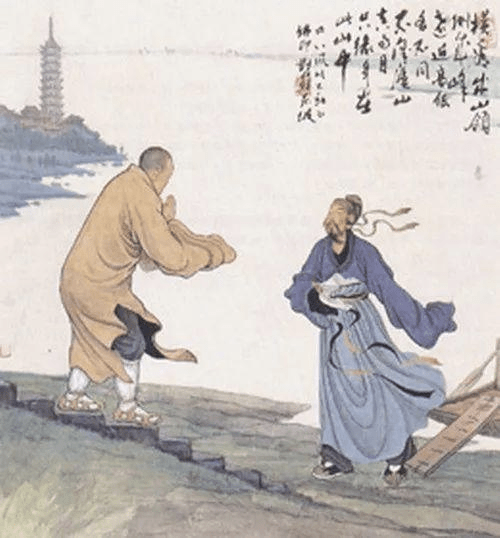
One day, after a particularly serene meditation session, Su Shi felt that he had made a significant realization. He decided to capture his experience in a poem, which read, “Sitting still on the lotus platform, even the eight winds cannot move me.”

Curious about the authenticity of his realization, Su Shi asked his servant to deliver the poem to Zen Master Foyin, who resided in the Jinshang Temple across the river.

Upon receiving the poem, the Zen Master smiled and wrote two large characters on a piece of paper, which he instructed the servant to take back to Su Dongpo.

Excited to receive feedback from the Zen Master, Su Dongpo eagerly unfolded the paper, hoping to see praise for his state of practice.

However, instead of receiving the expected validation, Su Dongpo was infuriated to see the two characters “fart” written on the paper. Without hesitation, he boarded a boat and crossed the river to confront Zen Master Foyin.

When Su Dongpo arrived at the Jinshan Temple, he found the Zen Master waiting for him on the shore. In a loud and accusatory tone, Su Dongpo asked, “Great monk! You and I are best friends. If you don’t appreciate my poems and my practice, it’s fine. How can you slander me?”

The Zen Master remained unperturbed and asked, “How did I slander you?”

Su Dongpo then showed him the word “fart” written in the poem.

The Zen Master burst into laughter and exclaimed, “Ah! Didn’t you say ‘Eight winds cannot move you’? How come just one fart was enough to blow you over the river?”

The “Eight Winds” refer to the eight worldly concerns: gain and loss, honor (fame) and disgrace (dishonor or infamy), praise and ridicule (censure, blame or criticism), pleasure and suffering (pain). Eight situations that normally preoccupy and sway unrealized people. To be unmoved by these Eight winds is a mark of a true buddhist practitioner.

Su Dongpo and Zen Master Foyin

Link:https://peacelilysite.com/2023/02/24/su-dongpo-and-zen-master-foyin/

#SuShi#SuDongpo#ZenBuddhism #ZenMasterFoyin #Eightwinds #Buddha