The Miraculous Event Experienced Around the Buddha

Rinpoche’s Life Saved by His Holiness Dorje Chang Buddha III

By Zhaxi Zhuoma, January 20, 2006

At early year 2006, I found that my strength was leaving my body. I had tried various alternative medical treatments, but it seemed that I was loosing energy every day. When a friend gave me a thermometer, I started taking my temperature and found that my body temperature was constantly at around 95 degrees—way below normal. I just felt that my life force was leaving me and that one by one all my body functions were beginning to shut down. I had watched my elderly father die several years earlier and knew that was what happened in the death process, so I became convinced that I was about to die.

I am fortunate to be able to see the H.H.  Dorje Chang Buddha III fairly often, but he is so busy, I did not want to bother him with my problems. I figured that if this was my time to go, I would go. If not I would stay. I am 65 years old and ready. His Holiness had told me that as soon as he was finished with a particular project, he would take care of my problems. Since I have seen His Holiness help many of his disciples and how they have miraculously become well or heal after receiving the Buddha Master’s blessing, I was not too concerned. I had also seen the Buddha Master help people who were not even Buddhists go to the Western Paradise. Whether I lived or died, it would be ok. Either way I had faith in my vajra master and knew he would take care of me.

One afternoon, I could not bear to stay with the Buddha Master any longer. I simply had to go home and rest. As I was paying my respects to leave, His Holiness looked at me and stopped what He was doing and asked what was wrong. I told him how I was very, very tired and wanted to get some rest.

The Buddha Master said, “No, wait. I will help you.” His Holiness was very busy right then and in the middle of doing some very important matters, but the Buddha Master stopped and went into the next room and when He came back, His Holiness said that He would practice a particular dharma for me. What I did not know until later, because it was not translated at the time (I do not understand Chinese), was that His Holiness told the other disciples who were there, that I was in a very dangerous state. In hindsight, I should have suspected as much, since the Buddha Master was so very busy and it was His Holiness who volunteered to help me. I did not even ask. His Holiness told those present that my chakras had almost completely shut down and, if He could not reactivate them by transferring his energy to me, I might as well go home and prepare to die. They should contact my relatives to prepare for my funeral. I know the disciples had suddenly gathered around us and looked very serious, but that often happened when the Buddha Master transmitted any dharma, so I was not alarmed. The first few times the Buddha Master tried to open my chakras, nothing happened. His Holiness practiced the dharma and recited many mantras. I felt nothing. He then told the other disciples (and they told me afterwards) that He could try one more time and if that did not work I was a goner. Some of the disciples thought at first that the Buddha Master was joking, but by now they realized how serious the matter was. All this time the Buddha Master was very jolly and since I knew no better, I was not frightened. Then His Holiness did another dharma and, while reciting a secret mantra, he was able to transfer his energy to me. It was like being hit by a lightening bolt. POW! I can’t say it was painful, but it was certainly overwhelming!

His Holiness showed us how He could turn this transfer of energy on and off. I would feel the energy, then I would not. The Buddha Master had complete control over this process. It was amazing. The Buddha Master was very happy. I knew from his reaction that His Holiness had healed me. His Holiness said my chakras were now functioning and open and “That was what I have been waiting for. This is the last step you needed to receive the Dharma. Now I can teach you.” Over the past few years the Buddha Master had given me many initiations and empowerments to remove my negative karma and prepare me for receiving the esoteric dharma.

Of course I was ecstatic. I went home and slept for a very long time. I woke up feeling that my entire body had been run over by a semi. Every cell in my body ached, but I could tell my energy or life force was back. This very understandable “cell fatigue” only lasted a few days. When I remembered to take my temperature again it was back to normal. I have had extraordinary energy ever since. I normally only sleep a few hours a night and feel great! My Buddha Master is truly magnificent. The healing powers of His Holiness are amazing. The Buddha Master has attained perfection in all of the Five Vidyas and the Buddha-dharma! I am very, very grateful for the kindness and compassion of my Buddha Master. Amitabha!

Rinpoche’s Life Saved by His Holiness Dorje Chang Buddha III

Link:https://peacelilysite.com/2024/04/04/the-miraculous-event-experienced-around-the-buddha/

#DorjeChangBuddhaIII#HHDorjeChangBuddhaIII#ZhaxiZhuomaRinpoche#BuddhaDharma

In Commemoration of the Holy Birthday of Avalokitesvara Bodhisattva, Dharma Assembly Unites Buddhists in Pasadena

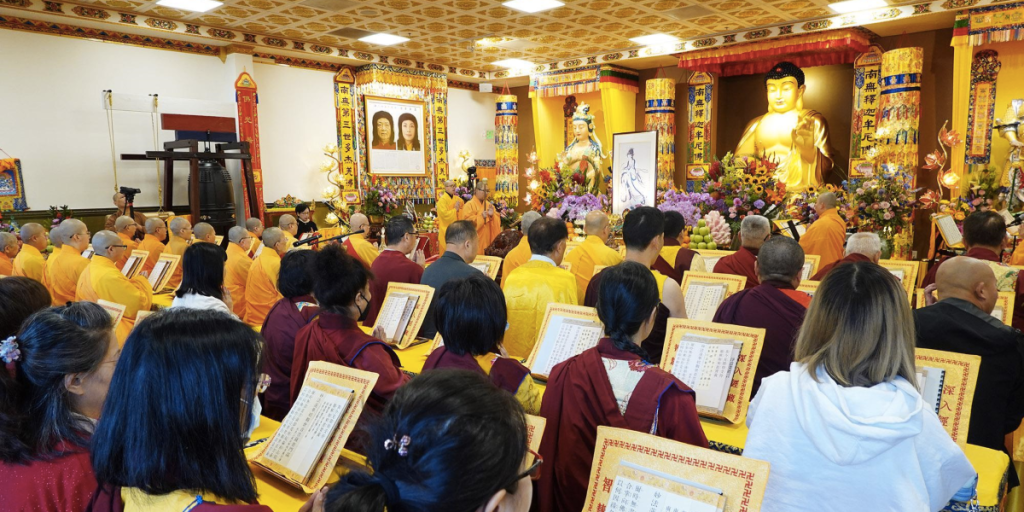
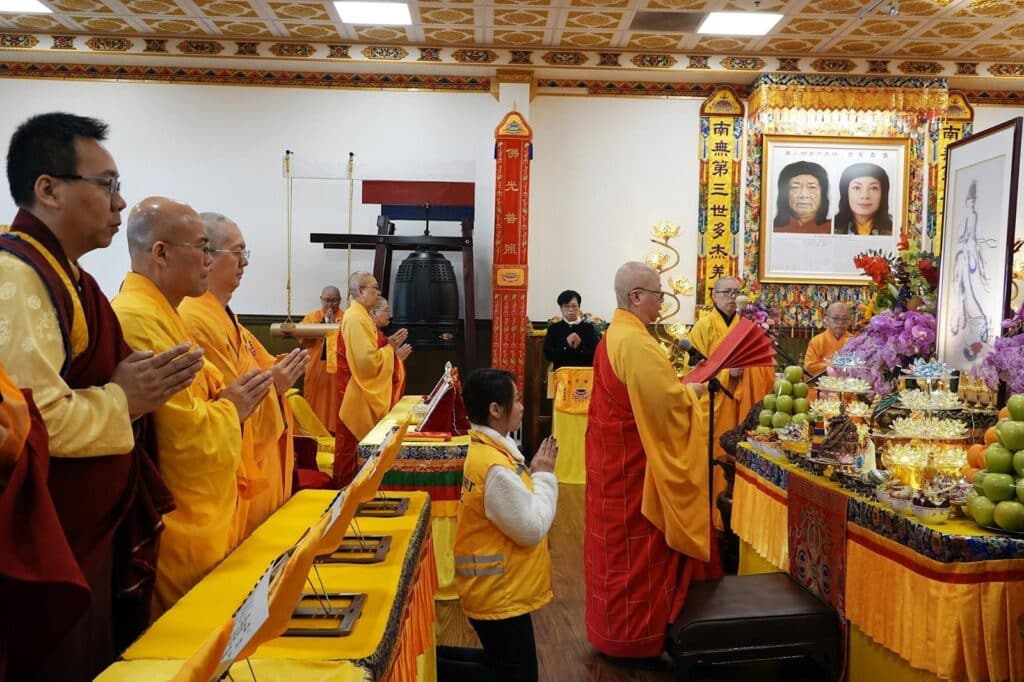
To honor the Holy Birthday of Avalokitesvara Bodhisattva, Buddhists and local residents converged at the Holy Miracles Temple in Pasadena, California, for the Avalokitesvara Bodhisattva Dharma Assembly. Held on March 17, 2024, within the Sakyamuni Buddha Hall, this event was a collaborative effort between the World Buddhism Association Headquarters, Holy Miracles Temple, and Sanger Mission.

Presided over by the Abbess of the Hua Zang Si Temple, Ruzun Ruohui, and jointly guided by Dharma Master JueHui and Dharma Master MiaoKong, the assembly brought together a congregation of holy gurus, eminent monks, dedicated monastics, and others. Their shared purpose was to pay homage to Avalokitesvara Bodhisattva, whose boundless compassion and loving kindness have been a beacon of hope for countless beings throughout the ages. 

In Commemoration of the Holy Birthday of Avalokitesvara Bodhisattva, Dharma Assembly Unites Buddhists in Pasadena

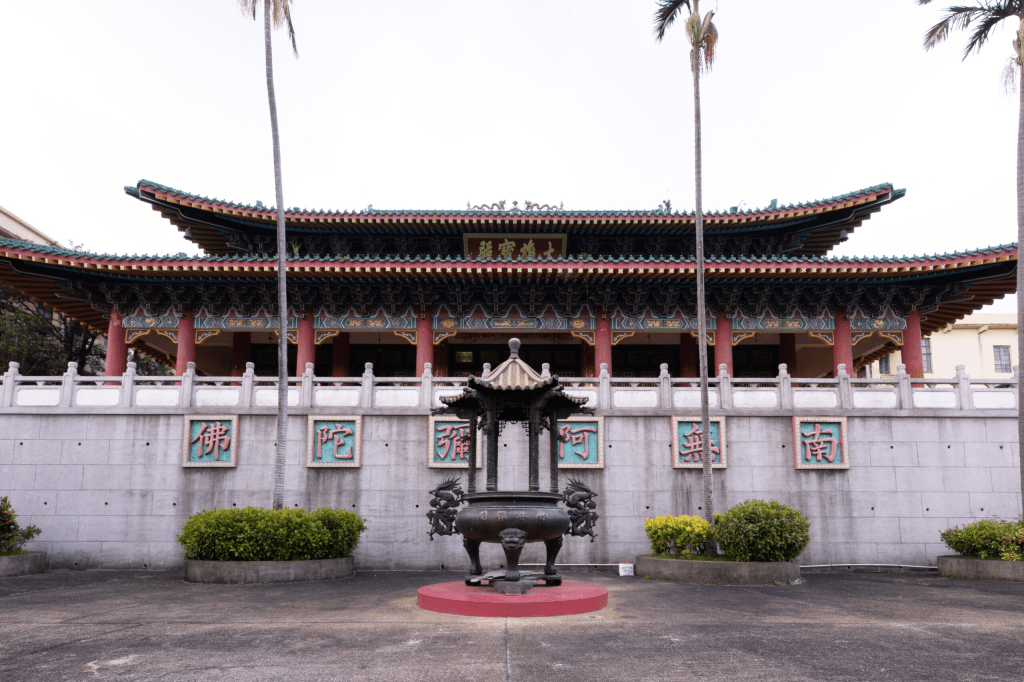
The Avalokitesvara Bodhisattva Dharma Assembly was held in the Sakyamuni Buddha Hall of Holy Miracles Temple.
Photo Courtesy: Joyce Lee

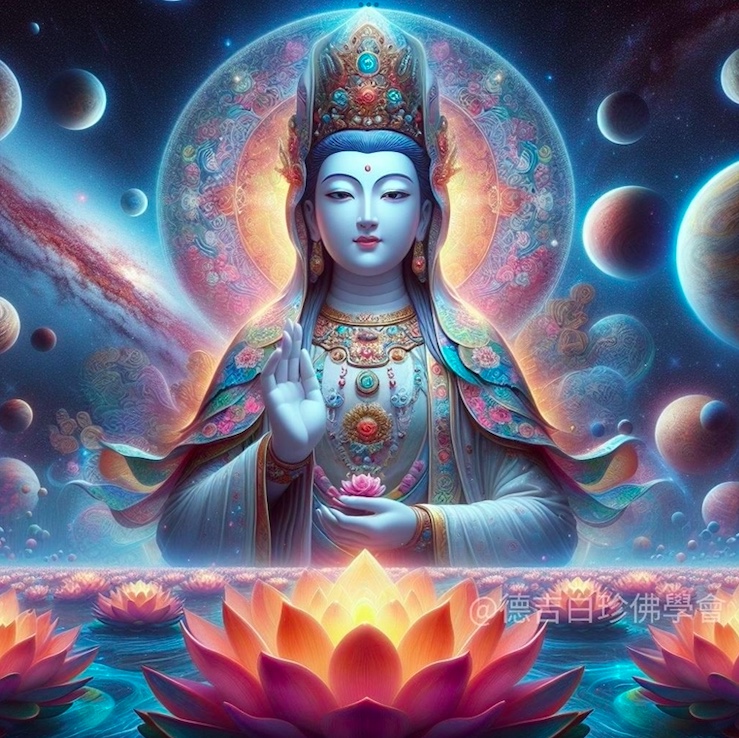
Avalokitesvara Bodhisattva, also known as Guan Shi Yin Bodhisattva in Chinese, is revered for profound compassion and unwavering commitment to alleviating the suffering of all sentient beings. According to Buddhist scriptures, Avalokitesvara Bodhisattva attained Buddhahood eons ago and is known as Zheng Fa Ming Ru Lai, the Correct Dharma Realization Tathagata. Through sacred vows and bodhicitta, the Correct Dharam Realization Tathagata manifests as a Bodhisattva to extend aid to those in need and save sentient beings from suffering. Avalokitesvara Bodhisattva expounded one of the most influential Buddha Sutras – “The Prajna Paramita Heart Sutra,” which encapsulates the profound wisdom of the Buddha, illustrating the meaning of prajna.

While honoring Avalokitesvara Bodhisattva’s great compassion, sovereign wisdom, profound power, and benevolence, the assembly also reflected on the significance of bodhicitta, as elucidated by H.H. Dorje Chang Buddha III in the Sutra – “What is Cultivation.” He imparted, “The broad meaning of bodhicitta encompasses all of the Mahayana Dharma related to saving living beings out of great compassion and the causes leading to attaining the stages of enlightenment of a Bodhisattva.” This essence of conduct rooted in compassion deeply resonated with the attendees, reinforcing their dedication to selflessness and enlightenment. 

The assembly witnessed the recitation of passages from “The Lotus Sutra’s Universal Gate Chapter on Avalokitesvara Bodhisattva,” a revered text extolling the virtues and profound wisdom of Avalokitesvara Bodhisattva. Participants engaged in practices such as meal offerings to the Buddhas, seeking blessings for happiness, auspiciousness, and the enhancement of fortune and wisdom. The gathering also collectively expressed their aspirations for the endurance of world peace, the cessation of calamities, while invoking prosperity, good health, and longevity for all.

As incense wafted through the temple and chants echoed in the halls, attendees were reminded of the profound teachings of compassion and empathy advocated by Avalokitesvara Bodhisattva. The ceremony served as a reminder of the transformative power of faith, uniting individuals from all walks of life in celebration of the Dharma.

Link:https://peacelilysite.com/2024/04/03/in-commemoration-of-the-holy-birthday-of-avalokitesvara-bodhisattva-dharma-assembly-unites-buddhists-in-pasadena/

Source: https://usreporter.com/in-commemoration-of-the-holy-birthday-of-avalokitesvara-bodhisattva-dharma-assembly-unites-buddhists-in-pasadena/?fbclid=IwAR1_ZsMbU5EVdHTB4vs3-N5rxvYPDAyp1yau1Q2yzlR7muGBUg8T34Df5ks_aem_AaJlydz4lJZkOOrnb9SbNs3AvRoEj8k7_mqFFoKYsQDZwiLLe6Rq426dYKN-i1Tm0LtTahh5Y8RLfTYXwOU31LBW

Brief Introduction to Great Bodhisattva H.E. Tangtong Gyalpo Bodhisattva

A Great Disciple of H.H. Dorje Chang Buddha III

H.E. Tangtong Gyalpo is a greatly accomplished person within Tibetan esoteric Buddhism who attained the rainbow body. He is a great Bodhisattva known and respected by one and all in Tibet.

He is also an extremely holy person who has made huge contributions to the Tibetan people. It was this great Bodhisattva who was the father of medicine, ferryboats, bridges, and operas in Tibet. He has brought to the living beings of Tibet limitless blessings. To this day, Tibetan temples and families continue to worship H.E. Tangtong Gyalpo Bodhisattva.


The first Tangtong Gyalpo left the household life to become a monk when he was very young. He studied the sutras and treatises and became good at debating the sutras. Although he possessed the Five Vidyas, he remained modest, simple, and down-to-earth. In order to provide a model of self-cultivation, H.E. Tangtong Gyalpo followed and learned under many people of great virtue.

He also engaged in solitary, quiet cultivation for a long period of time at the Eri Temple. Later, he received teachings directly from Dakini Niguma and became a person greatly accomplished in the dharma. People praised H.E. Tangtong Gyalpo with the following words: “In the vast realm of emptiness, there is a yogi who intensively studies emptiness and who is like the King of Fearlessness. His name is Tangtong Gyalpo.” He has also been respectfully called Zhibai Wangxiu Tangtong Gyalpo, which means the accomplished, free and unhindered Tangtong Gyalpo!

During a certain year in history, there was a serious drought and famine in Tibet. H.E. Tangtong Gyalpo conducted a Dharma Assembly in front of the Sakyamuni Buddha statue in the Jo-khan Temple in Lhasa. At that Dharma Assembly, he wrote “A Prayer to Eliminate Famine.” Many people then saw Kuan Yin Bodhisattva in the sky disseminating various grains. The famine ended not long after that.


There was another time when war and chaos occurred in the Muya district of Kham in Tibet, causing people to leave their homes and wander about. H.E. Tangtong Gyalpo made a vow and wrote “A Prayer to End War and Chaos.” People in that area very soon after that ended their mutual hatred and instead treated one another in a peaceful, friendly, and loving manner. There was another year when a pestilence broke out in a large area covering a religious site of the Sakya sect, causing countless deaths. The chanting of mantras and the offering of sacrifices could not end the pestilence. Thus, H.E. Tangtong Gyalpo again practiced dharma and wrote “A Prayer to End the Disaster of Illness.” As a
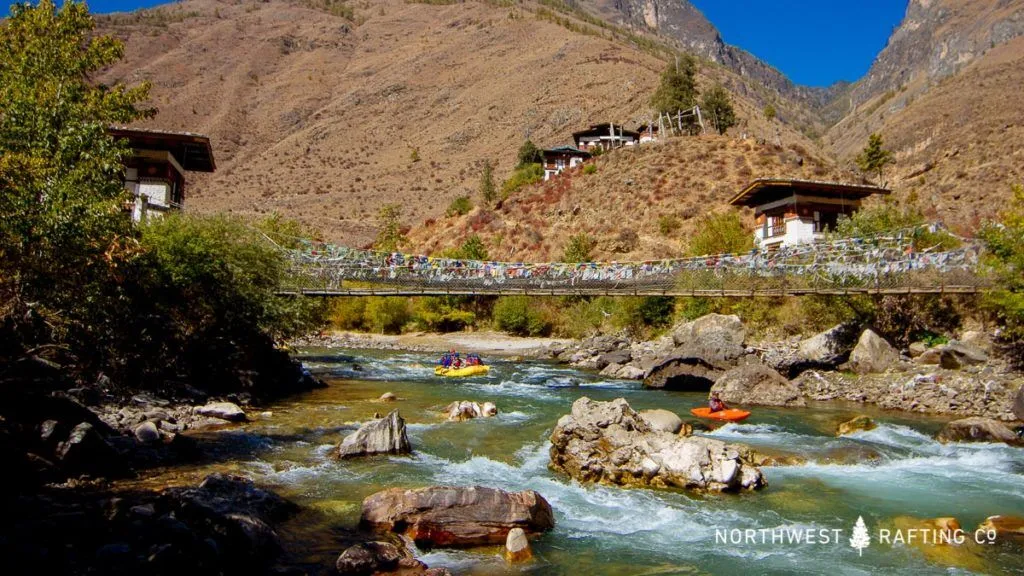
result, the pestilence disappeared forthwith. In previous times in Tibet, it was very difficult for people to cross rivers. The river waters mercilessly took away people’s lives as they attempted to cross the rivers. Thus, H.E. Tangtong Gyalpo made improvements to ferryboats and began building bridges. In that lifetime, he built fifty iron-chain bridges, sixty wooden bridges, and many temples. One of those temples was the Tangge Lakong (the Tangtong Gyalpo Temple), which was the first temple in the Derge region. With respect to medicine, H.E.Tangtong Gyalpo established the Medicine King Temple at Jiabori in Lhasa, invented a white pill that cured all kinds of internal medical diseases, and invented a red pill that cured epidemic diseases. Thus, he became the founder of Tibetan medicine. That white pill and red pill are used in Tibetan medicine even to this very day to relieve the sufferings of living beings.

This 600 year old bridge crosses the Paro Chhu (Paro River) and was traditionally restored in 2005 after being washed away during a 1969 flood. The bridge was originally built by the legendary Thangtong Gyalpo
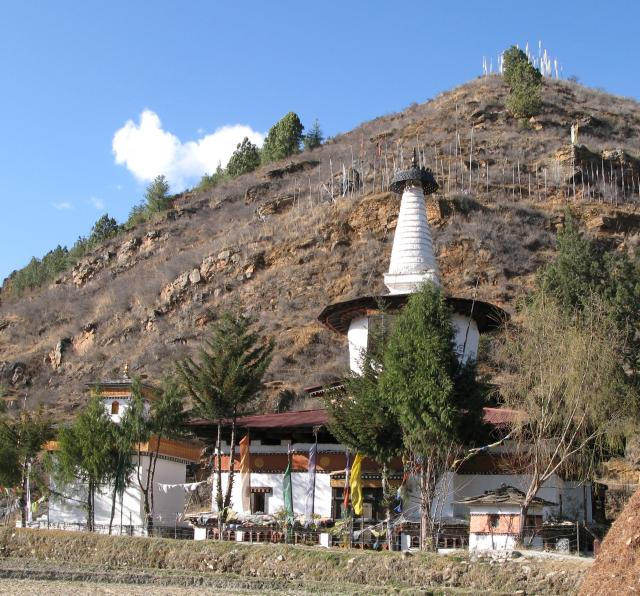
Dungtse Lhakhang, a temple in form of a chörten near Paro in Bhutan was built by Thangtong Gyalpo. The roof construction is made of iron.


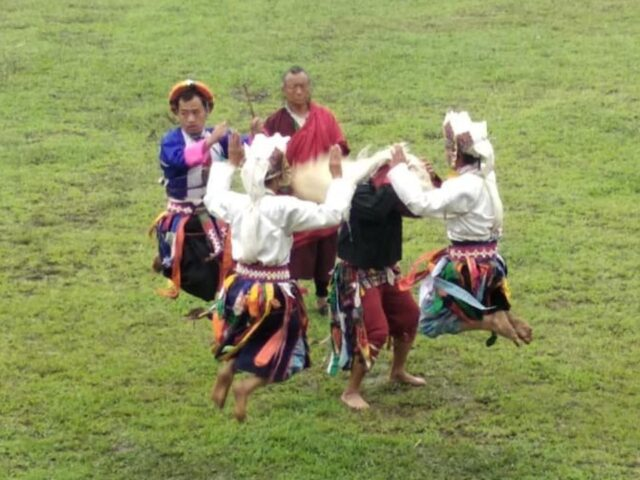
H.E. Tangtong Gyalpo Bodhisattva also wrote many Tibetan operas and established the Ache Lhamo opera troupe, the members of which acted out Tibetan historical stories through song and dance and pioneered Tibetan operas. The Achi Lhamo opera, with the starting troupe of seven sisters who worked on the saint’s bridges, is still performed and enjoyed hugely to these days during the new year celebration and on festive occasions. 

Achi Lhamo Opera Composed by Thang Tong Gyalpo Still Prevalent in Bhutan

H.E. Tangtong Gyalpo was the supreme leader of four esoteric sects within India, Bhutan, Sikkim, Mongolia, and Eastern Tibet. He possessed teachings from many dharma lineages, the most remarkable of which were the lineage to extend one’s life and the lineage to bring in wealth and change one’s fortune.
Everyone in Tibet, no matter what sect he or she belonged to, believed in and practiced such lineages and scriptures. Countless disciples of H.E. Tangtong Gyalpo became accomplished in the dharma under his teachings and attained great supernatural powers, wisdom and great compassion. More than one hundred disciples of his attained the rainbow body or the transformation rainbow body. All Tibetan people know that H.E. Tangtong Gyalpo is truly a great patriarch of Tibetan esoteric Buddhism and a great Bodhisattva. Later, each time H.E. Tangtong Gyalpo incarnated into this world. He was a great patriarch who spread the dharma, liberated living beings, and pervasively benefited people.

Thang Tong Gyalpo Present Reincarnation


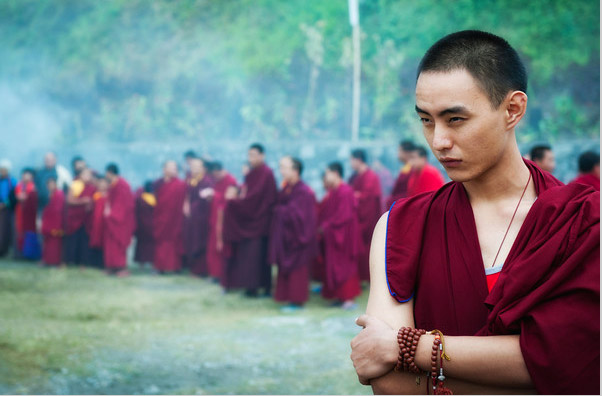
H.E. the sixteenth Tangtong Gyalpo Bodhisattva (Thangtrul Rinpoche) took birth in Bhutan. His physical appearance resembles that of Guru Padmasambhava. Even when he sleeps, his eyes remain open. He saw H.H. Wan Ko Yeshe Norbu (Dorje Chang Buddha III) during a Dharma Assembly that took place in 2005 at Hua Zang Si in San Francisco, U.S.A. In a supernatural state of samadhi, he instantly saw that H.H. Dorje Chang Buddha, the highest ancient Buddha in the dharma realm, had already come to this world again. He at once formally acknowledged H.H. Dorje Chang Buddha III Wan Ko Yeshe Norbu as his master. H.H. Dorje Chang Buddha III asked him, “Did you follow and learn dharma under Guru Padmasambhava? Why have you come here?”H.E. Tangtong Gyalpo answered
that he had received teachings directly from Guru Padmasambhava and from H.H. Sakya Trizin who is the nirmanakaya of Manjushri Bodhisattva. He also said that he had come to request the highest dharma in order to save living beings. H.H. Dorje Chang Buddha III immediately snapped His fingers, and a dharma bowl manifested awesome power. H.H. Dorje Chang Buddha III then accepted H.E. Tangtong Gyalpo as one of his disciples who is on the level of a great venerable one and performed an initiation for him. H.E. Tangtong Gyalpo took that dharma bowl back to his home country.


He later learned that the book A Treasury of True Buddha-Dharma about the H.H. Dorje Chang Buddha III Wan Ko Yeshe Norbu Holiest Tathagata was about to be published. He thereupon organized many rinpoches to practice the Kuan Yin Dharma one billion times as an offering to His Holiness Dorje Chang Buddha III. He also sent his written congratulations stating that His Holiness is the master of Buddhas, the magnificence of His Holiness is supreme and that in this world no other holy being in history can compare with His Holiness.

H.H. Dorje Chang Buddha III accepted H.E. Tangtong Gyalpo as his disciple at Hua Zang Si temple San Francisco

#DorjeChangBuddhaIII#HHDorjeChangBuddhaIII#HuaZangSi #Buddha #Buddhism #buddhist #Temple#GuanYinBodhisattva#BuddhismTemple#SanFrancisco#TangtongGyalpo #Buthan #Tibet


Link:https://peacelilysite.com/2024/03/22/brief-introduction-to-great-bodhisattva-h-e-tangtong-gyalpo-bodhisattva/

Source: https://www.rigpawiki.org/index.php?title=Thangtong_Gyalpo, https://www.nwrafting.com/international/thangtong-gyalpo-tachog-lhakhang, https://www.bhutaninbound.com/blog/2022/06/11/thang-tong-gyalpo-iron-man-of-bhutan/

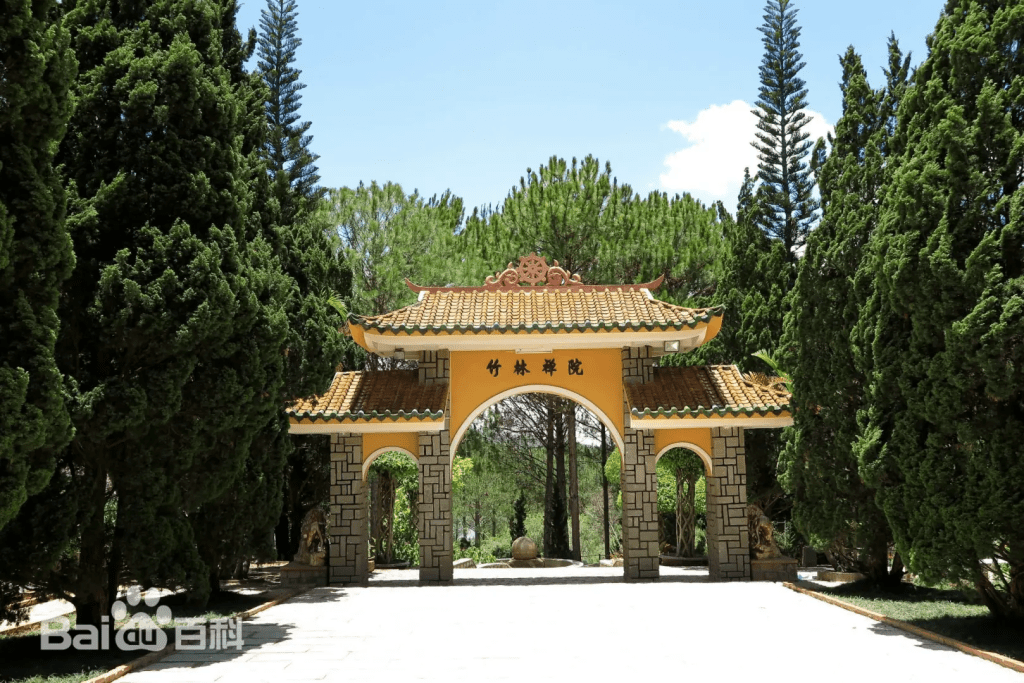
Zhulin Temple (Chuk Lam Sim Yuen) at Hong Kong

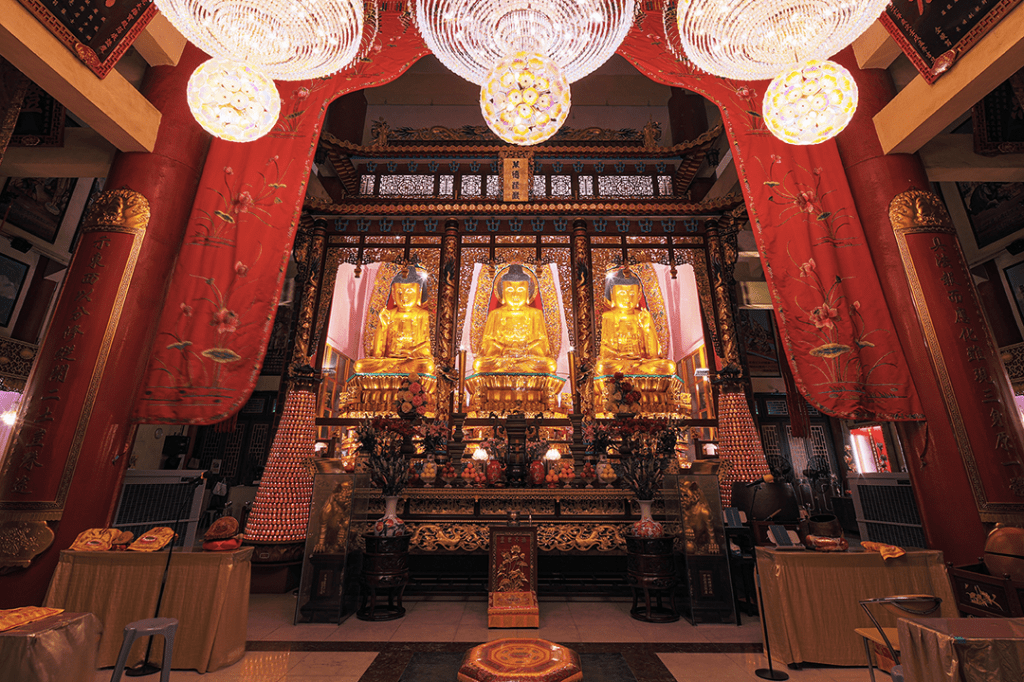
Standing on Fuyung Mountain Road in Tsuen Wan, Hong Kong, Zhulin Temple (also known as Chuk Lam Sim Yuen) proudly upholds the lineage of the Linji School of Zen Buddhism. Rooted in tradition, the temple seamlessly integrates teachings from the Tiantai and Pure Land traditions, thereby spreading the Buddha’s wisdom far and wide. Nestled within the heart of the Fragrant Harbour, it fosters a unique spiritual atmosphere known as the “Bamboo Grove Family Style,” where the Dharma is generously shared, benefiting both locals and visitors alike, serving as a haven for Buddhist study and practice.

Encompassing an expansive area exceeding 400,000 square feet, Zhulin Temple commands a serene and majestic presence, making it one of the largest and most beautiful temples in Hong Kong. Its origins trace back to 1928 when the founding master, prompted by three visionary dreams from Bodhisattva Ksitigarbha, embarked on the mission to erect a temple on Fuyung Mountain. Inspired by unwavering Bodhi resolve, six devoted followers generously donated funds to procure the land and construct the temple. Drawing inspiration from the architectural marvels of ancient Chinese mountain temples, the Pagoda Hall was completed on October 23, 1932, housing the largest statue of Ksitigarbha Bodhisattva on a lotus throne in Hong Kong. Thus, Zhulin Temple was formally inaugurated, marking the beginning of its sacred journey to illuminate sentient beings.

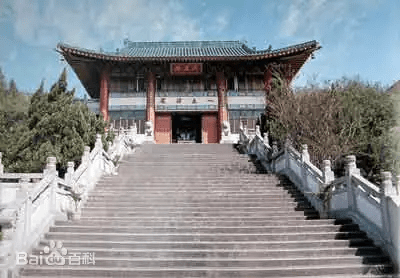
The architectural layout of Zhulin Temple embraces a harmonious three-section courtyard design. Upon crossing the mountain gate, visitors are greeted by the monastery’s serene courtyard garden, offering a space for worshippers to procure incense, candles, flowers, and fruits for offerings. Ascending the steps leads to the grand Hall of Heavenly Kings, where the jovial Maitreya Buddha stands at the central entrance, extending a warm welcome to all. Within the hall, the Four Heavenly Kings stand guard, with the central altar adorned by Bodhisattva Virūpākṣa, safeguarding the monastery under the benevolent gaze of Maitreya Buddha.

steps leads to the Grand Hall of Heavenly Kings,

Maitreya Bodhisattva

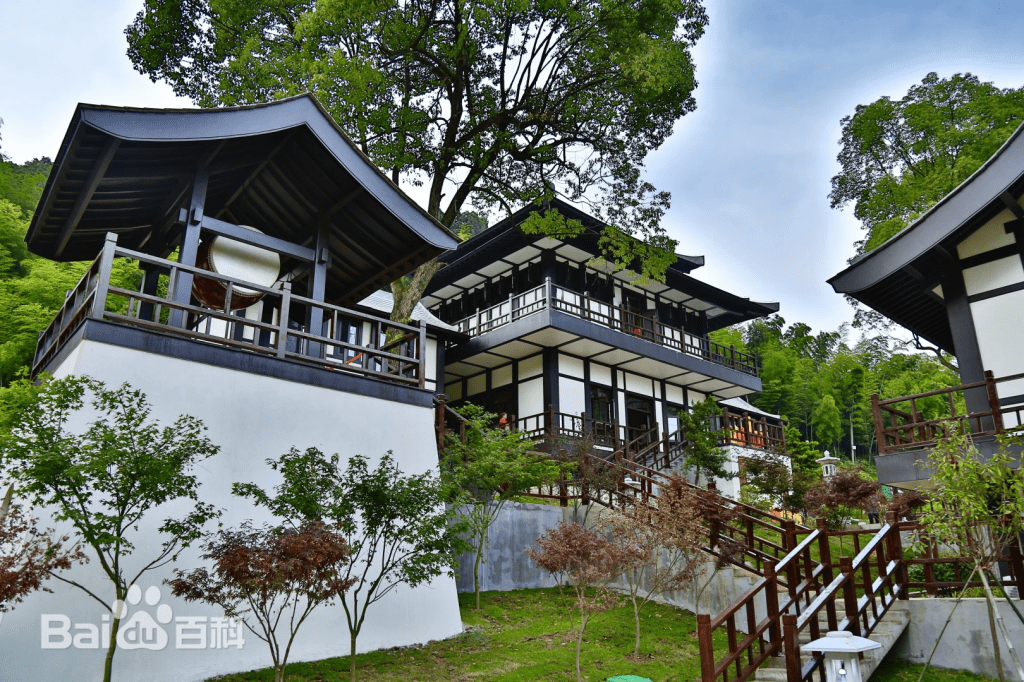
Further beyond lies a spacious courtyard flanked by a bell tower and drum tower. Ascending the stairs unveils the majestic Grand Hall, where the Triple Gem (Amitābha Buddha, Śākyamuni Buddha, and Bhaiṣajyaguru Buddha) resides on the central altar, accompanied by eighteen Arhats on either side. Adorning the rear of the Triple Gem altar is a depiction of the transformative scene from the Avalokiteśvara Sūtra, illustrating the manifestation of Avalokiteśvara Bodhisattva.

Bell Tower and Drum Tower

The Grand Hall

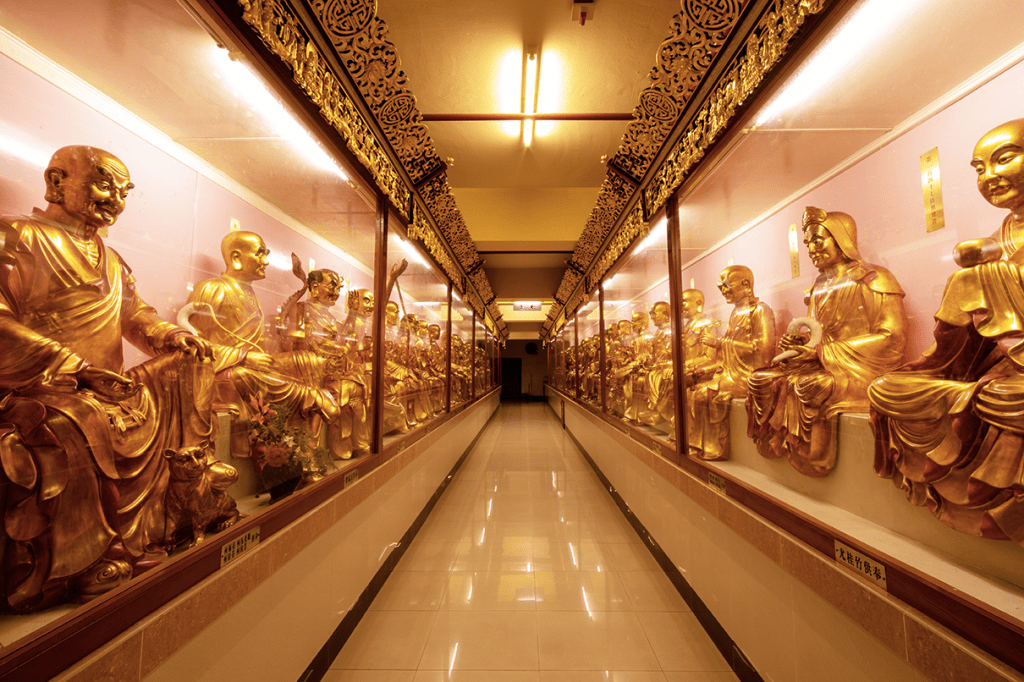
Adjacent to the main hall, worshippers find solace in a pavilion, while the Guan Yin Hall and Jade Buddha Hall flank its sides. Upstairs, the Pagoda Hall, now known as the Ksitigarbha Hall, stands adjacent to the Ancestral Hall and the Kitchen. Surrounding the monastery are additional halls including the Five Hundred Arhats Hall, the Dharma Hall, the Chan Hall, and the Scripture Repository, nestled along the outskirts and mountain slopes.

Guan Yin Hall

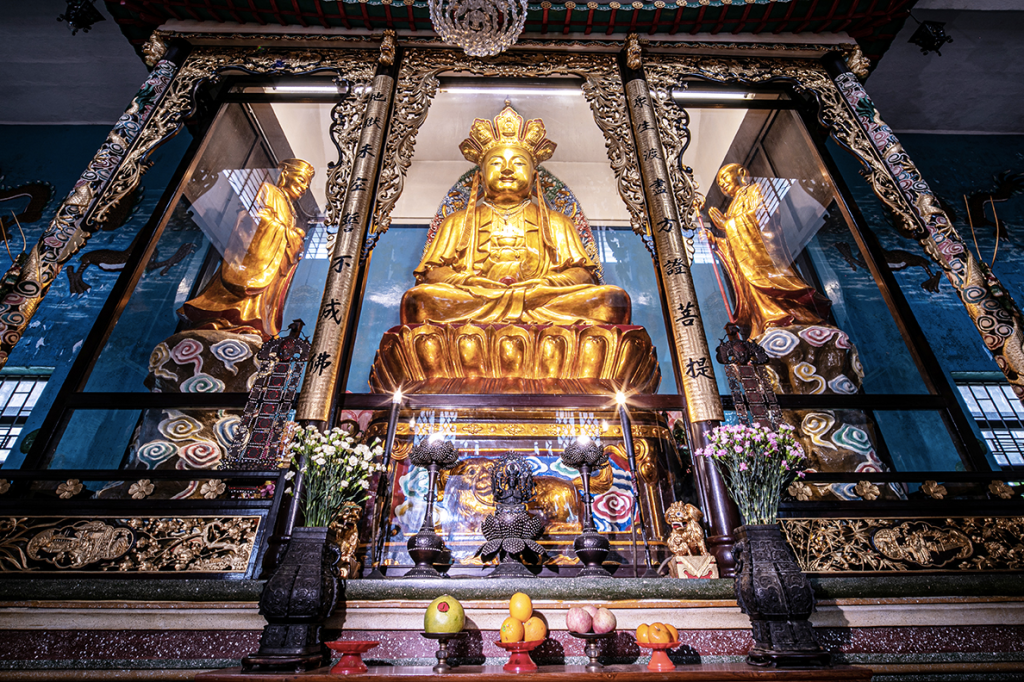
Ksitigarbha Hall
Five Hundred Arhats Hall

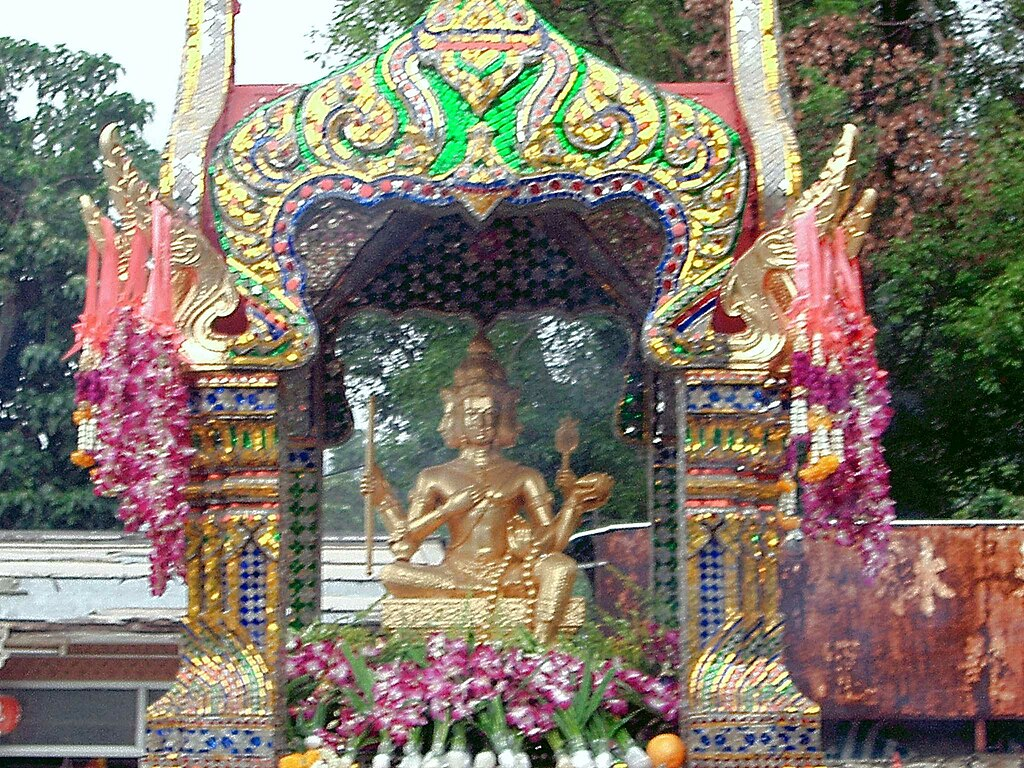
Four faced Buddha Statue 由Hkgalbert – 自己的作品,公有领域,https://commons.wikimedia.org/w/index.php?curid=9932768

Throughout its century-long history, Zhulin Temple has been overseen by five abbots. Notably, the fourth Abbot Master YiZhao emerged as an eminent monk of his time. Venerable Dharma Master Yizhao (1927-2013), born in Guangdong, China, embarked on his spiritual journey by joining Zhulin Zen Monastery in Hong Kong in 1940, formally becoming a monastic in 1941.

Under the guidance of Master Xuyun, he received the transmission of Viyana at Nanhua Temple in 1944, subsequently inheriting the Linji (Rinzai) Dharma lineage and becoming its 44th holder. Establishing the Guyan Pure Monastery in 1952, he later returned to Zhulin Temple to assist in its renovation, eventually assuming the role of abbot. He peacefully passed away in 2013, leaving behind a legacy of enlightenment and compassion.

Master YiZhao (left) and Master XuYun (right) were together at KaiYuan Temple in ChaoZhou, GuangDong , in 1946

Venerable Dharma Master Yizhao, the successor to H.E. Dharma Master Xuyun, exemplifies profound virtue within contemporary Zen Buddhism. Having attained the supreme state of Bodhi, he relinquished all ties to further reincarnation long ago. Inspired by the compassionate vow of Ksitigarbha Bodhisattva, he pledged “As long as there is any living being in the earthly realm, I vow not to become a Buddha.” Renowned as the nirmanakaya of Ksitigarbha Bodhisattva, he received the Amrit Empowerment Initiation from H.H.  Dorje Chang Buddha III, lauded as an exceptional monk who ardently upholds precepts.

In June 2000, Venerable Dharma Master Yizhao seized the opportunity to participate in the Buddhas Bestowing Nectar Dharma Assembly presided over by H.H.  Dorje Chang Buddha III. (The very left in the photo is Master Yizhao)

Following the conclusion of the assembly, Venerable Dharma Master Yizhao graciously shared his personal insights and expressed his profound admiration and gratitude towards H.H.  Dorje Chang Buddha III. For more details, please refer to the interview titled “Interview with Elder Monk Yi Zhao After the Buddhas Bestowing Nectar Dharma Assembly.

Zhulin Temple stands as a testament to beauty and sanctity, inviting visitors to immerse themselves in Buddhist culture, prayers, and blessings, offering a profound spiritual experience.

Link:https://peacelilysite.com/2024/03/14/zhulin-temple-chuk-lam-sim-yuen-at-hong-kong/

#Buddhist #BuddhaDharma #ZhulinTemple #HongKong #ZenBuddhism #YiZhaoMaster #Nectar #MasterXuYun #DorjeChangBuddhaIII  #HHDorjeChangBuddhaIII #ChukLamSimYuen #Abbot #LinjiSchool

Source: https://chuklam.org/, https://baike.baidu.com/item/%E7%AB%B9%E6%9E%97%E7%A6%85%E9%99%A2/19659656

H.H. Dorje Chang Buddha III received Certificate of Recognition from Dharma King Omniscience Jamyang Lungdok Gyaltsen Achuk Lama

THE PRE-EMINENT GREATLY VIRTUOUS ONE IN PRESENT-DAY TIBET: H.H. DHARMA KING ACHUK

Dharma King Omniscience Jamyang Lungdok Gyaltsen Achuk Lama is a great Dharma Master in the Nyingma sect of Tibetan Buddhism. He is the incarnation of Venerable Longsal Nyingpo, one of the twenty-five great disciples of Guru Padmasambhava. Dharma King Omniscience is one of the greatest and most accomplished leaders of contemporary Buddhism.

In the summer of 2006, Dharma King Omniscience encountered “A Treasury of True BuddhaDharma” and was profoundly impressed. Recognizing the unparalleled accomplishments and wisdom revealed in the book, he pondered the identity of the extraordinary individual behind such realization. Utilizing his supernatural powers, he peered into the dharmadhatu and unveiled the remarkable truth. It became evident that the acknowledgment made by Urgyen Xirao, Guru Padmasambhava’s dharma prince, was entirely accurate.

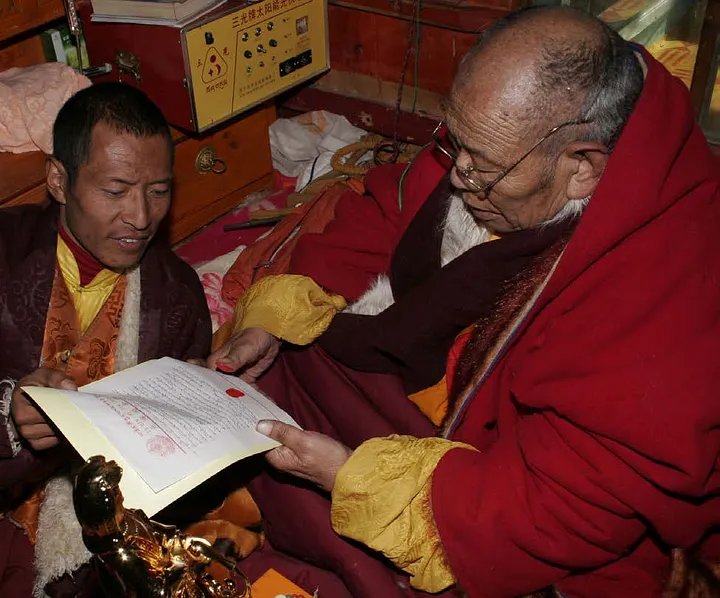
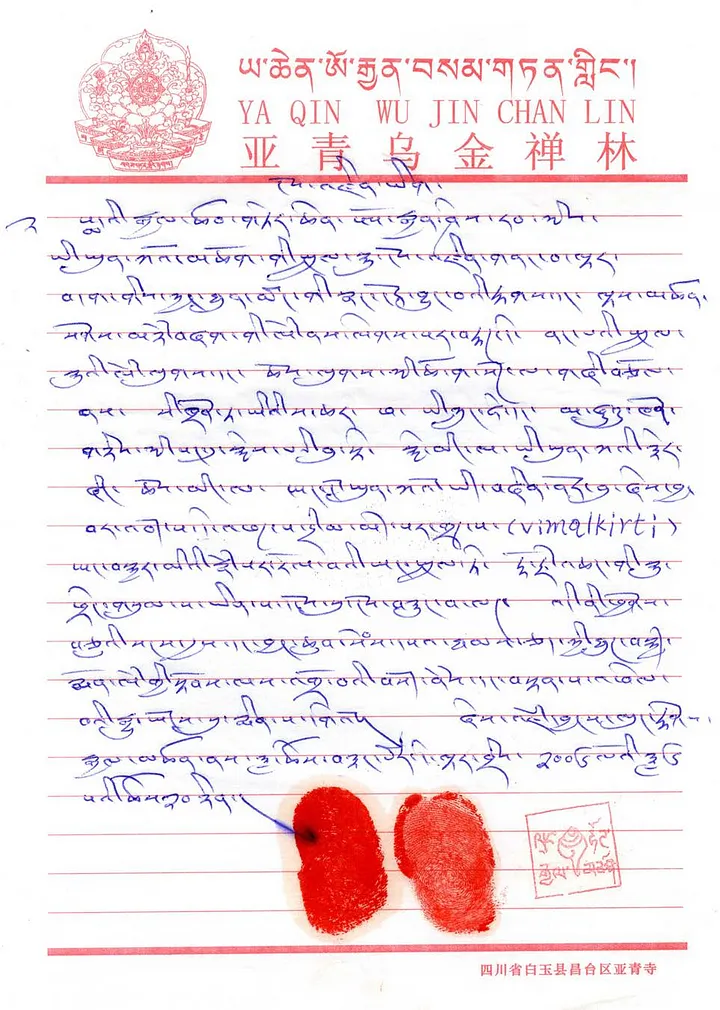
Urgyen Xirao had asserted in the recognition that His Holiness Yangwo Wan Ko Yeshe Norbu Great Dharma King is a sublime being of immense holiness. Dharma King Omniscience, fully concurring, proceeded to compose his own certificate of recognition, affixing his precious red seal upon it. The certificate declared His Holiness Yangwo Wan Ko Yeshe Norbu as the paramount leader of Buddhism.

Certificate of Recognition (in Tibetan)

Here is the English translation:

Based upon the recognition of Urgyen Xirao, the dharma prince of Guru Padmasambhava, and following the system and religious rituals of Tibetan Buddhism for determining the reincarnation of Rinpoches, I entered samadhi to observe the truth. I now solemnly recognize that H.H. Master Wan Ko Yee, who is the son of father Zhonghai Yee and mother Kunfang Xu from Dayi County in Sichuan Province, is the incarnation of Vimalakirti (that is, Vimalakirti has again come to this world), is Dorje Chang Buddha III and has the dharma name of H.H. Yangwo Wan Ko Yeshe Norbu. This is the maturing of the karmic conditions of living beings relating to good fortune and wisdom. We are grateful for this blessing bestowed by the Buddhas.
I hereby recognize.

Dharma King Jamyang Lungdok Gyaltsen
June 20, 2006

BRIEF INTRODUCTION TO JAMYANG LUNGDOK GYALTSEN RINPOCHE

Dharma King Omniscience Jamyang Lungdok Gyaltsen Achuk Lama is a great Dharma Master in the Nyingma sect of Tibetan Buddhism. He is the incarnation of Venerable Longsal Nyingpo, one of the twenty-five great disciples of Guru Padmasambhava. Because people had different views on the reincarnated identity of Dharma King Omniscience, on a holy day in 2007 at Hua Zang Si in San Francisco, the International Buddhism Sangha Association beseeched H.H. Dorje Chang Buddha III Holiest Tathagata to recognize the true identity of Dharma King Jamyang Lungdok Gyaltsen. In the end, that association did receive such recognition from H.H. Dorje Chang Buddha III. H.H. Dharma King Jamyang Lungdok Gyaltsen was recognized by H.H. Dorje Chang Buddha III as the true incarnation of Venerable Longsal Nyingpo. The International Buddhism Sangha Association then held the holy form of Drawing Lots From a Golden Vase Dharma Assembly. One lot was drawn from among 120 sealed lots. After a curtain was removed and after that lot was unsealed and opened in front of all those present, it was discovered that H.H. Dharma King Jamyang Lungdok Gyaltsen is indeed the true incarnation of Venerable Longsal Nyingpo. Not only was the true identity of Jamyang Lungdok Gyaltsen personally recognized by the Holiest Tathagata, the Drawing Lots From a Golden Vase Ceremony confirmed that he is a great holy being who is the true reincarnation of Venerable Longsal Nyingpo. Yerba Rinpoche, who has demonstrated his supernatural powers over many lifetimes, personally discovered evidence throughout the six realms that Dharma King Omniscience never for a moment ceased striving to bring living beings to salvation and enlightenment.

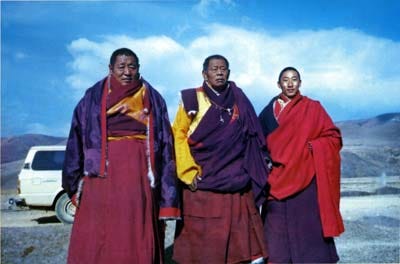
The person in the middle is Dharma King Omniscience Jamyang Lungdok Gyaltsen. To his left is Dharma King Jigme Phuntok and to his right is Asong Rinpoche.

Dharma King Omniscience was born in 1927 amidst rare and auspicious signs. The dharma protecting deities transformed into various physical forms to protect him when he was a child, which is something only experienced by beings of great holiness. He understood without impediment all scriptures and sutras. At 12, he entered the order of monks. Beginning at 18, he followed his vajra master Arik Vajradhara, a great accomplished one, into 43 years of solitary meditation. He received from Sela Yangzhi a complete transmission of the teachings he learned in his prior life. Sela Yangzhi was a true incarnation of Padmasambhava. Dharma King Omniscience manifested the ultimate essence of all the dharma and turned into a rainbow body of Great Perfection. He has entered the dharmadhatu’s non-attachment state and Four Wisdoms state. He has attained the state of the four divisions of initiations. He has accomplished the cutting off of all defilements related to the six sense organs. His once ordinary body has become a rainbow-light body. The dharma king’s body is able at any time to manifest rainbows, crystal pagodas, Buddha images, Tibetan seed characters, hand-held pennants, etc. The wrinkles of the skin of his entire body have formed the image of a mandala filled with pictures of all the Buddhas and Bodhisattvas. Sariras naturally pour forth from his body.

Link:https://peacelilysite.com/2024/03/01/h-h-dorje-chang-buddha-iii-received-certificate-of-recognition-from-dharma-king-omniscience-jamyang-lungdok-gyaltsen-achuk-lama/

Source: https://medium.com/@cultivator108/h-h-dorje-chang-buddha-iii-received-recognition-from-h-h-dharma-king-omniscience-achuk-lama-7f4bf75674f2

Great Holy Beings Give Their Approval

Great Holy Beings Give Their Approval

By: Zhaxi Zhuoma

The book H.H. Dorje Chang Buddha III contains a more detailed explanation by Gadu Rinpoche of what happened when H.H. Dorje Chang Buddha III gave the discourse “What Is Cultivation?” However, I would like to give my own personal testimonial of what I experienced. Like Gadu Rinpoche, I was very fortunate to be present when these holy events occurred. Since I have followed my Buddha Master, H.H. Dorje Chang Buddha III, I have seen many awesome and unbelievable events and been blessed by being able to participate in and witness many Buddhist ceremonies and receive dharma empowerments and initiations. This experience was truly amazing and was also an example of how different people saw or experienced different things. This is often the case when we witness holy states. Our karma is different, so the manifestation of holy states appear to us differently.

These lights first appeared when we were sitting and respectfully listening to a dharma discourse. I had requested that my Buddha Master give us a discourse on “What is Cultivation?” and His Holiness had graciously consented. We knew this would be a special discourse, since it was being recorded and many great dharma teachers and rinpoches had been summoned to attend. Suddenly there appeared a bright flashing light. I thought someone was using a flash camera, only that seemed very disrespectful and this was much brighter and dazzling and had a more golden color than that of a camera. I very rudely looked around. There was no camera nor apparent source. My second thought was that I was just imagining it. Of course no one else was showing any signs of seeing anything–they were all so engrossed in our Buddha Master’s discourse, and much too well behaved to respond. The lights came again many times–I lost count after the third, but I know it was more than three times. They were very bright and quite distinct. No sooner had the Buddha Master ended the discourse and we had paid our respects, did everyone begin talking at once. Even though it was in Chinese I could gather from the hand gestures and excitement that they had seen the same thing I saw. I believe all of this was recorded on the CD of this discourse. Ven. Gadu Rinpoche, whose English is quite good, explained what he had seen as did several others. It appeared that everyone present had seen something. There was no doubt that holy beings had come to listen to this very important discourse (it is printed in the book H.H. Dorje Chang Buddha III and included on this web-site) and they were very pleased and showed their joy by blessing us with their presence.

For a short period of time after that, these lights would miraculously appear. Once they flashed most auspiciously when the Buddha Master was talking to Ven. Gadu Rinpoche. At that time the Holy Beings were indicating approval of the design proposed for the cover of A Treasury of True Buddha-Dharma (the manuscript version of H.H. Dorje Chang Buddha III). They also flashed one Sunday morning at the hermitage where I live when I was reading one of His Holiness’s discourses in preparation for a class that would be taught later on that day. They came at another time when the Buddha Master was giving a discourse, but this time I was told to not be distracted and pay attention to the Buddha Master. I am pretty sure that was also included in the recording, but I must confess that before I was reprimanded, I searched the mandala thoroughly for any possible sources of light. There were none. These were truly blessings from another dimension. These were the manifestation of the Buddhas and Bodhisattvas who came to show their respect to our great Buddha Master!

There is no doubt that the book H.H. Dorje Chang Buddha III is an extraordinary work. Not only does it introduce H.H. Dorje Chang Buddha III to the world and share the reactions to the book of the leading Buddhists in the world today, it also documents a few of the awe inspiring accomplishments of this magnificent Holy Buddha the most important of which are the many teachings that can lead many beings to liberation. Since most of the book will be published in English as well as Chinese, it is truly a most auspicious blessing to the entire world. It represents the dissemination of the true Buddha-dharma for this time and age and in the Western and Asian worlds.

Link: https://wisdomtea.org/2024/02/22/great-holy-beings-give-their-approval/

The Eight Worldly Conditions

The Eight Worldly Conditions

by Venerable Narada Mahathera

This complex world is neither exclusively rosy nor entirely thorny. The rose, soft, beautiful, and fragrant, grows on a stem filled with thorns. What is rosy remains so, and what is thorny persists. One should not interfere with the thorns due to the presence of the rose, nor disparage the rose because of the thorns.

To an optimist, the world appears absolutely rosy; to a pessimist, it seems entirely thorny. However, a realist views the world neither as entirely rosy nor wholly thorny. From a realistic perspective, the world is a blend of beautiful roses and prickly thorns.

An understanding person appreciates the rose’s beauty without becoming infatuated, acknowledging the thorns’ nature and taking precautions not to be wounded.

Similar to a pendulum swinging between right and left, four inevitable conditions prevail in life — gain and loss, fame and defame, praise and blame, happiness and pain.

Gain and Loss: Businesspeople experience both gain and loss. While it’s natural to be pleased with profits, one must exhibit moral courage and maintain a balanced mind in the face of losses. Anticipating losses and being prepared helps reduce disappointment.

Fame and Defame: Fame and defame are inevitable in life. Seeking undue praise or avoiding criticism can lead to unfulfillment. True greatness is indifferent to external approbation.

Praise and Blame: Wise individuals remain unaffected by praise or blame, recognizing that opinions vary. The Buddha’s teachings emphasize responding to false accusations with patience and understanding.

Happiness and Pain: Genuine happiness is not solely derived from material possessions, power, or external circumstances. Inner happiness is found in non-attachment and leading a blameless life.

Facing pain, whether from old age, disease, separation, or death, requires equanimity. The Buddha himself endured physical suffering but maintained a balanced mind. Death, inevitable for all, should be faced with perfect equanimity.

Amidst these dualities, a balanced mind is crucial. The Buddha’s teachings encourage cultivating equanimity in the face of worldly conditions.

Link: https://wisdomtea.org/2024/02/08/the-eight-worldly-conditions/

Incredible Power of Zhuo Huo Ding – Tummo Concentration

The term “Zhuo Huo Ding” (Tummo Concentration 拙火定) is widely recognized in Tibet. Practicing this skill has the potential to alter body temperature, and when mastered, it is believed to eliminate all diseases within oneself. Moreover, adept practitioners can employ Zhuo Huo to heal others, and advanced individuals may even achieve the transformation of their bodies into light. However, finding individuals who have truly mastered this skill is rare nowadays. Notably, there have been recent reports of Tibetan yogis practicing Zhuo Huo in winter, gradually drying wet felt cloth draped over their bodies.

While many have heard about the dharma of Tummo Concentration, witnessing a genuine manifestation of Tummo power is exceptionally challenging. In contemporary Tibet, India, and other locations, numerous lamas engage in Tummo concentration. However, when they emerge from extended seclusion practices, only a few manage to demonstrably raise their body temperature. At most, they symbolically wear a wet blanket while moving around the temple. Those who attain this initial level are revered as holy and venerable, reflecting the gradual loss of tantric dharmas across generations.

Tummo concentration, as a high-class Buddha-dharma of meditation, is an essential practice for cultivating the life power of the body, mind-wind, and bright spot, leading to the accomplishment of a rainbow-light body. Regardless of the ailment, Tummo practice is believed to have the capacity to eliminate it entirely, making it the nemesis of the demon of illness. Positioned within the realm of supreme yoga, mastering this dharma combined with Vajra Body Substitution Meditation can elevate one to the rank of a Bodhisattva at the twelfth stage or higher.

Two types of Tummo concentration practices exist: Yoga Tummo from Tibetan Esoteric Buddhism and Corpse-Laying Tummo, regarded as the “King of Tummo.” The practitioner’s ability to raise body temperature correlates with their realization power, surpassing typical human body temperatures. The realization power evolves through four steps, from the Initial Warmth Step to the Delight at Extreme Temperature. Each step corresponds to an increase in body temperature and an augmentation of the practitioner’s healing abilities.

Comparisons between practitioners often highlight the mastery of Zhuo Huo, with some claiming attainment of high levels. However, when juxtaposed with the technique of the renowned Rinpoche Wangze, these claims fall short.

On October 15, 2009, five Buddhist masters of the Gelug school, including the 8th SongJi Rinpoche, Gamadega Gonglare Rinpoche, Yongdeng Gongbu Rinpoche, American Rinpoche Zhaxi Zhuoma, and the 16th Chongdi Rinpoche, received a “Zhuo Huo removal of obstacles blessing” from the highly respected Holy Master Wangze Rinpoche, in the United States. Wangze Rinpoche is a devoted disciple of H.H. Dorje Chang Buddha III. This blessing miraculously eliminated their illnesses and negative karma.

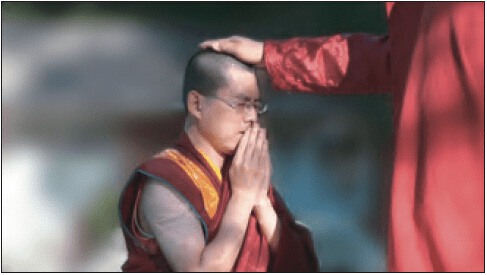
During the blessing ceremony, Rinpoche Wangze engaged in a sequence of actions with SongJi Rinpoche. First, he placed his palm in front of SongJi, making three deliberate motions of opening and closing his hand while instructing him to pay close attention. Subsequently, Rinpoche Wangze gently rested his palm on the top of SongJi’s head. Initially, SongJi perceived the touch as gentle and soft. However, within a few minutes, a sensation of heat began to radiate from his feet, gradually enveloping his back, neck, the back of his head, and culminating at the top of his head.

Suddenly, Rinpoche Wangze’s palm emitted an intense, fiery sensation at the crown of SongJi’s head, causing an unbearable pain within a mere two seconds. Describing the experience, SongJi expressed, “It was more agonizing than placing a red-hot iron on the top of my head.” In that brief span, a conspicuous red lump manifested on the crown, with certain areas burning through the skin and emitting black smoke. Simultaneously, SongJi experienced an extraordinary sense of physical and mental comfort. Several hours later, a yellow, crystal-like substance emerged at the site of the lump. According to insights from an elderly hidden yogi, this phenomenon is known as “merit honey,” a rare and auspicious occurrence indicating the elimination of impurities or karmic obstacles accumulated by Buddhists.

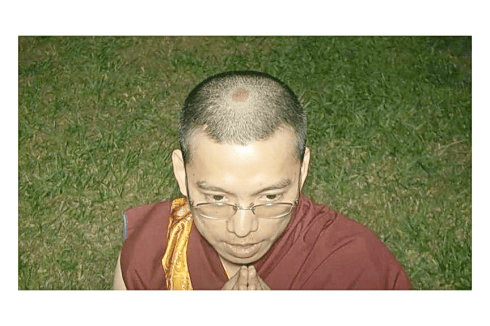
SongJi Rinpoche experienced an extraordinary sense of physical and mental comfort. Several hours later, a yellow, crystal-like substance emerged at the site of the lump

Following the release of merit honey, all existing ailments in SongJi Rinpoche’s body miraculously vanished. Kama Dege Gongla Rinpoche, belonging to the Kagyu sect, also underwent the Zhuo Huo Dispelling Obstacles Empowerment from Wangze Rinpoche. In a matter of seconds, a distinctive mark was burned into his philtrum. Yongdeng Gongbu Rinpoche bore a notable imprint on his forehead and between his eyebrows, outcomes of the empowerment. Zhaxi Zhuoma Rinpoche, too, retained a Zhuo Huo mark on her throat, accompanied by the flow of black qi from the respective marks.

Zhaxi Zhuoma Rinpoche
Yongdeng Gongbu Rinpoche

Link:https://peacelilysite.com/2024/02/23/incredible-power-of-tummo-concentration/

#Buddhist #BuddhaDharma #ZhuoHuoDing #TummoConcentration #WangzeRinpoche #DorjeChangBuddhaIII  #HHDorjeChangBuddhaIII #ZhaxiZhuomaRinpoche

Dharma Master Tonghui —- Great Achievers

Dharma Master Tonghui —- Great Achievers-图片2

Dharma master Tonghui

Venerable Dharma Teacher Tonghui (1922-2013) served as the Abbot of Longju Temple, renowned for Jiangxi Mazu. A devoted disciple of H.H. Dorje Chang Buddha III, he immersed himself in the teachings and practices of dharma. Also known as Elder Monk Tonghui, he transcended the ordinary, attaining the revered status of a holy monk.

Venerable Master Tong Hui, born Tang Zhenbang on March 5, 1922, in Penglai town, Suining City, Sichuan Province, belonged to the Han ethnicity. Renowned for his intelligence from a young age, he adhered to a vegetarian diet and practiced abstinence, following his parents’ guidance. In 1931, he entered monkhood under Master Pu Jing at Jinwen Temple in Pengxi. Full ordination followed in 1940, under Venerable Master Miaoneng at Baoguang Temple, and further studies in Chengdu’s Jingci Temple under Master Nenghai in 1941. Residing at Longju Temple with Master Miaoneng in 1942, he served during the transmission of the Great Precepts by Master Nenghai. Master Nenghai was one of the most eminent monks in last century.

Post-liberation, Longju Temple faced dispersion, confiscation of properties, and occupation during the Cultural Revolution. As the warehouse keeper, Venerable Master Tong Hui personally bore the repercussions of stolen food, enduring imprisonment to spare innocent people. False accusations regarding the team’s beekeeping further led to additional years in prison. His unwavering compassion and selflessness epitomized the Buddhist spirit.

Reopened by the government on December 16, 1986, Longju Temple underwent extensive renovations under the venerable master’s guidance. The Arhat Hall, Main Hall, Scripture Hall, and Accommodation Building were constructed, while the main gate, Ksitigarbha Hall, Hall of Heavenly Kings, and Bell Tower were restored. The restoration of large Buddha and Bodhisattva statues, as well as Arhat statues, showcased the venerable master’s dedication. Numerous instances of his awe-inspiring virtue were evident, such as his ability to attract dharma-protecting deities and revive a withered ginkgo tree with Bodhi Holy Water.

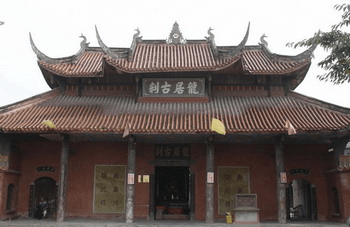
Front Entrance of Longju Temple

Grand Hall in Longju Temple

Moreover, Venerable Master Tong Hui made significant contributions to Buddhism by bringing back Buddha and Bodhisattva statues made of Burmese jade from temples in Dayi County and Daying County.

A legendary story recounts Master Tonghui’s visit to Burma in 1992. Venerable Dharma Teacher Tonghui went to Burma to respectfully receive and take back with him a Jade Statue of the Buddha. The night before the Dharma teacher arrived, many people in Burma suddenly dreamed that he was a golden Arhat and would soon come to Burma. The next day when he arrived in Burma, hoards of people made offerings to him. In Hinayana Buddhism, Arhats are praised in the same way that Bodhisattvas who attained the marvelous fruit of enlightenment are praised. It is clear that Venerable Dharma Teacher Tonghui was an amazing and great sage.

Venerable Dharma Teacher Tonghui peacefully passed away on February 26, 2013, at the age of 92. His preserved body, following ancient Buddhist rituals, was respectfully opened three years later on June 12, 2016, revealing a full and jade-colored flesh body in the urn. This sacred event reaffirmed the authenticity and practicality of true Buddha Dharma.

The flesh body of Venerable Dharma Teacher Tonghui is now enshrined in Longju Temple for people to respectfully admire.

Dharma master Tonghui — Great Archivers

Link:https://peacelilysite.com/2024/02/16/dharma-master-tonghui-great-achievers/

#Buddhist #BuddhaDharma #LonjuSiTemple #MasterTonghui #DorjeChangBuddhaIII  #HHDorjeChangBuddhaIII

A Bhikkhuni Who Appears Once in a Century

Venerable Shi ZhengDa Jiaozun

Throughout the ages, in the pursuit of happiness, countless individuals have renounced worldly life to engage in spiritual practice. Monks and nuns who have shaved their heads and taken vows can be seen wandering in the secular world. People become monastics for various reasons, including pressure from material needs, family discord, social conflicts, life hardships, or a desire to seek liberation from the suffering of birth, aging, sickness, and death. Some renounce the worldly life to transcend desires, cultivate spiritual practices, and embark on the path to enlightenment. However, those who renounce a life of wealth, family, and worldly pleasures to become monastics are extremely rare.

Modern figures like Venerable Xuyun, Master Hongyi, Master Nenghai, and Master Longlian are typical examples of genuine monastics. Their renunciation was wholeheartedly directed towards the Buddha, without worldly attachments. When they made the decision to become monastics, their minds were solely focused on Buddha and Bodhisattvas, despite their flourishing family lives, prosperity, talents, and widespread respect. They left their homes without any attachments, not even informing their families. Suddenly, they abandoned their comfortable lives and became ascetics in the temples. Such individuals are rare, occurring perhaps once in several decades.

However, today, there is a Bhikshuni (Buddhist nun) who has renounced the world in an extraordinary way, captivating people’s hearts. She was originally known as Renbo Rinpoche, with the Dharma name “Awangdeji,” and held some reputation in Chinese Buddhist circles. She had centers in over twenty provinces in China, and her organization had a presence in Taiwan and Hong Kong. Wherever she went, male and female disciples welcomed her with reverence. Despite her prosperous personal business, she decided to renounce her worldly life.

Twenty years ago, she practiced the Sakya tradition but found no progress in her path. Seeking guidance, she turned to the profound teachings of the H.H. Dorje Chang Buddha III. Within a year, she completed her studies and realized that her previous practice was a common worldly path accessible to everyone, not true Buddhist teachings. In 2011, after rigorous examinations, she obtained certificates of realization that many other high lamas could not attain.

Her dedication, compassion, and influence attracted jealousy and rumors from some ordinary practitioners. However, Awangdeji Rinpoche bore no resentment, remaining calm and patient, even praising those who spread rumors. In response to societal criticisms, the International Buddhist Sangha Association sought an objective assessment from the United International World Buddhist Headquarters. After a solemn examination, she was praised by seventeen examiners for her moral virtues and realization.

During the examination, when Awangdeji Rinpoche’s consciousness soared, she personally saw Buddhas and Bodhisattvas, fulfilling a vow made to Avalokiteshvara. Overwhelmed with gratitude, she immediately renounced worldly life. Without her family’s knowledge, she underwent tonsure in Lianfeng Temple, Taiwan, adopting the Dharma name “Zhengda.” She relinquished all worldly wealth and family joy, untainted by the six dusts, transcending the ordinary and entering the realm of the holy.

On December 12th, 2012, a Assembly was held to bestow the initiation of “Selection Made in Dark Confinement from One-Hundred Dharmas to Choose the Door toward Enlightenment” upon Dharma Master Zhengda. This Assembly concluded that Dharma Master Zhengda was a reincarnated holy one and a trusted aide of the Tara. Her status of the dharma was extremely high, at the upper level representing the summit of esoteric Buddhism.

On May 25, 2013, Master Zhengda was honored with the Grand Cross of Humanitarian Merit by the Spanish Humanitarian Merit Association. This award, established and presented by the association, is specifically given to international figures who have made outstanding contributions to promoting world peace, advocating for humanitarian equality, and excelling in public administration, education, arts, charity, and other fields.

After receiving the sacred inner tantric initiation from H.H.  Dorje Chang Buddha III, she experienced a remarkable transformation, surpassing ordinary spiritual attainments and delving into profound realms. The International World Buddhist Headquarters at October 25th, 2019 officially acknowledges her as a JiaoZun (Golden Button Stage II), having successfully passed examination conducted and validated by about twenty buddhist masters and monastics. She stands as an embellishment to Buddhism, a virtuous teacher, and a refuge for sentient beings.

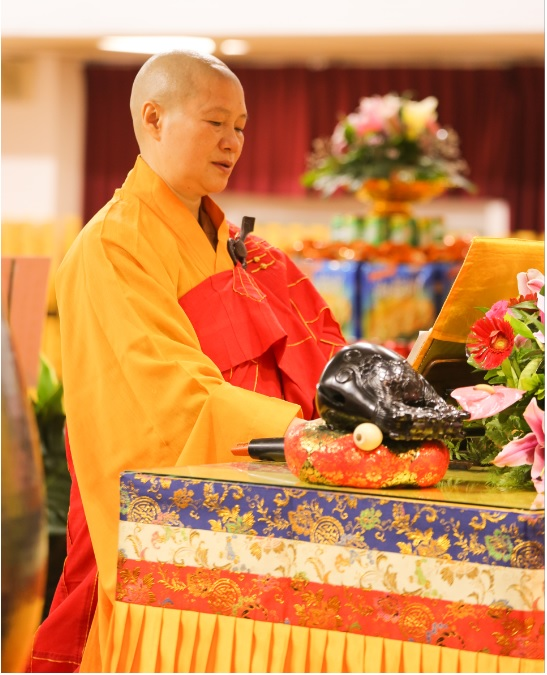
ZhengDa Jiaozun is currently the Vice President of the World Buddhist Headquarters, concurrently serving as the Honorary Chairman of the International Buddhist Sangha and the abbot of many temples worldwide. Presently, she resides at the Holy Miracle Temple in Los Angeles and the Benevolence Temple in Las Vegas.

A Bhikkhuni Who Appears Once in a Century

Link:https://peacelilysite.com/2024/02/01/a-bhikkhuni-who-appears-once-in-a-century/

#Buddha ##HHDorjeChangBuddhaIII #DorjeChangBuddhaIII #BuddhaDharma #MasterZhengDa #EsotericBuddhism#InternationalWorldBuddhistHeadquarters