Mindful Speech: How Verbal Karma Shapes Our Lives and Spiritual Growth

Understanding Verbal Karma through Chinese Traditional Culture and Buddhism

Language is one of the most powerful tools in human communication. It has the capacity to warm hearts, yet it can also deeply wound others. The ancient Chinese saying, “Illness enters through the mouth; misfortune comes out of the mouth,” serves as a profound reminder of the critical importance of our words. Another popular saying states, “A kind word can warm one for three winters, but a harsh word wounds deeply and is hard to forget.” Those who speak thoughtfully build strong relationships, while careless words often lead to unintended enmity or trouble. Indeed, many of life’s great misfortunes arise from verbal mistakes.

The Chinese ancients emphasized the principle of “cautious speech and careful actions,” which is not only a foundational aspect of personal conduct but also key to cultivating one’s character. In modern times, misunderstandings and conflicts often stem from believing rumors and passing on unverified information. This carelessness turns small issues into major problems, causing unnecessary harm. The impact of careless words can extend beyond personal relationships, disrupting families, friendships, and even society, sometimes escalating into widespread societal issues.

Buddhism’s Teachings on Verbal Karma: The Four Types of Harmful Speech

Buddhism profoundly explains the karmic consequences of speech. Among the “three karmas” — body, speech, and mind — verbal karma is especially critical. The Buddha taught that the consequences of verbal karma can be even more destructive than a raging fire because hurtful speech inflicts suffering on others. Buddhism identifies four types of harmful verbal karma:

  • Harsh Speech: Using cruel or aggressive words that directly harm someone’s spirit.
  • Slander: Spreading rumors or sowing discord, leading to broken relationships and disputes.
  • False Speech: Speaking untruthfully or deceiving others.
  • Frivolous Speech: Words that may seem pleasant but mislead or confuse others, distracting them from right mindfulness.

These forms of verbal karma not only harm relationships but also sow seeds of negative karma, inevitably leading to future suffering.

Chinese Buddhist texts record a story from the Song Dynasty: One day, Zen Master Guang XiaoAn observed two monks engaged in a discussion about the Dharma, during which they were surrounded and protected by heavenly beings. However, as soon as their conversation shifted to worldly topics, the deities departed, and evil spirits appeared, mocking the monks with vulgar language. This story serves as a reminder that even monks, when they deviate from righteous speech, will attract negative consequences.

In today’s world, the effects of verbal karma are even more pervasive. Carelessly spreading rumors, posting unverified information online, or making inflammatory remarks can cause lasting damage. Every harsh word is like a sharp blade, hurting not only others but also oneself.

Here is another powerful example that highlights the benefits of controlling one’s speech. At Mount Jiuhua, a sacred Buddhist site renowned for venerating Ksitigarbha Bodhisattva, there once lived a venerable nun. She was widely respected for her virtuous life and profound wisdom, embodying the transformative power of positive speech.

Even at the remarkable age of 136, she remained in good health, continuously reciting the mantra “Amitabha Buddha.” This practice not only reflected her spiritual merit but also her mastery of speech, and self-discipline.
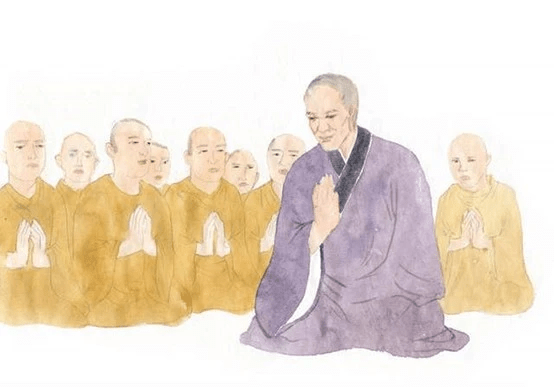
The venerable nun understood the profound impact of verbal karma and strictly adhered to the principle of “cautious speech.” She refrained from gossip and focused her speech on chanting the Buddha’s name. In conversations about spiritual matters, she offered concise and clear guidance, leading people toward the right path. When topics were unrelated to spiritual practice, she chose silence. This self-discipline brought her immense merit, making her a role model for others. She often said, “For women, whether lay or ordained, if one can guard against verbal karma, one is halfway to becoming a Buddha.” Her words highlighted the critical role verbal karma plays in the spiritual path.

The venerable nun’s teachings emphasized the severe consequences of verbal karma. She made it clear that verbal karma is one of the greatest obstacles in spiritual practice and explained its multiple harmful effects:

  • Verbal Karma Obstructs Spiritual Progress: Every instance of harsh speech, slander, or frivolous talk not only harms others but also pollutes one’s mind, hindering spiritual purification.
  • Verbal Karma Leads to Lower Rebirths: Harsh speech is like a wildfire, burning away one’s merit and leading to severe karmic consequences.
  • Verbal Karma Disrupts Harmony: In families, communities, or society, harmful speech creates discord, making it difficult to maintain a peaceful environment for practice.
  • Verbal Karma Weakens Faith: Harsh and false words can cause others to lose faith in their spiritual path, even destroying their potential for future practice.

Her virtuous life and disciplined speech accumulated immeasurable merit. It is said that many patients with difficult illnesses were cured after receiving her blessings, a testament to the power of pure verbal karma.

Guarding Verbal Karma in Modern Life

In today’s world, controlling speech is more essential than ever. Here are some practical steps to guard against verbal karma:

  • Speak Cautiously: Think before you speak. Avoid spreading unverified information and refrain from gossiping or discussing others carelessly.
  • Control Emotions: When emotions are high, it’s easy to say things that cause harm. Cultivate a calm and peaceful mind to avoid saying hurtful things in the heat of the moment.
  • Cultivate Positive Speech: Use kind and uplifting words to resolve conflicts, build trust, and foster harmony in your relationships.

By understanding Buddhism’s teachings on verbal karma, we can become aware of the power of language and use it to bring peace and happiness to ourselves and others. Guarding speech is not only a sign of respect for others but also an essential aspect of personal spiritual practice.

Through mindful and compassionate speech, we can spread kindness, promote harmony, and enhance both the quality of our lives and the happiness of those around us. Let us strive together to use the wisdom of language to create more peace and happiness in our lives and in the lives of others.

Link:https://peacelilysite.com/2024/10/24/mindful-speech-how-verbal-karma-shapes-our-lives-and-spiritual-growth/

Holy Miracles Temple: A Sanctuary of Compassion and Healing Amid Global Turmoil

Holy Miracles Temple, located at 1730 N. Raymond Ave., Pasadena, CA, serves as a sanctuary dedicated to teaching the true Dharma of the Tathagata, as transmitted by Namo H.H. Dorje Chang Buddha III and Shakyamuni Buddha, guiding disciples on their path to liberation and spiritual accomplishment. Grounded in the Buddha’s teachings and fueled by boundless compassion, the temple’s core mission is to selflessly serve humanity. Its hope is for people in America and across the globe to embrace Buddha Dharma, cultivating love for their country, fellow people, and the world. Through mutual support, peace, kindness, and auspiciousness, the temple envisions a strong nation with thriving citizens and a world brimming with joy and happiness.

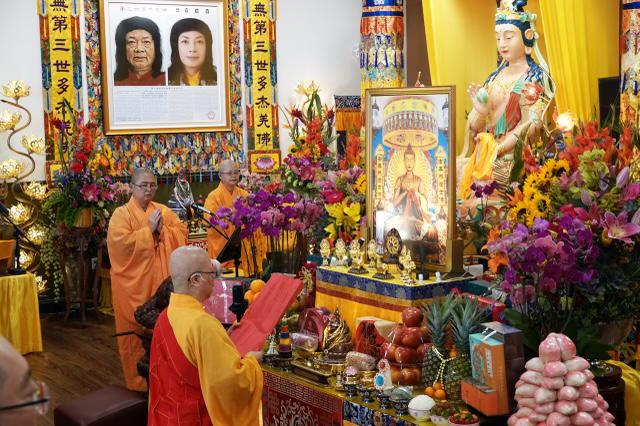
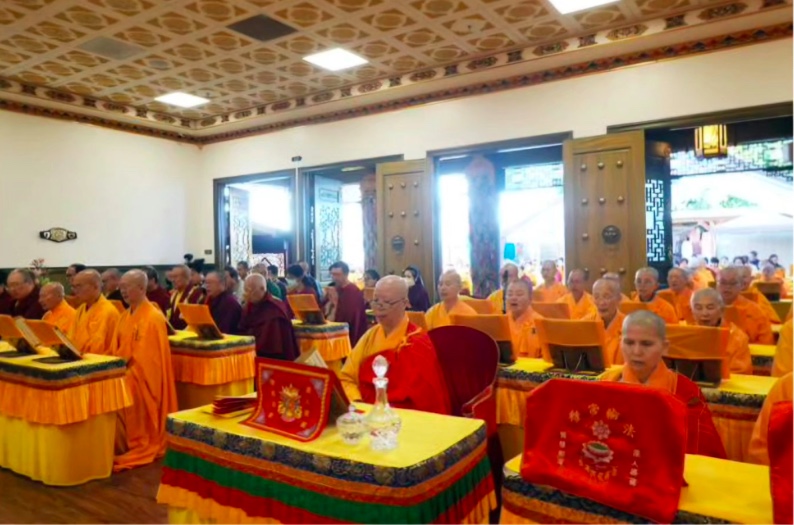
In these challenging times, when suffering and catastrophe touch so many, Buddhism’s compassionate spirit calls us to extend blessings to all sentient beings. On October 13, 2024, the Holy Miracles Temple held a Blessing and Peace Dharma Assembly, a response to the unprecedented hardships the world faces today. Devoted Buddhist disciples gathered to honor the teachings of Namo Dorje Chang Buddha III, coming together to send prayers for healing and hope to those affected by natural disasters, conflicts, and upheavals. This assembly reaffirmed the Buddhist commitment to easing the suffering of all.

The event featured a solemn chanting of the Universal Gate Chapter of the Lotus Sutra, dedicated to Avalokitesvara Bodhisattva, the embodiment of compassion. The gathering was led by Abbess Ruzun Ruohui from Hua Zang Si Temple, who guided attendees through the prayers.

This year has been marked by profound global calamities. In the United States, Hurricane Helene ravaged Texas and Louisiana in August, displacing thousands and flooding communities. Just weeks later, Hurricane Milton unleashed further destruction in Florida and Georgia. Recovery efforts faced tremendous challenges as these back-to-back disasters left homes shattered and lives in turmoil.

In Asia, Typhoon Dindo devastated the Philippines, causing severe flooding and landslides across Luzon in September. Thousands of people were forced to evacuate as the typhoon submerged entire neighborhoods. Nepal, too, was struck by tragedy when a powerful earthquake hit in June, resulting in widespread destruction and loss of life in remote regions.

The war in Ukraine, continuing its escalation throughout 2024, inflicted further suffering on cities like Kyiv and Mariupol, leaving behind a deepening humanitarian crisis. Meanwhile, renewed violence in Syria once again brought bloodshed to war-torn cities such as Aleppo and Damascus, compounding the plight of its weary people.

Europe was not spared from disaster either, as record-breaking floods struck in July. Torrential rains overwhelmed parts of Germany and Belgium, causing rivers to overflow and submerging entire towns. Meanwhile, the United States’ western regions grappled with annual wildfires of increasing magnitude, destroying homes and forests alike.

During the Dharma Assembly at Holy Miracles Temple, attendees united in spirit and purpose. As the sacred verses of the Universal Gate Chapter resonated through the temple, the prayers reached out to those suffering from this year’s tragedies, seeking to bring healing and relief. Prayers were offered for the displaced, the injured, and those who had lost everything. In the face of conflict and war, the community gathered to extend peace, comfort, and hope to all those impacted.

This powerful assembly embodied the compassionate essence of Avalokitesvara Bodhisattva, radiating light and healing to all beings affected by suffering. It was a profound reminder that through shared compassion and collective action, we can create a world where all beings may find peace, healing, and joy.

Link:https://peacelilysite.com/2024/10/18/holy-miracles-temple-a-sanctuary-of-compassion-and-healing-amid-global-turmoil/

Source: https://cagazette.com/insights-from-the-blessing-and-peace-dharma-assembly-at-the-holy-miracles-temple/?fbclid=IwY2xjawGADEJleHRuA2FlbQIxMAABHSOFxdL9Y7OJSnH14qBxTQoBYe2QSzdXAI_yk56BTajnwGdAXcnXxCa7bQ_aem__GWuVw6xxEGleMzpPI9e5A

The Extraordinary Life of H.E. Xiazhu Qiuyang Rinpoche: A Master of Boundless Compassion and Wisdom

The most venerable H.E. Xiazhu Choying Rinpoche, also known as H.E. Xiazhu Qiuyang Rinpoche, is a highly accomplished Buddhist master from Guoluo, renowned for his spiritual achievements and mastery of Vajrayana teachings. Born in the winter of 1945, his birth was marked by extraordinary signs: thunder echoed across the sky, and colorful flowers blossomed spontaneously on the grasslands surrounding his birthplace. Many local herdsmen witnessed these rare and auspicious omens, heralding the arrival of an extraordinary being.

Renowned mantra master Regong, a revered monk, recognized the young child as the reincarnation of the venerable Chagailong Cichengdaji Rinpoche and the great master Naropa. From an early age, Rinpoche dedicated himself to the welfare of all sentient beings, living a life of simplicity and spiritual practice in the mountains. Throughout his life, H.E. Xiazhu Choying Rinpoche devoted himself to intense ascetic practice, receiving direct teachings from the supreme Vajrayogini and attaining profound realization. It is said that he could soar through the sky, using his monk robes as wings, a testament to his deep mastery of esoteric yoga.

At the age of fourteen, Rinpoche was ordained as a monk under the guidance of Xiari Huzuo Qintu Dannima. Over the years, he studied under more than 100 highly accomplished masters from all major Tibetan Buddhist schools, including:

  • H.H. the Tenth Panchen Lama and H.H. the Sixth Dharma King Gongtang Yongzeng from the Gelug sect.
  • H.H. Dodrupchen Rinpoche and Khenpo Mengse from the Nyingma sect.
  • Kanda Chiwa Gadan from the Sakya sect.
  • Lama Wangcai Kazhige from the Kagyu sect.
  • Jiana Bannan from the Jonang sect.

From these masters, H.E. Xiazhu Choying Rinpoche absorbed the essence of both exoteric and esoteric teachings. His spiritual journey led him to receive numerous secret mind-dharma teachings and unique empowerments, passed down without reservation, like water flowing freely from a vessel.

Rinpoche spent much of his life wandering through remote mountains and plains, sleeping in caves, eating cold rice and vegetables gathered from alms, and wearing discarded clothing. He lived humbly, indifferent to worldly praise or criticism, appearing at times like a wandering madman. For 25 years, he did not speak a single word, dedicating himself entirely to the practice of the Dharma, undisturbed by the distractions of the world. His rigorous practice took him to numerous sacred sites across Tibet, Qinghai, and India, where he engaged in solitary retreat, including seven years of intense meditation at a holy site in India.

Through these practices, Rinpoche achieved profound realization in the Dakini Dharma, the Great Perfection (Dzogchen) teachings, Kalachakra Vajra Dharma, and Green Tara Dharma. His deep connection with Vajrayogini from a young age allowed him to access highly secret dakini teachings. Buddhist masters of great virtue have recognized H.E. Xiazhu Choying Rinpoche as the true reincarnation of the great master Naropa, revered as the “venerable leader of 100,000 dakinis.”

In a historic event, the International Buddhism Sangha Association conducted an unprecedented Drawing Lots From a Golden Vase Ceremony, drawing one lot from 120 sealed lots. This ceremony affirmed that H.E. Xiazhu Choying Rinpoche is indeed the reincarnation of Patriarch Naropa, a recognition that had been previously confirmed by H.H. Dorje Chang Buddha III.

H.E. Xiazhu Choying Rinpoche has been praised by numerous revered masters, including H.H. the Tenth Panchen Lama, H.H. Dharma King Yongzeng, and H.H. Dharma King Jigme Phuntsok. Xiaridong Rinpoche, a master of the Yamantaka Dharma, described him as “a truly great master of the Dakini Dharma,” while H.H. Dharma King Jigme Phuntsok hailed him as “an extremely rare master who has perfected the Four Initiations Dharma.”

Despite his vast accomplishments, H.E. Xiazhu Choying Rinpoche remains humble and approachable, freely exercising his supernatural powers without attachment. Known for miraculous feats such as flying, multiplying his body, walking underwater, understanding multiple languages, foreseeing disasters and blessings, and reading people’s minds, Rinpoche is revered as “the unhindered rinpoche.” Clothing and personal items that Rinpoche has worn or used are said to be imbued with miraculous blessings. Many Tibetans have reported turning disasters into blessings, surviving dangerous situations, or recovering from serious illnesses after wearing or ingesting a small piece of his monk’s robe.

H.E. Xiazhu Choying Rinpoche’s legendary life and accomplishments have been widely recorded, including in books such as Holy Cultivation and Its Marvelous Fruits and Biographies of Ten Major Disciples of Dharma Kings. In Tibet, particularly in the Amdo region, almost everyone knows of his miraculous deeds. His life stands as a beacon of inspiration and a model of Dharma practice in this world of five defilements.

This image has an empty alt attribute; its file name is image-8.png

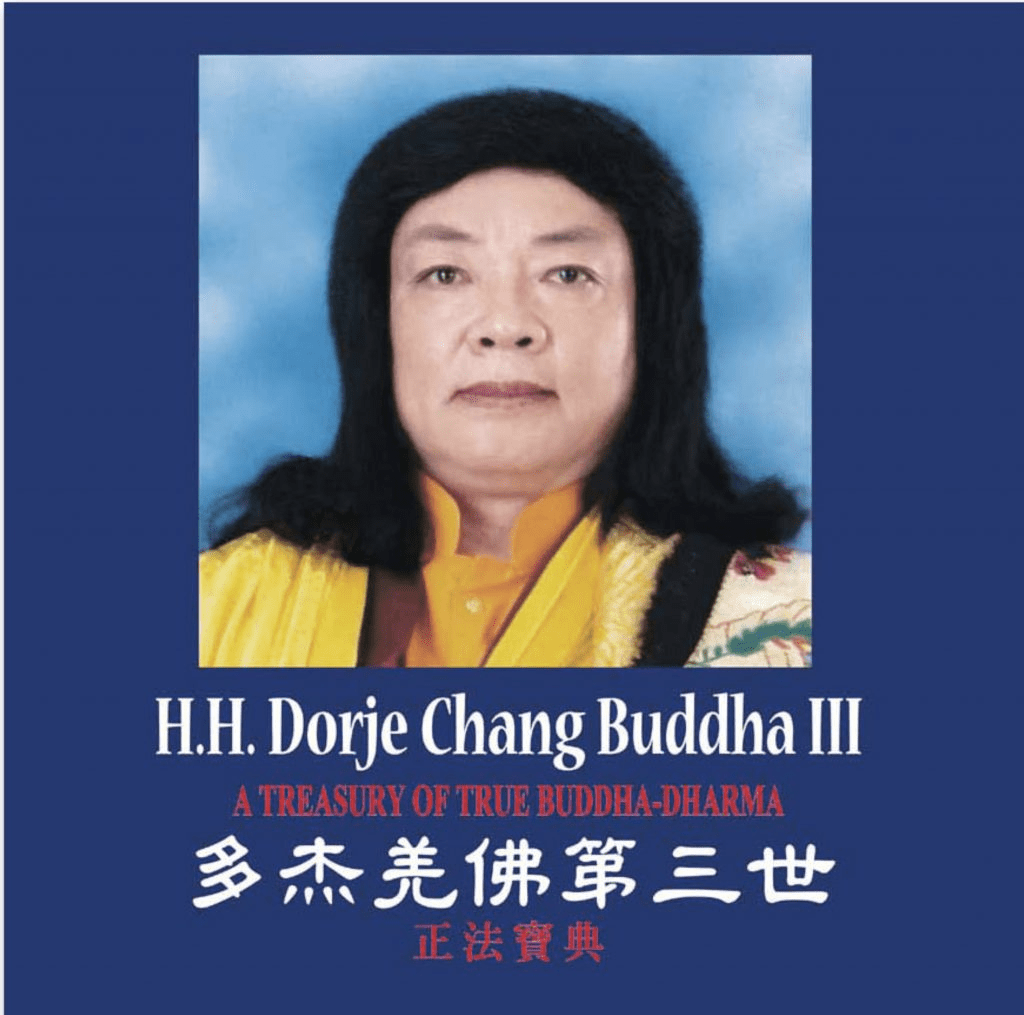
Upon reading A Treasury of True Buddha-Dharma, H.E. Xiazhu Choying Rinpoche immediately recognized H.H. Wan Ko Yeshe Norbu as the primordial Dorje Chang Buddha, the highest Buddha in Buddhism. His realization corroborated the recognition of other great holy dharma kings. H.E. Xiazhu Choying Rinpoche offered his heartfelt congratulations in a respectful letter, further acknowledging the sacred truth.

To the Most Revered and Holiest Wish-Fulfilling Jewel Dharma King:

I have learned that A Treasury of True Buddha-Dharma, is a sacred text about His Holiness, the supreme and most honored H.H. Dorje Chang Buddha III, is soon to be distributed worldwide. This book contains the highest, authentic Dharma that brings immense benefit to all sentient beings.

Master Dodrupchen, who is universally recognized as the second Guru Padmasambhava and the highest holy being within Tibetan esoteric Buddhism, expressed his astonishment in his formal congratulations. He praised the accomplishments of the Holiest Wan Ko Wish-Fulfilling Jewel Dharma King as truly extraordinary—unimaginable and miraculous, transcending the ordinary. These achievements express both the describable and indescribable absolute truth of the Buddha-Dharma.

We shall proclaim and praise the accomplishments of His Holiness throughout the Dharma realm. We express our deepest gratitude to His Holiness, the ancient Buddha, for His boundless and great compassion in coming to this world once again to benefit all sentient beings!

Xiazhu Qiuyang Rinpoche
May 1, 2007

▲那諾巴祖師轉世的夏珠秋楊敬賀第三世多杰羌佛成就之原函(楊宜翻攝自《多杰羌佛第三世》正法寶典)
▲Original congratulatory letter from Xiazhu Choying in Tibetan

#DorjeChangBuddhaIII #HHDorjeChangBuddhaIII  #MasterWanKoYee #Buddha#HuaZangSi#InternationalBuddhismSanghaAssociation#IBSA#WorldBuddhismPublishingLLC#WorldDharmaVoice #XiazhuQiuyangRinpoche #Tibetan #EsotericBuddhism

Link:https://peacelilysite.com/2024/10/16/the-extraordinary-life-of-h-e-xiazhu-qiuyang-rinpoche-a-master-of-boundless-compassion-and-wisdom/

Source: https://www.tpcdct.org/article/1327#detail

Dharma Assembly Celebrates the Birthday of Namo Dipankara Buddha at The Holy Miracles Temple

On Sunday, September 22, 2024, The Holy Miracles Temple in Pasadena hosted the grand “Dharma Assembly to Welcome the Birthday of Namo Dipankara Buddha.” This auspicious event was co-organized by the World Buddhism Association Headquarters, The Holy Miracles Temple, and the Saint Grong Lecture Hall. The assembly was led by the abbot of Hua Zang Si, Venerable Ru Hui Ru Zun, a Holy Virtuous One of Gold Button Level 1, who presided over the sacred ceremonies.

Namo Dipankara Buddha, a revered incarnation of Namo Dorje Chang Buddha, holds a special place in the hearts of Buddhist disciples. In ancient times, he prophesied that Shakyamuni Buddha would one day attain enlightenment and become a Buddha. The site of the “Dipankara Buddha Hall” at The Holy Miracles Temple is significant—it marks the location of the first-ever publication of The True Meaning of the Heart Sutra as Expounded by H.H. Dorje Chang Buddha III, where profound teachings of the Buddha were revealed.

A particularly memorable moment in this location occurred on March 7, 2014, during a Dharma assembly when a miraculous event unfolded. Buddha descended from the sky, manifesting in a divine form, blessing the gathering with three-colored nectar—a clear and undeniable testament to the authenticity of the teachings in Expounding the Absolute Truth through the Heart Sutra. Following this sacred event, the Dipankara Buddha Hall was constructed on this blessed site, where devotees from all directions come to light lamps and offer their reverence to the Buddha.

This year’s Dharma assembly began with great reverence in the Grand Hall, filled with the solemn chanting of Buddhist hymns. Under the guidance of Venerable Ru Hui Ru Zun and the monastic community, participants respectfully recited the Diamond Sutra, bowed to the Buddha, performed repentance, and conducted a grand offering before the Buddha. The assembly’s merits were dedicated to celebrating the Buddha’s birthday, with the intention to increase the blessings and wisdom of all beings, dispel ignorance and darkness, and bring forth prayers for world peace, national prosperity, and a harmonious society.

The Dharma assembly invited Venerable Ru Hui Ru Zun, the abbess of Hua Zang Si and a Holy Virtuous One, to preside over the ceremony

During an interview, Venerable Ru Hui Ru Zun shared the origin of the Buddha’s name: “The name ‘Namo Dipankara Buddha’ comes from the illumination that surrounded Him at birth, shining like a lamp. Today, we light lamps, chant scriptures, and offer prayers, hoping to bring the light of the Dharma to the world, and to bless humanity with peace and auspiciousness.”

The assembly also brought touching personal reflections. Ms. Tam, a long-time attendee, shared, “Every year, our family lights the annual offering lamp at the Dipankara Buddha Hall. It has brought us great blessings, and everything in our lives has been smooth and auspicious.” Benjamin Hong reflected on his family’s deeper connection to Buddhism: “When my uncle was diagnosed with cancer, our family sought ways to help him. This journey led us to encounter the true teachings of the Tathagata. Through the teachings of Namo Dorje Chang Buddha, we gained a profound understanding of what Buddhism truly is. It was this experience that helped our family through the toughest times and brought us to the path of Buddhism.”

At the conclusion of the Dharma assembly, Venerable Ru Hui Ru Zun blessed the congregation by sprinkling holy water for empowerment

This Dharma assembly beautifully honored the legacy of Namo Dipankara Buddha. It served as a living bridge between ancient wisdom and the contemporary aspirations of the Buddhist community, uniting all participants in a shared vision of enlightenment, peace, and harmony for the world.

Link:https://peacelilysite.com/2024/10/02/dharma-assembly-celebrates-the-birthday-of-namo-dipankara-buddha-at-the-holy-miracles-temple/

The Old Boat and the Journey Within: Lessons from the Buddha on Cultivation and Liberation

During the Buddha’s lifetime, there was a time when he was teaching on the far side of a river. Eager to hear his wisdom, many monks wished to cross the river, but there was only one boat available. The boatman warned them, “My boat is very old, and with so many of you on board, it could be dangerous!” Yet, in their eagerness to reach the Buddha, the monks ignored the boatman’s caution and all climbed aboard. Reluctantly, the boatman set sail.

As they reached the middle of the river, the monks noticed water seeping into the bottom of the boat, and panic began to spread. The boatman calmly said, “I told you this boat is old, but you didn’t listen. Now, if you can’t stay calm, the boat will sink even faster.”

Upon hearing this, the monks stilled themselves and did not dare move. Thankfully, the boatman’s experience guided them safely to the other shore.

When the monks arrived and recounted the incident to the Buddha, he offered this teaching: “When you were in the boat, you feared for your safety. But in daily life, you fail to realize that danger is ever-present. Many people worry about the uncertainty of the future, yet neglect the most important thing — being mindful of the present moment. Focus on this life, this moment. Pay attention to your thoughts and purify your mind of the five poisons: greed, anger, ignorance, pride, and doubt.”

The Buddha continued, “Our bodies are like that old, leaky boat. We must reduce its burden, and the heaviest load is the weight of greed, anger, ignorance, pride, and doubt. Just like in the boat, if we don’t repair our minds and lighten our burdens, we risk sinking. Only by addressing these burdens can we safely reach the other shore.”

“Do not be preoccupied with the thought of being reborn in the Western Pure Land in your next life. Instead, focus on your present condition. Are you free from afflictions in this very moment? Do you act with an open heart? Can you humble yourself in the eyes of others? These are the true questions we must face in life.”

The contemporary Buddha H.H. Dorje Chang Buddha III  has also imparted timeless wisdom on cultivation. His Holiness teaches that true cultivation stems from the depths of your heart, from your bodhicitta — the awakened mind of compassion. Be genuinely friendly and loving to your spouse, your brothers, and your sisters. Foster harmony with your friends, act cooperatively with others, and extend care and help to all sentient beings. Apply the Four Limitless States of Mind — loving-kindness, compassion, joy, and equanimity — and cultivate bodhicitta in every action. Constantly reflect on yourself: How do you treat others with your words? With your thoughts? With your actions?

The conduct of Buddhas and great Bodhisattvas is marked by complete disregard for personal gain. When interests conflict, they give way to others, willingly taking fewer benefits or even none. You must remind yourself, “When others harm or slander me, I will not be disturbed. Even to those who harm me, I will wish them well, sincerely hoping for their happiness. Furthermore, I will take practical steps to help them, even offering financial aid — without letting them know that I am doing so.”

By living in accordance with these teachings, we become holy ones at the causal stage. Without a doubt, such cultivation leads to the perfection of wisdom and virtue. Achieving liberation and accomplishment becomes as simple as turning over one’s hand!

Link:https://peacelilysite.com/2024/09/19/the-old-boat-and-the-journey-within-lessons-from-the-buddha-on-cultivation-and-liberation/

#HHDorjeChangBuddhaIII #DorjeChangBuddhaIII #DorjeChangBuddha #ShakymuniBuddha

#WhatisCultivation #Compassion #Kindness #Liberation

White House Hosts Vesak Celebration

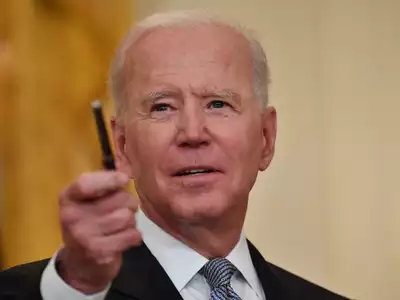
Vesak honors the Buddha’s birth, enlightenment and passing. On May 23, 2024, in recognition of the occasion, President Biden issued the following official statement from the White House:

“Jill and I extend our warmest wishes to Buddhists in the United States and around the world as they celebrate Vesak. As we honor the birth, passing, and enlightenment of Buddha, we recognize the American Buddhists who contribute so much to our communities and our country. For over 2,500 years, those who adhere to the Buddha’s teachings have enriched and strengthened this world we share. Vesak is a time to reflect on the Buddha’s teachings, including the need to work for peace and justice, and cultivate humility and compassion as we work together towards a brighter future.”

Representing President Biden at the Vesak ceremony was Second Gentleman Doug Emhoff, husband of Vice President Kamala Harris, whose opening remarks highlighted the significance of the Buddhist holiday. 

US President Joe Biden sent greetings to the Buddhist community on the occasion of Vesak, a day honoring the birth, enlightenment, and passing of the Buddha.

“It’s important that we all come together,” Emhoff said. “One, to express our interconnectedness, our faith, our joy, but also to combat hate. Because the one and best way to combat hate is to do it together. Because we know in this room that there’s so much more that unites us than divides us.”

Emhoff said that as the “first Jewish White House principal, I always talk about finding joy in my own faith, even in the face of hate and anti-semitism. As we celebrate this event and celebrate our cultures coming together, let’s just keep that joy at all times.”

The event was coordinated by Wangmo Dixey, President of the International Buddhist Association of America (IBAA) and the Executive Director of Dharma College in Berkeley through the offices of Shekar Narasimhan, President of the Dharma Into Action Foundation. 

Dixey noted that there are about 3,000 Buddhist temples in the United States, each representing the Theravada, Mahayana and Vajrayana traditions that trace back to the time of the Buddha. Jodo Shinshu Buddhism is part of the Mahayana tradition.

“Many elders have journeyed here to America, enriching our nation with their profound truth of reality,” Dixey told the gathering. “At the heart of the Buddha-Dharma is the conveyance of the truth of reality. It teaches the Four Noble Truths that we should understand suffering and identify its cause, and so find a path to the cessation of suffering and the way of life that embodies that this fundamental teaching illuminates a universal truth that remains timeless and profoundly relevant to the challenges we face in modernity. Central to these teachings is the practice of the Eightfold Noble Path, a guide to living, wisdom, ethical conduct and mental discipline.”

Before Emhoff and the Buddhist dignitaries lit a butter lamp in honor of Vesak, Dixey spoke about the lamp’s symbolism to light the way to world peace.

“Let us reimagine this light as a beacon of hope, a possibility for each of us to manifest harmony and well-being within ourselves and ultimately to become ambassadors of world peace,” she said. “This message originating in this room can resonate around the world, as so many look to America to lead with its profound commitment to true internal freedom. Imagine the power within us to illuminate the world, showing that wisdom and compassion are the ways to lead humanity. Let us remember that we have such great figures like the Buddha to remind us that enlightenment is possible, even in this lifetime.”

Dixey said “each of us carry the inspiration and spirit of Vesak into our everyday lives. May we embrace the beautiful qualities that the Buddha has shown us to build a brighter and kinder future for all Americans guided by the timeless quality of love, compassion and mutual understanding. By lighting this lamp today, we send a message of peace and harmony that will resonate throughout the world.”

After Emhoff lit the lamp, representatives from the various Buddhist traditions took turns lighting the lamp and chanting sutras. Rev. Harada spoke as part of the Mahayana tradition.

“Mahayana literally means ‘large vehicle’ like a big bus that carries many people,” Rev. Harada said. “Buddhism uses the metaphor of a vehicle to illustrate how it is a teaching that carries us from a life of delusion, ignorance and suffering to a life of awakening, wisdom and liberation. This large vehicle carries anyone and everyone regardless of race, gender, social status or sexual orientation. 

“Our world is in great need of the teachings to awaken us to our own greed, anger and ignorance that bring suffering not only for ourselves, but to others,” he continued. “We are in great need of the teachings that urges us to listen to the Dharma to listen to others, to listen to our own inner voice. We are in great need of the teachings that urges us to live a life of a bodhisattva to work with the enlightenment of all beings.” 

After the Vesak ceremony, there was a Buddhist peace march around the Washington Monument the evening of May 23 with leaders from various Buddhist traditions. The event was held in partnership with the Tzu Chi Foundation and listed Dharma College as a key collaborator.

Link: https://peacelilysite.com/2024/07/26/white-house-hosts-vesak-celebration/

Source: https://www.zhaxizhuoma.org/white-house-hosts-vesak-celebration/

Can One Possess All-Encompassing Wisdom?

It is hard to believe that anyone could possess all-encompassing wisdom. For us humans, dedicating a lifetime to mastering even one discipline is remarkable. How could someone be a philosopher, scientist, painter, sculptor, writer, doctor, and inventor all at once, mastering each within a few decades? This seems impossible by human standards. However, the Buddha’s vast and profound wisdom is genuinely real. Over 2,500 years ago, Siddhartha Gautama, the Buddha, invited anyone to ask him any question, promising a detailed answer. This is illustrated in the story of the Buddha teaching a cowherd, as recorded in the “Sutra of the Cowherd Parable.”

King Bimbisara of Magadha once invited the Buddha and 500 disciples to preach in his kingdom for three months. To provide them with fresh dairy products daily, the king arranged for cowherds to stay nearby. As the end of the three months approached, the king suggested the cowherds meet the Buddha. The cowherds, having heard of the Buddha’s wisdom, decided to test him with questions about cowherding. They reasoned that if he could answer these, he truly possessed all-encompassing wisdom.

Upon arriving at the Bamboo Grove, they were struck by the Buddha’s radiant presence. They saw him sitting under a tree, glowing like a golden mountain, radiating light like melted gold. Overwhelmed with joy, the cowherds discussed among themselves, “Regardless of whether the Shakyamuni possesses all-encompassing wisdom, anyone who sees him feels joy. His light is unparalleled, his appearance noble, and his presence exudes majesty. His radiance is clear and bright, his demeanor commanding respect, and his body adorned with the aura of virtue, making anyone who sees him feel immense joy.

If he indeed possesses all-encompassing wisdom, it must be due to his immeasurable merits. No worldly treasure can compare to the Buddha’s sublime and dignified presence, which brings great joy and pure faith to all who see him. It is clear that the Buddha must indeed possess all-encompassing wisdom.”

The shepherd thought about this and sat down to pay respects to the Buddha. They asked the Buddha, “What are the various methods a shepherd can use to ensure that the cattle thrive and reproduce well? And what conditions might prevent the cattle from growing properly and living peacefully?” The Buddha answered: There are eleven methods by which a shepherd can ensure the cattle’s well-being and reproduction. What are these eleven methods?

Understanding the Caretaker: Having a strong and capable caretaker who can protect and nourish the cattle, keeping them healthy and well-maintained. Similarly, a monk should be a respected and virtuous leader who can uphold the Dharma and guide beings toward good deeds.

Understanding Color: Knowing the colors of the cattle, such as black, white, or mixed. Similarly, a monk should understand that all phenomena in the world are composed of the four elements: earth, water, fire, and wind.

Understanding Appearance: Recognizing whether the cattle’s appearance is auspicious and whether they will be harmonious. A monk should similarly be able to discern whether someone’s actions indicate wisdom or ignorance.

Understanding Scraping: If insects bite the cattle and their blood is consumed, sores will develop. Scraping can remove these pests and promote the cattle’s well-being. Likewise, a monk should remove harmful views and misconceptions that corrupt their spiritual practice.

Understanding Wound Treatment: Applying medicine to prevent mosquito and fly bites and other injuries. Similarly, a monk should use correct Dharma teachings to protect themselves from delusions and negative emotions.

Understanding Smoke: Using smoke to drive away insects so the cattle can stay in a comfortable, insect-free shelter. Similarly, a monk should use the teaching of Dharma to lead beings to the state of emptiness and liberation.

Understanding Good Ways: Knowing the behavior and preferences of the cattle and how to keep them healthy. A monk should understand how to practice the Noble Eightfold Path to achieve Nirvana and avoid falling into the extreme paths of annihilation or eternalism.

Understanding the Right Place: Knowing how to provide a place where the cattle can live healthily and with minimal sickness. Similarly, a monk should practice and teach the Dharma to cultivate purity and increase good roots.

Understanding Good Routes: Knowing which paths are safe and which places are good for crossing rivers, avoiding places with waves and pests. Similarly, a monk should learn from knowledgeable teachers and adapt their teachings to the capacities of sentient beings.

Understanding Safe Places: Ensuring the cattle live in places free from predators and harmful creatures. Similarly, a monk should maintain mindfulness to avoid the harmful effects of negative emotions.

Understanding Milk Preservation: Ensuring that the mother cow’s milk is not consumed completely by the calf so that both the mother and the owner can benefit from it daily. Similarly, laypeople should use offerings such as clothing and food economically to benefit both the givers and receivers.

The cowherds, after hearing the Buddha’s teachings, thought, “We cowherds know only three or four methods, and our predecessors knew only five or six. Hearing the Buddha today is truly astonishing and unprecedented! The Buddha indeed possesses complete wisdom beyond doubt.”

This is described in the “Sutra of the Parable of the Cowherds.” From this, we understand that there are individuals with complete wisdom.

Today, due to the supreme and exceptional causes and conditions, the original primordial Buddha, Vajradhara has once again descended into the Saha World to manifest all-encompassing wisdom. H.H. Dorje Chang Buddha III once said: Within five years (from 1995 to 1999), if any sentient being asks ME any question, the answer should be given immediately without any hesitation. If there is any need to think about it, or if there is slight hesitation or any fabrication, or if the answer is not comprehensive, I will immediately step down from the Dharma throne and no longer be qualified to teach the Dharma.”

In the more than two thousand Dharma discourses spoken by the Buddha, He provided direct and comprehensive answers to various questions on practice and methods for His disciples. Sometimes, even before the disciples spoke, He would say, ‘I know what you want to ask. You don’t need to say anything; I will answer you directly.’ The disciples would nod in agreement. There was also Zeng Ruzhang, who studied stealth aircraft and asked why they can be invisible. Lobsang Zhenzhu Rinpoche once proposed to see Green Tara, and shortly after, a divine manifestation appeared, H.H. Dorje Chang Buddha III fulfilled his wish…

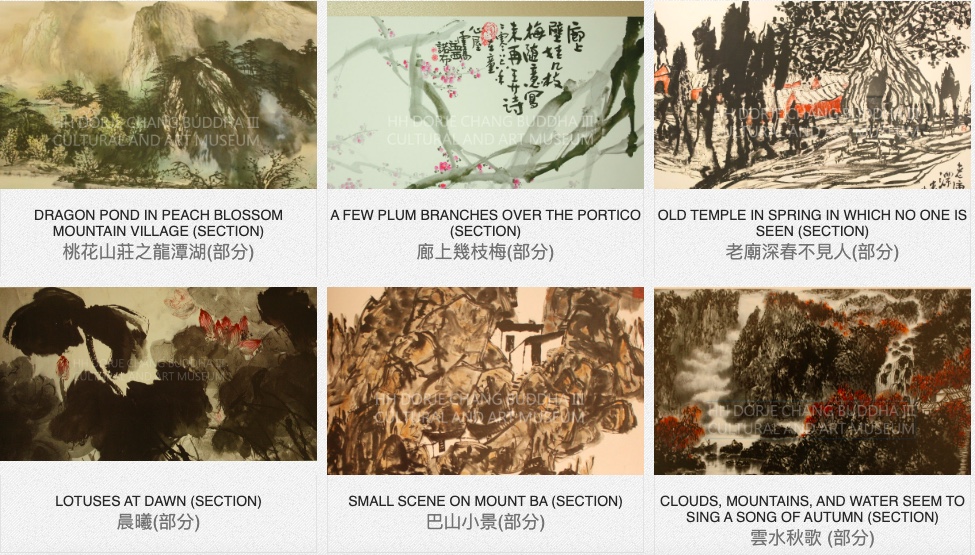
Step into the International Art Museum of America in San Francisco or the  H.H. Dorje Chang Buddha III Culture and Art Museum in West Covina, and you will be able to appreciate world-class masterpieces of art. H.H. Dorje Chang Buddha III has created Chinese paintings, oil paintings, and various styles of calligraphy. In addition to mastering styles from existing schools of painting, such as Realism, Abstract, Line, and Impressionism, H.H. Dorje Chang Buddha III has independently developed sixteen unique schools of painting.

At the fourth session of the World Poets and Culture Conference held in Hungary in 1994, more than 5,600 experts and scholars representing 48 countries and regions unanimously approved conferring upon H.H.  Dorje Chang Buddha III the title “Distinguished International Master,” which has an honorific status comparable to a head of state. 

H.H. Dorje Chang Buddha III possesses extraordinary and saintly wisdom, perceiving the true essence of the universe and life. Whether it be within the various sects of Buddhism or in all worldly fields such as art, science, medicine, and philosophy, His accomplishments reach the highest level in every aspect, with unparalleled expertise and a unique status beyond any saint.”

The treasure book, “H.H. Dorje Chang Buddha III,” stands as a testament to this statement. However, this book contains only a drop of water from the vast ocean of Buddha’s teachings and wisdom.

The video below showcases the boundless compassion and highlights the extraordinary accomplishments of H.H. Dorje Chang Buddha III. It was published by China Educational Channels TV and features interviews with Buddhist disciples from around the globe.

Link:https://peacelilysite.com/2024/07/26/can-one-possess-all-encompassing-wisdom/

#MasterWanKoYee #DorjeChangBuddhaIII #HHDorjeChangBuddhaIII ##H.H.DorjeChangBuddha IIICulturalAndArtMuseum#YunSculpture#Art#IrreplicableArt#FiveVidyas#Buddhism#Buddha

The Venerable Tsemang’s Speech at the 2024 Dharma Ceremony in Honor of the Holy Birthday of Namo Dorje Chang Buddha III

The speech given by the Venerable Rambo Tsemang at the 2024 Dharma ceremony in honor of the holy birthday of Namo Dorje Chang Buddha III on June 15, 2024, is published below.

Namo Dorje Chang Buddha III!

Namo Shakyamuni Buddha, Lord of Buddhism in the Saha World!

Namo Yuhua Shouzhi Wang Holy Mother the Great Mahasattva!

Namo all Buddhas in the ten directions, Vajra Beings, Bodhisattvas, Sky-goers, and Dharma Protectors!

Today, Buddhist disciples from all over the world have once again gathered here to commemorate the Holy Birthday and infinite merit of Namo Dorje Chang Buddha III. We want to express our gratitude to Namo Dorje Chang Buddha III for bringing to humanity His magnificent, unprecedented, and unsurpassed Buddha Dharma and accomplishment in the Five Vidyas.

I will summarize the questions that some of you have raised recently and share my personal thoughts for your reference.

First: Cultivation is the foundation for all Buddhists to attain liberation

Throughout the time that Namo Dorje Chang Buddha III propagated Dharma to save living beings, His Holiness the Buddha continuously reminded Buddhist disciples that cultivation is of utmost importance, and it is the only foundation for attaining liberation. In many audio recordings of expounded Dharmas, Namo Dorje Chang Buddha III taught many aspects of cultivation and emphasized that Buddhist disciples must practice cultivation at all times. Therefore, we must always remember the teachings of Namo Dorje Chang Buddha III by respectfully listening to the audio recordings of the Dharmas of His Holiness Dorje Chang Buddha III and reading the “Namo Dorje Chang Buddha III Complete Sutra Collection.” That is how we may learn correct knowledge and views and apply them in our own cultivation practice. This is very important for all Buddhist disciples. We must always remember that it is by practicing cultivation that we may accumulate good fortune and merit, stay away from dark karma, receive initiation to the highest Dharmas, and ultimately attain liberation from transmigration and cyclical birth and death. We must not pay lip service to practicing cultivation. Cultivation must be applied to every thought, word, and deed.

Some people tend to sway or regress from their cultivation whenever they encounter setbacks, but they should not be like that. We should know that during our transmigration since beginningless time, we have done so many bad deeds and taken on so much dark karma. All of our suffering and adversities are the effects of bad causes that we planted. By understanding this, we then understand that both good times and bad times are opportunities for us to practice our own cultivation. As our respected ancient elders said, “We do not evade bad retributions and face them with ease. We must be cautious with our every word and deed to plant good causes.”

Second: Actively Promote the “Namo Dorje Chang Buddha III Complete Sutra Collection”

Ever since Buddha Shakyamuni established Buddhism in our sahā world, the Sutras of the World Honored Buddha have enabled innumerable Buddhist disciples to attain liberation and accomplishment. The “Namo Dorje Chang Buddha III Complete Sutra Collection” is, once again, a collection of Dharmas expounded by a Buddha in this world. This Collection will certainly enable many more Buddhist disciples to attain liberation. Namo Buddha Shakyamuni’s Sutras have been the guidance that we have followed for more than 2,000 years. Upon that foundation, Namo Dorje Chang Buddha III used simple language to teach us the quintessence of Buddha Dharma, and the essentials for attaining liberation and accomplishment. Therefore, the “Namo Dorje Chang Buddha III Complete Sutra Collection” is and will be the fundamental guide for all Buddhist cultivators in the sahā world to attain liberation.

Since we have received this supreme Dharma treasure, the “Namo Dorje Chang Buddha III Complete Sutra Collection,” we should apply the four limitless states of mind and Bodhicitta to enable more people to learn the Sutra Collection. Namo Dorje Chang Buddha III taught us that we will accumulate the most abundant merit by propagating Dharma to benefit living beings and that more merit we have, the sooner we can attain Buddhahood. The best method to propagate Dharma now is to actively promote the “Namo Dorje Chang Buddha III Complete Sutra Collection.” This is the quickest way for us to accumulate merit.

Think about this: In the Diamond Sutra, Buddha Shakyamuni told Subhuti that if someone were to grasp just the four-line gatha of the Dharma and make it known and explain it in detail to living beings, this person’s merit would far exceed someone who were to fill the billion worlds of this universe with the seven jewels in almsgiving.

The four-line gatha is only about emptiness and Dharmakaya. The “Namo Dorje Chang Buddha III Complete Sutra Collection” comprises the truth about Dharmakāya, Saṃbhogakāya and Nirmāṇakāya, and how to attain realization states of the Three Bodies. Therefore, by promoting the “Namo Dorje Chang Buddha III Complete Sutra Collection,” not only will you enable others to understand the truth contained in the four-line gatha; you may even enable them to achieve abidance in the realization states described in that four-line gatha and become a holy person. Then your merit will increase even more. That’s why whenever you introduce one person to study the “Namo Dorje Chang Buddha III Complete Sutra Collection,” you will gain an increment of merit.

However, we must be clear that explaining the four-line gatha to others or promoting the Namo Dorje Chang Buddha III Complete Sutra Collection doesn’t mean that we as ordinary people would then quote Dharma out of context or randomly explain Dharma to others. In doing so, we would end up in the hell realm. We should guide living beings to study the Sutras and respectfully listen to the audio recordings of the Dharmas themselves, so that they can learn directly from His Holiness the Buddha. In this way, we can also increase our merit without incurring any sins.

Third: Make Effort to Protect the Dharma

There are many different ways to protect the Dharma, such as protecting organizations that propagate true Tathagata Dharma or supporting Buddhist cultivators who have correct knowledge and views and who practice in accordance with the Dharma. What I want to talk about here is how to protect the Dharma on the Internet.

In the current Internet era, Buddhist disciples make use of the Internet to propagate Buddha Dharma. However, evil demons also make use of the Internet to slander true Buddha Dharma. Therefore, if any one of us sees any evil deeds of slandering the Buddha or the Dharma, we must rebut those slander with correct knowledge and views.

There are two things that we must not misunderstand about protecting the Dharma.

First, it is seriously wrong to think that rebutting others is getting yourself tied up in matters of right and wrong. It is only with correct knowledge and views that you may understand Buddha Dharma, but some people understand Dharma incorrectly due to their incorrect knowledge and views. We must be very clear about this without any confusion: If a Buddhist disciple cannot differentiate between correct and incorrect knowledge and views, how can they properly understand the Dharma? If they cannot understand the Dharma, how can they attain accomplishment? Getting involved in matters of right and wrong usually refers to personal arguments about who’s right and who’s wrong as a result of attachments to self and to worldly phenomena. This is not the same as defending the correct meaning of the Dharma. The meaning of Dharma must be made clear.

Second: It is wrong to think, “I don’t want to do the work of protecting the Dharma, but I will make effort to practice forbearance and cultivate my conduct.” Actually, protecting the Dharma is an important aspect of cultivation. If you don’t protect Buddha Dharma, you are essentially a fake Buddhist who is not cultivating yourself. Therefore, it will be impossible for you to attain accomplishment. When cultivating ourselves, if anyone points out our shortcomings or wrongdoings, we should thank them, reflect upon ourselves, and do better in our cultivation. For whatever reasons, if someone insults us or attacks us, we should ignore those distractions and focus on cultivating ourselves with forbearance. But if the attacks are targeted toward the Buddha and Buddha Dharma, we must step up and fearlessly protect the Buddha and Buddha Dharma. Even if we don’t have enough abilities on our own, we can work with other Buddhists and discuss how to protect the Dharma together. If we don’t even protect the Buddha, if we don’t protect the integrity and benefit of Buddha Dharma, will Buddhas and Bodhisattvas receive us in the Buddha Lands? Will Dharma Protecting Bodhisattvas and deities help us?

All in all, if we want to attain liberation and accomplishment, we must cultivate ourselves. To cultivate ourselves, we must abide by the precepts, promote the “Namo Dorje Chang Buddha III Complete Sutra Collection,” and protect the Dharma. By doing these three things well, we can quickly eliminate our dark karma, accumulate merit, receive Buddha Dharma, and be liberated from transmigration forever! Throughout Buddhist history, all holy people who attained holy accomplishments were precept-abiding. They all propagated Dharma to benefit living beings. They all protected the Dharma. That’s how respected ancient elders attained accomplishment. These are also the things that we must do to attain accomplishment.

Here, I wish that all congregants and living beings fulfill their good wishes, have good fortune and wisdom, and attain accomplishment and liberation! I wish that the countries that you live in be prosperous and powerful, and that all people enjoy happiness. May there be peace in the world and the circumstances of all living beings be auspicious.

Finally, let us once again pay obeisance:

Namo Dorje Chang Buddha III!

Namo Shakyamuni Buddha, Lord of Buddhism in the Saha World!

Namo Yuhua Shouzhi Wang Holy Mother the Great Mahasattva!

Namo all Buddhas in the ten directions, Vajra Beings, Bodhisattvas, Sky-goers, and Dharma Protectors!

Link:https://peacelilysite.com/2024/07/16/the-venerable-tsemangs-speech-at-the-2024-dharma-ceremony-in-honor-of-the-holy-birthday-of-namo-dorje-chang-buddha-iii/

Source: https://www.wbahq.org/hq-announcements/a20240614/?fbclid=IwZXh0bgNhZW0CMTEAAR3S5bLrQRnl9bEBaeZv8BKQQUUSEhO2yYxjM3CA0pcsEuRP55Fty0j7FnU_aem_hrsVKsqIjNdZ5fe0TGYolw

The Consequences of Lying: A Lesson from Buddhist Teachings

When we were young, our parents and elders all taught us not to lie. Many stories and fairy tales illustrate the consequences of lying, such as a child being eaten by a wolf or having a long nose like Pinocchio. Different cultures and religions praise honesty and disapprove of liars. However, most of us have told a lie at one time or another, often to gain an immediate benefit, without realizing that the long-term consequences of lying can be very costly. In Buddhism, one of the ten precepts is to abstain from lying.

There is a recorded story in a Buddhist sutra about Shakyamuni Buddha teaching his son to refrain from lying.

The Buddha’s son, Rahula, was quite mischievous in his youth. He often enjoyed playing pranks on others, using deceptive words to tease people. For instance, when someone came to see the Buddha, Rahula, knowing that the Buddha was not present, would intentionally mislead them about the Buddha’s whereabouts, causing them to search in vain for amusement.

When the Buddha learned of this, he asked Rahula to bring him some water to wash his feet. After washing his feet, the Buddha pointed to the water and asked Rahula, “Can this water be drunk?”

Rahula replied, “The water is dirty from washing feet; it cannot be drunk.”

The Buddha then asked, “Can this basin, used for washing feet, be used to hold food?”

Rahula replied, “No, it cannot. The basin is dirty and cannot be used to hold food.”

The Buddha sternly said, “You are like this water. The water was originally very clean, just as you were originally a prince, able to renounce the false glories of the world and become a monk. But if you do not diligently pursue the path, do not purify your body and mind, and do not speak carefully, the impurities of the three poisons will fill your heart, just like the clean water being soiled by washing dirty feet. You are like this basin. Although you have become a monk, if you do not practice precepts, concentration, and wisdom, and do not purify your body, speech, and mind, how can the food of the Great Path fill your heart?” After speaking, the Buddha kicked the basin, causing it to roll. Rahula was very frightened. The Buddha asked, “Are you afraid the basin will break?”

Rahula replied, “No, the basin is a coarse utensil; it doesn’t matter if it breaks.”

The Buddha said, “Rahula, you don’t cherish this basin, just as people will not cherish you. As a monk, if you do not uphold dignity and discipline, and speak deceitfully, the consequence is that no one will care for you or value you. When your life ends, you will not attain enlightenment, but will only increase your delusion.”

From then on, Rahula changed his mischievous ways, strictly observed the precepts, and diligently practiced the path.

According to the teachings of the Buddhist sutras, we should take a long-term view and consider the consequences of lying for both this life and future lives.

In this life, if we frequently lie, deceive, or slander others, we will inevitably face retaliation from those we have wronged. In the mundane world, most people are naturally inclined to protect themselves and have a tendency for “an eye for an eye” revenge, unless they are saints who have subdued their own minds. If we deceive others, the victims, unwilling to be deceived, will expose our misdeeds among people. As word spreads from one to ten and from ten to a hundred, our bad reputation will quickly become widespread. Our credibility will be utterly destroyed, and our trustworthiness will plummet. From then on, even if we speak the truth, it will be seen as a lie, and people will be wary of us to avoid being deceived. No one will trust us. In such a predicament, we will constantly feel the pain of isolation and helplessness. Our lives will shrink, and our careers will suffer as a result.

In future lives, under the influence of the dark karma of lying, one will inevitably fall into the three lower realms. When the bad karma diminishes and one is reborn as a human, the residual effects of lying will manifest in various speech-related congenital obstacles in both body and mind. These may include having an impaired tongue root, stuttering, or unclear speech. Additionally, there will be a habitual tendency to lie, and sometimes, even when one wishes to speak the truth, it will come out as a lie involuntarily. In interactions with others, one will frequently be slandered and deceived. Even when speaking the truth, people will not believe it. Moreover, even when preaching the true Dharma, others will be unwilling to listen.

Link:https://peacelilysite.com/2024/06/13/the-consequences-of-lying-a-lesson-from-buddhist-teachings/

Source: https://fo.china.com/m/fostory/20001207/20231107/25809400.html

When I say I’m a Buddhist

Professor Richard Gombrich, who dedicated 40 years of his life to studying Buddhism and Pali language at Oxford University, shares his understanding of Buddhism.

When I say I’m a Buddhist, it doesn’t mean I’m purer and nicer than others. But it means I have too much ignorance and mental defilement to remove. I need Buddhas’ wisdom.

When I say I’m a Buddhist, it doesn’t mean I have more wisdom than others. But it means I have been occupied by too much arrogance. I need to learn to be humble and to develop a broader perspective.

When I say I’m a Buddhist, it is not because I am better or worse than others, but because I understand all beings are equal.

When I say I’m a Buddhist, I know I only love those to my taste, but Buddha loves even people he does not like, guiding them to be full of wisdom and compassion. That’s why I choose to follow Buddha’s teachings!

When I say I’m a Buddhist, it is not with the goal of getting what’s in my interest. But for letting go of my personal clinging to all worldly desires.

When I say I am a Buddhist, it is not because I pursue a smooth life. But for the calm acceptance of impermanence, and be calm and confident like a king in any adverse circumstances.

When I say I am a Buddhist, I do not mean to manipulate others with the motivation of self-interest. But with good use of wisdom, to benefit self and others while being empathetic to all sentient beings.

When I say I am a Buddhist, it is not because I want to escape from the world and pursue nothingness. But to know everyday life is within Dharma, and to live in the present is to practice.When I say I am a Buddhist, it does not mean that my life will no longer experience setbacks.

But with the Dharma, setbacks are transformed into a cause for my growth.

When I say I am a Buddhist, my heart is filled with endless gratitude. Just thinking I was born as a human and have the ability to practice in this life, with the opportunity to meet wise teachers and hear the Buddha’s teachings, I am deeply moved by this unbelievable karmic affinity.

When I say I am a Buddhist, it is not because there is a God outside of me. But that I find the true Buddha-nature of my own heart.

Link:https://peacelilysite.com/2024/05/16/when-i-say-im-a-buddhist/

Source: https://buddhistbugs.blogspot.com/2018/07/when-i-say-im-buddhist.html