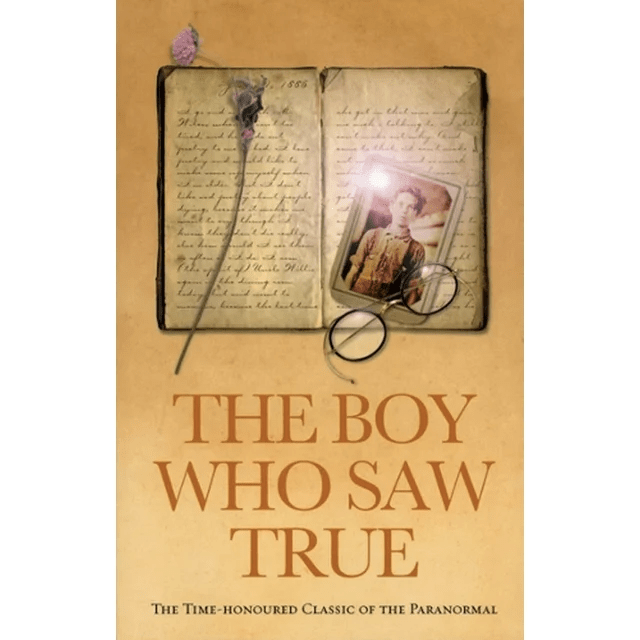
Have you ever stumbled upon a book that instantly captivates your attention, drawing you into its pages with an irresistible allure? That’s precisely what happened to me when I discovered the Chinese version of “The Boy Who Saw True.” From the moment I started reading, I was completely enthralled.
At the heart of this remarkable book is a young boy from England, born into privilege yet endowed with an extraordinary gift. Raised in a family where literature was cherished, he inherited his father’s passion for reading, immersing himself in books far beyond his tender years. Despite his mother’s attempts to steer him away from certain subjects, his determination to explore the literary world only grew stronger, infusing his writings with a delightful blend of wit and charm that is uniquely his own.
But what truly sets this young boy apart is his “third eye” – an innate ability to see truths hidden from ordinary sight. In his diary, he meticulously chronicles the myriad of peculiar phenomena he encounters in the spiritual realm. From envisioning himself as a monk in a secluded cave, imparting ancient Buddhist teachings to his disciples, to glimpsing his past life as a revered priest in ancient Egypt, seduced by the allure of worldly power – each revelation is as astonishing as it is profound, offering profound insights into the mysteries of human nature and the cosmic order.
Despite facing skepticism and misunderstanding from those around him, the boy’s unwavering insight into the spiritual realm remains unquestionable. His experiences, both mysterious and mesmerizing, serve as a beacon of inspiration, igniting a fervent curiosity in readers eager to unlock the secrets of the universe.
The author’s integrity shines through every page, as he never seeks to exploit his psychic abilities for personal gain. It’s this steadfast commitment to truth and authenticity that makes his diary a rare and precious gem, entrusted to the world by the esteemed editor, Mr. Cyril Scott, after the author’s passing.
What makes “The Boy Who Saw True” truly exceptional is its exploration of the spiritual realm through the innocent eyes of a child. Unlike other metaphysical books, it eschews complex theories in favor of a refreshingly simple and humorous narrative style, making it accessible to readers of all ages.
As I delved deeper into its pages, I couldn’t help but feel a profound sense of wonder and enlightenment. This book is more than just a literary masterpiece – it’s a journey of self-discovery and spiritual awakening that transcends the boundaries of time and space.
In conclusion, “The Boy Who Saw True” invites readers to embark on a transformative voyage into the unknown, where the boundaries between reality and imagination blur, and the truth reveals itself in the most unexpected of places. It’s a reminder that our lives are but a small part of a vast and wondrous universe, waiting to be explored and embraced with open hearts and minds.
In the intricate tapestry of human beliefs, the concept of reincarnation has woven itself through the fabric of traditional Asian cultures for centuries. However, this idea finds little resonance in Western cultures and often faces skepticism from the scientific community. Amidst this cultural and scientific dichotomy, a pioneering exploration is unfolding at the prestigious University of Virginia School of Medicine, led by Dr. Jim B. Tucker, a child psychiatrist with a unique perspective on life after death.
Born and raised in the southern United States, Dr. Tucker’s early life was immersed in the traditional beliefs of the American South. As he embarked on his academic journey, obtaining an undergraduate degree in psychology and specializing in child psychiatry, he encountered the notion of reincarnation with a healthy dose of skepticism. The clash between cultural beliefs, scientific inquiry, and personal skepticism set the stage for Dr. Tucker’s intriguing exploration into the mysteries of existence.
The documentary, highlighted on the Discovery Channel, explores the extensive and worldwide research conducted by Dr. Tucker. The film encapsulates the core of his studies, presenting interviews, case studies, and the profound implications of his findings. Through this visual medium, viewers are welcomed to observe the intersection of traditional beliefs, modern skepticism, and scientific exploration—all in the quest to unravel the mysteries of human existence.
Buddhism holds that life undergoes reincarnation through the six realms. After a person dies, if the karmic conditions accumulated in their past life mature, they may be reborn into the heavenly realm as a deity, or into the realm of asuras, or they may be reincarnated in the human realm. If negative karma, such as killing, deception, or greed, comes to fruition, the individual will inevitably fall into the hell realm and suffer, or they may be reborn in the realms of hungry ghosts or animals to endure suffering.
As for which realm one will be reborn into among the six, it depends on the karmic conditions of their virtuous and non-virtuous actions. Why does reincarnation occur? The fundamental reason lies in the attachment of sentient beings. Attachment gives rise to the confusion of karma, and from this confusion arises ignorance. Due to the endless causes and effects generated by ignorance, various positive and negative karmic forces are produced. It is these karmic forces that determine which realm of existence one will be reborn into.
The investment realm bids farewell to its philosopher, the golden partner of Warren Buffett, Charlie Munger, who passed away on November 28th this year, at the age of 99. Munger’s life was a testament to generosity, kindness, rationality, humility, and a low-key demeanor. Renowned for his honesty, integrity, lack of complaints, and absence of hindsight bias, Munger earned global admiration and respect. His impactful literary work, “Poor Charlie’s Almanack,” reflects his profound humanity.
Among Munger’s profound teachings, five sentences stand out, resonating deeply with individuals and serving as timeless nuggets of wisdom. Deserving Success, Value Investing Strategy, Success and Surroundings, Magic of Compound Interest, Probabilities Over Luck.
“The best way to obtain something is to make oneself deserving of it” reflects classic wisdom upon contemplation. Unlike typical words of wisdom that merely offer principles without practical methods, Munger’s comprehensive approach in “Poor Charlie’s Almanack” reveals a value investing strategy intertwined with life philosophy.
Charlie Munger’s love for books was profound. Often referred to as a “bookshelf with two legs,” Munger’s voracious reading habit extended beyond the realms of finance. He explored diverse genres, not just for knowledge acquisition but to open his mind to different angles and views. His extensive reading shaped him into a profound thinker, and his eclectic taste in literature reflected in his unique perspectives. Munger’s commitment to continuous learning and intellectual curiosity made him an embodiment of wisdom.
Munger’s belief in value investments extended beyond finance to personal development. He advocated assessing the value of a business before evaluating its stock, discarding speculative opportunities, and overlooking short-term factors. The enduring factor for a stock’s reliability, according to Munger, is whether it truly deserves its current price. This principle, he argued, holds true for personal growth, embodied in the saying, “The essential reason for a person’s success is that those around him wish for his success.”
Throughout his illustrious investment career, Munger adhered to the traditional values of the American West — diligence, focus, sincerity, thrift, and future investment. These principles earned him the trust of many collaborators. Notably, Munger’s initial million came from a real estate investment while he was still a lawyer. Recognizing the potential for real estate development in a property left by a client’s ancestors, Munger, through the client’s trust, achieved tremendous success.
Munger’s philosophy that making oneself valuable attracts potential collaborators is the most reliable investment method. This philosophy aligns with renowned stock guru Warren Buffett’s simple yet effective secret to wealth: save, invest, continue saving, and continue investing. Munger’s teachings delve into the power of compound interest, demonstrated in a thought experiment within “Poor Charlie’s Almanack.”
The experiment presents two choices — receiving $1000 daily for 30 days or receiving an escalating amount starting with 1 cent, doubling each day for 30 days. The seemingly attractive first choice limits the total to $30,000, while the second, with the magic of compound interest, accumulates to an astonishing $5.37 million. Munger highlights the patience required for compound interest to exhibit its true power, a principle applicable to personal growth.
Economist Xiang Shuai’s intriguing experiment reinforces Munger’s teachings. Progressing a little every day, even by 1%, leads to significant advancement after a year, while regressing daily results in minimal talent advantage. Munger’s emphasis on the importance of daily learning and reading resonates with the ancient wisdom: “Accumulate small steps, and you will cover a thousand miles.” He advocates believing in probability over luck, emphasizing that probability theory aligns closely with the world’s functioning.
Munger’s views on setting goals underscore the importance of realistic expectations and avoiding fanaticism. He advises setting goals slightly beyond one’s capabilities, then striving wholeheartedly to achieve them. The rational and joyful life attitude Munger promotes hinges on believing in the magic of compound interest.
Despite initial misconceptions, “Poor Charlie’s Almanack” is hailed as a seriously underestimated gem, transcending the appearance of a self-help book. Patiently reading through Munger’s insights reveals a figure resembling a traditional Chinese sage, offering universal wisdom for living a fulfilled and prosperous life. His desire for everyone to master universal wisdom echoes in the statement, “I only pass my sword to those who can wield it.” Munger’s legacy serves as a guiding light, illuminating our paths to a brighter and more brilliant existence.
In traditional China, painting was revered as “silent poetry,” while poetry was seen as “painting with sound.” Both art forms found expression through the medium of calligraphy, which was considered the “art of handwriting.” Scholars and artist-scholars incorporated calligraphic brushstrokes into their paintings, viewing their artworks as vehicles for self-expression. Consequently, painting was not only regarded as an art form of equal purity and lyricism to poetry and contemplative thought but also as a means to evoke sensory experiences, emotions, and a holistic engagement with the world.
For Western observers, it may be intriguing why Chinese artists incorporate writing in their paintings and what significance the characters hold. By examining some of H.H. Dorje Chang Buddha III’s paintings, we can gain insight into these questions and witness the embodiment of the concept known as the “Three Perfections.” This concept represents the harmonious fusion of fine painting, poetry, and calligraphy within a single artwork.
Song of the Waves in the Three Gorges by H.H. Dorje Chang Buddha III
This painting, titled “Song of the Waves in the Three Gorges,” beautifully captures the grandeur of splash-ink technique alongside the charm of water and ink colors. Its overall tone carries a weighty presence. The brushwork employed in this artwork evokes a powerful sense of momentum, lively charm, and a vividness akin to the scene of a long, flowing river just passing by. The inclusion of a few small sailboats adds elegance to the water scene as they gracefully navigate through it. The combination of the mighty river and awe-inspiring mountains, enveloped in mist and holding sacred spaces, has a purifying effect on one’s emotions. This painting possesses a quality that is reminiscent of both poetry and calligraphy.
Notably, H.H. Dorje Chang Buddha III has inscribed an elegant Chinese poem onto this painting, which can be translated as follows: “The song of waves echoes in the gorge. Hanging colors of rocky cliffs burst with charm. A few cloudy, misty mountains reveal shades of blue. The vast water’s melody sets the sails in motion.” This poem aptly captures the beautiful and misty landscape of the Three Gorges, where the water and sky harmoniously blend, and human emotions become intertwined with the scenery. This painting serves as an artistic paragon, showcasing the mastery of poetic, calligraphic, and painting skills.
Yi Shan Shui Yun Liang Qing Nong ( One Landscape Charm Presents Two Strong Emotions) By H.H. Dorje Chang Buddha III
This remarkable painting showcases a rare combination of splash-ink and splash-color techniques, displaying the artist’s bold and skillful brushwork. The resulting natural effect achieved through these techniques is truly indescribable. Within the bold and dynamic brushstrokes, one can discern countless intricate details and traces of charm emerging from the flowing watery ink.
The painting depicts a scene of mountains and water during the approaching dusk, conveying a profound message. The poem imparts the wisdom that we should strive to engage in virtuous deeds rather than harmful actions, treating all living beings with kindness and respect. By embodying such a way of life, one can transcend to another realm and grasp the truth of existence beyond the concepts of birth and death. This painting offers a profound contemplation on the purpose and significance of human existence.
The calligraphy in the two art works are executed in a cursive style, known for its swift and dynamic strokes. Cursive writing is often characterized by its rapidity and vitality, effectively conveying the artist’s profound emotions.
H.H. Dorje Chang Buddha III Wan Ko Yeshe Norbu Holiest Tathagata was awarded the title of “Master of Oriental Art” at year 1991. The representative presenting that award praised H.H. Dorje Chang Buddha III for restoring the 5,000 year old culture of China. In 1994, the 5,612 experts and scholars representing forty-eight countries and regions at the World Poets and Culture Congress unanimously named H.H. Dorje Chang Buddha III as a “Distinguished International Master.” However, H.H. Dorje Chang Buddha III did not want to accept such honors and continued making further contributions to mankind in a quiet and selfless manner.
H.H. Dorje Chang Buddha III is selfless and noble, and the first person in Buddhism to possess substantive holy realization power of a Buddha and perfectly flawless accomplishments at the pinnacle of the Five Vidyas. One of the Five Vidyas is called Sabdavidys (sound vidya), including literature, poems, music, drama, etc. Here are few examples of his mastery in this field.
The poems of this ancient Buddha H.H. Dorje Chang Buddha III, such as His qi jue poems (four-line poems with seven characters to a line and a strict tonal pattern and rhyme scheme) and qi lu poems (eight-line poems with seven characters to a line and a strict tonal pattern and rhyme scheme), retain the ancient poetic style and have reached a level on par with that of the ancient great poets. However, in the area of expressing philosophy, His Holiness’s poetry has surpassed the poetry of the ancient virtuous ones. It is self-evident that H.H. Wan Ko Yeshe Norbu Holiest Tathagata is truly the most outstanding master of Chinese poetry from ancient times to the present.
After you are enraptured by poems of H.H. Dorje Chang Buddha IIIand reflect on His poetic style, you will discover that H.H. Dorje Chang Buddha III has reached the peak of perfection in both the hao fang and the wan yue styles. Those are the two major styles of the ci type of Chinese poetry. The hao fang style is bold and powerful, while the wan yue style is soft, elegant, and graceful.
Take, for example, the bold and stirring ci type of poem entitled “To the Tune of Nian-Nu-Jiao.”(念奴嬌) It is an excellent poem due to its extensive and powerful spirit that moves the universe as well as its expansive and transcendent poetic perspective. You cannot find such an exceptional poem anywhere else in the world. In contrast, the ci type of poem entitled “To the Tune of Ye-Ban-Le”(夜半樂) has the feel of the enchanting moon on the Xiao and Xiang Rivers, the reflection of towering pagodas on the water, and the beautiful sound of a Chinese lute played under willow trees. How enrapturing, elegant, and charming that poem is!
Actually, we lack the understanding to give an in-depth appraisal of the poetry of H.H. Dorje Chang Buddha III. However, we do know that writing poetry is a simple matter for this ancient Buddha and represents less than a drop of water in the vast ocean of His Holiness’s talents.
To the Tune of “Jiang Jun Song”
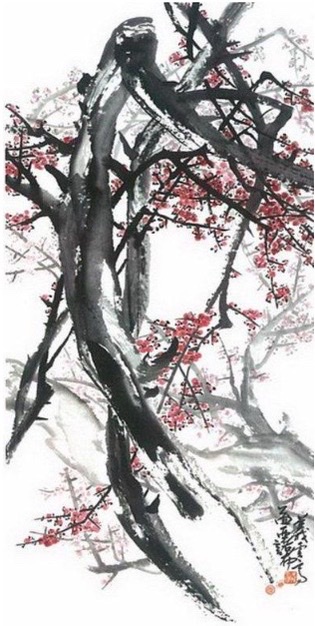
Plum Fragrance in the Holy Realm
Reveal her icy bearing and proud bones,
See how plum blossom commands the scene,
The crowd of beauties suddenly lacks color,
Seductive peach has lost its looks.
A few casual strokes,
So many eons of wind and dust.
The smoke and fire of the human world all disappears,
Leaving only a pure fragrance from the paper,
It wafts over me, awakening my mind.
The smile of the enchanted dream still remains,
Buddha Vajradhara has come
Three times to this world.
To this Buddha Land of merciful compassion
That great one has brought purity,
Feelings of the brush,
Traces of the brush,
One smile in the wind and dust,
Now the wind and dust,
So many eons of wind and dust.
To the Tune of “Jiang Jun Song”
Cold Harmony Heralds the Spring
I remember: myriad lofty peaks,
And scattered everywhere, sparkling gems of light,
The smile of cold fragrance,
Red plum trees hanging from the cliffs.
Unhurried, gentle,
Such feelings of tranquility.
Cliff walls and high valleys – where have they gone?
Midnight dreams of branches beneath a drunken moon
Ah, she returns after roaming in vast space.
Roaming thoughts,
And a return to the great world.
Drifts of fragrance wind around pavilion and hall,
Returning emptiness,
As before, to the great world.
Open the window,
Graceful she stands,
There is a plum tree,
Growing tall and strong,
Growing tall and strong.
To the Tune of “Ying Ge Chun”
Strong Feelings in the Scroll
On the paper, this shade of pink,
Ah, who can guess its real color?
Next to her, all the flower queens are slaves,
Ah, alluring brows and vermilion ink songs.
Ah, she remains here in the painting,
Until the guest comes.
Tenderness everywhere heralds the dawn of spring,
Ah, the guest has gone,
Yet later will come again.
Ah, gaze in the distance,
Breaths of cold harmony,
Ah, the perfume of the plum,
Tenderness in the scroll,
Tenderness in the scroll.
To the Tune of “Pu Sa Mahn”
Mind Realm
One dark, one pale, a pair of buds grow on the
branches
Light green, dark green, samadhi nourishes the world
Following karma, you lightly dance and float,
Immutably still, yourself an ancient Buddha.
You ask about the color of the plum blossom?
It is learning contained in virtue.
Wait until it is plucked, and without bonds
Then freely hold it and turn it in your hands.
To the Tune of “Wang Hai Chao”
The Plum Greets All Beings
The frozen purity of a jade grove
The startled soul of space
Spreads out far to east and west.
Cold fragrance, down of pink,
And though only a single spray of blossoms,
Loveliness greater than any mood,
So time itself becomes a mulberry dream.
Look: wind and bone expressed in ink,
In ten-thousand ages it will never fade.
The compassion of an ancient Buddha,
Captivates all beings, and brings them to truth.
Color artistry, free and graceful,
Powerful brushstrokes crossing vast space,
An atmosphere of erudition,
These words and paintings, year after year,
Bring constant blessings,
The auspiciousness of plum blossoms.
Look: within is a mysterious power,
Which I offer to the ten-thousand ages,
From the brush, an elegant air.
Just look at delightful spring color,
And all beings will enter holiness.
Vocal Mastery
His Holiness is also a vocalist whose songs are unique masterpieces. Whether singing in a robust, resonant, stirring, and thunderous manner, or in a quietly elegant, floating, light, sweet, and captivating manner, His Holinesss vocal performances are marvelous and heavenly. His Holinesss songs and lyrics contain true Buddha-dharma. They teach goodness, impart wisdom, and benefit people. Moreover, H.H. Dorje Chang Buddha III composes the melody, writes the lyrics, and sings these songs all by Himself. There are many audiotapes and CDs of these songs. Even expert vocalists have sought the guidance of H.H. Dorje Chang Buddha III on singing. An example of this is a disciple of H.H. Dorje Chang Buddha III by the name of Jacky Cheung, who is known as a tremendous singer.








 Peace LiLy