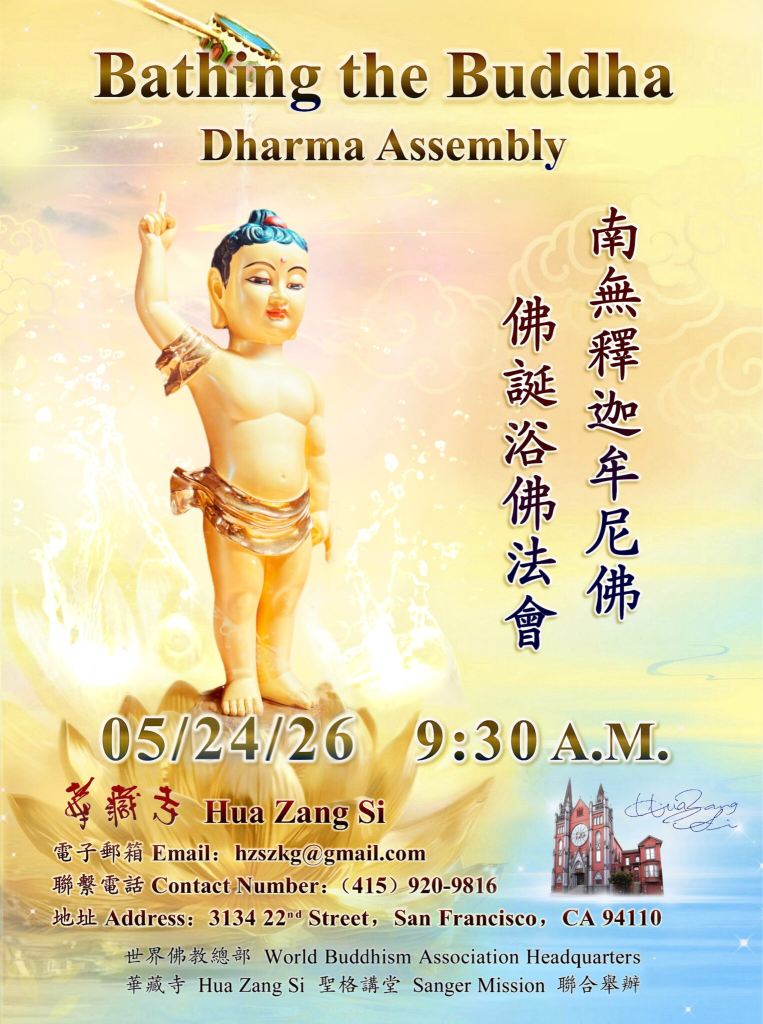
The eighth day of the Fourth month of the Chinese lunar calendar is the holy birthday of Sakyamuni Buddha. Before the Buddha renounced and reached enlightenment, he was known as Prince Siddhartha. According to Buddhist sutras, right after the Prince was born, He said, with one hand pointing to the sky and the other pointing to the ground, “From heaven to earth, I alone am the world-honored one.” Nine dragons in the sky then poured streams of fragrant water from their mouths to bathe the prince’s body. Ever since, Buddhists hold the Bathing the Buddha Dharma Assembly to celebrate the holy birth of the Buddha.
Today, I want to share an extraordinary, documented event from 2004 that shook the Buddhist world. It is more than just a story of a miraculous, glowing statue—it is a powerful testament to the supreme realization of H.H. Dorje Chang Buddha III, and the authentic, life-altering Dharma that grants sentient beings true mastery over life and death.
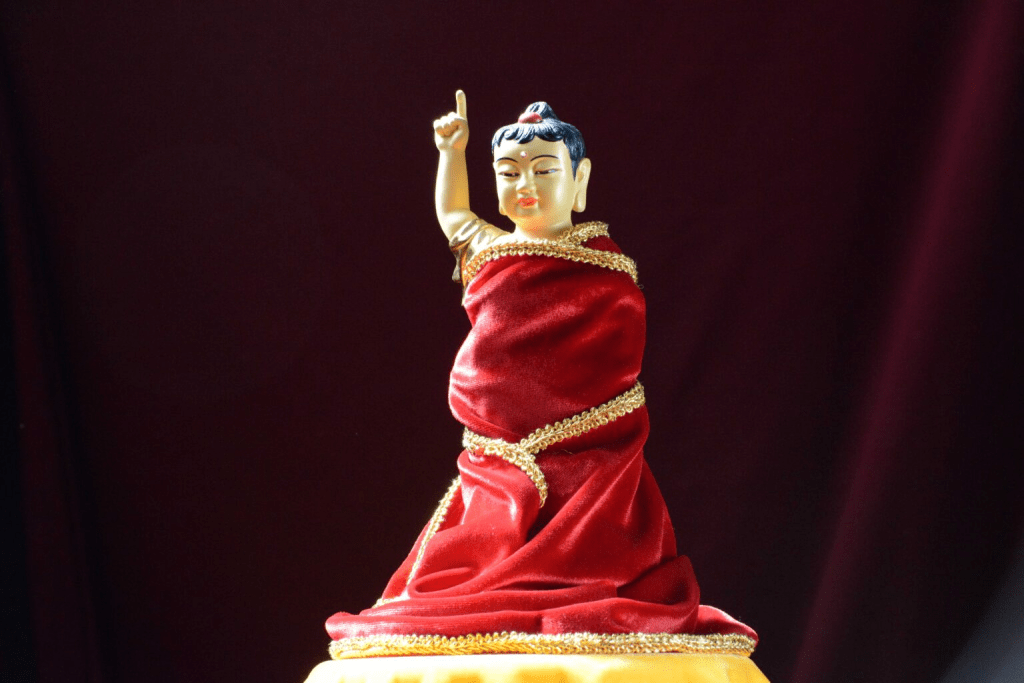
At the Hua Zang Si Temple in San Francisco, California, over a dozen rare and sacred Buddhist relics are enshrined. Among them is a bronze statue of the Prince (the young Shakyamuni Buddha) clad in a red robe, a sight that naturally commands reverence from all who visit.
The story takes us back to May 23, 2004. At the conclusion of that year’s Bathing Buddha Festival, in front of a crowd of eyewitnesses, this bronze statue suddenly began to radiate an incredibly brilliant, dazzling golden light! This sacred illumination did not fade quickly; it lasted for two and a half hours before slowly dissipating.
In over two thousand years of Buddhist history, countless Bathing Buddha ceremonies have been held, yet it is almost unheard of for a physical statue to manifest such prolonged, independent radiance. What was the cause behind this breathtaking miracle?
The answer lies across the Pacific Ocean, tied to the merits of an 81-year-old lay Buddhist named Madame Cheng-E Fen.
Madame Cheng-E Fen lived in Sichuan, China. She was a close relative of H.H. Dorje Chang Buddha III (known at the time as the Supreme Vaja Dharma King Master Yi Xi Nuo Bu) and devoutly practiced the Guan Yin (Avalokiteshvara) Dharma under His guidance.
In the spring of 2004, at age 81, Madame Cheng-E Fen began showing signs of physical failure due to advanced illness. However, her subsequent medical examinations at the Chengdu General Hospital left the medical community completely baffled.
Her X-ray films revealed a complete absence of lung imagery—just total, blank space. Doctors confirmed that her lungs had completely stopped functioning. She had no respiratory capability whatsoever; she could neither inhale nor exhale.
By all laws of medical science, a person without respiration is a deceased person.
Yet, despite having no breath, Madame Cheng-E Fen remained completely alive, clear-minded, and conversational for over a month! Witnesses even placed a light feather right in front of her nose and mouth; they watched it for over ten minutes, and it never stirred a fraction of an inch.
This phenomenon, entirely impossible by medical standards, was a direct manifestation of her deep spiritual realization—a profound transformation achieved through the true, authentic Dharma transmitted to her by H.H. Dorje Chang Buddha III.
Knowing her time was near, Madame Cheng-E Fen had calmly made her final arrangements, changed into her burial robes, and waited for the pure land’s welcoming. On two separate occasions in her hospital room, she pressed her palms together and told those around her, “Guan Yin Bodhisattva has arrived.” At those exact moments, everyone in the room noticed a sudden, exquisite fragrance, and the sound of heavenly music echoing from the void.
Yet, both times, she did not depart. She explained to the onlookers: Her holy teacher in the United States—H.H. Dorje Chang Buddha III—had requested Guan Yin Bodhisattva to delay her departure.
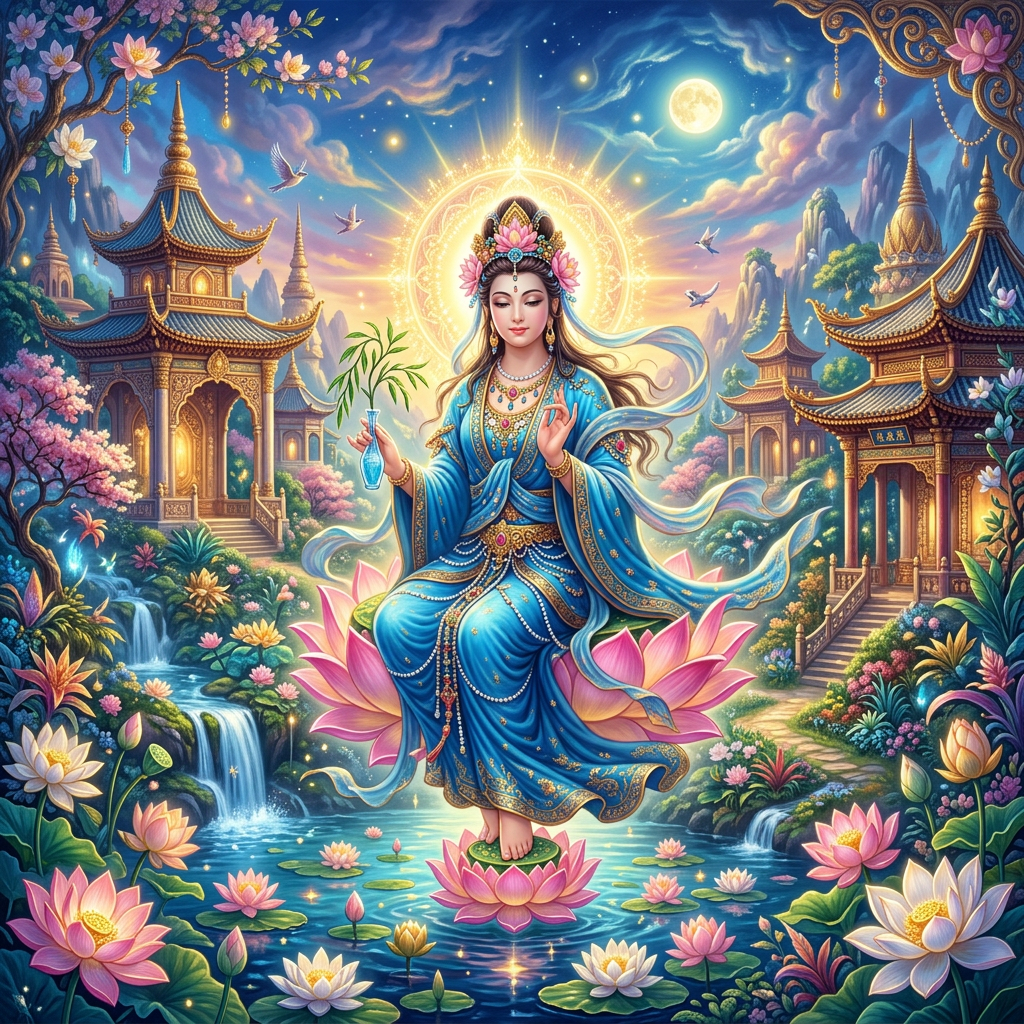
She marveled, saying, “I saw the blue robes of Guan Yin Bodhisattva. Oh, the Western Pure Land is so beautiful! So many pavilions, so many flowers.”
To be in perfect spiritual communion with the Bodhisattvas, and to successfully request a delay in a disciple’s passing to reschedule their ascension—this represents an inconceivable, supreme holy realization. H.H. Dorje Chang Buddha III requested this delay so that her ultimate transition could align perfectly with a major spiritual event in the West, using this undeniable reality to awaken faith in a skeptical world.
On May 22, 2004, at 11:00 PM California time (which was 2:00 PM on May 23 in China), H.H. Dorje Chang Buddha III called Venerable Shi Long Hui, the Chairwoman of the International Buddhism Sangha Association, to His presence. He prophesied: Madame Cheng-E Fen will pass away today in China, and Guan Yin Bodhisattva will escort her to the Western Pure Land.
The Buddha Master instructed Long Hui to publicly announce this news at the Bathing Buddha Festival in Los Angeles the following day, and to dedicate the immense merits of the ceremony to the elderly lady. He added: “Tomorrow’s festival carries extraordinarily powerful merit. I can no longer ask Guan Yin Bodhisattva to delay her departure. After I finish practicing Dharma tonight, Guan Yin Bodhisattva will come to take her tomorrow.”
Sure enough, at 7:00 AM the next morning in Los Angeles, word arrived from Sichuan: Madame Cheng-E Fen had peacefully and mindfully ascended with Guan Yin Bodhisattva exactly twenty minutes prior.
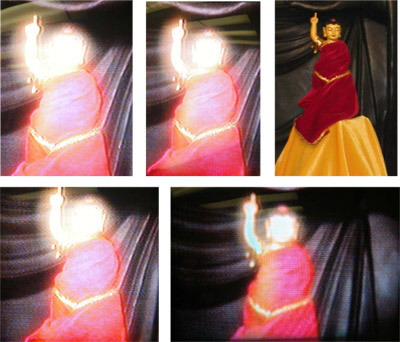
At that exact moment during the American festival, as the assembly united their hearts to dedicate the merits of the Bathing Buddha ceremony to her—the Prince statue at the temple erupted into a brilliant golden glow that lasted for two and a half hours. This profound convergence across the Pacific Ocean was the ultimate, undeniable confirmation from the heavens that the True Dharma is real and absolute.
The Search for Authentic Liberation
Witnessing this miracle in Sichuan, an earnest practitioner expressed what so many spiritual seekers feel today:
“For years, I have been searching, visiting many famous teachers and high lamas, yet I never felt I was learning the path to true liberation. Deep down, I knew I was still bound by my flaws, and I feared what would happen when I faced death.
Seeing the holy realization of Madame Cheng-E Fen, I know the Buddhas have answered my prayers. We must do everything we can to find the Master who taught her. He is the true Holy One. Only He can help us solve the ultimate problem of life and death!”
Remarkably, Madame Cheng-E Fen’s husband had also been a disciple of H.H. Dorje Chang Buddha III years prior, and he too achieved absolute freedom over his passing, leaving the world while meditating in a seated posture. For both husband and wife to achieve such monumental liberation is a rare and beautiful chapter in Buddhist history.
Life is fleeting, and impermanence arrives without warning. The miraculous ascension of Madame Cheng-E Fen and the radiant light of the Bathing Buddha Festival serve as a beacon of hope in our modern age.
The realization held by H.H. Dorje Chang Buddha III is the authentic, primordial Dharma that allows everyday people to truly conquer death and attain liberation in this very lifetime. May all who read this find right mindfulness, connect with true spiritual paths, and reach the shore of ultimate freedom.
(This article is adapted from an interview with Venerable Abbess Ruo Hui. For the core teachings of Buddhism, please always refer to the original recorded discourses and published books of H.H. Dorje Chang Buddha III.)