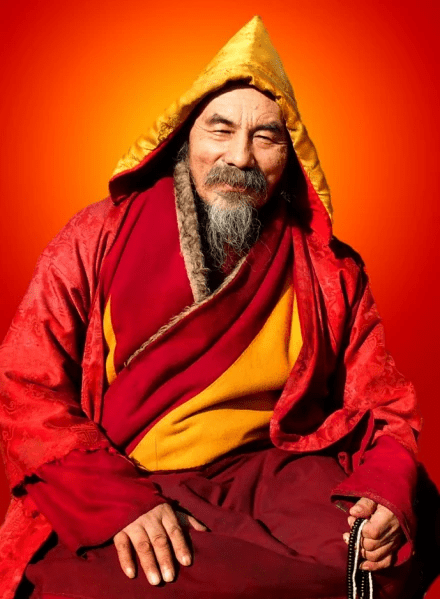
BRIEF INTRODUCTION TO THE SUPREME LEADEROF JONANG SECT H.H. DHARMA KING JIGME DORJE

Within Tibetan Buddhism, the Jonang sect has been known around the world for the true practice of its followers. There currently are two dharma kings who are in charge of the dharma teachings of the Jonang sect. One of them is the head of the Zangwa Monastery, H.H. Dharma King Jigme Dorje. The other is H.H. Dharma King Ngagwang Pedma Namgyal Palzangpo of the Longshijia Monastery. There is also a young future sect leader, Jianyang Lezhu Rinpoche, who is vice-head of the Zangwa Monastery.

When Shakyamuni Buddha lived in the world, H.H. Dharma King Jigme Dorje Rinpoche was already a great Bodhisattva in that lifetime. H.H. Dharma King Jigme Dorje was born in 1944 accompanied by various amazing auspicious signs that cannot be fully described. As a child, he never did anything to upset his parents, such as crying or acting in a common, childish way. He was very much different from other children. The masters of a monastery, as well as the monastics and laypersons in that monastery who handled monastery matters, all praised the child as being the incarnation of a wonderful Bodhisattva who had come back to this world voluntarily. Later, he went to the headquarters of the Jonang sect, the Zangwa Monastery in Rangtang, where he worshipped the Buddhas. His uncle, the Sai Rinpoche by the name of Awang Genga Phuntsok who lived at the Zangwa Monastery, saw that this child was the incarnation of a holy being. In accordance with the dharma, Awang Genga Phuntsok Rinpoche recognized that the child was the true reincarnation of a rinpoche who had been the head of the Zangwa Monastery. In accordance with the dharma rules, Lama Danba Daji from Xiayan, Lama Aguoba from Hongtu, and others practiced the dharma, entered holy supernatural states, and confirmed the accuracy of Awang Genga Phuntsok Rinpoche’s conclusion. They then made their formal pronouncements concerning the identity of H.H. Jigme Dorje. Moreover, the International Buddhism Sangha Association held an unprecedented Drawing Lots From a Golden Vase Ceremony to affirm the true reincarnated identity of H.H. Dharma King Jigme Dorje and others. There were ten possible identities recognized by various rinpoches. One lot was drawn from among 120 lots to affirm the true reincarnated identity of H.H. Dharma King Jigme Dorje. That drawing affirmed that H.H. Dharma King Jigme Dorje is the incarnation of Shambhala King Suchandra, which is the reincarnated identity that H.H. Dorje Chang Buddha III recognized before that lot was drawn.

After the formal enthronement ceremony for H.H. Jigme Dorje Rinpoche was performed at Saige Monastery in Aba County and the celebration of the enthronement ceremony was performed at Zhuoge Monastery, the rinpoche returned to Zangwa Monastery. The intelligence of the rinpoche is extraordinary. He was able to thoroughly learn and recite the scriptures, treatises, and rituals without having to exert himself. He later served as a disciple under his root master, Awang Gongqiu Daji, who was the Vajra Master of the Zangwa Dazang Monastery and the 44th Kalachakra Dharma King of the Jonang sect. Under H.H. Awang Gongqiu Daji, the rinpoche learned and practiced the five preliminary practices of the Jonang sect and the generation and completion stages of the Kalachakra Vajra the Six Yogas. He reached perfect merit in every dharma he practiced.

When the rinpoche was eight years old, he succeeded to the throne of the head of the Zangwa Monastery. However, at this time, his uncle, the Sai Rinpoche, and H.H. Dharma King Awang Gongqiu Daji predicted to H.H. Jigme Dorje Rinpoche that changes in the world situation would occur that would be disadvantageous to Buddhism. They told the rinpoche to go back to Aba County and that in the future, when the world situation stabilizes, he should return to the Zangwa Monastery and teach the dharma. Afterward, the Sai Rinpoche passed away and later H.H. Dharma King Awang Gongqiu Daji passed away as well. H.H. Jigme Dorje Rinpoche then went to Aba County, where he requested and received the complete precepts from Lama Tujihua of Sai. He later served as a disciple under another root master, Lama Kesang, who is the nirmanakaya of the Eleven-Faced Kuan Yin Bodhisattva. Under Lama Kesang, the rinpoche learned all of the initiation and lineage teachings. During this time period, he both herded goats and cultivated himself in caves, tree holes, and other places while traveling from mountain to mountain. He realized the state of viewing all phenomena as equal and the state where the mind is not affected by the situation one encounters. Thus, he became a free and unhindered person of great accomplishment in the dharma. He then lived in a cave, where he continued his practice of the dharma.

After the restraints on religion were slightly eased, the supreme leader of the Jonang sect, H.H. Dharma King Yundan Sangbu of the Zangwa Monastery in Rangtang, twice dispatched people to the cave at the Zilang Monastery in Aba County (that was the cave in which Maji Lazun practiced the Xiduan Dharma) where the rinpoche was staying. H.H. Dharma King Yundan Sangbu did so based upon the formal pronouncements of certain great masters of the past. When those dispatched arrived, they invited H.H. Jigme Dorje Rinpoche to go to the Zangwa Monastery and lead the teaching of the Buddha-dharma. There was a third visit when H.H. Dharma King Yundan Sangbu himself went to that cave at the Zilang Monastery, bringing with him a kharda (white silk scarf). When the two venerable ones met, they praised each other. H.H. Dharma King Yundan Sangbu repeatedly urged H.H. Jigme Dorje Rinpoche to follow the formal pronouncements of those great masters of the past by going to the Zangwa Dazang Monastery, by leading the teaching of the Buddha-dharma of the Jonang sect at that monastery, and by being the monastery’s retreat lineage Vajra Master. H.H. Jigme Dorje Rinpoche then gave his response to the formal pronouncements of those three masters of the past (H.H. Dharma King Gongqiu Daji, the Sai Rinpoche, and Lama Kesang) that he must go to the Zangwa Monastery in Rangtang. He respectfully said to H.H. Dharma King Yundan Sangbu, “Your merit and cultivation are like those of my father. You are my master. I will carry out your instructions well!”

After H.H. Jigme Dorje Rinpoche returned to the Zangwa Monastery at Rangtang, he helped H.H. Dharma King Yundan Sangbu restore the monastery and build Buddhist statues. The rinpoche performed initiations and dharma transmissions at regular intervals and guided those on retreat. He perpetuated the dharma teachings of the Jonang sect in this human world and propagated such teachings around the world.

In accordance with the rules handed down by the historical masters, H.H. Dharma King Yundan Sangbu personally handed over to H.H. Jigme Dorje Rinpoche in 1998 certain precious objects passed down through the generations by past masters, such as a vajra bell, a vajra, and the writing called “Guiding Text You Will Know Its Meaning When You See It.” He also formally conferred upon H.H. Jigme Dorje Rinpoche the positions of 47th dharma throne holder of the Jonang Kalachakra lineage and 11th Vajra Master of the Zangwa Dazang Monastery. After H.H. Dharma King Yundan Sangbu passed away, H.H. Dharma King Jigme Dorje became the supreme leader of the Jonang sect.

After H.H. Dharma King Jigme Dorje saw who His Holiness Dorje Chang Buddha III Wan Ko Yeshe Norbu is through the limitless omniscience displayed in A Treasury of True BuddhaDharma, he stated that His Holiness Wan Ko Yeshe Norbu has reached the highest state of Buddhahood in the few-thousand-year history of Buddhism, having truly attained complete.

CONGRATULATIONS
United International World Buddhism Association Headquarters:
On behalf of the Jonang sect, I hereby respectfully congratulate H.H. Dorje Chang Buddha III Wan Ko Yeshe Norbu for directly propagating in this world the teachings of Buddhism. Such teachings have benefited countless living beings in their practice of the dharma and have caused countless living beings to obtain deep blessings and wisdom. The book A Treasury of True Buddha-Dharma especially shows this Buddha’s complete proficiency in exoteric and esoteric Buddhism and perfect mastery of the Five Vidyas. Such superlative accomplishments are truly unprecedented in the past few thousand years, outshining the accomplishments of all others, both ancient and modern. His Holiness is a shining paragon among Buddhas. May this inexhaustibly mighty light and power of compassion continue so that His Holiness forever teaches the dharma and forever remains in the world. I place my palms together and respectfully praise His Holiness.

I respectfully prostrate to H.H. Dorje Chang Buddha III, Wan Ko Yeshe Norbu!
Supreme Dharma King of the Jonang Sect
Jigme Dorje
May 8, 2007

Link:https://peacelilysite.com/2025/01/10/brief-introduction-to-the-supreme-leaderof-jonang-sect-h-h-dharma-king-jigme-dorje/

Source: A Treasury of True Buddha Dharma


Embracing Life’s Impermanence: A Call to Seek Liberation Through Buddhism

Life is fleeting, a truth echoed by philosophers across history. Human existence is undeniably intertwined with suffering. To counterbalance this suffering, people often seek meaning through achievements or temporary relief in material pleasures. When conflicts arise, modern psychology offers positive thinking strategies to ease distress, yet it seldom explores the deeper essence of life, offering only superficial comfort rather than lasting resolution.

A lifetime passes in the blink of an eye. Pause for a moment and reflect: If you were to gather all the joyful moments of your life, how many days would they truly account for? And how many days were instead consumed by pain, worry, resentment, frustration, or helplessness? For most, the latter dominates.

Everything in this world is impermanent. Our loved ones, our wealth, the children we raise, and even our own bodies—none can remain with us forever. Eventually, all things return to dust. Life is like a passing guest, reminding us that the most vital truth is to seize the present moment while we can.

The ancient Greek philosopher Epictetus taught: “For things beyond our control, we should remain optimistic and confident. For things within our control, we should stay cautious and restrained.” Anxiety and fear cannot alter tomorrow’s outcomes, but they can ruin today. True wisdom lies in accepting what we cannot change and acting mindfully where we can.

Life’s path is unpredictable. No one knows what the next moment holds. Beyond treasuring the present, we can only strive to be our best selves. Do not wait until happiness slips away to feel regret. Treasure each effort and every connection, for what is lost may never return.

Nature’s cycles remind us of renewal—flowers bloom after withering, grass sprouts anew with the seasons. Yet human life is different. We are not like flowers or grass; our lives come but once. Once this life ends, it will not return. This truth makes it even more crucial to cherish each moment and live with purpose.

A beautiful Russian poem reminds us of life’s brevity:

“A day is short, so brief that before you can embrace the morning, dusk has already arrived. A year is short, so fleeting that before you can savor the vibrant reds and greens of spring, autumn frost is already setting in. A lifetime is short, so brief that before you can fully enjoy your youthful days, old age has already arrived.”

Among the most precious blessings in life is not what we have lost or seek to gain but the ability to treasure the present. As taught in Buddhism:

“The human body is rare and difficult to obtain, yet we have attained it. The Dharma is difficult to encounter, yet we have heard it. If we do not seek liberation in this lifetime, in which lifetime shall we seek it?”

In this rare and precious life, we have not only obtained a human body but also the extraordinary opportunity to encounter the true Buddha — H.H. Dorje Chang Buddha III and hear the sacred teachings. The Buddha’s Dharma voice purifies the heart, and when we apply these teachings in our daily conduct, it is like donning armor that shields us from suffering and empowers us with boundless blessings and wisdom.

For those beginning their spiritual journey, the safest and most effective path to rapid growth is to purify and fortify the mind with the authentic teachings of H.H. Dorje Chang Buddha III. His words offer a beacon of guidance, cleansing karmic obstacles and illuminating the path to liberation.

When this precious human life ends, if we remain trapped in the endless cycle of reincarnation, where will we seek the path to liberation? The opportunity is now. As Buddhist disciples, we must cherish this rare blessing, dedicating our lives to listening to the Dharma, studying the sacred teachings, and aligning our actions with the truths taught by the Buddha.

To cherish the H.H. Dorje Chang Buddha III‘s Dharma voice is, ultimately, to cherish our own lives. Let us not delay but strive for liberation in this very lifetime.

Link:https://peacelilysite.com/2025/01/09/embracing-lifes-impermanence-a-call-to-seek-liberation-through-buddhism/

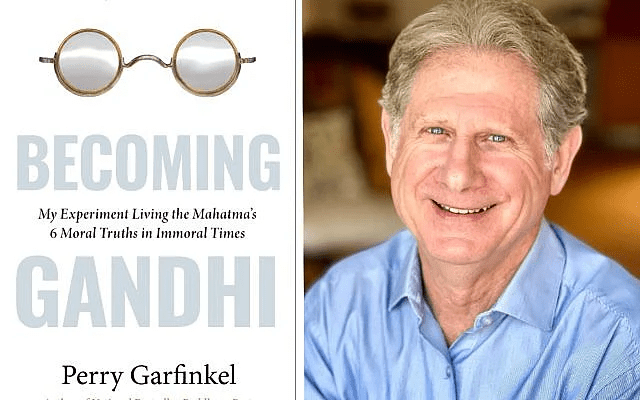
Perry Garfinkel: A Jewish Writer’s Search for Gandhi’s Truth

By Gregory Lyakhov

Perry Garfinkel embarks on a spiritual journey, blending Jewish roots with Gandhi’s transformative principles in ‘Becoming Gandhi.’

Perry Garfinkel, a longtime contributor to the New York Times and author of four books, has spent a lifetime seeking the deeper meaning of truth. In his latest book, Becoming Gandhi, he embarks on a spiritual journey to embody Gandhi’s principles. His unconventional path to this project bridges the values of his Jewish upbringing, his career in journalism, and his exploration of Gandhi’s teachings.

“What’s a nice Jewish boy doing writing about a Hindu icon?” Garfinkel joked during an interview. Beneath the humor, however, lies a profound question about faith, identity, and the search for common ground.

Born on Staten Island, a borough of NYC, but having lived briefly in Queens, Garfinkel has roots that trace back to a Jewish family from Queens, New York. He grew up in West Orange, New Jersey, and attended High Holy Day services with his grandfather, Moe Garfinkel, at the Queens Jewish Center in Queens Village. Religion was a pillar of his childhood, but something always felt missing.

“I never felt the heart of Judaism,” he said. “I wanted to taste it, but it felt out of reach.”

This sense of spiritual longing led Garfinkel beyond his roots. In his twenties, he traveled to India, where he encountered Hinduism and Buddhism. Garfinkel’s experiences sparked a fascination with spiritual practices that would shape his life.

“I’m a spiritual expeditionary,” he said. “I’ve always been searching for the truth—something that connects us all.”

His journey took a significant turn when his literary agent suggested he write about Gandhi. At the time, Garfinkel was coming off the success of Buddha or Bust, a national bestselling book documenting his exploration of Buddhism. The suggestion to focus on Gandhi intrigued him.

“I’ve been visiting India since 2003,” he explained. “Gandhi is everywhere—his quotes are on walls, his statues are in the streets. But I wanted to go deeper than the surface.”

The result was Becoming Gandhi, a book in which Garfinkel challenged himself to live by six of Gandhi’s core principles: truth, nonviolence, vegetarianism, simplicity, faith, and celibacy. Each principle posed unique challenges and taught him invaluable lessons.

“Truth was the hardest,” he admitted. “You look in the mirror and ask, ‘What is my truth?’ It’s like chasing mercury—you try to hold it, and it moves.”

Nonviolence tested him in different ways. In a world filled with conflict, war, and violence in entertainment, staying true to Gandhi’s vision of peace was no small task. “We’re bombarded by violence in so many forms,” he said. “How do we filter that out and choose something better?”

As he immersed himself in Gandhi’s teachings, Garfinkel found his thoughts returning to his Jewish identity. Gandhi himself had a deep interest in other religions, including Judaism. “He read the Old Testament, the New Testament, and the Quran,” Garfinkel said. “That openness inspired me to revisit my faith with fresh eyes.”

Perry Garfinkel interviews Ela Gandhi, granddaughter of Mahatma Gandhi and former member of Parliament in South Africa, in Durban.

Garfinkel had begun to re-identify his Jewish roots, working for about six years as media manager for the Jewish Community Federation of San Francisco. But through Gandhi, Garfinkel found a way to reinterpret Judaism’s role in his life. “Judaism gave me a foundation,” he explained. “But Gandhi provided new ways to think about it. He showed me that being rooted in your tradition doesn’t mean closing yourself to other perspectives. Instead, it can enrich your understanding.”

Perry Garfinkel interviews Ela Gandhi, granddaughter of Mahatma Gandhi and former member of Parliament in South Africa, in Durban.

Not all of Gandhi’s principles were easy for Garfinkel to adopt. Vegetarianism, for example, was particularly challenging for someone raised in a “meat and potatoes” family.

“I grew up on steak, corned beef, and other deli meats,” he said. “Giving that up wasn’t easy.” Eventually, he found a middle ground. “I call it tapering—gradually cutting back rather than going cold turkey. It’s about finding balance and making it sustainable.”

Beyond the personal challenges, Gandhi’s approach to global issues also led to deep reflection for Garfinkel. Gandhi’s decision to write letters to Adolf Hitler, addressing him as “Dear Friend,” struck many as naive or even offensive. Garfinkel, however, saw another perspective.

“Gandhi wasn’t trying to excuse Hitler’s actions,” he explained. “He attempted to model moral behavior, even when it seemed futile. His letters weren’t really for Hitler but for the rest of us. They were a reminder of what it means to stand for peace, even when the world is falling apart.”

For Garfinkel, the Holocaust added another layer to this complex discussion. His grandmother fled Poland before the worst atrocities, but many relatives were not so fortunate. “The Holocaust is personal for me,” he said. “It’s part of my identity as a Jew and a writer. Balancing that history with Gandhi’s message of forgiveness and nonviolence has been one of the hardest parts of this journey.”

Through his writing, Garfinkel bridges his Jewish heritage with his spiritual explorations, demonstrating that the two are not in opposition but in harmony. “Being Jewish and open to other traditions aren’t contradictory,” he said. “They’re complementary. They deepen your understanding of who you are.”

Today, Garfinkel continues to write and reflect, encouraging others to embark on their journeys of self-discovery. Gandhi’s message is simple but profound: “Be the change you want to see in the world.”

For Garfinkel, change begins with understanding—of oneself, one’s traditions, and the connections that bind us all. His work encourages others to reflect on their identity and potential by adopting some of Gandhi’s principles.

About the Author: Gregory Lyakhov is a sixteen-year-old high school student from New York with a passion for politics and law. He has been fascinated by government from an early age and aspires to be involved one day. Outside of politics, you’ll often find him running, swimming, or enjoying Pickleball and snowboarding. Join him on his journey of exploration!

Link:https://peacelilysite.com/2025/01/09/perry-garfinkel-a-jewish-writers-search-for-gandhis-truth/

Source: https://blogs.timesofisrael.com/perry-garfinkel-a-jewish-writers-search-for-gandhis-truth/?utm_source=flipboard&utm_content=topic/spirituality

San Francisco Hua Zang Si Temple Celebrates 20th Anniversary with Charity Event: “Love Without Limits” Donation Drive


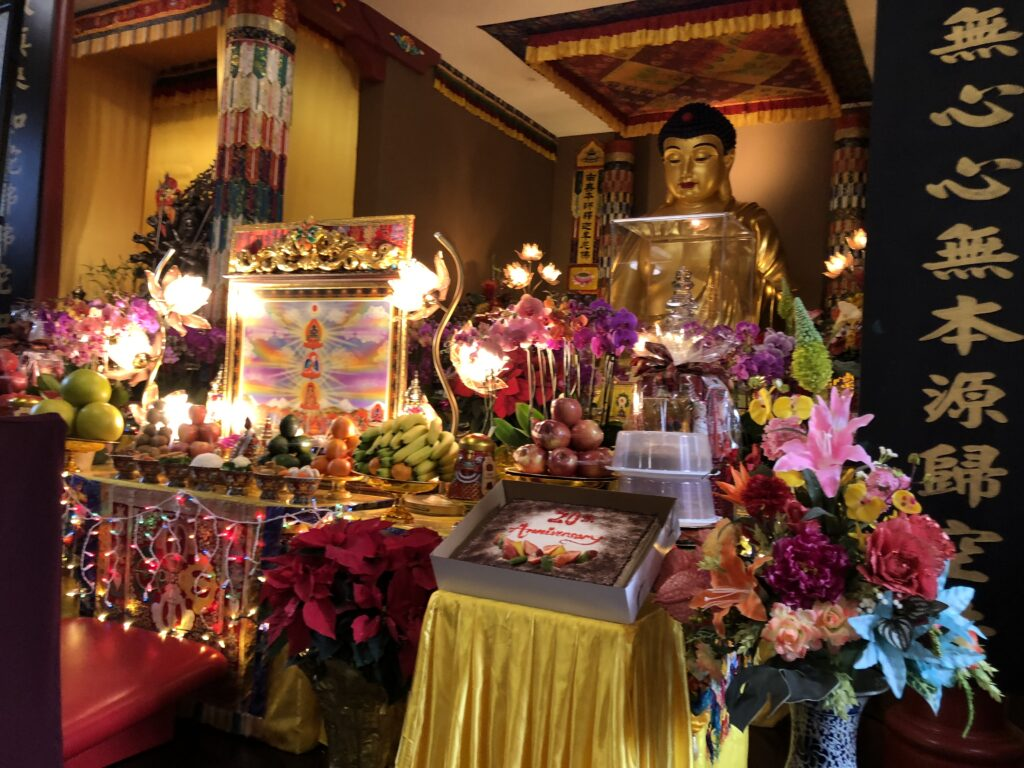
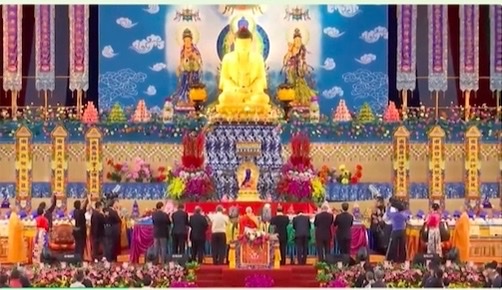
San Francisco Hua Zang Si Temple Celebrates 20th Anniversary with Charity Event: “Love Without Limits” Donation Drive Photo Courtesy: Joyce Lee (The Hua Zang Si Temple held a Dharma Assembly to celebrate the Holy Birthday of Amitabha Buddha)

The San Francisco Hua Zang Si Temple, inaugurated on December 26, 2004, upholds and promotes the genuine teachings of H.H. Dorje Chang Buddha III, the incarnation of the primordial Buddha, and the World-Honored Shakyamuni Buddha, extending boundless compassion and kindness to all beings. 

Guided by the teachings of H.H. Dorje Chang Buddha III, Hua Zang Si Temple has actively participated in various charitable activities for many years, including organizing New Year entertainment events in nursing homes, assisting with hospital relocations, providing food relief to disaster-affected areas, and holding garage sales, with all proceeds donated to vulnerable groups. The temple expressed their hope that this spirit of helping others will continue to flourish: “In acts of kindness, seeds of virtue grow, a family that sows goodness finds happiness in full flow.”

San Francisco Hua Zang Si Temple Celebrates 20th Anniversary with Charity Event: "Love Without Limits” Donation Drive
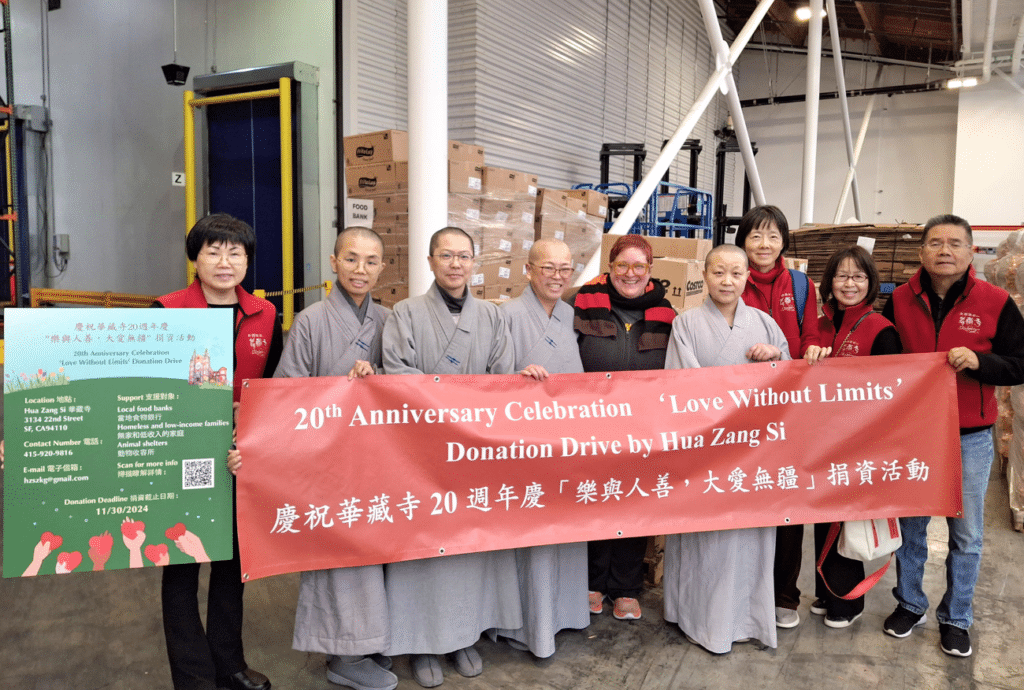
Photo Courtesy: Natty Kao (Nuns from Hua Zang Si Temple and volunteers from the Dharma-Protecting Fellowship of Hua Zang Si donated items to San Francisco Marin Food Bank.)

To commemorate its 20th anniversary, Hua Zang Si launched a month-long charity drive titled “Love Without Limits” in November, supporting animal rescue centers, homeless and low-income families, and local food banks. On the morning of December 15, a Dharma Assembly was held to celebrate the Holy Birthday of Amitabha Buddha, praying for world peace and the well-being of all people. The afternoon featured a 20th-anniversary performance and raffle, attended by nearly 300 people.

By December, Hua Zang Si had collected a total of 812 items, categorized into three main types: 241 animal supplies, including dog collars, walking harnesses, pet carriers, and disposable puppy pads; 211 baby and cookware items, including baby bottle drying racks, baby bodysuits, air fryers, and cookware sets; and a total of 2,265 pounds of food, including rice, pasta, and other food items. On December 11, nuns from Hua Zang Si Temple and volunteers from the Dharma-Protecting Fellowship of Hua Zang Si delivered these items to Muttville Senior Dog Rescue, the Homeless Prenatal Program (HPP), and the San Francisco Marin Food Bank.

San Francisco Hua Zang Si Temple Celebrates 20th Anniversary with Charity Event: "Love Without Limits” Donation Drive
Photo Courtesy: Joyce Lee 
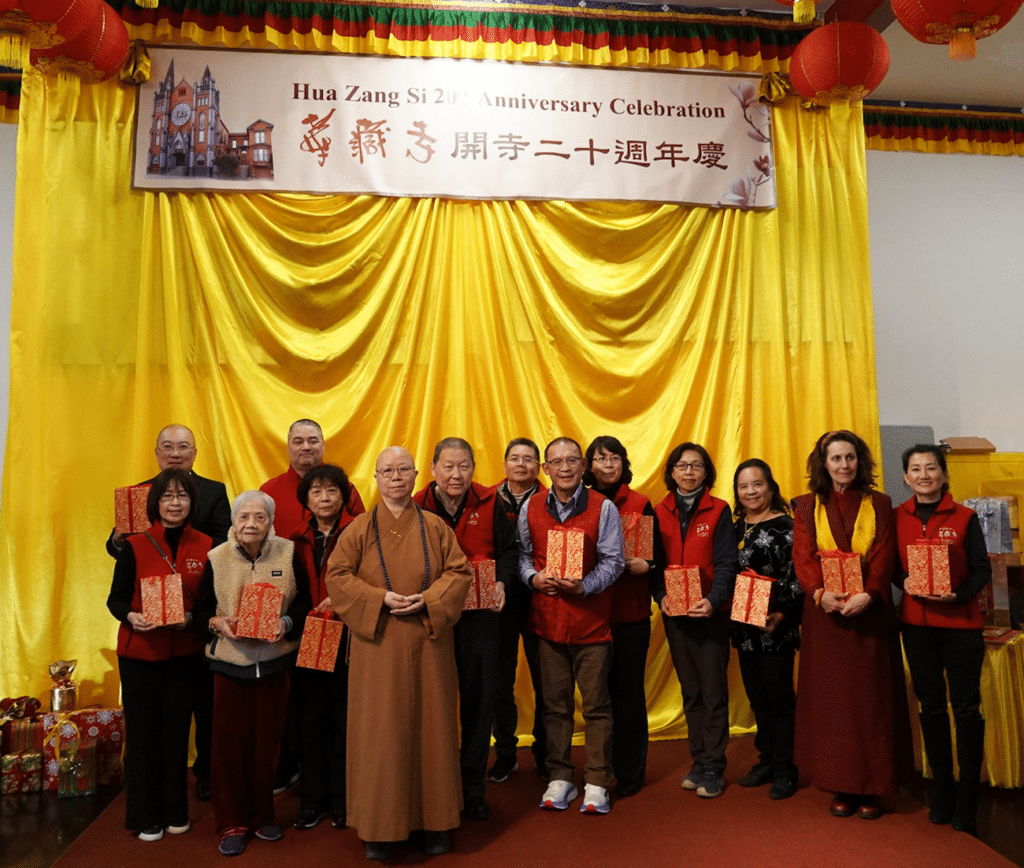
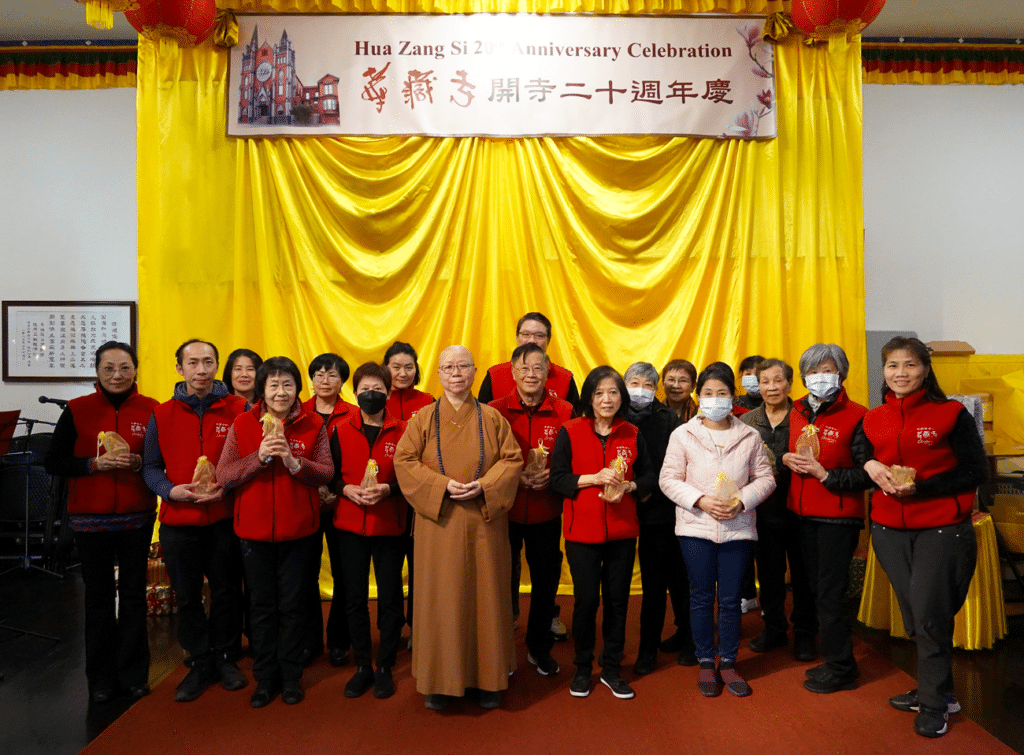
(The abbess of Hua Zang Si Temple awarded 20 years’ service awards to volunteers.)
Photo Courtesy: Joyce Lee (The abbess of Hua Zang Si Temple awarded 20 years’ service awards to volunteers.)

As the first cage-free rescue organization in the U.S. and California’s first nonprofit dedicated to rescuing senior dogs, Muttville has rescued nearly 13,000 senior dogs over the past 17 years, providing support for about 100 senior dogs each month. The generous donations from Hua Zang Si were gratefully received, greatly aiding in the care and rehoming efforts for these senior dogs.

The San Francisco Marin Food Bank, a nonprofit organization dedicated to addressing hunger in San Francisco and Marin counties, distributed over 60 million pounds of food this year, thanks in part to Hua Zang Si’s year-end support. In these regions, one in five people faces food insecurity, and the temple’s contributions have significantly bolstered the food bank’s efforts. The donated food from the temple will be utilized in various community programs, including after-school programs, Boy and Girl Scouts, ensuring that nutritious meals reach those in need.

San Francisco Hua Zang Si Temple Celebrates 20th Anniversary with Charity Event: "Love Without Limits” Donation Drive
Photo Courtesy: Joyce Lee
(The abbess of Hua Zang Si Temple awarded 10 years’ service awards to volunteers.)

The Homeless Prenatal Program (HPP), a renowned family support center in the U.S, serves over 4,000 vulnerable families each year, particularly aiding mothers seeking assistance during pregnancy and parenting. The temple’s donations have significantly enhanced HPP’s ability to support mothers and children facing life challenges.

On the afternoon of December 15, the 20th-anniversary celebration was held in the main shrine of Hua Zang Si, featuring live performances of several classic philosophical songs with lyrics written by H.H. Dorje Chang Buddha III, cello performances of various songs, a mesmerizing Tibetan dance, and an exciting raffle with numerous prizes. The event provided a visual and auditory feast for nearly 300 attendees. The celebration concluded with a heartfelt group sing-along of “Buddha Holding My Hand,” bringing the 20th-anniversary festivities to a perfect close.

Looking ahead, Hua Zang Si will continue to serve as a beacon of love and care within the community. They hope more people will join in these acts of kindness, creating a warm, loving, and harmonious society together.


The above article is from the World Reporter, December 23, 2024.

Link:https://peacelilysite.com/2025/01/08/san-francisco-hua-zang-si-temple-celebrates-20th-anniversary-with-charity-event-love-without-limits-donation-drive/

Hair Sariras of H.H. Dorje Chang Buddha III

In Buddhist scriptures, relics are broadly classified into two types. The first type, known as Dharma-body relics, refers to the teachings and scriptures spoken by the Buddha, representing his spiritual essence and wisdom. The second type, physical relics, comprises the solid remains left after the Buddha’s cremation. These physical relics are traditionally described as being of three kinds: white bone relics, red flesh relics, and black hair relics. They are noted for their luminous, pristine appearance, unbreakable nature, and incomparable beauty, far surpassing worldly jewels.

It is also believed that Bodhisattvas and Arhats may leave behind similar relics. According to Buddhist teachings, relics naturally crystallize in those who have achieved enlightenment and sincerely practiced devotion to the Buddha. They are considered extraordinary and unattainable by ordinary individuals.

H.H. Dorje Chang Buddha III is recognized as the true reincarnation of the Primordial Buddha. His Holiness has demonstrated extraordinary miracles, including the manifestation of hair sariras. Below are authentic accounts from Buddhist disciples detailing their experiences and discoveries of the hair sariras of H.H. Dorje Chang Buddha III.

Hair Sariras (1)

H.H. Dorje Chang Buddha III Wan Ko Yeshe Norbu Holiest Tathagata usually cuts His own hair. However, there have been several occasions when I respectfully accompanied His Holiness to a barber shop. Each time, out of reverence, I carefully swept away the floor and removed other people’s hair before the haircut began. After the Buddha Master’s haircut was finished, I would gather His hair from the floor, wrap it carefully in paper, and place it on my Buddhist altar upon returning home. Gradually, I began collecting and keeping some of the hair.

I still remember what happened on June 1, 2003. On that day, I took out several unopened paper packs and organized them, intending to wash the hair. Because the individual hairs were very fine, I had paid special attention and placed them on a screen. While soaking them in water, I saw three small round red beads among the hair. The entire cleaning process was handled by me, and I did not touch anything else during that time. I felt this to be very strange and wondered where those red beads came from. I intended to press them with my finger to see if they were hard or soft and even took a magnifying glass to carefully exam them. Suddenly, a thought occurred to me. Could they be sariras? I realized if I did this, it would be too disrespectful.
Hurriedly, I placed the three small beads in a small white box and took them to H.H. Dorje Chang Buddha III to inquire of their origin. I asked, “May I know what these things are?” The Buddha Master said, “Where did you get these? These are sariras!” Afterwards, the Buddha Master practiced dharma and chanted mantras to prove the authenticity of those sariras. I reported to the Buddha Master that they were wrapped in paper and appeared from the cut hair of His Holiness.

Later, the Buddha Master gave us a special discourse in which His Holiness stated, “This has happened because of conditions and the level of fortune of all sentient beings. It does not matter where they come from. Perhaps they originated from the empowerment of the Buddhas and Bodhisattvas. It actually does not matter what the disciples think concerning how or where they come from. If they can appear out of nothing, then they can disappear out of nothing. The important thing is the cultivation of each one of us and the need to live in accordance with the teachings and abide by the principles of Buddhism.”
That night, I carefully placed those three red sariras in a small tightly covered Tibetan box and cushioned them with white cotton. The next day, a fellow disciple requested to view them. I thought about placing the sariras in a crystal bottle that I had just bought. When I opened the small box and looked inside–how could it be that there were only two sariras left? I did not touch any other things anymore! I shredded and tore the cotton, but could only find two sariras. It was really upsetting! This proves and corresponds to what H.H. Dorje Chang Buddha III previously expounded: “If they can
appear out of nothing, then they can disappear out of nothing.”

This extraordinary occurrence reminded me of a fellow disciple’s personal testimony of witnessing sariras falling from the Buddha Master. This time, I experienced it firsthand, and it was truly a wonderful and auspicious sign.

Everything I have recounted above is true and authentic. If there are any falsehoods, may I suffer all evil retribution. If they are genuine facts, may living beings receive the dharma teachings of H.H. Dorje Chang Buddha III Wan Ko Yeshe Norbu Holiest Tathagata, be liberated from the cycle of life and death, and attain wisdom and good fortune.

Buddhist disciple,
Hsuan Hui

(This is a complete translation of the Chinese text that follows, originally written and signed by Hsuan Hui.)

Hair Sariras (2)

I established a Buddhist altar in my home in Thailand on January 16, 2005. On that day, a fellow disciple brought me a small glass bottle containing several individual strands of the hair sariras of my Buddha Master, Dorje Chang Buddha III Wan Ko Yeshe Norbu Holiest Tathagata. Each strand was approximately one centimeter long. Out of reverence, I placed a blue semi-precious stone inside the bottle and set it on my altar.

A few months later, I decided to replace the glass bottle with a Venetian crystal one. When I opened the glass bottle, I noticed something astonishing: the originally short hairs had grown longer. Although surprised, I did not dwell on it initially. However, the hairs continued to grow, and recently the change has become undeniable. Some strands have grown to five or six times their original length, now measuring five or six centimeters. Remarkably, some of the hairs, pinned down on both ends by the stone, have grown in their middle sections, forming loops. How truly extraordinary!

From a scientific perspective, hair cells die once cut, making it inexplicable how short, severed hairs could continue to grow. Let this miraculous phenomenon strengthen our faith and conviction. It is a genuine manifestation of the power of the Buddha-dharma!

Buddhist disciple,
Shu-Hui Chen

(This is a complete translation of the Chinese text that follows, originally written and signed by Shu-Hui Chen.)

Link:https://peacelilysite.com/2024/12/06/hair-sariras-of-h-h-dorje-chang-buddha-iii/

Source: https://www.tpcdct.org/sites/default/files/media/194.pdf

The Meaning and Merits of “Life Release”

Embracing Compassion: The Day of Releasing Lives and the Teachings of H.H. Dorje Chang Buddha III

The practice of life release originates from Mahayana Buddhist scriptures and has been widely practiced in mainland China, Tibet, and also spread to Japan, Korea, Vietnam, and neighboring regions. The act of life release is rooted in the compassionate principle of equality among all beings and the karmic understanding of the cycle of birth and death. As the saying goes, “If you take half a pound from others, you will have to repay eight ounces.” Abstaining from killing while also practicing life release brings even greater merit, and there are countless historical accounts of miraculous responses and blessings resulting from such acts.

In Volume 4 of the Miscellaneous Treasures Sutra, there is a story about a novice monk and his teacher. The teacher foresaw that the novice monk would pass away within seven days and advised him to return to his family home, asking him to come back after seven days, without explaining why.

On his way home, the novice monk came across a broken pond, where water was flooding an anthill.

The ants were frantically trying to escape, but their speed was no match for the rushing water. Seeing that countless ants were about to drown, the novice monk used his robe to carry soil and blocked the breach in the pond, saving all the ants.

After seven days, the novice monk returned to his teacher. The teacher, upon seeing him alive, was astonished and asked what had happened during those days. Mistakenly thinking he was being accused of wrongdoing, the novice monk fearfully replied that he had done nothing. The teacher, being an Arhat, used his divine vision and discovered that the novice monk had performed a small yet significant act of kindness by saving the ants from drowning.

This single compassionate act altered the novice monk’s karmic fate, extending his lifespan and allowing him to live a long life until his natural passing.

The Profound Teachings Behind Life Release

The practice of releasing lives is deeply rooted in Buddhist scriptures:

  • The Chapter on the Practices and Vows of Samantabhadra states:
    “Living beings cherish their lives above all, and Buddhas cherish living beings above all. To save the lives of living beings is to fulfill the heartfelt wishes of the Buddhas.”
  • The Brahma Net Sutra on the Bodhisattva Precepts states: “If a disciple of the Buddha practices life release out of compassion, they should regard all men as their fathers and all women as their mothers, for in every life, they are born through them. Therefore, all beings in the six realms are like one’s own parents. To kill and eat them is akin to killing one’s parents or oneself. When witnessing the slaughter of animals, one should strive to protect and relieve them from their suffering. Furthermore, one should teach and explain the Bodhisattva Precepts, guiding and saving all sentient beings.”
  • The Sutra on Distinguishing the Origin of Good and Evil reveals:
    “The Buddha said: In this world, if one possesses a compassionate heart and refrains from killing, they will gain five blessings: longevity, physical well-being, freedom from harm, rebirth in the heavens, and a long life when returning to the human world. Those who live to a hundred years today owe it to their abstention from killing in past lives.”

These teachings emphasize that compassion is both a passive and active virtue. While refraining from killing is essential, taking proactive steps to save lives embodies the true spirit of Buddhist teachings.

October 29 marks the Day of Releasing Lives, a profound observance dedicated to the protection and liberation of living beings. This day calls for the nurturing of compassion, the accumulation of virtue, and the cultivation of good karma. Initiated in 2009 by H.H. Dorje Chang Buddha III, this practice symbolizes an enduring commitment to compassion and liberation. Following a major Buddhist event, H.H. Dorje Chang Buddha III designated this day as a global occasion for the compassionate release of captive lives, inspiring a tradition now embraced worldwide.

The 2024 Life Release Event: A Global Act of Compassion

This year, the H.H. Dorje Chang Buddha III Culture and Art Museum, in collaboration with the World Buddhism Association Headquarters, hosted a commemorative Dharma Assembly in Marina Del Rey, California. The event brought together esteemed holy gurus, eminent monks, and devout Buddhists from around the world.

Photo Courtesy: Joyce Lee | Vice President of World Buddhism Association Headquarters, Jiaozun Zhengda, presided over the Dharma Assembly on the Buddha-Stipulated Day of Releasing Lives.
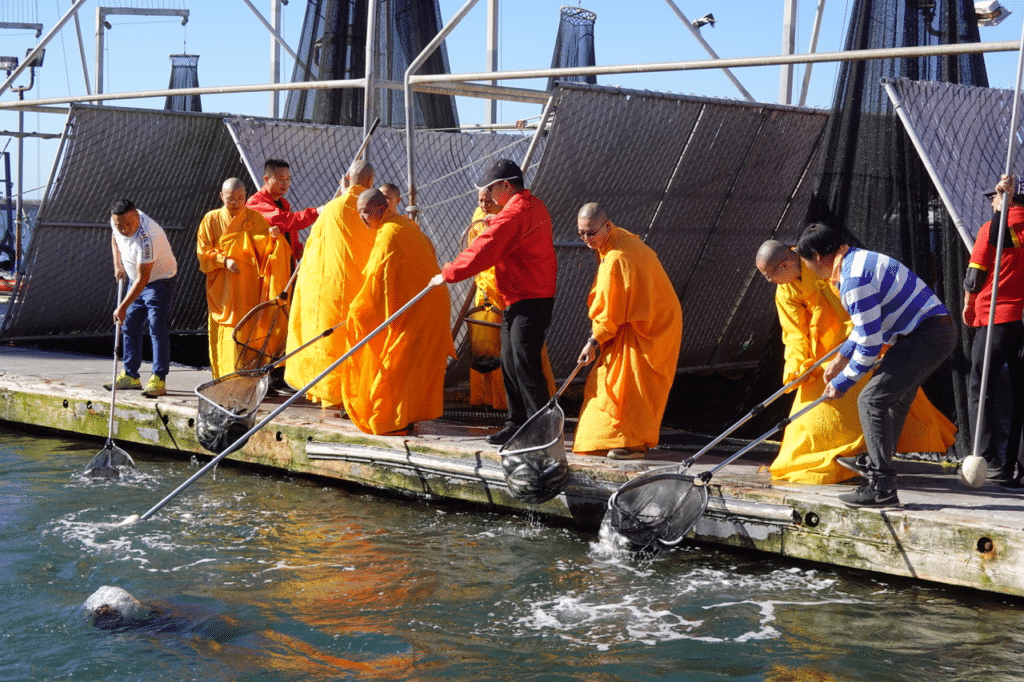
The gathering featured the release of thousands of fish back into the ocean, accompanied by the recitation of the Heart Sutra. Jiaozun Zhengda, Vice President of the World Buddhism Association Headquarters, led the prayers and delivered an inspiring address on the significance of the occasion. She emphasized the need for ongoing acts of compassion and the responsibility to protect living beings wherever and whenever they face suffering.

Jiaozun Zhengda explained that the practice of releasing lives arises naturally from the precept of refraining from killing. While refraining from harm is virtuous, actively saving lives elevates compassion to its highest form. This principle is at the heart of the teachings of Namo H.H. Dorje Chang Buddha III and Namo Shakyamuni Buddha.

Photo Courtesy: Joyce Lee | Hundreds of Buddhists from all over the world attended the Dharma Assembly of Releasing Lives.

Photo Courtesy: Joyce Lee | Participants released captive fish into the ocean

Participants shared profound reflections on the event. Watching the fish swim freely into the ocean became a moving symbol of resilience, freedom, and the boundless compassion of Buddhas and Bodhisattvas. For many, this practice reaffirmed their vows to live with kindness, respect all life, and emulate the selflessness of the Buddhas.

The Day of Releasing Lives is more than a symbolic gesture. It is a reminder that compassion knows no boundaries of time or space. Through the release of captive lives, Buddhists actively demonstrate their commitment to fostering a world of harmony and peace.

A Global Call for Compassion

As we observe the Day of Releasing Lives, let us remember that every act of compassion matters. By choosing to release lives, we contribute to a legacy of kindness that transforms our world. May this day inspire all of us to nurture compassion, protect life, and cultivate peace for the benefit of all beings.

For more information about the H.H. Dorje Chang Buddha III Culture and Art Museum and their compassionate initiatives, please visit https://www.wbahq.org/.

Link: https://peacelilysite.com/2024/11/07/the-meaning-and-merits-of-life-release/

Source: https://www.wbahq.org/reports-by-news-media/rm20241105/

#DorjeChangBuddhaIII #HHDorjeChangBuddhaIII  #Buddha Dipankara#FishRelease #Buddhism #HolyGurus#Rinpoches#Bodhisattva Avalokiteshvara#HolyMiraclesTemple#DvineTransformations #DharmaAssembly#ShakyamuniBuddha #H.H.DorjeChangBuddhaIIICultureandArtMuseum

The Compassionate Vows of the Medicine Buddha: A Path to Health, Harmony, and Happiness

Source: Luobenkun Art museum

On the 29th day of the ninth lunar month, Buddhist disciples worldwide honor the birthday of Bhaisajyaguru Buddha, known as the Medicine Buddha or the Great Medicine King. He is also referred to as the Buddha of Twelve Great Vows, embodying deep compassion and healing. Presiding over the Pure Land of Lapis Lazuli Light in the East, the Medicine Buddha has inspired countless practitioners with his transformative teachings and boundless compassion.

Buddhist communities celebrate this sacred day with ceremonies, reciting the Medicine Buddha Sutra, learning from his teachings, and making offerings. The Medicine Buddha Sutra recounts Shakyamuni Buddha’s dialogue with Manjusri Bodhisattva, where he reveals the profound virtues of the Medicine Buddha’s Pure Land and the twelve vows he made as a bodhisattva. These vows reflect his deep empathy for beings suffering from illness, poverty, and ignorance, and his wish to liberate them from these afflictions. This sutra is not only a sacred text but also a guide for overcoming life’s challenges, helping us gain inner peace, health, and happiness.

The sutra explains the Medicine Buddha’s teachings with a unique emphasis on relieving suffering in this life. By focusing on the here and now, the Buddha’s teachings encourage us to look at our lives with clarity, understand our challenges, and gain relief from worldly troubles. This practical orientation gives the Medicine Buddha Sutra a distinctive place in Buddhist practice, emphasizing the importance of compassionate action and wisdom in daily life.

The Twelve Great Vows of the Medicine Buddha

First:
I vow to assist those impoverished and tormented by constant struggles. Those who come across my name, sincerely honor it, and practice Dharma to build their merit will see their wishes come true.

Second:
I vow that my body shall shine as beams of brilliant light across this infinite, boundless world, freeing all beings from ignorance and worry through my teachings. May all beings attain a perfect state of character, integrity, and enlightenment, like the Buddha.

Third:
I vow that my body shall be like flawless crystal, radiating splendid light to all corners, enlightening beings with wisdom. Through the blessings of compassion, may all beings gain spiritual power and physical strength to achieve their aspirations on a virtuous path.

Fourth:
I vow to grant all beings the inexhaustible resources they need, freeing them from pain and guilt caused by material desires. While essentials such as clothing, food, shelter, and transport are needed, they should be wisely used. May they generously share these resources within the community to foster harmony.

Fifth:
I vow to lead those who have strayed back to the path of righteousness, guiding them toward enlightenment on the Buddha way.

Sixth:
I vow to enable all beings to uphold precepts of purity and morality. If they falter, they shall be guided to repent. Those who sincerely regret their wrongdoings and vow to change, with faith in the Buddha, shall be forgiven and regain purity.

Seventh:
I vow that all beings who are physically disabled or ill will be blessed with both physical and mental health. Those who faithfully honor the Buddha will receive these blessings.

Eighth:
I vow to alleviate the suffering of the poor and sick. May the ill be cured, the helpless supported, and the impoverished uplifted.

Ninth:
I vow to relieve the suffering of women seeking transformation. By hearing my name, paying homage, and praying, may their wishes be fulfilled, leading them ultimately to Buddhahood.

Tenth:
I vow to release all beings from harmful thoughts. I will guide them to righteousness and honor, so they may walk the Buddha way on a path of light.

Eleventh:
I vow to save those who have sincerely repented, including prisoners and victims of natural disasters. Those who are sincere will receive my blessings and be freed from suffering.

Twelfth:
I vow to relieve those facing starvation or committing crimes for survival. If they hear my name and hold it dear, I will lead them to the benefits of Dharma and favor them with the sustenance they need, helping them to lead peaceful, contented lives.

The Medicine Buddha’s great vows remind us of the healing power of compassion and inspire us to live with kindness and selflessness. Whether through reciting his name, chanting his mantras, or making offerings, we are encouraged to practice not only for our own relief but also for the welfare of all beings. By embodying the virtues outlined in the Medicine Buddha Sutra, we aim to carry forward the Buddha’s compassionate mission, helping ourselves and others find happiness, harmony, and well-being.

May we all find solace and empowerment through the compassionate vows of the Medicine Buddha and live our lives with health, joy, and a sense of unity with all beings.

Link:https://peacelilysite.com/2024/10/31/the-compassionate-vows-of-the-medicine-buddha-a-path-to-health-harmony-and-happiness/

Source: https://www.baromkagyu.org/medicine

The Extraordinary Life of H.E. Xiazhu Qiuyang Rinpoche: A Master of Boundless Compassion and Wisdom

The most venerable H.E. Xiazhu Choying Rinpoche, also known as H.E. Xiazhu Qiuyang Rinpoche, is a highly accomplished Buddhist master from Guoluo, renowned for his spiritual achievements and mastery of Vajrayana teachings. Born in the winter of 1945, his birth was marked by extraordinary signs: thunder echoed across the sky, and colorful flowers blossomed spontaneously on the grasslands surrounding his birthplace. Many local herdsmen witnessed these rare and auspicious omens, heralding the arrival of an extraordinary being.

Renowned mantra master Regong, a revered monk, recognized the young child as the reincarnation of the venerable Chagailong Cichengdaji Rinpoche and the great master Naropa. From an early age, Rinpoche dedicated himself to the welfare of all sentient beings, living a life of simplicity and spiritual practice in the mountains. Throughout his life, H.E. Xiazhu Choying Rinpoche devoted himself to intense ascetic practice, receiving direct teachings from the supreme Vajrayogini and attaining profound realization. It is said that he could soar through the sky, using his monk robes as wings, a testament to his deep mastery of esoteric yoga.

At the age of fourteen, Rinpoche was ordained as a monk under the guidance of Xiari Huzuo Qintu Dannima. Over the years, he studied under more than 100 highly accomplished masters from all major Tibetan Buddhist schools, including:

  • H.H. the Tenth Panchen Lama and H.H. the Sixth Dharma King Gongtang Yongzeng from the Gelug sect.
  • H.H. Dodrupchen Rinpoche and Khenpo Mengse from the Nyingma sect.
  • Kanda Chiwa Gadan from the Sakya sect.
  • Lama Wangcai Kazhige from the Kagyu sect.
  • Jiana Bannan from the Jonang sect.

From these masters, H.E. Xiazhu Choying Rinpoche absorbed the essence of both exoteric and esoteric teachings. His spiritual journey led him to receive numerous secret mind-dharma teachings and unique empowerments, passed down without reservation, like water flowing freely from a vessel.

Rinpoche spent much of his life wandering through remote mountains and plains, sleeping in caves, eating cold rice and vegetables gathered from alms, and wearing discarded clothing. He lived humbly, indifferent to worldly praise or criticism, appearing at times like a wandering madman. For 25 years, he did not speak a single word, dedicating himself entirely to the practice of the Dharma, undisturbed by the distractions of the world. His rigorous practice took him to numerous sacred sites across Tibet, Qinghai, and India, where he engaged in solitary retreat, including seven years of intense meditation at a holy site in India.

Through these practices, Rinpoche achieved profound realization in the Dakini Dharma, the Great Perfection (Dzogchen) teachings, Kalachakra Vajra Dharma, and Green Tara Dharma. His deep connection with Vajrayogini from a young age allowed him to access highly secret dakini teachings. Buddhist masters of great virtue have recognized H.E. Xiazhu Choying Rinpoche as the true reincarnation of the great master Naropa, revered as the “venerable leader of 100,000 dakinis.”

In a historic event, the International Buddhism Sangha Association conducted an unprecedented Drawing Lots From a Golden Vase Ceremony, drawing one lot from 120 sealed lots. This ceremony affirmed that H.E. Xiazhu Choying Rinpoche is indeed the reincarnation of Patriarch Naropa, a recognition that had been previously confirmed by H.H. Dorje Chang Buddha III.

H.E. Xiazhu Choying Rinpoche has been praised by numerous revered masters, including H.H. the Tenth Panchen Lama, H.H. Dharma King Yongzeng, and H.H. Dharma King Jigme Phuntsok. Xiaridong Rinpoche, a master of the Yamantaka Dharma, described him as “a truly great master of the Dakini Dharma,” while H.H. Dharma King Jigme Phuntsok hailed him as “an extremely rare master who has perfected the Four Initiations Dharma.”

Despite his vast accomplishments, H.E. Xiazhu Choying Rinpoche remains humble and approachable, freely exercising his supernatural powers without attachment. Known for miraculous feats such as flying, multiplying his body, walking underwater, understanding multiple languages, foreseeing disasters and blessings, and reading people’s minds, Rinpoche is revered as “the unhindered rinpoche.” Clothing and personal items that Rinpoche has worn or used are said to be imbued with miraculous blessings. Many Tibetans have reported turning disasters into blessings, surviving dangerous situations, or recovering from serious illnesses after wearing or ingesting a small piece of his monk’s robe.

H.E. Xiazhu Choying Rinpoche’s legendary life and accomplishments have been widely recorded, including in books such as Holy Cultivation and Its Marvelous Fruits and Biographies of Ten Major Disciples of Dharma Kings. In Tibet, particularly in the Amdo region, almost everyone knows of his miraculous deeds. His life stands as a beacon of inspiration and a model of Dharma practice in this world of five defilements.

This image has an empty alt attribute; its file name is image-8.png

Upon reading A Treasury of True Buddha-Dharma, H.E. Xiazhu Choying Rinpoche immediately recognized H.H. Wan Ko Yeshe Norbu as the primordial Dorje Chang Buddha, the highest Buddha in Buddhism. His realization corroborated the recognition of other great holy dharma kings. H.E. Xiazhu Choying Rinpoche offered his heartfelt congratulations in a respectful letter, further acknowledging the sacred truth.

To the Most Revered and Holiest Wish-Fulfilling Jewel Dharma King:

I have learned that A Treasury of True Buddha-Dharma, is a sacred text about His Holiness, the supreme and most honored H.H. Dorje Chang Buddha III, is soon to be distributed worldwide. This book contains the highest, authentic Dharma that brings immense benefit to all sentient beings.

Master Dodrupchen, who is universally recognized as the second Guru Padmasambhava and the highest holy being within Tibetan esoteric Buddhism, expressed his astonishment in his formal congratulations. He praised the accomplishments of the Holiest Wan Ko Wish-Fulfilling Jewel Dharma King as truly extraordinary—unimaginable and miraculous, transcending the ordinary. These achievements express both the describable and indescribable absolute truth of the Buddha-Dharma.

We shall proclaim and praise the accomplishments of His Holiness throughout the Dharma realm. We express our deepest gratitude to His Holiness, the ancient Buddha, for His boundless and great compassion in coming to this world once again to benefit all sentient beings!

Xiazhu Qiuyang Rinpoche
May 1, 2007

▲那諾巴祖師轉世的夏珠秋楊敬賀第三世多杰羌佛成就之原函(楊宜翻攝自《多杰羌佛第三世》正法寶典)
▲Original congratulatory letter from Xiazhu Choying in Tibetan

#DorjeChangBuddhaIII #HHDorjeChangBuddhaIII  #MasterWanKoYee #Buddha#HuaZangSi#InternationalBuddhismSanghaAssociation#IBSA#WorldBuddhismPublishingLLC#WorldDharmaVoice #XiazhuQiuyangRinpoche #Tibetan #EsotericBuddhism

Link:https://peacelilysite.com/2024/10/16/the-extraordinary-life-of-h-e-xiazhu-qiuyang-rinpoche-a-master-of-boundless-compassion-and-wisdom/

Source: https://www.tpcdct.org/article/1327#detail

The Seven Treasures of True Wealth

In this world, which sentient being does not desire great wealth? Which of us does not seek blessings and fortune? But what truly defines wealth? Most people measure it by the amount of money they have, the assets they own—be it real estate, cars, or stocks. These tangible things may seem like wealth, but they are easy to lose.

Money and jewels cannot provide lasting security—they can be stolen by thieves.
Reputation and status cannot guarantee stability—enemies can destroy them.
Family and friends are not unshakable—they can change as people’s hearts do.
Illness, aging, and death remind us that the body itself is fragile and impermanent.
Fate and fortune cannot be relied upon—karma follows us, shaping our circumstances.

So, what is the true wealth that we can hold onto in this fleeting lifetime?

Over 2,500 years ago, Shakyamuni Buddha illuminated the path to real wealth—wealth that transcends the material and leads to lasting peace and wisdom. He shared the Seven Treasures of Life, invaluable treasures that guide us to inner fulfillment and enlightenment. These treasures cannot be stored in vaults or spent like gold and jewels. They are the true treasures that nurture the soul.

The Seven Treasures:

  1. The Treasure of Faith
    This is the deep trust a disciple places in the Buddha’s awakening. It is unwavering confidence in the truth of the Buddha’s enlightenment and teachings. Faith is the compass that keeps a person on the path of liberation, a guiding light through life’s trials.
  2. The Treasure of Integrity
    Integrity means living in alignment with one’s highest principles. It manifests as abstaining from harmful actions—whether through speech, thought, or deed. A person with integrity refrains from violence, stealing, falsehood, and indulgence in intoxicants. Integrity is the treasure of a life well-lived with honesty, respect, and compassion for all beings.
  3. The Treasure of Self-Respect
    This treasure is found in the heart of those who uphold their dignity and honor. Self-respect means feeling shame at the thought of misconduct and avoiding actions that degrade one’s character. A person who treasures self-respect lives with a deep sense of morality and avoids causing suffering.
  4. The Treasure of Responsibility
    This treasure reflects an understanding of the consequences of one’s actions. It is a profound sense of accountability for one’s choices, knowing that every action—whether good or bad—impacts oneself and others. Responsibility is driven by a genuine concern for well-being, not out of fear, but from love and care.
  5. The Treasure of Learning
    Learning is the treasure of an eager and inquisitive mind. It is the pursuit of wisdom through listening, reflecting, and studying the teachings. A disciple who treasures learning delves into the Dharma, growing in understanding, and cultivating insight that transforms their perception of life.
  6. The Treasure of Generosity
    This treasure resides in an open and giving heart. It is the joy of sharing wealth, time, and kindness without clinging to material things. A generous person delights in helping others and is always ready to support those in need. Generosity brings happiness both to the giver and the receiver, and it enriches the soul beyond measure.
  7. The Treasure of Wisdom
    Wisdom is the crown jewel of all treasures. It is the deep understanding of life’s impermanence and the realization that clinging to fleeting things leads only to suffering. With wisdom, one sees the world as it truly is, cultivating peace, detachment, and the ability to make decisions that lead to lasting happiness.

True Wealth Beyond Material Possessions

Shakyamuni Buddha shared these seven treasures with his disciples, emphasizing that true wealth is not measured by material abundance but by these inner riches. Whether man or woman, young or old, those who possess these treasures are truly wealthy. Their lives are meaningful, filled with purpose, and unshaken by the ups and downs of worldly fortunes.

So, what can we learn from these timeless teachings?

Cultivate faith and integrity,
Grow in generosity and wisdom,
Walk the path with responsibility and learning,
Always remembering the teachings of the Buddhas,
for they are the guideposts to inner peace, fulfillment, and the truest wealth.

Link:https://peacelilysite.com/2024/09/26/the-seven-treasures-of-true-wealth/

Source: https://wisdomtea.org/2024/09/13/treasure/

The Old Boat and the Journey Within: Lessons from the Buddha on Cultivation and Liberation

During the Buddha’s lifetime, there was a time when he was teaching on the far side of a river. Eager to hear his wisdom, many monks wished to cross the river, but there was only one boat available. The boatman warned them, “My boat is very old, and with so many of you on board, it could be dangerous!” Yet, in their eagerness to reach the Buddha, the monks ignored the boatman’s caution and all climbed aboard. Reluctantly, the boatman set sail.

As they reached the middle of the river, the monks noticed water seeping into the bottom of the boat, and panic began to spread. The boatman calmly said, “I told you this boat is old, but you didn’t listen. Now, if you can’t stay calm, the boat will sink even faster.”

Upon hearing this, the monks stilled themselves and did not dare move. Thankfully, the boatman’s experience guided them safely to the other shore.

When the monks arrived and recounted the incident to the Buddha, he offered this teaching: “When you were in the boat, you feared for your safety. But in daily life, you fail to realize that danger is ever-present. Many people worry about the uncertainty of the future, yet neglect the most important thing — being mindful of the present moment. Focus on this life, this moment. Pay attention to your thoughts and purify your mind of the five poisons: greed, anger, ignorance, pride, and doubt.”

The Buddha continued, “Our bodies are like that old, leaky boat. We must reduce its burden, and the heaviest load is the weight of greed, anger, ignorance, pride, and doubt. Just like in the boat, if we don’t repair our minds and lighten our burdens, we risk sinking. Only by addressing these burdens can we safely reach the other shore.”

“Do not be preoccupied with the thought of being reborn in the Western Pure Land in your next life. Instead, focus on your present condition. Are you free from afflictions in this very moment? Do you act with an open heart? Can you humble yourself in the eyes of others? These are the true questions we must face in life.”

The contemporary Buddha H.H. Dorje Chang Buddha III  has also imparted timeless wisdom on cultivation. His Holiness teaches that true cultivation stems from the depths of your heart, from your bodhicitta — the awakened mind of compassion. Be genuinely friendly and loving to your spouse, your brothers, and your sisters. Foster harmony with your friends, act cooperatively with others, and extend care and help to all sentient beings. Apply the Four Limitless States of Mind — loving-kindness, compassion, joy, and equanimity — and cultivate bodhicitta in every action. Constantly reflect on yourself: How do you treat others with your words? With your thoughts? With your actions?

The conduct of Buddhas and great Bodhisattvas is marked by complete disregard for personal gain. When interests conflict, they give way to others, willingly taking fewer benefits or even none. You must remind yourself, “When others harm or slander me, I will not be disturbed. Even to those who harm me, I will wish them well, sincerely hoping for their happiness. Furthermore, I will take practical steps to help them, even offering financial aid — without letting them know that I am doing so.”

By living in accordance with these teachings, we become holy ones at the causal stage. Without a doubt, such cultivation leads to the perfection of wisdom and virtue. Achieving liberation and accomplishment becomes as simple as turning over one’s hand!

Link:https://peacelilysite.com/2024/09/19/the-old-boat-and-the-journey-within-lessons-from-the-buddha-on-cultivation-and-liberation/

#HHDorjeChangBuddhaIII #DorjeChangBuddhaIII #DorjeChangBuddha #ShakymuniBuddha

#WhatisCultivation #Compassion #Kindness #Liberation