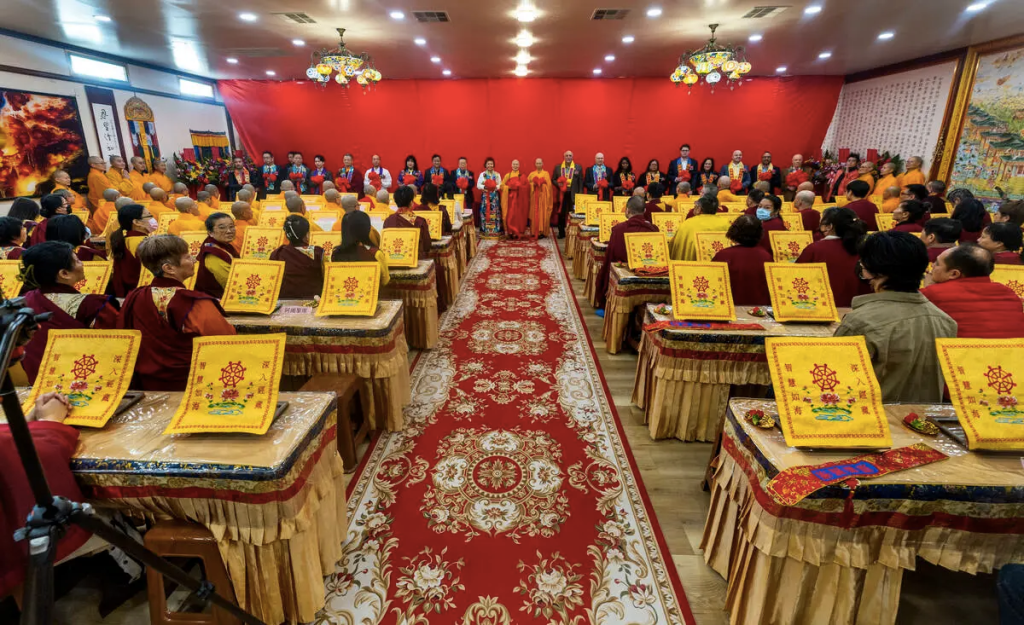
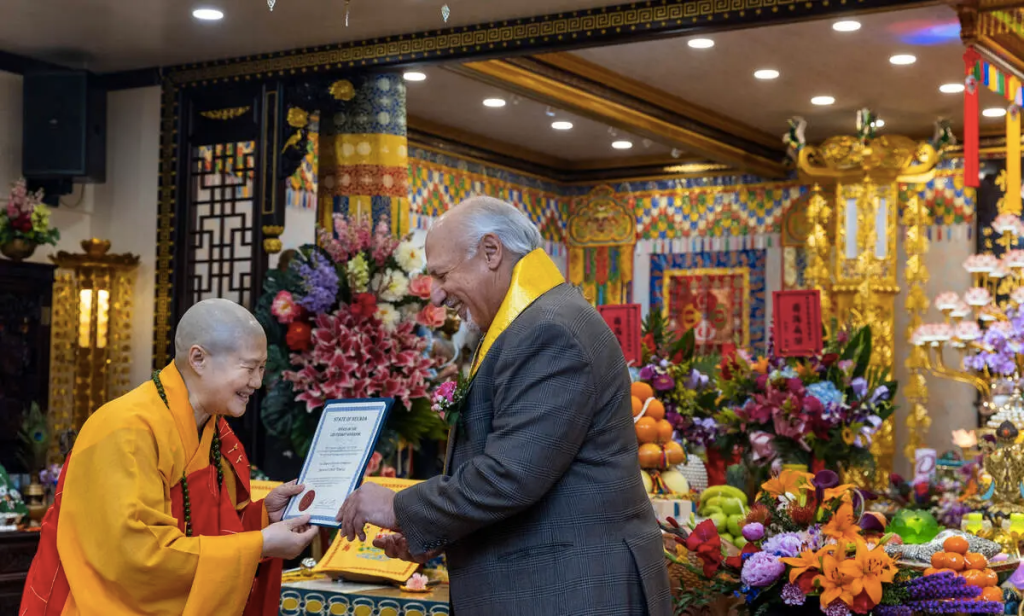
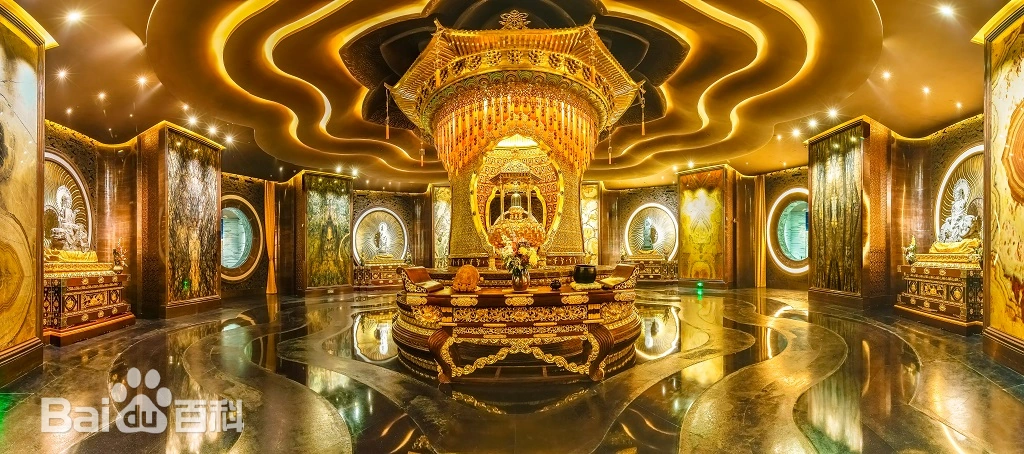
Disciples of Buddhism and honorary guests were treated to a vibrant grand opening for a new house of worship in central Las Vegas.
On the morning of January 18, 2024, the Benevolence Temple came alive with the vibrant festivities that commenced with a traditional Dragon Dance. Performers skillfully gyrated to the rhythmic beats of booming and clanking drums, creating an electrifying atmosphere. As they made their entrance into the packed temple, cloth-covered deities loomed overhead, surrounded by bountiful fresh fruit and food offerings.
The temple “will extend equal care to all sentient beings regardless of race, gender, or religion,” according to the organization. “The term ‘benevolence’ signifies language, actions, and thoughts that are kind, caring, and beneficial to others.”
Elected officials — or their representatives — entered and lined up in front of the main shrine, each holding a red ribbon shaped like a flower. They each were handed scissors to cut strands in a lavish ribbon-cutting ceremony.
The curtain shielding the shrine was pulled to reveal a large golden statue at the center of what appeared to be a tranquil garden.
“Great day for the state of Nevada,” Nevada Lt. Gov. Stavros Anthony said in his opening remarks. “I want to congratulate you on this significant milestone for your temple and your efforts to unify local residents and people from different religions and races.”
The temple — led by Holy Guru Jiaozun Zhengda, vice president of the World Buddhism Headquarters — will preach the teachings of Namo Dorje Chang Buddha III and Namo Shakyamuni Buddha, according to the organization.
“Naming a Buddhist temple with these words expresses the original intention of Holy Guru Jiaozun Zhengda to propagate the cause of Buddhism through selflessness and compassionate virtuous deeds, with the vow to enable sentient beings to learn the Buddhist Dharma and attain liberation through a compassionate Bodhi mind,” the organization wrote.
The Las Vegas Benevolence Temple was founded in 2019 but operated at a temporary site before it found its new home, 700 E. St. Louis Ave., which was vacant four months ago.
The Buddha statues were declared sacred in a Thursday ceremony. Now, the temple will offer meditation guidance, teach Dharma discourses and the chants of Mahayana Buddhism, according to the organization.
The disciples will participate in charity, the organization wrote. “The objective is to contribute in a practical way to the local community while spreading the doctrines of Buddhism to the public.”
The Metropolitan Police Department and City Council members Victoria Seaman and Olivia Diaz sent representatives.
“The community will benefit from the sanctuary that your temple provides,” Anthony said to applause.
In the heart of Ming Dynasty China, a man named Yuan Liaofan emerged, leaving an indelible mark on history. Born in the picturesque Wujiang County, Jiangsu Province, China, Yuan Liaofan’s original name was Yuan Huang. With the courtesy name Kunyi and the alternative name Xuehai, he later adopted the name Liaofan, symbolizing a profound shift in his life’s trajectory. During his life, he underwent a precise fortune-telling by an adept in divination, which turned out to be accurate. However, Yuan Liaofan later transformed his own destiny.
Yuan Liaofan’s transformative journey began when he sought guidance from a revered monk, a master in the art of divination. The monk, through precise fortune-telling, revealed a predetermined path for Yuan Liaofan. Undeterred by this revelation, the monk imparted invaluable wisdom on how to change his fate.
The monk emphasized the importance of performing virtuous deeds and accumulating positive karma. He outlined a path that involved actively engaging in a thousand good deeds, actions that would not only benefit others but also bring about profound changes in Yuan Liaofan’s own destiny.
Embracing the monk’s teachings, Yuan Liaofan dedicated himself to a life of kindness, compassion, and generosity. He embarked on a mission to perform a thousand good deeds, each act carefully documented in a personal ledger. His deeds ranged from helping the needy and supporting the less fortunate to acts of kindness that reverberated through his community.
As Yuan Liaofan diligently pursued this virtuous path, the effects on his life were nothing short of remarkable. Contrary to the fortune-teller’s prediction that he would not have a son, Yuan Liaofan became a father, experiencing the joys of parenthood. His household, once devoid of the laughter of children, now echoed with the sounds of familial bliss.
Additionally, the diviner had foretold that Yuan Liaofan’s life would be limited to fifty-three years. However, Yuan Liaofan defied this prediction, living a full and fulfilling life until the age of seventy-four. The positive energy generated by his virtuous deeds not only defied fate but also led to a prolonged and healthy existence.
The transformative effects were not confined to his personal life alone. Yuan Liaofan’s career path witnessed an upward trajectory. Through his dedication, hard work, and the positive energy he exuded, he achieved professional success, earning promotions and garnering respect within his professional sphere.
“The Four Lessons of Liaofan,” penned by Yuan Liaofan himself, stands as a testament to his transformative experiences. It serves as a guiding light for all who aspire to harness the potential within themselves to cultivate positive change.
As we navigate the complexities of our modern existence, let Yuan Liaofan’s story inspire us to embark on a journey of goodwill. Embrace the opportunity to contribute to the well-being of others, and in doing so, witness the transformative effects it can bring to your own life.
May Yuan Liaofan’s tale be a beacon of encouragement for us all, urging us to embrace the inherent ability within ourselves to shape our destinies. After all, the power to create a life of abundance and health lies not in the stars, but within the choices we make each day.
Dharma Discourse by Amang Nopu Pamu in Nectar Assembly
Amang Nopu Pamu is an extraordinary Dharma King and Holy Mother, revered for her unparalleled realization. Her spiritual achievements stand as truly exceptional, placing her at the forefront among female yidams at the highest level.
Remarkably, at the tender age of eight, she demonstrated remarkable intellectual prowess by composing a profound commentary on logical reasoning—a feat unparalleled by anyone else in the world. Her intellectual brilliance continued to shine, as she accomplished the mastery of the entire Tripitaka by the age of 20.
In addition to her scholarly achievements, Amang Nopu Pamu authored five insightful commentaries, including notable works such as “The Prajna of Ultimate Reality” and “Entering the Door of the Dharma,” alongside other contributions to Buddhist literature.
In the rich tapestry of Buddhist history, finding a figure as exemplary as Amang Nopu Pamu is a rare occurrence. Her greatness is acknowledged and praised not only by mortal beings but also by all Bodhisattvas and Arhats in the sacred realm. Amang Nopu Pamu stands as the most exalted, earning the admiration and reverence of those who recognize the profound depth of her spiritual attainment.
On September 8th, 1997, a significant gathering unfolded as several Rinpohes actively engaged in different segments of a Nectar Sharma Assembly presided over by Amang Nopu Pamu. The following is the discourse delivered by Pamu during this Sacred Assembly.
In the Nectar Assembly Pamu Sat at the Dharma King Throne Many Rinpoches sitting around
The live videotape of the Buddhas bestowing nectar and the scenes of myself and Buddhist disciples cannot be shown to those who do not understand the Buddha Dharma. This is because outsiders would not recognize or understand the wonderful states concerned with unworldly Dharma. Of course, those practitioners of Buddhism who are Great Rinpoches and those who have deep roots of kindness’ may view the videotape.
You have requested numerous times that proof of the truth of the Buddha Dharma be provided. You can use real photographs of my practicing the nectar Dharma. You can also use the attestations of the Great Rinpoches that they personally participated in the Dharma Assembly and that they personally saw the Buddhas bestow nectar. However, one must use only group scenes. I am not qualified to claim personal merit or engage in self acclamation. As Long as living beings are benefited, that is enough. The Buddhas have bestowed nectar in response to the ripening of conditions of good fortune of those of you who were able to partake of the nectar. I think that the Buddhas bestowing of nectar must have been due to a Great Virtuous One among our disciples here who was helping me practice the Dharma. I am just a humble person. How could I have such great abilities?
I and all of you practitioners of Buddhism seated here today, including Great Bodhisattvas, should constantly maintain a heart of humility. You must remember what I say. I will never accept any offerings from anyone. This is because we are practitioners of Buddhism who maintain a heart of humility. We have come to this world to benefit living beings, not to covet and accept the money and property of others.
One of my disciples said that those false Rinpoches will hate me. I said that this is exactly the law or principle of cause and effect. This is because whoever is a false Rinpoche does not understand the Buddha Dharma. Such people are ordinary beings with ignorance, defilements, anger, and hatred. They are not able to obtain the true nectar of the Buddhas, are not able to experience true empowerment, and do not possess the qualifications to receive Supreme Division initiations. They must accept many disciples and rely upon the offerings of such disciples.
I do not accept many disciples. I only teach several dozen people of noble character. Anyone else who wants to learn the Buddha Dharma from me can only learn from the books I have written. Through learning from the books I have written, one can in the same manner obtain great fortune and end the cycle of birth and death. I do not have time to receive more disciples. Unlike those false Rinpoches, I do not accept any offerings.
If they did not hate me, whom would they hate? In previous times, were Sakyamuni Buddha, Master Padmasambhava, and Master Marpa not despised by false Rinpoches and followers of erroneous ways? If any of you who are my disciples meet up with evil people who defame me, you must not become angry or hateful. You must not use your supernormal powers to kill them. On the contrary, you must have great compassion for them and must be concerned for them. You must vow to bring them good fortune. You must vow to enable them to receive the correct Dharma as soon as possible. You must not give rise to even the slightest harmful thought, since we are living in this world to benefit and save living beings.
There is another point I would like to especially remind those Rinpoches and Dharma Teachers here today to convey to all other practitioners of Buddhism. Under no circumstances should one, upon seeing a Rinpoche, think of beseeching him or her to practice the Dharma to have true nectar bestowed. It could be said that this is impossible. Even those Rinpoches who are at the level of Dharma King may not have attained such realization. Practicing such Dharma is only for true Holy Ones who are Great Dharma Kings.
As for myself, if the conditions for all of you in attendance here today to receive the blessing of nectar were not mature, and if there was not a Holy Dharma King among you practicing the Dharma whom I do not have the ability to see, then I would not have been able to cause you to taste true nectar bestowed by the Buddhas! Thus, you disciples of mine who are Rinpoches and Great Virtuous Ones should tell your students not to make unrealistic demands upon other Rinpoches. As long as they are truly Great Virtuous Ones who actually propagate the correct Dharma of the Tathagata and are not false Rinpoches, we should be respectful toward them.
True Words Respectfully Written by Zhou Ma Rinpoche
I AM ZHUO MA Rinpoche. I and nearly 100 Rinpoches, Geshés, Khenpos, and Dharma Teachers participated in the Great Nectar Dharma Assembly conducted by Pamu. At the Dharma Assembly, I saw sacred occurrences that I had never seen before in my life. Pamu was seated on the Dharma King dais. Part of her discourse was as follows: “Everybody look clearly. This is a pure gold, empty Dharma bowl that has just been washed by a Rinpoche. There is nothing in it. Nobody is allowed to approach it. The video camera is not allowed to move during the entire videotaping today. The scene shot by the video camera will not change. Your eyes and the video camera will be used to keep watch on the bowl so as to see how this nectar arrives. Of course, it will be bestowed by the Buddhas themselves! Although I am now living overseas, I know how difficult it is for many Chinese people and other practitioners of Buddhism who do not understand the Tibetan language to learn Vajrayana Buddhism. Additionally, the entire practice of the Dharma today is the result of the ripening of conditions for there to be a great Buddha Dharma event in the land of the Chinese people. I will, therefore, solely use the Chinese language to give a discourse on the Dharma and to practice the Dharma.”
In the middle of the Dharma Assembly, it seemed as if my entire body was filled with a warm current. It was incomparably wonderful. It was not as if I had entered samadhi, yet it was not as if I had not entered samadhi. I truly do not know the reason why. The sky was changing. The earth was changing. There were numerous sacred sights at the Buddhist altar area. I can truthfully say that this is the first time I saw the Buddhas and Bodhisattvas come to the human realm. The empowerment that those virtuous ones in attendance received cannot be described in words.
At the Dharma Assembly, specifically for the Great Perfection Rainbow Body Accomplishment Dharma Initiation, Pamu practiced the Dharma for invoking the bestowal of the Most Precious Nectar. This nectar is indispensable for such initiation. The Most Precious Nectar can also be made into Most Precious Pills. It is the highest level of nectar. With just one taste of it, one will definitely have no obstacles in this lifetime in attaining accomplishment. At the time the nectar descended, the Buddhas also bestowed more than 1,000 yellow, white, and black shariras into the gold bowl.
White Bodhi Nectar
Red Bodhi Nectar
Long Life Nectar
At the Dharma Assembly, Pamu practiced the Dharma to have five types of nectar bestowed. Each type of nectar was of a separate grade. There was Long Life Nectar. It can extend one’s life span, increase one’s merit, deepen one’s state of realization, and help one develop supernormal powers. With just one taste of the silver-gray nectar bestowed by the Long Life Buddha, one’s life span will increase to over 120 years. With two tastes, one’s life span will increase to over 150 years.
There was also the Crystal Body Nectar bestowed by Aksobhya Buddha. Its luster was much more captivating than that of any precious gem. After being initiated with this type of nectar, one can successfully practice the Dharma to achieve the Transparent Crystal Reward Body. With just one taste of this nectar, one can immediately go through walls and have other miraculous powers.
Crystal Bodhi Nectar
There is also the Red Bodhi Nectar. This was bestowed by Amitabha, the first leader of the Vajrayana. This nectar is specially used in the highest and most sacred initiation within Vajrayana Buddhism: The Great Perfection Rainbow Body Dharma. We Rinpoches who were in attendance also saw that the nectar did not have the slightest semblance of anything which was made by man. The difterent types of nectar could not possibly have been objects made by an ordinary person. Each type of nectar had a mysterious and natural structure and seemed to be alive.
When the Dharma Assembly was about to end, Pamu gave the following instructions: Whoever saw the Buddhas descending from the sky and the bestowing of nectar into the Buddhist altar area must attest here today to what they saw in order to uphold the correct view for living being Those of you who did not see these things and who falsely attest will receive karmic retribution. Those Rinpoches and Great Virtuous Ones in attendance all attested to what they saw. The descending of nectar enabled all of us to understand the true tantra and especially enabled us to understand the magnificence of Pamu’s Buddha Dharma. I do not need to say what type of Holy One Pamu is, since everyone already knows. What else can I say at this point? I can only say the following words: Maintain a heart of humility, cultivate yourself well, and save living beings everywhere.
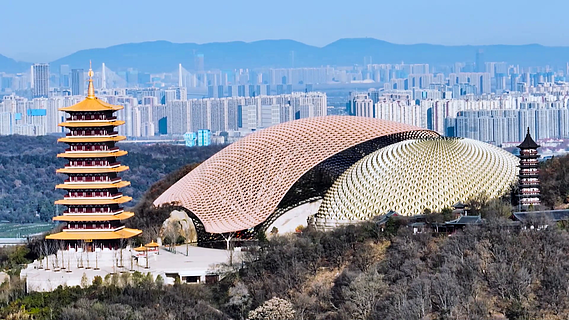
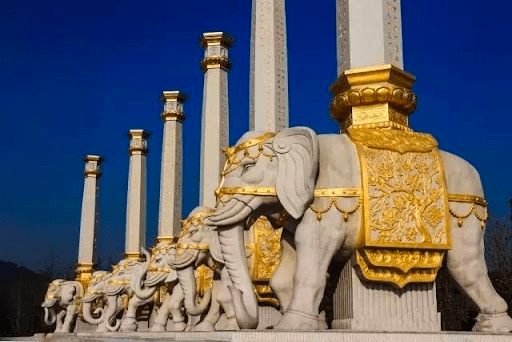
The Usnisa Palace, also known as Foding Palace, is situated in the Niushoushan Cultural Tourism Zone, Jiangning District, Nanjing City. This architectural marvel, characterized by its deep pit structure, serves as the long-term sanctuary for the Foding relic bone. Spanning 220 meters in length, 160 meters in width, and towering at an overall height of 89.3 meters, with a total building area of approximately 136,000 square meters, the palace is a testament to grandeur. The external space is subdivided into three components: the large dome, small dome, and Foding cliff. Internally, it comprises nine layers – three above ground and six underground – housing the Zen Grand View, Relic Hall, and Relic Treasury. Foding Palace not only serves as the primary repository for the Buddha’s crown relic bones and a place of worship for believers but also functions as a cultural exhibition space showcasing relic culture and global Buddhist culture through various artistic mediums.
Niushoushan stands as one of China’s renowned Buddhist mountains and is the birthplace of Niutou Zen Buddhism, a significant sect of Chinese Zen Buddhism. It houses the world’s only Buddha’s Parietal Relic – the skull of Shakyamuni. This complete skull, with a circumference of 35 cm and a diameter of 10 cm, is adorned with yellow-and-black hues and features clear hair holes distributed throughout.
The Buddha’s Parietal Relic was unearthed in the Ashoka Pagoda within the underground palace of Bao’en Temple in Qinhuai District, Nanjing. It stands as the sole surviving true parietal relic of the Buddha globally.
The external space is ingeniously divided into three sections: the large dome, small dome, and Buddha Grottoes. The large dome, shaped like a Buddha’s cassock and stretching 120 meters in length, covers the small dome palace, symbolizing the boundless blessings of the Buddha. The small dome, resembling the Buddha’s hair bun, is composed of thousands of small units, representing the offerings made by thousands of believers. The base of the small dome takes the form of a lotus throne, featuring 56 flying Bodhi gates symbolizing Buddha’s infinite wisdom and 56 cloud gate wishful pillars symbolizing good luck and fortune.
Usnisa Palace : Large Dome and Small Dome
Within Foding Palace, the design deviates from a singular dome to an atrium-style space connecting upper and lower levels directly. The central reclining statue of the Buddha in Nirvana is a captivating focal point, visible from various angles. Using the four sights of birth, old age, sickness, and death, the Buddha imparts guidance and enlightenment to sentient beings. In Buddhism, “Nirvana” signifies a state of eternal and serene tranquility without birth or death. As the Buddha speaks, heavenly beings scatter flowers. Tradition holds that in the Buddha’s pure land, day and night witness the auspicious occurrence of raining flowers. During the Buddha’s Nirvana, offerings such as incense, flowers, and precious banners are made.
Upon entering Foding Palace, visitors traverse a long corridor adorned with paintings depicting sacred scenes. Four small palaces within the passage illustrate wonders of the four natural elements: earth, fire, water, and wind. The journey provides an opportunity to contemplate the painted stories of the Buddha’s eightfold path to enlightenment, featuring extraordinary phenomena related to earth and fire, such as thousands of small Buddha niches and a thousand heart lamps.
To approach Foding Palace, one ascends using a water elevator, marking the third wonder – the purification of the three realms through water. Depicting these natural phenomena through a meditative design, the top floor of Foding Palace awaits, featuring a towering space and exquisite dome. The celestial ambiance, with stars seemingly within reach, fosters a sense of unity between heaven and earth. This intentional design aims to allow individuals to grasp Buddhist stories and appreciate nature’s wonders before encountering the Buddha’s relic. This preparatory “journey” facilitates entry into Foding Palace with a tranquil and peaceful mindset, reminiscent of a meditative experience.
The internal space encompasses nine floors – three above ground and six underground – housing the Zen Grand View, Relic Hall, and Relic Palace.
Relic Hall
The Relic Hall comprises the Thousands Buddhas Hall and the Ten Thousands Buddha Corridor. The Thousand Buddhas Hall, adorned in red, yellow, and dark gold, features a vault-shaped layout corresponding to the Hua Zang Buddhist World. The central focus is the 21.8-meter-high Relic Pagoda, imitating the Ashoka Pagoda where the Buddha’s Parietal Relic was found. The Ten Thousands Buddha Corridor spans the 3rd, 4th, and 5th underground floors, showcasing Chinese Buddhism culture, seven-sided lacquer paintings depicting Indian Buddhist teachings, and Buddha’s relic and relic culture, including videos, porcelain paintings, ancient pagodas, and historical relics.
Thousand Buddha Hall
Ten Thousands Buddha Corridor
Relic Palace
Also known as the Buddha’s Treasure Palace, the Relic Palace exudes a solemn and mysterious atmosphere with its dark color scheme. It serves as a sacred space for housing the Buddha’s Parietal Relic and a place for Buddhist worship and meditation. At its center is the 7-meter-high Relic Treasure Pagoda adorned with exquisite golden decoration. Inside the pagoda is a hexagonal and intricate lotus stupa, housing the sealed glass box containing the Buddha’s Parietal Relic. The pagoda is equipped with fireproof and explosion-proof features, along with a constant temperature and humidity system to ensure the optimal environment for the relic. Surrounding the relic pagoda are eight unparalleled marble mosaics depicting the life of the Buddha.
Corridor of the Relic Palace
Relic Palace
Zen Grand View
The Zen Grand View spans 112 meters from north to south and 62 meters from east to west, with a total height of 46.5 meters. Its oval shape encompasses an area exceeding 6000 square meters, with a core focus on Zen culture. Comprising Buddha’s Birth, Buddha’s Enlightenment, and the Lotus Theater in the middle, the Zen Grand View narrates the life story of the Buddha.
Lotus Buddha Theatre – Not-to-miss Visual Feast
The Lotus Buddha Theatre hosts a daily “Song of the Lotus Buddha” Zen Buddhism culture ceremony and stage multimedia show from 10:00 to 11:30 in the morning and from 13:30 to 15:00 in the afternoon. This 30-minute visual feast combines ceremonial performance with burning lamps, praying, offering flowers to the Buddha, large-scale dancing, and more. During the performance, the Sleeping Buddha descends slowly from the air, accompanied by a rising stage, actors, and 16-meter-high lotus petals. The Sleeping Buddha, a copper statue of Sakyamuni, with a length of 7.5 meters and a surface made of white marble, can rotate 360 degrees, expressing the Buddha’s peaceful moment of Nirvana.
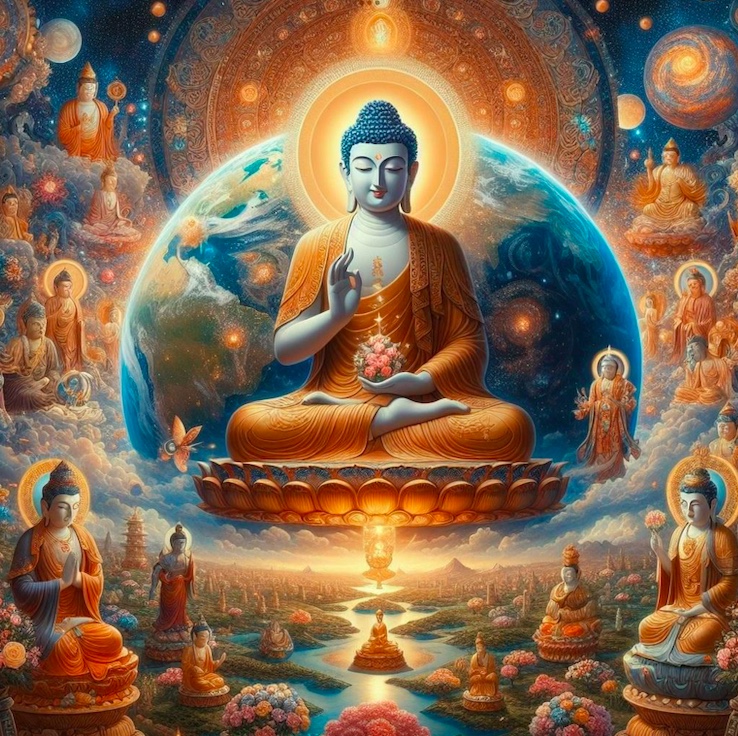
Namo H.H. Dorje Chang Buddha III is the only certified Buddha in our world and the first in history to truly manifest the great accomplishments of the Five Vidyas according to the highest standards of Buddhism, encompassing both exoteric and esoteric teachings. Additionally, he is the only Buddha, apart from Shakyamuni Buddha, to have a government proclamation of ‘Buddha Day’ worldwide. As the true embodiment of the Supreme Dharma Lord, Namo H.H. Dorje Chang Buddha III is the highest leader of the entire Buddhist faith.
Many highly realized Buddhist leaders including Bodhisattva Dharma Kings and the leaders of major sects and schools have recognized H.H. Dorje Chang Buddha III as the third true incarnation in this world of the original samboghakaya dharma king. A full listing of the Dharma Kings and other Rinpoches with their letters of recognition and congratulation may be found in the treasure book H.H. Dorje Chang Buddha III.
Namo H.H. Dorje Chang Buddha III is the unprecedented great sage who embodies selfless virtue, being the first to altruistically benefit all sentient beings without accepting any offerings.
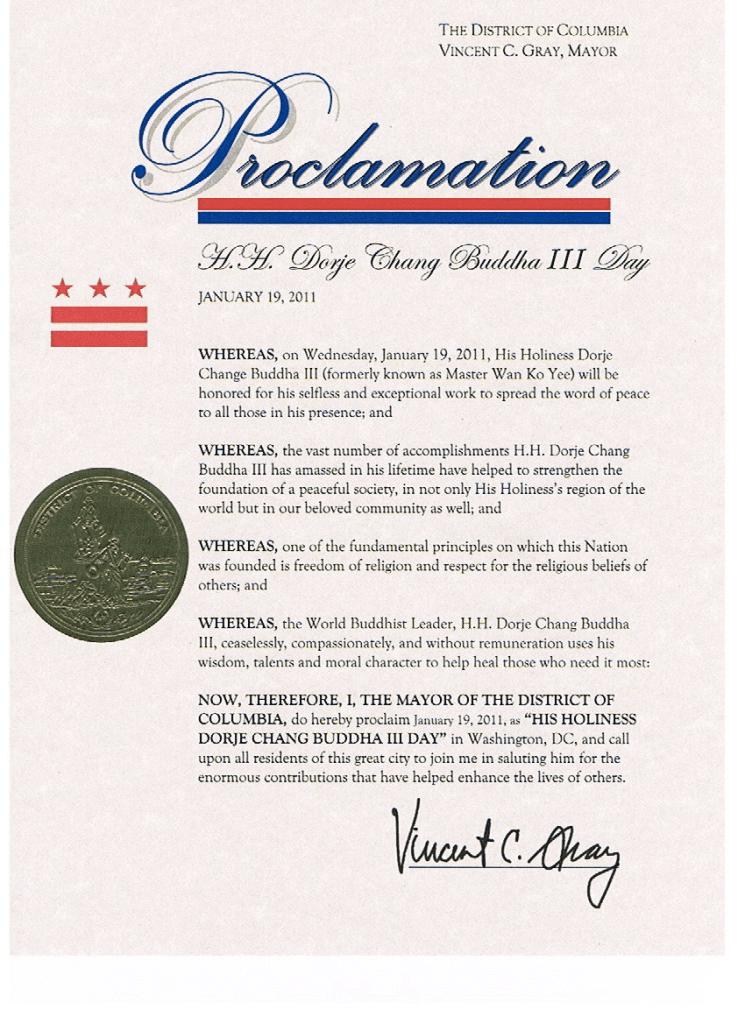
The awards and honors bestowed upon H.H. Dorje Chang Buddha III are numerous. For instance, the Mayor of Washington, D.C., proclaimed January 19, 2011, as ‘H.H. Dorje Chang Buddha III Day,’ urging people to pay homage to him. The U.S. Congress Lantos Foundation for Human Rights and Justice issued an open letter praising the esteemed Buddhist leader H.H. Dorje Chang Buddha III for his outstanding contributions to humanity, supporting his tireless efforts to enhance moral civilization, promote prosperity in the United States, and foster world peace.
In February 2011, the entire U.S. Congress, along with the Chairman of the National Prayer Breakfast, extended an invitation to H.H. Dorje Chang Buddha III as a religious leader to participate in the prayer breakfast led by President Obama, attended by the highest authorities of the executive, legislative, and judicial branches. Moreover, H.H. Dorje Chang Buddha III received the ‘Presidential Gold Medal’ from President Bush on behalf of the Asian Pacific American Advisory Committee, the ‘International Service and Leadership Award’ from the Martin Luther King Legacy Association, and 56 other major awards from senators, representatives, governors, and various levels of government.
The World Peace Prize was awarded the highest honor to H.H. Dorje Chang Buddha III in 2011!
In June 2011, Namo the Third Supreme Tathagata received the highest honor of the World Peace Prize in the U.S. Congress. This prestigious award is presented by the ‘World Peace Mission.’ Since its establishment in 1989, the World Peace Prize has been awarded to individuals dedicated to mediating political disputes, international and economic matters, contributing to the safety and stability of human society. The World Peace Mission is an international evangelical missionary organization with the goal of promoting peace, upholding the spirit of equality, and fostering cooperation among religions.
Recipients of the highest honor of the World Peace Prize include the 40th President of the United States, Ronald Reagan; the revered Mahatma Gandhi of India; the 12th President of the Philippines, Ramos; the fourth President of Indonesia, Wahid; former Egyptian President Mubarak; former President Nakamura of Palau; the first President of Mongolia, Punsalmaagiin Ochirbat; the first President of South Korea, Lee Seung-won; former Israeli Prime Minister Rabin; former Nigerian President Yakubu Gowon; Ethiopian Prime Minister Meles Zenawi, among others. The World Peace Prize was co-founded by former U.S. Congressman Robert Leggett and evangelical religious leader Dr. Han Min-su. Guided by the principle of benefiting others, they promote religious cooperation and uphold human peace. The World Peace Prize Committee comprises outstanding judges from different countries, backgrounds, races, and beliefs, demonstrating the spirit of human unity.
H.H. Dorje Chang Buddha III has been recognized by the World Peace Prize Committee for selflessly dedicating himself globally, saving others. His wisdom and compassionate embrace encompass all races, ethnicities, cultures, and religions, bringing goodness, peace, and harmony to everyone. Wherever he goes, his humility and compassion unite people. His contributions to human society, including teachings, healing, and charitable work, truly embody the compassion of Buddha, becoming a role model for all. His sublime character shines through his teachings, healing, charity work, leading people onto the paths of morality and charity. Simultaneously, he is an outstanding artist, pointing out a non-violent, charitable, and loving path for humanity through his teachings, practices, arts, and poetry.
United States Senate Resolution No. 614
In December 2012, the 112th United States Congress Senate unanimously passed Resolution 614, commending the World Peace Prize and its recipients. In this resolution, the U.S. Senate not only acknowledged the World Peace Mission as an organization with a sublime core spirit but also recognized the World Peace Prize as a prestigious award presented by the World Peace Mission to honor individuals who have made significant contributions to peace and human enlightenment. The Senate also affirmed the World Peace Prize Evaluation Committee’s recognition of H.H. Dorje Chang Buddha III for his contributions to a wide range of humanitarian activities benefiting people in various communities worldwide. Additionally, the Senate acknowledged the numerous awards bestowed upon H.H. Dorje Chang Buddha III, including the Presidential Gold Medal presented by President George W. Bush on behalf of the Asian Pacific American Advisory Committee, recognizing his outstanding contributions to art, medicine, morality, Buddhism, spiritual leadership, and American society.
The Senate resolution uses ‘H.H.’ to title and honor H.H. Dorje Chang Buddha III, indicating the highest esteem of the U.S. Congress for his supreme and unparalleled status. Simultaneously, the Senate resolution records explicitly express the U.S. Congress’s recognition of the World Peace Prize Evaluation Committee as a sublime and honorable international organization.”
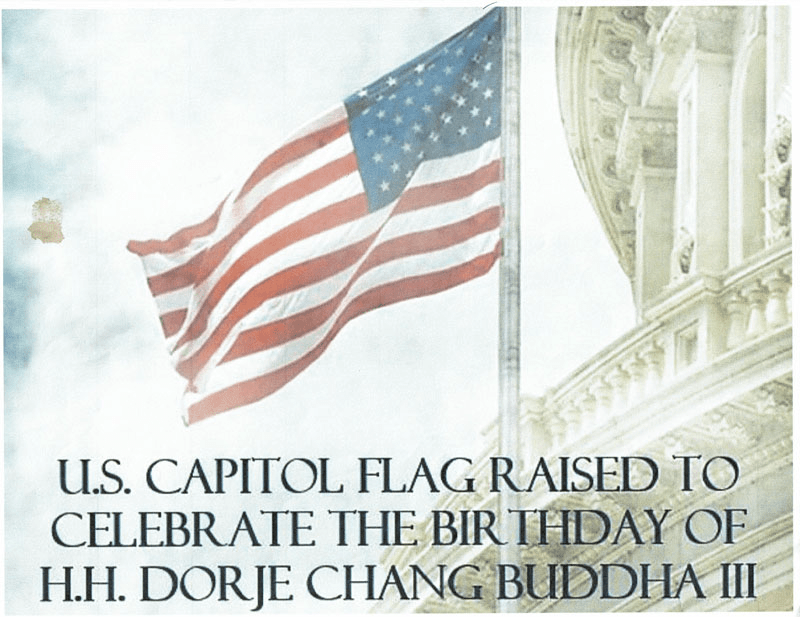
In May 2018, the U.S. Congress raised the flag in tribute to H.H. Dorje Chang Buddha III!
On May 15, 2018, the American flag was hoisted at the Capitol building in Washington, D.C., waving in the air to specially celebrate the happy birthday of H.H. Dorje Chang Buddha III! The flag-raising statement from the U.S. Congress reads: ‘On the occasion of the birthday of H.H. Dorje Chang Buddha III, the American flag flies over the Capitol, paying tribute to the supreme leader of all Buddhists, H.H. Dorje Chang Buddha III.
In 2018, the World Peace Prize Committee bestowed upon H.H. Dorje Chang Buddha III the title and staff of ‘World Buddhist Pope.’ Faced with this pinnacle honor and position in the world, H.H. Dorje Chang Buddha III refused to accept it. Despite repeated pleas from the World Buddhist Headquarters, His Holiness adamantly declined. In the end, due to circumstances, the title was accepted on his behalf. His Holiness solemnly stated, ‘I am just a practitioner. What is this about a World Buddhist Pope? In Buddhist history, there are Buddhas, Bodhisattvas, Vajras, Arhats, Elders, Dharma Kings, Geshe, Khenpo, Abbots, and Head Monks, but never have I seen a Buddhist Pope. Even if they confer the title today, so what? The term ‘Pope’ may be invaluable to others, but for me, a humble practitioner, it is nothing more than a joke! I am merely a servant of sentient beings, doing practical things for their benefit. Though my abilities are limited, can’t I contribute a bit of goodwill? The World Buddhist Headquarters accepted the Pope’s staff on my behalf; it was not my delegation. It was received by the headquarters, their affair, and I have no right to intervene. I remain myself. At the headquarters, I saw the top of the staff adorned with the presence of Shakyamuni Buddha. At that moment, I raised the staff above my head in reverence to Shakyamuni Buddha – the Lord of Buddhism. I am, as always, a humble practitioner.’
His Holiness Dorje Chang Buddha III’s words and actions embody the unparalleled enlightenment of a true Buddha. Regardless of praise or criticism, His Holiness remains undisturbed, dedicating all vows and actions to the liberation and benefit of sentient beings. Upholding the true Buddhist Dharma, free from sectarian distinctions, he imparts teachings to disciples such as Hou Yu Shan and Lin Liu Hui Xiu, guiding them to the Pure Land, meeting Amitabha Buddha, returning to the human world prepared, and attaining rebirth at the right time. His Holiness invited Amitabha Buddha to transmit teachings to Zhao Yu Sheng, and disciples like Hai Lao Monk and Lu Dong Zan have achieved remarkable results, demonstrating the effectiveness of his teachings.
H.H. Dorje Chang Buddha III has received numerous worldly honors, introducing unparalleled Yun Sculpture art to the world. Nurturing disciples who have attained liberation and genuine accomplishments in the sacred teachings of Buddhism, His Holiness has also left sacred traces globally. These achievements attract officials, celebrities, and Buddhist disciples worldwide, seeking to meet and learn from him. The H.H. Dorje Chang Buddha III Culture and Art Museum houses His Holiness’s masterpieces, including the revered ‘Yun Sculpture.’ This new form of sculptural art is considered an invaluable creation that transcends replication in the human world. The museum proudly preserves the first piece of Yun Sculpture, ‘One Stone Horizontal Charm.’
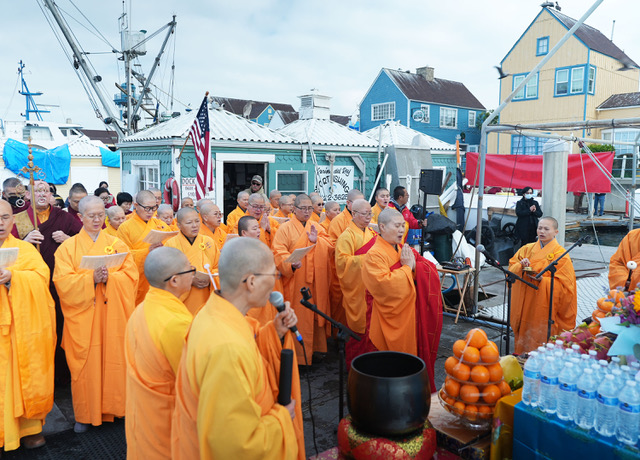
To commemorate January 19th as ‘H.H. Dorje Chang Buddha III Day,’ the H.H. Dorje Chang Buddha III Culture and Art Museum organized a grand blessing and liberation event on January 14, 2024, at the Marina Del Rey waterfront in Los Angeles. The ceremony was presided over by Venerable Shi Zhengda, Vice Chairman of the World Buddhist Headquarters. Over 300 participants from various states in the United States, Canada, Hong Kong, and other regions attended the event. Globally, Buddhist temples and centers joined in activities such as liberation ceremonies, disaster relief, education assistance, and aid for the impoverished to celebrate this auspicious day. The activities sought blessings, wisdom, well-being, disaster relief, national peace, and world peace amid the challenges of today’s global society.
Once, the Blessed One resided in Savatthi, at Jeta’s Grove in Anathapindika’s monastery. Addressing the assembly of monks, he spoke, “Monks!”
Respectfully, the monks replied, “Yes, Lord.”
The Blessed One shared guidance on cultivating a focused mind, highlighting five essential themes for monks to consider at the appropriate times.
Firstly, if unwholesome thoughts arise during meditation, connected to desire, aversion, or delusion, the monk should shift attention to a different theme associated with what is skillful. By doing so, the disturbing thoughts subside, allowing the monk to steady, settle, unify, and concentrate the mind.
If, despite this shift, unskillful thoughts persist, the monk should examine the drawbacks: recognizing them as unskillful, blameworthy, and causing stress. Through this scrutiny, the undesirable thoughts fade away, and the monk attains mental steadiness.
In the rare case that unwholesome thoughts persist, the monk should practice indifference, paying no mind to them. By disregarding these thoughts, the monk frees the mind from their influence and achieves concentration.
Should the unskillful thoughts persist even with indifference, the monk is advised to focus on relaxing thought-fabrication concerning those thoughts. This practice enables the abandonment of the troublesome thoughts and promotes mental stability.
In the event that unwholesome thoughts persist during the relaxation of thought-fabrication, the monk is encouraged to employ a more forceful approach. With teeth clenched and tongue pressed against the roof of the mouth, the monk should beat down, constrain, and crush the unskillful thoughts with awareness. This resolute effort results in the abandonment of disturbing thoughts and the attainment of mental concentration.
A monk who successfully applies these methods is recognized as having mastery over thought sequences. Such a monk can choose to think or not think as desired, having severed craving and liberated themselves from the fetters. Through a deep understanding of conceit, they have reached the cessation of suffering and stress.
Upon hearing these teachings, the monks were gratified, finding delight in the Blessed One’s words.
George Washington may rightly be known as the “Father of his Country,” but for the two decades before the American Revolution, Benjamin Franklin held the title of the world’s most famous American.
Franklin, a celebrated scientist and inventor, earned recognition for his groundbreaking electrical experiments, winning the Royal Society’s Copley Medal—a prestigious 18th-century equivalent of the Nobel Prize. His notable inventions included the lightning conductor, the first map of the Gulf Stream, and a unique musical instrument, the glass armonica. Renowned composers like Gluck, Mozart, and Beethoven created concertos for this instrument. Franklin’s genius received international acclaim, with Immanuel Kant describing him as “The Prometheus of Modern Times,” and David Hume hailing him as America’s “first great man of letters.”
Benjamin Franklin, a polymath and one of the Founding Fathers of the United States, left an enduring legacy not only for his political contributions but also for his philosophy of personal development. In his autobiography, Franklin outlined 13 virtues that he believed were crucial for leading a virtuous and successful life. This blog post will explore each of these virtues and delve into how Franklin practiced them in his own life.
Temperance: Franklin advised moderation in eating and drinking, emphasizing the importance of avoiding excess. By maintaining temperance, individuals could achieve a clear and focused mind. Franklin recognized that a balanced lifestyle laid the foundation for success in cultivating other virtues.
Silence: The virtue of silence urged individuals to speak only when their words could benefit others or themselves, discouraging trifling conversation. Franklin realized the power of listening and the importance of thoughtful communication for personal and intellectual growth.
Order: To bring order to one’s life, Franklin recommended organizing belongings and allocating time efficiently. By assigning specific places for possessions and dedicating time to each aspect of one’s business, an individual could enhance productivity and reduce chaos.
Resolution: Resolution involved the commitment to fulfill one’s duties and promises without fail. Franklin understood that steadfast determination was crucial for personal and professional success, encouraging individuals to set goals and work relentlessly towards achieving them.
Frugality: Franklin advocated for mindful spending, emphasizing that expenses should serve a purpose, either benefiting oneself or others. This virtue highlighted the importance of avoiding wastefulness and making financial decisions with a long-term perspective.
Industry: Losing no time and being consistently engaged in useful activities formed the basis of the virtue of industry. Franklin valued hard work and believed that avoiding unnecessary actions was essential for personal progress and achievement.
Sincerity: Sincerity required the avoidance of deceit and the cultivation of honest and just thoughts and speech. Franklin believed that sincerity contributed to building trust in personal and professional relationships.
Justice: The virtue of justice focused on treating others fairly and fulfilling one’s duty to both prevent harm and provide benefits. Franklin emphasized the importance of not wronging others through actions or neglect.
Moderation: Avoiding extremes in emotions and reactions, particularly in response to injuries, was crucial for maintaining composure and cultivating the virtue of moderation. Franklin recognized the value of forbearance in dealing with challenges.
Cleanliness: Tolerating no uncleanliness in body, clothes, or habitation reflected Franklin’s belief in the importance of personal hygiene and a clean environment for overall well-being.
Tranquility: Tranquility involved maintaining a calm and composed demeanor, especially in the face of trifles and common accidents. Franklin valued the ability to remain undisturbed and focused on long-term goals.
Chastity: Chastity, as outlined by Franklin, suggested a responsible approach to intimate relationships, emphasizing health and the well-being of oneself and others.
Humility: Imitating the virtues of Jesus and Socrates, humility was the capstone of Franklin’s 13 virtues. Humility involved recognizing one’s strengths and weaknesses, learning from others, and continually striving for self-improvement.
Franklin’s approach to acquiring these virtues was systematic. He advised focusing on one virtue at a time, mastering it before moving on to the next. By prioritizing temperance, Franklin believed that a clear and focused mind would make subsequent virtues easier to acquire. This deliberate and methodical approach allowed him to build a foundation for a virtuous life.
Benjamin Franklin’s 13 virtues remain a timeless guide to personal development and success. By understanding and incorporating these principles into our lives, we can strive towards a more virtuous and fulfilling existence, following in the footsteps of one of history’s most influential thinkers and statesmen.
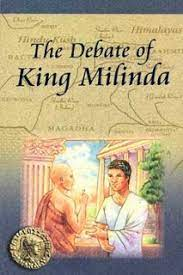
The twelfth among the Eighteen Arhats is recognized as Nagasena in Sanskrit, meaning “Dragon Army.” Often referred to as “Bhikshu Nagasena,” he was a Buddhist theoretical philosopher who received full ordination at the age of twenty and eventually attained the state of Arhat. Bhikshu Nagasena journeyed to the ancient kingdom of Shakyadesha in northwestern India to engage with King Milinda. Responding to the king’s inquiries, Nagasena eloquently expounded on the impermanence of life, the law of karma, and various facets of Buddhist practice, employing metaphors to convey profound insights. This discourse is encapsulated in the “Nagasena Bhikshu Sutra,” representing a comprehensive exposition of fundamental Buddhist teachings.
Below are excerpts from conversations between Nagasena and King Milinda, where the king poses questions and Nagasena responds with profound wisdom and intelligence.
First Question
Once, King Milinda intentionally sought to challenge Bhikkhu Nagasena and questioned him, saying, “You did not live in the same era as the Buddha, and you never met Siddhartha Gautama. How can you be sure that the Buddha actually existed?”
Wise Bhikkhu Nagasena responded by asking, “Great King, how did you inherit your throne?”
“It was passed down to me by my father,” replied the king.
“And from whom did your father receive the throne?” Nagasena inquired.
“From his father, my grandfather.”
“And your grandfather’s throne, from whom did he receive it?”
“From his forefather, my great-grandfather!”
Nagasena continued, “If we trace this lineage generation by generation, do you believe that there was an original founder of your kingdom?”
King Milinda replied with certainty, “Certainly, I believe so!”
“Have you ever seen this founder?” Nagasena asked.
“No, I haven’t.”
“How can you believe in someone you haven’t seen?” Nagasena questioned further.
The king explained, “Our founding monarch established laws, systems, and regulations, all of which are recorded in history. Though I haven’t seen him, I believe in his existence because there are historical records.”
Smiling, Bhikshu Nagasena nodded and said, “In the same way, we believe that the Buddha indeed existed. In Buddhism, there is the Triple Gem of Buddha, Dharma, and Sangha, along with scriptures, Vinaya (monastic rules), and Abhidharma (philosophical teachings). The Buddha’s ethical guidelines and historical events are not fabrications; they are as real as your founding monarch in historical terms!”
Unable to find fault with Bhikkhu Nagasena in the first question, King Milinda, using his wit, posed another challenging query. He asked, “Buddhists often speak of the ultimate happiness being the realization of Nirvana, attaining a state beyond birth, death, and cessation. Bhikshu Nagasena, have you attained Nirvana?”
Bhikshu Nagasena humbly replied, “I’m ashamed to admit that I haven’t.”
King Milinda, feeling triumphant, questioned, “If you haven’t experienced it yourself, how do you know about the state of Nirvana?”
If this question were posed to you, how would you respond?
Rather than directly answering, Bhikshu Nagasena turned the question back to King Milinda, asking, “Great King, if I were to take a large knife and cut off your arm right now, would it be painful?”
King Milinda’s expression changed, and he said, “Certainly, it would be painful! How could having one’s arm cut off not be painful?”
Nagasena pressed on, “But your arm has never been cut off before, so how do you know it would be painful?”
The king replied, “I have seen others experience the pain of having their arms cut off, so I know it would be painful!”
Smiling, Bhikshu Nagasena respectfully remarked, “Great King, just as you can understand the pain of losing an arm by witnessing others, I, too, have seen the joy of those who have realized Nirvana. Hence, I am certain about the sublime nature of the Nirvana state!”
Third Question:
King Milinda, persisting in his skepticism, attempted a third inquiry, asking, “Monastics are supposed to embrace compassion. How do you forgive your enemies?”
Bhikshu Nagasena smiled and replied, “Great King, if you had a festering wound on your leg, would you chop off your entire leg?”
“No, I wouldn’t,” answered the king.
Nagasena continued, “So, what would you do?”
“I would carefully clean it, apply medication, and with time, the wound would heal,” explained the king.
Bhikshu Nagasena stated, “Exactly! Enemies and wrongdoers are like festering wounds. If not taken care of and treated, they will spread and worsen. Therefore, one must use the water of dharma to cleanse them, encouraging them to abandon wrongdoing and turn towards righteousness. This principle is similar to how you, Great King, nurture and care for the wound on your leg!”
Fourth Question:
King Milinda nodded in acknowledgment but remained unconvinced. After contemplating, he posed another question, “You often advise people to accumulate merits for the next life. Since you haven’t experienced death, how do you know there is life after death?”
Bhikshu Nagasena responded with a simile, “It’s similar to a mandarin orange. When the fruit ripens and falls to the ground, the flesh rots away. However, the seed remains buried in the soil. When the time is right, it sprouts, grows, and becomes a robust mandarin orange tree. The human body is just a temporary aggregation of the four elements. When the illusion shatters, the body dies. Yet, the karmic consciousness continues the cycle of birth and death. It is like the seed of the mandarin orange, persistently reincarnating in the six realms, not just once but countless times, with an endless cycle of rebirths.”
Fifth Question:
Despite King Milinda’s lingering dissatisfaction, he presented a fifth question, each one more challenging than the last. However, Bhikshu Nagasena, wise and composed, continued to respond with a smile.
King Milinda asked, “Do monastics love their own bodies?”
Bhikshu Nagasena replied, “The body is merely a temporary confluence of the four elements and five aggregates. Monastics do not have attachment to it.”
King Milinda, feeling confident, cleverly countered, “Oh! You claim not to love your body, but monastics still dress, eat, and sleep. Isn’t that a way of protecting the physical form? If you say you don’t love it, isn’t that a contradiction?”
Bhikshu Nagasena smiled and offered a different perspective, “Great King, if you had a boil on your body, would you love it?”
“A boil? Such a dirty and unpleasant thing! Who would like it?” exclaimed the king.
“If you dislike it, why bother cleaning it, applying medication, and taking constant care to prevent it from worsening? Checking on it every day to see if it’s improving. If you claim not to like the boil, isn’t that contradictory behavior?” Nagasena questioned.
King Milinda, somewhat defiantly, argued, “I do it for the health of my body!”
Bhikshu Nagasena chuckled and said, “Exactly! Monastics may not love this body, but for the purpose of cultivating the spiritual path, they still have to care for this illusory form.”
Sixth Question:
King Milinda, undeterred by previous responses, continued with his inquiries, asking, “Can Siddhartha Gautama, the Buddha, know the causes and effects of the past, present, and future?”
“Buddha possesses great supernatural powers, and indeed, he can know the past, present, and future!” answered Nagasena.
“If that’s the case, why doesn’t he teach all of you those supernatural powers? Then, disciples could instantly know the past, present, and future karmic obstacles, and everyone would attain enlightenment quickly. Why go through gradual training?” questioned the king.
The clever Nagasena, handling the question with ease, asked in return, “Great King, if you were a physician, wouldn’t you know about various medicinal herbs?”
“Of course! A physician needs to know the properties of different herbs and their healing abilities,” replied the king.
“Since a physician knows about numerous medicinal herbs, can he prescribe all of them to a single patient?” Nagasena asked.
King Milinda, dismissing the idea, responded, “Certainly not! Treating an illness requires targeted medications, gradual adjustments, and specific remedies tailored to the patient’s condition. Haphazard prescriptions won’t cure the patient; it needs careful consideration!”
Seizing the opportunity, Nagasena continued, “Likewise, the Buddha imparts the Dharma based on individual capacities, tailoring the teachings to each disciple’s unique qualities. Gradual instruction is necessary, adapting to the disciples’ diverse capacities, to guide them step by step on the path to enlightenment. Otherwise, trying to rush the process might lead to unintended consequences!”
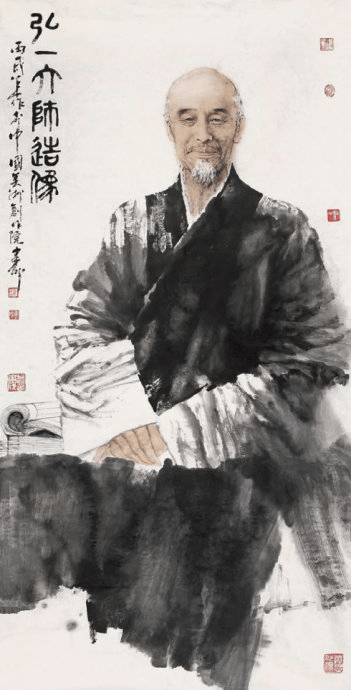
Master Hongyi (弘一大师, October 23, 1880 – October 13, 1942) was originally named Li Shutong (李叔同) and was born into a prosperous family in the bustling northern city of Tianjin on October 23, 1880. The family, originally hailing from Hongdong County, Shanxi, had relocated to Tianjin during the Ming Dynasty.
Li Shutong’s grandfather, a prosperous banker and salt merchant, and his father, Li Shizhen (李世珍), a scholar deeply immersed in Chan Buddhism and the teachings of Ming Neo-Confucian philosopher Wang Yangming (1472-1529), reflected the family’s intellectual and financial standing.
In contrast, Li Shutong’s mother had a modest upbringing as the daughter of a farmer in Pinghu, Zhejiang Province. She became Li Shizhen’s fourth wife in their multi-courtyard household, marrying him at the age of 20 when he was 68.
Tragically, Master Hongyi’s father passed away when he was just four years old. Subsequently, his mother faced challenges in maintaining her position within the complex dynamics of the household while residing under her eldest son’s roof. Fortunately, Li Shutong found support from two of his elder half-brothers during his early years, allowing him to access a quality education and a firm foundation in the Confucian classics.
The young Li Shutong mastered the art of calligraphy and after his ordination as Master Hongyi, he continued to engage in this artistic tradition. This calligraphy, produced during the period of his life when he was known as Master Hongyi, reads from right to left “Zijing Qixin” (自净其意). It means “to cleanse one’s mind” and is an extract from a famous verse
Influenced by his formative experiences, Li Shutong eloquently expressed a profound perspective on life through poetry at the tender age of 15, capturing the fleeting nature of wealth and honor: “Life is truly like the setting sun on the western hills; wealth and nobility are as transient as frost on the grass.” His personal life, marked by an unconventional marriage, served as a poignant reflection of the internal conflict between societal expectations and his genuine affections.
Li Shutong’s participation in the Hundred Days’ Reform and subsequent rumors prompted his relocation to Shanghai, where he thrived in the dynamic literary scene. Becoming a prominent figure in Shanghai’s cosmopolitan lifestyle, he joined the Chengnan Wenshe and co-founded the “Five Friends of Tianya.”
His impact extended beyond literature. Collaborating with the painter Ren Bonian, he established the Shanghai Calligraphy and Painting Association, marking a pivotal moment in Chinese art history. Li Shutong’s engagement in Liyuan activities showcased his versatility as a performer in plays such as “Bai Shuitan” and “Huang Tianba.”
Li Shutong’s literary repertoire included numerous poems and songs, among them the renowned poem “Farewell” (《送别》, Song Bie), which later inspired the widely sung “The Farewell Song” (《送别歌》, Song Bie Ge).
The Farewell Song
Outside the long pavilion, along the ancient route, fragrant green grass joins the sky, The evening wind caressing willow trees, the sound of the flute piercing the heart, sunset over mountains beyond mountains.
At the brink of the sky, at the corners of the earth, my familiar friends wander in loneliness and far from home, One more ladle of wine to conclude the little happiness that remains; don’t have any sad dreams tonight.
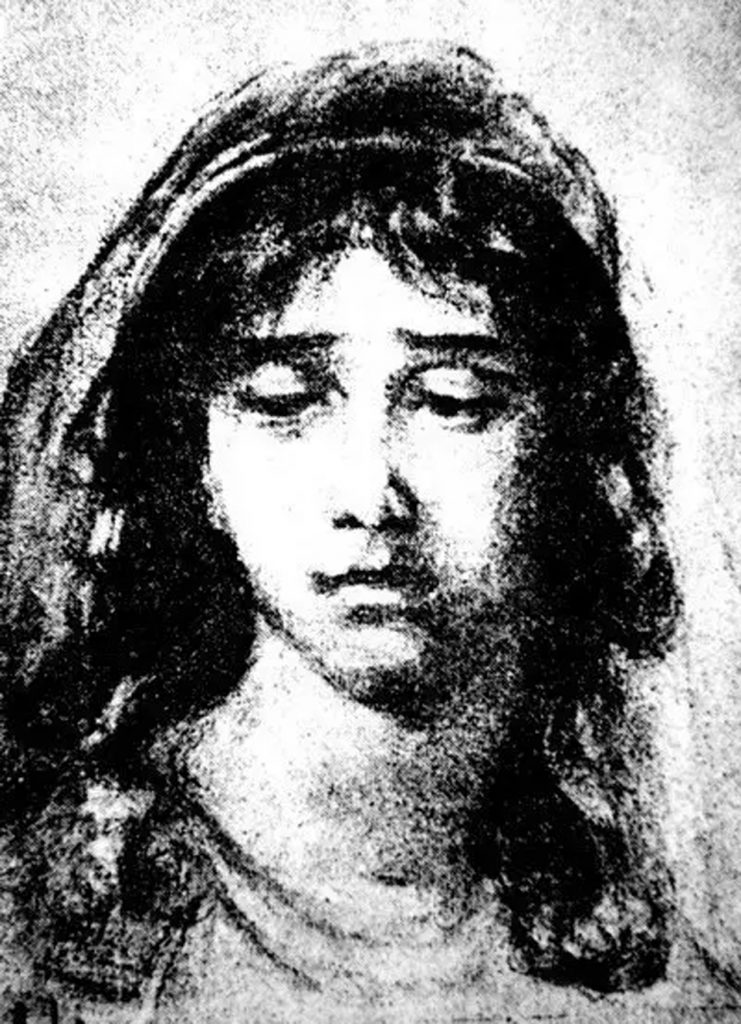
Li Shutong’s charcoal drawing titled ‘Maiden’
“A Half-naked Woman” by Li Shutong, collected by CAFA Art Museum, China
However, Li Shutong’s life underwent a profound transformation. Confronted with personal and financial challenges, he voluntarily entered a self-imposed exile in Japan. The success of the Xinhai Revolution in 1911 further complicated his circumstances, resulting in financial ruin. Undeterred by these setbacks, Li Shutong maintained composure and supported his family by teaching in Tianjin and Shanghai.
His teaching career, notably at Zhejiang First Teachers’ College, left an indelible mark. Li Shutong played a pivotal role in introducing Western painting to China, earning him the title of the forefather of Chinese oil painting. As the first Chinese art educator to incorporate nude models in his painting classes and introduce Western music to China, his influence was far-reaching. Some of his personally groomed students, including contemporary Chinese artist, educator, and musician Feng Zikai (丰子恺), and Singaporean artist Chen Wenxi (陳文希), went on to become accomplished artists in their own right. His impact on students, such as the renowned painters Pan Tianshou and Shen Benqian, underscored his lasting influence.
During this period, Li Shutong delved deeper into Buddhism. In 1916, he embarked on a 21-day fast at a temple in Hangzhou to experience aspects of the spiritual path. This experience prompted his decision to embrace the ordained life, leading to his monastic vows at Hupao Temple. His disciplined lifestyle, which included fasting therapy for deeper insights, marked a significant spiritual transformation.
Li Shutong’s transition from a worldly existence to a monk, detailed in a letter to his second wife, Yu, reflected his detachment from transient fame and wealth. His decision to leave behind a worldly life for monastic vows occurred only a month after joining the Order. He was known by the monastic names Yanyin (演音) and Hongyi (弘一) after undergoing full ordination rites at Lingyinsi, the largest monastery in Hangzhou.
His departure, though painful for those close to him, exemplified Master Hongyi’s profound understanding of Buddhism. In a conversation with his second wife, he elucidated the nature of love, defining it as compassion, aligned with Buddhist teachings that emphasize letting go of attachment and cultivating compassion.
Master Hongyi’s transformation from the proud and arrogant Li Shutong to a humble and receptive teacher was evident in his approach to teaching Dharma. Contrary to expectations of flawless mastery, Master Hongyi sought feedback from student monks and welcomed constructive criticism without defending himself.
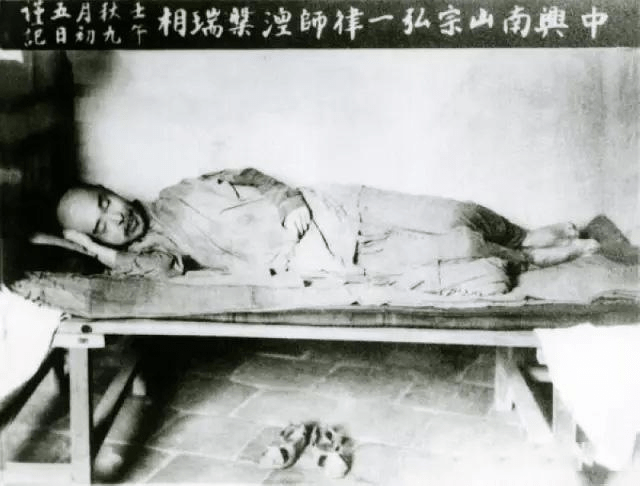
By early 1942, the toll of austerities and fasts began affecting Master Hongyi’s health, and by mid-May, his condition deteriorated rapidly.
The paranirvana of Master Hongyi
Three days before his passing at Busi Temple in Quanzhou, Fujian Province, on October 13, 1942, Master Hongyi inscribed his final calligraphic strokes, creating the work known as “Sorrow and Joy Comingle,” “Worldly Sorrows and Joy Are Intertwined,” or “Sorrow or Joy Are Inextricably Bound to Each Other” (《悲欣交集》, Beixin jiaoji).
Master Hongyi’s philosophical framework posited three distinct stages in human life: material, intellectual, and spiritual. The material phase pertains to mundane existence, the intellectual phase characterizes the life of ordinary intellectuals, while the spiritual phase encompasses the religious realm.
Material, intellectual, spiritual; beauty, profundity, deity. These concepts are intricately tied to the principles of abstinence, composure, and wisdom in Buddhism.
Abstinence, in this context, denotes the renunciation of materialistic pursuits. Composure signifies the practice of deep meditation—tranquil and remote—a path that ultimately leads to the attainment of wisdom. The imagery of Venerable Hongyi experiencing both sorrow and joy (欣) symbolizes the dynamic interplay between these various dimensions of life.
Li Shutong: From Prodigy to Monk – A Journey Beyond Wealth and Artistry




















 Peace LiLy