Great Holy Beings Give Their Approval

Great Holy Beings Give Their Approval

By: Zhaxi Zhuoma

The book H.H. Dorje Chang Buddha III contains a more detailed explanation by Gadu Rinpoche of what happened when H.H. Dorje Chang Buddha III gave the discourse “What Is Cultivation?” However, I would like to give my own personal testimonial of what I experienced. Like Gadu Rinpoche, I was very fortunate to be present when these holy events occurred. Since I have followed my Buddha Master, H.H. Dorje Chang Buddha III, I have seen many awesome and unbelievable events and been blessed by being able to participate in and witness many Buddhist ceremonies and receive dharma empowerments and initiations. This experience was truly amazing and was also an example of how different people saw or experienced different things. This is often the case when we witness holy states. Our karma is different, so the manifestation of holy states appear to us differently.

These lights first appeared when we were sitting and respectfully listening to a dharma discourse. I had requested that my Buddha Master give us a discourse on “What is Cultivation?” and His Holiness had graciously consented. We knew this would be a special discourse, since it was being recorded and many great dharma teachers and rinpoches had been summoned to attend. Suddenly there appeared a bright flashing light. I thought someone was using a flash camera, only that seemed very disrespectful and this was much brighter and dazzling and had a more golden color than that of a camera. I very rudely looked around. There was no camera nor apparent source. My second thought was that I was just imagining it. Of course no one else was showing any signs of seeing anything–they were all so engrossed in our Buddha Master’s discourse, and much too well behaved to respond. The lights came again many times–I lost count after the third, but I know it was more than three times. They were very bright and quite distinct. No sooner had the Buddha Master ended the discourse and we had paid our respects, did everyone begin talking at once. Even though it was in Chinese I could gather from the hand gestures and excitement that they had seen the same thing I saw. I believe all of this was recorded on the CD of this discourse. Ven. Gadu Rinpoche, whose English is quite good, explained what he had seen as did several others. It appeared that everyone present had seen something. There was no doubt that holy beings had come to listen to this very important discourse (it is printed in the book H.H. Dorje Chang Buddha III and included on this web-site) and they were very pleased and showed their joy by blessing us with their presence.

For a short period of time after that, these lights would miraculously appear. Once they flashed most auspiciously when the Buddha Master was talking to Ven. Gadu Rinpoche. At that time the Holy Beings were indicating approval of the design proposed for the cover of A Treasury of True Buddha-Dharma (the manuscript version of H.H. Dorje Chang Buddha III). They also flashed one Sunday morning at the hermitage where I live when I was reading one of His Holiness’s discourses in preparation for a class that would be taught later on that day. They came at another time when the Buddha Master was giving a discourse, but this time I was told to not be distracted and pay attention to the Buddha Master. I am pretty sure that was also included in the recording, but I must confess that before I was reprimanded, I searched the mandala thoroughly for any possible sources of light. There were none. These were truly blessings from another dimension. These were the manifestation of the Buddhas and Bodhisattvas who came to show their respect to our great Buddha Master!

There is no doubt that the book H.H. Dorje Chang Buddha III is an extraordinary work. Not only does it introduce H.H. Dorje Chang Buddha III to the world and share the reactions to the book of the leading Buddhists in the world today, it also documents a few of the awe inspiring accomplishments of this magnificent Holy Buddha the most important of which are the many teachings that can lead many beings to liberation. Since most of the book will be published in English as well as Chinese, it is truly a most auspicious blessing to the entire world. It represents the dissemination of the true Buddha-dharma for this time and age and in the Western and Asian worlds.

Link: https://wisdomtea.org/2024/02/22/great-holy-beings-give-their-approval/

The Eight Worldly Conditions

The Eight Worldly Conditions

by Venerable Narada Mahathera

This complex world is neither exclusively rosy nor entirely thorny. The rose, soft, beautiful, and fragrant, grows on a stem filled with thorns. What is rosy remains so, and what is thorny persists. One should not interfere with the thorns due to the presence of the rose, nor disparage the rose because of the thorns.

To an optimist, the world appears absolutely rosy; to a pessimist, it seems entirely thorny. However, a realist views the world neither as entirely rosy nor wholly thorny. From a realistic perspective, the world is a blend of beautiful roses and prickly thorns.

An understanding person appreciates the rose’s beauty without becoming infatuated, acknowledging the thorns’ nature and taking precautions not to be wounded.

Similar to a pendulum swinging between right and left, four inevitable conditions prevail in life — gain and loss, fame and defame, praise and blame, happiness and pain.

Gain and Loss: Businesspeople experience both gain and loss. While it’s natural to be pleased with profits, one must exhibit moral courage and maintain a balanced mind in the face of losses. Anticipating losses and being prepared helps reduce disappointment.

Fame and Defame: Fame and defame are inevitable in life. Seeking undue praise or avoiding criticism can lead to unfulfillment. True greatness is indifferent to external approbation.

Praise and Blame: Wise individuals remain unaffected by praise or blame, recognizing that opinions vary. The Buddha’s teachings emphasize responding to false accusations with patience and understanding.

Happiness and Pain: Genuine happiness is not solely derived from material possessions, power, or external circumstances. Inner happiness is found in non-attachment and leading a blameless life.

Facing pain, whether from old age, disease, separation, or death, requires equanimity. The Buddha himself endured physical suffering but maintained a balanced mind. Death, inevitable for all, should be faced with perfect equanimity.

Amidst these dualities, a balanced mind is crucial. The Buddha’s teachings encourage cultivating equanimity in the face of worldly conditions.

Link: https://wisdomtea.org/2024/02/08/the-eight-worldly-conditions/

77. THE SIXTEEN DREAMS [CHAPTER 1. PANIC]

77. THE SIXTEEN DREAMS [CHAPTER 1. PANIC]

Once upon a time there was a king called Brahmadatta who was ruling in Benares, in northern India. One night he had sixteen frightening nightmare dreams. He awoke in the morning in a cold sweat, with his heart thumping loudly in his chest. The sixteen dreams had scared him to death. He was sure they meant that something terrible was about to happen. In a panic, he called for his official priests, to ask their advice.

When the priests arrived at the royal bed chamber, they asked the king if he had slept well. He told them that it had been the worst night of his life, that he had been scared to death by sixteen dreams, and that he was desperate to find out their meanings.

At this the priests’ eyes lit up. They asked him, “What were these dreams, your majesty?” King Brahmadatta told them all sixteen dreams. The priests pounded their foreheads and exclaimed, “Oh what horrors! It couldn’t be worse, your majesty. Such dreams as these can mean only one thing — danger!”

The king asked them, ‘What danger, oh priests? You must tell me the meaning at once!” They replied, It is certain, your majesty, these dreams show that one of three disasters will take place — terrible harm to the kingdom, to your life, or to the royal wealth.”

The king had feared as much. He wrung his hands as the sweat kept pouring from his body. He was shaking all over with terror and panic. He asked, “Tell me, oh worthy royal priests, is there any way to avoid this disaster?” “Indeed, it is very dangerous,” they said. “If you do nothing, the end is certain. But we can prevent it. If we couldn’t, then all our training and learning would be useless. Trust us, lord.”

The panic-stricken king cried out, “Just tell me what to do, priests. I’ll do anything! What can you do to save me, my kingdom and my wealth?” “We must offer the greatest animal sacrifice that has ever been seen,” they said. “We must kill, as sacrificial offerings, four of every type of animal that lives!”

Although he was usually a gentle, kind and merciful ruler. King Brahmadatta was so frightened that he couldn’t think straight at all. Paralyzed with fear, he put all his hope and faith in his priests. He gave them permission to prepare the gigantic slaughter.

The priests said, “Have no fear, your majesty, we will take care of everything. We will prevent the coming doom!” They knew they would be paid well to perform the sacrifice. And the meat from the killed animals would be theirs as well. Their secret thoughts were, “This is a great way for us to get piles of money, and the best food and drink too!”

The priests got to work organizing the biggest sacrifice Benares had ever seen. Just outside of town they dug a huge pit. Into it they put the most perfect ones they could find of all the animals — land animals, birds and fish. From each kind they selected four to be killed in the ceremony. It became known as the ‘Four-from-all’ sacrifice.

Meanwhile, the king’s senior teaching priest had a promising young pupil. He was gentle and compassionate, and very well-educated. He wondered about all that was happening. So he asked the teacher priest, “Oh master, you have taught me well the wise teachings of old. Can you show me anywhere it says the killing of one will save the life of another?”

The priest answered, “What kind of question is that? Open your eyes and be realistic, my boy. Don’t you see that this great sacrifice, the Four-from-all, will make us rich? You must be trying to help the king hold onto his riches! “

The idealistic and sincere pupil said, “You have not answered my question, master. If this sacrifice is to be your work, it shall be mine no longer!” With these words he departed and went to the royal pleasure garden to consider what he would do.

It just so happened that the Enlightenment Being had been born into a rich high class family. For many generations the men in that family had been priests, just like the ones who were now preparing the Four-from-all sacrifice. But when the Bodhisatta grew up he abandoned the life of a rich priest. Instead he went to the Himalayas and lived as a humble forest monk. He concentrated his mind in meditation and entered high mental states. He gained the sweetest inner happiness, and even miraculous supernatural powers.

This forest monk loved all the animals. When he heard about what was happening in Benares he was filled with tenderness and compassion. He decided, “I must teach the ignorant people and release them from the chains of superstition. I will go to the city at once!” Then he used his supernatural power to fly through the air to Benares. In an instant he was seated on a rock in the king’s pleasure garden. His gentle nature made him glow like a golden sunrise.

The idealistic young student approached and recognized him as a great holy man. He bowed respectfully and sat on the ground. The forest monk asked him, “Young man, do you have a good and just king reigning here in Benares?”

“Yes”, said the student, “our king is kind and good. But he is being misled by the royal priests. He had sixteen dreams which left him completely panic-stricken. The priests took advantage of this when he told them his dreams. They have convinced him to have a huge sacrifice and kill many animals. Oh holy one, please tell the king the true meanings of his dreams. Free the many helpless beings from fear and death.”

The holy man said, “If he comes and asks me, I will tell him.” “I will bring him, sir,” said the young man. “Kindly wait here a short while until I return.”

The student went to the king and told him there was a marvelous holy man seated on a rock in the royal pleasure garden. He told him he had said he could interpret the king’s dreams. Hearing this, the king went with him to the garden. A crowd followed behind.

77. The sixteen dreams [Chapter 1. Panic]

Link: https://hhdorjechangbuddhaiiiinfo.com/2024/02/27/77-the-sixteen-dreams-chapter-1-panic/

#Buddhisttalesforyoungandold #Buddhiststories #storiesforkids #moralstories #Buddha #Jatakastories #PansiyaPanasJataka

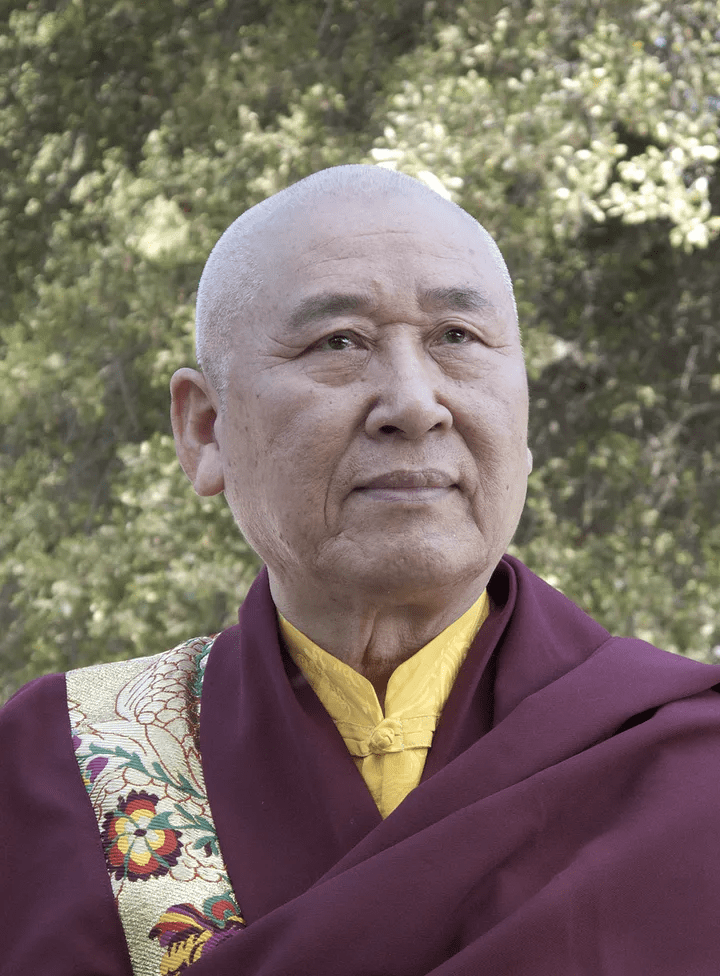
GREATLY ACCOMPLISHED PRACTITIONER OF TUMMO (INNER-HEAT) AND VAJRA MEDITATION DHARMA: H.E. KAICHU RINPOCHE

H.E. Kaichu Rinpoche, an extremely loyal disciple of H.H.  Dorje Chang Buddha III, cultivates himself with apure heart in accordance with the dharma. He was recognized by H.H. Dharma King Mohe as the reincarnation of a rinpoche. He truly cultivates himself and has true realization. In fact, his realization is the most successful among all rinpoches in the entire world today.

Within one hour from the time he received the “Xian Liang Great Perfection” State Practice Initiation from H.H.  Dorje Chang Buddha III, he attained the rainbow body state, enabling him to enter directly a Buddha-land state. He thereby attained realization and accomplishment in an unheard-of short time.

In order to manifest the dharma, Kaichu Rinpoche practiced the Corpse-Pose Tummo (Inner-Heat) Dharma in front of many people. The heat he generated in his body rose to 197.4 degrees Fahrenheit. Numerous dharma kings and rinpoches have been burned by the inner-heat he has generated. Among all dharma kings and rinpoches in the entire world today who practice tummo concentration dharma, Kaichu Rinpoche has generated the second highest inner-heat. The pre-eminent practitioner of tummo concentration dharma in the world today and the only one ahead of Kaichu Rinpoche is Mozhi Rinpoche, who is the highest disciple of H.H. Dorje Chang Buddha III.

Picture on top: Infrared thermal sensor detects the initial ignition and high temperature of fire Picture on bottom: The crowd gathered around the fire ignited and controlled by the infrared thermal sensor

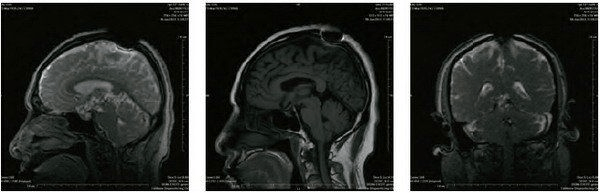
Additionally, through the Vajra Substitute Body Mediation, the crown of the head of Kaichu Rinpoche opened a width of more than two fingers. His consciousness can freely leave and enter his body. He has attained the state of non-attachment to anything and unification with the dharma realm.

KaiChu Rinpoche MRI magnetic resonance imaging brain CT scan medical images

The following is a sincere account written by H.E. Kaichu Rinpoche to convey his deepest admiration and gratitude to H.H.  Dorje Chang Buddha III.

IN THIS ENTIRE WORLD, ONLY H.H. DORJE CHANG BUDDHA III CAN TRANMIT THE XIAN LIANG GREAT PERFECTION DHARMA

I prostrate to H.H Dorje Chang Buddha III!

All Buddhist disciples know that the Longchen Nying-thik Great Perfection Dharma was the highest Buddha-dharma in this world. If one practices that Buddha-dharma well, one can attain the rainbow body in twelve years and thereby become liberated.

However, within one hour I entered a rainbow Buddha-land when H.H. Dorje Chang Buddha III transmitted to me the highest and greatest dharma in the universe — the Xian Liang Great Perfection Dharma. I was so fortunate to receive that dharma. When one compares one hour with twelve years, one can see just how supreme and magnificent the Xian Liang Great Perfection Dharma is! H.H. Dorje Chang Buddha III has brought that Buddha-dharma to this world for the first time in the history of this world. Even Sakyamuni Buddha did not transmit that Buddha-dharma to any of His disciples. Great Bodhisattvas and patriarchs do not know that dharma and therefore are unable to transmit it.

I also personally experienced many inconceivable supernatural Buddha-dharma states when H.H.  Dorje Chang Buddha III transmitted to me other dharmas, such as when the crown of my head opened more than the width of two fingers, when my consciousness left and entered my body at will, when I experienced the other-empty exchange state, and when I experienced high- temperature tummo heat (internal heat). Only a true Buddha such as H.H. Dorje Chang Buddha III possesses such Buddha-dharma, morality, and wisdom!

Therefore, only H.H.  Dorje Chang Buddha III is the highest refuge for all holy beings and all living beings!

Buddhist disciple Kai Chu
March 2010

Link:https://peacelilysite.com/2024/02/23/greatly-accomplished-practitioner-of-tummo-inner-heat-and-vajra-meditation-dharma-h-e-kaichu-rinpoche/

#Buddhist #BuddhaDharma #ZhuoHuoDing #TummoConcentration #KaiChuRinpoche #DorjeChangBuddhaIII  #HHDorjeChangBuddhaIII #VajraMeditation

Source: https://medium.com/@cultivator108/only-h-h-dorje-chang-buddha-iii-can-tranmit-the-xianliang-great-perfection-dharma-kaichu-dc72d96ea911

Incredible Power of Zhuo Huo Ding – Tummo Concentration

The term “Zhuo Huo Ding” (Tummo Concentration 拙火定) is widely recognized in Tibet. Practicing this skill has the potential to alter body temperature, and when mastered, it is believed to eliminate all diseases within oneself. Moreover, adept practitioners can employ Zhuo Huo to heal others, and advanced individuals may even achieve the transformation of their bodies into light. However, finding individuals who have truly mastered this skill is rare nowadays. Notably, there have been recent reports of Tibetan yogis practicing Zhuo Huo in winter, gradually drying wet felt cloth draped over their bodies.

While many have heard about the dharma of Tummo Concentration, witnessing a genuine manifestation of Tummo power is exceptionally challenging. In contemporary Tibet, India, and other locations, numerous lamas engage in Tummo concentration. However, when they emerge from extended seclusion practices, only a few manage to demonstrably raise their body temperature. At most, they symbolically wear a wet blanket while moving around the temple. Those who attain this initial level are revered as holy and venerable, reflecting the gradual loss of tantric dharmas across generations.

Tummo concentration, as a high-class Buddha-dharma of meditation, is an essential practice for cultivating the life power of the body, mind-wind, and bright spot, leading to the accomplishment of a rainbow-light body. Regardless of the ailment, Tummo practice is believed to have the capacity to eliminate it entirely, making it the nemesis of the demon of illness. Positioned within the realm of supreme yoga, mastering this dharma combined with Vajra Body Substitution Meditation can elevate one to the rank of a Bodhisattva at the twelfth stage or higher.

Two types of Tummo concentration practices exist: Yoga Tummo from Tibetan Esoteric Buddhism and Corpse-Laying Tummo, regarded as the “King of Tummo.” The practitioner’s ability to raise body temperature correlates with their realization power, surpassing typical human body temperatures. The realization power evolves through four steps, from the Initial Warmth Step to the Delight at Extreme Temperature. Each step corresponds to an increase in body temperature and an augmentation of the practitioner’s healing abilities.

Comparisons between practitioners often highlight the mastery of Zhuo Huo, with some claiming attainment of high levels. However, when juxtaposed with the technique of the renowned Rinpoche Wangze, these claims fall short.

On October 15, 2009, five Buddhist masters of the Gelug school, including the 8th SongJi Rinpoche, Gamadega Gonglare Rinpoche, Yongdeng Gongbu Rinpoche, American Rinpoche Zhaxi Zhuoma, and the 16th Chongdi Rinpoche, received a “Zhuo Huo removal of obstacles blessing” from the highly respected Holy Master Wangze Rinpoche, in the United States. Wangze Rinpoche is a devoted disciple of H.H. Dorje Chang Buddha III. This blessing miraculously eliminated their illnesses and negative karma.

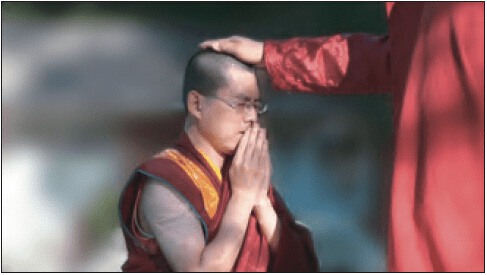
During the blessing ceremony, Rinpoche Wangze engaged in a sequence of actions with SongJi Rinpoche. First, he placed his palm in front of SongJi, making three deliberate motions of opening and closing his hand while instructing him to pay close attention. Subsequently, Rinpoche Wangze gently rested his palm on the top of SongJi’s head. Initially, SongJi perceived the touch as gentle and soft. However, within a few minutes, a sensation of heat began to radiate from his feet, gradually enveloping his back, neck, the back of his head, and culminating at the top of his head.

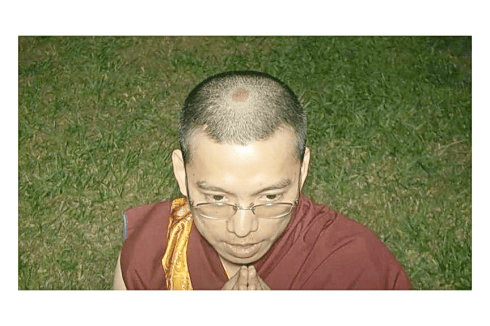
Suddenly, Rinpoche Wangze’s palm emitted an intense, fiery sensation at the crown of SongJi’s head, causing an unbearable pain within a mere two seconds. Describing the experience, SongJi expressed, “It was more agonizing than placing a red-hot iron on the top of my head.” In that brief span, a conspicuous red lump manifested on the crown, with certain areas burning through the skin and emitting black smoke. Simultaneously, SongJi experienced an extraordinary sense of physical and mental comfort. Several hours later, a yellow, crystal-like substance emerged at the site of the lump. According to insights from an elderly hidden yogi, this phenomenon is known as “merit honey,” a rare and auspicious occurrence indicating the elimination of impurities or karmic obstacles accumulated by Buddhists.

SongJi Rinpoche experienced an extraordinary sense of physical and mental comfort. Several hours later, a yellow, crystal-like substance emerged at the site of the lump

Following the release of merit honey, all existing ailments in SongJi Rinpoche’s body miraculously vanished. Kama Dege Gongla Rinpoche, belonging to the Kagyu sect, also underwent the Zhuo Huo Dispelling Obstacles Empowerment from Wangze Rinpoche. In a matter of seconds, a distinctive mark was burned into his philtrum. Yongdeng Gongbu Rinpoche bore a notable imprint on his forehead and between his eyebrows, outcomes of the empowerment. Zhaxi Zhuoma Rinpoche, too, retained a Zhuo Huo mark on her throat, accompanied by the flow of black qi from the respective marks.

Zhaxi Zhuoma Rinpoche
Yongdeng Gongbu Rinpoche

Link:https://peacelilysite.com/2024/02/23/incredible-power-of-tummo-concentration/

#Buddhist #BuddhaDharma #ZhuoHuoDing #TummoConcentration #WangzeRinpoche #DorjeChangBuddhaIII  #HHDorjeChangBuddhaIII #ZhaxiZhuomaRinpoche

The Healing Power of Forgiveness: Unlocking Peace with the REACH Method

In a world often torn apart by conflict and grievances, the importance of forgiveness cannot be overstated. The ability to release resentment and embrace reconciliation is a formidable tool for personal healing and societal harmony. In this blog post, we will explore the REACH Method—a powerful approach to forgiveness created by renowned clinical psychologist Everett Worthington. By delving into each step of the REACH Method—Recall, Empathize, Altruistic gift, Commit, and Hold onto forgiveness—we can learn how forgiveness, under the guidance of Worthington’s methodology, has the potential to bring about positive change, even in the most challenging circumstances.

Recall the Hurt:

The first step in the REACH Method is to Recall the Hurt. It involves acknowledging the pain caused by the wrongdoing. This step allows individuals to confront their emotions head-on and understand the impact of the offense. It’s crucial to remember that forgiving does not mean forgetting; rather, it is a conscious decision to release the grip of resentment.

Empathize with the Offender:

Empathy is a cornerstone of forgiveness. By putting ourselves in the shoes of the person who caused the hurt, we can gain insight into their motivations and struggles. Understanding that everyone is capable of making mistakes and causing harm helps humanize the offender, making forgiveness a more attainable goal. South Africa’s reconciliation process is a testament to the power of empathy in healing deep-seated wounds.

Altruistic Gift of Forgiveness:

The Altruistic Gift of Forgiveness involves recognizing our shared humanity. We all make mistakes and have hurt others at some point. Through the stages of guilt and gratitude, we come to understand the liberating power of forgiveness. This realization inspires us to give the gift of forgiveness to others, fostering a cycle of healing and compassion.

Commit Publicly to Forgive:

Public commitment adds a layer of accountability to the forgiveness process. By expressing forgiveness openly, whether through spoken words, a written letter, or a symbolic gesture, we solidify our commitment to letting go of resentment. This step not only aids personal healing but can also inspire others to embark on their journey of forgiveness.

Hold onto Forgiveness:

Holding onto forgiveness is a continuous process that requires resilience. Painful memories may resurface, but it’s crucial to distinguish them from harboring unforgiveness. The REACH Method acknowledges the challenges of maintaining forgiveness, offering guidance on navigating triggers and doubts. Understanding that forgiveness is a journey, not a destination, empowers individuals to persevere.

Benefits of Forgiveness:

Everett Worthington, with decades of experience studying forgiveness, highlights numerous benefits for the person who forgives. According to Worthington, the primary way forgiveness affects mental health is by lowering rumination—the constant replaying of negative events in our minds. This reduction in rumination leads to improved mental well-being and emotional health. Additionally, forgiveness has been linked to decreased stress, anxiety, and depression, contributing to an overall positive impact on one’s life.

As we navigate a world rife with conflicts, it’s essential to recognize the transformative power of forgiveness. The REACH Method, developed by clinical psychologist Everett Worthington, provides a structured approach to forgiving, offering a pathway to healing and reconciliation. Worthington’s decades of experience studying forgiveness underscore the profound impact it can have on individual and societal well-being.

Beyond personal benefits, forgiveness has the potential to reshape societies and bridge divides. Instead of responding to conflicts with weapons and troops, let us consider the humanity support that the REACH Method embodies—a powerful tool to address the root causes of strife and build a foundation for lasting peace.

By embracing forgiveness, we not only free ourselves from the burden of resentment but also pave the way for a more compassionate and harmonious world. As Everett Worthington aptly puts it, “There are a lot of benefits to the person who forgives.” Lowering rumination and improving mental health are just a few of the many rewards awaiting those who choose the path of forgiveness.

In a world hungry for healing and reconciliation, let us embrace the REACH Method and its transformative potential. Together, we can unlock the power of forgiveness and sow the seeds of peace for generations to come.

Link:https://peacelilysite.com/2024/02/22/the-healing-power-of-forgiveness-unlocking-peace-with-the-reach-method/

#Forgivness #Happiness #REACH #EverettWorthington

https://www.cnbc.com/2023/05/06/forgiveness-can-boost-happiness-improve-mental-health-how-to-start.html

Dharma Master Tonghui —- Great Achievers

Dharma Master Tonghui —- Great Achievers-图片2

Dharma master Tonghui

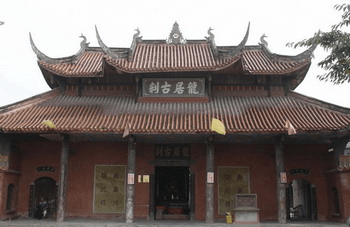
Venerable Dharma Teacher Tonghui (1922-2013) served as the Abbot of Longju Temple, renowned for Jiangxi Mazu. A devoted disciple of H.H. Dorje Chang Buddha III, he immersed himself in the teachings and practices of dharma. Also known as Elder Monk Tonghui, he transcended the ordinary, attaining the revered status of a holy monk.

Venerable Master Tong Hui, born Tang Zhenbang on March 5, 1922, in Penglai town, Suining City, Sichuan Province, belonged to the Han ethnicity. Renowned for his intelligence from a young age, he adhered to a vegetarian diet and practiced abstinence, following his parents’ guidance. In 1931, he entered monkhood under Master Pu Jing at Jinwen Temple in Pengxi. Full ordination followed in 1940, under Venerable Master Miaoneng at Baoguang Temple, and further studies in Chengdu’s Jingci Temple under Master Nenghai in 1941. Residing at Longju Temple with Master Miaoneng in 1942, he served during the transmission of the Great Precepts by Master Nenghai. Master Nenghai was one of the most eminent monks in last century.

Post-liberation, Longju Temple faced dispersion, confiscation of properties, and occupation during the Cultural Revolution. As the warehouse keeper, Venerable Master Tong Hui personally bore the repercussions of stolen food, enduring imprisonment to spare innocent people. False accusations regarding the team’s beekeeping further led to additional years in prison. His unwavering compassion and selflessness epitomized the Buddhist spirit.

Reopened by the government on December 16, 1986, Longju Temple underwent extensive renovations under the venerable master’s guidance. The Arhat Hall, Main Hall, Scripture Hall, and Accommodation Building were constructed, while the main gate, Ksitigarbha Hall, Hall of Heavenly Kings, and Bell Tower were restored. The restoration of large Buddha and Bodhisattva statues, as well as Arhat statues, showcased the venerable master’s dedication. Numerous instances of his awe-inspiring virtue were evident, such as his ability to attract dharma-protecting deities and revive a withered ginkgo tree with Bodhi Holy Water.

Front Entrance of Longju Temple

Grand Hall in Longju Temple

Moreover, Venerable Master Tong Hui made significant contributions to Buddhism by bringing back Buddha and Bodhisattva statues made of Burmese jade from temples in Dayi County and Daying County.

A legendary story recounts Master Tonghui’s visit to Burma in 1992. Venerable Dharma Teacher Tonghui went to Burma to respectfully receive and take back with him a Jade Statue of the Buddha. The night before the Dharma teacher arrived, many people in Burma suddenly dreamed that he was a golden Arhat and would soon come to Burma. The next day when he arrived in Burma, hoards of people made offerings to him. In Hinayana Buddhism, Arhats are praised in the same way that Bodhisattvas who attained the marvelous fruit of enlightenment are praised. It is clear that Venerable Dharma Teacher Tonghui was an amazing and great sage.

Venerable Dharma Teacher Tonghui peacefully passed away on February 26, 2013, at the age of 92. His preserved body, following ancient Buddhist rituals, was respectfully opened three years later on June 12, 2016, revealing a full and jade-colored flesh body in the urn. This sacred event reaffirmed the authenticity and practicality of true Buddha Dharma.

The flesh body of Venerable Dharma Teacher Tonghui is now enshrined in Longju Temple for people to respectfully admire.

Dharma master Tonghui — Great Archivers

Link:https://peacelilysite.com/2024/02/16/dharma-master-tonghui-great-achievers/

#Buddhist #BuddhaDharma #LonjuSiTemple #MasterTonghui #DorjeChangBuddhaIII  #HHDorjeChangBuddhaIII

Discovering the Hidden Gem of Tibet: Mêdog – Where Nature Unveils Its Mysteries

Nestled in the southeastern part of the Tibet Autonomous Region lies Mêdog, a town whose name translates to “hidden lotus” in Tibetan. Situated in the Nyingchi area, Mêdog finds its home in the lower reaches of the Yarlung Tsangpo River, nestled at the southern foothills of the eastern Himalayas. This picturesque town boasts breathtaking landscapes, abundant rainfall, and pristine ecology, making it a true hidden gem waiting to be explored.

Mêdog’s allure lies not only in its natural beauty but also in its remote location, which has preserved its untouched landscapes from excessive development and damage. With a relatively sparse population, Mêdog offers visitors a rare opportunity to experience unspoiled natural beauty and unravel the mysteries of nature.

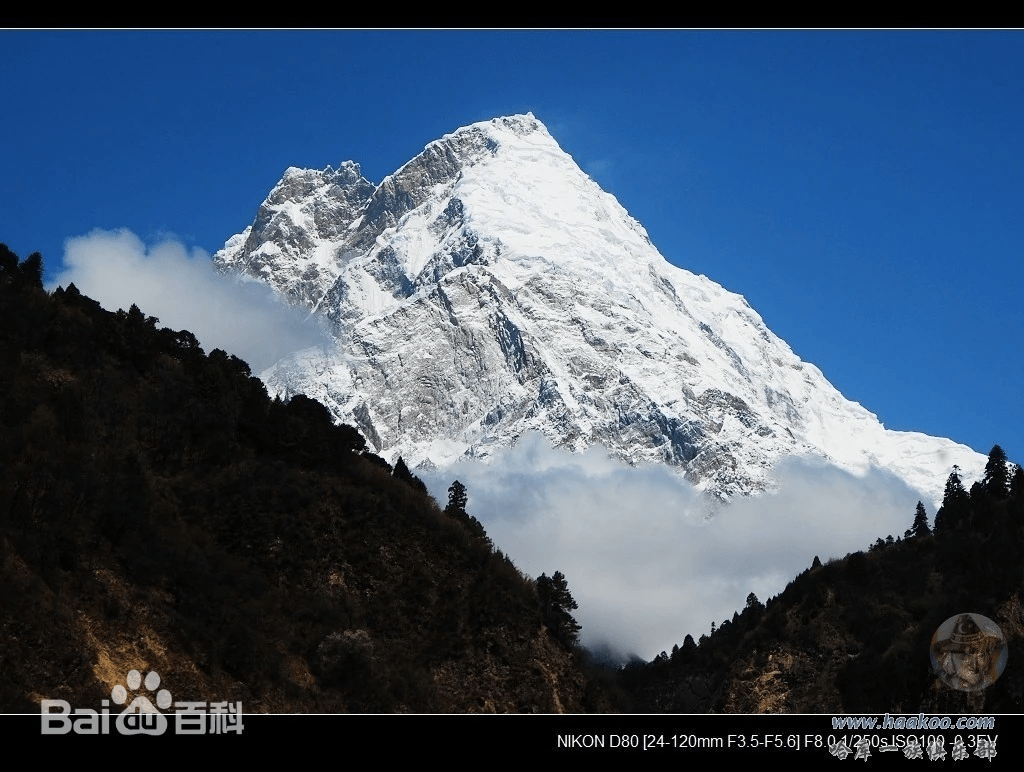
One of the most striking features of Mêdog is the majestic Yarlung Tsangpo River, which winds its way around the towering Namcha Barwa Peak, standing at an impressive 7,782 meters. As the river meanders through the territory of Mêdog, it carves a deep gorge akin to a sharp sword, creating a mesmerizing sight that resembles the Milky Way cascading towards the sea.

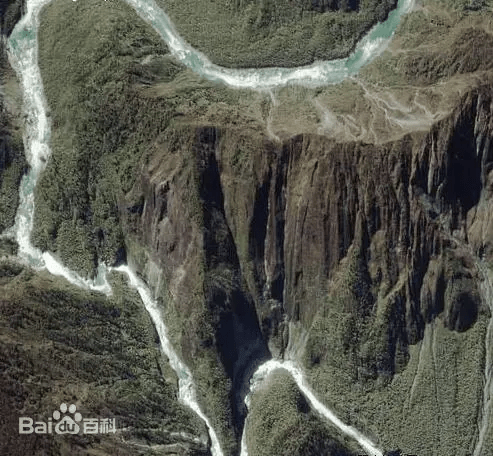
Big Bend

The Yarlung Tsangpo Grand Canyon stretches from Dado Kar village in Milin County at an elevation of 2880 meters in the north to Baxika village in Motuo County at an elevation of 115 meters in the south. The canyon spans a length of 504.6 kilometers, with an average depth of 2268 meters and a maximum depth reaching 6009 meters. With an average elevation of over 3000 meters, it holds the distinction of being the world’s largest canyon.

The entire canyon region is characterized by a harsh environment, where glaciers, cliffs, steep slopes, mudslides, and the turbulent Yarlung Tsangpo River converge. Many areas remain untouched by human activity, making it one of the few remaining “last frontiers” on Earth and a relatively unexplored geological blank spot.

Some of the primary waterfalls within the canyon have drop heights ranging from 30 to 50 meters. The canyon features nine vertical natural zones, ranging from high mountain snow zones to low river valley tropical rainforests. This diversity creates a habitat for a variety of biological resources, including two-thirds of known higher plant species on the Qinghai-Tibet Plateau, half of known mammal species, four-fifths of known insect species, and three-fifths of known large fungi species in China.

The convergence of warm and humid oceanic air currents with the snowy plateau gives rise to a unique climatic phenomenon in Mêdog. With annual rainfall reaching around 2000 millimeters and an average temperature of 16°C, Mêdog boasts rare South Asian climatic characteristics at its latitude. Despite its Tibetan location, Mêdog is home to the northernmost tropical rainforest in China, thriving with lush vegetation and vibrant landscapes reminiscent of Jiangnan’s greenery.

Exploring Mêdog offers visitors a chance to witness the breathtaking scenery of the Yarlung Tsangpo Grand Canyon, hailed as one of China’s ten most beautiful canyons by “National Geographic.” Here, travelers can marvel at the grandeur of nature while appreciating the unique rattan bridges that adorn the landscape, crafted without a single nail or pier.

As one traverses the mountains of Mêdog, they are greeted with mist-shrouded landscapes that change hues with the seasons, each unveiling its unique beauty. From the dense foliage to the meandering streams, Mêdog presents a captivating panorama that unfolds like a charming scroll, inviting visitors to immerse themselves in its vibrant colors and tranquil ambiance.

In the age of dinosaurs, a plant often referred to as a “living fossil” – the tree fern, also known as the “cycad,” is a nationally protected plant at the second level. It is the only woody fern species.
Wild Banana
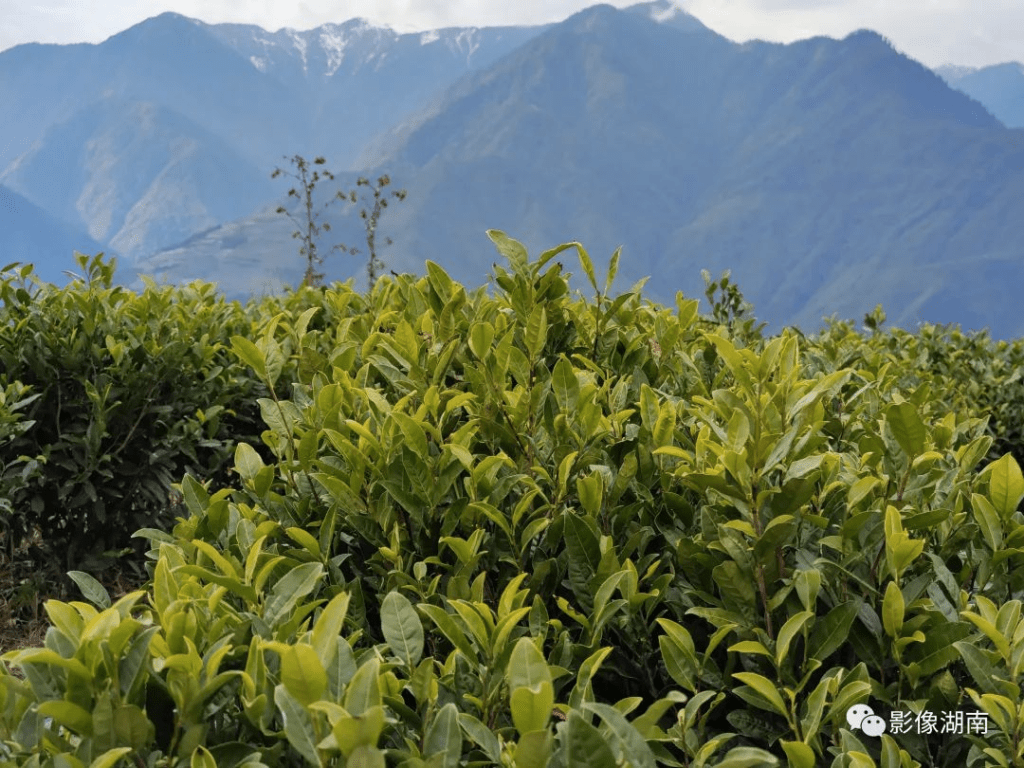
Tea Tree Farm

For those seeking respite from the hustle and bustle of city life, Mêdog offers a sanctuary of serenity and natural beauty. Whether it’s witnessing the grandeur of the Yarlung Tsangpo River or wandering through the lush rainforests, Mêdog promises an unforgettable journey filled with awe-inspiring moments and cherished memories.

In Mêdog, every step reveals a new wonder, every corner a hidden treasure. As visitors embark on this journey of exploration, they are reminded to approach nature with humility and appreciation, embracing its beauty with a calm heart and open mind. In Mêdog, the beauty of life reveals itself in every mist-covered peak and verdant valley, leaving an indelible mark on the soul of all who venture there.

Discovering the Hidden Gem of Tibet: Mêdog – Where Nature Unveils Its Mysteries

Link:

#Travel #China #Mêdog #Tibet #YarlungTsangpoGrandCanyon

Source: https://m.voc.com.cn/xhn/news/202202/16733558.html

Navigating Turbulent Times: Harnessing the Power of Positive Thought for a Peaceful Life

Exploring the Wisdom from Peace Pilgrim

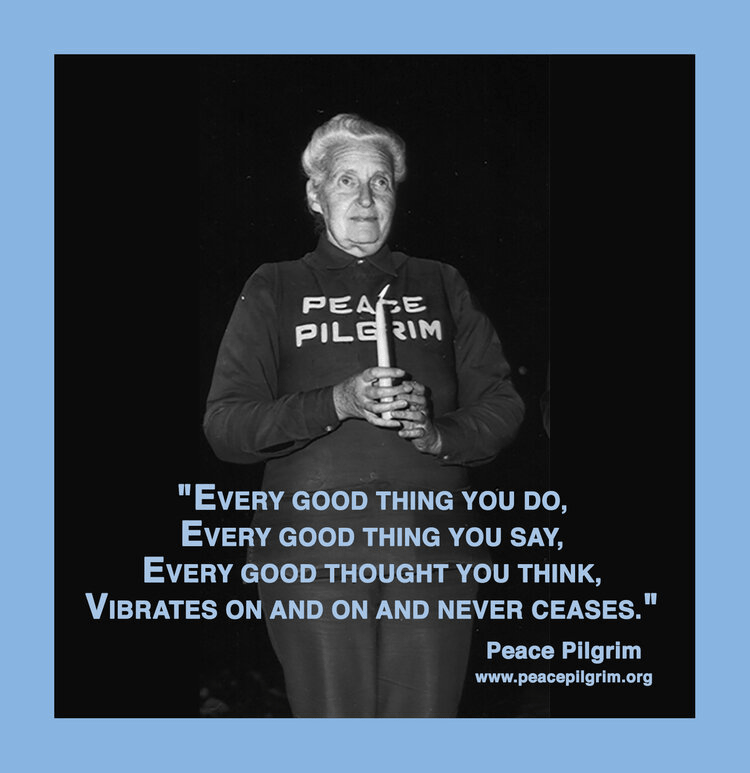
In the midst of pandemic, economic uncertainty, racial injustice, civil unrest, and widespread unemployment, it’s easy to feel overwhelmed and disheartened. Yet, in these challenging and unprecedented times, the wisdom of Peace Pilgrim, who traversed through tumultuous periods in history, resonates profoundly.

Peace Pilgrim’s life story is a testament to the power of unwavering peace, love, and positive thought amidst adversity. Born into a world torn apart by two World Wars and marked by the specter of nuclear devastation, she embarked on a remarkable journey that spanned decades of social upheaval and change.

Throughout her pilgrimage, which began amidst the backdrop of the Korean War, Peace Pilgrim held steadfast to a simple yet profound message: “This is the way of peace—overcome evil with good, and falsehood with truth, and hatred with love.” Her words echo through the corridors of time, offering a timeless formula for navigating the complexities of our world today.

At the heart of Peace Pilgrim’s philosophy lies the transformative power of thought. She understood that our thoughts shape our reality and wield immense influence over our well-being. “If you realized how powerful your thoughts are, you would never think a negative thought,” she professed. Her admonition to eschew “junk thoughts” reminds us of the importance of nurturing a positive mental environment, free from the toxins of negativity and fear.

For Peace Pilgrim, true fulfillment came not from the pursuit of material gain, but from a life dedicated to service and love. “I began to live to give what I could, instead of to get what I could, and I entered a new and wonderful world,” she reflected. Her emphasis on living in the present, doing good each day, and cultivating faith in the triumph of love offers a beacon of hope in troubled times.

In a world plagued by division and discord, Peace Pilgrim prescribed love as the ultimate remedy. “The medicine this sick world needs is love,” she asserted. Through acts of kindness, compassion, and empathy, we have the power to heal the wounds of hatred and fear that afflict our society.

As we navigate the uncertainties of the present moment, let us draw inspiration from Peace Pilgrim’s timeless wisdom. Let us commit ourselves to the practice of peace, love, and positivity in our thoughts and actions. Let us embrace the present moment with courage and conviction, knowing that the future will unfold according to the seeds of goodness we sow today.

In the words of Peace Pilgrim, “Live in the present. Do the things you know need to be done. Do all the good you can each day. The future will unfold.” Let us heed her call and strive to create a world where peace, love, and happiness reign supreme.

Navigating Turbulent Times: Harnessing the Power of Positive Thought for a Peaceful Life

Link:https://peacelilysite.com/2024/02/14/navigating-turbulent-times-harnessing-the-power-of-positive-thought-for-a-peaceful-life/

#PeacePilgrim #Peace #Positive #Power #Love

Source: https://www.peacepilgrim.org/links-relating-to-peace-pilgrim

Unraveling the Mystique: Celebrating the Dragon Year in Chinese New Year 2024

Photo by Chris F on Pexels.com

As we step into the Chinese New Year of 2024 (February 10th), ushering in the Year of the Dragon, we embark on a journey through the intricate tapestry of Chinese culture and folklore. Beyond the tangible creatures represented in the Chinese Zodiac, the dragon stands as a mystical symbol shrouded in enigma. Join us as we delve into the tales, traditions, and jubilations surrounding the Year of the Dragon, uncovering the profound significance of the Chinese Lunar New Year and its ancient lunar calendar.

The Chinese New Year, also known as the Spring Festival, is intricately linked with the Chinese Lunar Calendar, a timekeeping system rooted in the moon’s phases. Unlike the Gregorian calendar, the Chinese Lunar Calendar dates back over four millennia, its inception during the Xia Dynasty and refinement during the Shang Dynasty. It serves not only as a means to measure time but also reflects the Chinese people’s harmonious rapport with nature. Aligned with the agricultural cycle, the lunar calendar aids in agricultural endeavors, guiding farmers in sowing and reaping.

IVAN/GETTY IMAGES

More than a mere chronometer, the Chinese Lunar Calendar embodies a cultural legacy brimming with significance. Grounded in the principles of yin and yang, the five elements, and the Chinese zodiac, it offers a holistic understanding of existence. This venerable calendar not only demarcates the passage of time but also orchestrates cultural ceremonies, festivals, and customary observances.

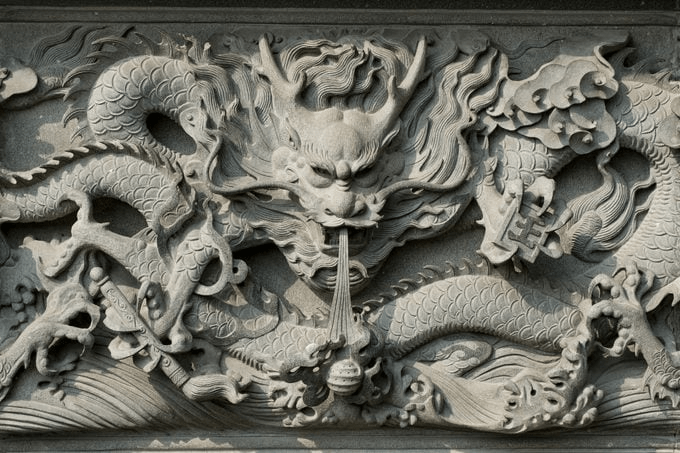
In ancient China, the dragon reigned as a symbol synonymous with imperial authority. Emperors, considering themselves the “Sons of Heaven,” identified with the dragon, an emblem of celestial power. This perception permeated society, fostering a collective belief in the Chinese people’s lineage from dragons. Rooted in mythology, folklore, and cultural symbolism, dragons hold a special place in Chinese ethos, embodying myriad virtues and auspicious qualities.

Legends abound in Chinese mythology, recounting the exploits of the Four Dragon Kings, guardians of the seas in the cardinal directions. Revered for their prowess and rain-summoning abilities, these divine beings epitomize the grace and might associated with dragons. Similarly, the tale of Nezha and the Dragon Prince underscores the dragon’s dual role as a symbol of strength and wisdom, transcending conventional boundaries. 

This mural depicting the Four Dragon Kings is preserved in Baiyun Temple, Beijing.

Ancient myths narrate the existence of the Nine Sons of the Dragon, each endowed with unique abilities shaping the natural world. From thunderous roars to water manipulation, these dragon progeny epitomize the elemental forces governing existence. The dragon’s omnipresence in imperial symbolism further underscores its significance, depicting the dragon as the epitome of majesty and sovereignty.

As the Chinese New Year approaches, customs and celebrations honoring the dragon come alive:

  1. Dragon Dances: The iconic dragon dance involves a team of performers manipulating a long, undulating dragon puppet through the streets. This dynamic display is believed to bring good luck and drive away evil spirits.
KEVIN FRAYER/GETTY IMAGES

  1. Dragon Boat Festival: While not directly related to the Chinese New Year, the Dragon Boat Festival is another celebration featuring dragon imagery. Races are held with elaborately decorated boats to commemorate the tragic death of the poet Qu Yuan.
  2. Dragon Lanterns: During the Lantern Festival, which marks the end of the Chinese New Year celebrations, dragon-shaped lanterns light up the night sky, creating a mesmerizing spectacle.

H.H. Dorje Chang Buddha III, a vocal artist, many years ago, has even composed a unique masterpiece, the energetic and festive song “Chinese Dragon,” showcasing the dragon’s cultural significance.

The dragon, shrouded in myths and revered in Chinese culture, takes center stage as we welcome the Year of the Dragon. These captivating stories and customs not only enrich our understanding of Chinese folklore but also highlight the dragon’s enduring role as a symbol of power, wisdom, and good fortune. As the dragon dances through the streets and the Lunar New Year festivities unfold, let us embrace the magic of this mythical creature and wish for a year filled with prosperity and auspicious beginnings. May the dragon bring its legendary blessings to all in the Year of the Dragon!

Link:https://peacelilysite.com/2024/02/09/unraveling-the-mystique-celebrating-the-dragon-year-in-chinese-new-year-2024/

#DorjeChangBuddhaIII#HHDorjeChangBuddhaIII#Vocal #Buddha #Dragon #ChineseNewYear #Zodiac#ChineseCulture