Can One Possess All-Encompassing Wisdom?

It is hard to believe that anyone could possess all-encompassing wisdom. For us humans, dedicating a lifetime to mastering even one discipline is remarkable. How could someone be a philosopher, scientist, painter, sculptor, writer, doctor, and inventor all at once, mastering each within a few decades? This seems impossible by human standards. However, the Buddha’s vast and profound wisdom is genuinely real. Over 2,500 years ago, Siddhartha Gautama, the Buddha, invited anyone to ask him any question, promising a detailed answer. This is illustrated in the story of the Buddha teaching a cowherd, as recorded in the “Sutra of the Cowherd Parable.”

King Bimbisara of Magadha once invited the Buddha and 500 disciples to preach in his kingdom for three months. To provide them with fresh dairy products daily, the king arranged for cowherds to stay nearby. As the end of the three months approached, the king suggested the cowherds meet the Buddha. The cowherds, having heard of the Buddha’s wisdom, decided to test him with questions about cowherding. They reasoned that if he could answer these, he truly possessed all-encompassing wisdom.

Upon arriving at the Bamboo Grove, they were struck by the Buddha’s radiant presence. They saw him sitting under a tree, glowing like a golden mountain, radiating light like melted gold. Overwhelmed with joy, the cowherds discussed among themselves, “Regardless of whether the Shakyamuni possesses all-encompassing wisdom, anyone who sees him feels joy. His light is unparalleled, his appearance noble, and his presence exudes majesty. His radiance is clear and bright, his demeanor commanding respect, and his body adorned with the aura of virtue, making anyone who sees him feel immense joy.

If he indeed possesses all-encompassing wisdom, it must be due to his immeasurable merits. No worldly treasure can compare to the Buddha’s sublime and dignified presence, which brings great joy and pure faith to all who see him. It is clear that the Buddha must indeed possess all-encompassing wisdom.”

The shepherd thought about this and sat down to pay respects to the Buddha. They asked the Buddha, “What are the various methods a shepherd can use to ensure that the cattle thrive and reproduce well? And what conditions might prevent the cattle from growing properly and living peacefully?” The Buddha answered: There are eleven methods by which a shepherd can ensure the cattle’s well-being and reproduction. What are these eleven methods?

Understanding the Caretaker: Having a strong and capable caretaker who can protect and nourish the cattle, keeping them healthy and well-maintained. Similarly, a monk should be a respected and virtuous leader who can uphold the Dharma and guide beings toward good deeds.

Understanding Color: Knowing the colors of the cattle, such as black, white, or mixed. Similarly, a monk should understand that all phenomena in the world are composed of the four elements: earth, water, fire, and wind.

Understanding Appearance: Recognizing whether the cattle’s appearance is auspicious and whether they will be harmonious. A monk should similarly be able to discern whether someone’s actions indicate wisdom or ignorance.

Understanding Scraping: If insects bite the cattle and their blood is consumed, sores will develop. Scraping can remove these pests and promote the cattle’s well-being. Likewise, a monk should remove harmful views and misconceptions that corrupt their spiritual practice.

Understanding Wound Treatment: Applying medicine to prevent mosquito and fly bites and other injuries. Similarly, a monk should use correct Dharma teachings to protect themselves from delusions and negative emotions.

Understanding Smoke: Using smoke to drive away insects so the cattle can stay in a comfortable, insect-free shelter. Similarly, a monk should use the teaching of Dharma to lead beings to the state of emptiness and liberation.

Understanding Good Ways: Knowing the behavior and preferences of the cattle and how to keep them healthy. A monk should understand how to practice the Noble Eightfold Path to achieve Nirvana and avoid falling into the extreme paths of annihilation or eternalism.

Understanding the Right Place: Knowing how to provide a place where the cattle can live healthily and with minimal sickness. Similarly, a monk should practice and teach the Dharma to cultivate purity and increase good roots.

Understanding Good Routes: Knowing which paths are safe and which places are good for crossing rivers, avoiding places with waves and pests. Similarly, a monk should learn from knowledgeable teachers and adapt their teachings to the capacities of sentient beings.

Understanding Safe Places: Ensuring the cattle live in places free from predators and harmful creatures. Similarly, a monk should maintain mindfulness to avoid the harmful effects of negative emotions.

Understanding Milk Preservation: Ensuring that the mother cow’s milk is not consumed completely by the calf so that both the mother and the owner can benefit from it daily. Similarly, laypeople should use offerings such as clothing and food economically to benefit both the givers and receivers.

The cowherds, after hearing the Buddha’s teachings, thought, “We cowherds know only three or four methods, and our predecessors knew only five or six. Hearing the Buddha today is truly astonishing and unprecedented! The Buddha indeed possesses complete wisdom beyond doubt.”
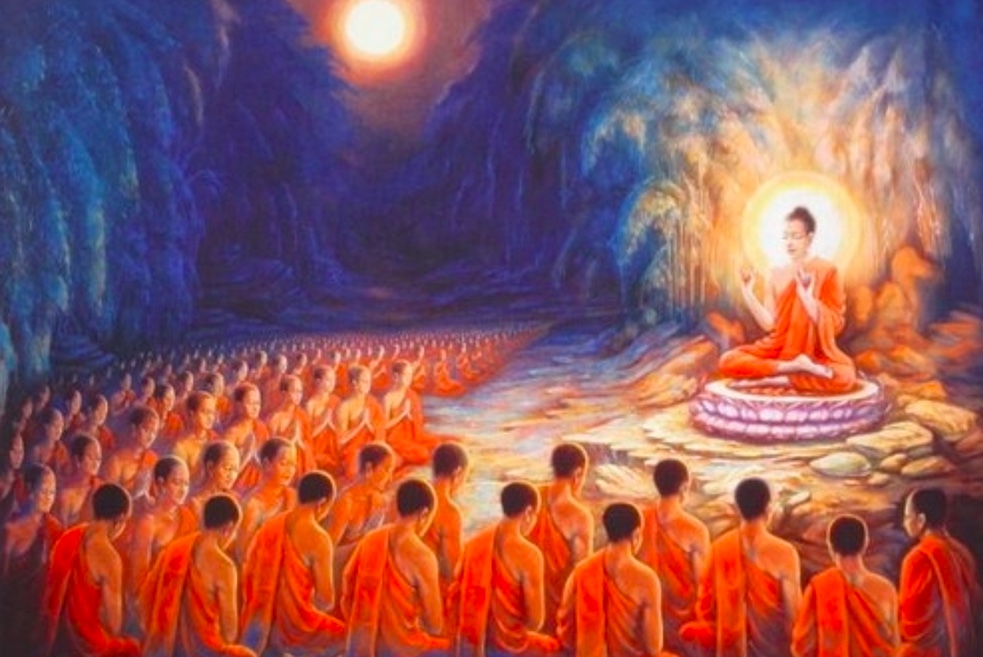
This is described in the “Sutra of the Parable of the Cowherds.” From this, we understand that there are individuals with complete wisdom.

Today, due to the supreme and exceptional causes and conditions, the original primordial Buddha, Vajradhara has once again descended into the Saha World to manifest all-encompassing wisdom. H.H. Dorje Chang Buddha III once said: Within five years (from 1995 to 1999), if any sentient being asks ME any question, the answer should be given immediately without any hesitation. If there is any need to think about it, or if there is slight hesitation or any fabrication, or if the answer is not comprehensive, I will immediately step down from the Dharma throne and no longer be qualified to teach the Dharma.”

In the more than two thousand Dharma discourses spoken by the Buddha, He provided direct and comprehensive answers to various questions on practice and methods for His disciples. Sometimes, even before the disciples spoke, He would say, ‘I know what you want to ask. You don’t need to say anything; I will answer you directly.’ The disciples would nod in agreement. There was also Zeng Ruzhang, who studied stealth aircraft and asked why they can be invisible. Lobsang Zhenzhu Rinpoche once proposed to see Green Tara, and shortly after, a divine manifestation appeared, H.H. Dorje Chang Buddha III fulfilled his wish…
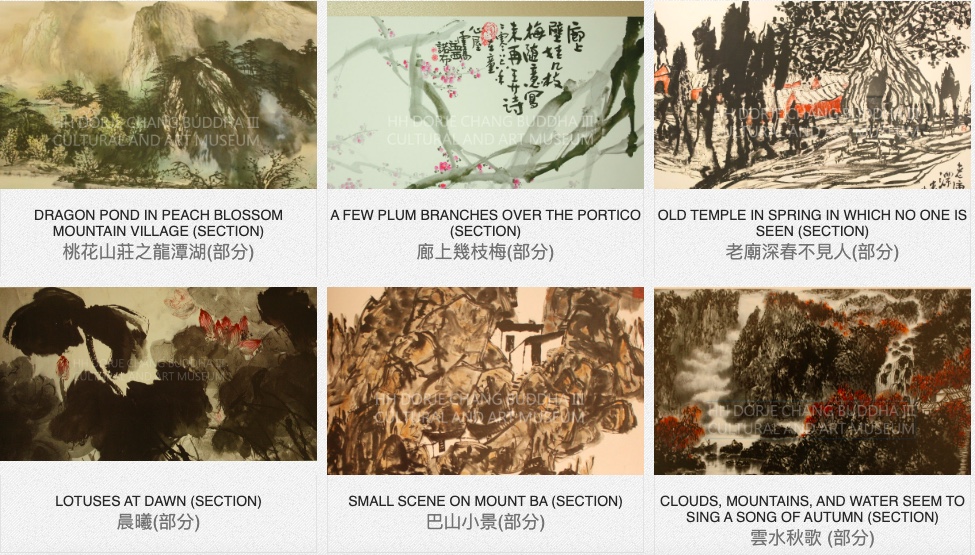
Step into the International Art Museum of America in San Francisco or the  H.H. Dorje Chang Buddha III Culture and Art Museum in West Covina, and you will be able to appreciate world-class masterpieces of art. H.H. Dorje Chang Buddha III has created Chinese paintings, oil paintings, and various styles of calligraphy. In addition to mastering styles from existing schools of painting, such as Realism, Abstract, Line, and Impressionism, H.H. Dorje Chang Buddha III has independently developed sixteen unique schools of painting.

At the fourth session of the World Poets and Culture Conference held in Hungary in 1994, more than 5,600 experts and scholars representing 48 countries and regions unanimously approved conferring upon H.H.  Dorje Chang Buddha III the title “Distinguished International Master,” which has an honorific status comparable to a head of state. 
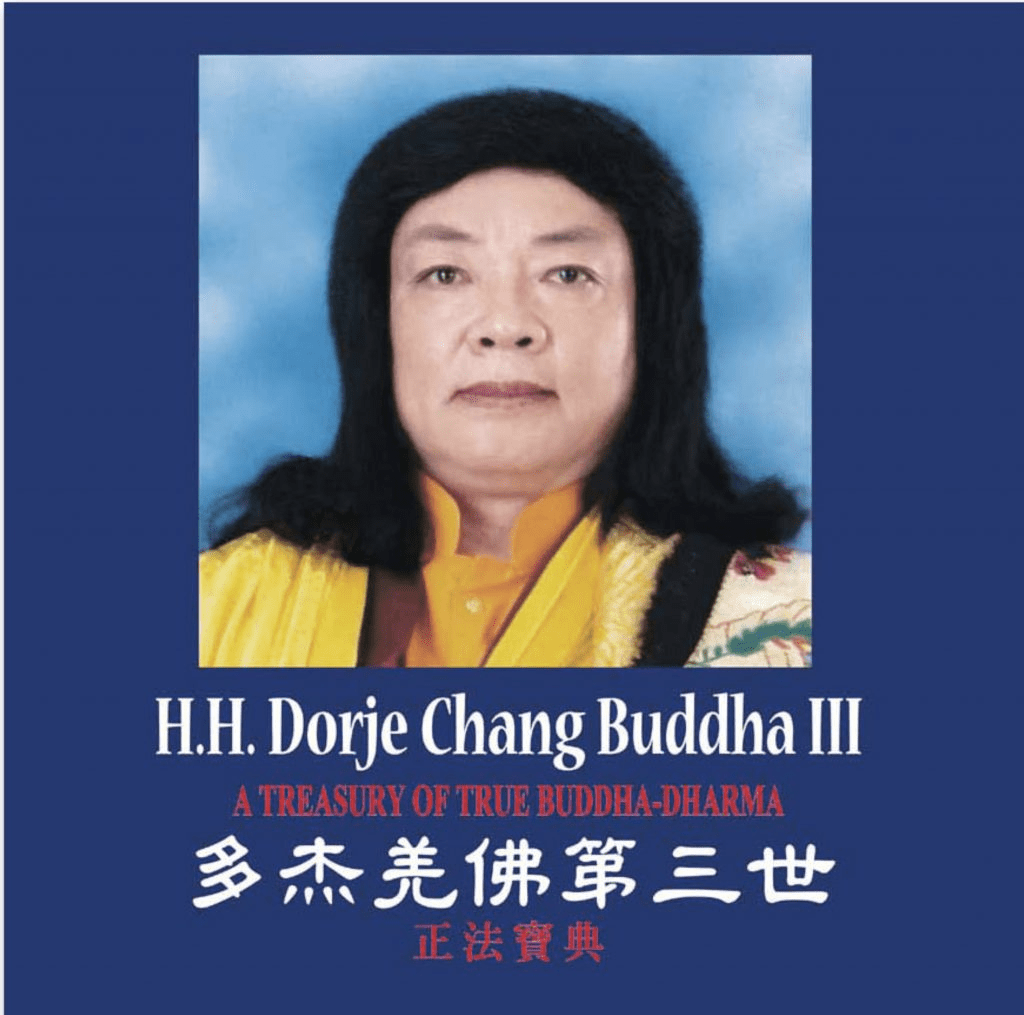
H.H. Dorje Chang Buddha III possesses extraordinary and saintly wisdom, perceiving the true essence of the universe and life. Whether it be within the various sects of Buddhism or in all worldly fields such as art, science, medicine, and philosophy, His accomplishments reach the highest level in every aspect, with unparalleled expertise and a unique status beyond any saint.”

The treasure book, “H.H. Dorje Chang Buddha III,” stands as a testament to this statement. However, this book contains only a drop of water from the vast ocean of Buddha’s teachings and wisdom.

The video below showcases the boundless compassion and highlights the extraordinary accomplishments of H.H. Dorje Chang Buddha III. It was published by China Educational Channels TV and features interviews with Buddhist disciples from around the globe.

Link:https://peacelilysite.com/2024/07/26/can-one-possess-all-encompassing-wisdom/

#MasterWanKoYee #DorjeChangBuddhaIII #HHDorjeChangBuddhaIII ##H.H.DorjeChangBuddha IIICulturalAndArtMuseum#YunSculpture#Art#IrreplicableArt#FiveVidyas#Buddhism#Buddha

Celebrating Young Talent: The 2024 IAMA Youth Painting Competition

The winners and finalists of the 2024 IAMA International Youth Art Contest with the President of IAMA / Photo courtesy: John Trieu

More than 400 amazing artworks by young artists from 9 countries on exhibit at IAMA Grand Exhibition Hall / Photo Courtesy: John Trieu

The International Art Museum of America (IAMA) hosted the 2024 Youth Painting Competition and Award Ceremony on Sunday, July 14th, at its Market Street location. The event celebrated the artistic achievements of young artists, awarding certificates and cash prizes. Over 400 second-round entries are exhibited from July 13th to 21st.

IAMA’s commitment to promoting youth art development was evident throughout the competition, which included submissions from over 300 youths across nine countries. Divided into three age groups (7-10, 11-14, and 15-18), the competition awarded certificates and cash prizes to the top three winners in each group, along with ten “Young Artist Awards” per group.

The competition, with its theme of “free creation,” encouraged children to express their imagination and creativity. Judges Dr. Amy Hughes, Dr. Gabriela Sotomayor, and Prof. Adam Caldwell praised the participants’ diverse techniques and styles. Dr. Hughes noted the high quality of work, akin to graduate-level creations, while Prof. Caldwell celebrated the impressive achievements of all contestants.

The award ceremony, held on July 14th at IAMA’s Garden Hall, attracted nearly 300 attendees, who were moved by the young artists’ talent and passion. The museum’s president, Mr. KC Hsieh, and other distinguished guests, including Professor Caldwell, participated in the ceremony. The day also featured a Master Class on painting by Professor Caldwell, inspiring young artists to further explore their creativity.

Chairman of Jury Committee Professor Caldwell congratulating all at the award ceremony while 300 people attended / Photo courtesy: John Trieu

IAMA Director Mr. KC Hsieh reiterated the museum’s dedication to fostering youth art development. Emily Su, third-place winner in the 15-18 age group, expressed that the award motivates her to continue pushing the boundaries of her artistic vision.

IAMA’s mission is to make art appreciation and education accessible to all, believing that “Art is for everyone.” The International Youth Art Contest exemplifies this mission, providing a platform for young artists to pursue their passion and leadership in the art world.

Located at the heart of downtown San Francisco, on 1025 Market Street near Sixth Street, the International Art Museum of America is a permanent , non-profit museum open to the public. The museum’s goal is to utilize the exhibition forum to pass on works of art that have achieved the most exquisite beauty and preciousness in the history of civilization, in order to further humanity’s moral progress, spiritual wellbeing, cultural development and world peace. It takes as its mission bringing humanity happiness and uplifting aesthetic enjoyment.

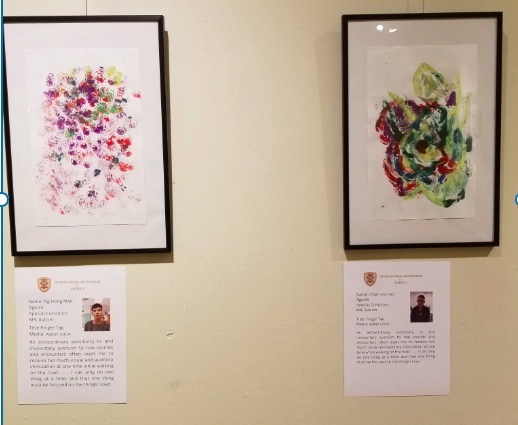
Currently, until July 21st, the museum is hosting “Art Without Boundaries,” an inspiring exhibition showcasing paintings by artists with disabilities. This event, presented by the Arts with the Disabled Association Hong Kong in partnership with The Neighborhood Advice-Action Council, provides a platform for these talented artists to exhibit their work in an international museum. This charitable initiative aims to support artists with disabilities, aligning with IAMA’s mission to actively promote public charitable art activities.

Click here for more about the exhibition: https://www.facebook.com/reel/505273992070291

Link:https://peacelilysite.com/2024/07/19/celebrating-young-talent-the-2024-iama-youth-painting-competition/

Source: https://sanfranciscopost.com/iama-showcases-2024-world-youth-artists-in-san-francisco/?fbclid=IwZXh0bgNhZW0CMTEAAR1S2mWAzNoTeDTP5z5U98G6D0dDZXUfQAwMWP5z5KfKShWMi6vOFSQWShI_aem_X9bRCBx93-DWMEgk1ud1yQ

The Spiritual Journey of Superstar Jacky Cheung and the Masterpiece “Rare Supreme Chant”

Hong Kong’s superstar Jacky Cheung has achieved numerous successes in the entertainment industry and is widely recognized as a superstar. However, few people know about his dedication to studying Buddhism. Jacky Cheung’s master is H.H.  Dorje Chang Buddha III, an internationally acclaimed master in arts, philosophy, and culture. He was awarded the International Master of Arts and Culture by the World Cultural Conference, comprising experts from 48 countries and regions. Additionally, the Chinese government built a grand museum in his honor in Dayi County, Sichuan, highlighting his unique achievements and contributions.

Around 1995, at the earnest request of many disciples, including Jacky Cheung, H.H.  Dorje Chang Buddha III composed a unique masterpiece called “Rare Supreme Chant.” The lyrics, composition, singing, and chanting were all personally handled by the master.

The song’s melody is rich, and its sound changes are exquisite, ranging from powerful and resonant to gentle and intricate. It includes lion’s roars, sacred chants, deep contemplations, and even modern rock and rap elements. The singing techniques transcend traditional vocal resonance, harmonizing with the cosmic realm. This “Rare Supreme Chant” not only broadens the listener’s auditory experience, allowing them to hear various sounds, but also elevates the mind, nurtures moral strength, and purifies body and soul through the blessings of H.H.  Dorje Chang Buddha III’s voice.

According to those who provided musical accompaniment for H.H.  Dorje Chang Buddha III, his lyrics and melodies are filled with ancient charm and profound knowledge. His voice is versatile and spontaneous, making it difficult to complement with our limited cultural and musical expertise. While they believe his unaccompanied voice is superior, they fear that without accompaniment, the music might be too challenging for listeners to appreciate, thus missing the compassionate intention behind its creation. Despite these challenges, they made an effort to provide accompaniment, hoping listeners would understand and appreciate the master’s work. Listeners are encouraged to attentively enjoy and experience the profound benefits of the music.

The Great Bright Six Syllable Mantra is a very popular Buddhist song, with many audiotapes and CDs distributed worldwide. However, His Holiness’s rendition of the Great Bright Six Syllable Mantra is entirely different from all others I have heard. It is in a powerful vajra style, and at the end of the song, His Holiness uses the lion’s roar voice, with a bursting energy that seems to penetrate the universe and awaken all living beings.


The great bright six syllable mantra

The song “Guo Ping Chang” describes the scenery and feelings of His Holiness passing through Ping Chang (a place in Sichuan).

The sound of the flute sends me across Pingqiang, The boat docks at Wuyou, filled with lantern-lit halls. The spring breeze warmly welcomes visitors, Mist colors the dusk, but the mountains remain evergreen.

This song was sung in an opera style. It has four lines of lyrics, which the Buddha sang using four different Peking Opera styles. This fully demonstrates the Buddha’s profound vocal skills, leaving listeners deeply moved and with a lasting impression.

Passing through PingQiang

H.H.  Dorje Chang Buddha III, has even composed a unique masterpiece, in modern rock and rap style, the energetic and festive song “Chinese Dragon,” showcasing the dragon’s cultural significance. This song demonstrates the Buddha’s ability to effortlessly and masterfully handle any musical form.

Chinese Dragon

The Prajnaparamita Heart Sutra is a very important Buddhist scripture. The Buddha composed an elegant and beautiful yet powerful melody for this sutra. His voice is rich and clear, strong yet gentle, as if bringing the compassionate love of the Buddhas and Bodhisattvas to every sentient being.

The Prajnaparamita Heart Sutra

#DorjeChangBuddhaIII#HHDorjeChangBuddhaIII#Poetry#Vocal #Buddha #Buddhism #buddhist #Music#BuddhaDharma#MasterofOrientalArt#DistinguishedInternationalMaster
Link:https://peacelilysite.com/2024/07/11/the-spiritual-journey-of-superstar-jacky-cheung-and-the-masterpiece-rare-supreme-chant/

Scene of Xishuang Banna Life: A Timeless Masterpiece by H.H. Dorje Chang Buddha III

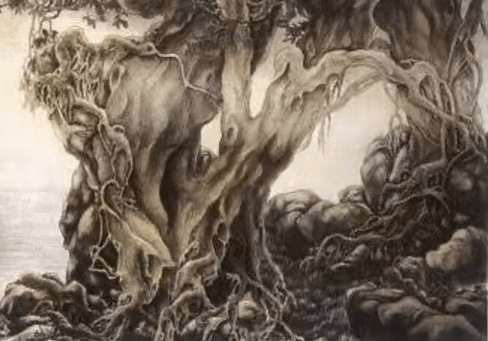
“Scene of Xishuang Banna Life” is a Chinese ink-and-wash painting with a three-dimensional quality reminiscent of oil paintings, created by the renowned artist H.H. Dorje Chang Buddha III. The moment I laid eyes on it, I felt a profound sense of comfort and tranquility. The painting’s primary hue is light brown, and the varying depths of this color vividly depict the fresh, clear water and misty air weaving between the trees. A few girls are making waves, chatting, and enjoying themselves as they wash clothes by the riverside. The elegant and beautiful banyan trees stand majestically, with cobblestones naturally scattered around them.

The old banyan tree, with its peeling bark and exposed roots, stands as a silent testament to the passage of time. The raised roots extend in all directions, seemingly spreading the pulse of life to distant places, using their vitality to nurture the earth and rivers. The roots nestle against the smooth, round pebbles like inseparable companions. Over time, they have become so intertwined that no one notices whether they are roots or stones, much like an elderly couple who depend on each other and cannot be separated.

Around the tree roots, a misty white space, activated by detailed depictions, brings boundless imagination to people. In the white mist, there is a vast expanse of water, with soft sunlight illuminating the surrounding forest. The endless lakes and rivers nourish the sturdy old roots, supporting them through countless hardships and weathering the elements, ultimately creating a world of their own. The intertwined and winding roots, twisting and coiling across the scene, form the main structure of the composition along with the variously shaped stones, the sculptural massive trunk, and the other responding trees. The sparse leaves hanging from the old tree are adorned in light green, contrasting with the large brown trunk, evoking the philosophical sentiment of “the true essence remains after all embellishments fade, gold emerges after being sifted by great waves.”

Beneath the tree are three graceful women in different postures, enjoying the flowing stream under the water-colored sky. Some are combing their freshly washed hair, some are holding a delicate veil, and some are drawing clear water from the stream.

The banyan tree, the stream, and the sunlight, along with the beautiful women in traditional attire, compose a symphony of southern charm, making one feel as if they can hear the whispers of the gentle breeze: “My enchanting homeland is where my heart belongs…” The setting resembles the sweet childhood memories buried in my heart.

About fifty years ago, my family lived in a small village in the mountains. There were no cars, TVs, toys, phones, or any other modern luxuries. We lived a very simple and modest life. All the mothers washed vegetables and rice in the clean creek and cooked meals. Very often, they washed clothes in the river for the whole family while the kids played in the water, on the trees, or along the riverbanks. School was far away, and we could only go there when we were old enough. But we had the biggest classroom—nature itself. We studied everything we could find: trees, flowers, insects, stones, etc. Twigs were our pens, and tree trunks were our tables. The chirping of the birds and the rushing of the stream were our music. We had physical education class all day long. We went to bed when the sun set. What a simple, happy life!

This is the beautiful and pure spiritual space created by the great artist, H.H. Dorje Chang Buddha III. This painting, “Scene of Xishuang Banna Life,” opens a window to another dimension, allowing people to experience the joy of living in a paradise. People in cities increasingly yearn for natural landscapes akin to an earthly utopia. Fortunately, noble artists create pure lands for people’s hearts, showing us wonderful scenery, evoking warm emotions, and deeply touching us.

The pure land in our hearts is like a secluded utopia, free from the noise and disturbances of the mundane world. It carries the dreams of people. When darkness descends, the pure land within can emit a serene fragrance, helping people discard the suffering brought by worries, gently wipe away the dust, and infuse a bit of brightness.

The paintings of H.H. Dorje Chang Buddha III are like wordless songs, containing endless stories, ancient calls, and boundless compassion for all sentient beings.

This painting is in permanent collection of The International Art Museum of America.

Link:https://peacelilysite.com/2024/06/07/scene-of-xishuang-banna-life-a-timeless-masterpiece-by-h-h-dorje-chang-buddha-iii/

#DorjeChangBuddhaIII #HHDorjeChangBuddhaIII#DorjeChangBuddha#IAMA#InternationalArtMuseumofAmerica#Xishuangbanna #ChineseInkPainting#Art#Artist

Twelve years of Thangka Art: Apprenticeship, Personal Practice, and Evolution

By Dakini As Art, Tiffani Gyatso

A commonly held view is that the body houses the soul—but have you ever thought that the soul could live elsewhere? I have experienced that feeling. Although my body was born in 1981 to my German mother in Brazil, where I grew up, 18 years later I had an “encounter” with my soul’s home in Mongolia. For almost a year, my family and I traveled east by motorhome from Germany and right across Russia. Reaching the border between Russia and western Mongolia, it took days just to receive permission to cross. Stuck in the middle of nowhere, we feared we might never make it! Finally a drunken general provided the necessary authorization and we drove freely onwards into Mongolia, sometimes without a visible road in front of us.

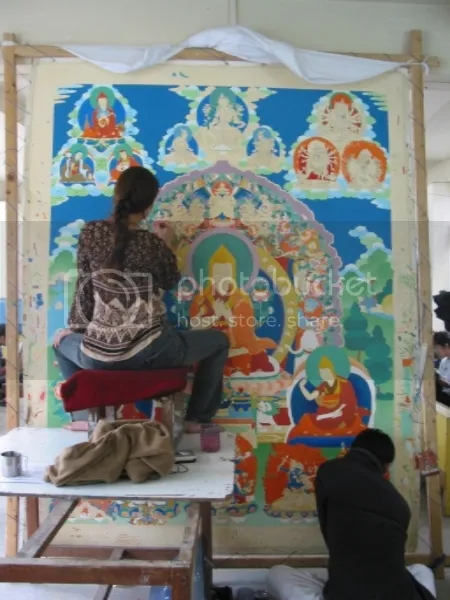
Beneath the expansive blue sky that crowned the arid landscape, my happy tears fell like rain. Those tears nourished a hungry artistic seed within me that desired to grow in the direction of the sunshine; to follow a path to spiritual liberation through art. I believed in such a path and it made sense to me, but until then I hadn’t known how to go about following it. Once in Mongolia, however, I was introduced by a monk at Gandantegchinlen Monastery in Ulaanbaatar to the sacred art of thangka painting, which depicts the various Buddhas, spirits, enlightened beings, and spiritual worlds of Tibetan Buddhism. I had been seeking an artistic discipline of some kind that would guide me to the divine, and this was it! 

One of the paintings by Tiffani at Lama Padma Samten’s temple in Brazil

Nevertheless, it was a long road before I was accepted three years later as the first Western student at the Norbulingka Institute, founded by His Holiness the Dalai Lama, near Dharamsala in northern India. I have traveled all my life—even living for a few months with an aborigine community in the Australian outback, and spending a couple of years on a sailboat on the Brazilian coast during my teens—but India was beyond anything I could have imagined. I was sick for the first three months I spent there, during which time the school was unsure whether to accept me or not. Even my mother urged me to go home. But something inside me was unmoved by all these “tests.” I felt that if I went back, my soul would abandon my body.

I was finally accepted as a student at the Norbulingka Institute in September 2003. All the wise and holy artists I had expected to meet turned out to be mostly teenagers eager to meet a girl—a blond girl—in the studio at last. Gen-la, the master, was initially somewhat reticent, and we didn’t even share a common language. He gestured towards a Buddha face made up of many symmetrical lines and then pointed to a blank sheet of paper, so I sat on the floor near him and started to sketch. The first word I learned in Tibetan from Gen-la was “again!”—do it again! And so I did, for weeks, the same drawing over and over again until Gen-la would give me my next project. 
Painting class at the Norbulingka Institute, 2005

My apprenticeship during the three years I spent there was very slow and painstaking. It was essentially this atmosphere that molded my predisposition to understand that painting a thangka is a spiritual practice in itself; the thangka is there for you to give your time and attention to, and to house your soul. It is a sacred art with a unique function. If you do not have that understanding in the very depth of your being, you will soon abandon the training. Some do not even consider thangka painting to be art, but a practice involving paint that has the same aim as any other Buddhist practice. It was a year before Gen-la even called me by my name; until then he just called me “intchi bhumo,” or “foreign girl.” And it was more than a year before I actually even touched paint, and then only because one of my classmates hid me behind a big canvas and started to teach me himself. Gen-la was actually proud of my boldness when he found out, and finally guided me on my first proper painting. Those were precious times; I was truly happy despite the difficulties I experienced, and my certainty of being on the right track never wavered.

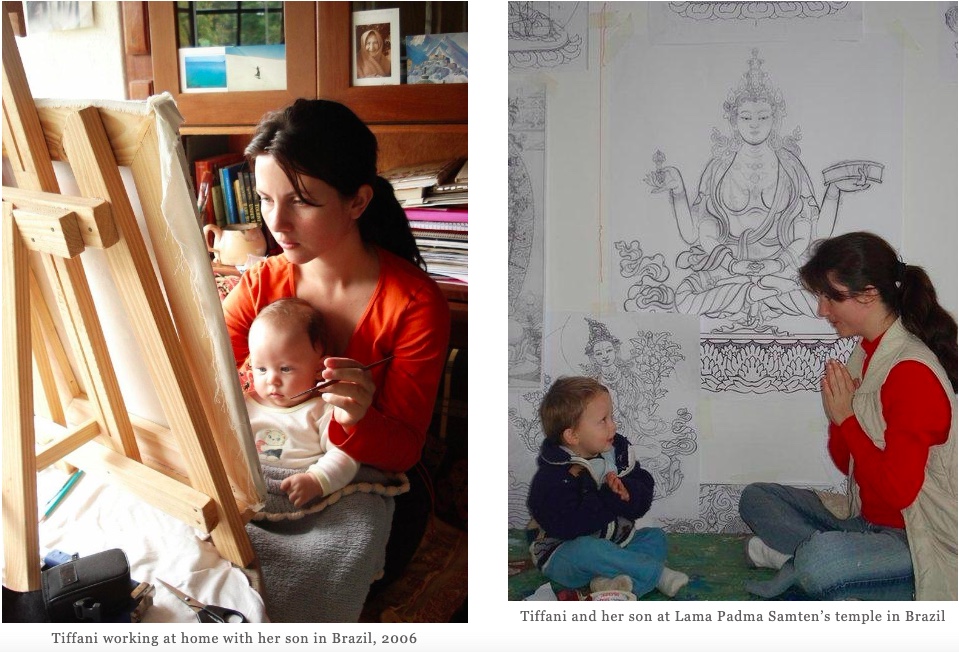
In 2006 I returned to Brazil to discover that I was pregnant. In October that year, a little boy of Tibetan-Brazilian-German heritage was born. His father came over and we lived together for a few years until he moved to the United States to join a larger Tibetan community. Back in Brazil I was fearful that I would have to stop painting—I was 24 with a baby and no money, and all I knew how to do was paint. Afraid that such worries would make me lose my path, I continued to paint my thangkas, my son held close to my body.

When my son was only a few months old, I was contacted by a Brazilian lama—Lama Padma Samten, a disciple of Chagdud Tulku Rinpoche, who had already established a huge sangha. He had heard about me through a mutual friend and sent my son and me tickets to visit his new temple in the south of Brazil. When I finally arrived I was amazed by the size of the temple, which was built to accommodate 300. As I stood there sleep-deprived and perfumed with milk and diapers, he asked me if I would paint the interior walls. I was astonished—but I agreed!

For a month I stood gazing at those terrifyingly huge white walls in fear. I really had no idea how to start! I could not call anyone in India because of the language barrier, and the materials available in Brazil for painting murals wouldn’t be the same as those I was familiar with. So I began slowly, as Gen-la had taught me. First, I met with a local artist to learn more about the proper materials. I learned about the specific deities and mandalas that Lama Samten wished to incorporate. The members of his sangha were very supportive, and many came to help. Those who could give more of their time I trained to paint. Those who couldn’t paint, I asked to massage our aching shoulders, play some instrument or other, give yoga lessons, or even bake a cake for our tea breaks. I felt that everyone should be included. The project took five challenging years to complete, all guided by Lama Samten’s blessings.

As mentioned earlier, those tears in Mongolia had fed the artist within, and now the artist was awake. I soon had the feeling that thangka painting was a “safe zone” for me as the work is all done according to rules that, if followed, offer some guarantee of success. So, in a way, I felt that thangkas had given me discipline and now, only now, was I ready to risk expressing myself. So I began to take more seriously the opportunity to try a more intuitive kind of painting, especially when my personal life was a mess. I was allowed to explode on the canvas, I was allowed to make mistakes . . . I needed to be able to be wrong yet acceptable. 

Accumulating a body of art pieces during my free time while painting the temple, with some trepidation I presented my work to Tibet House in New York. I was relieved when they accepted my work and agreed to produce my first show, in 2012—a solo exhibition titled Mystic Nostalgia, in which I sought to express that longing for a lost “home.” Not necessarily a real place; the work is more about our inner landscape . . . a mystic longing. My second exhibition will open at Tibet House on 23 October this year.

Since completing my work at the temple at the end of 2012, I have focused on holding thangka workshops, producing thangkas to order, and taking part in workshops and retreats to teach the intuitive process of self-expression through paint, movement, and writing. I believe the key is maintaining the approach of an apprentice—the beginner’s mind. I feel that I’m learning each time I teach, each time I listen to people, each time I encounter another culture or eat a different food. I learned the benefits of discipline and following rules from the thangka tradition, and when I walk into the unknown with my wild self that sometimes wants its own way, I continue to learn.

Tradition provides us with the roots and structure through which we express ourselves like a hundred branches growing in the air, catching the breeze with their lush leaves. Nourish discipline as much as you nourish your freedom and you’ll soon discover that they are one.

Tiffani Gyatso is a traditional Buddhist thangka painter and a member of the Dakini As Art Collective. To learn more about Tiffani, her work, and Dakini As Art, please visit Dakini As Art.

Link:https://peacelilysite.com/2024/06/07/twelve-years-of-thangka-art-apprenticeship-personal-practice-and-evolution/

 #SpiritualPractice #ThangkaPainting #TibetanBuddhism #Vajrayanabuddhism

Source: https://www.buddhistdoor.net/features/twelve-years-of-thangka-art-apprenticeship-personal-practice-and-evolution/

Masterful Artwork: Portraits of Namo Avalokitesvara Bodhisattva

In the history of painting in China, many renowned artists have used Namo Avalokitesvara Bodhisattva as a subject for their works. These artistic images are beloved by the people because the Bodhisattva is a symbol of compassion. These exalted artistic images subtly influence the inner world of generations, inspiring and shaping the soul of the nation.

The Mogao Caves in Dunhuang are the largest and most well-preserved repository of Buddhist art in China and the world. Among the murals in the Mogao Caves, there are masterpieces of Namo Avalokitesvara Bodhisattva created by painters over the ages, including images of the Water-Moon Guanyin, the White-Robed Guanyin, and the Eleven-Faced Guanyin. It is said that this treasure trove of painting art contains works by masters like Gu Kaizhi and others from various dynasties.

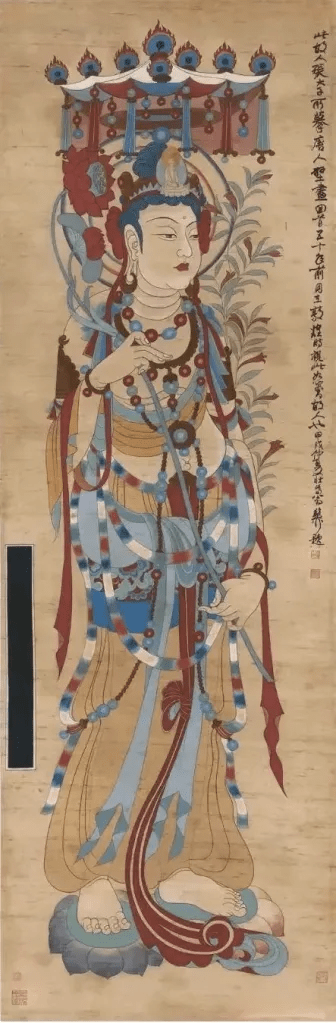
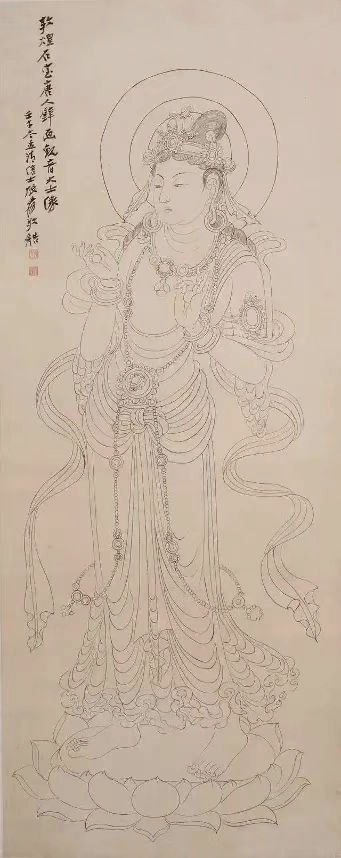
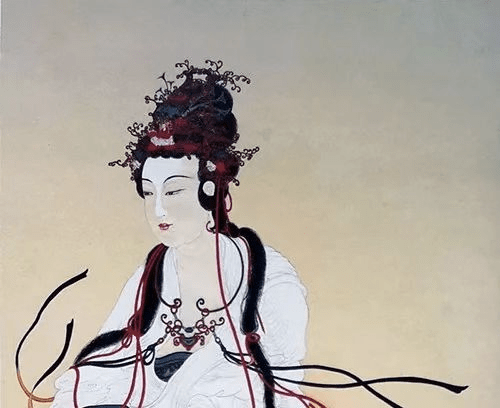
In 1940 Zhang Daqian led a group of artists to the caves of Mogao (莫高) and Yulin (榆林) for the purpose of copying their Buddhist wall paintings. The group completed over 200 paintings, and the experience left Zhang with a repository of religious imagery. He was so captivated by these unparalleled treasures that his original plan to stay for three months extended to two years, during which he dedicated himself to studying and copying the artworks. Today, his paintings of Avalokitesvara Bodhisattva are acclaimed as rare and invaluable masterpieces.

The early Tang Dynasty portrait copied by Zhang Daqian is a national first-class cultural relic
Tang Dynasty murals copied by Zhang Daqian
Mid-Tang Dynasty portrait in the Mogao Caves, copied by Zhang Daqian

At  International Art Museum of America, there is a painting of Namo Guan Shi Yin Bodhisattva by H.H. Dorje Chang Buddha III that left a profound impression on me. The portrait is stunningly beautiful, executed with fine brush strokes characteristic of traditional Chinese painting. The artist used very fine and intricate strokes, rendering every detail vividly and perfectly. I could clearly see the hair, the crown, the intricate jewelry, and even the delicate patterns of the flowing ribbons. These details express the painter’s portrayal of Guan Shi Yin Bodhisattva’s meticulous compassion and love for all living beings. The entire portrait appears lifelike, exuding infinite grace, and showcasing the artist’s extraordinary skill, which is beyond perfection.

In this meticulous painting, Namo Avalokitesvara Bodhisattva is depicted wearing white garments, with a serene and compassionate expression, seemingly walking gracefully accompanied by heavenly music. The Bodhisattva’s face is as delicate as powdered jade, with elegant eyebrows and red lips, and eyes that are reserved yet radiate a light of compassion.

The Bodhisattva’s jewelry, including jade pendants, appears to emit a pleasant chime, and the pink and dark green lotus flowers beneath the feet exude a fragrant aroma. The colorful ribbons on the clothing flutter and dance in the gentle breeze. The entire painting exudes an extraordinary and majestic aura. For hundreds of years, the children of China have dreamed countless times of Namo Avalokitesvara Bodhisattva, as if the Bodhisattva is walking toward us from the vast universe.

Upon closer inspection, one can see that within the Bodhisattva’s hair, there is a small figure of Namo Amitabha Buddha, seated with a solemn and exquisite demeanor, wearing a red robe and sitting on a pink and white lotus platform.

The dark green lotus beneath the Bodhisattva’s left foot, the dark blue floral borders on the clothing, and the flowing black hair form a dynamic contrast with the light yellow-brown background and the white robe. The painting uses a large area of light yellow-brown as the background to highlight the pure and elegant clothing, with bright colors as decorative accents. This creates a composition that is both solemn and sacred, yet luxurious.

The Bodhisattva’s attire occupies a significant portion of the painting. If not handled well, it could make the painting appear empty and lifeless. However, the exceptional artist has seized this opportunity, infusing the clothing with a great amount of high-quality ink and brushwork while maintaining overall brightness. The lively and intricate lines are sometimes like flowing clouds and water, sometimes like gentle clouds, sometimes as soft as a summer breeze, and sometimes as powerful as a rushing waterfall. The interweaving lines, though densely packed, are orderly and harmonious. This extraordinary line drawing technique vividly captures the delicate texture of the gauzy fabric. Lines are the earliest form of language in the history of painting and the soul and framework of meticulous figure painting. As a vital expression in Chinese painting, “lines” have always been highly valued by painters throughout the ages.

H.H. Dorje Chang Buddha III‘s meticulous figure painting uses lines that are flexible and varied, not only vividly portraying the image of Namo Avalokitesvara Bodhisattva but also precisely conveying the Bodhisattva’s noble and pure spiritual essence. This technique of capturing the divine through form has been the artistic ideal that painters have longed for throughout history. Therefore, this great painting by Namo Qiang Buddha is destined to become a model for future generations to learn from and an immortal classic passed down through the ages.

This great artwork not only provides people with artistic enjoyment but also offers a profound spiritual experience. I stood in front of the painting for a long time, feeling as if I were leaving behind all worldly affairs and immersing myself in the Bodhisattva’s boundless compassion forever.

Link:https://peacelilysite.com/2024/05/31/masterful-artwork-portraits-of-namo-avalokitesvara-bodhisattva/

#GuanShiYinBodhisattva#MasterWanKoYee #DorjeChangBuddhaIII #HHDorjeChangBuddhaIII#DorjeChangBuddha#IAMA#InternationalArtMuseumofAmerica#AvalokitasvaraBodhisattva#ChinesePainting#Portrait#Art

Mount HuangShan

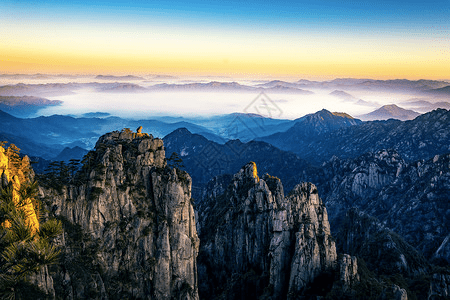
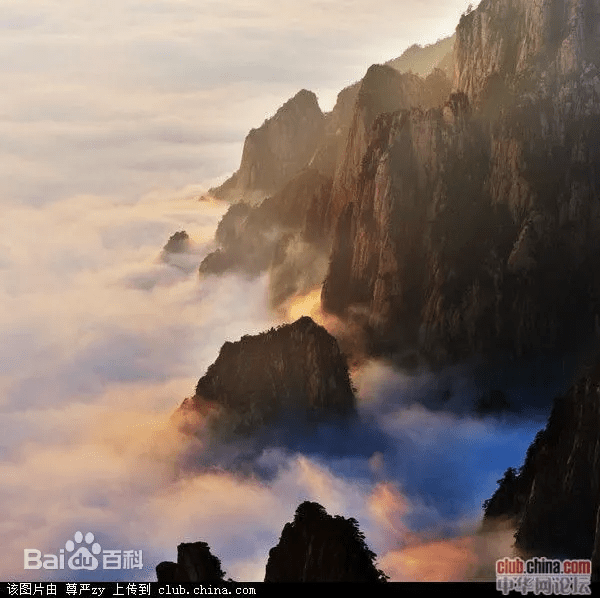
Mount Huangshan, often described as the “loveliest mountain of China,” has played a significant role in the history of Chinese art and literature since the Tang Dynasty around the 8th century. A legend from 747 AD recounts the discovery of the long-sought elixir of immortality on the mountain, which gave Mount Huangshan its name and cemented its place in Chinese history. This legend attracted hermits, poets, and landscape artists, drawn by the dramatic mountainous landscape featuring numerous granite peaks, many over 1,000 meters high, emerging through a perpetual sea of clouds. During the Ming Dynasty in the 16th century, the mountain’s unique rock formations and ancient gnarled trees inspired the influential Shanshui (“Mountain and Water”) school of landscape painting, which profoundly shaped the world’s perception of the oriental landscape.

Located in the humid subtropical monsoon climate zone of Anhui Province, Mount Huangshan covers an area of 16,060 hectares with a buffer zone of 49,000 hectares. It is noted for its botanical richness and the conservation of several locally or nationally endemic plant species, some threatened with extinction.

The cultural significance of Mount Huangshan’s scenic landscape was first recognized during the Tang Dynasty and has been revered ever since. Renamed Huangshan (Yellow Mountain) by imperial order in 747 AD, it became a popular destination for visitors who celebrated its inspiring scenery through painting and poetry, creating a rich body of art and literature of global importance. By the Yuan Dynasty (1271-1368), 64 temples had been constructed on the mountain. In 1606, the monk Pumen established the Fahai Meditation Temple. By the Ming Dynasty, Mount Huangshan had become a favorite theme of Chinese landscape painters, firmly establishing the Shanshui school of landscape painting. The interaction of man and nature in this scenic setting has inspired generations of Chinese artists and writers.

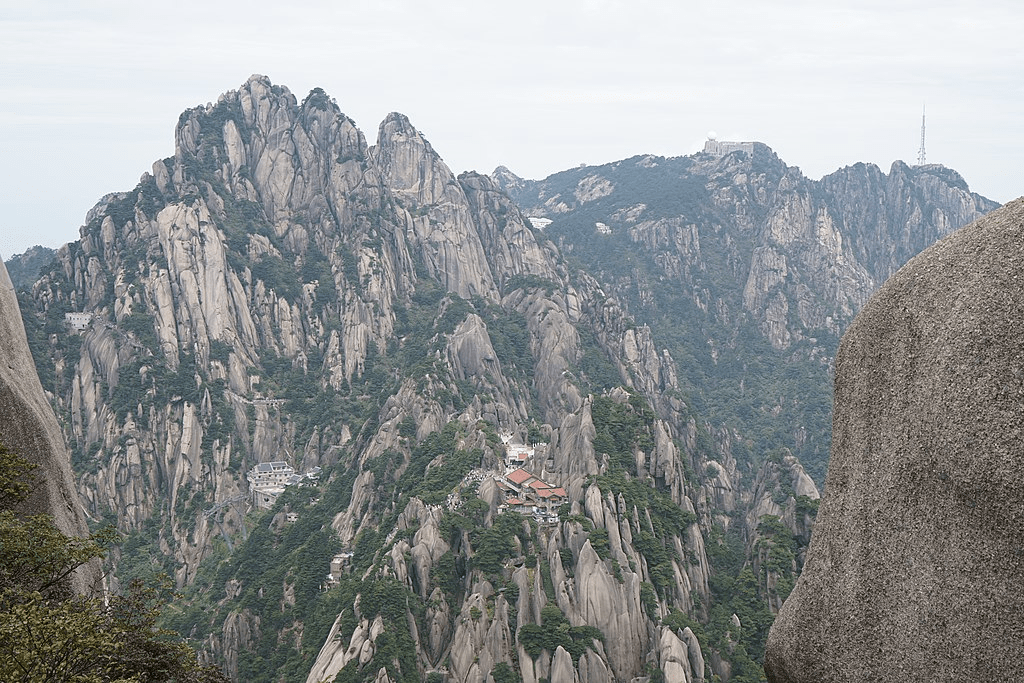
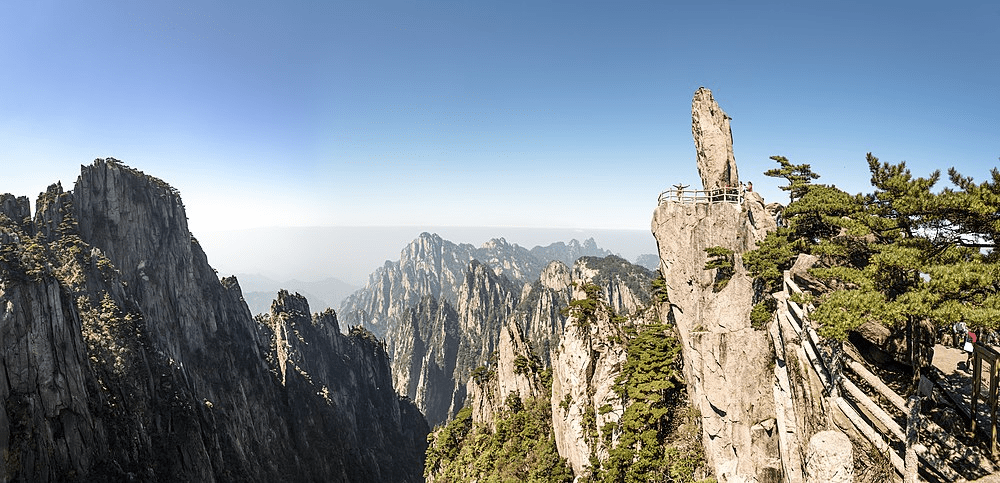
Mount Huangshan is renowned for its magnificent natural scenery, including massive granite boulders and ancient pine trees, often enhanced by cloud and mist effects. The dramatic landscape features natural stone pillars, grotesquely-shaped rocks, waterfalls, caves, lakes, and hot springs, formed by its complex geological history. The mountain range has many peaks, some over 1,000 meters high, with the three tallest and best-known being Lotus Peak (1,864 meters), Bright Peak (1,860 meters), and Celestial Peak (1,829 meters). The World Heritage Site covers a core area of 154 square kilometers and a buffer zone of 142 square kilometers. The mountains were formed in the Mesozoic era, approximately 100 million years ago, when an ancient sea disappeared due to uplift. Later, during the Quaternary Period, glaciers shaped the landscape.

Lotus Peak. By De-Shao Liu (Terry850324) – Own work, CC BY-SA 4.0, https://commons.wikimedia.org/w/index.php?curid=90823373
Celestial Peak By 江上清风1961, CC BY 3.0, https://commons.wikimedia.org/w/index.php?curid=53168150

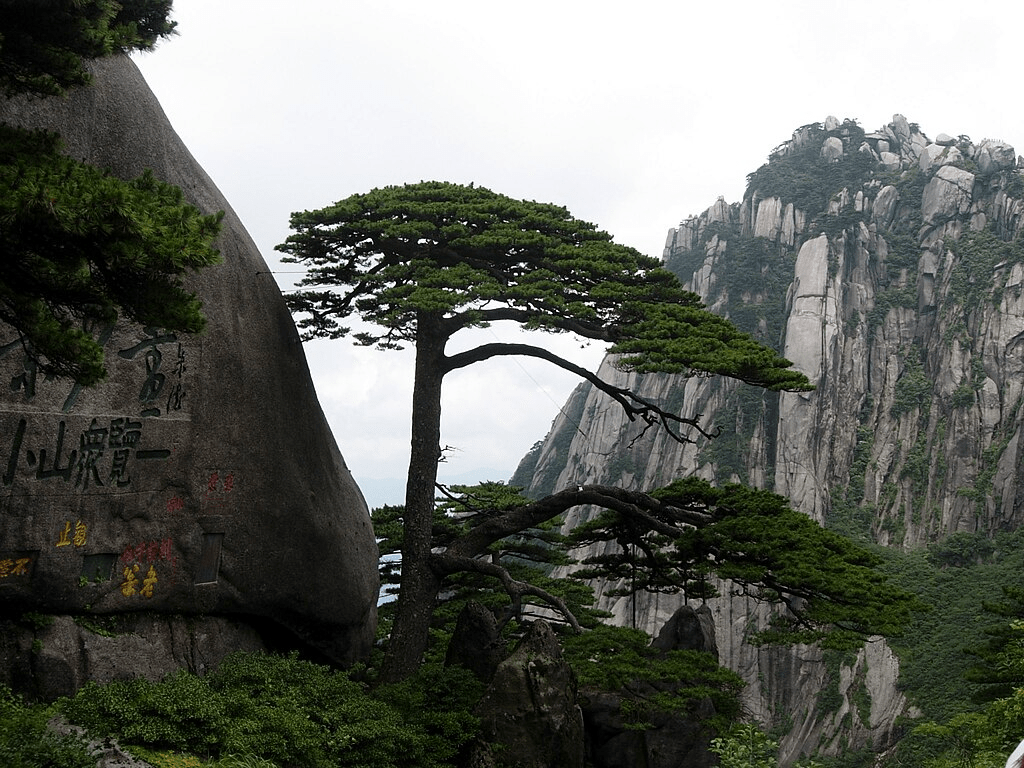
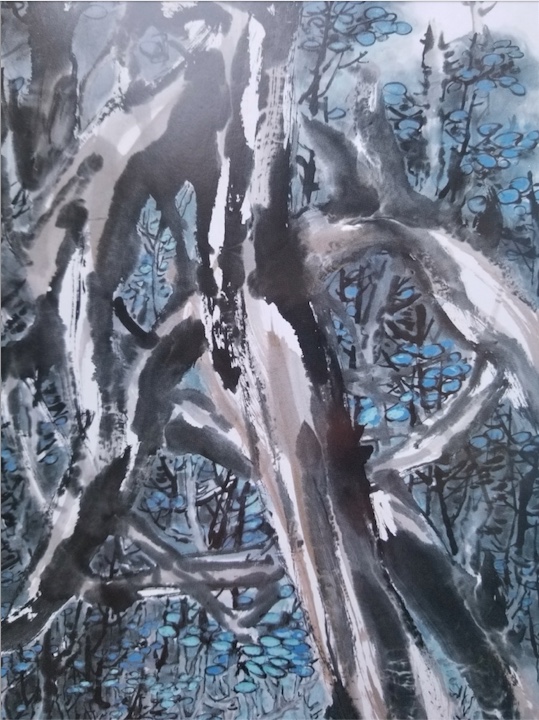
Vegetation varies with elevation, with mesic forests below 1,100 meters, deciduous forests up to the tree line at 1,800 meters, and alpine grasslands above that. The area boasts diverse flora, with one-third of China’s bryophyte families and more than half of its fern families represented. The Huangshan pine (Pinus hwangshanensis), named after the mountain, is a symbol of vigor as it thrives by growing straight out of the rocks. Many pine trees in the area are over a hundred years old and have unique names, such as the Welcoming-Guests Pine, thought to be over 1,500 years old. The pines vary greatly in shape and size, with the most crooked trees considered the most attractive. Huangshan’s moist climate also supports the growth of tea leaves, and the mountain is renowned as one of China’s premier green tea-growing areas. Mao feng cha (“Fur Peak Tea”), a famous local variety, takes its name from the downy tips of tea leaves found in the region.

Tea Trees in the Cloud

Ying Ke Pine, literally welcome Pine By memes – Own work, CC BY-SA 3.0, https://commons.wikimedia.org/w/index.php?curid=950688

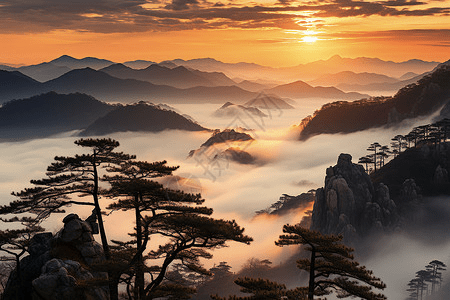
Mount Huangshan often offers views of the clouds from above, known as the Sea of Clouds (yúnhǎi) or “Huangshan Sea,” due to their resemblance to an ocean. Many vistas are named after these cloud formations, such as “North Sea” or “South Sea.” A writer once remarked that to enjoy the magnificence of a mountain, you usually look upwards, but to enjoy Mount Huangshan, you must look downward. The area is also known for notable light effects, such as the renowned sunrises and the phenomenon called Buddha’s Light (fóguāng), which appears only a few times per month.

Mount Huangshan is famous for its stone steps carved into the mountain, with over 60,000 steps throughout the area. The origin date of these steps is unknown, but they are believed to be more than 1,500 years old. Over the years, many scenic spots and physical features have been named, often with narratives behind them. For example, one legend tells of a skeptic who, upon visiting the mountains, was immediately convinced of their beauty. One of the peaks he visited was named Shixin (始信), meaning “start to believe.”

Carved steps to Tiandu Peak By Jakemete at English Wikipedia – Transferred from en.wikipedia to Commons by Wouterhagens using CommonsHelper., Public Domain, https://commons.wikimedia.org/w/index.php?curid=5810245

Shixin Peak By 江上清风1961, CC BY 3.0, https://commons.wikimedia.org/w/index.php?curid=53169922

Bijia Peak (Pen holder Peak), by 颐园新居 – Own work, CC BY-SA 4.0, https://commons.wikimedia.org/w/index.php?curid=36838268

FeiLai Peak by Carlos Adampol Galindo from DF, México – Ella me preguntó: ¿te gusta?; le contesté: De aquí soy., CC BY-SA 2.0, https://commons.wikimedia.org/w/index.php?curid=45070874

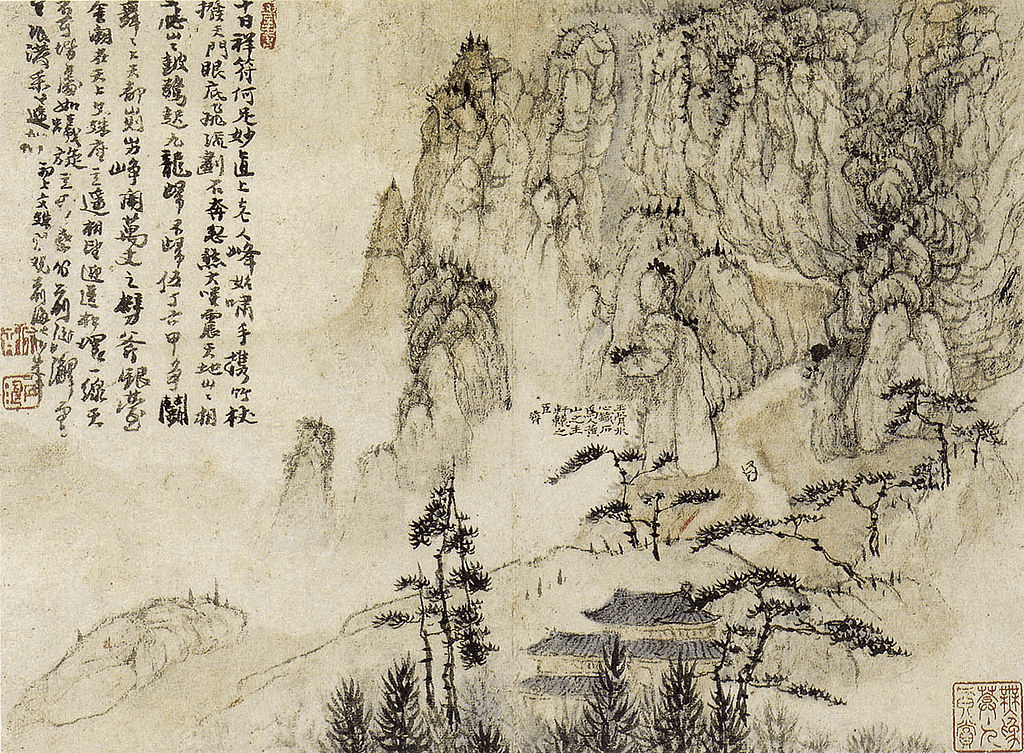
Much of Huangshan’s reputation stems from its significance in Chinese arts and literature. It has inspired poets such as Li Bai, and has been a frequent subject of poetry, Chinese ink painting, and, more recently, photography. From the Tang Dynasty to the end of the Qing Dynasty, over 20,000 poems were written about Huangshan, and a school of painting was named after it. The mountains have also appeared in modern works; director James Cameron cited Huangshan as one of his influences in designing the fictional world of his 2009 film Avatar, and the Chinese animated series Stitch & Ai, a spin-off of Disney’s Lilo & Stitch franchise, is set in the Huangshan mountains.

Ink painting depicting Huangshan by Shitao, 1670 Public Domain, https://commons.wikimedia.org/w/index.php?curid=838862

In 1982, Mount Huangshan was declared a “site of scenic beauty and historic interest” by the State Council of China. It was designated a UNESCO World Heritage Site in 1990 for its scenery and as a habitat for rare and threatened species. Later, it was certified as a National Geopark and subsequently as a regional geopark (Asia Pacific Geopark Network), before being admitted as a UNESCO Global Geopark in 2004.

Mount Huangshan is a habitat for several locally or nationally endemic plant species, many of which are globally threatened. Its flora includes one-third of China’s bryophytes and over half of its pteridophytes. Endemic species to Huangshan include 13 species of pteridophytes and 6 species of higher plants, with many other species endemic to the region or China. This rich flora is complemented by a diverse vertebrate fauna of over 300 species, including 48 mammals, 170 birds, 38 reptiles, 20 amphibians, and 24 fish. Thirteen species are under state protection, including the Clouded Leopard (Neofelis nebulosa, VU) and the Oriental Stork (Ciconia boyciana, EN).

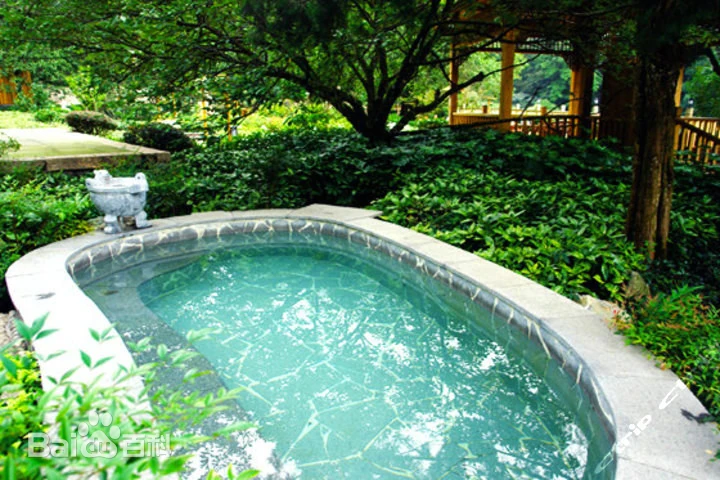
Additionally, Mount Huangshan has multiple hot springs, mainly located at the foot of Purple Cloud Peak. The water, maintaining a temperature of 42°C (107.6°F) year-round, is rich in carbonates and is said to help prevent skin, joint, and nerve illnesses.

The area has also been a site for scientific research due to its diverse flora and wildlife. In the early 20th century, both Chinese and foreign scientists studied the geology and vegetation of Huangshan. Research continues, such as a late 20th-century field study of Tibetan macaques, a local monkey species.

View from Stone Monkey Gazing at the Sea of Cloud By Nicolascornet – Own work, CC BY-SA 4.0, https://commons.wikimedia.org/w/index.php?curid=87551304

Artificial steps on the cliffs of Huangshan By Joe – IMGP1088.JPG, CC BY 3.0, https://commons.wikimedia.org/w/index.php?curid=16824799

Link:https://peacelilysite.com/2024/05/30/mount-huangshan/

Source: https://whc.unesco.org/en/list/547/https://en.wikipedia.org/wiki/Huangshanhttps://baike.baidu.com/item/%E9%BB%84%E5%B1%B1%E9%A3%8E%E6%99%AF%E5%8C%BA/1350521

Exploring Tranquility: A Glimpse into an Ancient City Through Art

Spring Rain in the Ancient City

H.H. Dorje Chang Buddha III’s painting “Spring Rain in the Ancient City” creates a pure and exquisite inner world with extremely concise brushstrokes. Upon viewing it, one feels a sense of ethereal illusion, akin to gazing at the moon reflected in water, or the fresh and invigorating sound produced by pressing down a piano key. This artistry, which combines reality with the abstract and exudes a transcendent naturalness, enlightens the mind and often transports individuals to a realm of beauty and wonder.

With a stroke of the artist’s ingenious brush, the reality of the impermanent years and the philosophical insights contained within natural phenomena are presented on the canvas. The aesthetician, Zong Baihua, once said, “By focusing on the specifics of universal life, appreciating its colors, order, rhythm, and harmony, one glimpses the highest reflection of the self; transforming reality into the realm of the abstract, creating images as symbols, and concretizing the highest human spirit, embodying it physically – this is the realm of art.”

When admiring the Chinese painting “Spring Rain in the Ancient City,” my past painting ideas and perplexities suddenly melted away. The artistic conception in the artwork shook my inner being, and the marvelous composition deeply enlightened my mind. In the painting, a towering tree stands, firmly rooted and majestic, with branches reaching up to the sky. Through the spaces between the branches, one can see the lush greenery of trees lining the streets, exuding the freshness of spring. Above the canopy stretches the boundless sky, evoking the infinite implications of universal life. Beneath the crisscrossing branches lies the bustling city streets, where people hurry about their business. A sudden spring rain brings a new aesthetic perspective: under the vast sky, countless beings toil diligently in the wind and rain…

From the painting, we can observe that during that time in this ancient city, there weren’t many cars on the streets. People were either riding buses, bicycles, or walking. It portrays vivid, serene scenes, offering a soothing and comforting feeling to the heart.

This philosophical painting also reminds me of the verses from the poem “Nian Nu Jiao” by H.H. Dorje Chang Buddha III: “Abruptly entering the universe, The universe of a billion worlds, Stand firmly against all hardships and obstacles. Seeing through glory and riches, I simply smile. The rooster crows announcing the dawn, the morning bell hurries the moon, the whole Soha world is revealed everybody bustles about to survive,life, like smoke and snow, gone!….. “

The artist, with skillful brushstrokes and delicate ink, creates a realm that is subtle, almost mysterious. The shades of ink, varying in density and wetness, complement each other, resulting in a loose and unrestrained style, with a serene and unadorned visual essence. Whether in form, color, brushwork, or ink application, the painting breaks free from rigid constraints and embraces a sincere expression of artistic intention. Through subtle ink shades, it seeks to capture the essence beyond mere representation, embodying a style characterized by simplicity and refinement. There is no wild passion, no dramatic rhythm that sets the heart racing, and no dazzling colors. Even the composition seems to emerge effortlessly from the void. Everything is harmonious and natural, with the entire painting radiating a luminous brilliance, like jade coming to life.

This work skillfully combines the macro and micro perspectives. Through the delicate depiction of trees and leaves, it unfolds the vastness of the cosmos, as if to say, “Every stroke creates a marvelous realm.” This brushwork embodies profound Zen principles. Upon contemplation, the boundless wonders of the universe and life are revealed within this ethereal painting, inviting deep reflection.

The scenes depicted in the painting have long existed objectively within our familiar yet overlooked surroundings. The artist extracts them from everyday life and presents them anew, allowing us to view our own existence from a fresh perspective.

Just as when I first heard the violin concerto “Liang Shanbo and Zhu Yingtai,” the moment the poignant melody gently flowed out, I was immediately moved by the unfamiliar yet familiar notes. The unforgettable melody seemed like a long-lost acquaintance, evoking excitement and beauty as if meeting an old friend in a dream. This sense of beauty seems to have always existed deep within our souls, waiting to be discovered. The artist perceives this beauty and presents it to people in an appropriate form. Perhaps this is a commonality among all great and extraordinary art in the world, which is why art history refers to this type of art as the ideal reality.

This painting is at the permanent exhibition housed at The International Art Museum of America, located in downtown San Francisco.

Link:https://peacelilysite.com/2024/05/17/exploring-tranquility-a-glimpse-into-an-ancient-city-through-art/

#DorjeChangBuddhaIII #HHDorjeChangBuddhaIII#DorjeChangBuddha #ChinesePainting

H.H.Dorje Chang Buddha III Paintings in Fanjuan Style

Landscape painting is a direct cultural expression of Chinese philosophy. Throughout history, eminent painters such as Dong Yuan, Ju Ran, Zong Bing, Guo Xi, Huang Gongwang, Shi Tao, and Bada Shanren have all used landscape painting to express their extraordinary spiritual realms. Unlike the representational approach of Western painting, landscape painters observe the myriad phenomena of heaven and earth, contemplate the vastness of the universe, and use their hearts to transform their inner landscapes into brushstrokes, imbuing their works with the majestic spirit of nature. Beneath the bold and uninhibited brushstrokes lies the creation of inner beauty, revealing a unified spiritual realm through the language of painting.

The quality of ink and brushwork is paramount in judging the merit of a Chinese painting. Indeed, without mastery of ink and brush, there would be no Chinese painting. The importance of ink and brush in Chinese painting is akin to that of cells in life. From mountains and rivers to figures and forests, all are realized through the use of ink and brush. The concept of bone structure and brush technique refers to the artist’s outlining, texturing, and dotting within the painting.

H.H.Dorje Chang Buddha III  landscape paintings in Fanjuan Style exhibit a natural and vigorous brushwork, with bold and powerful strokes. The ink’s varying degrees of wetness and dryness create distinct layers and a lively rhythm in the composition. The rich and vivid atmosphere in the paintings brings joy and resonance to viewers, touching their hearts deeply. The exceptional quality of ink and brushwork in these paintings is truly breathtaking.

Here, let us appreciate some of His Holiness’s landscape paintings in the Fanjuan style, a style created by His Holiness himself.

The “Fanjuan” Style Numerous brush strokes exude an air of scholarly refinement. Despite the complexity of the strokes, there is no sense of disorder; instead, they reflect artistic talent rooted in profound and extensive knowledge.

“Ferrying the Xia River” is an ink-and-wash painting created in 1993 by H.H.Dorje Chang Buddha III. While predominantly utilizing black ink, the brush strokes encapsulate the essence of both painting and calligraphy. Despite the monochromatic palette, the sense of depth and proximity is distinctly rendered. Renowned artist Mr. Huang Binhong once remarked, “Black ink pervades like the vastness of heaven and earth. A single sheet of painting paper can unfurl myriad mountains.” Crafted seemingly effortlessly within a few days, this masterpiece is the culmination of nearly a century of brushwork mastery.

The painting boasts a richly layered appearance, its thick black ink imbued with elegance, resulting in a masterfully conceived and captivating image. Amid this tranquil setting, sounds reverberate from thatched mountain cottages to boats on the water and back again.

In the artwork, a distant view unveils a series of lead-gray mountains, nestled against a lively stream at their base. Rocks, trees, and vegetation seamlessly merge with the mountain range, their tones resembling the clarity of a mountain stream’s deep pool. Though mysterious and profound, the depths of the pool are subtly visible.

The rustic palette, layered landscapes, and deep ink colors infuse the scene with a primordial ambiance. It feels like dawn, with small boats beginning to glide along the cold stream at the mountain’s foot. The entire composition radiates a misty spring ambiance, with the moist spring tide enveloping the scene. At the painting’s base, diminutive figures become the most captivating element. Despite their scale and near indiscernibility, their silhouettes vividly convey distinct personalities and ages, infusing the composition with a human touch. These lively figures serve as the painting’s eyes, enriching the work with a profound aesthetic sensibility. Truly exceptional artists possess a pure and sacred artistic vision.

Clouds, Mountains, and Water Seem To Sing a Song of Autumn

“Clouds, Mountains, and Water Seem To Sing a Song of Autumn” is a landscape painting featuring misty mountain ranges, clear rivers, rushing waterfalls, icy mountain springs, simple farmhouses, scenes of honest fishermen fishing, and humble farmers gathering firewood on the mountainside. Through this artwork, H.H.Dorje Chang Buddha III vividly captures the raw beauty of nature and the diverse lives of the people. It is a rare masterpiece of landscape painting, grand and expansive, with a profound connection to the pulse of life. The bold brushstrokes create a rich and fresh atmosphere, with a lush ink texture. Within the valleys lie a few buildings, nestled among red autumn maples, promising tranquility and serenity. The distant mountains, shrouded in mist and haze, inspire boundless imagination and contemplation.

“Ancient Village at Remote Mountain Spring” is a small-scale painting created by H.H. Dorje Chang Buddha III in last decade. An artist who saw that painting said, “Although ‘Ancient Village at Remote Mountain Spring’ is as small as only one-fourth of the size of the palm of a hand, one can see curling mist, mountains, and cliffs. It truly is a magnificent landscape scene that expresses a lofty and broad artistic conception. The energy of the cloudy mountains is palpable. Such a tiny painting seems to contain thousands of mountains. It is not merely an ink-wash painting. Rather, it is a vivid landscape scene that is brimming with vitality!”

Link:https://peacelilysite.com/2024/04/11/h-h-dorje-chang-buddha-iii-paintings-in-fanjuan-style/

#ChineseInkPainting #DorjeChangBuddhaIII #HHDorjeChangBuddhaIII#DorjeChangBuddha

Touching the Truth Within

The Profound Art Works of Dr. Yuhua Shouzhi Wang

Artworks are meant to construct a sanctuary for the readers’ souls, allowing their minds to be cleansed, purified, and elevated. Regardless of the style of art, it should convey positive energy and the enjoyment of beauty. Dr. Yuhua Shouzhi Wang deepens the concept of surreal abstract art by integrating it with both form and spirit, striving for simplicity by eliminating complex colors and intricate brushstrokes to achieve a harmonious fusion of form and spirit, making it comfortable and soothing for people to look at. Such works, with simple yet spiritually profound strokes, can be referred to as “masterpieces”. What poetry and painting seek is not the objective depiction of the external world’s reality but rather the grasp of a certain quality that moves the heart, embodying the author’s spiritual perspective and genuine emotions.

Dr. Yuhua Shouzhi Wang’s paintings are characterized by divine, out-of-this-world artistic conception. They carry the likeness of both form and spirit, created with profound skills and a strong sense of scholarly essence. Her artistic skill is solid and formidable, transcending the mundane to attain the class of ease, the highest of the four classes of artistic mastery. Following the tradition of Chinese ink paintings as her foundation, Dr. Wang incorporates super-realistic skills, elevating her works to a distinguished style and purity rarely seen elsewhere.

In ink painting, the highest state of accomplishment is the Class of Ease, where the artist attains natural ease by using simple brushstrokes to fully capture the form. With the most succinct brushwork and the most superb technique, the artist depicts objective reality and attains a state of miraculousness where both form and spirit are fully captured. This kind of art leaves viewers never tired of appreciating, leaving a wonderful aftertaste that lingers long after the viewing experience.

High Perch and Herding Cattle stand out as masterpieces belonging to the genre of Ease.

The High Perch

Upon seeing this artwork, my heart was melted by its fresh and clear painting realm. The delightful chirping of birds seems to faintly echo in my ears. A pair of adorable little birds, as if just arrived from beyond the sky to the earthly realm, one of them gazing down at the land beneath its feet while the other curiously observing the distance. This traditional Chinese painting is extremely concise in brushwork, with a simple and distant meaning, yet it possesses an enchanting artistic appeal. With just a few strokes of light ink, the vivid and lively texture of the birds is vividly presented before the viewers, instantly taking me back to my distant childhood. The moist ink and exquisite lines everywhere convey the painter’s sincere brushwork and extraordinary true temperament. At the same time, it reflects the painter’s extraordinary and unsullied noble character, free from worldly attachments.

Herding cattle

This painting of herding cattle adopts a bold and expressive brushstroke style, prioritizing capturing the spirit over exact likeness. The depiction of the water buffalo involves bold and vigorous brushwork, conveying the robustness and fierceness of the animal. The herder on the back of the buffalo is sketched with simple strokes, portraying the carefree innocence of the shepherd. To prevent the composition from being monotonous, light green strokes are lightly applied to depict willow branches as the background, creating a sense of vitality, tranquility, and beauty. In the lower right corner of the painting, a calligraphy inscription with a strong classical flavor reveals the artist’s genuine and unadorned character.

The excellence of Dr. Yuhua Shouzhi Wang’s art does not lie in how the artist represents the form of nature, but in how she uses the form to express her mind, and how she brings out the spirit within the form. Her paintings express humanity’s wishes for peace and happiness; they express humanity’s praise to the qualities of freshness, transcendence, nobility and elegance; and they also express humanity’s gratitude to the selfless beneficence of flowers, trees and plants. These ink paintings are leading me into the refreshing and beautiful nature, allowing my restless soul to rest peacefully.

At the International Art Museum of America in downtown San Francisco, there is a special exhibition room, dedicated to Professor Yuhua Shouzhi Wang. This installation was established in 2018, containing a variety of water and ink paintings as wells as sketches.

The Profound Art Works of Dr. Yuhua Shouzhi Wang

Link: https://peacelilysite.com/2024/04/03/touching-the-truth-within/

#ProfessorYuHuaShouZhiWang#Art#Artist#ClassofEase #ArtistofFirstclassstanding #Inkpaintings #InternationalArtMuseumofAmerica

Source: https://www.asianjournal.com/life-style/arts-culture/after-thoughts-to-the-solo-exhibition-of-dr-yuhua-shouzhi-wang/