The moment I heard that I would be going with Venerable Dharma Teacher Long Hui to Los Angeles, unspeakable joy arose in my heart. On the way to Los Angeles, a rainbow suddenly emerged from the drizzling sky, emitting beautiful lights of various colors. A white celestial crane seen in the distance flew near and landed at the side of the freeway gazing at us, as if paying us respect. All of these signs expressed auspicious blessings. I strongly sensed that what I had wished for so long was about to come true.
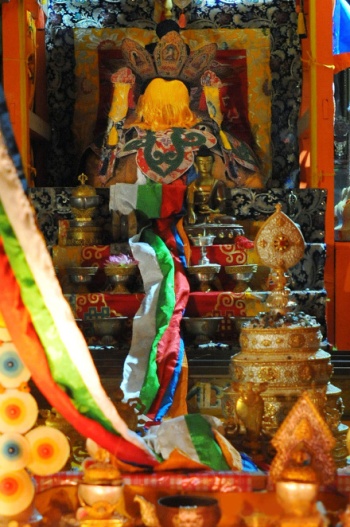
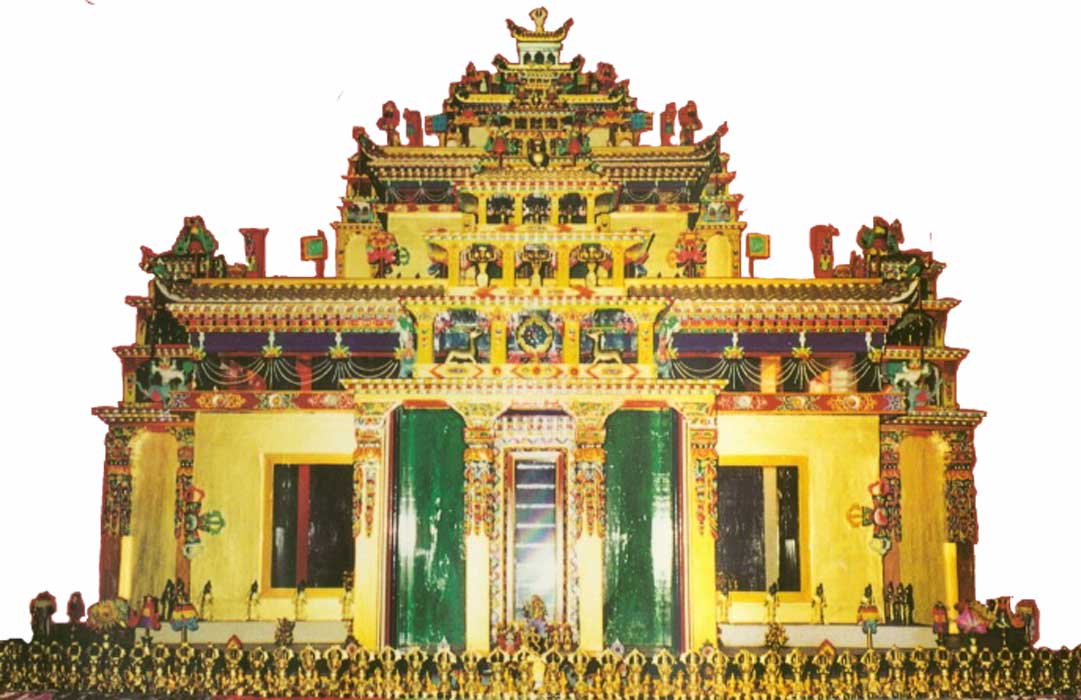
A notice arrived in the afternoon of December 28th. From Venerable Dharma Teacher Long Hui’s somewhat tense facial expression, I could tell this must be the time for me to pay my respects and visit the Buddha Master. Just as expected, when we stepped into the mandala, I saw H.H. Dorje Chang Buddha III Wan Ko Yeshe Norbu Holiest Tathagata sitting upright on the dharma platform. His Holiness appeared so dignified and had an expression of loving-kindness. As I sincerely prostrated myself to H.H. Dorje Chang Buddha III, all I heard was the cordial voice of His Holiness telling everyone to come sit toward the front. I sat beside Venerable Dharma Teacher Long Hui. Dharma Teacher Jue Hui and Dharma Teacher Ruo Hui also sat with us.
Venerable Dharma Teacher Long Hui reported to the Buddha Master regarding the Buddhist chanting work that had taken place at Hua Zang Si over the past two months. Next, the Buddha Master called my name: “Fa Hai, proceed with what you want to say.” Without knowing why, my mind went totally blank. I felt that my entire body was soaking in a kind of freshness. I remained kneeling with a very straight back, as if I had entered a state of meditation. At this time, I only heard the Buddha Master say, “It is all right. Just speak directly!” Yet, I still could not speak and was silent for another eight or nine minutes. I could sense that the Buddha Master was patiently waiting. Finally, a sound floated out of my mouth: “My karmic affinity with the Buddha Master should have begun ten years ago. Because I could not come to America, I was not able to visit His Holiness. I finally got a visa last year. Only this year did I have the opportunity to visit Hua Zang Si, where I respectfully listened to recorded dharma teachings of the Buddha Master. For more than one straight month, I have listened to the recorded dharma discourses without the slightest sense of tiredness.
This has been the most beneficial and rewarding time of my entire life. The beneficial effects I have experienced can never be expressed in words. I bring my body, speech, and mind to respectfully visit the Buddha Master at this time. Today, I would like to specially request a great dharma from H.H. Dorje Chang Buddha III. I would not hesitate to leap into boiling water or walk on fire in order to obtain this great dharma. I am willing to undergo any test in order to obtain such dharma. I am even willing to sacrifice my own life. It might sound like I am exaggerating, but I truly can do such things.”
Perhaps because I was too nervous or focused, I unexpectedly was not able to express exactly what I meant to say. However, I silently told myself that the Buddha Master definitely understands what I am trying to express and what dharma I am requesting. I still remember that I fasted for a full 21 days in the Philippines in order to obtain this great dharma. This is because I am very aware that in this world only H.H. Dorje Chang Buddha III can accomplish this task and announce to the world this great dharma in order to demonstrate the brightness of Buddha and enable the correct dharma to exist in this world forever.
At first, the Buddha Master did not answer my request directly but gave us a profound and important discourse. Only afterward did I realize that this discourse was actually the beginning of His Holiness’s response to my question. His Holiness specifically pointed out the various kinds of confusion and mistakes that have appeared within Buddhism in this current Dharma Ending Age. Some Buddhist sutras contain serious mistakes. What is even more serious is that there are some so-called eminent monks and great virtuous beings who, due to their erroneous understanding and views, seriously misguide others when giving discourses on the dharma. What is even sadder is that believers who do not understand the truth still fanatically follow them and prostrate to them in worship. H.H. Dorje Chang Buddha III does all He can to correct these heretical ideas and views. However, being limited by the karma of living beings, H.H. Dorje Chang Buddha III feels that it is very difficult to change the current situation despite His wish to do so. The Buddha Master gave some examples of these heretical ways within both esoteric Buddhism and exoteric Buddhism. These very worrisome examples left me not knowing whether to laugh or cry.
After finishing the discourse, the Buddha Master said to me directly, “Fa Hai, you did not say what great dharma you want to request. Let me say it for you. The dharma you want to request is to film a movie of the Buddha. There really is no one else besides me who can do this because I completely understand the teachings of the Buddha. I can write the script. This movie must be filmed. The only thing is that the karmic conditions this year are not quite mature enough because the script needs to be written and actors need to be found, especially actors who are qualified. As for funding, as long as there is a script, there will be people who will sponsor and invest. Besides, the movie of the Buddha will not be filmed as one undivided whole but will be divided into a series of 100 parts or episodes. Perhaps this is really the right channel. After all, the influence of a book is limited as it reaches fewer people than a movie, which has much more of an international impact. In addition, when we do this, many problems might be solved. We might even be able to build several temples this way!” At this moment, I understood that the discourse just given by H.H. Wan Ko Yeshe Norbu Holiest Tathagata on the current chaotic situation within Buddhism illustrated that it is impossible for anyone else to write in a script the authentic doctrines of the Buddha.
Listening to this point, I was really shocked in my heart. I used to pay respect and visit many eminent monks and great virtuous beings. I requested from them great dharma. None of them knew what this great dharma in my mind was that I wanted to request. H.H. Dorje Chang Buddha III is truly magnificent. I did not reveal in the slightest what great dharma I wanted to request. Nonetheless, what His Holiness stated was the exact great dharma in my mind that I wanted to request.
His Holiness then said, “Fa Hai, when you come back from mainland China, I will transmit to you dharma according to the formal rituals of Tibetan esoteric Buddhism. You still have some negative karma. At that time, I will perform an initiation for you and eliminate your karmic hindrances. You will see.” I was totally engulfed in the joy of the dharma. The Buddha Master further said, “On your way here, the rainbow and the celestial crane you saw augured that your future undertakings will be bright. However, behind the brightness lurks darkness, and there are twists and turns on the path. We will soon face some attacks and slander, although those who commit the slander will all end up losing. When A Treasury of True Buddha-Dharma is published, no force can obstruct or destroy us because what is in that book are facts.” The Buddha Master finished by saying, “The movie of the Buddha definitely has to be filmed. You see, Fa Hai, your wishes have all been fulfilled. How fortunate you are!”
Actually, there are no words that can express my happiness. There are also no words that can express my gratitude toward H.H. Dorje Chang Buddha III.
I only want to respectfully offer to the Dorje Chang Buddha III my most beautiful spirit, my most beautiful melody, my most beautiful singing voice, and my best wishes. May all those who hear this beautiful melody and singing voice be happy.
I would like to express my special thanks to an anonymous person who ten years ago sent me an express mail package in which a yellow silk scarf was wrapped around the book The Fruits of Pious Devotion and CD’s that had a picture of H.H. Dorje Chang Buddha III on their covers. It is because of this present that seeds planted ten years ago have borne fruit in the form of my taking refuge in the His Holiness as my Buddha Master and in the form of my witnessing the magnificence of the Buddha-dharma.
Everything I described above is true. I am a Buddhist nun. I accept the karmic responsibility for my words. If what I have stated is false, I will descend into the Vajra Hell. If what I have stated is true, I would like to dedicate the resulting merit to all living beings in the dharma realm so that they will soon realize enlightenment.
Respectfully written by disciple Fa Hai Shi December 30, 2006
The above account was written by Fa Hai Shi. We three humble Buddhist nuns provide the following testimonials.
Encountering an Unusual Occurrence
Basically, whenever people pay their respects and visit H.H. Dorje Chang Buddha III Wan Ko Yeshe Norbu Holiest Tathagata, they make good use of their short meeting time by posing prepared questions or by requesting the transmission of dharma. Some groups have really made the best use of their time by requesting answers to problems that have arisen.
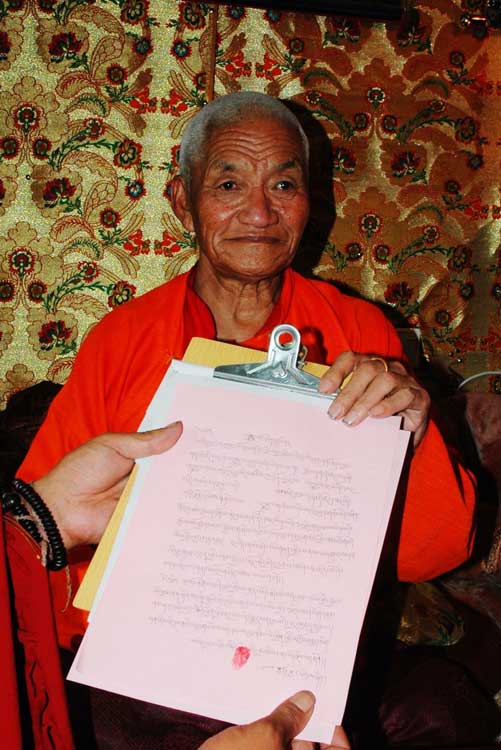
From left to right: Ruo Hui Shih, Long Hui Shih, and Jue Hui Shih
However, there was one particular occasion in the afternoon of December 28, 2006 when a dharma teacher from the Philippines, Fa Hai, came to the mandala from thousands of miles away. This was the first time she was granted an audience with H.H. Dorje Chang Buddha III. When H.H. Dorje Chang Buddha III asked her what question she had, I saw that Buddhist nun take a deep breath. She then unexpectedly remained silent as she stared at the Buddha Master with open eyes, sometimes lowering her head. Perhaps all of this was due to nervousness or other factors. At this time, the Buddha Master also did not speak. Seconds and then minutes passed by in silence. Then, that dharma teacher sighed once more and straightened her back, still looking at the Great Dharma King without uttering a sound. Strangely, Dorje Chang Buddha III also remained silent. A moment later, she sighed for the third time but still did not reply to the Buddha Master. The duration of this silence lasted more than eight minutes. This kind of situation had never happened before.
Finally, the dharma teacher spoke. She said she had come with a wish to request a great dharma. If her wish to obtain this great dharma were fulfilled, she said she would dedicate her life to the Buddha-dharma and living beings, even if it meant sacrificing her life. After uttering such words, she again fell into silence without mentioning what dharma she wished to request.
At this time, Dorje Chang Buddha III said, “Do not say anymore. I will give you a discourse.” The Buddha Master pointed out what request was in the mind of this Buddhist nun. That discourse not only enabled us disciples who were there to once again witness the supernatural powers of H.H. Dorje Chang Buddha III, it also enabled us to understand precious dharma principles.
Because I took Dharma Teacher Fa Hai to pay her respects to H.H. Wan Ko Yeshe Norbu Holiest Tathagata, I was there and personally witnessed everything that happened. Everything I described above is true. If what I have stated above contains false words, may I never become accomplished in the dharma. If what I have stated above is true, I dedicate the resulting merit to all living beings so that they may soon hear the correct dharma and soon attain liberation and accomplishment.
Buddhist disciple Long Hui Shih
I was present at the time. I hereby confirm that what is stated above is true. If what is stated above is false, I am willing to descend into hell and experience negative karmic retribution. If everything stated above is true, I dedicate the resulting merit to all living beings so that they may soon hear the correct dharma and soon realize enlightenment.
Buddhist disciple, Jue Hui Shih
Everything stated above is true. If what is stated above contains false words, I will not become accomplished in the dharma and will become impoverished and miserable. If what is stated above is true, I wish to dedicate the resulting merit to all living beings so that they may always see Buddha and attain liberation.
Buddhist disciple, Ruo Hui Shih
(This is a complete translation of the Chinese text that follows originally written and signed by Fa Hai Shih, Long Hui Shih, Jue Hui Shih, and Ruo Hui Shih.)
The Medicine Buddha is a great teacher who purifies all obstacles and brings healing to the world. When the Medicine Buddha was practicing the Bodhisattva path in past lives, he made twelve great vows to relieve the suffering of sentient beings and bring them happiness including curing physical disabilities, relieving poverty, providing material needs, guiding those astray, and liberating prisoners. He is associated with a pure land in the East called Vaiḍūryanirbhāsa, or “Pure Lapis Lazuli”.
On the 29th day of the ninth lunar month, Buddhist disciples worldwide honor the birthday of Bhaisajyaguru Buddha, known as the Medicine Buddha or the Great Medicine King. He is also referred to as the Buddha of Twelve Great Vows, embodying deep compassion and healing. Presiding over the Pure Land of Lapis Lazuli Light in the East, the Medicine Buddha has inspired countless practitioners with his transformative teachings and boundless compassion.
Hua Zang Si, a Buddhist temple in the Mission District of San Francisco, California, held a Namo Medicine Buddha Holy Birthday Dharma Assembly on November 16, 2025. The next scheduled Dharma assembly will be the Namo Amitabha Buddha Dharma Assembly to be held on December 28, 9:30 am.
Every Buddhist practitioner longs for achievement and liberation. Hearing the true Buddha-Dharma is the key. The following article is a genuine account written by a monastic bhikshu Huihai (慧海) who personally listened to the Dharma teachings of H.H. Dorje Chang Buddha III.
In this life, I am able to encounter my supreme and unsurpassable Buddha Master—this truly is the greatest blessing I have accumulated through many lives and countless eons!
The Buddha Master’s genuine and pure teachings, in the turbulent waves of today’s chaotic era, are the vessel that carries sentient beings to the shore of liberation. The Buddha Master’s profound and skillful instructions transcend religion, directly point to mind-transmission, accord with conditions and the Dharma-realm, and enlighten sentient beings to step onto the path of awakening.
As a disciple, whenever I am in the presence of the Buddha Master, my heart always feels immeasurably moved, deeply experiencing the holiness and greatness of the Buddha’s virtue
I remember it was in early September of 2005 that I had an audience with the Buddha Master. The Buddha Master said: “In the history of Tibet and the Han region, there were many practitioners who cultivated many Dharma methods, yet achieved very little in their entire lifetime. Only in their old age did they realize that they had seldom listened to true Dharma, which caused them not to understand the Buddha-principles, and thus they walked a deviated path.
Most of the ancestral masters through generations, most of the Buddhas and Bodhisattvas of the past, attained great accomplishment precisely because they listened to Dharma. Therefore, listening to Dharma is extremely important. Now, in this degenerate era, there is truly far too much false Dharma. You must listen to Dharma more, listen more to the Dharma I teach. Only by clearly understanding the Dharma sounds, learning the true Buddha-Dharma, and deeply applying it in actual practice, can the problem of birth and death be resolved. This is the most important, most important thing!”
I knelt and prostrated to the Buddha Master and said: “Your disciple is very grateful for the Buddha Master’s teachings, and I hope all sentient beings may hear and receive the Buddha’s Dharma sound and learn the true Buddha-Dharma.”
The Buddha Master sat for a moment and then went into the room. Several senior brothers and sisters happened to come out, each with joyful expressions on their faces. I asked them curiously: “I see all of you beaming with smiles—what joyful thing has happened?”
One senior brother said: “We just respectfully listened to a recording of a most supreme Dharma-sound.”
I said: “No wonder you are filled with Dharma joy. May I listen to this Dharma-sound recording?” The senior brother said: “This is a rarely accessible Dharma-sound. Permission must be requested before you can listen.”
At that moment, the Buddha Master came out from the room. I quickly reported: “I request Buddha Master’s permission—may I listen to that Dharma-sound recording?”
The Buddha Master smiled and said to me: “Of course you may. You certainly may listen. If even you, a monastic, cannot listen, then who else could?” I joyfully placed my palms together and prostrated to my kind Master, saying: “Thank you, Buddha Master.”
I went to the altar to pay respect to the Buddha, offered a khata and offerings, performed the pre-Dharma-listening rituals, and began to attentively and reverently listen to the Dharma. The Dharma-teaching that the Buddha Master expounded in the recording was unprecedented—unmatched in its sublimity.
Upon hearing this Dharma, I received tremendous blessing power; suddenly my obstructions opened, joy surged within me, like a spontaneous celestial empowerment pouring down, nectar filling me completely. The karmic forces of beginningless time all became like illusions. Such a supreme Dharma—how could it not be something that is difficult to encounter even in hundreds of thousands of eons?
What sentient beings find hard to see, I now see; what sentient beings have not heard, I have now heard. How could beings burdened by countless karmas possibly comprehend its wondrous principles? After leaving the altar, I saw the Buddha Master and immediately knelt down in gratitude.
I said excitedly: “Buddha Master! How could this merely be a teaching or a Dharma-sound? This is fundamentally a great Dharma—an unsurpassable great Dharma!”
The Buddha Master looked at me and smiled: “Excellent! You received the blessing of Buddhas and Bodhisattvas and understood the Dharma I taught.”
I continued: “Buddha Master, this Dharma truly leaps directly and suddenly into the Tathāgata’s state! And truly, it requires no effort—you can attain it instantly.” The Buddha Master said: “Indeed so.”
I further said: “This Dharma is truly magnificent. Indeed, everyone can practice it, but ordinary people will not understand it and will only regard it as an ordinary teaching.”
The Buddha Master said: “This is even easier than realizing mind and seeing one’s nature. Even those who realize mind and see their nature may not attain this state.”
My Buddha Master—the Supreme Protector, H.H. Dorje Chang Buddha III—expounds Dharma by observing sentient beings’ karmic conditions through the complete Buddha-wisdom. Every teaching is given for the liberation of Buddhist disciples and future beings. The Dharma principles revealed are tailored to each person’s capacity, deep yet simple. Though spoken casually, they unfailingly accord with the profound truths of the Buddhist Tripiṭaka and esoteric scriptures. Moreover, many penetrating and unique Dharma principles are not found in any sutras—they arise directly from the Buddha Master’s innate enlightened realization.
Since I drew close to the Buddha Master and respectfully listened to the Buddha Master’s Dharma-sounds, I have finally gained a complete understanding of the Tathāgata’s perfect and true teachings. The benefits I have received are far too many to express in words—far surpassing everything I had learned in Buddhism over the past decades.
Because Buddhist sutras have been transmitted in the world—especially after translation—they inevitably contain mistranslations or misinterpretations. Moreover, the classical literary language used in the scriptures is truly difficult for modern readers accustomed to vernacular style. The numerous technical terms in the sutras also pose a challenge for beginners entering the Buddhist path.
The Dharma-sounds taught by H.H. Dorje Chang Buddha III are the authentic Tathāgata true Dharma, explained through modern language and analogies, expressing principles in accordance with intrinsic nature, unfolding the stages of realization, and enlightening the ignorant. Those who listen can easily learn pure Buddha-Dharma and establish correct understanding and correct views. Therefore, it is most suitable for every practitioner in today’s world to rely on and cultivate.
The Dharma-sounds spoken by H.H. Dorje Chang Buddha III are a bright lamp illuminating the path of cultivation. They are the supreme Dharma-treasure that enables sentient beings to become Arhats, enables Arhats to become Bodhisattvas, and enables Bodhisattvas to become Buddhas—to attain accomplishment, liberation, realization, and sainthood.
I often feel this: whenever the Buddha Master expounds Dharma with perfect, lion-like sound, the Dharma-voice flows throughout the boundless space; humans and non-humans all receive its benefit; the Dharma assembly at Vulture Peak seems as if it has never dispersed—
Before my eyes it is as if scenes from ancient times appear again: the Buddha teaching under the Bodhi tree, when Bodhisattva-Mahāsattvas, monks, nuns, laymen, laywomen, along with heavenly beings, nāgas, humans, and non-humans—countless multitudes—surrounded Him, making offerings, honoring, respecting, and praising. Heavenly mandārava flowers rained down, scattering over the Buddha and the assembly…
In this degenerate age, as a disciple of the Buddha, I feel fortunate to have this rare Dharma affinity, able to personally hear the Dharma before the Buddha and practice the true Dharma. I sincerely pray:
May the Dharma Wheel of the supreme and great H.H. Dorje Chang Buddha III always turn, and may He abide in this world forever.
May all beings in the Dharma-realm hear the Dharma-sounds spoken by H.H. Dorje Chang Buddha III, increase in blessings and wisdom, forever leave all suffering and obtain happiness, and together realize Bodhi.
Disciple of the Buddha — Huihai
For the original Chinese speech, please click here. This English translation is by Linda Chang and is provided for reference only.
Photo Courtesy: Hua Zang Si (Community members unite across California to honor the Life Release Day Designated by Buddha, transforming compassion into action through ceremonies, education, and charitable outreach.)
Buddhist communities across California came together on October 29 to honor “The Life Release Day Designated by Buddha,” a global observance dedicated to compassion, the protection of life, and the collective aspiration for peace.
On the morning of October 29, 2025, the H.H. Dorje Chang Buddha III Cultural and Art Museum hosted a life release event at the Marina Del Rey harbor, drawing spiritual leaders and community members from across Southern California. The event was led by Venerable Master Ruzun Ruohui, Abbess of Hua Zang Si Temple and Hongfa Temple.
Participants gathered in unity to chant praises and recite the Great Compassion Mantra of Avalokiteshvara Bodhisattva. Venerable Master Ruzun Ruohui blessed the fish awaiting release with consecrated Dharma water, offering prayers that these sentient beings be freed from suffering and karmic obstructions. Upon release, the fish were returned to the ocean with the hope that they would find safety and live free from harm and predators.
The Life Release Day Designated by Buddha originated on October 29, 2009, when H.H. Dorje Chang Buddha III personally led His disciples in a life release ceremony following a significant Buddhist event. He compassionately declared this day as “Life Release Day” to promote the protection of life and the practice of compassion.
The H.H. Dorje Chang Buddha III Cultural and Art Museum upholds the compassionate teachings of H.H. Dorje Chang Buddha III. The museum urges all sectors of society to transform empathy into action—promoting the safeguarding of life, the cessation of killing, and the daily practices of kindness as a fundamental way of living. Venerable Master Ruzun Ruohui emphasized that life release practices are not confined to specific days or locations. Whenever a life is in danger, we are called to act—to return it to a suitable environment, to grant it freedom, and to relieve it from fear.
On October 29, 2025, San Francisco’s Hua Zang Si Temple also held a life release ceremony at San Rafael. Participants from diverse cultural backgrounds gathered to recite the Heart Sutra and the Great Compassion Mantra before gently releasing fish back to their natural habitat. Organizers emphasized that life release is not only a spiritual practice, but also a call to awaken society’s compassion and deepen our care for the sentient beings.
Photo Courtesy: H.H. Dorje Chang Buddha III Cultural and Art Museum Venerable Master Ruzun Ruohui blesses fish awaiting release with Dharma water during the Life Release Day ceremony at Marina Del Rey.
Photo Courtesy: H.H. Dorje Chang Buddha III Cultural and Art Museum Upon release, the fish were returned to the ocean.
To nurture compassion in the next generation, Hua Zang Si Temple held a Buddhist children’s story class on October 19. Through storytelling and interactive learning, the program guided young participants to understand the core values of “equality of all life” and “compassion without harm.” The initiative was warmly received by parents, who expressed deep appreciation for the temple’s commitment to meaningful and values-based education.
On October 26, Macang Monastery in San Francisco held a special “Life Release Day Blessing and Food Donation Ceremony” in honor of the Life Release Day Designated by Buddha. Following collective sutra recitation and prayers by both monastics and lay practitioners, the temple donated food supplies to unhoused individuals and low-income families—embodying the Buddhist spirit of compassion and service to those in need.
This year’s Life Release Day Designated by Buddha brought together Buddhist disciples and compassionate leaders from all walks of life through a range of activities—including life release ceremonies, prayer gatherings, educational outreach, and food donations. Participants were reminded that cultivation is not merely a slogan, but a continuous practice through every kind thought and virtuous deed.
In 1947, shortly after Japan’s surrender and withdrawal from China, the great Zen Master Xuyun (Empty Cloud) gave a profound speech at a middle school. The nation was still recovering from the devastation of war, and hearts were heavy with both relief and sorrow. With deep compassion, Master Xuyun used the timeless wisdom of the Buddha to explain the law of cause and effect (karma) — reminding people that wars do not arise by chance, but are the result of humanity’s collective actions.
He taught that true peace cannot be achieved through force or politics alone. Only by transforming our hearts and purifying our minds through virtue, compassion, and the practice of Buddhist teachings can we bring real and lasting peace to the world.
War does not arise by chance — it is the collective karma of all beings that brings it forth.
Dear friends, during the years of occupation, we endured immense suffering under the enemy’s oppression — our lives were steeped in water and fire, hardship and pain. Now that our nation has regained its light, we should feel endless gratitude and reflection. We must understand that the outbreak of war is not accidental; it is the result of the shared karma created by all individuals.
The ancient masters said, “If you wish to know the causes of your past lives, look at what you are experiencing in this life. If you wish to know the results of your future lives, look at what you are doing now.” They also said, “Even after hundreds or thousands of eons, the karma one has created will not disappear. When the conditions ripen, the results will be experienced by oneself.”
When people lose their moral compass and commit all kinds of evil, they plant the seeds for calamities such as war, floods, fires, and famine. If we wish to change the will of Heaven and eliminate disasters, we must begin by transforming human hearts — by restoring virtue and morality. When everyone practices the Five Precepts and the Ten Good Deeds, cultivates upright minds and pure conduct, and lives with benevolence, trust, and righteousness, then the hearts of men and the will of Heaven will naturally align.
But if people persist in wrongdoing and refuse to repent, how can hostility and suffering ever be dissolved? The Buddha said, “The sea of suffering has no end, but when one turns around, there is the shore.” This means awakening from delusion and returning to goodness — the essential path to liberation.
We must truly believe in the law of cause and effect. It is not fiction but reality. If everyone understood that good deeds bring good results, and evil deeds bring suffering — that when one plants melons, one harvests melons; when one plants beans, one harvests beans — then no one would dare to act against conscience or break the law. Out of great compassion for all beings, Shakyamuni Buddha renounced his royal life and underwent arduous practice to save the world from ignorance and suffering.
If we understand the principle of cause and effect and wish to avoid future suffering, we must now create good causes. The hardships we experience today are the results of past evil actions. Therefore, we should now sow good seeds, and in time, we will naturally reap good fruits.
The scriptures speak of “Anuttara-samyak-sambodhi,” meaning “unsurpassed perfect enlightenment.” In its essence, it transcends the distinction of self and others — there is no “you” and “me.” But this state must be cultivated from one’s own heart. If our minds remain filled with greed, anger, and ignorance, unable to abandon all evil and practice all good, the barriers of self and ego become like iron mountains, preventing us from reaching the Pure Land or true harmony. This is the most crucial point — one we must all remember well.
The Sanskrit word “Buddha” means “the Awakened One.” Enlightenment has three aspects: awakening oneself, awakening others, and perfecting both understanding and conduct.
To awaken oneself is to realize that all experiences of good and evil, joy and suffering, arise from cause and effect. Once a person truly understands this, delusion fades, the four attachments dissolve, and one becomes enlightened.
To awaken others means recognizing that all living beings — whether born from the womb, from eggs, from moisture, or by transformation — all possess Buddha nature. They are called “sentient beings” only because they are deluded and unaware. We should therefore cherish and respect ourselves, and in keeping with the Buddha’s great vow of compassion and universal salvation, share these truths with others, guiding them out of the sea of suffering.
As stated in the Śūraṅgama Sūtra: “Regard all men as your fathers and all women as your mothers.” If we cultivate such deep reverence and love, especially for widows, orphans, and those who are lonely or destitute, and show them kindness and compassion through giving and aid, we can realize true equality and the ideal of great harmony.
To perfect both understanding and conduct means to live according to the Buddha’s teachings and precepts until one’s virtue and merit are complete. After the Buddha’s passing, he left behind the Three Baskets of Scriptures — Sutra, Vinaya, and Abhidharma — as our priceless raft to cross the sea of suffering. All the rules and precepts should be faithfully practiced. When one fulfills them completely, that is the perfection of wisdom and conduct.
Thus, the Buddha is the awakened one, while sentient beings are the deluded. The distinction between delusion and enlightenment marks the boundary between beings and Buddhas. To turn away from delusion and return to truth — that is awakening, and that is Buddhahood.
To further illustrate the law of karma, there is a story from one of Shakyamuni Buddha’s past lives.
Long ago, in the city of Rajagaha, there was a fishing village with a large pond. One year, a great drought struck, and the pond began to dry up. The villagers caught and ate almost all the fish, until only one giant fish remained, which was finally killed and eaten. Only one eight-year-old boy refused to eat the fish; he simply watched and laughed.
In his later life as the Buddha, King Prasenajit of Kosala, a devoted follower of the Buddha, married a princess of the Shakya clan, and they had a son named King Virudhaka. After ascending the throne, Virudhaka led his army to attack the Shakya capital of Kapilavastu and slaughtered all its inhabitants.
During that time, the Buddha suffered a severe headache for three days. His disciples begged him to use his powers to save the Shakya people, but he refused. Even when Maudgalyayana repeatedly pleaded, the Buddha said no. Maudgalyayana tried to rescue some survivors with his alms bowl, but when he put it down, all he found was a pool of blood.
When the disciples asked why, the Buddha revealed the cause: in a past life, during a great drought in Rajagaha, the villagers had killed and eaten the fish in that pond. The giant fish was reborn as King Virudhaka, and the villagers were reborn as the Shakyas who were killed. The young boy who merely watched and laughed was reborn as Shakyamuni Buddha himself. Because this karma had matured, the outcome was unchangeable.
The Buddha fully understood this karmic connection and taught it to his disciples as a warning. Chan Master Yuan Yun wrote in verse:
“For hundreds of years, the soup in your bowl Is filled with deep hatred, hard to dissolve. If you wish to know why wars arise, Listen to the cries from the butcher’s gate at midnight.”
Reflect on this story and recite the verse, and you will awaken to the true causes of war and violence — and learn to guard your conduct with mindfulness.
If we wish to transform the world and move toward true harmony, everything must begin with our hearts. Students should study diligently, yet never forget the greater mission of saving the world. And the first step to saving the world is saving the heart — correcting one’s own wrong thoughts and firmly believing in the law of cause and effect, avoiding all evil paths.
By cultivating sincerity, righteousness, self-discipline, and harmony within the family, one can extend peace to the nation and the world. If all the people of every country sincerely believe in karma and practice the Eight Virtues and Ten Precepts, then oppression, violence, and wars will cease to arise. True peace, equality, and the Pure Land of Great Harmony will appear, free from the Five Defilements and all suffering.
For the original Chinese speech, please click here. This English translation is by Linda Chang and is provided for reference only.
This book by H.H. Dorje Chang Buddha III was released in Chinese in 2014 but is not yet available in English. It is based on a series of very famous discourses given in China in 1992, using the text, meaning, and principles of the Heart Sutra to transmit Dharma. It clearly explains the relationships between mind, Buddha, and living beings. It tells everyone what the absolute truth of Buddha-dharma and liberation is. Several years ago, His Holiness told a number of Western disciples that this is the only book you need to read to understand emptiness and become enlightened. This text is for acquiring prajna or transcendental wisdom, although it also teaches the importance of cultivating character.
To stress how important this holy book is, we must remember that just before the Buddha left this world His Holiness told us that “. . . At all times, we must think about bringing auspiciousness, serenity, happiness, and peace to living beings and to the world, to the extent of giving our all and even our lives. I have already brought true Buddha Dharma to this world. Everyone who practices in accordance with The Supreme and Unsurpassable Mahamudra of Liberation and Expounding the Absolute Truth Through the Heart Sutra will surely attain liberation. That’s all. I wish all living beings happiness.”
Venerable Master Puguan’s Reflection After Listening to Expounding the Absolute Truth Through the Heart Sutra
Below is the heartfelt reflection of Venerable Master Puguan, the abbot of Kaihua Monastery on Mount Wuzhong—the first site of Southern Transmission Buddhism and the thirteenth-generation patriarch of Mount Emei—after listening to the Dharma discourses of Expounding the Absolute Truth Through the Heart Sutra spoken by H.H. Dorje Chang Buddha III.
Venerable Master Puguan said:
“No matter what words I use today, they cannot fully express the supreme joy and wonder in my heart. My most magnificent and compassionate Buddha Master, the Great Dharma King Yangwo, once visited Mount Wuzhong in person. At that time, my junior Dharma brother, Dharma Master Guozhang, and I were on the third day of a Zen retreat with the four assemblies of disciples when suddenly the Dharma protector came and told me, ‘The greatest holy being has arrived! He is wearing white clothes. Quickly cancel the Chan session and lead everyone to greet Him with full ceremony!’
Dharma Master Guozhang also received the same message—that the highest Holy One had come. We immediately announced to all disciples that the Zen session was to be stopped, and we prepared the ceremonial welcome with drums and bells. Indeed, about ten minutes later, a group of dozens of people arrived at the foot of the mountain—it was my revered Master, the Great Dharma King Yangwo (H.H. Dorje Chang Buddha III).
When I supported my Master while walking toward the Bright Moon Pool, He gently took hold of my hand instead and said, ‘I am younger than you; you should not support me. It is I who should support you, the elder.’
At that moment, I felt deeply ashamed. How could a disciple ever deserve to be supported by his Master, the Great Dharma King?
Now, after listening to Expounding the Absolute Truth Through the Heart Sutra, I finally realize that what my Master said back then was the very expression of ultimate truth! We practitioners must rely on our Master’s steadfast guidance, never letting go of His compassionate hand, until we are led to the pure Buddha-land of ultimate Nirvana. How could we ever imagine supporting our Master?
Having repeatedly listened to this Dharma discourse, I can only say that my Master has explained the very essence of all 600 volumes of the Prajnaparamita Sutras and the two essential provisions of precepts and practice. The Dharma He expounded is so profound that the deep will see its depth and the shallow will see its shallowness—it is wondrous beyond description, extraordinary within the ordinary. In truth, it is the supreme teaching of the ultimate truth since the beginning of time.
After listening to this unparalleled Dharma spoken by my Buddha Master, I was instantly and completely awakened—the bottom of the bucket had fallen out! Unfortunately, my age has deprived me of the condition to attain rainbow-body ascension, but I rejoice that I have realized the state of indestructible flesh body. After my parinirvana, this body can serve as evidence to the world that my Great Dharma King, my Buddha Master, is truly the Dharma King who unites all Buddhas of the ten directions.
When I think back on my earlier misunderstandings, I feel deeply ashamed. I once mistakenly believed that only Tibetan Esoteric Buddhism possessed the Great Dharma that enables enlightenment within one lifetime. Now that I have attained realization, I truly understand that the authentic Dharma of the Tathagata transcends all schools and sects.
In fact, the true Buddha Dharma is a wondrous treasure existing independently of any tradition. It is neither exclusive to nor absent from any particular school—because genuine Dharma is not governed by sects but by Buddhas and Bodhisattvas themselves. Wherever a Buddha or Bodhisattva manifests as a teacher, that school naturally possesses the Great Dharma.
When I recall my past cultivation at the Golden Summit of Mount Emei, I can only remain speechless in humility. Today, immersed in the bliss of Dharma joy, I can only pray:
May all Buddhas bless that the great karmic conditions of the Tathagata ripen soon. May all sentient beings swiftly hear the teachings of my Buddha Master—the Mother of All Buddhas’ Dharmas, Expounding the Absolute Truth Through the Heart Sutra— so that their blessings and wisdom may swiftly and perfectly flourish, attaining Bodhi and liberation in this very life, and achieving freedom from life and death!
Namo Amitabha Buddha! Namo Avalokiteshvara Bodhisattva!
Note: In 1998, Master Pu Guan passed away while in meditation, having attained mastery over his life and death. Remarkably, even eight years after his passing, his remains rest within a stupa, preserved in the meditation posture without any signs of decay.
The above is the English translation of Venerable Master Pu Guan’s Dharma discourse, rendered into English by Linda Chang. The original Chinese version is provided below.
Over the past ten years I have been indeed fortunate to receive so many empowerments and initiations from H.H. Dorje Chang Buddha III. I have practiced the dharma of self-cultivation taught me by my Buddha Master so that I do have a modest degree of realization. My life has been dedicated to helping others learn and practice as well. I have seen many miraculous states including seeing my Buddha Master and other Buddhas and Bodhisattvas in the heavens and watching a vajra pill fly out of my hand in a dazzling red light. I was also able to awaken another vajra pill and hear and see others sing and dance.
But were these signs that I was a holy being? His Holiness had said that I was, but would ordinary people be able to see the transformation? My real concern was, would I be able to help liberate other living beings? Would they believe me and follow the teachings that I had learned from my Buddha Master?
I learned of another magnificent Buddha-dharma from The Supreme and Unsurpassable Mahamudra of Liberation that can enable one to actually demonstrate that they have the body of a saint or holy being. It is known as the Tien Jie Mandala Ni-Wan Dao-guo Fa or Heavenly Realm Mandala Mud Pill Lamdre Dharma. “Ni-wan” translates literally as “mud pill.” Lamdre is a Tibetan term for “the path and its fruit.” Through this dharma, the “gate to heaven” on the crown of the head can truly be opened. The “mud pill” is also found in the meditative techniques of inner alchemy in Daoism. The Mud Pill crown opening was what was sought to become an immortal. Ancient emperors of China would have given their kingdoms and fortunes to be able to receive this dharma. Ni-wan is also a Daoist term for the place where the consciousness or spirit enters and leaves the body of an immortal. It literally means a point on the top of the head that when open feels like soft mud. A newborn’s brain is like this, which is the reason one has to protect the head of a baby until these openings or fontanelles can grow shut. This point is also known in acupuncture as the Bai Hui or the hundredth meeting point and is connected to the hypothalamus, pineal and pituitary glands—all parts of our anatomy that modern science does not fully understand or appreciate. This is also the Hindu Yogic equivalent of the Crown Chakra. The “ni-wan” also refers to the upper Cinnabar Field in Daoism or the center for intellect and spirituality. In Daoism, one refines one’s essence (jing) into vital energy (qi), refines one’s vital energy into spirit (shen), and refines one’s spirit into emptiness. One unites one’s primordial spirit to become form (an immortal) and dissipates that spirit to become formless vital energy. One is then neither empty nor substantial. That is what is called “non-doing.” In Daoism you are said to also be able to receive cosmic energy through this point as well.
Lest there be confusion, I want to make something perfectly clear. The Mud Pill of Daoism is the place on the crown of the head through which one leaves the body to ascend to heaven. Buddhism also recognizes that the Mud Pill is the place through which one leaves the body to become a celestial being or immortal, which is one type of living being among all of the living beings in the six realms. However, what I am writing about is the Buddha-dharma and not Daoism or any other form of religion. When Buddhism came to China, the Daoists adopted many aspects of Buddhism. Still, Buddhism leads one to become a Buddha or Bodhisattva, and Daoism leads one to become an immortal. People who misunderstand what I am saying might question why I talk of a Daoist practice. This is a result of simply not understanding the teachings of Shakyamuni Buddha. Shakyamuni Buddha clearly stated in the sutras that there are six realms into which living beings can reincarnate and that the highest realm is the realm of the immortals. The ten types of immortals are described in general terms in the Surangama Sutra and elsewhere, but they can generally be grouped into three classes: earth bound immortals who continue to live amongst us, heavenly immortals who will go to the heavenly realms only after they leave this earth, and the divine immortals who can go to the heavenly realms now with their earthly bodies as well as after they leave this world. What the Surangama Sutra does not say, but the Buddha explains in other texts, is the fact that those who cultivate themselves according to the teachings of the Buddha can continue their practice in these heavenly realms and go on to become Bodhisattvas. The translation that I have of the Surangama Sutra is not clear on this point and appears to be discussing primarily the earth-bound immortals and not their higher forms.
Although this Buddha-dharma can be transmitted to non-Buddhists as well as Buddhists and help sincere practitioners of other religions to achieve their goals of heavenly rebirth, its purpose for a Buddhist is quite different. Buddhists are also able to take rebirth in the Heavenly Realm and enjoy this paradise, but they do so in order to continue their cultivation and practice of the dharma and be able to eventually become Buddhas and Bodhisattvas. In the Sutra on Loving-Kindness (Metta Sutta), Shakyamuni Buddha tells us that although a non-Buddhist may enjoy a life-span in these heavens, when that life-span ends he must return to the lower realms to repay his karmic debts due to the law of cause and effect. However, one who follows the way of the Buddha can enjoy the pleasures of these realms and also gain liberation through the practice of Buddha-dharma while in these realms, eventually attaining the… “complete extinction of lust, hate and delusion in that same kind of heavenly existence.” But there is another aspect of this dharma that also makes it important. When one becomes accomplished in or achieves the fruit of this dharma, one’s structural body actually changes. One’s bones become different than those of an ordinary being to enable one’s consciousness to ascend to the heavenly realms. In this way one becomes a true holy being or saint.
Why is this important? Only holy beings or saints can liberate other living beings, and our work here as Buddhists is to help others seek liberation from the unhappiness, pain, and suffering of samsara or worldly existence. So, how do we know that someone is a holy being? There are many who claim such status and their disciples support them by calling their master a holy being, but are those who make such a claim really able to demonstrate their holiness?
There are two aspects of holy beings that distinguish them from ordinary beings. The first is that they manifest the Great Compassionate Bodhisattva State. This is a type of mind or level of accomplishment whereby everything they do is done for living beings. No matter what they do, say, or think, it is to help living beings become accomplished in the dharma or liberated. This is the aspect of virtuous conduct. However, this alone is not enough to be designated a holy being, because, generally speaking, it cannot be seen or understood by ordinary people.
The second aspect of a holy being is that their physical body type is different from that of ordinary people and there are ways that this can be demonstrated. This is seen through miraculous events that actually change the structure of the body. The Mud Pill Holy Dharma is a Highest Form of Inner-Tantric State-Practice Initiation contained in The Supreme and Unsurpassable Mahamudra of Liberation. The Mud Pill Holy Dharma can accomplish this change in the structure of the body, as can accomplishment in the practice of Tummo Dharma that goes beyond the second stage. It is one way to prove that someone actually has the true Buddha-dharma and can help liberate other living beings. The process for becoming a saint in Catholicism is quite similar. A person has to have exhibited a pure, moral, and kind life and demonstrate some sort of miracle. The opening of the crown in the skull without any visible means on the surface of the skull is such a miracle! But scientific tests show that there indeed is such an opening!
As I mentioned earlier, the Mud Pill dharma from The Supreme and Unsurpassable Mahamudra of Liberation is unique in that such dharma can be practiced by the practitioner of any religion. Although one needs to be a good person with deep roots of kindness, one does not need become a Buddhist to practice it. However, one must be careful in applying this dharma. It can be used to have the consciousness leave and return to the body, and it can be useful at the time of leaving this earth. But if your crown has been so opened, you must strictly abide by the Mud Pill Path Fruit Precepts. If you violate any of those precepts, you must repent that same day. If you repent a day later, your crown will close and you will not attain liberation. But if you abide by the precepts, you will be able to go immediately to the heaven or paradise of your choice after death. You do not need to pass through the bardo. A Christian’s soul would go the Christian Heaven to be with Jesus, while a Hindu would have his consciousness merge with Universal Consciousness (Supreme Cosmic Spirit) in the formless realms or go to the Brahman Heavens of the Form Realm, and so on. In an oral discourse on the dharma, the Buddha Master expounded that our crowns must be opened for us to go to any of the higher realms. What we call consciousness and others refer to as the soul or “spirit” exits the body at the time of death. The means by which it exits determines the next life. The Buddhist sutras also state that if the exit is through the souls of the feet or Yong-Quan gate, one goes to the hell realms; the lower orifices, one becomes an animal; or the navel, one becomes a hungry ghost. The part of the body that determines where the consciousness/soul/spirit of the person goes will remain warm after the rest of the body becomes cold. If one’s heart is warm and the rest of the body is cold, one is reborn to the human realm to be a human. If the throat or the throat gate is hot and the rest of the body is cold, one becomes an Asura. If one’s body is cold and the Mud Pill gate, or fontanelle, is hot, one becomes a deva or a heavenly being. When one is liberated and/or is reborn into a Buddha land, the exit place will be at the Da-Le gate, i.e. the top gate right in the middle of the skull. I remember Dr. Mitchell Levy at Zion, Illinois reporting that after the Sixteenth Karmapa departed this world, to his and the rest of the hospital staff’s amazement, the area around his heart remained warm for a very long time, which would imply that he would be reborn as a human.
The “Mud Pill” dharma does not enable one to become a Bodhisattva. It only enables one to become an immortal and go to the heavenly realms. It can demonstrate that one’s physical body has the qualities of a holy being. However, there are many kinds of holy beings. It does not mean that as long as you have your crown opened it can be said that you are a great holy being. This is true no matter what type of crown opening you receive—either from the Ni-wan Dharma or the Vajra Substitute Body Meditation Dharma. These crown openings belong to the initial stage of a holy being. They are not great holy beings who truly attain the level of perfect liberation. His Holiness has made it very clear that even for the dharma of Vajra Substitute Body Meditation, the opening of the crown should reveal a hole as big as an egg. Moreover, there should be a deep hole in the brain. It does not count if one just has an opening of the scalp or scull bone. His Holiness taught us that using scientific exams alone is not enough to determine the success of a crown opening. In front of the watchful eyes of many people, testing and verification of the crown opening must take place based on Buddha-dharma rules. There is 100% proof that the crown opening was successful when three peacock feathers hanging over the crown of the person tested move about as a result of his consciousness leaving his body or his energy leaving his crown.
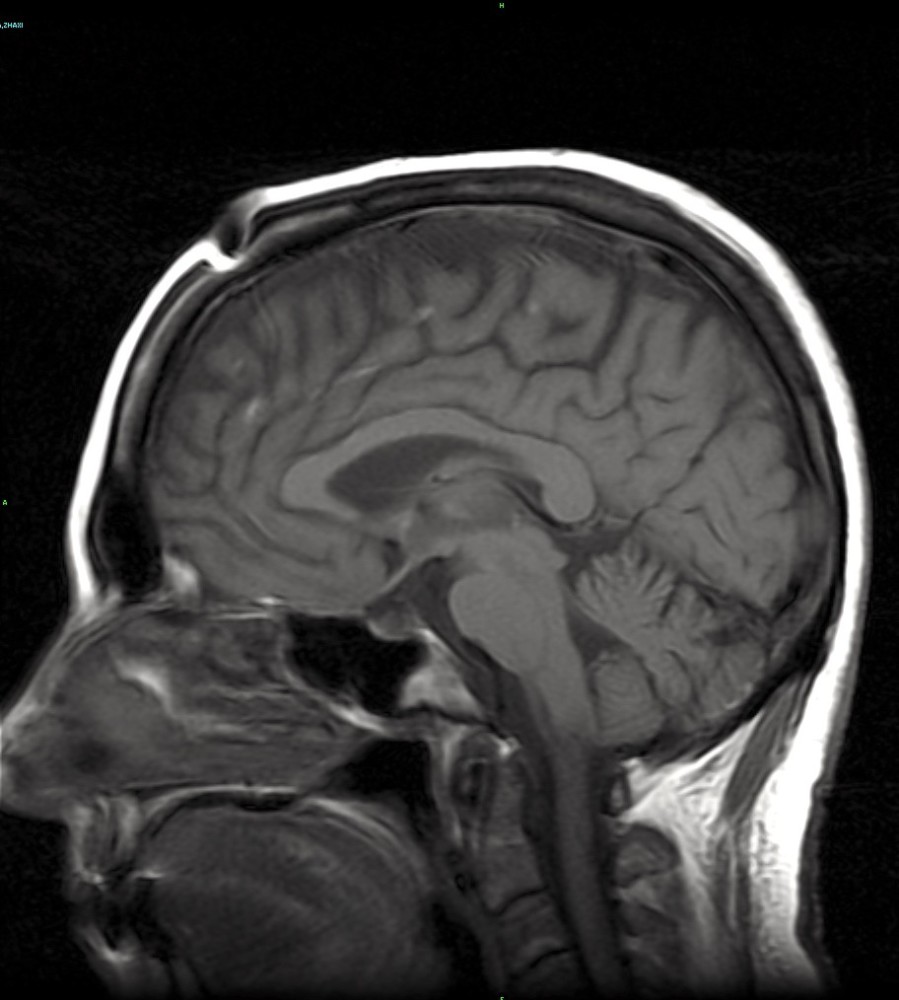
MRI scans of those who have received the Mud Pill empowerment show a small opening at the crown. However, the concentration powers of a small portion of those practitioners are not strong. For the sake of their safety, it is best that their openings are closed. At the time of their death, their crowns will naturally open again. There is no need to close the openings of those whose concentration powers are strong. Still, such people must strictly abide by the Mud Pill Path Fruit Precepts. I know of a devout Tibetan whose skull had many such openings from empowerments he had received from various rinpoches. His skull was retrieved from the sky burial field and kept for veneration at a local temple because the lamas knew that he was a true holy being.
So, although I was encouraged to continue my dharm a practice and seek higher states of realization, my Master wanted me to have this empowerment. At the time of my Mud Pill Path Fruit Crown Opening, I wrote a vow of truth that stated the following: “FACING WHAT IS TRUE—Becoming accomplished through the Mud Pill Path-Fruit of The Supreme and Unsurpassable Mahamudra of Liberation does not require the Master to touch the crown of the head or pour water onto the crown from a precious vase. The Master was on one side of the garden, and I was on the other side. The Buddha Master never came close to the crown of my head. His Holiness used His mind to accomplish this transmission. Right then and there His Holiness caused the Emperor of Heaven to descend and open the crown of my head. I clearly saw a wondrous state appear before me. It was extremely clear. Nobody would believe me. How could this be? I was worried it might have been an illusion, so I had it evaluated by a scientific instrument. That evaluation proved that what had happened was real. This fact proves that I have the qualifications of an immortal. If what I have just stated is false, I will surely descend into hell. Sincerely spoken by Zhaxi Zhuoma.”
I hope that virtuous non-Buddhists with deep roots of kindness will also receive this empowerment.
My own experience in receiving and practicing the Mud Pill Dharma of The Supreme and Unsurpassable Mahamudra of Liberation was incredible. I find it difficult to describe in any way that can explain what happened in a believable way. Fortunately, I have the MRI photos that can show the success or fruit of my efforts. I truly believe that these pictures are “worth a thousand words” as far as demonstrating the results, but let me try and tell as much as I can about how they came about. As I have mentioned elsewhere, one does not usually talk about the empowerments and holy inner-tantric initiations one has received. In fact, we are prohibited from doing so according to the dharma. This is an inviolable rule especially with respect to State Practice Initiations. However, I will describe what I am permitted to describe in order to provide non-Chinese speaking people with more specific information about the magnificence of the true Buddha-dharma.
First, it was a beautiful, balmy day. The sun was shining brightly with a slight breeze, providing ideal weather. I sat under a large orange tree next to a calm pool. My assistant sat behind me and was some distance away from me. She faced the opposite direction since she could not witness the ceremony. Of course, I cannot give the particulars of the ceremony itself, but what I can tell you is that my magnificent Master was not in any way near me. His Holiness never touched me or my head before, during or after the ceremony. In fact, my Master was on one side of the yard and I on the other during the ceremony. His Holiness used His mind to accomplish this transmission of the Buddha-dharma to me. His Holiness continued to pray for me while I practiced the dharma. His Holiness prayed that I be a most kindhearted person, that I always benefit all living beings, that I always wish my country and its people be at peace, that I always wish all living beings be free from disasters and hardships, and that I always wish all sentient beings be eternally happy. After I received this dharma, I sat and chanted a certain mantra silently. When I experienced a bright, distinct holy state, I began chanting the same mantra loudly to thank the Emperor of Heaven—also known as the Jade Emperor— for receiving me. My place in the celestial realms as an immortal had been insured. Right then and there my practice of the dharma caused the Emperor of Heaven to descend and open the crown of my head. The wondrous state that appeared before me was extremely clear. There was no doubt that something supernatural had happened!
After the ceremony my Master still did not touch my crown, including the entire time from when I received the dharma until year of 2010 at a medical center where I went to have a MRI image made of my head. Even if the Buddha Master had opened the “Gate of Heaven” on my crown by touching my head, such a power would have exceeded that of all of the Buddhist patriarchs throughout the generations. Even without touching my head, the Buddha Master enabled me to experience the supernatural state through mind transmission alone. I still wondered, “Could this just be an illusion?” It was, after all, an incredible accomplishment. I knew that in ancient times many great sages had devoted their entire lives and resources to achieving this to no avail. Why was I able to realize it?
As soon as I returned from the MRI center, I put the CD of the procedure on a computer. I knew from personally witnessing the beautiful holy state that the ceremony had been a success, but what would the MRI scans show? Would modern medical science be able to see this crown opening? Would the photos record that which is not visible to the naked eye? We were not disappointed. The results were phenomenal! The MRI image showed exactly what should appear according to a discourse given by my Master on this subject—that the Emperor of Heaven connected with me and opened my crown with a hole that was at least an inch wide. The bone around the opening even curved downward to allow for the opening. It was as if the bone had been transformed to a soft wax that could easily be shaped into a different form. Some of the images showed the opening from different angles. It was amazing! Who could believe it? Yet when I looked in the mirror, there was no sign of any change on my crown. No scars, no marks, nothing was visible to the ordinary eye. However, the sophisticated scientific instruments at the MRI center clearly showed a large opening in my crown. It went all the way through the bone into the soft tissue of my brain. It was so amazing. To the average person, this was a miracle! To a holy being, this was supernormal! I now had the body of a holy being and could prove it!
After the image was recorded, I deeply understood that my powers were not yet mature enough. Therefore, I decided to temporarily close my crown to prevent my consciousness from leaving my body and not returning or riding the clouds to heaven before my time has come. That way, I can remain in this world for a while longer. If I abide by the Mud Pill Dharma precepts, I will be received by the Emperor of Heaven and the other celestial beings and be able to continue my study and practice of the Buddha-dharma in paradise. If I become accomplished in the Buddha-dharma in this lifetime, my Da-Le gate will automatically open and I will be able to go to the Buddha-lands. Should I be able to go to the Buddha-lands, the celestial beings will come to escort me there. My Buddha Master is magnificent. I sincerely pray that all living beings have the opportunity to receive this blessed dharma. My gratitude to my Buddha Master is without limits.
The International Buddhism Sangha Association (IBSA) published the following concerning a question about the Mud-Pill Fruit Dharma:
“Some people may ask the following question. Since the goal of a cultivator learning Buddhism is for ascending to the Buddha-Land, why should one seek to reincarnate in the heaven realm? There is something that this person did not understand. Although the Mud-Pill Fruit of Accomplishment is truly a dharma for reincarnating in the heaven realm to become a god, because a cultivator is living in a paradise, he or she will have many opportunities and affinities to beseech dharma from Buddhas and Bodhisattvas. Thus one can easily and quickly attain through practice the holy realization for ascending to the Buddha-Land. However, the prerequisite for reaping such beneficial reward is that the cultivator must carry out and abide by the ten good deeds and cultivate according to the dharma. Therefore, although crown opening by Mud-Pill Fruit of Accomplishment enables one to reincarnate in the heaven realm, the dharma provides a safeguard to the cultivator at the time of dying and reincarnation so that one does not have to experience the stage of bardo. As a result, there is no suffering caused by the disintegration of the four great elements. Moreover, reincarnating in the heaven realm will make it easier to receive the dharma for ascending to the Buddha-Land.” Click to read the entire article, Announcement #201103.
Recently, a Western friend asked me why I believe that H.H. Dorje Chang Buddha III is the true Buddha. He told me that when he searched online, he found many negative comments, and even saw that some Rinpoches claimed they did not recognize the Buddha at all. Sadly, certain people with evil intentions have slandered H.H. Dorje Chang Buddha III, falsely accusing Him of conferring the title upon Himself, thereby misleading Buddhist practitioners and causing great harm.
I feel deeply saddened that so much true and authentic information about the Buddha has been buried under falsehoods and misunderstandings. To help clarify, I would like to share selected passages from the publicly available book H.H.Dorje Chang Buddha III (A Treasury of True Buddha-Dharma). In it, many Bodhisattvas, Dharma Kings, Rinpoches, Dharma Teachers, as well as renowned monasteries, issued official certificates and congratulatory letters confirming the identity of H.H. Dorje Chang Buddha III.
The above photo of sixty such dharma kings, rinpoches, and temples, many of whom are shown below. Photos of some of these dharma kings and rinpoches actually signing or stamping their letters are also included. Although this is only a small portion of those who have recognized H.H. Dorje Chang Buddha, the following list does represent the highest present-day dharma kings and regent dharma kings from various temples or famous rinpoches in current times. It is they who recognized or corroborated, or sent congratulations to H.H. Dorje Chang Buddha III.
For more information and more detailed biographies on many of these great holy beings as well as their letters of certification and congratulation see A Treasury of True Buddha-Dharma.That book also explains how many of these holy beings had their identities.
H.H. Dodrupchen Rinpoche (1927- ), a famous great dharma king of the Nyingma sect who is the sole holder of the complete Longchen Nying-thik, said the following in his letter congratulating the publication of A Treasury of True Buddha-Dharma: “I found the book wonderful and amazing and totally inspiring. . . [It is a] truly miraculous and extraordinary expression of truth expressed and unexpressed beyond words in Buddha Dharma.”
An incarnation of Guru Padmasambhava, H. H. Dodrupchen Rinpoche IV, Thupten Thrinle Palzang, is the holiest great dharma king within the Nyingma lineage. His Holiness is the greatest living Dzogchen or Great Perfection master and the main lineage holder of the Longchen Nyingthik lineage, the highest dharma in Tibet for perfecting the rainbow body. The first Dodrupchen, Jigme Thrinle Oser (1745-1821), was the greatest disciple of Jigme Lingpa (1730-1798). The Third Dodrupchen Jikmé Tenpé Nyima (1865-1926), was both a great scholar and a remarkable yogi.
The Dharma King’s main seat is at Chorten Gonpa Monastery, which His Holiness founded in the outskirts of Gangtok, Sikkim. His Holiness is also the spiritual director of the very small isolated Sera Gonpa (Nubri Monastery) in Kylmo Lung (Peaceful Valley), Nepal. It is unique in that the 50 monks and 50 nuns that study there have identical programs. H. H. Dodrupchen Rinpoche IV is represented in the USA by the Mahasiddha Nyingmapa Center, Kunzang Choling Temple, in Hawley, MA.
H.H. Dharma King Penor Rinpoche
H.H. Dharma King Penor (1932-2009), a supreme dharma king of the Nyingma sect, wrote the following in a letter to rinpoches: “H.H. Dorje Chang Buddha III Yangwo Wan Ko Yeshe Norbu. . . has been recognized by numerous greatly virtuous and eminent monastics. . . A Treasury of True Buddha-Dharma. . .will provide the karmic conditions for living beings to . . . attain the ultimate state of Buddhahood.”
An incarnation of Vajrapani Bodhisattva, the eleventh lineage holder of the Nyingma Palyul tradition, Kyabje Drubwang Pema Norbu Rinpoche, was born in December 1932 in the Kham region of eastern Tibet and left this world in March 2009. After H. H. Dilgo Khyentse departed in 1991, H. H. Penor Rinpoche became the Supreme Head of the Nyingma Sect. In 2001 he resigned from that position to devote more time to his extensive global network of monasteries and dharma centers, recommending that H. H. Mindrolling Trichen Rinpoche assume that position. His Holiness Karma Kuchen Rinpoche IV, is the current head of the Palyul subsect.
His Holiness’s Main seat was at Palyul Monastery in Tibet, one of the six main Nyingma monasteries. His Main seat outside of Tibet was at Namdroling (Thegchog Namdrol Shedrub Dargyeling) Monastery, Bylakuppe in Karnataka State, South India, close to the sacred Drekar Pungwa Stupa where Buddha first taught the Kalachakra Tantra. In 1978 the Ngagyur Nyingma Institute for Higher Buddhist Studies was added along with a nunnery and college for women. His Holiness had a number of branch temples in the US and a retreat center in McDonough, New York. During the 2008 Dharma Propagation Tour, Zhaxi Zhuoma Rinpoche and other tour members were able to have an audience with His Holiness and hear His Holiness Penor Rinpoche praise H.H. Dorje Chang Buddha III. The rinpoche said that it was good that such a holy being would incarnate in these dharma-ending days.
H.H. Jamyang Lungdok Gylatsen Rinpoche
H.H. Dharma King Omniscience Jamyang Lungdok Gyaltsen (Lama Achuk 1927-2011),who is the incarnation of Venerable Longsal Nyingpo, stated in his recognition certificate, “. . . H.H. Master Wan Ko Yee . . . is the incarnation of Vimalakirti. . . is Dorje Chang Buddha III. . . .”
H. H. Jamyang Lungdok Gyaltsen or Lama Achuk (Also referred to as Khenpo Achuck Brioche or Achiu Kamabu or Lama A-chos) is an incarnation of the great terton Rigdzin Longsal Nyingpo (1625-1682) of Kathok Monastery. He was the head of the Nyingma Sect in China and the foremost person of great holiness and virtue in all Tibet.
He was born in 1927 in Eastern Tibet and spent 43 years in retreat with his master, Tulku Arik Rinpoche. On July 23, 2011 he entered into paranirvana. His Holiness lived at Yarchen
Vajra body of Lama Achuk
Uddiyana Meditation Monastery, an encampment (gar) of thousands of monks, nuns, and lay practitioners, that he established in an isolated valley near Ganzi (Kandze) in Baiyu (White Jade) County, in Sichuan Province, China. This was the largest concentration of rinpoches and lamas in the entire world. The cremation ceremony of Lama Achuk commenced on August 29, 2011. The body of Lama Achuk shrunk from a height of almost six feet (1.8 meters) to about 1 inch tall, a sign of very high realization. From time of Lama Achuk’s paranirvana to the cremation, many auspicious signs appeared, five colored rainbows were often sighted in the sky and five colored pure lights often appeared in the area surrounding Lama Achuk’s body. More than 100,000 sangha members and lay devotees attended the puja and paid respect to the sacred body of Lama Achuk.
One of his disciples, Khenpo A-chos, achieved the rainbow body earlier in 1998. Father Tiso, a Catholic priest who went to Tibet to investigate the rainbow body phenomena at the suggestion of the Benedictine monk David Steindl-Rast, found evidence that H. H. Lama Achuk himself had already achieved the rainbow body as well.
H.H. Dharma King Jigme Dorje
On behalf of the Jonang sect, H.H. Dharma King
H.H. Dharma King Jigme Dorje stamps his seal onto his congratulatory letter to H.H. Dorje Chang Buddha III that he had already signed.
Jigme Dorje (1944- ), who is the Supreme Dharma King of the Jonang sect, respectfully congratulated H.H. Dorje Chang Buddha III Wan Ko Yeshe Norbu with the following words: “Such superlative accomplishments are truly unprecedented in the past few thousand years, outshining the accomplishments of all
Kalachakra Mandala created by Jonang monks at Jamdha Monastery, Golok Region, Amdo, Tibet
others, both ancient and modern. His Holiness is a shining paragon among Buddhas.”
The supreme dharma king of the Jonang sect, H. H. Jigme Dorje is an incarnation of the Shambhala King, Suchandra, who was the first to receive the Kalachakra tantra from Shakyamuni Buddha. His Holiness continues to hold the highest teachings of the Kalachakra dharma. H. H. Jigme Dorge was born in 1944 and is head of the Zangwa (Tsangwa) Dazang Monastery in Eastern Tibet.
H.H. Dharma King Mindrolling Trichen
The chief secretary for H.H. Dharma King Mindrolling Trichen (1031-2008) of the Nyingma sect, Ven. D. G. Khochhen Rinpoche, sent a congratulatory letter on behalf of Dharma King Mindrollling Trichin and the Mindrolling Sangha in which he wrote, “. . . H.H. Wan Ko Yeshe Norbu Dorje Chang brings good fortune and wisdom to all living beings.”
Trichen Jurme Kunzang Wangyal, Mindrolling (Mindling) Trichen Rinpoche XI (1931-2008), was the supreme head of the Nyingma sect. Although the original seat of Mindrolling, one of the six major Nyingma monasteries founded in 1876 by Rigzin Terdak Lingpa on the south side of the Tsangpo River, is near Lhasa, Tibet, a new Mindrolling Monastery has been established at Dehra Dun, in Uttranchal State, India. The Nagyur Nyingma College, Mindrolling’s Institute of Advanced Buddhist Studies. (Five Vidyas University) is also located there. His Holiness’s daughter, H.E. Khandro Rinpoche has a retreat center in the USA and continues the Jetsunma lineage of female masters there and at Samten Tse, her nunnery in India.
H.H. Dharma King Trulshik
The famous H.H. Dharma King Trulshik Rinpoche (1924-2011), who is a master of H.H. the Dalai Lama and the root master of several Tibetan Buddhist dharma kings and lineage holders, wrote the following words respectfully congratulating Buddha Vajradhara Yangwo Wan Ko Yeshe Norbu: . . . “A Treasury of True Buddha- Dharma. . .will become the cause whereby each sentient being who has descended into the abyss of the six realms of reincarnation leaves suffering and attains happiness.”
H. H. Nyingma Dharma King Zhadeu Trulshik (Trulshig) Chenpo Ngawang Chokyi Lodro Rinpoche (1924-2011), who resided in the Everest region of Nepal, was an incarnation of Maitreya Bodhisattva and a lineage holder from the first Dodrupchen, Jigme Thrinle Oser. His Holiness was considered the closest and most accomplished disciple of H. H. Dilgo Khyentse Rinpoche and like Khyentse Rinpoche a leading proponent of the Rime or non-sectarian movement in Tibet. He was entrusted with the responsibility of finding and recognizing the incarnation of Khyentse Rinpoche after he passed on in 1991 as well as Tulku Urgyen Rinpoche after he left this world in 1996. Dharma King Trulshik founded a remote monastery and retreat center in Nepal at Tubten Choling. He was the fifth Supreme Leader of the Nyingma Sect until his death in 2011.
H.H. Taklung Tsetrul Rinpoche
The highest dharma king of the Northern Treasure lineage of the Nyingma sect, H.H. Dharma King Taklung Tsetrul (1926-2015), wrote the following words of congratulations: “His Holiness Dorje Chang Buddha III Wan Ko Yeshe Norbu possesses the true dharma of the Buddhas . . .
H. H. Taklung Kyabgon Tsetrul Thupaten Gyaltsen Rinpoche is the Dharma King of the Drak Dorje (Vajra or Indestructible Rock) Monastery, one of the six main Nyingma Monasteries, founded in 1610 by Rigdzin Ngakgi (Aji) Wangpo (1580-1639). This monastery specialized in the changter or jangter tradition of Rigdzin Godem (1337-1408). Rigdzin Godem was the master of the “northern terma (treasures)” tradition of the Nyingma school. Rigdzin Godem literally means “the vidyadhara with the vulture feather.” He received this name because three vulture feathers grew from his head when he was twelve years old, and five more when he was twenty-four. A reincarnation of Dorje Dudjom of Nanam, one of the nine close Tibetan disciples of Guru Padmasambhava, he is also counted among the five king-like tertons and one of the three nirmanakayas of Guru Padmasambhava. In 2011 he became the Supreme Leader of the Nyingma Sect.
H.H. Dharma King Jigdal Dagchen Sakya
H.H. Dharma King Jigdal Dagchen Sakya (1929- ), the second highest leader of the Sakya order, offered the following congratulations: “Many masters praise H.H. Dorje Chang Buddha III Wan Ko Yeshe Norbu and his book about his Dharma activities. The book’s name is A Treasury of True Buddha-Dharma.”
H. H. Jigdal Dagchen Sakya Rinpoche is the head of the Phuntshok Phodrang branch of the Khon dynasty, the main lineage of the Sakya tradition. The leadership of the Sakya sect has rotated between the Phuntshok Phodrang branch and the Dolma Phodrang branch, currently headed by H. H. Sakya Trizin. H. H. Jigdal Dagchen Sakya founded and serves as the main teacher of Sakya Monastery of Tibetan Buddhism in Seattle, WA. He has given teachings and empowerments in other parts of the United States and Canada as well as various European and Asian countries.
H.H. Dharma King Sakya Trizin
H.H. Great Vehicle Dharma King Sakya Trizin (1945- ), who is the supreme leader of the Sakya order and the nirmanakaya of Manjushri Bodhisattva, wrote the following recognition concerning the descent into this world of H.H. Dorje Chang Buddha III: “. . . H.H. Yangwo Wan Ko Yeshe Norbu . . . is . . .Buddha Vajradhara Dorje Chang Buddha III.”
A true nirmanakaya of Manjushri Bodhisattva, The 41st Patriarch of the Khon lineage of the Sakya tradition was born September 7, 1945 in Tsedong near Shigatse, Tibet. While maintaining temples and dharma centers all over the world, His Holiness lives in Rajpur in Northern India with his wife and two sons.
The main seat of H. H. Sakya Trizin, the Sakya Centre at Tsechen Tenpai Gatsal Monastery, and the Sakya College are located north of New Delhi in Rajpur, Dehradun, India. Another major Sakya monastery exists at Sa Magon in Puruwalla, Himachal Pradesh, a state in northwest India, along with the Sakya Institute for Higher Buddhist Studies.
The seat of H. H. Sakya Trizin in the United States is located at Tsechen Kunchab Ling, the Temple of All-Encompassing Great Compassion, in Walden, New York. His older sister, H.E. Sakya Jetsun Chimey Luding (1938-), lives in North America.
H.E. Chogye Trichen Rinpoche
H.E. Dharma King Chogye Trichen, Ngawang Khyenrab Thupten Lekshe Gyatso (1920-2007), who was Dharma King of the Tsharpa branch of Sakya sect and the root master of H.H. the Dalai Lama, offered the following respectful congratulations: “H.H. Buddha Vajradhara (Dorje Chang) Yangwo Wan Ko Yeshe Norbu: A Treasury of True Buddha-Dharma. . . is the guidepost leading to true Buddha- dharma and the gateway of the dharma leading to benefiting and providing happiness to sentient beings.” H.E. Dharma King Chogye Trichen and Ven. Shabdrung Rinpoche are seen here reading the manuscript copy of A Treasury of True Buddha-Dharma, which has now been published as H.H. Dorje Chang Buddha III.
H. E. Chogye Trichen RInpoche, Ngawang Khyenrab Thupten Lekshe Gyatso, was the dharma king and head of the Tsharpa (Tsar) sub-sect of the Sakya Sect and thought to be an incarnation of Mahasiddha Virupa. He was enthroned as the 26th patriarch of Phenpo Nalendra Monastery in North Lhasa, Central Tibet, that was founded in 1425 by the great Sakya master Rongton Sheja Kunrig (1367-1459). The “Whispered-Lineage of Tshar” founded by Tsharchen Losel Gyatso (1502-1566) considered this to be the seat of their lineage. H. E. Chogye Trichen rebuilt the Nalendra Monastery in Nepal, which became the seat of the Tsharpa sub-sect. His Eminence established the Tashi Rabten Ling Monastery in Lumbini, the birthplace of Lord Buddha, as well as the Jamchen Lhakhang Monastery and retreat center in Boudha, Katmandu where he resided until his death in 2007. He also established centers in Hong Kong, Taiwan, Australia, and New Zealand. His Eminence taught in the West and started dharma centers in America as well.
H.E. Sharmapa
The Red Jewel Crown Dharma King H.E. Shamarpa Rinpoche (1952-2014) is the nirmanakaya of Kuan Yin Bodhisattva and is the chief of the four regents of the Kagyu sect. He offered his respectful congratulations with the following words: “H.H. Yangwo Wan Ko Yeshe Norbu . . . the third incarnation of Vajradhara . . . all his accomplishments . . . will benefit sentient beings. . .”
H. E. Mipham Chokyi Lodro of the Kagyu Sect, an incarnation of Avalokiteshvara, is the present Shamarpa and the second nirmanakaya of the Karmapa. The second Karmapa, Karma Pakshi (1204 – 1283), predicted that “future Karmapas shall manifest in two nirmanakaya forms.” The Karmapa would continue to incarnate at different times as two beings and one would recognize and teach the other. One would be known as the Black Jewel Crown Karmapa and the other as the Ruby-red Jewel Crown Shamarpa. The Shamarpa, in the absence of the Karmapa, is the lead regent with responsibility over both administrative and Buddha-dharma matters. His Eminence was born in 1952 in Derge, Tibet. The main seat of the Karma Kagyu lineage has been at Tsurphu Monastery in central Tibet where it was established in 1159 by the First Karmapa, Dusum Khyenpa (1110-1193). After leaving Tibet, the 16th Karmapa established the main seat of the Karmapa outside of Tibet at Rumtek Monastery.
His Holiness, the 14th Shamar Rinpoche or Shamarpa has established many dharma centers in the West.
H.E. Goshir Gyaltsab Rinpoche
H.E. Goshir Gyaltsab Rinpoche (1954- )is the incarnation of Patriarch Gampopa. He is the only regent for the Karmapa Great Jewel Dharma King who has the title of “National Master.” He respectfully praised the incomparable Master, H.H. Yangwo Wan Ko, as Vimalakirti and stated: “. . . .I sincerely wish that . . . the multitudinous living beings who have the karmic affinity to read A Treasury of True Buddha-Dharma. . . will attain the supreme fruits of perfect enlightenment, omniscience, and Buddhahood!”
The Vajra Regent and caretaker for the Karmapas, H. E. Goshir, is the current incarnation of the founder of the Kagyu Sect, Master Gampopa (1079-1153). He lives in Sikkim where he oversees Rumtek, the main monastery of the Karma Kagyu as well as his own monastery Ralang, also in Sikkim. He was born in Nyimo, near Lhasa, in 1954. In 1959, the 16th Gwalya Karmapa, Rangung Rigpe Dorje, carried the dharma king on his back as he left Tibet. The Orange Jewel Crown Dharma King along with The Ruby-red Jewel Crown Dharma King Shamarpa, Situpa Rinpoche, and Jamgon Kongtrul Rinpoche are considered the four princes or regents for the Black Crown Karmapa. There are currently two incarnations considered to be the 17th Black Crown Karmapa, Urgyen Trinley Dorje (1985– ), who is recognized by H. E. Goshir Gyaltsab Rinpoche and H. E. Tai Situ Rinpoche, and Trinley Thaye Dorje (1983– ), who is recognized by H. E. Shamarpa Rinpoche. The North American seat of the Karma Kagyu, Karma Triyana Dharmachakra, is located in Woodstock, NY.
Tangtong Gyalpo Bodhisattva
The name Tangtong Gyalpo Bodhisattva has gone down in Buddhist history. In the past, this Bodhisattva was the leader of the four main sects of esoteric Buddhism in India, Bhutan, Sikkim, Mongolia, and eastern Tibet. The people of Tibet call this Bodhisattva the father of medicine, the father of bridges, the father of Tibetan opera, and the father of ferryboats. During a dharma assembly held at Hua Zang Si in San Francisco of the United States in which Buddha-dharma realization was manifested, H.E. the sixteenth Tangtong Gyalpo Bodhisattva saw the realization and virtue of H.H. Dorje Chang Buddha III Wan Ko Yeshe Norbu. He was astounded and immediately prostrated before His Holiness, formally acknowledging His Holiness as his Master. In his congratulatory letter to His Holiness, he stated the following: “. . . H.H. Wan Ko Yeshe Norbu is . . . the Master of the Five Buddhas, and has for the first time in the history of Buddhism in the human realm truly manifested complete proficiency in exoteric and esoteric Buddhism and perfect mastery of the Five Vidyas. This is a goal of Buddhism that all other Buddhists have not been able to achieve. This goal has finally been achieved by H.H. Wan Ko Yeshe Norbu.”
H.E. the sixteenth Tangtong Gyalpo Bodhisattva (Thangtrul Rinpoche) took birth in Bhutan. His physical appearance resembles that of Guru Padmasambhava. Even when he sleeps, his eyes remain open. He saw H.H. Wan Ko Yeshe Norbu during a Dharma Assembly that took place in 2005 at Hua Zang Si in San Francisco, U.S.A. In a supernatural state of samadhi, he instantly saw that H.H. Dorje Chang Buddha, the highest ancient Buddha in the dharma realm, had already come to this world again. He at once formally acknowledged H.H. Dorje Chang Buddha III Wan Ko Yeshe Norbu as his master. H.H. Dorje Chang Buddha III asked him, “Did you follow and learn dharma under Guru Padmasambhava? Why have you come here?” H.E. Tangtong Gyalpo answered that he had received teachings directly from Guru Padmasambhava and from H.H. Sakya Trizin. He also said that he had come to request the highest dharma in order to save living beings. H.H. Dorje Chang Buddha III immediately snapped His fingers, and a dharma bowl manifested awesome power. H.H. Dorje Chang Buddha III then accepted H.E. Tangtong Gyalpo as one of his disciples who is on the level of a great venerable one and performed an initiation for him. H.E. Tangtong Gyalpo took that dharma bowl back to his home country.
He later learned that the book A Treasury of True Buddha-Dharma about the H.H. Dorje Chang Buddha III Wan Ko Yeshe Norbu Holiest Tathagata was about to be published. He thereupon organized many rinpoches to practice the Kuan Yin Dharma one billion times as an offering to His Holiness Dorje Chang Buddha III.
H.E. Xiazhu Quiyang Rinpoche
H.E. Xiazhu Qiuyang Rinpoche, who is the incarnation of Venerable Naropa, respectfully congratulated the highest and holiest Wish Fulfilling Jewel Dharma King Wan Ko as follows: “. . .the book A Treasury of True Buddha-Dharma. . . is the highest authentic dharma that is of benefit to living beings.”
H.E. Dharma King Xiazhu Qiuyang has just stamped his fingerprint onto the congratulatory letter he wrote to H.H. Dorje Chang Buddha III.
H. E. Xiazhu Qiuyang Rinpoche of the Geluk Sect is a current incarnation of the great Mahasiddha Naropa (1016-1100), the venerable leader of 100,000 dakinis. Naropa, a former abbot at the famous Nalanda University in north-east India, was Master Marpa’s guru and the disciple of Tilopa. Master Tilopa received the dharma directly from Dorje Chang Buddha as did Naropa’s sister, Lady Niguma. H. E. Xiazhu Qiuyang was born in 1945, and has become greatly accomplished in Dakini Dharma, having received guidance and empowerment from Vajrayogini herself.
H.E. Renzeng Nima Rinpoche
H.E. Dharma King Renzeng Nima is holding the congratulatory letter he wrote to H.H. Dorje Chang Buddha III.
H.E. Mighty Lion Dharma King Renzeng Nima previously vowed to stay in a mountain valley engaged in solitary meditation for the rest of his life. He possesses supernatural powers, inspires awe throughout Tibet, and is the reincarnation of King Gesar. He wrote the following words of recognition: “. . . H.H. Master Wan Ko Yee . . . is the true incarnation of Dorje Chang Buddha.”
H.E. Dharma King Renzeng Nima of the Nyingma Sect is a great terton and the current nirmanakaya of King Tuiba Gawa Gesar, the hero of Tibet’s great epic saga.
H.E. Ngagwang Pedma Namgyal Palzangpo
His Eminence Ngagwang Pedma Namgyal Palzangpo stamps his seal onto his congratulatory letter to H.H. Dorje Chang Buddha III that he had already signed.
H.E. Dharma King Ngagwang Pedma Namgyal Palzangpo, who is a dharma king of the Jonang sect, respectfully congratulated H.H. Dorje Chang Buddha III Wan Ko Yeshe Norbu with the following words: “The body and lifespan of the Buddha Vajradhara of the dharma realm never comes to an end. His Holiness manifests Mahayana states and has the most wondrous powers of great compassion.”
The Jonang Dharma King, H. E. Ngagwang Pedma Namgyal Palzangpo (Penam Rinpoche), was born in 1925 near Amnhymachen, the holy Mountain of the protector Machen Pomra, in Amdo, Tibet. He has been recognized as an incarnation of Duqin Langwa, an incarnation of a close disciple of Guru Padmasambhava, Gelong Namuke Niangbo. His Eminence taught the Kalachakra Dharma in the United States and established Dorje Ling Dharma Centers in New York City and Atlanta, Georgia.
H.E. Mindrolling Khenchen Rinpoche
H.E. Mindrolling Khenchen Rinpoche of the Mindrolling Monastery wrote the following congratulations: “His Holiness Buddha Vajradhara III Yangwo Wan Ko Yeshe Norbu[’s] . . . A Treasury of True Buddha-Dharma. . . will restore dharma that had faded and will cause the growth of dharma that has not yet faded.”
The ninth Mindrolling Khenchen Rinpoche, Venerable Jigmey Namgyal, was born in 1970. His lineage began with the great translation master Lochen Dharmashri (1654-1717), the younger brother of Rigzin Terdak Lingpa, the founder of the original Mindrolling Monastery, located south of Lhasa in the Drachi Valley of central Tibet.
Since 1992, His Holiness has been the president of Nagyur Nyingma College, Mindrolling’s Institute of Advanced Buddhist Studies. (Five Vidyas University) at Dehra Dun, in Uttranchal State, India. The college was founded in conjunction with the new Mindrolling Monastery also located at that location.
H.E. Khandro Rinpoche
H.E. Jetsun Khandro Rinpoche of the Mindrolling lineage within the Nyingma sect is the incarnation of Yeshe Tsogyal. She sent a congratulatory letter expressing her deep gratitude toward H.H. Wan Ko Yeshe Norbu Dorje Chang Buddha for the book A Treasury of True Buddha-Dharma.
As an incarnation of Yeshe Tsogyal, the advanced disciple of Guru Padmasambhava, Her Eminence is part of the Jetsunma lineage of female masters at Mindrolling Monastery, which was founded in 1676 by Rigzin Terdak Lingpa. Her father, H. H. Trichen Jurme Kunzang Wangyal, the XI Mindrolling Trichen Rinpoche, was the head of the Nyingma sect.
Khandro Rinpoche has a North American retreat center in the Northern Shenandoah Valley adjoining the Blue Ridge Mountains in Virginia as well as Samten Tse, a nunnery in India.
H.E. Dzogchen Ganor Rinpoche
The famous H.E. Dzogchen Ganor Rinpoche offered the following congratulations: “. . . A Treasury of True Buddha-Dharma is the wish-fulfilling true dharma that the Buddha expounded.”
H. E. Ganor Rinpoche (1942- ) is the 14th reincarnation of Terton Ratag Pelsang (Karma Lekshe Drayang). He was born near the town of Palpung in the Derge District in eastern Tibet. Because of his level of realization and practices, he was able to perform many supernatural feats like leaving his footprint in rocks and tying swords into knots as if they were rope. He was also able to communicate with non-humans like nagas and devas. He was a great terton who revealed many hidden treasures.
H.E. Urgyen Xirao
H.E. Urgyen Xirao Woxiu, who is a great terton revered by all four types of monastic and lay Buddhists in the land of the Han- Chinese and the land of the Tibetans, wrote in his recognition certificate the following: “. . . Buddha Vajradhara assisted Sakyamuni Buddha in teaching the five hundred monks and other holy ones. . . . H.H. Master Wan Ko Yee, Yangwo Wan Ko Yeshe Norbu, is the incarnation of Buddha Vajradhara.”
Ven. Ugyen Xirao Woxiu of the Nyingma Sect is an incarnation of Ugyen Pema Lingpa (1450-1521), the fourth and most controversial of the Five Terton Kings. Guru Padmasambhava prophesied that Pema Lingpa would recover 108 sacred texts as termas, but due to inauspicious circumstances he only recovered 32. He was known for his spectacular and daring methods in recovering these texts. Once he dived into a lake in Bhutan holding a lighted butter lamp. He told onlookers that the lamp would go out if he were a false spirit. After he disappeared in the dark pool and all thought that he had drowned, he returned to the surface with his butter lamp still brightly burning and with a new terma. He is considered the greatest spiritual master of Bhutan and the immediate incarnation of Master Longchenpa (1308-1364).
H.E. Dorje Rinzin Rinpoche
H.E. Dorje Rinzin Rinpoche, master of the seventh Dzogchen Dharma King in China, stamps his fingerprint onto the congratulatory letter he wrote to H.H. Dorje Chang Buddha III.
H.E. Dorje Rinzin Rinpoche is the incarnation of Rigzin Terdak Lingpa Unchanging Vajra, who was the founder the Mindrolling monastery. H.E. Dorje Rinzin Rinpoche, a holy being of great enlightenment, is now the master of many great rinpoches. He said the following in his congratulatory letter: “. . . the accomplishments contained in A Treasury of True Buddha-Dharma. . . are those of Dorje Chang Buddha Wan Ko Yeshe Norbu, the Master of the Five Buddhas.”An incarnation of Rigzin Terdak Lingpa Unchanging Vajra Being (1646-1714) who was the great terton and founder of the Mindrolling monastery and lineage, H. E. Dharma King Dorje Rinzin Rinpoche of the Nyingma Sect was a model for eminent monastics to follow and emulate.
H.E. Dharma King Rabjam
H.E. Shechen Rabjam Rinpoche, the dharma king of the Shechen monasteries of the Nyingma sect, offered the following words of congratulations: “. . . H.H. Dorje Chang Buddha III Yangwo Wan Ko Yeshe Norbu, the Wish-Fulfilling Jewel Holy One, has taken action that spreads and makes grander the true Buddha- dharma. How wonderful!”H. E. Shechen Rabjam Rinpoche VII (1966- ) is the grandson of H. H. Dilgo Khyentse Rinpoche. The second Rabjam Rinpoche founded Shechen Monastery, one of the six main Nyingma Monasteries in Tibet, in 1695 in Kham. H. E. Shechen Rinpoche VII is the abbot and dharma king of Shechen Tennyi Dargyeling Monastery in Nepal, one of the largest and most beautiful monasteries outside of Tibet. It is located near the Great Stupa of Boudhanath, a suburb of Kathmandu and is noted for its ceremonies and sacred dances.
H.E. Renqing Rongbo Barongbo Rinpoche
H.E. Renqing Rongbo Barongbo Rinpoche, an eastern Tibetan Dharma King of the Nyingma sect, respectfully praised H.H. Wan Ko Yeshe Norbu with the following words: “The Master is the magnificent sambhogakaya Buddha who has descended into the human world again. . . . His Holiness’s accomplishments are unprecedented in this world and reflect the pinnacle of wisdom. May H.H. Dorje Chang Buddha boundlessly save living beings. . .”
H.E. Dharma King Renqing Rongbo Barongbo Rinpoche (1969- ) of the Nyingma Sect is a current incarnation of Venerable Ananda.
H.E. Green Jewel Crown Karmapa Dharma King Jiezhong
The Green Jewel Crown Karmapa, H.E. Great Jewel Dharma King Jiezhong, prostrated to H.H. Yangwo Wan Ko Yeshe Norbu, the Buddha Vajradhara, and wrote the following words: “A Treasury of True Buddha-Dharma about the Buddha Vajradhara is a concrete expression of the highest Buddha-dharma wisdom and abilities.”
The sixth Karmapa Green Jewel Crown Dharma King was born in 1967 in Tibet amidst wonderful auspicious signs. The 16th Karmapa, H. H. Great Jewel Dharma King Rangjiong Rigpe Dorje in India, recognized him as a previous incarnation of the Green Jewel Crown Dharma King Jiezhong Rinpoche.
H.E. Jigme Losel Wangpo
H.E. Jigme Losel Wangpo, the seventh Dzogchen Dharma King who resides in India, wrote the following words of congratulations: “. . . A Treasury of True Buddha-Dharma brings benefit to all sentient beings. . . .”
There are two incarnations recognized as the seventh Dzogchen Rinpoche of the Nyingma Sect: H. E. Jigme Losel Wangpo, born in 1964 in Gangtok, Sikkim, and H. E. Tenzin Longdock Nyima, born in Qinghai Province in the Bare Region of lower Amdo in 1974.
The original Dzogchen Monastery in Tibet, one of the six main Nyingma monasteries, was established in 1684 by Pema Rigdzin. More than 60,000 people have attained the rainbow body and become Buddhas in that lifetime while practicing at that monastery. H. E. Dharma King Tenzin Longdock Nyima Dzogchen Rinpoche VII is the current throne holder of Dzogchen Monastery in Tibet.
The official seat of H. E. Dharma King Jigme Losel Wangpo Dzogchen Rinpoche VII is at the new Dzogchen Monastery in Dhondenling, South India.
H.E. Tenzing Longdock Nyima
H.E. Tenzin Longdock (Lungdok) Nyima, the seventh Dzogchen Dharma King who resides in China, respectfully congratulated the ancient Buddha who saves all sentient beings in the three spheres, H.H. Yangwo Wan Ko Yeshe Norbu, as follows: “. . . A Treasury of True Buddha-Dharma. . . is like the. . . Wish-Fulfilling Jewel in that it outshines all ancient or modern, Chinese or non-Chinese books. . . . The book also opens up and develops the spiritual wisdom of people.”
Ven. Junmai Baima Dorje Rinpoche
Ven. Junmai Baima Dorje Rinpoche of the Shechen Temple is a nirmanakaya of Vajravarahi. He wrote a letter expressing his respect for the Three Bodies and Four Wisdoms of H.H. Yangwo Wan Ko Yeshe Norbu, the Dharma King of the Three Spheres. In that letter, he stated, “H.H. Great Dharma King is the first holy being who used true realization to display fully in the dharma realm the teachings of the Buddha! H.H. Great Dharma King is the true Buddha Vajradhara, the teacher of both humans and celestial beings!”
Ven. Junmai Baima Dorje Rinpoche VI of the Shechen Monastery in Tibet is a nirmanakaya of Vajravarahi. The first Junmai Baima Dorje was a famous terton and the second achieved the rainbow body. As a small child, the rinpoche could transform a thick knife into a knot. That knife is currently at Hua Zang Si in San Francisco as one of the many holy objects that they hold for public display and veneration.
Ven. Angwang Khyentse Rinpoche
Venerable Angwang Khyentse Rinpoche was the closest disciple of H.H. Dzongsar Khyentse Chokyi Lodro. He is the head of the Gensa Temple of the Sakya sect and has been in retreat for a long period of time. He possesses supernatural powers and is praised throughout the snowy plateaus of Tibet for his cultivation. In his congratulatory letter, he stated, “Greatest leader of Buddhism, H.H. Wan Ko Yeshe Norbu: . . . .Only the wisdom of the ancient Buddha, Dorje Chang Buddha, could produce such a textbook [as A Treasury of True Buddha-Dharma] . . . !”
Ven. Angwang Khyentse (Qinzhe) Rinpoche is the Head of the Sakya Gensa Temple in Tibet. He has been in retreat for many years. He is a successor to the dharma lineage of the second Jamyang Khyentse, Dzongsar Chokyi Lodro, the former abbot of the Dzongsar Monastery in Tibet and later the guru of the royal family of Sikkim. Dzongsar Khyentse was one of the incarnations of Jamyang Khyentse Wangpo (1820-1892), the great nonsectarian(rime) master and terton of the nineteenth century.
Ven. Yundeng Jiangcuo Rinpoche
The eighty-year-old Ven. Yundeng Jiangcuo Rinpoche, who is the incarnation of Patriarch Milarepa, respectfully offered the following congratulations on the publication of A Treasury of True Buddha-Dharma about Buddha Vajradhara: “This book manifests great Buddha-dharma based wisdom and contains accomplishments that no other person in history has achieved. Only H.H. Wan Ko Yeshe Norbu has attained such accomplishments.”
Ven. Abbot Kalsang Gyaltsen
Ven. Kalsang Gyaltsen, who represents H.H. the Dalai Lama and is fully authorized to exercise control over the Geluk sect in Nepal, stated in his congratulatory letter the following: “I am sure the works of Venerable Vajradhara Master Wan Ko will inspire all the sentient beings to a better understanding of both the theoretical and practical aspects of the Buddhist philosophy.”
Ven. Zangxia Rinpoche
The famous Zangxia Rinpoche prostrated to the ancient Buddha and greatest leader of Buddhism, H.H. Dorje Chang Buddha III, and stated, “. . . led us to find Dorje Chang Buddha, our supreme ancient Buddha, and thereby enabled all living beings to have the ultimate refuge in this Dharma-Ending Age!”
Ven. Bamba Tuben Geleg Gyatso Rinpoche
The famous Respected Bamda Tubten Geleg Gyatso Rinpoche stated: “. . . [I] beseech the magnificent and holy Dorje Chang Buddha III to bless all sentient beings in the six realms of reincarnation so that they may realize enlightenment soon, hear of and read A Treasury of True Buddha-Dharma, . . . and attain the perfect, supreme, and complete enlightenment of a Buddha.”
Ven. Baima Rongzhu Rinpoche
Ven. Baima Rongzhu Rinpoche is widely respected in India and is revered by the people who live along the banks of the Jinsha River. Having prostrated to H.H. Wan Ko Yeshe Norbu, he wrote, “Having read A Treasury of True Buddha-Dharma, I learned that the ancient Buddha, Dorje Chang Buddha, has descended to the human world again. This is truly our greatest blessing!”
Respected Eba Rinpoche
Respected Eba Rinpoche Danba Wangxu, the fifth dharma king of his temple, used the following words to express on behalf of other rinpoches deep gratitude to the most venerable H.H. Wan Ko Yeshe Norbu: “The supreme Dorje Chang Buddha has brought to us A Treasury of True Buddha-Dharma!”
Respected Khenpo Chucheng Qupei
Respected Khenpo Chucheng Qupei, whose status as khenpo was conferred upon him by H.H. Dharma King Sakya Trizin, respectfully praised H.H. Dorje Chang Buddha III Wan Ko Yeshe Norbu, as follows: “His Holiness is the supreme holder of the 84,000 Buddha-dharmas, the one who is in charge of all dharma methods of Buddhism. His Holiness was the first sambhogakaya Buddha in the dharmadhatu.”
Respected Wangzhi Tudeng Jigmei Rinpoche
Respected Wangzhi Tudeng Jigmei Rinpoche, the famous abbot of the Tsangtsang Temple, expressed his gratitude to the most venerable ancient Buddha, H.H. Dorje Chang Buddha III Wan Ko Yeshe Norbu, as follows: “The most honorable ancient Buddha has perfectly and flawlessly brought to this world the Buddha-dharma of Tibet’s four main sects as well as the exoteric Buddha-dharma.”
Respected Bishop Seicho Asahi
Respected Bishop Seicho Asahi is the supreme leader of the headquarters of the Koyasan Shingon-shu North American Mission. He praised H.H. Dharma King Wan Ko Yeshe Norbu, the Buddha Vajradhara, with the following words: “. . . Your Holiness’s great accomplishments on Buddhism . . . have never been seen before in the world. Your Holiness is truly the primordial Buddha who incarnated to this world to save living beings and to transmit the authentic Buddha-dharma of Tathagata.”
Bishop Seicho Asahi is the supreme leader of the of the Koyasan Shingon-shu North American Mission which has its headquarters in Los Angeles, CA. He was born in Hiroshima, Japan and came to California as a Buddhist minister in 1981. He has been active in community work, the Buddhist Peace Fellowship, interfaith activity, and developing a prison sangha at maximum security Folsom Prison near Sacramento, where he served as Buddhist chaplain prior to becoming Bishop.
The main headquarters of this sect of Esoteric Buddhism, Kongobu-ji (Vajra Peak Temple), is located at Koyasan (Mount Koya) in Wakayama perfecture, Japan. It has been designated as a World Heritage site by UNESCO. The temple was constructed in 1593 and rebuilt in 1863.
Gele Sanbu Rinpoche
Gele Sanbu Rinpoche prostrated to the supreme H.H. Yangwo Wan Ko Yeshe Norbu and stated, “H.H. Great Dharma King thoroughly understands the true causes and effects concerning all things in the universe. His Holiness is the first great holy being in the history of Buddhism to truly manifest in the human realm complete proficiency in exoteric and esoteric Buddhism and perfect mastery of the Five Vidyas!”
Luozhu Jiangcuo Rinpoche
Luozhu Jiangcuo Rinpoche prostrated to H.H. Wan Ko Yeshe Norbu and wrote, “I was fortunate to have respectfully read A Treasury of True Buddha-Dharma about the greatest leader of Buddhism, H.H. Yangwo Wan Ko Yeshe Norbu. . . . we see that a true Buddha has again descended into this world!”
Lama Renzhen Rinpoche
Lama Renzhen Rinpoche of the Five Vidyas Buddhist Institute prostrated to H.H. Wan Ko Yeshe Norbu and praised the accomplishments of the Vajra Dharma King of Great Holiness with the following words: “We have respectfully read A Treasury of True Buddha-Dharma about H.H. Buddha Vajradhara Great Dharma King and were truly astounded! . . . H.H. Great Dharma King represents the Buddha-dharma!”
Modern scientists suggest there may be multidimensional spacetime. The world we perceive in our daily lives consists of three dimensions of space—length, width, and height—plus one dimension of time, forming what we call four-dimensional spacetime.
For most people, it is nearly impossible to imagine what multidimensional space could be like. Even scientists struggle to describe how such realms might appear.
Yet once, while I was reading a Buddhist sutra, I felt as though I glimpsed something of this mysterious idea.
In the Vimalakirti Sutra, it is recorded that Manjushri Bodhisattva led 8,000 bodhisattvas, five hundred arhats, and countless heavenly beings to visit the ailing lay master Vimalakirti.
Vimalakirti lived in a small chamber. He invited everyone to enter. Miraculously, they all went inside, but the room did not grow any larger. No one felt crowded or obstructed, and everyone saw Vimalakirti sitting directly before them.
Manjushri and Vimalakirti engaged in profound dialogue about the Dharma. Later, Vimalakirti displayed astonishing spiritual powers, bringing seats, exquisite foods, and treasures from distant worlds into that same room.
It was absolutely astonishing—like witnessing the seamless merging of multiple dimensions.
Throughout Buddhist history, many great masters have demonstrated abilities that seem to transcend space and time.
For example, there is the story of Milarepa, Tibet’s most renowned yogi. When he was welcoming his disciple Rechungpa back from India—where Rechungpa had traveled to collect scriptures—an incredible event took place.
Rechungpa carried the scriptures on his back as he crossed the vast grasslands. When he saw Milarepa waiting for him, he was overjoyed. Eagerly, he described how he had met the great master Tilopa. With visible pride, he declared:
“In the past, Tilopa did not transmit this Dharma to Master Marpa, but now he has passed it on to me!”
His words brimmed with arrogance.
As they walked together, Milarepa noticed a broken yak horn on the ground and asked Rechungpa to pick it up. Rechungpa couldn’t see the point and made excuses not to touch it. Silently, Milarepa bent down, picked it up himself, and carried it along.
Suddenly, the sky darkened. Thunder boomed, lightning flashed, and hailstones the size of eggs pounded them mercilessly. Rechungpa was battered and bruised.
When the storm finally ended, he looked around—Milarepa had vanished. Alarmed, he began calling out.
Then, Milarepa’s calm voice rose from the little yak horn at his feet:
“Why are you so flustered? Come in here and take shelter.”
Rechungpa stared in disbelief. The opening of the horn was barely larger than a fist. How could he possibly fit inside?
He bent down to look, and to his amazement, he saw an endless green meadow within—stretching as far as the eye could see. Milarepa sat serenely in meditation.
But no matter what he tried, Rechungpa could not enter.
In that instant, all his pride dissolved. Humility and awe took its place.
Milarepa finally emerged and said with a gentle smile, “Did you see? My little yak horn turned out to be quite useful after all.”
Even in our time, extraordinary manifestations still occur.
H.H. Dorje Chang Buddha III has demonstrated countless inconceivable displays of supreme Buddha Dharma.
Ruzun Ruo Hui, the abbess of Hua Zang Si (in San Francisco) shared one remarkable example in Interviews with Buddhist Disciples (Episode 78).
Around 1995, about a dozen people were gathered together in a room, respectfully listening to the recorded Dharma discourse Expounding the Absolute Truth through the Heart Sutra.
Halfway through, the entire house vanished. All the walls and structures simply disappeared, and everyone found themselves sitting under the open sky.
Above them, Avalokiteshvara Bodhisattva appeared, standing in the air, radiating boundless light while auspicious clouds billowed around.
For nearly an hour, Avalokiteshvara remained visible, bestowing blessings. No sounds of the street—no passing cars or footsteps—could be heard. The only sound was the voice of H.H. Dorje Chang Buddha III expounding the Dharma.
It was clear that everyone present had entered another dimension altogether.
Moments like these show us that the universe is far more profound than what our senses can grasp.
I believe Buddhism is deeply scientific—not superstition. Just because today’s scientists cannot yet explain these phenomena does not mean they are unscientific.
On the contrary, Buddhist wisdom offers an entirely different lens through which to explore reality. It can inspire modern science to uncover new methods and fresh insights to understand the universe’s deepest mysteries.
If we open our hearts and minds, perhaps Buddhist teachings will one day help humanity discover shortcuts to truths that today seem unimaginable.
More than 2,500 years ago, when Shakyamuni Buddha walked the earth, even He—an enlightened being of supreme virtue—was not immune to slander and false accusations. Yet, through profound wisdom and boundless compassion, the Buddha addressed these challenges with grace, setting an eternal example for all beings on how to face adversity.
One such episode is recorded in the sutras and remains deeply relevant in our modern world, where misunderstandings and grievances often escalate due to fear, anger, or ego.
One morning in Jetavana Monastery, as the Buddha and his monks were preparing to go on their daily alms round, a group of royal guards suddenly stormed in. They announced that they were under orders to search the monastery grounds for a female corpse.
The monks were shocked. Venerable Baddiya inquired further and discovered that the deceased was Sundari, a young woman known for her recent attendance at the Buddha’s teachings. She belonged to a large sect in the city of Savatthi.
Despite the monks’ firm belief that no such thing could happen in their peaceful community, the guards began their search. To the horror of all present, Sundari’s body was found hastily buried in a shallow pit—shockingly close to the Buddha’s own residence.
The body was taken away, and almost immediately, members of Sundari’s sect began parading through the streets of Savatthi, wailing and pointing fingers. They accused the monks—disciples of the Buddha—of rape and murder. Their shouts pierced the hearts of the city’s residents:
“Is this what compassion looks like? Is this the kindness preached by the monks of the Sakya clan?”
Faith began to waver. The once-revered monks were now questioned and ridiculed. Even devout followers hesitated. Doubts crept in like shadows.
But amidst this storm of falsehood, the Buddha remained calm. He instructed his disciples:
“Do not be disturbed. Do not feel shame for what you have not done. As long as we uphold the Dharma, the truth will reveal itself.”
Compassionate Action and the Power of Truth
While the Buddha taught patience, some of his lay supporters took discreet action. Visakha, a wise and generous patroness of the Sangha, consulted with Sariputta, one of the Buddha’s chief disciples. Together, they enlisted the help of Prince Jeta and hired a private investigator to uncover the truth.
Within seven days, the real story surfaced. Two men, drunk and arguing over their ill-gotten gains, confessed: they had been paid by Sundari’s sect leader to murder her and bury the body near the monastery—an act designed solely to discredit the Buddha and his followers.
The culprits were arrested. The truth was undeniable. King Pasenadi, deeply moved and ashamed that such injustice had occurred, visited Jetavana to publicly reaffirm his trust in the Sangha.
Yet the Buddha, ever compassionate, requested the king not to seek vengeance. He said:
“As long as jealousy and hatred exist in the human heart, such misdeeds will continue. Let us rise above them, not descend to their level.”
The people of Savatthi, now enlightened by the truth, restored their faith in the Buddha and the monastic community. What began as a moment of crisis ended as a testament to the strength of integrity and the enduring power of compassion.
This story serves as a profound reminder: when facing unjust accusations, our greatest protection lies in truth, patience, and inner peace.
We cannot control the words or actions of others, but we can choose how we respond. If we hold fast to our principles, walk the path with sincerity, and act from compassion rather than reaction, the light of truth will inevitably shine through the darkness of misunderstanding.



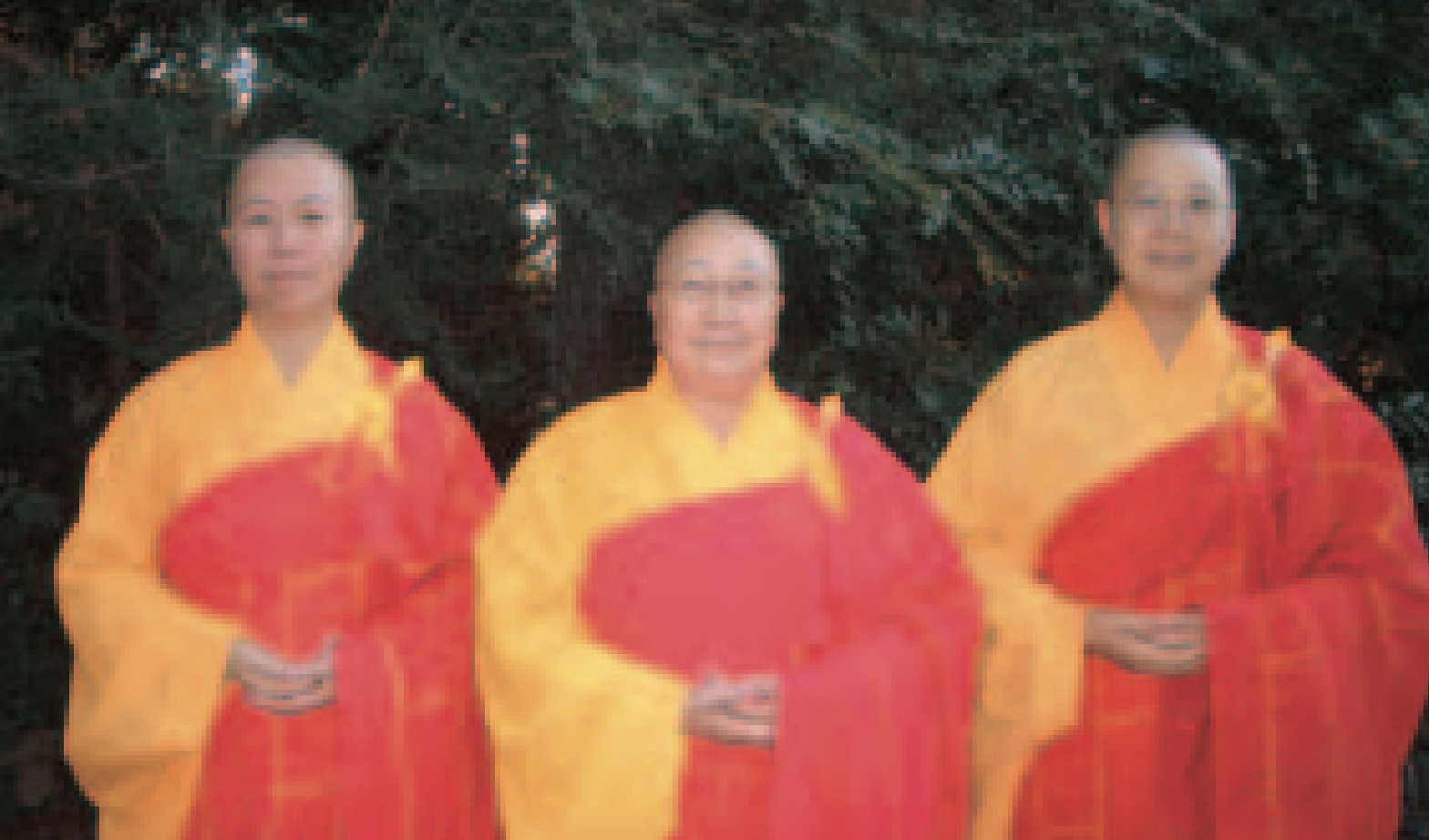



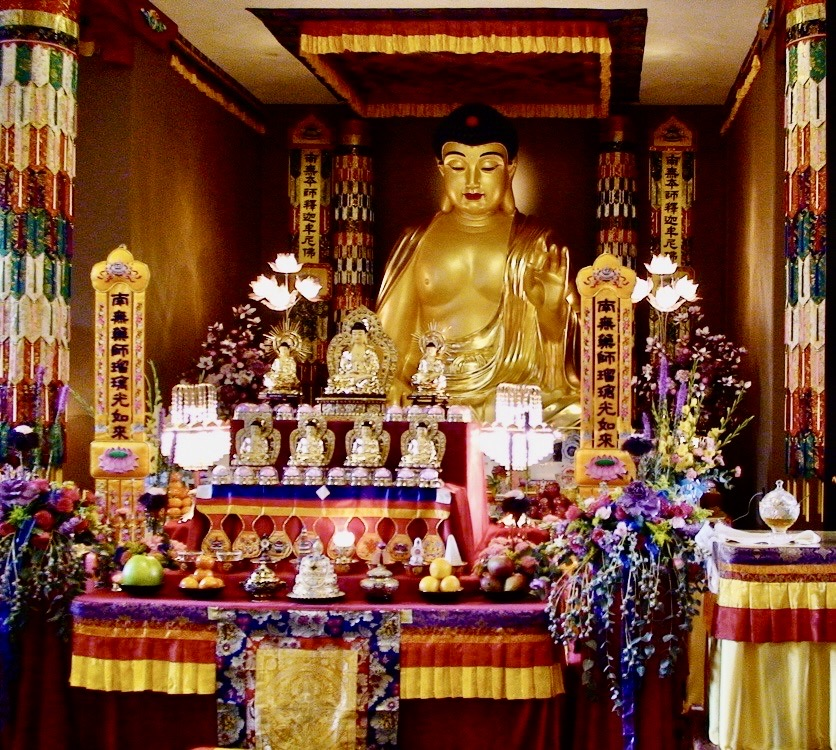


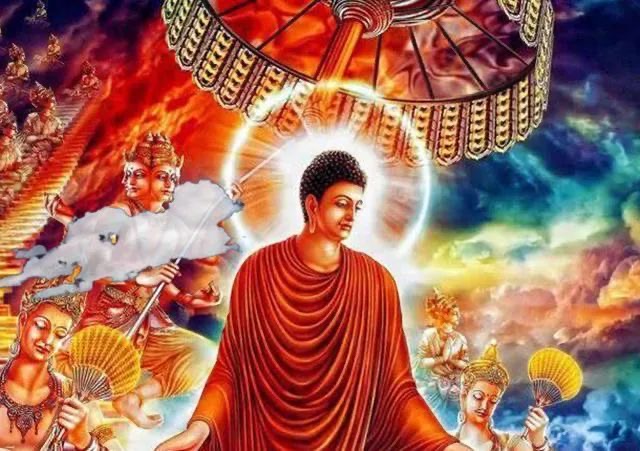


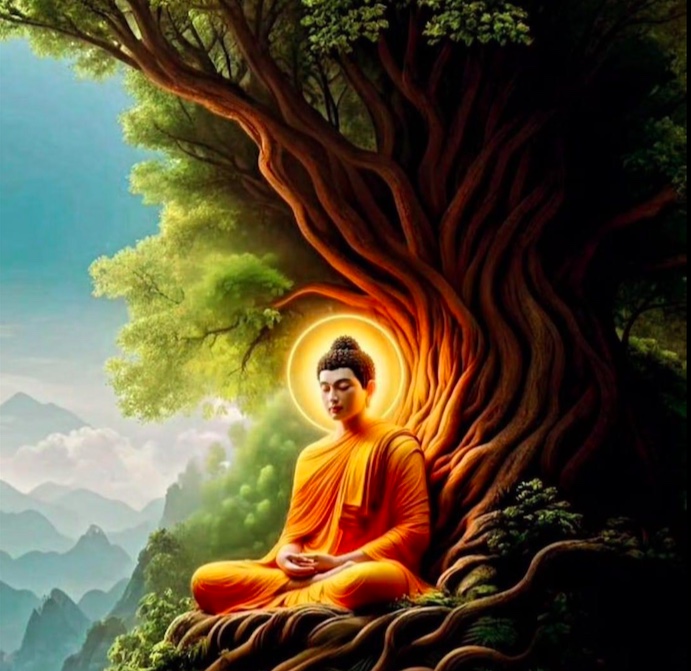



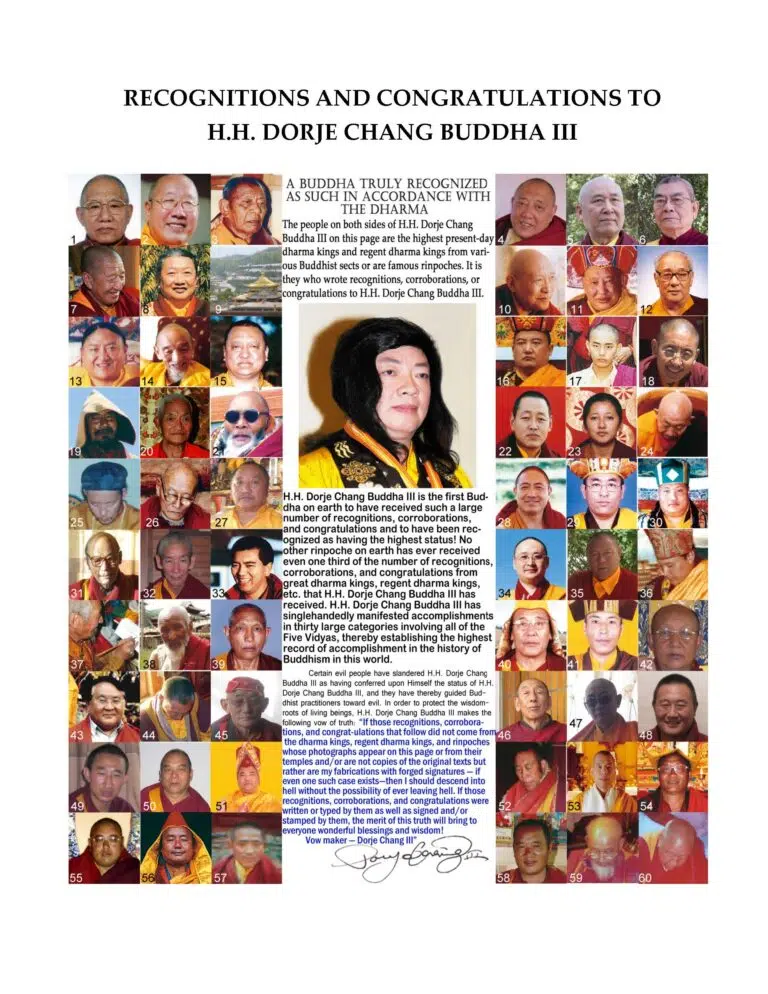
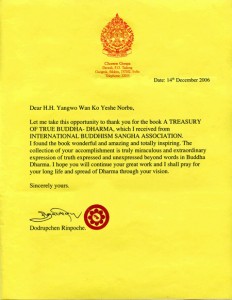


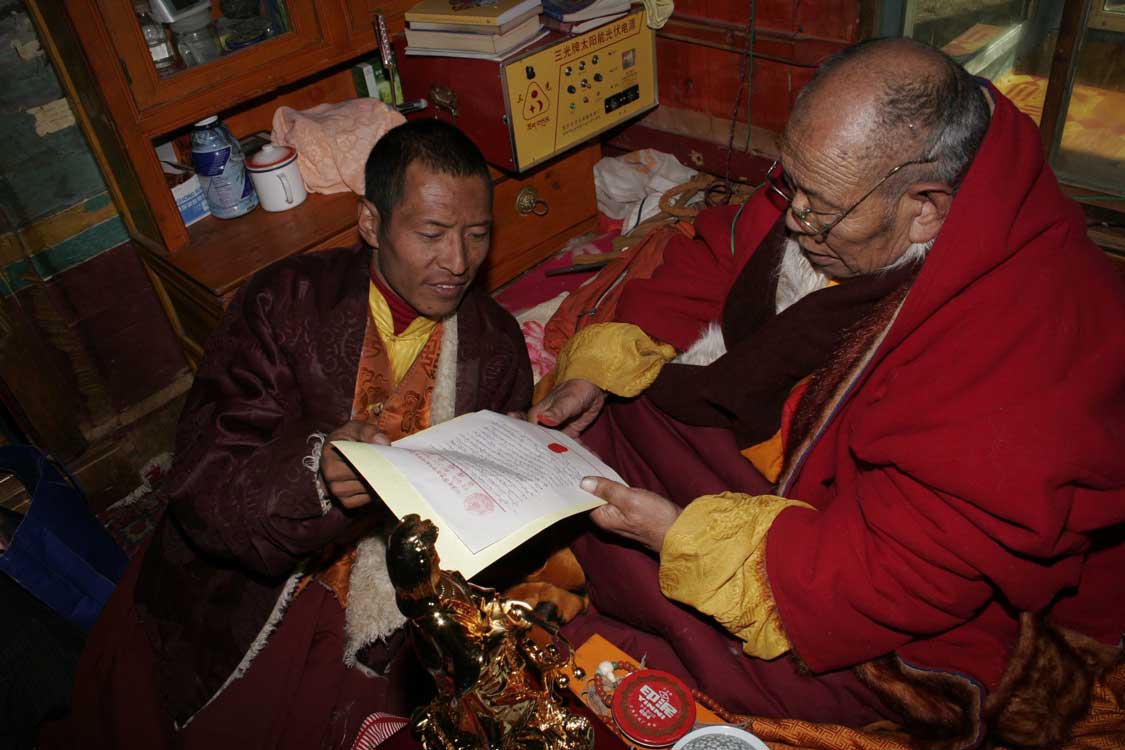


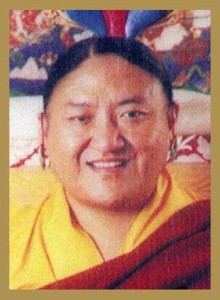
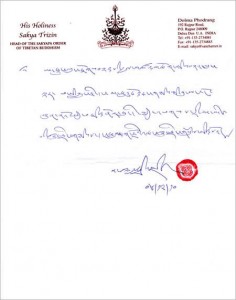

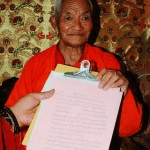

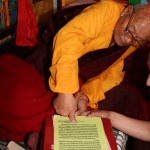

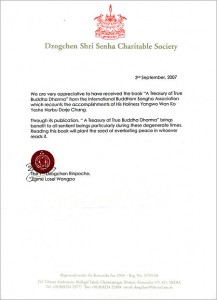

 Respected Khenpo Chucheng Qupei, whose status as khenpo was conferred upon him by H.H. Dharma King Sakya Trizin, respectfully praised H.H. Dorje Chang Buddha III Wan Ko Yeshe Norbu, as follows: “His Holiness is the supreme holder of the 84,000 Buddha-dharmas, the one who is in charge of all dharma methods of Buddhism. His Holiness was the first sambhogakaya Buddha in the dharmadhatu.”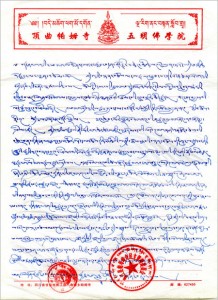

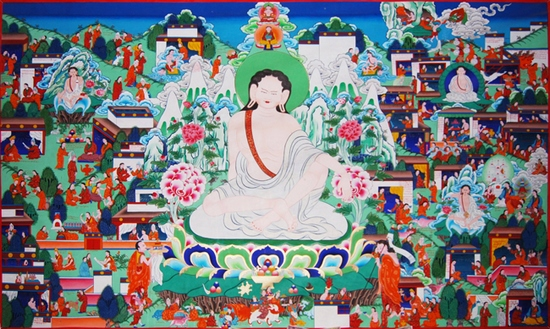


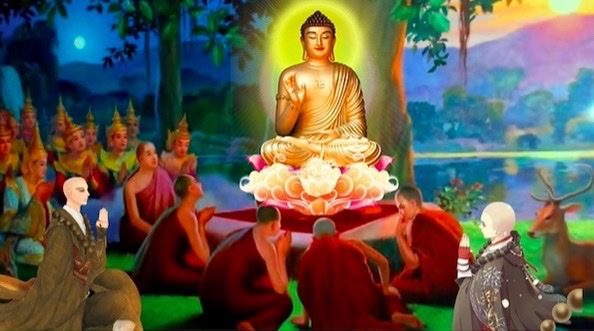

 Peace LiLy