Gaomin Temple One of The Greatest Zen temples In China

Gaomin Temple One of The Greatest Zen temples In China

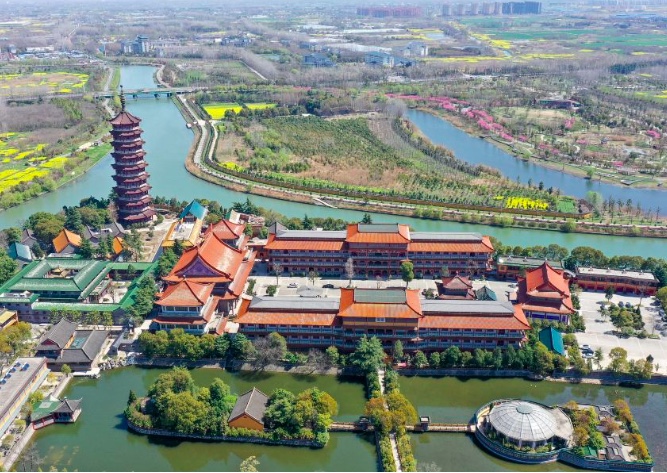
Gaomin Temple (Chinese: 高旻寺; pinyin: Gāomín Sì) is a Buddhist Temple in Yangzhou, Jiangsu Province of China. The temple is situated in a semi-rural setting about 7 km south of downtown Yangzhou, on the western shore of the Old Channel of the Grand Canal of China, just south of its junction with the Yizheng-Yangzhou Canal.

Gaomin temple was first built in the Sui dynasty, and achieved its largest area in the Qing dynasty, when it was expanded twice. In 1651, Tianzhong Tower was built, as well as a temple next to it called the Tower Temple. During the Kangxi Emperor‘s (r. 1661–1722) stay in the temple in his fourth southern tour, he climbed on TianZhong Tower, overlooking the scenery, which was very beautiful and vast. Then named the temple for Gaomin Temple. At that time, Gaomin Temple, Zhenjiang’s Jinshan Temple, Chengdu’s Geyuan Temple and Xindu’s Baoguang Temple were known as the greatest four Zen temples.

Buddha Tower and TianZhong Tower By Jimmy Nov 2019

Water Pavilion and Zen Meditation Hall By Lisa Su Feb 2016

In ancient times, a great number of people in the temple became accomplished through the practice of zen. At the Gaomin Monastery in Yangzhou, basically every seven days one person would awaken to zen, becoming enlightened and accomplished. Last century, there were several Holy monks reached enlightenment from Gaomin Temple Zen seven-day retreat, such as XuYun ( 虚云), YiZhao( 意昭) and BenHuan (本焕).

Gaomin Temple’s zen practice was truly inexplicable but unfathomably profound. Gaomin Temple was famous for its strict precepts and Zen style. There were very strict and even cruel rules for monks participating in Zen seven-day retreat.

First of all, in ancient times when someone entered the Gaomin Monastery to practice zen, that person would first have to sign an agreement. That agreement was very simple. To put it bluntly, they agreed that they could be beaten to death with impunity. The one who beat them to death would not have to lose his own life. Additionally, they agreed to voluntarily carry out the dharma rules of the monastery. After they entered the monastery, they had to give up all of the dharmas that they previously learned. As soon as one arrived at Gaomin Monastery and entered the zen hall, one could not apply any previously learned dharmas.

Five people carried cudgels. Those five were called “the five great cudgel carriers.” Their specific task was to beat people. The practitioners had periods of running zen, each of which lasted the time it took for a stick of incense to burn from top to bottom. The stick of incense was not long. The practitioners had to jog. In the zen hall, many practitioners formed a circle and jogged. As they jogged, one of the cudgel carriers would strike his cudgel against something, which made a loud noise. As soon as he struck his cudgel against something, that loud noise sounded. When the jogging practitioners heard the striking sound from the cudgel, they had to immediately stop jogging. They were not allowed to jog even one more step. When the striking sound of the cudgel sounded again, they had to immediately resume their jogging.
Photo by Klub Boks on Pexels.com

As soon as the striking sound from his cudgel sounded, if you were still jogging, you would be taken aside and beaten to death. If you were not beaten to death, you were at the very least maimed. Thus, the minds of those practitioners were of course extremely focused. They were always focused on the sound of the cudgel. They were always fearful that they would be taken aside and severely beaten for continuing to jog after the striking of the cudgel sounded, or, if they had stopped jogging, for not immediately resuming their jogging after the striking of the cudgel sounded.

There were sitting periods as well, which lasted as long as it took for a stick of incense to burn from top to bottom. As soon as they sat down, the cudgel carriers in back of them would keep an eye on them. While sitting, the practitioners were not allowed to move in any way. The practitioners were absolutely forbidden to move. They were not permitted to recite the name of any Buddha or chant any mantra. If one was seen moving a bit, he was taken aside and severely beaten, to the extent of possible death. Therefore, after they sat down in a settled posture, as soon as the striking sound of the cudgel carrier’s cudgel could be heard, they did not dare move. They had to remain stiff for as long as the incense stick burned. They did not dare move in the slightest. The focus of their minds increased a hundredfold because they feared that they would inadvertently move, be taken aside, and be beaten, resulting in injury, deformity, or death.

There was also a rule of drinking water. The practitioners had to go to the east side to draw water and then carry the water with both hands to the west side. Only then could they drink the water. Additionally, the cup of water had to be completely filled. If a drop of water spilled to the ground as they were carrying the cup with both hands, they were taken aside and severely beaten.

Thus, the consciousness of those who practiced zen there did not wander. They did not think of other things. They did not rest. When they ate, they were not even allowed to make the sound of chopsticks hitting the bowl. As a result, their consciousness was forced to naturally not dare think of other things. Therefore, it is only natural that after our consciousness is united, we will not think things over and will not be distracted. Everyone fears being beaten to death. When you fear being beaten to death and death is used to force you, then you have no other choice. You must seriously deal with the matter. That is why in such circumstances it is very easy to cut off mistaken thinking. Through force, your thoughts are cut off. When your thoughts are cut off through force, you original nature emerges. As soon as your original nature emerges, you have broken through in your zen practice.

Photo by Pixabay on Pexels.com

Therefore, by and large, at each seven-day retreat someone broke through in his zen practice at that monastery. Basically, there would be one breakthrough every seven days. How did they know someone broke through? The day someone broke through, he was ordered to write a verse for others to hear, enabling the abbot of the zen hall and the zen master to recognize him. That practitioner was later tested again to see whether he truly awakened to the truth through the practice of zen, whether he understood his mind and saw his nature.

I have great admiration for those monks who were willing to give up their lives in pursuit of the true Buddha Dharma.

Gaomin Temple One of The Greatest Zen temples In China

Link:https://peacelilysite.com/2022/09/21/gaomin-temple-one-of-the-greatest-zen-temples-in-china/

#Buddhism#ZenBuddhism#ZenTemple#ChineseTemple#GaominTemple#ZenPractice#ZenSevendayRetreat#XuYun#Meditation#ZEnMaster#Monastery

Source: https://en.wikipedia.org/wiki/Gaomin_Temple, https://learntruebuddhism.com/the-great-dharma-of-zen-expounded-by-h-h-dorje-chang-buddha-iii/

The Environment Is in You

STUDENT CONTEST

Photography and Original Illustration Contest

Sabine Wolpert (15)

The Environment Is in You

Sabine Wolpert (15) – California, U.S.

As a little kid, I thought that life was like a flat line with bumps and dips rarely occurring. The news of floods, earthquakes, and fires might flash across the news but they were never close enough to really touch my life. Now that I’m older, these natural disasters are closer to where I live. The rainy season seemed shorter than I remembered and signs started to appear in restaurants and hotels saying “save water” or “minimize your water use.” 

When fires got really close, little pieces of ash, like black rain, would fall from the sky. Soon I learned that these events were not random, and I realized how responsible we were, how responsible we are. I began to learn how connected we are to our environment. I began to realize that it mattered whether I kept the water running for that extra minute or left the hose on for too long. When the fires got so close to our house that evacuation was a threat, I had to pack a bag and look at the forest outside wondering whether it wouldn’t be there in a month or a week or tomorrow. 

I have been lucky enough to live in one of the most beautiful places in the world. I get to see the ocean, the redwood forests, and thousands of blossoms hanging over daffodils in the spring. It’s dark enough at night to see a thousand stars and quiet enough in the morning to hear birds and bees. I have grown up in nature, and I am so saddened to see our earth deteriorating at our hands. I think that people can become so used to our luxuries that we forget how fragile and impermanent they can be. I hope my artwork can help people remember how connected to the environment we are. I think we all need to remember that we live in the environment and it lives in us. We breathe the same air as butterflies and our hair gets blown by the wind that sways tree branches. We must come together to save our land because it will not last if we continue to treat it as disposable. It is our responsibility as people to save the earth that provides us life.

Marguerite Baxter

Marguerite Baxter (18) – Minnesota, U.S.

I was walking down my alley, a place that I visit everyday. It was spring and the snow was melting into puddles. When I looked into the puddle, I could see a perfectly clear image of myself and my surroundings. In this moment, I understood how I was a part of the environment and Earth. The reflection of my small hand as I recognized this symbolizes my connection to the environment. Living in a city, natural and man-made beauty is intermixed. Both exist together, but not always in harmony. I believe that all of these things can be beautiful together, but they must respect one another.

This work is a love story to the planet, as I appreciate that in the tiniest puddle a whole environment can be reflected. What a beautiful and miraculous thing. I was taking a moment to see myself as a part of that environment, not separate but a part. Reaching out and placing myself in it. I loved that puddle and I loved the asphalt that looked like a million little stars. I want this work to communicate the tiny details that people so often walk by and ignore. There are truly millions of miracles around us all of the time: the perfect circles that raindrops make in puddles, the way that our bodies can heal themselves, how still water can perfectly reflect like a mirror. This earth is amazing and resilient. This recognition is the first step to understanding how to solve our problems. It starts with love. We must love our environment and recognize all of the beauty in it to become passionate protectors of it. We are not more powerful than nature. We are nature.

Ellie Knight

Ellie Knight (16) – North Carolina, U.S.

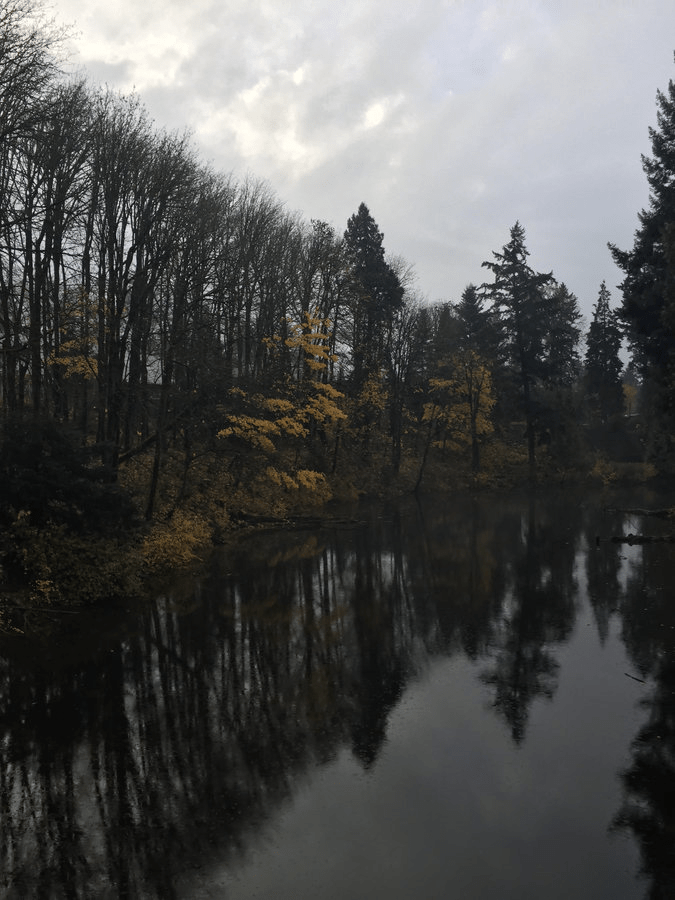
The world creeps up on you in the most unexpected ways sometimes. In the beginning, you may not even notice any changes, but it makes itself known pretty quickly. The excerpt written by Robert Hass inspired this photograph as a reminder that the world wasn’t always like this. My photo reflects our environment from two different times, one where climate change seemed as though it wasn’t an issue and one where its stark existence is hitting so close to home. 

I like to show my passion for photography through seemingly basic pictures that take on a double meaning. The side with trees looks way more lively than the reflection it shows in the water. 

Climate change directly influences the way autumn appears—the warmer air stunts the development of coloring within the leaves. The noticeable delay in autumn color has caused the season to become a three-day homage. Most people know about climate change, but it goes without a word, just like autumn leaves. I noticed the significance of the color yellow, which can represent a joyful, energetic mood. The problem with our society right now is that no one has that spark of energy to save our planet; we’ve lost our yellow. To quote Hass, it is in our best interest to “recover an elder imagination of the earth.” If my photograph could be used to communicate to my peers, I would want it to say that the world around us is the only planet we get. It’s our only chance at life, and we need to get back to a time when these global forces weren’t so life-threatening and find the yellow within ourselves to do what we can now. If you look closely at the reflection, you can see some raindrops. Those droplets, however, make the reflection a bit blurry. This documents my feelings by expressing that environmental issues, like climate change, are still a little blurry to me. Everyone starts somewhere, and there is always room to learn. The environment is in you, and you just have to make an effort to bring it out and show the world what it really means to you.

Romina Arredondo

Romina Arredondo (18) – Naucalpan, Mexico

The Face of Progress

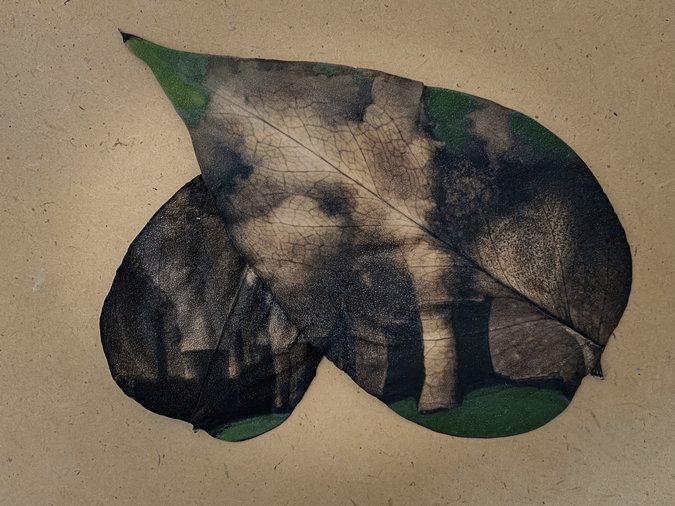
A leaf rotten from its center.
A dark stain that at its fervor steps burns.
A leaf without precedents nor relations.
I am the only witness of its existence.
And even though I don’t watch, it lives and dies.

Observant, I find the stain taking shape in its expansion. 
Clouds of steam push towards the edges of the leaf
Unpainting every green brush stroke with indifference.
Agonizing, the leaf talks to me through its pattern
and its drawing has the face of progress.

Two sentences inspired the creation of my project. Linda Hogan wrote, “What a strange alchemy we have worked, turning earth around to destroy itself, using earth’s own elements to wound it.” And, Wendell Berry wrote, “The environment is in you, it’s passing through you, you’re breathing it in and out, you and every other creature.” Both statements address the arrogance and impudence of human beings who feel that they are the owner of everything and then become destroyers. The process that I carried out to embody the idea was to put an acetate with a photo of a factory on a leaf of a plant called Pothos, so that it would be printed under the sunlight.

We find so many resources in the nature environment, and instead of taking care of and thank that source of wealth, man is coldly exploiting it. Hand in hand with the above, we have built a hierarchy in which we, as humans, are above everything and that is now part of our molding, so we ignore the fact that as living beings that make up the same world, we are equal. As individuals we exclude ourselves from what we consider to be resources, and we turn them into products that unbalance the environmental order.

The Environment Is in You

Link:https://peacelilysite.com/2022/09/19/the-environment-is-in-you/

#Environment#StudentContest#globalonenessproject#PhotographyandOriginalIllustrationContest#GlobalWarming

Source: https://www.globalonenessproject.org/stories/winners-and-finalists-environment-you#main-content=

Zilong Wang’s Bike Ride Across The U.S. On The White Dragon Horse

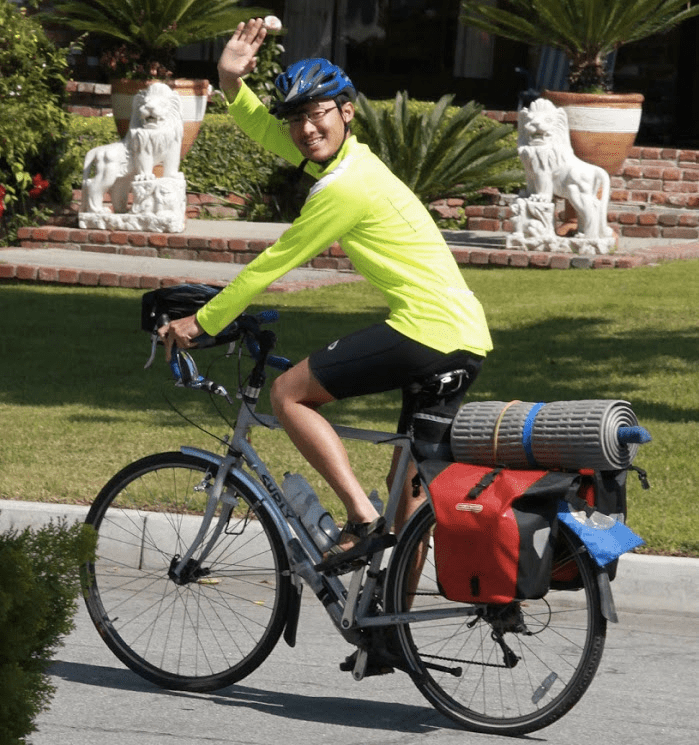
Zilong Wang’s trip connected him with strangers across the country: “It really gave me a lot of faith in not just the U.S., but also in humanity in general.” (Courtesy Zilong Wang)

Zilong Wang’s Bike Ride Across The U.S. On The White Dragon Horse

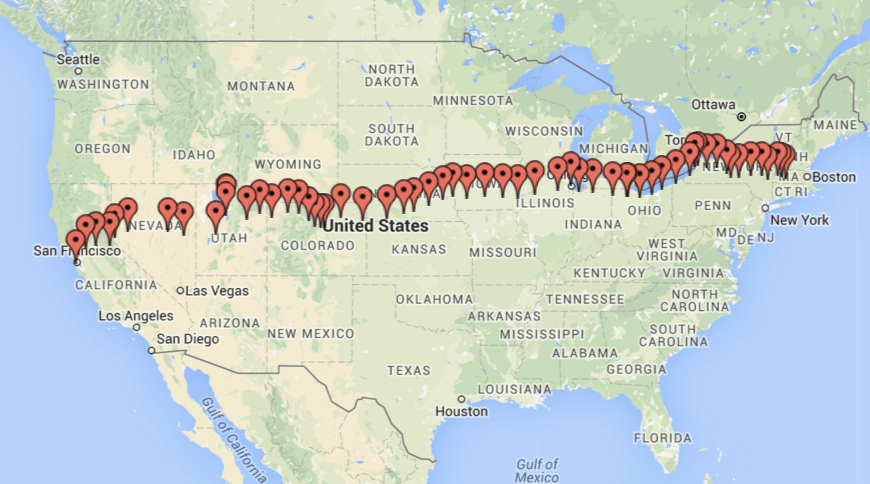
Zilong Wang grew up in Shanghai, China, and first came to the U.S. for college. After graduation he bicycled solo across the country, relying on the generosity of strangers to provide lodging. He recently gave up his job at a firm specializing in corporate environmental sustainability to undertake an around-the-world bicycle pilgrimage to help raise ecological and spiritual awareness, especially in China. Below is the story about Zilong Wang. It was written for Bicycling magazine by John Brant.

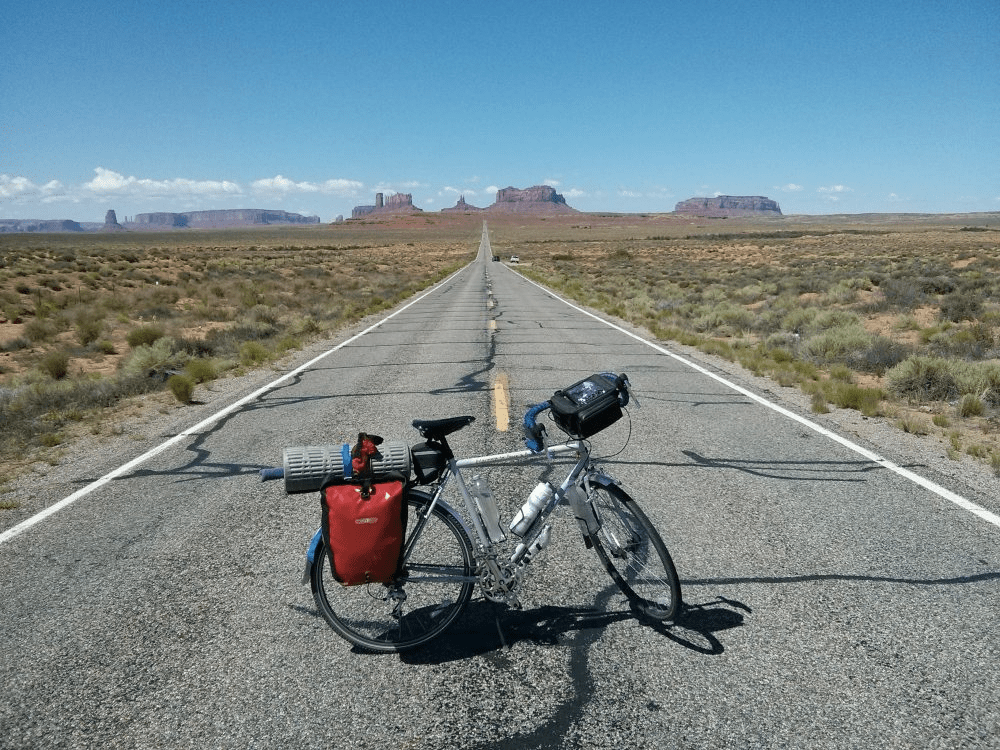
Zilong chose Hampshire College in Amherst, Massachusetts…a non-traditional school without grades. A couple of Hampshire alumni had decided to learn about the U.S. by riding across the country by bicycle. They’d survived the adventure. Zilong liked the idea, and, after graduation, he found the bike he wanted to ride. It was a Surly Long Haul Trucker. It wasn’t fancy. But it was…right.

“And it’s a silver-white color,” he says. “And as soon as I saw that bike, I knew the exact name for it. It’s the ‘White Dragon Horse.'”

“I’ve been riding the same bicycle now for five years,” I say, “and I have yet to name it. But what made you feel it had to have a name?”

“I didn’t want to give it a name, but the journey called for a name. The White Dragon Horse is a mystical creature from the story ‘Journey to the West’ — it described a Chinese monk who walked all the way from China to India to bring back the Buddha’s teaching. And the horse that the monk rode was the White Dragon Horse. As soon as I saw the bike, I knew that the bike wanted a name.”

Zilong’s White Dragon Horse (Courtesy Zilong Wang)

Part of what attracted John Brant to the story was the audacity of the journey. Another part of the attraction was Zilong’s daily plan.

“He decided, every night, he was going to knock on the door of a stranger, knock on the door and ask if he could pitch his tent in the backyard,” Brant says.

“I had no confidence that it would work at all,” Zilong says. “So the first night, I could not work up the courage. So I stayed in an empty Boy Scout camp, but there were so many mosquitoes. I got 30 bites. And when I tried to use a hose there to shower, a whole bunch of ants poured out because it wasn’t used for so long. That first night out was just so miserable that I decided, ‘OK, whatever. I’m gonna knock on doors tomorrow.’ And from that day on, every single night that I knocked on a door, somebody said ‘yes’ and invited me in.”

“So nobody ever said, ‘No, try some other neighbor?'” I ask him.

“Oh, most people say ‘no,'” Zilong says. “One in five say ‘yes.'”

Sometimes Zilong thought about turning back. The doubts passed, and the better moments arrived.

“Those moments are when I connect with a stranger, when the next morning, when I depart, we both have tears in our eyes, when I feel this connection with nature, feel this trust in the universe — those are just worth any of the pain, the discomforts.”

Warm Encounters, Coast To Coast

Between Massachusetts and California, Zilong connected with lots of strangers. He remembers with special fondness some of the ones who most surprised him.

“The Christian Fundamentalists, the Republicans — at that time it would be Romney and now the Trump supporters. Essentially, for the majority of the trip in the middle of the country, I was staying every night with corn farmers, with people who were volunteering at the church — those who I had thought are close-minded or xenophobic or all these labels. They were the most welcoming and warm and goodhearted people.”

Wang’s route, from Massachusetts to California. (Courtesy Zilong Wang)

Would those people have been as “welcoming, warm, and goodhearted” to anyone asking for tent space and perhaps a cup of tea? Zilong wonders about that in a blog he wrote along the way.

“Just imagine: If I were Black, I would be a good target for some paranoid neighborhood watch. If I were Hispanic, people might wonder if I am in the country legally. If I were Middle Eastern, I might look like a terrorist to some. If I were a white American, I wouldn’t be as interesting as someone from China.”

And he was on a bicycle. Maybe people figured, “What harm could be in him?”

“For all the magic of his crossing, for all the cosmic connections that were forged, there was little conventional drama—no fights, no violence, no steamy love scenes. Just a young man pedaling a bicycle all day and talking quietly to people in the evening.” — John Brant

“The people’s home that I went into, they say, ‘Aren’t you afraid? Have you met any bad people?'” Zilong recalls. “For that entire 75 days, I have met exactly zero bad person — not even a harsh word or ill intention from anyone, only goodwill after goodwill. So it really gave me a lot of faith in not just the U.S. but also in humanity in general.”

True Karma

“In general, his entire journey, I think, went almost like a dream: good luck with the weather, good luck with his bicycle,” Brant explains. “Everything seemed to work really well. His health was good. He didn’t get injured, didn’t get ill. Everything went pretty well. Until he reached the end.”

“When I was riding through the U.S., I didn’t even bring a lock with me,” Zilong says. “I never locked my bike once. I’d leave it outside Walmart, at museums, outside little towns and go away for half an hour, an hour. Come back, the bike is still there — nobody touched it. Three weeks after arriving in San Francisco, the bike was stolen while locked as I went into a fruit stand to get some oranges, just within five minutes.”

Zilong called the police. He described the bike. One of the officers wrote down what he said. Zilong was not encouraged to think the White Dragon Horse would turn up.

“The loss is greater than the bike. If, as he’s always believed, the stolen bicycle he’d bought back in Shanghai was taken from him as some sort of cosmic retribution, what does it mean that he’s now also lost the White Dragon Horse—the honestly acquired engine of his transformation and his great understanding and appreciation of so much of life, knowledge, and America? Is this really, he thinks, how the Cosmic Tale of the White Dragon Horse was supposed to end? And, if so, what to make of it? What is the lesson?” — John Brant

Photo by Mikhail Nilov on Pexels.com

Is this really, he thinks, how the Cosmic Tale of the White Dragon Horse was supposed to end? And, if so, what to make of it? What is the lesson?

The lesson took about 48 hours to reveal itself…and then, it was a beaut. It turned out that a young woman who worked for a company that made bicycle accessories and, hence, knew something about bikes, saw the man who stole the White Dragon Horse with the steed. She thought, “He doesn’t look as if he belongs on it.”

“The guy was dressed raggedly, he was not a cyclist, he was riding against traffic, and the bike was way too big for him,” Brant says. “And this woman, Vanessa, decided, ‘Well, that’s weird. That bike is probably stolen, but what am I gonna do about it?’ Something you see every day in San Francisco. But for some reason, she couldn’t let this go. She couldn’t just let the guy ride away. So she started following him, got closer to him, and the guy pulled up into a doorway of an apartment building. And Vanessa said normally she would never think about doing anything like this — she’d never done anything like this before — but something was telling her, ‘Well, I’m gonna just talk to this man.’

“Finally, she said, ‘This isn’t your bike. This is Paul’s bike!’ The name Paul just jumped into her head. But that was enough to break the ice, and the guy split. It was meant to be. The cosmos was telling her to get this bike back for this man.”

“Yeah, that’s actually the core of the story, and I’m forever grateful for her — Vanessa was her name — for restoring my faith in humanity,” Zilong says.

Continuing His Quest

Who would ask for more than to have his or her faith in humanity restored? And then there’s this question: Who, having ridden across the United States, would ever want to get on a bicycle again?

“So I worked in San Francisco for two-plus years, and one day had this calling that I should go on a journey to the East and ride my bike back to China, where I was from. So nine months ago, I embarked on this journey to the East. A pilgrimage, more or less, around the world once by bicycle in service of the ecological and spiritual awakening of our time.”

“And how’s that trip going?” I ask.

“Very well — well in the sense that a pilgrimage gives you not what I think I want but exactly what I need, including all the hardship and turmoils inside and outside.”

So, the lesson. Perhaps there is no end point to the quest for enlightenment. Maybe once one begins accumulating faith in humanity, mysteriously, the vessel never overflows.

Zilong rides on.

Zilong Wang’s Bike Ride Across The U.S. On The White Dragon Horse

Link: https://peacelilysite.com/2022/09/19/zilong-wangs-bike-ride-across-the-u-s-on-the-white-dragon-horse/

#Bicycling# Bicyclingmagazine#ZilongWang#EcologicalandSpiritualAwareness#Around-the-world BicyclePilgrimage

Source: https://www.wbur.org/onlyagame/2017/07/28/best-of-zilong-wang-john-brant-bicycling

Unique Lotuses in Ink – By Dr. Yuhua Shouzhi Wang

Unique Lotuses in Ink – By Dr. Yuhua Shouzhi Wang

This painting’s arrangement is classically simple and straightforward. The brushwork conveys both simplicity and adeptness. Each lotus stem was painted with just one stroke from top to bottom. The important fact is that the artist dared to adopt an extremely plain and uncreative artistic conception, yet remarkably powerful, seasoned painting skills casually applied are reflected deep within this
painting. This work also reveals the artist’s inner power based on her broadmindedness. Even more wonderful is the fact that no touchups whatsoever were added to the lotus stems to enhance their charm. Painting skills alone were relied upon to capture both the spirit and form of the stems,resulting in a very enuine-looking image. The seedpod, flower, and leaves are in complete concert with one
another. The style is vivacious, elegant, free of conventionality, and wonderfully spellbinding.

Someone who does not believe in the difficulty of painting a lotus stem with just one stroke should try it himself. He will then know how very difficult it is. A work of this quality can only be successfully created by an artist who has reached great heights in painting and whose artistry is devoid of any trace of vulgarity. This is a precious painting in which the extraordinary can be seen within the seemingly ordinary. It is no wonder that Yu Hua Shouzhi Wang was praised by experts as “the unmatched master of lotus flower paintings from ancient times to now” when her artwork was exhibited in the United States Capitol.

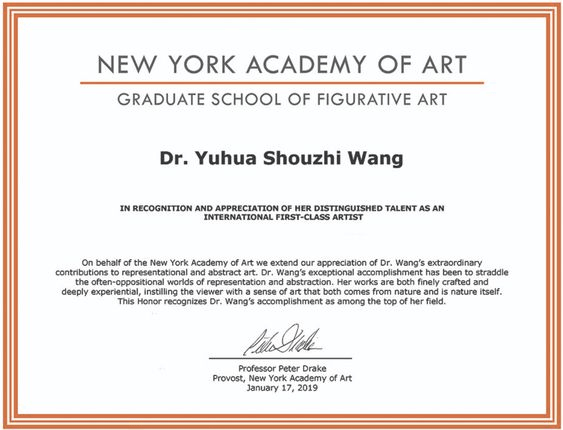
Dr. Yuhua Shouzhi Wang is the Lifetime Honorary Chairwoman of the International Art Museum of America. The museum has a dedicated gallery exhibiting her artworks. Her paintings encompass a broad range of styles and subject matters, including landscapes, animals, flowers, birds, and so forth, all of which have reached the summit of world class artistic excellence. Her artistic achievement has reached perfection at the summit of the “ten ultimate artistries.”

Professor Wang’s works have been exhibited and widely acclaimed in the United States, China, Asia, and Europe. In 2008, the United States Congress held an exhibition of the professor’s works, calling her art a “treasure of the world.” The U.S. Congressional Record chronicled the recognition that “her lotus flower paintings are unsurpassed and are extremely valuable.” Professor Yuhua Shouzhi Wang has also been critically acclaimed by news media that “she fuses vivacity, power, color, scholarly essence, quintessence of stone and bronze inscriptions, spirituality, erudition, and morality into oneness in her art. She is the foremost artist in the world.”

Professor Wang is a person of humility and noble morality. She is modest, unassuming, beneficent and genial. The characteristics of an artist’s paintings essentially reflect the character of the painter.

Unique Lotuses in Ink – By Dr. Yuhua Shouzhi Wang

Link: https://peacelilysite.com/2022/09/14/unique-lotuses-in-ink-by-dr-yuhua-shouzhi-wang/

#ProfessorYuHuaShouZhiWang#Art#Artist#ClassofEase#InternationalArtMuseumofAmerica#TenUltimateArtistries#ArtistofFirstclassstanding#Inkpaintings#LotusPainters

A Story of Transforming Negative Affinity

Photo by Frank Cone on Pexels.com

A Story Transforming Negative Affinity

One day around nightfall, a monk was on his way back to the temple. Suddenly, lightning was striking and it was raining cats and dogs, the rain didn’t seem to be coming to a stop. He thought eagerly,
“What should I do”. Just as he was becoming anxious, a manor was nearby. He ran towards it hoping to be warranted a night’s stay. The manor was enormous, and the servant saw the monk. After asked for the monk’s business there, the servant said, “My master has no affinity with monks. You will need to seek shelter elsewhere.“
The monk replied, “It is raining hard, and there is no other household nearby. If you just provide me a place to stay would be really appreciated.”
“I cannot make the decision, let me go ask for my mater’s permission.” The servant went into the manor, and after he came back, he still refused the monk. The monk asked for the manor’s master’s name after the rejection, and without other options, he hurried back to the temple in the rain.

Three years later, the master of the manor married a concubine, he was very fond of her. One day, the concubine wanted to go to the temple for making offering, the master went with her. In the temple, the master of the manor saw his name written on a plate for meritorious deeds praying. The master was puzzled, and asked a little monk nearby for the reason of the plate.
The little monk replied with a smile, “This is written by the head monk three years ago. There was a night that he hurried back to the temple in heavy rain, and said that there was an almsgiver that he did not build positive affinity with. So the head monk written the plate and chant the prayers for the almsgiver on daily basis to dedicate any merits back to him. Hopefully, their affinity can be transformed to positive. This is as much as I know, the head monk did not provide us with more detail.” When the manor of the master hear what the little monk said, he knew the story and he was regretful. At the end, he became a dedicated almsgiver of the temple.

Photo by Pixabay on Pexels.com

This is a very inspiring story of an old monk, a story to transform “negative affinity”. This mundane world is big yet small, and people often run into each other. A person with great tolerance can understand the fact that “Great kindness and great enmity; others and me are no different.” In addition, the environment and how others treated ourselves should be a catalyst to encourage us. Kindness and enmity are all affinities to help us. On the other hand, those who are shallow and with narrow-minded will hinder themselves from positive affinity, and will aloof themselves from a future with prosperity.
Indeed, to be able to act as the head monk’s heart of embracement might not be easy; however, ” Saints and sages have virtuous actions that we look up to, and have mindsets and actions that are legit and above-board. Though we are not yet at the same extent, but I try to be the same.”


The act of positive thoughts and action can really transform negative affinity. The act of giving is the cause of prosperity, and the action of greed is the cause of poverty. Instead of giving wealth to children, we should leave them with virtue. Have you not noticed? Wealth creates conflict of interest. There are countless incidents where sibling or parents sue each other for money. If our children are well educated and are virtuous, then it is unnecessary to leave them with money.

A Story Transforming Negative Affinity

Link:https://peacelilysite.com/2022/09/14/transforming-negative-affinity/

#BuddhismTeaching#Monk#Buddhism#Affinity#TransformNegativeAffinity#Kindness#GreatEnmity#MoralStorie

The Five People You Meet in Heaven

The Five People You Meet in Heaven

The Five People You Meet in Heaven, by Mitch Albom, an enchanting, beautifully crafted novel that explores a mystery only heaven can unfold. It is a tale of a life on earth. It’s a tale of life beyond it. It’s a fable about love, a warning about war, and a nod of the cap to the real people of this world, the ones who never get their name in lights.

This book is about the meaning of life. What do we humans live for? Eddie, the protagonist, thought his life was meaningless during his lifetime. After his death, he met five people in heaven. These five people, known and unknown, all played a pivotal role in Eddie’s life. They taught Eddie the meaning and value of life. At last Eddie was relieved. The originally heavy soul also became lighter. Each of us is running towards death. Death is not scary. The scary thing is that we do not know how to live.

Eddie is a grizzled war veteran who feels trapped in a meaningless life of fixing rides at a seaside amusement park. As the park has changed over the years — from the Loop-the-Loop to the Pipeline Plunge — so, too, has Eddie changed, from optimistic youth to embittered old age. His days are a dull routine of work, loneliness, and regret.

Then, on his 83rd birthday, Eddie dies in a tragic accident, trying to save a little girl from a falling cart. With his final breath, he feels two small hands in his — and then nothing. He awakens in the afterlife, where he learns that heaven is not a lush Garden of Eden, but a place where your earthly life is explained to you by five people who were in it. These people may have been loved ones or distant strangers. Yet each of them changed your path forever.

Eddie arrives in Heaven, where he meets “the Blue Man.” The Blue Man explains that Eddie is about to journey through Heaven’s five levels, meeting someone who has had a significant impact upon his life or someone on whom his life had a significant impact. Eddie asks why the Blue Man is his first person, and he informs Eddie that, when Eddie was very young, he caused the car accident that killed him. From this, Eddie learns his first lesson: there are no random events in life and all individuals and experiences are connected in some way.

Eddie meets his former captain from the army, who reminds Eddie of their time together as prisoners of war in a forced labor camp in the Philippines. Their group burned the camp during their escape and Eddie, while running away, remembers seeing a shadow move in one of the huts. The Captain confesses that he shot Eddie in the leg to prevent Eddie from chasing the shadow into the fire. This saved Eddie’s life despite leaving him with a lifelong severe limp. Eddie then learns how the Captain died: he stepped on a land mine that would have killed all the men had he not set it off.

Eddie finds himself outside a diner, where he sees his father through a window. A well-dressed woman named Ruby appears and introduces herself to him. Ruby explains that Ruby Pier was named after her by her husband Emile, who built it in tribute to her. Ruby shows Eddie the true cause of his father’s death, which is different from what he had always believed. She tells Eddie that he needs to forgive his father.

Eddie meets his late wife, Marguerite. They remember their wedding, and Marguerite teaches Eddie that love is never lost in death; it just moves on and takes a different form.

Eddie awakens to see children playing along with a riverbed. A young Filipina girl named Tala comes up to him. Tala reveals that she was the little girl from the hut that Eddie set on fire. Distraught, Eddie breaks down both cursing and asking God “why?” Tala hands him a stone and asks him to “wash” her like the other children in the river are doing to one another. Eddie is puzzled, but dips the stone in the water and starts to scrape off the injuries he had inflicted on her. Tala’s wounds begin to clear until she is freed of all the scars. Eddie asks Tala if she knows if he was able to save the little girl before his death. Tala tells him he did manage to push her out of the way. In this way, Tala explains, he also managed to atone every day for her unnecessary death.

In the end, it shows that Eddie’s Heaven is the Stardust Band Shell, where he met Marguerite.

Photo by Mohit Suthar on Pexels.com

One by one, Eddie’s five people illuminate the unseen connections of his earthly life. As the story builds to its stunning conclusion, Eddie desperately seeks redemption in the still-unknown last act of his life: Was it a heroic success or a devastating failure? The answer, which comes from the most unlikely of sources, is as inspirational as a glimpse of heaven itself.

Reading The Five People You Meet in Heaven helped me understand deeper about the law of cause and effect in Buddhism teaching. We live in the web of reincarnation of life and death woven by our own karma. Each one of us is connected by the threads in this vast web. Our thoughts, words, and actions all have a small or big impacts to others near and far. What we humans need now is more love, respect, kindness and compassion, and less conflict, fighting and argument.

The Five People You Meet in Heaven

Link: https://peacelilysite.com/2022/09/11/the-five-people-you-meet-in-heaven/

#TheFivePeopleYouMeetinHeaven#Buddhism#LIfeafterDeath#Death#MitchAlbomKarma#Kindness#Love#Causeandeffect#lawofCauseandeffect

Source: https://en.wikipedia.org/wiki/The_Five_People_You_Meet_in_Heaven, https://www.mitchalbom.com/books/five-people-you-meet-in-heaven/

THE PRICE MAKER [FOOLISHNESS]


Photo by Diego Caumont on Pexels.com

5. THE PRICE MAKER [FOOLISHNESS]

Buddhist Tales for Young and Old, volume 1, Prince Goodspeaker, Stories 1-50

Long ago and far away, there was a king who ruled in Benares, in northern India. One of his ministers was called the Royal Price Maker, and he was a very honest man. His job was to set a fair price for anything the king wanted to buy or sell.

On some occasions, the king did not like his price making. He did not get as big a profit as he wanted. He did not want to pay so much when he bought, or sell for what he thought was not enough. So he decided to change the price maker.

One day he saw a nice looking young man and he thought, “This fellow will be good for my price making position.” So he dismissed his former honest price maker, and appointed this man to be the new one. The man thought, “I must make the king happy by buying at very low prices and selling at very high prices.” So he made the prices ridiculous, without caring at all what anything was worth. This gained the greedy king a lot of money, and made him very happy. Meanwhile, all the others who dealt with the new price maker, including the king’s other ministers and ordinary people, became very unhappy.

Then one day a horse merchant arrived in Benares with 500 horses to sell. There were stallions, mares and colts. The king invited the merchant to the palace, and called upon his Royal Price Maker to set a price for all 500 horses. Thinking only of pleasing the king, he said, “The entire herd of horses is worth one cup of rice.” So the king ordered that one cup of rice be paid to the horse dealer, and all the horses were taken to the royal stables.

5. The Price Maker [Foolishness]

Of course the merchant was very upset, but he could do nothing at the moment. Later he heard about the former price maker, who had a reputation for being very fair and honest. So he approached him and told him what had happened. He wanted to hear his opinion, in order to get a proper price from the king. The former price maker said, “If you do as I say, the king will be convinced of the true value of the horses. Go back to the price maker and satisfy him with a valuable gift. Ask him to tell the value of one cup of rice, in the presence of the king. If he agrees, come and tell me. I will go with you to the king.”

Following this advice, the merchant went to the price maker and gave him a valuable gift. The gift made him very happy, so that he saw the value of pleasing the horse dealer. Then the merchant said to him, “I was very happy with your previous evaluation. Can you please convince the king of the value of one cup of rice?” The foolish price maker said, ‘Why not? I will explain the worth of one cup of rice, even in the presence of the king.”

So the price maker thought the horse dealer was satisfied with his cup of rice. He arranged for another meeting with the king, as the merchant was departing for his own country. The merchant reported back to the old price maker, and they went together to see the king.

All the king’s ministers and his full court were in the royal meeting hall. The horse merchant said to the king, “My lord, I understand that in this your country, my whole herd of 500 horses is worth one cup of rice. Before I leave for home, I want to know the value of one cup of rice in your country.” The king turned to his loyal price maker and said, “What is the value of one cup of rice?”

The foolish price maker, in order to please the king, had previously priced the herd of horses at one cup of rice. Now, after receiving a bribe from the horse dealer, he wanted to please him too. So he replied to the king, in his most dignified manner, “Your worship, one cup of rice is worth the city of Benares, including even your own harem, as well as all the suburbs of the city. In other words, it is worth the whole kingdom of Benares!”

On hearing this, the royal ministers and wise men in the assembly hall started to roar with laughter, slapping their sides with their hands. When they calmed down a little, they said, “Earlier we heard that the kingdom was priceless. Now we hear that all Benares, with its palaces and mansions, is worth only a cup of rice! The decision of the Royal Price Maker is so strange! Where did your highness find such a man? He is good only for pleasing a king such as you, not for making fair prices for a merchant who sells his horses from country to country.”

Hearing the laughter of his whole court, and the words of his ministers and advisers, the king was ashamed. So he brought back his former price maker to his official position. He agreed to a new fair price for the herd of horses, as set by the honest price maker. Having learned a lesson, the king and his kingdom lived justly and prospered.

The moral is: A fool in high office can bring shame even to a king.

5. The Price Maker [Foolishness]

Link: https://peacelilysite.com/2022/09/10/the-price-maker-foolishness/

INTERPRETER’S INTRODUCTION – BUDDHIST TALES FOR YOUNG AND OLD, VOLUME 1, STORIES 1-50

#Buddhisttalesforyoungandold #Buddhiststories #storiesforkids #moralstories #Buddha #Jatakastories #PansiyaPanasJataka #foolishness #Banares #India

Copenhagen World Capital of Architecture for 2023

Copenhagen World Capital of Architecture for 2023

Copenhagen is a unique city, characterized by its canals, cycling culture, magnificent historical buildings, awe-spiring architecture structures, and happy locals. It is actually known as being one of the happiest city in the world.

The architecture of Copenhagen in Denmark is characterised by a wide variety of styles, progressing through Christian IV‘s early 17th century landmarks and the elegant 17th century mansions and palaces of Frederiksstaden, to the late 19th century residential boroughs and cultural institutions to the modernistic contribution of the 20th century such as Arne Jacobsen‘s National Bank and SAS Royal Hotel.

Copenhagen is recognised globally as an exemplar of best practice urban planning. Its thriving mixed use city centre is defined by striking contemporary architecture, engaging public spaces and an abundance of human activity. These design outcomes have been deliberately achieved through careful replanning in the second half of the 20th century, with notable contributions both by leading international architects and a wave of new successful Danish architects.

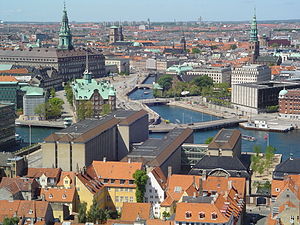
View of Copenhagen from the tower of the Church of Our Saviour

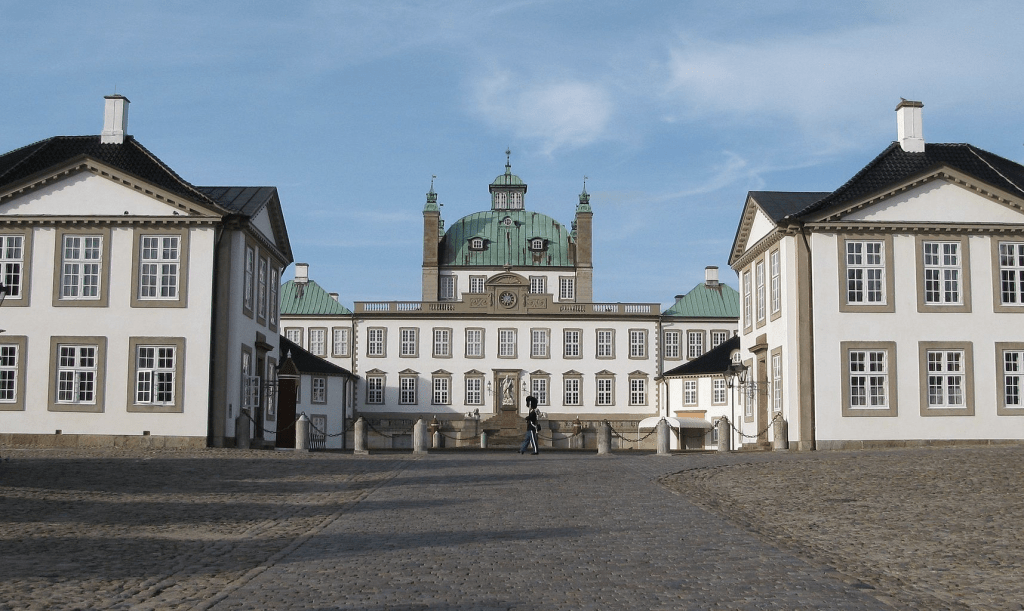
Baroque buildings in Copenhagen include the Round Tower and the Church of Our Saviour as well as Fredensborg Palace.

Fredensborg Palace

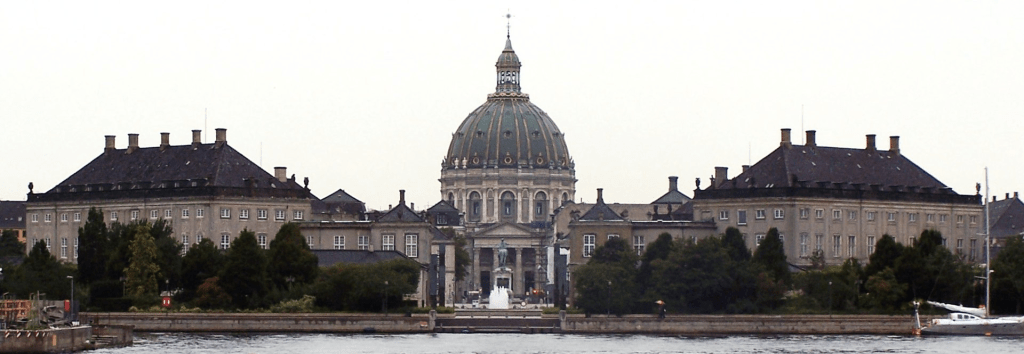
Frederiksstaden was constructed during the reign of Frederick V in the second half of the 18th century and is considered to be one of the most important Rococo complexes in Europe. It was developed to commemorated the 300 years jubilee of the House of Oldenburg taking the throne in Denmark. Leading the project was A. G. Moltke, with Nicolai Eigtved as the main architect. Frederiksstaden has Amalienborg Palace and Marble Church at its centre and together they create an axis that was extended with the creation of the new Copenhagen Opera House in 2005 on the other side of the harbour basin. The district is characterized by straight broad streets in a straight-angled street layout. The streets are lined by bourgeois houses, mansions and palaces. Another important building in the district is the royal Frederiks Hospital was Denmark‘s first hospital in the present-day meaning of the word. It now houses the Danish Museum of Art & Design.

Frederiksstaden has Amalienborg Palace, the Danish residence palace complex with François Joseph Saly’s equestrian statue monument to King Frederik V of Denmark in the middle of the octagonal plaza, and Frederik’s Church at its center.

Copenhagen’s urban development in the first half of the 20th century was heavily influenced by industrialisation. After World War II, Copenhagen Municipality adopted Fordism and repurposed its medieval centre to facilitate private automobile infrastructure in response to innovations in transport, trade and communication. Copenhagen’s spatial planning in this time frame was characterised by the separation of land uses: an approach which requires residents to travel by car to access facilities of different uses. This planning scheme largely aligned with the modernist framework endorsed by Le Corbusier in such conceptual projects

In 1962, Danish architect Jan Gehl shifted the trajectory of Copenhagen’s development by pedestrianising key parts of its city centre with the goal of enhancing the on-street conditions for humans.Rigorous field studies informed Gehl’s conclusion that city spaces perform best when they encourage the use of public spaces.[10] Gehl observed that the quality of life between buildings is diminished when substandard architecture, poor safety and overwhelming car infrastructure limit human engagement in public places.[10] Gehl therefore commenced the replanning of Copenhagen in 1962 by pedestrianising Strøget: the city’s main interior transit artery.

The pedestrianisation of Strøget marked as a major change in the approach of Copenhagen to urban life. The plan was much greater emphasis on pedestrian and bicycle access to the city at the expense of cars. This approach has in turn become internationally influential.

Strøget, Amagertorv. Olga Itenberg • CC BY 2.0

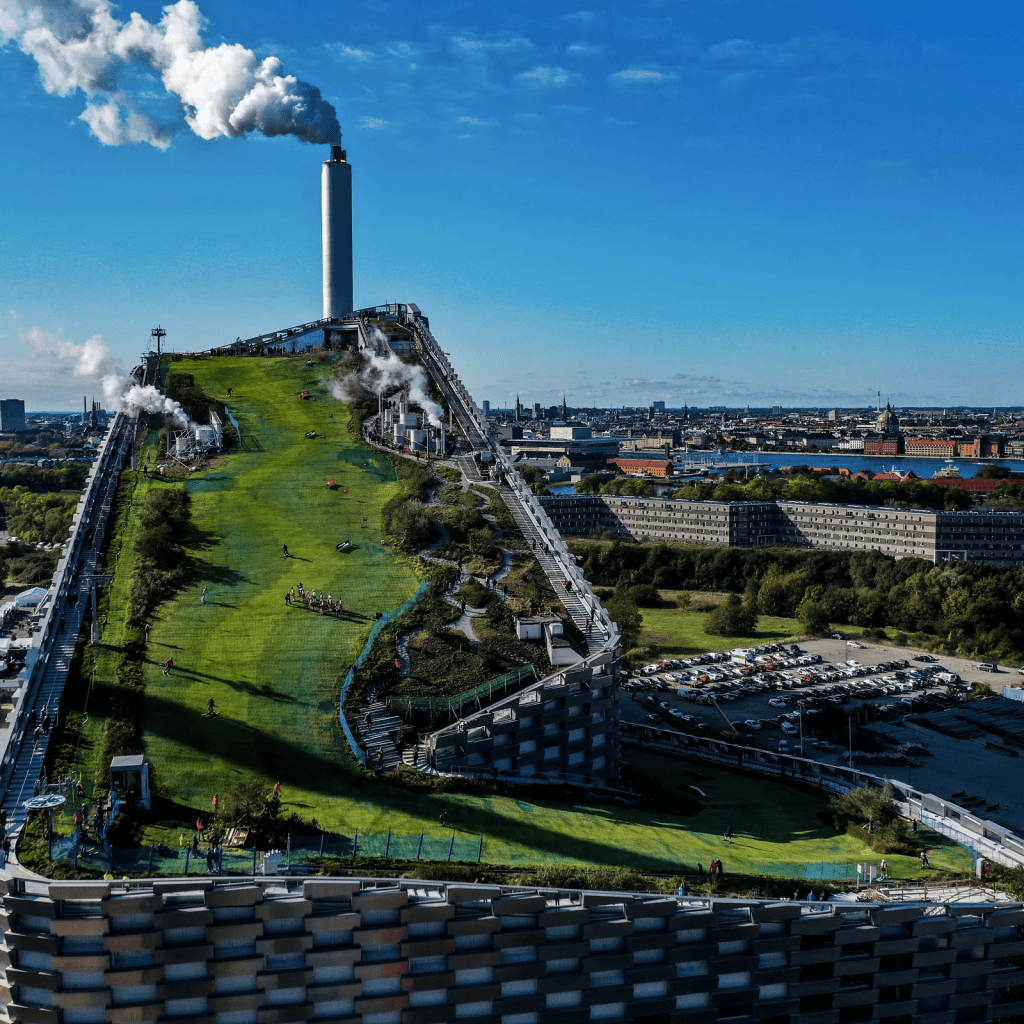
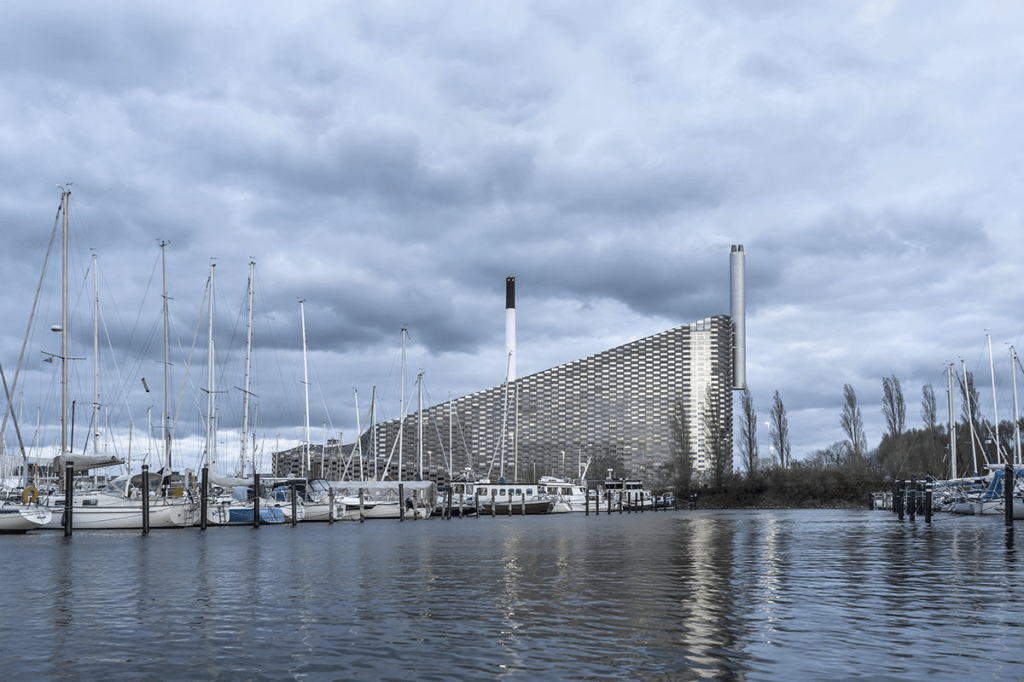
Designed by Danish architect Bjarke Ingels, CopenHill is a multi-use waste-to-energy plant. CopenHill is a real architectural marvel, combining greenery, beauty, waste management technology, sports venues and tourist attractions. The center is a ski slope, along the sides are several waste-to energy plants, the exterior supports multiple climbing walls, and there is a cafe on a hill. This effective design is worthy of other cities to learn and emulate. Skiing down the 1,300-foot green slope is surely a unforgettable experience.

CopenHill

Copenhagen is a marvelous city to see by bike. Grab a coffee from Prolog before heading south along the Cykelslangen (bike snake), which leads to the other side of the harbor. Bike onto Olafur Eliasson’s Circle Bridge, then ride back over the harbor on the new Lille Langebro bridge. Continue along the water to Nyhavn before riding back over the harbor along the Inderhavnsbroen, AKA the Kissing Bridge. In Christianshavn, you’ll bike past the old Noma space and Restaurant 108—grab a pastry on the way—and over the Butterfly Bridge.

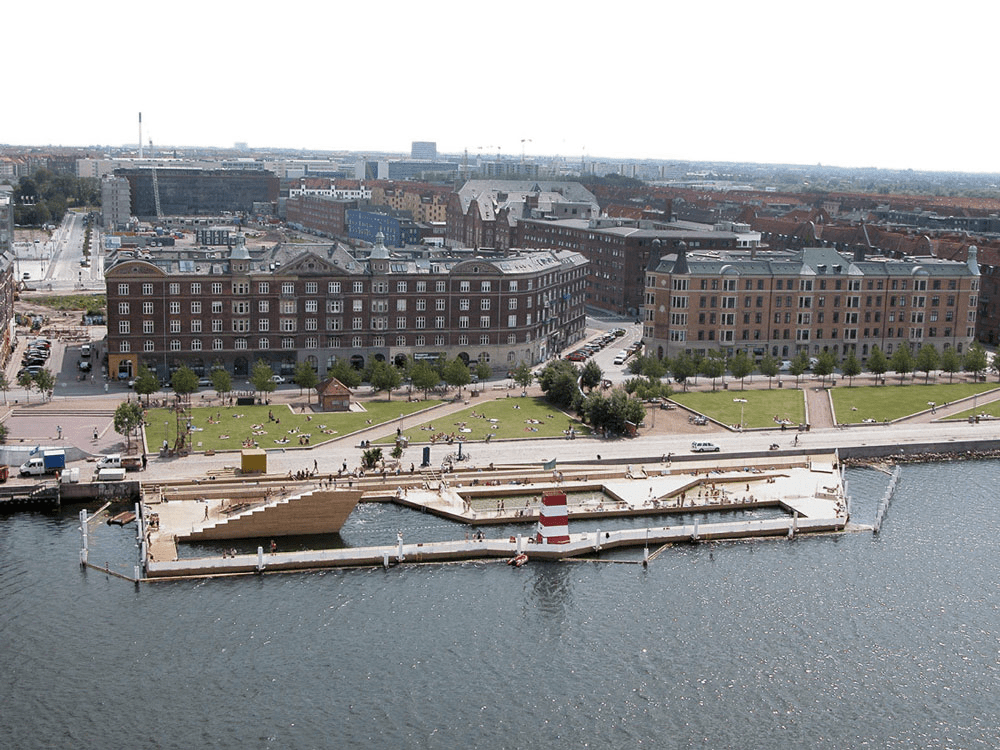
Copenhagen is one of the only cities in Europe where the harbour water is again clean enough to swim in. The city has built three popular harbour baths – a new type of city-beach for people to swim, sunbathe, and cool off on hot summer days. It is good to wear bathing clothes if you are visiting the city, so you can jump into the water whenever you want, especially in the summer.

Source: Arch Daily

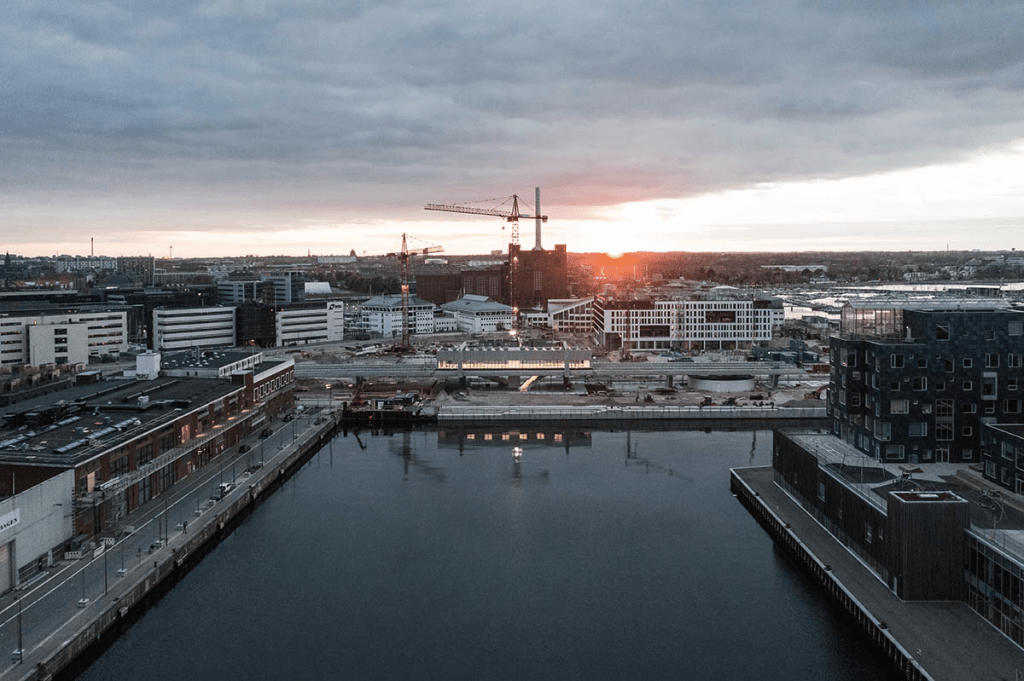
OMA’s New Cultural Hub in Copenhagen. Image © Rasmus Hjortshøj – COAST
BIG’s Waste-To-Energy Plant in Copenhagen. Image © Aldo Amoretti
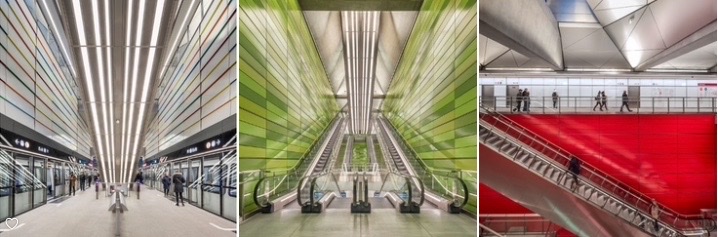
Cobe and Arup’s passenger-focused metro stations in Copenhagen’s docklands. Image © Rasmus Hjortshøj – COAST

Copenhagen has a very convenient and fast subway system. There are now 4 lines called M1, M2,M3 and M4. These lines runs around the city and have intersects with each other. Riding the Metro in Denmark is the easiest and quickest way from the airport to central Copenhagen. Also the Metro runs without a driver (utilizing an automated train control system) and runs 24 hours a day, 7 days a week. During the rush hour the metro runs every 2 to 4 minutes. During the rest of the day trains run every 3 to 6 minutes, so there is very little waiting time.

Copenhagen’s Cityringen (City Circle Line) , the colorful commute  (Photo: Anke Müllerklein)

UNESCO and the UIA launched the World Capital of Architecture initiative to highlight the key role of architecture, city planning, and culture in shaping urban identity and sustainable urban development. Every three years, the city designated as World Capital of Architecture becomes a global forum at the forefront of discussions on contemporary urban planning and architectural issues.

The city of Copenhagen has been officially designated as World Capital of Architecture for 2023 by the Director-General of UNESCO, Audrey Azoulay, on the recommendation of the General Assembly of the International Union of Architects (UIA).

This decision is in keeping with the partnership agreement established between UNESCO and the UIA in 2018, through which UNESCO designates the host cities of UIA’s World Congress as World Capitals of Architecture. “We are very happy to see the torch of the World Capital of Architecture title pass to Copenhagen from Rio de Janeiro,” Audrey Azoulay said. “The inaugural World Capital of Architecture in Rio was a real success, underlining the important role of urban planning, notably in the pandemic context”, she noted, adding that “Copenhagen will build upon Rio’s achievements, by continuing to show the way in which architecture and culture can respond to the challenges of our time, especially in the environmental field.”

As the World Capital of Architecture for 2023, Copenhagen will host a series of major events and programmes on the theme “Sustainable Futures – Leave No One Behind.” In coopeation with the Danish Association of Architects and various Nordic professional bodies, the municipality will examine how architecture and urban design contribute to meeting the 17 United Nations Sustainable Development Goals.

Copenhagen World Capital of Architecture for 2023

Link: https://peacelilysite.com/2022/09/08/copenhagen-world-capital-of-architecture-for-2023/

#Copenhagen#WorldCapitalofArchitecture#UNESCO#UIA#Denmark#Europe

Source: https://www.uia-architectes.org/en/events/world-capitals-of-architecture/copenhagen/, https://www.cntraveler.com/gallery/best-things-to-do-in-copenhagen

10 THINGS TIME HAS TAUGHT ME

Photo by Nita on Pexels.com

10 THINGS TIME HAS TAUGHT ME

1. Most of our life is spent chasing false goals and worshipping false ideals. The day you realise that is the day you really start to live.

2. You really, truly cannot please all of the people all of the time. Please yourself first and your loved ones second, everyone else is busy pleasing themselves anyway, trust me.

3. Fighting the ageing process is like trying to catch the wind. Go with it, enjoy it. Your body is changing, but it always has been. Don’t waste time trying to reverse that, instead change your mindset to see the beauty in the new.

4. Nobody is perfect and nobody is truly happy with their lot. When that sinks in you are free of comparison and free of judgement. It’s truly liberating.

5. No one really sees what you do right, everyone sees what you do wrong. When that becomes clear to you, you will start doing things for the right reason and you will start having so much more fun.

6. You will regret the years you spent berating your looks, the sooner you can make peace with the vessel your soul lives in, the better. Your body is amazing and important but it does not define you.

Art by Linda Apple

7. Your health is obviously important but stress, fear and worry are far more damaging than any delicious food or drink you may deny yourself. Happiness and peace are the best medicine.

8. Who will remember you and for what, become important factors as you age. Your love and your wisdom will live on far longer than any material thing you can pass down. Tell your stories, they can travel farther than you can imagine.

9. We are not here for long but if you are living against the wind it can feel like a life-sentence. Life should not feel like a chore, it should feel like an adventure.

10. Always, always, drink the good champagne/ Cacao and use the things you keep for ‘best’. Tomorrow is guaranteed to no one. Today is a gift that’s why we call it the present. Eat, Drink & Be Merry.

Words: Donna Ashworth

10 THINGS TIME HAS TAUGHT ME

Link: https://peacelilysite.com/2022/09/02/10-things-time-has-taught-me/

#ageing#midlifewomen#poetryforwomen#womensupportingwomen#crone#innercrone#femaletribe#wordsforthesoul#wiser#10thingstime#donnaashworth

WHEN YOUR HEAD HITS THE PILLOW TONIGHT

Photo by Cats Coming on Pexels.com

WHEN YOUR HEAD HITS THE PILLOW TONIGHT

Remember the smiles of the day, the laughter, the little wins, the warm words…

And let everything else go.

Put the lessons learned in a file marked ‘done’ and give yourself a pat on the back for the things you got right.

Leave the stresses of tomorrow where they belong – tomorrow.

Leave the stresses of today where they belong too.

And let the night take away the heavy weight from your shoulders.

Let it go.

Let yourself be safe.

Let yourself be still.

Let yourself be at rest.

When your head hits the pillow tonight my friend, let sleep come and let your soul be.

You did enough today.

We are all just doing our best with no rule book, in a game with no referee and no half-time.

None of us are getting it right, we are all just winging it.

We are all just as scared, just as weary.

When your head hits the pillow tonight my friend,

close your eyes and remember,

you are worthy.

Photo by Visit Greenland on Pexels.com

Words: Donna Ashworth (Copied from Facebook)

#midlifewomen#mums#wordsforthesoul#tothewomen#donnaashworth#poetry#words#quotes#inpsiration#letitgo#quotestoliveby

WHEN YOUR HEAD HITS THE PILLOW TONIGHT

Link: https://peacelilysite.com/2022/09/01/when-your-head-hits-the-pillow-tonight/