Did you know that your brain may need you to take a walk even more than your body does?
We often think of walking as something we do for physical fitness—burning calories, loosening stiff muscles. Yet neuroscience now confirms something ancient wisdom has always known: when the body moves gently and steadily, the mind awakens.
Regular walking—nothing intense, just consistent and mindful steps—nourishes the hippocampus, the part of the brain responsible for memory and learning. With increased blood flow and oxygen, this delicate region doesn’t merely function better; over time, it can actually grow stronger, softening the slow erosion of age.
Decades of MRI research reveal that people who engage in moderate movement—brisk walking, cycling, climbing stairs—experience measurable growth in the hippocampus. An average increase of just two percent may sound small, but in the language of the brain, it is profound. It can offset one to two years of natural cognitive aging.
In simple terms: thirty minutes of walking a day gently turns back the clock for the mind.
But beyond the science, something quieter is taking place.
When we walk, the brain relaxes its grip. A subtle nourishment—BDNF, often called the brain’s “fertilizer”—is released, protecting existing neural pathways and encouraging new connections to form. Thoughts become clearer. Memory steadies. Emotions settle into a more balanced rhythm.
This is why walking feels different from sitting.
As the body moves, the mind loosens. As the breath finds its rhythm, thoughts begin to untangle.
Walking brings the brain into a rare state—awake, yet unforced. It is here that insights arise without being pursued, where worries soften and lose their sharp edges.
Many people sense this intuitively, without knowing the science. They think more clearly when they walk. They feel calmer. They see situations with greater perspective.
Stillness has its place. But too much stillness, without movement, becomes stagnation.
Long hours of sitting dull not only the body, but also memory, emotional resilience, and mental clarity. The mind grows heavy, foggy, restless. Gentle movement restores what stillness alone cannot.
And the beauty of walking is its simplicity.
No gym. No equipment. No performance.
Just steps.
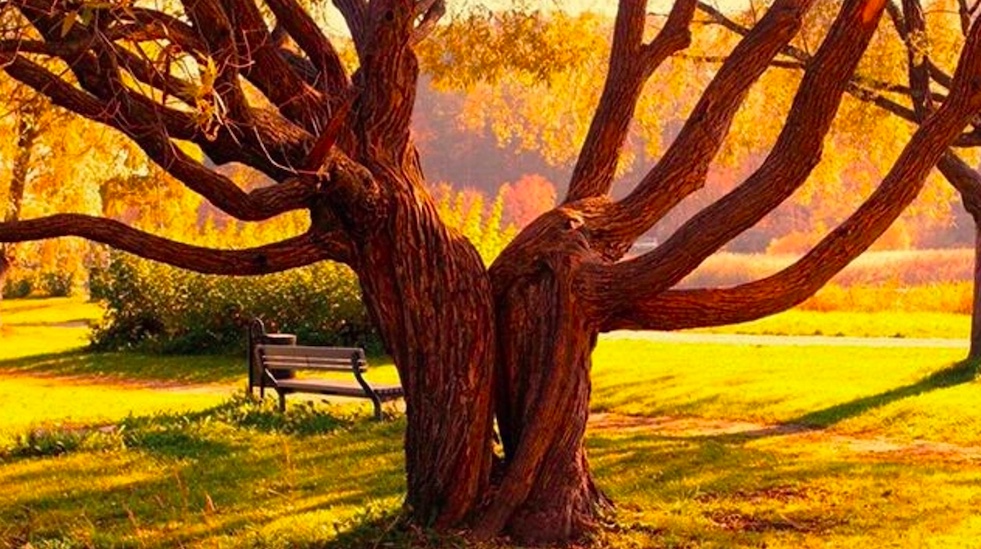
A short walk in the morning light. A few mindful minutes between tasks. A slow walk beneath trees. Choosing stairs over elevators. Sun on the face. Breath in motion.
These small, ordinary moments—when repeated—quietly care for the brain and the heart.
Walking is not exercise in the usual sense. It is a form of listening.
With each step, the mind is gently awakened. With each step, inner noise softens.
You may not be going anywhere special. Yet something within you becomes clearer, lighter, more alive.
So today, walk.
Not to achieve. Not to improve.
Just to return— to the simple intelligence of movement, and to a mind that remembers how to be at ease.
I have always loved being close to nature, and one of my greatest joys is walking through the forest. Living in Santa Cruz, I am surrounded by beautiful woods and mountain trails. Each time I wander beneath the trees and along winding paths, I arrive at the end feeling lighter, calmer, and deeply refreshed—as if my body and mind have been fully recharged.
I once came across an interesting idea: Mountains are places where we gain energy, which is why after hiking, we often feel alert and invigorated. Water, on the other hand, carries energy away. This may explain why spending long hours by the ocean or a lake can leave us feeling tired. Yet water also washes away emotional heaviness. When we feel sad, restless, or overwhelmed, a walk by the sea often brings a sense of release and ease.
Energy is constantly flowing through nature. We are simply quiet participants, allowing the natural world to gently adjust our inner frequency.
Discovering “Forest Bathing”
Recently, I was delighted to learn that the Japanese have a word that perfectly describes this healing experience: forest bathing.
In Japanese, it is called shinrin-yoku:
Shinrin means forest
Yoku means bathing
Together, shinrin-yoku means “bathing in the forest,” or allowing our entire being to absorb the atmosphere of the woods. As early as 1982, Japan officially incorporated forest bathing into its national public health program as a form of preventive and therapeutic care.
Suddenly, I realized that every breath I took in the forest had always been quietly nourishing me.
Japanese researchers have conducted extensive studies on forest bathing and found remarkable benefits for overall well-being. Research shows that forest bathing can:
Reduce stress
Strengthen the immune system
Lower blood pressure
Support recovery after illness or injury
Improve mood and concentration
For me personally, its most immediate effect is simple yet profound—it quickly lowers stress and brings my heart back to a place of calm.
Forest bathing is very different from running or brisk walking. It is not about exercise or distance; it is about presence. The key is to slow down and fully engage all your senses:
Touch the bark of trees—rough or smooth
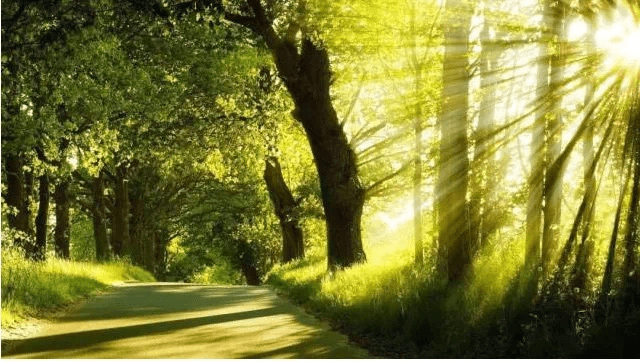
Watch sunlight dance through layers of leaves
Breathe in the scent of earth and greenery
Listen to the wind moving through branches
Find a place to sit and feel your connection with the ground
In the past, most of my hikes were intense, goal-driven, almost like completing a task. Since practicing forest bathing, I now schedule at least one slow, mindful walk each week. By slowing down, I have discovered beauty I once overlooked—and I can’t help but smile at how much I missed before.
There is a subtle yet powerful presence in the forest. It does not announce itself, yet it gently soothes the heart.
Perhaps it is the oxygen released by the trees. Perhaps it is the steady, unhurried rhythm of the forest. Or perhaps it is simply that, among the trees, we can finally hear our own breath again.
When we walk in the forest, there is nothing we need to accomplish. Nothing to force. Nature naturally helps our hearts soften, open, and grow brighter.
If you feel tired, anxious, or lost in the busyness of everyday life, I invite you to find a nearby mountain trail and give yourself the gift of forest bathing.
Let nature, in its quiet way, remind you: You are doing your best—and you deserve to be healed. 🌲
Listening to your body can be something as simple as going to bed when you are tired, stop eating before you are overstuffed, or releasing a yoga posture when you’ve gone beyond your edge. It can also involve more serious things, like preventing your stress levels from exploding into chest pain by saying no, averting an acute pain situation or chronic disease by knowing when to slow down, and respond to pain or discomfort in your body.
For me, theessence of yoga is about listening to your body, mind and emotions and honouring where they are at, because this changes from day to day, hour to hour, minute to minute. This listening may involve noticing how your body feels in a particular pose-are your muscles tight, are you feeling a sense of release? How is your breath-do you notice times when you are holding it or breathing faster than you should? How are your emotions-what’s coming up for you; sadness, anger, impatience, or boredom?
I learn so much about myself while on my yoga mat. Through stillness, movement and breath, I have increased awareness of where I’m holding muscle tension and how my nervous system is doing. This mindfulness helps me move through negative emotions, practice self-compassion and often find sweetness underneath the negativity.
Our body and emotions are always communicating, and sometimes it’s very subtle, and unfortunately, we often ignore it. This has happened to me twice in the last year, and honestly, I should have known better. In the spring, during the first lockdown – (what # are we at now?) I continued with my weight workout because my gym was closed. I used light weights and after a few weeks felt they were too light and increased the amount. I started to notice an occasional throbbing pain in my left triceps. I ignored this and continued to ignore it, not making the connection that the heavier weights were taxing my muscles. One night I was awoken by the most excruciating pain, exactly where I felt the original throbbing pain, and it was radiating up to my neck and down to my wrist. Luckily, I was able to see my physiotherapist and chiropractor for treatment, and they felt the pain was connected to an aggravated radial nerve. My doctor prescribed me an anti-inflammatory, and I felt better after the first treatment; however, it took several months until I fully recovered.
You think this would have been a massive wake up call for me to pay attention to subtle changes in my body-the whispers. Nope. Since the recent lockdown, state of emergency, whatever we’re at these days, I committed to going for a long walk or hike every single day because my spirit needed this connection to nature. After a few longer hikes of 2-3 hours through a local conservation area, I noticed a pain in my right glute. It wasn’t severe pain and didn’t last long, so it was easy to brush off. However, it did happen at least 4-5 times, and I completely ignored it, and just over a week ago, I paid for this BIG TIME!!!!
After an active day on January 15th, I noticed a pain in my right hip flexor, went to bed, but didn’t stay long because the pain became too intense. By Saturday afternoon the pain had increased with a vengeance, and I didn’t sleep on Saturday night and woke my husband up at 3 am on Sunday informing him that he had to take me to emergency because I was in that much pain. At the ER they ruled out a few things and thought that diagnosis was piriformis syndrome-irritation of the piriformis muscle. They suggested rest, anti-inflammatories, extra-strength Tylenol and physiotherapy to get back on track. The pain wasn’t being managed, and on Tuesday morning, I had to go to the ER once again because the pain became so severe that I couldn’t walk. This time they focused on pain management and gave me morphine via IV and a script. The pain subsided, and I was able to walk and go home.
By this time, I hadn’t slept for 4 nights and saw my physiotherapist for the first time. He performed a full assessment and didn’t think I had piriformis syndrome and felt that my joint and muscles were functioning well. He thought that I might have overdone it with my hikes and aggravated some muscles and nerves.
I continued with the pain management meds and physiotherapy, and last Saturday afternoon, I noticed that the pain had left entirely. I haven’t had any pain since and still have no idea what caused it, but have some ideas. I believe that my enthusiastic hikes irritated the muscles and nerves in my right hip, and I had plenty of warning that something was up.
I’m so grateful to be pain-free and have the most profound compassion and empathy for anyone dealing with chronic pain. I honestly don’t know how anyone deals with it.
I don’t want to go through something like this again, and I’ve learned my lesson about the importance of listening to my body, not just on my yoga mat, but always.
Our body, breath and emotions are always communicating to us and sending us messages. They usually start as little whispers, and if you don’t pay attention, your body will yell at you loud and clear and force you to listen.
Off the yoga mat, it’s essential to take time throughout your day to slow down, be still and tune in. How does your body feel? Do an emotional check-in. Honour your body, and give it the attention and nurturing that it deserves. Trust your body, its’ wisdom and healing abilities.
United States Strongman (USS) began in 2014 with a simple but powerful vision: create opportunities for athletes to test their strength in an environment that feels fair, safe, and genuinely supportive. President and Owner Willie Wessels has shaped the organization around a philosophy he repeats often: “for athletes, by athletes.” It is the principle that guides every decision, from event approvals to gym affiliations to the culture athletes encounter when they show up on competition day.
With various events held annually across the country, USS has grown into a national platform for competitors of all levels. “The mission has remained the same from day one,” Wessels says. “We want people to have a place where they can work toward their goals and know the event has been organized with their best interests in mind.” Each competition is required to meet safety and quality standards that Wessels personally reviews, giving athletes confidence that every show has been thoughtfully planned.
According to Wessels, Strongman itself is a diverse sport, blending both functional and traditional strength movements. USS events showcase everything from tire flips and stone lifts to sandbag carries and log presses. Each venue brings its own personality; some competitions take place at independent gyms, some at community centers, and others at local businesses that open their doors for a day of strength, cheering crowds, and grassroots community spirit. “You might see an event in a gym parking lot one week and then a full setup inside a large venue the next,” Wessels says. “What matters is that athletes walk in and feel excited and safe.”
USS also supports athletes through its membership structure, which provides access to certified events and ensures the competitions they enter meet established standards. The membership system also connects competitors to pathways leading toward national and international opportunities.
Under his leadership, the organization has become known for celebrating participation as much as podium finishes. Athletes within USS come from every background imaginable: teachers, healthcare workers, factory workers, engineers, and even complete beginners who discovered the sport by chance. “Strongman is not just for a certain type of person,” Wessels says. “It’s for anyone who wants to challenge themselves.” For many, it can become a place where physical strength intersects with self-confidence, camaraderie, and discipline.
This community-first mindset reflects Wessels’ personal history. At 62, he has spent more than three decades coaching, teaching, and supporting athletes. Before launching USS, he was a longtime health and physical education teacher, a career he describes with warmth. “Working with students taught me patience, humility, and how to meet people where they are,” he says. His passion for building strength, physical and personal, was shaped early on by his mother, whose commitment to education left a lasting mark. “She went back to school at 39 and earned her bachelor’s, two master’s degrees, and her PhD,” he says. “She showed me what persistence looks like.”
Wessels earned the title of North American Strongman in 2002, a moment that inspired many and deepened his belief in giving athletes a place to pursue their potential. Wessels’ own perseverance was profoundly tested when he was diagnosed with leukemia in 2003. Despite a prognosis that offered only a brief window of survival, he continued coaching and competing while undergoing years of treatment. “I just kept showing up,” he says. “Coaching kept me grounded.”
His personal journey is woven into the foundation of USS. What began as a vision to make the sport more accessible has grown into a movement supported by hundreds of competitions and a network of affiliated gyms across the U.S. Looking ahead, Wessels sees continuous expansion as a natural progression of the sport’s momentum. He noted that participation is rising among both men and women, and the spectrum of athletes continues to widen.
Wessels says the future of USS will always be guided by the same principles that shaped it from the beginning: fairness, safety, and genuine support. What drives him now is the same thing that drove him as a teacher, a coach, and an athlete: watching people discover what they are capable of.
“At the end of the day, this is not just about lifting weights,” Wessels says. “It’s about showing people they are stronger than they think, on the field and in life.” It’s a belief that has helped build United States Strongman into a national community grounded in resilience, respect, and purpose, and one that continues to grow with every athlete who steps onto the competition floor.
What’s the first image that comes to mind when you think of Yoga?
It’s not uncommon for this image to consist of individuals contorting their bodies into impossible positions that are more appropriate for the Cirque du Soleil. There is nothing wrong with some of these breathtaking images, and I love looking at them because I’m in awe of the strength, grace, practice, and determination it takes to hold these postures. My issue with these images flooding social media is that these postures are not possible for most individuals (including me) and the models are usually young, white, beautiful, slim women. This makes it hard to connect to Yoga’s rich Indian history or how it is a practice that is for EVERYONE regardless of age, body type or ability.
In the last few decades, Yoga has become a billion-dollar business. When I started attending yoga studios in Toronto in the early 1990s, there were only 2 studios, and now there is a studio every 3 blocks. There are “yoga teacher rock stars” and businesses that make high-end yoga gear. I’m glad that Yoga has become so popular because this beautiful healing practice impacts more people. However, I believe this commercialism and competitiveness have diluted the teachings and appropriates this ancient practice in some situations.
There is evidence that Yoga existed in India as far back as 500 BC with roots in Hinduism, Buddhism, Jainism and other religions. Sanskrit is the sacred language of Hinduism, classical Hindu philosophy, and other historical religious texts. The word ‘Yoga‘ is derived from the Sanskrit root ‘Yuj’, meaning ‘to join’ or ‘to yoke’ or ‘to unite-union of mind, body and spirit.
As a yoga teacher and student, I want my students to be familiar with Yoga’s roots and understand that what happens on the mat is more than just stretching and holding postures. This union of mind, body and spirit, happens while practicing the asanas-Sanskrit word for postures. A regular practice will increase flexibility, strength and mobility, and while you are holding the postures, you are practicing pranayama-breath control, meditation, and mindfulness. This holistic practice is how transformation happens and the “union” builds a healthier, more agile body, calms the nervous system, teaches presence, and provides us with tools that we can use off the mat.
Yoga has a rich philosophical history that includes sacred and treasured texts: The Vedas, The Upanishads, The Bhagavad Gita and Pantanjali’s Sutras.
Pantanjali was an Indian sage and thought to be the author of the Yoga Sutras, which is a classical yoga text on yoga theory and practice. According to his teachings, there are 8 components to Yoga:
1. Yamas-attitudes towards environments.
2. Niyamas-attitude towards ourselves
3. Asana-yoga postures
4. Pranayama-breath control and breathing exercises
5. Pratyahar-withdrawal of senses
6. Dharana-concentration
7. Dhyana-meditation
8. Samadi-complete integration
One of the most compelling benefits of Yoga is stress reduction. It’s inspiring to see how it has helped individuals recover from trauma, PTSD, depression, and anxiety.
Enjoy the stretching and postures, and know that you are also calming your mind and relaxing your body. Instead of thinking of Yoga as work out, think of it as a work in.
You would never imagine that an ordinary stray dog from China could become a spiritual icon for people all over the world. Its story was written into a book, translated into 20 languages, and sold globally. Hollywood even bought the film rights, and one day it will be made into a movie. Countless celebrities and business leaders have posed for photos with it, and even the Queen of England once held it in her arms.
So what made this little dog so extraordinary? Everything began with what seemed like a random “accident.”
It was the summer of 2016 in Xinjiang, during a grueling ultra-marathon held once every three years. The main character of the story, British athlete Dion Leonard, was among the participants. Under the scorching sun—temperatures soaring above 40°C—runners had to trek 300 kilometers across desert and Gobi terrain. It was a challenge that tested both physical strength and willpower.
To conserve energy, Dion carried only a little bread and water. After walking all day, he finally stopped to rest for the night. That’s when a starving stray dog approached him, wagging its tail with all its might. Moved by the little dog’s cuteness, Dion shared some of his precious food.
He didn’t know it then, but that small act of kindness tied their destinies together. From the next day onward, the dog refused to leave his side. That’s when Dion realized it had no owner. Since the race was long and lonely, he welcomed this unexpected companion.
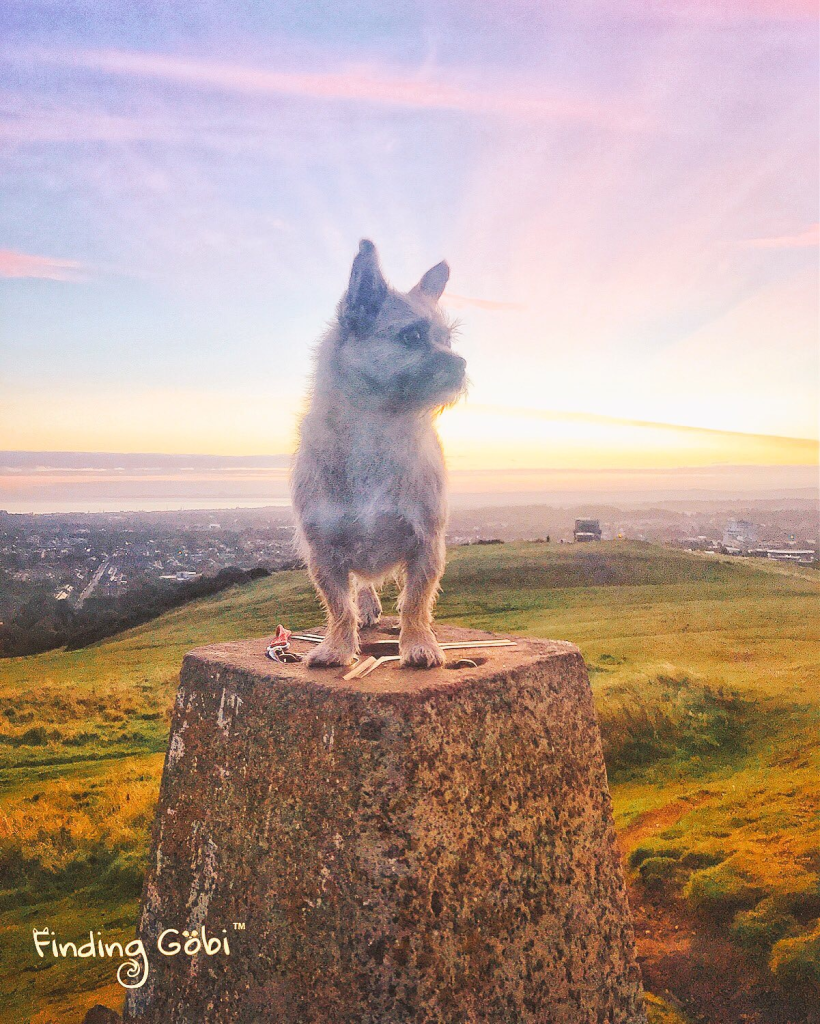
Day after day, the dog kept up with Dion. Whenever exhaustion hit him, just looking at the panting, tail-wagging little dog filled him with strength again. “If this tiny creature has the endurance to keep going, then so must I,” Dion thought. He named the dog Gobi, after the desert where they met. They shared food by day and huddled together by night. Through hardship, man and dog forged a bond of deep friendship.
Can you imagine—a stray dog becoming a global hero, its story turned into a bestselling book and a movie? That’s exactly what happened.
But during the race, Gobi could only run 150 kilometers before collapsing from exhaustion in the scorching desert. The organizers rescued and treated the little dog, who then waited faithfully at the finish line each day for Dion to return. Without Gobi, Dion felt alone again—but now he had something to fight for. His longing to see his companion pushed him to finish the final 150 kilometers in just three days, earning him a silver medal—the best result of his career. But instead of basking in the honor, his first joy was reuniting with Gobi.
The race organizers were so moved by their bond that they even awarded Gobi her own silver medal. Dion, who had once lost a beloved dog years earlier, felt this meeting was destiny. He resolved to adopt Gobi and bring her home to the UK.
From a stray with no future, Gobi suddenly became a beloved star dog, cherished by a marathon champion. Dion spared a lot of effort and about several thousand dollars to secure the adoption, leaving Gobi in a friend’s care in Xinjiang while he flew back to the UK to handle the paperwork. But just when everything was ready and Dion was eagerly awaiting Gobi’s arrival, disaster struck—Gobi went missing.
Panicked, Dion flew back to China and printed thousands of flyers to search for his companion. By then, their story had already gone viral. Media outlets reported it widely, and Gobi became a symbol of hope, inspiring people everywhere. When word spread that the famous little dog was lost, locals poured into the streets to help search, forming teams day and night, while countless netizens spread the news online.
Dion chased down every lead, refusing to give up. Finally, following a clue that others thought worthless, he found Gobi—injured and weary, but alive. The little dog had clearly suffered, but this time, Dion promised, she would never be alone again.
This reunion made Gobi even more famous. After full medical care and recovery, Dion finally brought her home to Scotland.
To honor their extraordinary bond, Dion turned from athlete to author, writing Finding Gobi. The book became an international sensation, translated into 20 languages and sold worldwide. Hollywood bought the rights to make it into a film. Together, Dion and Gobi traveled the globe, giving talks, meeting celebrities, and even winning the “Most Inspiring Animal Award.” Gobi’s journey reached its peak when the Queen of England herself held her in her arms.
What began with a stray dog’s trust and loyalty turned into a man’s promise and responsibility—together creating a heartwarming story that touched the whole world. Gobi found a loving home, Dion discovered renewed strength and joy, and both became better versions of themselves.
In Traditional Chinese Medicine (TCM), the “kidney” is not just associated with the organ itself, but is considered the center of multiple bodily functions, overseeing everything from physical strength and vitality to bone growth. (Photo from sohu.com)
The kidneys are seen as the foundation of life, and when kidney energy, or kidney qi, is abundant, the body remains strong and full of life. However, when kidney qi is depleted, it leads to weakness, fatigue, premature aging, and is often linked to chronic illnesses.
The Importance of Kidney Qi in TCM In TCM, maintaining a balanced flow of energy is essential for overall health. The kidney meridian plays a crucial role in regulating the balance of yin and yang within the body. Kidney yin and kidney yang are considered the fundamental energies that support the entire body’s internal organs. When kidney qi is nourished, the body remains strong, and all other organs function properly. Therefore, keeping the kidney energy well-maintained is vital for longevity and overall well-being.
While diet and herbal supplements are commonly used in TCM to support kidney health, a simple and effective method is through regular meridian stimulation. By massaging and promoting energy flow along the kidney meridian, we can help maintain smooth circulation of energy (qi) and blood throughout the body, promoting vitality and longevity.
Winter: The Season for Kidney Care In TCM, winter is the season most closely associated with kidney health. It’s a time to focus on replenishing and strengthening the kidneys, as the colder months are believed to affect the body’s energy levels. To help support kidney health during this time, TCM practitioners recommend incorporating certain practices into your daily routine.
Dr. Hu Haiya’s Kidney-Rubbing Technique One of the most accessible and effective ways to nourish kidney qi is through a simple technique known as the kidney-rubbing exercise, shared by the esteemed TCM doctor Hu Haiya. Dr. Hu, who lived to the age of 95 with remarkable health, became a symbol of vitality and longevity. When asked about the secret to his longevity, many expected him to mention some rare, mystical remedy. Instead, he smiled and explained, “There is no magical remedy; the true remedy lies within your own body.”
Dr. Hu then shared the kidney-rubbing technique he practiced regularly. The primary benefit of this exercise is to stimulate and invigorate the kidney qi, which is the foundation of energy and vitality in TCM. When the kidneys are nourished with abundant qi, the body becomes more energetic, the muscles and bones grow stronger, and life expectancy increases.
How to Perform the Kidney-Rubbing Technique
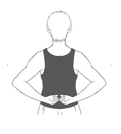
Position your hands: Make loose fists with both hands, leaving the centers of your fists slightly hollow (as shown in the figure).
Place your hands on your lower back: Position your fists over the kidney area, near the waist (Shenshu points). There’s no need to precisely find acupuncture points; just placing the fists on the lower back is sufficient.
Gentle motion: Keep the fists still and use your knees to gently bounce up and down. This will cause your body to move, which creates friction between the fists and the kidney area.
Repetition: Perform this exercise for 500 repetitions or until you feel a slight warmth in your lower back.
Photo 1
Photo 2
Tips for Effective Practice
If you’re new to this technique and find it difficult to do all 500 repetitions in one go, don’t worry. Start gradually by breaking it into 2-3 sets and work on building leg strength.
Eventually, aim for 500 repetitions in one continuous set. You’ll notice the body begins to feel warm, signaling improved circulation and energized kidney qi.
The Path to Longevity Starts with Kidney Health By incorporating practices like kidney-rubbing into your routine, you can nurture your kidney health and enhance your overall vitality. In TCM, vitality and longevity are directly linked to the state of our kidney qi. Strengthening this vital energy is key to achieving a healthy, balanced life.
Start today—because true health comes from within.
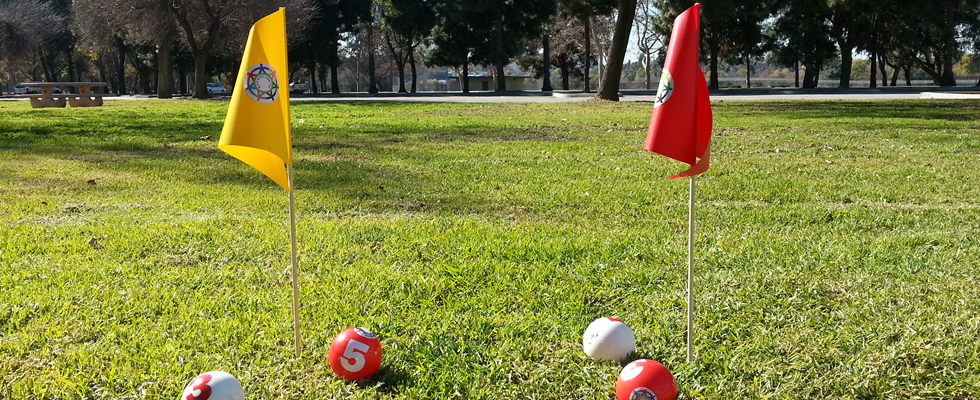
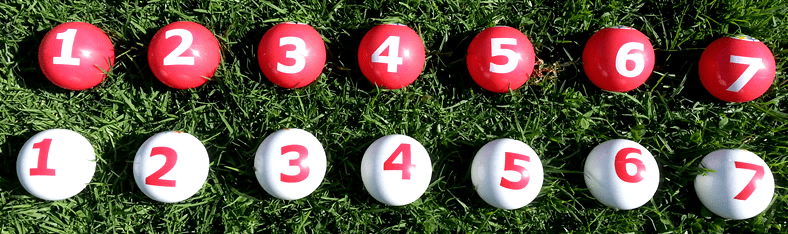
The Wiser sport originated as the most prestigious ball game played in ancient palaces and royal courts by emperors, kings, ministers, scholar-officials, and Western heads of state. It was designed to cultivate strategic thinking, exercise the body, and engage in a battle of wits. Unfortunately, with the passage of time, this globally enjoyed diversion became a lost sport.
However, a remarkable, selfless, virtuous individual has rediscovered and perfected the Wiser sport for public benefit. This individual, known for the noble moral character, received unanimous recognition from the 112th Congress of the United States Senate through resolution 614, which commended his contributions to humanity. When this virtuous individual taught the techniques and rules of Wiser to the World Wiser Sport Committee, he stated, “You must spread the Wiser sport worldwide and become the headquarters that leads it. Remember, everyone—regardless of gender, age, or background—has the right to enjoy Wiser. It is a ball sport bestowed by nature to strengthen the body and improve health. Its purpose is to benefit humanity by enhancing physical fitness, health, morality, friendship, and peace.” The World Wiser Sport Committee, now formally established with its headquarters in the United States, held its inaugural leadership ceremony on March 2, 2013.
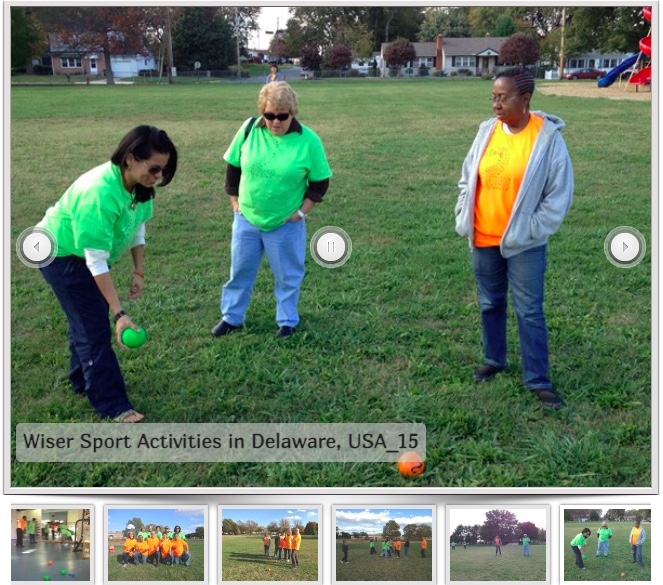
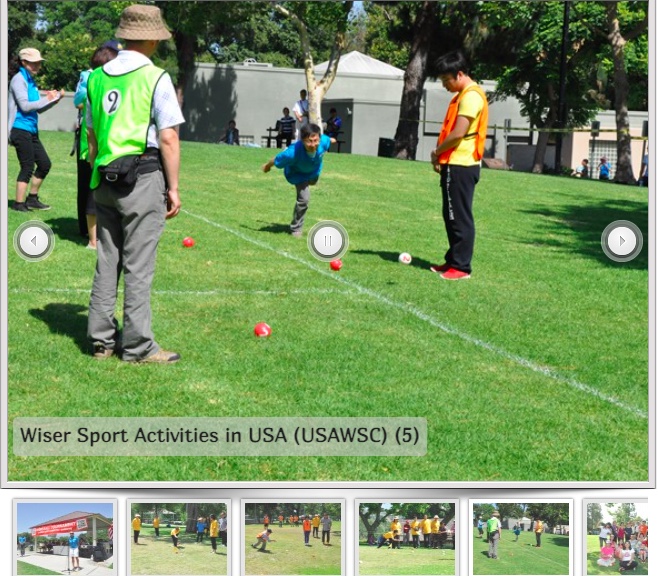
Wiser is a ball sport that combines strategy and exercise, where teams compete in a setting that requires no special playing field. It can be played anywhere, regardless of obstacles, making it extremely safe and suitable for all—men, women, young, and old.
For the elderly, playing Wiser can improve immunity, strengthen the body, enhance stamina, rejuvenate brain cells, prevent senile dementia, ease the mind, increase happiness, and prevent conditions like rheumatism, insomnia, and limb numbness.
Middle-aged and young people also benefit from Wiser by enhancing their wisdom, mental vitality, and social interactions. It helps resolve tendencies toward solitude and asocial behavior by encouraging outdoor activity, friendship, self-confidence, and healthy social relationships.
Teenagers and children who play Wiser will develop independent thinking, courtesy, and virtue. They will gain tenacity, physical strength, and intelligence, making it an excellent sport for nurturing talent. Moreover, Wiser is extremely safe and inclusive, promoting individual and group strategies and tactics.
Wiser offers seven key benefits: strengthening the body, improving health, enlivening the spirit, developing brainpower and wisdom, increasing unity and friendliness, boosting immunity, delaying stamina decline, and elevating moral character. Players consistently praise the positive impact Wiser has on their physical and mental well-being.
The game is growing in popularity and is now played in many countries, including the United States, Canada, Paraguay, Mexico, China, Taiwan, Malaysia, Vietnam, Thailand, South Africa and Germany.
Full Version, “How To Play Wiser Ball” Video Tutorial by WWSC
To celebrate the Holy Birthday of H.H. Dorje Chang Buddha III, on June 17 this year, Buddhist disciples and their friends gathered at the Holy Heavenly Lake, the future site of the Buddhist Town, to hold a Wiser ball game. The event was organized by the newly established North American Wiser Ball Association, which includes the United States, Canada, and Mexico. Eight teams from six regions participated in friendly matches in the morning. In the afternoon, Wiser ball referees from the United States, Canada, Mexico, China, Taiwan, and Hong Kong engaged in an exchange of experiences, which was one of the highlights of the event. Each piece of valuable experience contributed by the participants has injected new energy into the future development of Wiser ball around the world! Everything is just beginning, and we look forward to meeting again!
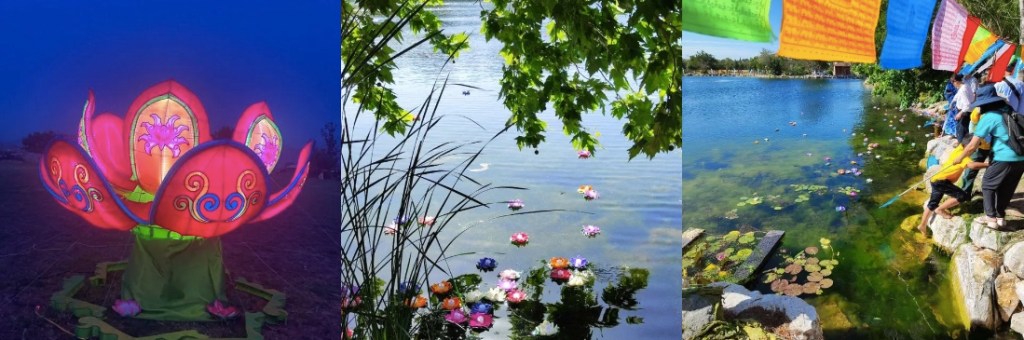
In the evening following the Wiser ball competition, a beautiful float lantern ceremony took place. Each lotus lantern symbolized everyone’s best wishes, world peace, and an auspicious future for all beings. The beautiful lotus lanterns stood amidst a sea of green, enveloped in a radiant blue glow. As night fell, the floating lotus prayer lanterns gradually spread across the lake, carrying with them the countless wishes in each of our hearts.
Nick Best is an individual whose name resonates without the need for an introduction, a living legend whose influence spans decades. In the realm of strength sports, his accomplishments stand as a testament unmatched by any on this planet. With a legacy steeped in unrivaled achievements, Nick embodies a reservoir of wisdom, a testament to his years of triumph. Beyond his feats in the realm of lifting and coaching, Nick is a devoted family man, finding solace in the company of his beloved wife, Callie, and unwaveringly standing by his children, Dylan and Jessica.
Originating from the vibrant city of Las Vegas, Nevada, Nick Best’s tenure as a formidable Strongman competitor exceeds a decade. Revered as the “grandfather” of Strongman, he defies age with his storehouse of sagacity and experience. A veritable luminary among the competitors, Nick’s zeal for history burns fiercely. In the late 1990s, he reigned as the Powerlifting champion of the world, and etched his name in history with a world record in the Shield Carry event.
However, recent revelations have uncovered a dimension beyond his well-known accolades. A chance encounter with a YouTube video left me astonished. Beneath the veneer of triumph and robust musculature, lies a facet of Nick Best that is astonishing. As it turns out, he is a devoted Buddhist disciple, his connection to spirituality tracing back to childhood when he was identified as the reincarnation of Rinpoche. In the year 2002, he embarked on a transformative journey, becoming a disciple of H.H. Dorje Chang Buddha III. Under the tutelage of his revered Buddha Master, Nick delved into the realm of authentic supreme Buddha Dharma, a pursuit that wrought profound changes not only in his spiritual being but also manifested in his physical prowess, endowing him with extraordinary strength beyond imagination. Now he is known by buddhist disciples as Wangzha ShangZun.
After years of dedicated cultivation and practice, diligently following the Dharma teachings imparted by H.H. Dorje Chang Buddha III, Wangzha Shangzun (Nick Best) has ascended to the esteemed Bodhisattva stage, attaining the exalted status of Golden Button Level Three. His unwavering commitment is directed towards the salvation of sentient beings, embodying a profound dedication to their well-being.
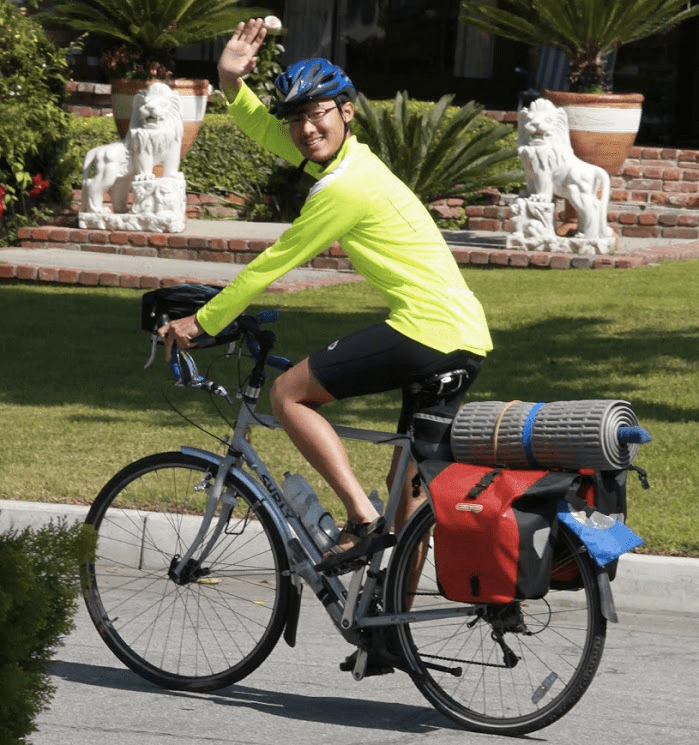
Zilong Wang’s trip connected him with strangers across the country: “It really gave me a lot of faith in not just the U.S., but also in humanity in general.” (Courtesy Zilong Wang)
Zilong Wang grew up in Shanghai, China, and first came to the U.S. for college. After graduation he bicycled solo across the country, relying on the generosity of strangers to provide lodging. He recently gave up his job at a firm specializing in corporate environmental sustainability to undertake an around-the-world bicycle pilgrimage to help raise ecological and spiritual awareness, especially in China. Below is the story about Zilong Wang. It was written for Bicycling magazine by John Brant.
Zilong chose Hampshire College in Amherst, Massachusetts…a non-traditional school without grades. A couple of Hampshire alumni had decided to learn about the U.S. by riding across the country by bicycle. They’d survived the adventure. Zilong liked the idea, and, after graduation, he found the bike he wanted to ride. It was a Surly Long Haul Trucker. It wasn’t fancy. But it was…right.
“And it’s a silver-white color,” he says. “And as soon as I saw that bike, I knew the exact name for it. It’s the ‘White Dragon Horse.'”
“I’ve been riding the same bicycle now for five years,” I say, “and I have yet to name it. But what made you feel it had to have a name?”
“I didn’t want to give it a name, but the journey called for a name. The White Dragon Horse is a mystical creature from the story ‘Journey to the West’ — it described a Chinese monk who walked all the way from China to India to bring back the Buddha’s teaching. And the horse that the monk rode was the White Dragon Horse. As soon as I saw the bike, I knew that the bike wanted a name.”
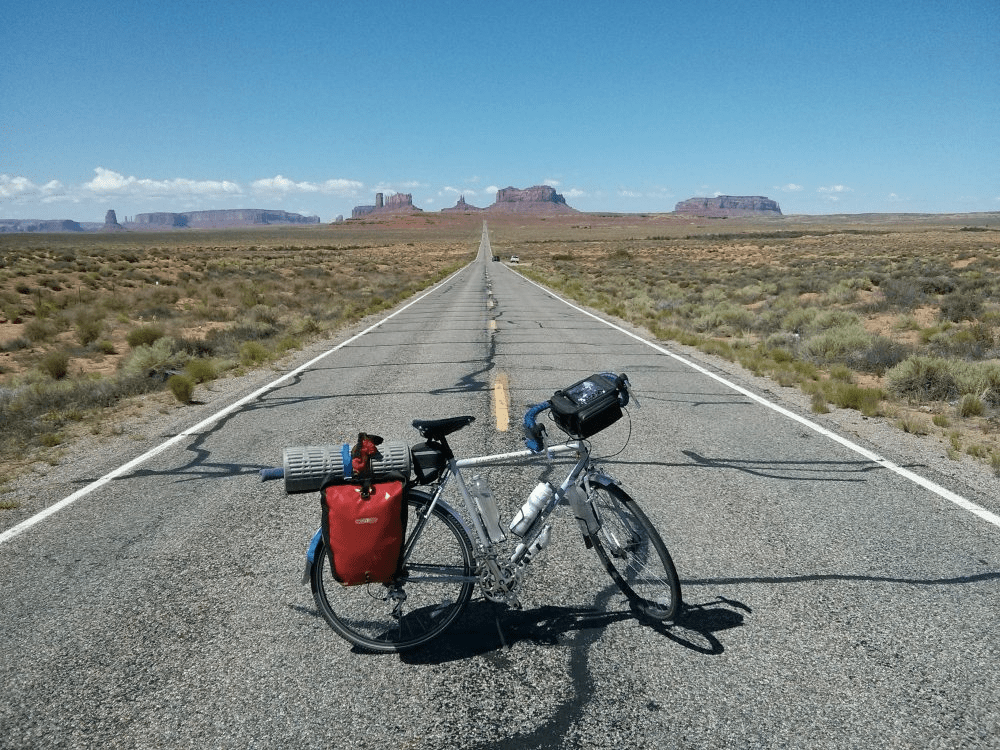
Zilong’s White Dragon Horse (Courtesy Zilong Wang)
Part of what attracted John Brant to the story was the audacity of the journey. Another part of the attraction was Zilong’s daily plan.
“He decided, every night, he was going to knock on the door of a stranger, knock on the door and ask if he could pitch his tent in the backyard,” Brant says.
“I had no confidence that it would work at all,” Zilong says. “So the first night, I could not work up the courage. So I stayed in an empty Boy Scout camp, but there were so many mosquitoes. I got 30 bites. And when I tried to use a hose there to shower, a whole bunch of ants poured out because it wasn’t used for so long. That first night out was just so miserable that I decided, ‘OK, whatever. I’m gonna knock on doors tomorrow.’ And from that day on, every single night that I knocked on a door, somebody said ‘yes’ and invited me in.”
“So nobody ever said, ‘No, try some other neighbor?'” I ask him.
“Oh, most people say ‘no,'” Zilong says. “One in five say ‘yes.'”
Sometimes Zilong thought about turning back. The doubts passed, and the better moments arrived.
“Those moments are when I connect with a stranger, when the next morning, when I depart, we both have tears in our eyes, when I feel this connection with nature, feel this trust in the universe — those are just worth any of the pain, the discomforts.”
Warm Encounters, Coast To Coast
Between Massachusetts and California, Zilong connected with lots of strangers. He remembers with special fondness some of the ones who most surprised him.
“The Christian Fundamentalists, the Republicans — at that time it would be Romney and now the Trump supporters. Essentially, for the majority of the trip in the middle of the country, I was staying every night with corn farmers, with people who were volunteering at the church — those who I had thought are close-minded or xenophobic or all these labels. They were the most welcoming and warm and goodhearted people.”
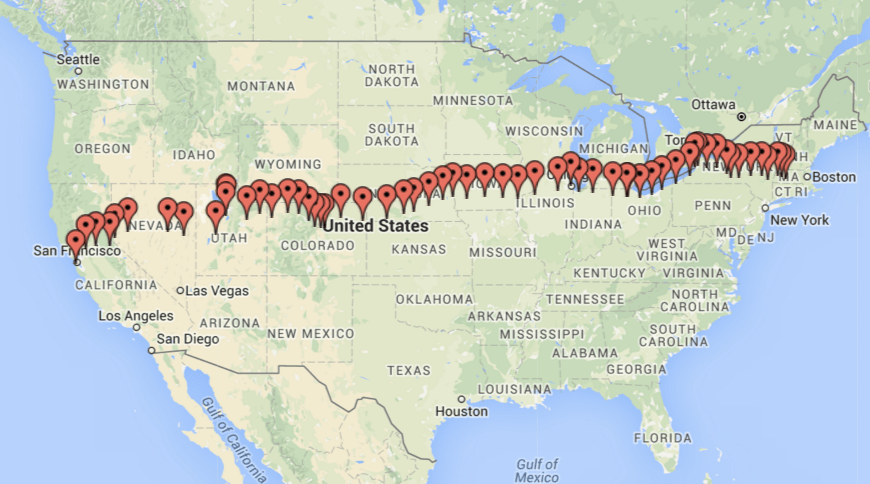
Wang’s route, from Massachusetts to California. (Courtesy Zilong Wang)
Would those people have been as “welcoming, warm, and goodhearted” to anyone asking for tent space and perhaps a cup of tea? Zilong wonders about that in a blog he wrote along the way.
“Just imagine: If I were Black, I would be a good target for some paranoid neighborhood watch. If I were Hispanic, people might wonder if I am in the country legally. If I were Middle Eastern, I might look like a terrorist to some. If I were a white American, I wouldn’t be as interesting as someone from China.”
And he was on a bicycle. Maybe people figured, “What harm could be in him?”
“For all the magic of his crossing, for all the cosmic connections that were forged, there was little conventional drama—no fights, no violence, no steamy love scenes. Just a young man pedaling a bicycle all day and talking quietly to people in the evening.” — John Brant
“The people’s home that I went into, they say, ‘Aren’t you afraid? Have you met any bad people?'” Zilong recalls. “For that entire 75 days, I have met exactly zero bad person — not even a harsh word or ill intention from anyone, only goodwill after goodwill. So it really gave me a lot of faith in not just the U.S. but also in humanity in general.”
True Karma
“In general, his entire journey, I think, went almost like a dream: good luck with the weather, good luck with his bicycle,” Brant explains. “Everything seemed to work really well. His health was good. He didn’t get injured, didn’t get ill. Everything went pretty well. Until he reached the end.”
“When I was riding through the U.S., I didn’t even bring a lock with me,” Zilong says. “I never locked my bike once. I’d leave it outside Walmart, at museums, outside little towns and go away for half an hour, an hour. Come back, the bike is still there — nobody touched it. Three weeks after arriving in San Francisco, the bike was stolen while locked as I went into a fruit stand to get some oranges, just within five minutes.”
Zilong called the police. He described the bike. One of the officers wrote down what he said. Zilong was not encouraged to think the White Dragon Horse would turn up.
“The loss is greater than the bike. If, as he’s always believed, the stolen bicycle he’d bought back in Shanghai was taken from him as some sort of cosmic retribution, what does it mean that he’s now also lost the White Dragon Horse—the honestly acquired engine of his transformation and his great understanding and appreciation of so much of life, knowledge, and America? Is this really, he thinks, how the Cosmic Tale of the White Dragon Horse was supposed to end? And, if so, what to make of it? What is the lesson?” — John Brant
Is this really, he thinks, how the Cosmic Tale of the White Dragon Horse was supposed to end? And, if so, what to make of it? What is the lesson?
The lesson took about 48 hours to reveal itself…and then, it was a beaut. It turned out that a young woman who worked for a company that made bicycle accessories and, hence, knew something about bikes, saw the man who stole the White Dragon Horse with the steed. She thought, “He doesn’t look as if he belongs on it.”
“The guy was dressed raggedly, he was not a cyclist, he was riding against traffic, and the bike was way too big for him,” Brant says. “And this woman, Vanessa, decided, ‘Well, that’s weird. That bike is probably stolen, but what am I gonna do about it?’ Something you see every day in San Francisco. But for some reason, she couldn’t let this go. She couldn’t just let the guy ride away. So she started following him, got closer to him, and the guy pulled up into a doorway of an apartment building. And Vanessa said normally she would never think about doing anything like this — she’d never done anything like this before — but something was telling her, ‘Well, I’m gonna just talk to this man.’
“Finally, she said, ‘This isn’t your bike. This is Paul’s bike!’ The name Paul just jumped into her head. But that was enough to break the ice, and the guy split. It was meant to be. The cosmos was telling her to get this bike back for this man.”
“Yeah, that’s actually the core of the story, and I’m forever grateful for her — Vanessa was her name — for restoring my faith in humanity,” Zilong says.
Continuing His Quest
Who would ask for more than to have his or her faith in humanity restored? And then there’s this question: Who, having ridden across the United States, would ever want to get on a bicycle again?
“So I worked in San Francisco for two-plus years, and one day had this calling that I should go on a journey to the East and ride my bike back to China, where I was from. So nine months ago, I embarked on this journey to the East. A pilgrimage, more or less, around the world once by bicycle in service of the ecological and spiritual awakening of our time.”
“And how’s that trip going?” I ask.
“Very well — well in the sense that a pilgrimage gives you not what I think I want but exactly what I need, including all the hardship and turmoils inside and outside.”
So, the lesson. Perhaps there is no end point to the quest for enlightenment. Maybe once one begins accumulating faith in humanity, mysteriously, the vessel never overflows.












 Peace LiLy