A Chinese Painting Conveys Profound and Enchanting Meaning

A Lotus Pond Has Carp by H.H. Dorje Chang Buddha III

The Title “A Lotus Pond Has Carp” suggests profound Philosophical implications that transcend everyday life. In addition to its masterful artistry, the painting contains subtle messages of the Dao and its fruits. The lyrics on the left and right sides of this work correspond perfectly with the image of the fish, forming a whole that awakens and enlightens, richly rewarding its viewers.

Why is this painting so artistically enchanting that it stirs the hearts of those who see it? One reason is that the fish are depicted with uncanny realism. The swimming carp are infused with vitality. The painting’s details clearly reveal the damage done to the carp’s skin, accumulated over a lifetime in the water, through lines that fade in and out. Appearing as delicate as a fine gauze, the translucent fins, for example, possess a natural realism. Texture and spirit are captured with utter precision, providing the viewer with stirring aesthetic pleasure. The surface and bottom of the pond are depicted with a wonderfully hazy charm, while the lotus flowers, leaves, and pods are portrayed in bold freehand brushwork with distinct and unusual brushstrokes rapidly applied.

The painting is mainly composed of back ink and rich colors. Only a few brushstrokes were used to create each vibrantly red flower, which seem to emit a pure fragrance. The hanging lotus pods embellish the painting, conveying an elegant contrast of hues and instilling a sense of vitality. As the fish swim about, free of any inhibition, the sunlight faintly reflecting off the water ripples provides the illusion of movement that occurs in the natural world.

When examined more closely, the painting has an intricate style to ascertain, for it seems to transcend realistic fine brushwork and convey the feeling of freehand brushwork. It is not in the style of conventional paintings. Instead, freehand brushwork was applied to produce the effect of fine brushwork with close attention to detail.

Fine brushwork was applied that transcends realism. The real and the surreal blend, resulting in a work that excels the beauty of a natural lotus pond. It represents a combination of techniques from the “Menglong” style of painting and bold, large-scale freehand brushwork.

For the painting, H.H. Dorje Chang Buddha III composed these lyrics of a Dao song: “No Dao exists on the high mountain, yet hearts yearn to go there. A lotus pond has carp; men have inquired about them. Which path leads to the truth is worth pondering. It would be better to look tranquil to our original nature, like a lotus flower sitting over its leaves in tranquility.” These lyrics speak of mysteries unknown to the ordinary person – seeing fish, not as fish; seeing water, not as water; no Dao exists on the high mountain, so no value exists in searching for it; and the fish have neither life nor death.

To understand the origin of the painting, we must ask: where did the fish come from? What state of realization was relied upon and gave birth to this exquisite painting? What form of realization manifested this mysterious, hazy, and illusory painting? The magical illusion of the fish and water is nothing more than a superficial image. Spirit is within; A life force underlies spirit. Spirit is empty or nothingness. The original essence of all things is neither empty nor substantive. Everything illusory and impermanent quickly changes in time and space, but their original nature remains constant. Thus, the lyrics of the Dao song continue: “To find our original nature, do not seek the source, as the source is our original nature, tranquil and unmoving, like a lotus flower sitting over its leaves in tranquility. There is no such thing as arising, passing away, and change. From this surpassing wisdom, usages that arise from Buddha-nature will naturally manifest. These usages include calligraphy and painting. Only in such a way is a consummate work created.” Thus, one should understand the tremendous meaning of this song of Dao written in this painting. Profound mysteries are deeply hidden within it.

In case the viewer remains oblivious to right stanza, on the left side of the painting, the second stanza of the song continues with: “The carp rely on the Dao, and the Dao awakens the fish.” The Dao refers to the state of holy ones, a realm that transcends the realm of ordinary people. It does not refer to regular abilities. The artist created this carp painting based on such a holy state. “The Dao awakens the fish” means that this painting of carp in a lotus pond was accomplished based on the wisdom of the transcendent Dao. Only with such wisdom could this lifelike, graceful scene of carp swimming in water be painted, a setting that combines the real and the surreal, emptiness and substance in such a wondrously appealing way. This scene of carp complimented by the boldly and powerfully depicted lotus leaves results from the artist’s awakening to the holy Dao.

This painting of carp, then, is merely an expression of one who has attained the Dao and reached enlightenment. Thus, this work is not just an ordinary combination of brush strokes, color, ink, and water. Instead, it results from techniques derived from the beautiful application of holy wisdom. The profound mysteries contained in “A Lotus Pond Has Carp” cannot possibly be conveyed by the superficial meaning of the words in its title! Actually, this explanation is entirely unnecessary. All those with discerning eyes will understand once they see the lyrics of the Dao song and the calligraphic skills with which they were written on the painting.

A Chinese Painting Conveys Profound and Enchanting Meaning

Link:https://peacelilysite.com/2023/05/25/a-chinese-painting-conveys-profound-and-enchanting-meaning/

#DorjeChangBuddhaIII #HHDorjeChangBuddhaIII#DorjeChangBuddha#IAMA#InternationalArtMuseumofAmerica#ChinesePaintings#Carp #LotusPond #Painting #Lotus

Source: https://new.artsmia.org/exhibition/the-three-perfections-image-poem-and-calligraphy-in-chinese-painting, iamasf.org


Building Our Lives: The Story of the Elderly Carpenter

Photo by Quintin Gellar on Pexels.com

Retirement is often seen as a time to relax and enjoy the fruits of one’s labor. After years of dedicated work, many individuals look forward to a slower pace of life and spending time with loved ones. In the story of an elderly carpenter, however, we see how a simple twist of fate reveals a profound lesson about the importance of passion, commitment, and the need to approach every endeavor with the utmost care and dedication.

The elderly carpenter had made up his mind to retire and leave behind the demanding world of house-building. Despite the financial implications of forgoing a weekly paycheck, he longed for a leisurely life, cherishing moments with his wife and extended family. He expressed his intentions to his employer-contractor, who, although understanding, requested a final favor: to construct one last house. The carpenter, feeling a sense of obligation, reluctantly agreed.

As the carpenter began his final project, it became evident that his heart was no longer fully invested in his work. The once meticulous craftsman began resorting to shoddy workmanship and compromised his standards by using inferior materials. The house that took shape reflected his waning enthusiasm, and it was disheartening to witness the decline of a once dedicated career.

Upon completion of the house, the employer visited the site to inspect the work. Surprising the carpenter, he handed him the front-door key and announced that the house was a gift—a symbol of appreciation for his years of service. The carpenter was taken aback, overwhelmed with regret and a profound sense of missed opportunity. If he had only known that he was building his own house, he would have approached the project with renewed passion, unwavering commitment, and the attention to detail he had demonstrated throughout his career.

Photo by Scott Webb on Pexels.com

The story of the elderly carpenter leaves us with a profound realization: every task we undertake has the potential to shape our lives in unexpected ways. Whether we are building houses or pursuing other endeavors, let us approach them with passion, dedication, and an unwavering commitment to excellence. By doing so, we can ensure that the houses we build—both metaphorically and literally—are a testament to our character, leaving a lasting legacy of pride, fulfillment, and personal growth.

Building Our Lives: The Story of the Elderly Carpenter

Link:https://peacelilysite.com/2023/05/24/building-our-lives-the-story-of-the-elderly-carpenter/

#Passion #Dedication #UnwaveringCommitment #Carpenter

The Power of Perspective: Creating Heaven or Hell through Human Interaction

A fresco showing heaven above, and hell below, Vank Cathedral, Iran
By 六龍幻天 – originally posted to Flickr as trip0808 1531, CC BY-SA 2.0, https://commons.wikimedia.org/w/index.php?curid=6773334

In the realms of the divine, where questions often outweigh answers, one man sought to understand the essence of Heaven and Hell. Little did he know that his journey would reveal a profound truth about human nature and the impact of our actions on others. As the man conversed with the Lord, he discovered that the stark difference between these two realms was not found in their physical setting, but rather in the attitudes and approach of the people present. This revelation serves as a powerful reminder that we possess the ability to shape the experiences of those around us, either by causing suffering or by bringing comfort and hope. In this blog post, we delve deeper into this thought-provoking tale and explore how we can create heaven or hell for one another in our own lives.

Parable of the Long Spoon

The man, driven by curiosity, approached the Lord and asked about the nature of Heaven and Hell. In response, the Lord led him to two seemingly identical rooms. In the first room, the man witnessed a distressing sight. A large round table occupied the center, with an enticing pot of stew resting upon it. The aroma of the stew tantalized the man’s senses, but his attention was soon drawn to the people surrounding the table. They appeared thin, sickly, and famished, holding spoons with long handles. Though they could dip their spoons into the pot and retrieve a mouthwatering spoonful, the length of the handles prevented them from nourishing themselves. The scene evoked immense suffering and misery within the man’s heart.

As the man recoiled from the harrowing sight, the Lord declared, “You have seen Hell.”

From internet by Kelly McCartney

Curiosity still burning within him, the man followed the Lord into the second room. To his surprise, he discovered an identical scene to the previous room. The same round table with the savory pot of stew occupied the center, and the people around it were equipped with the same long-handled spoons. However, in stark contrast to Hell, the people here were well nourished, plump, and filled with joy. Laughter and lively conversation filled the room.

Baffled and perplexed, the holy man expressed his confusion to the Lord. The Lord responded with a simple yet profound explanation: “It is simple. They have learned to feed each other, while the greedy only think of themselves.”

The Power of Perspective: The tale’s moral lies not in the physical attributes of the two rooms, but in the way individuals treat one another. It highlights the transformative impact of selflessness, compassion, and cooperation in creating a heavenly environment. Similarly, the absence of these qualities leads to a hellish existence characterized by suffering and isolation.

Photo from weixin.com

In our everyday lives, we are constantly presented with opportunities to shape the experiences of those around us. Our actions, however small, carry the potential to bring either happiness or sorrow. By choosing to treat others with kindness, empathy, and generosity, we create a ripple effect that can transform even the most challenging situations into moments of solace and hope.

Imagine a world where every interaction is infused with compassion and understanding. It is a world where we go beyond our self-centered desires and actively seek to alleviate the suffering of others. By recognizing the interconnectedness of our lives, we can foster a sense of unity and build a harmonious society.

Creating heaven on Earth begins with cultivating empathy and embracing a mindset that values the well-being of others. It involves reaching out to those in need, offering a helping hand, and truly listening to one another’s struggles. Small acts of kindness, whether it’s a smile, a supportive word, or a selfless gesture, can make a significant difference in someone’s life.

The Power of Perspective: Creating Heaven or Hell through Human Interaction

Link:https://peacelilysite.com/2023/05/18/the-power-of-perspective-creating-heaven-or-hell-through-human-interaction/

#ParableoftheLongSpoon#Heaven #Hell #Compassion#Empathy #Harmony#God

Discovering a Hidden Gem in IAMA Gift Shop

A Majestic Wood Carving Depicting Spiritual Growth and Achievements in Buddhism

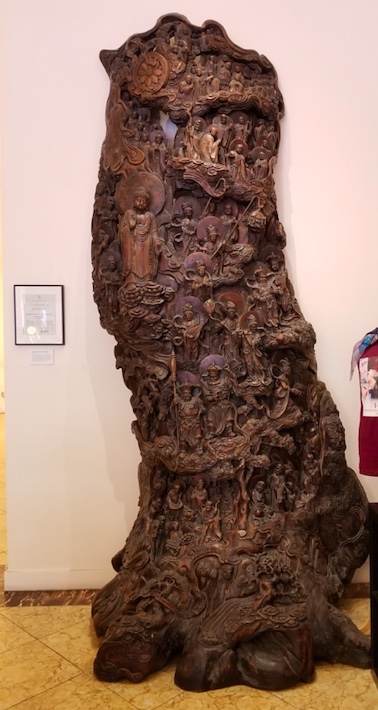
In a world where art manifests itself in countless forms, there are rare instances when we stumble upon something truly extraordinary—a concealed treasure that enthralls our senses and moves us on a deep level. Such a remarkable encounter occurred one fateful day as I explored the gift shop at The International Art Museum of America (IAMA), nestled in the heart of downtown San Francisco. Amidst the vast array of artistic wonders, my gaze became fixated on an exquisitely crafted wood carving—a masterpiece that exuded an ethereal essence of spirituality and profound significance.

This awe-inspiring sculpture, meticulously chiseled from a single tree, originated from China and was skillfully brought to life by gifted folk artists. It portrayed an enchanting realm of spiritual growth and profound accomplishments in Buddhism. Towering at an impressive height of approximately three and a half meters and spanning one meter in width, this artwork was a testament to the dedication and artistry of its creators. Every intricate detail, meticulously carved figures, and delicate embellishments, painted a vivid tableau illustrating the virtues of compassion, enlightenment, and the transformative journey towards Nirvana.

The intricately carved sculpture was a masterpiece that depicted the journey of practitioners from being ordinary to mastering the higher levels of Buddhahood. The figures in the relief were so vividly carved that it was easy to see their progression towards enlightenment and Nirvana. Every detail, from the facial expressions to the flowing cloth, the delicate flowers, and the instruments, was so meticulously presented that it was impossible not to be impressed.

The beauty of this piece lay not just in its stunning visual presentation but also in the message it conveyed. It illustrated the importance of practicing compassion in thoughts, words, and deeds to achieve spiritual growth. It reminded us that every act of kindness, every gesture of love, and every moment of selflessness is a step towards enlightenment and Nirvana.

The sculpture had a calming effect on me. It was a tangible reminder of the power of art to transcend language, culture, and time. It spoke to me in a language that was universal, one that transcended borders and connected people across the world.

As an art lover, I have seen many beautiful pieces over the years, but this wood carving sculpture stood out as a true masterpiece. It was a testament to the skill and craftsmanship of the folk artists who created it, and it served as a reminder of the timeless beauty of art.

Discovering a Hidden Gem in IAMA Gift Shop

Link:https://peacelilysite.com/2023/05/18/discovering-a-hidden-gem-in-iama-gift-shop/

#Buddhism #IAMA#InternationalArtMuseumofAmerica #Art #Artist#ChineseCulture#Sculpture #WoodCarving #Buddhahood #Enlightenment #Nirvana

Be the Person Who Creates Miracles

Photo by Acharaporn Kamornboonyarush on Pexels.com

Christmas Lottery

A company had a tradition of holding an annual party on Christmas Eve, and held a lottery. The lottery rule was this: each employee $10 US dollars to the fund. The company had a total of three hundred employees. In other words, a total of three thousand dollars could be raised, and the lucky winner would take all the money home.

On the day of the lottery, the office was filled with a lively atmosphere. Evervone wrote their names on a piece of paper to put into the lottery box. However, a young man hesitated when writing his name. This was because he had thought of the company’s cleaning lady. Her frail and sick son had recently needed surgery, but she did not have money to pay the operation costs. So she was very troubled. Although he knew the chance of winning the lottery was slim, only a I in 300 chance, the man still wrote the name of the cleaning lady on his piece of paper.
The moment of suspense arrived, the boss stirred the lottery box and finally took out a piece of paper. In his heart, the man had been constantly praying, “I hope the cleaning lady can win”. Then the boss carefully declared the winner’s name. A miracle had happened!
The cleaning lady had really won! The office burst into cheers. The cleaning lady quickly went forward to accept the award. She was so happy that she almost cried and said, “I am really lucky! With this money, my son has hope!”
The party began. The man while thinking about the “Christmas miracle”, paced around the lottery box. He took out a piece of paper and inadvertently opened it to take a look. Written on the paper was also the cleaning lady’s name! The man was very surprised. He then drew out several more pieces of paper. Although the handwriting was not the same, all the names were the same. All were the cleaning lady’s name! The man teared up, he understood that the world really has Christmas miracles. However, the miracles will not fall from the sky, they are created by people themselves.

Rotten Vegetables

One afternoon, I went to the suburbs with a friend to take a walk. Suddenly. an old man wearing very worn clothing came over carrying a bag of vegetables to sell.
Those vegetables looked poor. They were yellowed and withered, and even had insect bites. But my friend did not say anything and bought three bags. The old man was also very embarrassed and explained, “I planted the vegetables myself. A while back there was a heavy rain and they became rotten. They do not look very good. I am really sorгу.”
After the old man left, I asked my friend, “Are you really going to eat these vegetables when you get home?”
Without thinking he replied, “No, these vegetables can’t be eaten anymore.”
“Then why did you buy them?”
That is because no one will buy these vegetables. If I don’t buy them, then the old man probably won’t have any income.”
Impressed by my friend’s benevolent act, I caught up with the old man and also bought some of the vegetables. The old man said joyfully, “I have been selling the entire day, and only you two have been willing to buy them. I am very thankful to you.”
A few vegetables that I can’t even eat allowed me to learn a valuable lesson.
When we are at a low, we hope that a miracle will come upon us. Yet, when we are capable, will we be willing to do that miracle?

Be the Person Who Creates Miracles

Link:https://peacelilysite.com/2023/05/12/be-the-person-who-creates-miracles/

#Kindness # Miracle #Lottery #Christmas #Vegetables

Why Kumarajiva Swallowed Needles

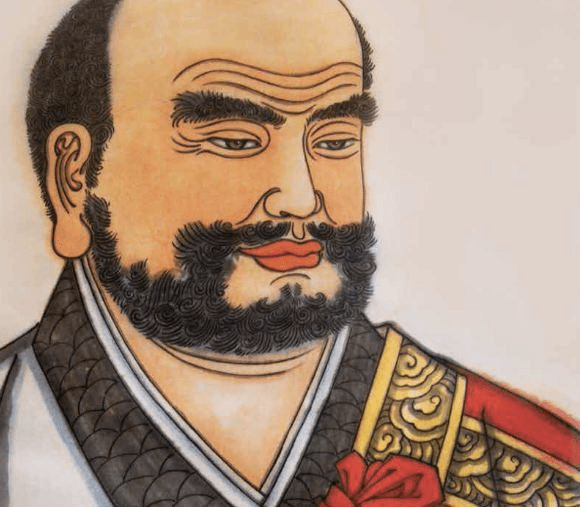
Great Master Kumarajiva

Once, I had the privilege of listening to a pre-recorded dharma discourse by the esteemed H.H.  Dorje Chang Buddha III. During this enlightening session, His Holiness shared a captivating story that left a profound impact on my mind. It was the tale of Kumarajiva, a legendary figure who demonstrated his profound inner realization by consuming needles. Intrigued by this extraordinary account, I felt compelled to delve further into the remarkable life of Kumarajiva.

Kumārajīva was a Buddhist monk, scholar, missionary and translator from the Kingdom of Kucha (present-day Aksu Prefecture, Xinjiang, China). Kumārajīva is seen as one of the greatest translators of Chinese Buddhism. According to Lu Cheng, Kumarajiva’s translations are “unparalleled either in terms of translation technique or degree of fidelity”.

Kumārajīva settled in Chang’an during the Sixteen Kingdoms era. He is mostly remembered for the prolific translation of Buddhist texts written in Sanskrit to Chinese he carried out during his later life.

At Chang’an, Kumārajīva was immediately introduced to the emperor Yao Xing, the court, and the Buddhist leaders. He was hailed as a great master from the Western regions, and immediately took up a very high position in Chinese Buddhist circles of the time, being given the title of National Teacher. Yao Xing looked upon him as his own teacher, and many young and old Chinese Buddhists flocked to him, learning both from his direct teachings and through his translation bureau activities.

Kumārajīva appeared to have a major influence on Emperor Yao Xing’s actions later on, as he avoided actions that may lead to many deaths, while trying to act gently toward his enemies. At his request, Kumārajīva translated many sutras into Chinese. Yao Xing also built many towers and temples. 

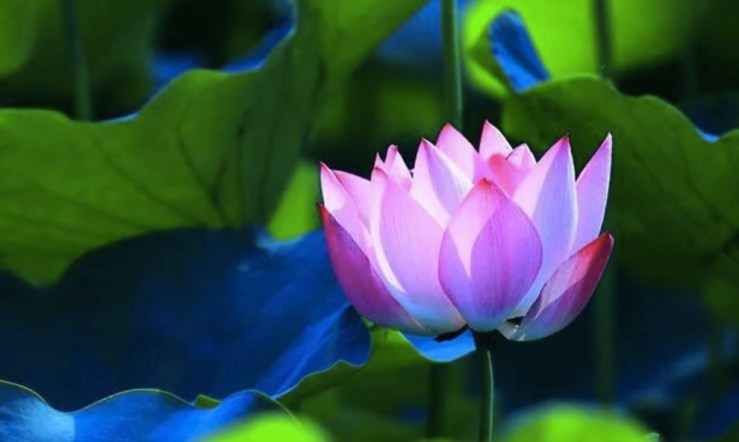
Yao Hsing was so impressed with Kumarajiva’s political acumen, intellectual talent and spiritual depth that he was impelled to try a eugenic experiment. He insisted that Kumarajiva move out of the monastic community into a private house staffed by female attendants. Yao Hsing believed that the offspring of Kumarajiva and carefully selected maidens would be as brilliant and talented as their father. Although Kumarajiva was repelled by the experiment, he refused to jeopardize the welfare of the translation centre by refusing to obey his emperor. He complied with Yao Hsing’s orders but was concerned about the effect his actions might have on the monastic community. He likened himself to a lotus growing out of the mud and enjoined the monks to attend to the lotus and ignore the mud.

However, it is widely understood that monks are expected to adhere strictly to the rules and precepts, diligently purifying their bodies and minds while maintaining purity in their six senses. Deviating from these principles, particularly by engaging closely with women and disregarding the precepts, can hinder the attainment of positive outcomes. Consequently, doubts began to arise among the Sangha regarding Kumarajiva’s integrity, leading to a decline in the commitment of some disciples to uphold the essential Buddhist rules.

When Kumarajiva became aware of the troubling trend spreading among the monks, he could not afford to be complacent. In response, he summoned all his disciples to gather before him, determined to address the issue head-on.

Before the perplexed audience, Kumarajiva unveiled a bowl filled with silver needles, their sharpness and gleaming appearance catching everyone’s attention. The monks were left wondering about the purpose behind Kumarajiva’s display.

In a solemn tone, Kumarajiva addressed his disciples, saying, “Not every monk is qualified to enter into worldly attachments and establish households. If you can swallow these silver needles as I do, then I will consider granting you permission to marry and have children. However, if you are unable to do so, you must never attempt to follow in my footsteps.”

Having spoken these words, Kumarajiva proceeded to place each silver needle into his mouth, consuming the entire bowl with a composed ease. The supernatural power exhibited by Kumarajiva left the assembled monks awe-struck, their eyes widened in astonishment. In the end, they were all convinced by Kumarajiva’s demonstration, believing him to be the true successor endorsed by the Buddha.

With this act, Kumarajiva showcased the potency of the correct Buddha Dharma. Consequently, no one dared to criticize him from that point forward. Instead, they committed themselves to diligent practice, upholding the precepts, engaging in self-cultivation, and abandoning any fantasies of pursuing worldly desires.

The community perceived Kumarajiva’s actions as an exemplification of self-sacrifice in the pursuit of the Bodhisattva Ideal, despite the disappointment he experienced due to the children of Yao Hsing’s experiment falling short of his grand expectations.

Why Kumarajiva Swallowed Needles

Link: https://peacelilysite.com/2023/05/11/why-kumarajiva-swallowed-needles/

#DorjeChangBuddhaIII#HHDorjeChangBuddhaIII #Kumarajiva #Buddhist #BuddhaDharma #SwallowNeedles #ChangAnChina #YaoxingEmperor #KuchaKingdom #InnerRealization #BuddhistPower #Monk

Source: https://en.wikipedia.org/wiki/Kum%C4%81raj%C4%ABva, https://www.tsemrinpoche.com/tsem-tulku-rinpoche/great-lamas-masters/kumarajiva-the-great-translator-from-kucha.htmlhttps://khyentsefoundation.org/the-life-and-legacy-of-kumarajiva/https://japanesemythology.wordpress.com/study-notes-the-influence-of-kumaraju-kumarajiva-upon-japan/

Learn to forgive others’ faults

Photo by Pixabay on Pexels.com


There was an elementary school teacher who taught in a remote town.
One day, he asked the little children in his class, “Do you have anyone you hate?”
After thinking it over, some of the little children remained silent while others nodded with great force.
The teacher then passed a bag to everyone and said, “Let’s play a game.
Now, all of you think about who has offended you and what hateful things have been done to you in the past week. Once you have them in mind, go find a rock by the riverside on your way home after school.
“Paste a little paper note, written with the person’s name, on the rock. If his fault was big, then find a bigger rock; if his fault was small, then find a smaller rock.
“Every day, place what you have collected in a bag and bring it with you to school and show me!”
All the students felt that it was very interesting and new.
After school, every one rushed to the riverside to find rocks. Early next morning, all the students brought their bags, filled with pebbles to school, and discussed about it happily.
With the passing of one day passed, two days, and three days, some of the students’ bag grew larger and larger. It had become a burden.
Finally, someone protested and said, “This is so tiring!” The teacher smiled but did not respond. Immediately, someone picked the conversation and continue to complaint, “Exactly! Carrying all these rocks to school is so tiring!”


At that moment, the teacher spoke up and said, “Now put down these rocks which represent the faults of people who have offended you!”
The students were all surprised, so the teacher explained, “Learn to forgive others’ offenses. Do not keep them as treasures in your mind, nor bear them on your shoulders. No one can stand it overtime.”
That week, the students of the class learned an extremely precious life lesson.
The greater the number and the bigger the rocks held in the bag, the deeper the tired accumulated in the mind, and the heavier the burden. If you have rocks written with others’ names, you should know what to do.

Learn to forgive others’ faults

Link:https://peacelilysite.com/2023/05/05/learn-to-forgive-others-faults/

#Forgive #Burden #Offenses #Rocks #Hate

Example of a Right Mindset


A true story about a female worker who was saved from being locked inside a freezer at work, due to her having a modest and respectful mind.
A lady worked for a food processing factory. One day, at the end of her work, she routinely walked into the freezer for a final check. Suddenly, an unfortunate moment happened, the door accidently closed behind her and she got locked inside the freezer. Although she exhaustedly screamed and pounded on the door, no one could hear her crying voice, she was totally out of people’s sight. All the workers were off from factory at this moment and no one could hear what had happened inside. Five hours later, when she was at the brink of death, the security guard of the factory opened that door and miraculously saved her.
Afterwards she asked the security guard why he would open the door since that was not his daily job.
He explained, “I have been working at this factory for 35 years. Every day there are several hundred workers who enter and walk out: however, you are the only one who greet me with “How are you?” in the morning and say “Goodbye, see you tomorrow.” in the evening.
Many people do not see me as if I were transparent. Today, you came to work in the morning as usual and asked me “How are you?”, but at the end of the work day, I did not hear you say to me “Goodbye, see you tomorrow.”
As a result, I decided to take a look inside the factory. I anticipated your “Hi” and “Goodbye”, because these words remind me of who I am and make me very happy. Without hearing your word of goodbye, I knew something might have happened. That was the reason why I searched for you in every corner of the factory.”


He who loves others is constantly loved by them; he who respects others is constantly respected by them. Helping others is truly helping ourselves.

Example of a Right Mindset

Link:https://peacelilysite.com/2023/05/05/example-of-a-right-mindset/

#Love #Respectful #kind #help #RightMindset #MoralStory

The Woodcutter and Dragon Snake

Photo by Tobias Aeppli on Pexels.com

Once there was a poor woodcutter who found a wounded dragon snake in the mountains. The woodcutter kindly nursed the dragon snake back to health and later released it into a hole in the mountain. There, a precious ganoderma lucidum grew, which the dragon snake protected day and night.

One day, the emperor fell ill and needed ganoderma lucidum to cure his disease. He offered a heavy reward for anyone who could provide it. The woodcutter remembered the dragon snake and went back to the mountain to find it. The dragon snake, grateful for the woodcutter’s kindness, gave him the ganoderma lucidum. The woodcutter presented it to the emperor, who gave him a lot of gold and silver as a reward.

Photo by Zlau0165u00e1ky.cz on Pexels.com

The woodcutter now lived a life of luxury but was not satisfied. He wanted to become an official and saw an opportunity when the queen lost her sight. The emperor announced that whoever could restore her sight with the eye of a dragon snake would become the prime minister. The woodcutter remembered the dragon snake again and begged for its help. The snake allowed the woodcutter to take one of its eyes with huge pain, which the woodcutter presented to the emperor. The queen’s sight was restored, and the woodcutter was made prime minister.

However, the woodcutter’s greed was insatiable. When the princess fell ill, and the dragon snake’s liver were needed to heal her, the woodcutter asked for the dragon snake once again. The dragon snake, wanting to repay the woodcutter’s kindness, allowed him to cut a small piece of its liver. But the woodcutter, overcome by greed, he went inside dragon snake’s stomach and took a large piece, causing the snake unbearable pain. The snake closed its mouth in agony, and the woodcutter was trapped inside.

This story shows that the woodcutter’s downfall was entirely due to his own actions, driven by his insatiable greed.

The moral is: The wages of avarice is death.

The Woodcutter and Drangon Snake

Link:https://peacelilysite.com/2023/04/28/the-woodcutter-and-dragon-snake/

#Woodcutter #DragonSnake #Buddhisttalesforyoungandold #Buddhiststories #storiesforkids #moralstories #Jatakastories #PansiyaPanasJataka

What is meant by Nectar?

The nectar formed a Dharma cloud along with more than 200 sariras of various colors at the time that On the Buddha’s Birthday in 2001, H.H.  Dorje Chang Buddha III held Dharma assembly

By henghsing Gyatso Rinpoche

Although I am an ordinary RINPOCHE without any deep realization, nevertheless, I am very fortunate to have visited many Rinpoches. I have sought instruction from Great Dharma King Yangwo Yisinubu and from famous Rinpoches, such as Panchen Lama, Dalai Lama, Karmapa, Bo Mi Qiang Ba Luo Zhu, Dorje Losang, Dilgo Khyentse, Jiang Gong Kang Qin, Jiang Gong Kang Ce, Ga Wang, Zong Nan Jia Chu, Chuang Gu, Xia Ma, Hsi Jao, Bei Lu Qin Zhe, Tai Xi Du, Heng Sheng, Jia Cha, and Kalu. Especially with respect to nectar, I have a detailed understanding.

In general, nectar can be divided into five types: Most Precious Nectar, Great Precious Nectar, Long Life Nectar, Vajra Nectar, and Bodhi Nectar.
These different types of nectar can also be divided into two different types: nectar that comes from sacred Dharma practice and nectar that comes from exoteric Dharma practice. There are several different types of nectar within the category of nectar that comes from sacred Dharma practice, depending upon the different manifestations of Dharma by each Buddha.
Nectar resulting from exoteric practices is most prevalent in contemporary Vajrayana Buddhism. Basically, any Rinpoche can practice the Dharma to produce such nectar. Medicine or food is mostly used. Added to and mixed together with the medicine or food is sharira or a Dharma object that has been empowered. This is then made into powder to make pills. This powder is then empowered through practice of the Dharma and the recitation of mantras to become various types of nectar. Nectar that comes from exoteric Dharma practice is mostly used for empowerment, curing illnesses, and other reasons.


Nectar that comes from sacred Dharma practice is totally different from nectar that comes from exoteric, ordinary Dharma practice. The degree of empowerment from nectar that comes from sacred Dharma practice as compared with nectar that comes from exoteric Dharma practice is as different as ten thousand miles and one footstep. No words could adequately praise the nectar that comes from sacred Dharma practice. Ordinary Rinpoches and ordinary Dharma Kings who have been conferred such titles by the world cannot successfully practice the sacred Dharma to invoke nectar. Only those who are true Buddhas, or incarnations or transformations of Great Bodhisattvas, can successfully practice such Dharma.
In the sacred Dharma practice to invoke nectar, the Dharma King conducting the practice will assemble over 100 Rinpoches to form a mandala. Gold, silver, and other precious items will be burnt as offerings. The Great Dharma King will then practice the holy Inner-Tantric Dharma to invoke the Buddhas and Bodhisattvas to bestow nectar from the realm of the Buddhas. The Buddhas will assemble in the sky or will enter the mandala area. This holy scene will be seen by all of the more than 100 Rinpoches in attendance.

White Bodhi Nectar


At this time, the Buddha who corresponds to the particular nectar that is being invoked will descend. The appearance of that particular Buddha and its bestowing of nectar can be seen. There will be the emission of light and the manifestation of supernormal states when the nectar descends into the bowl. This Dharma bowl must first be thoroughly washed and must be empty.
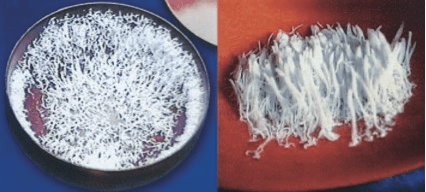
There is absolutely nothing in this world which has the mysterious and changeable shape of the nectar that descends into the bowl. It is exactly as what is described in the book Know the True Doctrines. According to people of great virtue, only this type of sacred nectar is true nectar. According to Tibetan tantra, nectar is the holy material used for initiations. No matter what type of initiation is performed, nectar must be used. Especially for the supreme yoga initiations, true nectar is an absolutely indispensable material for the initiation Dharma water.
True nectar represents the causative factor that raises one from the ordinary world to the realm of the Buddhas. If true nectar is not used as the basis for an initiation, such as when man-made nectar created from medicine is used to empower, then such initiation is not an Inner-Tantric Sacred Dharma Initiation. Therefore, according to tantra, nectar is fundamental for liberation. Determining whether a Dharma King is the incarnation of a Buddha or Great Bodhisattva mostly depends upon whether he or she has the depth of realization to successfully practice the nectar Dharma. Can he or she commune with the Buddhas and successfully invoke them to bestow nectar? Any explanation other than this, no matter how many times said, is merely empty talk. This includes explanations such as, “I am the heir to a certain spiritual legacy… Since childhood, I have been officially recognized as a Holy One and have been so for many lives…. I am a Dharma King recognized by a certain Great Rinpoche…I am the head of a certain great temple.” This only proves that they are Rinpoches according to worldly regulations and teachings. Of course, they can save living beings. However, such explanations definitely do not prove that they are able to represent the sacred essence of the supreme tantra. Nevertheless, one cannot dismiss such people. They are persons of great virtue. It is simply a matter of different levels of attainment.


When visiting Rinpoches, I would speak of this matter of the Buddhas bestowing true nectar. Some Rinpoches who do not have the ability to successfully invoke true nectar become quite unhappy when this subject is raised. I think that this is not a big problem. If you think that you are a Great and Holy Dharma King or a Great Rinpoche, then conduct a Nectar Dharma Assembly in order to prove that you are someone whom living beings can fall back upon. Let everybody see that you have the Buddha Dharma within you and that the Buddha Dharma is true. This is saving living beings! Otherwise, use empowered medicine as nectar and save living beings while cultivating yourself with a heart of humility!


I would like to raise the following question for everybody’s consideration. Are the Dharma Kings who successfully invoke the Buddhas to bestow nectar in front of everybody able to represent the Buddhas and Bodhisattvas or are the Dharma Kings who only speak empty words able to represent the Buddhas and Bodhisattvas? This question is worthy of deep consideration!
I and many people of great virtue believe that those who can commune with the Buddhas and Bodhisattvas are definitely Great Dharma Kings. Those who can only reach ordinary states are ordinary Rinpoches!

What is meant by Nectar?

Link: https://peacelilysite.com/2023/04/21/what-is-meant-by-nectar/

#Nectar#Buddha #BuddhaDharma #HolyMonk #DharmaKing#H.H.DorjeChangBuddhaIII