Buddhism, Multidimensional Space, and the Science of Consciousness

Modern scientists suggest there may be multidimensional spacetime. The world we perceive in our daily lives consists of three dimensions of space—length, width, and height—plus one dimension of time, forming what we call four-dimensional spacetime.

For most people, it is nearly impossible to imagine what multidimensional space could be like. Even scientists struggle to describe how such realms might appear.

Yet once, while I was reading a Buddhist sutra, I felt as though I glimpsed something of this mysterious idea.

In the Vimalakirti Sutra, it is recorded that Manjushri Bodhisattva led 8,000 bodhisattvas, five hundred arhats, and countless heavenly beings to visit the ailing lay master Vimalakirti.

Vimalakirti lived in a small chamber. He invited everyone to enter. Miraculously, they all went inside, but the room did not grow any larger. No one felt crowded or obstructed, and everyone saw Vimalakirti sitting directly before them.

Manjushri and Vimalakirti engaged in profound dialogue about the Dharma. Later, Vimalakirti displayed astonishing spiritual powers, bringing seats, exquisite foods, and treasures from distant worlds into that same room.

It was absolutely astonishing—like witnessing the seamless merging of multiple dimensions.
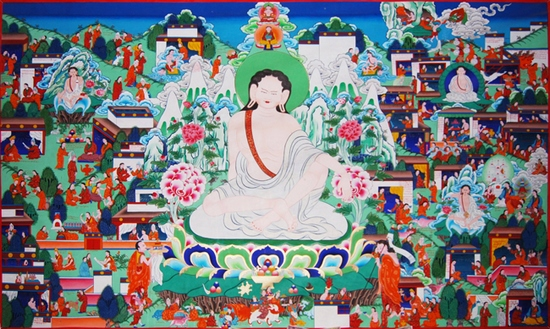
Throughout Buddhist history, many great masters have demonstrated abilities that seem to transcend space and time.

For example, there is the story of Milarepa, Tibet’s most renowned yogi. When he was welcoming his disciple Rechungpa back from India—where Rechungpa had traveled to collect scriptures—an incredible event took place.

Rechungpa carried the scriptures on his back as he crossed the vast grasslands. When he saw Milarepa waiting for him, he was overjoyed. Eagerly, he described how he had met the great master Tilopa. With visible pride, he declared:

“In the past, Tilopa did not transmit this Dharma to Master Marpa, but now he has passed it on to me!”

His words brimmed with arrogance.

As they walked together, Milarepa noticed a broken yak horn on the ground and asked Rechungpa to pick it up. Rechungpa couldn’t see the point and made excuses not to touch it. Silently, Milarepa bent down, picked it up himself, and carried it along.

Suddenly, the sky darkened. Thunder boomed, lightning flashed, and hailstones the size of eggs pounded them mercilessly. Rechungpa was battered and bruised.

When the storm finally ended, he looked around—Milarepa had vanished. Alarmed, he began calling out.

Then, Milarepa’s calm voice rose from the little yak horn at his feet:

“Why are you so flustered? Come in here and take shelter.”

Rechungpa stared in disbelief. The opening of the horn was barely larger than a fist. How could he possibly fit inside?

He bent down to look, and to his amazement, he saw an endless green meadow within—stretching as far as the eye could see. Milarepa sat serenely in meditation.

But no matter what he tried, Rechungpa could not enter.

In that instant, all his pride dissolved. Humility and awe took its place.

Milarepa finally emerged and said with a gentle smile, “Did you see? My little yak horn turned out to be quite useful after all.”
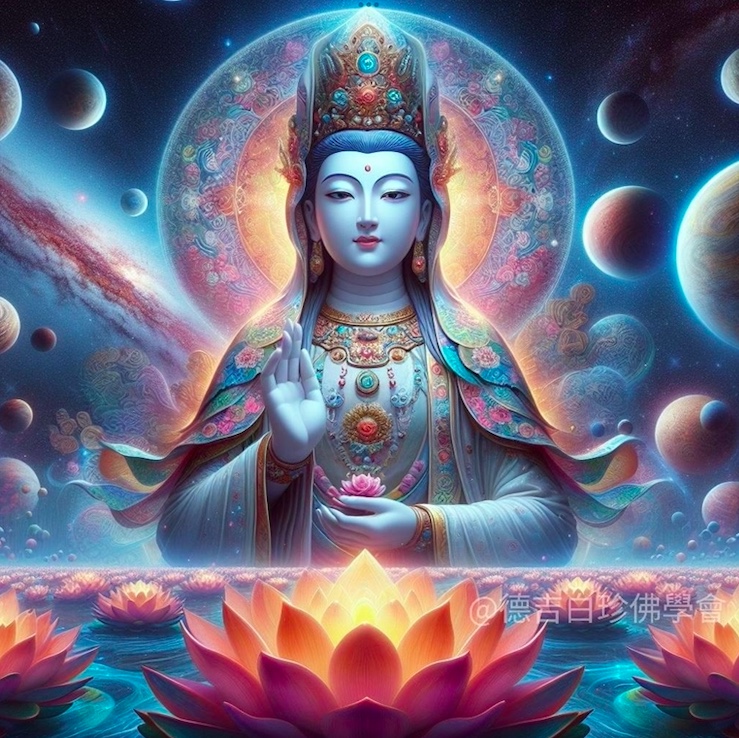
Even in our time, extraordinary manifestations still occur.

H.H. Dorje Chang Buddha III has demonstrated countless inconceivable displays of supreme Buddha Dharma.

Ruzun Ruo Hui, the abbess of Hua Zang Si (in San Francisco) shared one remarkable example in Interviews with Buddhist Disciples (Episode 78).

Around 1995, about a dozen people were gathered together in a room, respectfully listening to the recorded Dharma discourse Expounding the Absolute Truth through the Heart Sutra.

Halfway through, the entire house vanished. All the walls and structures simply disappeared, and everyone found themselves sitting under the open sky.

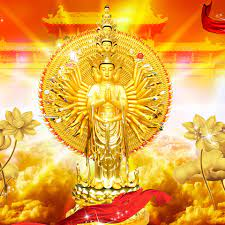
Above them, Avalokiteshvara Bodhisattva appeared, standing in the air, radiating boundless light while auspicious clouds billowed around.

For nearly an hour, Avalokiteshvara remained visible, bestowing blessings. No sounds of the street—no passing cars or footsteps—could be heard. The only sound was the voice of H.H. Dorje Chang Buddha III expounding the Dharma.

It was clear that everyone present had entered another dimension altogether.

Moments like these show us that the universe is far more profound than what our senses can grasp.

I believe Buddhism is deeply scientific—not superstition. Just because today’s scientists cannot yet explain these phenomena does not mean they are unscientific.

On the contrary, Buddhist wisdom offers an entirely different lens through which to explore reality. It can inspire modern science to uncover new methods and fresh insights to understand the universe’s deepest mysteries.

If we open our hearts and minds, perhaps Buddhist teachings will one day help humanity discover shortcuts to truths that today seem unimaginable.

Link:https://peacelilysite.com/2025/07/03/buddhism-multidimensional-space-and-the-science-of-consciousness/

Holy Miracles Temple: A Sanctuary of Compassion and Healing Amid Global Turmoil

Holy Miracles Temple, located at 1730 N. Raymond Ave., Pasadena, CA, serves as a sanctuary dedicated to teaching the true Dharma of the Tathagata, as transmitted by Namo H.H. Dorje Chang Buddha III and Shakyamuni Buddha, guiding disciples on their path to liberation and spiritual accomplishment. Grounded in the Buddha’s teachings and fueled by boundless compassion, the temple’s core mission is to selflessly serve humanity. Its hope is for people in America and across the globe to embrace Buddha Dharma, cultivating love for their country, fellow people, and the world. Through mutual support, peace, kindness, and auspiciousness, the temple envisions a strong nation with thriving citizens and a world brimming with joy and happiness.

In these challenging times, when suffering and catastrophe touch so many, Buddhism’s compassionate spirit calls us to extend blessings to all sentient beings. On October 13, 2024, the Holy Miracles Temple held a Blessing and Peace Dharma Assembly, a response to the unprecedented hardships the world faces today. Devoted Buddhist disciples gathered to honor the teachings of Namo Dorje Chang Buddha III, coming together to send prayers for healing and hope to those affected by natural disasters, conflicts, and upheavals. This assembly reaffirmed the Buddhist commitment to easing the suffering of all.

The event featured a solemn chanting of the Universal Gate Chapter of the Lotus Sutra, dedicated to Avalokitesvara Bodhisattva, the embodiment of compassion. The gathering was led by Abbess Ruzun Ruohui from Hua Zang Si Temple, who guided attendees through the prayers.

This year has been marked by profound global calamities. In the United States, Hurricane Helene ravaged Texas and Louisiana in August, displacing thousands and flooding communities. Just weeks later, Hurricane Milton unleashed further destruction in Florida and Georgia. Recovery efforts faced tremendous challenges as these back-to-back disasters left homes shattered and lives in turmoil.

In Asia, Typhoon Dindo devastated the Philippines, causing severe flooding and landslides across Luzon in September. Thousands of people were forced to evacuate as the typhoon submerged entire neighborhoods. Nepal, too, was struck by tragedy when a powerful earthquake hit in June, resulting in widespread destruction and loss of life in remote regions.

The war in Ukraine, continuing its escalation throughout 2024, inflicted further suffering on cities like Kyiv and Mariupol, leaving behind a deepening humanitarian crisis. Meanwhile, renewed violence in Syria once again brought bloodshed to war-torn cities such as Aleppo and Damascus, compounding the plight of its weary people.

Europe was not spared from disaster either, as record-breaking floods struck in July. Torrential rains overwhelmed parts of Germany and Belgium, causing rivers to overflow and submerging entire towns. Meanwhile, the United States’ western regions grappled with annual wildfires of increasing magnitude, destroying homes and forests alike.

During the Dharma Assembly at Holy Miracles Temple, attendees united in spirit and purpose. As the sacred verses of the Universal Gate Chapter resonated through the temple, the prayers reached out to those suffering from this year’s tragedies, seeking to bring healing and relief. Prayers were offered for the displaced, the injured, and those who had lost everything. In the face of conflict and war, the community gathered to extend peace, comfort, and hope to all those impacted.

This powerful assembly embodied the compassionate essence of Avalokitesvara Bodhisattva, radiating light and healing to all beings affected by suffering. It was a profound reminder that through shared compassion and collective action, we can create a world where all beings may find peace, healing, and joy.

Link:https://peacelilysite.com/2024/10/18/holy-miracles-temple-a-sanctuary-of-compassion-and-healing-amid-global-turmoil/

Source: https://cagazette.com/insights-from-the-blessing-and-peace-dharma-assembly-at-the-holy-miracles-temple/?fbclid=IwY2xjawGADEJleHRuA2FlbQIxMAABHSOFxdL9Y7OJSnH14qBxTQoBYe2QSzdXAI_yk56BTajnwGdAXcnXxCa7bQ_aem__GWuVw6xxEGleMzpPI9e5A

Dazu Rock Carvings – The Last Monumental Works in the History of World Grotto Art

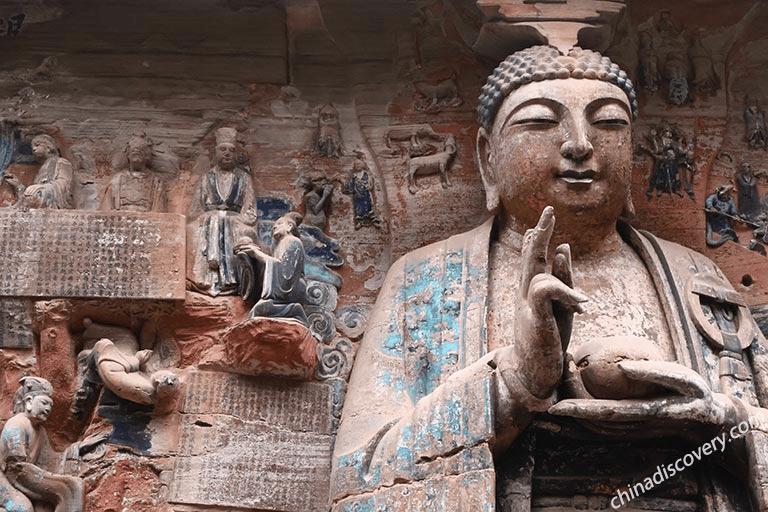
Detail of reclining Buddha, Parinirvana of Shakyamuni attended by bodhisattvas, Mt. Baoding, Southern Song Dynasty, Dazu, China, 102′ long (photo: Mulligan Stu, CC BY 2.0)

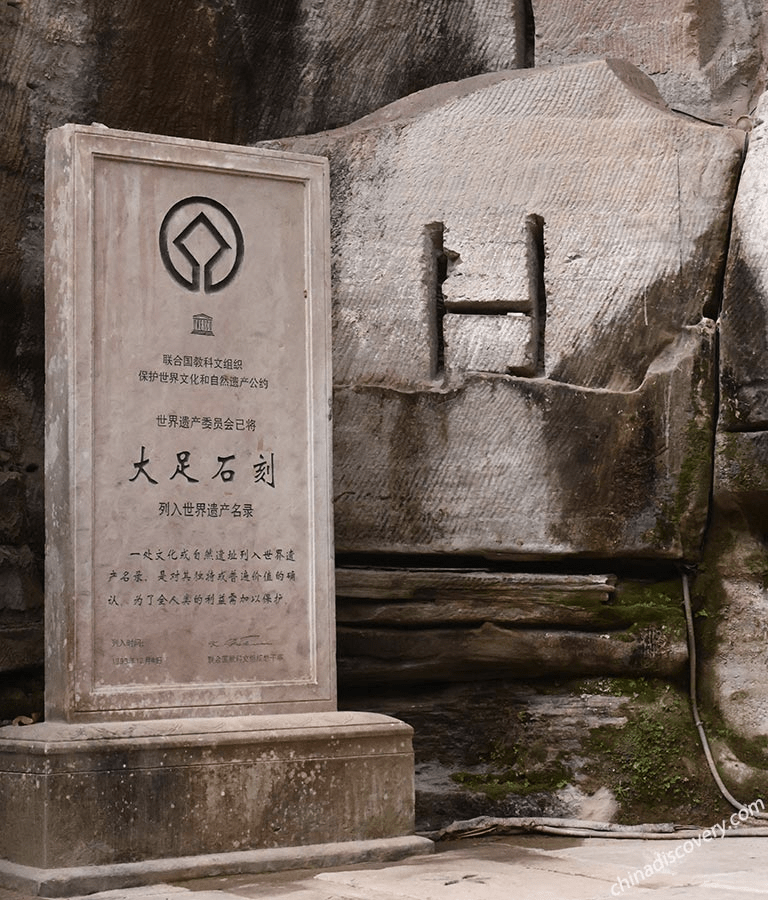
With a history spanning over 1,300 years, the Dazu Rock Carvings represents the pinnacle of grotto art worldwide from the ninth to the thirteenth century. The exquisite and varied cliff-side sculptures at Dazu caves provide outstanding proof of the harmonious fusion of Buddhism, Taoism, and Confucianism in civil. In 1999, the Dazu Rock Carvings was inscribed on the World Heritage List by UNESCO.

Enjoying a comparable reputation with the top four grottoes in China (Mogao Grottoes, Yungang Grottoes, Longmen Grottoes, and Maijishan Grottoes) and being rated as one of the eight grottoes in the world, the Dazu Rock Carvings (“大足石刻” in Chinese), also known as Dazu Caves or Dazu Grottoes, located 167km from the city center of Chongqing. It is the one and only UNESCO World Cultural Heritage Site in Chongqing municipality. The Dazu Rock Carvings consists of 75 cave temple sites, including more than 50,000 statues, being protected for their historical, artistic, and scientific values at different levels, representing the pinnacle of Chinese cave temple art between the 9th and 13th centuries. Among them, rock carvings of Baodingshan (宝顶山), Beishan (北山), Nanshan (南山), Shimenshan (石门山), and Shizhuanshan (石篆山) are exquisitely sculpted with the most distinctive style.

The Dazu Rock Carvings started in the early Tang Dynasty, went through the late Tang Dynasty and the Five Dynasties, and then experienced its golden time in the Northern and Southern Song Dynasty. At the time when cave art in northern China fell into decay, the Dazu Rock Carvings undoubtedly created another peak in the history of Chinese cave art, extending the history of Chinese cave art for more than 400 years. Since then, there have been no such large-scale rock carving events in China or even in the world. Therefore, the Dazu Rock Carvings are also known as the last monument and swan song in the history of the world’s grotto art.

UNESCO Stele of the Dazu Rock Carvings

Differing from famous royal grottoes in the north, the religious cliff inscriptions in Dazu show distinctive features of nationalization, secularization, and everyday life, reflecting the remarkable development and changes in folk religious beliefs. Thus, the Dazu caves have the irreplaceable historical, artistic, scientific, and connoisseurship values of grottoes of the previous generations. Another highlight that has to be mentioned is that the statues there provide outstanding evidence of the harmonious synthesis of Tantric Buddhism, Taoism, and Confucianism. Visitors can see separate stone carvings as well as the unity caves reflecting the three religions’ confluence and ruling together. Moreover, thanks to the southern hinterland location of the Dazu Rock Carvings, this cultural heritage stays far away from man-made sabotage, retaining the integrity of the statues, the original characteristics and values of the period when the carvings were created.

Rock carvings in Dazu are mainly located across five mountains, each containing distinct sets of grottoes, among which the cliff-side sculptures on Baodingshan and Beishan are best known and considered to be the model of the late Chinese grottoes statue art. The pictures of the Dazu rock carvings that we commonly find online were mostly taken at the Baodingshan Scenic Area, which is also the must-visit site for a Dazu Rock Carvings tour.

Baodingshan Rock Carvings (Baodingshan Scenic Area)

Fifteen kilometers northeast from Dazu center, Baodingshan Rock Carvings was constructed by the famous monk Zhao Zhifeng in the Song Dynasty for more than 70 years. As one of the most famous Tantric Buddhist shrines in China, there is an old saying that goes like “Go North, climb the Emei Mountain; Go South, reach the Baoding Mountain.” The centerpiece of the Baodingshan rock carvings is the U-shaped Grant Buddha Bay, also known as Dafowan (“大佛湾” in Chinese). Nearly ten thousand statues are carved along the east, north, and south cliffs, which are approximately 500 meters in length and 8-25 meters high. Like a picture scroll with endless photographs, the content of Baodingshan rock carvings is mainly Buddhist scripture stories, each niche related to the other but not identical.

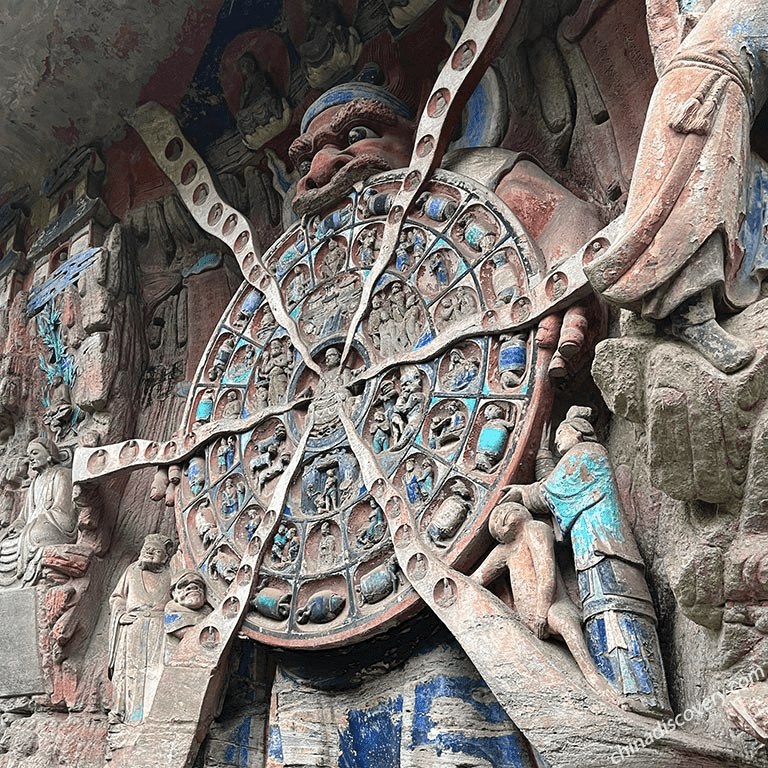
Dazu Rock Carvings – Buddhist Wheel of Life

Avalokitesvara with Thousand Hands

The Buddha statues at Baodingshan are novel in conception, skillful in carving, and rich in secular characters. Religious treasures come one after another, including the representative work – Niche of Sakyamuni Entering Nirvana, one of the wonders of Buddhist art in the world – Avalokitesvara with Thousand Hands, striking image of Buddhist Wheel of Life, scientific designs of Three Saints of Huayan School of Buddhism and Cave of Full Enlightment showed craftsmans’ ingenuity.

In addition, niche content and their expression approach are striving to visualize reality. For instance, Niche of Parental Love Sutra contains ten groups of carvings, including scenes like begging for a son, carrying a child, and going into labor, etc., depicting parental love in bringing up children with plots linking to each other as a picture-book. These carvings are vivid and impressive. They were the outcome after Buddhism had been localized in China.

The ox herding story

Located at the eastern end of the Great Buddha Bend, the ox herding tableau, shows a herdsman taming a disobedient ox—a traditional metaphor for the path to self-enlightenment and a popular theme among Ch’an Buddhist monks and painters in the Song Dynasty. The tableau is made up of eleven vignettes arranged horizontally along a 27-meter cliff wall.

Ox herding story (scene 1–2), Niche 30, Dafowan, Mt. Baoding, Dazu. Southern Song Dynasty (photos: G41rn8, CC BY-SA 4.0)

The first three vignettes each depict a lively interaction between a herdsman and an ox in a landscape setting. The herdsman represents the Buddhist practitioner while the ox refers to the practitioner’s potential to become a Buddha. As the ox turns its body away, the stocky herdsman uses force, grass, and a stick to tame the ox. The verses accompanying the scenes further recount these struggles. 

Herdsmen embracing in the ox herding story (scene 5), Niche 30, Dafowan, Mt. Baoding, Dazu. Southern Song Dynasty (photos: G41rn8, CC BY-SA 4.0)

In the fourth and fifth vignettes, the ox is finally brought under control. The herdsman, featuring a wide, joyful smile, wraps his arms around his fellow herdsman while holding on to the ox with the rope in his hands.

In addition to the uncanny quality of grottoes’ masterpieces at Grant Buddha Bay (Dafowan), there are also many highlights you can’t miss while visiting Baodingshan Scenic Area:

  • Watch a 4K film with English subtitles to learn about the history and development of Dazu rock carvings, and enjoy an 8D view of spectacular grottos at the dome theater
  • Take a leisure stroll at Dazu Rock Carvings Museum (大足石刻博物馆) to gain insights into the whole thread of world cave temple art and the basic characteristics of Dazu Rock Carvings
  • Visit Shengshou Temple (圣寿寺) to admire the exquisite temple architecture, which was rebuilt at the Ming and Qing Dynasties.
Shengshou Temple & Dazu Rock Carvings Museum

Beishan Rock Carvings

1.5km north to Longgang Town of Dazu, with an altitude of 545.5m, Beishan is also called Longgang Mountain in the past. Beishan Rock Carvings is the initial of Dazu Rock Carvings. They were first created by Wei Junjing, prefect of Changzhou, in 892 A.D. of the late Tang Dynasty. Until 1162 A.D. of the Southern Song Dynasty, the existing scale of Beishan Rock Carvings was formed, and it centered around Fowan. The rock carvings are numbered and divided into two sections: No.1 ~ No.100 are in the south section, while No.101 ~ No. 290 are in the north section. There are over 5,000 statues on a 500m long cliff, with a height of 7 to 10 meters. The grottoes are very dense, just like a hive, and all of them are delicate and carved with high sculpture skills.

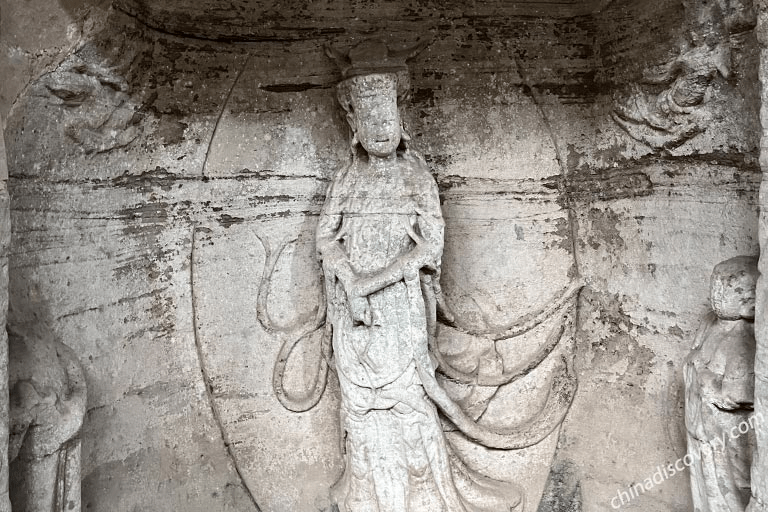
Avalokitesvara with a Rosary

The crowning jewels of Beishan rock carvings are the statues of Avalokitesvara. They are ornamental and artistic, with diverse looks and postures. The most emblematic ones are the Avalokitesvara with a RosaryAvalokitesvara Watching the Moon Reflection in the Water, and Thousand-armed and Thousand-eyed Avalokitesvara, etc.

Beishan rock carvings can be visited both during the day and at night. An additional visual experience is provided by the scenic spot’s usage of colored light to illuminate the stone statues. Besides, if you have enough time and stamina, don’t forget to follow the downhill trail to visit the Duobao Pagoda (多宝塔) to see the giant cliff statues of Beishan, the Two Buddhas of the North Pagoda.

Dazu Rock Carvings – The Last Monumental Works in the History of World Grotto Art

Link:https://peacelilysite.com/2024/01/04/dazu-rock-carvings-the-last-monumental-works-in-the-history-of-world-grotto-art/

#AvalokitesvarawithThousandHands #Shakymunibuddha #DazuRockCarvings #History #WorldGrottoArt #Buddhism #BuddhistArt #BuddhaStatue#Cave#TravelChina #ChineseCulture

Source:https://www.chinadiscovery.com/chongqing/dazu-rock-carvings.html, https://smarthistory.org/mt-baoding-dazu-rock-carvings/

“After attending that dharma assembly, I fell the warmth from my two feet and no longer need to use a hot-water bag to help me fall asleep. Even when I wake up at night, I would pleasantly find that my feet warm….”


“After attending that dharma assembly, I fell the warmth from my two feet and no longer need to use a hot-water bag to help me fall asleep. Even when I wake up at night, I would pleasantly find that my feet warm….”

By: Disciple Huiyu Qiu

In September 2016, I had the good fortune to attend the Dharma Assembly of Empowerment by Kuan Shi Yin Bodhisattva’s Great Compassion held at Hua Zang Si and received very magnificent benefits. I would like to take this opportunity to share my experience and feelings on that day with my fellow cultivators.

At the beginning of the dharma assembly, the presiding master told us to chant the mantra first. The rhythm of chanting was rather slow and the sound was very wonderful and beautiful. My feeling was completely different from my experience of the chanting I normally did.

After chanting for a short while, without knowing any reason, my father, my husband, and my two children suddenly appeared in my mind. The appearance of my father was especially clear. Sadness rose in me and tears streamed down through my face. I thought that they had not taken refuge in Buddhism and did not have the affinity to learn the true dharma of the Tathagata. That was the reason that I could not bear the sad feeling.

I stopped weeping and continue to chant. At that time, my grandparents from both my mother’s side, who have passed away and my father’s side as well as some other family members and relatives all appeared before my eyes. Though the view just flashed by me momentarily, I felt that I saw each of them clearly. I thought about the fact that some of them had not taken refuge while some others, though had taken refuge, were still not diligently making a good effort to learn and practice Buddha-dharma. Thinking that they would surely be in very miserable and lonely situations in the future, I could not suppress my sad mood and wept again.

Then I stopped weeping and continued to chant. Next, the faces of my father, husband, and children emerged before my eyes again. Every time I saw them, my heart was painfully pulled. I could not keep myself from weeping.

I once again stopped weeping and joined the chanting again. At this time, my ears clearly heard the voices of chanting the mantra from the crowd. However, my heart felt that I heard a voice of shouting for rescue. It sounded like a desperate yelling for help from someone who was completely surrounded by a situation of despair and horror. I had a very shocking feeling at the time. Clearly, this is the call for help from living beings, begging Buddhas and Bodhisattvas to rescue them! We are sincerely beseeching Buddhas and Bodhisattvas to save us and cross us over, to lead us to leave the abyss of pain and suffering in samsara forever! At this time, the sadness and bitterness in my heart were beyond description by words. Thus, I cried again with my face covered by tears.

After chanting the mantra, the dharma master announced that the dharma assembly would formally begin. I kept my body in a fixed posture and closed my eyes. I did my best to stay calm.

Very soon, the sound of patting came from behind. Also, people on my right side generated different kinds of sound. Someone before me was crying and fell to the ground. I sensed that she later moved to lie next to my feet (not sure whether she was actually lying down or not) and touched me a few times. I tried not to think about that. Shortly after that, she moved to behind me and started to pat the rear of my left foot and then my right foot. My right foot was hit with more power and more frequently. I dared not move myself at all and tried my best to keep my mind calm. However, I was still somewhat at a loss since I did not know what she might do to me next. When the patting stopped, I felt that she was still behind me. After a while, my right foot was again patted a few times. After that, she seemed to have left me. My eyes were always closed during this period. I dared not open my eyes.

My two arms felt more and more tired. I put my arms down twice and raised them again. After putting down my arms the last time, I felt that my neck began to rotate very slowly from right to left. After rotating two rounds, it went the opposite direction. At that time, I could not be sure whether this was an empowerment from Kuan Shi Yin Bodhisattva or a response made by myself due to being eager to receive empowerment.

Next, my both shoulders began to turn from the front to the back.

After that, I heard singing. I could not hear the words of singing clearly. At this time, my shoulders continued turning and the speed seemed to be faster.

Finally, I could hear clearly that the song was the Six Character Great Bright Mantra and “Namo Kuan Shi Yin Bodhisattva.” I first followed the singing with humming and then joined with my open voice. At this time, the movement of my two hands became bigger. My hands were swinging back and forth and left and right, as if doing a stretching exercise. However, all movements were spontaneous and beyond my own control.

At this time, I heard a fellow sister behind me speaking loudly in Cantonese. She seemed to be saying that we have committed lots of sins and evil deeds in the past and therefore we now must repent earnestly and so on.

My hands continued swinging. I followed the singing and joined from time to time. At this time, my hand movement changed and turned into a movement of dancing. That was the hand gesture in a Chinese classic dance. I was dancing to the singing. My heart was filled with the joy of the dharma. With a smile on my face and while singing lightly, I made all kinds of wonderful movement with my hands (At least I felt that my hand movement was very wonderful.). Totally without any control, I felt that all movements were so smooth, fluent, and natural. Though my eyes were always closed, my mind was very clear and very much open. I was clearly aware what gestures and movements were performed by my hands. However, the dancing and moving of my hands was not directed by my own mind.

My two hands kept waving and moving. However, when the master leading the dharma practice called out “Stop!”, my hands gradually moved to a position before my chest and stopped there.

After the perfect conclusion of the dharma assembly, the attending crowd went together to perform the ending practice of saving living beings from captivity. On the trip of driving back home, I unexpectedly noticed that my two feet were warm. This was something extraordinary to me. For quite a number of years, my two feet were rather cold. In particular, I must have a hot water bag prepared before going to bed. Otherwise I would not be able to fall asleep. Even if I went to sleep after having a hot bath or having my feet soaked in hot water, my feet would still be cold. Sometimes when I did not use a hot water bag, I would wake up at night with my feet being ice-cold. I could feel the chilly air from my bones and would even tremble. At that time, I had to have the hot-water bag ready immediately. After attending that dharma assembly, I fell the warmth from my two feet and no longer need to use a hot-water bag to help me fall asleep. Even when I wake up at night, I would pleasantly find that my feet warm.

I am grateful to the empowerment bestowed on me by the greatly loving and greatly compassionate Kuan Shi Yin Bodhisattva!

Additionally, I also had an unexpected discovery. The ankle joints in my two feet were no longer in pain. I could not remember since when my ankle joints started to ache, but it should have been for quite a while. I did not know what the cause was either. Normally, there was no pain if I do not touch them. However, it was very painful if the spot was pressed. Therefore, when I sat crossed legged to practice meditation, a towel or a blanket must be placed under my feet. Otherwise I would not be able to keep myself in a sitting position.

Yesterday evening, while chatting with my family members after dinner, I reached out to massage the ankle joints on my right foot as I used to do. I did not even feel any pain at all. I immediately pressed the ankle joints on my left foot and did not feel any pain either. I dared not believe that fact at the time and repeatedly pressed the spots many times. It was really true that I had no pain at all.

I once again express my gratitude to the greatly loving and greatly compassionate Kuan Shi Yin Bodhisattva!

This dharma assembly was very magnificent. The attending crowd were also empowered by Kuan Shi Yin Bodhisattva’s great compassion and were full of the joy from the dharma. Had I not experienced the occasion in person, I absolutely would not be able to imagine the inconceivable feeling and benefits I had when the empowerment from Buddhas and Bodhisattvas came to me!

I gratefully prostrate to H.H. Dorje Chang Buddha III!

I gratefully prostrate to the greatly loving and greatly compassionate Kuan Shi Yin Bodhisattva!

I gratefully prostrate to all Buddhas and Bodhisattvas in the ten directions!

Link: https://wisdomtea.org/2023/02/23/after-attending-that-dharma-assembly-i-fell-the-warmth-from-my-two-feet-and-no-longer-need-to-use-a-hot-water-bag-to-help-me-fall-asleep-even-when-i-wake-up-at-night-i-would-pleasantly-fin/

The Avalokiteshvara Bodhisattva Great Compassion Empowerment Dharma

Over 2,000 years ago, Shakyamuni Buddha came to the Saha world, established Buddhism, and began to spread the Buddha Dharma. Now, the karmic conditions related to the good fortune of living beings have matured, and the contemporary Buddha H.H. Dorje Chang Buddha III has come to our world once again to bring more Dharma to us. The Avalokiteshvara Bodhisattva Great Compassion Empowerment Dharma is the Dharma that His Holiness has brought to us this time.

When a Dharma Master practices this Dharma, it can convene people, empower them, and lead them into a supernormal state. The purpose is to eliminate negative karma, improve one’s health, and increase spiritual mentality. H.H. Dorje Chang Buddha III has transmitted the Dharma to a few qualified Rinpoches and Dharma Masters, and these Rinpoches and Dharma Masters have hosted the Dharma Assembly many times around the world.

I have participated in the assembly four times so far. The first time, I heard many people crying, singing, or laughing, and some walking around, but I myself didn’t experience any specific motions. I was kind of disappointed. The second time, I had very strong feelings. When the assembly just started and everyone was chanting the Great Bright Six Syllable Mantra, I began to cry and couldn’t control myself. I kept on crying and crying, and it seemed like I cried out all my sorrows and pains in my life. Then I started to sway my body, shake my head and neck. The third and fourth time I joined the assembly, I had more motions and stronger expressions. I still cried hard at the beginning, then I sang the name of Namo Dorje Chang Buddha III, swung my two arms, and spun around. I bent my neck backward so hard, and I even lay down on the floor feeling so peaceful and comfortable, feeling the energy flowing through my body. I did all those without any intention from my mind. I felt the assembly was too short to end. Every time after the assembly, I felt my whole body loosen up, and I was so relaxed and rejuvenated.

The assembly actually has two parts. One is held inside, such as a conference center or grand hall in a hotel, where the master performs the Dharma. The second part takes place outside, where living beings are released from captivity.

H.H. Dorje Chang Buddha III emphasized many times in the Dharma discourses: “The concluding practice of the Avalokiteshvara Bodhisattva Great Compassion Empowerment Dharma is the finest, the best. Were it not for its concluding practice, I would not advocate practicing this Dharma. I all the more would not transmit this Dharma in this world. Why release captive living beings? All living beings have been our family members since beginningless time. They are the same as humans. It is just that their degree of intelligence and appearance are different from those of humans. Still, their consciousness is the same as that of a human. That is why in real life, we see that some animals can even rescue people, some can do math, some can sing, and some can dance. I even saw a dog that was able to play a highly difficult piano melody. Moreover, the dog played it very precisely. We must help them and rescue them. Furthermore, we must not even slightly harm any living being. We can only rescue them.

Because the Avalokiteshvara Bodhisattva Great Compassion Empowerment Dharma is based on the power gathered from the greatly compassionate mind of Avalokiteshvara Bodhisattva, at the end of each Dharma assembly, the one performing the Dharma must lead the attendees in a concluding practice to release captive living beings, do good deeds, and help other people. It is best to conduct the concluding practice on the same day. If there is not enough time, doing it on another day is also acceptable. However, the concluding practice must be completed within fifteen days.

People who attend an Avalokiteshvara Bodhisattva Great Compassion Empowerment Dharma Assembly should make offerings. However, in order to comply with the Dharma, it would be best if they personally helped the Dharma assembly staff arrange that the monetary offerings received at the Dharma assembly be spent on the main subject of the Dharma assembly—the concluding practice of releasing captive living beings, helping other people, and doing good deeds— as well as on the related expenses of the Dharma assembly, such as renting the site, transportation, meals, and lodging for the master performing the Dharma and those accompanying the master.”

Today is the auspicious occasion of Avalokiteshvara Bodhisattva’s holy birthday, and on this special day, I offer my sincere prayers: May the great Bodhisattva bless all living beings with a life full of auspiciousness, prosperity, and happiness. May the compassionate energy of Avalokiteshvara Bodhisattva radiate throughout the world, bringing peace, harmony, and love to all sentient beings.

Namo H.H. Dorje Chang Buddha III !

Namo Avalokiteshvara Bodhisattva !

Namo Amitabha !

The Avalokiteshvara Bodhisattva Great Compassion Empowerment Dharma

Link:https://peacelilysite.com/2023/03/10/the-avalokiteshvara-bodhisattva-great-compassion-empowerment-dharma/

#HHDorjeChangBuddhaIII #DorjeChangBuddhaIII #DorjeChangBuddha#GuanYinBodhisattvaof GreatCompassionEmpowermentDharmaAssembly#GuanYinBodhisattva#GreatCompassion #Avalokiteshvara Bodhisattva

Many Forms unlimited Blessings From Guan Shi Yin (Avalokitesvara) Bodhisattva

Guan Shi Yin (Avalokitesvara) Bodhisattva is a revered figure in Buddhism who has achieved the level of marvelous enlightenment, possessing the same qualities as a Buddha. According to sutras, Guan Shi Yin Bodhisattva is believed to be the manifestation of an ancient Buddha called True Dharma Brightness Tathagata and is considered the king of great compassion. The Bodhisattva tirelessly works day and night to help all beings in the Three Spheres, accumulating boundless merit.

Guan Yin is one of the most widely depicted figures in Chinese temples, with thousands of different incarnations or manifestations. Typically portrayed as a graceful woman dressed in flowing white robes and a hood, carrying a small vase of holy dew, she stands tall and slender, emanating selflessness and compassion. She may be depicted in various forms, such as seated on an elephant, standing on a fish, nursing a baby, holding a basket, or with multiple arms and heads. Her main goal is to alleviate the suffering of all beings.

Guan Yin is often portrayed riding a mythological animal known as the Hou, similar to a Buddhist lion, symbolizing her divine power over nature. She is usually depicted barefoot, while on public altars, she is flanked by two acolytes: a barefoot, shirtless youth known as Shan-ts’ai (Golden Youth) on her right, and a demure maid known as Lung-nü (Jade Maiden) on her left, holding her hands together inside her sleeves.

Guan Yin’s birthday is celebrated on the nineteenth day of the second lunar month, which falls on March 10th this year. She is considered a model of Chinese beauty, and being referred to as a “Guan Yin” is the highest compliment for grace and loveliness.

There are many legendary stories and folk tales about Guan Yin, which have been collected and passed down through generations.

Willow Guan Yin, left hand has a jar containing pure water, and the right holds a willow branch.

According to legend, during a period of severe drought and corruption in the Zhongzhou area of China, Guanyin Bodhisattva came to enlighten the people and show them the path to righteousness. With her compassion for all living beings, she took out willow branches from a jade bottle and poured nectar into the fields. Suddenly, it rained heavily, relieving the drought and bringing new life to the parched land.

The Willow Guan Yin’s willow branch represents her ability to heal and soothe, while the jar of pure water symbolizes her power to purify and cleanse. Her actions during the drought represent her willingness to help those in need and her desire to alleviate suffering. Her message is clear: no matter how dire the circumstances, there is always hope and a chance for redemption.

Guan Yin on a Dragon

According to legend, a fearsome monster with the head of a dragon and the body of a turtle that dwelled in the East China Sea. This monster was known to cause great havoc and destruction, leaving the people in constant fear and anxiety.

The people’s prayers were answered when Guanyin Bodhisattva heard of their plight. Being the embodiment of compassion, Guanyin Bodhisattva arrived in the East China Sea, he rode on the back of the dragon-headed monster, showing no fear, and subdued it with his magic power. From that day on, the people lived in peace and safety, free from the monster’s threat.

In honor of Guanyin Bodhisattva’s courageous act, the people erected a statue of him standing on the dragon-headed monster, enshrining it as a symbol of his boundless magic power and compassion for all living beings.

YouXi GuanYin

According to legend, Guanyin Bodhisattva traveled to Luoyang City and took out a precious mirror. She claimed that as long as people paid three Wen coins, they could see their past and future lives from the mirror. The people eagerly lined up and took turns looking into the mirror. They were all surprised to see their past and future lives reflected back at them.

However, when Guanyin Bodhisattva revealed her true form, the people saw different expressions on her face. Some saw an angry face, some saw a fierce face, and some saw a joyful face. The people were confused by these different expressions.

Guanyin Bodhisattva warned all living beings not to think that their evil deeds would go unnoticed. She urged them to do more good deeds instead. It is absolutely true that one cannot escape karma. Evil will be rewarded with evil, and good will be rewarded with good.

Guan Yin with Fish Bucket

According to legend, there was a time when people living on the coast of the East China Sea lacked manners and etiquette. Guanyin Bodhisattva, being the compassionate deity that she is, decided to intervene and provide enlightenment to these people.
In order to do so, Guanyin Bodhisattva transformed herself into a beautiful fisherwoman and began to teach the people about the importance of etiquette and manners. She also promised to marry whoever could recite the Buddhist scriptures that she taught them.

A young fisherman named Ma Lang was determined to gain the Bodhisattva’s favor and started to diligently study the scriptures. Eventually, his hard work paid off, and he was able to recite the scriptures flawlessly. Impressed by his dedication, the Bodhisattva decided to imparted him with further enlightenment. At the wedding night, the Bodhisattva left the house with sudden death.

Ma Lang realized the fishwoman was actually Guanyin Bodhisattva, he carved a statue of Bodhisattva looking like a fisherwoman and enshrined the statue in his house.

Guan Yin on One leaf

According to the legend, Dogen, a Japanese monk who had just returned from studying in China, found himself in the middle of a terrible storm while sailing near the coast of Nanming. Fearing for his life, he prayed silently to Avalokitesvara, the Bodhisattva of compassion, to protect him from the storm.

Suddenly, he saw a miraculous sight. A beautiful and serene figure of Avalokitesvara appeared riding on a lotus leaf, floating on the sea. The Bodhisattva’s presence calmed the storm, and the wind and waves stopped. Dogen was filled with wonder and gratitude, and he knew that he had witnessed a great miracle.

After he landed safely, Dogen decided to commemorate this miraculous experience by creating a statue of Guanyin as he had seen her on the lotus leaf. He had the statue enshrined in the Nanming Guanyin Temple, where it became an object of veneration for countless devotees.

one thousand-armed and one thousand-eyed Guan Yin

Avalokitasvara, Guan Shi Yin in Chinese, means the Perceiver of World’s Sounds. The Lotus Sutra says: “Perceiver of the World’s Sounds, heavenly voice, the voice of the sea’s tide—magnificent, rich and harmonious surpassing all worldly sounds.” The bodhisattva always help all beings in danger and distress and is willing to bear the pain of all beings. If we hold the bodhisattva in our hearts and call on her sincerely, she will always respond.

May the greatly loving and compassionate Namo Guan Shi Yin Bodhisattva bless all beings!!!

Namo Guan Shi Yin Bodhisattva!!!

Many Forms unlimited Blessings From Guan Shi Yin (Avalokitesvara) Bodhisattva

LInk: https://peacelilysite.com/2023/03/08/many-forms-unlimited-blessings-from-guan-shi-yin-avalokitesvara-bodhisattva/

#GuanShiYinBodhisattva#Buddhism#Buddha#BuddhaAmitabha#Onethousand-armedandone thousand-eyed#legend#Samsara#Mercy#Compassion

https://k.sina.com.cn/article_1645770313_62187649019010qtk.html?from=cul, https://www.holymtn.com/homepage/gods-goddesses/quan-yin-goddess-mercy/

Legends of One thousand-armed and one thousand-eyed Avalokiteshvara Bodhisattva

Legends of One thousand-armed and one thousand-eyed Avalokiteshvara Bodhisattva 


GuanShiYin (Avalokiteshvara) Bodhisattva is a well-known Buddhism figure in China and southeastern Asian. There are many different kinds of status and portraits of Guan Shi Yin Bodhisattva in the world. The most legendary one is one thousand-armed and one thousand-eyed form.

The Bodhisattva is personified as the symbol of compassion, and is frequently mentioned as the god of mercy who will help anybody who finds himself in trouble mentally or physically. He can infallibly eradicate all mundale sufferings. In order to achieve his ends, he can assume various forms, According to the text Karandavyuha Sutra he manifests all possible forms of life for the sake of ignorant and to bring liberation to living. It says: “As different people belonged to different faiths, this compassionate Bodhisattva was obliged to assume the shape of all gods of all faiths.”

Avalokiteshvara, the Bodhisattva of compassion, in front of Buddha Amitabha made to commitment to intentionally manifest into the three realms of Samsara in order to harrow the depths; that is to say, in order to stir from depths and completely liberate all sentient beings from samsara, and to be their supreme guide. Thus in the presence of Buddha Amitabha, Avalokiteshvara made this promise. Also he vowed that if by chance his compassion and his courageous mind of mercy for sentient beings were to decrease, then may his head and his body just completely crack and fall into one thousand pieces.

When Buddha was residing at the Veluvana garden he was surrounded by Arahats. There were five different divine rays coming out of his circle of hair between the eyebrows in the middle of the forehead and gradually it formed itself into a rainbow. Thereafter it went to the north in the direction of the Himalaya country of Tibet. At that time Buddha looked and smiled, then immediately Bodhisattva Sarvanivarana Viskambhi asked Buddha, What is the reason of your smiling, Lord? Buddha answered, “Noble boy! In the future there will be a pure Dharma through which one can be delivered to the path of liberation in the barbarian country of Tibet where there has never been a single Buddha for three junctions of time and there are uncountable demons and ghosts yet to time. “Therefore, Avalokiteshvara will tame those wild men, because once upon a time when he was a Bodhisattva he prayed to One thousand Buddhas Saying,” May all the transcendent bless me to be able to time those beings who are into barbarian country. May you bless that barbarian country through my taming, May you bless me to become the parent of those ghosts and demons;. May you bless me to free all those beings.

Once Amitabha Buddha placed his hand on the head of Avalokiteshvara and commanded that noble son, “Now you be the one who can tame the animated beings of the barbarian snow land whereas not a singly Buddha of the Three times has been there. This is the fruit of your sincere prayer for the purpose you have wished. Those suffering beings will be emancipated from the three lower realms as soon as they see your young holy body and hear the sound of the six mystic syllables, Om mani padme Hum. May your Bodhimind be manifested to the minds of ghosts, demons, evil spirits and hobgoblins and may they be striving with their minds for the benefit of others like Bodhisattvas, instead, of harming others. May all carnivorous animals-such as tigers, leopards, bears and snow bears abandon the mind of eating others and turn into the love of parents for each other, seeing your holy body and hearing the sound of the six syllables.

After making such commitments and blessings from Buddha Amitabha, Avalokiteshvara went by way of international manifestations into the three realms of samsara to be the supreme guide for all sentient beings.

Thereby he went to Hell and emancipated them from both the hot and cold hells by teaching the On mani padme hum. Then he went to ghost realms and emancipated from hunger and thirst after giving a discourse on the same. After that he went to the animal realms and emancipated them from hardship in labour. Then he came to the human realms and emancipated them from the intense suffering of birth, old age, sickness and death by a discourse on the same, Thus he also went to Asura realm and Deva realm to free them from their respective sufferings. 


So Avalokiteshvara went into of these realms of Samsara, and he absolutely emptied the ocean of sufferings. Following which he went back to Buddha Amitabha and he declared that the liberation had been affected.

Buddha Amitabha said to him,” You should look back again into world!” And as he did, there he saw that once again sentient beings were in samsara and in sorrow, he became so discouraged as he saw that his “awakening mind (Bodhicitta) decreased in the moment he lost his courage. When he became discouraged, in that moment, the promise that he had made earlier declined.

The three realms of Samsara are Kamadhatu, the desire realm, the Rupa dhatu, the Form realm and the Arupya dhaty, the formless realm,. These three reams are so vast and so are the different types of suffering that sentient beings must experience in these realms. When Avalokiteshvara beheld that still sentient beings were in this type of suffering condition in these three realms respectively, he become overcome with sorrow, he become discouraged in the very presence of Buddha Amitabha. He felt how could the time come to ever liberate all sentient beings from this type of promise that he had made before, his head and body just cracked and fell apart into one thousand prices, and he fainted.

Avalokiteshvara, thus fainted, and Buddha Amitabha said to his “My son, where has your courage, your mental strength gone? He picked up all the pieces of his head and the body. At the same time he said,” this happened because of your prayer. You deserve the praise of all Buddhas since your prayer was efficacious. However, Noble son Don’t worry! Thereby he blessed his broken head into eleven faces and he sat upon those heads, and his broken body into one thousand hands like one thousand petals. Thereafter he said,” I bow to you because your one thousand hands are the hands of the thousand universal emperors and those eyes in each of the hand palms are eyes of one thousand Buddhas who will appear in this fortunate aeon.  

Legends of One thousand-armed and one thousand-eyed Avalokiteshvara Bodhisattva

Link:  https://peacelilysite.com/2022/11/03/legends-of-one-thousand-armed-and-one-thousand-eyed-avalokiteshvara-bodhisattva/

#GuanShiYinBodhisattva#Buddhism#Buddha#BuddhaAmitabha#Onethousand-armedandone thousand-eyed#legend#Samsara#Mercy#Compassion

(Saddharmapundarika Sutra)

Source: https://buddhism.lib.ntu.edu.tw/FULLTEXT/JR-BH/bh117498.htm Min Bahadur ShakyaBuddhist Himalaya: A Journal of Nagarjuna Institute of Exact MethodsVol. No. I & II  (1989) Copyright 1989 by Nagarjuna Institute of Exact Methods

Homage to H.H. Dorje Chang Buddha III–A Filial Daughter Took Care of Her Paralyzed Elderly Father for Ten Years, and Became Thoroughly Awakened to the Subtle Truth of “Filialness Ranked the First among All Kind Deeds”.

Homage to H.H. Dorje Chang Buddha III–A Filial Daughter Took Care of Her Paralyzed Elderly Father for Ten Years, and Became Thoroughly Awakened to the Subtle Truth of “Filialness Ranked the First among All Kind Deeds”.

A few days ago, Qingmian’s father passed away.

When it was late at night and everything was silent, she would always toss and turn on the bed, with all kinds of feelings in mind. Ten years ago, Qingmian’s father had suddenly suffered from cerebral infarction. Since then, the warm and pleasant life of Qingmian’s family came to a halt. Qingmian witnessed with her own eyes how her father’s body figure changed from tall, broad, and upright to totally skinny, and his temperament turned from warm and cheerful to silent and peculiar. Once a PE teacher, he now had to rely on others for everything in life. Being a strong-willed and determined person, he almost collapsed mentally. The situation turned particularly worse after he became incontinent. He had mood swings, and he became grumpy and would act up without reasons.

If her father’s situation is called suffering in hell, then Qingmian’s taking the responsibility of attending him would be staying in a sea of fire. Seeing her beloved father in suffering, pain ripped through her heart. On the other hand, spending all her time taking care of a person with such illness strained her out mentally and physically.

One day, Qingmian and her mother cooked quite a few dishes. However, right after the food was placed onto the dining table, her father became offended by some casual and harmless words in the conversation and suddenly became furious.

“Why should I have a daughter like you? You are not filial at all! Do you look down on me because I am ill, and you don’t want to take care of me? Both you and your mother just get lost!”

“What happened, father? There is nothing I complain about you. Is this because the food does not suit your taste?” Qingmian put up a smile and asked cautiously.

“I don’t want to eat!” Then, with the smashing sounds, all food dishes were thrown to the ground.

Such incidents of “blaming for nothing” occurred very often. When the father had an outburst, he would even beat up Qingmian and her mother with his stick, causing bruises all over their bodies. “Your illness was not caused by me. Why do you treat me like that?” Life like this gradually brought Qingmian down.

At that time, Qingmian was under tremendous financial pressure. Her father’s mood was unstable, her child was less than one year old, and her husband was working far away from home most of the time. There was a period of time when her mother was also ill and had to be hospitalized. She stuck it up all by herself and became even more worn out. Neighbors all admired that Qingmian’s father had a good daughter who did not mind doing anything regardless of whether it is dirty or a lot of work. Actually, Qingmian just had to keep all the bitterness in heart, but she still had to keep going while biting her teeth to endure. All was due to the fact that she happened to have a paralyzed father.

However, in late night when all had quieted down, she felt like being a helpless mariner in the bitter sea under the cover of the dark night not seeing any lighthouse. For quite a few times, she thought about giving up taking care of her paralyzed father. On an occasional karmic condition, Qingmian was told by a layperson who was learning from the Buddha that many problems can be resolved through learning from the Buddha.

While Qingmian was still having doubt about that, she met a Buddhist brother during an activity of releasing living beings in captivity, who told Qingmian many explanations about the truth of impermanence in human life. Qingmian noticed that as a disabled person who had been badly burned in a fire, the Buddhist brother still worked so actively to lead the life-releasing activity and was able to explain the truth of the Buddha Dharma very clearly.  Qingmian respected and admired him very much. As a result, she decided to go to the Buddhist center run by this Buddhist brother.

On the first day of her listening to the Dharma at the Buddhist center, Qingmian was already deeply moved by the warmth from the Buddhist brothers and sisters. She felt the warmth and loving care that she had not experienced for the last several years. The Dharma imparted by Namo H.H. Dorje Chang Buddha III that uses simple language to penetrate the profound truth was moisturizing her almost dried-out heart like rain and dew. While weeping with teary eyes, Qingmian seemed to have untied the knot that had been in her heart for quite a few years.

“All matters and all phenomena are based on causality. This physical body of ours is a body to experience karmic retributions. Whether you are enjoying a good life or experiencing a bad life, you are simply paying back the karmic consequences since the beginningless eons.”

Under the tireless guidance of the fellow Buddhist brothers and sisters, Qingmian gradually understood the karmic affinity between her father and her. Without karmic debt created in the past, there would be no encounter or companionship in the current lifetime. It doesn’t matter whether she is returning the kindness or repaying back the debt. She should just accept the reality and resolve this karmic affinity willingly. Only by doing so can she step toward the eventual liberation.

“A human life is extremely difficult to get. For any day that I am living through, I must treat all living beings with kindness to broadly create good karmic conditions. Within my family, I must even more so fulfill my responsibility and duty as a child, a mother, and a wife. My father gave me care and love in the past due to our karmic affinity. Now he is ill and needs my care. That is our karmic affinity, too. These are all conditions and opportunities for my cultivation. I need to face the situation directly.” This was how Qingmian thought, and what she did.

After the change in her state of mind, her conduct also changed accordingly. Then, karmic conditions for success also came along. In October 2016, Qingmian took refuge in the Three Jewels and became a Buddhist disciple. Very fortunately, she also attained the Dharma Assembly to Receive the Empowerment by the Greatly Compassionate Avalokiteshvara Bodhisattva. The absolutely true empowerment from the Buddha Dharma that she experienced deeply even more so enhanced her confidence toward the Buddha Dharma. She seemed to have changed into a different person and began a new life.

From then on, Qingmian got rid of the emotions of sadness, sorrow, and bitterness. Gradually, the bitter expression on her face changed into joy. In the past, she regarded what she did in cooking, feeding, body cleaning, and fulfilling filial duty as a necessity out of having no other choice.  At the end, she was filled with complaints. Now, she took taking care of her father as an opportunity to cultivate filial ways, gratitude, loving compassion, and forbearance.

When she was walking in light steps to push her father in a wheelchair for sun-bathing and sight-seeing, she felt the smooth wind touching her face and the warmth of sunlight. While she was humming Buddhist music and happily fanning for cooling for her father, wiping his back, cooking, and feeding him, her mind was full of intimate family feeling with abundant patience. Her state of mind brought her enjoyment. Her father’s eyes were revealing gratification. Though being busy, she was delightful! Other than taking care of her father, she actively attended the group sessions of listening to the Dharma scheduled twice a week. She also joined the teams of volunteers doing life-releasing and life-protecting work. Every month, she went to nursing homes to deliver roses to benefit others. She was benefited the most from doing all these. She was able to feel the meaning and value of life. She also dedicated all the merit attained from her listening to the Dharma, chanting Sutras, releasing living beings in captivity, lamp offering, and attaining Dharma assemblies to her father and other members of her family.

Whenever there was an opportunity, she shared the principles of the Buddha Dharma with her family members. Due to the change in Qingmian, her father’s temperament was much improved. His impulsive mood was slowly pacified. The home once again was having happiness and joyful conversations after a long dry spell of such things.

Human life is impermanent after all. In the spring of 2020, the death still took away her father after his paralysis for 10 years. However, he passed away in peace and tranquility. He left with a smile due to the filial care by his daughter. People often say that a parent constrained in a sickbed for long will have no filial children. Yet Qingmian told everyone with her own personal experience that a father, ill-stricken for 10 years could still have a filial daughter. Before learning from the Buddha, Qingmian’s filial acts might have been mixed with bitterness. After beginning to learn from the H.H. Dorje Chang Buddha III; however, Qingmian regarded taking care of her father as an inherent act of a child and a challenging situation to cultivate herself.

Love, compassion, sympathetic joy, and generosity without attachment are not only for one’s thought and speech, but even more so for carrying out in actions. The cultivation of that is to start from dealing with one’s family members and apply that into every bit of one’s life. “Filialness ranks first among all deeds of kindness.” One who does not fulfill filial duty well has nothing to speak of with regard to learning from H.H. Dorje Chang Buddha III .

Homage to H.H. Dorje Chang Buddha III-A Filial Daughter Took Care of Her Paralyzed Elderly Father for Ten Years, and Became Thoroughly Awakened to the Subtle Truth of “Filialness Ranked the First among All Kind Deeds”.

Link: https://dharma-hhdorjechangbuddhaiii.org/homage-to-h-h-dorje-chang-buddha-iii-a-filial-daughter-took-care-of-her-paralyzed-elderly-father-for-ten-years-and-became-thoroughly-awakened-to-the-subtle-truth-of-filialness-ranked-the-fi/

#DorjeChangBuddhaIII #HHDorjeChangBuddhaIII #DorjeChangBuddha 
#MasterWanKoYee   #FilialDaughter #Cultivation #ParalyzedFather