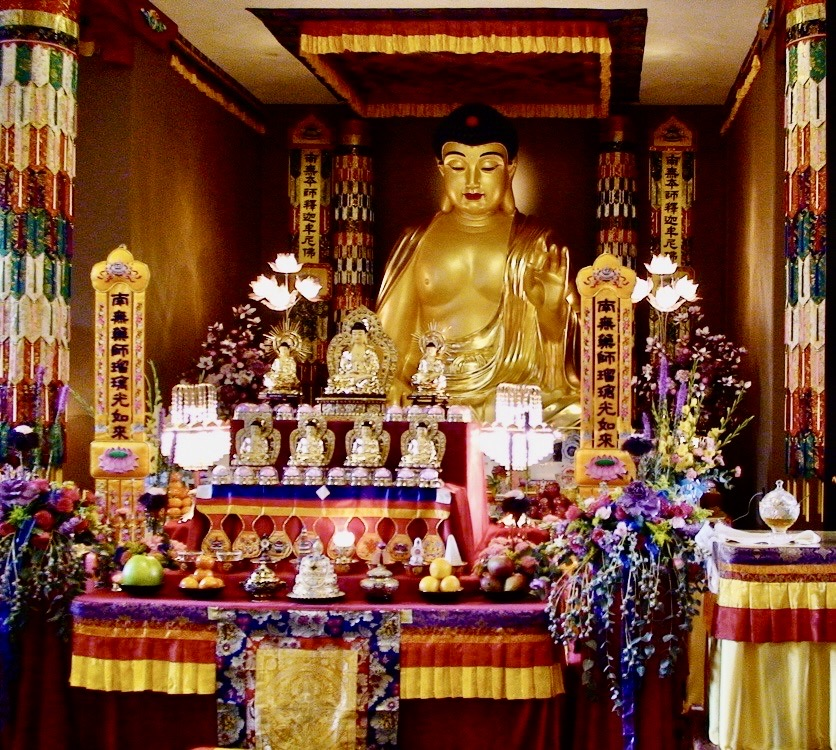
The Medicine Buddha is a great teacher who purifies all obstacles and brings healing to the world. When the Medicine Buddha was practicing the Bodhisattva path in past lives, he made twelve great vows to relieve the suffering of sentient beings and bring them happiness including curing physical disabilities, relieving poverty, providing material needs, guiding those astray, and liberating prisoners. He is associated with a pure land in the East called Vaiḍūryanirbhāsa, or “Pure Lapis Lazuli”.
On the 29th day of the ninth lunar month, Buddhist disciples worldwide honor the birthday of Bhaisajyaguru Buddha, known as the Medicine Buddha or the Great Medicine King. He is also referred to as the Buddha of Twelve Great Vows, embodying deep compassion and healing. Presiding over the Pure Land of Lapis Lazuli Light in the East, the Medicine Buddha has inspired countless practitioners with his transformative teachings and boundless compassion.
Hua Zang Si, a Buddhist temple in the Mission District of San Francisco, California, held a Namo Medicine Buddha Holy Birthday Dharma Assembly on November 16, 2025. The next scheduled Dharma assembly will be the Namo Amitabha Buddha Dharma Assembly to be held on December 28, 9:30 am.
In Tibetan esoteric dharma, there are five types of precious pills. They are the Nectar Pill, the Long Life Pill, the Great Precious Pill, the Vajra Pill and the Supreme Precious Pill. Actually, these five types of pills are made from nectar bestowed by different Buddhas. There are also red pills and black pills made with Chinese herbs after the herbs are empowered through mantras, such as the red pills and white pills made by H.E. Tangtong Gyalpo. The Long Life Pill has the empowering effect of extending one’s lifespan. The Great Precious Pill can further one’s accomplishment in the dharma. The Vajra Pill can help dispel demons and increase longevity and good fortune. The Supreme Precious Pill can ensure accomplishment in the dharma. The five types of pills are crystallization of merit produced from the power of Buddha-dharma and the empowerment of Buddhas and Bodhisattvas. Basically, all great rinpoches have what they call precious pills. But most of them are of the ordinary type, not the holy precious type of pills. Holy precious pills and ordinary ones are two totally different concepts. I personally saw Nectar Pills made from nectar bestowed by Buddhas. I also personally saw true Vajra Pills and heard them chant mantras.
Certain famous rinpoches and dharma kings from the highest temples in Tibet have said that the Buddha-dharma that can enable a vajra pill to fly has not been seen in this world in three hundred years. This is a fact. There was a crazy yogi named Be Wa Ba who could manifest such power hundreds of years ago, but according to these respected rinpoches and dharma kings who have had contact with all of the well known dharma kings of recent times, this dharma had disappeared from this world.
I follow my Buddha Master, H.H. Dorje Chang Buddha III Wan Ko Yeshe Norbu Holiest Tathagata, and am constantly by His Holiness’s side. Therefore, I have experienced many magnificent and real manifestations of Buddha-dharma. Now I will tell everyone about my experience of the true Vajra Pill. When the holy vajra mantra and mudra are practiced, the Vajra Pill will jump and even transform into rainbow light and soar into the sky. I have also heard the Vajra Pill dance and chant mantras. I watched other people listen to the Vajra Pill sing songs.
I vow that the events reported here are true and happened as reported. If not, I am willing to bear the karmic retribution of the hell realms.
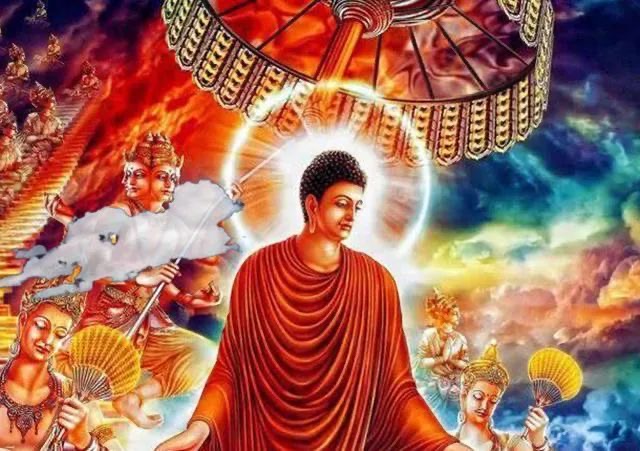
Amazing supernatural events preceded my first experience with the karmic affinity of the Vajra Pill. This happened in April, 2003. I traveled from San Francisco to Los Angeles to see H.H. Wan Ko Yeshe Norbu. During the trip I suddenly saw a colorful and large rainbow light appear in the sky. The rainbow completely surrounded the sun. There were also Sanskrit symbols in the sky. Just as the rainbow was fading from sight, I was able to take a picture of the bottom half of this light by focusing the camera below the sun. A dignified Buddha–Dorje Chang Buddha–appeared in the middle of the rainbow. This Buddha became my Buddha master, H.H. Wan Ko Yeshe Norbu, who was wearing a red robe and was sitting in the middle of the rainbow. The scene was awesome and extremely wonderful. The rainbow light appeared in the sky for several hours.
When I arrived, I was fortunate to immediately see my Buddha Master. A great lama obtained three true Vajra Pills and had respectfully given them to H.H. Wan Ko Yeshe Norbu Holiest Tathagata as an offering. The Buddha Master bestowed me with two of them. Unexpectedly the Vajra Pills in my hand started to jump. At that time the Vajra Pills jumped in my hand just as if they were alive. They not only jumped but one of them started to circle around and left my hand. It transformed into a dazzling bright red light and soared into the sky. At that time, I saw that the Buddha Master, who sat far away on the dais, had become a blue Buddha Vajradhara. The blue light was shining bright. The scene was very dignified. I was greatly astonished. This is when I first saw the true Vajra Pill and the true identity of my Buddha Master.
There was a very virtuous disciple who came from Australia. Because of a question I had asked H.H.Wan Ko Yeshe Norbu Holiest Tathagata about a dharma matter concerning mysterious power, the Holiest Tathagata said to me, “Bring your Vajra Pill to empower this disciple.” I took out the Vajra Pill. In order to prevent the Vajra Pill from escaping, this great layperson personally put the Vajra Pill in a small cup and sealed the cup with a piece of paper. The disciple put the cup to his ear and moved 15-20 feet away from the Holiest Tathagata. Several of us were sitting on the floor around H.H. Wan Ko Yeshe Norbu Holiest Tathagata. Then everyone started to chant mantras and practice dharma. Soon the Vajra Pill began to chant and sing Buddhist songs. This layperson was very moved. It is hard to believe that a tiny pill can actually sing Buddhist songs, but I have heard this myself. Actually, I did not hear Buddhist songs, but clearly heard the chanting of holy mantras. The sound came from this tiny BB sized pill that I personally held to my ear. It is truly unbelievable. In this world within the supreme Vajra Division of Esoteric Buddhism the Vajra Pill truly can be categorized into ordinary types and holy types. The Vajra Pill in my hand was living proof of the holy type.
Today I sincerely tell everyone my personal experience. My Buddha Master, H.H. Dorje Chang Buddha III Wan Ko Yeshe Norbu Holiest Tathagata is the supreme and highest Buddha. May all living beings have the good fortune to hear, learn, and practice the true Buddha-dharma and quickly attain enlightenment.
I, Buddhist disciple Zhaxi Zhuoma, sincerely vow and clearly write down these events to prove the existence of the true Buddha-dharma in the world today.
Every Buddhist practitioner longs for achievement and liberation. Hearing the true Buddha-Dharma is the key. The following article is a genuine account written by a monastic bhikshu Huihai (慧海) who personally listened to the Dharma teachings of H.H. Dorje Chang Buddha III.
In this life, I am able to encounter my supreme and unsurpassable Buddha Master—this truly is the greatest blessing I have accumulated through many lives and countless eons!
The Buddha Master’s genuine and pure teachings, in the turbulent waves of today’s chaotic era, are the vessel that carries sentient beings to the shore of liberation. The Buddha Master’s profound and skillful instructions transcend religion, directly point to mind-transmission, accord with conditions and the Dharma-realm, and enlighten sentient beings to step onto the path of awakening.
As a disciple, whenever I am in the presence of the Buddha Master, my heart always feels immeasurably moved, deeply experiencing the holiness and greatness of the Buddha’s virtue
I remember it was in early September of 2005 that I had an audience with the Buddha Master. The Buddha Master said: “In the history of Tibet and the Han region, there were many practitioners who cultivated many Dharma methods, yet achieved very little in their entire lifetime. Only in their old age did they realize that they had seldom listened to true Dharma, which caused them not to understand the Buddha-principles, and thus they walked a deviated path.
Most of the ancestral masters through generations, most of the Buddhas and Bodhisattvas of the past, attained great accomplishment precisely because they listened to Dharma. Therefore, listening to Dharma is extremely important. Now, in this degenerate era, there is truly far too much false Dharma. You must listen to Dharma more, listen more to the Dharma I teach. Only by clearly understanding the Dharma sounds, learning the true Buddha-Dharma, and deeply applying it in actual practice, can the problem of birth and death be resolved. This is the most important, most important thing!”
I knelt and prostrated to the Buddha Master and said: “Your disciple is very grateful for the Buddha Master’s teachings, and I hope all sentient beings may hear and receive the Buddha’s Dharma sound and learn the true Buddha-Dharma.”
The Buddha Master sat for a moment and then went into the room. Several senior brothers and sisters happened to come out, each with joyful expressions on their faces. I asked them curiously: “I see all of you beaming with smiles—what joyful thing has happened?”
One senior brother said: “We just respectfully listened to a recording of a most supreme Dharma-sound.”
I said: “No wonder you are filled with Dharma joy. May I listen to this Dharma-sound recording?” The senior brother said: “This is a rarely accessible Dharma-sound. Permission must be requested before you can listen.”
At that moment, the Buddha Master came out from the room. I quickly reported: “I request Buddha Master’s permission—may I listen to that Dharma-sound recording?”
The Buddha Master smiled and said to me: “Of course you may. You certainly may listen. If even you, a monastic, cannot listen, then who else could?” I joyfully placed my palms together and prostrated to my kind Master, saying: “Thank you, Buddha Master.”
I went to the altar to pay respect to the Buddha, offered a khata and offerings, performed the pre-Dharma-listening rituals, and began to attentively and reverently listen to the Dharma. The Dharma-teaching that the Buddha Master expounded in the recording was unprecedented—unmatched in its sublimity.
Upon hearing this Dharma, I received tremendous blessing power; suddenly my obstructions opened, joy surged within me, like a spontaneous celestial empowerment pouring down, nectar filling me completely. The karmic forces of beginningless time all became like illusions. Such a supreme Dharma—how could it not be something that is difficult to encounter even in hundreds of thousands of eons?
What sentient beings find hard to see, I now see; what sentient beings have not heard, I have now heard. How could beings burdened by countless karmas possibly comprehend its wondrous principles? After leaving the altar, I saw the Buddha Master and immediately knelt down in gratitude.
I said excitedly: “Buddha Master! How could this merely be a teaching or a Dharma-sound? This is fundamentally a great Dharma—an unsurpassable great Dharma!”
The Buddha Master looked at me and smiled: “Excellent! You received the blessing of Buddhas and Bodhisattvas and understood the Dharma I taught.”
I continued: “Buddha Master, this Dharma truly leaps directly and suddenly into the Tathāgata’s state! And truly, it requires no effort—you can attain it instantly.” The Buddha Master said: “Indeed so.”
I further said: “This Dharma is truly magnificent. Indeed, everyone can practice it, but ordinary people will not understand it and will only regard it as an ordinary teaching.”
The Buddha Master said: “This is even easier than realizing mind and seeing one’s nature. Even those who realize mind and see their nature may not attain this state.”
My Buddha Master—the Supreme Protector, H.H. Dorje Chang Buddha III—expounds Dharma by observing sentient beings’ karmic conditions through the complete Buddha-wisdom. Every teaching is given for the liberation of Buddhist disciples and future beings. The Dharma principles revealed are tailored to each person’s capacity, deep yet simple. Though spoken casually, they unfailingly accord with the profound truths of the Buddhist Tripiṭaka and esoteric scriptures. Moreover, many penetrating and unique Dharma principles are not found in any sutras—they arise directly from the Buddha Master’s innate enlightened realization.
Since I drew close to the Buddha Master and respectfully listened to the Buddha Master’s Dharma-sounds, I have finally gained a complete understanding of the Tathāgata’s perfect and true teachings. The benefits I have received are far too many to express in words—far surpassing everything I had learned in Buddhism over the past decades.
Because Buddhist sutras have been transmitted in the world—especially after translation—they inevitably contain mistranslations or misinterpretations. Moreover, the classical literary language used in the scriptures is truly difficult for modern readers accustomed to vernacular style. The numerous technical terms in the sutras also pose a challenge for beginners entering the Buddhist path.
The Dharma-sounds taught by H.H. Dorje Chang Buddha III are the authentic Tathāgata true Dharma, explained through modern language and analogies, expressing principles in accordance with intrinsic nature, unfolding the stages of realization, and enlightening the ignorant. Those who listen can easily learn pure Buddha-Dharma and establish correct understanding and correct views. Therefore, it is most suitable for every practitioner in today’s world to rely on and cultivate.
The Dharma-sounds spoken by H.H. Dorje Chang Buddha III are a bright lamp illuminating the path of cultivation. They are the supreme Dharma-treasure that enables sentient beings to become Arhats, enables Arhats to become Bodhisattvas, and enables Bodhisattvas to become Buddhas—to attain accomplishment, liberation, realization, and sainthood.
I often feel this: whenever the Buddha Master expounds Dharma with perfect, lion-like sound, the Dharma-voice flows throughout the boundless space; humans and non-humans all receive its benefit; the Dharma assembly at Vulture Peak seems as if it has never dispersed—
Before my eyes it is as if scenes from ancient times appear again: the Buddha teaching under the Bodhi tree, when Bodhisattva-Mahāsattvas, monks, nuns, laymen, laywomen, along with heavenly beings, nāgas, humans, and non-humans—countless multitudes—surrounded Him, making offerings, honoring, respecting, and praising. Heavenly mandārava flowers rained down, scattering over the Buddha and the assembly…
In this degenerate age, as a disciple of the Buddha, I feel fortunate to have this rare Dharma affinity, able to personally hear the Dharma before the Buddha and practice the true Dharma. I sincerely pray:
May the Dharma Wheel of the supreme and great H.H. Dorje Chang Buddha III always turn, and may He abide in this world forever.
May all beings in the Dharma-realm hear the Dharma-sounds spoken by H.H. Dorje Chang Buddha III, increase in blessings and wisdom, forever leave all suffering and obtain happiness, and together realize Bodhi.
Disciple of the Buddha — Huihai
For the original Chinese speech, please click here. This English translation is by Linda Chang and is provided for reference only.
In the Tang Dynasty, there lived a monk named Jian Kong (Venerable “Mirror-of-Emptiness”), who in his previous life had been a diligent spiritual practitioner. Yet after reincarnating, he was born not as a monk, but as a poor scholar—one who, despite twenty long years of effort, could not pass the imperial examinations. He had no money, no connections, and often struggled even to find a simple meal. Hunger followed him like a shadow.
One day, after days of near-starvation, he set out toward a nearby temple, hoping to find something—anything—to eat. But halfway there, by the side of a river, his strength gave out completely. Weighed down by exhaustion and despair, he collapsed on the riverbank and began to cry. He was already around forty-five years old, and life felt unbearably harsh.
As he wept, a Brahmin monk suddenly appeared before him, radiant and calm.
“Venerable Dharma Master,” the monk said, “are you satisfied with the taste of wandering through worldly life?”
The scholar was startled. “Satisfied? It has been nothing but suffering! But I am a layman—why do you call me “Dharma Master”? That title doesn’t belong to me.”
The Brahmin monk smiled gently. “You are starving and confused now, so you’ve forgotten everything.”
He reached into his bag and took out a large, fist-sized date. “This is a special fruit from my homeland. Eat it. Then you’ll understand.”
The scholar ate the date. Sleepiness washed over him at once, and he lay down beside the river. When he awoke, something astonishing had occurred— his entire past life came flooding back.
He remembered that he, the Brahmin monk standing before him, and three others had all been fellow practitioners in their previous lives. Filled with emotion, he asked:
“What about Monk Zhen? How is he doing in this life?”
The Brahmin monk replied, “In his past life he had not yet cut off worldly attachments, nor had he achieved realization. In this life, he has become a monk again in Sichuan. He has now completely severed his desire for fame and fortune. He will attain accomplishment in this very life.”
The scholar asked about another of their five companions. “And Master Shen? What about him?” “His wishes remain unfulfilled,” the monk answered.
Then he asked about the third companion, Master Wu. The monk sighed gently: “You know him. In our past life, he once joked before a stone Buddha statue: ‘If I cannot attain supreme enlightenment, then at least let me become a mighty nobleman.’ Well, his vow has come true. Just yesterday, I heard he was appointed a general. He has completely forgotten he was once a monk.*”
Finally, the Brahmin monk turned to him and said:
“Among the five of us, I alone have attained liberation. And you—of all of us—you alone have fallen to such a state that you cannot even find enough food to fill your stomach.”
The scholar was bewildered. “In my past life,” he said, “for decades I ate only one meal a day and wore one tattered robe for over thirty years. I practiced diligently and lectured on the Dharma tirelessly. I was a well-known Dharma Master. How could my karma now be so miserable?”
The Brahmin monk answered with unmistakable compassion:
“Yes, you cultivated hard. But when you taught the Dharma, you often mixed in ideas from Daoist and other non-Buddhist teachings. This confused your listeners. You also held back special teachings out of stinginess, unwilling to share them openly. And although you kept the precepts, you broke them in many subtle ways. Given all this, your current life’s hardship is already a fortunate result.”
Hearing this, the scholar felt deep remorse and sadness. But instead of despair, a new resolve arose within him.
He vowed to renounce worldly life and become a monk once more.
Seeing his sincerity, the Brahmin monk took out a mystical mirror from his bag. In it, the scholar saw with clarity:
his own past lives,
the karmic results of all beings’ actions,
even the future rise and fall of the Dharma.
The mirror was said to be like the Seven-Jewel Trees of the Pure Land, which reveal the karmic truths of the universe with perfect brightness.
With this profound vision, his conviction became unshakable. He immediately entered monastic life, practiced with genuine diligence, and in time became a highly respected and accomplished master.
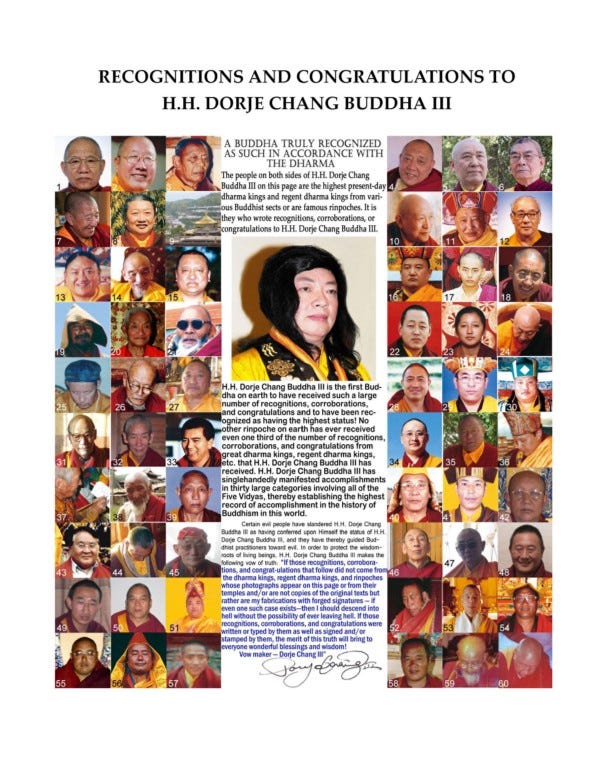
Recognitions and Congratulations to H.H. Dorje Chang Buddha III
When over a hundred great Dharma Kings, Regents, and Rinpoches from various Buddhist traditions throughout the world lawfully recognized, in accordance with Buddhist precepts, that Namo H.H. Dorje Chang Buddha III is the reincarnation of the ancient Buddha, Buddhist disciples around the globe rejoiced in celebration. The descent of Namo H.H. Dorje Chang Buddha III brings to the beings of this Dharma-ending age the correct and unerring True Dharma of the Tathagata that leads to liberation from the cycle of birth and death. How fortunate living beings are to personally hear the teachings of the Buddha — there is now hope for attaining enlightenment in this very lifetime!
Online Slander and Misunderstanding of H.H. Dorje Chang Buddha III’s Holy State
However, some people on the internet refuse to face the legitimate recognitions, the holy realization, and the perfect mastery of theFive Vidyās and teachings of H.H. Dorje Chang Buddha III with reason or correct understanding. Instead, they fabricate rumors, spread insults, slander, defamation, and false accusations — maliciously twisting facts, inventing lies, and making baseless claims. They use vulgar words, forge fake documents, false notices, and false statements, and even create distorted images and mocking content — doing everything they can to attack H.H. Dorje Chang Buddha III. Through their own words and actions, they merely expose their ignorance and lack of virtue.
Some say, “A Buddha or Bodhisattva is realized through practice, not by ‘recognition.’” “Shakyamuni Buddha didn’t need a certificate of recognition.” But their purpose is clear — to stop more people from learning the true Buddha Dharma and attaining liberation!
So, does a Buddha need recognition when descending into the world?
A Practice for the Benefit of Sentient Beings.
A Buddha is one of unsurpassed, perfect enlightenment and complete wisdom. The reason one is a Buddha lies in their realization and enlightenment — not because of any recognition by others. No matter how great a Dharma King, Regent, or Rinpoche may be, their level of realization is far inferior to that of a Buddha; thus, any recognition they offer to a Buddha would be, in essence, just a piece of paper of no value to the Buddha.
However, because sentient beings in this world often lack the wisdom to discern between true and false saints, between genuine Buddha Dharma and false teachings that imitate Buddhism, they may easily be misled by superficial appearances and deviant views. Therefore, for the benefit of sentient beings, by following the Buddhist tradition of formal recognition, those virtuous masters issued such recognitions that help people give rise to faith and thus be saved. This is an act of right knowledge and right view.
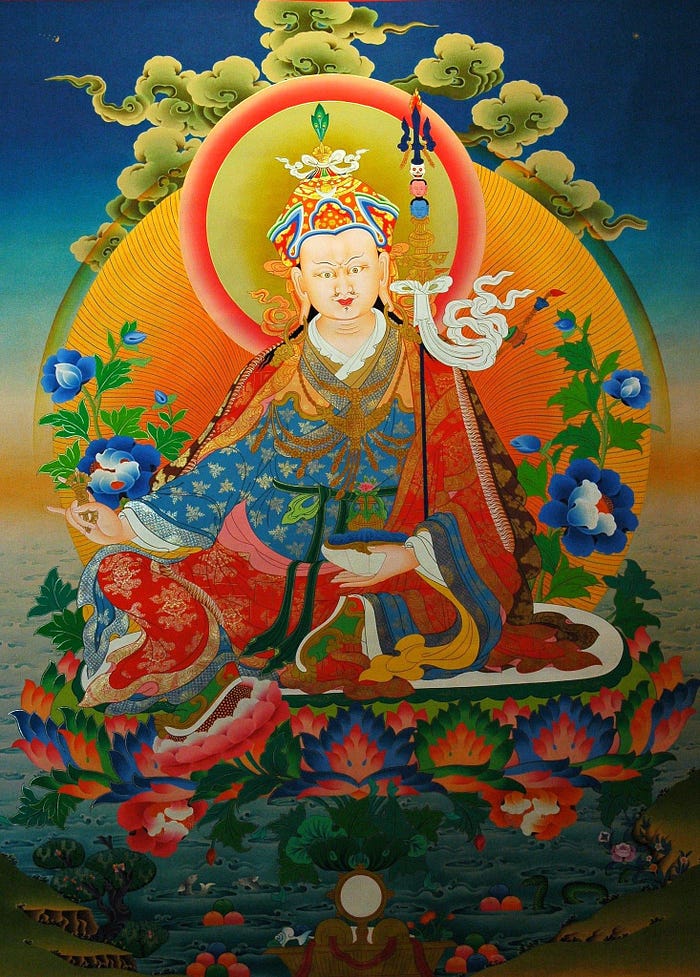
The Example of Master Padmasambhava and the Importance of Recognition
Master Padmasambhava
When Master Padmasambhava first went to Tibet to propagate the Dharma, he was not greeted with respectful welcoming crowds. Instead, the Tibetan people were terrified and shouted, “Quick! Drive out this sorcerer who performs strange magic without lineage transmission! Do not let him deceive us with his witchcraft!” They even lifted him up and threw him into a muddy pit. Later, Master Padmasambhava returned to India and asked two renowned masters to write letters of recognition. Only then did Buddhism begin to flourish in Tibet. In fact, those two masters later became Master Padmasambhava’s disciples.
Therefore, when Buddhas or Bodhisattvas reincarnate and manifest again in this world, undergoing recognition according to Buddhist rules is not for their own sake, but for the sake of helping sentient beings generate faith and thereby be liberated.
Indeed, the realization and attainment of a Buddha or Bodhisattva come from their own cultivation and enlightenment. The realization, virtue, and attainment of all Buddhas and Bodhisattvas are the manifestation of their supreme enlightenment. The pure and flawless conduct of Namo H.H. Dorje Chang Buddha III, His mastery of both exoteric and esoteric teachings, His perfect command of the Five Vidyās, and His countless acts of liberating sentient beings — all fully demonstrate the enlightenment and realization of a true Buddha!
Therefore, I sincerely advise those who slander: repent sincerely before the Buddhas and Bodhisattvas, or karmic retribution will not spare you! At the same time, I compassionately remind all who truly wish to learn and practice Buddhism: we live in the Dharma ending age, when confusion prevails, and the nature of the demonic offspring is to destroy the Dharma and obstruct sentient beings from learning the true path. Kind-hearted beings, please open your eyes of wisdom, discern the true from the false, and do not be deceived by demonic forces — lest you miss the supreme Dharma opportunity that can bring you liberation from birth and death in this very lifetime!
At that moment, I felt as if I were rising from a cold, dark ocean or walking out of a long nightmare tunnel. The light before my eyes was so dazzling that it took me a while to recognize the blurred figures within it. Sitting beside me was my spouse, and standing there smiling was my daughter. As for myself—I was lying on a hospital bed.
My mind was completely blank. It felt as if my memory had been wiped clean; nothing remained but confusion and a faint, awkward sense of unease. I anxiously searched through my thoughts but found only helplessness and fear— until a familiar melody began to echo clearly in my mind — the holy name of H.H. Dorje Chang Buddha III, resonating like a chant from deep within my heart.
Gradually, my terrified heart began to calm. The holy name persisted—unyielding and unwavering—repeating again and again, washing over my pale and fragile memory. I thought to myself, This must be what people call a “near-death experience.”
My spouse and daughter helped piece together the fragments of my missing story.
We live in Shandong. I had come to Shenzhen to help my daughter take care of her child. One day, without any warning, I suddenly collapsed in silence. My family rushed me to the hospital, where I was diagnosed with a cerebral hemorrhage. The surgery was completed successfully. Upon hearing the news, my spouse immediately flew from Shandong to Shenzhen.
They continued to fill in the missing pieces of my story:
I had just taken refuge in May 2016 to become a Buddhist disciple. However, before I could properly begin my Buddhist studies, I went to Shenzhen in June 2017 to help my daughter. Fellow practitioners in Shandong kindly connected me with disciples in Shenzhen and encouraged me not to give up my practice.
Listening to the Dharma Discourses of H.H. Dorje Chang Buddha III
After arriving in Shenzhen, I actively reached out to my daughter’s neighbors, hoping to introduce them to Buddhism. My daughter and son-in-law supported me wholeheartedly; they even drove me and several neighbors to a Dharma center in Shenzhen to listen to the Dharma discourses of H.H. Dorje Chang Buddha III. Because that place was quite far, a Dharma sister later introduced me to another practitioner’s home nearby where I could listen to the teachings. Though we hadn’t known each other before, we grew close through our shared faith—everyone cared deeply about my practice and my health.
When I regained consciousness, I couldn’t remember anything from before. Strangely, the only thing that remained clear and loud in my mind was the sacred name:
Namo Dorje Chang Buddha III.
In the same hospital ward, other patients with similar conditions were not as fortunate. Many were left partially paralyzed, unable to walk steadily or care for themselves. Life had become fragile—so easily shattered.
Phrases like “Life is impermanent” and “Like a dream, like an illusion” surfaced in my mind. I was deeply afraid that I, too, would become disabled and burden my family. But thankfully, although surgery had taken part of my memory, my mind remained clear enough to hold onto that one holy name:
Like a beam of light, that name illuminated the dark and uncertain path ahead.
Miraculously Blessed by Buddha
That single remaining memory gave me unwavering faith. I believed the Buddhas and Bodhisattvas were blessing me, allowing me to survive and turn a great disaster into something small.
I felt truly blessed to have entered the Buddhist path and firmly believed that the Buddhas and Bodhisattvas would not abandon me. As long as I kept believing and continued to study diligently, I would recover—because I still had much to do. I wanted to help more people enter the Dharma and listen to the true teachings of the Tathāgata. Holding that faith in my heart, I kept reciting the only words I could still remember: Namo Dorje Chang Buddha III — again and again, without pause. Then, a miracle happened. I gradually recovered. About twenty days later, the doctor told me I could be discharged from the hospital.
The doctor said that in all his years of medical practice, he had never seen such a recovery. Patients with my condition almost always had some form of disability—but I could walk freely, with no trace of impairment.
After returning home to Shandong, I could even ride an electric bike to attend Dharma listening sessions and play ball again. My memory of the Dharma I had learned before also came back, and I rejoined my wonderful spiritual family with deep gratitude.
Awakening to Impermanence Through the Teachings of H.H. Dorje Chang Buddha III
After going through this life-and-death experience, I truly understood the impermanence of life. Now, whenever I listen to the Dharma discourses on Impermanence from my Buddha Master, I feel their truth penetrate deep into my heart. Every compassionate teaching from the Buddha Master is like nectar—healing medicine that saves lives.
Fellow practitioners, when illness strikes, we can only accept our karma; no matter how anxious our loved ones may be, there is little they can do. Yet when our bodies are healthy, we often waste our precious time in confusion, unaware that the chain of impermanence could seize us at any moment.
Do not waste this rare and precious opportunity to encounter the true Dharma of H.H. Dorje Chang Buddha III!
Cherish your blessings, study the Dharma diligently, and cultivate sincerely.
Liberation from life and death is attainable in this very lifetime!
In 1947, shortly after Japan’s surrender and withdrawal from China, the great Zen Master Xuyun (Empty Cloud) gave a profound speech at a middle school. The nation was still recovering from the devastation of war, and hearts were heavy with both relief and sorrow. With deep compassion, Master Xuyun used the timeless wisdom of the Buddha to explain the law of cause and effect (karma) — reminding people that wars do not arise by chance, but are the result of humanity’s collective actions.
He taught that true peace cannot be achieved through force or politics alone. Only by transforming our hearts and purifying our minds through virtue, compassion, and the practice of Buddhist teachings can we bring real and lasting peace to the world.
War does not arise by chance — it is the collective karma of all beings that brings it forth.
Dear friends, during the years of occupation, we endured immense suffering under the enemy’s oppression — our lives were steeped in water and fire, hardship and pain. Now that our nation has regained its light, we should feel endless gratitude and reflection. We must understand that the outbreak of war is not accidental; it is the result of the shared karma created by all individuals.
The ancient masters said, “If you wish to know the causes of your past lives, look at what you are experiencing in this life. If you wish to know the results of your future lives, look at what you are doing now.” They also said, “Even after hundreds or thousands of eons, the karma one has created will not disappear. When the conditions ripen, the results will be experienced by oneself.”
When people lose their moral compass and commit all kinds of evil, they plant the seeds for calamities such as war, floods, fires, and famine. If we wish to change the will of Heaven and eliminate disasters, we must begin by transforming human hearts — by restoring virtue and morality. When everyone practices the Five Precepts and the Ten Good Deeds, cultivates upright minds and pure conduct, and lives with benevolence, trust, and righteousness, then the hearts of men and the will of Heaven will naturally align.
But if people persist in wrongdoing and refuse to repent, how can hostility and suffering ever be dissolved? The Buddha said, “The sea of suffering has no end, but when one turns around, there is the shore.” This means awakening from delusion and returning to goodness — the essential path to liberation.
We must truly believe in the law of cause and effect. It is not fiction but reality. If everyone understood that good deeds bring good results, and evil deeds bring suffering — that when one plants melons, one harvests melons; when one plants beans, one harvests beans — then no one would dare to act against conscience or break the law. Out of great compassion for all beings, Shakyamuni Buddha renounced his royal life and underwent arduous practice to save the world from ignorance and suffering.
If we understand the principle of cause and effect and wish to avoid future suffering, we must now create good causes. The hardships we experience today are the results of past evil actions. Therefore, we should now sow good seeds, and in time, we will naturally reap good fruits.
The scriptures speak of “Anuttara-samyak-sambodhi,” meaning “unsurpassed perfect enlightenment.” In its essence, it transcends the distinction of self and others — there is no “you” and “me.” But this state must be cultivated from one’s own heart. If our minds remain filled with greed, anger, and ignorance, unable to abandon all evil and practice all good, the barriers of self and ego become like iron mountains, preventing us from reaching the Pure Land or true harmony. This is the most crucial point — one we must all remember well.
The Sanskrit word “Buddha” means “the Awakened One.” Enlightenment has three aspects: awakening oneself, awakening others, and perfecting both understanding and conduct.
To awaken oneself is to realize that all experiences of good and evil, joy and suffering, arise from cause and effect. Once a person truly understands this, delusion fades, the four attachments dissolve, and one becomes enlightened.
To awaken others means recognizing that all living beings — whether born from the womb, from eggs, from moisture, or by transformation — all possess Buddha nature. They are called “sentient beings” only because they are deluded and unaware. We should therefore cherish and respect ourselves, and in keeping with the Buddha’s great vow of compassion and universal salvation, share these truths with others, guiding them out of the sea of suffering.
As stated in the Śūraṅgama Sūtra: “Regard all men as your fathers and all women as your mothers.” If we cultivate such deep reverence and love, especially for widows, orphans, and those who are lonely or destitute, and show them kindness and compassion through giving and aid, we can realize true equality and the ideal of great harmony.
To perfect both understanding and conduct means to live according to the Buddha’s teachings and precepts until one’s virtue and merit are complete. After the Buddha’s passing, he left behind the Three Baskets of Scriptures — Sutra, Vinaya, and Abhidharma — as our priceless raft to cross the sea of suffering. All the rules and precepts should be faithfully practiced. When one fulfills them completely, that is the perfection of wisdom and conduct.
Thus, the Buddha is the awakened one, while sentient beings are the deluded. The distinction between delusion and enlightenment marks the boundary between beings and Buddhas. To turn away from delusion and return to truth — that is awakening, and that is Buddhahood.
To further illustrate the law of karma, there is a story from one of Shakyamuni Buddha’s past lives.
Long ago, in the city of Rajagaha, there was a fishing village with a large pond. One year, a great drought struck, and the pond began to dry up. The villagers caught and ate almost all the fish, until only one giant fish remained, which was finally killed and eaten. Only one eight-year-old boy refused to eat the fish; he simply watched and laughed.
In his later life as the Buddha, King Prasenajit of Kosala, a devoted follower of the Buddha, married a princess of the Shakya clan, and they had a son named King Virudhaka. After ascending the throne, Virudhaka led his army to attack the Shakya capital of Kapilavastu and slaughtered all its inhabitants.
During that time, the Buddha suffered a severe headache for three days. His disciples begged him to use his powers to save the Shakya people, but he refused. Even when Maudgalyayana repeatedly pleaded, the Buddha said no. Maudgalyayana tried to rescue some survivors with his alms bowl, but when he put it down, all he found was a pool of blood.
When the disciples asked why, the Buddha revealed the cause: in a past life, during a great drought in Rajagaha, the villagers had killed and eaten the fish in that pond. The giant fish was reborn as King Virudhaka, and the villagers were reborn as the Shakyas who were killed. The young boy who merely watched and laughed was reborn as Shakyamuni Buddha himself. Because this karma had matured, the outcome was unchangeable.
The Buddha fully understood this karmic connection and taught it to his disciples as a warning. Chan Master Yuan Yun wrote in verse:
“For hundreds of years, the soup in your bowl Is filled with deep hatred, hard to dissolve. If you wish to know why wars arise, Listen to the cries from the butcher’s gate at midnight.”
Reflect on this story and recite the verse, and you will awaken to the true causes of war and violence — and learn to guard your conduct with mindfulness.
If we wish to transform the world and move toward true harmony, everything must begin with our hearts. Students should study diligently, yet never forget the greater mission of saving the world. And the first step to saving the world is saving the heart — correcting one’s own wrong thoughts and firmly believing in the law of cause and effect, avoiding all evil paths.
By cultivating sincerity, righteousness, self-discipline, and harmony within the family, one can extend peace to the nation and the world. If all the people of every country sincerely believe in karma and practice the Eight Virtues and Ten Precepts, then oppression, violence, and wars will cease to arise. True peace, equality, and the Pure Land of Great Harmony will appear, free from the Five Defilements and all suffering.
For the original Chinese speech, please click here. This English translation is by Linda Chang and is provided for reference only.
This book by H.H. Dorje Chang Buddha III was released in Chinese in 2014 but is not yet available in English. It is based on a series of very famous discourses given in China in 1992, using the text, meaning, and principles of the Heart Sutra to transmit Dharma. It clearly explains the relationships between mind, Buddha, and living beings. It tells everyone what the absolute truth of Buddha-dharma and liberation is. Several years ago, His Holiness told a number of Western disciples that this is the only book you need to read to understand emptiness and become enlightened. This text is for acquiring prajna or transcendental wisdom, although it also teaches the importance of cultivating character.
To stress how important this holy book is, we must remember that just before the Buddha left this world His Holiness told us that “. . . At all times, we must think about bringing auspiciousness, serenity, happiness, and peace to living beings and to the world, to the extent of giving our all and even our lives. I have already brought true Buddha Dharma to this world. Everyone who practices in accordance with The Supreme and Unsurpassable Mahamudra of Liberation and Expounding the Absolute Truth Through the Heart Sutra will surely attain liberation. That’s all. I wish all living beings happiness.”
Venerable Master Puguan’s Reflection After Listening to Expounding the Absolute Truth Through the Heart Sutra
Below is the heartfelt reflection of Venerable Master Puguan, the abbot of Kaihua Monastery on Mount Wuzhong—the first site of Southern Transmission Buddhism and the thirteenth-generation patriarch of Mount Emei—after listening to the Dharma discourses of Expounding the Absolute Truth Through the Heart Sutra spoken by H.H. Dorje Chang Buddha III.
Venerable Master Puguan said:
“No matter what words I use today, they cannot fully express the supreme joy and wonder in my heart. My most magnificent and compassionate Buddha Master, the Great Dharma King Yangwo, once visited Mount Wuzhong in person. At that time, my junior Dharma brother, Dharma Master Guozhang, and I were on the third day of a Zen retreat with the four assemblies of disciples when suddenly the Dharma protector came and told me, ‘The greatest holy being has arrived! He is wearing white clothes. Quickly cancel the Chan session and lead everyone to greet Him with full ceremony!’
Dharma Master Guozhang also received the same message—that the highest Holy One had come. We immediately announced to all disciples that the Zen session was to be stopped, and we prepared the ceremonial welcome with drums and bells. Indeed, about ten minutes later, a group of dozens of people arrived at the foot of the mountain—it was my revered Master, the Great Dharma King Yangwo (H.H. Dorje Chang Buddha III).
When I supported my Master while walking toward the Bright Moon Pool, He gently took hold of my hand instead and said, ‘I am younger than you; you should not support me. It is I who should support you, the elder.’
At that moment, I felt deeply ashamed. How could a disciple ever deserve to be supported by his Master, the Great Dharma King?
Now, after listening to Expounding the Absolute Truth Through the Heart Sutra, I finally realize that what my Master said back then was the very expression of ultimate truth! We practitioners must rely on our Master’s steadfast guidance, never letting go of His compassionate hand, until we are led to the pure Buddha-land of ultimate Nirvana. How could we ever imagine supporting our Master?
Having repeatedly listened to this Dharma discourse, I can only say that my Master has explained the very essence of all 600 volumes of the Prajnaparamita Sutras and the two essential provisions of precepts and practice. The Dharma He expounded is so profound that the deep will see its depth and the shallow will see its shallowness—it is wondrous beyond description, extraordinary within the ordinary. In truth, it is the supreme teaching of the ultimate truth since the beginning of time.
After listening to this unparalleled Dharma spoken by my Buddha Master, I was instantly and completely awakened—the bottom of the bucket had fallen out! Unfortunately, my age has deprived me of the condition to attain rainbow-body ascension, but I rejoice that I have realized the state of indestructible flesh body. After my parinirvana, this body can serve as evidence to the world that my Great Dharma King, my Buddha Master, is truly the Dharma King who unites all Buddhas of the ten directions.
When I think back on my earlier misunderstandings, I feel deeply ashamed. I once mistakenly believed that only Tibetan Esoteric Buddhism possessed the Great Dharma that enables enlightenment within one lifetime. Now that I have attained realization, I truly understand that the authentic Dharma of the Tathagata transcends all schools and sects.
In fact, the true Buddha Dharma is a wondrous treasure existing independently of any tradition. It is neither exclusive to nor absent from any particular school—because genuine Dharma is not governed by sects but by Buddhas and Bodhisattvas themselves. Wherever a Buddha or Bodhisattva manifests as a teacher, that school naturally possesses the Great Dharma.
When I recall my past cultivation at the Golden Summit of Mount Emei, I can only remain speechless in humility. Today, immersed in the bliss of Dharma joy, I can only pray:
May all Buddhas bless that the great karmic conditions of the Tathagata ripen soon. May all sentient beings swiftly hear the teachings of my Buddha Master—the Mother of All Buddhas’ Dharmas, Expounding the Absolute Truth Through the Heart Sutra— so that their blessings and wisdom may swiftly and perfectly flourish, attaining Bodhi and liberation in this very life, and achieving freedom from life and death!
Namo Amitabha Buddha! Namo Avalokiteshvara Bodhisattva!
Note: In 1998, Master Pu Guan passed away while in meditation, having attained mastery over his life and death. Remarkably, even eight years after his passing, his remains rest within a stupa, preserved in the meditation posture without any signs of decay.
The above is the English translation of Venerable Master Pu Guan’s Dharma discourse, rendered into English by Linda Chang. The original Chinese version is provided below.
On the evening of May 31, 2013, an ordinary family outing turned into a life-changing experience that revealed to me the power of karma, faith, and divine protection.
That spring, my two daughters had just returned home from their colleges on the East Coast for summer vacation. We were all joyful to be reunited as a family. After dinner that evening, my husband, Yiao-Tee, and our daughters decided to take a short walk to the nearby Walmart in Pleasanton, California, to buy a watch battery.
It was around 9 p.m. when we stepped out of the store. My husband and daughters walked a few meters ahead, while I followed behind them on the pedestrian walkway. Suddenly, a police car pulled out of a parking space.
The officer inside noticed my daughters walking past his vehicle and, focusing on them, momentarily forgot that he was still driving. In that instant, he failed to see me. By the time he realized I was there, it was too late— the police car struck me squarely. Screams broke out around us as I was thrown into the air and landed heavily on the ground.
When the officer got out of his vehicle, his first reaction was to blame me, claiming I had suddenly stepped in front of his car. My husband and daughters immediately refuted this. They knew I would never rush recklessly in front of a moving vehicle.
Eyewitnesses later confirmed that the impact had lifted me several feet into the air. Yet, against all odds, I was conscious and could move. An ambulance soon arrived and rushed me to the emergency room.
After thorough examinations and X-rays, the doctor and nurses were astonished. They told me, almost in unison, that my survival was nothing short of a miracle.
There were no broken bones, no internal injuries, not even minor scrapes. Only a light swelling and redness on my left thigh showed any sign of trauma. The next day, I received acupuncture and laser treatment—and even went to work as usual. My daily life was completely unaffected.
When I reflect on that night, I recall no sensation of pain or impact. My mind had gone blank. Yet, very subtly, I felt as though someone had caught me and gently placed me back on the ground.
That feeling was profound and beyond words.
I have always worn the Vajra Thread given to me by my master when I took Refuge. I believe wholeheartedly that the compassionate empowerment of H.H. Dorje Chang Buddha III and the blessings of Buddhas and Bodhisattvas protected me from harm.
While I was physically unharmed, the aftermath was not easy. The police department initially refused to accept responsibility. They attempted to shift the blame to Walmart, claiming the store had not provided adequate pedestrian markings. As a result, they also refused to cover the nearly ten thousand dollars in ambulance and medical expenses.
It was only through Walmart’s surveillance footage, which captured the entire incident, that the truth could be verified.
I reported the situation to my master, explaining how I had been struck by a car yet walked away without injury.
Then, three months later, a call came from the police department’s insurance representative: they would cover all the expenses in full.
In that moment, my heart overflowed with gratitude—to the Buddhas and Bodhisattvas for their protection, and to H.H. Dorje Chang Buddha III for His compassion and empowerment.
This experience deepened my faith and strengthened my resolve to cultivate diligently. Our whole family now listens to the Buddha Dharma of H.H. Dorje Chang Buddha III and practices accordingly.
Through continued study and sincere cultivation, we have found that every aspect of our lives—career, health, and even our children’s educational paths—has been smooth and filled with blessings.
Inspired by this miracle, our family established a Dharma Listening Center to share the authentic Buddha Dharma of H.H. Dorje Chang Buddha III, so that others may also receive the same blessings of wisdom and protection.
From the bottom of my heart, I express my deepest gratitude to H.H. Dorje Chang Buddha III, the Pope of Buddhism, for expounding the supreme and authentic Buddha Dharma.
I also bow in reverence to all Buddhas and Bodhisattvas for their compassionate protection. This experience reminded me of an unshakable truth: the law of cause and effect never errs.
This accident was no coincidence—it was the ripening of past karmic causes. Yet, through sincere cultivation and the accumulation of merits, even serious calamities can be transformed.
This event has forever affirmed my faith in the Buddha’s teachings. If we believe in the law of cause and effect, remain steadfast in our cultivation, and dedicate ourselves to doing good and spreading the true Dharma, every bit of merit will bring us peace and blessings.
When one lives in alignment with the Buddha Dharma, miracles are not extraordinary—they are the natural expression of divine compassion.
At one time Buddha was living in Jetavanārāma. At that time the king of Kosala had a Brahmin who could tell whether a sword was lucky by smelling it. When smiths would bring their swords, if they had given bribes, he said, “It is good.” To those who did not give bribes, he said to them, “It is bad.” All in the course of time knew the deceptive nature of this man. Knowing his nature, one smith made a sword and making it very sharp, put it in a sheath filled with hot chili powder. He brought it to the king. The king summoned the Brahmin and requested him to tell them the goodness or badness of the sword.
The Brahmin, in accord with the order of the king, took the sword out from the sheath and placing it near his nose tried to smell it. Immediately, before he could say anything, the chili powder smelled by him caused him to sneeze. He could not remove the sword from his nose quickly enough, so when he sneezed, the sword cut off the tip of his nose. This story spread everywhere and eventually it reached even the monks in the preaching hall.
One day in the preaching hall of Jetavanārāma the assembled monks were speaking about this. When the Buddha visited there, the monks paid respect to the Buddha.
The Buddha asked, “Oh monks, what were you discussing before I came here?” Then the monks related the story of the Brahmin who smelled swords for the king of Kosala. Buddha said, “Not only today this man faced this mishap, but also in the past he faced the same fate.” The monks requested the Buddha to disclose the past story. The Buddha spoke then the past story:
At one time, a king called Brahmadatta ruled in Benares. He had a fortune-telling Brahmin who by smelling swords could tell their goodness or badness. He took bribes from the sword smiths. He condemned the work of those smiths who had not given bribes because they had not given him bribes.
Once a certain trickster smith made a good sword and made it well sharpened. He applied hot chili powder to it and took it to the king. The king summoned the Brahmin to examine the sword. As it was covered with hot chili powder, when he smelled it, he sneezed before he was able to remove the sword from his nose. The tip of his nose was cut off, and he was ashamed because of this. The king became very sad because of this and requested his craftsmen to make a fake tip for the Brahmin’s nose with wax. And the Brahmin again asked to work for the king.
At this time the king had a nephew at his palace, and also his daughter. The two of them since they were very young, had grown up together. When they got older, they fell in love with each other. The king did not know this secret love. The king and his ministers one day discussed the marriage of the princess. The king said, “I will give my daughter to a prince of another kingdom. If I do so, I will gain two new supporters, the prince and his father, to defend my kingdom.” Since then, the princess was not allowed to see the nephew with whom she had grown up so as to try to prevent them from falling in love. This strengthened their love for one another. And the nephew wanted to marry the princess as they both were now grown up.
The nephew therefore made a stratagem to marry the princess. He met the servant woman of the princess and gave her a bribe of a thousand gold coins. He requested her to keep the princess away for one day from the palace so that he could get to her. The woman said, “Do not worry. I will do it. I will take responsibility for that.”
Thinking of a stratagem, she went to the king and said, “Your lordship, your daughter is under the influence of an evil spirit. She is becoming unlucky and emaciated. Therefore, we will have to remove the evil spirit from her body.” The king asked, “What can we do for that?” The woman said, “In such-and-such a place there is a certain cemetery. There you need to make a stage. Keep a corpse on top of it, and cover it placing a bed over the dead body. We will place the princess on the bed and bathe her. Then the evil spirit will leave her.”
Hearing this, the king ordered her to do all these things and gave her all she had requested. She then undertook the task. She also tied some dried chili powder in a cloth, and she hid it near the bed so the nephew would be able to take it. She requested the nephew to go there and lie under the bed as the dead body. She explained to the nephew how to carry this off. The woman said to the caretakers, “When I come to the cemetery and wash the princess, the dead body will sneeze two or three times, come out from under the bed, and seize and devour the first one whom he sees. Therefore, be warned. Run away.” This was also mentioned to the nephew and princess, and the nephew was told, “When the caretakers run away, take the princess out of the cemetery, and after taking a bath with her, go wherever you like.”
On the day they set to have the service, the nephew went early and lay down under the bed she had prepared. The woman mentioned again to all the caretakers in the cemetery, “When the dead body sneezes, you will have to be ready for the death of the first one he seizes.” When, as she said, the nephew started to sneeze, all the caretakers laying their weapons down beside them, ran away from the cemetery screaming loudly. The retinue and other dignitaries who had come to witness this also all ran away.
When the nephew came out from under the bed, he took the princess, took a good bath, and went to his house with her. Hearing this news, the king became happy and he gave his daughter to the nephew.
Finalizing this story the Buddha said, “At that time the fortune-telling Brahmin who was skilled in sniffing swords was this fortune-telling Brahmin of today. The nephew prince of the king of Benares was I who am the Buddha.”
The moral: “What causes a loss for one person, may cause a gain for someone else.”












 Peace LiLy