The Winners Of People Photography Awards: The Diverse Beauty Of Humanity In Photos

Photo by Hassan OUAJBIR on Pexels.com

By Cecilia Rodriguez

“People photography has a rich, captivating history, evolving alongside the development of the medium itself,” the organizers explain. “From capturing iconic figures to telling the stories of everyday individuals, it continues to fuel our profound curiosity about the human experience.”

This award sought to celebrate the most powerful and compelling images of people today, highlighting the diverse and meaningful narratives that shape our shared world.”

Crossing borders, spanning cultures and traversing the world’s most remote corners, the People Photography Award celebrates the diverse beauty of humanity.⁠

The People Photography awards were judged by prizewinning photographer Steve McCurry, one of the most celebrated voices in contemporary photography and author of a unique collection of work featuring some of the most famous images of our time — not least his iconic portrait of an Afghan Girl with piercing green eyes.
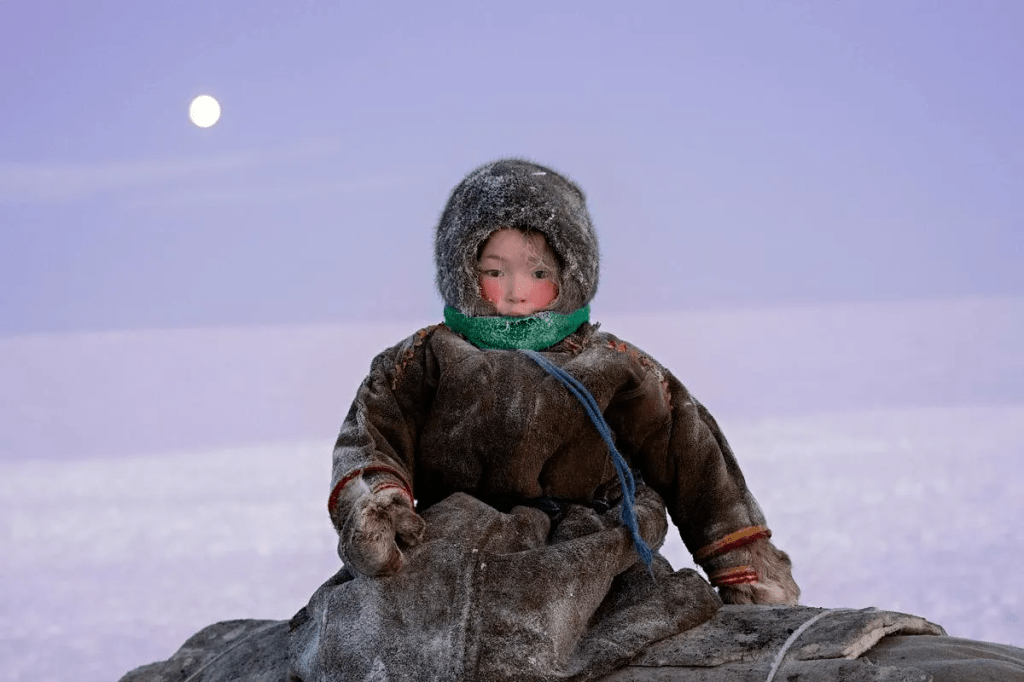
“Shades of white,” 3rd Prize, Yamal peninsula, Siberia, Northern Russia
 Nicola Ducati – People Photography Awards, The Independent Photographer

The photo above, winner of the third prize and $400, is one of the series “Shades of white” and was taken in the Yamal peninsula, Siberia, Northern Russia, where the air is thin and the polar day is very short.

For 4 1/2 hours, the light becomes magical and the colors of everything are perfect pastel against the artic sky, with delicate and unreal shades.

This land is inhabited by the Nenets people, nomadic reindeer herders who, guided by the seasonal cycles and the needs of their animals, migrate incessantly in an infinite circle of movements between ice, frozen rivers and incessant winds in search of new pastures in the most remote tundra. The hostile environment didn’t stop their innate adaptability and gave them prosperity for millennia.

“The soft polar light accentuates frosted textures and the child’s rosy cheeks, underscore both the harshness of the environment and the resilience of those who call it home,” the editors wrote. “It tells a powerful story of a people who have forged a life in one of the planet’s most unforgiving regions — but a people whose future remains uncertain.”

“Puzzled,” 2nd Prize, Western Mongolia
 Alessandra Manzotti – People Photography Awards, The Independent Photographer

A curious Kazakh nomad from Western Mongolia stops his truck to find out what a group of Westerners are doing walking in this remote and desolate stretch of land in the middle of a bitterly cold winter.

“This image captures the spirit of curiosity and resilience that defines life in remote Mongolia,” says McCurry. “The composition is powerful, with the truck and its vibrant blue color creating a striking contrast against the muted tones of the barren landscape. The candid expressions of both the nomad and the dog evoke a sense of warmth and connection, even in a harsh and unforgiving environment. The attention to detail, like the weathered texture of the truck and the distant herd in the background, adds depth to the story. It’s a beautiful balance of humanity and environment, which makes it a memorable piece.”
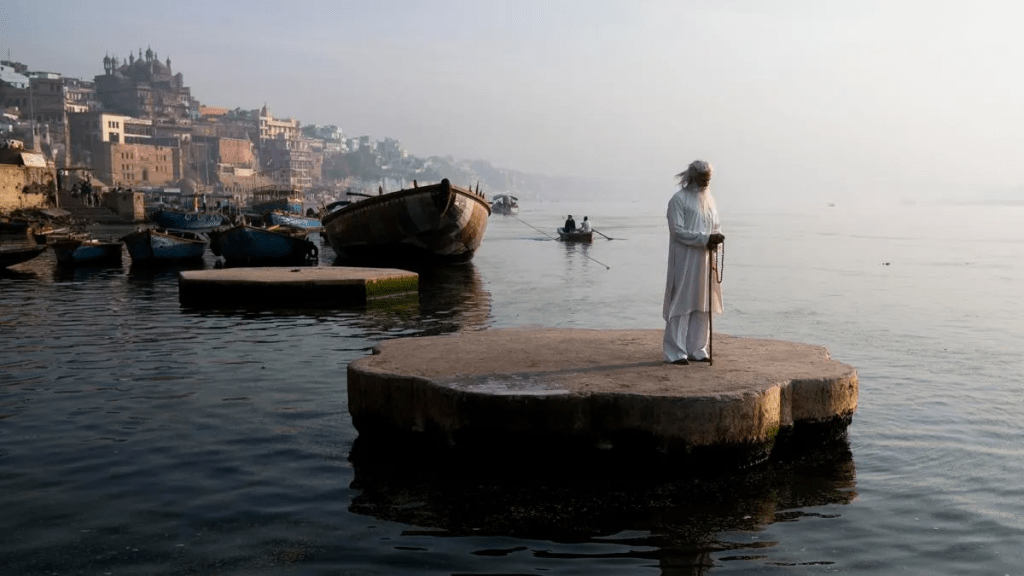
Contemplation, 1st Prize, Ganges River, Varanasi, India
Mohammad Kamal – People Photography Awards, The Independent Photographer

A lone Sadhu stands pensively at the edge of a platform in the Ganges River in Varanasi, India.
The image “Contemplation” , taken by photographer Mo Kamal in Varanasi, India, won first prize and $1,000.

“This image embodies a profound sense of stillness and spirituality, which perfectly captures the essence of Varanasi and the sacred Ganges,” said McCurry. “The man’s serene pose, framed against the soft morning light, evokes a sense of timelessness and introspection. The photograph is a poetic depiction of solitude and faith.”

“Andean Motherhood,” Finalist, Peruvian Andes
Jimmy Strouse – People Photography Awards, The Independent Photographer

In the Peruvian Andes, a mother carries her baby in a traditional bag. “The backdrop of rugged mountains just added to the beauty, giving a glimpse into the rich traditions of indigenous life,” Jimmy Strouse explains. “After showing her the photo on my camera, she nearly started crying, and it hit me: She probably doesn’t see many photos of herself, if ever.”
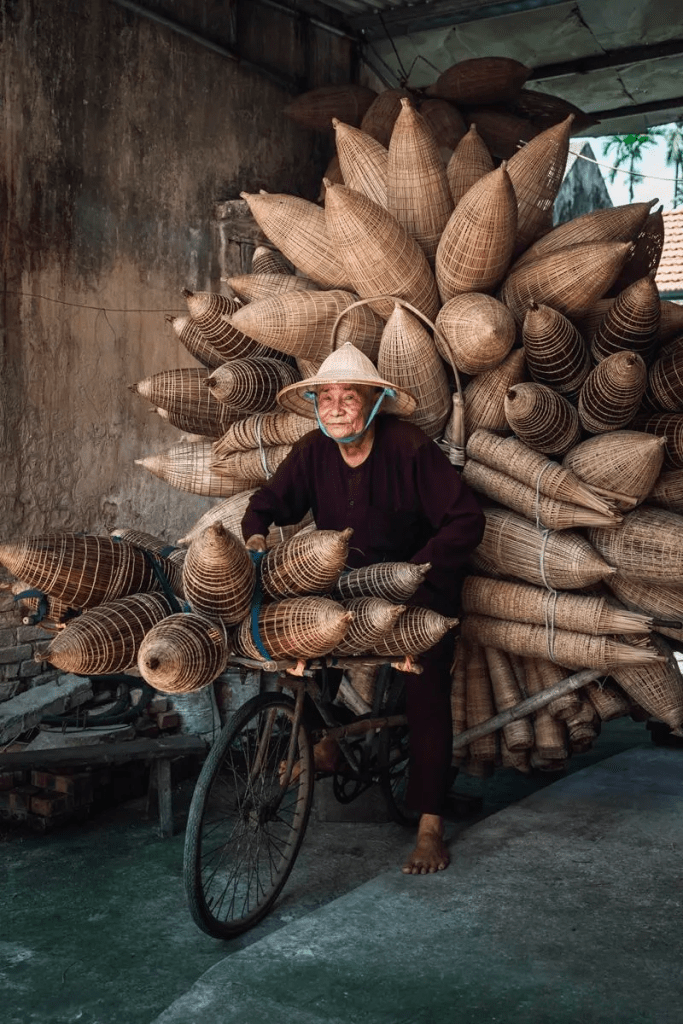
“The Art of Fish Traps,” Finalist, Thu Sy, Vietnam
 Vincenzo Avallone – People Photography Awards, The Independent Photographer

“During my journey, I had the opportunity to visit Thu Sy, a village in Vietnam known for its artisanal production of fish traps,” Vincenzo Avallone explains. “In this photo, I captured a local elderly man transporting an incredible number of fish traps on his bicycle.

“Villamar,” Finalist, Villamar, Bolivia
Michael Murray – People Photography Awards, The Independent Photographer

In a small settlement outside Villamar, Bolivia, a clothes maker pauses for a portrait.

“Shore Bound,” Finalist, Ladakh region, India
 Wasim Malik – People Photography Awards, The Independent Photographer

This is Lamo, a nomadic woman from the serene Changthang region in Ladakh, India, where the vast highlands meet a life of simplicity and resilience.
Link:https://peacelilysite.com/2025/03/07/the-winners-of-people-photography-awards-the-diverse-beauty-of-humanity-in-photos/

Source: https://www.forbes.com/sites/ceciliarodriguez/2025/01/17/the-diverse-beauty-of-humanity-in-photos-10-winners-of-people-photography-awards/

Discover the Beauty of Qinghai This Summer

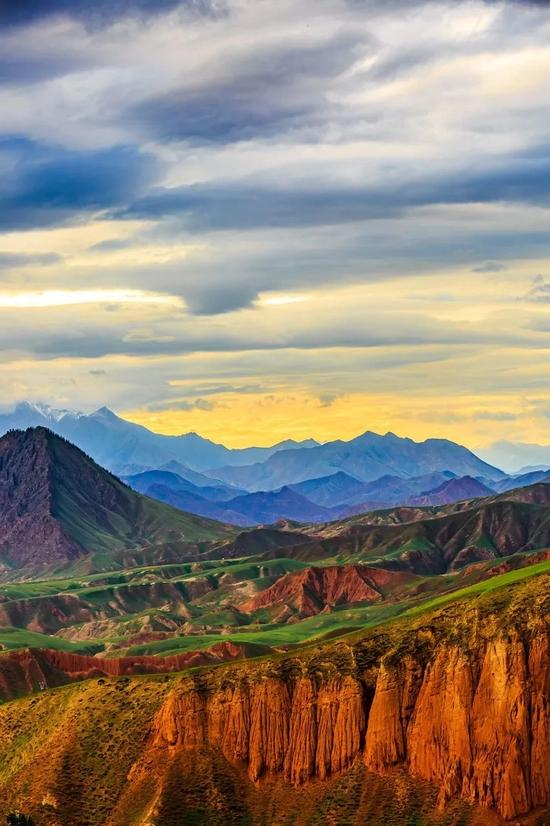
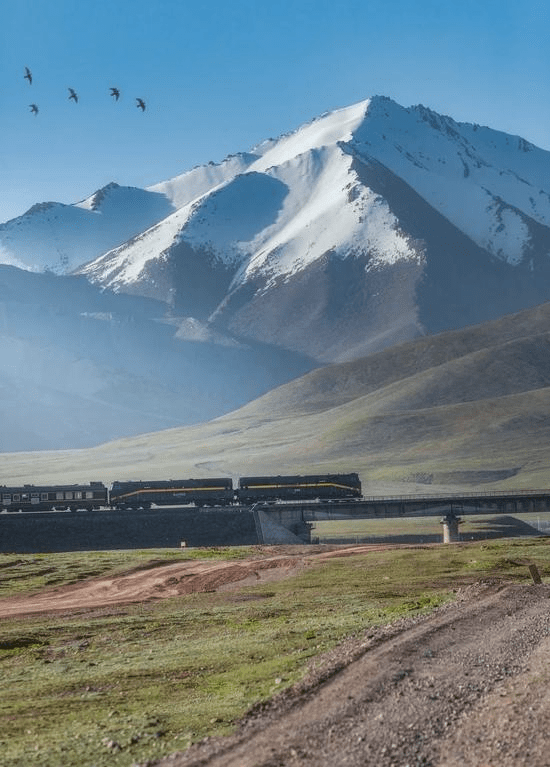
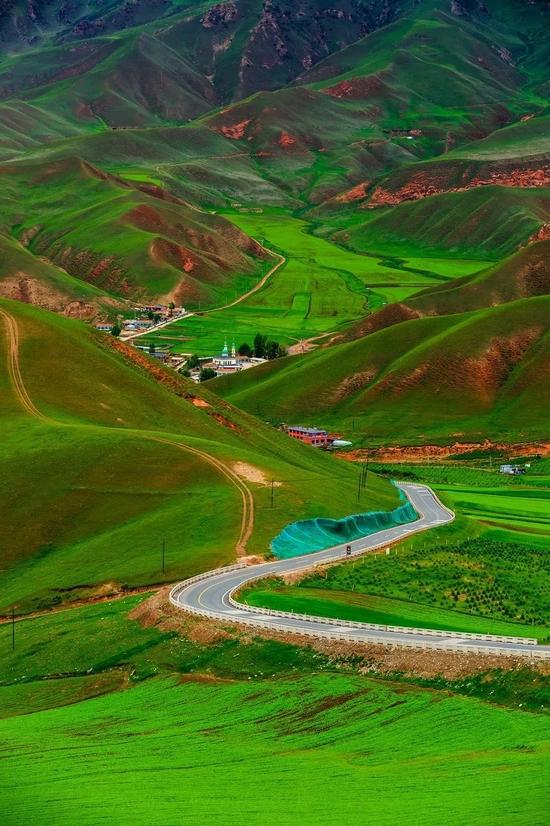
Entering summer, the northwest is like a fairyland, and as the gateway to this paradise, Qinghai is so breathtaking that one forgets the passage of time. Snow-capped mountains, lakes, grasslands, deserts, Yadan landforms, temples, prayer flags…

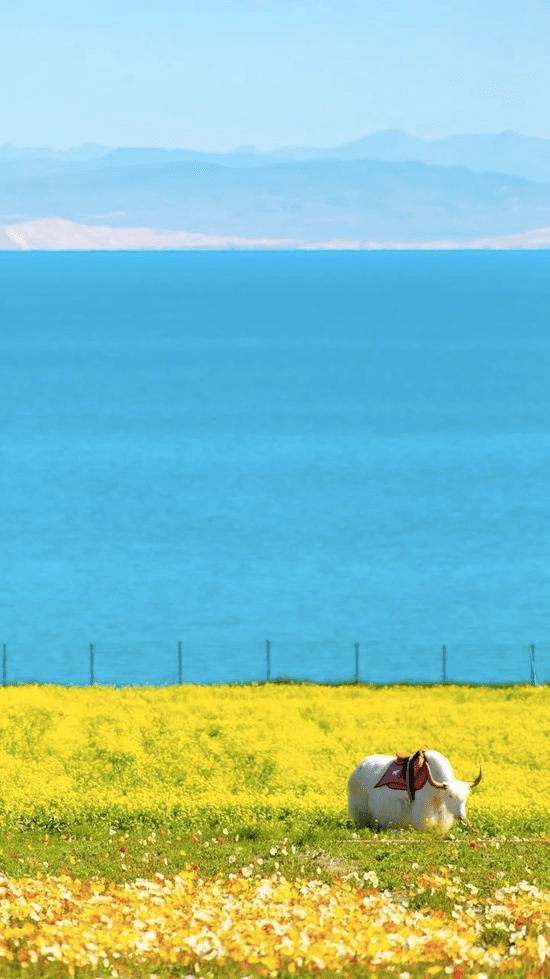
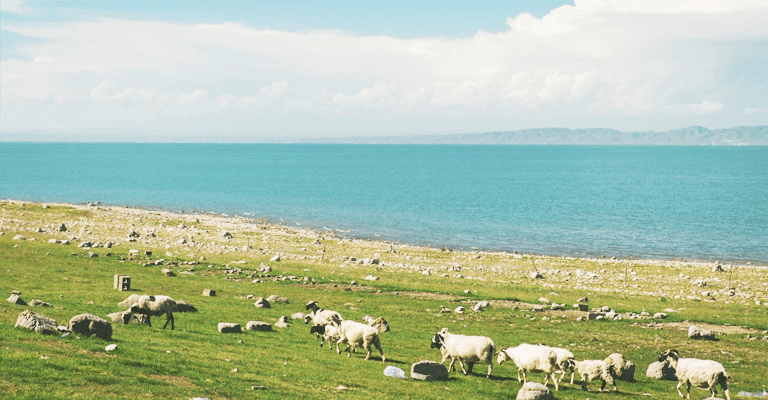
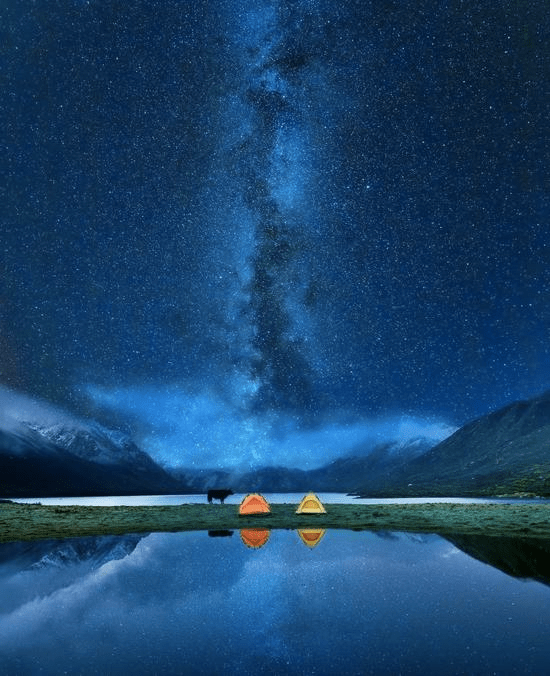
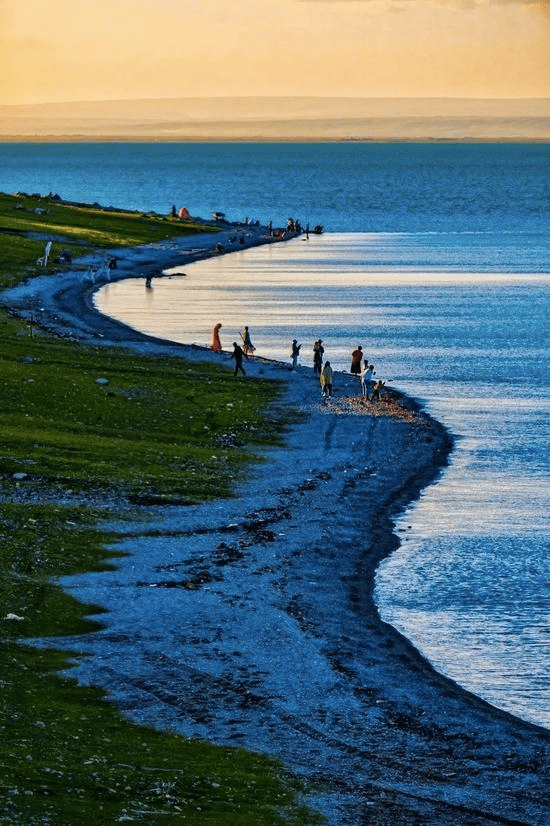
Countless unique landscapes make Qinghai a place worth exploring in depth. Here, you can easily encounter breathtaking scenery: lakes, flower fields, deserts, and starry skies, along with six vibrant colors: blue skies, green lakes, white mountains, golden deserts, green grasslands, and yellow rapeseed flowers. Walking on this vast land, the vitality and colors continually surprise you. Qinghai is a place you’ll fall in love with and never want to leave. In July, Qinghai Lake is romantic and poetic, with vast fields of rapeseed flowers along the lakeshore, blue water blending with the sky, and smoke rising from small wooden houses by the shore, resembling a pastoral landscape painting.

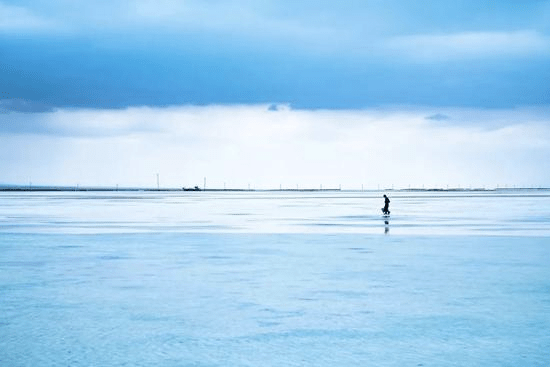
Qinghai Lake or Ch’inghai Lake, also known as Lake Koko Nor, is the largest lake in China (the size of Rhode Island or three Greater Londons). Located in the northeast of the Tibetan Plateau, this huge alkaline salt lake is usually No. 1 on “Most Beautiful Lakes in China” lists.

Spectacular Sunrise of Qinghai Lake

Erlangjian Scenic Area

Fairy Bay Area – The Sea of Flowers

Fairy Bay Area is a wet land located in the northern coast of Qinghai Lake. There are two legends about how Fairy Bay Area got its name. In one old legend, the queen of the west area fell in love with the King of Central Plains. The queen always served a feast for the king in Qinghai Lake with pretty fairies singing and dancing for them. Another ancient poem showed that the Queen of the west had been waiting for the king of Central Plains in Qinghai Lake for thousands of years but he never kept his appointment. The sad queen left for Heaven, but she ordered the fairies to guard Qinghai Lake. Later, these fairies masqueraded as swans living in Fairy Bay Happily. Might be attracted by these beautiful swans, a dozen of other birds also prefer Fairy Bay as a habitat.

Apart from various birds, different kind of flowers blooms here from every June to October. Just like a carpet waved by fairies, Fairy Bay presents on white, yellow, orange, pink, red etc., really deserving its name of Flowers’ Ocean. Because of the magic legends and amazing landscape, local people regard it as sacred ground and several solemn rituals are held here. So, you can feel a strong cultural fragrance.

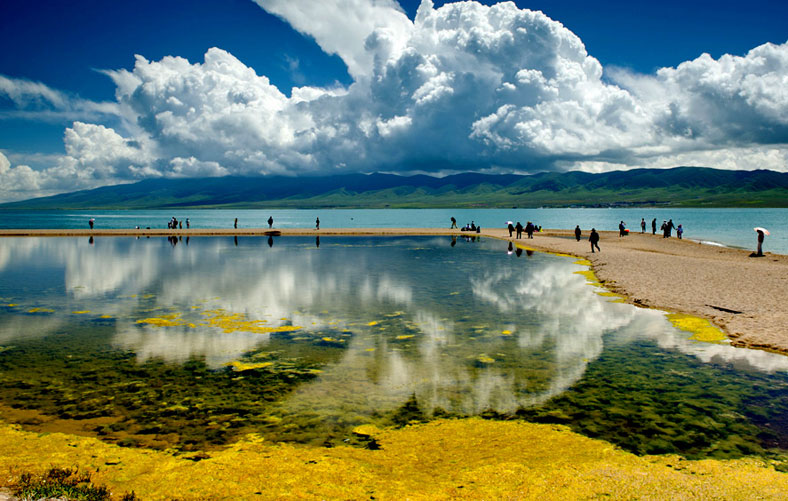
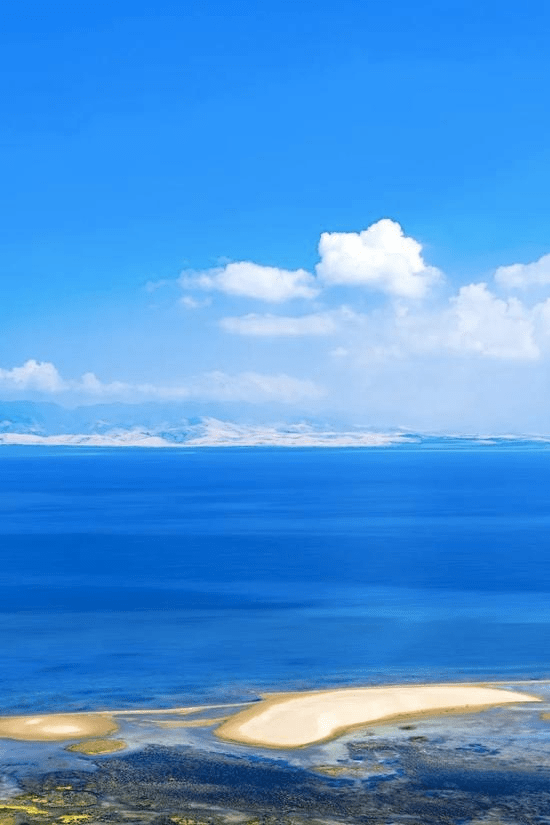
Sand island in the lake

Great Scenery in the Biking Trip

There’s a Tibetan folk custom that Buddhists should walk around the lake in the Year of Goat, circle the mountains in the Year of Horse, and circle the forest in the Year of Monkey. Some believe it’s a decree left by Buddha. Qinghai Lake is a sacred lake for Buddhist pilgrimages. Especially in Horse years of the 12-year cycle, many Buddhists will take a kora around the Qinghai Lake which is believed to be helpful to lead a safe and happy life. By traveling to Qinghai Lake you can get close to the devoted Tibetans and appreciate Tibetan culture. When the weather is warm in the summer months, there are ethnic festivals of the Tibetans and Muslims. Nowadays, there are still lots of minority tribes and herdsman families living beside the Lake. You can feel the strong nomadic ethnic culture there.

Buddhist Pilgrims Worshiping Qinghai Lake

Besides Qinghai Lake, there are many lakes in Qinghai, such as Chaka Salt lake, ChaErHan Salt lake, etc.

Qinghai has many mountains, 3,600 mountain peaks, clustered together, resemble giant petals in full bloom, tracing graceful arcs across the sky. Up close, they resemble ancient castles, pyramids, animal shapes, and cylindrical pillars. Being there feels like entering a maze, making it difficult to distinguish directions.

In July and August, large fields of rapeseed flowers bloom beneath Zhuo’er Mountain. Standing at the top of the mountain, the view is incredibly expansive and unobstructed. As far as the eye can see, the earth is covered with a golden-yellow carpet.

This summer, embark on a pilgrimage to Qinghai.

On this vibrant land, there exists a power, ancient and resolute, with the solemn sound of bells echoing in all directions, suppressing all disturbances. The 400-year-old Kumbum(or Ta’er Monastery ) is one of the most important temples of the Gelug sect of Tibetan Buddhism. Entering the incense-filled Ta’er Monastery, one begins to feel detached from the mundane world. Devout followers, serene temples, and vivid Buddha statues all convey the weight of faith. The monastery’s buildings are grand, blending Han palace and Tibetan flat-top styles. With over 4,500 rooms, it forms a unique architectural complex that integrates Han and Tibetan craftsmanship.

The most captivating event is the annual “Shai Da Fo” or “Shai Da Thangka,” also known as the “Buddha Exhibition Festival.” This involves displaying a large Buddha image outdoors to prevent mold and insect damage, and more importantly, as a special way for monks and followers to pay homage to the Buddha. The image is actually a special type of large Thangka, a rare treasure among scroll paintings. The best time to unfold the Buddha image is at dawn when the first rays of sunlight hit the earth, hence the name “Shai Fo,” which means “Sun Buddha.”

Held twice a year during the lunar fourth and sixth months, the festival commemorates the birth, enlightenment, and nirvana of Shakyamuni, the emergence of Maitreya, and the birth and nirvana of Tsongkhapa. By displaying the Buddha image, followers can gaze upon it, receive its blessings, and protect it from damage. Ta’er Monastery has four large embroidered Buddha images: “Lion’s Roar,” “Shakyamuni,” “Tsongkhapa,” and “Vajrasattva,” with only one displayed each time on the monastery’s hillside. The ceremony is grand, attracting many spectators and creating a spectacular scene.

Link:https://peacelilysite.com/2024/07/15/discover-the-beauty-of-qinghai-this-summer/

Source: https://www.chinahighlights.com/xining/attraction/qinghai-lake.htm, https://www.chinadiscovery.com/qinghai/xining/qinghai-lake.html, photos from https://fashion.sina.cn/l/ds/2022-07-06/detail-imizmscv0155077.d.html

Transforming Destiny: The Inspirational Journey of Yuan Liaofan

In the heart of Ming Dynasty China, a man named Yuan Liaofan emerged, leaving an indelible mark on history. Born in the picturesque Wujiang County, Jiangsu Province, China, Yuan Liaofan’s original name was Yuan Huang. With the courtesy name Kunyi and the alternative name Xuehai, he later adopted the name Liaofan, symbolizing a profound shift in his life’s trajectory. During his life, he underwent a precise fortune-telling by an adept in divination, which turned out to be accurate. However, Yuan Liaofan later transformed his own destiny.

Yuan Liaofan’s transformative journey began when he sought guidance from a revered monk, a master in the art of divination. The monk, through precise fortune-telling, revealed a predetermined path for Yuan Liaofan. Undeterred by this revelation, the monk imparted invaluable wisdom on how to change his fate.

The monk emphasized the importance of performing virtuous deeds and accumulating positive karma. He outlined a path that involved actively engaging in a thousand good deeds, actions that would not only benefit others but also bring about profound changes in Yuan Liaofan’s own destiny.

Embracing the monk’s teachings, Yuan Liaofan dedicated himself to a life of kindness, compassion, and generosity. He embarked on a mission to perform a thousand good deeds, each act carefully documented in a personal ledger. His deeds ranged from helping the needy and supporting the less fortunate to acts of kindness that reverberated through his community.

As Yuan Liaofan diligently pursued this virtuous path, the effects on his life were nothing short of remarkable. Contrary to the fortune-teller’s prediction that he would not have a son, Yuan Liaofan became a father, experiencing the joys of parenthood. His household, once devoid of the laughter of children, now echoed with the sounds of familial bliss.

Additionally, the diviner had foretold that Yuan Liaofan’s life would be limited to fifty-three years. However, Yuan Liaofan defied this prediction, living a full and fulfilling life until the age of seventy-four. The positive energy generated by his virtuous deeds not only defied fate but also led to a prolonged and healthy existence.

The transformative effects were not confined to his personal life alone. Yuan Liaofan’s career path witnessed an upward trajectory. Through his dedication, hard work, and the positive energy he exuded, he achieved professional success, earning promotions and garnering respect within his professional sphere.

“The Four Lessons of Liaofan,” penned by Yuan Liaofan himself, stands as a testament to his transformative experiences. It serves as a guiding light for all who aspire to harness the potential within themselves to cultivate positive change.

As we navigate the complexities of our modern existence, let Yuan Liaofan’s story inspire us to embark on a journey of goodwill. Embrace the opportunity to contribute to the well-being of others, and in doing so, witness the transformative effects it can bring to your own life.

May Yuan Liaofan’s tale be a beacon of encouragement for us all, urging us to embrace the inherent ability within ourselves to shape our destinies. After all, the power to create a life of abundance and health lies not in the stars, but within the choices we make each day.

Transforming Destiny: The Inspirational Journey of Yuan Liaofan

Link:https://peacelilysite.com/2024/01/26/transforming-destiny-the-inspirational-journey-of-yuan-liaofan/

Source: https://www.pure-land-buddhism.com/blog/liaofans-four-lessons-your-destiny-is-in-your-hands

Throughout Countless Eons, Encountering the Profound and Supreme Buddha Dharma is a rare Opportunity

Throughout Countless Eons, Encountering the Profound and Supreme Buddha Dharma is a rare Opportunity

The teachings transmitted by Lord Kashyapa Buddha or possibly even more ancient Buddhas are beyond our reach today. Although the discourses of Shakyamuni Buddha are considered supremely perfect, the Tripitaka that we study now can be said to not entirely capture the original intent of the Buddha’s words. This is because during the Buddha’s lifetime, his teachings were not promptly recorded. All the scriptures were compiled after the Buddha’s parinirvana by a gathering of five hundred arhats. Despite the arhats having transcended the cycle of birth and death and possessing vast supernatural abilities, their own levels of spiritual realization were limited, and there existed a significant gap between their understanding and the Buddha’s complete enlightenment. As a result, there were certain aspects of the Buddha’s teachings that they might not have fully comprehended, leading to misunderstandings or omissions in the interpretation of certain doctrines during the compilation process.

Over the past 2,000 years, Buddhist teachings have encountered distortions and alterations due to mistranslation and misinterpretation of Buddha-dharma by Buddhist patriarchs, eminent monastics, and Buddhist scholars.

During this Age of Dharma Degeneration, H.H. Dorje Chang Buddha III descended to the earthly realm, exhibiting perfect mastery of Exoteric and Esoteric Buddhism, along with unparalleled expertise in the Five Vidyas. The Five Vidyas are what Buddhas and Bodhisattvas do to help living beings. Recognizing the distortions and errors that had infiltrated Buddhist teachings, H.H. Dorje Chang Buddha III corrected the mistakes present in the Buddhist teachings, restoring the authenticity, power, and purity of Buddha’s wisdom and views. 

H.H. Dorje Chang Buddha III has bequeathed over two thousand audio recordings of imparted Dharmas and published invaluable Buddhist books, including “A Monk Expounds the Absolute Truth to a Layperson,” “Commentary on the Prajnaparamita Heart Sutra,” “The Essence of Buddha Dharma,” “Correcting the Treatises of Patriarch Bodhidharma,” “What Is Cultivation?,” “The Supreme and Unsurpassable Mahamudra of Liberation,” and “Learning From Buddha.” H.H. Dorje Chang Buddha III imparted the subtleties of Dharmas in colloquial language so that people living in the 21st century could easily comprehend. They serve as supreme treasures and indispensable resources for Buddhist disciples seeking to escape the sufferings of this world and attain enlightenment. 

The dharma discourses encompasses the essence of the Tripitaka and the esoteric Buddhist scriptures. It covers Buddhist precepts, views, cultivation, and Dharma practices. It covers the whole spectrum of Buddhism regardless of whether it is Hinayana, Mahayana, or Vajrayana.

The audio recordings of dharma discourses given by H.H. Dorje Chang Buddha III begin with the strict progressive levels of cultivation. These discourses contain extremely incisive teachings that concisely incorporate the twelve divisions of the Tripitaka and the ten divisions of the esoteric scriptures without losing the true meaning of the Tripitaka and esoteric scriptures. The topics covered are extremely broad. They vary from analyses of the dharma regarding the Trikaya (Three Bodies) and the Four Wisdoms of a Buddha to teachings on the vajra dharma of the Supreme Division. There are explanations of the true realization and manifestation of the Great Perfection of Ultimate Wisdom. H.H. Dorje Chang Buddha III also possesses the Xian Liang Buddha Wisdom Great Perfection Dharma whereby the disciple experiences and sees the rainbow-body dharma realm state the very day that dharma is transmitted. Nothing is lacking either in theory or practice. Those recordings truly show that H.H. Dorje Chang Buddha III has complete proficiency in exoteric and esoteric Buddhism and perfect
mastery of the Five Vidyas. They also manifest His Holiness’s supreme enlightenment, wonderful prajna wisdom, and holy state of the Buddhas and Bodhisattvas, all which are part of the inner realization vidya. All of the recorded discourses are directed at Buddhas, Bodhisattvas, Arhats, and all practitioners.

The H.H. Dorje Chang Buddha III’s teachings were directly spoken and recorded without any external contamination. Moreover, with the superiority of modern technology, the Buddha’s complete teachings can resound globally in real-time, a phenomenon that was not possible during the Shakyamuni Buddha’s time. This is not a blessing originally destined for beings in the degenerate age, but rather, it is an augmentation of the merit and resources of sentient beings through the immeasurable merit of the original primordial Buddha and the compassionate power of Bodhi. It allows the Buddha’s teachings to echo in this dark and heavily burdened era. How rare and precious it is!
Throughout Countless Eons, Encountering the Profound and Supreme Buddha Dharma is a rare Opportunity

Link:https://peacelilysite.com/2023/12/08/throughout-countless-eons-encountering-the-profound-and-supreme-buddha-dharma-is-a-rare-opportunity/

#DorjeChangBuddhaIII #HHDorjeChangBuddhaIII#DharmaDiscourse